There’s a popular perception that young Nigerians simply don’t have what it takes to compete in the global market. But those conversations conveniently sidestep the structural barriers that created this reality.
If you’re looking for a lecture on hustle culture or lifestyle trends—we don’t do that here.
We aren’t exploring vibes, feelings, or personal failings. We’re looking at the state-sponsored obstacle course that has made “making it” in Nigeria a miracle. Here are the real and systemic reasons Nigeria is failing to platform its vibrant workforce.
Education — No Teach Me Nonsense
Nigeria’s education system can be summed up very easily: underfunded and out of date. UNESCO recommends that countries dedicate 15% to 20% of their national budget to education. Nigeria has only reached such levels once—in 1997 with 17.59%. Between 1960 and 2023 (when Tinubu became president) the yearly average was a 7.61% spend on education. Tinubu hasn’t even managed that.
Here’s the education allocation for every year of Tinubu’s presidency.
- 2024: 5.5%
- 2025: 6.4%
- 2026: 6.1%
In 2023, the National Board for Technical Education (NBTE) admitted that some curricula in our tertiary institutions are over 30 years old. This is a disaster that needs no explaining.
Our education system is not globally competitive, yet it’s supposed to pump out global talent.
Power — A Grid Called Brother Benard
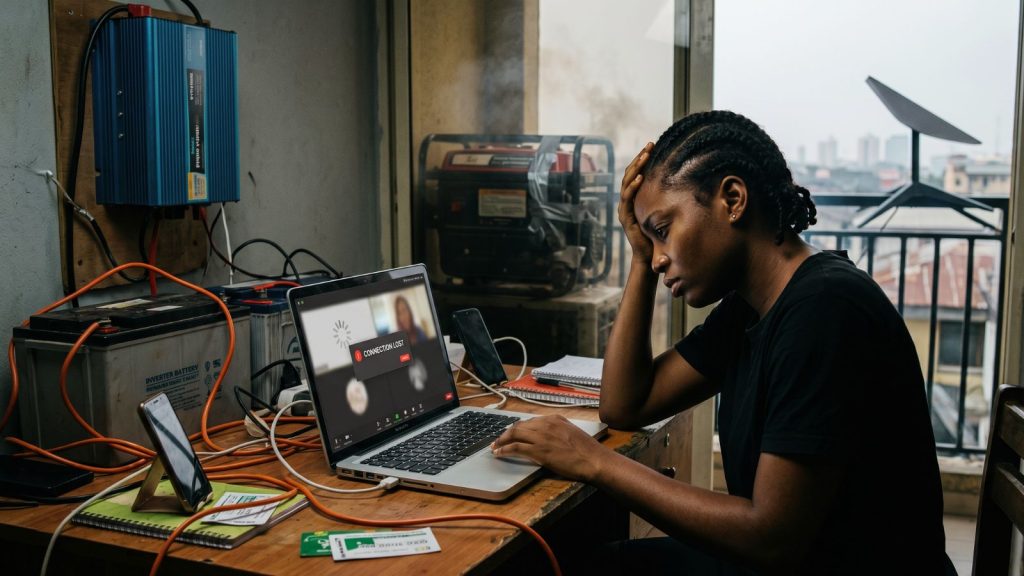
The Energy for Growth Hub, an energy-focused think tank, says each person needs 1,000 kWh of electricity per year to be productive. For Nigeria and its estimated population of over 240 million people, that would require a grid supplying around 27,000 MW of electricity.
Currently, our grid has an installed capacity of only 13,625 MW, and only about 5,000 MW is actually delivered regularly. By global standards, Nigerians are experiencing “energy poverty.”
How are you supposed to take those online courses to fill the gaps left by your poor education when you don’t have electricity?
Telecoms — “I Can Hear You, Can You Hear Me?”
Nigeria’s internet penetration is only 53%, and the connection we do have is shaky, unreliable, and slow. The Speedtest Global Index ranks Nigeria 82nd in the world for mobile internet speeds at 50.53 Mbps, while the global average sits at 109 Mbps. Many international companies use internet speed as a filter to screen out candidates, so Nigerians are being disqualified before we even get a chance.
Despite these struggles, in January 2025, the government permitted Telcos to raise their prices by 50%. Now, we’re paying more for the same shitty connection.
How can you be a global talent when you’re constantly disconnecting during standups?
Passport — Global Citizens
On the global stage, the Nigerian passport is a handicap. On the Henley Passport Index, we’ve dropped in the last twenty years from a rank of 62nd in 2006 to 90th in 2026, with visa-free access to only 44 countries.
For comparison, Ghana (ranked 68th) has access to 67 countries, and South Africa (ranked 47th) has access to 100. The idea of the “global citizen” does not apply to Nigerians who face some of the strictest visa guidelines in the world.
This administration has further fumbled our international standing. Tinubu didn’t appoint ambassadors for over two years of the presidency, leaving us with zero representation internationally. Nobody was beating the drum for why Nigeria is a good place to hire from.
Hardware — The Lifestyle Cost
Because the government hasn’t provided an environment for Nigerians to be competitive, individuals have to be their own government, buying everything they need. But so much of this gear is imported; the Naira’s free fall over the last five years combined with hefty import duties means a lot of Nigerians are basically screwed.
A $2,000 MacBook that would have cost ₦900,000 in 2021 now costs about ₦3 million today. Your Starlink kit will also set you back hundreds of thousands, and that’s before you calculate the cost of a generator or a solar setup. It is bloody expensive to just “show up” for work when the state treats your professional tools as luxury imports.
In early 2026, the federal government removed import duties on agricultural equipment. We need something similar for the digital workforce. The least the government can do is not make the tools the workforce needs any more expensive.
Taxes — Reap where you sow
Tinubu’s tax reforms, which came into effect in 2026, show a deliberate effort to cut into the pie of freelance and remote workers. Despite providing next to nothing when it comes to the infrastructure people in this industry need, the government now has its hand out asking for a share of global earnings.
It is a “success tax” on survivors. They are taxing the very people who managed to jump over every hurdle the government itself put in their way.
Punching Above Our Weight
Despite the huge government-shaped monkey sitting on our backs, Nigerians are still climbing the global job ladder. The 2026 Ataraxis Global Outsourcing Talent Index ranked Nigeria 6th out of 193 countries.
We don’t have a talent problem; we have an obstacle course built by our own government to keep us from reaching our potential. Yet young Nigerians are putting in the work every single day to be world-class in spite of the odds against them.
When the world needs talent, we’re still one of the first places they look. If anyone can’t find global talent here, they aren’t looking hard enough.
Having to jump systemic hurdles just to be able to do your job should not be the norm. We should not accept it.
Nigerians deserve a government that provides the education and infrastructure needed to be competitive. If you’re wondering why you’re not considered a world-class or global talent, despite doing everything right, the answer is pretty simple. You don’t have a world-class government.
If you want one, you have to demand it. You’re showing up in the job market with world-class skills, but are you showing up at the polls with stubborn determination for your vote to be counted?
The portal for Permanent Voters Card (PVC) registrations closes on July 10, 2026. Go to cvr.inecnigeria.org now to register. See you at the polls.
We want to hear about your personal experiences that reflect how politics or public systems affect daily life in Nigeria. Share your story with us here—we’d love to hear from you!
Click here to see what other people are saying about this article on Instagram