For years, Tunmi* (33) became the person everyone called when life fell apart. Friends, siblings and even strangers leaned on him through heartbreak, grief and personal crises, while he quietly buried his own struggles behind “I’m fine.”
But after missing his own 30th birthday to comfort a grieving friend, he returned to an empty apartment and realised he had become everyone’s safe space without having one of his own.
Now, he opens up about the loneliness of always being the strong one.
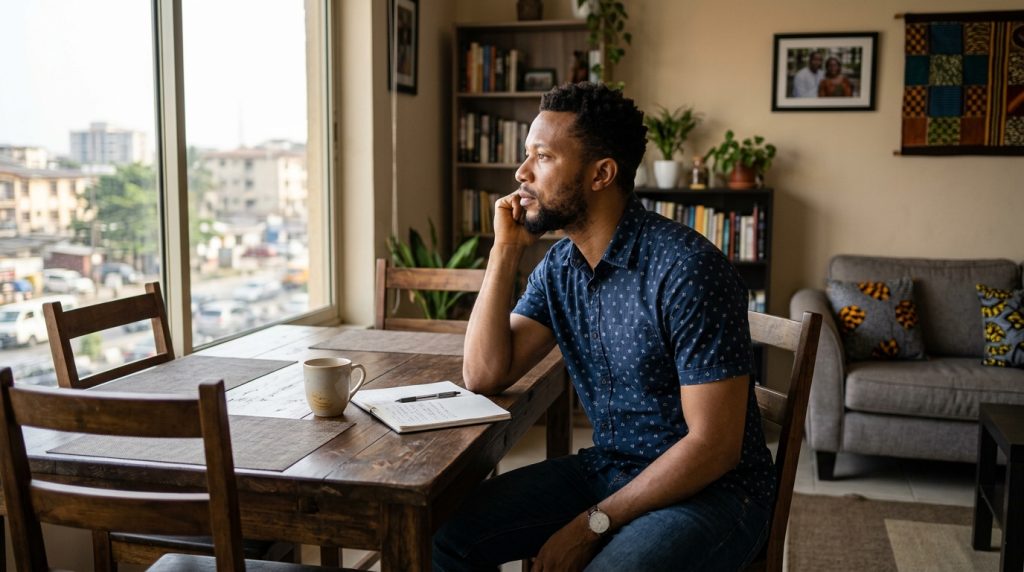
This Tunmi’s story, as told to Adeyinka
My birthdays do not excite me. I’ve repeated that gospel to everyone around me for so long that the day has taken the same shape for over a decade.
No midnight calls. No long, winding messages. None of my pictures on social media with corny captions. And definitely no unplanned surprises. There were grumblings here and there, even painful accusations from family members who called me a sour puss, but eventually, everyone learnt to leave the day alone.
So when my 30th birthday approached, and my siblings insisted, “But Tunmi, it’s a milestone age. Let us at least do something on your behalf just this once,” I grudgingly agreed, while making sure not a single detail of the event stayed hidden from me. The scale of it. Who would be invited. And so on and so forth.
On the eve of the event, I received a frantic call from my best friend of over two decades, Ibukun.
First came the heaving, then the sniffling, then the words forced themselves out: “Mummy is dead.” Then came a loud wail that replayed in my head as I packed a small bag and took the next bus to Ibadan.
My siblings could carry on with the celebration, but in that moment, Ibukun needed me.
****
I grew up as the middle child in a family of five. My elder brother always came to me whenever the youngest pulled a mischief, and the last born always came to me whenever he felt cheated. Neither of them really gave me room to vent. I was the deposit box where everyone emptied themselves.
That same pattern followed me into adulthood, once I started making friends in the real sense of it. There was always someone pulling me aside after class, during lunch breaks or on the walk back home. “Tunmi, can I tell you something?” “Tunmi, this thing happened and I don’t know what to do.” Even outside my immediate circle, acquaintances, coursemates and later colleagues somehow found their way to me whenever life became too heavy to carry alone.
My parents weren’t left out either. Sometimes, after a fight at home, one of them would call me into their room and ask me to speak to one sibling or the other because, apparently, they listened to me better. I don’t know how I became that person.
At first, it felt good. Important, even. To be a buffer for people navigating difficult emotions. To be the balm that calmed and calmed. To be the person who didn’t shy away from untying the knots of worry and anxiety sitting on people’s chests.
But after a while, I started to notice the emptiness that followed.
For instance, after three long and emotionally draining days spent comforting my dear friend Ibukun through grief, I returned to Lagos feeling emptier than usual. That night is still clear in my head.
I had said my goodbyes to Ibukun and watched her relatives take my place beside her. The deep lines of worry and anxiety that twisted her face into something almost unrecognisable had softened into faint smiles. Smiles that assured me she would survive this grief, even as the bus pulled away for Lagos.
At home, I was greeted by darkness and the unforgiving smell of rancid beans mixed with the cocktail of rubbish festering in my dustbin. The smell hit so aggressively that it forced me to remember how abruptly I’d left the apartment days earlier.
In that moment, feeling strangely defeated, I sat in the chair and waited. Maybe for a call from Ibukun asking if I got home safely. Or from one of our friends who had thanked me for showing up so quickly. Or even from anyone who remembered I had missed my own birthday celebration.
But there was nothing. Just loneliness. Darkness. A foul odour that drained the colour from my face. Then I cried, silent sobs that made me gasp for air.
It’s a strange thing, being the person everyone runs to.
People assume that because you know how to hold emotions, you also know how to survive your own. They often mistake my composure for fullness. Meanwhile, there are days I feel like a cup constantly tilted in other people’s direction, emptied so often I’ve forgotten how to keep anything for myself.
But even in those moments, anger never stays with me too long because the truth is, I’m also guilty. I don’t really know how to open up. Every “How are you doing?” gets the same rehearsed response: “I’m fine.” Then I quickly move the conversation along, almost as though vulnerability is something shameful. Almost as though the same people who hand me their grief so freely would suddenly recoil if I handed them mine.
So I make excuses for them before they even get the chance to fail me.
That night after returning from Ibadan, when part of me wanted to feel hurt that Ibukun hadn’t checked on me, another part quickly stepped in to silence it. This was a woman who had just lost her mother. How could I centre myself in the middle of her grief?
I have done this too many times to count.
I remember another friend whose relationship ended terribly around the same week I received a query at work. Every evening, I stayed on the phone listening to him pick through a breakup that wrecked him. Meanwhile, I moved through my own days with anxiety clawing at my chest, terrified I might lose my job.
But how was I supposed to interrupt someone else’s heartbreak to talk about my troubles at work? How do people even do that without sounding selfish?
I think that’s the trap I’ve unintentionally built for myself over the years. There are days I leave conversations carrying pieces of other people’s sadness. Days when I feel emotionally bruised from constantly absorbing other people’s pain.
But then again, what other choice is there?
I’m a deeply religious person, and over the years, I’ve started to see these moments differently. Maybe God really does place certain people in other people’s lives for seasons they can’t survive alone. I don’t think it’s a coincidence that people find their way to me when life becomes unbearable.
And truthfully, despite everything, I’m glad they do.
Do I sometimes wish the care came back in equal measure? Of course. I’m still human. But I also know people can only meet the version of me I present to them. If I keep wearing the “I’m fine” badge, how can I blame anyone for believing it?
So maybe this is the part I still need to learn. Not how to carry people, because I already know how to do that. But how to loosen my grip on myself. How to let people in and sit with my fears and exhaustion the same way I sit with theirs.
I’m not there yet. But I think I’m finally beginning to understand that even the person people lean on sometimes needs a shoulder to lean on too.
*Names have been changed to protect the identity of the subjects.
If you need support, someone to talk to, or immediate help, these Nigerian mental health resources may help:
Mentally Aware Nigeria Initiative (MANI) — Youth-focused mental health support
mentallyaware.org | Crisis support: +234 916 841 7413
She Writes Woman — Free teletherapy & crisis helpline
shewriteswoman.org | +234 800 800 2000
SURPIN — Suicide prevention & crisis intervention
surpinng.com | 080 0078 7746