• Every week, Zikoko seeks to understand how people move the Naira in and out of their lives. Some stories will be struggle-ish, others will be bougie. All the time, it’ll be revealing.


    NairaLife #364 bio

    What’s your earliest memory of money?

    My earliest memories were mostly around the rise and fall of my parents’ careers and incomes.

    We started small. When I was little, we lived in a boys’ quarter. Then, a few years later, when my younger sister turned three, we moved into a two-bedroom apartment. Things began to look more comfortable. My dad had an architectural firm, and he’d drop me at school each morning on his way to work. In primary school, I had several collections of Enid Blyton books. 

    I believe we were on track to have a really good life. Then, life dealt my parents bad cards.

    What happened?

    Things just started to go bad. My dad’s business partner got into some bad deals that negatively affected the firm. Not long after, my mum lost her job as a bank manager due to the 2008-2009 banking crisis

    These events didn’t change our finances much, as my parents still tried their best to provide what we needed. However, I noticed how money affected their relationship. They quarrelled and fought more. It made me start thinking about how important it was for a woman to have money and be financially independent. 

    I began wanting to do more, to excel at all I did, and gain independence early. Part of it may have been due to the firstborn syndrome, but money definitely played a significant part.

    When was the first time you acted on this?

    Senior secondary school. I attended a boarding school, and I would save my ₦2k – ₦3k per term pocket money and give it to someone to smuggle contraband in for me. Contraband in this context was anything from snacks to chocolates and sardines. 

    It was cheaper to buy these items outside school and resell them to classmates for a profit. Sometimes, I pooled money with friends to buy more items, then we split the profit. It was too long ago to remember the exact details, but I often made twice what I spent on items. I did this “business” at different points between SS 1 and SS 3. 

    I graduated from secondary school in 2017 and got admitted into the university immediately after. 

    Did you try to earn money in uni as well?

    Oh yes. I tutored some of my classmates in 100 level. My tutoring was voluntary, but people sometimes appreciated me with a little money here and there. I used that to augment whatever pocket money I received from home.

    My first official job was in 2019, during the holidays just before I resumed my second year. I worked with a family friend as a personal assistant for three months. We didn’t have a payment structure, but she gave me data and transport stipends. At the end of the three months, she gave me ₦50k. It was technically my pay for the months I worked, but she held on to it until the end so I’d have money to take back to school.

    I worked with her again during the 2020 lockdown. She’d dismissed her domestic help and needed someone she could trust with her kids. I lived with her family for about four to five months and made about ₦100k.

    Finances still weren’t great at home, so after completing these two stints, I started actively job-hunting.

    How did that go?

    My efforts got me the job I have today. I saw a vacancy for a Customer Experience (CX) intern on an online job site and applied. A tech firm was hiring people to train AI. They were building their CX function and were open to training hires. 

    Something interesting happened after I applied. The application involved an assessment. Shortly after I completed the assessment, they reached out to ask me to redo it. I think it had something to do with my first assessment not going through, or they wanted to make sure all applicants completed it. Either way, I was grateful they gave me the opportunity to redo the assessment. 

    I got a ₦40k/month offer letter a day later, but instead of Customer Experience, they placed me in their AI training arm.

    Was there any reason for that?

    They probably had enough hands in their CX team. I wasn’t mad about the switch because machine learning and AI training were worlds apart from what I was studying in school, and I was excited to learn something new.

    The internship lasted three months, and then they converted a bunch of us to full-time staff. My salary increased to ₦70k/month. I should mention that the job was remote, so I was able to juggle my work with school. That doesn’t mean it didn’t often get stressful, though.

    A year into the role, I applied for a three-month internship at an investment firm because it was more in line with my course of study. I wanted that career path as an option if the need ever arose. The firm paid me ₦60k/month. 

    Get More Zikoko Goodness in Your Mail

    Subscribe to our newsletters and never miss any of the action

    So, at some point, you were a full-time student with two jobs

    Exactly. I was on the verge of collapse most of the time, but the money was good. I was balling. I could afford to buy food, pay people to wash my clothes and still have money left to save. I also hired a private tutor (who was pretty much my friend) to ensure my studies didn’t suffer. He’d tutor me for two months before exams, and I’d pay him ₦15k-₦20k per month. 

    After my internship at the investment firm, I re-focused all my energy on work and school. My trajectory at work has been really good. I’ve been promoted a couple of times, and each promotion has come with a salary increase. 

    When I graduated from uni in 2023, I’d moved into the role of project coordinator, earning about ₦400k per month. Right now, I’m a technical project manager with a ₦1.3m/month salary.

    That’s not bad at all

    It isn’t. Interestingly, I’m currently in debt of about ₦5.8m.

    Wait. How did that happen?

    The debt thing is a snowball effect. When I first started earning money, my parents knew my income. I stopped telling them when the knowledge became a weapon fashioned against me.

    Anyway, around the time I was earning ₦400k in 2023, my dad asked me to loan him ₦150k to complete the rent. My money was locked away in a savings app, and it occurred to me that my bank had told me I was eligible for a loan, so I took that. My dad didn’t pay me back, and I ended up repaying the loan out of pocket. 

    Then I took another loan to buy a phone. I reasoned that Nigeria wasn’t the best place for delayed gratification. I could be saving money, but the price would have increased by the time I was ready. Also, I wouldn’t default on payments, and the loan would be a faster way for me to get what I needed. So, I borrowed ₦700k from my bank to buy a phone. 

    That’s how I grew used to taking loans. It wasn’t like I was addicted or needed loans to augment my living expenses. My salary met my basic needs. The loans only came in handy for lending my dad money (which he didn’t repay), and for big needs I couldn’t afford at once. 

    In 2025, I took my largest loan — ₦3m to renovate my room in my parents’ home. I took that loan because I felt trying to save for the renovations would take me too long.

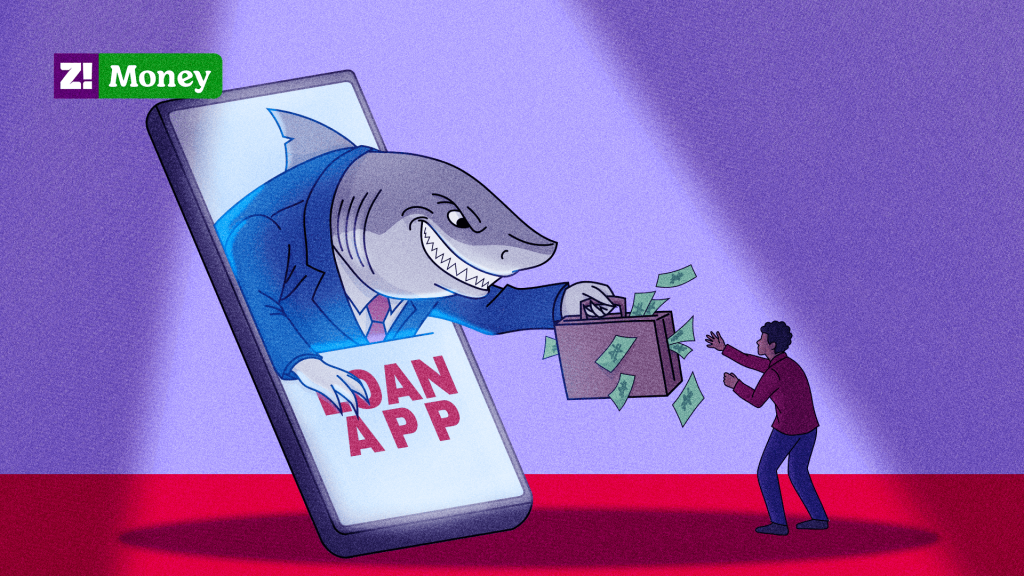
    The thing about loans is that the interest compounds. When I take a new loan on top of an existing one, my monthly payments increase. The interest rate is about 4% per month. That’s how my debt has snowballed to ₦5.8m. 

    Do you regret taking the loans?

    Not really. I don’t necessarily feel bad about them. The loans were a means to an end, helping me meet important needs faster. 

    What I don’t like is how the debt is now weighing me down. I have to set aside about ₦380k every month to pay back debt, and with my current income, I’d be repaying debt until the end of 2027. 

    ₦380k is a large chunk of my monthly expenses. By the time I remove family responsibilities and other expenses, I’m left with very little money. 

    So, it often feels overwhelming. If I didn’t have debt, I’d be adding that money to my savings and feeling a lot more comfortable. I’m hoping for a better job so I can fast-track my repayment plan.

    Can you break down your typical monthly expenses?

    Nairalife 364 expenses

    The insurance savings thing is part of a ₦300k/year life insurance plan I’m doing because of my mum. She works with an insurance firm, and I’m just doing it so she can get the commission. The idea is that if I die within the year (God forbid), my next of kin will get about ₦1.5m. But if I don’t die, I get back my ₦300k with a little interest.

    Also, in this budget breakdown, I have ₦200k set aside for gifting and one-off expenses. I don’t always spend the full budgeted amount, so whenever I don’t, I put the money in my savings. Right now, I have about ₦900k there.

    You started at ₦40k at your current job and now earn ₦1.3m. How has the income growth impacted your views on money?

    That’s a very reflective question. I think it’s important to niche down in a specific area, career-wise, to increase one’s earning capabilities. I believe that once you’ve expanded your skill set and established expertise, you can secure job security and access top-paying opportunities. 

    I’ve also realised money is an interesting thing. Someone can have all this money now, but if they don’t manage it well or make good use of it, they won’t know where it’s all going. 

    Is there an ideal amount of money you think you should be earning right now?

    $3000/month would be ideal. It’s in dollars because a lot of my work has to do with serving foreign companies, and I’ve built capacity in my field. I know I can do so much more, and my target audience is a foreign employer. 

    What’s something you’d like to be better at financially?

    In retrospect, I shouldn’t have gone into debt as much as I did. It’s like my income grew quickly, but my financial discipline didn’t grow at the same speed. I guess I was just riding on the wings of “buy now, pay later.” Over time, I’ve learned that it’s not always the best way to go. 

    I mean, loans have advantages, but now I can’t make certain investments because I’m repaying debt and have limited cash flow. If I weren’t, I could be saving ₦500k-₦600k monthly and considering investment options. 

    Let’s assume you’ve cleared out all your debt. Do you think you’d still take the credit approach to solving your needs?

    I don’t think so. I’m now able to match my needs to my income. Also, I’ve realised that the compounded interest is much higher than if I were to save for a few months.

    Is there anything you want right now but can’t afford?

    A car. It should cost me between ₦10m and ₦15m. However, if my plan to change jobs and earn a better income goes well, I should be able to save up and buy one. 

    How about the last thing you spent money on that made you happy?

    My room renovation project. I spent a lot of money. I got a TV, upgraded my workspace, and made the space a more conducive work environment (since my room doubles as my home office).

    How would you rate your financial happiness on a scale of 1-10?

    5. I’m living the consequences of my past actions, but I’m not necessarily sad at where I am. My money habits sort of deviated, but I’m still doing quite well. I’d be much happier when I’m debt-free and working a better-paying job.


    If you’re interested in talking about your Naira Life story, this is a good place to start.

    Find all the past Naira Life stories here.

    Subscribe to the newsletter here.

    The Naira Life Conference is returning in June 2026! Expect honest conversations and insightful sessions on building wealth, scaling businesses, as well as practical strategies to manage your money. Join the waitlist to be the first to know when tickets start selling.

  • The Nigerian experience is physical, emotional, and sometimes international. No one knows it better than our features on #TheAbroadLife, a series where we detail and explore Nigerian experiences while living abroad. 


    Iliyasu (52) spent four years in Sri Lanka getting his doctorate before returning to Nigeria in 2018. In this story, he talks about the initial culture shocks, the best and worst parts of life on the island and why he was reluctant to leave his new home when it was time to return to Nigeria.

    Where do you currently live, and when did you leave Nigeria?

    I moved to Sri Lanka in 2014, but I currently live in Taraba, Nigeria.

    You’re back in Nigeria?

    Yes. I travelled to study for a doctorate. After my studies, I returned to Nigeria in 2018.

    Was that the first time you had left the country?

    Yes, that was my first time leaving Nigeria.

    What inspired you to make that move?

    I wanted to have my doctoral studies outside Nigeria, so I explored foreign study opportunities. I even got accepted and was on the waiting list to study at the University of Zululand in South Africa. But then, I also had an option to leave for Sri Lanka because my dean, with whom I had worked earlier at the university where I taught, was from Sri Lanka. That was how I got that move.

    What were you up to before you left Nigeria?

    I was a lecturer. Before that, I had been in the private sector working for a supply chain company that dealt in petroleum products between 2003 and 2007. But I had this feeling that I wanted to teach. I had more money in the private sector and what you could call a more comfortable life. But it was this passion for teaching that drove me to leave that life to become a lecturer.

    South Africa and Sri Lanka are sort of odd choices for Nigerians. It’s usually the UK and the US. Why were these the places you considered?

    You know, they say a bird in hand is worth more than ten in the bush. In making these decisions, there’s a lot one has to consider. Also, having contacts in these countries played a big part in my decision. In South Africa, I had someone there who was already doing some groundwork to help me settle on arrival. It was similar for Sri Lanka. I was introduced to the opportunity through the dean I told you about. Having that contact was important to me.

    Did you plan to move permanently, or did you always have the aim of returning to Nigeria?

    No, I wasn’t. It probably has something to do with my background being from the north. There’s less of a desire for immigration amongst northerners than there is in the southern parts of the country. At least that’s been my experience. All my colleagues who went abroad, even to the United Kingdom and the United States, came back. Those who stayed abroad permanently weren’t northerners.

    So I wasn’t excited about moving permanently. I just wanted to experience life outside the country and then come back. It might also be because at that time in 2014, Nigeria was not as bad as it is now.

    So you feel differently now?

    I do to a large extent. When I started this job, I basically started from the bottom as a graduate assistant and worked my way up. But even at the start, I didn’t struggle financially. But now, even as a professor, I struggle financially. I think that shows how things have changed over time. The Nigerian dream seems to be a nightmare now due to the decline in economic power. I was much better off then as a junior staff member than I am now.

    Get More Zikoko Goodness in Your Mail

    Subscribe to our newsletters and never miss any of the action

    Wow. Let’s talk about Sri Lanka. What was it like?

    I was like a newborn child getting to Sri Lanka. I felt that based on my background, I would settle easily because I was used to moving. Having moved from Lagos where I was born and spent my early years to the North where I went to secondary school, university, and eventually married, I was used to making friends quickly and making myself feel at home in new environments.

    I had also read about Sri Lanka before getting there, and my dean and his wife told me a lot of stories. But hearing stories is not the same as being in the story yourself.

    I immediately got my first culture shock at the airport. I forgot I read that they don’t drive on the same side as in Nigeria. So I put my luggage in the airport taxi, rushed to open the front door, and found a steering wheel staring at me.

    There was a bit of a fear factor for me as a newcomer. But there were fellow Nigerian students on the ground, and the University of Colombo really tried to make me comfortable, so that really helped me overcome any fear and settle in.

    I think I got used to the country after one year. By the time I was leaving in 2018, I wanted to stay longer. I had found community in church and among my Sri Lankan colleagues. My doctoral class had about fifty of us or more, with some foreigners and then local Sri Lankans. These were relationships I had built over time that made me feel very much at home in Sri Lanka.

    You mentioned being married. Did your wife go with you?

    I went alone. My wife was on a programme at the time. It was at a point where she couldn’t leave. Apart from that, we were constrained financially to cover ourselves and the kids, because we had four of them. So it was cost-effective for me to go alone and always connect through calls. I also visited Nigeria every year until I returned, except for 2017.

    Was that difficult for both of you?

    It must have been hard for her, running around alone with the kids. But we went through it, and it was something we found ways to manage. It was difficult, but I think it was worth it.


    Zikoko’s HERtitude is back this April 2026. Grab your tickets here.


    What was life like for you in Sri Lanka?

    Well, there was a bit of a language barrier. Sri Lankans speak Sinhala, and it’s the only country where that language is spoken. The second language they have is Tamil. But it’s a Commonwealth country, so quite a number of them speak English.

    What’s actually shocking is that it’s the older people in the country who are more likely to be English speakers. A lot of the younger ones typically only speak Sinhala. I learned that it was due to an old policy decision to make Sinhala the only language in the country.

    For food, they eat a lot of rice. Lucky me, rice is my best meal. The only food-related shock for me was their use of sugar. They use too much in their teas, and they add sugar to their stew and spices.

    The weather is a lot like Lagos,  very humid with a lot of rain. The taxi services were very efficient, and there were air conditioners even in the buses. One discouraging thing is installing air conditioning in a room, which I tried twice. It was very, very expensive. The money to do that alone could pay your rent here in Nigeria.

    The country is very organised. Electricity and water were not issues compared to Nigeria. We drank directly from the tap over there. Then the same thing with their currency; they kept it controlled. Nigeria is richer than Sri Lanka on paper, but they’ve kept their currency controlled so it doesn’t fluctuate as much as ours. The situation there is just far better than it is in Nigeria.

    Let’s talk about affordability. How did you afford your trip and stay?

    My trip was sponsored by the Tertiary Education Trust Fund (TETFund). On the visa, it clearly states you cannot work. If you do, you’ll be sent back home. So covering expenses was difficult; I had to depend on Nigeria almost totally and the goodwill of people to make up for it.

    My supervisor also took an interest in me and got to know that we were not allowed to work. So he let me edit his work and gave me a little stipend for it to help me survive.

    What were your best experiences in Sri Lanka?

    There were a few.

    The first one was about my studies. It was a bit difficult getting my money from Nigeria at one point because the Nigerian government stopped our cards from working. But the University of Colombo was very understanding. Some of my colleagues chickened out and went back to Nigeria, but I didn’t.

    I once went to see the Dean of the Faculty of Postgraduate Studies, to check if I’d be allowed to defend my doctoral thesis even though I had not finished paying my fees due to the Nigerian situation. She’s a woman I like to describe as an “iron lady,” but I managed to find a way around this.  When I got to her office, I found out it was her birthday, and they’re a pretty big deal in Sri Lanka. I hyped her up, telling her how nice it was to hear that it was her birthday. She was so excited that I was celebrating with her. She told me, “Don’t worry, you’ll be the next person to do your defence.” And truly, they allowed me to defend before completing my fees.

    The second was at a think tank called the Institute for Ethnic Studies. My supervisor told me to attend seminars there. On one of those occasions, I met an American who eventually became my landlady. She had been in Nigeria because her dad was an ambassador. As an adult, she had worked in Bayelsa state and was now working for the U.S. Agency for International Development (USAID) programme in Sri Lanka. We bonded over her love for food and my love for cooking. She eventually rented a space to me in their diplomatic compound.

    Another one: on the day I was signing off, my supervisor gave me a gift. In Nigerian universities, lecturers don’t give you gifts; it is the other way around. But my supervisor brought out a statue of an elephant, one of Sri Lanka’s national animals. She told me, “You have lived in Sri Lanka, and you have done well. I pressed you a lot, and I thought you would run back to Nigeria.” She was impressed with my work ethic, and that was her way of appreciating me.

    It really had an impact on me and how I go about interacting with my own students now. It showed me things can be different from how we normally do it in Nigeria.

    There was also the church. I had the privilege to be trained by Calvary Church in Colombo. An elderly man I met in church persuaded me to join their training, the Calvary Seminary. It was an uphill task for me as a doctoral student, but it was a turning point.

    From my time in a seminary school program in Sri Lanka

    I met quite a number of people I ordinarily would not have met. The church was sending me to do relief duty for their pastors. It afforded me the opportunity to travel around Colombo and outside, and most times it wasn’t at my own expense. I had one of the first times in my life preaching using an interpreter. Being a Black African preaching in their church was really great for me. That was one of the greatest things that happened to me.

    What were your favourite things about Sri Lanka?

    My favourite thing was how the system there just works. My doctorate studies finished at the right time, unlike in Nigeria, where strikes could have made it as long as 10 to 14 years. Everything in Sri Lanka is just far more organised. The people and system are fair; if you deserved something, they gave it to you.

    With my Nigerian bestie and Sri Lankan friends on a Beach in Colombo, Sri Lanka (2015)

    For leisure activities, I loved the beaches. You could even go at night without feeling unsafe, unlike in Nigeria, where you might get robbed. Security there is very good. They respect their police. The police hardly carried weapons; they only had whistles, and everyone obeyed the whistles.

    Sounds like a great place, but what didn’t you like?

    The buses are often overcrowded. If you get on at the wrong time, you are in for it. The high humidity could make it a really bad experience. I learned to always hustle for door seats so I could easily get out when I needed to. Also, some of the few tuk-tuk (keke) drivers try to cheat foreigners by messing with the rates on their meters.

    There’s also some level of racism there, whether on the bus or when meeting with people. When I arrived, I found that many of the fellow Nigerians just kept to themselves in their own little community.

    But on the whole,  I had a positive experience, and I would go back if I got the chance.

    So the racism did not impact your view of the country?

    It’s all about your mindset. I mean, is it any different from the religious biases and tribalism we have in Nigeria? There’s a saying I like that says if you respond to every dog that barks at you, you will never get to your destination. This world is not perfect. When there is racism, you must have a way to deal with it—brush it off, move on, and focus on your goals.

    You mentioned wanting to go back. Are you exploring immigration opportunities to Sri Lanka or elsewhere?

    Yes, I am. Apart from Sri Lanka, I’m also looking elsewhere. I’m exploring the talent option for the UK. The US was on my list as well until their recent political shifts. But now I’m focusing on Europe, Australia, and New Zealand.

    I think Sri Lanka is a great place to live. As a professor, I usually have to be a surety for people going abroad for doctoral studies, and I always encourage them to go to Sri Lanka and stay back if they get the opportunity. Many Americans and Europeans even go to Sri Lanka when they retire because it is a good place to live and get value for their money. I encourage people to explore those opportunities.

    On a scale of one to ten, how happy were you in Sri Lanka?

    I would say eight point five. It was a great experience.


    Do you want to share your Abroad Life story? Please reach out to me here. For new episodes of Abroad Life, check in every Friday at 12 PM (WAT).


    Click here to see what other people are saying about this article on Instagram

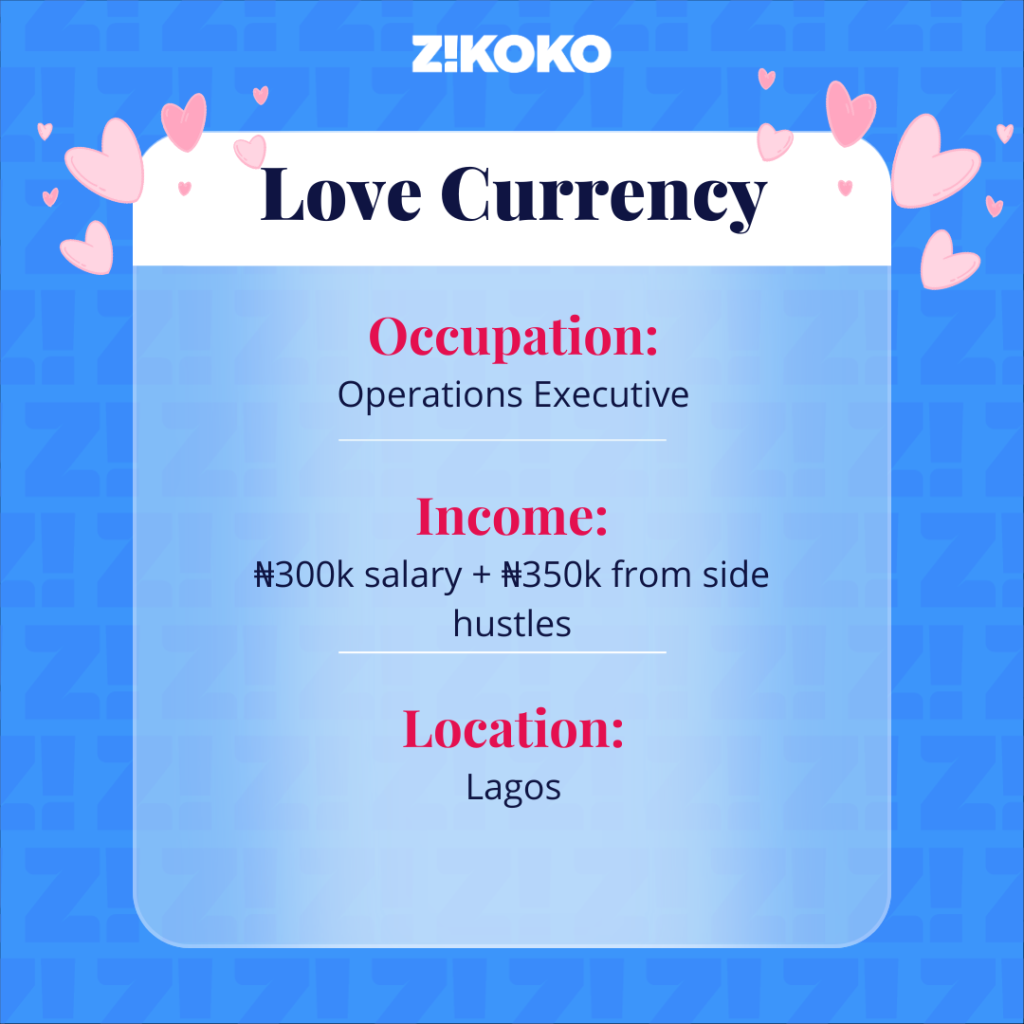
  • The topic of how young Nigerians navigate romantic relationships with their earnings is a minefield of hot takes. In Love Currency, we get into what relationships across income brackets look like in different cities.


    Interested in talking about how money moves in your relationship? If yes, click here.

    How long have you been with your partner?

    I met my wife, Sola, through a family friend in 2022, and we got married a year later. October 2026 will make it our third year of marriage.

    Tell me more about how you met

    I had been single for about three years and was ready to try another relationship that would hopefully lead to marriage. But most of the ladies I met weren’t serious. Once I talked to them for a while and expressed interest, they would start asking me for money. I sell and repair ACs; I don’t have money like that.

    I was tired of the constant billing, but I also wanted to find a good woman. So, I started to tell family and friends that I was looking for a wife. A close family friend connected me with Sola. At first, I didn’t consider her as an option, but she turned out to be an understanding and caring woman. 

    Why didn’t you consider her?

    She had a two-year-old daughter. It’s not that I didn’t like her because she was a single mother; I just thought her child was young. I was worried that she was still involved with her child’s father or had to talk to him. I didn’t want to be with someone who had another man in her life.

    However, my family friend assured me that the child’s father had abandoned them in Nigeria and married someone else in another country. That meant they wouldn’t be seeing each other physically, and he wouldn’t be calling her every time either. 

    I started getting to know Sola better. We connected, and I liked her character. She didn’t bill me like other women. In fact, she cooked and served me the first day I went to her house. We weren’t even dating then. It showed me that she was really mature and wouldn’t need a man to give her money before showing him respect and care.

    Interesting. What was Sola’s financial situation like when you got together?

    She taught at a school — she still does — and also had a hairdressing salon in front of her family’s house. I don’t really know how much she was making, but she lived alone and was comfortable. It was the first time I dated a financially independent woman. She even helped me with small business loans a few times. I always paid her back, sha. 

    She had to let go of her salon when we got married in 2023. Her family’s house is quite far from where we live, so it doesn’t make sense to travel all that distance for a salon. We haven’t been able to raise money to get a better salon close to us, so she’s been running home services after school and on the weekends. 

    Also, my wife’s child started living with us a year ago. It’s not easy to manage her work at the school and two children (we had a baby in 2024). Now imagine adding the stress of a salon and apprentices. It was easier when the eldest child was with Sola’s parents. 

    Get More Zikoko Goodness in Your Mail

    Subscribe to our newsletters and never miss any of the action

    Do you mean your stepdaughter didn’t always live with you both?

    No, she didn’t. She lived with her grandparents. Even when Sola and I were dating, the child didn’t live with her. I honestly thought we’d continue with that arrangement after marriage.

    However, Sola’s mum had a stroke last year and couldn’t take care of the child anymore. I suggested sending her to stay with Sola’s sister, but Sola refused. It almost caused a big fight, but I had to let the issue go to let peace reign.

    Why were you against the idea?

    We never discussed the child living with us. It was like being forced into a financial responsibility I hadn’t prepared for. Imagine starting a marriage with children almost immediately. My expenses have doubled. I can’t drop money for food and say it’s only for one child na, abi? 

    The child also recently started school, and Sola begged me to contribute to the school fees. That was an extra ₦80k I hadn’t planned for. I can’t tell her to go and meet the child’s father because people will say, “Didn’t you know she was a single mother before you married her?” So, I have to accept that I’ll have to financially provide for the child one way or another, even if I don’t particularly like it. 

    It’s what Yorubas call “Abẹ́lẹ́jayan án”— someone who engages in an unprofitable venture. No matter how much I spend on the child, she’ll still wake up one day and go look for her real father.

    That’s an interesting way to look at it. Does your wife know about your concerns?

    I believe she knows the child isn’t my primary responsibility, so she doesn’t always come to me with her needs. It’s just when she needs help that she outrightly asks. And of course, as a woman, she knows how to get money from me when she really needs it. For instance, I can’t just ignore her complaints about the child being sick. I’ll have to step in if I have money.

    How do you both run your home’s finances?

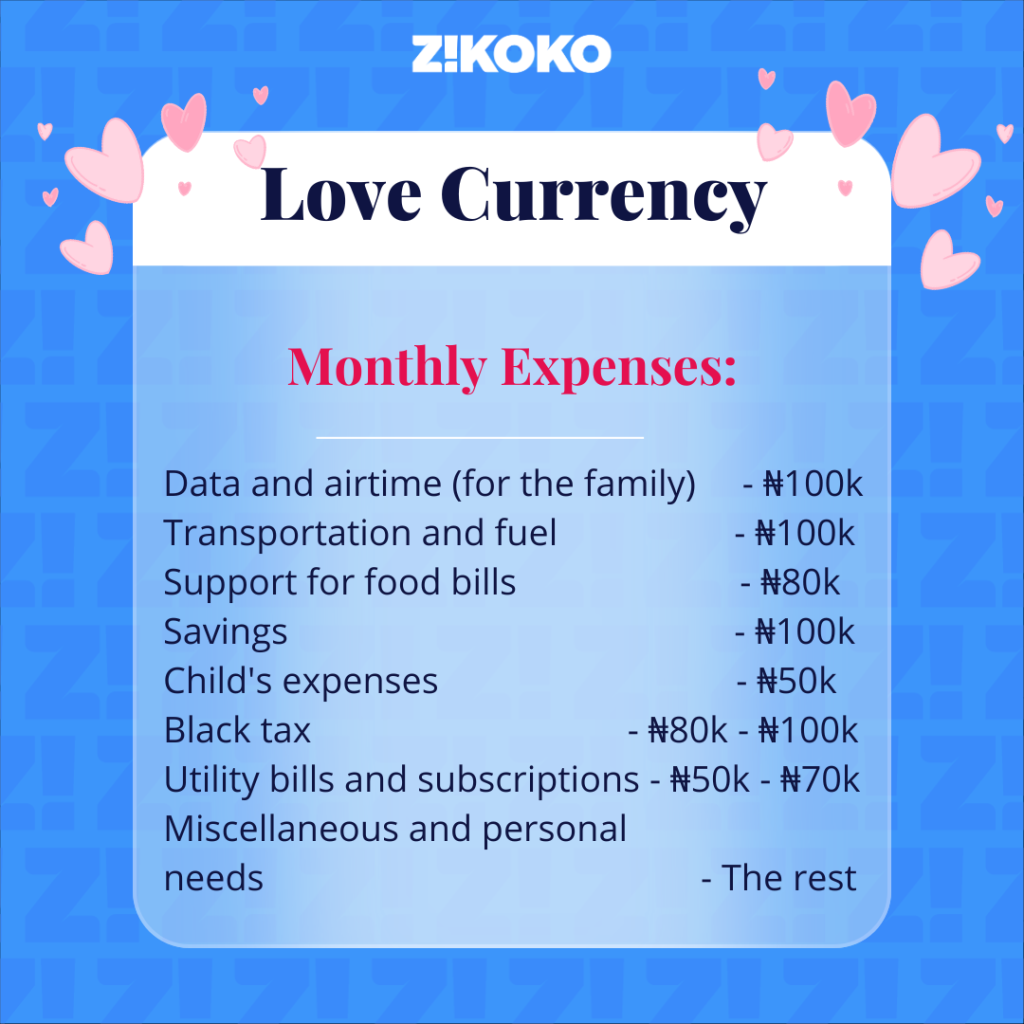
    We don’t really discuss it; we just know what the other has to do to contribute to the expenses. I pay ₦450k in rent for our mini flat, pay for electricity, and drop ₦10k every week for food. If the food money isn’t enough, she adds money. 

    She also handles the children’s needs and small things around the house. Sometimes when I’m broke, Sola loans me money, and I pay her back when I make money. We know how to manage ourselves.

    Do you have a budget for relationship expenses, like dates and gifts?

    No. We don’t spend money on unnecessary things. If she sees something she likes and needs, she tells me, and if I have money, I’ll give it to her. If I don’t, we leave it. I’m not a birthday person like that, so I don’t need gifts. If she wants to make me happy, she knows she just needs to cook my favourite meal and let me rest. 

    Do you both have financial safety nets?

    I put ₦30k into a monthly ajo contribution, so I only need to add a little money to it and pay rent. Sola knows how to manage money, so whenever I have excess cash, I give it to her to keep for me. Most of the time, we still use whatever I keep with her to handle household needs or family emergencies. 

    What’s your ideal financial future as a couple?

    I hope to be a major electronics supplier in the future. At least, if I make enough money to do business, we’ll be able to live a better life and enjoy good things. Sola is also always talking about building her own school someday. So, that’ll be good too.

    Interested in talking about how money moves in your relationship? If yes, click here.

    *Names have been changed for the sake of anonymity.


    NEXT READ: I’m a Heavy Saver, but He’s an Impulse Spender

  • On the Streets is a Zikoko weekly series about the chaos of modern dating: from situationships and endless talking stages,  to heartbreak and everything it means to be single in today’s world.

    After years of looking for the right relationship, Charity* (28) believed she had unexpectedly found one close to home. But what seemed like a promising chance at love ended in heartbreak. In this story, she opens up about her dating history and how it’s shaped her outlook on relationships.

    What’s your current relationship status, and how do you feel about it?

    I’m single and not rushing into anything. I’m open to a relationship, but I’ve accepted that it might not happen anytime soon.

    How did you get to that point? Walk me through your dating life.

    I entered my first relationship at the end of secondary school. But even before that, I had a childhood crush on David*.

    He was a family friend, then my older sister’s boyfriend. Our families attended the same church, so we saw each other often. At the time, he was the coolest guy in church, and I was self-conscious around him. We’d often greet each other, but by the time he started dating my sister in 2013, that phase faded away. 

    Not long after, I developed feelings for Teslim*.

    Tell me about Teslim.

    We were classmates. We became close during our final year of secondary school. Ironically, we didn’t get along at first. I was the class representative, and he was the assistant class representative, so we argued a lot over responsibilities. But as the year went on, we got along, and I realised he was a cool person.

    On Valentine’s Day in 2014, he gifted me a teddy bear and wrote me a letter telling me he liked me. I remember feeling so happy and loved. It was sweet, and that was how we started dating.

    How did that relationship go?

    It was nice at first, but there was always one major issue. Teslim was a religious Muslim, while I come from a strict Christian family. For me, dating had always been tied to the idea of marriage, so our religions kept coming up when we talked about the future.

    By my first year in university, I started wondering whether I could compromise on our differences. But when I tried to discuss what our future might look like, he avoided the conversation. Around that time, I also became more religious and started feeling guilty about being in a relationship that conflicted with my beliefs.

    The relationship ended when he started pushing for sex. We made out often,  but I wasn’t ready to go all the way. The more he pressured me, the more uncomfortable I felt. It started to seem like he just wanted to use me, so I ended the relationship in my second year of uni.

    Get More Zikoko Goodness in Your Mail

    Subscribe to our newsletters and never miss any of the action

    I see. What happened after you broke up?

    I stayed single for years. I didn’t date anyone until after NYSC.

    It felt strange because my friends were all in relationships, while I couldn’t meet anyone I connected with.  The people I liked didn’t feel the same way, and if someone liked me, I didn’t feel anything for them.

    It became exhausting, and I really wanted a relationship. I think that’s why when David came back into my life, I was open to it.

    David, your sister’s ex?

    Yes. My sister and David had broken up years earlier; their relationship hadn’t even lasted a year.

    This was 2022. I had moved back home and started working. David was still in the city. We attended the same church where he was active in the youth fellowship.

     As I became more involved in church activities, David and I interacted frequently. We started seeing each other more often and catching up after church services. He was always friendly and went out of his way to greet me or check on me.

    Over time, we became friends and started chatting regularly. I realised I was developing feelings for him again.

    Were you hesitant because of your sister?

    Very much. But after a few months of friendship, I asked him what he wanted. He admitted he had feelings for me and wanted us to date. I raised the issue of my sister, but he said he didn’t think it was a problem because their relationship ended years earlier.

    I was still nervous about her reaction, so we started dating in 2023 without telling my sister.

    Did she eventually find out?

    She found out a few months into our relationship. 

    I felt guilty and told my mum about the relationship. She didn’t think it was a big deal, especially since my sister was already engaged. When I hesitated to tell her, my mum told her herself.

    My sister called me to ask if it was a joke. When she found out it was true, she was upset. I apologised, and she said she understood, but her reaction was cold.

    When she came home for Christmas, things were awkward. She barely spoke to me and didn’t confide in me the way she used to. Even when our parents tried to mediate, she avoided the conversation. Things between us were never quite the same.

    How were things going with David at the time?

    He had good qualities, but his communication was terrible. He was also careless with money, which led to many arguments because I’m more cautious financially.

    He ultimately became secretive because he felt I was policing him. He bought a car without telling me, even though his friends knew. But the biggest secret was his plan to leave for Canada. 

    He didn’t tell you? Damn.

    I found out less than two weeks before he travelled. What hurt the most was that I’d been planning my life around the relationship. I even turned down an opportunity to move to another city because I wanted to stay close to him.

    We argued about it, but I accepted it and even escorted him to the airport. After he arrived in Canada, communication became difficult. Sometimes he’d reply with excuses about being busy or his phone dying. I had already started saving and thinking about how I might join him within the next year. Then one day in April 2025, I realised he had blocked me.

    That must have been painful.

    The hardest part was not getting any explanation. I asked his mum to speak to him, and she told me he asked to be alone for now.

    I couldn’t openly grieve because I didn’t want my sister to say she warned me. So I lied to my family, telling them our breakup was mutual.

    Did you try dating again afterwards?

    Yes. In August, I started talking to Paul*, a church member who had been interested in me for a while. I wasn’t really attracted to him, but I convinced myself to give it a chance.

    It didn’t go well. He had very rigid views about gender roles and constantly posted red pill content about how women should behave. It made me uncomfortable.

    Ironically, he didn’t even live up to those standards. On our first outing, he said his bank app wasn’t working and asked me to transfer money so he could pay. I never got the money back.

    Later, he told me that if we married, I would have to quit my job to raise children. Meanwhile, I was earning more than he was and contributing more financially to the relationship. It felt very hypocritical.

    By October, I told him I wasn’t interested and ended things. After all of that, I realised I’d rather be single than force a relationship with someone I don’t even like.

    So, what have these experiences taught you about relationships?

    One major lesson is not compromising for a relationship that isn’t guaranteed. I did that with David for two years, but he didn’t hesitate to leave when it suited him.

    I’ve also learned not to enter into relationships under pressure. I’m still hopeful I’ll meet the right person someday, but I’m no longer rushing it.

    Finally, how are the streets treating you these days? Rate it on a scale of 1 to 10.

    6/10. It’s not terrible, but it’s not great either. For now, I’m focusing on enjoying my life and the company of my friends and family.


  • For a while, paying internationally from a naira account required planning.

    Not because access was impossible, but because it was layered.

    • You opened a virtual USD card.
    • Or funded a domiciliary account.
    • Or converted naira in advance to cover subscriptions, travel bookings or international purchases.

    It worked. But it was not seamless.

    For many Nigerians who travel frequently, run international businesses, or maintain global lifestyles, cross-border payments have become a matter of currency management rather than mere convenience.

    Now, that dynamic is shifting.

    Naira cards are once again enabled for cross-border spending, allowing customers to transact internationally directly from their naira accounts, subject to their bank’s applicable limits and terms. This reopening reflects continued collaboration between Nigerian banks and Visa to responsibly restore international functionality.

    For consumers, it simplifies something that had become operationally complex. Booking flights, paying international school fees, settling hotel reservations or managing global subscriptions no longer requires a separate funding strategy each time.

    Access Without Compromise

    Ease is important. Trust is essential.

    As international functionality returns, security remains foundational. Visa’s global network supports real-time transaction monitoring, advanced analytics and tokenisation technology that help protect sensitive card information across borders. Transactions are assessed in milliseconds to detect unusual activity and reduce fraud risk.

    Banks complement this with customer controls such as instant alerts, configurable limits and in-app card management tools. The result is a layered model of protection that combines network intelligence with individual control.

    The reopening of Naira cards for cross-border spending signals more than restored capability. It reflects renewed confidence in Nigeria’s payments ecosystem and the strength of partnerships that prioritise both access and protection.

    For globally minded Nigerians, it means one thing above all: international payments can feel direct again.

    Not improvised. Not managed around. Simply seamless.


  • Nigeria’s musical history is inextricably linked to its sociopolitical struggles. For decades, artists have used their platforms to document systemic failures, from decaying infrastructure to pervasive corruption and insecurity.

    The following fifteen tracks serve as a musical timeline of a nation grappling with persistent challenges that remain as relevant today as when they were released.

    15. “Sorrow, Tears and Blood” — Fela Kuti (1977)

    “Sorrow, Tears and Blood” is one of the most direct musical responses to state violence in Nigeria. Fela Kuti composed it following the 1977 military raid on his Kalakuta Republic, destroying property and brutally assaulting residents. During the attack, Fela’s mother, Funmilayo Ransome-Kuti, was thrown from a window and later died from her injuries.

    The lyrics criticise the military government and the culture of fear it created. Also, the “zombie” mentality of the Nigerian military and police that Fela sings about highlights their role in enforcing state-sponsored violence. Fela juxtaposes the silent suffering of the masses with the brutal efficiency of the uniformed forces. The song’s core message addresses the culture of fear that prevents citizens from demanding better governance.

    The famous refrain about “my people self dey fear too much” points to how ordinary citizens often remain silent in the face of oppression. Nearly five decades later, the themes of police brutality and state intimidation still resonate in Nigeria’s political conversations.

    14. “Which Way Nigeria?” — Sunny Osokun (1984)

    Sunny Okosun released this reggae-fusion track during a period of intense economic uncertainty and military intervention. The song is about the economic crisis that followed Nigeria’s oil boom years, when inflation, unemployment, and declining public services became widespread.

    He questions the nation’s trajectory, asking why a land so rich in natural resources continues to struggle with basic development. The song was a plea for unity and a wake-up call to a leadership that seemed indifferent to the plight of the common man. Okosun’s question about the country’s direction remains relevant today, as Nigerians continue to debate governance, economic reforms, and national leadership.


    Subscribe to Zikoko Pop newsletter, The Feed, for the most important pop culture news


    13. “Mr President” — African China (2000)

    As 1999 ends and Nigeria enters the Fourth Republic, African China releases “Mr President”, a direct appeal to the ruling elite. He demands that leaders fix the light, water, and roads. He points out the stark contrast between the lives of the wealthy politicians and the impoverished masses.

    Most importantly, the song speaks for the ghetto inhabitants who bear the brunt of bad policy. It’s an unrelenting demand for basic amenities. Despite billions spent on infrastructure since 2000, Nigeria still faces chronic power outages and a bad transport system. African China’s warning that “poor man dey vex” continues to resonate in this period of extreme economic hardship and social unrest.

    12. “Plenty Plenty Nonsense” — Trybesmen (2001)

    “Plenty Plenty Nonsense” by the hip-hop group Trybesmen criticised social decay and political irresponsibility in Nigeria. The trio, which included eLDee, Freestyle, and Kaboom, use the song to point out the contradictions between political promises and the realities Nigerians faced. They touch on the absurdity of a petroleum-rich nation facing constant fuel scarcity and the prevalence of “419” scams driven by desperation.

    The song uses humour to mask a deep-seated frustration with a system that forced citizens to find illegal ways to survive. Today, the “nonsense” described in the track has only evolved in scale. From the rebranding of fuel subsidies to the rise of sophisticated cybercrime, the underlying issues of economic mismanagement remain.

    11. “Hard Life” — Blackface feat. Alabi (2004)

    In “Hard Life,” Blackface focuses on the grit of survival. He highlights the rising cost of living and the struggle for young Nigerians to find meaningful employment. The track focuses on the psychological toll of poverty, documenting how the “common man” is often forgotten in the halls of power.

    The song’s themes are amplified in the current economic climate; record-high inflation and a devalued Naira. The hard life Blackface sang about in 2004 has become a permanent reality for millions. It remains a stark commentary on the widening gap between the Nigerian elite and the working class.

    10. “Jaga Jaga” — Eedris AbdulKareem (2004)

    This track famously drew the ire of then-President Olusegun Obasanjo, who reportedly criticised it publicly and discouraged radio stations from playing it, for its blunt assessment of Nigeria as “jaga jaga” (shambolic). Abdulkareem describes a country where nothing works and is filled with political assassinations, ethnic clashes and systemic decay. The lyrics are a visceral reaction to the chaos of the early 2000s.

    Twenty years later, the term “jaga jaga” remains the go-to descriptor for the state of the nation. The song’s references to insecurity and political volatility are mirrored in today’s struggles with banditry and electoral malpractice. It stands as one of the most defiant protest songs in Nigerian hip-hop history. Classic.

    9. “For Instance” — 2Baba (FKA 2Face Idibia) (2006)

    2Baba uses this track to paint a picture of what a functional Nigeria could look like, contrasted against the reality of corruption. He criticises leaders who hoard wealth while the public suffers. The song encourages citizens to envision a better future while holding their representatives accountable.

    Released during a period of growing public debate about governance and corruption, the song reinforces 2Baba’s reputation for socially conscious music. Its conversational style made complex political issues accessible to a wide audience. It’s still relevant to this day because we can only wonder.

    8. “Eyes Don Clear” — Junglist (2007)

    A standout track from the defunct Ajegunle music group Junglist, “Eyes Don Clear” uses Galala sound to speak truth to power. It describes a moment of political awareness. The phrase “eyes don clear” suggests that citizens are beginning to recognise deception and manipulation by political leaders. The masses are no longer blinded by empty promises or ethnic sentiments.

    It’s a song about the awakening of the Nigerian consciousness. The song’s sentiment was reflected in the “Soro Soke” (Speak Up) movement years later. While the “eyes” of the public have indeed “cleared,” the struggle to translate that awareness into systemic change continues. The song remains a powerful anthem of grassroots resistance.


    READ NEXT: 7 Times Nigerian Artists Sang About Bad Electricity


    7. “2010 (Light Up)” — Sound Sultan feat. M.I Abaga (2010)

    Sound Sultan and M.I Abaga collaborate on this track to address the specific failure of the power sector. They pair metaphors to highlight how darkness stifles the nation’s potential. The song also serves as a metaphor for the lack of progress and transparency in governance.

    It’s 2026, Nigeria’s national grid continues to collapse frequently, making the plea to light up a daily prayer for businesses and households. The song is still a classic critique of how mismanagement of a single sector can cripple the entire economy’s productivity. It also reminds us of Sound Sultan’s long-standing reputation as one of Nigerian music’s most consistent social commentators.

    6. “Democrazy” — Dagrin (2010)

    Dagrin questions the definition of democracy in Nigeria. In his verses, he showcases the disparity between the constitutional promise of “government by the people” and the reality of police harassment and hunger. The track serves as a voice for the street, articulating the frustrations of those excluded from the democratic dividend.

    It also describes the disconnect between political rhetoric and social reality. To date, “Democrazy” is still cited as a definitive account of the Nigerian struggle and disillusionment of a generation that feels betrayed by its leaders.

    5. “Wild Wild West” — M.I Abaga (2010)

    M.I Abaga turns his attention to the specific insecurity in Jos, Plateau State, but the themes apply to the entire country. He describes a wild environment where life is cheap and violence is localised yet constant. The track mourns the loss of peace and the government’s inability to protect its citizens.

    The “Wild Wild West” has since expanded to include the North-East, North-West, and South-East, as insecurity has become a nationwide crisis. M.I’s documentation of communal clashes and state neglect remains a vital piece of social commentary in our increasingly volatile climate.

    4. “Politics Na Big Business (Remix)” — Femi Kuti feat. 2Baba and Sound Sultan (2015)

    “Politics Na Big Business (Remix)” expands on Femi Kuti’s critique of political elites who treat governance as a path to personal wealth. Bringing together two iconic contemporary artists, the song argues that political office in Nigeria often becomes an economic enterprise rather than a platform for public service.

    As the cost of running for office in Nigeria reaches billions of Naira, the song’s premise has never been more accurate. It highlights the stagnation of national development and why meaningful policy often takes a backseat to the personal enrichment of the political class.


    Get More Zikoko Goodness in Your Mail

    Subscribe to our newsletters and never miss any of the action


    3. “Rara” — Tekno (2017)

    This song blends danceable Afropop with commentary on political and economic hardship. Tekno sings about the struggles of ordinary Nigerians, from poor electricity to noise pollution, bad government and low quality of life, while questioning leaders who make promises during election seasons but fail to deliver afterwards. Nine years later, the lyrics are still true. Unemployment, poverty, and darkness are still the order of the day.

    2. “This Is Nigeria” — Falz (2018)

    Adapted from Childish Gambino’s “This Is America,” Falz creates a viral social commentary that touches on everything from SARS brutality to religious hypocrisy and internet fraud. The music video uses striking imagery to mirror the terrible reality of Nigerian life.

    The song is so impactful that it was briefly banned by the National Broadcasting Commission (NBC), exposing the government’s sensitivity to criticism. It remains a cultural and socio-political moment that summarises the multifaceted crises that plague Nigeria till today.

    1. “Talk” — Falz (2019)

    Continuing his streak of social activism, Falz releases “Talk” to address the apathy of the citizenry and the brazenness of politicians. He criticises the recycled leaders who jump from one party to another while the youth remain sidelined. Released shortly before Nigeria’s 2019 general elections, it’s a call to action, urging Nigerians to stop being silent spectators in their own governance.

    With each election cycle, the talk Falz provides serves as a checklist for the recurring failures of the political elite and the need for a more engaged electorate. All he mentions in the songs still persists in today’s Nigeria.


    ALSO READ: 10 Great Nigerian Albums That Are Like Movies, Ranked


  • Every year, some of Nigeria’s most profitable companies share a portion of their profits directly with shareholders.

    It’s called a dividend. 

    The rule is simple: own the company’s stock before a deadline, known as the qualification date, and you’re entitled to a payout.

    You don’t need to trade the market or track daily price swings. If your name is on the company’s shareholder register by that date, the dividend lands in your account when payments begin.

    Several Nigerian companies have already announced their 2025 dividends, with qualification deadlines running from April to June 2026. Here’s a breakdown of some of the companies paying shareholders this year.

    1. MTN Nigeria (MTNN)

    After a difficult 2024 where foreign-exchange losses wiped out profits, MTN Nigeria bounced back strongly in 2025. The recovery is now translating into a healthy payout for shareholders.

    • Dividend per share: ₦15 final dividend (₦20 total for the year, including ₦5 interim already paid in November 2025)

    • Qualification date: April 8, 2026

    • Payment date: May 5, 2026

    • Registrar: Coronation Registrars Limited

    2. NGX Group (NGXGROUP)

    The company that owns and operates Nigeria’s stock exchange is also listed on it. NGX Group grew revenue by 36% in 2025, and shareholders are getting both cash and extra shares.

    • Dividend per share: ₦2 final dividend (₦3 total for the year, including ₦1 interim already paid)

    • Qualification date: April 10, 2026

    • Payment date: April 29, 2026

    • Bonus issue: 1 new share for every 3 shares held

    3. BUA Cement (BUACEMENT)

    BUA Cement had one of the most dramatic earnings surges of 2025. Profit jumped by more than 350% to over ₦450 billion, and the dividend reflects the scale of that growth.

    • Dividend per share: ₦10

    • Qualification date: May 8, 2026

    • Payment date: May 21, 2026

    • Registrar: Africa Prudential Plc

    4. Dangote Cement (DANGCEM)

    Dangote Cement reported ₦1 trillion in profit after tax, and its dividend increase mirrors that performance.

    • Dividend per share: ₦45

    • Qualification date: June 17, 2026

    • Payment date: July 2, 2026

    • Registrar: Coronation Registrars Limited

     The ₦45 payout per share, up from ₦30 last year, ranks among the largest cash distributions in NGX history.

    5. United Capital (UCAP)

    United Capital doesn’t always dominate headlines, but it has built one of the most consistent dividend records on the NGX, and its 2025 results came with 35% revenue growth and a higher total dividend payout.

    • Dividend per share: ₦0.70 final dividend (₦1.00 total for the year, including ₦0.30 interim already paid)

    • Qualification date: April 7, 2026

    • Payment date: April 24, 2026

    • Registrar: Africa Prudential Plc

    6. NASCON Allied Industries (NASCON)

    NASCON — part of the Dangote Group — produces many everyday staples for Nigerian kitchens, including salt, seasonings, and tomato paste. Its 2025 dividend marks a sharp jump from recent payouts.

    • Dividend per share: ₦6

    • Qualification date: April 1, 2026

    • Payment date: April 28, 2026

    • Registrar: Meristem Registrars Limited

    7. Mecure Industries (MECURE)

    Pharmaceutical manufacturer Mecure posted strong growth in 2025, with revenue rising 69% and profit up 177%. Its dividend more than doubled compared to the previous year.

    • Dividend per share: ₦0.32

    • Qualification date: April 23, 2026

    • Payment date: To be communicated

    • Registrar: Cordros Registrars Limited

    Before You Do Anything, Check Your E-Dividend Mandate

    One detail that often catches investors off guard: qualifying for a dividend doesn’t automatically mean you’ll receive it.

    To get paid, your bank account must be registered with the company’s registrar through Nigeria’s e-dividend mandate system. If that mandate isn’t active, the dividend may end up sitting in an unclaimed pool, and recovering it later can be a long process.

    Here’s how to register your e-dividend mandate:

    1. Download the e-Dividend Mandate Form from your registrar’s website or the website of the Securities and Exchange Commission, Nigeria.

    2. Fill in your details, including:
      • Your full name (as it appears on your share certificate or Central Securities Clearing System (CSCS) account)

      • Your bank account number

      • Your Bank Verification Number (BVN)

      • Your CSCS account number (if available)

    3. Submit the completed form to the company’s registrar, either directly or through your stockbroker. Some banks can also process the mandate on your behalf.

    4. The registrar will verify your shareholder details, while your bank confirms your account information and BVN through the e-Dividend Mandate Management System.

    Once the mandate is approved, future dividends from companies you own shares in will be paid directly into your bank account.

    Before any qualification date passes, confirm with your stockbroker or registrar that your e-dividend mandate is active.


    Note: Dividend figures and dates sourced from NGX corporate action filings and company announcements. The final dividends for the Financial Year 2025 are scheduled for 2026. All dividends are subject to a 10% withholding tax. This article is for informational purposes only and does not constitute financial advice.


    Also Read: 10 Nigerian Stocks the Market is Watching for 2026


    Get More Zikoko Goodness in Your Mail

    Subscribe to our newsletters and never miss any of the action

  • In a world that runs at the speed of 5G, managing your money shouldn’t feel slow, complicated, or restricted. Yet many of us still deal with declined cards at international checkouts, long waits for cross-border transfers, and awkward workarounds just to pay for everyday services.

    It doesn’t have to be that way.

    OneDosh is built for a borderless world; where your money moves as fast as you do.

    Features That Make the Difference

    1. A Global Visa Card That Works Wherever You Do

    Say goodbye to regional barriers. With the OneDosh Global Visa Card, you can pay confidently online or in-store anywhere Visa is accepted from subscriptions and ads to travel and everyday purchases. Simple, reliable, global access.

    2. Real Time Transfers, No Waiting Around

    Life doesn’t run on business days, and neither should your finances. Send money instantly to friends, family, or colleagues, when you send with OneDosh, it arrives in seconds.

    3. Effortless Money Management

    Finance should feel intuitive, not intimidating. OneDosh offers a clean, easy-to-use experience that makes managing multiple currencies, tracking spending, and moving money feel as natural as sending a message.

    4. Protect Your Value with Stablecoins

    In uncertain economies, stability matters. With stablecoin support, you can store value in more stable digital dollars  while enjoying the speed and flexibility of modern finance.

    OneDosh isn’t just another finance app; it’s built for people who live, work, and earn without borders. It’s the smart  way to move, spend, and protect your money in a connected world.

    Stop dealing with friction. Start moving money your way, The only financial app you’ll ever need — OneDosh.

    Start Doshing and don’t look back.

  • As conversations around representation and women’s voices continue to grow globally, Cadbury Hot Chocolate is leaning into storytelling as a meaningful way to champion the experiences of women. This Women’s Month, Cadbury Hot Chocolate reinforced this commitment by supporting platforms that spotlight African women narratives and creativity.

    To mark the start of Women’s Month 2026, the beloved and trusted cocoa beverage brand partnered with Laju Iren Films for the premiere of Onobiren, held on March 1, 2026, at EbonyLife Cinemas, Victoria Island. While the evening featured the debut of the film, the larger message centered on the importance of investing in women’s stories and creating spaces where their voices can be heard. The gathering brought together filmmakers, dignitaries, actors, influencers, media professionals, and women from diverse walks of life. Aligning with this year’s International Women’s Day theme, “Give to Gain,” this collaboration embraced the belief that investing in women drives collective progress within society at large. Guests arriving at the premiere were welcomed not just with the anticipation of Onobiren, but with a sensory reminder of comfort at the Cadbury Hot Chocolate booth, where both warm and chilled cups of hot chocolate were served alongside curated snacks.  

    More than a film premiere, the evening became a key moment that reflected the resilience, ambition, and determination of women striving to build meaningful lives while remaining true to their identity and values. Speaking on the collaboration, Oladapo Oshuntoye, Cadbury Cocoa Beverage Category Manager, noted: “At Cadbury, supporting women’s voices is something we are deeply committed to. Our partnership with Laju Iren Films reflects our support to women’s storytelling and fostering spaces where women’s experiences are acknowledged, heard, and truly valued.”

    Beyond the premiere itself, the collaboration highlights a broader commitment by Cadbury Hot Chocolate to supporting African women perspectives. Morolake Emokpaire, Head of Marketing, Mondelēz West Africa added, “Celebrating women is not a one-night gesture for us. It is about consistently creating platforms that prioritize women’s voices and elevate their lived experiences without reducing them to stereotypes. By supporting stories like Onobiren, we continue to contribute to a broader cultural movement that values authentic storytelling and empowers women to share their perspectives.”

    By investing in narratives that center women’s voices, the Cadbury Hot Chocolate continues to contribute to a cultural landscape where diverse stories can thrive. This way, the evening represented more than a film premiere. It served as a reminder that storytelling has the power to shape culture, inspire conversations, and open new possibilities for the next generation of women.

    And long after the theatre lights dim, those stories continue to live on even in conversations, communities, and in the courage of women charting their own paths.


  • GridLocked is a daily pop culture guessing game built for Nigerians. Every weekday by 9am, you’ll get six clues, sixty seconds, and an answer only a Nigerian would know.


    Today’s GridLocked is a musician.

    How many clues do you need to get it right? 👀

    Share your result when done, but don’t spoil the answer for others. (Missed the last GridLocked? Play it here.)

    16 March 2026

    Come back every weekday by 9am for a new grid or subscribe to Z Daily, Zikoko’s daily newsletter, to get new GridLocked puzzles, real Nigerian stories and other fun content in your inbox.


    How to Play GridLocked

    • The Goal: Guess the answer for the day before time runs out. (The answer could be a Nigerian person, place, song, movie, or even slang.)
    • The Lock: You cannot type a guess until you have revealed at least one tile (clue).
    • The Reveal: Tap any tile to reveal a clue. Every clue describes the answer for the day. The fewer tiles you flip, the better.
    • The Clock: You have 60 seconds to guess right. The timer starts the moment you flip your first tile. (You get multiple guesses.)

    The GridLocked Squares: What Do They Mean?

    When the game ends, you see your guess count, total time spent, and the number of tiles flipped. The tiles are shown as white and purple squares.

    • ⬜ (White) = A tile you flipped
    • 🟪 (Purple) = A tile you left closed

    The fewer white tiles you have, the better your result.

    • Best Result = ⬜🟪🟪🟪🟪🟪 | Guesses: 1 (Only needed one clue and one guess to get it right)
  • Sunken Ships is a Zikoko weekly series that explores the how and why of the end of all relationships — familial, romantic or just good old friendships.


    Amara* (25) has had only two close female friendships in her life. The pain and harm she suffered from these have left her feeling raw, used and unappreciated. 

    For Sunken Ships, she shares how both friendships unfolded, the scars they left behind and why she’s holding off on making new friends.

    Let’s start from the very beginning. What was it like making friends growing up?

    It was difficult. I was always the third wheel. You know how those trios work: two people are actually best friends, and I’d just be there to fill the space. So when I finally had my own person, someone I could call my best friend, I was very excited. 

    When was this?

    It was in 2017. I was sixteen, and we met as we transitioned to university.

    How did your friendship with her go?

    I thought our friendship was solid at first, but something about our dynamic was off from the beginning. I just couldn’t see it because of my excitement. She took on an older-sister role, even though she was only a year older than me. I let her.

    Did you guys have any issues??

    Yes. She was often condescending and outright rude, but I would swallow it because I was terrified of losing her friendship. So I kept quiet, and the resentment just kept building beneath the surface.

    Get More Zikoko Goodness in Your Mail

    Subscribe to our newsletters and never miss any of the action

    When was the last straw for you?

    We were both trying to get into university that same year. I told her all my plans; my applications, my choices and more. She was very surface-level with her own information, but I didn’t notice. Then one day, my brother’s friend came to me and said, ”Have you seen Ayo’s* matriculation picture?” 

    I was like, what do you mean, matriculation picture?

     She had gotten into school and said nothing to me. I found out from an outsider.

    Whoa, that must have stung.

    It hurt me deeply. I had literally texted her the week before, “I checked my portal and nothing yet, do you think we should find someone to help us?”

     I was worried about us both. This girl had blocked me from her WhatsApp status so I wouldn’t see the news. That was when I understood I was in that friendship alone.

    Did you confront her about it?

    No, I just withdrew. I know she noticed, but she didn’t care enough to ask what was wrong. She let me drift away. That was my first friendship heartbreak.

    How did you deal with it?

    I threw myself into sorting out my admission to keep from sitting with how heartbroken I was. I had a boyfriend, and that relationship helped ease the pain. I eventually moved on to another friendship with Jemi*, but I will never forget how it felt.

    I’m so sorry. How did your friendship with Jemi start?

    I met her in 2018 at a hangout at my parents’ house. She visited with her cousin one evening, and we got into an interesting debate. She’s very smart, and I thought I had finally found someone on my level. We connected over that argument and kept talking from there.

    What was your friendship with her like?

    Unfortunately, our friendship followed the same pattern as my friendship with Ayo. I found myself sliding into that older-sister, younger-sister dynamic again. I hated it.

    Did you try to speak to her about it?

    No. I was a people pleaser, so I found it difficult to talk about my issues with Jemi. I stomached it throughout our uni days. I didn’t want to lose her friendship, but her wicked actions eventually drove us apart.

    Tell me about that.

    After uni, I got a job in Lagos. Jemi suggested I stay with her at her place because I would’ve been commuting from far, and it would be too expensive. 

    Living with her was nice at first, then it became awful. She had terrible mood swings and would randomly give me the silent treatment for days without explanation. I remember once she came home from work upset, I was trying to cheer her up, and she yelled at me. 

    Ah, how did you react?

    I didn’t say anything. I pulled back and waited for her to apologise. Four days passed, and she didn’t say a word to me;  no good morning, nothing. My chest was tight the whole time. I had to be the bigger person and surprise her with a gift at her job to make peace.

    Hm. Did things between you get better after that?

    No, in fact, they got worse. Being friends with Jemi was an emotional rollercoaster. She constantly lashed out at me and left me hanging.

    Can you recall an incident where she did this?

    Yes, her then-boyfriend had sent money for us to celebrate her birthday in 2021. I never leave the house without vex money;that’s a personal rule, but she assured me she had everything covered. We went to this restaurant on the island, and the place accidentally debited her account three times. Everything, including our transport money back home, was gone. I tried to help us find a solution, but her mood shifted, and she left me there.

    She abandoned you at the restaurant?

    Yes, o. I was stranded in a place I didn’t know, no data to call anyone, no idea which direction to even start walking. Even the bouncer at the restaurant could see how distressed I was. He came over and warned me that the area was sketchy, and I stood there trying not to cry as I asked for directions to a bus stop.

    Omo, that’s crazy. Did she come back for you?

    Eventually, yes. She called, apologised and said she’d called us an Uber. I was already on the road by then, trekking home and shaking with anger. I started mentally checking out of the friendship from that day. 

    The only reason I stayed was that I had just ended a 4-year relationship and was terrified of being alone. She knew that I had nobody else.

    Did her attitude improve after that incident?

    No, in fact, her mood swings got worse. One Sunday, she went to church, came back with her aunt, whom she’d spoken highly of. It was the first time I was meeting this woman, and she didn’t introduce us or say a word to me. 

    That’s weird.

    Right? Both of them just sat there, completely ignoring me. I put my earphones in and started listening to music, humming quietly to myself. Then the aunt tapped me and said I was making noise. To my surprise, my best friend backed her.

    Ah. How did you react to that?

    I got up, left the house, and went for a three-hour walk. When I came back, she still didn’t speak to me. So, I packed my things and returned home for a while.

    She called me a week later and said she’d missed me. She said she wanted us to start a digital marketing agency together, and that she’d move into my place and pay her share of everything. I agreed and convinced myself we could rebuild our rapport.

    What happened after this?

    I lost my life savings in a Ponzi scheme in December 2021. It was on Christmas Day, and I was desolate. I was literally on the floor crying, but what did my friend do? She gave me the silent treatment and then left with a friend to celebrate the festivities.

    Omo, that’s wild.

    It got even wilder. After that, we had a small disagreement, and she left the house without a word. Two days later, she came back with her younger sister and packed everything out of that house. Even my pot of beans, which was sitting on her gas cooker, wasn’t spared; she took the cooker and left the pot on the floor.

    That’s crazy!

    I felt so tired of life. I was jobless, I’d just been scammed, had no income, and she stripped the house of everything. I was so lost in my head that I almost walked onto a main road without even realising it. A woman selling fruits by the roadside had to pull me back from the traffic. That’s when I knew how far gone I was.

    Was this the final straw in your relationship with her?

    No, we reconciled after she reached out to me a few days later. One weekend in 2022, she suggested I spend a weekend at her friend’s place because they had constant power. I needed the stability for a discovery call with a potential client for our marketing agency, so I agreed. 

    What happened there?

    She had lied that he’d be travelling that weekend, but he was there along with his two roommates. I didn’t want to be demanding, so I just sat with it and hoped it would sort itself out. That night, she and the guy went into his room, and I was left on the couch in the parlour, by myself, in a house full of men I didn’t know.

    That’s scary.

    Exactly! I have a history of sexual assault, so I was already anxious. I kept fighting off sleep because I didn’t feel safe. When I eventually dozed off, I woke up to one of the men touching me inappropriately. When I sat up, scared, he walked back to his room. I sat there alone in the dark, shaking.

    Gosh, I’m so sorry. Did you tell Jemi in the morning?

    After she left for work the next morning, I texted her and told her what happened. She was upset. She came back, confronted him on my behalf, and he apologised. But it didn’t mean much to me, that’s medicine after death.

    What did she do after that?

    She sent me home with bus fare, and on the way, she texted to say she’d send me ₦30,000 naira for the client work. This was a ₦300,000 naira deal. I texted back and told her to keep it. The danfo driver literally became my comforter because I was crying the whole way home. When I got in, I wrote her one last message. I told her I was releasing everything, not out of bitterness, but for my peace of mind. I blocked her right after.

    Were you guys ever in contact after that?

    No. However, a year later, my brother showed me a picture on Instagram. She and the guy — the one at whose house everything happened — were dating. It was like a gut punch. I’m so glad that era is over.

    How have these experiences affected the way you approach friendships now?

    Honestly, it’s a no-go area. I’ve met genuinely good people, but there’s a wall I can’tbring down. I keep things surface-level, which is sad, because I used to dream of having a real best friend. The fantasy of one person who knows you completely, and who celebrates every chapter with you. It just hasn’t translated to my real life.

    Will you ever give friendships with girls a chance again?

    I don’t know. I’ve been praying about it. Maybe if I find someone who inspires that kind of connection in me again. If not, the loose friendships I have now will be okay.

    *Names have been changed for anonymity.

    See what other people are saying about this article online.


    Hey, if you’d like to share your own #SunkenShips story with Zikoko, fill out this form!


  • If you’re hitting the gym before sunrise, battling hot traffic, or powering through back-to-back meetings, staying fresh throughout the day can feel like a real challenge. The good news is that a few smart daily habits, paired with the right hygiene products like Dettol Cool Soap, can make all the difference between feeling sweaty and staying fresh.

    Here are five simple daily routines you can try today to keep you feeling fresh all day.

     Start the morning strong with a shower

    Your morning shower sets the tone for everything that follows, so make it count. Lukewarm or cool water helps close your pores and leaves skin feeling refreshed, but the real game-changer is what you bathe with.

    Reach for Dettol Cool, a soap that delivers trusted antibacterial germ protection while giving you an invigorating burst of cooling freshness. It leaves your skin feeling cool and refreshed, like a gentle breeze on a hot day. Make it part of your daily routine.

    Target the trouble zones

    Many people assume sweat itself causes body odour, but sweat is largely odourless. The smell develops when bacteria living on the skin break down sweat in areas like the underarms and other tight spaces on the body. Because these areas produce more sweat, they can become hotspots for odour. During and after your shower, give these spots a little extra attention to help keep bacteria under control and stay fresh throughout the day.

    Also, apply a reliable antiperspirant or deodorant immediately after drying off; your skin is most receptive then. For your feet, ensure they’re completely dry before putting on socks and shoes, since moisture is what bacteria love most. Breathable fabrics make a big difference, too. By washing away bacteria with an antibacterial product like Dettol Cool, you keep your body smelling fresh for longer.  

    Get More Zikoko Goodness in Your Mail

    Subscribe to our newsletters and never miss any of the action

    Stay hydrated, stay fresh

    Living in a warm climate like Nigeria’s means your body works harder to stay cool throughout the day. When temperatures rise, you naturally sweat more to regulate your body temperature, which is why staying properly hydrated is essential.

    Drinking enough water helps your body cool itself more efficiently and can prevent overheating. Aim for at least eight glasses of water per day and if you’re exercising, you’ll need even more.

    You can also support hydration with water-rich foods and drinks. Options like watermelon and cucumber also help keep your internal cooling system running smoothly.

    Have a mid-day reset

    Even with the best morning routine, an active day takes its toll. A mid-afternoon reset can make the second half of your day feel just as fresh as the first. Take a quick rinse after your

    lunch break or workout to refresh your body. When that’s not practical, use a cool, damp cloth on your neck and wrists, cleansing wipes, or change into fresh clothes.

    Many active individuals swear by keeping a small hygiene kit in their bag: a travel-sized deodorant, a face wash, and a Dettol Cool soap. This kind of proactive hygiene thinking is what separates people who merely cope with their active lifestyle from those who thrive in it.

    Wind down with an evening cleanse

    The evening cleanse is often overlooked, but it’s one of the most important steps in a complete hygiene routine. Throughout the day, your skin accumulates sweat, bacteria, environmental pollutants, and dead skin cells. Going to bed without washing it all away is not just uncomfortable; it can lead to skin issues and a less restful night’s sleep.

    A thorough evening bath does double duty: it removes the day’s buildup while the cooling sensation helps lower your body temperature slightly, which can actually signal to your body that it’s time to wind down. 

    Make your evening shower a consistent part of your routine. Light, breathable nightwear, a clean sleep environment, and fresh skin mean you wake up in a better state, and your morning shower becomes even more effective.

    Here’s the bottom line

    Staying cool, clean, and odour-free isn’t about one habit. It’s about building a consistent routine that works with your lifestyle. For active individuals who demand more from their day, Dettol Cool soap earns its place in that routine by offering the dual assurance of proven antibacterial protection and a cooling sensation. 


    READ ALSO: Sunken Ships: How A Secret Crush Ruined My Friendship