Someone you know has left or is planning to leave. 1,000 Ways to Japa speaks to real people and explores the endless reasons and paths they take to japa.
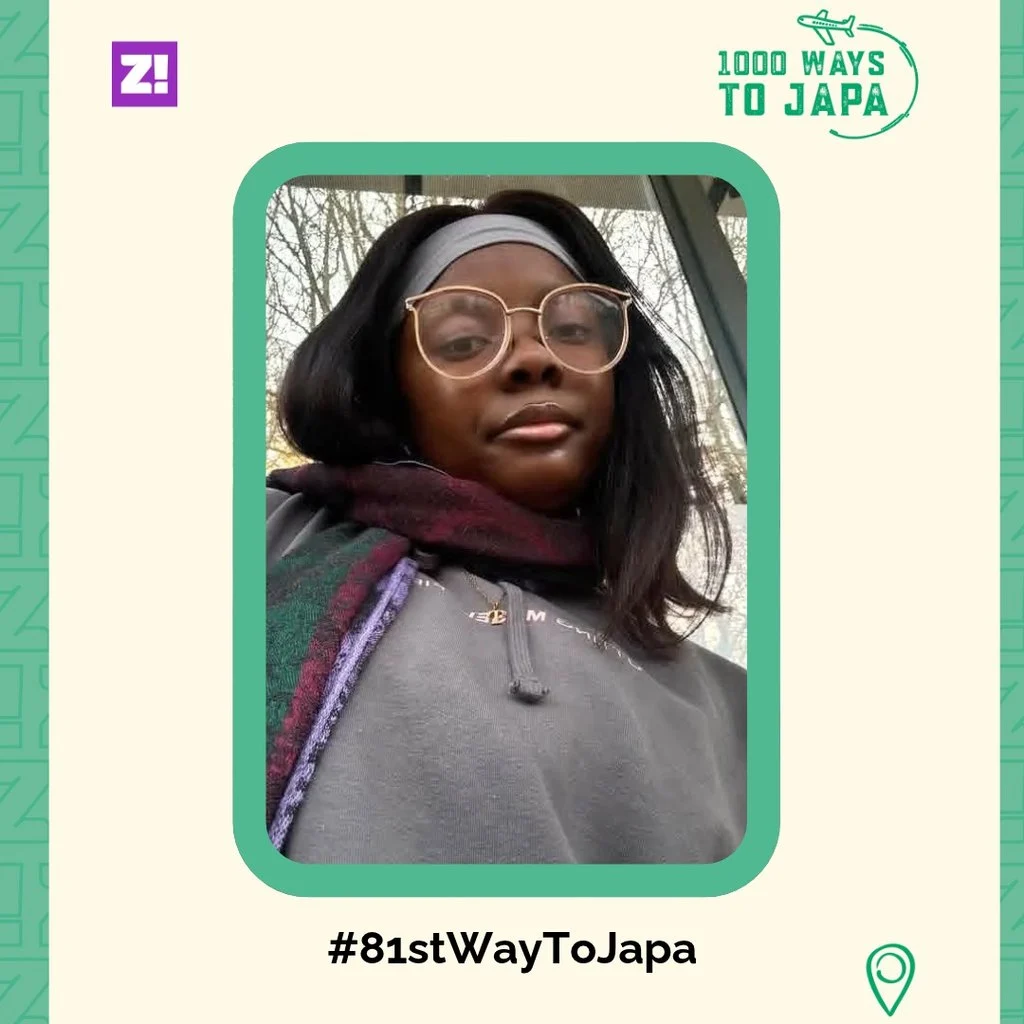
Toke (19) finished secondary school at 16, spent a year in pre-degree, another year at a Nigerian private university, and then moved to Poland to study medicine in February 2026. Here, she tells us how she found her way past unaccredited schools, why medical scholarships are so hard to find, and what part-time work can actually cover.
Where are you now, and when did you leave Nigeria?
I left Nigeria in February 2026, and I currently live in Northeastern Poland.
Nice. So what was life like before you left?
I finished secondary school in 2023 when I was 16. The plan had always been to go abroad, but it didn’t happen immediately. I completed a year of pre-degree in 2024, then 100-level at a private university in 2025. My parents didn’t want my life to stagnate while we waited, so they said I should go to school, and if the japa happened along the line, fine. In February this year, I left.
Was moving abroad something you wanted, or did you follow your parents’ wishes?
I wanted it. I’d always known, because my parents want a better life for us. I also have family members abroad, so we hear what they’re doing, and I’d daydream about living like that. I just didn’t know what the process would look like.
Interesting.! Why Europe, and not Canada or the US?
I’m studying medicine, and my first thought was Canada or the US. My dad didn’t want that for me. In Canada, the UK and the US, you have to finish an undergraduate degree before you can study medicine. I was fresh out of secondary school, and he didn’t want me to do a degree, then four more years of medicine, because I’ll probably be too tired by then. Europe is friendlier because they admit students straight from secondary school.
Understandable. Why Poland specifically?
Well, I chose it because I did my research. My parents wanted me to have somewhere I could settle and work, or move on from. Poland offers an international degree. It’s recognised across the Schengen area and the EU, and you can use it if you want to move to the UK, US or Canada. I wasn’t sure I’d want to stay in Poland, so I wanted a degree that wouldn’t tie me to the country where I studied.
Walk me through the research. Where did you start?
YouTube and Google first, then ChatGPT. I watched people talk about their experiences and how to do the documents, because sometimes the website says one thing and reality is another.
Then I stumbled upon a website called Medlink Students. It lists countries and universities that offer medicine, dentistry, or veterinary medicine in English, along with their requirements and application processes. They even offer a free consultation, which made my research a lot easier.
The Big Daily is your weekday shortcut to the biggest news shaping Nigeria. We cut through the noise, connect the dots, and explain why the news actually matters, all in one quick read.
What were you looking out for in a school?
Accreditation. I’d heard on TikTok about students who studied in Russia and were told their degrees weren’t valid when they graduated, and about a school in Ukraine, I think, that wasn’t even real. I didn’t want to waste six years, so I looked for good accreditation and schools with partnerships in places like the US and Canada.
Wow, that’s scary. Once you picked a school, how did you apply?
I went through their website, but some schools don’t update it in a timely manner. So I emailed to say I was a prospective student interested in studying medicine in English and asked for the requirements, and they sent them to me. Then I applied in January last year.
And the visa? How did that go?
I’m not exactly sure about the process, as my parents handled most of it. What I can say is that it depends on what you’re applying for, because study, work and the Schengen visa are all different. It’s very unpredictable. I’ve heard of people on government scholarships in Poland who were still denied by the embassy, and others who appealed and were denied again. The process is honestly crazy.
Were there any scholarships for Nigerians or international students?
I didn’t find any for myself, because you rarely find scholarships for medicine. There are scholarships for other courses, but they’re mostly for master’s and PhD, though I think there are some for undergraduates. There’s the Narodowa Agencja Wymiany Akademickiej (NAWA) scholarship and the Nicolaus Copernicus scholarship, which is for African countries and specifically includes Nigeria.
How did you feel once you got admitted and your visa was approved?
Relieved, honestly. I’d taken an unintentional gap year after finishing 100 level, and I felt behind because my mates were entering 300 and 400 level while I was starting again. It was exciting too, with a new country, new place and new people. But mostly, it was a relief to finally be passing that stage.
Okay, so you land in Poland. What were the first few weeks like?
I came with my mom, so I wasn’t alone. That helped, because we don’t have family there. We were jet-lagged, but I wouldn’t call it culture shock, because I’d watched a lot of YouTubers who live there.
The weather was the only real shock. Everyone kept saying it’d be cold; I expected it, and I still wasn’t ready. The other things were that everybody minds their own business and doesn’t eat spicy food. I love pepper, so that was hard.
Was it hard finding community?
I lived in Warsaw for six months before I resumed school this month. My parents wanted me there because it’s the capital and I’d integrate faster than in a smaller city. They know that if left to me, I won’t go out.
For the first month, I didn’t go out at all, so I knew nobody. Then a YouTuber I watch posted about a church service she attended, and it was a church I’d attended back in Nigeria. So I went, introduced myself to her, and joined the community; it’s so lovely. After a month alone, it was so nice to see other Nigerians.
Read this: She Moved to Canada Without a Job and Rebuilt Her Career From Scratch — 1000 Ways to Japa
Did you meet people outside church?
I’m a homebody, so not really. The other events I went to were from church too, like a fake traditional wedding in August that people I knew from church organised. If I hadn’t gone to church, I probably wouldn’t have met anyone.
How are you handling the language barrier?
In Warsaw, I completed a four-month semester at a language school, which helped me understand bits and pieces of Polish. I’m also taking language classes as part of my course, because you can’t do clinical rounds without learning the language.
Let’s talk money. Can you work as a student, and does the minimum wage cover the cost of living?
I don’t work right now because my schedule is jam-packed, but I’ve looked into it. Student workers have privileges until 26, like no bank charges and discounts on train tickets.
The minimum wage is about 31 PLN per hour. If you worked seven to eight hours a day as a part-time student, that’s roughly 3,000 a month. Rent is around 1,500, depending on where you live; groceries are about 400; transport is about 110; and miscellaneous is 150 to 200. So it covers everything, with some left over. It’d take a toll on you stress-wise, but I think it’s worth it.
Do you miss Nigeria?
Honestly, no comment! (laughs) I miss the spicy food. Sometimes I wake up at night craving food I can’t eat. I also miss my friends and family.
Is there anything Nigeria could have done differently to keep you here for medicine?
A lot. The requirements are strict; you need at least a C in subjects like biology, chemistry, maths and physics, and not everyone meets them. Student life isn’t always favourable, and the universities that are have tuition fees that are off the charts. If Nigeria had the kind of opportunities Europe offers, I might have considered it. Unfortunately, it hasn’t reached that level yet.
Do you see yourself coming back to practise?
If, by some miracle, Nigeria ends up paying doctors more than Australia, which I heard pays the most, then why not?
What’s one thing you love about living in Poland?
The small things. There are pedestrian crossings where cars actually stop. I was about 50 metres from a crossing once, and the first car already stopped for me. Nigeria had scarred me, so I was like, “You could have just gone; why are you waiting for me?” I also love the self-checkout at supermarkets. Those two made my life better.
What would you say to someone thinking of studying in Poland?
Just go for it. If you’re contemplating it, literally, just go for it.
On a scale of one to ten, how would you rate life in Poland right now?
I’d give it a seven. It would honestly be a ten if not for the weather.
Thank you so much, Toke! Anything you’d like to add?
Thank you for having me.
Want to share your japa story? Please reach out to me here