How are young Nigerians building wealth, one investment at a time? In this limited series, we follow three Nigerians as they share their investment journeys, from their first moves and costly mistakes to how they built the portfolios they have today.
This episode is brought to you by Hisa.

Hisa lets you buy and sell Nigerian and US stocks straight from your phone, all in one app. And with Hisa’s zero-commission campaign, new users who sign up before the end of 2026 can trade in both markets without paying trading commissions during the promotion. Ready to own a piece of the companies you know?
Download Hisa, create an account and start investing. Terms apply.
This is Bilal’s story, as told to Azara.
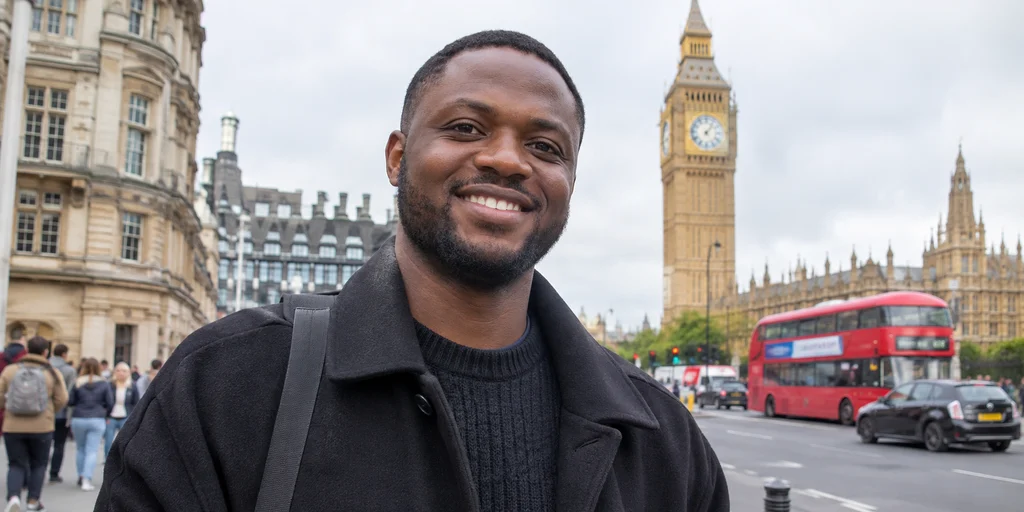
I’m only in my early 30s, and my investment portfolio is worth ₦65m. That’s just counting my naira holdings. I also have over $100k in dollar holdings, and more monthly returns than someone like me ever imagined he could make.
I say “someone like me” because over 20 years ago, I was just a child living in rural Oyo, under the roof of parents who could barely provide for me. My current reality is far beyond what I thought possible.
We were poor. There is no other word for it. My parents tried their best, and while their effort showed up in food on the table, there was very little money left over for other things. My parents were uneducated, and because of this, they could never get high-paying office jobs.
It didn’t really matter to me, though. My parents scraped together what they could and gave me a childhood I’m thankful for. But more than that, my father unknowingly introduced me to what would later change my life for the better: investing. And he taught it to me through ajo.
My dad was constantly in one ajo group or the other. Sometimes he’d give me his ajo contributions, and I’d run to the coordinator to hand over the money. This started when I was 8. I don’t recall how much he was contributing, but I just always knew the ajo groups were important and that one needed to set money aside and invest it in other things to live a good life.
This idea solidified when I was 12. Somehow, my father was able to buy a house thanks to his ajo contributions and other business endeavours. If he could build a house with ajo, then imagine what I could do if I were dedicated to planning my money like he was.
Fast forward to 2016, I got my first job after completing nursing school. It paid ₦35,000 monthly, and even though it was small, it was still more money than I’d ever had. I planned to save up and fund my dreams of studying medicine.
By 2020, I was in medical school and juggling a nursing job paying ₦96,000 a month. I also started considering relocating to the UK, so I searched until I found a nursing job that sponsored my relocation. I dropped out of medical school and travelled towards the end of the year.
I arrived in the UK with only ₦50k, but my new job paid me about the equivalent of ₦5.4 million a month.
I’ve felt a lot of happiness in my life, but other than marrying my wife in 2021, nothing has come close to what I felt the day my first UK salary hit my account. After I paid my taxes and pensions, my monthly take-home was between £2,700 and £3,500, which was still more money than I needed.
So what did I do with all my disposable income? I went back to my ajo roots, and I started investing.
How I Started Investing
Initially, I did not have a plan.
I was scrolling on Twitter one day, just doing my own thing, when I came across a post from someone who had invested in a crypto coin. They were showing their millions in earnings, and I thought, “I can do that.”
So, without proper research, I put £250 into the coin. At first, the coin’s value rose, but very quickly, everything tanked.
Twitter folks promised the coin would rise again, but it showed no signs of doing so. Annoyed, I sold what was left and made almost nothing in return.
Another person may have decided to avoid any kind of risk with their money going forward, but I’ve never examined my failures too closely. If something I try doesn’t work, my only plan is to investigate why and try again.
So, that’s what I did. I spent my extra time consuming anything and everything about investing. I read books, listened to podcasts, watched YouTube until investing was all my algorithm recommended, and as I learnt, I made smarter decisions.
In 2021, I began investing in US stocks with £50 and £100 at a time. My wife hadn’t started working in the UK yet, so I was the only one earning. I made sure to invest only spare cash.
By 2022, I felt more confident. I started contributing £100-£200 monthly, sometimes £300. But I was still making mistakes. I thought I could make quick money by buying and selling shares whenever their prices rose slightly.
I remember buying £200 worth of Tesla shares and selling them when they reached £205 because I thought I had made £5. But there were fees I hadn’t accounted for: my broker charged about £3/month, and buying US stocks in pounds also incurred a currency conversion fee. By the time those were deducted from my account, I was left with no profit.
Eventually, I understood that I needed to approach the stock market differently. I stopped chasing small gains and instead evaluated the value of the businesses I was buying stakes in, so I could make more long-term investments.
In 2022 as well, my wife started working as a nurse in the UK, and the additional salary meant we had more disposable income. So, I increased my investment budget to £500 a month.
By the end of that year, I had invested more than £6,000. I also participated in an ajo contribution with colleagues at work. When it was my turn to collect, I put the money into the stock market, taking my investments to about £10,000.
What can I say? Even after all this time, I’m still my father’s child.
Investing in Nigerian Stocks
There’s a reason I chose to invest in US stocks despite living in the UK: it has the world’s most profitable stock market.
To put it in perspective, the UK has a list of companies called the FTSE 100, which comprises its 100 biggest publicly listed companies. Big US companies like Apple are worth more than most of those companies combined. Not to mention that some global index funds have around 60% of their holdings in US-based companies. I think that’s more than enough evidence that the US influences global markets.
Yet, I wanted to diversify globally, and the only place that made sense to me was home.
Initially, investing in Nigeria didn’t feel like the best decision. In 2020, the naira experienced significant devaluation, and I worried about what that would do to my money.
But with all our emerging African talent and our stock market having stabilised over the years, it made sense to invest. Plus, I had lived in Nigeria for a long time, so I had a good idea of what the market was like.
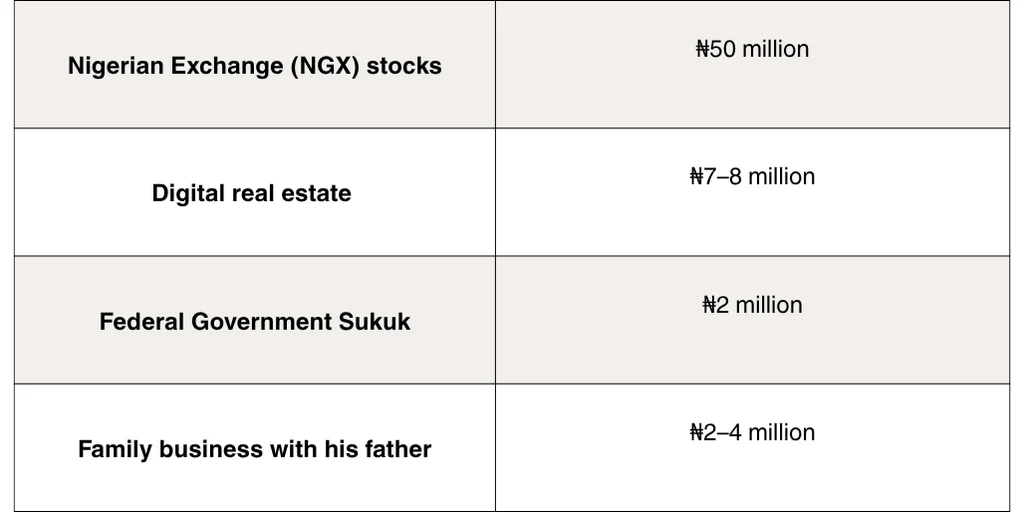
In January 2025, I made my first investment in a Nigerian stock: ₦2,000. I followed it with ₦9,000 a few days later and then ₦65,000.
I chose individual businesses rather than mutual funds and the like. I always go for and recommend established businesses in big sectors: agriculture, oil and gas, telecommunications, and industrial goods. Then, I identify the leading companies in each.
I’m Muslim, so there aren’t a lot of bonds and stocks I can invest in due to my religion. However, I also invested in a Sukuk bond. It pays me twice a year, and I’ve come to see it as passive income.
Recently, I also noticed a boom in real estate, and a portion of my money now goes to Real Estate Investment Trusts (REITs). Finally, I invest in a farm produce business with my dad. It’s the least I can do for him.
Today, my Nigerian portfolio is worth about ₦65m. This includes about ₦16m in profit within just two years.
My Current Nigerian Portfolio
More than the money — which is great — investing has given me a new way of seeing and interacting with the world. I understand geopolitical realities, what it truly means when the government makes certain moves, and the cause and effect of most policies, among so much more.
Today, I’m still in my early 30s, and I’m already thinking about retiring early. I wholeheartedly believe I can.
This is a far cry from the 20-year-old who could barely feed himself. Sometimes I still can’t believe how far I’ve come. I don’t really plan to change my strategy in the following months. Why should I? What I’m doing works well for me, and I only plan to keep adding more money to my existing stocks.
I also like to teach people what I’ve learnt, not just because it helps them, but because it also sharpens me. So I plan to teach investing through my social media.
In all, I’m grateful for where I am today, and I’m grateful that my father entrusted his 8-year-old son with ajo money, because who knows where that boy would be if he hadn’t?