• The scary and unfortunate reality of life in Nigeria right now is that kidnapping is big business. It’s become a billion-naira industry, and under Tinubu, the business has boomed a great deal. But it’s Nigerians who are paying the price of the seeming normalisation of kidnapping.

    Maximising shareholder value

    According to security research consultancy SBM Intelligence, the numbers have been tracking upward in a manner that would make any shareholders jump for joy.

    • Between July 2021 and June 2022: 3,420 people abducted; ₦653.7 million paid in ransom.
    • Between July 2022 and June 2023: 3,620 people abducted, ₦302 million paid in ransom.
    • Tinubu gets sworn in as president in May 2023.
    • Between July 2023 and June 2024: 7,568 people abducted (more than twice the previous year); ₦1.048 billion paid in ransom (kidnapping becomes a billion-naira business).
    • Between July 2024 and June 2025: 4,722 people abducted; and ₦2.56 billion paid in ransom (that’s a 144% year-on-year growth).

    Locking in for the last quarter

    There’s a real human cost to the growth of this violent industry, and we’ve really seen it play out in the last quarter of 2025. In the second half of November, we witnessed a devastating week of violence and kidnapping that we will not forget any time soon:

    Sadly, the kidnappings have not stopped. In fact, as the year comes to a close, they appear to be ramping up. But in a news cycle that feels like it’s moving at 200 miles per hour, these kidnappings can get lost in the constant noise. So here’s a list (that is by no means comprehensive) of some of the recent incidents you might have missed.

    13 Women kidnapped in Mussa, Askira/Uba Local Government Area of Borno

    On Saturday, November 22, 2025, 13 young women were kidnapped in Mussa, Askira/Uba Local Government Area of Borno state. The kidnappers let one of them go after she told them she had a newborn that still needed breastfeeding.

    The remaining 12 were released a week later on November 29. According to Abubakar Mazhinyi, the president of the local Askira-Uba council, it was the parents of the victims who went into the bush to speak with the kidnappers and secure their release. But Mazhinyi claims that no ransom was paid because the kidnappers realised the army was in pursuit.

    ₦300 million ransom demand in Isapa, Kwara state

    On Tuesday, November 25, 11 villagers were kidnapped from the Isapa community in Kwara state. The kidnappers demanded ₦300 million as ransom.

    They gave the community a deadline of December 10 to pay the ransom and refused the ₦5 million offer the community members offered. There have been no further updates and it’s unknown if the victims are even still alive.

    The Red Wedding of Sokoto

    On the night of Saturday, November 29, armed attackers abducted 13 women and a child in the village of Chacho in Wurno LGA, Sokoto State. A bride and ten of her bridesmaids were among those abducted.

    Two days after the abduction, the kidnappers contacted the bride’s family, demanding to speak with the traditional ruler of the community. He refused to speak with them, and the kidnappers have declined to negotiate with anyone else. There have been no further updates since.

    Snatching royalty in Ifelodun LGA, Kwara

    On November 29, Kamilu Salami, the Ojibara of Bayagan-Ile community in Ifelodun Local Government Area of Kwara State, was kidnapped. The community has accused security agencies of not doing enough to rescue him, which has left the people feeling afraid and uncertain.

    Cherubim and Seraphim Church in Kogi

    On Sunday, November 30, a newly established Cherubim and Seraphim Church in central Kogi was attacked. About 20 people were taken by the attackers, including the pastor and his wife. The attackers are demanding ₦200 million.

    Attack on ECWA Church in Kogi

    During the morning Sunday service on December 14, armed men attacked Evangelical Church Winning All (ECWA) in the Ayetoro Kiri area of Kogi state. They took over 30 worshippers away. The kidnappers contacted the community on December 16 to demand a ransom of ₦600 million.

    It’s someone’s job to stop this, right?

    We have security agencies whose job it is to stop this kidnapping epidemic, and those agencies all answer to one person: the Grand Commander of the Order of the Federal Republic (GCFR). In other words, President Tinubu.

    So what has Tinubu and his administration been doing about all of this?

    Get More Zikoko Goodness in Your Mail

    Subscribe to our newsletters and never miss any of the action

    Officially, there is fire on the mountain 

    As we’ve already made very clear at this point, things are not looking good. It’s been looking bad for a while. But the widespread coverage of the incidents between November 15 and 22 seemed to help our dear president realise what everyone could already see: there is fire on the mountain.

    They say whenever you wake up, is your own morning. Tinubu’s morning apparently came  on November 26 when he declared a “nationwide security emergency.” He announced a number of steps to address the situation.

    • The police are to recruit an additional 20,000 officers.
    • Police training facilities are to be upgraded, and they can also use National Youth Service Corps (NYSC) camps as training depots.
    • Police officers serving as security for VIPs are to be withdrawn and deployed to security-challenged areas of the country.
    • The DSS are to recruit more forest guards and deploy those who have already been trained as such.
    • The Federal Government will support state governments that have set up security outfits at the state level.
    • The National Assembly is to begin reviewing our laws to allow states that need state police forces to establish them.
    • Mosques and churches in vulnerable areas can request police protection during gatherings.

    Who’s worth protecting?

    The withdrawal of police security from VIPs has probably been the most talked-about item on that list of emergency responses.

    Members of the National Assembly have complained about the withdrawal of their police orderlies, especially when they can see the directive is being selectively enforced.

    On Tuesday, December 9, Senator Abdul Ningi raised a point of order to complain about the withdrawal of his police orderly. He called out the selective enforcement of the directive, claiming he had seen certain groups retain their own police protections while senators were being stripped of theirs.

    Ningi said, “It should be done across the board. Let us see what happens from the office of the President to the Vice President, the Senate President, the Speaker of the House, ministers, governors, business concerns, and even the sons and daughters of political office holders.”

    Added to Ningi’s comments, Nobel Laureate, Wole Soyinka, recently criticised Tinubu’s son, Seyi Tinubu, for moving with a security team large enough to “take over a small country.”

    Honestly, we see the good intentions behind the directive. But it makes no sense for elected lawmakers to be stripped of protection while the President’s son goes about with a small army.

    The karate instructor as Defence Minister

    I’ve never been president before, so maybe I just don’t know what I’m talking about. But I think that when you have to declare a nationwide emergency because kidnappers are carrying hundreds of school children away at a go, it’s a sign someone at the Ministry of Defence is slacking.

    But I guess Tinubu sees it differently because he didn’t sack the Minister of Defence, Badaru Abubakar. Instead, Abubakar resigned on Monday, December 1, 2025, citing health issues.

    Still, it offered an opportunity for Tinubu to bring in fresh blood, fresh eyes and fresh impetus. So what did he do? He appointed the immediate past Chief of Defence Staff, retired General Christopher Musa.

    It feels too much like Tinubu rewarding another ally with an appointment, just like he’s doing by nominating names like Femi Fani-Kayode, Reno Omokri, and former INEC chairman, Mahmood Yakubu, for ambassadorial positions.

    While he was still Chief of Defence Staff, General Musa advised Nigerians to learn martial arts like karate to protect themselves from bandits and kidnappers; the same ones the security agencies claim have “sophisticated weapons.” Forgive me if I’m struggling to be excited that he’s been appointed Minister of Defence.

    When asked how these karate skills would protect against bullets, Musa said Nigerians should “avoid where bullets are flying.” I’m still wondering whether the schoolgirls in Kebbi and Niger should have avoided their school in order not to be kidnapped.

    Well, from the actions the government is taking, it appears the answer to that is yes.

    The “holiday” no one asked for

    Between Wednesday, November 19, 2025 and Saturday, November 22, several states announced full or partial closure of schools or boarding houses:

    • Kwara State
    • Plateau State
    • Katsina State
    • Taraba State
    • Yobe State
    • Niger State

    On a federal level, the Ministry of Education has shut down 41 of the 104 federal government colleges. By November 26, when the nationwide emergency was announced, 20,468 schools across seven states had been closed indefinitely.

    You have to catch them first 

    One of Tinubu’s security emergency directives was for the National Assembly to work on laws to establish state police forces. But the Senate has decided that what needs immediate attention is increasing the punishment for kidnapping.

    The Senate is working on amending the Terrorism (Prevention and Prohibition) Act to classify kidnapping as an act of terrorism. If the amendment bill gets passed, it will make it possible to sentence offenders to life imprisonment.

    This implies our lawmakers think that kidnappers are not afraid enough of the current punishment. But I’ll argue that these kidnappers are not afraid of being caught. They are boldly posting videos on TikTok. That’s not the behaviour of people who think they are about to be arrested anytime soon.

    So while the Senate’s amendment is good in theory, does it really achieve anything if the kidnappers are never caught in the first place?

    “I will look for you, but I will not find you”

    So how’s the hunt for these kidnappers going?

    Liam Neeson’s character in the Taken franchise might have had a very particular set of skills, but it seems all the Nigerian government has is a particular set of excuses.

    Despite the fact that we have bandits and kidnappers posting like content creators on social media, the federal government claims it cannot track them. The explanations for this failure vary depending on which official you ask.

    Special Adviser to the President on Policy Communication, Daniel Bwala, says it’s because they use the Starlink satellite network, and that makes it impossible for the Nigerian government to track them.

    The Minister of Communications and Digital Economy, Bosun Tijani, says they bounce calls over multiple cell towers using special technology.

    Yet somehow, according to presidential spokesperson, Bayo Onanuga, security agencies were able to secure the release of the 38 worshippers from Eruku by tracking the kidnappers in real time.

    And though they could track this group of kidnappers, the security agencies did not pursue and arrest them after they released the worshippers. Apart from the crime of kidnapping, they killed two people in their attack on the church, yet they are allowed to continue roaming free.

    This is Nigeria

    We can’t deny that the government is making moves to address the insecurity in Nigeria. It’s just so sad to see the same nepotism, corruption, incompetence and all-around anyhowness that have come to define life in Nigeria show up in each of these moves. One can see them in:

    • The directive to withdraw police security to fight insecurity is being selectively enforced.
    • The new defence minister is the old Chief of Army Staff under whom kidnapping became a billion-naira industry. As though that’s not bad enough, his solution is for Nigerians to learn karate and avoid bullets.
    • We’re passing laws to increase punishments when we can’t even track and arrest the criminals.
    • We cannot track kidnappers because they use Starlink and bounce their calls, except when the case is high enough in profile, then suddenly we can track them in real-time.

    The bottom line

    It is hard to decide what’s scarier: the fact that kidnapping has become a billion-naira industry with a growth rate to rival tech unicorns, or that the people paid to stop it think “avoiding bullets” is valid advice.

    While the “shareholders” of the abduction industry continue to see record-breaking returns, it’s ordinary Nigerians who pay the dividends in trauma, ransom, and lives. We are watching schools close, churches and homes turn into crime scenes, and roads become no-go zones. 

    Meanwhile, the government plays musical chairs with security appointments and suggests we karate-chop our way out of a national crisis.

    Unless this government fixes up or gets replaced by an actually useful one, the only “booming” business will be the snatching and trading of people.


    Before you go, help us understand how you and other young people feel about the 2027 general elections by taking this 10-minute survey.


    If you or anyone you know have been affected by the epidemic of kidnapping or any of Nigeria’s many problems, share your story with us here. We’d love to hear from you!


    [ad]

  • Photo credit: Financial Times

    If you’ve mistaken the decline in headlines about Boko Haram for their disappearance, you’d hate to know that it has started featuring more in the news for all the wrong reasons. 

    What has Boko Haram been up to?

    In less than one week, Boko Haram has been linked with two major attacks against the Nigerian armed forces. On Saturday, November 17, Boko Haram fighters launched an unexpected attack on a Nigerian Army camp in Kareto, Borno State. According to military sources, the attackers stormed the camp armed with weapons, including a car bomb used for a suicide attack. 

    While the sources claim that about 20 soldiers lost their lives as a result of this invasion, the Defence Headquarters (DHQ) later put the death toll at five. Some properties, including one military truck,14 other vehicles, and the camp itself, were also destroyed during the attack.

    On Monday, November 18, another attack in Kaduna state was linked to men who are believed to be Boko Haram terrorists. These suspected terrorists attacked a team from the Nigeria Security and Civil Defence Corps (NSCDC) in Farin-Kasa, Kaduna State. The team was checking the National Grid in Shiroro, Niger State, after power lines were damaged, causing blackouts in the North.

    During their patrol, they saw some stranded foreigners near a village and let them join their convoy for safety. But unknown to them, over 200 Boko Haram fighters were hiding on a nearby hill, waiting to attack. The fighters opened fire, and the NSCDC officers fought back, killing over 50 of the attackers.

    Unfortunately, seven officers are missing, and a search is ongoing to find them. Some officers were also injured and are being treated in the hospital. 

    Why should we be concerned? 

    If there were ever a time when the Nigerian armed forces needed to tighten all loopholes and be extra vigilant, it would be in 2024. This is mainly because there’s a new terrorist group called Lakurawa that has started operating in Nigeria’s Northwest region. This group entered Nigeria through weak border security, catching the Nigerian armed forces off guard. It has been up to no good since then. Its members recently killed about 20 people in Kebbi state and destroyed livestock worth millions. 

    While the operations of Boko Haram and Lakurawa are not interconnected, both terrorist groups seem to be bringing the fight to the Nigerian armed forces in November. 

    What is Nigeria doing about this?

    Before the Boko Haram attacks, Maj.-Gen. Edward Buba, the Director of Defence Media Operations, mentioned that the Nigerian military has increased intelligence and surveillance efforts to track down the Lakurawa terrorists. However, the armed forces being ambushed by a group of terrorists twice in one week is enough reason to question how strong their overall anti-terrorism efforts are.

    The Nigerian government has also been investing heavily in the fight against insecurity.  From January to June 2024, the Tinubu administration invested a total of ₦1.03 trillion in reducing terrorism. 

    What does this mean for Nigerians?

    The recent attacks are not the only audacious move that Boko Haram has made recently. In October 2024, the terror group beheaded four people in Gwoza, Borno State. It released a video of the gruesome killing, calling it payback for its members who were killed by the Nigerian military.

    “This is in response to the relentless onslaught and killings of our people by the Nigerian military,” one of the terrorists in the video said.

    In the same month, Boko Haram killed 40 Chadian soldiers after it carried out a similar surprise attack on a military base near the Chad-Nigeria border.

    Even though the Multinational Joint Task Force (MNJTf) formed by Nigeria, Chad, Niger, and Cameroon have mostly weakened the terrorists, they seem to be making renewed attempts at violence with these daring attacks.

    Comrade Bulama Abiso, the Executive Director of the Network of Civil Society in Borno State, believes that Boko Haram’s resurgence shows that “security agencies are relaxing” and that this should not be so. 

    “When Boko Haram is not completely overrun, security agencies need not relax,” Abiso said.

    According to analysed data from the Armed Conflict Location & Event Data Project (ACLED), an organisation that collects data on violence and protests, at least 2,336 Nigerians died as a result of insecurity in the first three months of 2024 alone. 

    We might notice a more disturbing trend if terrorists continue to carry out more attacks like this.

    [ad]

  • On Thursday, November 7, the Nigerian Defence Headquarters confirmed that a new terror group named Lakurawa have emerged in Nigeria and is operating in the Northwest region of the country. 

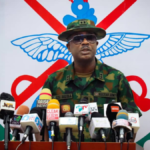
    Spokesman of  Defence Media Operation (DMO), Major General Edward Buba, who broke the news during a press briefing in Abuja, said the terrorists are not of Nigerian origin but have majorly been operating in Northen Sokoto and Kebbi States. He also assured Nigerians that the military has intensified its operations and will flush out the terrorists to ensure the safety of the people.

    In this article, we break down some burning questions about the terrorists and their operations in Nigeria.

    Where did Lukarawa come from?

    As noted by Buba, the terrorists are not from Nigeria. They are a cross-border terror group whose members come from Mali, Libya, and Niger. They gained entrance into Nigeria through the borders it shared with the two mentioned countries, and this was only possible due to weakened border security, caused by the coup in Niger Niger Republic.

    What does the Niger coup have to do with the entrance of the terrorists?

    Before now, Niger, along with other countries in the Lake Chad Basin (Cameroon, Chad, and Nigeria) were part of a Multinational Joint Task Force (MJTF) that worked closely to fight terrorism in the area, but a coup affected their operations. How? In July 2023, factions in Niger’s military overthrew the government of the country and suspended its constitution. To pressure the military to back down and restore democratic government, the Economic Community of West African States (ECOWAS) which Niger belongs, imposed some sanctions on the country and suspended it from the regional bloc. As a result of this, Niger pulled out of the MJTF, and this led to weakened border security which gave the Lakurawa terrorists a way in. 

    What do the terrorists want?

    Lakurawa is a fate-based terrorist group which shares similar beliefs with Boko Haram, and just like the dreadful group that has terrorised Nigeria’s Northeast for years, Lakurawa seeks to uphold the teachings of Islam wherever it is. Since they set up base, they have tried to impose Sharia law in the communities where they operate. 

    When did the terrorists enter Nigeria?

    The terror group has been in Nigeria before now; As far back as 2018, they were reportedly invited by some communities to help with their bandit problem. Lakurawa came in, fought off the bandits and restored some calm in the communities but settled down and attempted to impose Sharia law on the locals instead of returning to their countries– things remained that way until the Nigerian military and the Department of State Services (DSS) conducted a joint operation in 2019 that sent them packing.

    There is no consensus as to when Lakurawa re-entered Nigeria again, but the earliest mention of the group by the media can be traced back to July 2023 thanks to a complaint by Sani Yakubu, a lawmaker representing Tangaza/Gudu Federal Constituency of Sokoto State in the House of Representatives.

    During a plenary session, Yakubu complained that both local bandits and the Lakurawa terrorist group were terrorising his constituency and that swift intervention was needed. “The Lakurawa who claimed to be jihadists from Niger, Mali and Libya and the local Bandits terrorising the area. The two used to be sworn enemies, but have now joined forces, making it more difficult for the deployed security operatives to address the insecurity in the general area,” Yakubu said.

    How have they terrorised communities in Sokoto and Kebbi ?

    The terrorist group has caused harm in the communities they penetrated. According to accounts given to BBC Hausa Service and Daily Trust, the Lakurawa terrorist group has done the following since they began their operations:

    1. They have beat up young people who shave their beards, have on a different hairstyle, or listen to music.
    2. They fought, defeated and indoctrinated local bandits and have become one with them
    3. They collect religious taxes from locals and punish those who refuse to pay by seizing their cows
    4. They have robbed locals of their money and some other belongings
    5. They have offered some young people the sum of 1 million to join their operation.

    How dangerous are they?

    Eyewitness accounts of locals in Sokoto suggest that they have sophisticated weapons, use drones, and conduct coordinated attacks against government officials.

    The Nigerian Defence Headquarters say they were only able to gain grounds in the communities because they started off by defending communities against bandits and were, as a result, accommodated by locals who assumed the group had good intentions for them. Locals initially accommodated them, thinking they had good intentions for them, only reporting their presence when the group started terrorising the

    What’s the update?

    The Lakurawa terrorist group is currently hiding out in Tsauni forest, a large area spanning across Kebbi and Sokoto; however, the Nigerian military is actively conducting operations to flush the terrorists out. It has also declared nine people believed to be members of the terror group wanted. Their names are Abu Khadijah, Abdurrahman, Dadi Gumba (also known as  Abu Muhammed), Usman Shehu, Abu Yusuf, Musa Wa’a, Idris Taklakse, Ibrahim Suyeka, and Ba Sulhu.

    [ad]

  • The past week hasn’t been the best time to be an Abuja resident as five first-world countries raised alarm about possible terror attacks. The United States has gone as far as evacuating government staff back home and the United Kingdom, Australia, and Ireland have reduced consular services. It’s indeed a very critical period in Abuja.

    To gain a sense of how life currently is in Nigeria’s capital city, Citizen spoke to four Abuja residents — Elizabeth, a 24-year-old who lives in Garki, Noa, a 34-year-old who lives in Karu, *Jane, a 25-year-old who lives in Gwarimpa and *Stephen, a 36-year-old who lives in Kubwa.

    ALSO READ: What To Do When There’s a Terrorist Threat Alert in Nigeria

    Do you think the terror alert is credible?

    Elizabeth — marketing intern 

    “I believe it’s a rumor because foreigners can’t be trusted, and they tend to say things to suit you when they mean something else. Our country could very well be blindsided on this terrorism thing.”

    Jane — product manager

    “I don’t think there’s going to be a terrorist attack, or at least not in the areas people think. When the terrorists want to attack and notify the government, it’s either one of two things — the terrorists won’t attack where people think or there’s no terrorist attack happening at all. Or maybe it’s not going to happen in Abuja, but somewhere else in Nigeria. This is because they know that when they notify the state, the state will tighten security and that’s literally a death trap.

    “There would also be an issue in the sense of weapon sophistication because these guys can’t carry armored tanks like the army. So, even if they attack at all, it may be in remote areas like Buari, Kuali, or any of the remote towns.”

    Has the terror alert affected lives personally?

    Noa — businessman

    “The terrorism alert hasn’t really affected me or my business because we’re going about our day as usual. The bars are open and even new ones are springing up on a daily basis. I know I saw one yesterday that was full to capacity. The joints are still there and people are eating roasted fish. We’re really not bothered about the terror alert. 


    Stephen — logistics and cab driver

    “The security alert has really impacted negatively on the transportation sector. For instance, I was expecting to receive customers that used British Airways to arrive in Nigeria on Saturday and Sunday, but the flights were canceled. It hurt because I was expecting to make a lot of money. Even the Jabi Lake Mall has been closed due to the alert, and that’s an income source for me too.”

    Jane

    “On Sunday, my family members said we shouldn’t go to church but I bluntly refused and went anyway. We’ve been getting warnings not to go to specific places and police hotlines were sent for every area in Abuja, which has made my family extra cautious.”

    Are people on edge with everything going on?

    Elizabeth

    “There are some people that are more cautious, there are some that haven’t reacted, and there are some that are very indifferent, like me. People have even been going to Halloween parties and posting themselves on social media. In my neighbourhood, there’s not much of a difference.”

    Noa

    “We all know our neighbors, and we know when new faces come into the area. It’s not just this terror alert. We’ve been vigilant since the whole issue of terrorism began. We once had a bomb blast at Nyaya, close to where I stay. Since then, we’ve been very vigilant about new faces in the area. We’re not really scared.”

    Jane

    “There’s a lot of fear in the air. There’s news going around that the last time the U.S. told its citizens to leave, there was a bomb attack immediately after they left. For the U.S. to tell its citizens again to leave, something is really about to happen. For me, I could easily pack my bags and leave Abuja because I have a family waiting for me in Lagos. But for most people here, this is their only home. They have no other choice but to stay here. People are trying to stay at home a bit more and be on the lookout.”

    Has the government responded well?

    Noa

    “We see the Nigeria Police and the Army doing patrols on a daily basis, which is a good thing. Gathering intelligence is never easy, so I guess they’re good at what they do. As long as they’re not harassing us, and we’re law-abiding citizens, I guess we’re fine with them doing what they have to do to prevent this.

    The street boys that hawk on the street or push wheelbarrows in the markets can be seen at night with axes and cutlasses guarding the neighbourhood. I can also say that it’s a form of preparation for the terrorists when they come.”

    Jane

    “I have mixed feelings about this. I feel a bit secure because back when I was at the Law School in Bwari, some terrorists sent us a letter. The government placed enough security personnel around the school and I felt safe. So, at least, I know that the government can actually respond well. 

    Now, as to why I don’t feel safe, how many military officers do we have? Can they really protect the whole of Abuja? But with the presence of Aso Rock, there’s some assurance of safety. Bombing Aso Rock is just like bombing the White House — there’s a very rare chance of that happening.”

    Elizabeth

    “I can’t say there’s been so much extra security presence that really struck me. But there can never be anything like enough security measures. If there’s a bomb, no matter how many soldiers in the army or policemen, it would still explode; unless they have bomb detectors, and they’re actively checking for bombs.” 

    What should the government be doing better?

    Jane

    “I feel they should do more to calm the level of hysteria around here. I think there should be an official document which tells us what to do in case there’s a terrorist attack and the full details of the situation. There should also be the appearance of military tanks and weapons in public places like mosques, schools, and churches if they have the manpower too. But, this will be hard for a government that doesn’t believe there’s anything like a terrorist attack in the first place.”

    Stephen

    “The fact that these malls are closed and flights are cancelled shows there’s a considerable amount of panic. Lai Mohammed should not tell us to just disregard it completely. He needs to tell us how we can cope with this. US and UK and all those oyibo countries can’t be wrong.”

    Can Nigeria contain terrorism?

    Nigeria hasn’t had it easy with terrorism in 2022 with a number of attacks recorded all over the country, including an attack on Kuje Prison in Abuja that freed many terrorists in July.

    More recently, on October 29, terrorists attacked a Nigerian Army base that housed suspected terrorists in Wawa, Niger State.

    In response to the recent terrorism alerts, the Inspector-General of Police, Usman Baba, initiated a Counter Terrorism Incident Simulation exercise codenamed “Operation Darkin Gaggawa.”


    [Image source: Sahara Reporters]

    The Minister of Information, Lai Mohammed, dismissed the alerts and assured Nigerians the government is in charge. Only time will tell.


    **Subjects’ names have been changed to protect their identities.

    ALSO READ: How Buhari Negotiated with Terrorists And Lost

  • This is Zikoko Citizen’s Game of Votes weekly dispatch that helps you dig into all the good, bad, and extremely bizarre stuff happening in Nigeria and why they’re important to you.

    Subscribe now to get the newsletter in your email inbox at 8 am every Friday instead of three days later. Don’t be LASTMA.

    It's Raining Nigerian Doctors in the UK

    On October 23, 2022, the United States government issued an emergency alert to American citizens living in Nigeria. The notice warned them of imminent terror attacks on any number of assets — especially in Abuja — and preached caution and vigilance. 

    Of course, Nigerians received the alert as well as you might expect.

    [Image source: Tenor]

    In typical Nigerian fashion, our own Department of State Services (DSS) quickly dismissed the U.S. alert as an ordinary security headache, not the pulmonary embolism it sounded like. The agency even said something like, “Hey, we’ve also issued similar warnings in the past” — which is true but isn’t the point. It’s not the Warning Olympics.

    Whatever calm the DSS response offered, it went down the toilet when the U.S. government made another move on October 25. The U.S. Department of State authorised the departure of non-emergency staff and their family members back to America over the terror threats.

    One of the embassy’s helpful suggestions for Americans who choose to remain in Nigeria is to have plans that don’t require the U.S. government’s assistance, which sounds like, “You’re on your own if kasala bursts.”

    [Image source: Zikoko Memes]

    Considering Nigeria’s history with terrorism in the past decade, this week’s events should register some concerns that the Nigerian government should be taking more seriously. 

    Instead, we’ve got the DSS soft-pedalling the threat and Lai Mohammed doing what he does best — calling Indian hemp spinach. Nigerians were sleeping with only one eye closed before, but we may need to sleep with both eyes open until this cup passes over. It’s time to be more vigilant than ever.

    [Image source: Zikoko Memes]

    What else happened this week?

    Nigeria’s flooding crisis is a campaign issue

    [Image source: Peter Obi Campaign]

    It’s been weeks since Nigeria’s 2022 flooding crisis went from “It’s okay, this is normal every year,” to “Too many people are dying, do we still have a government?” The floods continue to wreak havoc around the country leaving 612 Nigerians dead and over 3.5 million people directly affected. 

    The situation wasn’t tragic enough to stop Buhari from travelling to South Korea this week. And he didn’t even bother to send the Minister of Condolences, Yemi Osinbajo, to have some humane facetime with the victims. His version of taking the crisis more seriously is announcing that he needs 90 days to put a plan together.

    [Image source: Zikoko Memes]

    Thankfully, the 2023 presidential candidates are filling the wide gap of humane leadership Buhari has left right in the middle of the flooding crisis. The Labour Party (LP) candidate, Peter Obi, has gone on a donation spree and visited victims, gaining leadership points and photos that’ll look great in his campaign album weeks from now.

    The Peoples Democratic Party (PDP) candidate, Atiku Abubakar has also met displaced victims, donated millions and made commitments to provide permanent solutions to Nigeria’s frequent flooding problems. And the All Progressives Congress (APC) candidate, Bola Tinubu, has thrown millions of naira at the problem, even if he’s not found time in his busy schedule to meet the victims.

    The good thing here is that as much as Nigeria’s 2023 elections campaign season has been troubled by ethno-religious tensions, it’s also catered to real issues affecting Nigerians. The days when campaigns were about eating roasted corn by the roadside are over. Or maybe we’re just being too optimistic here.

    Have You Seen This Video?

    Question of the week

    Fuel queues are back in major Nigerian cities and we spoke to a filling station manager about how good or bad a fuel scarcity crisis is for business. We also want to hear how you’ve been dealing with the ongoing scarcity crisis.

    Click here to tweet your answer to @ZikokoCitizen on Twitter.

    Ehen, one more thing…

    Godwin Emefiele’s Central Bank of Nigeria (CBN) is redesigning the ₦‎200, ₦‎500 and ₦‎1000 banknotes and one of his reasons is that it’ll minimise the access Nigerians have to large volumes of cash needed for ransom payments.

    If you’re a kidnapper in Nigeria, it’s time to find a new line of work. Meffy is coming for you.

  • On October 23, 2022, the United States Embassy in Abuja warned American citizens of an “elevated risk” of terror attacks in Nigeria, especially in Abuja. 

    Just when we were catching some rest for the weekend and looking forward to salary week, the terror alert popped up to remind us that there’s no rest in this country.

    What are the possible targets?

     Possible targets for terrorists include:

    • Government buildings
    • Places of worship
    • Schools
    • Markets
    • Shopping malls
    • Hotels
    • Bars
    • Restaurants
    • Sports gatherings
    • Transport terminals
    • Law enforcement facilities
    • International organisations

    How serious is this alert?

    This isn’t the first time a foreign government has issued terror threat alert in Nigeria in 2022. In July, the US and United Kingdom alerted their citizens with separate warnings of an imminent rise in crime in Abuja. The advisories followed the prison escape of over 400 inmates, many of whom were convicted terrorists, from Kuje Prison.

    How are security agencies reacting to this? 

    The Department of State Services (DSS) has called for calm over the U.S. advisory but asked Nigerians to remain vigilant. The agency said it was working with other security agencies to maintain peace and order across Nigeria. Given that the president himself is out of the country, it might be hard to find that reassuring.

    What can you do?

    The U.S. government wants its citizens to take some precautions in light of the feared attacks and that’s what we should all do:

    • Avoid crowds as much as possible. Terror attacks are often designed for maximum impact and crowds are easy targets.
    • Avoid all non-essential travel or movement.
    • Be aware of your surroundings and report any unusual faces or movements to the nearest authorities. Communal vigilance is essential in periods of high security threats.
    • Carry a form of identification at all times.
    • Review your personal security plans and keep your cell phone charged in case of emergency.

    Ultimately, it’s important not to panic. This sounds like something the government would say but it makes sense — unwarranted panic can create even more trouble than any credible threat of danger. 

  • This is Zikoko Citizen’s Game of Votes weekly dispatch that helps you dig into all the good, bad, and extremely bizarre stuff happening in Nigeria and why they’re important to you.

    Subscribe now to get the newsletter in your email inbox at 8 am every Friday instead of three days later. Don’t be LASTMA.

    Game of Votes

    Finally, some good news for Nigerians: Buhari’s special Christmas gift is to end terrorism completely by the end of the year.

    Game of Votes

    President Buhari’s ascent to the number one seat in the country rested on his promise to end insecurity in Nigeria. Voters believed him easily because he’s a retired military general and that should mean he can crush terrorism with just his side eye if he stares really hard.

    Game of Votes

    But the president must have only been squinting at terrorists as insecurity escalated over the past seven years. He definitely tightened the noose on Boko Haram, but a different kind of terrorism with no religious buzz rose in other regions of the country. Those terrorists have attacked Nigerians in their homes, on the road, on train tracks and even at the airport.

    The president is sick of that now and has ordered the country’s security agencies to do their jobs and secure the country. The Minister of Interior, Rauf Aregbesola, who’s known more for announcing public holidays than his spectacular failure to manage internal security, announced the government’s new resolve at a joint security press conference this week.

    The minister said the day is coming when Nigerians can sleep with their two eyes closed again because their security is guaranteed. And by December 2022, peace is scheduled to be restored to every inch of Nigeria. Buhari has ordered it and so shall it be.

    The government’s latest promise would be the kind of news to toast cheap bottles of wine to, except we’ve been here before many times under Buhari. We’ll believe it when we see it.

    What Else Happened This Week?

    Unpaid Police Officers Are Losing Their Wives to Okada Riders

    Game of Votes

    Even by Nigerian standards, police officers taking to the streets to protest against unpaid wages is a terrifying nightmare. Yet, that’s what police special constabularies in Osogbo, Osun State did on September 7th, 2022.

    For context, these officers are part of the Community Policing Constabulary Scheme. They assist the main police force with grassroots tasks like intelligence gathering and reporting cases. So, they’re like the errand boys of the Nigeria Police Force (NPF).

    The constables complained that the government failed to pay their salaries for 18 months, and you can imagine what that means with the state of this economy. Inflation is skyrocketing and the cost of living isn’t anybody’s mate right now. But even worse than that, the protesters were unhappy that the sapa choking them was making them lose their wives to okada riders. It was enough of a significant problem that one of them wrote, “Okada riders are sleeping with our wives” on a placard at the protest.

    Game of Votes

    The NPF didn’t roll out tanks, water canons and tear gas against the protesters like they do to civilians. But the Osun State Commissioner of Police, Adewale Olokode, did have strong words for them. He called them an embarrassment and expected them to communicate their grievances more privately according to protocol.

    Every worker deserves his fair wages, and it’s abundantly clear why the government should never neglect to pay the allowances of police officers. A failure to do so is the kind of thing that leads them to extort innocent Nigerians, and extortion is just the gateway drug for crooked cops to get worse. The government should pay them so they can get their wives back.

    Have You Seen This Video?

    Question of the Week

    What are the names of the two top politicians who recently turned skit makers? (Hint: One is a former minister and the other is a former senator.)

    Click here to tweet your answer to @ZikokoCitizen on Twitter.

    Ehen, one more thing…

    We may not be in the days of Noah, but deadly floods have wrecked thousands of lives in 33 states and the Federal Capital Territory (FCT) since the beginning of the year. Buhari says he’s on top of things, but who believes anything that guy says these days?

  • If you only look at Zamfara State through the lens of news headlines, it’s not one of the best places to live in Nigeria. Neither is it showing up on your bucket list nor crossing your mind for a relaxing vacation.

    For starters, Zamfara is home to the highest number of poor Nigerians. And to make that worse, it’s also one of the most terrorised places in Nigeria. 

    These are the kinds of problems that make a government feel useless. And the Zamfara government has been doing everything possible to contain the situation and improve the state’s image.

    One of the most controversial attempts to end terrorism in the state was an ill-advised amnesty programme championed by Governor Bello Matawalle when he inherited the terrorism problem in 2021. He tested the friends with benefits package with the terrorists for a couple of years. All the terrorists had to do was swear to stop terrorising and settle for some juicy government benefits. Nothing out of the ordinary.

    The amnesty programme didn’t work out quite well as Zamfara still suffered a lot of terrorist attacks. So, Matawalle shut down the programme in 2021 and moved on to other radical ideas like trying to arm residents to defend themselves. But as we’ve now seen, amnesty for terrorists hasn’t completely disappeared in Zamfara. How?

    Meet Adamu Aleru, ambassador of war

    In 2019, the Katsina State Command of the Nigerian Police Force (NPF) declared Adamu Aleru, a wanted man.

    They accused Aleru of leading a deadly group terrorising communities in Katsina and Zamfara. The group was connected to the killing of over 50 residents in just one village in Katsina State.

    Aleru is such a high-value terrorist that the police placed a bounty of ₦5 million on his head, dead or alive. You could become a millionaire just by running into this guy at the market and helping the police arrest or kill him. But either no one ran into him in any market since 2019 or they didn’t like money. So, Aleru simply went about his terrorist ways until he made a controversial public appearance recently.

    Meet Adamu Aleru, ambassador of peace

    The Emir of Yandoton Daji in Zamfara, Aliyu Marafa, honoured Aleru as the Sarkin Fulani (Chief of the Fulani) of the Yandoton Daji Emirate in a public ceremony on July 16th, 2022.

    The crowning of a wanted terrorist kingpin was apparently a compromise to establish peace in the areas where he’s left a trail of blood. It’s the kind of material you only see in films.


    ALSO READ: How to Become a Gun Owner in Nigeria


    Government officials, including Zamfara’s Commissioner of Security and Home Affairs, Ibrahim Mamman Tsafe, were special guests at the ceremony. 

    Also at the event? Police officers. But Aleru wasn’t arrested because all of them must hate the smell of ₦5 million. That’s the only explanation that makes sense.

    Objection!

    Aleru’s crowning obviously sends a terrible message about Nigeria’s “war on terror”, so many people were understandably horrified by the ceremony. The public outrage that followed was strong enough to force the Zamfara State government to pretend to fix the situation. 

    Even though government officials were at the ceremony, Governor Matawalle “dissociated” his administration from the ceremony that honoured Aleru. He also suspended the Emir with immediate effect.

    And in typical Nigerian politician fashion, he set up a six-member committee to investigate how the whole thing happened.

    As with many Nigerian committees, expect to never hear about this issue ever again. But the damage has already been done. The Aleru incident proves, once again, that terrorists can get away with terrorism in Nigeria if they’re good enough at terrorising. That’s not good for anyone’s “war on terror”.


    ALSO READ: Fast and Furious 10? Zamfara Is Using Fancy Cars to Fight Insecurity


  • On June 5th, 2022, a group of gunmen attacked a Catholic church in Ondo State and opened fire on worshippers. It’s the deadliest terror attack in Nigeria since terrorists attacked a train in Kaduna in March 2022. 

    How did it happen?

    St. Francis Xavier Catholic Church in Owo, Ondo State, was the target of the gunmen. The attack started around noon while worshippers gathered for the celebration of Pentecost.

    An eyewitness, Ugweze Victor, told journalists that the attack started with the gunmen throwing explosives inside the church as mass was coming to an end. The government has also confirmed that dynamite was used by the attackers. The gunmen then opened fire on worshippers who started running for safety.

    How many are dead?

    Terrorists attacked an Ondo church and killed many worshippers

    The casualty figures from the church attack vary depending on who you ask. Some media reports have claimed at least 28 people were killed, while others have put the figure at over 50 killed. The eyewitness, Ugweze Victor, also claimed around 100 people were killed. 

    Graphic images and videos posted online showed dozens of people, including children, were gunned down, but there’s been no official death toll released by the government almost 24 hours after the tragedy. 

    What about the injured?

    Terrorists attacked an Ondo church and killed many worshippers

    Worshippers were also injured during the attack on the church. They were later transported to medical centres where they’re being treated for their injuries. Nigerians online have crowdsourced emergency blood donations for those in need. 

    Who’s responsible for the massacre?

    No one has claimed responsibility for the massacre of worshippers in Ondo State. But Olayemi Adeyemi, a member of the Ondo House of Assembly, blamed herdsmen for the attack. The Ondo State government has implemented policies over the past year to discourage the open grazing of cattle. Adeyemi said the attack is a reprisal against such policies, but the government hasn’t named any specific suspects. 

    Some of the eyewitnesses interviewed by journalists also didn’t confirm if it was herdsmen responsible for the attack as widely shared online. Also, contrary to social media reports, none of the church’s priests was abducted.

    What’s the government doing?

    Terrorists attacked an Ondo church and killed many worshippers

    The governor of Ondo State, Rotimi Akeredolu, has promised that every available resource will be deployed to hunt down the attackers. The governor also called on the people of Ondo State to remain calm and vigilant. The governor said, “On this matter, don’t retaliate. We know what to do and you’ll hear it. The perpetrators will never escape. We’re after them. And I can assure you we’ll get them. I’m not boasting.”

    Terrorists attacked an Ondo church and killed many worshippers

    President Muhammadu Buhari has also condemned the attack and charged emergency agencies to tend to the wounded. The president said, “No matter what, this country shall never give in to evil and wicked people, and darkness will never overcome the light. Nigeria will eventually win.”

    How can people help?

    Some people have already donated blood for those in need. Others willing to donate blood can contact BOAT Foundation, a non-profit organisation that delivers blood. 

    People online have also offered to make cash donations for those affected by the tragedy. No donation links are active online yet.

    It’s also helpful to verify information posted online before sharing them. A video claiming to show policemen arresting one of the attackers in Ondo has been found to be false. But the video has over 165,000 views and over 1,500 retweets.

  • Kaduna State is currently one of the hotbeds of violence and bloodshed in Nigeria. Government records show that terrorists killed 1,192 people in dozens of attacks in 2021. They also kidnapped 3,348 people for ransom. The government finally declared bandits as terrorists in January 2022, but they’re still called “bandits” by a large section of the Nigerian media.

    Days ago, Kaduna State made news headlines again following a new attack.

    What happened?

    On March 26th 2022, a group of terrorists attacked a runway of the Kaduna International Airport. Eyewitnesses reported there were as many as 200 terrorists on motorbikes but this was not confirmed by authorities. 

    The attack prevented a scheduled Azman Air flight from taking off as a security precaution. 

    How did the attack end?

    The Federal Airports Authority of Nigeria (FAAN) said in a statement that a combined team of security operatives confronted the terrorists and restored order. The team recovered two motorbikes abandoned by the terrorists. 

    The terrorists killed one person. The deceased was a security watchman for the Nigerian Airspace Management Agency (NAMA).

    There’s a fake video of the attack online

    Since the attack, a video has been circulating online claiming to show the terrorists riding dozens of motorcycles on a runway. The video has been fact-checked and discovered to be false. That clip was shot in Sokoto and had nothing to do with any attack.

    https://twitter.com/Ariesqueeeenn/status/1508063341205508096?s=20&t=_Ld4qacQpKSYNGP0af7ZUw

    ALSO READ: You Only Need Three Things at Nigerian Police Checkpoints

    It’s not the first attack on the airport

    The Kaduna International Airport has become a usual target for terrorists as insecurity escalates in Kaduna State.

    On March 6th 2021, terrorists gained access to FAAN staff quarters on the airport premises and kidnapped 10 people. Nigerian military troops rescued the victims two weeks later. The government didn’t clarify if any terrorists responsible for the abduction were arrested or killed during the rescue operation.

    There was another attack on the staff quarters on March 14th 2021 that was thwarted by security operatives, and yet another one around the same airport on March 19th 2021 that was also foiled by security operatives.

    What’s the government saying about the latest attack?

    The governor of Kaduna, Nasir El-Rufai, has condemned the attack and praised the security forces for their prompt response. He also sent condolences to the family of the victim.

    There’s been no word from the President Buhari-led Federal Government.

    Terrorists attack Kaduna airport but there's no word from Buhari

    ALSO READ: How Buhari Has Freed 1,629 “Repentant” Boko Haram Members