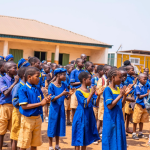
• Kwara is having a rough time right now. At this point, it’s starting to feel like a new terrorist group pops up every week, and the body count just keeps climbing. The bloodshed is already heartbreaking, but there’s another price Kwara is paying that people aren’t talking about enough: the future of its children.

    On October 21, 2025, the Executive Chairman of the Kwara State Universal Basic Education Board (KWSUBEB), Prof. Sheu Ibrahim Adaramaja, announced that the state had shut down at least 45 public schools because of security concerns.

    According to him, the government made the decision to protect students and teachers from attacks by armed groups.

    In a state of disharmony

    Kwara’s slogan is the “State of Harmony”, but lately, it’s been anything but harmonious. The state has seen a wave of violent incidents, raids, clashes, and attacks involving residents, law enforcement, and a growing number of armed groups.

    Here are some of the incidents:

    • On September 23, 2025, armed men raided the Edu Local Government Area (LGA) at midnight and abducted a woman and a teenage girl.
    • On September 28, an attack in Ifelodun LGA left 12 forest guards and a local traditional ruler, the Baale of Ogbayo, dead.
    • On September 30, the government responded with airstrikes that killed a notorious kidnapping kingpin known as Maidawa and several of his men in the forests of Isanlu-Isin.
    • On October 2, a police officer was kidnapped along the Patigi–Lade road while returning from duty.
    • On November 2, gunmen carried out another midnight raid in Irepodun LGA, kidnapping several residents.

    The violence is widespread across the state and varied (from kidnappings for ransom to deadly raids targeting locals and security personnel). It is no surprise that the state government has chosen to close schools in the affected communities.

    In October 2025, Senator Oyelola Ashiru, who represents Kwara South at the Senate, raised a motion calling for a permanent military base in the state.

    Ashiru said that in the past year alone, at least 142 people have been kidnapped and over 70 killed in Kwara South. He also revealed that no fewer than 25 communities have been completely abandoned because of the constant attacks.

    Get More Zikoko Goodness in Your Mail

    Subscribe to our newsletters and never miss any of the action

    Welcome to the Kwara Terrorism Convention

    We are starting to lose count of just how many different armed groups are rampaging through Kwara.

    In April 2025, the group known as Mahmuda started attacking local vigilantes, killing 15 in one attack on April 16. The group had operated in the state since at least 2020, basically functioning as a sort of parallel government. They tax herders and farmers, and demand that local disputes be reported to them for resolution.

    However, their more violent turn earlier in the year led to a government crackdown, and in August, the leader of the group was arrested by Nigerian security forces. But that did not stop the violence in Kwara. More terrorist groups kept turning up.

    In October, Wulo Wulo, a splintered faction of Boko Haram which had operated in Kebbi and Sokoto states previously, popped up in Kwara.

    On October 29, 2025, the terrorist group Jama’at Nusrat al-Islam wal-Muslimin (JNIM) also appeared in Kwara State. The group, which has links to al-Qaeda and ISIL/ISIS, has operated in Mali, Burkina Faso and Niger previously.

    Their attack on patrolling soldiers in Kwara was their first in Nigeria. They killed one soldier and seized ammunition and cash.

    No terrorist groups are ever welcome, but JNIM is responsible for 83 per cent of all terrorist fatalities in the Sahel region, so their sudden appearance in Kwara is bad news.

    Rocking the cradle

    Kwara State has quietly been taking good steps forward in recent times, which makes its sudden invasion by so many terrorists particularly worrisome.

    BudgIT’s 2025 State of States Report ranked Kwara as the fifth most independent state from federal government allocations, behind only Enugu, Lagos, Abia and Anambra.

    Over the last ten years, the state has grown its yearly Internally Generated Revenue (IGR) by an incredible 821.47 per cent (the sixth best in the country).

    The state government has invested heavily in education, with several projects and programmes:

    The Kwara State government is taking education very seriously and backing up its words with cash. But what’s the point if the children can’t go to school?

    These armed groups are not just stealing lives; they are stealing the future of the state by robbing its children of their education.

    Sounds like a you problem

    The appearance of all these terror groups in Kwara in recent months has many government officials worried, especially in the South West states that border Kwara. The fear is that these groups may head further south into Oyo, Osun and Ekiti.

    Neighbouring states are worried, but only about keeping the violence out. Basically, as long as the threat stays in Kwara, they couldn’t care less.

    The Oyo State Commandant of the Amotekun Corps, retired Colonel Olayinka Olayanju, while assuring Oyo State residents that the state was secured against an invasion by bandits from Kwara, said, “What’s happening in Kwara State is not under my jurisdiction. It does not affect my area of responsibility.”

    The spokesperson for Osun State Police Command, Abiodun Ojelabi, said seven tactical teams had been deployed to their border with Kwara to prevent bandits from crossing over.

    Ekiti State and Ondo State have also announced measures to tighten their borders to prevent the bandits from coming in.

    For too long, southern states treated extremist violence like a northern problem. The massacre at St. Francis Xavier Catholic Church in Owo was a terrible eye-opener.

    At least, it should have been.

    But even as we watch the who’s who of West African terror groups gather in Kwara, each state still seems to think the violence can be contained.

    What folly.

    When the bough breaks

    Nigeria already has an education problem. In 2024, UNICEF reported that the country had about 18.3 million out-of-school children (OOSC).

    Most of these children are in the northern part of the country, where extremist violence has made access to education incredibly difficult. Hundreds of schools have been shut down across northern Nigeria due to insecurity. Some have even been repurposed as camps for displaced people.

    Here’s what the numbers look like:

    Geopolitical Zone% of Children who don’t complete school
    North Central26%
    North East51%
    North West44%
    South East3%
    South West7%
    South South7%

    Source: UNICEF Nigeria Education Fact Sheets, 2023

    Terrorist groups deliberately target schools, kidnapping boys to use as child soldiers and girls as forced brides. It’s no surprise that many parents are afraid to send their children to school.

    The violence has displaced millions, including thousands of teachers. That means fewer hands to run the schools that remain. And with livelihoods lost to the violence, many families simply can’t afford to keep their children in school.

    The impact of terrorism on education in northern Nigeria isn’t just immediate—it’s long-term. Entire generations are being denied the chance to learn. This will have some serious negative effects on the development of those regions of the country for years to come.

    According to UNICEF’s 2023 Nigeria Education Fact Sheet, Kwara State had an 81% primary school completion rate. That’s well above the national average of 73%, but there’s still room for improvement.

    It would be deeply unfortunate for the progress Kwara has made to be undone by the wave of extremism now emerging in the state.

    The federal government needs to take this seriously and act quickly. Neighbouring states must coordinate efforts to support Kwara in tackling this threat. And we, as Nigerians, wherever we live, need to raise our voices and draw attention to what’s happening.


    Before you go, help us understand how you and other young people feel about the 2027 general elections by taking this 10-minute survey.


    Click here to see what other people are saying about this article on Instagram 

    [ad]

  • Citizen is a column that explains how the government’s policies fucks citizens and how we can unfuck ourselves.


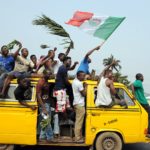
    So you’ve probably seen members of the Nigerian Union of Road Transport Workers (NURTW) in action. Usually sporting their white and green uniforms, they are the independent union behind the drivers of commercial buses, tricycles and motorcycles — danfos, kekes, and okadas as they are fondly known. But what you might not know is how much the NURTW makes daily, monthly, and yearly.

    According to the International Center for Investigative Report, the Lagos State chapter of the NURTW made roughly ₦121.392 billion in 2020 alone. Yeah, e shock you. 

    Broda Shaggi - New Year Resolution - NaijaRemix

    In statements from 50 danfo drivers in 21 out of the 37 Local Council Development Areas (LCDAs) in Lagos State, NURTW’s ticket collectors, not so fondly referred to as Agberos, collect at least ₦3,000 from about 75,000 of these drivers in Lagos state alone, every day. This means that the union makes up to ₦225 million per day, ₦6.75 billion per month and roughly ₦81 billion from danfos per year.

    You’d think they’d go easier on the kekes but nope. According to the Lagos State Maritime and Transport Agency (LAMATA), there are 50,000 kekes in Lagos State. The keke riders say that the union charges them at least 1,800 per day

    Some quick maths shows us that the union makes up to ₦90 million per day, ₦2.7 billion per month and roughly ₦32.4 billion from kekes per year.

    Then there’s Okadas. There are about 37,000 okada riders in Lagos. They each pay an average of ₦600 every day to the NURTW, enriching the union with about ₦22.2 million per day, ₦666 million per month and ₦7.992 billion per year.

    So you see how we finally arrive at 121.392 billion in a year of Lagos State levies alone. There are some other undocumented levies from taxis, tankers and trailers, but the main gist is these people are collecting serious money

    But Is The NURTW Even Relevant?

    A union is supposed to protect the interests of its members, but it seems that may not be the case with the NURTW. When asked by Al Jazeera if a union executive protected him from police harassment, Yusuf, a keke driver in Lagos replied, “Which union? The executive was only there to talk to the policemen to negotiate the bribe. His presence only helped to reduce it.”

    In another interview with Al Jazeera, Afeez, a danfo driver in Lagos recalled that he once fought with a ticketing rep from the union who stabbed his conductor in the eye with a key because the conductor had refused to pay the “afternoon due”. 

    Professor Gbadebo Odewumi, a professor of transport at the Lagos State University concludes that “the union leaders just reap from the chaos of the system and enrich themselves”.

    What Can Be Done About The NURTW?

    The union was established in 1978 and is supposed to fight for the welfare of Nigerian drivers and road transport workers who constantly suffer abuse from security personnel like the police, traffic management and vehicle inspection officers. 

    Ideally, they should work with the Nigerian Labour Congress (NLC) to fight economic issues that seriously affect drivers like sudden fuel price hikes or bad roads. The dues the union collects should also be used to support its members.

    Sadly, the NURTW has been riddled with corruption, bribery, nepotism and violence ever since. 

    State governments can suspend the activities of the NURTW if they violate the rights of citizens. But there are reports that politicians use NURTW ticket reps as thugs to fight opponents and manipulate elections, and this is the reason why the NURTW remains ‘untouchable’ in many states. Some states like Oyo have already banned the union because of the frequent violence and factional clashes by its members. 

    Clearly, there’s work to be done about some of the NURTW’s activities. Unions like these must do the work they were originally created for. But until the issues are fixed, we assume the ‘fees’ will continue being collected and bus fares will continue to rise. Sorry guys.


    Image source: Unsplash

    We hope you’ve learned a thing or two about how to unfuck yourself when the Nigerian government moves mad. Check back every weekday for more Zikoko Citizen explainers.