• Aside from artistes displaying the lavish spoils of being rich and famous — exotic cars, parties, sporting clothes too thick for the hot Lagos sun — sex and sexuality are major themes that have dominated contemporary Nigerian music.

    Male musicians have mastered the art, singing about all kinds of sexual activities that defy human abilities. “Fuck me till your body speaks to me again / I go respond when you don feel am for you belle oh / Underwear dey leak / She dey wet my bedsheet,” Victony cautions his lover in his hit, Risk.

    On social media, there have been multiple campaigns for women to tap into their sexuality, express that they have desires, unabashedly and unafraid, sexually liberated in a modern world. 

    If you listen to any of the music by the female acts topping the charts, this has barely been the case. A few female musicians have tapped into sexual liberation, most notably Niniola, but only in the periphery. This was not always the case.

    The reign of Omotoyosi Janet “Saint Janet” Ajilore in the 2010s is a classic “you had to be there” period in Southwest Nigeria. Those who had liberal parents or were exposed to secular underground music by their environment are likely to be familiar with the name. She’s a sonorous musician whose patron saint moniker would give a normie the expectation of a sanctimonious gospel artist. But her music would leave a chorister fervently singing more about the end times because of the sexual escapades she preaches in them. Some may argue that her music style models after Rosaline “Yaboskan” Iyabode, a UK-based female artist who reportedly debuted in 1980. Apart from writeups about Yaboskan’s remastered old albums, there are few of her songs online.

    Yaboskan’s “Satisfaction (Itelorin)” album, released in 2009, a year before St. Janet’s debut album.

    It’s no secret that conversations around sexuality in Nigeria are inconsistent, scarce, and largely close-minded. These conversations mostly exist within the “respected and accepted” context of marriage and gender. Anything out of the orthodoxy quickly gets the public’s side-eye, with participators branded immoral, perverse, and promiscuous. But unconfined by society’s moral standard, Saint Janet’s music casually invites listeners to talk about sex.

    St. Janet needs no introduction to the members of St. Bottles Cathedral, an assembly of her music lovers who are characteristically liquor guzzlers anticipating their next gbana session. She sings mainly in Yorùbá, borrowing influences from Juju, Fuji, Highlife and Tungba, including church hymns and gospel songs. But there’s a twist in her music: she flips the Christian songs into obscene, jaw-dropping sexual narratives of lustful desires. Interestingly, at the beginning of every song and performance, she leads with slow-tempo praise-and-worship, acknowledging that a higher power gave her her talent and then welcomes her audience. Then, an introduction of herself, St. Janet, AKA the General Overseer of Sinners’ Chapel, before she bursts into her high-tempo erotic tunes.

    On a keener observation, it’s easy to tie her gospel influence and the “saint” in her name to her religious background as a chorister in the Cherubim and Seraphim Church. But the name came from Los Kenge, her former boss and Juju musician, who observed she had a calm demeanour and always kept quiet, except when she got on the mic. After St. Janet ventured into her solo Juju career, she infused vulgarity to blow up and secure bigger bags. If an attribute of early Juju music was to use sexual innuendos to troll modesty, and a selling point of Fuji is to sketch euphemisms to court carnal desires, Saint Janet aims to distribute it everywhere, all up in faces like the posters of politicians. Call it flagrant, indecent, or blasphemous—you may not be wrong. But you’d also be correct to say there’s a heady sense of feminism and sexual liberty in her music.

    There’s also a humourous side to her songs, from big booty worship and praise of aphrodisiacs that can help men dickmatise their wives, to the legend of Iya Lai, a neighbourhood adulteress. The song is a parody of the popular Christian song He’s Alive, Amen.

    Even her switch from a devout female chorister to a singer of sexcapades is a reference point of freedom from our deeply conservative society. No wonder the Music Advertising Association of Nigeria (MAAN) and Performing Musicians Association of Nigeria (PMAN) placed a ban on her music after the release of her “Faaji Series” live audio CD in 2010, in which she also sings explicitly about sex, restricting her to only live performances. It’s hard to ignore the ban on her music as a hypocritical sexist move in a climate where barely-clothed female vixens have become a regular fixture in the music videos of male musicians. 

    Contemporary acts like Ayra Starr and Tems have been offered to the public as perfect examples of modern hypersexual women, rocking big hair, tiny clothes, cutting men off, flirting with men. But the flirtations of their lyrics pale in comparison with St. Janet, who is deeply rooted in the business of courting her partners. This is the form of female sexual liberation that’s missing. [ad][/ad]

    For Chiamaka Dike, features editor at the women’s magazine Marie-Claire Nigeria, it’s the hypersexual branding that has sucked up the air and compelled women in music to shy away from talking about the sex they had and enjoyed in mainstream music. “Sex sells. Music companies and artists know this. It’s why these days, in the songs and music videos that babes put out, they sexually objectify themselves. So, it’s no longer natural for Nigerian female artists to express their sexuality and sex life as art,” she said.

    But she acknowledges the role that a conservative society plays in making this the case. “It’s hard to see women that are unapologetically themselves and break away from the popular approach to music. The ripple effect of being sexually liberal in music is public criticism.”

    St. Janet has addressed eroticism in her music as her butter and bread, and stated vulgarity isn’t new and peculiar to her alone. In an interview with ThisDay, she said: “In my music, I’ve not said anything that’s not been said before by the likes of Sir Shina Peters, Obesere and King Sunny Ade. The entire Hip-Hop generation of today’s about sex. So what have I done wrong? Is it because I am a woman? Women are the ones who’re used as mere toys for sexual appeasement of the male in many musical videos. Why does anyone not see anything wrong in that? I’m fighting for women.”

    8 Nigerians Tell Us The Nigerian Songs They Have On Their Sex Playlist

  • Ever since WAP was released, a lot of hot takes have happened. The song has also topped charts, despite the hot takes and everything accompanying its release.

    But can you imagine WAP as a Nigerian song? Well, we can. And here’s what would happen if it was one.

    1. For starters, it would be sung by Saint Janet, not Cardi B.

    The title would be something like “Ariya WAP“. Or “Obo Tutu.” If you don’t understand what that is, please ask a friend to tell you. I will not be the one to lead you into sin.

    2. There would be a remix, and it would feature Naira Marley, not Megan Thee Stallion.

    Naira Marley will now add lyrics like:

    To ba doko ma l’ole, WAP.
    Even me I get WAP, WAP.
    Omoge shey you go wap?
    Oya, wa ba mi n’ile, make I no go do soapy.
    WAP

    3. The lyrics will then annoy the morality police in Nigeria.

    I won’t mention names, but expect a LOT of tweets on how Nigerian youths have lost focus to concentrate on fruitless things like sex. (As if sex does not produce fruits when fertilization occurs).

    4. Sha, the song will not be played on radio.

    But Nigerians like bad-bad things, so the lyrics video will gather an insane number of views, and it will trend for days.

    5. Because they have coconut heads, Saint Janet and Naira Marley will shoot a video for the song.

    Ladies in bikini, a lot of soap water, synthetic eyelashes, Naira Marley with a beltless trouser, Saint Janet serving retired Sugar Mummy realness.

    Vision board for the WAP video

    6. The National Film and Video Censors Board will now vex and kuku ban the video.

    And for reasons beyond human explanation, Naira Marley will be declared wanted by law enforcement agencies. Yes, Naira Marley is almost always having an issue with them, but imagine being arrested on top of WAP. Ordinary WAP.

    7. By the way, the locals will jam the song until it becomes irritating.

    Fuji remix will be in excess. DJ 4kasibe, DJ Lamba, DJ JiMasun will produce mixtapes with it, and one of these DJs will play it at somebody’s wedding ceremony where the entire crowd will go wild and leave there wondering if the bride has a WAP and how did the DJ know this.

    It’s all going to be a mess, really. But in 10 years time, WAP will be resurrected on Twitter as a meme.


    Here’s something else you’ll like: If Nigerian Mothers Were In The BBNaija House

    And something from the Jada and Will Smith entanglement palaver: If Will Smith and Jada Smith Were A Nigerian Couple

  • Growing up in a Nigerian home means that there are certain things you must NEVER do. One of this includes singing certain types of songs. If you love yourself, you’ll read this list and take the advice we have to give.

    1. If I Die Young by The Band Perry

    We know that you have grown old and you don’t fear anything again. But your parents still have a lot of fears. So if you love yourself, please don’t ever sing this song at home. Why? The lyrics speak for themselves:

    If I die young bury me in satin
    Lay me down on a bed of roses
    Sink me in the river at dawn
    Send me away with the words of a love song

    If I Die Young

    2. Jailer by Asa

    Yes, Asa falls into the category of artistes accepted by Nigerian parents. But see ehn, one time I sang this part at home:

    I’m in chains you’re in chains too
    I wear uniforms and you wear uniforms too
    You’re a prisoner too Mr Jailer

    I have fears you have fears too
    I will die, you sef go die too

    That was all the ammunition my father needed to say that I was possessed, singing songs about being a prisoner and wanting to go to jail and die. Why couldn’t I sing songs about being rich? Why do I like to curse myself? See ehn, it was an experience I will never forget.

    3. If I Die (Make You No Cry For Me) by Da Grin

    Imagine singing this in front of your Yoruba parents. Do you really want to die? They just might assist you with small transport fare to meet your God.

    4. Everything by Naira Marley

    Especially, toba doko malole or whatever that death sentence of a song is called. It’s like confessing your atrocities, because your parents will then ask you how you know what an oko is. Aren’t you supposed to be holy and pure?

    PS: The only oko I know is farm. Don’t corrupt me, dears.

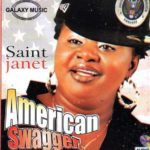
    5. The entire discography of Saint Janet.

    Saint Janet - American Swagger - CD | African Bargains

    Not sure if any young person still sings this madam today, but if you’re planning to, it might be time to perish that idea. It will likely end in tears.

    6. Everything by Obesere. In fact, the name Obesere is forbidden in a Nigerian home.

    Abass Obesere - Apple Juice - Video CD | African Bargains

    I’m so sure that this man’s return must have triggered anxiety in Nigerian parents. To them, he is nothing but a corrupting influence and their holy children will be tainted. Remember how they hid his tapes from you back then? They probably don’t know that you will grow up to become an Obesere intern. Sha don’t sing his song near them.

    Did I leave any song out? Tell me in the comments!

    You should read this too: 13 Things Nigerian Parents Say Instead Of “Sorry”