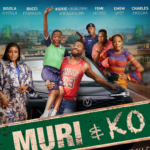
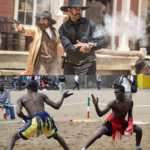
• Growing up in a Nigerian household in the 2000s, one could hardly miss or be oblivious of Nollywood comedy films that had Mr Ibu, born John Okafor, in it.

    Mr Ibu, known for immersing in rib-bending and over-exaggerated movie roles and characters, has established himself as one of the funniest men in Nollywood. His four decades career have brought some of the funniest local films and moments which have even influenced the Nigerian meme culture.

    The celebrated thespian turned 62 on October 17th, and it was mixed feelings to see him celebrate the special occasion  in the hospital. It was hearty to see his family members surround him though. While I wish him a quick recovery, these moments he delighted me on the TV crossed my mind.

    Mr. Ibu (2004)

    It’s funny scenes from the beginning of this film till its end.

    The father-son relationship between Mr Ibu and Paw Paw (Osita Iheme) are memorable. They lived like cat and mouse on most days. It was so intense that MrIbu wrapped his son up and presented him as a wedding gift to a relative. 

    This film also gave us the popular Paw Paw’s “Biggie, biggie” rap lines. In my opinion, this film is a Nollywood classic.

    Mr. Ibu In London (2004)

    Mr Ibu entered the UK, ignorant AF. After roaming London without bearing and sleeping on the streets for five days, he came across an old friend who housed him for months.

    In his naivety, Mr Ibu saw an aquarium and called the Oscar albino inside it a shark. He saw a house furnace and almost poured a bucket of water inside it due to his fear that it’d burn down the house. One time MrIbu was on a rotating bed, he thought his village people were operating it from under. LMAO. Every time Mr Ibu experienced something for the first time, it was an unforgettable, funny moment.

    Parish Priest (2006)

    In this movie, Mr Ibu plays the troublesome and drunkard son of Sam Loco Efe. The film became funnier when Mr Ibu insisted he should be the one to attend the seminary and become a Reverend Father, instead of his younger brother who actually showed interest.

    He was unhinged when he eventually got admission into the seminary. There’s no single rule in the parish he didn’t break. The memorable one was surrendering to konji.

    A Fool at 40 (2006)

    Kulikuli (Mr Ibu) and his friend, Hygenius (Nkem Owoh) are men in their late 30s parading themselves as the village youths. Without any good thing to contribute to themselves or their community, they peaked into their forties, fooling around the village.

    Mr. Ibu Goes to School (2005)

    Instead of attending an adult school, a  village “egbon adugbo” named John Bull decided to go back to secondary school. Despite being the biggest dullard in class, John Bull was made a school prefect.  You too see for yourself.

    The Great Servant (2007)

    After causing the biggest nuisance with his friends in their village, Omalu (Mr Ibu), on a paper chase, went to Lagos to be a house help. But he didn’t last long there. He went back to his village to become a fake prophet and duped unsuspecting people.

    Maybe the victims deserve it too, since everyone knew he was only a troublemaker.

    Overheat (2006)

    Mr Ibu shined alongside Charles Inojie in this film that explored family issues and poverty. Mr Ibu left his wife in the village to find a job in Lagos. But he got there, no job. Eventually his problems got bigger when he impregnated his city mistress.

    Police Recruit (2003)

    After joining the Nigerian Police Force as a recruit and becoming an officer, Mr Ibu was stationed at the checkpoints.

    With funny actors like Sam Loco and Charles Inojie as his colleagues, it was a pleasure, drinking around and going on an extortion spree.

    You haven’t seen the most ridiculous police officers until you see Police Recruit.

    Nicodemus (2003)

    Ibu is an electric repairer who knew nothing more than unbolting and bolting screws in appliances. No care for his family, no discipline, no work efficiency, or love at home. Nicodemus was just running on vibes.

    Bafana Bafana (2007)

    Aside from the theme of tribal marriage, this film showed parent rivalry at its peak. At any slight chance, Mr Ibu attacked his son’s father-in-law. One funny scene that’s hard to forget is the one where the two elderly men fought over food and threw morsels at each other. Smh.

    https://youtu.be/nWzRSpVJayE?si=ykBVA6WxhAH5yMX9

    Hey, hollup.

    Come and have the time of your life on November 11th, at the Burning Ram Meat Festival in Lagos. Tickets already on sale. Don’t sleep.

  • Spotify has made an electrifying impact on the Nigerian music scene, highlighting the contributions and milestones associated with the Afrobeats genre. 

    The successful launch of the Afrobeats: Journey of A Billion Streams site that celebrates the milestone of the genre culminated in events that captivated not just the music aficionados but anyone who had the privilege to be part of the Afrobeats journey.

    On Thursday 12 and Friday 13, October, Spotify brought together celebrities, podcasters, influencers, music executives, media personalities and music fans at two experiential events dubbed #SpotifyPodcastsLagos and #SpotifyAfrobeats. The events held at La Madison Place in Lekki, Lagos, showcased and celebrated the rich culture of Afrobeats and the remarkable achievements of the genre through the years.

    Speaking at the Afrobeats Celebration, Jocelyne Muhutu-Remy, Spotify’s Managing Director, Sub-Saharan Africa, said, “Spotify’s commitment to connecting people with the music they love is at the heart of everything we do. We’re thrilled to continue celebrating Afrobeats’ milestones and reinforce our commitment to the growth of the music ecosystem in Nigeria and across Africa.”

    The two-day celebrations began with a masterclass session featuring Ncebakazi Manzi, the Podcast Manager for Spotify in Sub-Saharan Africa. The session provided an engaging platform for podcast enthusiasts, diving deep into the craft of storytelling, exploring innovative techniques and insights, and illustrating Spotify’s commitment to empowering podcast creators. Following the session, there was a fireside chat facilitated by Gwenevier Ehimen Lem from Association of African Podcasters and Voiceover Artists (APVA), featuring a panel of industry experts, including Tony Doe from Into The Podverse and Tony Doe Media, Ayomide Tayo from Loose Talk, Dami Aros from So Nigerian, and Fay Fay, the founder of Naija Podhub.

    Attendees were then later treated to captivating and thought-provoking live podcast recordings, featuring highly acclaimed Nigerian content creators Jola Ayeye and Feyikem Abudu from “I Said What I Said,” and Joey Akan from “Afrobeats Intelligence.” In a conversation with Victor Okpala, Spotify’s Artist and Label Partnerships Manager for West Africa, Joey Akan delved into a range of topics, spanning from the success of Afrobeats and playlisting strategies to Spotify’s contributions to the music ecosystem. The “I Said What I Said” live show guests were artists, Nissi and Pheelz, followed by a live Q&A session. The event ended with an exhilarating performance from Pheelz.

    On Day 2, The Celebration commenced with an electric atmosphere and performances that saw a huge turn out of Afrobeats enthusiasts who were eager to indulge in the night’s festivities. The dance floor was alive with activity, and the room hummed with an infectious enthusiasm, thanks to DJ Tohbad, who skillfully set the stage with a continuous flow of chart-topping tracks by Nigerian artists.

    The evening transitioned smoothly into the night’s performances featuring some of the most talented emerging and established artists from Nigeria. Bloody Civilian, who is also a Spotify RADAR Africa artist, had guests singing along to her hit songs, including I Don’t Like You making the event one to remember. Next on stage was FAVE, who has been a Spotify EQUAL artist, and enthralled the crowd with some of her hit songs including Baby Riddim, Beautifully and Mr Man, leaving the guests yearning for more.

    Up and coming Nigerian Street Pop singer, Shallipopi set the stage on fire, delivering crowd-pleasing hits including Sharpiru, Ex-Convict and Elon Musk.. Sarz, DJ, producer and mixing engineer extraordinaire had the audience vibing with a set featuring both chill music and party bops, heightening the vibe for the night. Ruger, Nigerian sensational Afrodancehall singer, closed off the night, starting off with some of his hits songs that lit up the audience, displaying his unique style.

    The venue was awash with gentle, warm lighting that accentuated Spotify’s brand image while the stage featured mesmerising visual projections showcasing details about the Afrobeats genre. The experiential booths were designed to recreate the Afrobeats microsite, offering attendees a chance to be fully immersed within the chronology of the Afrobeats genre. 

    Spotify’s Afrobeats Celebration was not just a music event, it was a celebration of culture, diversity and the power of music to unite people. With 15 billion streams and counting, Spotify continues to shape the future of the music industry. This journey has just begun, and we can’t wait to see where it leads.

  • Two decades before it became known as “Afrobeats”, women have been there, contributing to contemporary Nigerian music, its artistry and culture. 

    Here are some interesting things you didn’t know about the most instrumental women to the development of Afrobeats as we know it today.

    Weird MC

    When Weird MC arrived on the scene, she came rocking a shaved head and oversized street urban wear. Her 1996 debut song, Allen Avenue, was released with a video, making her the first Nigerian artist to do so. She won the first-ever AMEN award for Best Hip-Hop Album (Simply Weird) in 1997 and was the first Afrobeats artist to make an animated music video (Ijoya, 2005). This woman is the coolest since cucumber.

    City 105.1 FM

    Sasha P

    Sasha P is another Afrobeats woman who has accomplished many “firsts”. She was the first Nigerian woman to perform at the World Music Awards in 2008 and was awarded Best Female Artist at the Women in Entertainment Awards in the U.K. the next year. In 2010, Sasha P won the MTV Africa Music Award for Best Female Artist. We’re grateful she spent the money for her SAT forms on a studio session. Sacrifice like that is why she’s still recognised as the First Lady of Nigerian Hip-Hop.

    TooXclusive

    Efya

    The Ashanti singer might’ve gone viral after her Don’t Judge Me cover in 2013, but before that, there was her Irene & Jane era which came from her first music deal in 2011. Ghanaian artists who’ve won Best Female Vocal Performance at the Ghana Music Awards four times back-to-back can be counted on one palm. Efya has been there, done that.

    Daily Post Nigeria

    Waje

    Did you know the female vocals on P-Square’s Do Me and Banky W’s Thief My Kele are Waje’s? Apart from being one of the strongest R&B vocalists in Nigeria, she runs a film and TV production company, Hermanes Media — producers of She Is (2019) — with fellow singer, Omawumi. Women making money together >>>>>

    GistReel

    Goldie Harvey

    Goldie was cool. So cool, only Lady Gaga could touch her when it came to style. The late singer lived her name, with golden hair and all-gold-everything accessories. 

    Plus, it wasn’t popular when she came on the scene in 2009 with Yorùbá-infused pop music. Her unique style laid the template for the women after her.

    Gistmania

    Tiwa Savage

    Way before Kele Kele Love, Tiwa Savage had a degree from Berklee College of Music, backed up famous OG singers like Whitney Houston, Mary J. Blige and George Michael, and wrote for Babyface, Fantasia, and Monica. In 2018, Tiwa Savage became the first woman to win Best African Act at the MTV Europe Music Awards. And don’t forget Tiwa Savage is the woman who performed at the coronation of King Charles III in May 2023. Her CV >>>>>

    The Guardian Nigeria

    Simi

    She started off as a gospel singer. If you were there when Ara Ile (produced by Samklef) dropped, you know what I’m talking about. Her Restless EP was her final crossover to Afrobeats music in 20xx. Today, her catalogue is stacked with seven solid music projects. Simi is also a sound engineer with crisp music mastering and mixing skills. She engineered AG Baby’s first album, Gold.

    iamsimi.com

    Tems

    As a budding recording artist, having money issues isn’t unfamiliar. Tems began producing her own songs when she couldn’t drop a bag for production, and her vision didn’t align with most producers. For the Broken Ears is proof of her production skills. She handled 90% of it. Tems is also the first woman to win Best International Act at the BET Awards (2022) and the Nigerian with the most entries on the Billboard Hot 100 chart. She’s HER, and she knows it. Can we really blame her for taking all the space and attention when she pulls up at functions?

    WWD

    Ayra Starr

    Before Don Jazzy came across her music in 2020, Ayra Starr was a model signed to Quove Model Management. You should see her killing her role as video vixen in Eri Ife’s Dear Future Wife music video. Ayra’s story is proof that people don’t just appear on top, they’ve been grinding on the low.

    ayrastarr.com

    These women aren’t just Afrobeat musicians; their uniqueness and self-application have contributed immensely to the movement.

    To learn more cool things about what more Afrobeats women are up to, this Spotify website got you.

  • 2023 is stacked with so many music releases that it’s easy to lose sight of  some tracks we’ve found remarkable in the year.

    In this list, we carefully curated twelve great songs that went under the radar when they were released.

    Show Me Something — WeTalkSound ft. PDSTRN, Kaey & Vader the Wildcard

    Aside from being Nigeria’s largest creative community and incubating talents, WeTalkSound, a.k.a. WTS, curates musical experiences and releases with its assembly of musicians. PDSTRN, a singer-rapper, takes the chorus of Show Me Something, and Kaey handles the first verse and hook. Vader, also a rapper, sings the second verse. If you’re looking for a groove your babe can whine to, or something you can ride to, press play on this.

    Tales By Moonlight — Oyedele

    If you weren’t a get-inside kid while growing up in the Southern West of Nigeria, you’ve likely heard the Yorùbá nursery rhymes that opened this record. Oyedele switched between singing and rapping and a sprinkle of call-and-response with ‘Tilewa, the featured artist, to examine relationship nuances.

    Tánwá — The Musical Being

    Only a few artists are still very active in the Nigerian folk music scene. The Musical Being strides in rich Yorùbá lyricism that shines together with his commanding vocals. Tánwá opens the titular EP and offers a message of hope that hangs between prayers and positive manifestations. The Musical Being joins the list of young musicians like Dotti the Deity and Mo’Believe, keeping the neo-folklore music alive.

    Alive — Jola Bello

    Though this song, Alive, can wash all over any listener who’s not reciprocated with the love they give out — Jola’s only trying to fire up the burning desire for intimacy. In what sounds like an assurance she can’t give, Jola sings, “Hop on me like a German / hop on me, hop on into freeway.” Alive is her second song produced by Kemena.

    Devotion — IDVH

    IDVH is a singer-songwriter, music producer and sound engineer who released a new EP, Xpress Music Vol. 1, in September. In Devotion, he’s having an honest conversation about his expectations from relationships. You have to wonder why he’s not staying single until he meets someone who genuinely likes him — instead of taking and giving half-baked romance. But his choice of song is so catchy that one runs back the tune and delves into his whole catalogue.

    Run Me Love — Shalom Dubas

    Guitar riffs are always consistent on Shalom’s songs. Run Me Love isn’t exempt. It’s a dreamy song about a love interest who is unsure of what they want.

    “Do you want to whine me or whine on me?” The rapper wants to be certain.

    Flashing Lights – Tekno

    For the first time in my life, I’m rinsing and repeating Tekno’s music, and it’s beyond my usual allure of party, clubbing and jams filled with lamba. Flashing Lights is the third song on his latest album, The More The Better. This song is simple yet gets listeners emotionally invested in it. Flashing Light was my go-to during my just-concluded talking stage that led nowhere. Though that has ended, Tekno’s song will be on a playlist I’ll share with a new person. It’s that sweet.

    Amma Hoe — Bizzonthetrack

    When we count Nigerian artists who feed their listeners every three market days, mainstream or underground, Bizzonthetrack stays in the top ten list.It’s hard to miss his sexually-liberating amapiano jam, Amma Hoe. True to his nature, Bizz refuses to confuse any lady about what he wants from them. Currently, he’s into the business of making legs vibrate, nothing deep and serious.

    Another Day, Another Naira — Kaey 

    As a Nigerian living in Nigeria, money preoccupies the mind before bed. When you wake up another morning, you’re screaming about money again. It’s even harder for a young creative person trying to make something because Nigeria is no country for dreamers. Another Day, Another Naira explores the hustle culture in Nigeria that prioritises money over everything else.

    For everyone caught up in the hustle and bustle and stuck in the rat race, Kaey fixed an anthem for us.

    Flying Corks — Brotha Pollock & Mxps Rellington ft. Ghaffar

    Taking a trip into Brotha Pollock’s grimy lo-fi production and Mxps Rellington’s novelist mind, you’ll find psychological depth and dramatic structure, strings and references of pop culture moments — weaved together to present vivid imagery of respects they deserve and keeping their Hip-Hop music undiluted.

    Mxps Rellington compares his grand moves to that of Dostoevsky. Name a more clever rapper.

    To You — Dwin, the Stoic ft. Ogranya

    When two brilliant singer-songwriters come together, a heart-bending magic is expected. Dwin, the Stoic and Ogranya wag their voices like a wand and deliver a heartbreak ballad about a love that shouldn’t crumble, hoping to spellbind their lovers to stay around with them. One can listen to To You and feel the waves of melancholy crashing down or the breeze of the beach blowing one’s colourful shirt. No matter what, the song will make you feel something.

    Unconditional — Mojeed x Czure

    Spellbound by his themes of immigration, Lagos nightlife, and chasing the bag, amongst other mundane things, Mojeed has put himself among the elite Nigerian rappers who can ghost us, and when he comes back, we’re there — listening. On his first 2023 drop, Unconditional, he opens up about his availability to a romantic relationship that’s not one-sided. The beauty of this record is the culmination of growth and maturity Mojeed has laid on Czure’s production.

    He smoothly delivers in Yorubanglish, a mixture of Yorùbá and American-accented English, that has become the signature style of Mojeed.

    He gave us Unconditional to hold body while he preps a mixtape, Monkeys, Men & Martians, and an untitled EP marked for this November.

    ICYMI, our Burning Ram Meat Festival is happening in Lagos on 11th November.

    Cop your ticket here asap.

  • We may have Bluetooth now, but the aux cord is still a legend on these streets. Siblings and friends still argue on who gets to hold the long cable when it’s time to play some tunes during hangouts or road trips.

    But before you wear your Gen Z hat and shout “wireless only” or “who still uses the aux cord?” Apparently, many people still do.

    Anyway, whichever side of the divide you are between aux or bluetooth, note that these “don’ts” apply to everyone.

    Phone isn’t on silent

    Have you ever seen Dope Caesar or DJ Spinall picking their phones to answer calls while playing on set? That’s because it’s silent and they don’t want to be distured. If you aren’t built like that, free the aux.

    Moving entitled

    In this case, entitlement is behaving as though being in charge of  the musicsis your God-given right. That thought itself is a violation, in fact.

    Do better and realise that it’s a privilege. Act like it’s an honour to hold the aux.

    Can’t read the room

    You can bring your jams, but look around and, know the people around you, check the vibe of the room and understand what they want before you cue up a playlist. Do these things and you’ll give everyone a great time.

    Watching IG stories and Snaps

    Until you’re done playing your part, i.e., entertaining others with grooves, no apps should be open on your phone. We can’t be vibing to songs and suddenly a DJ Chicken skit rudely interrupts the moment. All TikTok and X videos should be put on hold, please. T for thanks.

    Clueless what to play next

    If you wait for a song to end before you start thinking about or looking for the next one, then your job role isn’t clear to you.

    Get with the programme or let the next man play music, abeg.

    Playing the same artist back-to-back

    If you play an artist once or twice, it’s cool. But please give us someone else. We aren’t at a solo concert, are we?

    Don’t let songs breathe

    When you play another song before the previous ends, what are you really trying to achieve? If you won’t give a song any chance, then..

    If you can’t handle aux cords, at least meat shouldn’t be an issue. Come to our Burning Ram Meat Festival. November 11th is the date. Get your ticket now!

  • A record label’s place and role in music can never be kicked to the curb. Especially in these times when you need a good platform to succeed, record labels that nurtured the Afrobeats movement deserve recognition.

    At the dawn of Afrobeats in 1991, before anybody with a heavy purse (whether they know the business or not) could set up an office and say their record label was open, it was just a few heads running the operational side of the music around here. Before the indigenous labels that focused on contemporary pop music in Naija, Western labels held tight to the helm of the business throughout the 20th century. Independent labels were nonexistent until, at least, 1990.

    A few music labels ran the Nigerian music scene from the ’60s till the tail end of the 1980s. One of them is Premier Records, which provided space for music journalist, Dean Disi to occupy leadership positions. Disi’s time as general manager ushered in Segun Arinze, Ras Kimono, Evi-Edna, Charly Boy, Edmund Spice, Junior & Pretty and more, into the Nigerian entertainment scene.

    When Junior & Pretty emerged from Ajegunle with their funny style of Pidgin English rap, it was just young people making hip music in the most expressive way they could. The music wasn’t called “Afrobeats” yet. It was simply “Nigerian music”.

    In 1991 Junior and Pretty was signed to kickstart Storm Records. After Obi Asika, its founder and chief executive officer, had gathered some expertise in DJing, radio programmes and events promotion, with valuable music business experience from his days at the University of Warwick, his move into the Nigerian music scene was inevitable.

    Under him, Junior & Pretty made the Fufu Flavour album which included their popular hits Monica and Bolanle, years before Afrobeats became official. 

    If there’s an unpopular yet essential consensus we have to come to, Junior & Pretty is the very first Afrobeats act.

    Storm Records, on the one hand, didn’t get a breakthrough until around 1998, when it evolved from just a clique movement into an actual music label, now known as Storm 360. 

    Lanre “eLDee” Dabiri’s Trybe Records arrived in 1998 too. It kicked off as Trybesmen, a movement of three rappers named eLDee, Freestyle tha Shogun and Kaboom. They met in Lagos in 1994 and put out their first album, L.A.G. Style, in 1999. Then they had hits like Trybal Marks and Shake Bodi. Primarily hip-hop in style and fashion, their approach blended smoothly with Afrobeats.

    After the Trybesmen broke up in 2004, eLDee kept his label running while releasing solo projects. Trybe Records housed 23 artists between 1998 and 2011, including 2Shotz, Dr. Sid (pre-Mo’Hits Records), Niyola, Lequse, Sheyman, K9, Aramide, Eva Alordiah, Sojay, Sarz and Sasha P, who later signed to Storm Records. 

    The music Trybe Records put out laid the foundation for what we now recognise as the Afro Hip-Hop sound in Nigeria, making its mark in the development of Afrobeats before it was acquired by Iman Entertainment in 2011.

    But back in 1998, Kehinde Ogungbe (Keke) and Dayo Adeneye (D1) returned from Hollywood to open Kennis Music, after hosting “AIT Jamz” on African Independent Television for some time. They signed The Remedies a year after — a trio of Eedris Abdulkareem, Eddy Montana and Tony Tetuila. Their 1999 debut hit single, Shakomo, is evergreen — a simple party single recorded on the instrumental of MC Lyte’s Keep On Keeping On

    Nigerian contemporary music was now called “Naija Music”.

    One day in 2000, Tony Tetuila left the group, and the three men had a beef that dragged into 2002. They exchanged diss tracks like Tetuila’s Omode Meta N Sere, which became a hit and introduced us to Tuface. The two-man Remedies responded with Jealousy, featuring Pasuma. The beef later became focused on Tony and Eedris. 

    Tony went after Eedris in his monster hit, My Car. Not one to swallow insults and jabs, Eedris fired back with a smash hit, Oko Omoge, that had us screaming the line, “One leg up, one leg up”, a subtle diss at Tony, who limps while walking. All this happened while they were still signed to Kennis Music, who benefited from one of the most significant controversies in Nigerian music. 

    In 1999, a fellow label signee, Paul Play, released his first and second albums, Dairo Music Foundation Project 1 and Paul I.K. Dairo Project 2 before he left Kennis Music. The label’s roster boasted Blackface, Marvelous Benji, Rasqie, Azadus, Olu Maintain, Kelly Handsome and Joel Amadi, who put out the last album from Kennis Music in 2015.

    Kennis Music remains the Nigerian music label with the most albums — 75.

    An account of the labels that platformed Afrobeats in its early stage isn’t complete without Nelson Brown’s Dove Records, home to Plantashun Boiz and their debut album, Body and Soul, in 2000. The body of work gave us hits like You and I, Don’t You Know, Knoff Off and Ememma. 30+ people will see these song titles and jump for joy with hearty remembrance. Sold Out was the second album they put out before their first breakup in 2004. 2Face signed to Kennis and released his debut and sophomore albums. Three years later, a Plantashun Boiz reunion happened, and they released Plan B under Plantashun Entertainment Limited Management.

    During Storm 360’s run, Darey Art-Alade made his classic ballad, Not the Girl, in 2009, and R&B music was pushed to the forefront. The radios regularly played songs by Storm artists like G.T. the Guitar Man, Ms Jaie, Tosin Martin and Jazzman Olofin (Mr. Funky). The label also created space for hybrid artists like 2Shotz, Sasha P, General Pype, Ikechukwu and LOS. Banky W too, before he moved on to start his own imprint.

    Then there was Question Mark, operated by Kevin Luciano-Gabriel (ex-MTV staff) alongside Gbenga Shokefun (former manager of girl group, Kush). The record label launched in 2005 with Nnenna and Modenine, who had the classic cult song Cry together. Question Mark had Cobhams Asuquo as its in-house producer from 2005 to 2006. Asa was signed, released Eye Abada and left without giving them an album. 

    Q. Mark’s artist lineup also consisted of Street Monk, Silver Saddih, Harry Songz and Safarie. When the label put out the music video for its all-star anthem, Street Life, it was on the MTV Chart and set the standard for Nigerian music videos with great set, camera and overall production quality.

    Mo’Hits Records was the rave of the moment from when it launched in 2005 till it crashed in 2012. After leaving JJC’s 419 Squad in the U.K., music duo Don Jazzy (producer) and D’Banj (singer), returned to Nigeria and founded Mo’Hits with funds from D’Banj’s mum. They released the No Long Thing album in 2005, and D’banj was named The Most Promising Male Act at the Kora Awards and given a Channel O Music Video Award for Tongolo. In 2006, he followed up with RunDown Funk U Up and the monster hit, Why Me.

    As the label grew, signings surged, and in came Wande Coal, who changed Nigerian pop music forever with his hit-stacked Mushin 2 Mo’Hits debut album. Dr. SID joined them officially in 2007 and had hits like Something About You, Winchi Winchi and Over the Moon. D’Prince dropped a handful of popular songs like Omoba, Goodybag and Banana. And K-Switch brought the “Ajebutter that knows the street” sound.

    From 2010 to 2013, guys like Wizkid, Ice Prince, Davido, Burna Boy and Yemi Alade were new hot kids on the block from record labels like Empire Mates Entertainment, Chocolate City, HKN Music, Aristokrat Records and Effizy Entertainment.

    Around the end chapter of Mo’Hits, what used to be known as Naija music had become Afrobeats and gained global popularity. The label would soon morph into Mavin Records, currently one of the biggest in Nigeria. Mavin presented us with Tiwa Savage and a back-to-back line up of breakout stars — from Di’Ja, Reekado Banks and Korede Bello to Rema, Ayra Starr and most recently, Lifesize Teddy.

    Since the 90s, Afrobeats has transcended into international music collaborations, foreign shows and awards, global festival stages, stadium performances and cultural diversity. We owe these laudable feats to the groundwork of the early pushers of Afrobeats, who built business models and laid down the structure for the sustenance and monetisation of Nigeria’s musical talents. 


    To celebrate this great legacy, Spotify Africa is throwing the hottest Afrobeats party in Lagos on October 13, 2023. And Zikoko will give away tickets at the end of the week!

  • It’s easy for albums to easily get lost in the pile of the singles 2023 has been choked with. So we went digging into the Nigerian music released so far to discover and rediscover the bodies of work women have blessed us with this year.

    KOLLIDE – Kold AF

    On KOLLIDE, Kold AF’s vocabulary oozes of admirable bluntness and confidence. They hold stead and still leave one open enough to admit that “I’m a hard guy, but I hurt sometimes too.” The EP offers six songs that explore romance, being broke and keeping heart on the sleeve.

    Kold AF is an amazing singer and overall, KOLLIDE is clear afropop and r&b fusion. With a platform like Aristokrats Records (Burna Boy, LeriQ, Mojeed, Novemba) behind her, it’s only up. We’re rooting for her.

    Heaven Has Come – TY Bello

    TY Bello invited other artists she loves together on Heaven Has Come. Listening to the album comes with a feeling that suggests that it’s more than just an album of MP3s and WAV. files — it’s transcendental experiences of worship and praise. The production is excellent, catchy and modern, but won’t make you lose your home training and start throwing legwork anyhow.

    Grey Choir – Christtie Jay

    Christtie as Jay is an innate storyteller and spoken word artist. Her newly-released EP, Grey Choir, beautifully blends spoken word and music,explores self-love, sexuality, relationships, melancholy, grief, and japa themes.

    The sonic palette of the project is just as broad as the array of emotions and topics she explores. On Story Story, guest artist Mo’Believe’s book builds a commentary around Lagos-living.One could almost hear Christtie Jay burst into tears on Hello/Goodbye, the track before the last. Poetry-music projects require attentiveness, including Grey Choir.But you never know what the next track will sound like. Every song is unique and captivating.

    Angel On The Run – Rukmani

    Rukmani’s  EPis Pop-inflected R&B at its finest. Angel On The Run opens with guitar strings that usher in Rukmani. From the first track, Purpose, a song about reconciling past mistakes, to the seventh track, Softies Vibes, a vulnerable expression of self-love, Rukmani’s silky voice keeps calling to her listener.

    Angel On The Run is the music to get cosy to, especially when emotional waves crash over you.

    Winny – WINNY

    On her self-titled debut music project, Winny, a Nigerian reggae artist,  turns her love tales and heartaches into songs. Winny’s voice can quickly become a rude gyal’s weapon, full-blasting in patois. At the same speed, she can be very soft and begs a lover not to leave. WINNY is an exciting body of work; the seven tracks promises that the Nigerian music scene will soon become very fluid and accessible to all styles and genre

    Anger Management – Bloody Civilian

    Beyond being a super producer and sound engineer, Bloody Civilian isn’t your average artist. Check her collaborative effort with Native Records and Marvel’s Black Panther. Even her name. Then check her Anger Management EP. But don’t stop there — dive into the music project and enjoy her brilliant brand of storytelling that’s rare in our popular music scene. Parental supervision, poke-nosing family members, and anti-misogyny are some of the stories Bloody Civilian lays bare in the project. If you’re not jamming to this for enjoyment, don’t forget it anytime you fume angry.

    Kaleidoscope – Lindsey Abudei

    In Nigeria, where niché music isn’t as widely accepted, Lindsey Abudei continues to polish her brand of Neo-soul, alternative R&B. Her new project, Kaleidoscope, is recent proof. 

    The music on Kaleidoscope is cinematic. Asides from her lyricism, the drums are softly tapping, guitar strings jumping and giving Jazz vibes. On days that emotions are high and running, or there’s just stillness — Lindsey’s got us.

    Also, film production companies and theatres need to holla at her and cut her cheques for movie soundtracks ASAP.

    dear diary – RnB Princess

    In five songs, RnB Princess lifts the things that usually stay in a diary to the recording studio,spilling her heart out about unreturned love, jilt and the relationship woes that trouble a Gen-Z lady. The EP features new R&B babes Tsuni and Keziah Mallam — one can liken their collaboration to a girl’s night out, in group support of a heartbroken friend that shouldn’t be left by her pain or loneliness. Nothing is actually hotter than women supporting women.

    Elevated – Mercy Chinwo

    In just six tracks, Mercy Chinwo performs worship songs that’ll put you in thanksgiving mode and waving your hands in the air. But these are not only church songs; they are personal testimonies and declarations many Gospel or Christian music lovers will passionately sing along to. The instrumentals are vibrant, exciting and comforting — she beautifully sings of her belief and spirituality.

    Mercy Chinwo isn’t one of Africa’s most prominent gospel artists for nothing.

    Lifesize Teddy – Lifesize Teddy

    At a time we can count Nigerian female mainstream rappers on one palm, Lifesize Teddy shows up as Mavin’s last signee with her titular EP. She raps and sings well in English and Pidgin English. The PH dialects you hear in her lines are pointers to her home-base, City of Garden. Get in tune with Teddy.

    Pan African Rockstar – Lady Donli

    After a four-year album break, Lady Donli’s sophomore album, Pan African Rockstar comes out and gets on our rotation,blasting funk, percussion and electric guitars. 

    Many considered her first album Enjoy Your Life a classic, and her latest has materials and the making of a classic, too. We’ll give it some time, but this is an album we won’t stop jamming for a while.

    All of Eniolaa – Eniolaa

    She’s a singer who does afropop and other sounds like Amapiano and R&B. Her EP combines these sounds with her girly side and street consciousness. When not moulding Arya Starr and Fave on King Kong, she’s a neo-Fuji star like Asake on Iyele or a blue c-note, worried and gloomy, on Holy Days.

    Lagos 101 – Bella Alubo

     Although Bella Alubo came from Jos, she’s handing us a guide to navigate Lagos. 

    The growth of Bella Alubo has been interesting to see. She went from being a straight-up rapper to becoming an all-around artist. Lagos 101 is a commendable effort. It may be the direction she feels is next for her career, but we still struggle to connect to the music.

    In Lagos 101, she’s singing about having fun and not rushing into love. Even though we found some details about the widespread belief that finding love in Lagos might be the hardest; either you’re the hunter or end up the target.

    More – Grace Idowu

    Grace Idowu is a gospel artist with a commanding voice. One vocal cord moves, and it grabs your attention. 

    More, her second body of work, is a choir-backed seven-track that focuses on eulogising God, strengthening her relationship with the spiritual being and speaking positively into existence. The beats are very hard, but Grace Idowu even goes harder with her rap verse on Joy, our favourite track on the EP. GIf there are love songs to God, this is what they sound like.

    Listen to them:

  • Our favourite artists have distinctive voices but we recognise them just as easily by their styling. We look at those who’ve set themselves apart through their unique approaches to dressing up.

    Topless Wiz

    Burna Boy sang “Shirts off like I ain’t got no clothes / ’cause where I’m from, there ain’t no snow”, but Wizkid is the guy living it. If he can’t go somewhere topless with dangling chains and baggy trousers, it’s not for Wiz. Don’t forget the signature bend-to-the-side too.

    Twitter

    New Kcee

    Ojapiano shot Kcee back to limelight, and we’ve seen him stomp everywhere branded in balaclava — full-face cover — in different designs and colours to match different outfits. You need to see his stage performances this year, it’s like masquerades playing “boju-boju” in high fashion.

    PulseNg

    Ayra’s belt

    It’s highly likely Ayra Starr grew up on old Nollywood films and 90s music groups because it’s hard to unsee the massive influence these styles have had on her wardrobe. From crop-tops to thigh-high boots and her iconic belt-skirts, our Sabi Girl’s fashion is as distinct as ever in Nigeria today. But who’s surprised she eats these looks when she walked runways as a model since 16.

    Pulse Ng

    Asake 2-in-1

    Asake is a lover of many fashion brands, but he never deviates from body-tight tops and large flared trousers. No one in our current music space rocks the style as hard as him. Recreate it, but don’t chase danfo in those pants, please.

    Twitter

    Lagbaja da mask

    Lagbaja has always worn aso-ofi masks that match his clothes. On some days, he’d complete the style with “dejá” sandals made from car or truck tires. Since the 90s, no one’s ever tried to recreate Lagbaja’s look. A mystic artist like MF DOOM and billy woods, whether we know what Lagbaja looks like or not, the musician’s elusiveness is part of what makes him special.

    TheBoss Newspaper

    ALSO READ: The Afrobeats Stars with The Coolest Cars

    Pirate Ruger

    Just in case you didn’t know, Ruger isn’t blind in one eye. According to him, his eyepatch is a symbol of his hard guy personality and a ratchet complement to his pink-dyed hair. Some 90s kids see Ruger and quickly get nostalgic about Baba Fryo. But it’s Ruger’s time now.

    Google

    Odumodu cap

    Since I started listening to OdumoduBlvck back in 2018, he’s rarely seen without his white, black and red woven Okpu Agu AKA leopard hat. It’s a traditional Igbo cap that represents bravery — the exact energy he reveals on his tracks.

    Wikipedia 

    2Gorimapa

    No hairstyling, stresses or shenanigans to protect any hairline (because there’s none).  One can say 2Baba is a simple man whose simplicity can be found in his music. Even fellow artist, Joel Amadi, couldn’t escape the accusations that he jacked 2Baba’s looks.

    Bella Naija

    Did you know we’re throwing the biggest meat festival in style on November 11th? Cop your Burning Ram tix here.

  • When Afrobeats is playing, and people ask what’s in our stew, these are ingredients and condiments.


    Beats

    An easy way to distinguish Afrobeats is through its heavy percussion, which consists of a drum set and all types of local drums. The top streamed Afrobeats songs of all time on Spotify, like Burna Boy’s On the Low and Arya Starr’s Rush, are fantastic examples.
    There’s no definite time signature and speed for afrobeats. Although it usually applies a 3-2 or 2-3 rhythm known as clave or bpm of 80 to 100 — the tempo can get slower or faster, like Libianca’s People or Terry G’s Free Madness.


    Themes

    Afrobeats themes are about everyday experiences — celebratory music for joy, love, money, hustle and even grief.

    On CKay’s Love Nwantiti (Ah Ah Ah), which is now one of the most streamed Afrobeats songs of all time, the artist persuades a love interest to give her heart to him. Tiwa Savage hasn’t run out of enjoyment narratives and sex positivity while in the same breath reiterating she’s the number-one baddest babe in Africa. Burna Boy’s Last Last mourns the end of his relationship while craving booze and weed as an escape. An artist like Asake often celebrates escaping poverty and his newly-found wealth and success, while someone like Wizkid wants to live a stress-free life with gorgeous women around him. These Afrobeats artists  have vital storytelling skills that make the music unique.


    Language

    From Lagos to Accra to London to New York or wherever afrobeats blasts out the speakers, the music blends local slang dialects with pidgin and accented English. This delivery is what listeners resonate with.


    Samples

    A now-prominent afrobeats element is sampling. Sampling is the reuse of a portion of a sound recording in another one. Like Rema sampled Jay-Z’s Dead Presidents on Alien in 2020 or Asake did Jason Heerah’s Mo Capitaine on Yoga. Even one of Spotify’s top exported Afrobeats songs, Last Last, by Burna Boy sampled Toni Braxton’s He Wasn’t Man Enough

    A well-infused sample adds freshness and a bit of fun to the music.

    Fusion

    Sampling shouldn’t be mistaken for genre fusion, another form that makes afrobeats unique. Afrobeats seamlessly infuses local sounds like juju, fuji, and apala and foreign genres like pop, hip-hop, highlife, RnB, reggae and dancehall. Though Burna may disagree, these elements form his self-created Afro-fusion genre.


    You can come enjoy the best Afrobeats music with Spotify on 13 October 2023. Fave, Ruger and Bloody Civilian are some of the headliners. To win tickets, visit the Spotify Afrobeats website and learn some afrobeats trivia.

  • On September 12, 2023, the 23-year-old ravestar, Rema, emerged as the first African musician to hit a billion streams on Spotify with the Calm Down remix featuring Selena Gomez. 

    His success isn’t by chance, streaming farm or just big budgets. Rema put in the work to get his billion streams. We dived into his records to find out how he made history with the Selena Gomez-assisted remix, and summarised our research into these seven steps.

    Rema consistently delivered

    As long as you’re ready to learn and grind this music hustle with a positive attitude, you too could get documented in the journey of afrobeats as it blazes through history like its new prince, Rema.

    Since his Dumebi debut in 2019, Rema’s honed his skills through consistent delivery of music, videos and tours. After winning the Headies’ Next Rated award in the same year he debuted, he’s shown versatility with two EPs, an album and a series of singles.

    Worked with producers who understood the mission

    Rema locked himself in the studio with Andre Vibez and London to give us Calm Down. The three collaborators rearranged the song and polished its layers until it became a hit.
    While Calm Down pushed Rema’s album to become the first African album to enter 1 billion streams, the same song put its producers on Billboard 100 Hot Producers’ list.

    Promoted the hell out of the song

    One part of the job is done when an artist finds the hack to score a perfect afrobeats hit. The rest? You come up with schemes to elevate the song. Enter song promotion.

    Rema was on the road for shows and media runs, which continued conversations around the single and generally his music, giving him more exposure. 

    Struck while the iron was hot

    Barely a month after Calm Down dropped, Rema released his debut album Rave & Roses (March 2022) — one of the biggest debut afrobeats albums. Calm Down is the hottest and biggest song on the album, so it’s logical he chose to remix it.

    Rema was keen to work with a female artist, and chose none other than Selena Gomez, a talented singer and actress with a very committed community. The remix was out in five months.

    He made his collaborator his friend

    From producer to features, tt’s necessary to work with people who see your vision. With Rema and Selena, it wasn’t just business as usual when they planned to remix Calm Down. (Business as usual is when the relationship ends after a featured artist drops their verse. They don’t promote or push the work.)

    Selena and Rema were fans of each other’s music before their teams met and began working out the collaboration process. She liked Runaway, the closing track on Rave & Roses.

    Kept pushing

    Rema didn’t just stop at releasing a remix. He remained visible online and offline. Calm Down’s remix came out in August 2022 to criticism and acclaim, then it steadfastly climbed the Billboard chart, peaking at number one. The song entered the Billions Club on Spotify — setting a record that’s also the first of its kind.

    Still pushing the song together

    As the song got bigger, we saw them together in the media. Recently, on September 13, 2023, at the MTV Video Music Award, they both received a plaque for Best Afrobeats, the first of its category at the event.


    You might not have Selena Gomez’s phone number or a solid label backing you, but hard work, consistency and collaboration will always be key ingredients to grow and reach a wider audience. If Rema hadn’t put in the work that got him noticed or fostered the relationship that birthed his most prominent song, Calm Down, he wouldn’t have a billion streams on Spotify.