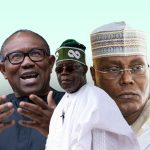
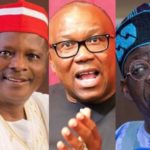
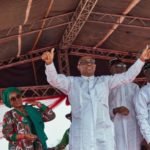
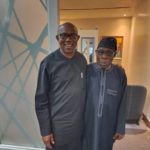
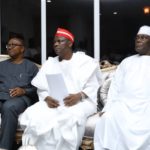
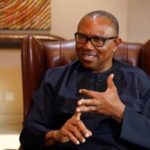
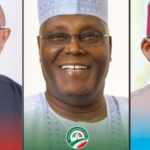
• On September 29th, 2022, candidates for the 2023 presidential election gathered at a glossy ceremony in Abuja to sign a peace accord. 

    …in their Sunday best

    This ceremony is like two lovers having a blood covenant, except there’s no blood involved here and the candidates aren’t really in love with one another. So, what’s this ritual about and why do they commit to it?

    A brief backstory

    It’s easy to forget these days, but Nigerian elections used to be very violent. Post-election violence used to be as inevitable as Buhari flying to London every year.

    …as long as he’s not the one getting the debit alert

    For example, the post-election violence of 2011 resulted in the death of more than 800 people after supporters of Muhammadu Buhari, who lost the election, protested that it was rigged. The protests degenerated into ethnoreligious riots in northern states where rioters murdered hundreds of people. 

    Critics partly blamed Buhari for the escalation of the violence due to his strong position that the southern Christian winner of the election, Goodluck Jonathan, rigged it. And he didn’t learn his lesson because, in 2012, Buhari went ahead to say, “The dog and the baboon would all be soaked in blood” if the 2015 election was rigged too.

    Rhetorics like Buhari’s and the general climate of careless conduct by Nigerian politicians formed the building blocks of the National Sensitisaton Workshop on Non-Violence in 2015.

    The first peace accord

    Ahead of the 2015 general elections, the worried Goodluck Jonathan administration initiated a series of conversations with political stakeholders on peace-building. The goal was to ensure political actors embraced a more civil approach during campaigns for office.

    At the National Sensitisaton Workshop on Non-Violence on January 14th 2015, presidential candidates, including Buhari, and their political parties signed a peace accord to behave themselves on the campaign trail. The main promises in the pact were to run issue-based campaigns and not engage in ethnoreligious provocations that could lead to violence. A new ritual was born.

    They even got Kofi Annan to attend this thing

    Section 3 of the peace accord recommended the creation of a National Peace Committee (NPC) to guarantee the constant promotion of peace. Funded by the United Nations’ Development Programme (UNDP), the NPC launched soon after, on January 25th 2015, and former military head of state, General Abdulsalami Abubakar appointed as its head.

    This is what the first peace accord looked like.

    2019 presidential candidates signed a similar pact, and 2023 candidates have now done the same. But we noticed a couple of notable things from this year’s ceremony.

    Tinubu is missing in action

    Since political parties elected their candidates in June, there have been two public events where the major candidates have crossed paths — the Nigerian Bar Association (NBA) conference in August and the latest signing of the peace accord. The candidate of the All Progressives Congress (APC), Bola Tinubu, has ghosted both events and sent his vice presidential candidate, Kashim Shettima, instead.

    Nigeria is only just about to be rid of one absentee president but a frontrunner to replace him is already showing signs of following in his footsteps. At least Buhari waited to get into the office before ghosting everyone. Tinubu is already running his campaign remotely and giving fuel to the beer parlour gist that his running mate is the one actually running for president.

    Sowore isn’t a man of peace

    The 2023 election is Omoyele Sowore’s second attempt contesting for the seat at Aso Rock Villa, but he’s acquired a reputation for being a troublemaker. He didn’t disappoint at the signing of the accord. 

    Sowore already mentioned in interviews that he wouldn’t allow organisers to treat him like a second-class candidate and he almost caused a stir when he wasn’t allowed to sit in the front row with the most prominent candidates. He also got in a brief war of words with former Abacha henchman, Hamza Al-Mustapha, who’s also running for president.

    Sowore went on to sign the peace accord, but we all know what he really is.

    Is the peace accord good for Nigeria?

    Nigerian elections used to be more violent than they currently are, and politicians were more reckless. Coincidence or not, that recklessness has become more restrained since candidates and parties started signing the NPC’s peace accord in 2015.

    “I promise not to call BAT a Yoruba masquerade.”

    Signing the peace accord may not completely eliminate the recklessness and violence still gripping Nigerian elections, but the NPC’s effort to establish a reasonable level of civility can’t be said to be a complete waste of time.

    The 2023 presidential candidates will sign a second peace accord close to the elections. This second accord is more tailored towards candidates promising to accept the result of a free, fair and credible election. 

    Hopefully, Tinubu has someone to alert him so he can put it on his calendar. He can’t say it’s his turn to be president and not turn up at these things.

    ALSO READ: One of These 18 Candidates Is Nigeria’s Next President

  • With five months left before Nigerians elect a new president, the Independent National Electoral Commission (INEC) has released the final list of candidates for the 2023 presidential election.

    More than 90 million Nigerians are registered to vote

    What you should know

    1. All 18 political parties in Nigeria have candidates on the ballot.
    2. There’s only one female candidate and no female running mate.
    3. The youngest presidential candidate is 38 years old. 
    4. The oldest presidential candidate is 75 years old.

    Who are the 2023 presidential candidates?

    …and who are their running mates?

    Christopher Imumolen, 38 — Accord (A)

    Education: Bachelor of Engineering

    Vice Presidential Candidate: Bello Bala Maru, 59.

    Princess Chichi Ojei, 44 — Allied Peoples Movement (APM)

    Education: American International School, Lagos

    Vice Presidential Candidate: Ibrahim Mohammed, 47

    Sunday Adenuga, 48 — Boot Party (BP)

    Education: FSLC, SSCE, Master of Science

    Vice Presidential Candidate: Mustapha Usman Turaki, 36

    Dumebi Kachikwu, 48 — African Democratic Congress (ADC)

    Education: FSLC, WAEC

    Vice Presidential Candidate: Ahmed Buhari, 40

    Nnadi Charles Osita, 49 – Action Peoples Party (APP)

    Education: FSLC, SSCE

    Vice Presidential Candidate: Hamisu Isah, 45

    Adewole Adebayo, 50 — Social Democratic Party (SDP)

    Education: FSLC, SSCE, LLB

    Vice Presidential Candidate: Buhari Yusuf, 50

    Omoyele Sowore, 51 — African Action Congress (AAC)

    Education: FSLC, WAEC, MSc

    Vice Presidential Candidate: Magashi Haruna Garba, 45

    Osakwe Felix Johnson, 57 — National Rescue Movement (NRM)

    Education: FSLC, NABTEB, B.A, MSc

    Vice Presidential Candidate: Kyabo Yahaya Muhammad, 72

    Malik Addo-Ibrahim, 58 — Young Progressives Party (YPP)

    Education: BSc in Economics

    Vice Presidential Candidate: Enyinna Michael Kasarachi, 44

    Kola Abiola, 60 — Peoples Redemption Party (PRP)

    Education: FSLC, WAEC, BSc, MBA, MSc

    Vice Presidential Candidate: Zego Haro Haruna, 49

    Peter Obi, 61 — Labour Party (LP)

    Education: FSLC, WASC/GCE

    Vice Presidential Candidate: Yusuf Datti Baba-Ahmed, 53

    Hamza Al-Mustapha, 62 — Action Alliance (AA)

    Education: First School Leaving Certificate (FSLC), WAEC

    Vice Presidential Candidate: Johnson Emmanuel Chukwuma, 45

    Dan Nwanyanwu, 62 — Zenith Labour Party (ZLP)

    Education: WASC, LLB

    Vice Presidential Candidate: Abubakar Jibrin Ibrahim, 55

    Rabiu Kwankwaso, 66 — New Nigerian Peoples Party (NNPP)

    Education: FSLC, OND, HND, Post-graduate diploma, MSc, PhD

    Vice Presidential Candidate: Isaac Idahosa, 57

    Peter Umeadi, 67 — All Progressives Grand Alliance (APGA)

    Education: Bachelor of Law (LLB)

    Vice Presidential Candidate: Mohammed Abdullahi Koli, 65

    Yabagi Sani, 68 — Action Democratic Party (ADP)

    Education: FSLC, Secondary School Certificate, BSc

    Vice Presidential Candidate: Udo Okey Okoro, 50

    Bola Tinubu, 70 — All Progressives Congress (APC)

    Education: BSc Business and Administration

    Vice Presidential Candidate: Kashim Shettima, 55

    Atiku Abubakar, 75 — Peoples Democratic Party (PDP)

    Education: GCE, MSc

    Vice Presidential Candidate: Ifeanyi Okowa, 63

    May the best man or woman win.

    ALSO READ: The Most Dramatic Moments of the 2023 Election Campaign… So Far

  • This is Zikoko Citizen’s Game of Votes weekly dispatch that helps you dig into all the good, bad, and extremely bizarre stuff happening in Nigeria and why they’re important to you.

    Subscribe now to get the newsletter in your email inbox at 8 am every Friday instead of three days later. Don’t be LASTMA.

    Dear Nigerian Politicians, Don't Make Assassinations Great Again

    There was a time when political assassination, and the dread of it, was a feature of Nigerian politics and everyone was happy to be rid of those bad old days over the past decade. But the ugliness of it crept back in the past week in two significant ways: one real and one theatrically absurd.

    Dear Nigerian Politicians, Don't Make Assassinations Great Again

    On September 11, 2022, gunmen ambushed the convoy of Senator Ifeanyi Ubah (Anambra South – YPP) in Anambra State and killed two police officers and three civilians. His bulletproof vehicle was the only reason the first-time senator escaped death.

    Naturally, many prominent Nigerians condemned the attack for being barbaric. One of them was the presidential candidate of the Labour Party (LP), Peter Obi, who’s a former Anambra State governor. What Obi didn’t know at the time was that he was about to have his own brush with assassination but in the most absurd manner.

    You may remember Festus Keyamo as a social crusader, but he’s also the campaign spokesperson for the candidate of the All Progressives Congress (APC), Bola Tinubu.

    On September 12, 2022, Keyamo accused Obi of planning to fake an assassination attempt on himself to frame the APC and win some sympathy points. He didn’t provide a source for his allegation other than, “Trust me bro”, but he called the plot a part of the “US Strategy”, like that gives it any sort of authenticity.

    Dear Nigerian Politicians, Don't Make Assassinations Great Again

    Obi’s camp quickly dismissed the allegation and turned it around, tagging it as Tinubu’s camp floating the idea of assassinating the former governor. It wasn’t a surprise that fake reports circulated online later on September 12 that gunmen attacked Obi’s convoy in Abuja.

    Even for someone of Keyamo’s infamous temperament, weaponising assassination ahead of the 2023 general elections is nothing short of reckless, especially in light of the Ubah attack. 

    This isn’t the best time in Nigerian history to bring back the grim days of Bola Ige and Funsho Williams. 

    Dear Nigerian politicians, please apply some decorum.

    What Else Happened This Week?

    The Rise (and Fall) of Ransom Negotiators

    Nigeria’s kidnap-for-ransom industry has grown in leaps and bounds over the past seven years. The industry generates hundreds of millions of naira provided by families of victims. With that much money on the table, it’s only natural that we have seen the rise of a new career option for Nigerians: ransom negotiators. One of them is Tukur Mamu.

    Mamu’s main bread and butter is journalism, but he negotiated the release of some of the train passengers that terrorists kidnapped in March 2022. He has also been very loud about the government ensuring the safe and speedy return of the passengers with two dozen still in captivity six months later.

    The government heard his voice and decided to slam him with charges, accusing him of collaborating with the terrorists. The main charge is that he’s been pretending to be a referee in a game where he’s actually the 12th man for the terrorists.

    The Nigerian government doesn’t have very high regard for ransom negotiators, and Mamu’s developing court trial could set the tone for their future in the Nigerian kidnapping ecosystem.

    Have You Seen This Video?

    Question of the Week

    How long did Nigeria’s second republic last?

    Click here to tweet your answer to @ZikokoCitizen on Twitter.

    Ehen, one more thing…

    Governor Ben Ayade of Cross River State became a punctuality prefect this week when he locked out civil service workers who didn’t resume on time for work at the Government House. 

    It’d be nice to see him transfer that energy into pretending to be a state governor and pay the workers he owes.

  • So much has happened since 2023 presidential candidates got their parties’ tickets that you may be forgiven for thinking election campaigns have started. But the Independent National Electoral Commission (INEC) won’t officially declare the floor open until September 28th, 2022.

    2023 presidential campaign drama

    This means everything that’s happened over the past few months are just dress rehearsals for the real thing to come. 

    “The game hasn’t started?”

    And if these dramatic moments are anything to go by, we’re in for a very eventful five months before the 2023 election.

    Sowore’s water campaign

    2023 presidential campaign drama

    Not a lot of election candidates in Nigeria are out-of-the-box thinkers like the presidential candidate of the African Action Congress (AAC), Omoyele Sowore. And he proved this with an election rally inside a lake in May 2022.

    2023 presidential campaign drama

    No one should be too shocked if people from the marine kingdom participate in the 2023 elections.

    Tinubu’s “emi lokan” rant

    What was supposed to be a regular toasting of party delegates is now forever remembered as the day candidate of the All Progressives Congress (APC), Bola Tinubu, walked naked into the market square (not literally, thank God). 

    https://twitter.com/DrRayoWright/status/1534877072337711104?s=20&t=DHhMEfGqUmB9jZhd6YKxVQ

    Peter Obi’s special friend

    You’d hope that public office holders can surround themselves with competent special advisers and senior special assistants. But Peter Obi wasn’t shy about letting the public know that one of his most brilliant decisions as Anambra State governor goes all the way back to advice from a mentally-challenged man.

    Shettima’s “fake” priests

    The appearance of what many critics considered to be fake priests at the unveiling of Tinubu’s controversial Muslim-Muslim ticket has also been a notable point of the pre-campaign season. 

    2023 presidential campaign drama

    We still don’t have a clear answer on if those priests are hired fakes or just Z-list clerics no one really knows, but it’s giving shady.

    2023 presidential campaign drama

    Atiku’s aeroplane campaign ad

    The questionable campaign ads haven’t started rolling out yet, but the candidate of the Peoples Democratic Party (PDP), Atiku Abubakar, stole the lead with this one about an aeroplane:

    Where did that aeroplane take off, and why does the narrator not sound like the Atiku that’s supposed to be the narrator? Also, has he seen the state of flight ticket prices these days? It’s so bad Osuofia can’t afford to go to even Abuja.

    2023 presidential campaign drama

    Tinubu’s “cassava, garri, ewa” campaign

    Tinubu is fast becoming the lead content creator for the 2023 campaign and this video proves it:

    https://twitter.com/AfricanmanWSP/status/1544441104795312128?s=20&t=1TN-RgU60yjNmCBfHqi9wQ

    ALSO READ: The 2023 Presidential Campaign Promises We Already Find Laughable

  • So many things don’t change about a typical Nigerian election: candidates, colourful election rallies, laughable campaign promises and of course, fake news.

    Who's Responsible for All the Fake News Around the 2023 Elections?

    Fake news is typically weaponised to manipulate perceptions about candidates or situations and we’re already seeing, in real time, how that’s affecting Nigeria’s 2023 presidential election.

    It’s raining fake news

    Campaigns for the 2023 elections don’t officially start until September 2022, but the pre-season campaign has been littered with an abundance of misinformation. On August 9th, 2022, Ghanaian president, Nana Akufo-Addo, raised alarm on Twitter that his name was being used for dirty business in Nigeria.

    He was responding to a story that was trending on social media, where he allegedly wrote a letter to the presidential candidate of the All Progressives Congress (APC), Bola Tinubu. In this letter, he supposedly advised Tinubu to consider his supposedly frail health and step down for Peter Obi, the presidential candidate of the Labour Party (LP).  The long and short of Akufo-Addo’s reaction was that the story was fake and the reply was:

    Who's Responsible for All the Fake News Around the 2023 Elections?

    Obi has also been the subject of endorsements from Hollywood stars — endorsements that have turned out to be fake.

    Who's Responsible for All the Fake News Around the 2023 Elections?

    Tinubu has featured in another story involving the circulation of a presidential campaign council list that he said was fake.

    There have also been fake social media accounts of prominent people like the former president, Olusegun Obasanjo, being used for misinformation.

    Who's Responsible for All the Fake News Around the 2023 Elections?

    This account is fake

    But who cares about fake news?

    Every fake story allowed to spread unchallenged pollutes the public consciousness heading into the elections. Fake news can be harmless mischief, sure, but it can also be malicious and dangerous.

    And the tension of this current fake news season is already getting to the presidential candidates themselves. 

    Tinubu has called out Obi’s supporters to stop spreading lies against him. In an indirect response, Obi accused faceless “opposition” of creating misinformation materials for his benefit so that his campaign can be blamed.

    How to deal with fake news

    Unfortunately, it’s impossible to completely eliminate fake news online, whether it’s created unintentionally or intentionally to manipulate. But it doesn’t matter what the intention of creators of fake news is, they need unsuspecting people to carry this message.

    It’s important for internet users to step into the gap and ensure they don’t help the spread of fake stories. Because, more than the creators, it’s the people who share fake news that really give such news life. This is why it’s important that everyone is cautious about the kind of stories they share online.

    So how can I help to stop the spread of fake news?

    Who's Responsible for All the Fake News Around the 2023 Elections?

    There are a few obvious things to look out for to help curb the spread of misinformation:

    Question the source

    The source of a message can be as important as the message. Before you share a story of any weight, ask yourself if you trust the source to be telling the truth.

    Corroborate

    If there’s an opportunity to double-check the information from other sources, do that for sure. Trust is fine, but verify first.

    Check your bias

    Emotionally-charged topics like elections can make us more likely to fall for fake news, especially when it’s something that fits neatly into our biases. Always check to see that your judgement isn’t clouded by your bias.

    Think twice before sharing

    Before you share that juicy story about a candidate or party, are you sure that you need to? You need to answer this question especially if you can’t find corroborating sources, or feel your bias is in the way of good judgement.

    Don’t think you’re too smart to be fooled

    Who's Responsible for All the Fake News Around the 2023 Elections?

    It can be ridiculously easy to fall for fake news, no matter how refined you think you are. This is why it’s important that you tick all the boxes on this list. Scrutinise everything carefully. Be curious and don’t stay stuck inside your bubble.

    Burst it

    You may not create fake news, but you’re needed as fuel to make it spread to more people.

    ALSO READ: What We Learnt About the 2023 Presidential Candidates at NBA Conference

  • The Nigerian Bar Association (NBA) invited six of Nigeria’s 17 candidates that’ll contest in the 2023 presidential election to its annual conference on August 22nd, 2022. 

    The candidates used the platform to toast Nigerians and sell themselves as the best things since agege bread

    What We Learnt About 2023 Presidential Candidates at NBA Conference

    We learnt some new things about them at the conference.

    Tinubu is a busy man

    What We Learnt About 2023 Presidential Candidates at NBA Conference

    Let’s immediately get it out of the way that the candidate of the All Progressives’ Congress (APC), Bola Tinubu, didn’t attend the conference even though it took place only a few minutes from his house. 

    Maybe he was too busy drawing up his strategy for the millions of youths he plans to draft into his agbado army, or maybe he’s just a late-blooming introvert too shy to show his face in public.

    Tinubu sent his running mate, Ibrahim Shettima, to the conference instead and we have to talk about him…

    Shettima needs a stylist

    Shettima showed up to the NBA conference looking like this:

    What We Learnt About 2023 Presidential Candidates at NBA Conference

    And the only plausible explanation is that he’s a victim of “What I Ordered vs What I Got.” It’s also possible that Tinubu only told him about the conference last minute, so he only got the chance to hurriedly dress himself at the car park. Either way, we (don’t) sympathise.

    Dumebi Kachikwu isn’t a one-minute man

    The most basic lesson even a primary school student learns is to always listen to instructions. But the candidate of the African Democratic Congress (ADC), Dumebi Kachikwu, is a man that likes to assert himself.

    When the MC asked him to give his closing remarks in one minute or less, he protested that it wasn’t enough. The instruction was for him to talk about what he’d do for Nigerians as president, but he kept talking off the script so much that the MC cut him off and moved on to the next candidate.

    Atiku wants to make Nigeria… great again?

    In his address at the conference, the candidate of the People’s Democratic Party (PDP), Atiku Abubakar, advocated for a Nigeria where everyone has a sense of belonging and there’s unity and we’re all singing kumbaya around a fire.

    What We Learnt About 2023 Presidential Candidates at NBA Conference

    And, according to him, that only ever happened when the government of Olusegun Obasanjo assumed power in 1999. Conveniently, Atiku was his vice president at the time and he thinks Nigerians need to bring back that “experience” in 2023 to rescue the country. According to him, to escape the trenches, we must go back to move forward.

    Peter Obi wants to flip a switch

    In his address, the candidate of the Labour Party (LP), Peter Obi, was unforgiving in his assessment of Nigeria as a failed country. And his fix is that Nigeria must make the transition from an insecure country to a secure one, from a disunited country to a united country, from a lawless country to a country of law and order and from a corrupt country to a transparent country.

    Obi didn’t clearly outline how he’ll make this happen, so the only assumption is that there’s a switch somewhere waiting to be flipped.

    Tinubu wants to recreate the Lagos experience for Nigeria

    As Tinubu’s representative at the conference, Shettima proudly announced to everyone that the APC candidate will recreate the Lagos experience for Nigeria. But what’s the Lagos experience? The fourth-largest economy in Africa? Or the home of life-threatening annual floods and an agbero culture that’s become a trademark? Is the Lagos experience a blessing or a threat?

    Shettima also promised that a Tinubu presidency will address “ecology” and we’re not sure if that’s a synonym for “unemployment” or the name of a vegetable.

    What We Learnt About 2023 Presidential Candidates at NBA Conference

    ALSO READ: The 2023 Presidential Campaign Promises We Already Find Laughable

    Dumebi Kachikwu will make everyone patriots

    The MC gave Kachikwu a second chance to sell himself after his initial stumble and his proposal is to introduce a patriot bill that makes everyone equal. 

    To make Nigerian leaders care about real issues, he plans to force them to use the same public amenities the average Nigerians use. For instance, his patriot bill forces public officers to travel only by road except in case of emergencies.

    What We Learnt About 2023 Presidential Candidates at NBA Conference

    His theory is simple: The people who have the power to make Nigeria work would do everything possible to make it happen if it directly affects them and their families.

    Adewole Adebayo knows where the money is buried

    There’s an unending debate about whether Nigeria is a rich country or in the chokehold of sapa. But the candidate of the Social Democratic Party (SDP), Adewole Adebayo, believes Nigerian politicians are lying when they say there’s no money on ground. That means our money will grow like grass if he wins?

    Also, Adebayo’s strategy to win the election is appealing to Nigerians to change the people they usually vote for. We wonder where we’ve heard that change thing before.

    What We Learnt About 2023 Presidential Candidates at NBA Conference

    So original

    ALSO READ: What Nigeria Can Learn from Kenya About Cutting Politicians’ Salaries

  • A minority group of federal lawmakers caused a stir on July 27th, 2022, when they threatened to impeach President Buhari for being incompetent. 

    The seriousness of the threat is, among other things, betrayed by the fact that no Nigerian president has ever been impeached. But that spotless record isn’t the same when it comes to state governors in Nigeria.

    The Nigerian impeachment process isn’t set up to be easy to pull off. Even a bribe-taker caught on tape can escape it. 

    The Dramatic Impeachment Stories of Nigerian Governors

    This is a random image

    To be impeached from office can mean a lot of things — you’re the worst of the worst, there’s a powerful political godfather who hates your guts or you don’t possess enough political clout to ensure that kind of disgrace never reaches your door. Or all of the above.

    Here are the governors who belong to the exclusive club of impeached executives in Nigeria’s democratic history:

    Joshua Dariye

    Joshua Dariye has tasted Nigerian impeachment

    Don’t let the tears fool you

    Joshua Dariye’s run as Plateau State governor, and as a politician, has been nothing short of dramatic. He won his first election as governor in 1999, and again in 2003, which is when things start to get interesting.

    President Obasanjo accused the governor of failing to manage a religious crisis that caused bloodshed in the state, declared a state of emergency and suspended Dariye in May 2004.

    While on suspension, British police officers arrested the governor in a London hotel in September 2004. They charged him with money laundering but released him on bail and he simply never returned

    He fled back to Nigeria just in time to resume office when the state of emergency expired in November 2004. But this isn’t how Dariye’s story ends. 

    Plateau State lawmakers impeached Dariye in November 2006 on suspicion of corruption. He disappeared into hiding, from where he fought his impeachment which was invalidly carried out by only six of the state’s 24 lawmakers. 

    He won the case and returned to the Government House again in April 2007, just one month to the end of his second term. But this isn’t the end of Dariye’s story.

    Immediately after he lost his immunity as governor, the Economic and Financial Crimes Commission (EFCC) started prosecuting him for stealing over ₦1 billion from the state’s treasury. Despite his criminal case, he went on to win senatorial elections in 2011 and 2015. But his luck finally ran out in 2018 and an FCT High Court sentenced him to 14 years in prison. That’s still not the end of Dariye’s story. 

    Dariye appealed his sentence, and the Supreme Court reduced it to 10 years. And because Dariye never gives up, President Buhari granted him a presidential pardon in April 2022. He’s currently awaiting release.


    ALSO READ: Why Everyone Is Angry Buhari Pardoned Two Thieves for Easter


    Diepreye Alamieyeseigha

    Diepreye Alamieyeseigha has tasted Nigerian impeachment

    Like Dariye, Diepreye Alamieyeseigha was also serving his second term as Bayelsa State governor when police officers arrested him in London for money laundering in September 2005. 

    The police found more than £1 million in cash in his London home but still granted him bail. This decision turned out to be a mistake.

    Like Dariye, Alamieyeseigha jumped bail and ran back to Nigeria, reportedly disguising himself as a woman.

    Bonjour lamasi?

    But unlike Dariye, he returned home to impeachment breakfast and was immediately arrested for corruption. He later pleaded guilty to six charges of corruption and was jailed for two years on each count. Goodluck Jonathan, his deputy governor who went on to become president, controversially granted him a presidential pardon in 2013.

    He died of cardiac arrest two years later.


    ALSO READ: How To Impeach An Incompetent President


    Ayo Fayose

    Ayo Fayose has tasted Nigerian impeachment

    “I am the drama!”

    Ayo Fayose is remarkable for being the first governor in Ekiti State to serve two terms, but he didn’t complete his first one because he was dragged out of his chair through impeachment.

    Fayose won his first election in 2003, but Ekiti lawmakers removed him from office in October 2006 over corruption allegations. They accused him of diverting state funds to do la vida loca for himself and his family. 

    His deputy, Biodun Olujimi, was also impeached, so the lawmakers swore in the House Speaker, Friday Aderemi, as acting governor instead. This caused a constitutional crisis and forced President Obasanjo to declare a state of emergency, swearing in Tunji Olurin as Ekiti’s sole administrator. 

    Fayose fled Nigeria while the impeachment process concluded and didn’t return until the heat on him died down. He contested for the governor’s seat again in 2014 and won. 

    In 2015, the Supreme Court ruled that the lawmakers didn’t impeach Fayose in a valid process. The governor briefly flirted with the idea of asking the court to let him contest a third time because of the illegal impeachment, but it never materialised.

    Peter Obi 

    Peter Obi has tasted Nigerian impeachment

    Peter Obi is the first Nigerian governor to win his mandate through the courts. INEC declared Chris Ngige the winner of the 2003 Anambra State governorship election but Obi contested it in court. 

    When he won three years later, he took office in March 2006. But lawmakers impeached him seven months later for alleged misappropriation of funds and booted him out of office. But he didn’t stay down.

    Obi ran back to the courts and won yet again for a triumphant return to office in February 2007. But when Andy Uba won the 2007 governorship election, Obi had to vacate once again in May 2007. 

    He went to the courts, again, to argue that he’s entitled to four years as governor starting from 2006 when he assumed office. 

    This is probably how he addressed the courts every time he returned there

    The Supreme Court agreed with him, again, and he returned to office in June 2007 where he remained till 2014 when his second term expired.

    Rasheed Ladoja

    Rasheed Ladoja has tasted Nigerian impeachment

    Rasheed Ladoja won the 2003 Oyo State governorship election on the back of support from the influential Lamidi Adedibu. When the two fell out later, lawmakers impeached the governor in January 2006. 

    He challenged the impeachment and won at both the Court of Appeal and Supreme Court. This allowed him to return to the governor’s seat in December 2006, but he failed to win his party’s ticket for a second term. Attempts to contest for a second term in 2011 and 2015 also met brick walls.

    Ladoja faced the customary probe from the EFCC, but he beat his ₦4.7 billion fraud case and the court acquitted him after 11 years of trial in 2019.

    Murtala Nyako

    Murtala Nyako has tasted Nigerian impeachment

    Murtala Nyako’s two terms as governor of Adamawa State governor isn’t any less dramatic than any of the other governors on this list.

    He won his first election in 2007, but the Election Petition Appeal Tribunal annulled his victory in 2008 due to electoral malpractices. 

    Nyako won the election again and returned to office two months later. But the state’s House of Assembly made impeachment moves against him. He survived the plot and even won a re-election in 2012. But he was back on the chopping block two years later.

    Dread it, run from it, impeachment arrives all the same

    The House of Assembly accused the governor of mismanagement, investigated him, found him guilty of gross misconduct and impeached him in July 2014.

    The Supreme Court later overturned the impeachment in 2016, but didn’t reinstate him to office.

    The lesson to learn here is if it’s not dramatic and/or very likely illegal, then it’s not a Nigerian impeachment.


    ALSO READ: Why You Shouldn’t Hold Your Breath for Buhari’s Impeachment


  • The 2023 presidential election won’t happen for another eight months, but the ball’s already rolling. Parties have picked their presidential candidates and candidates have picked their running mates, even if some of them are placeholders. All those things are important, but the centrepiece that validates an electoral process is the voter: you. 

    How to Help Your Presidential Candidate Win Elections in Nigeria

    There are currently two types of voters: those that have a difficult time picking their preferred presidential candidate and those that already daydream about the kind of life Nigerians will have when their preferred presidential candidate wins. If you’ve already decided, how can you turn that daydream into a reality by getting your candidate elected? Well, there are some helpful tips.

    Adopt a catchy group name

    A rapidly-emerging trend of Nigerian election years is group names for supporters of presidential candidates; this year hasn’t been an exception. Buharists had their time in the sun and the Atikulated and Kwankwasiyya have been around for some time. These days, there’s a rising wave of Obidients and a colony of the BATified. 

    Sure, it scores cool points online to have a rad group name to identify with, but that’s the least of the things you have to do to get your presidential candidate into office. So what do you do?

    Donate to their campaign

    How to Help Your Presidential Candidate Win Elections in Nigeria

     Yes.

    Just like cocaine addiction, election campaigns cost money. The spending limit of a presidential campaign was recently raised from ₦1 billion to ₦5 billion. And unless your candidate is secretly a drug dealer or Ponzi scheme merchant, there’s no way they can shoulder that financial burden alone. They need all the extra ₦1k and ₦2k that you can afford to support their ministry. Keep in mind, though, that it’s against the law to donate more than ₦50 million — just in case your money grows like grass.

    Advertise your support

    More than cash donations, you can also provide material support to contribute to your favourite candidate’s success. It can be as basic as changing your social media display pictures, sharing campaign posts created by your candidate and attending their rallies and campaign events.

    ALSO READ: Who Are the Candidates for the 2023 Presidential Election?

    Propagate their message

    How to Help Your Presidential Candidate Win Elections in Nigeria

    There’s no better way to help your candidate’s ministry than to evangelise their selling points to everyone you can find: your neighbour, your seatmate inside the public bus, the people at your favourite salon and even the person that aired your WhatsApp message three years ago. Just like a movie you enjoy, your candidate can gain more appeal through the sheer power of word-of-mouth.

    Organise

    You don’t have to act alone in pushing your favourite candidate’s ministry. It’s almost impossible, even. You can always find political action groups online and offline and connect with them to push your candidate. 

    Volunteer

    How to Help Your Presidential Candidate Win Elections in Nigeria

    You can also volunteer to directly work for your candidate’s campaign in an official capacity. You can help the campaign to fundraise or engage in voter outreach, education and registration drive ahead of the election. Your candidate needs as many people as possible to reach out to every potential voter and secure their votes.

    Have your PVC to vote, duh

    How to Help Your Presidential Candidate Win Elections in Nigeria

    The highest form of devotion to your candidate’s success is to vote for them at the polls. It’s hard to do that if you don’t have your permanent voters card (PVC). It helps that you changed your social media display picture for your candidate, but voting for them at the polls is what has the biggest impact on getting them across the finish line. That’s the only way your candidate’s journey can end in praise.

    ALSO READ: Time Is Running Out for You to Register for Your PVC

  • Everybody and their grandmother wanted to get on the ballot to be elected Nigeria’s next president in the 2023 presidential election. But now that the dust has settled on primary elections conducted by political parties, that list has significantly reduced to only a handful of candidates. 

    The pre-season competition is over, and here are the candidates that will appear on the ballot for Nigerians to vote for in 2023.

    Christopher Imumolen — Accord (A)

    Christopher Imumolen is the presidential candidate of Accord. He won the party’s ticket unopposed and is 39 years old.

    Hamza Al-Mustapha — Action Alliance (AA)

    Hamza Al-Mustapha, a former security aide to the late General Sani Abacha, is the presidential candidate of Action Alliance (AA). He was the candidate of the Peoples Party of Nigeria (PPN) in the 2019 presidential election but scored less than 5,000 votes. He’s 61 years old.

    Omoyele Sowore — African Action Congress (AAC)

    Who Are the Candidates for the 2023 Presidential Election?

    Omoyele Sowore was elected the African Action Congress (AAC) presidential candidate at the party’s national convention on June 9th 2022. Sowore was also the party’s candidate for the 2019 presidential election but only recorded less than 34,000 votes. He’s 51 years old.

    Dumebi Kachikwu — African Democratic Congress (ADC)

    Who Are the Candidates for the 2023 Presidential Election?

    Dumebi Kachikwu beat 11 other aspirants to snatch the presidential ticket of the African Democratic Congress (ADC). He’s the founder of Roots Television and the brother of a former Minister of State for Petroleum Resources, Ibe Kachikwu. He’s 48 years old.

    Yabaji Sani — Action Democratic Party (ADP)

    Yabaji Sani is the national chairman of the Action Democratic Party (ADP) and will also represent the party on the ballot for the 2023 presidential election. He was the party’s presidential candidate in 2019 and scored nearly 55,000 votes. He’s 64 years old.

    Bola Tinubu — All Progressives Congress (APC)

    Who Are the Candidates for the 2023 Presidential Election?

    Bola Tinubu beat a dozen other aspirants to the highly-coveted presidential ticket of the All Progressives Congress (APC). He’s a former senator and Lagos State governor. He’s 70 years old.

    ALSO READ: Lessons We Learnt from APC Presidential Primaries

    Peter Umeadi — All Progressives Grand Alliance (APGA)

    Peter Umeadi is a former Chief Judge of Anambra State who’ll represent the All Progressives Grand Alliance (APGA) on the ballot for the 2023 presidential election. He won the ticket unopposed. 

    Yusuf Dantalle — Allied Peoples Movement (APM)

    Yusuf Dantalle is the flagbearer of the Allied Peoples Movement (APM) for the 2023 presidential election. He’s also the party’s national chairman and was elected unopposed. He was a losing candidate in the 2019 Kogi State governorship election. He’s 50 years old.

    Sunday Adenuga — Boot Party (BP)

    Sunday Adenuga will fly the flag of the Boot Party (BP) at the 2023 presidential election.

    Peter Obi — Labour Party (LP)

    Who Are the Candidates for the 2023 Presidential Election?

    Peter Obi, a former Anambra State governor, is the flagbearer for Labour Party (LP) for 2023. He was a vice presidential candidate of the Peoples Democratic Party (PDP) in the 2019 presidential election. He’s 60 years old.

    Okwudili Mwa-Anyajike — National Rescue Movement (NRM)

    Okwudili Mwa-Anyajike beat eight others to the presidential ticket of the National Rescue Movement (NRM).

    Rabiu Kwankwaso — New Nigerian Peoples Party (NNPP)

    Who Are the Candidates for the 2023 Presidential Election?

    Like Obi, Rabiu Kwankwaso also left the PDP in pursuit of his presidential ambition. He eventually won the ticket of the New Nigerian Peoples Party (NNPP). A former Kano State governor, he also served as a minister and senator in the past. While he failed to get on the presidential ballot in 2015 and 2019, he’s trying again in 2022. He’s 65 years old. 

    Atiku Abubakar — Peoples Democratic Party (PDP)

    Who Are the Candidates for the 2023 Presidential Election?

    Atiku Abubakar is one of the favourites to win the 2023 presidential election after winning the PDP ticket. The former vice president was also the party’s candidate in the 2019 presidential election but finished second. The 2023 election is his third time on the presidential ballot and sixth attempt overall since he first contested in 1993. He’s 75 years old.

    ALSO READ: Lessons We Learnt from PDP’s National Convention

    Kola Abiola — Peoples Redemption Party (PRP)

    Who Are the Candidates for the 2023 Presidential Election?

    Kola Abiola beat three other aspirants to become the flagbearer of the Peoples Redemption Party (PRP). He’s the son of the late MKO Abiola (who was adjudged to have won the 1993 presidential election that was annulled by the military government of Ibrahim Babangida). He’s 59 years old.

    Adewole Adebayo — Social Democratic Party (SDP)

    Adewole Adebayo is the presidential candidate of the Social Democratic Party (SDP). The 54-year-old is a lawyer and founder of KAFTAN Television.

    Malik Addo-Ibrahim — Young Progressives Party (YPP)

    Who Are the Candidates for the 2023 Presidential Election?

    The presidential candidate of the Young Progressives Party (YPP), Malik Addo-Ibrahim, is a civil rights activist and founder of the Reset Nigeria Initiative. He’s the son of the Ohinoyi of Ebira Land in Kogi State.

    Dan Nwanyanwu — Zenith Labour Party (ZLP)

    Who Are the Candidates for the 2023 Presidential Election?

    Dan Nwanyanwu is another national chairman that’ll be representing his party as a candidate for the 2023 presidential election. He’s promised to unite Nigerians in three months if elected president.

    ALSO READ: Time Is Running Out for You to Register for Your PVC

  • Nigeria’s Game of Thrones for the 2023 presidential election is currently at the point where everybody and their grandmother is laying claim to the Iron Throne. We recently made a list of some of the aspirants in the race, but a few more people have declared their intention since then to replace President Buhari in 2023.

    Let’s see who’s shooting their shots at the most difficult job in the country. 

    Atiku Abubakar

    Atiku Abubakar is a 2023 presidential election candidate

    You may remember Atiku Abubakar as Nigeria’s vice president between 1999 and 2007. What you may not know is that he’s been involved in every single presidential election since 1993. To clarify: he’s been either a vice presidential candidate, presidential aspirant or candidate in Nigeria’s past seven presidential elections since the 1990s. But he’s only made it to the general election ballots for the presidential position twice: in 2007 and 2019.

    When he officially declared his intention to join the race for the 2023 presidential election on March 23rd 2022, the former vice president said he was obeying the “brave voices” of Nigerians who told him to try again. He wants Nigerians to remember him as the 11-year-old village orphan that reared cattle and rose through adversity to become successful. 

    Atiku’s big rallying cry for the 2023 election is to unify Nigerians, and we’re guessing he’s going to need more than cellotape to pull that off.

    Peter Obi

    Peter Obi is a 2023 presidential election candidate

    Politicians lie all the time about how they joined an election race because ordinary people pressured them to run, but that’s hardly the case for Peter Obi. Since he stopped being Anambra State governor in 2014, his name has always popped up as a viable potential for the presidency. 

    For the 2019 presidential election, Obi settled for being a vice presidential candidate alongside Atiku. This time around, he’ll be running head-to-head against Atiku for the ticket of the Peoples Democratic Party (PDP). 

    For his campaign, you can expect a lot of promises about saving Nigeria by saving money, and a lot of statistics about China.

    ALSO READ: Why Nigeria (Probably) Needs a 102-Year-Old President

    Aminu Tambuwal

    Aminu Tambuwal is a 2023 presidential election candidate

    Aminu Tambuwal has been a busy politician by all standards. He won his first election to enter the House of Representatives in 2003 and won two more before he left in 2015 as Speaker. From the National Assembly, he jumped right into the governorship seat for Sokoto State in 2015 and won a second term in 2019. 

    He’s also jumped parties as regularly as the national grid collapses. He started from the All Nigeria Peoples Party (ANPP) before he jumped to the Democratic People’s Party (DPP) and back to the ANPP and then almost immediately to the PDP. He stayed with the PDP for seven years before he jumped to the All Progressives Congress (APC) in 2014, and then back to the PDP again four years later. 

    This is not the first time Tambuwal is eyeing the presidency too. He finished second behind Atiku in the PDP’s primary election four years ago, and the two will do battle once again for 2023.

    Nyesom Wike

    Nyesom Wike is a 2023 presidential election candidate

    Without context, Governor Nyesom Wike of Rivers State does things like this:

    Wike has been a cornerstone of the PDP for years and his retirement plan after eight years as Rivers State governor is the presidency. When he officially announced his intention to run for the top seat, he mentioned that his strategy is to take power from the APC and save Nigeria.

    We’ll let him use his own words to describe his claim to the presidency, “When a mad man flogs you, don’t run. If you run, the mad man will pursue you. If he flogs you, take a stick and flog the mad man. If you do that, the mad man will start running. This APC requires people to say, ‘Enough is enough,’ and I’m that person that can tell them.”

    We can be sure that the 2023 presidential election will be anything but boring with this one around.

    With primary elections set to start in April 2022, more people may join the 2023 presidential race. But not to worry, we’ll keep you updated.

    ALSO READ: These People Want to Lead Nigeria But Who Are They?