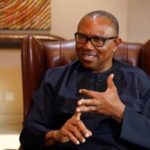
• Chukwuma Soludo is in the news again. He has a habit of making the headlines on average, once a month. In September, he was in the news for banning miniskirts in Anambra schools.

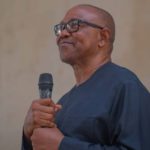
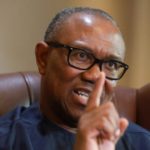
    In October, he placed a ban on gaming and casino activities in the state that made lots of people feel uneasy. And on November 14, 2022, the former central bank governor went on a lengthy rant against the presidential candidate of the Labour Party (LP), Peter Obi.

    What happened?

    Soludo said he was ranting because of an interview he had on Channels TV. In the interview, he claimed that the investments Obi made in Anambra are now worth “next to nothing”.

    As soon as the interview went out, Obidients loaded Soludo with heavy blows. So much so that he  lamented that they subjected himself and his family to “abuse and harassment”. He said he was tired of it and came to set the record straight. We looked at the four most interesting things from his response.

    Soludo compared Obi to Hitler

    You know things are very bad when you’re being compared to the genocidal maniac, Adolf Hitler. Here are Soludo’s words: “At the outset, let me state that this exhibition of desperation, intolerance and attempt to bully everyone who expresses the slightest of dissent is reprehensible. This is Hitler in the making. 

    “When the revered Archbishop Chukwuma stated that in Enugu State, they were not obedient, he was ferociously bullied on social media. Any dissent is tagged a saboteur or, in my case, it could be that I want to contest for president after office or that I am envious of Peter Obi.”

    Soludo rubbished Obi’s achievements

    It was not enough that Soludo compared Obi to Hitler, he said that Obi’s achievements were not “all that”. He said Obi’s achievements have not stood the test of time. 

    “Of course, there is room for legitimate debate about the logic or quality of the investments. A bishop recently publicly advised that I should please try to construct the ‘Ngige type of quality roads’, stating that the ones done by his successor (that is, Peter Obi) had washed off, while Ngige’s remained. I promised and we are delivering quality roads that Anambra has not seen before. Yes, poverty more than doubled under Peter Obi and more than 50% of Ndi Anambra were in poverty under him. Go and verify!”

    Obi is just playing games, he knows he can’t win

    You could sense from Soludo’s response that he was ready to enter the mud. He said that even Obi himself knows he’s wasting his time in 2023. His words:

    “Let’s be clear: Peter Obi knows that he can’t and won’t win. He knows the game he is playing, and we know too; and he knows that we know. The game he is playing is the main reason he didn’t return to APGA. The brutal truth (and some will say, God forbid) is that there are two persons/parties seriously contesting for president: the rest is exciting drama!

    “As my brother, I wish him well and even pray for him. I told him during his courtesy call that my prayer is that himself or Prof Umeadi of APGA would win, why not? That is from my heart, but I also told him that my head and facts on the ground led me to know that its probability is next to zero.”

    Expect a part two from Soludo

    The title of Soludo’s rant is “History beckons and I will not be silent (1)”. Part one implies that there’s a part two. Our man isn’t ready to quit just yet. 

    In Soludo’s words, “In this preliminary response, there are some things I will refrain from saying here because, in the end, February/March 2023 will come and go, and life will continue.”

    Soludo just dropped this as an appetiser. Let’s see if he makes it a two-course meal. 

    How has Obi responded?

    Obi’s latest response on the matter seems to be a lot calmer. . He still thinks of Soludo as his bro and tells him that whatever his shortcomings in governance were, Soludo as a professor is now in a better place to fix them.

    Over to you, Soludo. Less talk, more work.

  • The Nigerian Voter is a series that seeks to understand the motivations that drive the voting decisions of Nigerians — why they vote, how they pick their candidates, why some have never voted, and their wildest stories around elections.

    The subject of today’s The Nigerian Voter is Safiya, a Muslim lady from Kaduna State in her twenties. She moved to Lagos in 2018 in search of greener pastures. She told us about her past experience voting in the North, and her views on religion and tribalism when it comes to the voting process. 

    What made you come from Kaduna to Lagos?

    I moved here in 2018. The economy is very poor there in Kaduna and farmers are not making ends meet. Here in Lagos, I am making more money than my secondary school teacher and I can employ him, even with my mama put business.

    So that being said, I came to Lagos to get what I want, which is a better life for myself. Kaduna was just too poor and it is not safe with Boko Haram attacks here and there. Most people living in the North are just branching out to different parts of the country. 

    Have you ever voted before?

    Yes, I have. 

    In 2019, I went to Niger State to vote (since that was where I registered), but it was a terrible experience because the INEC chairmen there did not allow one to vote. 

    It’s only the people that settled them with money (bribes) that they allowed to vote. If you don’t settle them well, the vote will not count.

    Have you ever faced any form of harassment during voting?

    Yes oh, very well. 

    I can remember an INEC guy slapping me across the face because I was arguing with someone that jumped the queue. Unknown to me, the person had already bribed this guy with N20,000, which back then, was a lot of money in the North. 

    Even a pregnant woman nearly lost her baby in my presence because she was pushed down with violent force. It was a really tough time.

    Who did you vote for then and why?

    That time, I voted for Buhari, because I was scared that nobody else would win if I voted for them. I know that with these elections, if someone is running for office a second time, it’s that person that will win. 

    So since 2019 was for Buhari’s second tenure, I just voted for him anyway.

    Do you regret voting for Buhari now?

    Ah, well, sometimes I wish I had the courage to vote for someone else. 

    Atiku may not be the best person for Nigeria, but he is better than this Buhari. Anyways, I’m just hoping that 2023 will be different with the right person, insha’allah.

    Who would you vote for in 2023 and why?

    Peter Obi, because we need an educated person that can develop the country financially. People know that supporting businesses will reduce the financial pressure on them as a government, instead of simply encouraging the usual employment by people. 

    Peter Obi has these ideas. And you know Igbos, they’re quite skilled with this business thing. So I know he would create financial freedom for businesses. We would also have our own Nigerian-made stuff instead of importing. I don’t trust men like Tinubu to deliver, and Atiku should go and rest. The man has been running for president ever since I was in primary school. 

    Igbo men are always very successful in business, so I know that if I vote for Obi, he will create ways for businesses to grow. Maybe I can get a restaurant instead of this mama put.

    But would you say religion should be a big part of your criteria for a candidate?

    Look ehn, Nigeria is the way that it is now because we are all voting based on tribe or religion. In 2015, my people voted for Buhari because he is from the North, but look at how that turned out. If I was ever told that my own Northern Muslim brethren could treat us this way, making us become refugees in other parts of the country, I would never have believed it. 

    Election is not about religion or tribalism. We need to vote for the right person. It is religion and tribalism that made us vote for Buhari the first time, and look at where that turned out. I can’t vote for Tinubu because he extorts people, and he doesn’t care. 

    Look at this flooding crisis for instance that happened in Kogi State. Did Tinubu ever go to visit any of those victims? How many days passed before Atiku visited? It was only Obi that had enough sense to go to those places and sympathize with them, and help them. Why would I not vote for that kind of leader? 

    Tinubu said emi l’okan and they’re playing with the presidential seat as some sort of royal seat that is turn by turn. Is it a royal family thing, that you’re saying emi l’okan? Rubbish. This time, we need to all vote and our vote has to count!

    Who are the people you know voting for? 

    It’s still Peter Obi oh, even in the North. 

    I can’t say I know a single person that wants to vote for Atiku or Tinubu. It’s because my own people are all into a business and they’ve seen that Peter Obi is their man. They will go to the polls en-masse in 2023 and cast their vote!

  • On November 6, 2022, Nigerians were given another opportunity to scrutinise the presidential candidates. This time, at a town hall hosted by Arise TV in Abuja. 

    It’s no news that your usual suspect (read: BAT) and Atiku Abubakar did not show up but four major parties were represented in varying capacities — Rabiu Kwankwaso, the presidential candidate of the New Nigeria Peoples Party (NNPP). Peter Obi, the presidential candidate of the Labour Party (LP). Kola Abiola, the presidential candidate of the Peoples’ Redemption Party (PRP), and Ifeanyi Okowa, vice presidential candidate of the Peoples Democratic Party (PDP).

    If you are looking at the trends on Twitter and wondering what you missed, we’ve got you covered. 

    The BAT ghosts again

    In a country where almost nothing is predictable, like what value the naira will trade against the dollar tomorrow, or what country Buhari will zoom to next, you can be sure of one incontestable truth — Bola Tinubu, aka BAT, will not turn up for a presidential debate.

    And so like clockwork, the BAT was absent. It would have been bearable — even if not tenable — if the BAT was far away from the debate venue, like at his favourite London abode, or in his bullion home of Bourdillon.

    However, the BAT was in Abuja — the same city where the town hall was held. And while his mates were busy talking to Nigerians about their plans for the country, the BAT had more pressing matters to deal with — like the latest owambe in town.

    Later, his campaign team released a statement explaining why he couldn’t attend. We could explain the silliness of it, but it’s better to just show you.

    BAT doesn’t send you and he wants you to know it. His campaign team has already announced he will be your president whether you like it or not. Over to you, Nigerians.

    The rock is no longer playing with you

    Depending on who you ask, Obi’s (aka The Rock) performance was either meh, or excellent. 

    But that’s by the way. While Obi touched on different matters ranging from the economy to security, the most interesting soundbite came off the cuff. At different points during the town hall meeting, Obi was posed questions from Dino Melaye, spokesperson of the PDP. 

    But it appeared Dino the skitmaker eventually took his antics too far, prompting Obi to say “enough”.

    Obi often projects a calm mien, so to see him so visibly annoyed suggests that Dino rattled him. His supporters say he handled it well. We’ll leave you to draw your own conclusions.

    Okowa got a rough reception

    The early videos that came out at the start of the town hall meeting showed Okowa getting some tough love. The crowd present was pissed that his principal, Atiku Abubakar, failed to turn up for what was billed as a “presidential debate”. 

    https://twitter.com/KnightSirdam/status/1589331486779805696

    Okowa would later explain that it had been relayed to Arise TV ahead of schedule that the PDP would be sending a representative in Atiku’s stead. He said they didn’t object to it. Well, despite the initial gra gra, the show went on.

    Okowa didn’t seem shy to take on issues, sharing ideas on how to deal with stuff like insecurity. Besides defending the PDP’s legacy in government, he took a swipe at Kwankwaso, a former member of the PDP, and Obi who until May was a member of the PDP and the former running mate of Atiku in 2019.

    And he didn’t stop there. He fired more shots at Obi for prioritising saving when the economy was dire.

    It would have been smooth sailing for Okowa except that around the same time he was throwing punches offline, another story on him was doing the rounds online. Talk about timing.

    Kwankwaso won a lot of fans

    If anyone came out ahead, it was probably Kwankwaso. Most commentaries from across political divides seemed to suggest he handled himself well. 

    And despite Okowa carpeting him for being a former PDP member, he kind of held his own.

    Kwankwaso threw his own shots. 

    While speaking in support of Okowa over the absence of his principal, he disclosed that it was at least better to have someone turn up instead of one other candidate that didn’t send anyone at all. Ouch.

    But it was not all rosy. He claimed that he left no debt when he left his office. Maybe he didn’t think the fact-checkers would go and verify. But they did, and came back with their final verdict.

    Kola Abiola was a mixed bag

    To be fair, we loved his outfit. The blue senator and that red fila probably made him the best dressed of the four candidates.

    Still, he was the least popular of the mix.

    Abiola spoke eloquently. Unlike other candidates, he noted  that Nigeria already had adequate security infrastructure but it just failed in addressing gaps in manpower training. He also spoke on the economy, making the case for a market-driven one.

    Yet, not everyone was pleased with his performance.

    And like Kwankwaso, he also got a spanking from the fact-checkers.

    ALSO READ: Peter Obi Wants Your Shishi, and Other 2023 Campaign Lessons

  • One thousand and one things are happening with a presidential election, especially one as chaotic as Nigeria’s 2023 race.

    Peter Obi Wants Your Shishi, and Other Campaign Lessons from Last Week

    These are the highlights of the 2023 presidential election campaigns in the past week.

    Obi won’t give shishi but he needs a lot of it

    The Peter Obi presidential campaign uncovered a deep dark secret last week that stunned everyone across Nigeria: presidential campaigns cost money. Who saw that one coming? Before you know it, someone would tell us Abacha was a thief.

    Peter Obi Wants Your Shishi, and Other Campaign Lessons from Last Week

    “He was only saving Nigeria’s money for future use”

    The national chairman of the Labour Party (LP), Julius Abure, opened the door to a dash of public ridicule when he appealed for donations to the party’s campaign for the 2023 presidential election. Crowdfunding for presidential elections isn’t an entirely new concept, but it was a bit comical coming from a campaign that has made penny-pinching a trademark.

    Nigeria’s electoral laws set a limit of ₦5 billion to run a presidential campaign. How much of that can the Peter Obi campaign raise?

    Tinubu finally wins something, but there’s a twist

    The presidential candidate of the All Progressives Congress (APC), Bola Tinubu, has survived a lot of things in his campaign — there was that pee thing, the constant questions about his health and his many gaffes.

    But his campaign has been turning a good corner in the past couple of weeks, and he crowned that last week with an endorsement by Fitch Ratings which projected victory for him in 2023.

    Peter Obi Wants Your Shishi, and Other Campaign Lessons from Last Week

    Peter Obi has won three major polls released in the past couple of months, but the Fitch report predicted a strong Tinubu victory — an outcome that validates his entitled campaign to succeed Buhari.

    But while the report may be good news for Tinubu, it’s not such a great one for Nigerians as Fitch also projected his victory will lead to social instability in Nigeria.

    Atiku’s American wonder

    Atiku has to tick three things on his checklist whenever he runs for president — prove he’s not a northern extremist, beg Obasanjo to take back the stealing allegations and take a trip to the United States.

    Last week, the former vice president packed his campaign team and flew to the U.S. to once again prove that he can waltz into the country where his critics say he’s wanted for corruption. He did a lot of standing around and taking fly jpegs in America and nobody saw him in handcuffs.

    Peter Obi Wants Your Shishi, and Other Campaign Lessons from Last Week

    Roc Boys no drip pass this one

    If the presidential election was a game of stunts, Atiku won last week hands down and should be crowned president as soon as he returns to Nigeria. But if he hopes to have a victorious campaign, there’s one more thing on his checklist he has to resolve and the name is Nyesom Wike.

    Kwankwaso has a miracle up his sleeves

    Does anyone still remember Rabiu Kwankwaso is in the presidential race? The former Kano State governor was primed as the dark horse candidate to challenge the APC and PDP in 2023. But even though he’s been dislodged from public consciousness by Obi’s rise and is now only rated fourth in a three-horse race, Kwankwaso isn’t giving up without a fight. 

    The former governor is still rallying his impressive crowd of Kwankwasiyya supporters with their famous red caps and posting photos of large rally crowds on his Twitter. 

    Peter Obi Wants Your Shishi, and Other Campaign Lessons from Last Week

    But does anyone trust it’ll translate into a win for the candidate of the New Nigeria People’s Party (NNPP)? A chieftain of his party, Buba Galadima, seems to think he’ll perform the miracle of the five loaves of bread and two fish by sweeping over “50-something million votes” in the north while nicking more votes in the southern region.

    If Galadima has seen the state of voter turnout in Nigerian elections, then he’d know he’s building castles in the air, but he’s no stranger to that.

    Imumolen is a local champion

    At 39, Christopher Imumolen of the Accord Party (AP) is the youngest presidential candidate in the race for the 2023 presidential election, and he won’t let you forget it. He’s made many claims about being the “authentic youth” option and wants young Nigerians — the most populated voting group — to elect him to make a statement

    Imumolen’s campaign got some kick last week when he commenced a tour of Nigeria’s West African neighbours to… campaign for president of Nigeria. 

    Christopher Imumolen started his tour in Togo with plans to also touch down in Benin Republic, Ghana and Liberia. Even though he refused to be drawn into a debate on why other candidates are doing diaspora outreach in exotic places in Europe and North America, Imumolen seemed to suggest his own West African tour had more substance. We can’t begrudge a man his days of local outreach.

    Sowore is pocket-watching

    Peter Obi Wants Your Shishi, and Other Campaign Lessons from Last Week

    Remember how the law says it should cost a maximum of ₦5 billion to run a Nigerian presidential campaign? Well, it’s kind of an open secret that Nigerian politicians spend more than the limit and they get away with it because authorities don’t enforce election finance laws. The candidate of the African Action Congress (AAC), Omoyele Sowore, wants that to change for 2023 to create a level playing field.

    Which is why you have laws and a referee like INEC

    You can understand why this is coming from a candidate who could only raise a grand total of ₦‎1‎57.9 million for his 2019 campaign. But Nigeria does need to get serious with enforcing laws to make sure everyone is playing by the books. Why have laws if you won’t enforce them? Is this a third-world country?

    ALSO READ: Village People Stopped These Nigerians from Becoming President

  • A lot can happen in a month — you could safely lose as much as 9kg, read as many as 20 books or make 10 trips to the moon. And if you’re a Nigerian, one month is enough time for one socio-political group to endorse two different candidates for the 2023 presidential election.

    On October 30, 2022, Afenifere, a Yoruba group, endorsed the presidential candidate of the All Progressives Congress (APC), Bola Tinubu. A respected leader of the group, Pa Reuben Fasoranti, announced the endorsement in Akure, Ondo State when the candidate visited him. But this wasn’t Afenifere’s first endorsement of a 2023 presidential election candidate.

    On September 26, 2022, another Afenifere leader, Pa Ayo Adebanjo, threw his support behind the presidential candidate of the Labour Party (LP), Peter Obi.

    What do the separate endorsements mean?

    What’s clear from Afenifere’s endorsement competition is that the group is a house divided against itself. Just like political parties in Nigeria, Afenifere has factions that aren’t always in agreement.

    Even though Fasoranti stepped down as the group’s leader for Adebanjo in 2021, they’ve ended up on opposite ends of issues. In his response to Fasoranti’s endorsement of Tinubu, Adebanjo said the Obi endorsement is the real deal.

    Do these endorsements really matter?

    On one hand, politics is largely a game of numbers and interests which explains why politicians seek the support of individuals who hold influence over large groups of people. These individuals could be anyone from towering political figures to traditional rulers and religious leaders. 

    On the other hand, it’s difficult to measure the impact of these endorsements on elections in Nigeria. For example, former president, Olusegun Obasanjo, publicly endorsed Atiku Abubakar and described him as “President-to-be” for the 2019 presidential election, but we all know how that ended.

    Like the Afenifere, there are many more groups waiting to endorse candidates, whether organic or paid for. But the real question is how much do these endorsements affect real voters?

    ALSO READ: One of These 18 Candidates Is Nigeria’s Next President

  • On Monday, October 17, 2022, the presidential candidate of the Labour Party (LP), Peter Obi, along with his running mate, Datti-Baba Ahmed, visited the controversial Islamic cleric, Sheikh Gumi, in Kaduna State.

    Obi and Gumi had a private meeting to discuss his plans for Nigeria. The candidate later shared photos of the visit on Twitter, setting off a wave of mixed reactions among his supporters and critics.

    Peter Obi and Sheikh Gumi

    Baba-Ahmed, Obi and Gumi [Image Source: Twitter]

    To understand the reason for the online commotion, we first need to understand why Sheikh Gumi is such a controversial figure.

    Who is Sheikh Gumi?

    Ahmad Abubakar Gumi is an Islamic cleric, scholar and former military officer born on the same day Nigeria gained independence on October 1, 1960.

    He studied at the Ahmadu Bello University before enlisting in the Nigerian Defence Academy (NDA). He served in the Nigerian Army Medical Corp (NAMC) as a medical officer before he retired as a captain and moved to Saudi Arabia to advance his Islamic education.

    Gumi is the son of Sheikh Abubakar Gumi. A former leader of the Izalatul Bidi’a wa Ikamatul Sunnah (Izala), a radical Muslim sect that has been linked with inciting religious riots in Nigeria’s northern region.

    Why is Gumi so controversial?

    In February 2010, the Saudi Arabian government arrested Gumi and detained him for more than six months over alleged ties with Farouk Abdulmutallab, a Nigerian known as the Underwear Bomber who tried to blow up a commercial plane in the United States. Gumi regained his freedom after the Nigerian government intervened on his behalf.

    Peter Obi and Sheikh Gumi

    Farouk Abdulmutallab [Image source: Guardian UK]

    Gumi is a huge supporter of Nigeria’s controversial Minister of Communications and Digital Economy, Isa Pantami, who, in 2021, was exposed for championing extremist Islamic ideas and also, supporting terrorists in his past sermons.

    Peter Obi and Sheikh Gumi

    Isa Pantami [Image source: Digital Africa]

    What Gumi is perhaps most infamous for is being an advocate for bandits terrorising the northern region. He notably negotiated the release of the Greenfield University students abducted in Kaduna in 2021, after the bandits demanded a ₦‎100 million ransom. He also went on a media campaign to pressure the Federal Government to establish a Ministry of Nomadic Affairs to address the bandits’ grievances.

    Gume also didn’t win any fans for describing kidnapping as a “lesser evil” during his campaign to whitewash the terrorists. He said: “Kidnapping children from school is a lesser evil because in the end, you can negotiate and now bandits are very careful about human lives. Before, the mission of bandits was to go into a town, ransack it and kill people.”

    So why did Obi pay Gumi a visit?

    Although Obi’s tweet about the visit gave no indication as to its exact purpose, Gumi himself has said they met to discuss the candidate’s plans for the country. He added that he received Obi the same way he receives other high-profile politicians who visit him. The candidate’s aide, Oseloka Obaze, tweeted that Gumi advised him not to let the movement he has started to end after the elections.

    How have Obi’s supporters reacted?

    The reactions to the meeting have been varied among Obi’s supporters. A supporter on Twitter said: “PO abeg Sheikh Gumi is a known ethnic bigot. No be everywhere we go stop by.” 

    In response to the tweet, another supporter said: “This is what we call ‘Building bridges’. Gumi is also a Nigerian. No court has convicted him. Let’s build bridges. Even APC dominated areas and difficult to reach areas will be reached. This is the Unifier. The bridge builder.”

    What does everyone else think?

    Critics have accused Obi’s supporters of hypocrisy for supporting his Gumi visit. They say that Obi’s supporters called Gumi unprintable names in the past but are now aligning themselves with him because he’s popular in the northern region where Obi is yet to establish a strong presence. Other critics say Obi brought himself low with the visit. 

    One thing is clear though, no matter how saintly any one candidate is perceived to be, they’re ultimately in the race to win. How they do it, and if the end justifies the means, is a question only time can answer.

  • To his support base, Nnamdi Kanu is the saviour of the Igbo people from the clutches of the Nigerian government. To the Nigerian Government, he’s a terrorist and a threat to democracy. But for the rest of Nigeria, Nnamdi Kanu is simply the leader of the Indigenous People of Biafra (IPOB), a sect prominent in championing the secession of the southeast region from Nigeria to create its own independent state called Biafra.

    Image Source: Afolabi Sotunde/Reuters

    Kanu’s first arrest

    In October 2015, the Department of State Services (DSS) arrested Kanu in Lagos after arriving from the United Kingdom. The government later charged him to court on charges of terrorism and felony. In April 2017, the Federal High Court in Abuja granted him bail on “medical grounds”, but jumped bail months later after a Nigerian Army raid on his home, and he wasn’t seen in public for over a year.

    In June 2021, the Nigerian government announced that Nnamdi Kanu was miraculously back in custody in Nigeria.

    The government refused to disclose how Kanu was arrested and back in the detention of his buddies at the DSS. But he claimed he was illegally arrested in Kenya and extradited to Nigeria without due process. 

    From that point onwards, it’s been nothing but a seemingly unending court case,  accusations of inhuman treatment and counter-accusations between Kanu and the Federal Government. Imagine being forced to wear the same outfit, without any washing, for five months. 

    Kanu’s imprisonment heightened unrest in the southeast, especially with a controversial sit-at-home order implemented on Mondays across the region. The curfew has been blamed for the increase in criminal activities and violence in the region

    Image Source: Daily Post Nigeria

    A bittersweet release 

    On October 13, 2022, the Court of Appeal sitting in Abuja, the Federal Capital Territory (FCT), ruled Kanu’s arrest and extradition illegal and dropped all terrorism charges against him.

    You can only imagine how Kanu must have felt as he heard the verdict. 

    But, don’t rejoice yet. He has still not been released from DSS custody. Why?

    Well, it’s due to the Federal Government, again. This time, the Attorney-General of the Federation, Abubakar Malami, declared that Kanu was only discharged but not acquitted. He added that there were other issues predating Kanu’s rendition “on the basis of which Kanu jumped bail” which remained “valid issues for judicial determination.”

    In other words, the FG is pissed at Kanu’s jumping bail five years ago and wants to show him shege. 

    What are the people saying?

    Well, we have seen a number of mixed reactions to Kanu’s release. His supporters in the southeast region are happy, as this means no more sit-at-home orders from IPOB and getting back to their normal lives. 

    But there are still fears of IPOB lashing out if the Federal Government detains him further. After all, the current Buhari-led government is known for disobeying court orders. 

    There are also fears about Kanu’s potential influence on the 2023 elections and the fate of Peter Obi, the most prominent 2023 presidential candidate from the southeast region. Nigerians are curious to see whether he’ll be Obi’s ally or foe.

    Time will surely tell. 

  • On January 15th, 2022, a former governor of Anambra State, Peter Obi, praised the Super Eagles of Nigeria on his Twitter account. He got hundreds of responses but most of them weren’t talking about his original message about the national football team. 

    How Peter Obi Accidentally Built an Obidient Force

    Many of the Nigerians in his comment section were begging him to run for president. One of the replies under that tweet was so threatening that Obi had to respond directly. The Twitter user threatened legal action against the former Anambra State governor if he failed to throw his hat into the ring for the 2023 presidential election. In response, Obi said, “Give me some time.”

    How Peter Obi Accidentally Built an Obidient Force

    10 months later, Obi dumped one party for another, dodged a tricky crisis that could have sunk his ambition and powered his status from underdog to frontrunner candidate fueled by the passion of Nigerian youths. But his story didn’t start 10 months ago.

    In the beginning…

    In 2003, four years after Nigeria returned to the loving arms of democracy, billionaire businessman, Peter Obi, contested for the seat of Anambra State governor. The Independent Electoral National Commission (INEC) declared Chris Ngige the winner of that election but Obi disagreed with the result and started a legal battle that lasted three years. 

    In 2006, the court ruled that Obi was the winner of the election. It was the first time a court decided the winner of a governorship election in Nigeria. Obi assumed office in March 2006 but in less than a year, Anambra State lawmakers impeached him (in November 2006) over alleged corruption. Obi claimed it was a witch-hunt because he refused to inflate the state’s annual budget. He went back to court again and won; the impeachment was overturned and he made a triumphant return in February 2007.

    When it was time for another governorship election in 2007, Obi wasn’t on the ballot because he believed he was entitled to four full years in office as governor. Andy Uba won the 2007 election, and Obi had to vacate the Government House in May 2007. But he ran straight to his babalawo, the Supreme Court. 

    How Peter Obi Accidentally Built an Obidient Force

    The court agreed that Obi deserved his four-year term and nullified Anambra’s 2007 governorship election to return him to office to complete his first term. This victory became the precedent for other governors who would go on to win their mandates in court and is the reason why a total of eight states now have off-cycle elections. Obi won a second term in office in 2010 and remained the governor of Anambra State till 2014.

    How Peter Obi Accidentally Built an Obidient Force

    Transmission

    In 2014, Obi did what all Nigerian politicians do in their lifetime: he switched parties. He had spent his eight years as Anambra State governor as a member of the All Progressives Grand Alliance (APGA). But just months after he left the Government House, he dumped the party for the Peoples Democratic Party (PDP) which was in control of the Federal Government at the time.

    Five years later, Obi found himself on the PDP’s presidential ticket as the running mate to former vice president, Atiku Abubakar, for the 2019 general elections. 

    How Peter Obi Accidentally Built an Obidient Force

    Even though they lost the election, Obi was one of the stand-out characters from the campaign trail. His vibrant spirit, track record as governor and obsession with statistics imported from China were some of the 2019 election campaign highlights. It was his first true introduction to the national spotlight — the moment he unwittingly sowed the seeds of the Obidient movement.

    The rise of Obidience

    How Peter Obi Accidentally Built an Obidient Force

    By the beginning of 2022, the 2023 presidential election was already shaping up as the usual two-horse race between the PDP and the All Progressives Congress (APC). And in those two parties, Bola Tinubu and Atiku Abubakar were already being primed to lead their tickets. But both men, veteran politicians from all the way back in the 90s, had an image problem that made them hard to swallow, especially for young voters. 

    As an alternative, the Nigerian youth looked across the landscape for who had more palatable appeal. Their eyes fell on Obi. That’s why hundreds of young Nigerians hounded him to run for president in response to that January tweet where he was talking about football.

    Two weeks later, Obi tweeted that he would “step into the field” if the PDP zoned the presidential ticket to the south. But when it was clear the party would renege on the gentleman zoning agreement, and Atiku remained the favourite to win the party’s ticket, Obi’s growing supporter base started prompting him to leave the party and join another one that would put him on the ballot. 

    This move would be tricky because only the APC and the PDP command political “structures” strong enough to win national elections. But as his chances of clinching the PDP ticket dwindled, Obi took the plunge and joined the Labour Party (LP).

    Obi’s move enjoyed widespread support among the demographic of young Nigerians disillusioned with the establishment, and they vowed to carry his campaign on their heads. And as the support base swelled, they needed a name. They became Obidients.

    What’s the appeal of Peter Obi?

    Every Nigerian election has a candidate billed as the “messiah” to lead Nigerians out of the wilderness to the Promised Land. Even though Obidients have stopped short of using that tag, Peter Obi represents the wealth of option Nigerians don’t usually get in presidential elections. He’s distinguished himself, with his much-talked-about humility, financial prudence, and a certain kind of sophistication that’s become a rarity in Nigerian elections.

    Since winning LP’s presidential ticket, Obi’s campaign has been fueled chiefly by supporters with a deep sense of commitment to his ministry and the hope that he represents. In response to criticism that he has no political structure to win a national election, Obidients have rolled up their sleeves and got down to work. They’ve moved what was once derided as a social media campaign to the grassroots to win more voters to the Obidient movement.

    The result of the work is starting to show in opinion polls that have boosted confidence about Peter Obi’s chances. According to three prominent polls, including one by Bloomberg, Obi is ahead of his two main rivals and is primed to win the election next year.

    One of Peter Obi’s most prominent narratives is that he’s a political “outsider” even though he’s an establishment politician who’s broken bread with the same political class Nigerian youths are desperate to retire. But the candidate has had to fight for a political career that his supporters feel makes him different.

    To end up inside Aso Rock Villa, he’ll need his Obidient force to pull off the impossible and spit in the face of an unyielding status quo.

    How Peter Obi Accidentally Built an Obidient Force

    ALSO READ: One of These 18 Candidates Is Nigeria’s Next President

  • It takes a village to pull off an election. No Nigerian election is complete without the candidates pulling antics, boring campaign rallies, cringey skits and dance videos, exaggerated campaign promises, and banners like this:

    Why We Must Not Allow Bullying to Become the Norm for Elections

    But more than anything, an election needs voters. In fact, the legitimacy of an election is often defined by how many people turn out to vote. These voters are the people who fuel an election campaign after buying into the vision of their preferred candidate and spreading their gospel everywhere they go. 

    But just like with anything that happens where two or more are gathered in service of anything, there are bound to be… issues.

    The problem with Nigeria’s 2023 elections campaign

    As with any sort of competition, with elections, it’s never enough to say pounded yam is your favourite swallow. It’s equally as important to outline and, with the aid of diagrams, prove that your opponent’s semo is manufactured inside Lucifer’s latrine. The goal of putting on that pressure is to get them — and other undecided people — to ditch semo and join hands with you to crown pounded yam as the king of swallow that it is.

    Why We Must Not Allow Bullying to Become the Norm for Elections

    Your choice is elite and any other choice is a counterfeit

    Over the course of the campaigns for the 2023 presidential election, this culture of putting down the other camp has oftentimes crossed six lanes into harassment. The most recent episode involved Nollywood actress, Joke Silva, who openly declared her support for the presidential candidate of the All Progressives Congress (APC), Bola Tinubu. The wave of online harassment that followed her declaration forced her to disable comments on her Instagram page. And she’s only one of many that have been targeted for online harassment over their choice of candidate.

    More than once, the presidential candidate of the Labour Party (LP), Peter Obi, has cautioned his supporters to be of good conduct. His repeated calls for restraint were fueled by the sometimes problematic online attacks against other candidates and their supporters.

    But at the same time, other camps have also targeted Obi’s supporters and mislabeled them as terrorists using his campaign to further their supposed anti-government agenda. His supporters have also faced real-world violence while trying to boost support for him in the streets. In August 2022, thugs in Lagos State rough-handled a physically-challenged Obi supporter who proudly displayed his support on his wheelchair.

    A couple of supporters flying his flag also suffered violence after a campaign rally in Lagos State on October 1, 2022.

    https://twitter.com/ObiFlagboy/status/1576597581014003713?s=20&t=ayIuLt0wlxtUiemGiKwsPw

    The many incidents of online harassment and offline violence currently brewing aren’t new in Nigeria. And while opposing camps keep arguing over which one is more damaging to Nigeria’s democratic process, there’s a more important question to answer.

    Where’s the voter’s right to choose?

    The real beauty of democracy is the right it bestows on every eligible person to choose who they want to represent their interests in government. And while this right is protected by the nation’s relevant laws, it’s not completely divorced from the freedom of speech of others to criticise it. But this freedom also has certain limits, and to go beyond them is considered harmful.

    Why We Must Not Allow Bullying to Become the Norm for Elections

    Nigeria’s 2023 presidential election is deeply personal to the more than 90 million people registered to vote. Nigerians have been dragged through too many traumatic events over the past seven years. It’d be foolish not to carefully consider the nation’s next leadership choice as critical to its survival. But it’s still important to always know where the big red line is.

    Why We Must Not Allow Bullying to Become the Norm for Elections

    An election isn’t determined by who screams the loudest obscenities online but by the people that show up to vote at the polls. If you want to make sure your pounded yam becomes the king of swallow, the best strategy is to find like-minded people like yourself who love pounded yam or are at least open-minded enough to listen to your pitch. Raining fire and brimstone on semo lovers or, even worse, fufu lovers, isn’t likely to get them to turn their back on their favourite food.

    Why We Must Not Allow Bullying to Become the Norm for Elections

    It’s important that when the 2023 presidential election is over, there’s enough of a relationship to mend for everyone to work together for the country’s future, regardless of who wins. The 2023 election is a battle for Nigeria’s soul and it’s essential that participants don’t lose their own way in the pursuit of moulding a better country.

    ALSO READ: One of These 18 Candidates Is Nigeria’s Next President

  • This is Zikoko Citizen’s Game of Votes weekly dispatch that helps you dig into all the good, bad, and extremely bizarre stuff happening in Nigeria and why they’re important to you.

    Subscribe now to get the newsletter in your email inbox at 8 am every Friday instead of three days later. Don’t be LASTMA.

    Nigeria has a very short list of frequent natural disasters: Ponzi schemes, politicians and destructive annual floods.

    Over the past week, thousands of people living in Kogi State became homeless after invasive floods visited them and decided to feel at home. Many of these victims have raised alarm about their fate, but this isn’t just a story about Kogi.

    Flood in Nigeria

    Source: Twitter/@AlejiOjay

    This year, more than half a million Nigerians have suffered the same watery fate witnessed in Kogi this week. Between January and August alone, flood incidents in 33 states killed 372 people, according to statistics from the National Emergency Management Agency (NEMA). And the sad thing is there’s nothing special about what’s happening because it repeats itself every year.

    Heavy rainfalls cause much of these flood incidents but there’s a man-made aspect to it too. Every year, Cameroonian officials release excess water from Lagdo Dam. The excess water knows no boundaries and travels, without a visa, through the River Niger and Benue to wreak havoc in Nigeria. This happens every year, yet the government hardly ever prepares for it other than to raise alarm.

    Flood in Nigeria

    In fact, Kogi’s Commissioner for Environment, Victor Omofaiye, was upset that the victims ignored NEMA’s warnings to move to higher ground, even though there’s little evidence the government provided them with alternatives. The state government is now scrambling to provide relief for those affected by appealing to the Federal Government and non-governmental organisations (NGOs).

    Until that help comes, at least the affected residents can console themselves with these shamelessly-branded boats the Kogi State first lady, Rashida Yahaya Bello, donated before this week’s severe floods.

    Flood in Nigeria

    Source: Blueprint

    What Else Happened This Week?

    The Battle for Who’ll Inherit Buhari’s Mess Is Live!

    Presidential candidates have been heavily flirting with Nigerians for the past couple of months but that’s just pre-marital sex in election campaign terms. It wasn’t until September 28, 2022 that the Independent National Electoral Commission (INEC) blew the whistle for the official start of campaigns. 

    This leaves the floor open for candidates to commence the battle for the unique honour of becoming the man or woman who inherits Buhari-shaped trials and tribulations from May 29, 2023.

    The candidate of the Peoples Democratic Party (PDP), Atiku Abubakar, flagged off his campaign with the launch of a range of books that are about him. He also released a 15-minute video address promising to be Nigeria’s great unifier, never mind that he’s been struggling to unite his own party.

    The candidate of the Labour Party (LP), Peter Obi, flagged off his campaign at a solidarity rally with his supporters in Jos, Plateau State. It was an auspicious day for him too because Bloomberg News released the result of a poll that showed him as the clear favourite to win next year’s election. It’s the third major poll he’s won in weeks, but February is still a long time away.

    The candidate of the All Progressives Congress (APC), Bola Tinubu, launched his own campaign with a press statement after he flew to London and cancelled his scheduled campaign event. There has to be something about London that seduces Nigerian presidents and presidential hopefuls and we’d like to know so we can use it to keep them here.

    Flood in Nigeria

    On February 25, 2023, more than 90 million Nigerians will have the opportunity to pick the country’s next president from a pool of 17 men and one woman. The time to pay attention and choose your fighter starts now.

    Have You Seen This Video?

    Ehen, one more thing…

    Nigeria’s national grid collapsed for the seventh time in 2022 this week and sent Nigerians back into familiar darkness. At what point are we taking it to Shiloh for deliverance?