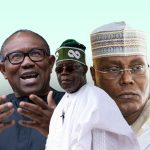
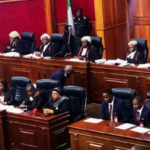
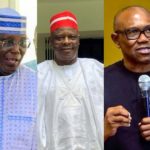
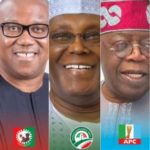
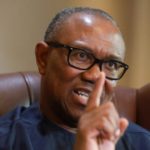
• On May 8, 2023, a Twitter user with the handle @GoziconC claimed that the lawyers defending Nnamdi Kanu, the leader of the secessionist group the Indigenous People of Biafra (IPOB) now in custody, are the same as those of Labour Party presidential candidate, Peter Obi, at the ongoing presidential tribunal proceedings. 

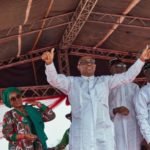
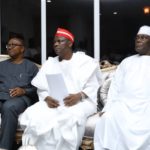
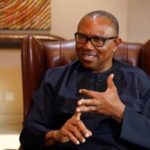
    The user followed up his claim with a photo of Obi in conversation with some lawyers in court. As of the time of writing, the tweet has been viewed over 412k times. 

    A self-acclaimed leader of the IPOB, Simon Ekpa, also tweeted on May 9, 2023, that Mike Ozekhome (SAN), who is Nnamdi Kanu’s counsel and appears in the photo above, is part of Obi’s legal team.

    On Wait First, we divide claims into three categories. A valid claim is a fresh banana. A false claim is burnt dodo. And a misleading claim is cold zobo.

    So, how valid is this claim?

    ALSO READ: Who’s This Simon Ekpa Guy Running IPOB?

    Verification

    Fact-checkers at the Centre for Democracy and Development (CDD-West Africa) examined this claim. Here’s what they found:

    In January 2022, following his apprehension by the Nigerian government, Nnamdi Kanu appointed Mike Ozekhome as his lead counsel in his case against the FG. Ifeanyi Ejiofor, one of Kanu’s lawyers, also confirmed this.

    Is Mike Ozekhome representing Peter Obi at the Election Tribunal? 

    “The election petition prepared by Obi’s legal team includes a list of the legal practitioners representing the petitioner. Mike Ozekhome’s name does not appear on the list.

    “We, however, found Ozekhome to be among the legal team of Atiku Abubakar, the presidential candidate of the Peoples Democratic Party (PDP), which was inaugurated in March 2023. The team included his name in the petition that was submitted.

    “Further investigation revealed that Ozekhome and Atiku have had a clientele relationship since 2017. He is also currently representing the latter in the alleged money laundering case filed by Festus Keyamo. 

    “Another senior lawyer in the attached image to the tweet is Yusuf Ali, a member of Bola Tinubu and the All Progressives Congress (APC)’s legal team. We found that the lead counsel to Peter Obi and the Labour Party (LP), Onyechi Ikpeazu, has never represented Nnamdi Kanu or the IPOB secessionist group.”

    Verdict

    The claim that lawyers representing Peter Obi at the presidential election tribunal also represent Nnamdi Kanu is burnt dodo. It’s false.

    Can you handle the hotness of Zikoko’s Hertitude? Click here to buy your ticket and find out.

  • Bola Ahmed Tinubu, the All Progressives Congress presidential candidate (APC), was announced the winner of the February 25, 2023, presidential elections and Nigeria’s new president-elect on March 1, 2023, by the Independent National Electoral Commission (INEC). 

    However, with 19 days left until the presidential inauguration on May 29, 2023, Tinubu still has many opps standing in the way of his dream to become Nigeria’s next president. 

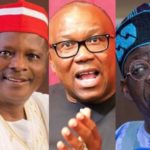
    On March 21, 2023, four presidential candidates, Atiku Abubakar of the Peoples Democratic Party (PDP), Peter Obi of the Labour Party (LP), Solomon Okangbuan of Action Alliance (AA) and Chichi Ojei of Allied People’s Movement (APM) took the almighty legal steps. They filed petitions at the Presidential Elections Tribunal in Abuja, seeking to nullify INEC’s declaration of Bola Tinubu as the winner of the 2023 presidential elections.

    The petitions claim that the elections should be voided for the following reasons:

    • At the time of the elections, Tinubu wasn’t qualified to contest, which would infer that he received “wasted votes”.
    • Kasim Shettima had a double nomination, one as APC’s vice-presidential candidate and the other for a senatorial seat in the National Assembly, contrary to Section 35 of the Electoral Act.
    • Tinubu failed to get 25% of the votes in the Federal Capital Territory (FCT) and engaged in corrupt practices which are in non-compliance with the Electoral Act.

    The Presidential Election Petitions Court, led by Justice Haruna Tsamanni, began proceedings on May 7, 2023, and the Action Alliance (AA) party withdrew its petitions against Tinubu’s victory. 

    While we’ll continue to observe the tribunal, ZikokoCitizen reached out to some lawyers and political analysts to hear their thoughts on the tribunal and predict possible outcomes. Here’s what they had to say:

    “Our democracy is maturing.”

    Titilope Anifowoshe is a legal practitioner passionate about charity and good governance; she’s also the founder of the Eagles Foundation for Humanity. And she’s happy that our politics is evolving into a multidimensional one not necessarily dominated by two political parties.  

    According to Titi, “I have mixed feelings about the tribunal because some of the petitions are issues that should have been brought before the court pre-election. I hope some of the trivial and technical issues will not stall justice. But regardless, I’m confident that the Supreme Court will do the needful. Let’s not forget that Lady Justice is blindfolded and a respecter of no one but the Law. I am really optimistic that justice will be done. 

    On how likely it is for the tribunal to nullify Tinubu’s win, I can’t assertively say that this will happen because the whole situation is dicey. If you look at some of the grounds of the petition from Peter Obi and the Labour Party against Tinubu, while the 1999 constitution in Section 137 makes it clear that being charged and fined is grounds for disqualification, the Law also speaks about a 10-year gap. We should also remember the maxim that says that a man cannot be punished twice for the same offence. 

    If we also look at the grounds of the double nomination of Kasim Shettima, while it contradicts the Electoral Act, Section 35 of the Act uses the word “knowingly”, and Shettima can claim ignorance in the situation. But in the same vein, when we look at Section 60(5) of the Electoral Act, we can see that INEC violates its rules. So, considering these factors, it’s difficult to state clearly if the election will be nullified. However, we should never forget that judicial decisions must be accepted as correct, and I trust the tribunal’s decision.  

    But regardless, the tribunal and judiciary are governed by legal precedents and established rules, and justice won’t be denied. Although the Electoral Act and INEC guidelines are obviously imperfect, we’re gradually getting there. We hope the panel will reflect the yearning of the majority of Nigerians and they will be fair and honest.”

    “Electoral injustice takes away the dignity of human persons.”

    Festus Ogun, also a legal practitioner, hopes that the tribunal’s decisions reflect the people’s wishes and aspirations. 

    He said, “While it’s unprofessional to preempt or predict the outcome of the court in cases such as this, I honestly believe that a lot of our people feel cheated and violated. I also believe that electoral injustice takes away from the dignity of human persons. 

    Given this, many young Nigerians yearn for true justice at the tribunal. But unfortunately, as we’ve experienced in the past, when matters get to the court like this, lawyers and litigants tend to focus on technicalities. But I am hopeful that this time, Nigerians will pay more attention to the substance of the case.”

    “There is a political question mark on Tinubu’s mandate.”

    Demola Olarenwaju is a Public Affairs analyst, political commentator and the Special Assistant in Digital Media and Strategy to Atiku Abubakar. He thinks that regardless of the tribunal’s outcome, he doesn’t expect it to lead to an explosive situation in the country. 

    “The courts have made it clear that they don’t want to spend time on unnecessary litigation and technicalities, but instead, the case will be decided on merit. We hope this will be adhered to and the Presidential Elections Petitions Court will be concluded shortly. The petitions from the different political parties are very interesting. Peter Obi comes from the angle of legalities, which questions the legitimacy of Tinubu and Shettim as candidates in the general elections. On the other hand, Atiku Abubakar is coming from the angle of what happened on election day, which is the non-adherence of INEC to the Electoral Law. Also, in Atiku’s petition, we see the margin of lead principle, which says that where the margin of lead between the declared winner and the runner-up is less than the number of cancelled votes, then the elections should be considered inconclusive and makeup elections should be conducted. So, from all this, it’s clearly a two-pronged attack.

    On the likelihood of the court nullifying the election, given the history of Peter Obi and Atiku with electoral litigation, it could happen again in this case. Also, the advent of BVAS makes it easier to point out areas where over-voting or electoral malpractice occurred. Also, the fact that there were four major candidates in this election and Bola Tinubu could only get 30% of the votes shows that he isn’t the choice of most Nigerian voters. There’s a political question mark on his election mandate as declared by INEC that has to be resolved in court. 

    Everyone will move on if the elections are nullified, or supplementary polls are held. I don’t think it will be an explosive situation, and despite what the ruling party says, Nigeria will continue to be Nigeria, and heaven won’t fall. It’s clear that many Nigerians believe that the elections were compromised, and the tribunal should be firm in adjudicating the case. I also expect the tribunal and judiciary to open their doors to the media to show that there’s nothing to hide. 

    However, my prediction for the worst possible outcome of the presidential tribunal will be supplementary elections between Atiku and Tinubu or Atiku and Peter Obi if Tinubu is disqualified. But in any way it plays out, Atiku Abubakar will be involved in the second round of elections”. 

    Also read: Five Popular Election Tribunal Judgements in Nigeria.

    Rest assured, Zikoko Citizen will continue to keep a close watch as the drama unfolds and keep you updated on the post-election drama!

  • On April 19, 2023, a Twitter user with the handle @cbngov_akin1 claimed that the poverty rate increased while Peter Obi was governor of Anambra state. The tweet has garnered over 91,000 views as of the time of filing this report.

    On Wait First, we divide claims into three categories. A valid claim is fresh banana. A misleading claim is cold zobo, while an outrightly false claim is burnt dodo.

    So, how valid is this claim?

    Some background

    [Peter Obi / Africa Report]

    Peter Obi, the Labour Party’s (LP) presidential candidate, had a staggered time in office as governor of Anambra state. In 2003, he contested for governor under the All Progressives Grand Alliance (APGA). Chris Ngige was declared the winner, but in a lengthy court battle, the victory was overturned at the Supreme Court. Obi was reinstated as the election winner and assumed office in March 2006. 

    Obi was impeached in November 2006 and reclaimed his mandate following another court ruling. He returned to office in February 2007. He was removed again after the 2007 election but was reinstated by the Supreme Court. Obi won reelection and served as a two-term governor from March 2006 to March 2014.

    Obi’s performance as governor has come under intense scrutiny since he declared his intention to run for president, particularly as his campaign promises hinged on combatting poverty. The Independent National Electoral Commission (INEC) announced him third in the presidential election with 6,101,533 votes. 

    Poverty is more than just a number. It’s a complex issue that affects many aspects of a person’s life. OECD data shows that poverty rates are measured by income levels falling below the poverty line. But poverty is not a one-dimensional problem that can be summed up with a single indicator. The National Bureau of Statistics (NBS) is the go-to agency in Nigeria for collecting, analysing, and disseminating crucial statistical information that helps understand the socioeconomic realities of the country’s citizens.

    Verification

    Our partners FactCheck Elections, looked into this claim. Here’s what they found.

    “Findings by FactCheckElections revealed the (NBS) National Poverty Rates For Nigeria: 2003-04 (Revised) and 2009-10 (Abridged Report). The report showed that Anambra had 41.4% state-level headcount per capita poverty measure in 2003-04 and 53.7% in 2009-10. 

    “The National Poverty Rates For Nigeria: 2003-04 (Revised) And 2009-10 (Abridged Report) capture poverty rates across Nigeria with the Absolute Poverty Approach (using a per capita approach of assigning 3000 calories requirement for an adult).

    [Source: NBS]

    “FactcheckElection can find no official data report on the poverty rate between 2011 – 2018. Aside from forecasts and predictions, there’s no absolute poverty study in those years. According to a reply tweet by Dr Yemi Kale (former statistician general of Nigeria), ‘NBS has not conducted any absolute poverty study since 2009’.

    “However,  there is a 2019 Poverty & Inequality in Nigeria report published by the NBS. The report showed Anambra had a poverty rate of 14.78%.”

    Verdict

    So what’s the status of the claim? Based on data from the (NBS), Anambra’s state-level headcount per capita poverty increased from 41.4% in 2003-04 to 53.7% in 2009-10. Peter Obi was governor between 2006 and 2014. So the claim is partly true, and we give it a banana rating. However, no official data shows the poverty rate when he left office in 2014.

  • On April 13, 2023, Adamu Garba, a member of the ruling All Progressives Congress (APC), tweeted an image of the Chair of Nigerians in Diaspora Commission (NiDCOM), Abike Dabiri-Erewa, with the Labour Party (LP) presidential candidate, Peter Obi. He claimed that the APC had helped secure Obi’s release from detention in the UK after travelling with fake documents.

    The tweet has amassed over 2.7 million views. 

    On Wait First, we divide claims into three categories. A valid claim is fresh banana. A false claim is burnt dodo, and a misleading claim is cold zobo. So what’s the status of this claim?

    According to a report by Premium Times, Obi was detained in London by UK immigration officials for alleged impersonation. A statement by the Head Obi-Datti Media, Diran Onifade, confirmed that Obi was harassed by London immigration officials and placed in detention. Onifade said this was where Obi spent the Easter holidays.

    “The LP presidential candidate arrived at the Heathrow Airport in London from Nigeria on Good Friday, April 7, 2023. He joined the queue for the necessary Airport protocols when immigration officials accosted him. They handed him a detention note and told him to step aside,” Onifade said.

    Onifade said the offence means an impersonator could commit weighty crimes that would cause people to point fingers at Obi, causing embarrassment.

    In his reaction to a report that the UK government apologised to Obi over the detention, Obi said he did not receive any letter of apology from the British government. 

    Verification 

    To verify Adamu’s claim, our partners, FactCheckElections, came across a report by LEADERSHIP . In the report, the federal government of Nigeria denied news that it intervened in Obi’s detention ordeal. 

    The spokesperson of NiDCOM, Abdur-Rahman Balogun, said the image attached to the tweet is a “stunt.”

    He added that the NiDCOM boss, Dabiri-Erewa, was not in the UK and not in a position to secure the release of any Nigerian suspected to be under UK interrogation

    “Our attention has been called to the above social media stunt, which has gone viral. Aunty Abike Dabiri-Erewa is NOT in the UK and not in a position to secure the release of any Nigerian suspected to be under UK interrogation. So, members of the public should disregard the information in its entirety,” Balogun said.

    Verdict

    Adamu’s claim is false and therefore burnt dodo. Avoid the spread of misinformation, as it has the grave potential to cause public panic and harm.

  •  [countdown date=”Feb 25, 2023 7:00:00″]

    The 2023 elections in three days will go down as one of Nigeria’s most important historical events.

    In the days leading up to the elections, we’ve experienced many interesting curves: 

    • For the first time, there’s a third force party serving as a threat to contenders from the two major political parties;
    • The youths are the highest proportion of registered voters at 39.5%;
    • Voters will be accredited not manually but with technology using the Bimodal Voter Accreditation System (BVAS).

    Out of anticipation, several polls have been published to predict the winner of the 2023 presidential election. 

    Using data from the voter turnout and the voting patterns of previous elections since 1999, a group of private observers; John Analoh, Ayomide Gbadegesin and Femi Labiyi, have predicted six possible outcomes for the upcoming elections.

    The winner will be decided after a run-off 

    A run-off means a winner will be decided after two rounds of voting. This would happen if neither candidate got the majority votes, i.e. 25% of votes in 24 states. And this is very likely because each presidential candidate is a powerhouse in their own right.

    Peter Obi, the Labour Party (LP) presidential candidate, is expected to have many votes from the South-East, South-South and North-Central states. But Bola Tinubu, the presidential candidate for the All Progressives Party (APC), may win critical states like Kaduna, Borno and Kano. 

    Also, the presidential candidate for the Peoples Democratic Party (PDP), Atiku Abubakar, is expected to win or come a close second in many states and even in the South-South regions. 

    So, while Bola Tinubu may get the most votes, he might be unable to pull off 25 per cent in 24 states. 

    Atiku Abubakar wins the election

    For this outcome, although Peter Obi might have the most votes in the South-East. Atiku would get many votes from states in the South-South region, especially in Delta state. 

    Also, while the North-West and Noth-East regions vote in favour of Bola Tinubu, Atiku would win in APC powerhouses like Jigawa, Katsina and Zamfara. This would ultimately propel him to victory.

    Bola Tinubu wins the election

    In this scenario, Tinubu wins comfortably in the South-West region and is voted favourably for in the North-East and North-West regions, particularly in Kano, Kebbi, and Kaduna.

    And although Peter Obi might perform well in the South-East, Atiku is also expected to pull strong figures from the South-south region.

    Atiku Abubakar win the election

    If Atiku does exceptionally well in South-south regions and APC strongholds like Jigawa, Katsina and Zamfara. In that case, he could have the majority vote in 24 states.  

    Bola Tinubu wins the elections

    It’s also probable that while Tinubu does a clean sweep in the South-west, he would also come a close second in the South-south, northeast and north-west regions. This would very easily push him to victory.

    Peter Obi wins the elections

    In this scenario, the elections will end with the third-force candidate, Peter Obi taking the coveted prize. 

    For this to happen, Rabiu Kwankwaso, presidential candidate for the New Nigeria Peoples Party (NNPP), gets good numbers in the North-West and some parts of the North-east region. And Peter Obi wins Lagos and gets the majority votes in the North-Central.  

    While we can’t say who the winner will be, the one thing that can be confirmed is that the 2023 elections will shape Nigeria’s future.

  • The Nigerian experience is physical, emotional, and sometimes international. No one knows it better than our features on #TheAbroadLife, a series where we detail and explore Nigerian experiences while living abroad.


    This week’s Abroad Life subject is a healthcare worker, freelancer and data analyst in his early thirties. He lives in London but works in Bournemouth at the moment. He speaks to us about his life before moving to London, how life in London has been so far, and his newfound love for politics since the buildup for the 2023 general elections started. 

    What motivated you to move to the UK?

    I was born and raised in Nigeria. After I graduated from university, I started working at a publishing company in Lagos. But life was hard for me there. This was for several reasons. Firstly, my residence was at Ikotun, and my workplace was at Ilupeju. The distance was insane but still manageable. After some months, the company relocated to Lekki. Now imagine me having to go all the way to Lekki from Ikotun every single day. That is a distance of almost 60 km. At some point, I got sick of it. 

    Also, I’ve always wanted to return to school and do my Master’s. The initial

    Plan was to do it somewhere in Nigeria, as I felt it was too expensive to do it abroad. But I guess at some point, I thought that the dysfunctional nature of Nigeria would always catch up with me. My best bet was to leave, so I saved up money and, with the help of my family, left Nigeria. 

    How was the migration process? 

    So initially, my first plan was to move to Canada. I started the process in 2019 with the use of an agent. I even got admission into Thompson Rivers University, but my visa was rejected. This was because they felt I would not return after school. I spent the next year in Nigeria and got more motivated to leave due to the pandemic and the overall frustration of the country’s lack of working systems. 

    I then asked a friend sometime around mid-2020 if it was too late for me to start my master’s application to schools in the UK, and his answer was no. He told me to start the process immediately. I went through the process myself, got the visa and then travelled in 2021. 

    Nice. So how would you describe London so far?

    London is like Lagos, but a bit more organised. There are better transport systems. You can always use the tube or train. You get to see a lot of people like you in London. Near my house is an African Market where you can get egusi and other African foodstuffs. There are even African restaurants. 

    However, when you move away from cities like London or Manchester and you move to places like Bournemouth (where I am currently), it’s way calmer. There’s less traffic and the scenery is nicer. But you hardly see people like you; less African stores and the like. You can also hardly see African food here and you just have to stick to European dishes. 

    Even though it’s cheaper to live in Bournemouth, I still have friends in London; hence, I can never really leave London. It also reminds me of Lagos too. You can be walking and see two people speaking Yoruba.

    I can remember my first week in London. I needed someone to exchange currency with and the person was in Arsenal, so I had to travel there. I can remember seeing local brooms and people selling puff puff in London. It was crazy. It gave me PTSD of my Lagos experiences. 

    What are the challenges and advantages of living in London?

    It can sometimes get lonely, especially if you don’t make friends easily. There was a time I stayed somewhere for a year and I didn’t even know who my next-door neighbour was. In Nigeria, when you move to a new place, before the next two days you know everyone on the block. I’m lucky I have my cousin here with me, as we both came at the same time. I don’t know how I’d have survived without my family. There is no way I can forget Nigeria in a hurry. I always keep up with current affairs from time to time.

    However, you’re sure that nothing will halt your progress because they have systems that work. If you’re working a 12-hour shift, for instance, you can be sure that you will get paid your dues no matter what. No one is telling you that they can’t afford to pay your salary or you get half your salary like in Nigeria. 

    Also, if you work hard here, you’ll succeed. You can be sure of seeing the fruit of your labour. But in Nigeria, it’s not the case. It’s very risky to do business because you’re not sure of the next government policy that can strike it down. Like this naira redesign for instance, you see the way people are panicking. Things like that don’t happen here. 

    I’ve noticed that Nigerians here also tend to do very well. This is because we are used to battling systems and external forces that are out to destroy our efforts. When one arrives with that anger and zeal, there is always the possibility of one doing better because those bad systems are almost non-existent. This is the biggest advantage here really. 

    Get More Zikoko Goodness in Your Mail

    Subscribe to our newsletters and never miss any of the action

    Nigeria’s elections are less than two weeks away. Would you vote if you were in Nigeria?

    I’d definitely vote if I were in Nigeria. 

    Did you know you’d not be able to vote from the UK? If you did, then why did you still leave? 

    I knew I’d not be able to vote. This wasn’t because of a lack of patriotism. I know that when I was doing my undergraduate studies back in Nigeria, I was in groups that advocated for better governance and sensitisation for citizens. 

    But it got to a point where I was almost going insane with everything going in Nigeria and I needed an escape. I still really love Nigeria and I still wish to come back. However, with Nigeria’s current state, I don’t see how it can benefit me at the moment. Also, I’m the only boy in my family. At some point, my parents will start expecting me to pay bills and do things that a ‘son of the house’ should do. When you’re in Nigeria, paying bills, and your financial capacity isn’t growing anywhere, things will become difficult for you. 

    Who are you supporting in the 2023 elections, and how do you wish to show your support from abroad?

    Funny enough, I supported the All Progressives Congress (APC) in 2015 over the People’s Democratic Party (PDP) because I felt PDP was enjoying a huge monopoly and needed some real competition, having been in power for the last 16 years. However, the APC came and made things even worse. 

    However, with the rise of a third-force party, I’ve now become a supporter of Peter Obi, who’s under the Labour Party (LP). I believe he’s not part of the ‘inner cabal’ of Nigerian politicians and, therefore, can bring in fresh ideas for Nigeria to become a better place. I’d love for him to be elected as president so that he can change the country and I can come back home. Nigeria is a sweet country to live.

    As to how I’m showing my support, I’m making sure that my friends and family are ‘Obidient’. My dad, for one, was so surprised at my newfound political awareness. This is because my dad’s image of me whenever it comes to politics is forcing me to watch the 9 o’clock news back in Nigeria. But when I pitched Obi as the right candidate in one of my calls he was shocked, and so were my family members. So I can say that yes, I show my support by heavily endorsing Obi to everyone I know back home. I also make sure to always make my support loud for Obi on social media, especially on Twitter.

  • It is 17 days to the start of the 2023 presidential elections. The pressure has only gotten werser, with various opinion polls showing which of the ‘Big 4’ of Nigeria’s presidential candidates could win Nigeria’s iron throne.

    The ‘Big 4’

    So far, all the opinion polls released have had an inconclusive winner — until the release of Nigeria’s first predictive poll by Stears Insights. And the winner? None other than Labour Party candidate Peter Obi! He was declared the winner by a whopping 27% ahead of APC’s Bola Tinubu (15%), PDP’s Atiku Abubakar (12%), and NNPP’s Rabiu Kwankwaso (2%).


    [Premium Times/Pendrops]

    But you must be wondering — what the heck is a predictive poll, and how did Stears come about their results? Let’s show you how they did it here:

    What is a predictive poll?

    Before getting into the nitty gritty of a predictive poll, it is important to note one key thing about previous opinion polls, which is the appearance of silent voters. 

    Silent voters do not reveal who they would vote for as their preferred candidates. The ANAP poll of December 2022 gives a good example of this:

    However, with Stears, they found a solution to this: create a proprietary estimation model that predicts scenarios for the most likely voting patterns for silent voters within a data set. With this, one can have a comprehensive “prediction of the future” concerning the 2023 presidential elections. Thus, the name “predictive poll”. Get it?

    Now that we understand what a predictive poll is let’s look at how Stears came to their conclusion and the various scenarios in which Obi was declared the winner.

    The methodology behind Stears predictive poll

    To make a nationally representative poll, Stears interviewed 6,220 people — making it the largest public opinion electoral poll for the 2023 elections. People from the sample data set were randomly selected by state and gender to mirror the distribution of registered voters in Nigeria. All 36 states and the FCT were polled. 

    One unique thing about the sample size and breakdown is that it enables one to make predictions at the state level, which is a unique feature of Stears’ predictive poll.

    Now that we know about the methodology let’s review the scenarios.

    The silent voter turnout scenario

    Stears’ predictive model analysed the preferences of the transparent voters and the revealed preferences of silent voters to estimate the most likely preferred candidate for each silent voter.

    The model assigns 43% of undeclared votes to Tinubu. This suggests that most silent voters are Tinubu supporters. However, Obi is still the predicted winner when the reassigned silent voters are added to the declared voter count.

    The high voter turnout scenario

    NB – Red stands for Peter Obi, Sky blue stands for Tinubu, Green stands for Atiku, and Dark Blue stands for Kwankwaso

    Stears created a high-turnout scenario and applied it to the prediction model. This includes everyone who declared an intention to vote. This is except for those who still needed to collect their PVC. Undecided voters who were unsure whether they wanted to vote are also included.


    In this case, Obi gets 41% of the vote, holding a comfortable lead over Tinubu, based on the model’s predictions. The high-turnout scenario corresponds to a turnout of roughly 80% on election day.

    The low voter turnout scenario


    NB – Red stands for Peter Obi, Sky blue stands for Tinubu, Green stands for Atiku, and Dark Blue stands for Kwankwaso

    Even though one might want to be optimistic, let’s face it. Nigeria has had a sordid history of low voter turnout for elections since 1999. Therefore, one needs to account for a scenario where the voters simply don’t show up.

    The low-voter turnout scenario only included people who:

    • Had their Permanent Voter’s Card (PVC);
    • Stated that they are sure about their chosen candidate;
    • Felt very confident in the electoral process;
    • Were sure they would vote;
    • Felt safe going out to vote.

    In a low voter turnout scenario, Tinubu edges the vote. The low-turnout scenario resulted in a turnout of roughly 28% on the day.

    Now you’ve seen how your vote counts in making your favourite presidential candidates win the elections. Make sure to rush to the polls with your PVC come February 25. Defend your rights and fight for your life!

    Stears Insights is a data & intelligence company providing subscription-based data and insight to global businesses and professionals. Stears’ mission is to become the world’s most trusted provider of African data & insight to global professionals.

    Zikoko Citizen writes the news and tracks the 2023 elections for citizens, by citizens in our weekly newsletter, Game of Votes. Make the subscription of a lifetime here.

  • From presidential opinion polls to a highly loyal and ‘Obidient’ fan movement, Labour Party (LP) presidential candidate, Peter Obi, has been the talk of Nigeria’s 2023 presidential race so far. 

    This is due to his promises to Nigerians in his campaign speeches on his desire to restore the country’s economy. For him, this will be from a nation that consumes to a nation that produces.

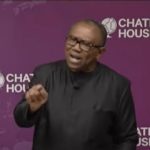
    On January 17, 2023, he reiterated these promises in the Chatham House in London, UK. 

    Most Nigerians online were especially glad that the candidate could answer questions given to him boldly and by himself. 

    This wasn’t the case for another presidential candidate, who had his Chatham House speech in December 2022.

    That candidate is Bola Tinubu of the All-Progressives Congress (APC)

    Anyways, let’s look at five bold promises that Obi made to Nigerians during the event:

    “We’ll fight and stop corruption”

    Like Marvel’s Avengers, Obi wishes to stop evil and build a “New Nigeria” where there is no corruption alongside his running mate, Yusuf Datti Baba-Ahmed. 

    Yusuf Datti Bab-Ahmed and Peter Obi

    He feels that the duo are the best fit for the job. He claimed that he never took property for himself in his tenure as Anambra State governor. He also claimed that Datti didn’t steal any money during his time as a Senator. 

    His strategy to end corruption is to ensure that it doesn’t exist in the basic units of society. This includes family units and friends. 

    According to Obi, “If you’re not involved [in corruption], your wife is not involved, your family is not involved, and the people around you are not involved, you have reduced corruption by over 50%.”

    “As long as some Nigerians are in IDP [camps], all of us are in IDP [camps].” 

    Obi promised to ensure that the whole of Nigeria is secure, not just select states. 

    He mentioned spending his Christmas holidays in Makurdi and Abuja in Internal Displaced Person camps (IDP). In these camps, he assured all displaced persons that he would not stop until all Nigerians were secure in their home states.

    “As Long As Nigerians Are in IDP [camps], All of Us Are in IDP [camps]. We can’t have some Nigerians sleeping in IDP [camps] and some in mansions.”

    Nigeria currently has the third highest number of internally displaced persons (IDP) in Africa. 2.7 million IDPs were recorded in 2020. An estimated number of 2.7 million people was recorded in 2020. This is due to rural conflicts, extremism,  armed banditry, and climate disasters. 

    “I’ll attract foreign investors like bees to honey.”

    In June 2022, the National Bureau of Statistics (NBS) declared that the total value of capital entering Nigeria had declined to $6.7 billion in 2021. This was the lowest amount in five years.

    What’s Obi’s plan to solve this?

    He said he would ensure that the country is attractive enough for foreign investments in the first place. 

    According to Obi, foreign capital has not been forthcoming in Nigeria. This is due to its “being scared” of the rule of law, and heavy corruption. 

    He plans to solve that by making sure that there is a regulated environment where there is no corruption.

    “Further borrowing will ONLY be for production.”

    For Obi, the problem is not in the country’s borrowing but in using the money borrowed mostly for consumption purposes. 

    Obi came again with his “Consumption to Production” mandate. The borrowed money will be used for production purposes only. To achieve this, he plans to implement economic policies to reduce our debt service. This is because borrowing is a major drain on government revenue.

    If he becomes Nigeria’s president, debt is one problem Obi has to solve “sharp sharp” for us. The country is currently in a ₦77 trillion debt since President Buhari first came into power in 2015. 

    “If they can declare an emergency on power, then I can declare a war”

    When asked how he would combat hindrances to national power generation, Obi used the example of South Africa. 

    The nation recently declared an emergency on power. This gave any independent vendor free licensing to generate up to 100MW of electricity. 

    Note that this is a country that currently generates 42,000 MW of power. Meanwhile, Nigeria has not generated up to 6,000 MW of electricity since 1960.

    Hence this inspired Obi to say that “if South Africa could declare an emergency on power,” then he could “declare a war on power.”

    He plans to instigate this “war” by removing legislative blockers for independent energy companies and giving them free licenses to generate certain amounts of power for the country.

    We write the news and track the 2023 elections for citizens by citizens in our weekly newsletter, Game of Votes. Make the subscription of a lifetime here.

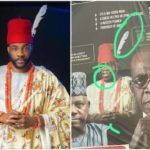
  • On 6 January 2023, the All-Progressives Congress (APC) presidential candidate, Bola Ahmed Tinubu, caused quite a stir on social media timelines with a photoshopped picture of him appearing on a campaign billboard. 

    The victim of the act was Ebuka Obi-Uchendu, host of the popular reality TV show, Big Brother Naija (BBN). In the photo, both Tinubu and Ebuka seem to be sharing the same pose, clothes, and even his wedding ring.

    [Photo Credit: Mufasatundeednut on Instagram]

    Many Nigerians have criticized the photo, with former senator Dino Melaye even going as far as saying that there is nothing original about the “emi l’okan” man

    Sadly, this isn’t the first time politicians have been accused of the photoshop act. Here are some other cases:

    Atiku receiving a handshake from Trump

    During Atiku’s 2019 presidential campaign, a picture of him with a former American president, Donald Trump, was circulated. This was to clear rumours about his ban in the U.S. 

    However, Africa Fact Check revealed that President Muhammadu Buhari was the original person in the photo in April 2018.

    Peter Obi with “Tinubu’s Insignia” Cap

    Shortly before the Labour Party (LP) presidential candidate joined the party in May 2022, a post by Facebook user Taiwo Olaore was circulated. In the photo, Obi was wearing Tinubu’s insignia cap at an event. This drove the narrative that Obi was a supporter of Tinubu’s campaign or “BATified”.

    However, further checks by The Cable revealed that the cap was digitally imposed on his head, as he wore no cap in the original photo.

    The Buhari and ‘Jubril from Sudan’ Rumors

    In 2017, rumours started to circulate that Buhari was dead after three months of ill health in the United Kingdom. Pictures from a lookalike named “Jubril” was now the new president.

    However, this was thoroughly disputed by Buhari himself. He came out to assure the public that he has not been replaced by a double.

    Tinubu with Joe Biden

    Shortly before his Chatham House visit in 2022, a photo of Tinubu speaking with the current president of America, Joe Biden, was circulated.

    However, the APC campaign media director, Bayo Onanuga, cleared the air that the photo had been doctored and there the presidential candidate’s last location then was at Abuja.

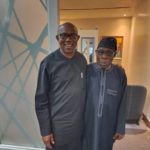
  • For one of Nigeria’s foremost political chieftains and former president, Olusegun Obasanjo, January 1, 2023, wasn’t just for the celebration of a new year. He also used it to finally announce his endorsement of the Labour Party (LP) presidential candidate, Peter Obi. 

    Labour Party Presidential Candidate, Peter Obi and Olusegun Obasanjo [Independent Newspapers]

    His letter of endorsement titled “My Appeal to All, Particularly Young Nigerians”, came as a surprise for many Nigerians, as there had been debates on which candidate had his ticket for the 2023 elections. 

    But in hindsight, should this have taken anyone by surprise? 

    Obasanjo has been hinting at a ‘third force’ political party since he adopted the African Democratic Party (ADC) during the 2019 election race as a result of his dislike for the major parties, the All-Progressives Congress (APC) and the People’s Democratic Party (PDP). 

    This is not to talk of his denial of All-Progressives Congress (APC) presidential candidate, Bola Tinubu in October 2022 and dumping of his former vice-president and People’s Democratic Party (PDP) candidate, Atiku Abubakar in December 2022.

    However, Atiku’s lack of support isn’t shocking, as both men have been fighting for over a decade since the end of their presidential tenure in 2007.

    Anyway, we read all the grammar in Obasanjo’s letter so that you don’t have to. Here are our key takeaways:

    No candidate is a saint

    “None of the contestants is a saint but when one compares their character, antecedents, their understanding, knowledge, discipline, and vitality that they can bring to bear and the great efforts required to stay focused on the job, particularly looking at where the country is today and with the experience on the job that I personally had, Peter Obi as a mentee has an edge”.

    For Obasanjo, Nigerians should only see Peter Obi as the better man of the three candidates, as none of them qualify for sainthood. 

    This is a statement that can’t be argued with, with Tinubu’s many allegations of drug trafficking and thuggery in Lagos,  Atiku’s long-standing record of corruption that amounts to trillions of dollars, and even accusations against Obi of a secret hive of businesses in the Pandora papers in October 2021. 

    “‘Emi l’okan’ and ‘I have paid my dues’ are the wrong mentality”

    “Let me say straight away that ‘Emi Lokan’ (My turn) and ‘l have paid my dues’ are one and the same thing and are wrong attitude and mentality for the leadership of Nigeria now.”

    Even though it was an endorsement letter for Obi, Obasanjo didn’t fail to throw some unapologetic shades at Tinubu and his archnemesis Atiku with two of their infamous statements, “Emi l’okan” and “I have paid my dues”. But why were these two claims made?

    In case you’ve been living under a rock, Tinubu made the infamous entitlement claim, Emi l’okan (It is my turn) in June 2022 when the APC was considering another presidential candidate asides from him.

    For Tinubu, this was an unthinkable act, as he has tried using political figures like Muhammadu Buhari, Nuhu Ribadu, and even Atiku to fulfill his presidential plans since 2007. And 2023 may just be his last chance.

    In Atiku’s case, he feels he has “paid his dues” to Nigeria after a long track record of trying to be Nigeria’s president since 1993. 

    He came close by being Obasanjo’s vice-president from 1999 to 2007, but even that isn’t enough. For Atiku, the iron throne of Nigeria’s presidency should belong to him by all means necessary.

    The TVCP Leadership Characteristics

    Obasanjo’s ideas of a good leader fall under an acronym called T.V.C.P, which stands for Track record of ability and performance; Vision that is authentic, honest and realistic; Character and attributes of a lady and a gentleman who are children of God and obedient to God; and Physical and mental capability with the soundness of mind.

    While he didn’t mention any names, he hinted that he has worked with all three ‘mentees’  in government at one point or another, and two out of these three have neither of these characteristics. We already know who they are.

    Atiku Abubakar and Bola Tinubu 

    Let the past go

    “Just let us agree to move forward together in mutual forgiveness, one accord, inclusive society, equality and equity. Together and without bias and discrimination, fear or favour, we can have Nigeria of one nation in diversity, in truth and in practice. Let us honour, cherish, respect and even celebrate our diversity which is the basis of our potential greatness and strength”.

    Obasanjo’s cry for unity in diversity could first be interpreted as a cliche cry for help, but not if you understand the context.

    It’s no news that ethnicity is a major factor for Nigerians when picking a presidential candidate. Despite Obi leading most of the presidential polls in 2022, a December 2022 poll by ANAP revealed that 38% of voters in the South West have refused to disclose their preferred candidate, mostly due to cases of voter intimidation.

    In this area, Obi’s chances are looking slim as he hails from the South-Eastern region. 

    This is possibly Obasanjo encouraging Nigerians to move past the tribal bias and pick who they really want as their next president in February 2023.