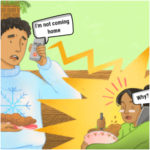
• Patricia* (26) struggled with a non-existent relationship with her mum for years until a 2023 incident drove her to cut her mum off for good. In this story, she shares how trying to give her mum a second chance turned out to be a mistake.

    Trigger warning: This story contains some descriptions of emotional and physical abuse.

    As told to Boluwatife

    People describe light-bulb moments as an experience of sudden realisation. Something you weren’t quite sure about suddenly becomes clear. My light-bulb moment happened on my 15th birthday. It was the day I realised that my relationship with my mum wasn’t normal.

    I went to my best friend, Onome’s, house that day. Onome lived in my neighbourhood and I often went to her house after school. My mum worked at a hotel restaurant and returned home late, so passing time at Onome’s was almost a daily occurrence. 

    This time, Onome invited me. She’d cornered me at school and said, “Make sure you come to my house this afternoon.” I thought it was strange because I was always at her house. But I didn’t object and went anyway. I arrived to a mini surprise party. 

    Onome and her mum had cooked jollof rice and baked a cake. I would’ve doubted it was for me if it didn’t have a big “Happy birthday” written on it. I was so confused, but after thanking them both, I stylishly dragged Onome away to help me understand what was happening. The conversation went something like this: 

    Me: “What’s going on?”

    Onome: “What do you mean, ‘what’s going on?’ We’re trying to wish you a happy birthday! Haven’t you celebrated your birthday with rice and cake before?”

    The truth was, I had never experienced that. I’d seen my mum celebrate the birthdays of my stepdad and stepbrother, but when it came to mine, everyone went silent. The most I got was a “Happy birthday” and some muttered prayers. I’m unsure why I never really thought about it until Onome’s surprise. It was my normal, and I didn’t think it was a problem. 

    That day, I watched Onome’s interactions with her mum with new eyes. They joked, laughed and were gentle with each other. I watched Onome animatedly tell her mum about a new dress she loved in the market and saw how her mum smiled at her as she described the dress. 

    That was the moment it really hit me. I didn’t have that with my mum. Something was wrong with our relationship.


    Join 1,000+ Nigerians, finance experts and industry leaders at The Naira Life Conference by Zikoko for a day of real, raw conversations about money and financial freedom. Click here to buy a ticket and secure your spot at the money event of the year, where you’ll get the practical tools to 10x your income, network with the biggest players in your industry, and level up in your career and business.


    It’s not like I was completely oblivious. I knew my mum treated me differently, compared to my step-brother, but I just thought she was raising me differently because I was a girl.

    While I did all the chores at home, my brother never did anything. He would break a window, and my mum would beat me because I should’ve “watched him closely.” The beating was always creative. She could use the buckle of a belt today, a metal hanger tomorrow, or put ground pepper in my private part the day after. 

    Then, she’d report me to my stepfather when he got home from work, often exaggerating my “crimes” so he’d also punish me. His preferred mode of punishment was “ride okada”. I’d hang in the air in a crouched position for what felt like hours, legs shaking and sweat pouring down, until he pitied and released me.

    To escape the punishments, I tried to do everything right. I ensured the whole house was always clean, but my mum always found an error. It’s either I missed dust under the table or the beans I cooked was oversalted. When she wasn’t beating me, she was insulting me: “You’re so stupid,” “See your oversized nose,” “You’re a bastard,” “Like father, like daughter.” 

    By now, you can guess there was bad blood between my mum and my biological dad. My mum had met my dad at uni. He was her married lecturer, but somehow, she got pregnant. He denied the pregnancy and fled. He stopped teaching at the school, and no one knew where he went. 

    My mum didn’t get any support from her family, so she dropped out of uni to provide for me. She was a struggling single mum for over five years before she met my stepfather. Things got better, but she transferred the hatred and resentment she had for my dad to me. The resentment was clear, but it took me 15 years to see it.

    I moved on to uni in 2015, and in the four years I spent there, I can count the number of times my mum called me on one hand. After the initial ₦5k she sent me at the beginning of the semester, she never called again or picked up when I called. 

    Once, in my first year, I borrowed money to travel home to see if something had happened to my mum, making her unreachable. She was fine. Instead, she screamed at me for coming all the way and “wasting” her money. She was like, “Who do you think will give you money to go back to school? You think money grows on trees?” 

    I got the message. She didn’t pick my calls because she didn’t want to hear from me. My stepfather gave me ₦10k to return to school the next day. He was also the one who paid my school fees. Left to my mum alone, I probably wouldn’t even attend in the first place. 

    Beyond school fees, I realised I had to be responsible for myself. I couldn’t depend on my mum for pocket money, so I had to make my own money. I did many things at uni for money: modelling, ushering, makeup, and even hairdressing. I didn’t make big money, but at least I made around ₦10k – ₦30k per gig and survived on that.

    I graduated from uni in 2019, and by this time, I’d unofficially cut off my mum completely. I never went home to visit or call; she didn’t either. I only spoke to my stepfather once in a while. He probably knew the stalemate between me and my mum, and he hardly brought her up in conversation. Me, I was determined to make something of myself and never need her again.

    After NYSC, I squatted with friends until I got my first big girl job in 2021 — social media manager and writer at a tech company for ₦200k/month. That job was a lifeline. 

    My boss was the most generous human on the planet. They bought me lunch and dashed me small money here and there. This generosity helped me aggressively save around 70% of my salary, live comfortably, and still afford to share a ₦500k apartment with a friend.

    In 2022, I reconnected with my dad by chance. How he found me is a really long story, but it helped that we share a striking resemblance, and my mum made me use his surname. He came to see me — he lives abroad — and apologised for leaving. Apparently, he didn’t have any other children and wanted to be in my life.

    I probably shouldn’t have forgiven him so easily, but it was the first time a parent showed that much interest in me. I’m not ashamed to say I wanted to feel that love. So, we reconciled, and while he had to return abroad, he started sending me money occasionally to support me. 

    By 2023, my salary had bumped to ₦350k, and I’d grown my savings to ₦3.3m. This was minus the random $200 or $500 my dad sent me periodically. In summary, I had money and didn’t lack anything I needed. 

    Then, out of the blue, my mum reached out to me. I didn’t even know she still had my number. She called, crying and begging to meet up with me. The mistake I made was to invite her to my house. 

    She came and gave me sob stories of how my stepfather had kicked her out and how my brother had become a drug addict. She apologised for how she had treated me, and claimed she hadn’t reached out for years because she was ashamed. She also said she’d been struggling with managing my brother’s violent behaviour when he was on drugs, and it had contributed to the breakdown of her marriage.  

    It was the first time I ever saw my mum look so down. She’d lost so much weight and looked so tattered, I couldn’t help but feel sorry for her. Now that I think about it, I guess I thought she’d finally accept me if she saw how useful I could be to her. So, I decided to help her and give us a second chance at building a mother-daughter relationship.

    I took her in and started feeding her. I even sent my brother to a rehabilitation centre and paid for it. He escaped after a month. I just accepted that I tried my best and left him to his antics.  

    For three months, my mum was nice to me. She talked to me like a human being and seemed interested when I told her about my day. She didn’t hint at what she actually planned to do. I just know that one day, I woke up and couldn’t find my ATM card. 

    I told my mum about it and mentioned blocking it from my bank app, but she discouraged me. She said she’d seen it the previous day and was sure it just fell somewhere in the house. 

    Suspecting nothing, I went to work. Around noon, I started seeing debit alerts. Some of the alerts were from betting websites, and others were ATM transfers and withdrawals. Before I could block the card, the thief had wiped 80% of my savings — over ₦2m. I rushed to the bank, but those ones kept telling me stories. I called my mum to inform her, but her line was unavailable. 

    I went home that day to an empty house. My mum had packed my TV, freezer, generators and washing machine. My neighbour said she’d told him I was moving out. It took me weeks, but I finally traced my mum to her new apartment. When I confronted her, she begged and said she had no choice. My brother had been calling her for money, and she knew I wouldn’t give him, so she gave him my ATM card. I still don’t know how she figured out my PIN.

    I should’ve arrested that woman and made her produce her son, but I was tired of the whole drama at that point. I could’ve fought and somehow gotten my money back, but I suddenly lost energy. It was super clear to me that she’d returned to my life only for her son’s benefit, and I just wanted to leave the whole situation.

    Losing the money hurt me, but even more hurtful was having to accept I’d never have a mother-daughter relationship. She still tries to call occasionally, but it’s my turn to ignore the calls.

    I’m still trying to work through not letting the absence of a mother’s love define my life, but I’m sure of one thing: I’m never giving my mum a second chance again. There are motherless people, and orphans all over the world, and they haven’t died. At least I have my dad. I’ll be fine.


    *Names have been changed for anonymity.


    NEXT READ: My Dad Disowned Me Because I Stopped Paying Black Tax

    Get More Zikoko Goodness in Your Mail

    Subscribe to our newsletters and never miss any of the action

    [ad]

  • Trigger Warning: This article contains sensitive topics, including physical assault and sexual abuse, which some readers may find distressing. Reader discretion is advised.

    For many Nigerian children, their parents’ divorce didn’t just happen to their mum or dad; it happened to them too. It was a turning point for how they saw love, home, and themselves.

    In this story, we spoke to Nigerians who watched their parents’ marriage fall apart at different stages of life. They share how it shaped their lives and what they’ve learned about healing.

    “I didn’t know about the divorce until I turned 18” — Mel*, 30

    Growing up, I never suspected that the woman I called ‘mum’ wasn’t my biological mother. She treated me with care, raised me alongside her own children, and made sure I never felt left out. Everything changed when I turned 18.

    My father sat me down and told me his wife was actually my stepmother. He explained that he’d divorced my birth mother when I was around three, claiming she had dabbled in diabolical things he didn’t want around me. I was devastated. I couldn’t understand why nobody had told me sooner — or why my real mother had never tried to see me. That revelation threw me into depression. I kept wondering why she abandoned me. 

    I saw my biological mother for the first time at 23. She came unannounced to my convocation. Seeing her on that day overwhelmed me, so I refused to speak to her. But after some weeks and pressure from relatives, I agreed to meet her. She told a completely different story. 

    According to her, she didn’t abandon me — she said my father hid me and blocked every attempt she made to reach me. She blamed my stepmother, too. This caused another emotional mess. I didn’t know who to believe. I still don’t, but I’ve made peace with not knowing the full truth.

    These days, I’ve built a cordial relationship with my biological mum. But my stepmother will always be a mother to me. She was there during my formative years, and I had a happy, normal childhood. That’s what matters most to me.

    “I didn’t see it coming after 31 years of marriage” — Blessing*, 22

    It happened four months ago, but I still haven’t fully processed it. My mum called a family meeting and calmly announced she was leaving my dad, after 31 years of marriage. 

    I laughed. 

    I genuinely thought it was a joke. But she was serious.

    She said she’d made up her mind over a decade ago but waited until her four children were grown. She didn’t want us to grow up in a broken home. I’m the last born, and I’d just graduated from university, so in her mind, her job was done.

    I always knew my parents had issues, but I didn’t realise how deep they ran. I didn’t know that my father had started a whole family outside of our home. My mum had known for years but kept it quiet. 

    What pushed her over the edge was my dad falling ill with liver complications. She told us she refused to spend the rest of her life nursing a man who had built a new family elsewhere. She said, ‘Let him go to them.’

    My dad was stunned. He nearly collapsed from shock, but nothing he or his sisters said changed her mind. Now she’s moved out and is processing the divorce. She’s also planning to relocate abroad to live with my eldest sister. 

    My dad, on the other hand, has finally admitted the truth about his other family and says he wants to introduce me to them. I don’t even know how to feel about that.

    I’m the only one still living at home, so I’ve been caring for him since my mum left. It’s been strange, sitting with the man I’ve known all my life, and realising there’s a whole other side of him none of us knew. Some days, I feel angry on my mum’s behalf. Other days, I just feel numb. I never imagined our family would come apart this way, but I admire her courage deep down.

    Get More Zikoko Goodness in Your Mail

    Subscribe to our newsletters and never miss any of the action

    “I found the love letters that ended their marriage” — Uthman*, 28

    I spent a long time thinking my parents’ divorce was my fault. It happened during a long vacation in the mid-2000s. I was nine, and my cousin and I were playing in my mum’s car when we stumbled upon a bunch of handwritten love letters hidden in the glove compartment. We read them and took them to my dad, thinking we were doing something right. Everything changed after that.

    I remember them having a huge fight. A physical one where they were screaming at each other and throwing things. Even though I didn’t understand it fully, I knew their marriage would never recover.

    Earlier that year, a teacher had already reported me for kissing a classmate at school. So when the divorce went to court, my dad brought it up, claiming my mum’s infidelity had corrupted me. That wasn’t true. All I’d ever seen were the letters. But still, he won custody. 

    My mum moved to a flat nearby, so I still got to see her, but things were never the same. Two years later, when my dad started seeing someone new, I felt like I was carrying the weight of the family’s collapse alone. His new marriage felt like a betrayal, and I acted out in every way possible. I punctured his car tires. I poured salt in food his new wife cooked. I tore up their wedding photos. Eventually, he sent me off to boarding school.

    I couldn’t bring myself to accept my stepmother. I saw her as a symbol of everything that went wrong, even though she wasn’t the problem. It took growing up and therapy to realise I was a child, and nothing that happened was ever my fault. 

    I don’t think I caused the divorce anymore, but it took a long time for me to get over it.

    “I knew he was evil, but longed  for the normalcy other families had” — Dunsin*, 25

    My mum’s decision to leave my father was the best thing she did for my sister and me. Even now, more than 15 years later, it’s still incredibly difficult for me to talk about the sexual abuse we endured at his hands.

    I was only around nine years old when he started. My father would sneak into my room, hold my penis, and tell me to put his in my mouth. It was deeply messed up, and even then, I knew it was wrong. But I didn’t grasp the magnitude. 

    He told me he was ‘teaching me what to do with girls’ when the time came, and I just went along with it. This happened for a while, and I never told my mother.

    She found out when she discovered blood in my six-year-old sister’s panties. My sister told my mum what our dad had done. Then, I finally confessed what he’d been doing to me.

    One night, my mother simply packed us up and we ran. We stayed with her parents while they went through the divorce. Despite knowing my father was evil, my teenage years were often filled with a longing for the normalcy other families seemingly had. We struggled so much financially, while my father, a wealthy businessman, continued his life untouched.

    As a boy, I never really spoke about the molestation. There were so many unresolved feelings because no one ever brought it up. I think my mother just wanted the whole thing to fade away. I have no relationship with my father now and haven’t seen him in the last ten years. I truly believe it’s best this way.

    “Our relatives would pressure me to get them to reconcile” — Imade*, 28

    My parents’ divorce process began one Christmas holiday. My mum took us to our grandparents’ place and told us we wouldn’t return to Abuja. That was when she left my dad.

    I was in secondary school, and what I understood was that their fights over money had escalated to the point where my dad became physically abusive. I remember being caught in the middle of one of their fights and getting beaten up. Still, I was angry with her for leaving. I didn’t want to change schools or move to a remote town in Osun. I hated that my life had to change because they couldn’t make their marriage work.

    For a long time, I resented my mum and wished she had just endured for our sake. I was angry at my dad, too. Being the firstborn meant I became the third parent. They put me in the middle, accusing me of siding with the other. When my siblings later moved to live with my dad, I had to step in as though I were their mum.

    Looking back, I understand now. They were never compatible, and their separation was for the best. But I carried the pressure of trying to fix things for years. Relatives suggested that I try to get them to reconcile, and I almost believed it was my job.

    Their divorce has made me cautious about love. I overthink things and rarely live in the moment. I’m scared of history repeating itself. Still, I’ve healed. My mum is remarried. My dad, though still alone, is calmer. And while the resentment is gone, I sometimes worry about him more than anything else — the older he gets, the lonelier he is.


    If you want to share your own story, I’d love to hear it here.


    “My father was rich, but refused to pay my school fees” — Kennedy*, 63

    I was seven when my parents separated. Back then, it wasn’t even called divorce — my mother simply left. That was how it was in the 1960s. When a man pushed too far, women just left the house

    He had multiple affairs and eventually brought another woman into the house, which was the final straw for my mum. She moved out and remarried, but that marriage also ended in heartbreak after their child passed away.

    Even as a child, I knew my father was selfish. He was a wealthy bank manager, but he didn’t care about any of his children. After the separation, I had to live with his own father, and it was that man who paid my school fees and raised me with love. My father didn’t contribute a penny.

    Strangely enough, his absence didn’t break me. I was lucky to be surrounded by love from my grandparents. So even though I didn’t grow up with a present father, I didn’t feel lacking in the way most people might expect. He eventually apologised and came back into my life,t days before he died. That was all. It didn’t change the past, but I took it as closure.

    “I’ve learned not to let their story define mine” — Yinka, 27

    “My parents divorced while my mum was pregnant with me, so I’ve never known them as a couple. Nobody ever told me what caused the divorce. It’s just the way things have always been. And we’ve never talked about it.

    When I was a child, they fought over custody of my sister, who was ten years older than I was. There was a boy between us, but he passed away. The court eventually ruled that my sister should stay with my dad, and I should live with my mum.

    But when I turned four, my mum returned me to my dad, and from then on, I only visited her during the holidays. Growing up, I always felt a strange kind of loneliness — like I didn’t belong fully in either parent’s world. I didn’t have a deep connection with either of them; we just existed around each other. I’ve had to come to terms with the fact that this is my reality.

    These days, I keep things cordial. I call, visit occasionally, and respond when they reach out. Nothing more. I’ve learned to stop expecting more than they can give and not to let their story define mine.

    Click here to see what others are saying about this story on Instagram


    Read Next: “He Said I Was A Witch Sent to Kill Him” — 6 Older Nigerians Share What Ended Their Marriages

  • Parenting is often painted as the ultimate act of love, a journey filled with joy, fulfilment and purpose. But behind the picture-perfect family portraits are real people grappling with silent battles. For many parents, the sacrifices are steep, the pressures relentless, and the room for honesty almost non-existent.

    Zikoko spoke to five Nigerian parents who share the raw, unfiltered truths about what they resent most about parenthood.

    “My eldest child wants to be child-free. I’m jealous of his decision.” — Gabriel*(63), M

    Gabriel* envies his child’s decision to remain child free and wishes he knew he could have made that decision when he was younger.

    “I resent almost everything about being a parent, but I didn’t know it early enough. I thought that it was just one of the things you’re supposed to do as you grow up. You finish school, you get married, you have kids. I love my wife so much, but our three children put an immense strain on our finances, personal time and priorities.

    Get More Zikoko Goodness in Your Mail

    Subscribe to our newsletters and never miss any of the action


    It doesn’t help that the new generation of kids is so different. I don’t understand them at all. My first child, who is in his early thirties now, told me he has no intention of getting married or having children. My wife threw a fit at that, and I supported her. But secretly, I’m deeply envious of his decision. If I knew it was an option I could take, I would have gotten married but stayed child-free.  I keep it to myself because I don’t want anyone to think I don’t love my children, but I would have preferred another lifestyle choice.”

    “I miss the body I used to have.” — Yanmife*(49), F

    Yamnife* loves her children, but she is resentful of the toll her pregnancies took on her body.

    “My children are my world, and I love them more than anything, but one thing I resent about being a mum is how much damage my body has taken. I have three children, and each pregnancy was more taxing than the last. After my last baby, the doctor strongly advised against another pregnancy.

    Watching my kids grow has been a joy, but sometimes it feels like every time they hit a new milestone, my body declines. I never had teeth issues till after my second baby, now my teeth are loose. After my last delivery, I realised my hips randomly pop out of their sockets if my steps are too wide when I walk. I’m also tired all the time.

    The kids are older now, so it’s a bit easier to keep up with them, but I miss the body I used to have.”

    “I resent how expensive child rearing is.” — Tola*(34), M

    The high cost of raising a child has made Tola* resentful because he wants to give his child the best but he realises he may not be able to afford it.

    “From the minute my wife found out she was pregnant with our first child, we haven’t stopped spending money. My baby is only 10 months old now, and the cost of feeding a newborn is enough to make one panic.

    I want to give my child the best, but the reality that I may not be able to afford it has soured some of the joy that fatherhood brought me. The worst part is that I know it’s only going to get more expensive, especially when we have another child. I’m just praying that God helps us.”

    [ad][/ad]

    “Sometimes, I imagine running away from everything.” — Rolake* (29), F

    Rolake* has found balancing parenting and her career to be overwhelming. She hasn’t had a break in a long time which has made her resentful.

    “Trying to balance a career in finance and raising two kids has stretched me to my limit. Sometimes, I imagine running away from everything. I have an overnight bag packed and hidden in our guest room in case I ever decide I’ve had enough.

    Not like I want to die or abandon my family, but I haven’t had any “free time” in the last four years. I just want a break from it all. I don’t think it’s any easier on my husband, but I wish he’d help out at home a bit more, maybe everything would feel less overwhelming then.”

    “I hate that I have to put myself last every time.” — Ifeanyi* (40), M

    Putting his family first means that Ifeanyi* doesn’t do nice things for himself anymore. He shares how that makes him feel like no one prioritises his happiness.

    “I hate that I have to put myself last whenever it comes to my family. If I didn’t have two kids, my salary would be able to take care of me and my wife very well. But between the cost of feeding, school and extracurricular activities, I can’t do much for myself or my wife. We’re just managing month to month. I rarely do or buy nice things for myself because I’m constantly thinking of how that’ll affect my kids’ expenses. A vacation? I haven’t been on one since my honeymoon. I wish I were someone’s priority, too.”


    If you enjoyed reading this, you’ll also enjoy: 5 Older Nigerians Share Their Biggest Romantic Regrets From Their Youth


  • To outsiders, Efosa’s (38) dad was the definition of dependable — the man who went above and beyond for strangers. But for him, the man everyone praised never existed.

    In this story, he talks about growing up invisible in a polygamous family, the trauma of verbal and physical abuse, and how years of emotional neglect still shape how he sees himself.

    This is his story, edited by Adeyinka

    Growing up, my father was a figure of admiration. People loved him. His friends trusted him. He was the dependable man who would go out of his way to fix someone else’s problem, even if it meant driving across town to help their kid sort out an expulsion from school.

    But for his own children? He rarely showed up.

    My relationship with him was practically non-existent. He was the man who occasionally appeared in our home, sat with my mum for a while, and was gone by morning. There was no emotional connection, no nurturing presence; just a ghost who drifted in and out of our lives.

    He had multiple wives, and my mum wasn’t the “main” one — she was one of the women on the outside. And that status trickled down to us, his kids from the “other” women. We were afterthoughts, obligations he clearly didn’t want to meet.

    As a child, I would visit him during the holidays. But those visits were far from warm. His house was crowded with step-siblings, cousins, and — worst of all — dogs I was terrified of. He knew this. But somehow, I always ended up stuck in a room with them. Maybe that’s why big dogs still unsettle me even now as an adult.

    Basic things were hard to come by in his house. Asking for something as simple as soap or toothpaste came with interrogations and guilt. School fees? That was a battle. And when he finally pressured my mum into letting me live with him full-time, it became clear: this wasn’t a home, it was a prison.

    One thing that always confused me growing up was hearing how rich and generous he supposedly was. He had so much, did so much for everyone. And yet, I couldn’t relate. He was that person for everyone else — until it was time to be that for his own kids.

    There was a day he actually told us: “You know, in homes where parents can’t pay school fees for all the children, some children drop out so the others can go — until the parents can afford to train everyone.”

    Get More Zikoko Goodness in Your Mail

    Subscribe to our newsletters and never miss any of the action
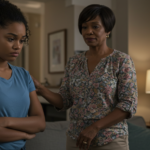
    That was his idea of parenting advice. From the man celebrated for his generosity.

    Meanwhile, our mums — especially mine — said things like, “Whatever it takes, you will go to school. You will finish. You will have what you need.” They were the ones making sacrifices, not speeches.

    And going out with him? It was supposed to be fun — family events, parties, park outings, things other kids looked forward to. We had some of those moments, but they were never relaxing because you were bracing for what demand or outrageous expectation he’d throw your way.

    You’d be playing like every other kid and — boom — he’d shout, insult you, and make sure everyone around knew you were, in his words, the “most stupid child that ever existed.” He never held back.

    A small mistake — dropping something, forgetting something, breaking a glass — could become a full-blown character assassination. Not correction, just verbal destruction.

    And the thing is, I wasn’t asking not to be corrected. I was a child eager to learn and be guided. Instead, he made sure we knew we weren’t just wrong, we were “worthless,” “useless,” “bastards,” “incompetent.”

    What do you expect a child to carry into adulthood when those are the words constantly spoken over them?

    And it wasn’t just the degrading words; it extended to physical violence.

    There was a time he beat me so badly, I ended up with a blood clot in my eye. A child. A blood clot, from being hit. That was the first and only time something that severe happened, but it wasn’t the only time we got beaten. The beatings were common, and anything could trigger them.

    What hurt the most was watching him be the perfect father, just not to us. If a friend’s child needed help, he showed up. If a relative’s kid was in trouble, he went out of his way to fix it. But for his own children? We were invisible. I started to believe the lie that we were unworthy of his love simply because of who our mothers were.

    Yes, there were some good times — some smiles, some jokes shared. But even those moments were fragile, always tense with the fear that something would ruin them. I learnt early on to hold my breath through a good moment, always bracing for the turn.

    [ad]

    Among my friends, I stood out in ways I didn’t know how to explain. They had two-parent homes. Family vacations. Stability. I had silence. Shame. A family structure I was too embarrassed to talk about. I would call half-siblings “cousins” and pretend everything was fine because polygamy wasn’t just uncommon, it was judged. And I didn’t want to be judged more than I already felt by life.

    My mum, however, was our anchor. She never spoke ill of him. In fact, she encouraged us to reach out, to maintain some kind of connection. “Do it for yourself,” she’d say. She worked tirelessly, gave everything she had to keep us grounded, even when we had nothing. She made it clear: we mattered.

    After she passed away, he tried to reach out. But by then, I had nothing left to say. How do you show sympathy for someone whose life you made harder at every turn? How do you show up after years of absence and expect to lead the grieving?

    I never confronted him — not out of fear, but because I’d already made peace with what he was. Any conversation now would feel like trying to fix something I’ve long accepted will never be whole. He is who he is. I am who I’ve become.

    Present Day: A Different World

    These days, I observe people — men my age, some younger — and their relationships with their dads. I see how they hug, laugh, and call to gist. I listen to how they speak about their fathers with ease and warmth.

    And every time, it feels alien to me. I can’t relate. Not even a little.

    The idea of having a conversation with my dad without tension, guilt and discomfort? Unimaginable. I don’t know if I’d be scared, guarded, or simply uninterested. I don’t know how to engage with him without feeling like I’m pretending.

    What I’ve Learned

    That experience shaped me more than I ever wanted to admit. I still struggle with feeling deserving. Compliments confuse me. Opportunities make me question if I belong. I step aside too often, convinced someone else should go first.

    And there’s the part about being a parent myself. I’ve always wanted kids. I still do. But I’m haunted by the fear of becoming another version of my father.

    I don’t have the answers yet. But I’ve learned something important: You can carry pain and still choose peace. You can come from silence and still find your voice. You can come from emotional neglect and still decide to be present for yourself, others, and the life you want to build.

    This isn’t a story about resentment. It’s a story about release.

    And maybe someone out there needs to hear it.


    READ THIS NEXT: My Parents Didn’t Love Me. I Don’t Owe My Kids Too Much Either

  • *Amaka, (26) was content with her role as first daughter to her parents and big sister to her three younger siblings. But after losing both of her parents within a year, she had to learn how to become the head of the house while also protecting her siblings from leeching family members. 

    This is Amaka’s story, as told to Itohan

    When people ask what I define as couple goals, I always think of my parents. They didn’t just love and care for each other, they genuinely liked each other. You could see it in the way they planned our family life.

    After they had me, they waited six years before having  my younger sister. Four years later, they had my second sister, and by the time I was 15, they had my brother, the last born. I remember asking them why they spaced us out so much, and my mum said it was because they wanted to make sure they had enough money, time, and attention to offer each child. When they felt they could handle another child, they went for it. Growing up, they never made decisions alone. You couldn’t get my mum to agree to something if dad had already said no. They were a team in all the ways that mattered. That’s why when my mother fell ill, I knew my dad wouldn’t last long without her. 

    She was diagnosed with ovarian cancer in February of 2022. She had been complaining about stomach pain, and my dad and I kept begging her to go to the hospital. Ever since I was a little girl, my mum had always avoided hospitals; bitter leaf and bitter kola were her go-to remedies for everything. When she eventually decided to get tested, I knew it was really bad. 

    It took several tests before they discovered it was cancer, and by then, it was already advanced. My siblings were so young, and I had to be the one to tell them. My d ad could not mention her name without breaking down. I had to be strong for everyone in the house, including my dad. I had just finished NYSC and was transitioning between careers, all while splitting hospital shifts with my dad. Sometimes, I’d shower in her hospital room because I was heading straight to work. I was stressed, but there was nothing I could do. I was the first child, and I loved my mum. I wished I had someone to talk to. My dad  became a shadow of himself. My younger sister was 18 and in university, the third was still in secondary school, and the last born was in primary school. I felt alone, and that  feeling lasted throughout her hospital admission. 

    She  passed on  a weekend in April of 2023. We were all in the hospital with her. My dad was singing her  favourite hymn, she liked it but was unresponsive as usual. However, as the hymn ended, she whispered, “I love you all,” and passed. It was the first thing she’d said in days. I like to believe she wanted us to hear  how she felt about us and say goodbye. 

    That was the day the spark left my dad’s eyes. Leading up to her burial, he did not speak to anyone. He spent most of his time alone in his room, in tears. I had to console my siblings and plan the funeral because he  was too heartbroken. When he passed in August, I was not surprised. He was not sick, he was not in the hospital, he just went to bed and didn’t wake up. I found him lying next to a picture of my mum. My siblings screamed and cried endlessly, but me? I didn’t shed a tear. I think I had already done most of my grieving while watching my mum die, and deep down, I think I was preparing for my dad’s death too. I had just turned 25 in June, and suddenly, I was an orphan responsible for three children.

    Planning his funeral felt a bit funny because I had used the same vendors  from  my mum’s  burial, so they  gave me  a lot of discounts. I could tell they pitied me, and honestly, I pitied myself too, but I just  kept repeating, “Get through this, then you  can  move on with your life.” Maybe, finally afford myself the grace to breakdown and cry like I know my body and soul needed, but I was so wrong. After the burial, new problems surfaced. 

    Get More Zikoko Goodness in Your Mail

    Subscribe to our newsletters and never miss any of the action

    My parents had done well financially. They could afford to send us to private universities, and they had a couple landed properties scattered around the country. Plus, from the brief meeting I had with my dad’s  lawyer, I knew he had kept some money aside for schooling for my siblings for a few years. Unfortunately, I was not the only one concerned with the finances of my parents. 

    A few weeks after the burial, some of his “brothers” came to our house one day and demanded to see me. They said they would be moving into the house so they could oversee certain things because the only man of the house was less than ten years old. They started pointing at things they planned to sell and asked me to bring out property documents my dad had. I don’t know if they thought I would hand it over to them willingly. Clearly, they didn’t know I’m my mother’s stubborn daughter. I told them to sit and make themselves comfortable while I searched for the documents. Then I called a friend whose dad is in the military. When I told her what was happening, she called her father, and he agreed to send some of his men to the house. I also called my dad’s lawyer, who had said he was on the way with some documents he needed me to sign. I told him not to bring any documents until the situation was under control. 

    When the military men arrived, they first cleared out the truck outside that was meant to move my parents’ belongings, then entered the house. I wish I could record the look on my uncles’ faces. It was a mix of disbelief and shock. When the soldiers asked what I wanted them to do, I said, “If they’re not gone in the next minute, take them to the barracks and teach them a lesson.” At first, my uncles didn’t move, but when the soldiers started counting, they ran out of the house shouting that they’d “be back.” 

    After that incident, I didn’t see them again until January of 2024. My younger brother had fallen incredibly ill at the time and was on admission in the hospital, so I was barely at home because I had to keep an eye on him while one sister was in school and the other was home for the holidays. One day, while I was at the hospital, my sister called crying that there were some people at the gate of the house shouting and demanding to be let in. I had to leave my brother and rush home, but not before calling for backup. On getting home, I met my family members there once again, but this time they were more than the last time. They were shouting that it was an abomination for me to have used soldiers to threaten my elders. “This is what happens when a woman tried to be head of the house,” they said. Honestly, I was not in the mood for it. I was tired, my sister sounded distressed when she called me, and I needed to go back to see my brother. When I tried to push past them to enter the house, someone dragged me by my hair, and I fell to the ground. They were insulting me and telling me I had no right to stay in their brother’s house without their permission. The same house I’d lived in for years? A house my parents built together? 

    Luckily for me, as I was on the floor, the police I had called showed up with my mum’s younger brother. He saw me on the floor and told the officers to bundle all the people present. That’s how the police arrested about 5 of my uncles. He went with them to the station, and I went into the house to make sure my sister was okay. When she saw how I looked, she offered to be the one to stay with my brother that night. I usually wouldn’t allow it, because she was just a child, but I was too tired to say otherwise. That night, I got so many calls from my dad’s relatives calling me a shame, a disgrace, and other things. These people who watched my uncles try to bully me without interfering suddenly remembered that family should not treat each other badly. I wanted to switch off my phone so bad, but I couldn’t. I needed to be reachable in case of emergencies with my siblings. 

    After I showered, I went to lie down in my parents’ room. And for the first time since all of this began, I cried. I woke up with red, swollen eyes and a sore throat. My body was weak, and I was in so much pain, but I needed to be strong for my siblings. My brother was  discharged a few  days later. And then,  I was the one on the hospital bed. The doctors said I was stressed, dehydrated, had high blood pressure among many other illnesses. I was ready to leave the next day, but my siblings made me stay, just for about three days. My mum’s  younger brother stayed with them in the house so I could rest. And honestly? I liked being in the hospital. It was the first time in almost two years that I felt taken care for. 

    It’s been almost three years since we  lost our parents, and almost two years since all of the drama with my uncles happened. No one has come to disturb us again. Maybe sleeping in police custody for a couple of days was what they really needed to straighten up. My siblings are doing well in school, and my younger sister is about to graduate from university. I miss my parents every day. I open my eyes and honestly, all of this has been tough and stressful, but my siblings are amazing. We help each other however we can. 

    We’re all we have, and somehow, we’re making it work.

    READ ALSO: What She Said: I Don’t Feel Safe at Home Anymore

  • Let’s be honest: saving your parents’ names as “Mummy” or “Daddy” is boring AF. We’re not saying it’s wrong, but what’s stopping you from using a name that’ll make you smile whenever they pop up on your screen? If you’re already thinking about hitting the edit button in your contact list, we’ve got some suggestions.

    30 Heartwarming Names to Save Your Parents’ Contact In Your Phone

    Names to save your dad’s contact

    Commander in Chief

    If your dad runs the house military-style.

    Daddy

    This one is simple and straight to the point.

    P Man

    If your dad is also your guy.

    Daddy

    If he treats you like a child, even if you’re old AF.

    Papa

    If he enjoys pidgin a little too much.

    Baba e

    If your daddy is a retired egbon adugbo.

    Old soldier

    If he’s a retired military man.

    He That Sustains Me

    If your dad is a man of God.

    Pale

    If your dad is a guy man. 

    Boss

    If your dad is always cosplaying a gen-z. 

    Sperm donor

    If he’s an absentee dad. 

    Oloye

    If your dad’s from royalty.

    Mr (Insert surname)

    If he’s a familiar stranger.

    Alhaji

    If he’s been to Mecca.

    [ad]

    Names to save your mum’s contact

    Mummcy

    If she’s a real one.

    Mama e

    If she’s a Lagos island trader.

    Alhaja

    If she’s been to Mecca. 

    Iya teacher

    If she’s a disciplinarian. 

    My angel

    If you’re convinced she’s your real life guardian angel.

    Maami

    If your mum gives strong granny vibes.

    Mother

    If your relationship isn’t all that.

    Maale

    If your mum’s got street OT. 

    Mama mia

    Spice things up with some Italian.

    Mrs (Insert surname)

    If she’s an absentee mother.

    Momager

    If she runs the house like a company. 

    My baby

    If your mum’s a girl’s girl. 

    Chairlady

    If she’s a no-nonsense mum who also spoils you silly. 

    Moi mi

    Means “My mother” in Yoruba. 

    Queen

    If she’s got some royal blood in her.

    Enjoyed this piece about names to save your parents’ contact? Read this next: These Nigerians Talk About Their Parent’s Reaction to Them Not Wanting Kids

  • Every week, Zikoko seeks to understand how people move the Naira in and out of their lives. Some stories will be struggle-ish, others will be bougie. All the time, it’ll be revealing.


    Nairalife #286 bio

    When did you first become conscious of money?

    My parents separated when I was 7 years old. It didn’t become a financial problem until 2020, when I turned 15. Before this time, I went back and forth, living with both of them at different times. 

    I started living with my mum permanently in SS 1 and hardly got money from her. We didn’t have a great relationship and seldom talked to each other because she’d remarried, and I thought she focused more on her new family. So, I couldn’t tell her my school and personal needs. That wasn’t the case when I lived with my dad, and I realised I had to make money by myself.

    How did you do that?

    I began writing notes for my classmates for money. I attended a free public school, and most students didn’t take things like writing notes seriously. So, I charged them to do it. I wrote a full topic or two for ₦500 – ₦1k. If the topic was too small, I accepted snacks as payment. It was a win-win situation for me. The more I wrote, the more I read, so I liked it.

    I also washed clothes for two neighbours on weekends and made ₦5k/week from both of them. For the rest of secondary school, I fended for myself with both hustles. I also opened a student account and saved some of my earnings there.

    I’m curious. Why didn’t you ask your dad for help?

    Let me give you some context: My dad didn’t have a steady income source. He was a pastor and only got money when churches invited him to preach. It wasn’t an actual job. However, he always provided for me when I lived with him. During bad periods, he didn’t mind borrowing money to ensure I was comfortable. My mum worked as a caterer. When I moved in with her, she’d remarried and had other children. 

    It didn’t occur to me to ask my dad for money because I knew how difficult things were for him. Also, I think he expected my mum to sort out my needs because she basically forced me to come to live with her permanently. She arrived at my dad’s house one random Sunday and made me follow her. 

    But my mum barely provided for me. We had a huge fight once, and I accused her of focusing only on her new family. I told her to leave me alone and allow me to fend for myself. So, I guess that was a factor in why I had to be independent early.

    So, what did you do after secondary school?

    My mum enrolled me in a government-funded catering school in 2022. Tuition was free, but participants paid for materials and foodstuff for the practical projects. My mum gave me the money for each project — usually around ₦1k or ₦2k — for the first two to three weeks, then she suddenly stopped. 

    I kept washing clothes to earn money, so I had enough to get me through the six-month catering programme. I toyed with the idea of going to the university, but there were no funds. I also considered making money from catering, but I wasn’t sure how to start.

    So, I stuck with laundry, making around ₦5k/week. Then, one day in December, I followed a friend to the microfinance bank where he worked. I applied to work there as a joke. They told me to resume immediately.

    What role?

    Loan collector. Basic salary was ₦40k/month with a ₦5k monthly bonus for complete attendance at the office. There was also a ₦5k bonus for using my personal phone to work and incentives for every amount I retrieved from a debtor. In total, I made ₦50k – ₦60k/month. But the job came with many challenges.

    I’m listening 

    A big part of my job was calling debtors to remind them to repay the loans, and I had targets to meet. My colleagues often resorted to screaming at debtors, insulting them, and even intimidating them by sending false messages to their contact lists.

    At first, I found it difficult to rain insults, but I had to adapt when people refused to pay the money they owed. The only thing I didn’t do was send messages to their contact lists. I often missed my targets and was constantly threatened with losing my job. It was so stressful.

    On top of that, I started selling pastries at work. My goal was to make as much money as possible, save and then use my savings to return to school. So, three months into the job, I began making chin-chin and peanuts at home and taking them to the office the following day to sell to my colleagues. I figured I’d use the profit to sort out transportation and other minor expenses so I could save a bulk of my salary.

    Did it work out like you imagined?

    It did at first. I’d spend about ₦7k getting flour, sugar, and other ingredients to make a batch of pastries. I sold them at ₦100 each and made about ₦2k profit per batch. Then, after some weeks, more people started buying, and my profit grew to ₦4k. 

    I sold the pastries for only two months, though. The stress was too much; I’d return home by 11 p.m., make pastries, and wake up at 6 a.m. to prepare my siblings for school. The pressure from missing targets at work was also at an all-time high, and to make it worse, flour and sugar became wildly expensive. 

    A paint rubber size of flour shot up from ₦2k – ₦3k to ₦5k straight up. Sugar also went from ₦5k to ₦10k, and butter went from ₦1700 per row to ₦2,200. Every single day, the prices increased by an additional ₦100 or ₦200. I changed my pastry prices from ₦100 to ₦150 to try to meet up, but people complained, and I lost money. 

    I had to stop for my peace of mind. I even considered quitting my job too, but fortunately, I didn’t have to.

    Did anything change at work?

    Yes, and it’s still funny how it happened. Around June/July 2023, I went to work and was preparing to go round to collect payments when my boss stopped me and asked, “Can you do auditing?” 

    I replied, “Yes,” even though I didn’t know what she meant. It just sounded better than loan collection. The next thing she said was to ask me to resume at the auditing department the next day.

    When I got home, I did some research about auditing to understand what I’d agreed to. The next day, an existing audit staff member gave me a crash course about the department. That’s how I became an auditor at my job without a degree or any form of higher education.

    Does everyone in the auditing department have degrees? 

    Yes. Only people with BScs and HNDs work in auditing, and I’m still shocked I got the opportunity. My boss didn’t even ask to evaluate my CV or anything. I think it was just God’s grace.

    My basic salary remained ₦40k, but my monthly incentives increased to ₦30k, bringing my salary to ₦70k/month. In March 2024, my basic salary was increased to ₦50k, bringing my total salary to ₦80k – ₦90k, depending on monthly bonuses and incentives. 

    There are no targets in my new role. My job description involves evaluating loan applications and reviewing customers’ information to confirm they sent the accurate requirements. It sounds simple, but it isn’t. Nigerians are funny people. They’ll comfortably send fake information just to get loans. 

    I’m screaming. What were some of the things you spent on?

    I mostly saved my salary for school. By July 2023, I’d saved about ₦300k, but I gave my mum ₦200k out of it to rent a house. It repaired our relationship.

    How so?

    I met my mum crying at home one day, and I found out that her husband had beaten her. It wasn’t the first time I’d noticed she had struggles in her marriage, and even though we barely talked, I’d told her to leave the marriage.

    When I met her crying that day, I brought up the topic of leaving again and offered to contribute money to help her find a new place. I think she didn’t expect that. A month later, we got a new apartment and moved in with my young siblings. After that, we had a serious discussion about our issues and made sure things were okay between us. We couldn’t afford to keep fighting when we now had only each other. I still have my dad, but our communication is quite rare.

    I’m glad you worked things out with your mum

    I am, too. We understand each other better now. My expenses have slightly increased because I contribute to the home’s expenses, but I try to save at least ₦30k monthly. My savings have grown again to about ₦380k, and I’m planning to use it to pursue admission.

    Have you made any attempts towards that?

    I’ve been trying since December 2023. I’m trying to work out a part-time program, but I’ve been stuck at the JAMB regularisation stage. I was admitted into a polytechnic and needed to register on the JAMB portal. However, the person who created the profile forgot to link my correct email address to the registration number before paying. 

    This means I only got a JAMB-generated email, which I have no access to and no way to complete the process. I’ve tried to change it, but it’s been an extremely long back-and-forth. I’ve spent ₦60k on the whole admission process, but it looks like I’ll have to abandon it and try again next year.

    I hope it’s resolved soon. You seem intent on getting into school

    To be honest, it’s the degree I’m pursuing. I’ve tried applying to other jobs, but they ask for a BSc or HND certificate. I need school to get better career opportunities.

    However, if I were to attend university to study what I’d like, it’d be law. I’m outspoken, and I’d like to help people who don’t have a voice. But studying law would mean quitting my job since I can’t take the course part-time. Where would I get the money from? 

    I’m pursuing mass communication now. Maybe if I graduate and there’s still time, I can study law. I also plan to take a short auditing course someday.

    How would you describe your relationship with money?

    I’m always on a budget. I’m extra careful about what I spend money on and how I spend it because any mistake means hanging on by a thread till salary enters again. I don’t think I’ve ever made a bad financial decision.

    What would you say has influenced your thinking around money?

    My family’s situation. I was pampered before my parents’ final separation. I had no business thinking about money. But when I started fending for myself after their separation, I realised that money isn’t easy to make, and I needed to be careful with how I spend it. Managing money became all I could focus on.

    Sometimes, I wake up and cry when I remember my financial situation. I’m not 20 yet, but I already have so much to shoulder. I’m going through life without a safety net, which means I have to create my own. So, I must consciously save and save because I don’t know what can hit me in the future. My mum doesn’t make much as a caterer, so I can’t depend on her. I’m always stressed about money, and I think I’m even at risk of developing high blood pressure.

    I can’t help wondering if my life would’ve turned out easier if my parents had made different decisions. My siblings will also go through this when they get to my age because their father is not around too. I just hope I can be financially there for them when the time comes. 

    Rooting for you. What do your typical monthly expenses look like?

    #Nairalife 286 monthly expenses

    I don’t spend on data or airtime because I get ₦500 airtime daily at my job, and I have enough left over at the end of the day to use for data and calls.

    Is there anything you want right but can’t afford?

    A new phone. My phone has been damaged for a while now, and I had to choose between fixing it and buying a new one. I settled on fixing it since I couldn’t afford a new one, which cost me ₦25k.

    How much do you need to earn to worry less about money?

    I feel like, the more you earn, the more your responsibility increases. But I think ₦200k/month would significantly reduce my stress levels.

    How would you rate your financial happiness on a scale of 1 – 10?

    4. I’m surviving despite the fact that I don’t have a certificate, but I don’t like having to think extra hard about how to avoid going broke while still providing for my family. It’s a lot.


    If you’re interested in talking about your Naira Life story, this is a good place to start.

    Find all the past Naira Life stories here.

    Subscribe to the newsletter here.

    [ad]

  • From a young age, Omotola* (32) anticipated growing up to make money to care for her struggling parents. However, her parents passed away before she could actualise her dreams, and Omotola can’t help feeling like she failed them.

    As told to Boluwatife

    Image by Freepik AI

    “Mummy, I’ll buy you a car when I grow up.” According to my parents, that was my favourite catchphrase as a child. It was my go-to whenever they caught me causing trouble and trying to avoid a beating.

    I may have said those words playfully at first, but they became more than mere words as I grew older. 

    You know the expression “to be as poor as a church rat”? That was my family’s reality. We weren’t broke. To be broke means you don’t have money right now, but you had it at a point in time. We didn’t. We were simply poor.

    My dad was a welder, and my mum worked as a cleaner— the type who walked around university hostels shouting, “Any work?” But even joining their small incomes together didn’t do much to make our lives easy. We lived in a one-room apartment separated by a curtain so my parents could sleep in the “bedroom” area while the four of us kids found sleeping positions on the floor. 

    The best spot was the one closest to the door, as it meant easy access to the breeze that came in through the net covering on a windy night. As the first child and automatic third parent, I often gave up this spot so my younger ones would be more comfortable. Even when we ate together, I learned to take small bites so they’d eat more.

    Sacrificing small comforts for my siblings was something I learned from my parents. Even with how tough things were, I could see the lengths they went to make sure we all went to school and didn’t go hungry. 

    I remember when my secondary school gave us a week’s deadline to pay our WAEC fees or risk not being part of those who’d write the exams. I knew there was no money and didn’t bother telling my parents, but my mum noticed my sad expression and made sure I told her the problem. When I did, she just told me not to worry.

    That weekend, my mum washed so many clothes that her hands blistered. She just asked me to rub ori (shea butter) on them, and off she went to look for more people to give her dirty clothes to wash. My dad also went to everyone he knew asking to borrow money. I eventually paid that WAEC fee with plenty of time to spare. 

    That’s just one example of how much my parents were willing to sacrifice for their children. What about the time my mum carried my sick sister on her back and screamed in front of the teaching hospital after they initially didn’t want to admit her because there was “no bed space”? My mum knew she had no money for a private hospital and also knew that my sister would die if no one attended to her. So, she stood there and screamed till a doctor came out to treat my sister.

    Or is it the period when my dad started helping clear soakaways on our street so he could make extra cash to buy me the medical kit I needed for nursing school in 2010?

    Honestly, my parents sacrificed a lot. All their lives, they gave of themselves— not just to me or my siblings but to people around us, too. For poor people, they were really the most generous people ever. 

    So, yes, my “I’ll buy you a car” catchphrase became more than words as I began to see and appreciate all their sacrifice. It became a promise. My parents just had to reap the fruits of their labour. My grand plan was to finish school, make money, build a house and put them there. They’d never have to struggle again.

    But life has a way of spoiling plans. 

    My dad suffered a stroke and passed away two weeks after I graduated in 2013. I felt like there was a giant hand inside my chest that was squeezing all the blood from my heart. I wanted to die. I couldn’t break down outwardly because of my mum and siblings, but I kept asking myself questions. Why was life so unfair to good people? Couldn’t my dad have waited a bit? 

    Most of all, I felt like I’d failed him. I had promised to take care of him and repay his sacrifices, but I wasn’t able to do either, and now he was gone forever.

    I tried to console myself that I could still provide for my mum and make her proud. She became my new focus, my new driving force to make money so I could spoil her.

    I got my first nursing job in 2014 and started sending my mum ₦5k monthly out of my ₦25k salary. I desperately wanted to send more, but the ₦20k left hardly covered my transportation and feeding. I was living from hand to mouth, but I made sure I sent something home.

    Things started to look up in 2016. After squatting with a friend for so long, I got a new job that paid ₦80k and could finally afford to rent my own apartment. The plan was to move in with my mum. She always complained about her troublesome neighbours, and I wanted her away from their wahala.

    But my mum fell ill shortly after she moved in with me. Family members said it was “ofa” — a spiritual attack and warned me not to give her an injection or she’d die. We went from one prayer house to the other and got different agbo (concoctions) for her, but she didn’t get better. I even secretly treated her with normal medicine against people’s advice, but that didn’t work either. She passed away in 2017.

    I was numb for weeks after my mum died. I couldn’t think or feel anything. I don’t remember if I even cried. When it finally registered in my head that she was gone, it was like I’d lost two things: my mum and my purpose.

    All my life’s decisions up until that point had been towards making enough money to make my parents proud of me and never have to struggle again. With them gone, what was I working for?

    It took me years to get out of that headspace and find purpose again. I have children now, and they motivate me to work hard. But I can’t help feeling like I failed my parents.

    Those people sacrificed so much for me, and I never got to repay them. They suffered their whole lives without a moment of rest. I was supposed to give them that rest, but I couldn’t. I know it’s not my fault that they died, but it doesn’t make it better. I’ll never get the chance to appreciate them like they deserve, and it haunts me.


    *Name has been changed for anonymity.


    NEXT READ: My Grandkids Are My Second Shot at Parenting the Right Way

    [ad]

  • Coming from a privileged background is often associated with a guaranteed shot at success. But Richard* (28) thinks it’s put him at a disadvantage.

    He talks about getting whatever he wanted as a child, how that has contributed to his lack of ambition as an adult and his fears for the future.

    As told to Boluwatife

    Image designed by Freepik

    “Blame” is a strong word, but it best describes how I sometimes feel about my parents. 

    They’re the kind of people you’d call “new money”. Growing up, I heard several stories about how my dad would trek to school with the one pair of shoes he wore everywhere; school, church and when he had to follow his dad to the farm to harvest yams. My mum had a similar upbringing; she grew up in Lagos in those “face me I slap you” houses.

    Education and sheer grit changed my father’s story and brought him the money and connections he didn’t have growing up. For him, that meant his children never had to struggle like he did. Coupled with the fact that his first child — me — came after almost six years of waiting, and the second child came after I turned 9, his “my children will never suffer” resolve quickly turned into spoiling.

    I don’t remember ever wanting something and being told “no”. One time in primary school, a classmate refused to let me try on his new watch, so I complained to my mum at home and she made our house help go to the market to buy the same watch for me that evening. 

    I failed my mathematics exam once in JSS 3, but it never got to my results sheet because the teacher called my parents and told them about it. My score was too close to a D, and the teacher knew my parents wouldn’t like it. I don’t know what they discussed, but they gave me new exam sheets with another that contained the answers to rewrite it in my dad’s room. All I had to do was copy the answers in my handwriting. I got an A.

    I’m not saying my parents didn’t teach me any values. They taught me to be kind and respectful, but I never really “struggled” or had to think about how to solve challenges. I just always knew mummy or daddy would handle it.

    The first time I might’ve handled “adult” problems was in 2013. I was in my second year at a popular federal university. My parents only wanted me to attend that university because of the alumni network. 

    But one lecturer came to the class and started saying “A is for God, and B is for me”, so my parents decided it was best to transfer to a private university. Why did I need to stress over a lecturer who was famous for failing students? 

    It’s the same quest for an easier life that made me fake an illness to abandon NYSC camp in 2018 and has made it almost impossible for me to stay at one job for more than six months. I once walked out of a graduate internship because third mainland bridge traffic was stressing my life, and I wasn’t about the “waking up at 5 a.m.” life. 

    That’s when I manage to get jobs. Since 2019, I’ve had three jobs. It’s 2024, and I’ve been unemployed for seven months. There’s just something unappealing about convincing potential employers to “choose” you that makes the job search stressful for me.

    I’m not idle, though. I try tech content creation sometimes as a hobby, but it takes a level of consistency that’s difficult to keep up with. 

    I’m a 28-year-old man, and I see the strides my mates are making, but I don’t feel the push to do more. I feel like I’m not living up to my potential. Specifically, I don’t know what path to take; I feel stuck. My best friend says I have classic “failure to launch” symptoms.

    My parents don’t seem bothered, probably because they’ve already mapped out my future; my dad has real estate investments that will go to me after I get married. But I don’t even know if I’m interested in real estate or learning what it takes to manage it. I love my parents and enjoy a close relationship with my family. They support my lifestyle, and I’m grateful for that. 

    However, I think my struggle with a lack of ambition and feeling stuck is connected to how they raised me. What’s there to look forward to when I already have all I need? 

    I’d like to raise my future kids better. But I’m not even sure how to make sure they’re better adjusted, and that scares me more than I like to admit. 


    *Name has been changed for the sake of anonymity.

    NEXT READ: I’ve Chased Money All My Life. There Has to Be More

    [ad]

  • Choose the punishments you did as a child: