• In Nigerian music, it is often the rhythms that travel first — the basslines that shake dance floors from Lagos to London, the hooks that cling to memory long after the speakers fall silent. Yet behind the global appeal of Afrobeats, hip-hop, juju, and highlife lies another engine: the lyricists.

    These are the writers who turn lived experience into verse, who distil heartbreak and politics into rhyme, who lace proverbs, pidgin, and wit into phrases that cross borders as easily as sound. They remind listeners that behind every hit is a voice that chooses words with precision — words that can spark joy, provoke reflection, or cut with startling force.

    This ranking of the 20 best Nigerian lyricists, determined by fans, recognises the artists whose pen has defined eras, genres, and movements. Some are rappers whose narratives stretch like novels; others are singers who weave poetry into melody. 

    All of them, in their own way, have written themselves into the country’s musical memory.

    20. Lagbaja

    Lagbaja burst on the scene and turned anonymity into a signature. Behind the mask was not concealment but commentary: a musician who allowed his art to speak louder than his face ever could. His lyricism draws from Yoruba and pidgin, braided with jazz-inflected melodies, to deliver social critiques that cut with precision.

    From the biting satire of “Gra Gra” to the tender intimacy of “Never Far Away,” Lagbaja moves easily between protest and poetry. He can call out politicians with the same ease that he sings about love. And when words are not enough, his saxophone becomes a second pen — sketching melodies that say what language cannot.

    “It’s his ability to create simple but memorable hooks. He also has the ability to get really serious when he wants to. His style of music spawned many artists like Asake.” — Semilore, a Lagbaja fan since “Konko Below.”

    Standout lyrics: “If we search ourself nobody innocent o / Baa ba ni a so’ko s’oja se a f’ara ile lori.”


    Subscribe to Zikoko Pop newsletter, The Feed, for the most important pop culture news


    19. Victony

    Victony is proof that Nigeria’s new wave of artists are as committed to craft as they are to rhythm. Since breaking through with “Holy Father” and his Outlaw EP, he has distinguished himself with a pen that balances melody and meaning. His lyrics are vulnerable without slipping into sentimentality, and clever without feeling contrived.

    Each verse carries the texture of his generation’s reality — restless, searching, and unafraid to be tender. It is this blend of honesty and craftsmanship that has made Victony more than just a voice of the moment, but a writer whose words endure beyond the beat.

    “To be honest, I really enjoy how effortless his songwriting comes across. His lyrics ooze of luxury, of lived experiences, of experiences yet to happen.” — Fati, a Victony fan since “Maria.”

    Standout lyrics: “My salvation / Reverend father say e dey for your body oh / If I go kpai my resurrection.”

    18. Lindsey Abudei

    Lindsey Abudei’s songwriting is soft yet piercing, her delivery as delicate as it is deliberate. She blends soul, jazz, and alternative influences with Nigerian sensibilities, often weaving themes of love, longing, identity, and self-discovery into her work. Her lyricism reads like pages from a poet’s diary — intimate, vulnerable, and timeless.

    Projects like Brown and …And The Bass Is Queen show her gift for turning emotions into captivating storytelling. Lindsey is a lyricist for the dreamers, the yearners, the late-night thinkers, and anyone who finds beauty in silence and stillness.

    “I find her style of writing intimate and literary. There’s a conversational element in her lyrics that I love so much.” — Marv, a Lindsay Abudei fan since “Brown.”

    Standout lyrics: “I once sang a beautiful song / It had me too much / It had me high and now I’m crumbling down.”


    READ NEXT: 10 Nigerian Musicians on When They Realised Their Management Didn’t Have Their Back


    17. Jesse Jagz

    Jesse Jagz’s verses are dense but never impenetrable — layered with reflections on fast living, hedonism, spirituality, and Pan-Africanism that continue to yield new meaning even on the tenth listen. 

    If M.I Abaga is Nigerian music’s self-styled “Chairman,” then Jesse is its “prophet.”

    A rare rapper-producer hybrid, his lyricism carries the weight of revelation, delivered with fire. Across projects like Jagz of All Tradez and the Jagz Nation series, he built a reputation as a shape-shifter, folding reggae, rap, highlife, and Afrobeats into a singular voice. His pen is not just technical; it’s visionary.

    “Jagz is my favourite from his generation, and if you look around you, he’s still the hardest one holding it down among his peers.” — Temitope, a Jesse Jagz fan since “Blaze.”

    Standout lyrics: “My flow sicker than my country’s president.”

    16. Sola Allyson

    Sometimes Sola Allyson’s music lifts you with the purity of gospel; other times it cuts straight into your soul. Her songs feel like a warm embrace from home, threaded with Yoruba proverbs, spiritual depth, and a tenderness that makes every line linger.

    From her breakout Eji Owuro album to works like Ìrẹ̀, Allyson has written songs that speak to timeless truths, rendered with a voice that makes worship sound like poetry and everyday struggles feel like hymns. Long after the music fades, her lyricism remains — a quiet storm doing the heavy lifting.

    “She’s the artist I listen to when life is overwhelming. Whether I’m looking for gospel inspirations or just need something with depth, she’s my go-to artist.” — Bunmi, a Sola Allyson fan since “Eji Owuro.”

    Standout lyrics: “Oun wisi mi ni kelekele okan, pe kin ma Gbagbe irapada mi.”

    15. Sound Sultan

    Sound Sultan was Nigeria’s true “Naija Ninja” — a lyrical warrior who used wit and humour to wrestle with big social issues. His pen danced easily between satire, love songs, and sharp social commentary, making him one of his generation’s most astute writers.

    His genius lay in simplicity: he could turn corruption into a playground chant and dress the heaviest truths in melodies you couldn’t help but sing along to.

    “I love his subject matter and the way he infuses humour into his music. The rap verse off ‘Mathematics’ blew my mind at the time.” — Sentinel, a Sound Sultan fan since Back From the Future.

    Standout lyrics: “Show my people dem to the promise land / But then I notice something / People wey try am don dey underground.”

    14. Show Dem Camp

    Show Dem Camp are Nigeria’s hip-hop griots. For over a decade, Tec and Ghost have used their Palmwine Music series and Clone Wars tapes to tell the Lagos story — from traffic wahala to heartbreaks.

    Their lyricism is conversational but razor-sharp, like that friend who always has the perfect clapback. Ghost packs the punchlines, Tec brings the perspective, and together they make music that feels both nostalgic and current. If you’ve ever screamed, “Show Dem Camp, omo, yes indeed,” you already know their pen is untouchable.

    “These guys rap about every social issue affecting Nigerians on Clone Wars tapes, and relationships on the Palmwine series. They have unlocked the Nigerian experience and how it translates into sweet, relatable music.” — Johnson, a Show Dem Camp fan since “Farabale.”

    Standout lyrics: “The other day I saw a Lambo at the Toll Gate getting scratched by Danfo / I thought of life, be humble as you plan, bro / One day, you’re in cloud, the next, you’re Ambo.”

    13. Asa

    Asa writes songs like letters you’ll never forget. From “Fire on the Mountain” to “The Beginning,”  her lyrics balance raw human experience with stories that feel deeply personal. Her gift is in her subtlety — she can call out society’s chaos with the same pen she uses to sketch the outlines of heartbreak.

    Her lyricism doesn’t shout; it lingers. Long after the last note fades, Asa’s words keep reshaping how you think about love, loss, and life itself.

    “This is who I listen to when I’m sad, happy, in love, going through heartbreak or whenever I want to sing along to any song.” — Chidinma, an Asa fan since “Fire On the Mountain.”

    Standout lyrics: “But as the river keeps flowing / I’ll keep on moving on.”

    12. Mode 9

    Mode 9 is an undisputed OG of Nigerian hip-hop. With punchlines that land heavy, multisyllabic rhymes, and metaphors stacked on metaphors, he built his reputation as one of the sharpest pens in the game. His verses are dense — sometimes intimidating — but always rewarding if you lean in.

    He isn’t just rapping; he’s kicking knowledge, sparring, and flexing all at once. For hip-hop purists, Mode 9 remains the standard.

    “Whenever I hear the word ‘lyricist’, his image is the only thing that comes to mind. He hardly has a mid verse.” — Soji, a Mode 9 fan since “Cry” feat. Nneka.

    Standout lyrics: “Lyricist on the roll, had to let it go / I threw a little fish back in the pond, I let it go.”


    Get More Zikoko Goodness in Your Mail

    Subscribe to our newsletters and never miss any of the action


    11. Tope Alabi

    Tope Alabi isn’t just a gospel artist — she’s a lyrical storyteller whose words land like scripture. Her mastery of Yoruba turns songs into both worship and poetry, weaving biblical truths into language that feels ancestral, familiar, and soul-deep.

    Her use of eulogy is unmatched, often making listeners feel she lives in close conversation with God. More than metaphors, her lyricism carries conviction — and conviction has always been Tope Alabi’s greatest gift.

    “I think she’s the greatest because she knows her words and she knows how to weave them. Gospel music can be hard because of restrictions but Tope shows that she knows her onions. Her lyrics are worship. She’s worshipping God and inviting you to do the same.” — Titi, a Tope Alabi fan since Yes and Amen.

    Standout lyrics: “Eni ti o ni o, koni nkankan.”

    10. 9ice

    9ice is Nigeria’s metaphor king. From “Gongo Aso” to “Street Credibility,” his Yoruba-infused lyricism turned everyday expressions into national catchphrases. He has that rare gift of slipping a proverb into a verse that makes aunties nod in recognition while still sounding fresh to millennial and Gen Z ears.

    Playful yet layered, his wordplay is proudly indigenous. 9ice remains a reminder that native languages are lyrical goldmines.

    “Depth in proverbial lyrics, insane rhyme schemes (for a singer), and the way he weaves idioms and folklore is unmatched.” — Smeezy, a 9ice fan since “Ruggedy Baba.”

    Standout lyrics: “Àtéwọ̀ mọ́ bàlà / À ò mọ ẹni tó kọ / We spit in pidgin, àwọn kan ń wùkò / You better show where you belong.”

    9. M.I Abaga

    When M.I declared himself “Africa’s Best Rapper,” it wasn’t bluster — it was fact. His lyricism reshaped Nigerian rap, making it mainstream without ever watering it down. Across albums like Talk About It, The Chairman, and Yxng Dxnzl, his pen delivers punchlines, puns, and storytelling in equal measure, each packed with quotables.

    Versatile to the core, his verses are sharp enough for battles yet warm enough to soundtrack weddings. In Nigerian hip-hop, M.I. isn’t just an artist — he’s an institution.

    “M.I. took Nigerian rap to a respectable level. Twenty years in the game and he has remained relevant without switching his style to sell.” — Ridwan, a M.I. Abaga fan since “Crowd Mentality.”

    Standout lyrics: “Loyalty promises I received by the dozen / Said that they’d be there when I needed them, but they wasn’t.”

    8. Burna Boy

    Burna’s lyricism doesn’t need to be complex to be unforgettable. His writing blends pidgin and Yoruba to create anthems that cut across borders. His writing is always intentional. He has the biting socio-political edge of Yawa Dey” and “Monsters You Made” to the confessional arch of “Last Last.”

    He has mastered the art of making personal stories into global songs that are simple, yet endlessly quotable.

    “I consider him the most gifted artist of his generation. In fact, if you put in any era, he’ll dust his peers.” — Justin, a Burna Boy fan since “Like To Party.”

    Standout lyrics: “But my people dem go say I no wan kpai / I no wan die I no wan kpeme / I want enjoy I wan chop life, I wan buy motor I wan build house / I still wan turn up.”

    7. Beautiful Nubia

    Beautiful Nubia is the bard of modern Nigerian folk. With his band, The Roots Renaissance, he has spent nearly three decades writing songs that sound like folklore set to music. His work brims with proverbs, wisdom, and urgent calls to action.

    Tracks like “Owuro L’ojo” and “Seven Life” showcase his gift for crafting lyrics that are piercing yet deeply relatable, pushing listeners toward reflection and social change. For Beautiful Nubia, lyricism isn’t about complexity but resonance — words that linger like tales told by the fireside or under the moonlight.

    “His music offers great advice. He has clear expressions and deep appreciation for Yoruba and community.” — Gboyega, a Beautiful Nubia fan since “Ife Oloyin.”

    Standout lyrics: “Ololufe nt’o ti nreti yen lo mbo l’ona yi / Baby mo r’ire mu bo n’irin ajo.”

    6. 2Baba

    2Baba (FKA 2Face Idibia) is one of Nigeria’s greatest pop storytellers — the pen behind “African Queen,” arguably the country’s most iconic contemporary love song. With “E Be Like Say,” he turned social frustration into a nationwide sing-along. His lyricism thrives on clarity, crafting simple, direct lines that cut straight to the heart.

    For over two decades, his pen has been steady — powerful yet effortless. Few artists have written words that feel so timeless, across love ballads and social commentary alike.

    “He is the greatest to do it in my books. Period.” — Dapo, a 2Baba fan since “Ole.”

    Standout lyrics: “Just like tears drops falling from the sky / It is like a blessing in disguise that we fail to realise.”

    5. Saheed Osupa

    Saheed Osupa may proudly call himself the “King of Fuji Music,” but he’s also one of Nigeria’s finest lyricists, period. His albums are masterclasses in Yoruba wordplay — rich enough to preserve heritage, entertain music lovers, and fuel endless debates.

    In a single track, Osupa can argue, joke, advise, brag, and throw shade, his pen moving between sharp social commentary and playful mischief. Few artists embody the lyrical depth of Yoruba oral tradition the way he does.

    “Saheed Osupa, for me, takes Fuji music to an intellectual level that’s uncommon in the genre. Even when he’s singing about sex and women, the brilliance and delivery of his lyricism leave you in awe. You keep unpacking and unpacking his lines.” — Odunlami, a Saheed Osupa fan since “Olaju De.”

    Standout lyrics: “Ninu egbin lola ngbe.”

    4. King Sunny Adé

    King Sunny Adé is juju royalty, but he’s also a master lyricist whose songs orbit praise, storytelling, and philosophy. His genius shines brightest on stage, where he improvises Yoruba proverbs into melodies on the spot, turning live shows into lyrical masterclasses.

    For decades, his words have travelled across generations, balancing wisdom with irresistible groove. Stylish and magnetic, KSA laces his verses with both charm and depth — proof that lyricism can move feet and minds at once.

    “His relevance in and outside music has never waned.” — Sayo Alagbe, a fan since “Ori Mi Ja Funmi.”

    Standout lyrics: “Elégédé n tanná ojú e ninu ojo, ó gbalè lo rebete.”

    3. Chief Stephen Osita Osadebe

    Chief Osita Osadebe was the gentleman and lyrical giant of highlife, able to turn everyday wisdom into music that felt like a conversation with a beloved elder. Known for his smooth voice and relaxed delivery, his lyricism was steeped in proverbs, Igbo philosophy, and stories of love, patience, and life’s daily hustle.

    Songs like “Osondi Owendi” endure because they’re more than melodies — they’re life lessons wrapped in song. His lyrics flow like palm wine: slow, rich, and leaving you with a warm buzz of reflection. Osadebe’s lines are the ones your parents quote and the choruses you find yourself humming decades later.

    “Anyone that can turn proverbs, communal wisdom and daily experience into meaningful music like that is the musician people deserve to listen to.” — David, Osita Osadebe fan since “Osondi Owendi.”

    Standout lyrics: “Ife sozili inye sozi chi ya / Na enu uwa nke a anyi no nu / O bu onye ka zi Chukwu/ O gbanari chi ya na osu nu.”

    2. Chief Commander Ebenezer Obey

    From the moment he emerged on the music scene, Ebenezer Obey was already bodying opponents with juju lyricism. His songs — often stretching past 20 minutes — weave parables, praise-singing, and moral lessons into sprawling soundscapes.

    Many of his albums remain cultural landmarks because Obey has always understood the power of words to teach, entertain, and immortalise legacies. His pen isn’t just legendary; it’s generational.

    “The Chief Commander was the teacher and music wizard of my time. Over 50 years on earth, and most things he has said in music are wisdom for the future.” — Stephen, an Ebenezer Obey fan since “Aye Wa A Toro.”

    Standout lyrics: “K’osgbon to le da, kosi wa tolewu / Ko sona to le gba, to le fi t’aye lorun o.”

    1. Sikiru Ayinde Barrister

    The late Sikiru Ayinde Barrister, father of Fuji music, was Nigeria’s first true street lyricist. He pioneered the genre by fusing Islamic chants, Yoruba storytelling, and sharp social commentary into words that spoke directly to ordinary people.

    Albums like Fuji Garbage proved his pen could be playful and political, spiritual and satirical all at once. Barrister didn’t just create a genre — he elevated lyricism itself.

    “Not many Nigerians can be credited with creating or even codifying a music genre. Barrister did that with Fuji music. That genre has dominated for almost 60 years, and continues to influence Afrobeats today.” — The Jide Taiwo, a Barrister fan since “Oke Agba.”

    Standout lyrics: “Nigba ti Mo n je la lai leran, ko seni tori mi / Nisin t’Olohun Oba wo mi dagba / Mo le jeun emeta aje kanu.”


    ALSO READ: 10 Nigerian Musicians Who Used To Be Famous and What They Do Now


    [ad][/ad]

  • The spotlight in Nigeria’s music industry is a slippery thing. One day, you’re shutting down stadiums, topping radio charts, and having your songs blasted from every bus in Lagos. Next thing you know, a new wave of musicians has taken over, and people are asking, “Wait… whatever happened to that guy?”

    The truth is, the industry moves at breakneck speed. Not everyone gets to pull a 2Baba, Wizkid, or Burna Boy longevity run. Some artists who once defined whole eras have quietly stepped away from the spotlight.

    But stepping away doesn’t always mean falling off. Some of these stars have found new lanes in business, tech, gospel, film and even behind-the-scenes roles shaping the industry they once ruled.

    Here are 10 Nigerian musicians, who once had the spotlight and where they are now.

    1. African China

    Real name: Chinagorom Onuoha

    Used to: Make socially-conscious music

    Now: Owns a salon business in Festac

    The name African China isn’t strange to those familiar with the Nigerian music of the early 2000s. He gained popularity as a socially conscious musician back then. From blasting the corrupt system to sensitising the masses about the government’s false promises in songs like “Mr. President” and “Crisis,” African China made music that was accessible to everyman. Around the mid-2010s, he moved away from the spotlight and released music sparingly.

    As of 2016, he ran Chyna Town Unisex Beauty Salon in Festac, Lagos.

    2. Banky W

    Real name: Bankole Wellington

    Used to: Make pop jams and run a record label

    Now: An actor and politician

    Banky W owned the 2010s with hits like “Lagos Party” and “Strong Ting” and established his name as a strong music business entrepreneur, signing pop stars like Wizkid and Skales to his co-founded Empire Mates Entertainment music label. By the end of the 2010s, he gravitated towards Nollywood upon graduating from the New York Film Academy (NYFA) and featured in movies like The Wedding Party (2016), Up North (2018), Sugar Rush (2019), etc.

    In 2021, he moved to the U.S. with his family for his Master’s degree in policy management at Georgetown University. He also became involved in Nigerian politics and contested for the House of Representatives seat in 2023, though he lost. Since then, Banky W has served as a Fellow on Capitol Hill in Washington, D.C and earned his Master’s degree this year.

    3. Darey Art Alade

    Real name: Oluwadamilare Alade

    Used to: Make love tunes

    Now: Creative director at LiveSpot360

    For some, Darey’s classic “Not the Girl” puts him among Nigeria’s most distinctive R&B voices. For others, his jam “Ba Ni Kidi” identifies him as an early Nigerian artist experimenting with electronic dance music.

    These days, he does a lot of work behind the scenes in the entertainment industry.

    With his wife, Deola Art Alade, he has been busy building LiveSpot360, the production company behind the Showmax hit reality show, The Real Housewives of Lagos.


    Get More Zikoko Goodness in Your Mail

    Subscribe to our newsletters and never miss any of the action


    4. eLDee the Don

    Real name: Lanre Dabiri

    Used to: Make the coolest rap bops

    Now: A US-based tech bro and real estate investor

    At the peak of his music career, eLDee was an A-list rapper, responsible for hits like “One Day” and “Bosi Gbangba.”

    He also started Playdata, a digital music management company. It became Nigeria’s first original airplay tracking platform to monitor song plays and fan engagement.

    But later, he relocated to the US, where he worked in tech. He is also now an investor in real estate.

    5. Jahbless

    Real name: Owoloye Oluwabukunmi Olatunde

    Used to: Make club-banging rap songs

    Now: A podcaster

    Jahbless is a veteran Nigerian rapper who was formerly signed to ID Cabasa’s Coded Tunes label. His hits include “Joor Oh (Remix)” with rappers eLDee, Ice Prince, Reminisce, and Durella, and “69 Missed Call” with Olamide, Lil Kesh, CDQ, Chinko Ekun, and Reminisce.

    As the 2010s packed up, we saw less of Jahbless in the music space and more of him on Instagram, globe-trotting.

    In 2021, he returned to the media space as a podcaster, hosting a self-owned Jahbless Original Intelligence (JOI) show. Since then, the podcast show has been running.

    6. General Pype

    Real name: Olayiwola Ibrahim Majekodunmi

    Used to: Make fresh reggae-fusion songs

    Now: A set designer

    General Pype was one of the Nigerian reggae-fusion talents of the 2000s. He reigned with singles like “Give It To Me”, “All the Living”, “Champion” and its remix. He’s also credited for writing Davido’s “Gbagbe Oshi” hit (2016). 

    In 2018, he took a self-imposed music hiatus to take care of his family and diversify his portfolio. He relocated to the US, where he held his first 9-5 job since he started making music as a teenager in Nigeria.

    He also pursued a degree in set design at Georgia Film Academy in the United States. This has worked out for him, as he has worked as a set designer on Hollywood movies such as Black Panther (2018) and Samaritan (2022).

    7. Pepenazi

    Real name: Opeyemi Gbenga Kayode

    Used to: Make club bangers

    Now: He’s a gospel preacher

    Before Pepenazi travelled and relocated to the UK, he made records that dominated the streets and clubs. Songs like “One for the Road” (2018), “Illegal” featuring Olamide (2019) and “I Ain’t Gat No Time” (2019), which birthed several remix versions, sealed his status as a star.

    Sometime in 2022, he made a radical change when he posted a video on his Instagram account, preaching the gospel of Christ. Pepenazi is a preacher at the church, Across the Atlantic Ministry.


    READ NEXT: 10 Nigerians on the Celebrity Wedding They Would Have Paid to Attend


    8. Sasha P

    Real name: Anthonia Yetunde Alabi

    Used to: Make rap music

    Now: A fashion entrepreneur and event planner

    Sasha P is among the most respected Nigerian rappers. She’s an artist who has accomplished many “firsts,” such as performing at the World Music Award in 2008, winning the Best Female Artist award at the Women in Entertainment Awards in the UK in 2009, and winning the MTV Music Award for Best Female Act in 2010.

    By mid-2015, Sasha had actively stopped making music and focused on the business and executive side of it. Her pursuit of other creative endeavours led her to found a fashion company called Electric by Sasha. She also owns an event and touring company called Purple Fire Entertainment, which has been actively focused on artists and music education.

    9. Sheyman

    Real name: Oluseyi Ademoye

    Used to: Make music and mix songs

    Now: Runs a nightclub and restaurants

    Sheyman found success in music as a singer-songwriter, recording hits like “Hotter Than Fire (Kondo),” “Paper,” and “Paper (Remix)” featuring Davido. Then, he had bigger success as a sound engineer who mixed and mastered for nearly all the Afrobeats heavy hitters between 2015 and 2019.

    He went quiet for a bit and returned to venture into the nightlife business in 2020. Now, Sheyman runs a popular Lagos nightclub called Secrets Palace, a fine dining service called The Glass House Lagos and Folix Bukka.

    10. Weird MC

    Real name: Adesina Adesimbo Idowu

    Used to: Make cool rap songs

    Now: An OG designing streetwear and preaching Christ

    When Weird MC burst onto the scene, she did it with bold defiance. She shaved her head, wore oversized streetwear, and had an instantly unforgettable style. In 1996, she dropped “Allen Avenue.” She clinched the first AMEN Award for Best Hip-Hop Album with Simply Weird a year later. By 2005, she was breaking ground again as the first Afrobeats artist to release an animated music video with “Ijoya.”

    Although Weird MC isn’t as popular as she used to be during the “Ijoya” years, she channelled her creative energy into designing her streetwear brand called Peculiar Wears. 


    ALSO READ: 10 Nigerian Musicians on When They Realised Their Management Didn’t Have Their Back 


    [ad][/ad]

  • For every musician performing on a global stage, there’s a team of managers and handlers who have been with her from day one, tasked with protecting the vision, securing the bag, and steering the music. 

    However, in an industry where trust is currency and betrayal is always one phone call away, the relationship between artist and management isn’t always as smooth as it looks.

    For some musicians, the moment of truth comes when contracts don’t add up, shows fall through, or support disappears when needed most.

    In this piece, 10 Nigerian musicians open up about the moment they knew their management didn’t have their back.

    “There was a period where he held my music for over two and a half years. That was when I became frustrated, and I couldn’t take it anymore.” — Papi Gunzo, artist and music producer.

    I had been doing music for a while, but when I changed my sound and started gaining traction, my manager started acting strangely. 

    He would tell me not to release the songs. I would have to fight for the songs, but I always ended up releasing them on my own.

    But I made a particular song that people loved everywhere I performed. Excuses started coming in when it was time to push and make videos. Lack of communication began to crack into our business. He didn’t communicate. He marketed my music without telling me anything. He wouldn’t share his plans for us and my music, even when he pushed my music to people to listen to. He would randomly tell me to send my music to someone, and I shouldn’t worry, money was coming.

    Then there was a period where he held my music for over two and a half years. That was when I became frustrated and couldn’t take it anymore. I lost trust in our business together, and I went to release that track on my own. The moment he found I had released the song, he angrily called me, insulted me and said that I didn’t know that he had been shopping the song around and was due for a ₦1.5 million gain from a deal he cut from it. He said that I fucked up the business for him. So, what about me, the maker of the music?

    My confusion and anger intensified at the same time. My eyes opened, and I realised that my music had been putting some money in his pockets, and I was just there, wondering what the hell was going on. So, I said fuck it and freed myself from the situation.

    Looking back, our working relationship could have been better because he was a good guy. If he comes around again, we might work together, but I will never work in that kind of situation again.

    “A lawyer is supposed to provide clarity. He gave me confusion.” — SosaTTW, rapper and music producer.

    It started with a post on X. I was posting my wins; the kind of posts that come from my music finally gaining visibility and traction. My streams were going up in hundreds. People were listening. I had momentum. Then one day in late 2023, a comment from one of my posts came in. It was from a lawyer who had seen my posts, listened to my music, and said he believed in what I was doing.

    He told me he wanted to work with me. He said that if I would blow up—and he believed I would—I needed to clear my records first. Otherwise, copyright issues would come back to bite me later.

    It made sense. I trusted his expertise. He gave me a number and a fee and said it was to take care of my records that needed to be cleared. He promised to draft contracts to get it done right. And he did. After the payment went through, he sent emails to producers and musicians I have worked with. But after that, no updates from him. No steps or guidance that he said he’d give. I felt like I wasn’t just kept in the dark; the light had never been turned on.

    Some months passed. No word from him yet. When I finally asked him nine months after payment, he made a second effort. He did the same things when he got paid the first time. But what stood out to me the second time was how he spoke to me. His tone was rude, cold, dismissive and almost like I was bothering him for asking questions about work he claimed he was supposed to do. That’s not how he sounded when he first approached me—he was respectful, professional, and enthusiastic. He spoke like he believed in my vision.

    That’s when I realised: the money I thought I was paying to clear my records had just gone toward contract drafting. But that’s not what I was told. That’s not what I agreed to. I wasn’t mad that he got paid for his time. I was mad that he got paid under pretences and then talked down to me like I was a burden. A lawyer is supposed to provide clarity. He gave me confusion.

    A lawyer is supposed to protect you. He protected his own interests. It taught me something that just because someone believes in your dream doesn’t mean they’re invested in your success. Sometimes they just see you as a paycheck with potential.

    It pained me, but I moved past it. I’m confident that my story doesn’t end there. I’m still rising, pushing, and posting my wins. More importantly, now, I never confuse professional interest with personal belief.

    “My supposed manager called me to say that I should have agreed to work with the artist without his permission.” — GRNDMSTR, rapper and music producer.

    In 2023, I worked with someone who wanted to be my manager. He had another artist he was working with, and I supplied them with beats for music. But they never used the beats. He even asked me for a beat for Patoranking, which I sent to them. But nothing came out of it.

    I just wanted to gain experience working with people who have been doing this for quite some time, but it was in vain. Later, he said he wanted us to have a proper and professional working relationship. He sent a contract, which I sent to a friend who works in the music industry, to review it and possibly connect me to a lawyer to check it properly. My friend linked me to a mutual friend who’s an entertainment lawyer. My friends’ feedback was that I shouldn’t sign it. They called it a slave contract.

    After that, something funny happened while I worked with him in the studio one day. One of the artists he worked with was in that session and collected my phone number. The guy wanted to work with me. The following day, my supposed manager called me to ask why I agreed to work with the artist without his permission. I had to remind him he was there when the guy and I spoke and exchanged contacts. Right there, it became clear that he just wanted to have control over me and my work and to me, that isn’t who really had my best interest at heart. I know I can’t work alone, and I need others to grow. But only those who have my best interest at heart, please.

    “Management went behind my back to talk to the investor to request more funds on my behalf.” — Bizzonthetrack, singer-songwriter.

    I had management and an investor in 2020. We were all friends and line brothers. The music and deal with the investor went smoothly until I stopped hearing from my management like I used to. My approach to music and our agreement was constantly putting music out. I used to release songs every month. But it wasn’t the case anymore. I had to wait for the management to get a song picked and cleared for release. Or wait for their confirmation to get a concept for a project approved and funded.

    While that was happening, the management was already going behind me to talk to the investor to request more funds on my behalf. The investor didn’t see a problem with it because he thought we were all together since it was my management. But it gets even more shady; they pitched another artist to the investor who was also receiving funds. Their attention completely shifted to their new artist, and I was left in the background, wondering what was happening.

    It reached a point in that business when I became frustrated and left everything, from the management to the investors. Now, I run everything independently, striving for greatness on my own.

    “He won’t even respond to our messages, let alone send us a report on how the song is doing.” — Produca Wa, a music producer.

    An artist and I worked together and had a situation with our distributor. It’s a mess. We’re still in the thick of it, but it all started when the record blew up. When the streams were doing big numbers, this distro guy quickly responded and took his cuts without hesitation or second thought.

    But now that the buzz has died down and the money isn’t flowing in like it used to, he’s ghosted us. We’ve been trying to contact him for many months, but he won’t even respond to our messages, let alone send us a report on how the song is doing. It’s like these people are only around to feed off your success. The second things slow down, they’re gone, leaving you to fend for yourself instead of sticking around to make the partnership work. It’s frustrating, to say the least.


    Get More Zikoko Goodness in Your Mail

    Subscribe to our newsletters and never miss any of the action


    “It took constant back and forth and borderline begging to get a semblance of a royalty report.” — Samvsthekids, musician.

    I had an experience with a distribution company in 2024. I don’t want to name names, but they are well known for ingratiating themselves with artists only to mess them up on the backend.

    When this happened to me, I had requested my revenue report from the distro because I didn’t trust the royalty payments I was getting. It took constant back-and-forth and borderline begging to get a semblance of a royalty report.

    That was when I knew that the distro never had my back. We reached out but were only able to speak to one representative, who gave me ambiguous and dismissive responses until they eventually sent the royalty reports. But even despite that, no royalties or money came out of it. I terminated my contract.

    “We have worked with each other for many years. But he did nothing.” — Ebiye*, musician.

    I had a manager that I worked with for many years. But that was just a title he carried around. He did none of what his role demands—he set up no meetings or got us connected to push the music forward. Everything that my music has achieved, every person I have met, and every opportunity and connection I have made are all from my personal networking and interaction. All the interviews that I have done, the places I have performed, the publications and media platforms I pitched my music to—all me.

    When he finally did something, it was during the period I wanted to roll out my first EP in 2020. He brought a music distribution company on board, but they messed up my EP when we got to work. My tracklist was disorganised, which in turn messed up the narrative, concept and vision for the EP. I just don’t put random songs together. I’m always intentional about my music and project, and like to tell a story. But that failed; thanks to the distro.

    Even my agreement with them that I’d put up the EP on my Audiomack profile failed. After I uploaded it to Audiomack and the EP started gathering substantial streams, they flagged it down and put up my project from their own end. That was messed up. So, I stopped allowing the manager to distribute my music. I took over that responsibility completely.

    I’m not trying to paint him as bad. He’s a good guy, but sucks as a manager. There was never a time that people talked to me or reached out to say, “Hey, your manager wants us to do this.” Or say, “We are here because of your manager.” Nothing like that. So, if my manager has no interest in putting our work in mind, there’s no point doing anything together.


    READ NEXT: He Told Me I Couldn’t Rap, Then Became My Friend and Locked Me in an NDA


    “I stopped going back to them to ask for my royalty reports. It’s a futile request.” — VRSD, musician.

    In 2022, I worked with a Nigerian distribution company that was supposed to be a solution to giving local artists a cheaper alternative to working with foreign distribution companies. I signed a 30/70 division and two-year contract with them. But they aren’t the most transparent. I have worked with them on one song, which is my biggest so far, and there isn’t much to show for it on the backends. I didn’t even get access to it until I added my lawyer to the conversation. We checked the backend, but the streaming platforms on the list they sent me were not up to five; meanwhile, the song is available on all DSPs.

    To date, there has been no word, no solution, nothing. It has been aired, and I have not seen any royalties from it. And honestly, I stopped returning to them to ask for my royalty reports. It’s a futile request.

    “What he wanted isn’t who I am. I will never diss anyone because of internet clout.” — Mxna, rapper and music producer.

    We were at the University of Nigeria, Nsukka, together. I was in Law, and he was in Architecture. However, he has an elder brother who studied Law and worked in the music industry. The brother owned a management company with another friend. So naturally, I felt the need to work with them because I needed to tap into the music scene in the city. 

    I got booked for a show in 2024, but the details and logistics were wonky. The event planner billed me to perform at 11 p.m. and added that if I didn’t show up at that time, there would be no performance for me, and they wouldn’t be held liable.

    So, I asked my manager to clarify and confirm if the organisers meant they would be free of liability only if I got there late to perform or if faults came from their end. But he didn’t. So, we went in blindly. I got to the event at 8 p.m. to do my soundcheck, then headed to the hotel. When it was 11 p.m., no one called me to get on stage. I went around asking the organisers when I would perform. My manager, on the other hand, did nothing. He was just there, being walked over.

    I waited from that time until 5 a.m. the following day. Nothing happened. My manager didn’t fight for me, and he didn’t flinch to make any effort. That was strike one.

    Sometime after, in December, when I was in the village, the same event organiser who wasted our time and walked over my manager called me to diss another artist who had dissed Siraheem, the Okoya kid, to gain internet buzz and virality. The guy didn’t even apologise for wasting our time at the show.

    I told him no and left it at that. I slept later that day and woke up later in the evening to my manager’s call. He was agitated, shouting on the phone, asking why I passed over a viral moment and let another artist run with the idea before me. What he wanted isn’t who I am. I will never diss anyone because of internet clout. Beef isn’t a growth strategy. I made that clear to him.

    Then he started calling me emotional. That pained me, and I began to say less to him. That was strike two. But it was a lot on my chest. So, I called him and let it. I told him what he did and how I felt. We ironed it out.

    The third and last strike was when I needed a new distributor. He was supposed to look into it, but he kept dancing around the conversation whenever I asked for updates. I became frustrated and told him the artist-manager relationship wasn’t working and we should split. All he said was, “Okay.” That statement revealed he never really cared and wasn’t concerned about what we were building.

    “I had to resort to publicly calling them out on social media.” — Droxx, musician.

    After deciding to release my music in 2021, I went to a distribution company based in Lagos because it seemed well-suited to support local musicians. The company took a 30% cut of his royalties but promised to focus on young, independent artists. Initially, the partnership was successful, with the distributor helping secure significant playlist placements for my first two singles.

    However, the relationship quickly soured as the distributor’s support faded. I found it increasingly difficult to get my music released in a timely and accurate manner. I also faced a lack of transparency, as the company ignored my requests to view its streaming data and revenue. The distributor instead provided incomplete and inaccurate reports and refused to release my music catalogue until my earnings reached over $100. The distributor mishandled paperwork, messed up my data and provided nonsensical earnings reports. I decided to cut ties, but not without demanding my royalties.

    The distributor went silent for six months after I asked them to close my catalogue and pay my outstanding royalties. I had to resort to publicly calling them out on social media. That prompted them to respond to me. However, the payment I received was less than what was owed.

    See what others are saying about this story on Instagram.


    ALSO READ: A Journalist, a Musician, and a Filmmaker Walk Into a Room for a Film Screening


    [ad][/ad]

  • In the past few years, Afrobeats has been on a global takeover. But as the Nigerian musicians who have become stars of the genre have gone bigger, brighter, and louder on international stages, fans back home have been asking an important question: “Why do we feel left behind?” After all, they have watched them perform all through the year abroad, only showing up to perform at home in December.

    But that Birkin bag that Rema gave a fan during his 02 Arena show recently was the last straw.

    The sentiment that Nigerian musicians give preferential treatment to fans in the West has been a hot topic on social media for months. This has manifested in many ways, but especially in how these musicians treat their home-based fans. Fans have raised everything from throwing jabs at Nigerians to not showing up at all to perform or coming very late when they do show up as evidence of this.

    Kizz Daniel left fans at the 2022 Summer Amplified Show in disappointment. He was no-show despite being paid $60,000, according to that event’s show promoter. Sometimes it has been worse. In December 2024, Burna Boy kicked a fan who climbed the stage during the Greater Lagos Countdown Concert.

    It is obvious that the global expansion of Afrobeats means that Nigerian musicians would have to spend months performing in Europe, North America, and the Middle East. Still, there are times when it has gone beyond that to something lacklustre at best.

    In 2023, after the release of Work Of Art, Asake’s label, YBNL and distributor, EMPIRE, hosted a party for fans and industry insiders in Lagos. But the man of the hour, Asake, was nowhere to be found. It was the same case at his Lungu Boy Experience in 2024. Yhemo Lee, Poco Lee and several others who climbed the stage urged the crowd to make more noise to bring Asake out. But he didn’t show up.


    Get More Zikoko Goodness in Your Mail

    Subscribe to our newsletters and never miss any of the action


    “Imagine arriving at a show venue, and yet, three hours after the start time, the event hadn’t started. When the headlining artist finally got on stage, he didn’t spend more than ten minutes. He left, and the show ended abruptly and immediately,” James, a concert goer in Lagos, said about his experience attending a Seyi Vibez show last December.

    With the influx of the dollar into Afrobeats, it is easy to begin to “follow the money,” and neglect the naira, but that local fans are the bedrock of Afrobeats cannot be overstated. They packed the early shows in Nigeria, pushed the music when no one was watching, and created the first viral moments. 

    “In January 2023, after the Detty December of 2022 and festivities, I stayed back in Lagos with my cousins because of a Burna Boy show. But we waited for hours, almost three, before he took the stage. Worse still, he publicly scolded the crowd, telling us we were lucky he showed up,” Timilehin described his experience at Lagos Love Damini in 2023. “I felt bad and felt he [Burna Boy] didn’t deserve our money. Before then, I used to admire his cockiness as part of his aura. Now, it’s nothing more than stupid arrogance to me,” he added.

    This is less the case when Burna Boy performed abroad.

    Smeezy Ose, a talent manager, who has been to his shows in Nigeria and abroad, said, “ I was at his Wembley Stadium and Coop Arena shows. The difference between the shows in both locations is that he kept to time here [in the UK]. The venues here don’t even operate till dawn. He had no choice. There’s also more respect for the audience here. My biggest takeaway is the event organisation. It’s always completely different from what I have seen in Nigeria.”

    For fans in Nigeria, the sparsity of the shows has also been a problem. While stars like Wizkid and Davido perform in multiple cities in the US and UK in a year, back home many A-list concerts rarely go past Lagos and Abuja, leaving fans outside major cities dry. 

    But rising acts like Llona and Dwin, the Stoic are filling this vacuum. These artists have performed in places like Port Harcourt, Ibadan, Ife, Kogi. But in these early days, it’s not very clear how profitable those shows have been.

    Music journalist and A&R Joey Akan argues that they “are doing it at a loss, and not all people can stomach losses.”

    He continued: “The background for all of these is that artists are businessmen. They always focus their energy on places where they are paid and get the most money from. If their product, which is music, is in demand in certain markets, they’ll focus on those places, and that’s what we have been seeing.”

    But he added that engaging fans across the country is very important for musicians if they want to remain on top. “You need hype, PR and all the things that’ll build value into the art and disseminate it. But the big artists haven’t treated the Nigerian fans properly; they aren’t even trying,” he said.

    He also believes that things will likely not change if the unique infrastructure problems of being a musician in Nigeria are not fixed. “The challenges they have to deal with locally when they come to work and perform, they don’t have to deal with them out there. Insecurity is a big problem here. We don’t have venues to perform too. It is what it is,” he said.

    But as the industry miraculously waits for an infrastructure that’ll let it thrive, its artists and executives need to work on better serving fans across the country.


    ALSO READ: Global Domination Is the Current Trend in Afrobeats

    [ad][/ad]

  • Fashion and music have always gone hand in hand. Globally, musicians have ventured into the fashion industry, and in Nigeria, with the rise of Afrobeats on the global stage, it’s only a matter of time before fashion becomes the next frontier in celeb merchandising. While OG musicians like Ruggedman, Terry G, and Vector have launched clothing, shoe, and hat lines in the past, their brands struggled to scale and faded out.

    Last week, one of the new crop of musicians who have ventured into fashion, Zlatan, faced backlash for the ₦800k price tag attached to a hoodie from his line, ZTTW. “Nigerian brands wicked gan,” one user posted on X with a screenshot of the hoodie. Another user said, “There’s absolutely no reason a Hoodie should cost ₦800k, absolutely none.” But is there? 

    Here we’ve ranked the seven best fashion brands owned by musicians of Nigerian descent.

    7. What We Wear by Tinie Tempah

    Price range: ₦141,000 – ₦871,000

    If you follow London Fashion Week, you’ve likely seen Tinie Tempah as a familiar face in the fashion scene. The Nigerian-British musician launched his menswear brand, What We Wear, in 2017, blending modern streetwear with local influences to create bold, youth-centric designs. 

    Collections like 7 Days Till Lagos capture the fast-paced energy of Lagos, with stars like Wizkid and Not3s modelling for his runway shows. The brand has offered a range of stylish pieces, from hoodies and hats to luxury winter jackets.

    Though it’s been a while since What We Wear released new collections, its past drops remain a staple for many fashion lovers.

    6. BONFO by YKB

    Price range: ₦80,000 – ₦100,000

    Launched in 2025, BONFO is the brainchild of rising Afrobeats star, YKB. The brand’s name comes from the Yoruba word “bonfo,” which refers to outgrown clothes, though BONFO’s pieces are intentionally designed to fit. 

    The brand embraces baggy and playful silhouettes, featuring cropped tops and knee-length pants that blend contemporary fashion with traditional Nigerian aesthetics.

    With its unique approach, BONFO marks YKB’s entry into the growing list of Nigerian musicians making waves in the fashion industry.

    5. Guapé by Tomi Agape

    Price range: ₦294,000 – ₦392,000

    Best known for her music, Tomi Agape has now stepped into the fashion world as the founder and CEO of Guapé, a women’s shoe brand launched in 2024. Rather than waiting for her music career to take off, she took the leap and brought her vision to life.

    As a lover of Manolo Blahniks and flowers — elements that shaped her childhood — Agape infuses floral aesthetics into her designs. Guapé has released collections like Orchid (including a boot version), Anthurium, Grizzly, Black Rose, and Court Heels. While the brand operates exclusively online, it offers stylish, high-quality footwear for women looking to make a statement.

    4. ZTTW by Zlatan

    Price range: ₦160,000 – ₦800,000

    If you’ve noticed the bold ZTTW tattoo on Zlatan’s stomach, then you’re already familiar with his fashion brand, Zanku to the World (ZTTW). Launched in May 2024, ZTTW is a fast-fashion streetwear label specializing in hats, hoodies, shirts, sweatshirts, and T-shirts.

    The brand stems from the success of Zlatan’s 2018 viral hit “Zanku” and reflects his desire to explore his creativity beyond music while expanding his business ventures.

    More than just a clothing line, ZTTW is low-key becoming part of the rollout strategy for Nigerian artists, drawing influencers and bloggers to its Lagos store. With premium cotton materials, vibrant embroidery, and bold prints, ZTTW caters to those who love high-end streetwear — though be prepared to splurge, as a single item can cost nearly a million naira.

    3. Thirsty Laboratory by Straffitti

    Price range: ₦85,000 – ₦5,100,000

    Founded by Nigerian artist Straffitti (Olawale Olukolade), Thirsty Laboratory has become one of Nigeria’s leading streetwear brands, known especially for its standout denim designs worn by stars like Wizkid, Davido, and Zlatan.

    Beyond denim, the brand offers tracksuits, track shorts, pants, bum shorts, hats, graphic and striped tees, and jerseys. Since its launch, Thirsty Lab has dressed some of Nigeria’s biggest music stars and even showcased its custom Jeanius Sanitarium V2.0.0 piece at the Milan Fashion Simulation Show in 2023.

    Whether you’re into bold streetwear or luxury Nigerian fashion, Thirsty Lab likely has a statement piece for you.


    ALSO READ: The Fashion It-Girls of Naija to Be Inspired By


    2. Golf Wang by Tyler, The Creator

    Price range: ₦54,000 – ₦1,445,000

    Founded in 2017 by rapper Tyler, The Creator (Tyler Okonma), Golf Wang is a fashion brand deeply rooted in his signature style. Initially known for its vibrant, playful aesthetic — featuring patterned button-ups, colourful socks, and skate-inspired pieces — the brand has since evolved into a mix of streetwear and high fashion. 

    Over the years, Golf Wang has expanded into footwear, partnering with brands like Vans, Converse (for GOLF le FLEUR*), SUICOKE, and Lacoste (GOLF le COSTE* collection). Since 2019, each of Tyler’s albums has influenced Golf Wang’s creative direction, introducing more sophisticated pieces like ushanka hats, double-breasted blazers, high-waisted trousers, and vintage briefcases. 

    Tyler’s vision has even led to collaborations with major fashion houses like Louis Vuitton and Supreme, solidifying Golf Wang as a brand that blends fun, nostalgia, and luxury.

    1. Mains by Skepta

    Price range: ₦54,450 – ₦980,100

    Skepta, born Joseph Olaitan Adenuga, launched his unisex fashion brand Mains in 2017, bringing his signature blend of streetwear and high fashion to the industry. Early on, he collaborated with Nike to release acclaimed sneakers like the Air Max 97 SK, Air Max BW/97 Hybrid, and Shox TL, during the peak of his “SK Level” era.

    By 2020, Mains took a luxury turn, partnering with Bottega Veneta to create upscale collections that merge the aesthetic of UK roadmen (hustlers) with corporate elegance. Skepta even starred in Bottega’s Wardrobe 02 campaign in 2021, further solidifying his influence in the fashion world.

    By late 2022, Mains had split with Nike. In 2023, it rebooted with support from Puma, although they quickly parted ways in 2024 due to Puma-Israeli ties and Skepta’s political stance.

    The Mains brand continues to thrive independently, expanding its catalogue beyond collaborations. From fly tracksuits and denim jackets to custom flannels, slick underwear, knitwear, crochet designs, and structured outerwear silhouettes, Mains embodies a distinct fusion of street style and luxury. It’s a brand that perfectly captures the essence of street luxury.


    ALSO READ: Naija Boys With the Hardest Steeze on the Internet

    [ad][/ad]

  • Today, we’re taking you to church with some fantastic, moving gospel songs. The gospel industry has always been a cornerstone of Nigerian music, and this week, we are highlighting the best that we’ve gotten in the 2020s (so far). The songs on this list were selected based on their quality, reach and arrangement.

    Here are the 20 best Nigerian gospel songs of the 2020s so far.

    20. “Ogo” — Dunsin Oyekun feat. Theophilus Sunday

    Dunsin Oyekan, Theophilus Sunday, and the supporting choir express their gratitude to God in this 10-minute-long worship song. The singers sing so loudly, I can picture their voices tearing the heavens open. 

    If you’re looking for a worship song to start your day, this is a great pick.

    19. “Eze Ebube” — Neon Adejo

    There’s a song for every state of mind, and “Eze Ebube” captures two: thanksgiving and backsliding. Neon Adejo ties them together as he reflects on his journey, recalling how far he’s come in his faith walk and crediting his growth to God.

    With heavy keyboard and guitar riffs swelling in the background, Neon’s voice projects loudly — as loud as his convictions. He’s backed by a large choir that complements rather than overwhelms him. Every singer hits their notes with precision, never missing a cue.

    18. “Worthy of My Praise” — Dunsin Oyekun feat. Lawrence Oyor

    The trueness of God and the devotion to those who worship him is at the heart of this song. “From my spirit to my soul until my voice re-echoes / You’re worthy of my praise,” Dunsin Oyekan and Lawrence Oyor sing, making this the perfect anthem when words of thanksgiving escape you.

    Its production rumbles with the deep, roaring baritones of these ministers, seamlessly shifting from singing praises to reciting lines for the choir to echo. Lawrence is the melody box, while Dunsin carries the fire of a prayer warrior, effortlessly moving from rhythm into speaking in tongues. But this song is more than its powerful lyrics. As the lead voices soar, the choir provides a grounding calm, turning the performance into something beyond just music — an out-of-body experience, abstract yet deeply felt.

    17. “Nazarene” — Anendlessocean

    If you need proof that faith-based music can thrive on Amapiano, this song is it. Born from the peace of mind that comes with salvation. Anendlessocean sings about finding a rare kind of love in his faith. With unwavering confidence, he declares the goodness God pours into his life—a devotion not just acknowledged, but celebrated. This isn’t just a song of gratitude; it’s a dedication to the ultimate source of joy. For Anendlessocean, that source is God.

    From its trilingual lyricism to its relatability, production, melodies, and undeniable replay value, this track ticks all the right boxes.

    16. “Correct” — Greatman Takit

    This song is Greatman Takit’s way of declaring that he serves a God who never abandons His worshipers. He sings about resilience — every time he has fallen, he has risen again, lifted by divine grace.

    The song’s song structure feels intentional, borrowing elements from mainstream music to create a sound that feels both fresh and familiar. From the Amapiano-infused production to the choral effects, Greatman Takit ensures listeners feel at home before delivering his message.

    15. “Omo Baba” — Spirit of Prophecy

    This is further proof that Nigerian gospel music isn’t rigid or one-dimensional. “Omo Baba” is a modern take on Afrobeats within the gospel space. Spirit of Prophecy speaks the language of today’s youth, using familiar lingo to draw them to God. 

    Accessibility matters in music — so does language. This song, created by a group of young artists shaped by youth culture, is made for everyone to experience. If we had to pick ten new-age gospel jams that’d pass the vibe check in any setting, “Omo Baba” would easily land in the top five.

    14. “Broken” — kaestrings

    In a moment of helplessness and vulnerability, kaestrings calls on a divine healer to mend his broken spirit. The song reflects the heart of a believer who admits they can’t fix themselves and, in surrender, places everything in the hands of God. 

    There’ll always be a place for ballads in music — especially ones performed by artists who have mastered the art of the emotional crescendo. In this song, kaestrings’s humanness shines just as brightly as his spirituality. His raw honesty is what makes this song so brilliant.

    13. “Eti Tobi To Jesu” — EmmaOMG feat. Pelumi Deborah

    This song takes a classic local church approach, opening with a short Bible verse to set the tone before launching into singing and performance. EmmaOMG and Pelumi Deborah weave figurative language throughout, painting a powerful picture of the mightiness of Jesus. 

    This is a praise song that’s simple yet enthralling, pulling in listeners with its call-and-response style. Unlike most contemporary songs, this is a record that I suspect the traditional and new generation church will keep reheating for many years to come.

    12. “Elijah Level” — Gaise Baba feat. Izee Smith

    According to Gaise Baba, the Holy Spirit has placed him on something extraordinary — like Elijah’s biblical chariot, moving at a speed not even six Ferraris could match. . The message is clear: as a believer, you’re always ahead.

    This track also benefits from being as groovy as your favourite afrobeats banger, blending vibrant energy with faith-driven lyrics. It’s a bold declaration wrapped in irresistible rhythm — further proof that gospel music can be just as exhilarating as any mainstream hit.

    11. “You I Live For” — Moses Bliss and Loveworld Indomitable Choir

    Moses Bliss and the choir make promises to listen to only their God, refusing to submit to mundane voices. This is their conviction, and they stand by it with their full chest.

    The choir-backed style remains timeless, even in the modern church. And if there’s anyone mastering it today, it’s Moses Bliss. This song stands as one of his sharpest performances, showcasing his ability to blend powerful vocals with unwavering faith.

    10. “Wonder” — Mercy Chinwo

    This is a praise song, hailing God for his continuous wonders that are all available to man for free. Mercy Chinwo is in the conversation for top 3 biggest gospel musicians of her generation, and the deserved success of this song is a big reason why.

    The drums burst the song open with a tempo that’s lively enough to get handkerchiefs waving in the air and bodies gyrating. It’s not only catchy, it packs all the emotional punch of communal worship.

    9. “Agbara Olorun Po” (Live) — Pst. Emmanuel Iren feat. Yetunde Are

    “Agbara Olorun Po” translates to “God’s power is mighty” in Yorùbá. The song alludes to the fall of the walls of Jericho and the parting of the Red Sea as a show of their God’s mighty power. Praise or worship session, this song will effortlessly bang — it’s a perfect blend of both.

    8. “That’s My Name” — TY Bello feat. Angeloh & Gaise Baba

    Walking in faith means carrying the assurance of God’s love — a love that remains steadfast even when we misstep. TY Bello believes this is the purest form of unconditional love she has ever felt, and she delivers that message with conviction.

    Since 2020, TY Bello has been on an impressive album run, releasing eight projects. And “That’s My Name, ” from her 2023 HEAVEN HAS COME album, definitely stands out as her most diverse and accessible track yet.

    7. “Jireh (My Provider)” — Limoblaze feat. Lecrae & Happiness

    Is it praise and worship if there’s zero thanks to God for providing? From the title to the chorus and verses, this song examines the gift of abundance that believers say they receive.

    Limoblaze fuses Afrobeats with Hip-Hop, creating a track that resonates with audiences from Africa to the US. American rapper Lecrae elevates the record with his witty, easy-on-the-ears rap verse, making it even more dynamic. 

    6. “Capable God” — Judikay

    On “Capable God,” Judikay knows that she’s a beneficiary of God’s provisions and acknowledges that fully unlocking every perk requires her full alignment with the word. With unwavering faith, she sings about having no fear of impossibilities.

    Her music pays homage to the legacy of gospel greats like Sister Chioma Jesus and Agatha Moses. In both style and delivery, she perfectly blends traditional praise and  worship with the modern gospel sounds. “Capable God” finds her at the peak of her powers, which explains why, with over 11 million plays, it’s her biggest Spotify hit.

    5. “New Generation” — Ebuka Songs & Moses Bliss

    This song is a rallying call to young Christians to carry their faith on their head. Two of the gospel scene’s favourites join forces, presenting themselves as models and representatives of Christ for the new generation. 

    More than just a gospel anthem, this track feels like an essential item in the new generation Christian starter pack. If there’s a song that proudly announces a young Nigerian’s identity as a believer, this is it.

    4. “Oni Duro” — Adeyinka Aleseleyori

    Imagine you take a loan, and God’s your guarantor — that’s the figurative reasoning behind this song about an unfailing God. Upon release, this song sparked controversy and debate when Tope Alabi, a senior gospel artist, criticised the semantics of the song title.

    The buzz only made the song bigger, with Fuji legend Pasuma covering it at a show to express support for Adeyinka Alaseyori. Beyond the drama, it’s an excellent song that has earned its spot among modern worship classics.

    3. “Ebenezeri” — Kent Edunjobi & APEX CHOIR feat. EmmaOMG

    For context, “Ebenezeri” is the Yoruba intonation of Ebenezer, a Hebrew word that means “stone of help.” This song is a heartfelt dedication to the Heavens for being a strong and dependable source of support

    The production is modern but intentionally leans toward a traditional sound rather than Western influences. Its language remains native and simple, borrowing from popular scriptures and older church songs — making it instantly familiar. EmmaOMG’s voice is unmistakable, shining alongside the feature. And when it comes to vocal dexterity, Kent Edunjobi and the choir ate.

    2. “Olorun Agbaye (You Are Mighty)” — Nathaniel Bassey feat. Chandler Moore & Oba

    The popular church song “Olorun Agbaye” (meaning “God of the whole wide world” in Yoruba) got a facelift in 2021 when Nathaniel Bassey and the featured artists expanded on its iconic chorus with new verses. They also added slower instrumentals, drawing listeners into a state of worship.

    Every performance of this song carries an undeniable power — a goosebump-inducing, soul-stirring rush of nostalgia that leaves even the coldest listener moved. It’s proof that a well-done remake can outshine the original.

    1. “Favour” — Lawrence Oyor

    This is a manifestation song — one that declares the angels have blown the doors of favours open. And it’s already living up to its message for the singer, Lawrence Oyor. “Favour” currently has over 4.5 million streams on Spotify, making it the most-streamed Nigerian song of 2025 on the platform so far.

    The production is cinematic, moving seamlessly from calm to intense. The lyricism is straightforward yet spellbinding — the kind of words you repeatedly sing until they lift you into an almost ethereal place. Backed by a powerful choral performance, the song echoes with the kind of heavenly resonance I imagine angels sound like.

    Listen here:

  • Before they became superstars, selling out arenas and topping charts, some of Nigeria’s biggest music artists were just regular people hustling 9-to-5s. From banking to selling rat poison and from graphic design to hawking plantains, their pre-fame grind was anything but glamorous.

    Here’s a look at eight Nigerian music stars and the surprising jobs they held before making it big.

    Tems — Digital marketer demoted to personal assistant

    As of February 2025, Tems became a two-time Grammy award winner. In 2018, she had a 9-5 as a digital marketer, but she was later demoted. “I got demoted to a personal assistant,” Tems revealed in an interview with YouTuber, Korty EO. “I was bad at the job, but I tried my best though. I just couldn’t believe that was my job.” 

    Seven years after she quit that job, Tems won her second Grammy—the 2025 Best African Music Performance award.

    Mayorkun — “right above the help” at a bank

    Before Mayorkun became the “Mayor of Lagos” in 2015, he spent a year working at a traditional Nigerian bank. He once thought banking would be his career, but in a 2023 episode of Tea with Tay, he shared, “I didn’t even have a table or chair at work. If we ranked the staff, I was just above the office help. The day someone asked me to buy amala, I started rethinking my entire life.”

    iLLBliss — Went from banker to cleaner

    This story of iLLBliss is that of a guy who aggressively pursued his music dream during his 9-5 years. With a little cash and a dream, he took the Ifesinachi night bus to Lagos, worked in three banks in four years and rose from a trainee officer to an assistant manager within that period. The frustration after the Central Bank of Nigeria (CBN) liquidated the bank he worked for pushed him to japa to the UK. He juggled recording music and menial jobs like industrial cleaner, tunnel guard and security before Obi Asika met him at the Nottinghill Carnival in 2006. Asika encouraged iLLBliss to come back home and be part of the then-emerging Nigerian music scene.

    iLLBliss took the advice and started making music again in Nigeria. Look at him now: a Nigerian Hip-Hop OG.

    Adekunle Gold — Designed graphics

    In case you didn’t know that AG Baby is also the “King of Photoshop,” here’s your chance to fix up. Adekunle Gold made his first song in 2007, but he didn’t blow. To survive, AG capitalised on the Art and Industry Design he studied at Lagos State Polytechnic, working at Jumia and Konga before he became a graphic designer at Olamide’s YBNL. Fun fact: he designed the YBNL logo. In an interview with Premium Times in 2024, he stated, “What I initially had with Olamide was a purely business relationship.”

    But after he dropped “Sade” independently, his breakthrough song, he grabbed Olamide’s attention with his music and got signed to the same label.

    Timaya — Sold plantain

    Did you know that Timaya used to sell plantain before music fame? He did and even made a successful album off his personal-themed Plantain Boy album. This is one of the hustles you’d have to pick up while growing up poor in the streets of Bayelsa. If you’re curious about his full story, get familiar with the aforementioned album.

    Patoranking — Sold rat poison

    While Patoranking collected his Headies’ Next Rated Award in 2014, he reflected on some of the menial jobs he did to survive. “If I tell una say I don sell rat-killer before, una go believe [me]? If I tell una say I don do bricklayer before, una go believe [me]?” he said to the Headies audience that night.

    Today, Patoranking is not only credited with hit records but is also highly rated among the Nigerian artists of his generation.

    Reminisce — Sold shoes and clothes at Yaba

    When Reminisce still rapped purely in English and struggled to get active listeners and was deep in sapa, he said that he stalled his music career and opened a shop at Yaba market to sell sneakers and clothes to UNILAG boys. It took persuasion from 9ice to get him back to music. Reminisce was then featured on 9ice’s “Bachelor’s Life” which launched his second stint in music.

    Yinka Ayefele — did voice-over on Nnkan Nbe

    Before Yinka Ayefele had a life-altering accident in 1997 and became a nationwide Gospel music sensation, he was a radio broadcaster in the late 1980s. He worked with popular broadcasters, including the late Kolawole Olawuyi, whose Nnkan Nbe show featured Ayefele’s voice in its popular show tag, “Ha! Nkan Be.”

    We Made Our Own Cast of “Young, Famous & African” with Actually Young, Famous Africans

  • Asake previewed a new song during the weekend, but nothing matched the buzz of his new face tattoos. The internet went crazy over the Afrobeats singer’s surprise tattoos, though he isn’t the first Nigerian artist to ink their face or body with bold tattoos and flaunt them. Do you know these tatted-up artists by their ink?

    Who is this prayer warrior?

    This person shares a name with an international footballer

    His name rings with “Yahoo Boy No Laptop”

    He’s a DJ

    The “Kele Kele” lover

    He asked for his name to be written in bigger fonts

    [ad][/ad]

  • Away from the bubbly Afrobeats scene, the Fuji music world has been buzzing with fights and debates. For over a month, die-hard fans of Fuji music have gathered under canopies, lined up streets and made merry in various hotels in Ibadan to witness Fuji OGs Taiye Currency and Tiri Leather throw jabs at each other with their live band. The situation escalated into a ‘Verzuz’ of Fuji artists: Saheed Osupa vs. Pasuma; Saheed vs. K1 on X (FKA Twitter).

    The back-and-forth about the most impactful, lyrical and best-selling Fuji act soon became my cue to highlight the greatest albums the genre has produced over the years.

    From the iconic harmonies to the infectious beats, these Fuji albums (in no particular order) have revolutionised the genre, soundtracked lives, shaped culture, and made bodies shake.

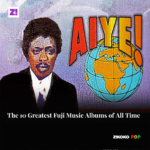
    Aiye! — Sikiru Ayinde Barrister

    Barrister’s music is the type to dance to and also pick up lessons from. On his album Aiye! (1980), he sings about the Disneyworld in Orlando which received an increase in African tourists. That song earned him the “Keys to the State of Florida.”

    Beyond an American experience, this album’s message gets deeper. It’s laced with proverbs, metaphors and witty sayings about life, trust and human behaviours. On the Side B, Apala Fuji System Medley he addresses and refutes the allegations against him as a conspirator in the death of Apala singer, Ayinla Omowura, and commiserate with his family and loved ones. For context, Barrister had a fallout with Ayinla in his lifetime and Kollington (who Barrister also had an issue with) was always closer to Ayinla.

    In the album, Barrister laid curses on whoever had a hand in Ayinla’s death. That was his way of saying his hand was as clean as a white glove. He had to do it — Ayinla had a large following that could take Barry’s silence for complicity and cause him physical harm. It’s no wonder the album’s title translates to “Life” and came out the same year (1980) Ayinla tragically passed away. This album is the Bible for Fuji artists.

    Fuji Garbage — Sikiru Ayinde Barrister

    On this 1988 album, innovation is at its peak. In its opening, one could have easily mistaken it for a Fela Kuti song intro because of its chiming chords and jazzy feel. But Barry fuses other sounds with Fuji to leave strong impressions that he’s in-tune with the times, versatile, capable and on a plane higher than his peers. Fuji Garbage was so successful that he did several versions of it, and that marked a tonal shift in his music at the time. With the arrival of Fuji Garbage, Juju music was pushed to the backseat.

    You may be wondering, why Fuji Garbage? This means that as the biggest in the Fuji world, he’s not immune to insults and ridicule that come with success. But there was also a necessary need to distinguish himself.

    Ijo Yoyo — Kollington Ayinde

    Fuji music with up-tempo, fun dance moves, and quests for ladies are the unmistakable descriptors of Kollington Ayinde’s Ijo Yoyo (1989). Ijo Yoyo registered a new dance and an untamed party ambience in Fuji for Gen X in South-West Nigeria. Kollington’s Ijo Yoyo was the culmination of his late 80s-early 90s run when he held his own, not only against Barrister, but also King Sunny Ade and Sir Shina Peters.

    His public service message for the census also won him some accolades from the Ibrahim Babangida government. Iyo Yoyo is Kollington’s magnum opus. It solidified his claim as “Professor Master”. Also, the impact of this album can be traced to younger Fuji acts like Obesere whose “Asakasa” style is a legacy of Kollington.

    Mr Johnson Play For Me — Adewale Ayuba

    The Mr Johnson Play For Me album (1992) meshes folk, country and African rhythms with the themes of Fuji pride and a good time. Here comes the suit-wearing, corporate-swagged Fuji vocalist and class-act who calls his brand of music “Bonsue”. Mr Johnson Play For Me was Ayuba’s coming-of-age album, after being seen more like an “outsider”. He was young and educated. His two preceding albums were well received and he toured America, only for it to be reported that he was arrested for drugs. Not true.

    Ayuba warns  people to stop calling him “The rave of the moment,” in this album. He states that Michael Jackson sang since he was a youngin till the moment he began his Fuji music, yet no one restricted MJ to a particular moment or era. Ayuba states that he is “current forever.” If you care to know how that argument has stacked up over the years, Ayuba still has the older and younger generations in his listening and streams dashboard.

    Reality — Sikiru Ayinde Barrister

    Reality (2004) starts on a light braggadocious note. Sikiri Ayinde sings, “If you wanna see Barry Wonder, you go see wonder.” Then he dives into the narratives of jealousy, envy and enemies that act like friends. He sings about ordinated destiny, que sera sera, his bus conductor days at Obalende and other struggles. Barrister croons about his breakthrough, ridicules the wicked eyes and flexes his will to enjoy his life to the fullest and without a bother.

    This album didn’t leave out entitled people — the kind who only take, take and benefit from others, and think it’s their right. Barrister makes it clear that people who only stay in times of prosperity and leave during adversity usually end up painting their benefactors badly. This is another Barrister classic album, serving listeners life lessons and mastery of language. It was the penultimate album before he died, and it was somewhat foreboding.

    Get More Zikoko Goodness in Your Mail

    Subscribe to our newsletters and never miss any of the action
    The Ultimate — Wasiu Ayinde Marshal

    The Ultimate (1993), is the self-acclaimed title and compliment that staples the status of Wasiu Ayinde, AKA K1 De Ultimate or KWAM1, as a king of Fuji music. It’s an apt body of work because K1 was crowned the King of Fuji (Oluaye of Fuji Music) after the album dropped, the same year at NTA Ibadan. The music is fast-paced, jiggy to wiggle to and easy to sing along.

    K1 had been known as Barrister’s protege in the preceding ten years, even long after he had left the man. On The Ultimate, he lightly embraced the “yuppie” approach to the music, and had dropped the “Barrister” style he used for a few earlier albums.

    Consolidation — Wasiu Ayinde Marshal

    In 1995, K1 threw secular music listeners into a frenzy with the love song, Show Colour Medley (the Side A) off his Consolidation album. “Show colour” means to show one’s true nature. The Side B of the album is Power to the People Medley. In its first few minutes, he mildly talks to the powers that be, then he adjusts his Fuji crown and assumes authority. Consolidation was the first time he would announce himself as “King”, much to the annoyance of all concerns. The album caused beef with his peers and his seniors alike. He doubled down on Legacy, the next album, as if to say he’d done it all and was paving the way for others after him.

    K1 also fondly reminisces about the day he was crowned King of Fuji (Oluaye Fuji Music) in 1993. He spends the rest of this album eulogising the deceased and hailing his seniors and folks in high places. Not only have the phrases, slangs, and one-liners that K1 placed in this album impacted younger generations, but they show that the coolness and spontaneity of the older generation are necessary ingredients for a catchy recipe.

    Orobokibo — Pasuma

    Thirty years ago, Pasuma called himself the Crown Prince of Fuji on his life-changing Orobokibo album. It was so huge that it carved a new niché that went mainstream and became a blueprint for contemporary Fuji artists. As a Mushin-bred guy with street orientation and credibility, he had street slangs and phrases in abundance, and he adorned them in the music. The Orobokibo era is when Hip-Hop began to be globally impactful, from music to fashion and lifestyle. It’s not hard to tell why most of Pasuma’s style and branding leaned heavily on Hip-Hop culture. One look at his fashion, and one could tell that he wasn’t going to be traditional. He was influenced by Hip-Hop, and that choice continues to date.

    The success of Orobokibo attracted Afro-Hip-Hop guys like The Remedies to Pasuma who he ended up making Jealousy with. This further solidified Pasuma’s relevance in Nigerian pop culture. Due to Pasuma, the word “Orobo” which he credits to one of his backup singers became an evergreen term in the Nigerian vocabulary. In the Orobokibo year, Pasuma won Best Fuji Artiste at the 1995 edition of Fame Music Awards (FMA). 

    Overthrow — Obesere

    Obesere, AKA Omorapala, has been termed controversial all his career. He provoked reactions with his lyrics and dancers. He aimed for the crown too, and on Overthrow, he makes the claim that he has taken over. One of the most successful albums in his career.

    Mr Music — Saheed Osupa

    At the peak of his career, Saheed Osupa released Mr Music in 2008 — a title born out of his perceived victory in the feud with fellow musicians like Pasuma and Wasiu Ayinde Marshall. This album became the first-ever 4-in-1 music project — packed with wisdom from his ancestors, parables, shots and punchlines aimed at his detractors.
    Mr Music marks his ascension to his self-acclaimed King of Music title. If you look around the Fuji world today for a musician with outstanding lyrical ability and smooth use of figurative expressions, Saheed Osupa should be number one.

    Read Our Guide to Becoming a Fuji Music Legend

  • Davido recently faced backlash for launching a meme coin that plummeted just a day after its release. The crypto venture marks one of the singer’s many attempts to try his hands at something besides music. He’s not the only Nigerian music star exploring side hustles to varying levels of success.

    From real estate to nightlife, here are eight top music stars and their side hustles:

    Banky W

    Side Hustle 101: What Your Favourite Naija Musicians Do Outside Music

    Banky successfully transitioned into Nollywood, starring in box office hits like The Wedding Party, UpNorth and Sugar Rush. And in 2018, the Yes or No singer went into politics, vying for a seat to represent the Eti-Osa Federal Constituency in Nigeria’s House of Representatives. He went again in 2023 and was unsuccessful on both occasions. He also co-founded Sooyah Bistro, a quick-service restaurant with branches across Lagos, in 2018.

    Don Jazzy

    Side Hustle 101: What Your Favourite Naija Musicians Do Outside Music

    When the music executive isn’t minting new talents, managing Mavin Headquarters as founder and CEO, he focuses on Jazzy’s Burger, a restaurant he launched in 2022 after he turned 40. Specialising in burgers, the restaurant has occasionally stirred controversy with its ₦10k starting price. Don Jazzy also ventured into skincare in 2023, launching his line of body soap, Drip Beauty.

    Sheyman

    Side Hustle 101: What Your Favourite Naija Musicians Do Outside Music

    The singer has taken a break from music completely. In 2021, he launched his exotic strip club, Secret Palace, in Lagos, attracting heavyweights like Burna Boy, Dbanj and Yhemo Lee. The Paper hitmaker also owns Folixx, a restaurant-style lounge operating on Lagos island.

    Peter Okoye (P-Square)

    Side Hustle 101: What Your Favourite Naija Musicians Do Outside Music

    When he’s not making music or performing his hits, the singer manages his lottery company, ZoomLifestyle, which he launched in 2019. In March 2024, he announced the launch of his logistics company, WYN, operating in Calabar, Uyo and Abuja.

     [ad]

    Mr Eazi

    Before he got into music, the Leg Over hitmaker had a flair for business. In 2014, he pitched a tech platform he co-founded, Obiwezy, at the 440 Accelerator. In 2018, Mr Eazi established EmPawa Africa, a talent incubation enterprise, followed by Zagadat Capital in 2021, an investment firm focused on tech startups.

    MC Galaxy

    Popular for his hit, Sekem, MC is now more active in the culinary realm. In 2021, he launched Sekem Kitchen, an indigenous eatery in Lekki, frequented by celebrity patrons like Davido and Uti Nwachukwu. In 2024, he expanded his venture with a branch in Abuja.

    Zlatan Ibile

    When he’s not releasing street bangers or managing Zanku Records, the street-hop artist focuses on fashion. In May 2024, he unveiled his clothing line, Zanku To The Word (ZTTW), showcasing streetwear items like jerseys, tees and beanies.

    Patoranking

    Away from the studio and stage, Patoranking has a side gig as a social entrepreneur. In 2023, he launched The Patoranking Foundation to advance Africa through education and entrepreneurship, providing scholarships and business grants in Ghana, Nigeria, Kenya and Zimbabwe.

    Read also: What Your 7 Nollywood Faves Do Outside Their Main Hustle