• In all of Derin’s 21 years on earth, she had never heard the word “sepsis”, nor had she imagined that she would wake up in a private hospital’s Intensive Care Unit (ICU), confused and weakened by an infection that sounded less dangerous than it was. But it’s typical of life to defeat our imaginations and throw us into a reality we’d rather escape.

    “I was so clueless when the doctor said I had sepsis. All I remember is that I ate roadside moin-moin. But somehow, I found myself in the ICU,” Derin recounts. She would eventually make it out of the ICU and be admitted to the hospital, where she spent the most painful days of her life.

    Derin recalls walking out of the ICU on her feet, but by the next day, she was confined to a wheelchair. Her organs had become terribly inflamed, her throat was clogged, and she could barely breathe. She could no longer eat or drink water, because her body rejected everything. Yet, when she called for help, she was told she would have to wait until the only available attending doctor in the hospital visited her floor — a dangerous wait that lasted two days. By then, she had become dehydrated and utterly dependent on caregivers for basic activities like bathing.

    The Nigerian Doctors Association says Nigeria now has only 24,000 licensed physicians to attend to the medical needs of over 200 million citizens. That means there’s just one doctor for every 10,000 patients. What they won’t tell you is that the survival of 10,000 people could tragically depend on one bad doctor. Like Derin, thousands of vulnerable Nigerians have been at the mercy of undertrained and overworked doctors. Some of them weren’t lucky enough to walk out of those hospitals alive.

    “When the attending doctor eventually came, he placed me on a medication that made it impossible for me to eat for eight hours. I protested because, at that point, I hadn’t eaten or drunk water for two days due to diarrhoea. He gave me the drug anyway and ordered a blood sample,” Derin said.

    “They drew my blood, knowing fully well that I was dehydrated, and two days later, they told me the intern doctor who took my sample had lost it,” she continued, remembering the pains she felt.

    That was the beginning of another round of dehumanising torture Derin endured at the hospital. They would eventually misplace two more blood samples taken from her weak body, which had started to lack visible veins.

    “At that point, I was already tired. I felt sicker than when I came in. But the day I knew I was going to die if I didn’t leave that hospital was when they misplaced my stool sample. I felt like a lab project for doctors in training. My mom had to pay one of the nurses to take me out in my wheelchair and pretend I was going for another round of tests. That’s how I ran away and was transferred to another private hospital.”

    The next hospital was the one that saved Derin’s life. She had taken pictures of the drugs she was given at the previous hospital, and now, she’s thankful that she did.

    “The second hospital had an attending doctor on call, but the doctors in training told me I was lucky because she doesn’t come around often, because it’s hard to get a hold of doctors like that these days. She asked if she could take one last blood and stool sample and promised to make sure I got better in two days. She ran some tests and found out that the reason I felt worse was that I was allergic to one of the medications from the other hospital. She replaced that medication, and I recovered in two days as she promised.”

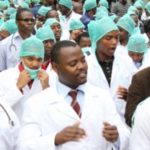
    To understand what this mass decline in doctor availability really means for Nigerians, I set out to speak with someone who has a firsthand understanding of it. After weeks of reaching out and consistent follow-ups, I finally got Dr Babatunde Iyanu to speak with me. From the moment we started talking, he kept apologising for his delayed responses — a testament to just how tight his schedule has become. And he’s not alone. It’s the same story for the other 24,000 doctors still trying to hold the healthcare system together.

    Dr Iyanu says the dangers of the declining doctor-to-patient ratio are endless for patients and doctors. “Patients wouldn’t get optimal treatment as the workload on doctors would prevent them from or affect their output. Due to excessive workload, doctors become tired and even unmotivated in managing the patients they are responsible for.” 

    When I asked him to describe the life of a Nigerian doctor, he said it depends on the day you catch him — some days are great, others are blatantly pathetic because fatigue is a constant part of daily life for doctors who don’t work in top-notch private hospitals. 

    About 19,000 doctors have left the country for better pay in the last twenty years. In 2024 alone, nearly 4,000 doctors left the country for good. Dr Iyanu says these medical practitioners are leaving for the most basic things they can’t get here in Nigeria—houses, cars, and other basic amenities. 

    “The salary of an average doctor can’t cover his basic needs. He’d need to save for years just to be comfortable, which was not so in the past. In the past, after medical school, in some hospitals, they were given cars even during their internship, and they received good money, as opposed to now,” he said. 

    Unfortunately, 70% of Nigerians who rely completely on public healthcare services are at the losing end of this mass relocation.

    “The attention and care you’d give to 20 patients daily isn’t the same as what you’d give to 100. With more patients and fewer doctors, there’s a higher chance of missing important symptoms or complaints, simply because the doctor is rushing to attend to everyone,” he explains.

    The state of primary healthcare centres (PHC) in Nigeria also makes it difficult for doctors to do their jobs effectively. Only 20% of the 30,000 PHC facilities in the country are functioning at full capacity, while the other 80% remain significantly incapable of delivering quality care to patients. 

    Dr Iyanu also acknowledges that more people will likely die from causes that could have been prevented, and the doctors who are being forced to take on heavier workloads may eventually become patients themselves. 

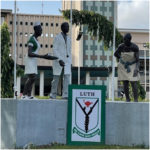
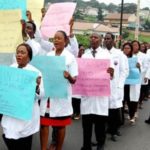
    Unfortunately, Dr Iyanu’s fear is slowly becoming the reality of many doctors in Nigeria. In September 2023, house officers at Lagos University Teaching Hospital (LUTH) publicly raised awareness about inhumane working conditions after the death of Dr Umoh Michael, who reportedly died after working a nonstop 72-hour shift.

    It is equally concerning that Nigerian nurses seem to have similar complaints about the healthcare system. On July 30, 2025, over 25,000 nurses, under the National Association of Nigeria Nurses and Midwives (NANNM), Federal Health Institutions Sector, commenced a seven-day nationwide warning strike primarily over welfare concerns. 

    The Nigerian Medical Association (NMA) has also issued a 21-day ultimatum to the Federal Government to address its demands or risk a total and indefinite nationwide strike by medical doctors. If these nationwide strikes happen simultaneously, Nigeria’s healthcare system could shut down temporarily, leaving millions of people at risk.

    When I asked Dr Iyanu what it would take for Nigerian doctors to stay in the country, he listed several key changes: a significant salary increase, improved and expanded health facilities, better access to healthcare, increased investment in the health sector, scholarships and grants for medical training, and more flexible scheduling for medical school programs. 

    As basic and necessary as these changes sound, they’ve remained a constant demand from doctors. But with President Bola Ahmed Tinubu’s proposed 2025 budget allocating just 5.18% (₦2.48 trillion) to health, far below the 15% benchmark set by the Abuja Declaration, it’s hard to see how any of these demands will be fully met. 

    According to the Gombe chapter of the NMA, the ripple effect of these unmet demands will be brutal, as more doctors will keep packing their bags and moving to countries that prioritise healthcare workers.

    Like Derin, more Nigerians will become victims of the country’s declining doctor-to-patient ratio. 

    Names have been changed to protect the identity of victims.

    [ad]

  • Looking to pursue a degree in medicine at a government-owned institution? This article has a list of federal universities in Nigeria and their cut-off marks for medicine. For some universities, the cut-off mark is the derived figure after the addition and division of the UTME, post-UTME, and O’level scores.

    Now, let’s get it.

    Federal Universities in Nigeria and Their Cut-Off Marks for Medicine

    University of Lagos (UNILAG)

    Established in 1962 and situated in Akoka, Lagos, UNILAG is one of the highly sought-after federal universities in Nigeria. Medical students undergo their studies at the College of Medicine, Idi-Araba, Lagos, which also houses the university’s teaching hospital. UNILAG offers a program in medicine and surgery.

    Cut-off

    UNILAG has not announced the cut-off mark for the 2024/2025 period. The cut-off mark for the 2023/2024 session was 84.675

    University of Ibadan

    Popularly known as Nigeria’s premier university, UI was established in 1948. The main campus is located in Agbowo, Ibadan, the capital of Oyo state. Medical students undergo their program at the University College Hospital (UCH) in Agodi. UI offers an undergraduate program in medicine and surgery.

    Cut-off

    The university hasn’t released the official cut-off mark for the 2024/2025 academic session. The cut-off for the 2023/2024 intake was 79.

    Federal University, Lokoja

    Established in 2011 and commonly known as FUL, this university is situated in the city of Lokoja, the capital of Kogi State. In 2023, the university made the Times Higher Education 2023 Sub-Saharan African Ranking. FUL offers an undergraduate program in medicine and surgery.

    Cut-off

    The cut-off mark for medicine and surgery in the 2023/2024 admission exercise was 70% of UTME. The university is yet to announce the new-cut mark for the 2024/2025 admission session.

    University of Benin (UNIBEN)

    UNIBEN is a government-owned university established in 1970. It was formerly known as the Midwest Institute of Technology before a name change in 1971. UNIBEN is among the public universities that offer a degree in medicine and surgery.

    Cut-off

    Regardless of the course of study, prospective students are expected to have a UTME score of 200 for eligibility to write the school’s post-UTME. Each department then sets its individual score, but the cut-off isn’t publicly available.

    University of Ilorin

    UNILORIN ranks among one of the best government-owned institutions in Nigeria. It was established in 1975 and located in Ilorin, Kwara’s capital. The institution offers a program in medicine and surgery and has a university teaching hospital where medical students undergo training.

    Cut-off

    The institution hasn’t announced the official cut-off mark for the 2024/2025 academic admission exercise. However, for the 2023/2024, prospective students required an average score of 180 and above to be eligible to write the post-UTME exercise for their course of study.

    University of Jos (UNIJOS)

    Commonly known as UNIJOS,  this is a government-owned university established in 1971. The main campus is situated in Jos, Plateau state. The university offers an undergraduate program in medicine and surgery. Medical students undergo training at the Jos University Teaching Hospital (JUTH).

    Cut-off

    UNIJOS hasn’t made an official announcement of its cut-off mark for the 2024/2025 intake. However, the general UTME cut-off for the last admission exercise was pegged at 180. Note that prospective students seeking admission into medicine and surgery also need to meet some other requirements as determined by the university.

    Get a free ticket to Strings Attached and enjoy a feel-good evening of music, dancing and games at Muri Okunola Park, Lagos on May 11, 2024.

    Nnamdi Azikiwe University

    Also known as UNIZIK or NAU, this public university was established in 1991. The main campus is situated in Awka, the capital of Anambra state, while it has another campus in Nnewi. UNIZIK offers a program in medicine and surgery. Medical students undergo their training at the Nnamdi Azikiwe Teaching Hospital.

    Cut-off

    The university hasn’t announced the cut-off mark for the 2024/2025 admission round. The last cut-off the university made publicly available for medicine and surgery was at an aggregated (UTME, post-UTME, and O’levels) 310.5

    Usman Dan Fodio University

    Known as UDUSOK, the university, named after Usman dan Fodio, the founder of the Sokoto Caliphate, is one of four universities established by the Nigerian government in 1975. It’s a public research institution located in Sokoto state. It offers an undergraduate degree in medicine and surgery. Medical students undergo training at the Usman Dan Fodio University Teaching Hospital.

    Cut-off

    As of the 2022/2023 admission exercise, the cut-off mark for medicine and surgery was set at 290. The university hasn’t announced the cut-off mark for the 2024/2025 session.

    University of Uyo

    The federal government established this university in 1991. It was merged with the former University of Cross River State, earlier established in 1983. The university, which is located in Uyo, the capital of Akwa Ibom, offers a program in medicine and surgery. Medical students receive training at the University of Uyo Teaching Hospital.

    Cut-off

    The university isn’t known to set cut-off marks. Admission is based on the candidate’s performance and NUC quota. UNIUYO has an NUC admission quota of 120 students, as such candidates with the highest UTME scores are considered for merit admission.

    University of Calabar

    UNICAL was formerly a campus of the University of Nigeria, Nsukka, before it was established as a standalone university under the National Higher Education Expansion Programme of 1975. It’s one of the highly-ranked government-owned institutions in eastern Nigeria. The university offers a program in medicine and surgery and trains its medical students at the University of Calabar Teaching Hospital Anambra.

    Cut-off

    The university hasn’t announced the cut-off mark for the 2023/2024 admission session. 260 was set as UTME score cut-off for medicine and surgery during the 2021/2022 admission round.

    Bayero University

    This university is an offshoot of Ahmadu Bello University, Zaria. It formerly operated as the Abdullahi Bayero College before it was upgraded to the status of a full-fledged university by the federal government in 1977. Bayero University offers a degree in medicine and surgery. Medical students undergo training at the Aminu Kano Teaching Hospital.

    Cut-off

    The university hasn’t announced the official cut-off mark for the 2024/2025 admission exercise. However, as of 2021/2022, the UTME cut-off mark for the faculties of clinical sciences and pharmaceutical sciences was 220 and above.

    If you found this piece about federal universities in Nigeria and their cut-off marks for medicine useful, you should read this next: The Hilarious Life of A Nigerian Medical Student

  • On April 6, 2023, the Nigerian House of Representatives announced a Bill for all Nigerian-trained medical and dental practitioners to complete five years of mandatory service before receiving full practising licences. 

    The Bill has passed for second reading and was targeted at stopping the massive “brain drain” of doctors who seek greener pastures in other countries.

    RECOMMENDED: Nigeria’s Doctor Shortage Crisis Is Worse Than You Think

    This was received with massive criticism from Nigerians. Government officials were especially criticised for not using Nigerian hospitals. Human rights organisations such as IPC Justice called the bill “a violation of the Nigerian Constitution and international human rights standards.

    But now that we’ve heard from the citizens, what are these doctors saying?

    “I’ll not practice medicine if the Bill is passed”

    For Amos*, a 400-level student at Obafemi Awolowo University, it is unthinkable for him to spend six years studying medicine (it’s more if you add strike periods) and still wait five extra years before getting a licence.

    According to Amos, “I was supposed to have graduated from medical school this year, but due to the public nature of my university, I am still in 400 level. If you consider strikes, I may finish medical school in three to four years, and after horsemanship and youth service, I’d still have to practice for five years before I get a full license. That’s way too much.

    “The low remuneration and endless work hours are already a turn-off for anyone entering Nigeria’s medical system. If the House of Representatives passes this Bill, best believe I’d not practice medicine after graduation. I would’ve quit medical school, but I’m in 400 level already and can’t drop the ball now.”

    Sighs in tiredness

    “I intend to leave the country as soon as possible.”

    Jane, a radiographer who recently finished her internship at the Lagos State University Teaching Hospital (LUTH), sees the Bill as a ‘foolish idea’. She also feels that the monetary rewards given for the risks taken in her work are unsatisfactory.

    “I think it’s a foolish idea. Instead of proposing such a Bill to the legislation, the government needs to provide and promote measures that would increase the desire of medical practitioners to remain in the country. 

    They say they are trying to curb the brain drain, but the country wouldn’t be experiencing this if the working and living conditions were great. So many of my colleagues in the UK and Canada keep telling me about the working and living conditions they’re experiencing there. Way better than here. 

    Imagine being paid ₦5,000 as a monthly hazard allowance for a doctor? Do they know about the hazards we’re exposed to at work? From minor infections to major diseases? 

    Then, they said they’d increase it from ₦5k to ₦27k and pay the months we’ve been owed. It has been months since they said that, and we are yet to receive the money. They paid for two months, and that’s it. 

    These and many other reasons are the conditions pushing many of us out of this country. If the working conditions of the UK are not favourable, this brain drain will not happen.

    Interestingly, in March 2021, the United Kingdom announced that it would stop recruiting doctors and nurses in 47 countries, including Nigeria, in alignment “with World Health Organisation’s (WHO) advice on ethical recruitment to promote effective, fair, and fair sustainable international recruitment practices”.

    “The health sector needs attention, but they’re doing it the wrong way”

    Dr Obi*, a LUTH physiotherapist, understands the government’s need to do something about the brain drain, but she disagrees with the methods.

    She said, “I have mixed feelings about the Bill because I understand their motives. The brain drain of doctors in Nigeria has become a nightmare. Finding doctors for shifts is extremely hard, and one can work five nights in a row. It is also hard to see doctors that would work in a hospital for over a year before they “japa.” So I get it.

    However, there is a need for the government to do things the right way. The House of Representatives failed to address the main reason these doctors are leaving — a growing lack of discontentment with their welfare from the government.

    The right thing to do should be to address the doctor’s pay issues (which is why they are fleeing the country in their numbers), equip the hospitals and give a tangible hazard allowance.

    Also, we have cases of patients maltreating doctors, which doesn’t happen in a sane society. All these put together drive the doctors, both young and old, to seek greener pastures.

    What can you do about it?

    This is a Bill that is of high risk to the human rights of all Nigeria medical and dental practitioners.

    If you’re a doctor or even a concerned citizen passionate about not seeing this bill become a reality, you can call or email your representatives in the House. Click on the names in this list for their contact information.

    Hopefully, they pick up

  • It seems every union in Nigeria is fighting the Federal Government; from the Academic Staff Union of Universities (ASUU) to even petrol tanker drivers (Petroleum Tanker Drivers Branch of National Union of Petroleum and Natural Gas Workers (PTD-NUPENG).

    The latest to join the queue are doctors, with the Nigerian Association of Residents Doctors (NARD) threatening to strike if their demands are not met before the National Executive Council (NEC) meeting on January 24. 

    But what are these demands and how would their absence affect Nigerians if the strike happens?

    A list of piled-up debts and demands

    This isn’t the first time the doctors will threaten to go on strike. In August 2021, they did live up to their threats and went on a two-month strike that ended in October 2021.

    This was after the Federal Government had refused to pay entitlements such as salary and COVID-19 allowance, as well as an increase on the low hazard allowance, (a fee paid to workers who do dangerous jobs), which was only N5,000 per doctor.

    Two years later, even though the Federal Government has paid off some salaries and the COVID-19 treatment allowance, there are a lot of outstanding demands.

    These include the payment of salaries from 2014 to 2016, an adjustment in the Consolidated Medical Salary Structure (CONMESS), and overdue payment of the Medical Residency Training Fund (MRTF), amongst others. Even the hazard allowance, which was increased to N34,000, has not been paid since its approval in December 2021.

    Now that we understand why they want to strike, how will their latest tussle with the government affect us?

    Expect more deaths

    Nigeria has a double-digit mortality rate, as you can be sure of approximately 12 deaths among 1,000 people. The statistics are worse for pregnant women, as a 2022 United Nations Children’s Fund (UNICEF) report states that 576 pregnant women have died in the course of 100,000 live births. The cause? Lack of access to healthcare, according to Minister of Health, Osagie Ehanire.

    If we have such bad statistics now, imagine how it would be when there are no doctors available.

    It will affect business

    A lack of doctors will ultimately lead to a lack of patients, which will affect the income of business owners around the hospital premises. Think of grocery store owners that need people to buy consolation gifts for patients, transport workers, and so on. 

    Patients will not receive top-tier healthcare

    Patients who are under hospital admission for an extended period of time would feel the brunt of the strike the most, as the strike would mean fewer doctors to give them the medical attention they deserve, especially in times of emergencies.

    This is already happening with the rise of the doctor brain drain. Nigeria only has approximately 24,000 doctors in the country as opposed to the mandated 363,000.

    The Solution

    This is a wake-up call to the Minister of Health, Osagie Ehanire, to answer the demands of the NARD before we have another strike. If you want to take up the challenge for these doctors, you can get started here.

    We write the news and track election coverage of 2023 for citizens, by citizens in our weekly newsletter, Game of Votes. Make the subscription of a lifetime here.

  • The japa wave out of Nigeria is making doctors become as scarce as uninterrupted power supply. Many doctors have seen the benefits of working overseas and refuse to stay and fight sapa in Nigeria

    Even though we can’t blame anyone for wanting to earn their daily $2k, the japa wave of doctors is really causing a serious problem for Nigerians.

    How bad is Nigeria’s doctor problem?

    Let’s break it down in numbers. 

    An estimated 217 million people live in Nigeria and they’re all likely to need medical attention at some point. According to the President of the Nigerian Medical Association (NMA), Uche Rowland, Nigeria currently has 24,000 doctors available. This means there’s one doctor available to treat 9,083 patients. 

    But according to the World Health Organization, a country should have a ratio of one doctor to 600 people for their medical needs. Going by this recommendation, Nigeria needs at least 363,000 additional doctors in the country.

    Excluding witch doctors

    According to Rowland, there are some states in the southern region where there’s only one doctor available to treat 30,000 patients. The situation is even worse in some northern states where there’s only one doctor available to 45,000 patients.

    He said, “In some rural areas, patients have to travel more than 30 kilometres from their abodes to get medical attention where available thus making access to healthcare a rarity.”

    Nigerian doctors are rushing for the door

    Even though Nigeria needs more doctors practicing in the country, the ones we already have are looking for work everywhere else. A 2017 survey by NOI Polls revealed that about 88% of medical doctors in Nigeria were seeking work opportunities abroad at the time. 

    In January 2022, the Medical and Dental Consultants Association of Nigeria (MDCAN) said more than 100 of its members left Nigeria within 24 months. A 2022 UK immigration report also showed that 13,609 Nigerian healthcare workers got working visas in the past year, making the country second only to India with 42,966 healthcare workers.

    Who will make it stop?

    Nigeria faces an existential crisis with the japa wave of doctors. As the country grows in population, more healthcare professionals are needed. The government needs to act fast with favourable policies that’ll make practicing in the country attractive to doctors. 

    We know our leaders can jump on a plane and run abroad for their medical needs but regular Nigerians deserve access to care too.

  • This is Zikoko Citizen’s Game of Votes weekly dispatch that helps you dig into all the good, bad, and extremely bizarre stuff happening in Nigeria and why they’re important to you.

    Subscribe now to get the newsletter in your email inbox at 8 am every Friday instead of three days later. Don’t be LASTMA.

    It's Raining Nigerian Doctors in the UK

    If you’re feeling mischievous and throw a stone into a United Kingdom hospital, there are good odds it’ll land on a Nigerian-trained doctor who’ll scream, “Wetin be that?” 

    Seven years ago when Buhari became president, only 233 Nigerian-trained doctors moved to the UK. But that’s only 33 more than the 200 Nigerian doctors who moved to the UK in September 2022 alone.

    If you had to guess how many Nigerian-trained doctors have relocated to the United Kingdom the entire year, what would your number be? According to the UK’s General Medical Council, the number of fleeing doctors between January and September is 1,307.

    It's Raining Nigerian Doctors in the UK

    And there are more doctors waiting on the queue to get out of the country [Image source: Zikoko Memes]

    For a country that already has a shortage of doctors in the health sector, losing even one doctor to other countries is a concern. To lose 1,307 professionals in just nine months is a tragedy. According to research by BMJ Global Health, low and middle-income countries lose $15.86 billion annually when locally-trained doctors migrate to high-income countries. The greatest total costs are incurred by India, Pakistan, South Africa and, of course, Nigeria ($3.1 billion).

    The unchecked loss of highly-qualified doctors to new dispensations poses a threat to Nigeria’s already troubled health sector. Not only is it a loss of human capital with economic consequences, but can be a matter of life and death for Nigerians that need quality care.

    It's Raining Nigerian Doctors in the UK

    [Image source: Zikoko Memes]

    Nigerian doctors, like other Nigerians surfing the japa wave, are fleeing poor working and living conditions in pursuit of better opportunities abroad, and you have to wonder when the Nigerian government will tackle the exodus with ideas more sophisticated than just simply chaining them to hospital beds.

    What else happened this week?

    The 2023 presidential election is finally gaining life

    The top three candidates for the 2023 presidential election finally breathed some life into their campaigns two weeks too late. On September 28, 2022, the Independent National Electoral Commission (INEC) officially opened the floor for candidates to start campaigning, but all three have been sluggish with kicking things off. 

    What changed this week?

    The candidate of the Labour Party (LP), Peter Obi, announced a presidential campaign council comprising 1,234 (seriously, this number isn’t a joke) members. Former presidential spokesperson and Obi’s current ride-or-die, Doyin Okupe, is the campaign’s director-general. Okupe boasted Obi already has a minimum of 15 million votes waiting for him at the polls, as long as INEC doesn’t do anyhow. 

    Notably, Obi skipped the committee’s unveiling ceremony for a speaking engagement at the ICAN 52nd Annual Accountants Conference. But with how low the standards have got, you’re just thankful he wasn’t off somewhere in London secretly treating an undisclosed illness.

    The candidate of the Peoples Democratic Party (PDP), Atiku Abubakar, officially flagged off his campaign and promised Nigerians would never again suffer from hunger and insecurity.

    It's Raining Nigerian Doctors in the UK

    [Image source: Zikoko Memes]

    But his campaign is still haunted by the ghost of Rivers State governor, Nyesom Wike, who predictably didn’t show up at the campaign launch, putting a question mark on Atiku’s high regard for himself as a unifier. In fact, days later, the party postponed two campaign outings in two states reportedly to give the candidate more time to patch things with Wike.

    The candidate of the All Progressives Congress (APC), Bola Tinubu, also oversaw the launch of the party’s Women Presidential Campaign Committee. He charged his campaigners to preach his gospel and politely tell people that want his party out of government to shut their dirty mouths. It’s a great way to endear yourself to undecided voters if the goal is to lose the election.

    Question of the week

    What should the Nigerian government be doing about the ongoing flooding crisis that it isn’t already doing?

    Click here to tweet your answer to @ZikokoCitizen on Twitter.

    Ehen, one more thing…

    The governor of Rivers State, Nyesom Wike, appointed over 28,000 officials for political units this week. When you get over the taxpayer cost of these appointments, you have to wonder if the governor is preparing for an imminent war the rest of us don’t know about.

  • Nigerian parents and “Go to school to study medicine” are like five and six. But what’s the reality of life as a doctor? We already know they spend like ten years in school, but these six doctors tell us more about their love-hate relationship with their jobs.

    n

    1. Temi 

    I’d describe it as a perfect oxymoron because it’s been a bitter-sweet experience for me. I have worked as a doctor for 11 years and I am currently training to become a Psychiatrist. I love being a doctor because of how noble it is as a profession. I love that my job exposes me to the frailty of mankind and diverse situations that need solutions. I also get to brag a bit, like, “Hellooo, I save lives for a living.” 

    On the other hand, my job is so tedious and demanding. I hate the sleepless nights when I have to be on call at the hospital for more than 24 hours. The hardest part is going through constant training  — it’s a whole lifetime of reading and constante burnouts. If I had a chance to rewrite my story, I’m not quite sure I’d study medicine again — there’s no balance between the job and my personal life. Something always suffers.

    2. Elizabeth

    I didn’t choose to be a doctor. My father forced me into studying it at school, so I just got stuck with the career. I’ve grown to love the satisfaction of treating people, but I still dislike my job. The driving force to be in this field is the relief you see on a patient’s face after confirming their “diagnosis” from Google was wrong. It gets me everytime. I hate that the reading never stops. There’s always an exam to get through and it only gets worse at the top — I’ve given up on the hope that I’ll be done with it. The pay isn’t great [in Nigeria], so that’s a downside to the glory of saving lives. There are opportunities in the UK, but you spend half of the money taking exams to compete with your peers.

    3. Mike

    I’m currently doing my housemanship as a dentist. I love my job because there’s a form of artistry that comes with handling a person’s teeth. People think it’s an insignificant part of medicine, but there’s a lot of damage that can happen from a tiny toothache. As a dentist, being in Nigeria makes it tough. There’s money in it, but it takes years to really cash out. The hazard allowance for us is also really horrible. The government just reviewed it from 5k to 32k — what does that cover in comparison to the kind of diseases we are exposed to daily? The structures in the clinics make the job more exhausting — dentists have to do everything alone. Simple things like scaling and polishing that should take me ten minutes can take two hours because I don’t have an assistant. My patient has to keep getting up to spit out rather than having a suction in place — it’s annoying. I’ve been so impatient with my patients because of how exhausted I am.

    4. Mildred

    I decided to leave America and come to Nigeria for my housemanship after graduation from school.  Regardless of where you practice, the feeling of fulfillment as a doctor is next to none. Paediatrics has been my favourite department so far — helping a woman give life is so beautiful. I don’t entirely regret coming back to Nigeria, but some days make me wonder why I didn’t just stay back. The insults from superiors or angry patients can make it horrible sometimes. Don’t even get me started on the long hours on call for horrible pay — government hospitals are the worst. I’ve had to spend holidays without my family, go hours without food, miss celebrations with friends, and why do doctors have to go on strike just to get paid for the work we do? 

    5. Roselyn

    I’m currently working as a non-training doctor in the UK — Nigeria had too many obstacles keeping me from becoming a consultant, so I had to japa. 

    As a doctor, I love driving home knowing I saved a family’s loved one from dying. Knowing that there’s someone who has an extra day to live makes me feel good, so losing a patient is tough for me. There are days I cried from losing a patient right before a surgery.  As an empath, the down-side for me is the unconscious attachment that happens when I’m on a journey with a patient. Sometimes I find myself paying for tests or medical procedures because my patients can’t afford to. So finding the balance between being compassionate and professional was difficult for me in the first few years of practicing. 

    6. Nick

    I am a General Practitioner (GP) in training. I knew working as a hospital doctor would not give me the desired time to pursue other personal interests outside of medicine. As a GP, I love caring for patients through their recovery. I enjoy seeing them move from painful stitches to living full and healthy lives. Then there are patients who are self-proclaimed doctors and try to do my job — sometimes I just want to yank them out of my office, but I’m there to save them from themselves.

  • How many health-related questions can you answer correctly? Test your knowledge by taking this quiz:

  • A cross section of the resident doctors in Nigeria
    If you live in Nigeria then you have to be careful because three things can strike at any time — thunder, "ASUU" or doctors.

    Presently, all three of them are in action: It’s the rainy season in Nigeria so of course thunder is present, lecturers under the Academic Staff Union of Universities (ASUU) are already threatening to go on another strike and the National Association of Resident Doctors (NARD) have been on strike for more than four weeks now.

    “Thunder and ASUU we know, but who are the resident doctors in Nigeria and why have they gone on strike?”, you ask.

    Well, they are doctors who have graduated from medical school and are taking part in a graduate medical education program by working at hospitals and providing direct care to patients.

    And they are currently on an indefinite strike because of a thing called “salary”. You know, that thing adults are paid at the end of the month to make adulting less… ‘adulterous’. 

    I “NARD” Do Again

    On August 2nd 2021, the Nigerian Association of Resident Doctors (NARD) embarked on an indefinite industrial action after the National Executive Council (NEC) of the union held a meeting in Umuahia, Abia State.

    Speaking with journalists after the meeting, Dr Okhuaihesuyi Uyilaw, the President of NARD declared that the resident doctors in Nigeria are embarking on a “total and indefinite strike” from August 2nd 2021 because of:

    • The non-regular payment of resident doctors;
    • A lack of payment of “Death in Service” insurance benefits to the next of kin of 19 resident doctors who died while attending to patients during the Covid-19 pandemic;
    • A lack of increase in the hardship allowance (or “hazard allowance”) paid to resident doctors from ₦5,000 to 50% of their basic salaries, and the payment of their Covid-19 allowance;
    • The exorbitant fees (or “bench fees”) resident doctors are forced to pay when they go for further laboratory training in other medical institutions across Nigeria; among many other reasons.

    “I’m In Saudi Arabia Jamming”

    This indefinite strike about the poor welfare conditions of resident doctors in Nigeria is not new. But, it is coming on the back of news that the Saudi Arabia Ministry of Health was conducting a recruitment exercise for Nigerian healthcare specialists in Lagos, Nigeria.

    Already, Nigerian doctors in the United Kingdom, United States of America, Saudi Arabia and many other countries attest to the fact that their living conditions have been significantly better since they left Nigeria.

    “While I was in Nigeria, my salary was ₦113,450”, a Nigerian doctor in Saudi Arabia told Punch. Adding that “now I earn way more than I did in Nigeria. I enjoy 36-day paid leave, good working conditions and my flight ticket was paid by Saudi Arabia”.

    Another Nigerian doctor in Saudi Arabia remarked that “my salary as a doctor in Nigeria combining two jobs was less than ₦120,000. In Saudi Arabia, I earn around 10 times that amount”. He concluded that Saudi Arabia had less workload, amazing state-of-the-art facilities, good hospital management systems, health insurance, paid leave and free tickets for holidays.

    The Sad Reality 

    In Nigeria, one doctor attends to about 3,806 patients which is against the World Health Organisation recommendation of one doctor to 1,000 patients at most. Also, according to Afriacheck, Nigeria loses an average of 12 doctors every week to the United Kingdom.

    Nigeria must address these challenges and begin to treat its doctors better because they are probably the last functioning parts of an already rickety health sector.


    Gifs sourced from memes.zikoko.com

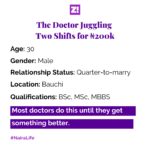
  • Every week, Zikoko seeks to understand how people move the Naira in and out of their lives. Some stories will be struggle-ish, others will be bougie. All the time, it’ll be revealing.

    Let’s go all the way back to your oldest memory of money. 

    Primary school, running to my dad’s workplace to collect the money for my common entrance form. Also, I know people used to dash me money quite often, but it always ended up with my parents. My mum was a teacher in my school, so she always held onto my money. 

    I feel like if we asked for reparations from all the money our parents collected on our behalf, it might be going into the billions.

    Or not, ‘what about the Christmas shoe?’

    Your parents would be so proud right now. 

    Haha, I’ve just heard it enough to not accept it.

    I imagine you’ve always wanted to be a doctor.

    Not exactly. In fact, my dad kept asking me if I was sure about my choice at the JAMB office because I didn’t say it so often. I first wanted to be a lawyer, then an engineer, then a physicist, and finally a doctor. I just had this confidence that I’d excel at whatever I chose to do. 

    So I chose medicine because I wanted to unravel the mystery of the profession. Like “what’s even the big deal?”

    Your dad was a doctor? 

    Far from it. My dad’s never worked in the formal sector. Did photography, farming, small-small contracts here and there.

    Nice. So, medicine; expectations vs reality.

    I didn’t exactly have expectations. I wanted to know why it was described as a lofty profession. The reality surpassed whatever expectations were in my head. I didn’t really have a scope of illnesses beyond malaria, fractures, small injuries. The Medical School showed me a wide range of diseases, a lot of which I’m yet to see in real life.  So about being able to make what I call ‘sweet diagnosis’, I was happy. 

    My interest in medicine grew in medical school and I can no longer picture myself not practising medicine. 

    Sweet diagnosis? Tell me about your first.

    It was in one of my outside postings in school. I was at the clinic with this senior doctor and the mother came and started narrating what was wrong with her baby. I called it in my head or maybe I whispered to the person sitting next to me. When the senior doctor started asking us to listen to the boy’s heart, I knew I was right. He had a large ventricular septal defect! That’s probably not the first but that’s the one I remember. 

    It feels like how every time a major insurgency begins, someone’s journalism career is getting propelled. 

    Well, journalists can shine the spotlight on the insurgency and can bring about a change. We made that diagnosis and sent the baby to a specialist who probably dropped the “you may need to travel to India” bomb on the literally poor woman. 

    For us, it’s like reporting on Yemen, and knowing that people just like the pictures and move on. Nothing changes. 

    Let’s do a rough estimate; how frequently do you have cases where the patients can’t afford treatment?

    Ah, during my house job, let’s say 70% of patients couldn’t afford treatment but after calling everyone, it comes to about 40%. It was a teaching hospital so they’d probably spent all their money on smaller hospitals and chemist shops before getting the final diagnosis that will actually take all their money. But I’m now in a place where 70% of patients are covered by the NHIS. 

    Let’s digress. Did you ever have to do anything else besides school work for cash? 

    No. I did some ‘research’ for one of my dad’s friends after school which paid me about 80k. 

    What year was this and what level were you in?

    I was 22 and this was December 2017. It was after school, after my house job. House job is a beautiful time for the account. 

    First proper monthly income eh?

    Yup. And they paid after 2 months, ₦375k. It was actually ₦162-₦164k per month but there was a bonus or something.

    What was it like though, first salary vibes?

    Oh, it felt good. I felt independent. Most of it went towards black tax sha. I sent money to everyone who I had some sense of gratitude towards. Church, family friends, everyone. 

    So black tax only touched the first salary eh?

    Very well. About ₦250k. It still comes in once in a while though.

    When did you first realise that the Japa had to happen?

    During house job and NYSC reinforced it. The state of our healthcare is sad. I was almost always sad for the entire year. Too many people died. 

    I’m sorry you had to go through that. What was the leading cause of death?

    Poverty.

    Gut punch. 

    Doctors who know all the stuff but are as helpless as the patients. We need to get people more involved in healthcare financing. Revamp the healthcare system, such that enough people have faith in the system to enrol in social health insurance. Health insurance will help to distribute the financial risk associated with most illnesses, especially chronic illnesses. 

    It’s a sad vicious cycle, diagnoses of chronic conditions make poor people even poorer. Take Chronic Kidney Disease, for example; a poor person is more likely to be coming for weekly dialysis than to get a transplant. 

    The weekly dialysis is just buying them extra time because they will run out of money and they will die.

    A rich person knows we can’t do the transplant in every hospital here. They’d travel, get their transplant done and that’s that. 

    These complex procedures will be cheaper if we do them often, that way we have trained manpower and equipment. Instead, we buy machines that’ll get spoilt before the next batch of medical expatriates come.

    Crazy.

    There was this patient, 20 years old. She got “married as a teenager” to a man as broke as she was, to be his second wife. She had Chronic Kidney Disease.

    The man went AWOL ( men are more likely to abandon their partners in the hospital). Her parents actually tried but they didn’t really have money. They paid for the first dialysis, the unit raised money for the second. Each dialysis cost ₦27k.

    Whenever she came in as an emergency, the doctors and nurses would rally and raise money. She’d step away from death’s clutch for a bit and they’d take her home again.

    They took her home and she was supposed to come twice a week for dialysis. Her case was quite bad. A kidney transplant procedure might have cost her up to ₦10 million. Of course, there was no money for that so they kept her till they couldn’t keep her at home any longer. 

    The last time she came, even our charity couldn’t save her. She was too sick. 

    She had two kids. I wonder how they’re doing. 

    Wow. How many times have you ever had to raise money for a patient?

    I don’t think I can count. It was worse in the teaching hospital. It was at least twice a week in paediatric posting. Maybe 40 times – I think that’s even modest. 

    That is crazy. Hypothetically, how would you fix this?

    Privatise the health sector – keep me anon. That way, the stakeholders will actually be interested. The poor might suffer at first but it will eventually make sense. 

    So, the stress is too much you just want to japa. What stage are you at? 

    I’d say I’m in the middle. 

    How did you fund these?

    I raised ₦735k from my dad mostly, and towards my exams. 

    Yes, I did. Though it seems I may have to go begging from them later. I would definitely still need money. I need to sort out accommodation when I go for my exams, plus all the money that will be spent when I am finally ready to relocate.

    In the time being, I’m working at a government hospital. I did NYSC here and just stayed on as an ad hoc staff. ₦80k per month.

    Fascinating that you earned more at your house job than at this one? How much did they pay you during your NYSC?

    ₦50k. But there was NYSC allowance. And I also worked at a private hospital for about 3 months and earned ₦100k per month. But then I became so ill, I thought I was going to die. I resigned from there and stayed with my ₦50k. 

    Woaaaah. What happened?

    I had a chest infection that went on for too long. It seemed my immunity was compromised. I was stressed. 

    Sorry about that. How much do doctors get for NYSC?

    The same allowance everyone gets. It was ₦19,800 when we started but was increased to ₦33k. 

    So, now I’m wondering what ₦80k affords you every month.

    I live in the hospital so rent is off. I hardly go anywhere too. My internet is about 7 to ₦10k. Food? Hahahaha. I really don’t know, it depends on my mood. Toiletries ₦10k. So food, ₦20k. On average. Though I’m certain I’ve spent almost ₦30k this month. 

    I think social media can be blamed too. There’s a lot of visual stimulation. I’m like “it looks good” let me try. 

    Hahaha, what was your last food splurge?

    Ordered Catfish Pepper soup, Jollof rice and moin-moin. ₦7k, with delivery. 

    What is your wildest food splurge?

    I bought a cake late last month. ₦17,500. 

    I’m curious about your perspective on money. 

    It stems from my childhood. My parents weren’t rich-rich, but money was available when we needed it. Sometimes salaries, loans, or savings. We always had what we needed. 

    So my ideology about money is that it really has to meet your needs, fundamentally. I need a steady income that can cater to my basic needs and whatever extra shenanigans it can afford me. 

    This is another reason why I want to leave. It seems I don’t have a hustling bone in my body so I need to work in a place where my primary salary can suffice. 

    Talking about relocation, tell me about what the road to Japa looks like for you, expense-wise

    I still need at least £1000. That’s excluding feeding and accommodation till I get my first salary there. GMC registration; £156. So Tier 2 visa- an average of 600 pounds. Then certificate of good standing from the Medical and Dental Council of Nigeria ₦75k, +/- bribes, so they don’t waste my time.

    And lastly, one-way ticket. It feels good saying that. I’m really tired of waiting. 

    How do you intend to raise it?

    I still have some money saved up. I have about ₦750k.

    When do you think you’ll be able to leave?

    When my exam was scheduled for April, I was looking at October but I don’t know when to expect anymore. So I am basically waiting. I just cussed COVID out in my head. 

    Cussing COVID on your behalf too. Working while you wait eh?

    I am. That is the only way I don’t deplete what I have. 

    How many people in your class are planning to travel?

    It’s quite sad. 

    The brain drain is just more glaring in the medical profession because it is a sector that should not be bleeding professionals like this. 

    How much will you say a Nigerian medical degree costs, in time and cash?

    Then there are books, which I did not buy a lot of. I read on my laptop.

    When was the last time you felt broke?

    I feel broke now. My entire stash is earmarked for something. 25k will go to my mum’s screening tests. I’ve been begging her to do her blood tests but paying for it is the only way she’ll take me seriously. Data, 7k, hopefully. 

    Food; I really hope to keep it within 20k. 

    The rest will sit in my general account until I am able to transfer a sizeable amount to my savings account. 

    On a scale of 1-10, how would you rate your financial happiness?

    5. I feel broke, but I’m also not lacking anything. 

    What’s a purchase that’s significantly improved the quality of your life?

    A 30,000mAh power bank, which I bought more than a year ago hahaha. It charged my phone more than 5 times. 

    Do you have any financial regrets?

    I wish I had some form of investment during house job when the money was just sitting pretty in my account. My expenses were very minimal. I bought a lot more food then because I didn’t have any time to spare. Then again, I didn’t have time for anything else. 

    What does financial freedom mean to you?

    I want to live in a house that I’ve paid for. A car that I’ve paid for. I want to be able to afford the best healthcare (well insurance in saner climes). Food, obviously, and travel. Charity and Black tax too. I want to be able to give back to my community. 

    Also, are you saying here that it’s impossible to hack good insurance here?

    Most HMOs here won’t even cover chronic conditions. Hospitals are always fighting HMOs before they get their money back. I’m sure there are excellent packages but it’s not that commonplace. 

    Basically, if you can’t hack effective HMOs, that means it’s impossible to fully hack financial freedom for you in Nigeria?

    It’s not possible for me. Maybe those who are super rich with helicopters that can evacuate them immediately or something. Imagine if that even happens during this COVID season. 

    Look, there’s no true freedom for me here.