• Nigeria is currently in a lot of debt and Nigerians are stressed out — with good reason.

    A recent cause for this stress is the news that President Muhammadu Buhari has asked the National Assembly to approve his plan to borrow over $4 billion and €710 million from international organisations to finance projects in the 2021 budget. 

    The President also asked the National Assembly to allow him to seek $125 million in grants for special projects.

    Buhari practically said:

    The new loan request is coming just four months after the President requested that the National Assembly approve his plan to borrow over $8.3 billion and €490 million from various international organizations. This request was approved.

    In March 2021, the National Assembly also approved the President’s plan to borrow $22.7 billion for “infrastructure development”.

    But Exactly How Much Is Nigeria Owing?

    You may want to sit down for this next part. As of March 31, 2021, Nigeria’s total public debt stood at over $87.2 billion which is about ₦33.1 trillion.

    Of that debt, $43.5 billion is to be paid by the federal government while the state governments and the Federal Capital Territory owe $10.8 billion.

    At the time, Nigeria also owed a total of $32.8 billion or ₦12.4 trillion foreign debts while we owed $54.3 billion or ₦20.6 trillion domestic debts.

    Be honest, this is what you thought when you saw what “we” owed:

    These numbers are just from March and they don’t include the recent May and September loan requests by the Federal Government or any of the new loan plans by the 36 state governments. The foreign exchange rate was also different at the time of calculation.

    Who Is Nigeria Owing?

    As of March 31, 2021, these are the people Nigeria owes abroad:

    • International Monetary Fund – $3.44 billion
    • International Development Association – $11.09 billion 
    • International Bank for Reconstruction and Development – $410 million
    • African Development Bank – $1.59 billion
    • African Growing Together Fund – $210,000 
    • African Development Fund – $942 million
    • Arab Bank for Economic Development in Africa – $5.88 million
    • European Development Fund – $51.3 million
    • Islamic Development Fund – $29.7 million
    • International Fund for Agricultural Development – $223 million
    • Exim Bank of China – $3.4 billion
    • Agence Française Development – $486 million
    • Japan International Cooperation Agency – $74.6 million
    • Exim Bank of India – $34.5 million
    • Kreditanstalt Fur Wiederaufbau – $183.7 million
    • Eurobonds – $10.3 billion
    • Diaspora Fund – $300 million
    • Promissory notes – $179.5 million

    Nigeria owes a total foreign debt of $32.8 billion as of March 31, 2021.

    Nigeria Can Pay This Money Back, Right??

    Borrowing money is not a bad idea if you can pay it back. But Nigeria is currently swimming in so much debt, and it is not making enough money to justify taking on more debts.

    This year alone, Nigeria will be paying back ₦3.12 trillion in debts. On top of that, Nigeria plans to borrow another ₦5.6 trillion.

    These debts are unsustainable because the government wants to spend ₦13.5 trillion yet Nigeria plans to make only ₦7.99 trillion, and we have not made more money since the ₦10 trillion we made in 2014.

    South Africa, for instance, wants to spend R2 trillion in 2021, but the country makes R1.36 and will be borrowing R689 trillion. South Africa will also be paying back debts of R232 billion, but it has a very good tax system that can help it to generate revenues easily.

    Economists say that Nigeria’s “debt to GDP ratio” (that is Nigeria’s total debt compared to Nigeria’s total productivity) currently stands at about 32% and apparently, that is still low and in line with the World Bank’s recommendations.

    But economists also agree that Nigeria’s “debt to revenue ratio” (that is Nigeria’s total debt compared to how much Nigeria actually makes) is becoming a concern. 

    Nigeria must reduce its debts and start making more money if it does not want to be caught in a debt trap.

  • On Friday, September 10, 2021, the Lagos State House of Assembly passed two bills to be signed into law by the governor: a bill on the collection of Value Added Tax (VAT) in Lagos state and a bill on the prohibition of open grazing in Lagos State.

    The anti-open grazing bill follows an agreement by the 17 governors of the southern states in Nigeria, who met in Asaba, Delta state on May 16, 2021. They agreed to sign laws prohibiting the open grazing of cattle in their states and the movement of cattle by foot across the southern region of Nigeria by September 1, 2021.

    Since the meeting, ten southern states have passed anti-open grazing laws in their states, namely: Bayelsa, Rivers, Oyo, Ekiti, Enugu, Lagos, Ondo, Akwa Ibom and Osun States. Abia and Ebonyi states say that they already have similar laws in place, while the Ogun State Governor is yet to sign the bill into law.

    Delta state is still working on its anti-open grazing bill, while Imo, Edo, Anambra and Cross River States are not currently working on any anti-open grazing law.

    What Is “Open Grazing”?

    Open grazing is when cattle and other domestic animals are allowed to roam freely and consume grass or plants on whatever lands they come across.

    In Nigeria, up to 2,000 people die every year due to deadly clashes between farmers and cattle herders over rights to openly and freely graze. These clashes made about 62,000 people homeless between 2015 and 2017.

    There is usually disagreement over land or water when herders allow their cattle to roam into farmers’ lands. At other times, conflict happens because the livestock of the herder has either been stolen or farmers have prevented herders from grazing on their land.

    Will The Anti-Open Grazing Laws Stop The Deadly Clashes?

    The anti-open grazing laws in southern Nigeria are supposed to stop cattle herders from allowing their livestock to graze anywhere in public. This is supposed to prevent any more opportunities for farmers and cattle herders to clash. But it is not that simple.

    Saleh Alhassan, the National Secretary of Miyetti Allah Kautal Hore — an association for cattle herders, has described the law as “satanic and empty”, and that members won’t obey the anti-open grazing laws. The association has also claimed that its members have freedom of movement as guaranteed by Section 41 of the constitution, even though lawyers are quick to point out that the constitution means free movement should be enjoyed by humans and not cattle.

    The Miyetti Allah Cattle Breeders Association (MACBAN), another association for cattle herders, has warned that the price of a cow may cost ₦2 million if the Lagos State government passes the anti-open grazing law because it will be expensive to rear cattle in the state.

    Now that some southern states have begun passing the anti-open grazing laws, cattle herders will have to breed their cattle in enclosed spaces like ranches or grazing reserves if they do not want to run afoul of the law. Already, President Muhammadu Buhari has approved the review of 368 grazing reserves in 25 states in Nigeria, and some states like Zamfara and Gombe have begun plans to establish ranches for cattle herders.

    The frequent clashes in Nigeria between farmers and cattle herders is a situation that is not going away anytime soon because it borders on the tough questions concerning the right to movement and the right to property. A lot of careful laws and policies will have to be employed to address the situation. For now, we will have to wait and see what happens next.

  • Rivers VAT not for Abuja people, I don’t care if heaven falls!”, Wike insists

    If you’re wondering why governors seem to be in a stand-off with the federal government, we have the tea. The situation is about a type of tax called Value Added Tax (VAT) and which level of government has the power to collect it — the Federal Government of Nigeria or the state governments.

    Whoever wins this battle is certainly going to get richer by about ₦1.5 trillion.

    The Federal High Court Ruling

    On August 10, 2021, in a lawsuit marked FHC/PH/CS/149/2020, Justice Stephen Dalyop Pam of the Federal High Court ruled that it is the Rivers State Government, not the Federal Inland Revenue Service (FIRS), that should collect Value Added Tax (VAT) and Personal Income Tax (PIT) in Rivers state.

    The judge granted all of Rivers State’s requests over the matter, and it agreed with the state’s argument that the Federal Government of Nigeria, through the FIRS, cannot collect VAT because it does not have the power to do so under items 58 and 59 of the “Exclusive Legislative List” of the Constitution and items 7 and 8 of the “Concurrent Legislative List” of the Constitution.

    The Federal Government of Nigeria has been collecting VAT across Nigeria since 1993, but Rivers State has basically said “enough”.

    What Is VAT?

    The Value Added Tax is a tax that is collected at every stage of production of an item or service, from the beginning of production to when the item or service is finally sold. 

    In Nigeria, VAT is charged on all goods and services except on medical products, basic food items, books and educational materials, baby products, fertilizers, farming machinery, medical services and a few other goods and services in the first schedule of the VAT Act.

    Nigerians pay a 7.5% VAT on everything we buy, including recharge cards, wines, cars and many other things.

    What This Means

    VAT is the second-highest generating tax in Nigeria after the Companies Income Tax, and Nigeria made about ₦1.5 trillion from VAT in 2020 alone. But it is not the amount of money that is provoking emotions, it is the way the money is shared.

    Under Section 40 of the VAT Act, 15% of the VAT pool must go to the Federal Government, 50% to the states and 35% to the Local Government. 20% of the entire money must also be shared according to where they are gotten from.

    But Rivers State is not happy with this arrangement. According to the governor, Nyesom Wike, the state generated ₦15 billion from VAT in June 2021 but only got ₦4.7 billion when the VAT pool was shared according to the current sharing formula, whereas Kano State generated ₦2.8 billion naira from VAT in June 2021 and got the same ₦2.8 billion naira it made.

    If states begin to collect their own VAT following the new court ruling, it would mean that every state in Nigeria gets to keep the VAT money it makes, and states like Lagos, Rivers, Oyo, Kaduna, Delta and Katsina where up to 80% of VAT is collected will get to keep their fair share without giving it to the federal government.

    Rivers State, for instance, would be able to keep its VAT money and use it to develop the state, something in the range of the ₦15 billion it generated from VAT in June 2021 alone. Already, Lagos State House of Assembly has passed the state’s VAT law to ensure that it starts keeping the VAT money it makes.

    But there’s also a downside to it. Many states who don’t make as much money from VAT rely on the national sharing pool. Because Nigeria’s 36 states and 774 local governments all share 85% of the total VAT money, it means that many states get allocation from the VAT pool even though they contribute less than 20% to it. This is the reason why Gombe’s governor has pleaded with other states to be their “brother’s keeper,” because if each state begins to collect its own VAT, about 30 states in Nigeria will suffer a significant decline in their revenue. And this is because there is little production and consumption activity going on in those 30 states, so there’s only a little VAT to collect.

    The Federal Inland Revenue Service (FIRS), the agency that collects taxes on behalf of the federal government, has already filed an appeal to overturn the judgement of the Federal High Court. We’ll have to wait and see where this case leads. But one thing is certain: the question about who has the power to collect VAT in Nigeria is far from over.

  • On Thursday August 26, 2021, President Muhammadu Buhari declared in a statement that the Nigerian National Petroleum Corporation (NNPC) made a profit of ₦287 billion in 2020. 

    The President claimed that it was the first time the NNPC was declaring a profit since it was established on April 1, 1977.

    While there are reports that the President’s claim is false, it doesn’t take away the fact that the NNPC itself is a very important corporation ― that made a ton of money in 2020.

    How NNPC Works

    The NNPC is responsible for carrying out commercial activities in oil and gas in Nigeria for the government of Nigeria. This is according to the preamble of the NNPC Act of 1990.

    This means that the NNPC looks for crude oil, refines crude oil, buys and sells petroleum and other petroleum products, operates pipelines for the transportation of natural gas and does all other activities related to oil and gas in Nigeria, for the government of Nigeria.

    Basically, the NNPC is Nigeria’s oil company.

    NNPC Leadership 

    Currently, The NNPC’s Group Managing Director is Mallam Mele Kyari. He was appointed by President Muhammadu Buhari on July 7, 2019.

    Mr Mele Kyari replaced Maikanti Baru as NNPC GMD. Maikanti Baru served as the Group Managing Director of the NNPC from July 2016 to July 2019. 

    NNPC’s Group Executive Director for exploring crude oil or “upstream” activities is Adokiye Tombomeiye. The Group Executive Director for Gas and Power is AbdulKabir M. Ahmed and the Group Executive Director for petroleum refining is Mustapha Y. Yakubu.

    The NNPC Group Executive Director for selling petroleum products or “downstream” activities is Adeyemi Adetunji, and the Group Executive Director for Finance and Accounts is Umar I. Ajiya. 

    Aisha Ahmadu Katagum is the NNPC’s Group Executive Director for Corporate Services and Hadiza Y. Coomasie is the NNPC’s Secretary and Legal Adviser.

    You can read more about the management of the NNPC here.

    Financial Accounts of the NNPC

    Since 1977, the NNPC has been inconsistent with opening its account and disclosing whether it was making a profit or not. It wasn’t until October 2015 that the corporation announced that it would commit to making its financial account public.

    Since then, we’ve been privy to information like the NNPC’s ₦308 billion loss in 2018 and ₦1.7 billion loss in 2019.

    You can read more about the NNPC’s audited account of 2020 here.

    “NNPC Limited”

    On August 20, 2021, President Muhammadu Buhari signed a new Petroleum Industry Act that will regulate oil and gas operations in Nigeria.

    Under this new act, the NNPC will be replaced by “NNPC Limited”. NNPC Limited must make a profit and its shares can be sold to Nigerians through an open and transparent process ― like at the Nigerian stock exchange.

    With this new law, the NNPC should perform better, and it should start declaring profits as a company engaging in oil and gas activities on behalf of Nigeria.

    But things may just remain the same. After all, this is Nigeria.

  • Nigeria is tough and the people who refuse to pay up their debt don’t make living here any easier. If you’ve been aired or blocked by someone you lent money to, here’s a guide on how you can legally get your money back.

    The first thing you need to know is that if anyone in Nigeria owes you a debt, you have to act fast. If you try to get the money through a law court after six years, the court won’t answer you — and that’s according to Section 21(1) (a) of the Statute of Limitation Law.

    Also, when trying to get back your debt, avoid sending any threatening or intimidating messages to your debtor. While we know that being owed can get you very angry, you also don’t want those threats of violence to backfire into a criminal case against you. So please, no violence.

    And most importantly, do not involve the police in a debt recovery case in Nigeria as the police are meant to fight criminal issues, not issues between normal people. Involving a lawyer from the start is a better option.

    Now, Time To Get Your Money Back

    Do you have an agreement in writing with the person you lent money to about the steps you can take to recover your debt if they don’t pay up, like selling a property? If yes, then good for you. You can simply follow the steps in that agreement to recover your debt.

    If you don’t, that is still alright. There’s no need to escalate things. You can try sending them a message reminding them of their debt. Sometimes that’s all you need to do.

    But if all else fails, here’s how you can “gently” get your money back:

    Send The Person A Letter of Reminder:

    You can send your debtor a “letter of reminder”. This letter should be written by your lawyer, and it should remind the person owing you that you will take the case to court if they fail to pay up your money.

    Try Mediation and Arbitration:

    To get back your money, you can involve third parties — if the other party is willing to discuss it with you, of course. In mediation, a third party can help you and your debtor reach an amicable settlement. 

    In arbitration, you and the other person must follow the final agreement reached by the arbitrator, and the decision can be enforced in court because it is legal. But there must have been an agreement that you and your debtor will use arbitration to settle matters in the original loan agreement.

    Write The Person A “Letter of Demand”:

    If you are getting uneasy and your debtor is still unwilling to pay up, then you can employ the services of a lawyer to draw up a “letter of demand”, warning the person of the things that will happen if they do not pay back your debt within a period.

    The letter of demand usually confirms the exact money you are owed, a clear time when the debt should be paid back and the legal consequences of failure to pay back the debt.

    A letter of demand usually serves as a good notice to the debtor before you take matters to court.

    Try Taking Legal Action –

    Finally, in the case where the debtor has failed to pay up even if you have sent them letters and tried to be reasonable with them, then you should take the matter to court. 

    The court will enforce a decision for your debtor to pay you back your money, after hearing the facts of the case.

    The appropriate court to take a case of debt recovery depends on the amount you are owed. But you can recover your debt in a Magistrate Court, State High Court or Federal High Court.

    By involving a lawyer early on, following the relevant procedures and eventually taking the matter to court, you can recover all the debt that is owed to you without breaking a sweat, literally.

  • A cross section of the resident doctors in Nigeria
    If you live in Nigeria then you have to be careful because three things can strike at any time — thunder, "ASUU" or doctors.

    Presently, all three of them are in action: It’s the rainy season in Nigeria so of course thunder is present, lecturers under the Academic Staff Union of Universities (ASUU) are already threatening to go on another strike and the National Association of Resident Doctors (NARD) have been on strike for more than four weeks now.

    “Thunder and ASUU we know, but who are the resident doctors in Nigeria and why have they gone on strike?”, you ask.

    Well, they are doctors who have graduated from medical school and are taking part in a graduate medical education program by working at hospitals and providing direct care to patients.

    And they are currently on an indefinite strike because of a thing called “salary”. You know, that thing adults are paid at the end of the month to make adulting less… ‘adulterous’. 

    I “NARD” Do Again

    On August 2nd 2021, the Nigerian Association of Resident Doctors (NARD) embarked on an indefinite industrial action after the National Executive Council (NEC) of the union held a meeting in Umuahia, Abia State.

    Speaking with journalists after the meeting, Dr Okhuaihesuyi Uyilaw, the President of NARD declared that the resident doctors in Nigeria are embarking on a “total and indefinite strike” from August 2nd 2021 because of:

    • The non-regular payment of resident doctors;
    • A lack of payment of “Death in Service” insurance benefits to the next of kin of 19 resident doctors who died while attending to patients during the Covid-19 pandemic;
    • A lack of increase in the hardship allowance (or “hazard allowance”) paid to resident doctors from ₦5,000 to 50% of their basic salaries, and the payment of their Covid-19 allowance;
    • The exorbitant fees (or “bench fees”) resident doctors are forced to pay when they go for further laboratory training in other medical institutions across Nigeria; among many other reasons.

    “I’m In Saudi Arabia Jamming”

    This indefinite strike about the poor welfare conditions of resident doctors in Nigeria is not new. But, it is coming on the back of news that the Saudi Arabia Ministry of Health was conducting a recruitment exercise for Nigerian healthcare specialists in Lagos, Nigeria.

    Already, Nigerian doctors in the United Kingdom, United States of America, Saudi Arabia and many other countries attest to the fact that their living conditions have been significantly better since they left Nigeria.

    “While I was in Nigeria, my salary was ₦113,450”, a Nigerian doctor in Saudi Arabia told Punch. Adding that “now I earn way more than I did in Nigeria. I enjoy 36-day paid leave, good working conditions and my flight ticket was paid by Saudi Arabia”.

    Another Nigerian doctor in Saudi Arabia remarked that “my salary as a doctor in Nigeria combining two jobs was less than ₦120,000. In Saudi Arabia, I earn around 10 times that amount”. He concluded that Saudi Arabia had less workload, amazing state-of-the-art facilities, good hospital management systems, health insurance, paid leave and free tickets for holidays.

    The Sad Reality 

    In Nigeria, one doctor attends to about 3,806 patients which is against the World Health Organisation recommendation of one doctor to 1,000 patients at most. Also, according to Afriacheck, Nigeria loses an average of 12 doctors every week to the United Kingdom.

    Nigeria must address these challenges and begin to treat its doctors better because they are probably the last functioning parts of an already rickety health sector.


    Gifs sourced from memes.zikoko.com

  • Citizen is a column that explains how the government’s policies fucks citizens and how we can unfuck ourselves.


    So you’ve probably seen members of the Nigerian Union of Road Transport Workers (NURTW) in action. Usually sporting their white and green uniforms, they are the independent union behind the drivers of commercial buses, tricycles and motorcycles — danfos, kekes, and okadas as they are fondly known. But what you might not know is how much the NURTW makes daily, monthly, and yearly.

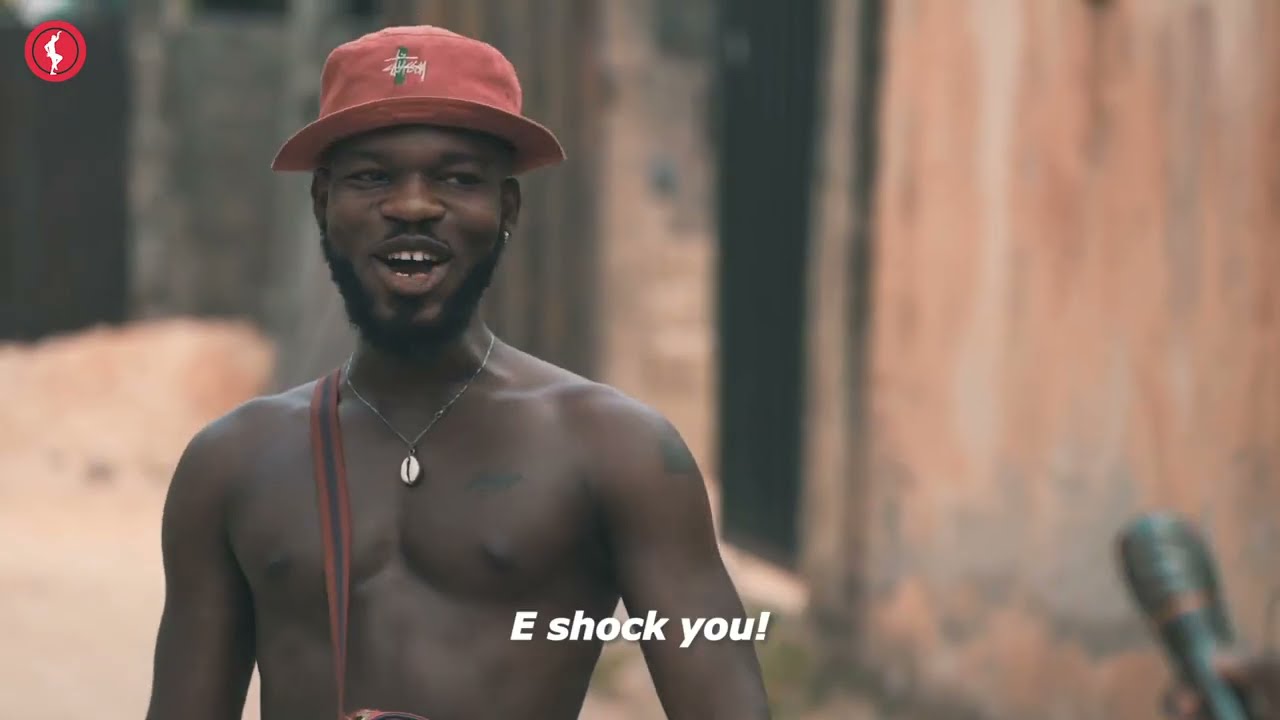
    According to the International Center for Investigative Report, the Lagos State chapter of the NURTW made roughly ₦121.392 billion in 2020 alone. Yeah, e shock you. 

    Broda Shaggi - New Year Resolution - NaijaRemix

    In statements from 50 danfo drivers in 21 out of the 37 Local Council Development Areas (LCDAs) in Lagos State, NURTW’s ticket collectors, not so fondly referred to as Agberos, collect at least ₦3,000 from about 75,000 of these drivers in Lagos state alone, every day. This means that the union makes up to ₦225 million per day, ₦6.75 billion per month and roughly ₦81 billion from danfos per year.

    You’d think they’d go easier on the kekes but nope. According to the Lagos State Maritime and Transport Agency (LAMATA), there are 50,000 kekes in Lagos State. The keke riders say that the union charges them at least 1,800 per day

    Some quick maths shows us that the union makes up to ₦90 million per day, ₦2.7 billion per month and roughly ₦32.4 billion from kekes per year.

    Then there’s Okadas. There are about 37,000 okada riders in Lagos. They each pay an average of ₦600 every day to the NURTW, enriching the union with about ₦22.2 million per day, ₦666 million per month and ₦7.992 billion per year.

    So you see how we finally arrive at 121.392 billion in a year of Lagos State levies alone. There are some other undocumented levies from taxis, tankers and trailers, but the main gist is these people are collecting serious money

    But Is The NURTW Even Relevant?

    A union is supposed to protect the interests of its members, but it seems that may not be the case with the NURTW. When asked by Al Jazeera if a union executive protected him from police harassment, Yusuf, a keke driver in Lagos replied, “Which union? The executive was only there to talk to the policemen to negotiate the bribe. His presence only helped to reduce it.”

    In another interview with Al Jazeera, Afeez, a danfo driver in Lagos recalled that he once fought with a ticketing rep from the union who stabbed his conductor in the eye with a key because the conductor had refused to pay the “afternoon due”. 

    Professor Gbadebo Odewumi, a professor of transport at the Lagos State University concludes that “the union leaders just reap from the chaos of the system and enrich themselves”.

    What Can Be Done About The NURTW?

    The union was established in 1978 and is supposed to fight for the welfare of Nigerian drivers and road transport workers who constantly suffer abuse from security personnel like the police, traffic management and vehicle inspection officers. 

    Ideally, they should work with the Nigerian Labour Congress (NLC) to fight economic issues that seriously affect drivers like sudden fuel price hikes or bad roads. The dues the union collects should also be used to support its members.

    Sadly, the NURTW has been riddled with corruption, bribery, nepotism and violence ever since. 

    State governments can suspend the activities of the NURTW if they violate the rights of citizens. But there are reports that politicians use NURTW ticket reps as thugs to fight opponents and manipulate elections, and this is the reason why the NURTW remains ‘untouchable’ in many states. Some states like Oyo have already banned the union because of the frequent violence and factional clashes by its members. 

    Clearly, there’s work to be done about some of the NURTW’s activities. Unions like these must do the work they were originally created for. But until the issues are fixed, we assume the ‘fees’ will continue being collected and bus fares will continue to rise. Sorry guys.


    Image source: Unsplash

    We hope you’ve learned a thing or two about how to unfuck yourself when the Nigerian government moves mad. Check back every weekday for more Zikoko Citizen explainers.

  • A Week In The Life” is a weekly Zikoko series that explores the working-class struggles of Nigerians. It captures the very spirit of what it means to hustle in Nigeria and puts you in the shoes of the subject for a week.


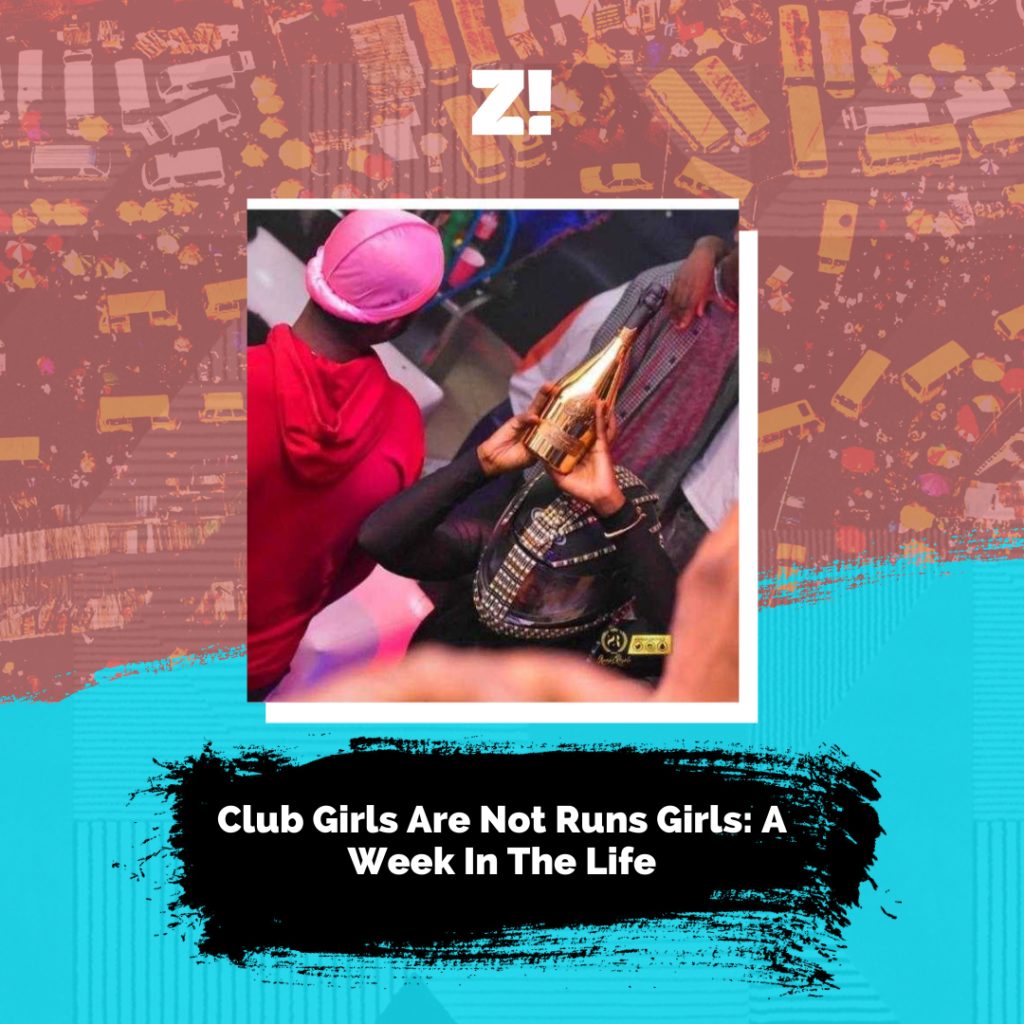
    The subject of today’s “A Week In The Life” is a club hostess and waitress. Club hostesses help clients with reservations and carry out bottles with sparklers when people buy expensive drinks. Our subject talks about the stereotype associated with her job, balancing school and work, and some of the most expensive drinks she has served.

    FRIDAY: 

    I feel lucky that I have a job because I can’t imagine how I’d cope without one. A little back story: I’m currently living in Akure because of school and outside of classes, I have nothing to do. A typical day for me usually involves class, hostel, class, hostel, rinse and repeat. 

    With a job in the mix, I’m happy there’s finally some variety: class, hostel, work, rinse and repeat. Keeping a job as a student requires constant moving around of my schedule. Some days, I go from work to class. On other days, it’s from class to work. 

    Today, I’m going from the lab to work. School ends at 4 p.m., and I have to prepare for work at 6 p.m. The club officially opens at 9:30 p.m. but resumption time is 6 p.m. 

    I work as a hostess in a club and I like to call it waitressing pro-max — if such a name exists. 

    My job is to go to work, be on my best behaviour, look beautiful, put on a smile and welcome customers. It’s also my job to show them to their table and make them comfortable. On nights where we have a full house, I also substitute as a waitress and help serve drinks.   

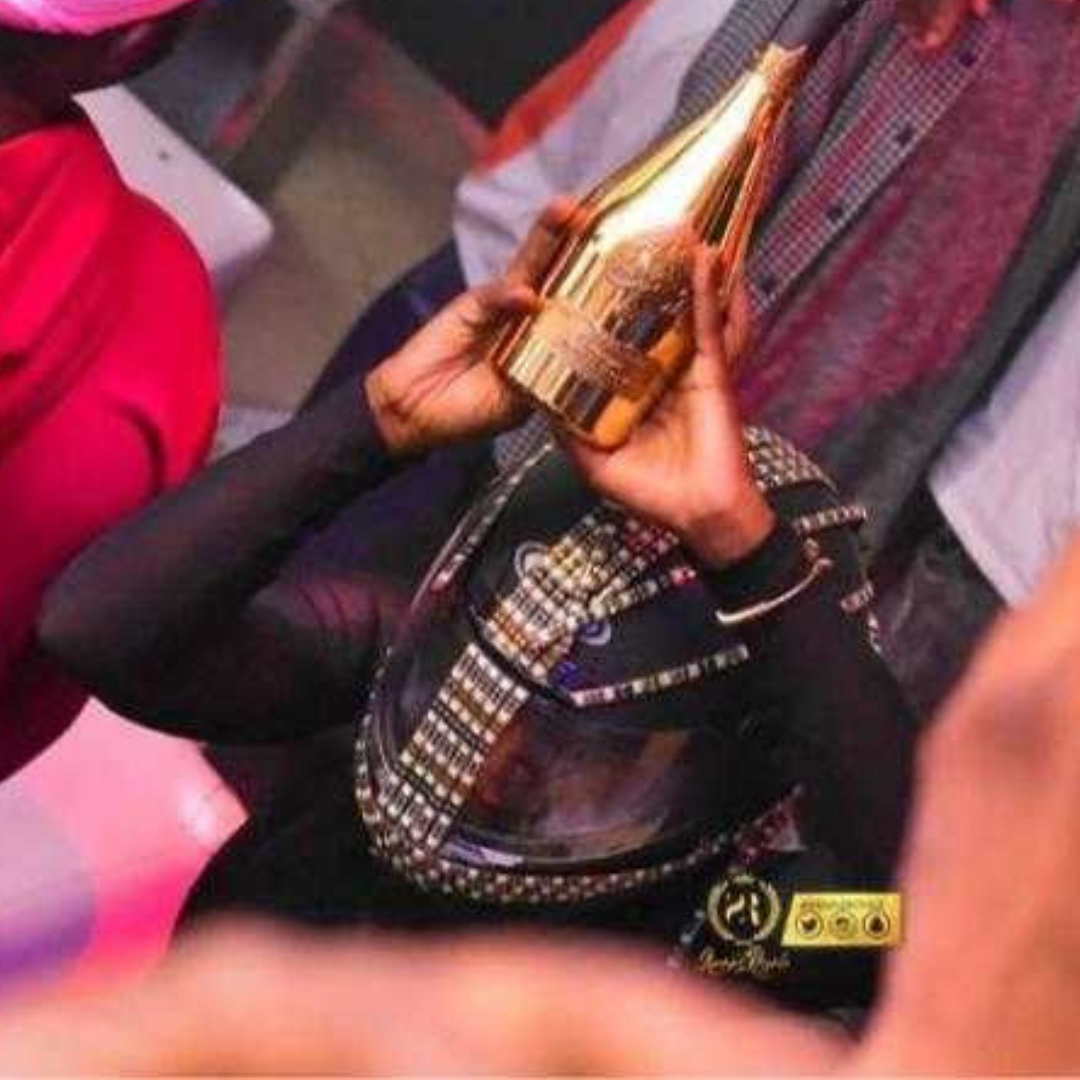
    The part of my job I love the most is seeing people buy expensive drinks, hey Jesus! Dorime things.  When I’m hyping the person popping drinks by dancing and carrying lights, I’m constantly reminding myself that if the drink falls, I’m finished. Some of these drinks cost more than my annual salary. I haven’t gotten used to seeing people casually spend millions of naira on alcohol in one night. 

    But, I try not to visibly show my shock because the show must go on. 

    School is currently in session, so my work schedule has changed from every day to only Friday to Sunday. From 6 p.m. to 6 a.m. Although, I still find myself working during the week because work is fun and my co-workers feel like family.  

    SATURDAY:

    Midnight of Friday/Saturday morning:

    I resumed work at 6 p.m. yesterday. I barely made it to work on time because I overslept when I got to the hostel. It took the grace of God for me to jump up when I did and I rushed to work. 

    The first thing I did at work was to eat the cereal I packed. Next, I started making reservations for guests coming later at night when we fully opened. At some point, I helped the barman take inventory and plan the drinks for the night. When I was tired, I went to a restaurant in the same building as the club to chill. 

    At 9 p.m., I went to change. I was torn between a red dress with a thigh slit and a plain black round neck shirt. I almost chose the red dress, but I remembered that the last time I wore it, a man pointed at my nipple, another slapped my butt and one couldn’t stop staring at my breasts — even though they aren’t that big. And so, the plain black round neck won. 

    3 a.m.

    I’ve been by the door welcoming guests all night. In that time, I and the other hostesses have danced up to five times for people popping drinks. I’ve also worn a mask to hide my face during those five times because I’m shy. 

    In this same night, I’ve also gotten offers from people who say they want to fuck me. One even offered to triple my monthly salary if I go home with him. Wonders shall never end. 

    4:00 a.m. 

    The alcohol has finally kicked in. The DJ’s playlist is fire. People have stopped coming in and now I’m catching my own fun.

    5:00 a.m. 

    I’m not doing again. I’m tired. These people should come and be going home. 

    6:00 a.m.

    God. These people are still here dancing and partying. Don’t they want us to go home? Are they not tired? I’m tired. 

    I miss my bed. 

    7:00 a.m. 

    Finally, the last customer just left. Thank you, Jesus! 

    Noon

    Nobody can separate me from this bed. Not food, not water, not even phone calls. I want to sleep till tomorrow if I can. 

    5 p.m.

    I can’t believe I have to get up for work. This adulthood is very somehow because someone can’t even relax. Just work every day until you die. 

    SUNDAY:

    Midnight of Saturday/Sunday morning

    Tonight has been uneventful. People are coming in much slower than usual and the energy on the dance floor is off. With the kind of evening I had when I got to work, I’m glad things are slow now. 

    For the longest time, I’ve suspected that people view so-called “club girls” differently. However, today’s incident proved me right. 

    The owner of the club I work in owns a hotel within the building our office is in, and I chill at the hotel’s bar and restaurant all the time. Yesterday, [male] friends from my school came to lodge in our hotel. That’s how I went to say hi to them because these are friends I had before starting this job. 

    As I was leaving their room to start work, I heard someone say, “she has gone to do the job they hired her for. The job of fucking customers.”

    My heart dropped, my palms and face were covered in sweat, and I was speechless. 

    It’s somehow when people just stereotype you. Club girl doesn’t mean she fucks around. Club girl doesn’t mean she’s for sale or wants your money. Club girl doesn’t mean she’s not a person; she’s a human being too.  

    Last last this work is not for everyone because if you don’t have sense they’ll run you streets. 

    3 a.m.

    The last customer just left, so we’re done for the day. However, according to our contract, we can’t leave until 6:00 a.m. Everyone is either sleeping or about to sleep. I can’t because my body is already used to sleeping during the day.

    To pass time, I try to match drinks to their prices. We have:

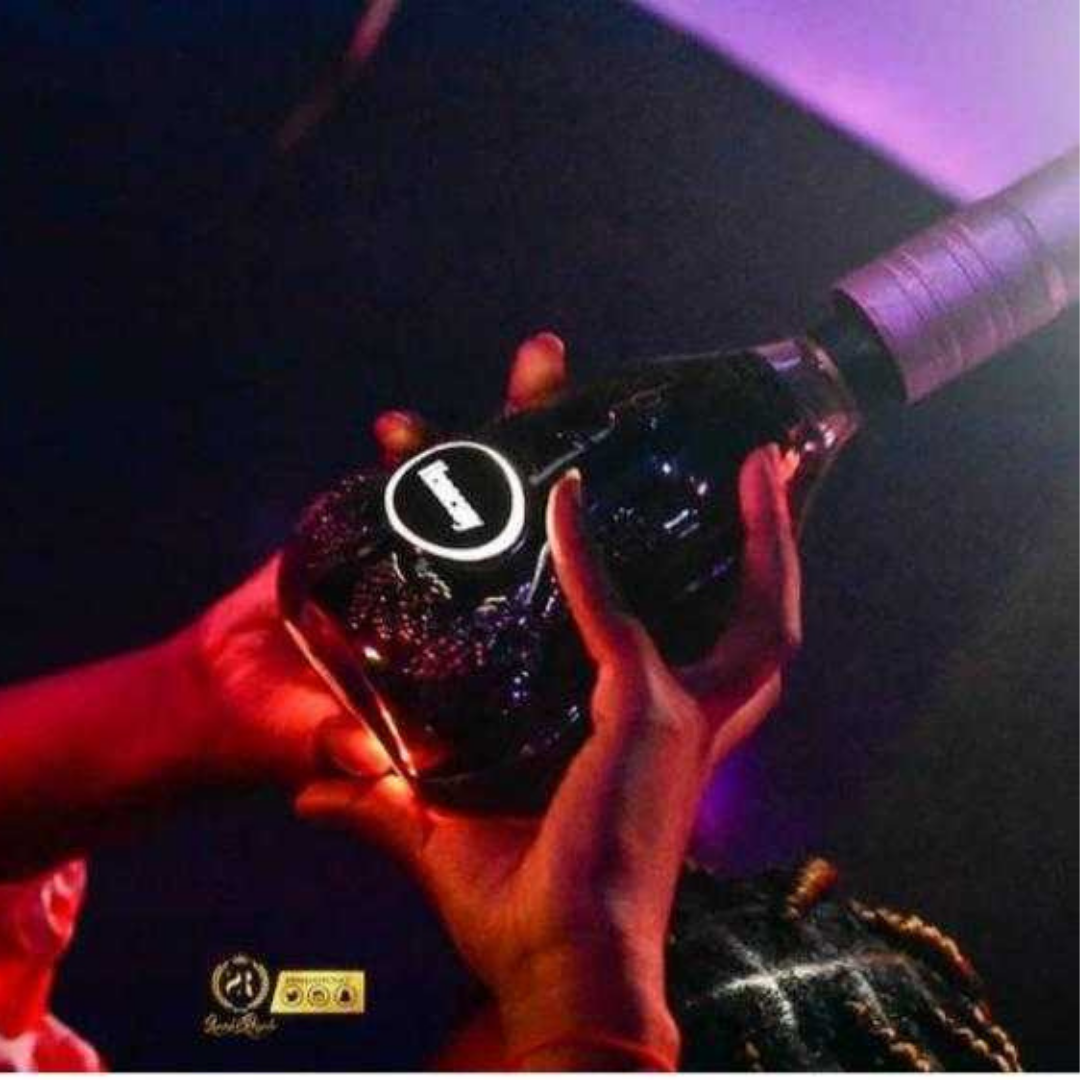
    Hennessy Paradis. We sell for ₦1M and people buy it like pure water. 

    Azul costs ₦400k and is decent. 

    — Ace of Spades is ₦450k. 

    Hennessy xo is ₦350k. Same price as Remy XO. Dom Perignon is around ₦300 – ₦350k too. 

    Don Julio is ₦400k. 

    — Then we have the Moet family which costs ₦65k. This is in the same category as Hennessy VSOP. 

    — We sell Glenfiddich between ₦65 – ₦85k too.  

    — Our Ciroc goes for ₦45,000

    There’s a drink for everybody. 

    6:00 a.m.

    Finally, my watch has ended. I’m going home to sleep all day. I’m grateful that my colleagues told me to go home while they stayed back to balance the account and clean up. 

    MONDAY:

    6:00 a.m.

    The only thing powering me this morning is energy drinks. Last night was so busy that you’ll never have imagined that the next day was Monday. Customers were everywhere, so I barely had time to rest. To make things worse, my first class starts at 8:00 a.m. today and attendance is compulsory. 

    I have to do everything in my power to not touch my bed. Anything that makes me lie down small, that’s the end. I’m gone. I just need to manage till 2 p.m. when school ends for today. I don’t know how I’ll survive the lectures, but the first step is getting to school in one piece. 

    It’ll soon be a year since I started doing this job. It’s funny how this job started as a way to keep busy and earn passive income after the lockdown was eased, and school was still closed. Now, it’s something I’ve come to enjoy. Beyond that, I’m really grateful I have a job I enjoy that occupies my time. 

    As a student, there’s no greater feeling than knowing I have my own money. I don’t depend on anyone for anything: I see something, I like it, and I save for it. Apart from the occasional harassment, this is a job I enjoy doing. 

    I can’t imagine what my life would be like if I had nothing to do.


    Check back every Tuesday by 9 am for more “A Week In The Life ” goodness, and if you would like to be featured or you know anyone who fits the profile, fill this form.

  • A Week in the Life is a weekly Zikoko series that explores the working-class struggles of Nigerians. It captures the very spirit of what it means to hustle in Nigeria and puts you in the shoes of the subject for a week.


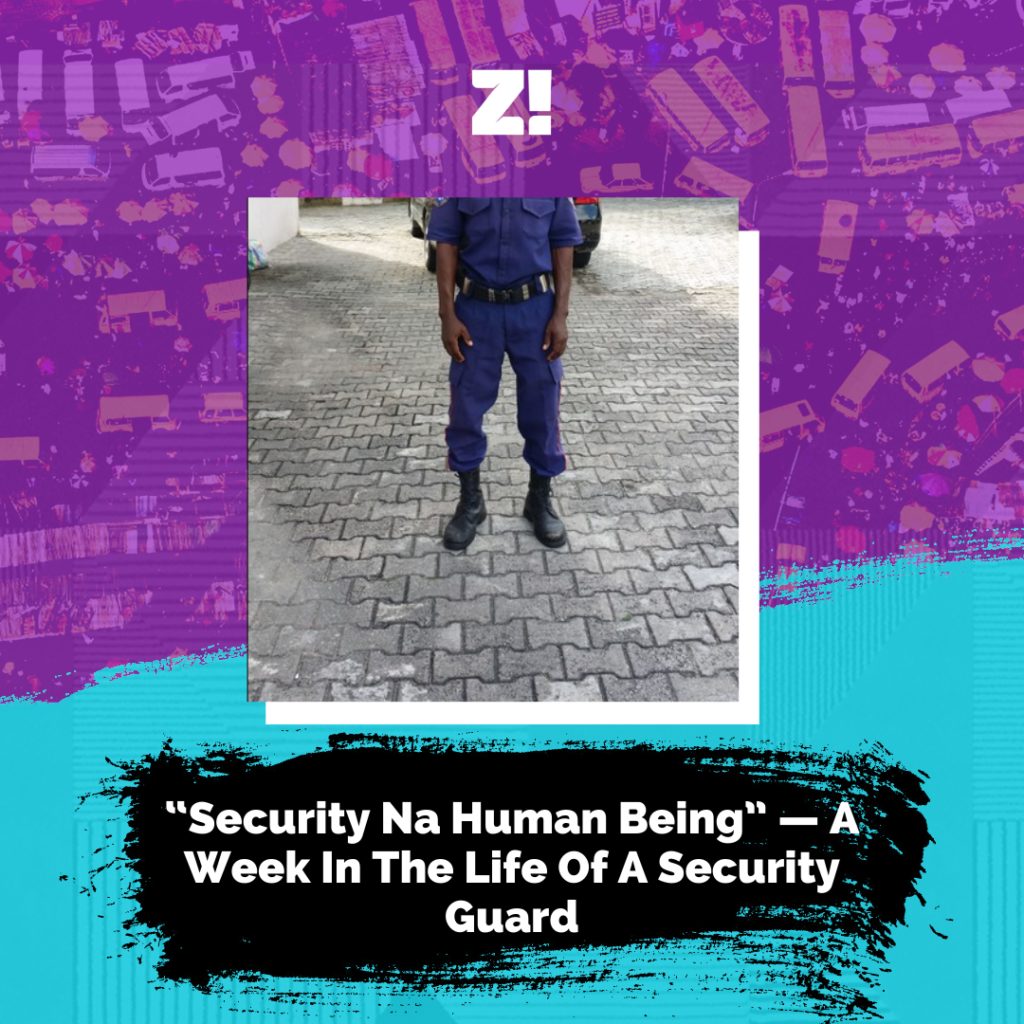
    The subject of today’s “A Week In The Life” is a security guard. He talks about being intimidated because of his job, forfeiting 50% of his salary to security companies and spending all his time at work. He also talks about his plans to escape it all.

    MONDAY:

    The first thing to do when I wake up na to thank my God because I no know wetin happen for night. And things dey occur. After thanking God for protection, all other things follow — bath, brush and toilet. By 6 a.m. sharp, I don pull boots to wear and my day begins. 

    I work one week on and one week off.  The week I’m on duty, like today, I run 24-hour shifts. This morning, the first thing I do is to walk around the compound to clear sleep from my eyes. In this job, I only get to sleep at night but last night was rough.

    Our small and tight security room with only one window was hot like an oven because NEPA took light. As a result, I had to carry my mosquito net and bed outside to sleep under fresh breeze. But it started to rain so I couldn’t sleep because there was no cover. Between the hot room and cold outside with nowhere to stay, I ended up not sleeping and pressed my phone from midnight till around 5 a.m. 

    This job is taxing [on the body] because even on a day like this, I still can’t afford to rest. I still have to be at constant alert: I have to open the gate for visitors, receive packages and ensure visitors are who they say they are. 

    I will try my best today but there’s only so much I can do with little sleep. One day, I’ll talk about the problem with this job where you can’t do anything else apart from it. I’ll also talk about the not so great pay.

    But today is not the day. Today is for surviving the day on minimum sleep. 

    TUESDAY:

    Today is better than yesterday.  At least, I slept without any disturbance last night. Even though it wasn’t deep sleep, because I was waking up to patrol every one hour, I still feel relaxed. 

    Today I’m looking back at how far I’ve come. I initially started life as a waiter in a big hotel in Lekki. Although the salary was small, I used to make at least two times my salary from tips and service charges before the end of the month. Unfortunately, due to some things that happened on the job, I got fired. 

    After that, I went to a sack production company. I started as a loom operator and then moved to become head loom manager. From there I moved to the quality control department. As I was enjoying my new career, the company folded and we were all sent home. 

    So that I’ll not just be at home sitting down idle, I decided to pursue security work while searching for jobs. It is going to be two years now since I made that decision. 

    I don’t mind the job because I find that security work is all about intelligence and using your head. It’s also not hard because we didn’t bring the job from heaven; we learned it here. Apart from the basics like checking surroundings, etc we didn’t cover a lot of new things during security training. Additionally, as a contract security personnel, I wasn’t taught about arms because I’m not allowed to carry them. 

    God forbid bad thing but if armed robbers attack now, as contract security, my job is to hide, take my phone and call the police. Because of this, I’m always reminding myself to use my senses on this job. 

    WEDNESDAY:

    It’s intimidating being a security man in Nigeria because most people assume you’re done for. They think because you’re wearing a uniform you can’t ever make it in life. The wiser ones among them understand that it’s Nigeria of today that’s pushing some of us to do the job. But the majority of people, you’ll greet them and they’ll reply with their nose. Nothing spoil. God is upstairs and he’ll answer our prayers one day. 

    I’m at work today thinking about how my current company has good people. This is the first place I’ve worked where people don’t look down on security people. Everyone here is a guy-man. But me, I still don’t pass my boundaries. I’ve learned to read body language and facial expressions to use in determining when to greet or when to keep quiet. 

    I’ve never been molested or insulted and I want to keep it that way. There’s no one to report to if anything happens with the client. Is it the security company that will save me? 

    The same company that told us that the customer is always right and the best we can do is record any incident in our logbook pending when a supervisor comes around. And God knows the company will always support the client because that’s where they’re seeing money. Is it the same company that collects ₦50,000 from clients and pays security people ₦25,000 that’ll protect us? 

    I can stand every aspect of this job but you see that poor pay? I hate it. By the 18th, 19th of every month, I’ve exhausted my money and I’m struggling to meet up. I think my situation is even worse because I’m a family man and many people are depending on the small money. 

    I’ll not lie to you, this work is somehow. I love the people I work with but I dislike the job. 

    THURSDAY:

    This job takes and takes and takes from you with nothing in return. The most recent thing it has taken from me is my church-going habit. Because of the nature of my shifts, I don’t attend church as much as before. I’m either working or resting because I’m tired from working. As a result of this, I spend extra time thanking God this morning. I read more Bible passages and sing more worship songs. 

    I know God is still with me. Even if I don’t frequent church regularly, I know that when I call on him he’ll be there for me, especially in my days of trouble. I trust that the God I serve is in control. 

    Once I’m done praying, my day begins. 

    FRIDAY:

    This is my last shift of the week and I’m happy today. I already have plans for my week off. Every day, for three hours, I’m learning how to drive at my friend’s place. My plan is that in the next two months I’ll master driving and become a commercial driver. Someone has promised that by the special grace of God he’ll buy me a car for Uber. At least, I know that one is better than a security job. 

    I won’t mind if I can even go from ₦30,000 a month to ₦80,000 — that’s still something. If that happens, I can even bring my wife and my boy to Lagos. Since I started this security job I haven’t been able to rent a house so I sent them to Benin to stay with my mum. Every month, from the little I earn, I try to send them upkeep but it’s never enough. 

    It’s been two years — since May 2019 — since I saw them last. I miss them so badly but I can’t bring them to suffer here with me in Lagos. This is July, the plan is that if everything goes well, I’ll bring them to Lagos by January 2022. I want us to be one big happy family again. 

    I know God is in control so I’m not too bothered. I’ve done many things before now and I’m not afraid to try new things. However, this job has taught me something: Security na human being. They no just fall from heaven and most of them, na condition make them do the work. More people should treat us like human beings. Sometimes, the insult we receive adds to our problem. It can be very painful when someone looks at you from up to toe and just concludes that you can never make it. It’s unfair. 


    Check back every Tuesday by 9 am for more “A Week In The Life ” goodness, and if you would like to be featured or you know anyone who fits the profile, fill this form.

  • Nigerian foods are top tier. From the East, West, North, and South, every tribe has a special meal you absolutely have to try! So, if you happen to visit Nigeria, expect to have your taste buds thrilled with the appetizing delicacies. Additionally, expect to taste a lot of spices, vegetables, meat, and other nutritious condiments that’ll have you smacking your lips.

    Here are 15 Nigerian foods that should definitely be on your foodie radar.

    1. Boli

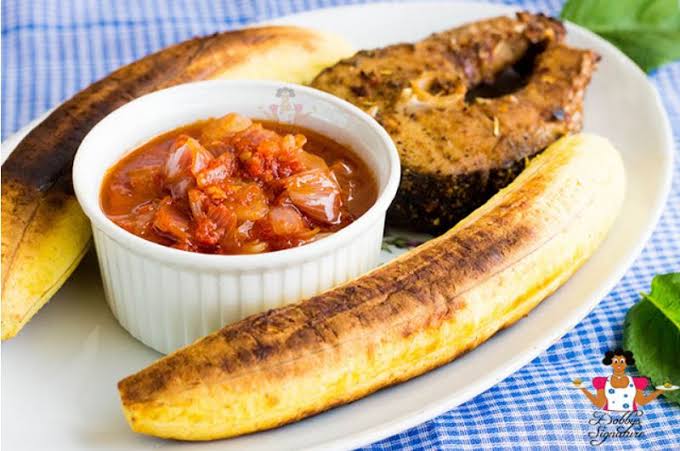
    This is prepared from plantain grilled over an open fire. The plantain can either be ripe or unripe, whichever works for you. It is perfect as an evening snack and is mostly sold by the roadside. You can pair it with fried fish, a sauce made from grounded pepper, or just peanuts.

    Boli Nigerian foods

    2. Ofada rice

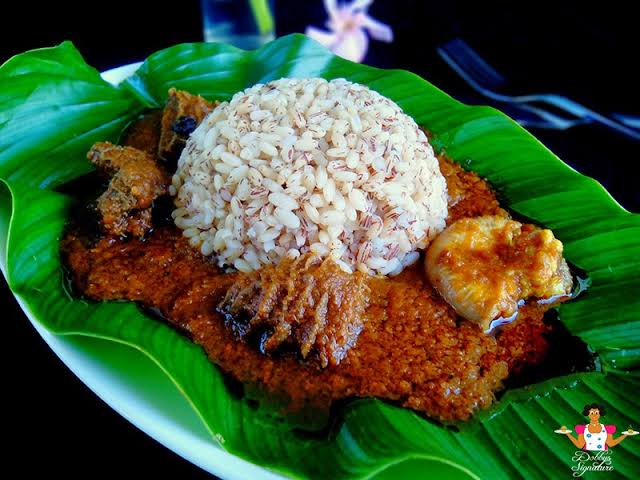
    Rice is a staple meal in Nigeria, and one of the varieties is Ofada. It is a must-have at events like wedding parties or birthdays and is usually prepared with a mix of different grains of rice. Ofada rice is best served with a special sauce called Ayamase or Obe Ata (pepper stew). Most people like to eat it straight from leaves called Uma, and this gives it an extra touch of uniqueness.

    Ofada rice Nigerian foods

    3. Tuwo Shinkafa

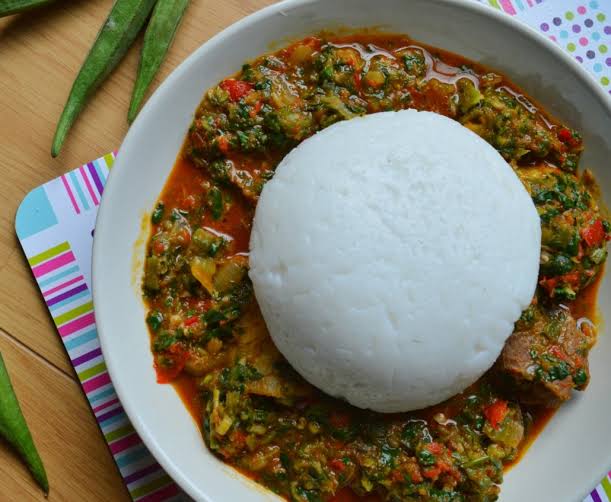
    If you ever find yourself in Northern Nigeria, then you totally have to give this dish a try. Tuwo is prepared from boiled, mashed rice, and is usually served with special soups like Miyan Kuka or Taushe (spiced vegetables). You can also try pairing it with garden egg or Okra soup.

    tuwo shinkafa Nigerian foods
    Tuwo Shinkafa and Vegetable soup

    4. Amala and Ewedu

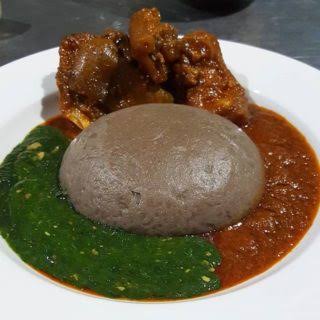
    This dish is as old as time itself is never missing in the home of the Yorubas in the Western part of Nigeria. It is prepared with Elubo (flour gotten from dried cassava, yam or unripe plantain). Worthy of note is that Ewedu (Jute leaves beaten with a special cooking broom) can be paired with other swallows like Fufu or Eba (but the best combination is with Amala.) Then there’s the delicious sauce prepared with blended tomatoes and pepper and garnished with different types of meat to keep your mouth busy.

    amala and ewedu Nigerian foods
    Amala and Ewedu

    5. Jollof rice

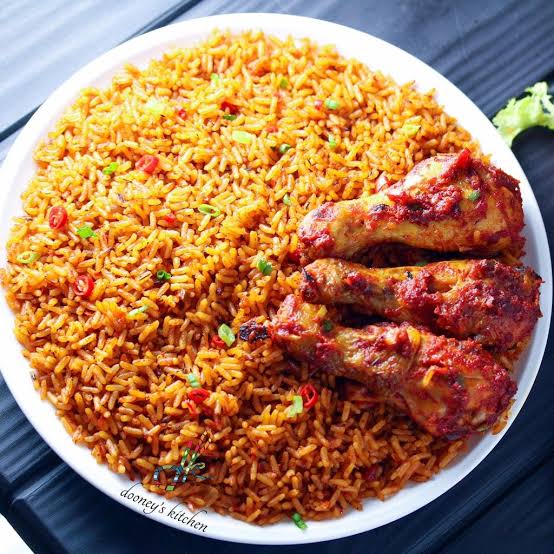
    You must have come across the debates on which African country has the best Jollof. Well, you’ll have to be the judge of that after having a taste of Nigerian Jollof. This food has a unique taste and no major Nigerian event is complete without it. Some ingredients used in the preparation include blended tomatoes, pepper a.k.a rodo, spices and topped with chunks of fried meat or chicken. With or without salad, you’re bound to ask for second and third helpings.

    6. Akara

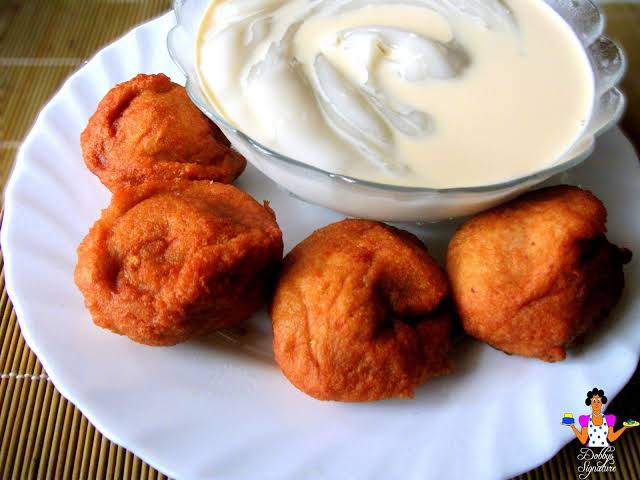
    In most Nigerian homes, Akara is the go-to breakfast option. It is rich, satisfying, and easy to munch. Akara is made from beans ground with onions, tomatoes, and pepper then deep-fried in hot vegetable oil. It is best enjoyed straight out of the frying pan and eaten with pap, bread, Garri, or alone.

    Akara and Pap

    7. Soups

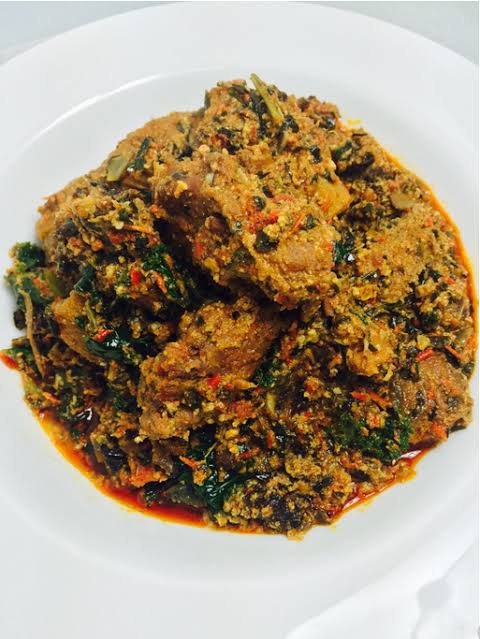
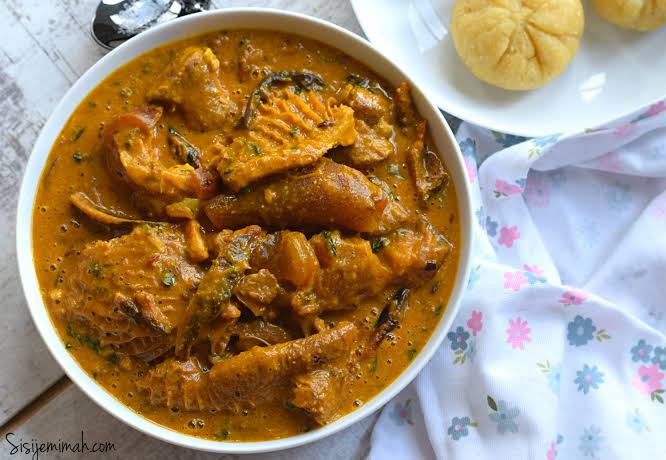
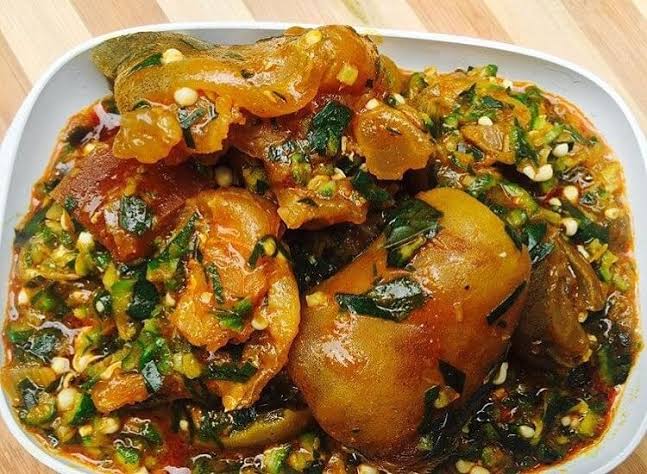
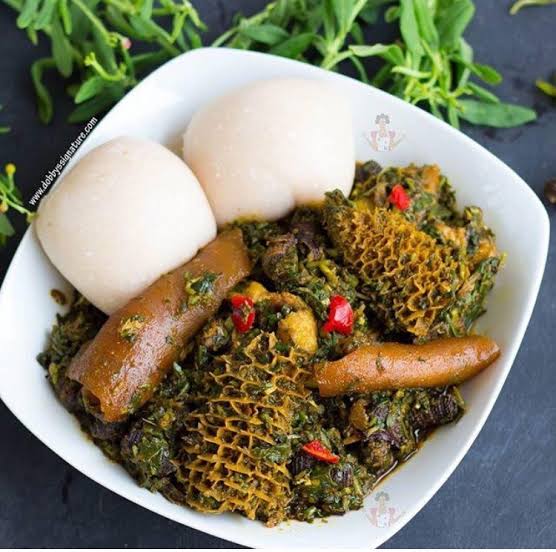
    If you crave variety, this category of food has it all. Some Nigerian soups you have to try include Okra, Ogbono, Bitterleaf, Egusi, Oha, Groundnut, and Afang (a special delicacy among the Efik tribe). They’re not only delicious but nutritious as well (because vegetables are the major ingredients in them).

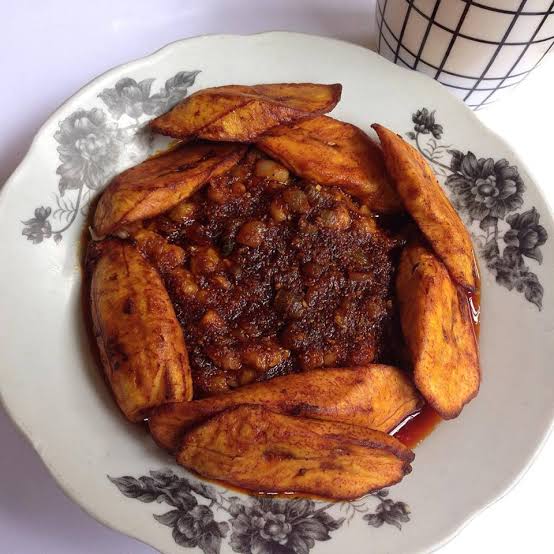
    8. Ewa Agoyin

    This is soft-boiled beans mashed to a pulp and eaten with a special type of palm oil sauce laced with fried fish or cow skin. It is a constant craving among the Yorubas and generally anyone who loves tasty beans. Oftentimes, Ewa Agoyin is paired with bread or fried plantains.

    ewa agoyin Nigerian foods

    9. Suya

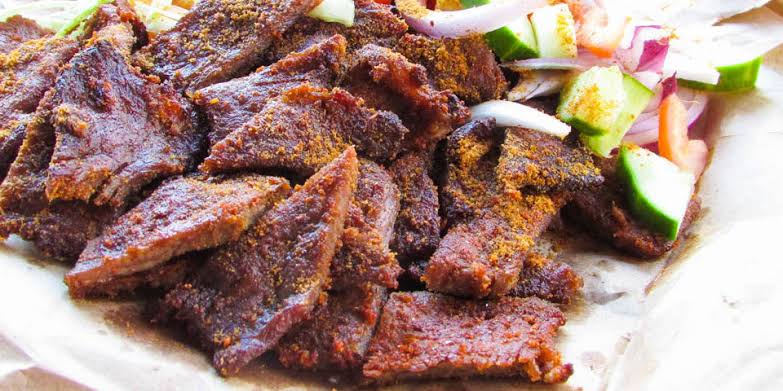
    If you are a big fan of finger foods, then you have to try this. In a nutshell, Suya is grilled beef garnished with onions, cabbage, tomatoes and Yaji spice. You’re more likely to come across it on evening strolls around busy streets in Nigeria. Be warned it can be quite spicy, so get some water handy.

    suya Nigerian foods
    Suya

    10. Swallows

    Swallows are usually very filling and eaten with the fingers. Just like soups, Nigerian foods that fall under the category of swallows are numerous. Here are some you should know: Fufu, Eba (Garri), Semo, Pounded Yam, Wheat, and Oje Abacha (popular among Kogi people in North-central Nigeria). Most of these swallows are prepared from either cassava or corn flour and eaten with any soup of choice.

    11. Banga and Starch

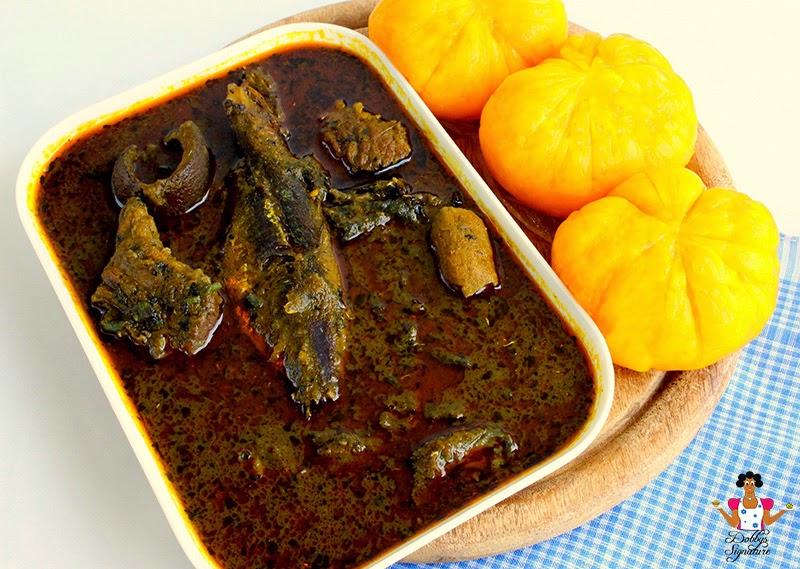
    Let it be known that the Urhobo people of Southern Nigeria do not joke with this food, particularly those from Delta state. The soup is made from palm fruits and garnished with fish, cow skin, meat, and other tasty proteins. The starch is natively known as Usi, and it requires great skill to prepare due to its starchy nature.

    banga and starch Nigerian foods
    Banga soup and Usi

    12. Peppersoup

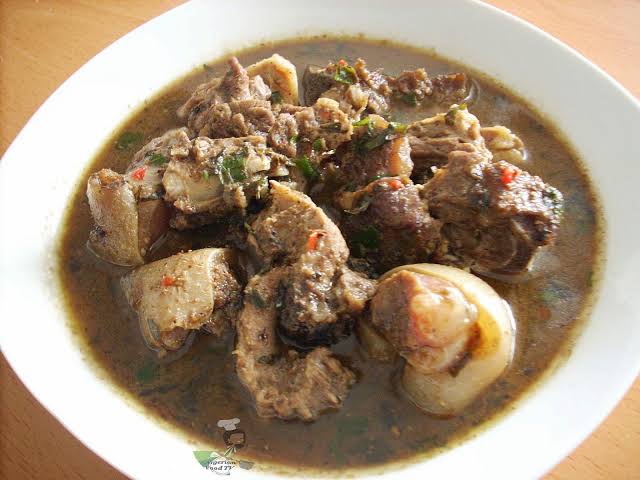
    There’s nothing like a bowl of spicy Nigerian pepper soup to get your system healthy. There are varieties to choose from like catfish, goat meat, chicken, beef, and even crab. To get a good taste of this, locate bars near you and don’t forget to keep some water nearby due to how spicy it can be. Some people swear pepper soups help with nasal congestion and healing sore gums. Well, give it a try!

    Nigerian peppersoup

    13. Moi-Moi

    Just like Akara, another food made from beans that you’d come across in Nigeria is Moi-Moi. It is prepared by applying heat to blended beans so it becomes just like a pudding. Most people like to add fish, eggs and corned beef to the mix for extra richness. It’s best served with pap, custard, Hausa koko, with rice or alone.

    14. Ukwa

    Ukwa or breadfruit pottage is a special Nigerian delicacy popular with the Igbos. The ukwa is usually gotten from a big tree from which it falls and the ukwa seeds get extracted. It is quite expensive and is mostly served at parties, weddings, burials or a typical Igbo household. Some people like it boiled, eaten plain, or toasted. Whichever one you choose, you’re still bound to enjoy every bite. Apparently, it is also very healthy, so go figure.

    Ukwa (breadfruit pottage)

    15. Abacha

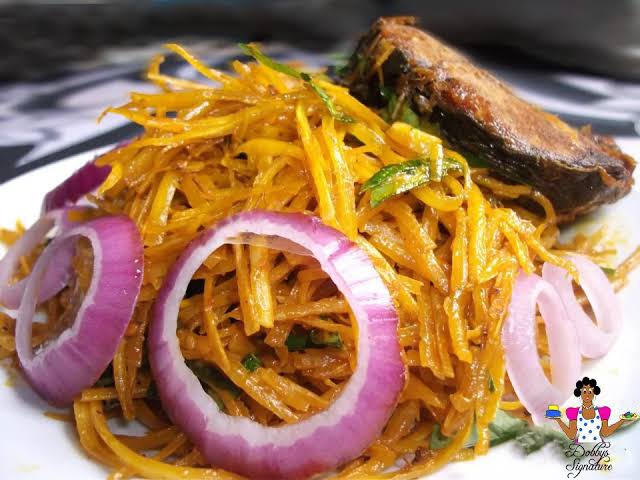
    This is also popular with the Igbos in Nigeria. In fact, you can call it a thing of tribal pride. It is made with oil bean seeds (Ugba), dried cassava, palm oil, fried fish, vegetables, cow skin (Ponmo), stock fish, and garnished with fresh onions. If you ever hear of the term “African salad”, this is the food being referred to, and it’s delicious!

    RECOMMENDED: 17 African Dishes You Should Try Out

    african foods you should try

    Nigerian foods

    Nigerian foods