A Week In The Life” is a weekly Zikoko series that explores the working-class struggles of Nigerians. It captures the very spirit of what it means to hustle in Nigeria and puts you in the shoes of the subject for a week.
The subject of today’s “A Week In The Life” is an egg donor. For a fee, egg donors donate their eggs to couples who are struggling to conceive a baby. Today, our subject takes us through three days in her life before she goes in for her egg donation duties the following week.
Here’s what her journey looks like:
FRIDAY:
Next week is going to be the third time I’m donating my eggs and I don’t know what to expect. I’m not scared or worried, it’s just that each donation episode is different. The first time I donated eggs, I could only take pepper soup for the first three days after I was done. The next time, I survived on Cameroon pepper mixed with warm water for two days. In both cases, it wasn’t until after the third day that I started eating solid food.
On Monday, I had better not encounter any surprises. But that’s a worry for next week because there are problems today that demand my attention.
I stood up from bed this morning with one question on my mind: “Where do I tell my parents I’m going to so I can leave *Delta to Lagos (where the egg retrieval clinic is)?” In the past, I told them I was going for job interviews but I’m sure they’ll soon start getting suspicious. It’s not like I can exactly tell them that I’m going to donate eggs because it can result in a fight. The last person I told that I donated eggs (for cash) used it against me in a fight. According to her, “at least she’s better than me because she’s not selling her eggs.”
So, since then, this egg donation business is strictly on a need to know basis.
Sometimes I sit down to ask myself why some Nigerians look down on donating eggs. I’m shocked because I thought we were all facing challenges and money problems. To me, I see this whole process as something wey person fit chop from and gain experience at the end of the day. I was introduced to this hustle because I needed quick cash and it’s perfect for me because I’m not the type of girl who’s comfortable collecting stuff from men.
Anytime I need money outside my 9-5, I just tell myself that the egg donation process takes only three weeks and I psych myself up for it. It’s not a perfect system but it works and so we move.
SATURDAY:
I woke up really early today to clean the house and complete all my chores. I don’t want a situation where my parents will hold anything against me and prevent my trip from happening. Not that I’ll hear, “you haven’t done x or y but you want to travel.” No ma/sir, I’ve done my work oh.
I don’t want any excuses pls.
I have to travel to Lagos because each hospital has its own rules. Some hospitals will tell you to first come for blood test screening before anything can commence. Other hospitals may first start you on hormonal pills for two to three weeks, depending on your body system, before they run the tests.
After this point, it’s time for injections. Some clinics don’t like stories because injections are expensive so they’ll give you transport money to come for daily injections for a few weeks. But, some clinics believe that you’re mature enough to choose a particular time that works for you to self inject at home. Last last, if you know say you need money, you go heed to their rules and regulations. Moreover, everyone signs an undertaking so you have to be serious about following the rules and regulations.
Apart from the occasional pain of injecting myself close to my pubic region, I don’t experience a lot of side effects. Sometimes the injections make me feel chubby or bloated but that’s the highest side effect I’ve ever experienced.
After you’ve taken pills, injections, and done scans for three weeks, you now have to face the main challenge: the egg retrieval process. Think of the aftermath as having really nasty menstrual cramp pains where you can’t function. You can’t walk and you can’t talk; all you can do is rest.
The pain makes sense because the procedure wan resemble when person dey abort pikin — the doctor will give you sleeping injection and then put a long needle inside of you to retrieve eggs. Even though plenty of girls dey fear, the procedure is relatively safe and doesn’t even affect your chances of giving birth in the future. But e no even concern me. After one incident happened to me, I don resolve my mind say whether I marry, born pikin, no born pikin, I’m okay with it.
For me, as long as I’m living life on my terms and not begging anyone for money, I’m fine with any outcome.
SUNDAY:
Today is shaping up to be a relatively good day. My parents have agreed to my “reason” for going to Lagos and I’ve finished packing. Now, I’m thinking of the next story I’ll give them when I need to go back to Lagos for donation.
Ideally, you should only donate eggs every six months so that your body can rest. But, as everywhere tight and girls need money, I dey run am every 3 months. I know some babes who donate six times a year, and that’s like every two months.
Clinics pay ₦100,000 – ₦120,000 for first-time donors. And by your second donation, this amount goes up by ₦20,000 – ₦30,000. The only caveat is that you must produce six eggs completely before you get full payment. If not, you’ll get only half of your payment. But that rarely happens. After all, you’d have been going for scans and weekly checkups to monitor your progress.
I can’t even lie, it’s that money that keeps me going in this job. The first time I got paid, I bought a new phone. The second time, I saved the money. This time, I’m using the money to move out of my parents’ house.
Being an egg donor is something I see myself doing for as long as possible. The procedure is relatively safe and I like the turnover time for making the money. As long as I keep going to reputable clinics and following the instructions of health professionals, I’ll be fine. And even if I’m not, I’ll still be fine. At the end of the day, I want to be catching flights and not feelings — and this job provides funds for some part of that lifestyle.
Editor’s note: Not all egg donors have it good. Here’s a report by Al-Jazeera on the other side of the egg donation divide.
Check back every Tuesday by 9 am for more “A Week In The Life ” goodness, and if you would like to be featured or you know anyone who fits the profile, fill this form.
I used to have a stammer as a child. It wasn’t anything debilitating, but whenever I got excited or upset, my words would just refuse to come out.
As I grew up, it got better and mostly disappeared as an adult. If you’ve ever heard me speak and thought my words were very deliberate, it’s not me being wise, it was a mechanism I learned as a teenager to speak without stuttering.
As much as I’d wish everyone here went home, my heart beats in solidarity. This is the strongest message since these #EndSARS protests began.
On the afternoon of Tuesday, 20th October 2020, I scrambled off a couple of voice notes to friends who work in government to prevail on the authorities to not take rash action against protesters. This was because it had become obvious a group of protesters were taking a last stand and not leaving the Lekki Toll Gate even after a curfew had been announced. I sent voice messages because none of them picked my calls.
Then I waited.
3 pm. 4 pm. 5 pm. 6 pm.
No one replied. Then I started sweating. As a Nigerian who had seen all sorts of violence meted out to innocent people at the hands of the state, I feared the worst.
6:30 pm.
Then it began. To write about that evening is to relive it all, to remember watching the live video, closing it, watching again and closing again, crying, making frantic calls, and sending more messages.
On Twitter, there were calls for ambulances. That’s when I recall grabbing my keys. I could put my vehicle seats down and create a flatbed to transport people to the hospital. That’s when my wife asked where I was going, and I tried to say where but the words just didn’t come. I was stumbling over them, worse than any time in my life.
Nigerians said #EndSARS and the government replied with bullets. We will never forget.
She said I wasn’t in any condition to go out, and that it was likely to be unsafe. I tried to argue but really could not speak because I was stuttering terribly.
I’m sorry. I’m so sorry. There was a part of me that hoped we had a country. I am so sorry.
In the days that followed, there was a desperation to do something, to sweep the streets after the maddening violence that engulfed the city after the shooting, to speak, to keep a brave face, to find a way forward, while switching through endless gears of emotion. Anger, despair, fear, numbness. That numbness took me to the Lagos Judicial Panel. There was no plan, I just needed to connect with something, hoping to find some sense in the confusion of that post-traumatic existence.
The first thing I noticed was that the panel was late. That was when I started documenting.
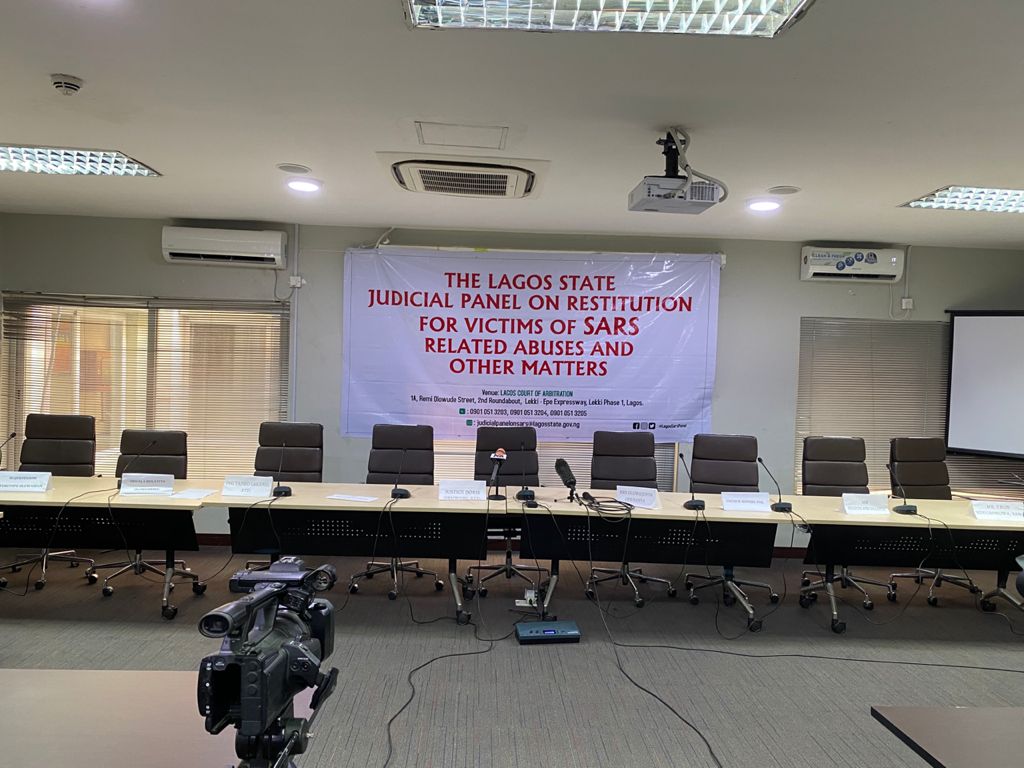
I’m at the Lagos Judicial Panel of Enquiry sitting. First observation, they’re late. #EndSARS
To understand what a judicial panel is, one must imagine a love child between a courtroom and the lobby of an end-of-life hospice. There is a lot of order and procedure on the courtroom side of the union, but when one enters a hospice, there is an undeniable knowledge of an end in waiting, but no one ever says this out loud.
The panel embodies this dual existence to perfection – there is a retired justice flanked by respected lawyers, a retired policeman, civil society people (whatever that phrase means), youth representatives and the odd video game console dressed in a bow tie.
The panel had the power to investigate petitions of wrongdoing by SARS, the Lekki Shooting and other sundry issues, but it couldn’t really deliver justice – only recommend actions to the state which the state can choose to ignore. As I said, it’s a room full of power without real power.
On the first day of sitting, the panel was the highest-ranking news after the Lekki shooting. Every news organisation was there – international, local and the poor bastards who get a backroom stipend to write whatever the government press office dictates. There were also plainclothes policemen who sat in the room keeping an eye on the people who hoped to bring their service kinfolk to justice.
And then there were petitioners – you could tell from their faces, sad, drawn, furtive, poor folk who would rather have been anywhere but that room.
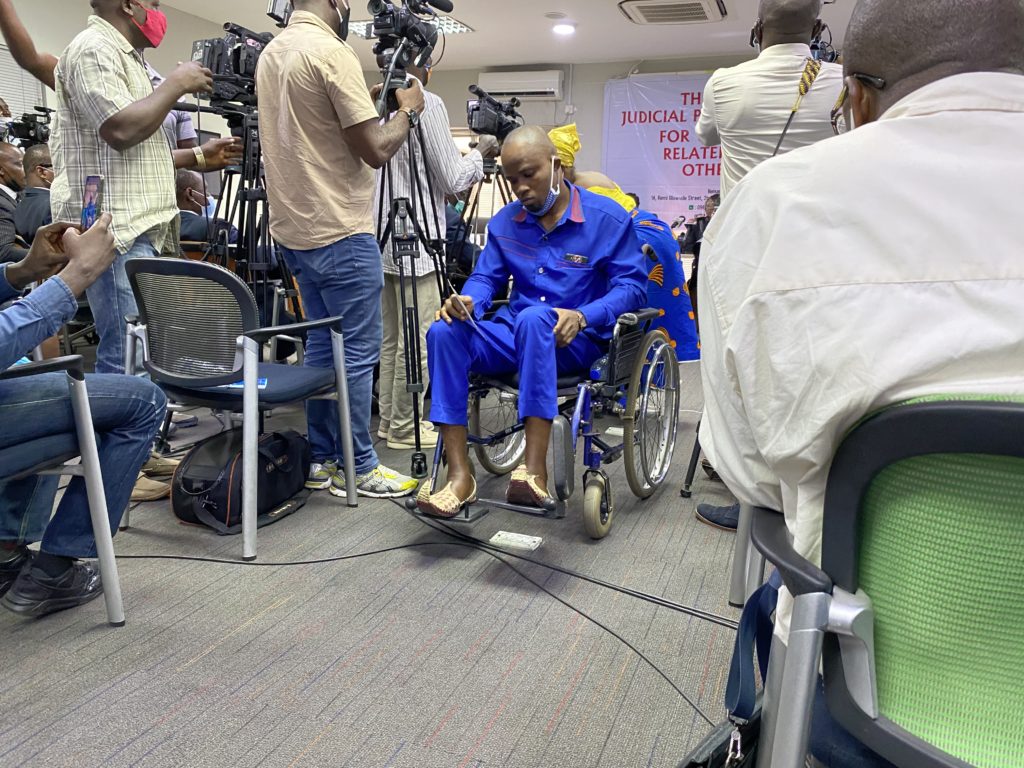
Next petition. Mr. Ndukwe came in with his mother. He’s wheelchair bound, apparently having been injured by SARS.
An important note – both petitioners are being represented by an attorney who doesn’t know them, or the in-depth details of their cases. pic.twitter.com/CH64FZw9XA
The petitioners were surrounded on all sides by witnesses, civil society people, and jobless folk who really had no business being in the room but were there anyway – people like me.
Having dutifully complained about the lateness of the panel, more than an hour and thirty minutes over time, we all settled down, ready to go.
Before the panel – a bit of perspective
Full disclosure, I (along with 15 others) was on a call with the Lagos State governor this evening. Everyone was respectful but firm – there is no off switch, the protests have no leaders and it’s best to show working, not just talk.
I think a bit of perspective is needed. At the height of the protests, I was invited to a meeting convened by the governor of Lagos State. There were civil society leaders, ‘youth leaders’, musicians, etc. My immediate feeling was that the government just wanted the protest to end, and for that, they were willing to do anything. One of the outcomes was the march to Alausa, where the governor took photos and received the “5for5” demands.
My feeling then was that it was a silly thing to do. And I said so. I said if they wanted the protests to end, the government had prosecutorial powers and the AG could prosecute cases of armed robbery by SARS officers, even if they couldn’t interfere with internal police work.
The governor also proposed the ₦200m fund for victims, which I also disagreed with. I told him that the issue with the government in Nigeria is that we always think money is the solution. Give justice and you won’t need to pay money.
I was not invited to the follow-up meetings. Damn!
Observation of the petitioners – justice for the poor
The first two cases called to the panel were of men who had been reportedly robbed and jailed by police officers. One of the men was allegedly tortured so badly, he was now wheelchair-bound and unable to support his aged mother and ailing father in the village.
Before their encounters, both men had a decent living. Having lost everything in the course of searching for justice, they couldn’t afford decent legal representation. In fact, the pro-bono lawyer who was at the panel to represent them was so unaware of their cases, an adjournment had to be called.
I immediately realised poverty would be the biggest impediment to justice. The police and government had an endless legal budget, represented by senior advocates in designer suits, while these poor folks had none. Donations had been made to support legal aid for petitioners, but how sustainable those donations were was yet to be seen.
LCC and the investigation – the need for forensic analysis
A few days after the shooting incident at the toll gate, I went out with a few friends to clean up parts of the Lekki township which were affected by the violent aftermath of the 20th of October. However, we were advised to leave the looted and burned Circle Mall in Lekki and surrounding areas as they were. They were crime scenes and insurance teams would need to review those scenes before any cleanup. It made sense. It was surprising, therefore, to note that while we were out cleaning the streets, the Lagos state-owned cleaning agency, LAWMA, was cleaning the Lekki Toll Gate and other locations where arson had occurred. While the privately-owned businesses were waiting to carry out an investigation, the government hurriedly cleaned up the biggest crime scene.
During a guided visit to the toll facility, many days later, the management of the Lekki Concession Company (LCC) was careful to show the panel the extent of the destruction, with little reference made to the actual killings which happened on that fateful night. In fact, there were no references made. We also found two bullet casings on the floor, which seemed to have survived the cleaning. But I could not help being suspicious – this was a crime scene that had obviously been cleaned a few times and this tampering means the panel would never be able to investigate properly.
Political Theatre
One of the reasons I persisted with the panel is that it was about the only place run by the government where the incidents of 20/10/20 were still being discussed with any seriousness. Outside the sitting, there had been a counter-narrative by the government and their amplifiers on social media, attempting to brand the #EndSARS movement as criminal, with words like terrorism freely used.
The bank accounts of young participants were blocked using a dubious court order, although the reality is that these accounts had already been preemptively blocked days before the said court order.
If your bank account is still blocked for #EndSars transactions, please reply with name of bank.
(Please don’t put your account number – just name of bank).
A lawyer who was providing free legal aid to arrested protesters also had her passport seized, but was later released without explanation after public pressure. Presidency spokespeople branded protesters as terrorists, while government-affiliated social media accounts and bots went on a disinformation overdrive.
These attacks were unsurprising. After all, this is Nigeria, where no occasion is too solemn for political theatre, not even a massacre in which the country’s young people were shot and killed while sitting with flags, singing the national anthem. Whether it is the former state governor playing detective on TV, or the red sash wearing protesters outside of the panel sitting, Nigeria does these things with a complete lack of irony.
A bit of aluta theatre outside, as a group wearing red sashes unveils a banner stating the governor @jidesanwoolu has no right to setup the panel in the first place.
Seeing this irony in action doesn’t feel any less shocking though. On the first day of the panel, a government-affiliated NGO came to submit a petition to tackle selected protesters for spreading fake news and appeal for the regulation of social media. However, the young leader of the said NGO collapsed under questioning and ran away after being pressed to admit that the government is the biggest purveyor of fake news on the internet.
Mr Bakare obviously didn’t come expecting hard questions. Pressed on the fact that the Lagos State and other arms of the FG have made several false statements on Social Media since The #LekkiMassacre, he admits the government gave fake news. pic.twitter.com/NkCDFkUjJx
As Nigerians, we have learned to live with the ridiculous politicisation of serious processes. The Lagos State House of Assembly, for example, quickly called for a regulation of social media, spearheaded by Desmond Elliot, a former film actor turned politician.
Of course Desmond Elliot spends more time condemning the response to the #LekkiMassacre than the massacre itself.
The call for regulating speech has been echoed by various federal government and security agencies, and now seems to be the government’s primary security preoccupation, taking more oxygen than the Book Haram insurgency and the menace of killer “bandits” and kidnappers.
(Of course, the government finally banned Twitter in Nigeria, but that’s a story for another day)
Can Nigeria give justice to victims of police brutality?
Unravelling the Lekki Toll Gate shooting was obviously the primary brief of the panel. But the interests of the various concerned parties couldn’t have been more diverse. The Lagos State Government, implicated by the military, battled to move attention from themselves to the arson that followed the shooting incident. The LCC, managers of the toll gate, wanted to be absolved of accusations of collusion in the shooting, even though their staff turned off lights and managed cameras as the military moved in on protesters. The military denied they were involved. The protesters seemed to stand alone in need of real justice.
I really worry about the investigation of the #LekkiMassacre. The State government is being accused of abetting it, the police have vested interest (#EndSARS), and the Judicial Panel is appointed by the governor.
Aware of these divergent interests, I walked into the panel watching out for small clues of how things would unfold. The first came very early. When the LCC MD walked into the room, he seemed to be getting deferential treatment from the staff of the panel. It was just the beginning. By his second appearance, he was led in testimony by the counsel of the Lagos State Government (LASG), which seemed like a conflict of interest – LCC is owned by LASG.
I also observed LASG and LCC collaborating, which hinted at a deliberate attempt to escape accountability. After the Lagos State lawyers led LCC through a well-guided testimony, the LCC requested leave to start renovating the toll gate. It became obvious that the state government and LCC were not interested in investigating the shooting, but in recovering the tollgate, so they can go back to normal. It felt unfair to the young people who stood up to say “End SARS”, unfair to the people who died.
Throughout the inspection, it was very glaring the LCC was only concerned about property damage.
Hardly a mention of the shooting that happened. They’ve also been hazy about the timing of the shoot relative to the power shutdown. pic.twitter.com/qsWm5MgPFS
The government eventually got this predetermined outcome, got the toll gate back, renovated it and is reportedly ready to put it back to work after the October 20 anniversary.
There was also the matter of the police rampage which happened on the 21st of October. Armed policemen went on a rampage shooting people on the streets. It was never mentioned.
The panel is not a court – so the question is about “What next?’
The government has not been very truthful in its handling of the panel. This begs the question; would an attorney general appointed by the government actually prosecute cases that are likely to show the government’s complicity in the matter?
In the days before the shooting, I had taken to cleaning the protest site every morning. I tried to make friends with the area boys and the private security guards who were looking after the protest area. I always engaged with the boys, bought drinks and always left a little something. This helped us pass the message about non-violence. This is how I noticed the new faces. Two days before the shooting, a new set of area boys showed up, less amiable and more inclined to want to burn things down. I also noticed, as I did the rounds from Lekki Toll Gate to the Toll Gate near VGC, that there were no police anywhere in sight. Not one uniformed officer or vehicle. There was no law enforcement anywhere, which was strange for a state experiencing large protests. I began to suspect something was amiss.
I went round Lekki this morning. Passed through all the hotspots where area boys have blocked roads. Spoke to area boys, helped de-escalate some heated moments.
The one thing I did not see? Police. Not a single officer. Not a sign of law enforcement. pic.twitter.com/0ZHa1FmocA
On the 20th, things took a turn for the worse. There were more ‘new’ area boys, this time, they were not listening to anyone. It appeared their objective was to make as much trouble as possible. I made it past the Lekki gate, but something inside of me was afraid. Something bad was going to happen.
As the state government announced a curfew, the ramifications of the day’s events began to stir in my mind. The people at the toll gate were refusing to leave and whispers were emerging that there will be an armed confrontation later that night.
So I started making calls to my egbons in government. I somehow allowed myself to believe that while the Federal Government was run by crazy people, the state would not want blood on their hands. So I made calls to people within the state government and some from neighbouring states who had influence. When nobody picked up, I started sending voice messages.
The messages were desperate. “Please have the governor go to the toll gate and speak to the protesters until they all go home”. It was the only way to protect those young people. Nobody replied.
In the end, Nigeria has seen many judicial panels come and go, and the most common experience we have had with those panels is how ineffective they have been in ultimately granting justice to the people. So, as I went to the next panel sitting, the real question I had was “Will this one be different?”
In the last few days, I have watched the videos from that day again – phone videos, a drone shot, bits of the live stream and the CCTV footage supplied by LCC. It is really hard watching them without almost experiencing the full emotions of that fateful night.
It is a reminder to press on and ask for better. That is what life is for. The horrors of that night washed up a long-dormant speech impediment for me, but what is a stutter where there is death?
The only way we can truly honour our dearly departed in the #LekkiMassacre is to not give up. Never give up. #EndSars
Ask around, Nigerians are best in coming first. So, before you drag something with us, make sure it’s not one of the things on this list. That is, if you like yourself.
1. Food
Bring any food combination, Nigerians are up to the task. They can perceive what you’re cooking from ten miles away and instinctively show up at your house to “greet you”. And the Jollof rice? Exquisite.
2. Staring
Nigerians don’t just stare, they stare till you lock eyes with them, and wait for you to do your worst.
3. Trekking
Many Nigerians know every nook and cranny of places you don’t expect them to. Call them Trekkers, the brand, a.k.a waka-waka.
4. Hypocrisy
Never underestimate the power of a Nigerian to point a finger at you while five point back at them. Las las, everybody is a hypocrite.
5. Amebo
They always hear something from a friend of a friend, but don’t say you heard it from them oh.
6. Parties
Is your party even turnt if Nigerians are not there to shake the place up? Capital NO.
7. Their country
As much as Nigerians talk about “japa-ing” the minute you try to drag their country in the mud, they’ll come for you full force. So, watch your mouth.
8. Resilience
The word itself has Nigeria spelt all over it. Nobody has time for giving up here.
9. Wickedness
Just pray you don’t date a wicked Nigerian woman or man. You’ll never remain the same.
10. Talent
What a Nigerian cannot do does not exist. Name it, we’ll wait. If you think it’s easy, do it.
11. Road
Nigerians and roads are five and six. If you still decide to drag road with one, atleast, arm yourself with these things.
12. Lagos men
If you want to find a man, go to other states, honey. Nigerian women are not ready to leave Lagos men for you without a fight.
13. This slippers
If not for Nigerians, the manufacturers would have run out of business. Put some respeck on the name.
Before you empty your account to go on a holiday to America so you can visit Disney Land and spend hours waiting in line to go on some ride that the disgruntled ghost of an Emerald City extra in “The Wizard of Oz” is rumoured to haunt, check out this these 7 Nigerian tourist spots. They’re pretty enough for Instagram pictures and you don’t even have to bankrupt yourself to visit them.
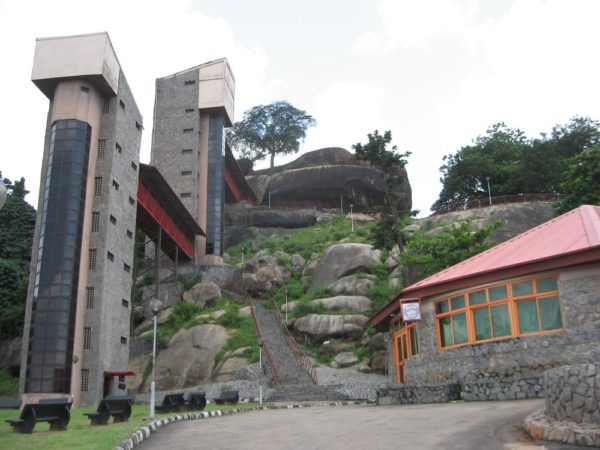
1. Olumo Rock
If you haven’t visited Olumo Rock, have you even started doing tourism in Nigeria? Located in Abeokuta, Ogun State’s capital, the 137-meter mountain is one of the most popular tourist destinations in Nigeria. According to legend, the rock and its caves served as a fortress for the Egba people during inter-tribal warfare in the 19th century.
The guardians of the mountain try to preserve its culture — you’ll see people dressed in white, worshipping the old gods in shrines and other people who still live there, as the tour guide takes you around and tells you stories. At the top of the mountain, the picturesque view of Abeokuta will leave you with enough cool pictures to tension the gram with.
2. Yankari Game Reserve
If you’re looking for a reason to visit northern Nigeria, visiting Yankari Game Reserve should be good enough. The reserve houses a huge collection of wildlife in their natural habitat — lions, elephants, antelopes, baboons, hippos, and different species of birds.
Visit this place and pretend to act out the plot of “The Jungle Book.” Mowgli no do pass you.
3. Obudu Mountain Resort
You probably know Obudu Mountain Resort as Obudu Cattle Ranch. It’s located in Cross River and it’s one of the most scenic and peaceful places you can visit in Nigeria. You can go hiking, see sights, take amazing pictures, and disconnect from the rest of the world here.
4. Awhum Waterfalls
If you’re scared of the extraordinary, Awhum Waterfalls is not for you. Located in Enugu, the 30-metre highwaterfall made out of granite rock is said to have spiritual forces of healing and dispelling satanic forces. So if you go there with bad vibes, you’re going to burst into flames and die.
Just kidding.
5. Osun-Osogbo Sacred Grove
The Osun-Osogbo Sacred Grove is a UNESCO recognised World Heritage Site. Every year, the Osun-Osgogbo festival is celebrated in the month of August at the grove. If you want to experience ancient Yoruba culture, visit the grove.
6. Lekki Conservation Centre.
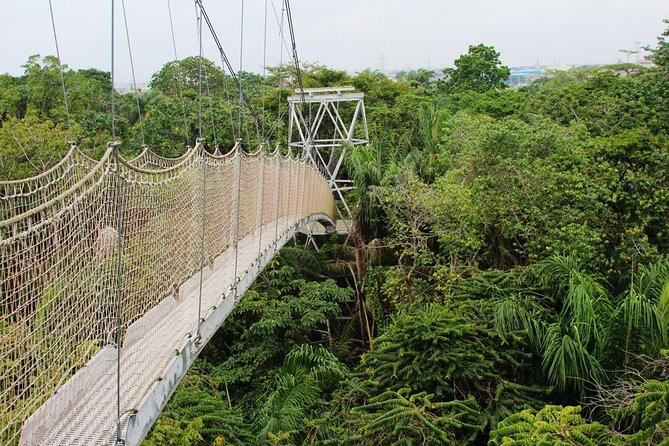
If you’ve never been to LCC, you’re dulling oh! Vegetation, an impressive range of animal species, games, and a brilliantly engineered 401-meter canopy walk – the longest in Africa – are waiting for you in Lekki’s heavily toured conservation centre. If you love nature and don’t mind running into everybody you’ve ever known, LCC is an amazing place for you to visit.
7. Badagry Heritage Museum.
There’s no better place to learn about the history of slavery in Nigeria than the Badagry heritage museum. The rich pieces of history and the stories you’ll hear and see here will amaze you. Every Nigerian should go to Badagry Heritage Museum.
If you’re interested in tourist attractions in Nigeria, you might be interested in this quiz.
Running a country, like most things in life, requires a budget. On Thursday, October 7, 2021, the country got a presentation from Buhari on what it would cost to keep Nigeria ‘working’ in 2022.
The presentation was tagged a “Budget of Economic Growth and Sustainability.” According to the president, this budget is meant to diversify Nigeria’s economy, develop infrastructure, improve security and do so many other great things you’ve probably heard before.
But something you’ve definitely not heard is the content of this particular budget. In 2022, Nigeria plans to spend ₦16.3 trillion naira, even though it plans to make only ₦10.1 trillion.
To achieve this already suspect plan, the government will have to borrow about ₦5 trillion. Nigeria currently has a public debt of over ₦33.1 trillion.
There are so many other things in the 2022 budget, but all we’re thinking of now is how much each of us will have to pay when our debtors come to collect.
Budget breakdown
A budget usually contains how much you make and how much you plan to spend. In Nigeria’s budget, our earnings are classified as “revenue” while our spendings is called”expenditure”. The difference between how much we make and how much we earn is the “budget deficit”.
The government wants to make ₦1.8 trillion from other taxes. Dividends from the Bank of Industry (BOI) should come from ₦195 billion and ₦300 billion should come from special funds.
The government also wants to earn ₦63 billion from foreign aid and ₦710 billion will come from other sources.
Expenditure –
In 2022, Nigeria wants to spend ₦16.3 trillion. ₦6.8 trillion will be to pay for expenses like salaries while ₦4.8 trillion will be to build roads and other infrastructure. Nigeria will use ₦3.9 trillion to pay back debts while ₦768.2 billion will be used to pay for some very important things like pensions.
Deficit –
Nigeria needs ₦6.2 trillion to complete its budget. The government will borrow ₦5 trillion. ₦1.1 trillion will come from loans tied to projects and ₦90 billion will come from the sale of some assets.
Remember, this is a budget, and it is only a plan. Nigeria may not make or spend up to the amount in this budget. But anything you see, just try to take it like that.
Petrol subsidy is an important issue in Nigeria. It affects the cost of fuel, transportation, food items and many other things.
Every month, the Nigerian National Petroleum Corporation (NNPC) pays up to ₦150 billion in petrol subsidy.
But what is a petrol subsidy?
Petrol subsidy is money a government pays for petrol so that it is affordable for the people.
The government, through the NNPC, currently pays about ₦30 for every litre of petrol Nigeria imports. This payment from the government allows Nigerians by fuel at about ₦165.
“You mean the government still pays?”
You bet. Petrol subsidy is a reason Nigeria has one of the cheapest petrol prices in the world, just behind Venezuela, Iran, Angola, Kuwait, Sudan, Kazakhstan, Qatar and Turkmenistan.
But petrol in Nigeria used to be a lot cheaper. As of June 8, 2000, a litre of petrol in Nigeria was ₦22. And in 2007, a litre of petrol was ₦65. Fast forward to 2021, and a litre of petrol costs ₦165.
“Wait, who did Nigerians offend?”
We’re not sure who we offended, but there is a reason why the petrol price keeps rising even though there’s a subsidy.
Rising Petrol Prices
The Obasanjo, Jonathan and Buhari governments have all reduced the petrol subsidy in their time. They claimed that the government pays a lot of money in petrol subsidy, but that Nigerians don’t enjoy the benefits of the subsidy because rich people use the most petrol, oil importers lie about how much petrol they import into Nigeria, and the money for fuel subsidy can be spent on other important things like healthcare and education.
But many Nigerians argue that the price of things will skyrocket once petrol prices increase.
Think about the nearest bakery to you that uses a generator or the average Danfo driver. All of those people will jack up their prices once petrol prices go up.
And Nigerians don’t hide their anger about the issue. Remember the Occupy Nigeria protests of 2012? Yeah, it was people expressing their anger about the removal of the petrol subsidy.
In that year, Goodluck Jonathan removed the petrol subsidy by increasing the petrol price from ₦65 to ₦141. He later reduced the fuel price to ₦97 and then ₦87.
In 2016, the Buhari government claimed to have fully removed the petrol subsidy, and this increased the petrol price from ₦86 to ₦145.
In September 2020, the Buhari government again claimed to have finally removed the fuel subsidy, and the fuel price increased from ₦145 per litre to ₦160 per litre.
However, in March 2021, as global oil prices went up, the same government started paying the petrol subsidy again.
NNPC and Petrol Subsidy
The Nigerian National Petroleum Corporation (NNPC) has become the only petrol importer into Nigeria because other petrol importers cannot afford the high cost of dollars needed to import petrol.
The government has directed the NNPC not to sell petrol above a regulated price of ₦162. This means that even if importers try to import petrol, they won’t be able to make a profit because of the existing price limit.
So, the high dollar to naira exchange rate is the major reason why the price of imported petrol keeps increasing in Nigeria, and the subsidy is to prevent the petrol price from getting to ₦234 per litre or ₦1,000 per litre like some other people claim.
Regardless of what the government says about subsidy removal — even if it has been said thrice — the reality is that the government still plays a part in petrol prices in Nigeria.
But at what point will they really stop and what does that mean for you when next you are craving bread or trying to jump a Danfo bus? Time, and your pocket, will tell.
Can you tell if these Nigerian native names are real or made up? Take the quiz:
This Nigeria is hard. When you don’t have a destiny helper, it can even be harder. But why should it be difficult when you have us here to give you advice? This post is split into three categories. Side A will take longer than 7 days. Side B, maybe not as long. You see Side C? E dey work pass anything.
SIDE A: Labour Over Favour.
1. Be overly polite to everybody.
In fact, allow yourself to collect insult but don’t insult them back oh. What if you mistakenly insult your destiny helper? So, swallow the insults with a polite smile. One day, somebody will walk to you and say, “You are so polite. That’s why I’ve decided to help your destiny.” Just like that, you’ve gone from grass to grace.
2. Work for free.
After like 6 months of backbreaking labour, the alarm of your destiny helper will ring and they will find you, a hardworking human being, ready to be elevated into greatness. Don’t falter.
SIDE B: Favour over Labour.
1. Gather all the names of the rich people you know.
Your boss oh, Dangote oh, that rich man in the area oh, gather all of them. Think of it as choosing a suitor from the many available prospects. When you have gathered the names, take it to the Lord in prayer.
Your prayer point? “Lord, don’t let these people know peace until they locate me and help my destiny.”
If they don’t declare you wanted in 3 days, my name is not Kunle.
SIDE C: The Violent Taketh It By Force.
1. Pick a target.
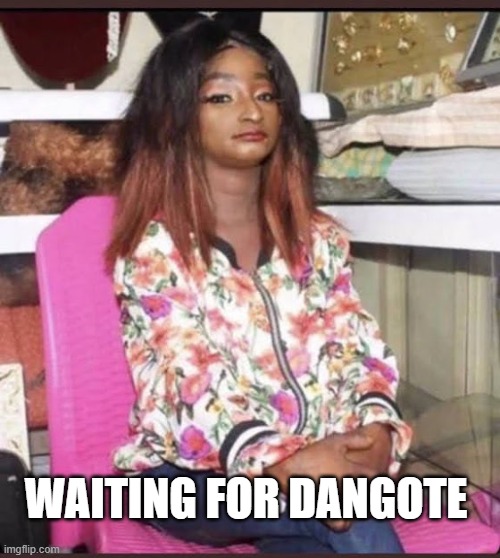
I suggest Dangote. If he has money for Snoopalicious, then he should have money to finance your destiny.
2. Announce it openly on social media.
Here’s a suggestion: DEAR DANGOTE, I [insert your name] HAVE PICKED YOU TO BE MY DESTINY HELPER. I GIVE YOU 7 DAYS TO LOCATE ME AND BEGIN YOUR DIVINE ASSIGNMENT ON MY DESTINY. YOU CAN REACH ME ON [insert phone number]. I EXPECT YOUR CALL.
3. Run sponsored ads.
Put it in a newspaper, on blogs and websites. Closed mouths don’t get fed and you need Dangote (or whoever you chose) to find you and begin work immediately.
4. While you wait, quit your job.
Your destiny helper must not find you working. Work-wise, be in a state of tabula rasa. That way they can use money and connection to rewrite your detiny.
5. If, after 7 days, you don’t hear back, threaten him.
Again, same message but now angry: DANGOTE, THIS IS YOUR LAST WARNING. CONTACT ME NOW OR THIS NIGERIA WILL NOT CONTAIN THE TWO OF US.
6. If you still do not hear back, pack your load and move into his house.
If Dangote will not go and meet the mountain, then the mountain will go to Dangote. That place is your promised land. Claim it!
7. They’ll probably bundle you out and lock you up.
But rejoice. Joseph was in prison when he met his destiny helper. Why will your own case be different?
[donation]
Is it the educational system or the economy? Take the quiz:
On Friday, September 17, 2021, a video of the Central Bank of Nigeria’s (CBN) governor, Godwin Emefiele – lovingly called Meffy by the interwebs – went viral. In it, Meffy was calling out abokiFX — a website popular for publishing currency exchange rates. While speaking to journalists, he said that abokiFX engages in “foreign exchange manipulation and speculation”, and that Olumide Oniwinde, the owner of abokiFX, is an illegal foreign exchange dealer.
Meffy also warned that “those who feel they want to support him (abokiFX) to fight me, come out, let’s fight”.
So basically this was Meffy that day:
Why Is The CBN After abokiFX?
abokiFX posts information about the exchange rate of the naira. The website provides official Bureau De Change (BDC) and black market rates of the naira, including other forex information.
But the Central Bank is not convinced that publishing information is all abokiFX or its owner does. According to Meffy, the owner of abokiFX, Olumide Oniwinde, directly benefits from the rates he quotes daily on his website.
At the press conference, Meffy questioned the operations of abokiFX:
Have Nigerians ever asked how abokiFX collects its data?
How many BDCs have seen staff of abokiFX come in to ask for daily rates?
How many BDCs send daily returns on exchange rate to abokiFX?
How does abokiFX determine what the FX rate is?
How does abokiFX collect its data?
How can an unlicensed single person be the one that sets exchange rates in a country?
Why is abokiFX setting the exchange rate in Nigeria?
Why is Olumide Oniwinde targeting Nigeria?
The CBN is concerned about how abokiFX comes about the exchange rate information it displays on its website. The CBN believes that abokiFX is setting the price of the naira out of its own imagination so that its owner can benefit from the fake rates by selling naira at unnecessarily high prices.
Section 2 of the CBN Act gives the CBN the power to ensure price stability of the naira. By looking at the activities of abokiFX, the CBN is exercising this power.
What Is The Real Forex Rate of the Naira?
The official exchange rate to the dollar is ₦410.60. The CBN says this rate is the genuine rate and that it has enough dollars to meet the needs of every Nigerian who needs dollars to import goods, pay international school fees or do other things.
The CBN claims that every Nigerian can buy dollars and other foreign currencies they need at the official rate and that banks will attend to Nigerians even if their dollar needs are more than the recommended amount.
But some Nigerians don’t believe this. They say that the exchange rate to the dollar at the BDC and parallel market is still at ₦570 and Bureau De Change operators and black market operators are still relevant in the forex market.
Why Do Nigerians Buy Forex From Black Market Operators?
The reason why many Nigerians patronise BDC operators and black market forex dealers aka “Aboki Wire” is because of the lack of access to foreign currency at the banks. Some Nigerians claim that bank officials keep forex while others claim that banks won’t sell dollars or other foreign currencies to them to pay for visas and other personal things.
According to a comment from a Nairametricsarticle:
Since 2015, the CBN has banned 41 items including rice, furniture and textiles from access to forex so as to “help conserve foreign reserves”. The CBN also banned the sale of forex to Bureau De Change operators to help stop illegal activities. But these moves may be part of the reasons why the unofficial rate of the naira to the dollar and other currencies keeps increasing.
At the moment, the price you have to pay to get dollars may just depend on who you believe more — Meffy or Aboki Wire.