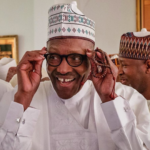
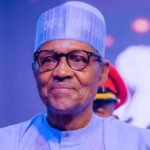
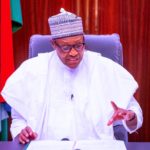
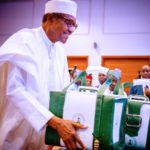
• Supreme Leader President Muhammadu Buhari finally signed the Electoral Act Amendment Bill into law on February 25, 2022.

    He rejected it five times since 2018 and needed some encouragement to finally sign, but Nigeria can finally prepare for the 2023 general elections.

    Nigerians can rejoice that a new Electoral Act has been signed

    What is this Electoral Act about?

    Elections in Nigeria are majorly guided by the laws in the Electoral Act.

    These laws determine if we’re casting votes with cowry shells or ballot paper.

    The Electoral Act is pivotal to the conduct of elections in Nigeria

    The last major changes were made in 2010 when Goodluck Jonathan was still president.

    Much of the content of the Electoral Act 2010 has since been considered outdated, but Buhari refused amendment proposals, until now.

    How’s this my business?

    Voters should care about the Electoral Act

    Nigerian elections are not the most trusted in the world, especially locally.

    Much of this lack of trust is informed by how elections are conducted and how easy they are to manipulate.

    Some of the things that make this culture of manipulation easy can be fixed by updating the laws.

    As a voter, the signing of this bill is good news because it’s filled with improvements that can build trust.

    What improvements?

    We can’t go over everything yet, but here are some nice ones:

    Electronic transmission of results

    This law gives the Independent National Electoral Commission (INEC) the freedom to determine whether election results are transmitted manually or electronically. 

    Manual transmission of election results has made vote-rigging easy to do in Nigeria for years. 

    The electronic transmission will fix that in a big way, and INEC is very interested.

    Overvoting

    Election rigging is a game of numbers. You want to make sure 2+2 = 7, and be able to turn 6 upside down to become 9. 

    The Electoral Act eliminates fraud

    Even when ballot boxes are snatched, it’s to ensure voters in that location don’t contribute to the final tally. 

    The numbers can sometimes be overcooked so that there are more votes than voters. This is called overvoting. 

    The old law only accounted for overvoting when it exceeded the number of registered voters, but the new one is more specific and targets the number of voters that actually show up on election day. 

    If only 12 out of 100 registered voters are accredited for an election, then the result cannot show that 13 people voted.

    ALSO READ: How Bubu Caused National Day of Protest

    Electronic accreditation

    Upgrading the Electoral Act to accommodate technology has been needed for a long time

    [Image via Channels TV]

    The new law has legalised the electronic accreditation of voters. INEC could electronically accredit voters in the past, but this was inadmissible in court because it was not backed by law.

    Upgrading the process that confirms the number of people that show up to vote is an effective way to prevent easy manipulation.

    Review of results

    INEC now has the power to review election results that are declared by its officers under duress. 

    Politicians have in the past intimidated electoral officers to declare results in their favour against the wishes of the officers

    It was impossible for INEC to overturn such fraudulent results on its own authority even with evidence of intimidation. No more of that illegality with this new law.

    Inclusive

    The new law places a burden of responsibility on INEC to ensure that polling units are equipped to cater to people living with disabilities. 

    This includes the provision of communication materials such as Braille, sign language interpretation, etc.

    Campaign duration

    According to the old laws, candidates were only allowed to campaign for 90 days before election day. The new law allows them 150 days. 

    This gives voters a lot more time to get to know candidates, ask hard questions and make better choices. We hope.

    What’s Buhari unhappy about?

    We mentioned before that Buhari has rejected five different opportunities since 2018 to review the laws.

    While giving his post-signing speech on February 25, he mentioned that he was still uncomfortable about one thing in the bill he signed.

    Section 84 (12) stops serving political appointees from voting or being voted for at the convention or congress of their parties.

    This means a minister in Buhari’s government cannot contest for an executive or legislative position without first having to resign from office.

    They could contest in the past and only needed to resign from office 30 days to the election after they had secured the party’s ticket.

    Buhari considers Section 84 (12) a constitutional violation of the rights of appointees and wants it amended immediately.

    But critics have already tackled him and asked lawmakers not to amend the section.

    What happens now?

    INEC is expected to release election guidelines and the timetable. The 2023 general elections are finally underway.

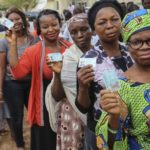
    And the very first step for you as a voter is to start with getting your PVC.

    May the best candidates win.

    ALSO READ: What Does Buhari’s Anti-Corruption Report Card Look Like? (Hint: It’s Terrible)

  • If democracy was a car, elections would be petrol.

    Sure, you need an engine, tyres, and a working aux, but the petrol is kind of important to get the whole show on the road.

    Nigeria is racing down to the 2023 general elections, but President Muhammadu Buhari is refusing to put petrol in the car.

    The National Day of Protest is asking Buhari to finally sign the electoral bill

    Nigerian elections are currently guided by the electoral laws signed in 2010.

    It’s clear to everyone that these laws need to be updated to catch up with the present.

    But the man in charge of making the final approval isn’t known for his speed.

    Sai Baba says No

    When the National Assembly passes a bill and sends it to the president, he has 30 days to approve or reject.

    President Buhari has been presented with five different electoral amendment bills since 2018.

    He has refused to approve a single one.

    The National Day of Protest is asking Buhari to finally sign the electoral bill

    He rejected the first one in March 2018. This amendment reordered the line-up of elections in a way that governors were elected before the president. Buhari didn’t like that so he vetoed it.

    He aired the next draft sent to him in July 2018. Ignoring a bill past the 30-day deadline is an automatic rejection.

    The National Day of Protest is asking Buhari to finally sign the electoral bill

    The president rejected another amendment proposal in September 2018 due to drafting errors and cross-referencing gaps.

    Another one was rejected in December 2018 because it was too close to the election and could cause operational issues.

    Buhari every five minutes:

    The National Day of Protest is asking Buhari to finally sign the electoral bill

    New National Assembly, new issues

    The current National Assembly has been trying to ensure Nigeria has updated electoral laws before the 2023 general elections.

    Some of the headline proposals in the bill include the electronic transmission of results and expansion of campaign spending limits.

    A version of the bill sent to Buhari in 2021 was officially rejected in December because it made direct primaries the only mode for electing party candidates.

    The president promised that he would sign the bill if that particular proposal was removed.

    The National Assembly has done exactly that and sent him a new version on January 31, 2022.

    This has been Buhari’s reaction since then:

    The National Day of Protest is asking Buhari to finally sign the electoral bill

    National Day of Protest

    The National Day of Protest demonstration staged on February 22, 2022 is an effort by a coalition of civil society organisations to force the president’s hand to sign the bill.

    Nigeria should already have an outlined timetable for the 2023 elections. 

    But the Independent National Electoral Commission (INEC) is waiting on the president’s decision because signing the bill would impact the timeline of events.

    Buhari’s failure to sign the Electoral Act Amendment Bill 2022 into law is not only a betrayal of his own words, but it is also slowing down Nigeria’s ability to prepare for 2023.

    President Buhari’s spokesperson, Femi Adesina, in a statement on February 21 accused the protesters of playing cheap politics.

    He said the president is doing due diligence to ensure the bill is “as near-perfect as possible” before his March 1 deadline.

    The 2023 presidential election has already been scheduled to happen on February 18, but that is now in danger of being moved.

    Nigerians are taking to the streets of Abuja today to ask Baba Go Slow to move a bit faster and fuel the car.

  • When Muhammadu Buhari was sworn in as the Head-Nigga-in-Charge president in 2015, he was a man on a mission.

    His to-do list contained three things he promised to deliver within four years – improve the economy, eliminate insecurity and crush corruption.

    Buhari's anti-corruption fight has been a major battle for his administration

    Seven years later, much of what we have are audio victories we never get to see.

    It was only months into his administration that he said resident terrorist group Boko Haram was technically defeated. Never mind that that same group has killed thousands of Nigerians since then.

    Daredevil bandit groups have also become a huge problem in the north and had to be declared terrorists recently.

    The country has suffered two historic economic recessions under Buhari, and his government’s talking point has been that we exited those recessions rather quickly. So, best to be thankful.

    Buhari's anti-corruption campaign has not been as impressive as promised

    In the area of Buhari’s anti-corruption fight, it has been hard to separate the big lies of the government from what is actually true.

    Corruption conviction rates have been rising, including the imprisonment of two thieving former state governors who are members of the president’s own party.

    Buhari's anti-corruption campaign got two former governors jailed

    But despite what those conviction figures say, there are many stories of ongoing corruption that suggest the government has not done enough to fight it, and may even be enabling it.

    Loot recovered from the thieves of yesterday have been reported stolen once again by a new generation of thieves.

    Buhari's anti-corruption campaign has suffered many setbacks

    If only there was an international organisation that could establish a rating system for the government’s anti-corruption efforts.

    The result of Buhari's anti-corruption campaign is mostly determined by Transparency International's CPI

    Hello, Transparency International

    Transparency International is a non-profit organisation combating global corruption since 1993.

    One of its most prominent projects is the annual Corruption Perceptions Index (CPI) which provides a window into public sector corruption around the world.

    The organisation created its first CPI in 1995, ranking 41 countries on how much corruption was perceived to exist in their public sectors and how that impacts political, economic and social development.

    Over 20 years later, the CPI now regularly ranks 180 countries around the world with scores ranging from zero to 100.

    A high CPI score indicates a clean system with very little corruption taking place, while a low CPI score means, well, you’re in the trenches of corruption. 

    Buhari's anti-corruption efforts have not lifted Nigeria enough

    How has Buhari’s anti-corruption campaign fared?

    The year before Buhari became president, Nigeria was ranked 136th out of 180 countries on perceived corruption, scoring 27 out of a possible 100 marks.

    How exactly has Nigeria performed under the African Union’s proclaimed Anti-Corruption Champion (which is a real title)?

    What Buhari's anti-corruption report card looks like

    You know you have to hide all the belts in the building before you show your parents this kind of result.

    Why Nigeria’s CPI rating is poor under Buhari 

    Buhari has never directly reacted to a CPI report, but his government has turned rubbishing it into an annual ritual.

    In campaigns regularly led by the administration’s vuvuzela, Lai Mohammed, the company line has been that the CPI is not scientific enough to capture Buhari’s giant strides against corruption.

    Buhari's anti-corruption efforts have not had enough giant strides

    This is a valid criticism of the CPI that’s repeated by governments whose countries finish on the wrong end of the rankings.

    Transparency International has admitted that the CPI does not pretend to measure the reality of corruption but the valid perceptions of it. 

    That’s what the ‘Perceptions’ in Corruption Perceptions Index (CPI) stands for.

    The low ratings for Buhari’s anti-corruption efforts have long been attributed to the failure of anti-graft authorities to diligently prosecute high-profile corruption cases.

    High-ranking officials like Ibrahim Magu and Abba Kyari have not had serious charges filed against them despite damaging corruption allegations. Many other cases against high-profile officials have also moved slowly in the courts for years.

    President Buhari has cried numerous times about the slow pace of the justice system. He has often recalled the supposedly more efficient system of ‘guilty until proven innocent’ he adopted as a military dictator in the 1980s. 

    Like that worked out well for anybody.

    Perception or reality, what’s clear is that Buhari inherited a corrupt nation in 2015, has done barely anything to move the needle, and will deliver a corrupt nation to the unlucky person he hands over to in 2023.

    Unless he finds a way to score above 50 by the end of this year.

    Buhari's anti-corruption campaign is heading towards a disastrous end when he leaves office in 2023
  • Uncle Yemi Osinbajo has done it again. This time, he has shown out for guys about the dreadful SARS situation.

    Why does it seem like whenever Baba Bubs goes on one of his frequent medical trips, things just seem to work a little better? Somebody help me say political gimmicks good governance.

    On Tuesday August 14, the Acting President aka Uncle Yemi gave directives to the Inspector General of Police, Ibrahim Idris to overhaul the Special Anti-Robbery Squad (SARS).

    We were shook!

    Especially because all our complaints had always been brushed off as false or exaggerated.

    Just a few weeks ago, Assistant Commissioner of Police, Yomi Shogunle still trolled Nigerians with this irresponsible tweet. He should better switch careers if he wants to be making silly jokes online.

    Oh, you remember SARS, the police unit that was so infamous for their abuse of power and Nigerian citizens, we had to write you a survival guide?

    https://www.instagram.com/p/BcUyVmPn2NS/?taken-by=endsarsmovement_now_

    This is just one of the many, many videos people have used to back their complaints. Let’s not even go into pictures and narratives. But we’re all lying, hey. The #EndSARS movement has been going for at least two years! Nonstop police brutality for two years.

    While we’re overjoyed that our pleas and relentless #EndSARS campaign finally made some headway, we still have some doubts.

    Way too many people have been unlawfully killed, jailed and extorted for us to just accept it, and things are often not what they seem in Nigeria. Gotta stay woke.

    First of all, it is important to note that this overhaul doesn’t mean the police department is going to be scrapped.

    This overhaul is more like a reform. In summary, the state SARS will be broken down and the officers reassigned to the already existing Federal SARS (there will only be FSARS). I know what you’re thinking, but chill. We are told that this is only going to be after investigations into the existing abuse allegations have been done, as well as mental evaluations and retraining.

    Again, I know what you’re thinking, because even the Federal SARS people abuse the citizens.

    The new FSARS is to be strictly intelligence-driven and their duties are to be restricted to the prevention and detection of armed robbery, kidnapping, and apprehension of offenders related to the stated offences. Nothing else.

    At least that’s what they’re telling us. Me I’m only a reporter.

    How are the illegal arrests going to stop, you ask?

    Well, the new FSARS officers are now mandated to go about bearing proper identities. They will have a ‘new’ uniform so there will be no more random black-polo-clad-hoodlum-looking-ass-niggas jumping out of unmarked space buses. At least this will curb the possibility of the officers being impersonated by armed robbers and such. Also, THEY ARE NO LONGER AUTHORISED TO STOP AND SEARCH! Let’s forget the fact that I still saw the same SARS doing that just yesterday.

    What can we do if we still get harassed?

    Call the police lol. Honestly, I don’t have an answer for this. This is a commendable move on Uncle Yemi’s part, but we worry about the enforcement and implementation. Hopefully, this is not just another one of those reforms that don’t change anything at the end of the day.

    And if you’re like me that is happy about this development but still believes this is just pre-election gra-gra and doesn’t trust anything this government does, I hope you’ve gotten your PVC o!

    If you haven’t, there are two more weeks for you to register. Hurry! If you need any help, we gatchu!

  • We all know the Governor of Ekiti State Ayo Fayose, and we know how much he loves wahala!

    He’s really not the type of person that avoids controversies, in fact, he lives for it.

    You’ve not forgotten all the trouble he gave Madam Aisha Buhari, have you? Madam Aisha was so angry!

    Now, he has come again. This time, his petty game is 10/10! Just look at how he dragged President Buhari’s administration:

    Uncle Fayose is not even here to play.

    We can’t blame Uncle Ayo Fayose this time around, this is the Federal Government’s fault.

    Daddy Bubu, what are you doing?

    Sorry for yourself!

  • This DISASTER happened in Japan on November 8, 2016.

    The road was fixed in 2 days and was opened for use on November 15.

    We only have one question. HOW???

    Please are we all on this same planet?

    How long has the Nigerian Government been fixing the Lagos – Ibadan expressway again?

    Are we not doing ourselves in this country?

    President Buhari, is this how we will continue?

    All Nigerian politicians who have a chance to fix things but ignore them, remember this:

  • A lot of Nigerians have been displeased with our honourable president, Muhammadu Buhari and they are not hiding their mouth. A creative Nigerian has created a mixtape, just like the Ministers List we made months ago.

    Twitter user @Dousche_Bag created this epic mixtape about Buhari’s performance so far, using the titles of popular songs by popular American musicians as his inspiration!

    These are our favs:

    1. Hello (From A Private Flight)

    Inspiration is from  Adele’s “Hello”.

    2. Sai My Name, Sai My Name

    Inspired by Destiny’s Child’s “Say My Name”.

    3. Campaign Papi (feat Osi’Banj)

    Inspired by Drake’s other name “Champagne Papi”.

    4. How Low Can You Go (Oil price Diss)

    Inspired by Ludacris’ song of the same name.

    5. How Much A Dollar Cost?

    Inspired by Kendrick Lemar’s song also of the same name.

    6. I Can’t Stay One Place (When I’m With You)

    Inspired by The Weeknd’s “Can’t Feel My Face”.

    7. The Blame Game

    Inspired by Kanye West’s “Blame Game”.

  • Nigeria made history a few months ago when Muhammadu Buhari became the first politician to ever unseat a president at the ballot box, and almost as impressive as that feat, was the peaceful relinquishing of power by the sitting president, Goodluck Ebele Jonathan.

    The super talented @TYBello was present at the memorable transition, and as we edge closer to Buhari’s 100th day in office, we decided to gather our favorite pictures from the event for our not-so throwback Thursday:

    1. This awesome shot of our President, Muhammadu Buhari.

    https://instagram.com/p/3V54qQEbPL/?taken-by=tybello

    2. The one of our Vice President, Yemi Osinbanjo.

    https://instagram.com/p/3V6ZdMEbP_/?taken-by=tybello

    3. The one of former President, Goodluck Ebele Jonathan.

    https://instagram.com/p/3V4EG_kbMX/?taken-by=tybello

    4. This wonderful shot of Nigeria’s past and its future.

    https://instagram.com/p/3VyqlrkbEh/?taken-by=tybello

    5. This gorgeous shot of Nigeria’s current power couples.

    https://instagram.com/p/3V9L4lkbDr/?taken-by=tybello

    6. This beautiful exchange between Buhari and GEJ.

    https://instagram.com/p/3TRX_HkbNI/?taken-by=tybello

    7. This one of the ‘Three Kings.

    https://instagram.com/p/3V-t71kbF-/?taken-by=tybello

    8. This one of GEJ’s final goodbye.

    https://instagram.com/p/3WFpLREbAP/?taken-by=tybello


    To see more gorgeous pictures, go visit TY Bello’s instagram page here, now, don’t forget to share this with your friends and followers.