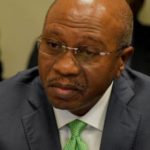
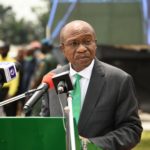
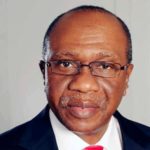
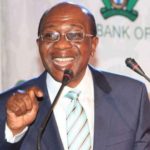
• The governor of the Central Bank of Nigeria (CBN), Godwin “Meffy” Emefiele loves dropping bombshells on Nigerians — from banning crypto trades to redesigning the naira. He dropped  another one at the 57th annual banker’s lecture on November 25, 2022.

    From Emefiele’s revelation, we now know Nigeria no longer earns anything from selling crude oil. It would be so funny if it wasn’t so sad. A country of 200 million people went from being ballers to mechanics in eight years under a government that promised to deliver positive change.

    How did Nigeria get here?

    When Russia invaded Ukraine in February 2022, the war presented opportunities for other oil-producing countries. With Russia, a major oil producer cut off from the global oil market, other countries could step up and grab the money on the table. Many countries stepped up but Nigeria has proved to be the black sheep of the oil-producing family.

    The signs were already there. In February 2022, Timipre Sylva, the minister of state for petroleum resources, said the increase in prices of global crude oil was bad for Nigeria. When the seller of a product complains that prices are too high, despite the fact that there are willing buyers, you know there’s fire on the mountain.

    In June 2022, Angola surpassed Nigeria for the first time as the biggest oil producer in Africa. It’s even worse that this happened at a time when Angola was reporting declining figures.

    So why’s Nigeria not earning from oil?

    Well, we can think of a few reasons.

    Subsidy

    In September 2022, The Economist wrote a report on how Nigeria was failing badly while its classmates were flying high. The newspaper identified several reasons why Nigeria wasn’t remitting forex earnings from oil.

    A major issue highlighted is what economists describe as “price control”. It’s what happens when instead of allowing the market to dictate the price of a commodity, the government intervenes by introducing price caps. The intervention allows consumers to buy the product at a lesser price than it would ordinarily cost. If that sounds familiar, that’s because it’s what Nigerians know as oil subsidy. 

    The NNPC pays the difference from its profits and sends whatever’s left to the government as remittance. So zero remittance means there’s nothing to declare because subsidy has gulped everything and subsidy is a glutton. By next year, subsidy payments by the Buhari administration since 2015 would hit ₦‎11 trillion.

    Oil theft

    You could write 1,000 books about the scale of oil theft in Nigeria and they wouldn’t cover the depths of the problem. The unending large-scale theft of oil has gone on for decades in Nigeria and depleted our output. Between January and July 2022, for instance, Nigeria lost $10 billion to oil thieves. The reason Angola can buga for us is because we’ve not been shining our eyes. As a result, we’re not producing enough to meet our quota and be profitable.

    Cash shortage

    Everyone knows you need money to make money. But the NNPC is so short of cash after paying for subsidies that it struggles to cover production costs for pumping crude oil. Remember that our oil refineries don’t work, so the cost of refining our oil is also part of what gulps money and ensures that the CBN’s vault remains cold and lonely.

    What can be done about this?

    The buck stops at Buhari’s table. It doesn’t look like he has the will to solve the crisis as he’s already decided to unlook the current fuel scarcity that has seen marketers sell petrol at wild prices. 

    Clearly, leakages need to be plugged and we have to come to terms with the fact that subsidies are unsustainable. Already, the Buhari administration has announced the move to end subsidy payments by June 2023 — when it would no longer be in power. Things could get very tough before they get better.

    ALSO READ: Nigerians Cry About Another Fuel Scarcity but Buhari Unlooks

  • The man whom we all love to hate, Godwin “Meffy” Emefiele, can’t stay out of news headlines. Between his announcement that our big boy naira notes will get a facelift and the actual reveal which turned out to be not what we ordered, the interest rate also rose from 15.5% to 16.5%.

    Without mincing words, that’s not great news. 

    What’s the interest rate and how does it work?

    You know how people say, “Time is money”? The idea behind that saying is the value of money you hold today is different from the one you hold tomorrow. 

    To illustrate this, think of 10 or so years ago when ₦‎100 could buy you enough chow to fill your belly. To get that same quantity of food today, you’d have to spend at least ₦‎500. The quantity of food is constant, but the value of money has depreciated over time because of inflation.

    Inflation is when there’s a rise in prices which can be translated as the decline of purchasing power over time because your pocket can’t catch up.

    To account for this inflation, people who lend money like to charge what’s known as interest. And the biggest lenders in any economy are the banks. The grandfather of all commercial banks in Nigeria is the Central Bank of Nigeria (CBN) and it’s the one that determines the interest rate. That’s where this guy comes in.

    ALSO READ: Meffy Has Launched New Naira Banknotes and We Have Questions

    The interest rate is the amount banks charge borrowers and is a percentage of the amount loaned. Using Nigeria’s example, with the interest rate at 16.5%, it means anyone who borrows ₦1 million from the bank will have to pay back the original ₦1 million loan plus ₦‎165,000 as interest at the end of the year. That means the cost of borrowing is quite high. But that’s not just what’s messed up about this.

    Nigeria’s inflation rate rose to 21.09% in October 2022. This means even at the high cost of borrowing, anyone lending money will still be doing it at a loss because the inflation rate exceeds the interest rate.

    Wow. But why’s the CBN raising the interest rate?

    That’s a good question and the answer may surprise you. The reason the CBN is raising the interest rate is to…fight inflation. In fact, this is the fourth time in a row it has raised the interest rate, yet inflation is still doing agidi

    It’s a circular problem. The government wants to mop up excess money in circulation and has been trying various moves. It introduced the Snapchat naira notes and has been raising interest rates while confidence in the naira remains low. 

    One of the key reasons for the persistent inflation is our foreign exchange (forex) which is highly volatile. We already did a story explaining how the EFCC is going after bureau de change (BDC) operators who the government keeps blaming for causing the naira to depreciate in value. 

    Another important component of our inflation is food inflation. With the rising cost of obtaining agricultural produce particularly with floods ravaging farmlands, our situation is pretty bad.

    How does this affect you?

    If you’ve been following so far, you can already see how the interest rate and inflation rate are connected and how it affects the cost of food you get at the market. But it goes even beyond that.

    Experts have warned that factories will likely shut down which obviously means more unemployment. There’s also what’s known as nonperforming loans (NPL), or simply bad loans. Imagine borrowing ₦10 billion and having to repay that, along with ₦1.65 billion as interest in an economy where everything is upside down. Most businesses will find it hard to repay and that just keeps domestic debts mounting. Already, the manufacturing sector is indebted to the tune of ₦5.1 trillion to Nigerian banks. So don’t expect inflation to ease off anytime soon.

    What can be done?

    Fixing this challenge requires attending to the fundamentals which includes the government providing more support for farmers. If they can get special interventions and exceptions from the high interest rates, they can get cheap loans that can help them with farming and producing more crops. This can address food inflation.

    The CBN can also restore some confidence in the economy by easing off a bit on the interest rate. It’s clear that the continuous hike is hurting more people than it’s helping. We can only hope that whoever comes in by 2023 has a better handle on this issue.

    ALSO READ: Nigeria May Be Moonwalking Into a Debt Trap

  • Naira has been experiencing terrible mood swings these past few weeks. One moment everyone’s calling for Meffy’s head, and some people are clapping for him the next moment. Still, no one is quite sure what mood the naira will be in by December. Like everything else this present administration has touched, naira has been through a lot. 

    Even the wisest of us have been humbled as the stubborn naira simply doesn’t respond to decrees — regardless of if they come from God’s spokesman.

    Let’s take you through naira’s latest journey. 

    The fall of the naira

    We told you about how the governor of the Central Bank of Nigeria (CBN) , Godwin Emefiele, whom we all know as Meffy intends on redesigning some of the naira notes which triggered a severe response from the market. Basically, naira fell. 

    The CBN tried to stop naira from reaching the ground by going after bureau de change (BDC) operators, accusing them of  speculating against the naira and creating a dollar scarcity. At the time, the naira was trading at about ₦816 to a dollar. 

    Despite this move, the naira refused to rise. Remember what we told you earlier about the naira being stubborn? It doesn’t respond too kindly to threats.

    In fact, it got worse and traded at ₦872 to the dollar on November 7.

    The naira strikes back

    As the saying goes, all good things come to an end. But so too, do bad things. The naira finally got tired of the disrespect and said “enough”. From heading to relegation, the naira began its march towards redemption.

    By the next day, November 8, the naira gained on the dollar, from ₦872 to ₦850. Over the following days it kept appreciating rapidly and by yesterday, November 13, it was trading at ₦671 to the dollar.

    At the moment, the naira appears to be winning and we know Meffy is literally smiling to the bank now. 

    But the big questions are why did this happen? And how long will this surge continue?

    ALSO READ: The EFCC Is Targeting BDC Operators. Here’s Why

    Why is the naira surging?

    So far, the CBN hasn’t explained to the public why the naira is performing well. And a lot of inside sources appear to be hush-hush on the matter. 

    According to Nairametrics, the naira’s recent rise is because there is a reduced demand for dollars. Several BDC operators they spoke to said that an initial rise of the naira made some people careful about buying more dollars.

    Another reason they gave was that the CBN may have injected some dollars into the foreign exchange (forex) market which has cooled off demand. There are no public records of this however. If this is true, it would explain why the naira is bouncing about like a big man.

    How long can we expect the naira to appreciate?

    No one can confidently say. Remember that all good things come to an end. Nigeria gets most of its dollars from the sale of crude oil. So, an improvement in oil earnings could, in theory, sustain the naira’s exchange rate. 

    Also, the festive season is approaching so if more IJGB people return, there might be a few more dollars to go around. 

    But keep in mind that this is Nigeria. Anything can change in the twinkling of an eye. Don’t say we didn’t tell you.

    ALSO READ: Why Meffy and CBN Decided to Do Make-Up for Your Banknotes

  • On November 1, 2022, the Economic and Financial Crimes Commission (EFCC) raided offices of bureau de change (BDC) operators in Abuja. Videos have surfaced online showing EFCC officers arresting dealers, and many Nigerians have the same question: why?

    BDCs are the latest scapegoats

    According to Vanguard, the reason for the raid stems from fears that BDC operators are behind the current dollar scarcity and the naira’s continuous fall. But the highhandedness of the raid isn’t new, and is only the latest in a long list of bizarre attempts to stop the naira’s decline.

    For example, in September 2021, the Central Bank of Nigeria (CBN) banned AbokiFX from publishing parallel market rates, aka black market rates. The bank accused the organisation of undermining the economy and the CBN governor, Godwin “Meffy” Emefiele, even publicly offered to fight the owner of AbokiFX.

    Before the AbokiFX ban, the naira was ₦‎520 to the dollar at the black market. It’s now down to ₦‎816 to the dollar.

    The Abuja raid is also not the first time the government has directly targeted BDC operators. In 2015, when the CBN was desperate to defend the weakening naira, it came up with a brilliant idea — cut down trees in Abuja. As the logic went, the BDC operators would no longer be able to use the trees as shade from the sun while conducting their business. 

    What’s the real reason for the scarcity?

    According to a report by Guardian, the dollar scarcity is fuelled by a number of factors. One of those factors is that domiciliary account holders are now restricted to one-way transactions. That is, they can deposit money into their dollar accounts but can’t withdraw. Wary customers who no longer have faith in banks are seeking alternatives and leaving banks dollar-strapped.

    Another factor is rationing as banks are only getting a stipulated amount of dollars from the CBN which is clearly not enough to serve their customers. 

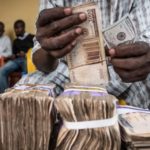
    Ultimately, the big elephant in the room for the dollar scarcity is the rapidly declining naira. The value of transactions conducted in the local currency fluctuates quickly from day to day, so most people would rather save or transact in dollars. 

    So what next?

    For starters, the solution to the naira’s decline can’t be the harassment of BDC operators. They’re simply a consequence of an untenable economic situation. Confidence in our currency is at an all-time low and this has made people resort to more stable currencies. 

    The CBN is adopting other measures to address the problem, including the recent plan to redesign the naira. Yet, even that move has been met with doubt by the Ministry of Finance. The low dollar remittances from the global oil boom also hasn’t helped our cause either.

    Meffy has to step in and resolve this crisis or we may be heading for ₦‎1,000 to the dollar by the end of the year. By then, not even cutting all the trees in the world would save the naira.

    ALSO READ: Why Meffy and CBN Decided to Do Make-Up for Your Banknotes

  • If you’ve paid for your aso-ebi for the launching ceremony of Nigeria’s new naira banknotes in December, you may want to cancel your order. Because only two days after the governor of the Central Bank of Nigeria (CBN) Godwin Emefiele, aka Meffy, announced that three naira banknotes will be redesigned, we’ve found out that he didn’t inform everyone in the federal government that should’ve known.

    Seriously, we’re not making this up. The Minister of Finance, Zainab Ahmed, said she heard the announcement the same way we all did. We’re still reeling from the shock of this claim. The guy in charge of Nigeria’s monetary policy announced a plan that affects our money, but the federal minister in charge of our money said, “For where?” 

    Chale, what else came up?

    Other than being sidelined, Ahmed wasn’t convinced that Meffy had done his homework before his announcement. The minister noted that the cosmetic plan would have serious consequences on the value of the naira. And when you remember how much the naira’s value has suffered already, this should make everybody’s chest tight. 

    The naira can get worse?

    Is this sort of thing unprecedented?

    The thing with Buhari’s Nigeria is that even the most outrageous things aren’t new. If the plan to redesign the naira is canceled, it wouldn’t be the first time the government has walked back on an announcement. On August 8, 2022, Buhari approved the acquisition of Exxon Mobil shares by Seplat. Two days later, he woke up on another side of his bed and reversed the approval

    So what’s next?

    When he announced his plan, Meffy said he already got Buhari’s blessing. But how could this process have happened without consulting the Ministry of Finance? So the current disconnect between the head of our monetary policy and the head of our fiscal policy has to be resolved soon. And if it means Buhari stepping in, then that’s what we should expect him to do. But are we even sure that Buhari knows?

    ALSO READ: Why Meffy and CBN Decided to Do Make-Up for Your Banknotes

  • If you’ve been living under a rock because Buhari has shown you pepper, it’s time to come outside o.

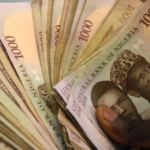
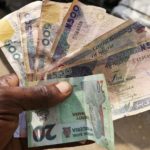
    On October 26, 2022, the Central Bank of Nigeria (CBN), through its governor, Godwin “Meffy” Emefiele — the crusader who just loves conducting experiments with our money — announced that it would redesign our big boy banknotes: ₦‎200, ₦500 and ₦1000.

    We know you don’t take money matters lightly so we’d love to help you understand why this is happening.

    Who sent Meffy work to redesign?

    When Meffy calls for a special press briefing, you should know something’s cooking.  No one saw it coming when he announced at the October 26 briefing that Buhari had given his blessing for the CBN to put some make-up on our most elite banknotes. He said he’s observed all the terrible things done to the naira notes and  it was time to restore order. The CBN just wants to put the…

    As the senior man of the Nigerian economy, Meffy gave us a breakdown of the reasons for redesigning the naira. Here they are:

    It’s long overdue

    According to Meffy, the global best practice is for the CBN to redesign banknotes every five to eight years. But Nigeria hasn’t redesigned banknotes in 20 years and Meffy needs to show Buhari he’s working.

    Nigerians are hoarding too much cash

    Meffy said Nigerians are hoarding over 85% of naira banknotes in circulation outside the banking system. Nigerians are hoarding his notes and he wants them back. 

    To be honest, we can’t say we blame people who aren’t leaving their money in banks knowing the numerous bank charges they pay and the regular disappearing acts of the money in their accounts.

    Banknotes need a bath

    Lowkey, it’s been a while since we saw fresh naira notes and Meffy doesn’t like that. Omo, we can’t complain and maybe clean banknotes will allow the naira to gbera against the dollar.

    Producing fake banknotes is too easy

    Meffy also doesn’t like how technology and advancement in printing has made it easy for fraudsters to produce fake naira banknotes. So… he wants to throw them a fresh challenge? 

    eNaira needs a boost

    Despite the CBN championing eNaira as the best thing since agege bread, it simply hasn’t lived up to the hype. Nobody wants to be holding a failing currency when there are other sexier options in the market — who wants semo when there’s pounded yam

    Meffy thinks the redesign will give the eNaira a helping hand and boost Nigeria’s drive for a cashless economy.

    Meffy wants to choke kidnappers

    Times are about to get very hard for kidnappers if Meffy’s plan works. Apparently, the news of Nigerians paying millions in ransom has reached his ears and he wants to put an end to it. Meffy’s plan is to mop up the cash outside the banking system and dry up ransom payments for kidnappers.

    What else should you know?

    The new banknotes will launch on December 15, 2022 and coexist with the old ones until January 31, 2023. If you’re still holding the old banknotes by February 1, 2023, Meffy says you’re on your own.

    The good news is the CBN has ordered banks to open their currency processing centers to accommodate cash deposits. You now have enough time to dig up those naira notes buried in your backyard. And the sweet part is Meffy has ordered banks not to charge you for cash deposits to ensure a smooth transition.

    It’s time to say goodbye to your beloved old banknotes and prepare to say hello to new ones. Meffy just needs to tell us where to show up for the welcome party.

    ALSO READ: The Naira Is Fighting for Its Life. Who Can Save It?

  • The Central Bank of Nigeria’s (CBN) governor, Godwin Emefiele, has had one job since 2015 – make ₦1 the same as $1.

    Apart from trying to set up a wrestling match in his own office, what he has done instead is oversee one of the worst periods for the naira.

    The biggest problem Meffy, as he’s called by fans and haters, has faced is the management of Nigeria’s foreign exchange (FX) market.

    $1 was ₦133 when he was appointed in June 2014, and we all thought that was rock bottom.

    CBN policies by Meffy have not done enough to save the naira

    The good old days when you could fill your dinner table with just 5k

    $1 now trades at ₦417 which, if you’re paying attention, is a 213.5% increment from 2014, and 41600% off the target of ₦1 = $1.

    Let’s not even talk about the black market where $1 is trading for over ₦570.

    Who is making Meffy’s job difficult?

    Nigeria’s main FX earning is derived from crude oil export profits, which can be unstable depending on the global demand for oil, as well as pricing.

    Other channels for our FX inflow are proceeds from non-oil exports, diaspora remittances, and foreign direct investment (FDI), all of which are even more unreliable than crude oil profits.

    Nigeria’s unstable FX earnings put pressure on the reserves, which everyone in the country relies on for foreign trade.

    One of the biggest dependents were importers who needed dollars to trade until Meffy decided they were sucking the life out of the reserves.

    So he started restricting the sale of FX to importers of certain goods like pork, beef, cement, mosquito repellant coils, toothpicks, maize, sugar, and many others.

    Also, bye bye foreign rice. It was nice to know you.

    Slam Door GIFs - Get the best GIF on GIPHY

    But Meffy was not done because foreign reserves still suffered from the Sapa wave.

    Last year he accused Bureau de Change operators of sabotaging his goal of safeguarding the value of the naira.

    According to him, they were greedy, corrupt and feeding fat on Nigeria’s commonwealth, so he stopped selling them FX too.

    This left just the banks as the direct recipients of dollars from the CBN who gave strict instructions regarding who they are allowed to sell to.

    Banks are on the menu now too

    No one is safe from Meffy’s trigger fingers, and now banks may have to watch themselves or may sooner or later have their own taps closed too.

    The CBN governor said at a media briefing last week that he wants the banks to start generating their export proceeds and stop bringing their begging bowls to his door.

    “It is coming to an end before or at the latest the end of this year. We will tell them don’t come to the Central Bank for foreign exchange again,” he said.

    Meffy wants banks to hustle for dollars themselves

    Meffy’s plan

    Meffy now expects banks to build their own FX earnings from their export customers to fund the demand of their import customers.

    To help boost FX inflow, the CBN has launched the RT200 FX Programme. The key goal of this is to rely less on oil profits and earn more FX from non-oil exports.

    Meffy expects the programme will help Nigeria earn $200 billion in FX exclusively from non-oil exports over the next three to five years.

    This will be achieved by funding businesses that add value to non-oil commodities, making them more lucrative for export.

    This would make it possible for Nigeria, as a major exporter of cocoa, to earn more than the $800 million it currently gets annually from the chocolate market worth over $130 billion.

    CBN and Meffy want better for the naira

    According to Meffy, Nigeria had no problem meeting its FX obligations with non-oil export sources until crude oil was discovered decades ago and everybody went mad.

    Import obligations were funded from exports like cocoa, palm oil, rubber, and a lot of goods that had nothing to do with oil.

    Meffy wants banks to return to that past where they didn’t need dollar handouts from the CBN.

    All of this hard work, we figure, is to make Meffy’s job easier as he prepares to be begged to run for president.