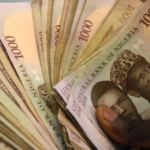
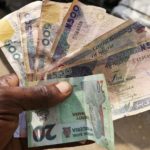
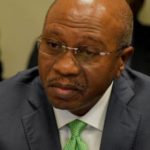
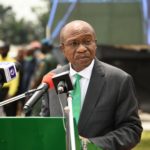
• To the joy of many Nigerians, on March 3, 2023, the Supreme Court ruled that the old Naira notes should remain Nigeria’s legal tender till December 31, 2023. 

    Nigerians to Meffy

    Despite the court ruling, it wasn’t until March 13, 2023, that the Central Bank of Nigeria (CBN) released a statement directing commercial banks to the court. The statement also reaffirmed that the old Naira notes will remain the legal tender till December 31, 2023. 

    This hopefully marks the end of Nigeria’s long-drawn war with Naira scarcity. But, how did this problem start in the first place?

    October 2022

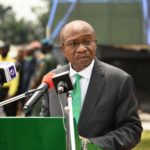
    On October 26, 2022, the CBN governor, Godwin “Meffy” Emefiele, announced plans to redesign the ₦200, ₦500 and ₦1000 notes. He also said they would begin circulating from December 15, 2022, and become the legal tender on January 31, 2023.

    His reason for the Naira redesign was to implement a cashless economy, boost our economy and combat hoarding, terrorists and kidnappers. 

    November 2022

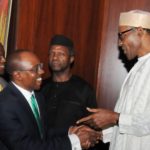
    On November 23, 2023, President Buhari unveiled the new Naira notes at a state house meeting in Abuja. However, to the disappointment of many, it seemed like a waste of public funds as the new notes looked like they were simply passed through a Snapchat filter.

    January 2023

    January showed that although it was a new year, Nigeria had the same old problems. Because despite the announcement of the new notes being in circulation from December 15, many people were still yet to see them. Banks still gave out the old Naira over the counter, and it was like ATMs had no idea new banknotes existed.

    The CBN launched a cash swap programme on January 23, 2023, across all local governments to allow for the easy exchange of old banknotes for new ones. Still, as the deadline inched closer, it became more and more evident that an extension would be needed. And Meffy finally decided to extend the deadline by ten days to February 10, 2023.

    February 2023

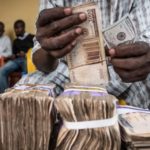
    Following this extension, Nigerians began to feel the full effect of the Naira scarcity; crowds at banks and queues at ATMs became the order of the day. People started sleeping at ATM galleries, and POS agents began to charge arms and legs as withdrawal charges. 

    As expected, tensions began to rise, and it wasn’t long before protests and pockets of violence started happening around the country. Banks were burnt, and the staff wasn’t spared; some had to jump fences to escape.  

    On February 3, 2023, three states, Kaduna, Kogi and Zamfara, sued the federal government at the Supreme Court over implementing the new naira policy. On February 8, 2023, the Supreme Court adjourned the case to February 15, 2023, and banned the CBN from implementing the February 10 deadline.

    Many Nigerians were hopeful that on February 15, 2023, the court would finally give a ruling that would stop the madness created by the Naira scarcity, but unfortunately, the court was adjourned again to February 22, 2023. 

    And on February 16, 2023, in what seemed like blatant disobedience to the Supreme Court’s order, President Buhari approved the continued use of just the old ₦200 notes till April 10, 2023. But this had little to no effect on the Naira scarcity problem as the old ₦200 banknotes comprised only 9.19 per cent of Nigeria’s currency volume. 

    When the D-Day finally came on February 22, 2023, much to many Nigerians’ chagrin, the court again adjourned the case for judgment on March 3, 2023. 

    Also read: What Has the Naira Scarcity Cost Nigerians?

    March 2023

    At this point, many Nigerians had resigned to never seeing the Naira banknotes again. However, it surprisingly ended in praise when on March 3, the Supreme Court legalised the old banknotes till December 31, 2023.

    Meffy’s Naira redesign has been a bad dream for many Nigerians that we hopefully never see a repeat of. 

  •  [countdown date=”Feb 25, 2023 7:00:00″]

    Since the beginning of the year, every day for Nigerians has not been the day the Lord made. We have been fuelled purely by chaos. 

    Naira scarcity Nigerians Meffy deadline

    One of the problems started on October 26, 2022, when the Central Bank of Nigeria (CBN) governor, Godwin “Meffy” Emefiele, announced plans to redesign the ₦200, ₦500 and ₦1000 notes. A month later, the new banknotes were unveiled. Although some people predicted that it might be difficult for Nigerians to adjust to this change, no one could have foreseen the level of discomfort Meffy’s Naira makeover has caused. 

    What has happened?

    Naira scarcity 

    Nigerians have been dealing with Naira scarcity while racing against CBN deadlines of January 31, 2023, subsequently extended to February 10, 2023

    Despite this, Nigerians have had to take the labours of Hercules to get their hands on the new notes. 

    Due to the tensions the Naira has created, some states, Kogi, Zamfara, and Kaduna, sued the Federal government at the Supreme Court over the current scarcity of banknotes. 

    The Supreme Court has adjourned till February 22, 2023

    After many complaints, on February 16, 2023, President Bubu tried to channel his inner Superman by approving the use of old ₦200 notes till April 10, 2023. But this has proven to be hardly helpful as statistics show that the old ₦200 notes make up only 9.19 per cent of the currency volume in the last seven years. 

    Meffy’s reason for the Naira redesign was to fight corruption and inflation, but so far, it seems like Nigerians have had to pay a high price for this. Let’s look at some things the Nigerians have lost due to the Naira scarcity.

    Their businesses

    Since the Naira scarcity problem started, many traders have had to bear losses, especially those who sell perishable goods because they haven’t had enough customers. 

    Naira scarcity Nigerians Meffy deadline
    Photo credits: Twitter/The Voice Of Port Harcourt/@TheVoiceOfPHC

    Some traders don’t have bank accounts, and others who do and accept transfers have faced network challenges. This situation has forced many of them to slash the prices of their goods, though they might be incurring losses. Some herders complained that a big cow that’d usually be sold for around ₦400k now goes for ₦270k. 

    Their lives

    On February 17, 2023, a 32-year-old woman, who was nine months pregnant, died in a specialist hospital in Kano because her husband didn’t have the new naira notes to pay the hospital on time. 

    The woman was in labour by the time they arrived at the hospital, and her husband tried to pay the requested ₦8,528 with the old notes but it was rejected. The hospital had no POS machine, and they asked the man to transfer the money instead, which he did. But the cashier had to wait to confirm payment. The medical personnel also refused to proceed with the treatment until the evidence of payment was brought. 

    The payment wasn’t confirmed until after three hours. The hospital requested an additional fee of ₦4000 for blood service, and the payment also had to be confirmed. This time, the man pleaded with them to proceed with the treatment, and they finally rushed her to the labour room around 1 a.m.. Unfortunately, his wife and child didn’t make it. 

    Their means of transportation

    Many commuters have had to trek or face embarrassment from bus conductors who have refused to collect old notes. It’s 2023, and our train stations still only accept cash as a payment medium. It’s almost like if you can’t pull a miracle to get cash in hand, then the best thing for you would be to stay home or exercise your leg muscles and walk. 

    No one knows when or if the current wave of suffering in the country will end anytime soon. All we can do is hope that the new administration coming in after the upcoming elections will make our lives easier than it is currently. 

  • As Nigerians, it’s only fair we get a free pass to heaven when we die because we have gone through hell already. 

    On October 26, 2022, the Central Bank of Nigeria (CBN) announced plans to give our naira a makeover and barely one month later, President Muhammadu Buhari and CBN governor Godwin “Meffy” Emefiele launched the new naira notes like a new bride. Little did we know that this would be the beginning of another story of frustration, anger, and bitterness for many Nigerians. 

    What happened? 

    After the new naira launch, the CBN said it’d become the official tender by January 31, 2023, making the old banknotes illegal. But, getting new notes from banks or ATMs proved to be more difficult than finding an honest politician for the following reasons:

    It soon became apparent that the January 31 deadline wasn’t feasible. After weeks of pleading with Meffy, the CBN finally agreed to extend the deadline for the exchange of the new banknotes to February 10, 2023. However, it’s four days to the end of the new deadline, and Nigerians have experienced a different dimension of suffering. This time, it’s Naira scarcity. 

    New naira scarcity Meffy

    In the past few days, ATMs hardly dispense either new or old cash, and banks haven’t been releasing enough of the new notes to make it circulate naturally. Thus, POS operators now demand unreasonably high charges for cash withdrawals. People who refuse to pay these charges have resorted to using any means possible to get their money from banks. 

    And we can’t deny that some of their methods, albeit strange, have worked well. So here are five easy ways that might help you get your hands on the new banknotes.

    Do vigils at ATM galleries

    Have you ever heard the saying: “sleep is for the weak”.? As you might already know, these days, people spend their day at banks or in front of ATMs waiting for their turn to make a withdrawal. But chances are you’ll get half of what you want when you get to the counter, or the ATM will run out of money when it gets to your turn. 

    So, instead of facing this disappointment, think one step ahead and wait till 2–3 a.m. when money will be loaded into the machines. Just remember to take a blanket so you won’t use the money to treat malaria.

    New naira scarcity Meffy

    Fight

    We’ve all probably learnt by now that nothing good comes easy in this country. On February 3, 2023, a video broke on the internet of bank customers fighting inside a banking hall because of the new banknotes. 

    If you’re smart about it, this is another way to quickly get your hands on the new naira. Just go to the bank prepared, look for someone you think won’t knock you unconscious with a punch and pick a fight. 

    If you do it properly and cause enough disruption, the bank officials will probably attend to you quickly to let you go with your wahala. The downside is that it might not work, and you may be thrown out of the bank.

    Make friends with officials in your church or mosque

    This period has shown us the importance of making friends with the right people. Regardless of the country’s situation, many people still have cash to give as offerings. So, for those with usher friends, you can transfer the amount you want to the church or mosque’s account and collect the cash equivalent.

    Go naked

    In the past week, we’ve seen people use underhand tactics to get their money from banks, but the most shocking ones so far are those who choose to strip themselves. However, desperate times call for desperate measures, and this is one of the few times where Nigeria’s conservative nature can work in your favour. 

    New naira scarcity Meffy

    So, there is a high chance that before you completely strip yourself naked, the bank’s management would step in to listen to your demands.

    Go to a betting shop

    Again, it’s important to make friends with people in the right places, and right now, POS operators, fuel attendants, ushers and betting agents should be your best friends. Why? They have access to cash. If you’re lucky enough to know a betting agent and can appeal to their better nature, you can kiss the naira scarcity problem goodbye.

    Still, it’s beyond silly that the federal government’s putting citizens in such a difficult situation. And it won’t be long before the protests in Ibadan replicate in other states.

    Are you signed up to our Game of Votes newsletter yet? We help you make sense of news jargon and keep you up-to-date especially with election news. Make the subscription of a lifetime here

  • This is Zikoko Citizen’s Game of Votes weekly dispatch that helps you dig into all the good, bad, and extremely bizarre stuff happening in Nigeria and why they’re important to you.

    Subscribe now to get the newsletter in your email inbox at 8 am every Friday instead of three days later. Don’t be LASTMA

    Doyin Okupe Resignation Sanwo-olu Meffy

    There seems to be trouble after trouble for CBN governor, Godwin “Meffy” Emefiele as he is in the news again.

    Over the years, Meffy has introduced many controversial policies; however, what takes the cake is the recent naira redesign and cash withdrawal limit policies. Since the CBN announced these policies, Meffy has been under fire from Nigerians and has received summons from the House of Representatives which he did not honour.  

    However, things began to take a different turn on December 20, 2022, when the Department of State Security Services (DSS) joined the list of those looking for Meffy. They went even further to file for his arrest on the charges of financing terrorism. Although the court refused to grant their request due to lack of evidence, it doesn’t look like they have plans to give up anytime soon, as they recently took the Deputy CBN Governor and other top officials in for questioning.   

    After weeks of playing hide and seek, Meffy finally decided to come back home, and while still trying to shake the DSS off his back, he seems to have landed in fresh trouble. 

    A federal High Court in Abuja has summoned the CBN Governor over a $53 million judgement debt owed due to the Paris Club refund. We can see that Meffy’s village people have decided to carry his matter on their heads this year.

    Village people to Meffy

    What Else Happened This Week?

    Oshodi/Apapa Gridlock: Policemen Abandon All Hope

    Over the past few months, Nigeria has shown us that no matter how bad we think a situation is, it can always get worse. Unfortunately, the traffic situation along the Apapa-Oshodi expressway has taken a turn for the worse despite promises of a solution. To give you an idea of just how bad the problem is, the Divisional Police Officer (DPO) of the Mile-2/Apapa axis declared on January 17, 2023, that they need ideas on how to solve the problem.

    However, he didn’t miss the opportunity to point accusing fingers at the Nigeria Union of Petroleum and Natural Gas Workers (NUPENG) officials as being responsible for the traffic. And the NUPENG workers, in turn, passed the blame onto the government. With the blame game going on, a solution to this problem won’t be coming anytime soon. 

    Video of the week

    Question of the week

    This week, INEC Chairman, Prof. Yakubu Mahmood, during his speech at Chatham House, about the possibility of using body odour for voters’ identification in the future. What other “interesting” ideas do you think INEC should consider?

    Ehen, one more thing…

    Big Brother Titans launched this last Sunday. Do you think it can distract people from voting in the upcoming elections? Here’s what other Nigerians think.

  • In October 2022, the Central Bank of Nigeria (CBN), led by Godwin “Meffy” Emefiele, announced it’d launch a domestic card scheme in January 2023. If the last few months are a pointer, you’d know the CBN doesn’t play with its announcements.

    On January 16, the CBN officially launched the scheme. If it all sounds odd to you that the CBN is distributing ATM cards, that’s because it is. Let’s get into the gist of it, along with other exciting policies Meffy has introduced since his appointment in 2014.

    Debit cards and why the CBN wants to issue them

    The CBN is now distributing debit cards, that much is obvious. But why? In October, when it was first announced, the apex bank identified a couple of reasons for this move.

    One, it wants to boost financial inclusion and transition to a cashless economy by operating a credit card scheme that is significantly cheaper than what traditional banks offer.

    All interbank payments done in Nigeria use an infrastructure known as the Nigeria Inter-Bank Settlement System Plc (NIBSS). NIBSS is a shared-service e-payment infrastructure company owned by both the CBN and all licensed deposit money banks (DMBs) in Nigeria. The new cards will be issued through NIBSS.

    Two, it wants to enhance what it calls “data sovereignty.” Common cards in use in Nigeria include Visa and Mastercard, both foreign-owned. The CBN hopes to compete with those and become the card of choice for Nigerians.

    A scheme like this isn’t new and is already in place in India. However, there are worries that this might create unfair competition with the CBN being a player and regulator. We’ll see how that plays out.

    Anchor Borrowers’ Programme

    In November 2015, President Muhammadu Buhari, in conjunction with the CBN, launched the Anchor Borrowers’ Programme (ABP). Essentially, it’s a scheme that allows smallholder farmers to receive loans at low interest from the CBN through banks, to help them boost production.

    Much money has gone into this scheme, as much as ₦2.1 trillion. And while there have been some benefits, like improved local rice production, it’s hard not to wonder whether it was worth it. 

    One of the objectives of the programme is to ensure food price stability. However, food inflation currently constitutes half of Nigeria’s overall inflation. It hasn’t met that objective.

    There’s also the fact that most of these loans have turned out to be awoof. Many farmers who got the loans were discovered to be “ghost farmers.” Sometimes, people just opened accounts to collect their share of the national cake, never to be seen again.

    Moreover, only 50 per cent of the loans disbursed have been repaid due to poor monitoring and implementation. When expectations are weighed against reality, the ABP could be described as disappointing.

    E-naira

    While we won’t dare accuse Meffy of having the anti-Midas touch, the CBN governor has a knack for experimentation which often has weird consequences — to put it mildly.

    Take your pick from asking banks only to include 200 notes in ATMs, placing limits on withdrawals and, of course, the ugly naira redesign. Yet, we can’t forget the e-Naira launched in 2021.

    E-Naira is a Central Bank Digital Currency, a digital form of money widely available to the public, made using blockchain technology — the same tech that powers bitcoin.

    The CBN launched it following a crackdown on cryptocurrencies, which declared them illegal. The problem is e-Naira is pegged to the naira, which is notorious for its wild fluctuations. Who wants semo when there’s pounded yam?

    In November, Meffy announced that after a year of its launch, e-Naira was a “success” having recorded 700,000 transactions worth ₦8 billion. “Success” is doing heavy lifting in that sentence. That’s less than 2,000 transactions a day for a banking population of at least 68 million people

    The jury’s out on whether the CBN debit cards will gain wide acceptance. But given Meffy’s mixed record with policy implementation, we wouldn’t hold our breaths.

    We write the news and track the 2023 elections for citizens by citizens in our weekly newsletter, Game of Votes. Make the subscription of a lifetime here.

  • A few months ago, the governor of the Central Bank of Nigeria (CBN), Godwin “Meffy” Emefiele, announced plans to redesign our naira notes. Although this policy  received  mixed reactions, the new naira notes became official legal tender on December 15, 2022. However, unknown to many of us, the naira wasn’t the only thing on Emefiele’s upgrade list.

    About two years ago, the federal government announced plans to finally renovate the National Theatre. The government handed the project over to the CBN’s Bankers’ Committee, who worked with an initial budget of $100 million. But on December 10, 2022, Meffy said it would take about $200 million —an estimated ₦89 billion — to complete the project. 

    Judging by how expensive the project is, you may wonder why this national monument is necessary and why the government is willing to spend so much money on it.     

    The history of the National Theatre

    The National Theatre, located in Iganmu, Lagos State, is often referred to as the home of entertainment and performing arts. It’s to Nigeria what the Sydney Opera House is to Australia and also, it’s to many of our parents what malls and cinemas are to us now. 

    The construction of this military hat-shaped landmark started in 1973 and was completed during the regime of General Olusegun Obasanjo in 1976. It was the centre for preserving and promoting black arts and culture and housed banquet halls, two cinema halls and a world-class 5000-seater amphitheatre. It also hosted many historical events, people, and shows like the Festival of Arts and Culture in 1977 (FESTAC ‘77), Fela Anikulapo-Kuti and Stevie Wonder.

    Unfortunately, as with most things in this country, the theatre fell into poor management, and it wasn’t long before it entered a state of deterioration and left at the mercy of hoodlums. 

    The renovation of this national monument wouldn’t only fix the damaged parts of the theatre but also restore over 70 historical artworks and sculptures.

    Why’s this renovation necessary?

    Job creation

    Unlike the naira redesign, which is creating some new problems, the restoration of the National Theatre is projected to create over 1,000 jobs. This would be a big relief considering Nigeria’s unemployment rate is at 33%. It’s not a lot, but it’s something.

    It would diversify the economy

    A significant problem Nigeria has is the government’s obsession with oil money, so it more often than not seems like they’ve turned a blind eye to many other sources of revenue. According to Meffy, India makes about $240 billion from exporting movies, music, fashion and technology. With this renovation, we’d finally be able to earn billions with the creative industry and compete internationally.

    Tourism

    The renovations include plans to create hubs and centres to showcase our fashion, music, film and technology. This should encourage foreign investors and open up a way for the monument to serve fully as a tourist site.

    The renovation of the National Theatre is expected to be completed in May 2023. Hopefully, with the funds injected into this project, this national monument will be restored to its former glory.

  • This is Zikoko Citizen’s Game of Votes weekly dispatch that helps you dig into all the good, bad, and extremely bizarre stuff happening in Nigeria and why they’re important to you.

    Subscribe now to get the newsletter in your email inbox at 8 am every Friday instead of three days later. Don’t be LASTMA

    Doyin Okupe Resignation Sanwo-olu Meffy

    This week has shown us nothing is impossible, and impossible is nothing. It started off with Lionel Messi’s village people finally allowing him to win the World Cup, and in an even stranger turn of events, a Nigerian politician convicted of money laundering actually had the decency to step down from his political position instead of just closing his eyes till the bad news all went away.

    Doyin Okupe Resignation Sanwo-olu Meffy

    On December 19, 2022, a federal high court in Abuja found Doyin Okupe guilty of money laundering. While he was an aide to former president, Goodluck Jonathan, he received over ₦200 million from former National Security Adviser, Sambo Dasuki, without going through a financial institution. 

    Nigerian law frowns upon such transactions because that kind of process makes it easy to steal even if done with the best of intentions like Okupe claimed he was doing. The Economic and Financial Crimes Commission (EFCC) dragged him to court for that shady deal and the judge sentenced him to two years in prison on many counts. But he also had the option to pay a fine that totalled ₦13 million.  

    For those who don’t remember or know Doyin Okupe, he was, until recently, the Director-General of the Labour Party Presidential Campaign Council. When news of his conviction broke, many Nigerians raised their eyebrows, mainly because of his role in the Obi-Datti campaign. Peter Obi’s opps seemed ecstatic at the opportunity to finally call the so-called messiah out as a fraud, but all the haters were silenced when Okupe posted his resignation letter on December 20, 2022. 

    The bar is very low when it comes to Nigerian politicians, and this is why Okupe’s resignation shocked many of us. Nigerians are used to seeing money laundering cases swept under the rug, and the offenders moving freely while flaunting their extravagant lifestyles. But Okupe’s case proves that maybe all is not completely lost.

    What else happened this week?

    Nigerian Doctors Are Catching Hands When They Need To Catch A Break

    Everybody is going through it in this country, but doctors seem to be especially punished for working in Nigeria. After spending years surviving medical school and trying to reconcile with the peanuts the government pays them, they may also need to learn martial arts to deal with patients. 

    On December 21, 2022, a 56-year-old man, Ayodele Falomo and his son, Ayoola, appeared before  a Chief Magistrate’s Court in Ogun State for assaulting a doctor. Moments after the doctor pronounced their relative dead, they repeatedly slapped her before other people came to her rescue.

    The court allowed her attackers get away with a ₦200k fine each and a written apology. But they probably just helped another Nigerian doctor decide to japa.

    Video of the week

    Question of the week? 

    During the inauguration of the Blue Line Rail system this week, Governor Babajide Sanwo-Olu mentioned that Lagos has now become like London under his watch. Do you agree with him?

    Ehen one more thing…

    Meffy has finally bowed to public pressure and raised the weekly withdrawal limits of individuals to ₦500k and corporate bodies to ₦5 million. Here’s how the former withdrawal policy affected different people.

  • The long-awaited day is finally here. Today, December 15, 2022, the Central Bank of Nigeria (CBN), under Godwin “Meffy” Emefiele’s orders, will publicly release new naira notes for the ₦200, ₦500 and ₦1,000 denominations.

    We spoke to some Nigerians about their thoughts on the new banknotes and asked one question, “What’s the first thing you’ll do when you get your hands on the new naira notes?” 

    Here’s what they said.

    Damola

    My friend went to the bank yesterday to withdraw a lump sum of about ₦300k. The bank gave him the new naira notes and I was fortunate enough to see them this morning. The notes are average. It’s just as if they went to put filters on them. I prefer the old notes, seriously.

    On what I’m going to do with the new notes? Well, it’s just for spending. Everyone needs cash now since Christmas is around the corner.

    Tunde

    I run a logistics business so definitely the first thing I’m spending the new notes on is fuel. I’ll also service my bikes and maybe get Christmas items for myself and my family.

    Feyisayo

    I’m not anticipating the release at all. I think I’ve overgrown the thrill of acquiring new naira notes probably because the value of the currency is nothing to be happy about. I’m not looking forward to it. I’m a little curious to see how they look but beyond that, no extra feelings at all.

    Still, if I get my hands on the new notes first thing I’ll spend them on? Probably transport fare and then groceries.

    Karina

    I’ll keep them in my purse and laugh out loud. For sentimental reasons, I’ll hold on to the new notes. I’ll probably not spend till the old notes are out of circulation. Besides, there’s no difference between the old and new notes — just shades of colour. How are we sure that when the new notes get dirty and start fading they won’t look like what we currently have?

    Toluwani

    I’ll take a picture of them and send to my family group chat.

    Victor

    I’ll stare at them so as to recognise them physically and differentiate from counterfeits. But I think I’ll still use the old naira notes until they’re completely phased out. I know there’s a risk that banks won’t accept old notes after some time has passed but I’ll still keep mine.

    People can be somehow. You may offer someone the new notes and they’ll say they want the old one. Some don’t even know the old ones have expiration dates. This delays transactions. So I’ll still have both. If I’m going out for example, I could have ₦4k old and ₦4k new — just to be safe. I don’t want to be fully dependent on the new notes because I don’t know if they’ll be generally accepted.

    Deborah

    Touch them to have a feel. Did the texture change? Or is it just the colour that was changed? I’ll take a closer look too. I’d most likely keep them until next year, because I’m not sure conductors or drivers will collect them yet. So to be safe, I’ll definitely not spend them until next year when I’m certain that’s what everyone is using.

    Timi

    Naira is useless, so I’ll basically spend them lol. I’m a collector of notes so I’d keep the old ones alongside the other currencies of any country I’ve visited as reference. I’ll also make sure to break them into change so I can see the various redesigns in their different types. First thing I’ll spend on? Either food or a hangout since it’s December.

    Chiamaka

    I’d most likely not spend them until it’s necessary — possibly on transport or food or some other necessity. Oh, and take pictures of them and post on my status, lol.

    Niyi

    I’ll take a picture of them and most likely spend them on fuel. I have no issues with the policy to be honest. I just don’t use cash much but for the people who pack my dirt and clean my office, I pay them in cash. They might not be fully informed about this policy so that may be interesting to see. I’ll probably give them the new notes and tell them about the new policy. Cue the weird looks and questions like “Oga, wetin be this?”

    Abisola

    I’ll hold them in my hand to get myself familiar with their new features and differentiate them from fakes. I won’t spend them immediately, but keep them for like three days. Because I’m not ready to buy fish by the roadside and have to start explaining that the new denominations are legit.

  • Nigerians have been following every move of Godwin “Meffy” Emefiele ever since he announced plans to redesign the naira. In that time, the naira has wobbled, rebounded and wobbled again. While the currency was still finding its feet, the central bank governor sent a memo to banks to impose restrictions on cash withdrawals next year. We spoke to an expert about that and you can read more on it here.

    What’s clear about the cash withdrawal policy is it’ll affect everyone to varying degrees. But some people will feel the heat a bit more than others. Let’s run through a list of them.

    Artisans

    Artisans like mechanics, welders, and technicians who rely heavily on cash for daily operations will feel the bite of the policy. Petty traders too aren’t left out from the abara Meffy’s policy will land on their backs.

    POS operators

    In one policy move, Meffy has poured sand in the garri of point of sale (POS) operators. The profit margins they’d ordinarily make from high volume transactions may be about to crash. And you know what that means? More poverty.

    Corrupt police officers

    Nigerian police officers are notorious for forcing people to withdraw heavy sums of money from ATMs. The good news is, the new policy will, at least, curb such incidents. The bad news though is that the Nigerian police are notoriously stubborn. And where there’s a will, there’s a way.

    Nigerian politicians

    As Burna Boy never tires to tell us, “Last last, na everybody go chop breakfast.” And it looks like this dish Meffy has served belongs to everybody. On December 8, 2022, the House of Representatives asked Meffy to suspend the cash withdrawal policy and to come explain himself.

    The governor of Adamawa State, Ahmadu Fintiri, also believes Meffy’s policy is a retaliatory move aimed against the political class because he’s frustrated his presidential bid didn’t take off.

    Political parties

    On December 12, 2022, Punch reported that political parties too have joined in calling for Meffy’s head. The People’s Democratic Party (PDP) even dragged Buhari into it by saying he’d never have become president if such restrictions were in place in 2014.

    The chairman of the Africa Democratic Congress (ADC), Chief Ralph Nwosu also joined in.

    ‘’How do you expect the ADC candidate to have the cash to do the things he wants to do and how do you think this is the best time for such an undertaking? We have almost 200,000 agents that we must pay and 80% of them live in rural areas. Is it that ₦‎2,000 or ₦5,000 that you pay them that you would transfer to each of them? How many of them have such a facility? It’s completely inconsiderate of them.”

    Some critics just think the parties are salty because the new policy will make vote-buying more difficult during the 2023 general elections.

  • On December 6, 2022, Godwin “Meffy” Emefiele’s Central Bank of Nigeria (CBN) wrote a memo to bark orders at Nigerian banks over the rollout of the new naira banknotes.

    The memo dropped just a week before the new notes are scheduled to enter public circulation on December 15, 2022. But the instructions won’t go into effect until January 9, 2023. 

    What’s in the memo?

    Let’s run down the highlights:

    • The maximum any individual can withdraw over the counter (OTC) per week is ₦‎100k. For corporate organisations it’s ₦500k. Anything higher will attract processing fees of 5% and 10% respectively.
    • Third party cheques above ₦50k won’t be paid over the counter.
    • The maximum you can withdraw from an ATM is ₦20k per day, and ₦100k per week.
    • Only  ₦200 banknotes will be loaded in the ATMs.
    • In serious situations where you need to go above these limits, the maximum you can withdraw as an individual is ₦5 million and ₦10 million for corporate organisations. And for that to happen, you need to meet some conditions, including uploading valid means of identification, your bank verification number (BVN), a notarised document of purpose, letter to the managing director of the bank, and approval from senior management of the bank. 

    To make sense of what it all means, Citizen spoke to Adedayo Bakare, a macro and investment analyst who works with Money Africa. 

    What do you make of the CBN’s withdrawal restrictions?

    “I think the fundamental thing everyone should know is, the entire restriction is part of the CBN’s plan to phase out cash in circulation and cash outside the banking system. Regardless, it doesn’t matter.

    “Cash is the liability of a central bank because they’re the ones who issue it. Now, when the CBN issues cash, it doesn’t do so out of thin air. It prints it because people need it for transactions. When people need cash, they go to the commercial banks.

    “When customers request cash, it becomes the responsibility of the banks to get it from the CBN. What this means is that the excess of cash in circulation isn’t just because the CBN wants to put cash out there, it’s because people are demanding it. The CBN therefore has to print it.

    “The CBN is trying to do so many things at once with the currency redesign. They think that there’s too much cash in circulation with some of it being hoarded. In Nigeria, the banknotes in circulation, the one we spend, is less than 2% of the gross domestic product (GDP). If you look at the UK or USA, the level of cash in the system relative to the size of the economy is consistent with what we have in Nigeria. 

    “In Nigeria, the level of cash in circulation compared to our GDP is lower than what you’d find in Kenya. Yet, Kenya has advanced payment systems. Nigeria, where such infrastructure hasn’t penetrated enough, is now saying it wants to introduce a cashless economy. According to the CBN, it’s to boost financial inclusion and to ensure their policies are more effective, fight money laundering, terrorism, kidnapping and all sorts of ambitious goals. But, cash isn’t the problem.

    “If you want to fight money laundering, it’s to ensure regulation guiding the financial system is more sophisticated and more advanced to detect and prevent money laundering.

    “If you want to stop terrorism, kidnapping and ransom payments, you have to ensure security is better in the country. You can’t do this by phasing out cash or saying people shouldn’t hold cash because there are more creative ways. If a kidnapper says they want ransom they’ll get it whichever way they want because people will have to go and find that cash.”

    What does this new policy mean for Nigerians?

    “Essentially, this policy will create hardship for Nigerians. When you go to the US, the EU, and even Kenya like I’ve mentioned, people still need to hold cash. This is especially true in rural areas where people aren’t very educated, in lower income groups, and are elderly. These people rely on cash. 

    “When you look at the purpose of cash itself, it’s the most inclusive payment system we have in the country. For me to use my bank app, I need to have access to the internet. To use USSD, I need to have access to mobile phones. For internet banking I need to have a smartphone. How many people have these? How many people have the education to use Paystack, Flutterwave, or any of the other payment systems?

    “Cash also doesn’t rely on any third party. Once you have it, there’s complete autonomy to conduct transactions. True, holding it comes with its security risks and it loses value, but that’s people’s preference. Think about it, this new policy is saying the money you have in the bank you can’t do this with it, you can’t withdraw it all at once. If I’m holding cash, nobody can tell me that. Cash is also instant which is why people use it for settlement. There are cases where people get fraudulent alerts, which is why they resort to cash instead. 

    “Cash won’t affect monetary policy. Banknotes  in circulation relative to total money, that is, money available to be spent, including the deposits in your bank account, is just 6%. So when you say 6% of the money you have in your economy is what is slowing down the effectiveness of your economic policy, it doesn’t make any sense.

    “You can’t say you want to restrict one of the primary ways people conduct transactions in your economy. This policy will only slow down transactions in the informal economy and affect the economy negatively in terms of output,  job opportunities and what they can earn. It’s not a crime to hold money.

    “There are rumours that the policy might be connected to the current political cycle, I can’t speak on that. All I know is, the benefits the CBN has outlined and the decision to redesign the currency and the timeline and suddenness of its decision to restrict withdrawals won’t lead us to a cashless economy, won’t make policy effective and won’t lead to financial stability.

    “Overall, the CBN is using the currency redesign and the withdrawal restrictions as a silver bullet to achieve things it can’t do. We’ve had experiences in India where these policies failed woefully because fundamentally, cash is a way to ensure transactions. The government needs to do its work to solve insecurity and other issues, not the CBN.

    “At this point one has to ask, why should Nigerians bear all this pain? Why should Nigerians bear all the cost for a policy that’s likely to achieve nothing? These are questions the CBN has to answer.”