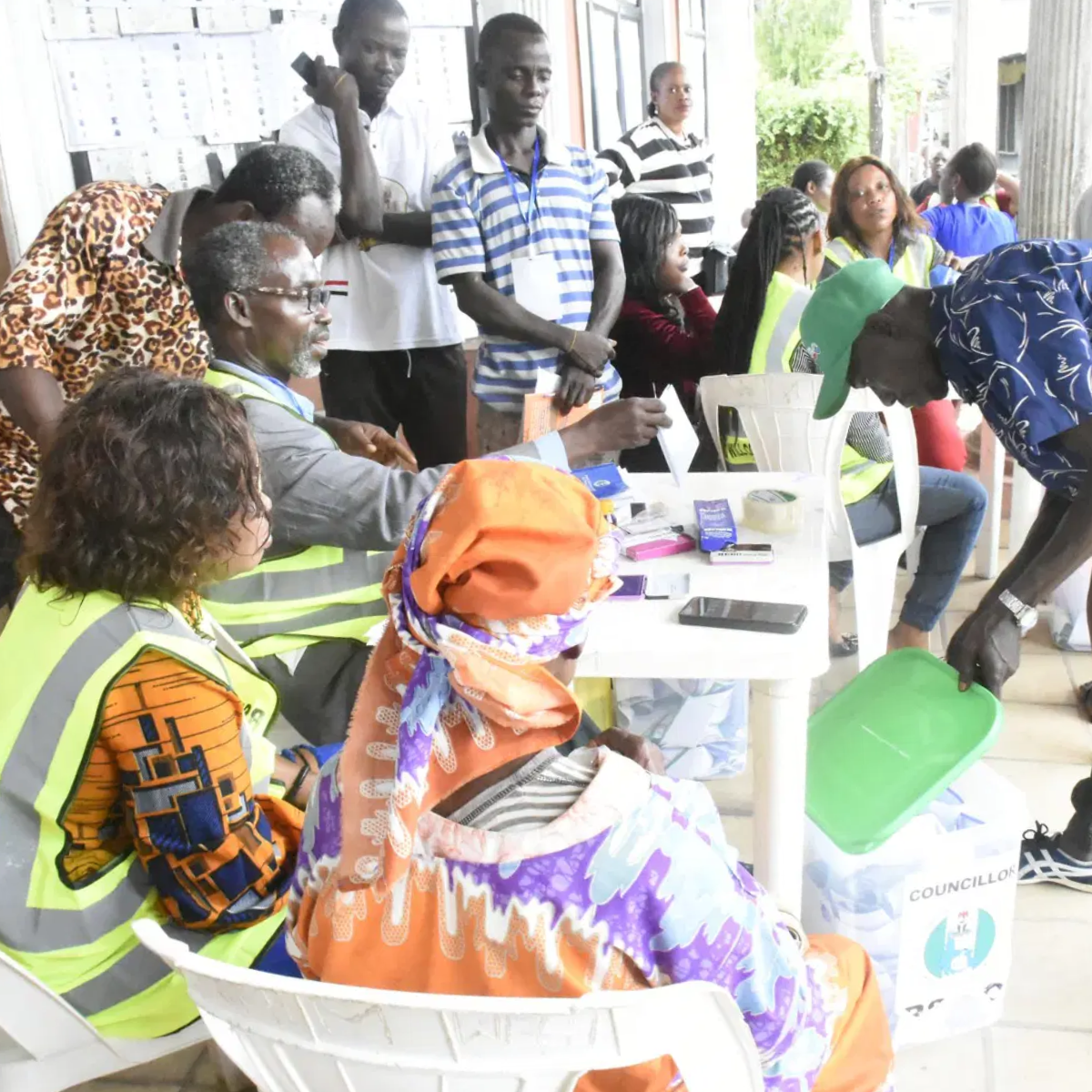
• If you have seen the news coming out of Rivers State and the drama between Nyesom Wike and Sim Fubara, chances are you have asked yourself why both men are rolling in the mud over mere Local Government (LG) elections. The straight answer is that levels have changed. Let’s give you the whole story.

    The states bullied the LGs

    In Nigeria, there are three tiers of government: federal, state, and local government. Just like federal and state, local governments also have their own unique functions, importance, and powers but for the longest time, we barely recognised them because didn’t allow them to flex their muscles like their counterparts.

    According to the Nigerian constitution, local government councils are supposed to take care of things like the construction and maintenance of roads, public highways, streetlights, parks, and drains. They also have the duty of collecting rates, radio, and television licenses, assessments of privately owned houses for the purpose of levying, naming of roads, streets, and a bunch of other functions.

    Also, under the Nigerian constitution, LGs, just like states are supposed to get money from the federation account to carry out their duties but the State government had this habit of pocketing everything and leaving the LGs high and dry. For context, states and their LGs usually shared a joint account where the FG paid in money monthly but instead of the states taking their 26.72% cut and moving on, they usually seized the 20.60% belonging to LGs, leaving them broke and powerless.

    Additionally, LGs are supposed to hold independent elections every 3 years for citizens to pick their council chairmen but this barely happened and when it did, state governors simply suspended the democratically elected chairmen and replaced them with glorified errand boys known as Caretaker Committee so instead of active councils working for the people, we had lifeless councils whose monies were seized by state governors, representatives replaced by proxies, and duties to the people left undone.

    The Supreme Court stepped in

    Nigeria’s federal government probably got tired of watching the whole mess because, in May of 2024, the Attorney General and Minister of Justice, Lateef Fagbemi sued all 36 States in court for disrespecting the constitution. Two months later in July, they won the suit as the Supreme Court gave a ruling affirming the financial autonomy of local governments in the country and declaring Caretaker Committees the frauds that they are. 

    The Independent Corrupt Practices and Other Related Offenses Commission (ICPC) also stood on business because after this ruling, its Chairman, Dr Musa Adamu Aliyu said that “local governments must be politically independent, and any state-level official who violates this Supreme Court decision will be held accountable for gross misconduct and abuse of office.”

    A new dispensation and what it means for the people

    Now, the “G” in local governments is no longer invisible because they can actually carry out their duties. Before the Supreme Court’s judgments, about 21 States were running their LGs with Caretaker Committees but now that they have been outlawed, those states have had to carry out elections- this is why there has been a wave of local government elections across the country in the past months. They may not have trended as much as the Rivers election but this year, a total of 19 States have conducted their local government with more expected to follow

    In plain terms, here’s what this means for you:

    1. Local governments can make their own decisions and carry out their own projects.
    2. Local government will now receive funding directly from the federal government.
    3. Expect better roads, schools, healthcare, and other services at the local level.
    4. You can finally get that pothole fixed because you have a more direct path to holding your local representatives accountable.
    5. Local government elections will now be held every 3 years without fail- you get to vote!
    6. You can finally have personal meetings with your representatives- take the problem directly to them if you want to. The benefits are endless.

    Why have the elections become a big deal for politicians?

    For politicians like Wike and Fubara’s part, having their person win means having the soul of the state in their palms.

    Before the Supreme Court ruling affirming the autonomy of local governments, the current fight between Wike and  Fubara wouldn’t even be happening because all Fubara had to do was appoint a Caretaker Committee who would be in his pocket but since that is now illegal, the electoral process of selecting LG Council Chairmen opened up a new avenue for Wike to get back the control that Fubara was taking away from him, hence the recent violence.

    So while the Rivers local government election has taken over the news (mainly because of the history between Wike and Fubara), it is also a reminder of just how much power has been given to local government. Now, LGs are no longer a formality- they matter. This also means that now, Nigerians know what to expect, and who to hold accountable when those things are not done.
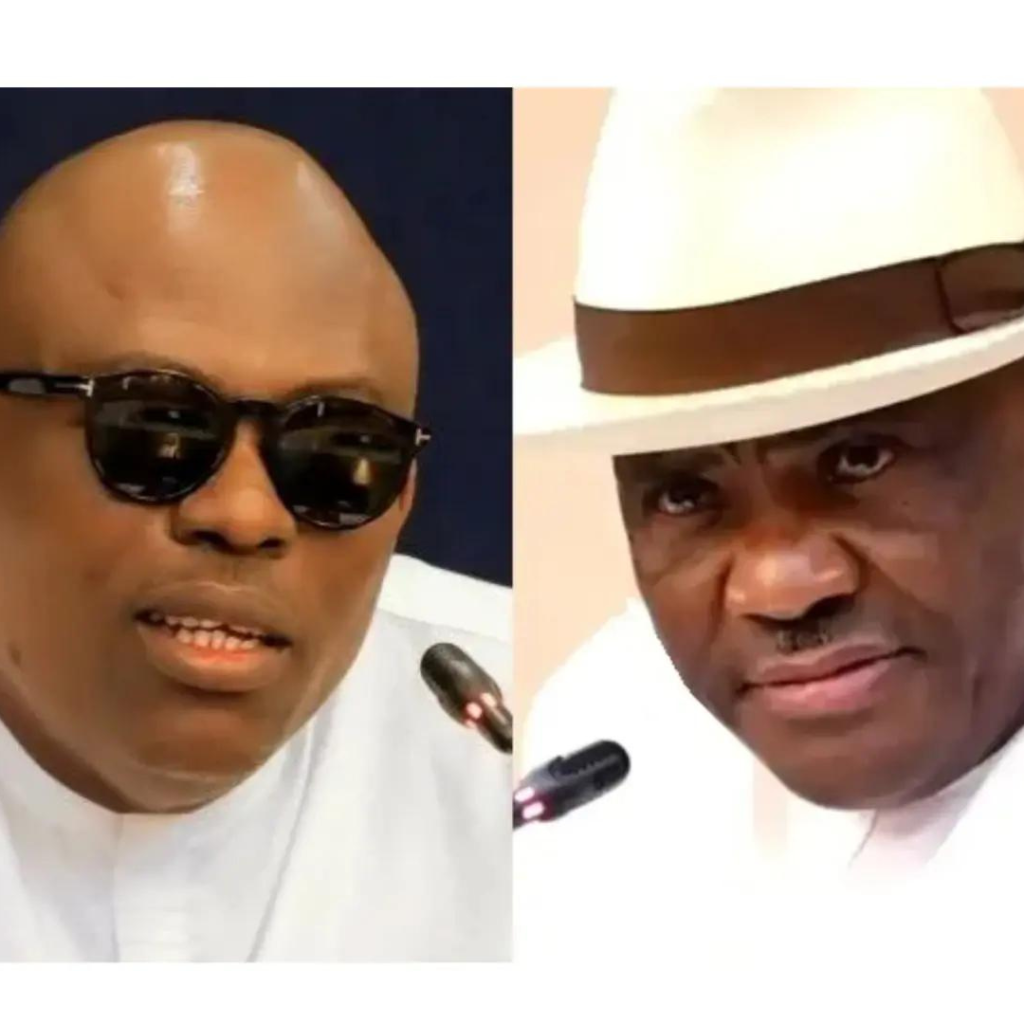
  • The governor of Rivers State, Siminalayi Fubara and Nyesom Wike, minister of the Federal Capital Territory (FCT) have been involved in a political fight since 2023. Now, the fight has hit a climax that can either stop the Rivers local government election from holding or lead to a major inconvenience for the people of Port Harcourt. 

    What is the link between Wike, Fubara and Rivers local government election?

    Wike, Fubara’s political godfather, was the governor of Rivers State between 2015 to 2023.  Fubara, the estranged political godson, has been serving as the governor of Rivers State since 29 May 2023. 

    Wike claims that he laboured and sacrificed to help Fubara become the governor of Rivers State and without his help, Fubara could not have been elected. This claim alone makes the votes of Rivers state people and Nigerian democracy look like a dry joke but Wike said what he said. A claim like that comes with a sense of entitlement and Wike has shown a lot since the governor got into office. Fubara’s refusal to dance to the tunes of the former governor has led to a political war between the two. 

    The power play between them has split the state house assembly into two factions, with one faction showing loyalty to Fubara and the other to Wike. In December, some of the commissioners under Fubara’s administration resigned, with one of them being a man who served as Wike’s chief of staff for 8 years. This suggests that these commissioners were imposed on Fubara by Wike, a subtle way of saying “I put you in power, now I’ll tell you how to rule.” 

    When it comes to the Port Harcourt election, it is the same power play that’s at work. If you’re not familiar with Nigerian politics, you might be wondering why these grown men are being so dramatic about a local government election but there is a catch and the catch is that whoever controls power at the grassroots level pretty much has a strong hold on the entire state. Fubara has somehow managed to get rid of some of Wike’s preferred commissioners and refused to be his yes-boy so this is another opportunity for Wike to show that he’s still the one in charge of Rivers’ state affairs this is also Fubara’s chance to gain power over his state and function as the governor he is.

    Why the Rivers LG election might not hold

    On Thursday, October 3, the Rivers police said their officers won’t provide security for the local government election in the state which was announced in July and is supposed to be held today, October 5. According to the police, it’s not personal, they’re just following court orders. 

    On September 30, a federal high court in Abuja stopped INEC from handing over the 2023 voter register to the Rivers State election commission (RSIEC). By October 2, INEC confirmed it hadn’t given the voter register to RSIEC, following the court’s order. 

    The court also told the inspector-general of police and Department of State Services (DSS) not to provide security for the election. 

    On October 3, a crowd gathered at the PDP office in Port Harcourt to protest against the upcoming local government election.

    But Fubara has shown that he has coconut head and the only way to stop the Rivers LG election from holding is to shoot him.

    If you’re thinking “Does the court have the right to give that kind of order?”, it does. Under the Nigerian Constitution, the Federal High Court can call that kind of shot if it believes there is a violation of the law or constitutional rights. In this case, what the court is banking on is the fact that “RSIEC didn’t follow important rules in the electoral law, like giving a 90-day notice before announcing an election date.”

    But Fubara does not care

    Fubara and his supporters believe that Wike is behind all the plots targeted at making sure the Rivers LG election doesn’t hold today. If the plan was to scare or intimidate Fubara, it failed. After policemen allegedly raided RSIEC’s office on Friday to take electoral materials, Fubara said he won’t let Rivers State fall into chaos and insisted the election will still happen today.

    What’s the latest news on the Rivers local government election?

    RSIEC is going ahead with the election as planned. Both important and regular election materials have arrived at some centres, including the Government Technical College in Ahoada East. This is still a developing story.

  • The state elections, i.e., Gubernatorial and state House of Assembly, are eight days away, and politicians are running helter-skelter to ensure we see them everywhere, from our fridges to our dreams too. 

    It’s not news that during this election period, Desmond Elliot certain members of the state House of Assembly are receiving heat for commissioning projects that should have never left the drafts in the first place. 

    However, it’s important to mention that many of us are confusing the local government’s functions with that of the State Assembly. So let’s break down what this legislative arm of government is and its functions. 

    What is the State House of Assembly?

    The state House of Assembly is established according to Section 90 of the Nigerian constitution. It is headed by a Speaker, and its members, called honourables, are each elected to represent the specific needs of their local constituencies. 

    The number of seats in each state assembly varies between 24 to 40; for instance, Abia has 24 seats, and Lagos has 40. And some of the functions of the State House of Assembly are: 

    Lawmaking

    The State Assembly has the legislative power in a state, and the functions of a legislature are to make, change and annul laws. The laws are expected to be practical and ensure peace and good governance.

    Confirmation of appointments

    According to Section 192(2) of the constitution, the State Assembly is responsible for approving the appointments of Commissioners, State Chief Judges and Board members. Without the approval of the State House of Assembly, the appointments would be considered invalid. 

    Oversight functions

    Under sections 120-128 of the Nigerian constitution, the state House of Assembly has the power to supervise other arms of government. This is to curtail corruption and inefficiency in state administration and promote transparency.

    Representation

    Members of the State Assembly must effectively represent their constituents to ensure they aren’t marginalised. They’re to advocate for the needs, protect the interests, and become the voice and ears of their constituents in government.

    state House of Assembly local government functions

    Quasi-Judicial functions

    The state Assembly has the power to review charges made against members of the executive, i.e., a governor or deputy governor, and remove or impeach from office if found guilty. 

    So, now you know what your state House of Assembly should do, so maybe it’s time to stop dragging its members but instead hold the Chairman of your local government by the neck. 

    state House of Assembly local government functions

    You can find out what the functions of your local government are here.

  • For one reason or the other, many Nigerians have visited their local government office. However, for some of us, if we’re asked to describe our local government, the word that’d come to mind would be “ineffective”.  

    This may be why the federal and state governments take all the blame for everything wrong in the country, and we hardly ever point the finger at the local government. But did you know that if the local governments pulled their weight and carried out their duties more effectively, the name “Giants of Africa” would stop seeming like an irony? 

    But before we go into their functions, let’s look at how the local government is structured.

    The Structure of the Local Government

    The system of government Nigeria practices is federalism which means power is shared between the levels of government, i.e. federal, state and local. Nigeria has 774 Local Government Areas (LGAs) sub-divided into a minimum of 10 wards and a maximum of 15 wards. Each LGA is headed by a Chairman and Vice, and an elected Councillor leads the ward.

    You might wonder why we have so many LGAs. The local government also called the grassroots government, is the first and foremost medium for bringing democracy closer to the people. It allows for people’s participation in politics, creates and builds trust between the government and citizens, and ensures the implementation and effectiveness of government policies. 

    What are the functions of the Local government?

    The fourth schedule of the Nigerian constitution spells out the functions of the local government to include:

    Construction and maintenance of roads, gardens, street lights, drains, public highways, parks

    If state and federal officials had a penny for every time they were blamed for a bad streetlight or drainage, they probably wouldn’t need to steal the government’s money.

    But unknown to many, these things fall under the local government’s jurisdiction, and no one holds them accountable for some reason.

    Registration of deaths, marriages and births

    This is probably one of the well-known functions of the local government as every death, birth and marriage certificate is issued by them.

    Establishment and maintenance of slaughterhouses, markets and motor parks

    The local government is expected to build and maintain these places, particularly as they serve as a good source of revenue for the state.

    Naming of roads, streets, and numbering of houses

    To bring order and development at a local level, the local government is responsible for naming streets and plots of land in a community.

    Establishment and maintenance of cemeteries and burial grounds

    The local government sets down rules on how cemeteries should be used, which helps with organisation at a local level.

    Additionally, section 2 of the fourth schedule states the functions of the local government in partnership with the state government. These are:

    •  Provision and maintenance of health services
    • Development of natural and agricultural resources, except for the exploitation of mineral resources
    • Provision of primary, adult and vocational education.

    Get More Zikoko Goodness in Your Mail

    Subscribe to our newsletters and never miss any of the action

    However, through the years, the local government has struggled to fulfil its functions at full capacity. So, what are some of the challenges facing the grassroots government?

    Corruption

    Corruption is a Nigerian illness we have been battling since conception. Many high-ranking government officials have bluntly blamed the ineffectiveness of the local government of its corrupt officials. 

    In 2007, Nuhu Ribadu, former Chairman of the Economic and Financial Crimes Commission (EFCC), described local government officials as “lootocrats who engaged in gangsterism and organised crime”. At this point, maybe a deliverance session should be held to free us from the shackles of corruption because nothing else is working.

    Poor funding

    The money allocated to the local government is hardly enough because it’s used to cover workers’ salaries. And because of the low revenue generated, in the end, the local government is left with a deficit.

    Lack of autonomy

    Sometimes, the local government needs more freedom to carry out its functions properly due to external influences, which might be from the state government. 

    Now you know who to hold when something goes wrong in your community. This is another reason to pay close attention to everyone who assumes a leadership seat. 

  • Are you really Nigerian if you’ve never had to visit your local government? And if you have, you’d understand how important it is to know who’s in charge. So here are some things every local government boss has.

    Potbelly

    “The bigger a man’s stomach, the more power he holds.” If you don’t believe it, just go to the local government first.

    Plastic food flask

    They always have a flask in their office for interns who take turns doing the amala runs.

    Related: 8 Things Nobody Tells You About Getting Your First Internship  


    An obsession with malt

    Malt is to local government bosses as kola nut is to the ancestors. So trust that if they decide to do their job help you, you’ll have to appreciate them with money for malt. Doing nothing gets exhausting, so we understand why they need the energy boost.

    “My dia”

    If you’re ever feeling neglected or lonely, just dress well, walk to the nearest local government office in your area carrying malt, and watch them my dear you to death. 

    A wristwatch that has stopped working

    You think they like coming to the office late, but in reality, they have no way to tell if it’s 9 a.m. or 2 p.m.

    Somewhere else to be

    They never fail to remind you that they have better things to do than attending to your complaints. 


    Prove you’re Nigerian by taking acing this quiz:  This Nigerian Government Quiz Is So Easy a Ghanaian Could Pass

  • Citizen is a column that explains how the government’s policies fucks citizens and how we can unfuck ourselves.

    In November 2019, 24-year-old Kola* visited his Local government office to register for his national identification number (NIN). When he got there, the staff told him that they weren’t working as one of their members had been slapped. “I was like, why should that stop everyone from working? Then I tried to call the line of their bosses [that I found on Twitter] but the line just kept ringing, and I never got a response,” he says of the experience.

    Kola* had been hoping that someone with more authority would mediate the situation and get the staff working again. But that never happened and he had to find another local government office to complete his registration as he needed his NIN to unfreeze his bank account at the time. 

    Lydia is another Nigerian who has found the process of reaching out to a local government to be virtually impossible. “In September last year,  I needed to produce my tax identification number for work.” the 25-year-old says.

    “I decided to go to the state’s website and read up on what needed to be done. The website was [and is still] a mess. Broken links, incomplete pages, no links sometimes, and unclear information. Then I decided to call the local government’s helpline. I called these people consistently for over a week and it would ring but the handler would end the call on me. I kept trying to reach them and eventually one day the handler sent me a message asking me to send them a text. I sent a text message and until today no one has responded.”

    Why Is The Local Government So Important?

    The local government is designed to be the most immediate channel through which Nigerians can reach the government. Nigerians have the right to engage with their local government chairperson regarding any changes they would like to see happen in their environment. Some of the functions of your Local Government include:

    • construction and maintenance of roads, street lightings, drains and other public highways, gardens, open spaces or such other public facilities as prescribed from time to time by the House of Assembly of a state;
    • The naming of roads and streets and numbering of houses;
    • provision and maintenance of public conveniences, sewage and refuse disposal facilities;
    • registration of all births, deaths, and marriages.

    But how often do Nigerians reach out when they need to make a complaint about the poor state of the roads in their neighborhood or the deplorable state of their local government schools?

    Kingsley Esene, a lawyer we spoke to believes that the communication line is not as strong as it should be. “Many Nigerians hardly reach out to their representatives even though at the National Assembly there is a mechanism put in place that can enable you to know and be able to reach out to your representative,” he says. “If you take 10 Nigerians and ask them if they know their rep like senator or house of rep, maybe it is only 1 out of the 10 that will know. We are not a politically conscious people as we might claim to be.”

    Why Are Nigerians Unwilling To Reach Out To Their Local Government?

    For many of the Nigerians we spoke to, the main problem is the lack of strong communication structures. There is also the case of many not knowing how best to reach out to their local government. 

    “The thing is I’ve never bothered with anything that has to do with an inquiry in my local government because I feel it’d either be a total waste of time and money or I’d just get frustrated and finally, aired.” 20-year-old Tobi* says.  “If I ever go to my local government for an inquiry of any sort, just know I was desperate.”

    Kingsley Esene tells us that the local government’s limited power, which is often overshadowed by the state government’s authority is another factor that slows down progress in communities and makes communicating with our local government difficult. “The way our federalism is being run, our local government is almost none existent. The state government has assumed most of the responsibilities that ordinarily should be for the local government. The reason for this also is because the local government does not get its allocation directly from the federal government like the state government.

    The allocation goes to the state government who in turn gives whatever they like to the local government. And because many of the local government chairpeople are stooges to the governors, they don’t say anything or fight back when they receive their allocation. So most of the allocation that much local government gets from the state is just going into satisfying recurrent expenditure,” he explains.

    How Can This Be Fixed?

    Kingsley Esene believes that any necessary change of attitude towards how Nigerians communicate with their local government officials will begin with building stronger communication structures and ensuring that people have minimal trouble reaching their representatives.


    “If we had a functional local govt system, the complaints will be attended to faster since your local govt is close to you, there will be in a better position to access that complaint and address it. For example, some inter street roads that are bad can be repaired by the local govt but you see such roads still being repaired by the state government maybe after waiting for years here is supposed to be like a public complaint department or office in every local government.”

  • Citizen is a column that explains how the government’s policies fucks citizens and how we can unfuck ourselves.

    A local government is an important part of governance in Nigeria. Local governments supplement the work of the federal government and the 36 state governments by administering a particular area.

    However, many Nigerians always complain about the federal government and state governments while ignoring that there is also a local government.

    In fact, if many local governments in Nigeria do their jobs more effectively, then Nigeria would be a better place. They are the government closest to the people and can ensure the maintenance of many public facilities that are crucial to the lives of the average Nigerian, like public markets and many other public utilities.

    Read: Dino Melaye Wrote A Book About Corruption And We Just Have Some Questions

    Laws Guiding Local Governments In Nigeria 

    Section 1(6) of Nigeria’s constitution states that “There shall be 768 Local Government Areas in Nigeria, and six area councils as shown in Part 2 of that schedule.” This is interpreted to mean that Nigeria has 774 local governments.

    Furthermore, section 8 of the constitution explains that the system of local government councils is guaranteed in Nigeria, and every state in Nigeria must enact a law that provides for the establishment, structure, composition, finance and function of such councils.

    Functions of a Local Government In Nigeria

    Under the fourth schedule of Nigeria’s constitution, the main functions of a local government council in Nigeria include:

    • consideration and the making of a recommendation to the state commission on economic planning, or any other similar body on the economic development of the state as they affect the local government;
    • collection of rates, radio and television licences;
    • establishment and maintenance of cemeteries, burial grounds and homes for the homeless or sick;
    • licensing of bicycles, trucks, canoes, wheel-barrows and carts;
    • establishment, maintenance and regulation of slaughter-houses, slaughter slabs, markets, motor parks and public conveniences;
    • construction and maintenance of roads, street lightings, drains and other public highways, gardens, open spaces or such other public facilities as prescribed from time to time by the House of Assembly of a state;
    • The naming of roads and streets and numbering of houses;
    • provision and maintenance of public conveniences, sewage and refuse disposal facilities;
    • registration of all births, deaths and marriages;
    • assessment of privately owned houses for property taxes and for other purposes as may the prescribed by the House of Assembly of a state;
    • control and regulation of:
    • outdoor advertising and hoarding;
    • movement and keeping of pets of all description;
    • shops and kiosks;
    • restaurants, bakeries and other places for sale of food to the public;
    • laundries; and
    • licensing, regulation and control of the sale of liquor.

    Furthermore, section 2 of the fourth schedule of the constitution describes the general functions of a local government in partnership with the state government to include:

    • provision and maintenance of primary, adult and vocational education;
    • development of agriculture and natural resources, except the exploitation of mineral resources;
    • provision and maintenance of health services; and
    • other functions that may be given to it by the House of Assembly of a state.

    Read: What Is Your Local Government Chairman’s Name?

    Some Facts About Local Governments In Nigeria

    Obio-Akpor local government in Rivers State is described as the richest local government in Nigeria, followed by Ikeja local government area in Lagos State. Obio-Akpor is one of the leading economic zones in Nigeria with a huge deposit of oil, gas and mineral resources, while Ikeja local government in Lagos state is home to one of Nigeria’s biggest international airport and the largest shopping mall in Lagos – the Ikeja City Mall.

    Other notable local governments in Nigeria are the Lagos Island local government, the Bonny Island local government and the Abuja municipal local government.

    Also, local governments in Nigeria are funded through the Federal Account Allocation Committee (FAAC) disbursement, which is shared monthly to the federal, state and local governments in Nigeria. 

    However, many local governments in Nigeria are still non-functional, and it hard to really feel their impact on the day-to-day lives of many Nigerians.

    Going by this, it is clear that a local government plays a very important role in governance in Nigeria. If local governments in Nigeria are efficient, then there is no doubt that life will get better for the average Nigerian. Nigerians must therefore pay attention to reforming local government and voting in the best local government administrators so that public infrastructure can improve and quality of life for the average Nigerian can also improve.

    Quiz: What Do You Know About Local Government In Nigeria?

    We hope you’ve learned a thing or two about how to unfuck yourself when the Nigerian government moves mad. Check back every weekday for more Zikoko Citizen explainers.


    [donation]

  • Let’s make it easy. Don’t stress about his full government name, what is his last name? Or just his first. Would you recognise him if he walked up to you, handing over some money to support his second term dreams? Chances are, the answer is most likely no.

    This is despite the visual assault that is campaigning in Nigeria.  He probably had hundreds and hundreds of posters, emblazoned clearly with his name and party, giving variations of that godawful index finger under the chin politician’s pose, spread across every available square inch available on the street corner.

    You know the one.

    But did that equate to anyone having the foggiest who his dad is? That’d be a big nope.

    This is despite the Local government being the arm of government charged with listening to first hand accounts of how inoperative street lights completely ruin the vibe for night time PDAs .

    Same goes for our esteemed spokespersons over at the House of Representatives.  Save those whose varying governmental roles yielded little to no impact, but whose ubiquity made it such that their names and faces are involuntarily ingrained, how many representatives can you name off the top of your head?

    4 years in and out, we’re saddled with a bunch of nameless, faceless politicians, who artfully con their way into hefty salaries and allowances. Ideally, they should be cussing out the head-hunchos over at the  federal levels, on behalf of those that voted them into power. But the gag is, for people we voted into power, well, we don’t know them.

    Now we might be used to Nigeria being a country of walking contradictions, but some things really do take the cake. How is it that your charge is to be kept abreast of matters directly concerning the community, but somehow the majority of your constituents cannot tell you apart in a line up of 5 random pot-bellied men?

    How do you claim to represent my interests when the only times I get to see you are those weird months towards the start of elections when you need to commission the umpteeth borehole project of the last five administrations?

    The utter uselessness of these institutions becomes apparent when communities would rather bandy together to whip up vigilante security teams, where threats arise, than seek any resolution form the Local Government chairman, whose literal job it is to make sure communal life is as seamless as is possible.

    It becomes doubly apparent when buildings collapse, or airplanes crash, or real life police officers go on citizen hunting rampage and representatives of said area are nowhere to be found.

    Now, if you fall into the no doubt over-capacity boat filled with people completely clueless as to the identities of their local government chairmen and representatives, I’m here to tell you there’s absolutely nothing to be bashful about. You’re merely keeping up with their non-committal energies. I love a good gbas gbos.