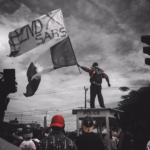
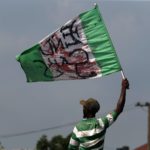
In October 2020, Nigerian youths spoke in one voice against the widespread police brutality in the country through the EndSARS nationwide protests. On October 20, 2020, a date that now has sadness forever etched in it, the Nigerian government set out to crush the movement.
Deep into the night, while protesters at the Lekki Tollgate in Lagos State, held the Nigerian flag and recited the national anthem, soldiers of the Nigerian military fired their guns into the crowd, killing many.
In the days and years that followed, some politicians and the Nigerian government denied, and have continued to insist, in different ways that the Lekki massacre never happened.
Here is a timeline of statements made by politicians, both in individual capacities and on behalf of the government, denying Nigerians were killed for demanding their rights.
Babajide Sanwo-Olu (Lagos State Governor), October 21, 2020
On October 21, 2020, during a press briefing a day after the shooting, Sanwo Olu said that nobody was killed at the Lekki tollgate.
“Fellow Lagosians, as we pray for the swift recovery of the injured, we are comforted that we have not recorded any fatality as against the widespread speculation on social media. Both myself and the leadership of the Ministry of Health have been going round. We went round all the hospitals last night, to see and to monitor for ourselves what has happened and to look and identify the injured protesters,” he said.
Nigerian Army, October 21, 2020
On October 21, a day after the massacre, the Nigerian army took to its X account to label different reports about the incident as fake news.
Lai Mohammed-(Former Minister of Information), November 19, 2020
On November 19, 2020, at a press conference organised to address the EndSARS protests, Lai Mohammed described reports of the Lekki shootings as fake news and encouraged the international community to ignore them.
“At this juncture, we want to appeal to countries that have made faulty judgments on the basis of fake news and disinformation emanating from #EndSARS crisis to endeavour to seek and find the truth,” he said.
Wasiu Sanni (Deputy Speaker, Lagos State House of Assembly), October 29, 2020
On October 29, 2020, during a plenary session, the lawmaker said: “In fact, the way and manner it was out on social media, I could not even eat, I was down, I was very very sad. I thought what we had, we cannot have less than 300 or 100 people who had died from such whatever.”
Lai Mohammed, November 2020
After CNN released a report saying the military killed EndSARS protesters in Lekki, the former minister of information said that “the report lacks fairness and balance, and that “the organisation relied heavily on manipulated social media videos.”
Lai Mohammed, October 20, 2021
On the first anniversary of the Lekki shootings, Lai Mohammed, speaking for the Nigerian government, continued to deny the massacre happened, even after a Judicial Panel of Inquiry and Restitution set up to investigate the incident described the events of that night as a massacre.
“Today marks the first anniversary of the phantom massacre at Lekki Toll Gate in Lagos…” Continuing, he said “The military did not shoot at protesters at the Lekki Tollgate on Oct. 20, 2020, and there was no massacre at the toll gate. The only ‘massacre’ recorded was in the social media, hence there were neither bodies nor blood.”
Tukur Buratai (Former Chief of Army Staff), December 4, 2020
At the decoration of some major generals, Buratai denied the Lekki shootings, even after the CNN report confirmed it happened.
“.. there was no single corpse, but some persons were seeing double at Lekki toll gate in Lagos State,” he said.
Why are these denials dangerous?
Apart from being downright insensitive to victims and families who suffered as a result of the Lekki shootings, here are some of the things that make the denials from the Nigerian government dangerous.
Denials reduce public sympathy for social movements
Because movements like EndSars heavily rely on public support, denials from government and public figures have a way of making the movement appear illegitimate and reducing sympathy, especially from those who were not directly affected by it.
Denials delay justice and accountability
When the government refuses to admit that it has done something wrong, it becomes difficult for movements to push for legal reforms as the system they are fighting against has refused to acknowledge the issue. It also delays justice, as has been seen in the case of the EndSars movement.
Denials create a culture of fear
When the government denies events like this and threatens media houses that present alternative reports and narratives, they create a culture of fear that prevents regular citizens and activists from taking more action and this weakens the strength of a movement.
Denials demoralise people
When the government does something of this nature and denies it, it makes people feel their actions have been in vain because the government would always get away with such crimes.
What can Nigerian youths do to avoid future denials?
This question is key to future social movements and if young people are successful in answering it, things are likely to change. Young Nigerians are asking this question now more than ever and here’s what we think the answer is.
Document events with clear evidence
Utilise secure platforms like blockchain-based archival systems to make sure important footage and documents remain accessible
Build strong alliances with the media
Build stronger social movements
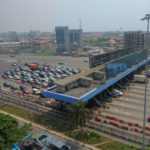
The Lekki Toll Gate in Lagos was a symbolic holding ground for the #EndSARS protests until the Nigerian military and police attacked civilian protesters with weapons on October 20th 2020.
The shooting and the widespread violence that followed it resulted in the vandalisation of the Lekki-Epe Toll Gate and the Lekki-Ikoyi Link Bridge Toll Gate.
What‘s happened since October 2020?
The Lekki Concession Company (LCC) oversees and profits from the two toll gates but a judicial panel set up to investigate the October 20th 2020 shooting suspended their operations to protect evidence. The LCC submitted many requests to take back control of the toll gates as the investigation dragged on for months. The judicial panel handed control of the toll gates back to the LCC on February 6th 2021. This prompted another round of protests by Nigerians at the Lekki Toll Gate on February 13th 2021. The police arrested many protesters and brutalised them.
Mr Macaroni and others clothes removed tied and tortured by the police in a Bus at the police station #EndSARShttps://t.co/q2PovymWA2
What the judicial panel found out about Lekki Toll Gate massacre
The judicial panel ruled in its report on the shooting that security forces killed at least nine people during the October 20th 2022 crackdown. The panel advised the government to turn the Lekki Toll Gate into a memorial site for the #EndSARS protests and rename it ENDSARS Toll Gate. The Lagos State Government rejected the findings and recommendations.
The LCC announced on March 14th 2022 that toll operations would resume at the Lekki-Ikoyi Link Bridge Toll Gate on April 1st 2022. The company won’t toll car owners for the first two weeks, but everything will be back to business as usual from April 15th 2022.
The LCC says resuming operations is important so it can pay off local and international loans. The Lagos State Government has also been appealing to Lagosians to allow the resumption to happen smoothly for the sake of LCC workers who could lose their jobs.
It’s still unclear when tolling operations will resume at the Lekki-Epe Toll Gate where the October 20th 2020 shooting took place, but Nigerians aren’t open to the idea of LCC tolling anywhere.
We asked some Nigerians their thoughts on the situation.
Seun
The government hasn’t been able to convince the citizens that Nigerians weren’t killed at the toll gate that night. This means that justice hasn’t been done to this issue. The two toll gates are Siamese twins that can’t be separated on this issue. It doesn’t matter if it’s Lekki-Epe or Lekki-Ikoyi, reopening the toll gates will continue to be an injustice unless the government comes clean.
With all that’s going on in Nigeria, the citizens should avoid any confrontation with the security agencies on this matter. They should engage the government with their demands and the government should address their concerns with all sincerity.
Duke
The reopening of the Lekki-Ikoyi Toll Gate just like other toll gates must not happen. Both toll gates in Lagos State are in Lekki within a 5 km radius. However, Lekki has no general hospital, no central market, no courts, no public primary or secondary schools. So what’s the tax Lekki residents pay being used for? All we’re saying is: no justice, no tolls.
We shall commence a street-to-street mobilisation and sensitisation of residents within the axis on the need to resist the extortion at the gates.
Bajo
The government should just dead the idea of reopening the toll gates. It won’t work unless we are cowards. What I personally feel is that the government is very greedy and all they care about is the money generated from the toll gates. The 2023 elections are around the corner and they want to make millions of naira to stuff in their pockets. The Lekki Toll Gate must not be reopened or else we occupy it again. I’m sure the youths are fully ready for this. We’ll continue to cry for justice for the victims of the Lekki massacre.
Peace
The government should be taking steps to remedy the wrong meted on its citizens during the #EndSARS protests. They should be implementing the remedy recommended by the judicial panel and ensuring the youths’ demands for good governance and change are met. You can’t beat a child and still tell the child how to cry. I only hope young Nigerians react wisely to this development.
Tito
Whether people want to believe there was a massacre or not, what we know is there was a shooting and people lost their lives. If they actually have to reopen the toll gate, the toll fee should at least be reduced by 50% of what it is right now because we all know the realities of our current economy.
More than a year after the Lekki Toll Gate massacre, the Lagos State Judicial Panel on #EndSARS has submitted a report confirming that the Nigerian Army and Police Force were both responsible for the killing of protesters on the night of October 20th, 2020.
The panel was inaugurated on October 19th, 2020, to quell the ongoing protests by investigating cases of human rights abuses by the Nigerian Police Force, the panel’s role eventually expanded following the night of the massacre.
“The Nigerian Army was invited for intervention in the State and was deployed to Lekki Toll Gate on the 20th of October 2020. At the Lekki Toll Gate, officers of the Nigerian Army shot, injured, and killed unarmed helpless and defenseless protesters, without provocation or justification, while they were waving the Nigerian Flag and singing the National Anthem and the manner of assault and killing could in context be described as a massacre,” the report read.
Here’s everything we know about the report:
The Nigerian Army Fired Live Bullets
After months of going through evidence and listening to eye-witness accounts, the panel concluded that the Nigerian Army actually fired live rounds at the tollgate, killing multiple Nigerians.
The panel stated that it had recovered two bullet shells from the scene on October 30th, 2020, when it went for a spot assessment. The shells were duly analyzed by forensic experts who determined that they belonged to the Nigerian Army.
Doctors Testified To Multiple Injured People And Over 96 Recorded Deaths
Presenting its findings, the panel cited the testimonies of three doctors who attended to protesters on that night. In their testimonies, the doctors confirmed that many protesters were critically injured, with over 96 gunshot-related deaths recorded from that night alone (some of the bodies are yet to be identified).
The Nigerian Police Also Shot At Protesters
The panel’s report also points at another round of shootings from that night, this time by the Nigerian Police Force. According to the report, after the Nigerian Army left the toll gate, officers of the Police Force showed up and shot directly at the remaining protesters who tried to flee the scene. Bodies were reportedly discovered in the shanties and the Lagoon at the Lekki Phase 1 Foreshore, close to the Lekki Toll Gate.
The Nigerian Army Blocked Ambulances From Attending To Victims
Confirming reports made by medics and protesters from that night, the panel found that the Nigerian Army made the situation worse by refusing to allow ambulances to render medical assistance to victims who required it. This eventually led to more deaths that could have easily been prevented if medical aid had been administered at the appropriate time.
Lekki Concession Company (LCC) Tried To Stall The Investigation
The report also provided more information on the LCC’s role during and after the shootings. According to the panel, the LCC failed to cooperate with the investigation, refusing to hand over vital evidence in its possession.
The LCC is also reported to have manipulated the CCTV footage it presented before the panel.
A Clean-up Attempt
Finally, the report also revealed that several government agencies attempted to cover up the incident of October 20th. According to several eyewitness accounts, the Nigerian Army and the Lagos State Environmental Health Monitoring Unit (LASHEMU) allegedly showed up with vans to cart away the bodies of dead protesters. The Lagos Waste Management Authority (LAWMA) was also reported to have arrived at the scene for a quick clean-up immediately after the shootings. Similarly, officers of the Nigerian Army and Police Force were reported to have picked up empty shells from the bullets they used, in a bid to cover up their parts in the shootings.
Next Steps….
As part of its report, the panel recommended that the Lekki Toll Plaza be made a memorial site for the protesters who died, renaming it the “ENDSARS TOLLGATE”. Other recommendations included making October 20th of every year a toll-free remembrance day – hinting at plans to reopen the toll gate, a public apology by both the State and Federal Governments, compensation to victims from that night, the establishment of a standing committee to bridge the gap between the society and the police, and the institution of a Human Rights Committee or Tribunal made up of relevant stakeholders.
Receiving the report, Governor Babajide Sanwo-Olu promised to set up a 4-man committee led by the Honorable Attorney-General to prepare a White Paper for the purpose of implementing the findings and recommendations expressed in the report. He also promised to send the report to the National Economic Council (NEC) for implementation.
I used to have a stammer as a child. It wasn’t anything debilitating, but whenever I got excited or upset, my words would just refuse to come out.
As I grew up, it got better and mostly disappeared as an adult. If you’ve ever heard me speak and thought my words were very deliberate, it’s not me being wise, it was a mechanism I learned as a teenager to speak without stuttering.
As much as I’d wish everyone here went home, my heart beats in solidarity. This is the strongest message since these #EndSARS protests began.
On the afternoon of Tuesday, 20th October 2020, I scrambled off a couple of voice notes to friends who work in government to prevail on the authorities to not take rash action against protesters. This was because it had become obvious a group of protesters were taking a last stand and not leaving the Lekki Toll Gate even after a curfew had been announced. I sent voice messages because none of them picked my calls.
Then I waited.
3 pm. 4 pm. 5 pm. 6 pm.
No one replied. Then I started sweating. As a Nigerian who had seen all sorts of violence meted out to innocent people at the hands of the state, I feared the worst.
6:30 pm.
Then it began. To write about that evening is to relive it all, to remember watching the live video, closing it, watching again and closing again, crying, making frantic calls, and sending more messages.
On Twitter, there were calls for ambulances. That’s when I recall grabbing my keys. I could put my vehicle seats down and create a flatbed to transport people to the hospital. That’s when my wife asked where I was going, and I tried to say where but the words just didn’t come. I was stumbling over them, worse than any time in my life.
Nigerians said #EndSARS and the government replied with bullets. We will never forget.
She said I wasn’t in any condition to go out, and that it was likely to be unsafe. I tried to argue but really could not speak because I was stuttering terribly.
I’m sorry. I’m so sorry. There was a part of me that hoped we had a country. I am so sorry.
In the days that followed, there was a desperation to do something, to sweep the streets after the maddening violence that engulfed the city after the shooting, to speak, to keep a brave face, to find a way forward, while switching through endless gears of emotion. Anger, despair, fear, numbness. That numbness took me to the Lagos Judicial Panel. There was no plan, I just needed to connect with something, hoping to find some sense in the confusion of that post-traumatic existence.
The first thing I noticed was that the panel was late. That was when I started documenting.
I’m at the Lagos Judicial Panel of Enquiry sitting. First observation, they’re late. #EndSARS
To understand what a judicial panel is, one must imagine a love child between a courtroom and the lobby of an end-of-life hospice. There is a lot of order and procedure on the courtroom side of the union, but when one enters a hospice, there is an undeniable knowledge of an end in waiting, but no one ever says this out loud.
The panel embodies this dual existence to perfection – there is a retired justice flanked by respected lawyers, a retired policeman, civil society people (whatever that phrase means), youth representatives and the odd video game console dressed in a bow tie.
The panel had the power to investigate petitions of wrongdoing by SARS, the Lekki Shooting and other sundry issues, but it couldn’t really deliver justice – only recommend actions to the state which the state can choose to ignore. As I said, it’s a room full of power without real power.
On the first day of sitting, the panel was the highest-ranking news after the Lekki shooting. Every news organisation was there – international, local and the poor bastards who get a backroom stipend to write whatever the government press office dictates. There were also plainclothes policemen who sat in the room keeping an eye on the people who hoped to bring their service kinfolk to justice.
And then there were petitioners – you could tell from their faces, sad, drawn, furtive, poor folk who would rather have been anywhere but that room.
Next petition. Mr. Ndukwe came in with his mother. He’s wheelchair bound, apparently having been injured by SARS.
An important note – both petitioners are being represented by an attorney who doesn’t know them, or the in-depth details of their cases. pic.twitter.com/CH64FZw9XA
The petitioners were surrounded on all sides by witnesses, civil society people, and jobless folk who really had no business being in the room but were there anyway – people like me.
Having dutifully complained about the lateness of the panel, more than an hour and thirty minutes over time, we all settled down, ready to go.
Before the panel – a bit of perspective
Full disclosure, I (along with 15 others) was on a call with the Lagos State governor this evening. Everyone was respectful but firm – there is no off switch, the protests have no leaders and it’s best to show working, not just talk.
I think a bit of perspective is needed. At the height of the protests, I was invited to a meeting convened by the governor of Lagos State. There were civil society leaders, ‘youth leaders’, musicians, etc. My immediate feeling was that the government just wanted the protest to end, and for that, they were willing to do anything. One of the outcomes was the march to Alausa, where the governor took photos and received the “5for5” demands.
My feeling then was that it was a silly thing to do. And I said so. I said if they wanted the protests to end, the government had prosecutorial powers and the AG could prosecute cases of armed robbery by SARS officers, even if they couldn’t interfere with internal police work.
The governor also proposed the ₦200m fund for victims, which I also disagreed with. I told him that the issue with the government in Nigeria is that we always think money is the solution. Give justice and you won’t need to pay money.
I was not invited to the follow-up meetings. Damn!
Observation of the petitioners – justice for the poor
The first two cases called to the panel were of men who had been reportedly robbed and jailed by police officers. One of the men was allegedly tortured so badly, he was now wheelchair-bound and unable to support his aged mother and ailing father in the village.
Before their encounters, both men had a decent living. Having lost everything in the course of searching for justice, they couldn’t afford decent legal representation. In fact, the pro-bono lawyer who was at the panel to represent them was so unaware of their cases, an adjournment had to be called.
I immediately realised poverty would be the biggest impediment to justice. The police and government had an endless legal budget, represented by senior advocates in designer suits, while these poor folks had none. Donations had been made to support legal aid for petitioners, but how sustainable those donations were was yet to be seen.
LCC and the investigation – the need for forensic analysis
A few days after the shooting incident at the toll gate, I went out with a few friends to clean up parts of the Lekki township which were affected by the violent aftermath of the 20th of October. However, we were advised to leave the looted and burned Circle Mall in Lekki and surrounding areas as they were. They were crime scenes and insurance teams would need to review those scenes before any cleanup. It made sense. It was surprising, therefore, to note that while we were out cleaning the streets, the Lagos state-owned cleaning agency, LAWMA, was cleaning the Lekki Toll Gate and other locations where arson had occurred. While the privately-owned businesses were waiting to carry out an investigation, the government hurriedly cleaned up the biggest crime scene.
During a guided visit to the toll facility, many days later, the management of the Lekki Concession Company (LCC) was careful to show the panel the extent of the destruction, with little reference made to the actual killings which happened on that fateful night. In fact, there were no references made. We also found two bullet casings on the floor, which seemed to have survived the cleaning. But I could not help being suspicious – this was a crime scene that had obviously been cleaned a few times and this tampering means the panel would never be able to investigate properly.
Political Theatre
One of the reasons I persisted with the panel is that it was about the only place run by the government where the incidents of 20/10/20 were still being discussed with any seriousness. Outside the sitting, there had been a counter-narrative by the government and their amplifiers on social media, attempting to brand the #EndSARS movement as criminal, with words like terrorism freely used.
The bank accounts of young participants were blocked using a dubious court order, although the reality is that these accounts had already been preemptively blocked days before the said court order.
If your bank account is still blocked for #EndSars transactions, please reply with name of bank.
(Please don’t put your account number – just name of bank).
A lawyer who was providing free legal aid to arrested protesters also had her passport seized, but was later released without explanation after public pressure. Presidency spokespeople branded protesters as terrorists, while government-affiliated social media accounts and bots went on a disinformation overdrive.
These attacks were unsurprising. After all, this is Nigeria, where no occasion is too solemn for political theatre, not even a massacre in which the country’s young people were shot and killed while sitting with flags, singing the national anthem. Whether it is the former state governor playing detective on TV, or the red sash wearing protesters outside of the panel sitting, Nigeria does these things with a complete lack of irony.
A bit of aluta theatre outside, as a group wearing red sashes unveils a banner stating the governor @jidesanwoolu has no right to setup the panel in the first place.
Seeing this irony in action doesn’t feel any less shocking though. On the first day of the panel, a government-affiliated NGO came to submit a petition to tackle selected protesters for spreading fake news and appeal for the regulation of social media. However, the young leader of the said NGO collapsed under questioning and ran away after being pressed to admit that the government is the biggest purveyor of fake news on the internet.
Mr Bakare obviously didn’t come expecting hard questions. Pressed on the fact that the Lagos State and other arms of the FG have made several false statements on Social Media since The #LekkiMassacre, he admits the government gave fake news. pic.twitter.com/NkCDFkUjJx
As Nigerians, we have learned to live with the ridiculous politicisation of serious processes. The Lagos State House of Assembly, for example, quickly called for a regulation of social media, spearheaded by Desmond Elliot, a former film actor turned politician.
Of course Desmond Elliot spends more time condemning the response to the #LekkiMassacre than the massacre itself.
The call for regulating speech has been echoed by various federal government and security agencies, and now seems to be the government’s primary security preoccupation, taking more oxygen than the Book Haram insurgency and the menace of killer “bandits” and kidnappers.
(Of course, the government finally banned Twitter in Nigeria, but that’s a story for another day)
Can Nigeria give justice to victims of police brutality?
Unravelling the Lekki Toll Gate shooting was obviously the primary brief of the panel. But the interests of the various concerned parties couldn’t have been more diverse. The Lagos State Government, implicated by the military, battled to move attention from themselves to the arson that followed the shooting incident. The LCC, managers of the toll gate, wanted to be absolved of accusations of collusion in the shooting, even though their staff turned off lights and managed cameras as the military moved in on protesters. The military denied they were involved. The protesters seemed to stand alone in need of real justice.
I really worry about the investigation of the #LekkiMassacre. The State government is being accused of abetting it, the police have vested interest (#EndSARS), and the Judicial Panel is appointed by the governor.
Aware of these divergent interests, I walked into the panel watching out for small clues of how things would unfold. The first came very early. When the LCC MD walked into the room, he seemed to be getting deferential treatment from the staff of the panel. It was just the beginning. By his second appearance, he was led in testimony by the counsel of the Lagos State Government (LASG), which seemed like a conflict of interest – LCC is owned by LASG.
I also observed LASG and LCC collaborating, which hinted at a deliberate attempt to escape accountability. After the Lagos State lawyers led LCC through a well-guided testimony, the LCC requested leave to start renovating the toll gate. It became obvious that the state government and LCC were not interested in investigating the shooting, but in recovering the tollgate, so they can go back to normal. It felt unfair to the young people who stood up to say “End SARS”, unfair to the people who died.
Throughout the inspection, it was very glaring the LCC was only concerned about property damage.
Hardly a mention of the shooting that happened. They’ve also been hazy about the timing of the shoot relative to the power shutdown. pic.twitter.com/qsWm5MgPFS
The government eventually got this predetermined outcome, got the toll gate back, renovated it and is reportedly ready to put it back to work after the October 20 anniversary.
There was also the matter of the police rampage which happened on the 21st of October. Armed policemen went on a rampage shooting people on the streets. It was never mentioned.
The panel is not a court – so the question is about “What next?’
The government has not been very truthful in its handling of the panel. This begs the question; would an attorney general appointed by the government actually prosecute cases that are likely to show the government’s complicity in the matter?
In the days before the shooting, I had taken to cleaning the protest site every morning. I tried to make friends with the area boys and the private security guards who were looking after the protest area. I always engaged with the boys, bought drinks and always left a little something. This helped us pass the message about non-violence. This is how I noticed the new faces. Two days before the shooting, a new set of area boys showed up, less amiable and more inclined to want to burn things down. I also noticed, as I did the rounds from Lekki Toll Gate to the Toll Gate near VGC, that there were no police anywhere in sight. Not one uniformed officer or vehicle. There was no law enforcement anywhere, which was strange for a state experiencing large protests. I began to suspect something was amiss.
I went round Lekki this morning. Passed through all the hotspots where area boys have blocked roads. Spoke to area boys, helped de-escalate some heated moments.
The one thing I did not see? Police. Not a single officer. Not a sign of law enforcement. pic.twitter.com/0ZHa1FmocA
On the 20th, things took a turn for the worse. There were more ‘new’ area boys, this time, they were not listening to anyone. It appeared their objective was to make as much trouble as possible. I made it past the Lekki gate, but something inside of me was afraid. Something bad was going to happen.
As the state government announced a curfew, the ramifications of the day’s events began to stir in my mind. The people at the toll gate were refusing to leave and whispers were emerging that there will be an armed confrontation later that night.
So I started making calls to my egbons in government. I somehow allowed myself to believe that while the Federal Government was run by crazy people, the state would not want blood on their hands. So I made calls to people within the state government and some from neighbouring states who had influence. When nobody picked up, I started sending voice messages.
The messages were desperate. “Please have the governor go to the toll gate and speak to the protesters until they all go home”. It was the only way to protect those young people. Nobody replied.
In the end, Nigeria has seen many judicial panels come and go, and the most common experience we have had with those panels is how ineffective they have been in ultimately granting justice to the people. So, as I went to the next panel sitting, the real question I had was “Will this one be different?”
In the last few days, I have watched the videos from that day again – phone videos, a drone shot, bits of the live stream and the CCTV footage supplied by LCC. It is really hard watching them without almost experiencing the full emotions of that fateful night.
It is a reminder to press on and ask for better. That is what life is for. The horrors of that night washed up a long-dormant speech impediment for me, but what is a stutter where there is death?
The only way we can truly honour our dearly departed in the #LekkiMassacre is to not give up. Never give up. #EndSars
Babatunde Fashola, former governor of Lagos State, now Minister of Works, Housing and Power (we should have known this guy had some serious powers; how else could he be the head of not one, not two, but three crucial ministries?) yesterday miraculously discovered a camera at the scene of the Lekki massacre, conveniently perched by a tollbooth. We must really serve a living God in this country because how else did this camcorder survive the chaos of the massacre, the burning of the toll booth, protesters, soldiers, police, at least two rainfalls and a LAWMA cleanup while sitting casually on a ledge beside a tollbooth? Glory to God.
Fashola conveniently finds a Camera at the Toll Gate after LAWMA already cleaned the whole Crime scene.
Nigeria is something of a circus. Every now and then, red-nosed clowns come out to tell us some inconceivable and incredible event has happened, usually when it relates to missing money. Since we’ve just discovered that we have our own super-sleuth (Sherlock Holmes and Batman are shaking right now), we humbly plead that he help us look into some of the ridiculous crimes that have been committed in Nigeria in the past.
1. Who killed Funmilayo Ransome Kuti?
Not a lot of people know this, but the Nigerian military, under General Olusegun Obasanjo, killed Nigeria’s foremost feminist, suffragist, campaigner and independence activist, Funmilayo Ransome-Kuti. (For some absurd reason, Nigerian history insists on remembering her only as Fela’s mother and the first woman to drive a car.) Anyway, in 1977, 1000 soldiers raided Fela’s Kalakuta Republic, trashed and burned the building and threw her from the first floor, after Fela released the legendary diss track Zombie. She died from her injuries. The military government constituted a shambolic panel of inquiry to find out who gave the order to the soldiers (sounds familiar?) The police panel opened their mouth to say that they found that an “unknown soldier” was responsible for the atrocities. We know it’s now a cold case but we hereby call on Inspector Babtunde Gadget Fashola to help us look into this case and get to the bottom of it.
2. The snake with an appetite for cash
In 2017, a clerk with the Joint Admissions and Matriculation Board opened her mouth to tell us that a snake crawled into the JAMB office and swallowed exactly N36 million. It is still unclear whether the snake washed this meal down with palm wine or just upped and left after the crime. We hope Detective Fashola of CSI Lagos can use his skills to get to the bottom of this.
3. The monkey that did Italian Job with N70 million
Not to interfere with Inspector Fashola’s investigation, but it seems the animals in Nigeria have a penchant for money. A Nigerian senator, Shehu Sanni, also opened his mouth to tell us that a monkey did Italian Job in a farmhouse and made off with N70 million, swinging away into the sunset with its loot.
4. Who killed Bola Ige?
About 19 years ago, former Nigerian minister of Justice Bola Ige was murdered in his Ibadan residence. Accusing fingers pointed at a number of persons, such as former Osun State governor Iyiola Omisore. At the end of the day, nobody was found responsible for the murder, despite the confessional statement of a key suspect. Perhaps our camera-finder can visit the scene and find some cameras in Bola Ige’s house.
5. Missing NNPC $16 billion
Very reminiscent of the missing $2.8 billion oil money under petroleum minister Muhammadu Buhari in 1977, the NNPC came to tell us in 2016 that they didin know where they kept $16 billion of our money. We hereby implore Constable Raji to help us find our money with his super detective skills.
6. Dasuki Gate
Remember how Dasuki disappeared $2 billion meant for fighting Boko Haram in 2015? Can Super Fash help us find out the people who were behind the fraud? Thanks in advance.
Hey there, Zikoko is introducing a new flagship called Love life on the 29th of October, 2020. It basically tells the love story of people from the perspective of all parties involved. So, whether it’s an entanglement, a situationship or a bad separation, we will be telling your story. If you and your (ex) partner are interested in featuring in Zikoko Love Life, register here.