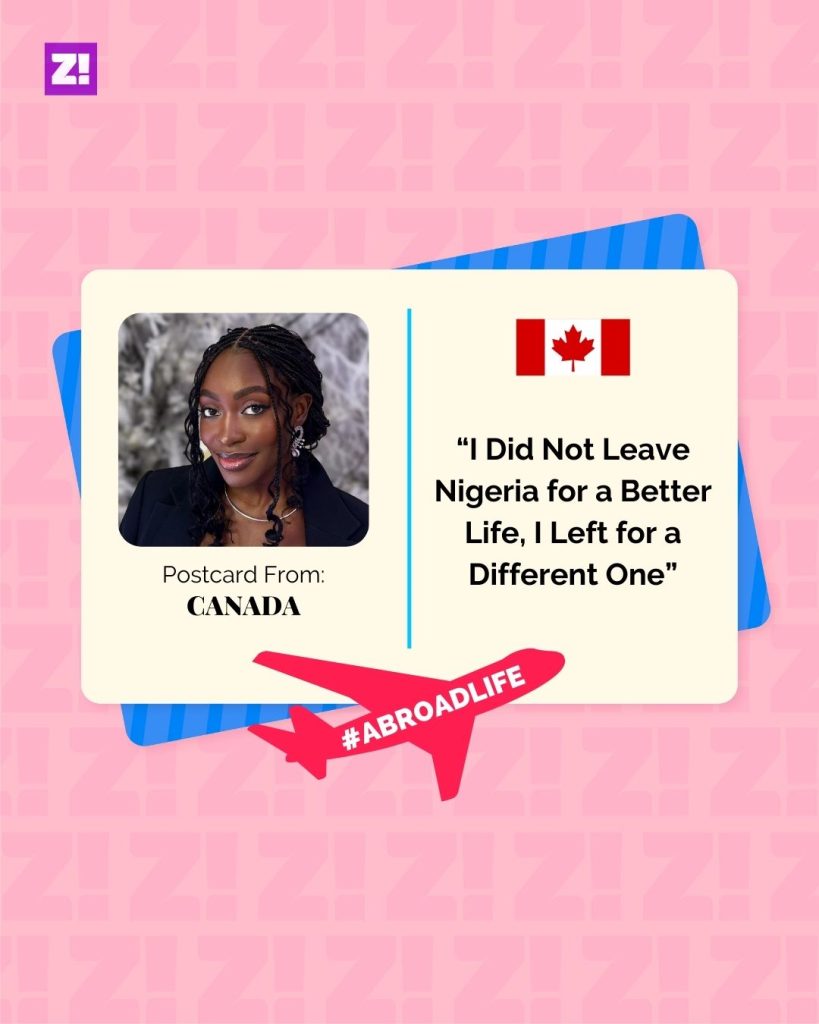
• The Nigerian experience is physical, emotional, and sometimes international. No one knows it better than our features on #TheAbroadLife, a series where we detail and explore Nigerian experiences while living abroad. 


    After travelling through 35 countries, Stephanie (31) shares how slow, intentional travel reshaped her outlook, opened global doors, and led her to build a new life in Canada.
    Where do you currently live, and when did you leave Nigeria?

    I currently live in Canada. I left Nigeria permanently two years ago, but my first trip out of Nigeria was in 2017. Something in me changed after the COVID-19 pandemic. I suddenly had this urge to be outside, explore and do more. So I started actively travelling after that.

    Were these holidays or work trips?

    I’ll call them workations. I took these long trips, settled in a new city while working full time simultaneously. Weekends and evenings were spent like a tourist, while weekdays were focused on work.

    How many countries have you been to?

    I’ve been to 35 countries, and I’ve visited a lot of them multiple times. I’m more focused on the experience they give me than the number.

    That’s a lot of countries! When did you realise you love travelling?

    It was during a trip to Spain. I was in Malaga, and I was just completely awestruck by the beauty of it. The coastline, the water—it was so beautiful.

    I took a road trip from Malaga to Valencia, going from city to city. And I loved the feeling. I love meeting new people and experiencing new cultures, so that was the deciding moment for me. I knew that I needed to continue seeking that feeling.

    Interesting. What’s your favourite country you’ve visited?

    I have two: Thailand and Mexico.

    Mexico because, to me, Mexicans feel just like Nigerians. I felt like I was at home. The cultures just feel very similar.

    Then Thailand because they are some of the happiest people I’ve ever met. They are so kind, so caring, generous, sweet, and very warm.

    It’s quite common to hear Nigerians complain about the difficulty getting around with a Nigerian passport. How has that been like for you?

    Yeah, it was difficult in the beginning but I went about it the right way. I think most people go for a UK or US visa for their first application, having no travel history.

    What I did was to travel to African countries first. The first place I visited was Ghana. Then I went to Rwanda, Kenya, Uganda, and Tanzania. It was after visiting those African countries and  building that travel history that I started applying for visas outside the continent.

    The first country outside Africa I visited was Spain. It was a short visa, of merely  two weeks, but that’s how you start building that travel history. Now I have multi-year visas for the US, UK, Schengen, Thailand, and of course my visa and work permit in Canada. It didn’t just happen at once. I built my travel record very carefully.

    I think it’s also important to do your research and then do your applications yourself. If you have questions, ask people with experience. People need to know that a lot of the things that we fear would get us rejected are within our control. We just have to do the right things.

    Get More Zikoko Goodness in Your Mail

    Subscribe to our newsletters and never miss any of the action

    When you visit any new city, is there anything you look for to decide if you like it or not?

    Before I even go there, I try to do some research about it. I’ll read about it, and watch some videos to understand other people’s experiences. Then when I’m in the city, I usually take one of those group walking tours where you just walk around the city together with someone who has lived there for a long time.

    A good way to fall in love with a city is seeing it through the eyes of someone who loves it. So I try to see the city through the eyes of people who really know it.

    Also, those tours allow you to connect with other people who are also new in the city. It has been a good way for me to make friends.

    What has been your favourite travel experience?

    It was in Cappadocia in Turkey. I took a hot air balloon ride. The other passengers were all coupled up and taking pictures, and I was by myself just looking and watching the sun rise.

    It was so beautiful. That moment reconnected me with God spiritually. It was so beautiful to witness, being about a thousand metres above the ground watching the sun rise up. I thought to myself, “There has to be a God who made something this beautiful?”

    So you were basically touring the world on these “workations.” But what inspired you to leave Nigeria permanently?

    After my first solo trip, I realised that I couldn’t live in Nigeria anymore. I think even while growing up, I sometimes felt different in the things that brought me joy. I love experiences, simple things like taking a walk and deep human connections. Those simple pleasures were harder to build into my everyday life in Lagos because of how fast-paced the city is.

    I did not leave Nigeria because I was searching for a better life. Nigeria gave me a very full life, deep friendships, and strong roots. I left because my idea of fulfillment was evolving. That is what first led me to Kenya, where I lived for about a year and a half, and eventually to Canada.

    So Kenya had what you were looking for?

    It was perfect. The nature, and travelling around Kenya, is amazing. It’s so easy to move around. They have a great rail system that can take you from Nairobi down to Mombasa in less than five hours. And generally, it feels like a country that was built for tourism.

    Even Kenyans love travelling within Kenya. They’re always going on little weekend trips to different parts of the country. So for someone who likes to explore like me, it’s the perfect place to live.

    What was it like actually living in a new country?

    Initially, I was super excited. I had come to Kenya so many times as a visitor, but the reality of actually moving there was different. I thought it would be the same feeling as when I was visiting, but at the beginning, I had difficulty adjusting.

    First of all, Nairobi can get very cold. Also, the food is much less spicy than we prefer in Nigeria. But the biggest thing was trying to build a community.

    In Nigeria, I had all my friends, and I had a very active social life. I was always hosting people, throwing parties, and going for events. And then I got to Kenya and I had no friends. I basically had to start from scratch.

    But at the same time, I wasn’t in the country long enough to really build a strong community because I would stay for two to three months, then I’ll be on my next trip. By the time I’ve come back, the people I connected with have moved on with their lives. It didn’t help that a lot of the people I was able to connect with were also travellers like me. So even though we do keep in touch, our schedules were rarely in alignment.

    Did you experience any culture shocks in Kenya?

    I was pleasantly surprised by the independence of Kenyan women. They are very strong, very independent, and feel very much like the pillars of their society.

    I also found the work culture to be very different from Nigeria, at least comparing Nairobi to Lagos. While Lagos is very fast-paced with the usual hustle and bustle, Kenya felt more relaxed. On weekends, you’ll see people going to the park with their families for a picnic. Just simple things like that which I never saw living in Lagos.

    There’s this idea that Nigerians have a bad reputation on the continent. Did you feel that in Kenya?

    No, actually I would say it’s the opposite. While I was in Kenya, once I mentioned to anybody that I was Nigerian, they would get so excited. It was great.

    I’m actually grateful to Kenya for reconnecting me with my Nigerian roots and making me appreciate Nigeria more, especially our music. Everywhere you go in Kenya, the clubs, the bars, the restaurants, it is Nigerian music playing.

    For the longest time, my music taste leaned very Western. But being in Kenya got me listening to Nigerian music again.

    What was your best experience in Kenya?

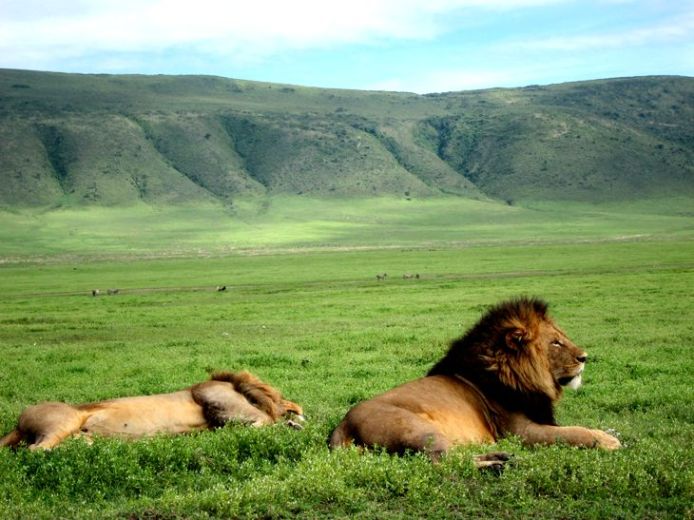
    I’ll say my first safari. It was the Naivasha safari. You take a boat on the lake to an island, Crescent Island. And you can just walk amongst the animals.

    Like I said, I love nature. And being in that environment made me feel so connected to nature. I felt whole.

    That sounds amazing. What about your worst experience?

    That would have to be when a friend came to visit me in Nairobi, and in less than twelve hours of her arrival, her phone was stolen.

    Nairobi is actually notorious for crimes like phone theft. People jokingly call the city “Nairobbery.” So, I had actually warned her to be careful.

    We went to a nice upscale event. You naturally wouldn’t expect that your phone would get stolen in a place like that. But it happened. It was crazy. Definitely the worst experience.

    That is crazy. But apart from the crime, you said Kenya was perfect for you. So why the move to Canada?

    It just felt like the right next step for me. I was lucky enough to get a work permit here, and I took it as a sign from God that this was the next place that I needed to be.

    Also, I wanted something a bit more stable that would make me feel grounded. I want to really focus on my career right now, and I feel like Canada would be the best place for that.

    I also have a lot of friends and family here, so that helps. I’ve only lived here for about three months, and I already feel quite at home. Settling in has been a lot less difficult than it would have been if I didn’t have that support system.

    What has been your worst experience in Canada?

    A friend welcomed me so well and let me stay with them as long as I needed. But even with that soft landing, Canada still showed me shege.

    I had already planned a schedule in my head for all the things I would achieve before the end of the year. And getting my own apartment was a major part of the plan.

    But getting an apartment as someone who has never lived here before was so difficult. I kept getting rejected everywhere I went. Once they found out I’m an immigrant who just moved here, that was it.

    Rent here is typically on a monthly basis, and I was even offering twelve months rent upfront, but some landlords still wouldn’t rent to me.

    I began to lose hope because I was just so tired of looking for apartments every day and getting rejected. I’m grateful for my agent because he just kept on pushing and trying, and eventually I got a place. I just moved in a few days ago.

    So, yeah, the apartment search was a pretty terrible experience.

    Glad you found a place in the end. What about your best experience in Canada?

    That has to be my visit to Niagara Falls. Being on a boat while watching the falls crashing into the water was very beautiful.

    Let’s talk about future plans. You talked about moving to Canada because you wanted more stability. What does that look like for you?

    I want to eventually buy a house. At some point, I want to go back to school. I want to have a real presence in the FinTech space. And I feel like being in Toronto with New York and London just being hours away, I’m in a good spot location-wise.

    I also haven’t travelled around North America yet, so being here allows me to start to explore and just take some little trips to places close by.

    Do you ever see yourself returning to Nigeria permanently?

    To visit, definitely. To move, not anytime soon. Maybe when I’m seventy years old.

    In Nigeria, I would say I was quite comfortable. I had a driver, had a cook, and a housekeeper; I barely did any chores. All I did was focus on work. But those things don’t mean as much to me as simplicity, ease of life, and just being able to get amenities when I need them.

    It is actually funny how being away from Nigeria has made me love and appreciate it even more. Distance has given me perspective.

    On a scale of one to ten, how happy are you in Canada and why?

    I feel the happiest I’ve been in a long time. But ten would be a bit of a stretch. So let’s say a nine.

    I made this decision despite having so many things going well for me somewhere else because deep down I knew it aligned with what I want long-term. And with each passing day, I feel more confident that I made the right choice.

    It’s not been the easiest start, but I feel like everything has just been falling into place little by little. I feel very happy to have my little apartment with the Toronto skyline. The peace is what makes me truly happy.


    Do you want to share your Abroad Life story? Please reach out to me here. For new episodes of Abroad Life, check in every Friday at 12 PM (WAT).


    Before you go, help us understand how you and other young people feel about the 2027 general elections by taking this 10-minute survey.


    Click here to see what other people are saying about this article on Instagram 

    [ad]
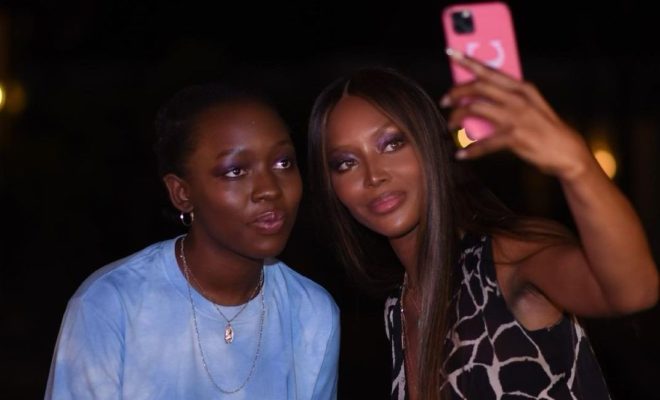
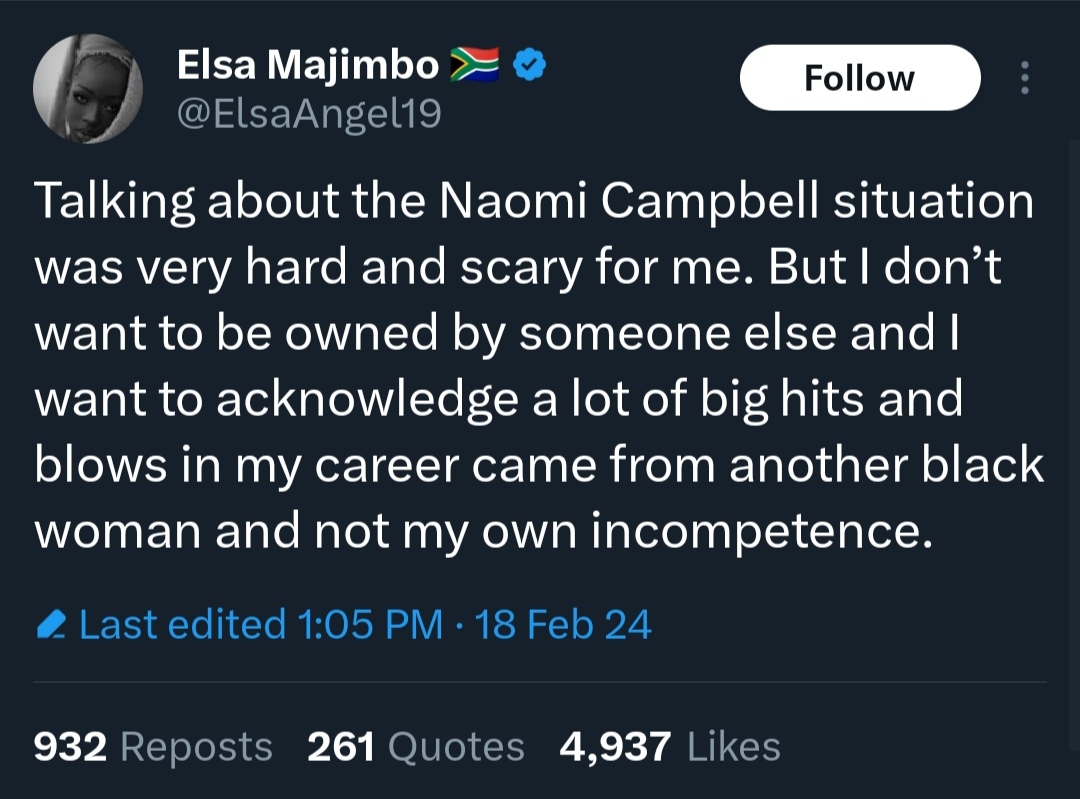
  • On February 15, 2024, South Africa-based Kenyan chess champion and comedian, Elsa Majimbo, responded to fans who wanted her to talk about Naomi Campbell, her presumed mentor. In a now-deleted TikTok video, Elsa revealed how she met the British supermodel, what happened between them and their current relationship.

    Source: Kenyan Insight

    In her usual indoor video style, sharing events in her life with her followers while slathering on shea butter like it’s going out of style, Elsa laid it all out. She went down memory lane to December 2020 — the first time the two met. 

    Naomi was in Nairobi for the third time since 2018, and Elsa texted her on IG to ask if they could meet. Elsa was one of many content creators who’d gone viral during the pandemic lockdown early in the year. Naomi shot her the location. Without wasting time, Elsa and her brother went there, and the supermodel offered them a getaway trip with her.

    Source: Buzz Central

    Elsa was eager to hang out with one of the most iconic models in the world. According to her, they had a great time together. This was likely when Naomi stayed at an exclusive resort in Malindi, Kenya, owned by her boyfriend at the time, Italian businessman, Flavio Briatore.

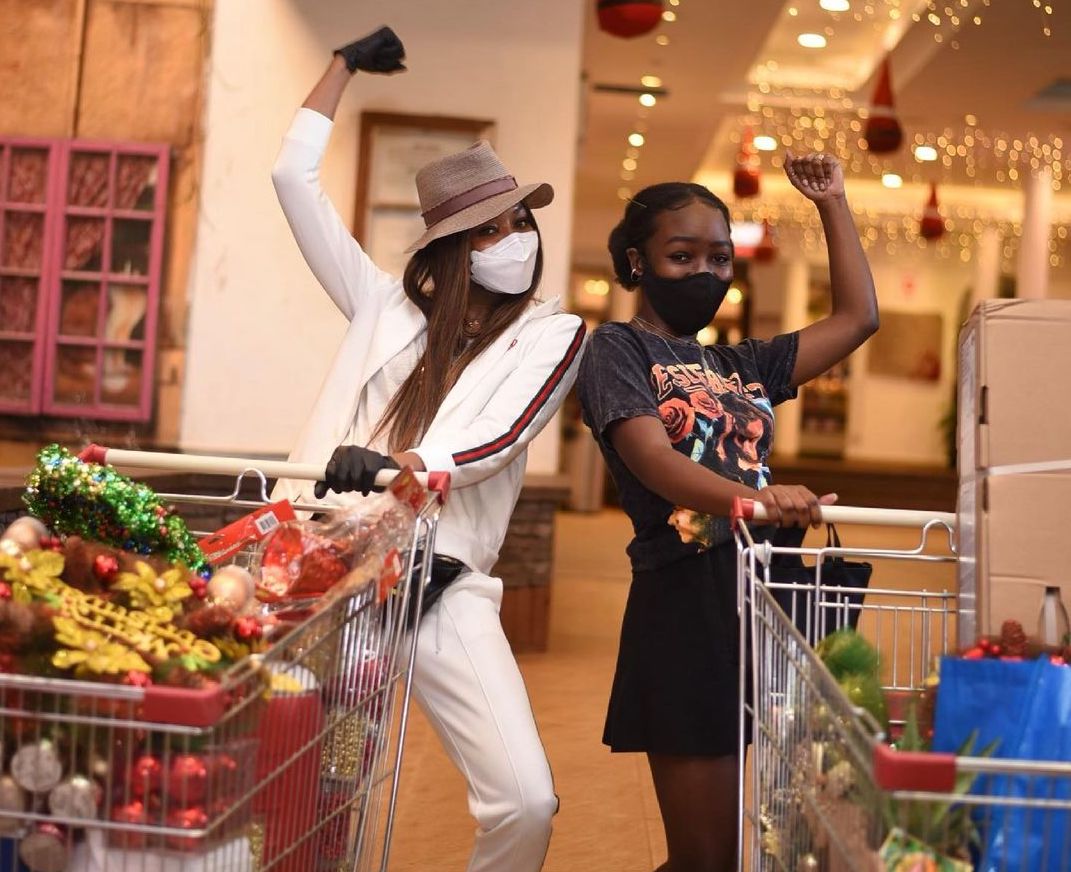
    As seen on an episode of Naomi’s vlog, “Being Naomi”, Elsa and Naomi shopped, tried some makeup on and decorated a Christmas tree together. Later that month, Elsa was on Naomi’s “No Filter With Naomi” show to discuss her rising fame on TikTok.

    In another episode of “Being Naomi” in January 2021, Naomi shared her New Year’s Eve skincare routine with Elsa.

    READ: An Elsa Majimbo Guide to Glowing for Dark-Skinned People

    One day on the beach, Naomi suggested that Elsa should make a documentary on her life in Kenya. Then she introduced Elsa to some Hollywood folks, and sometime after the vacation, Elsa hung out with members of Naomi’s team at Kempinski, a five-star luxury hotel in Nairobi. This was when one of them spilled that Naomi had told them she was behind Elsa’s success. Elsa set the record straight by explaining when and how they met.

    In June 2021, Naomi celebrated Elsa’s 20th birthday with a post on her IG page. Nothing seemed wrong between them at the time.

    Elsa fast forwarded to March 2022 when Naomi called to query her about her short film, Elsa — a 15-minute film about her experience with colourism, bullying and comedy, directed by Julia Jansch. Naomi thought Elsa had executed her documentary idea without her. 

    Busy Elsa promised to continue the conversation the following day but couldn’t due to a tight flight schedule. It took Elsa 24 hours to return Naomi’s call. By this time, Naomi told her it would be their last chat and wished her a good life. Elsa respected her decision and stayed out of her way.

    But according to Elsa, “Things started going very badly for me. I thought it was because of the situation [with Naomi], but I wanted to be sure.” While this supposed negative turn in her career wasn’t visible to the public, she tried to call Naomi and sent apology texts. She got no response until Naomi texted her to stop trying to contact her. [ad][/ad]
    An encounter with Edward Enninful, ex-editor-in-chief of British Vogue, made Elsa realise the gravity of the issue. So she contacted one of Naomi’s close friends to facilitate communication between them. 

    In January 2023, Naomi wished Elsa a happy new year.

    Throughout the eight-minute-long TikTok video, Elsa never stopped creaming her body. But she ended the video acknowledging the access and credibility Naomi’s cosign gave her. Their relationship remains strained. “We’re not friends. We’re not enemies. We’re not anything.”

    She returned to X on February 18, 2024, to explain her now viral TikTok video in a now deleted tweet.

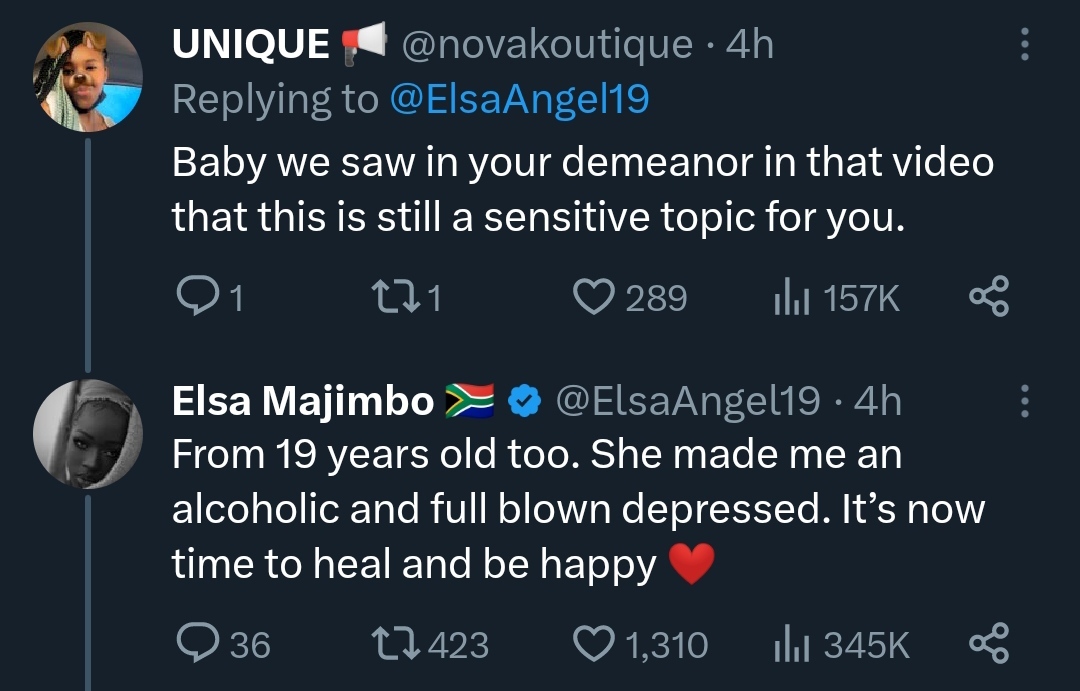
    Responding to a comment under the tweet, she stated that the situation even pushed her into alcoholism.

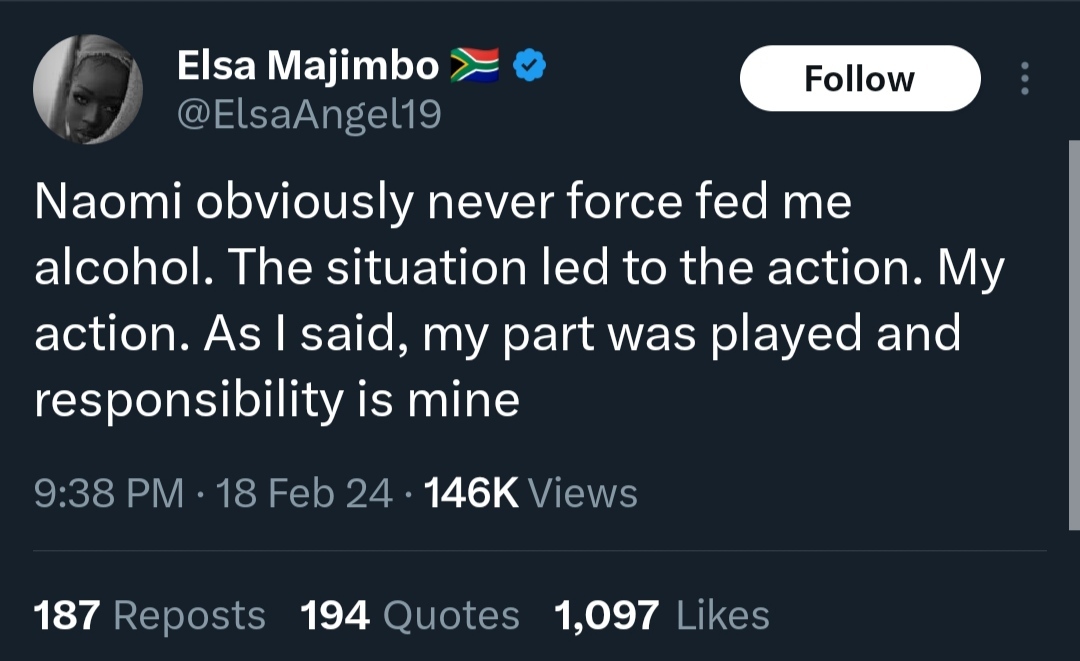
    Some hours later, she put out another tweet clarifying that Naomi didn’t push her to the bottle, the situation did.

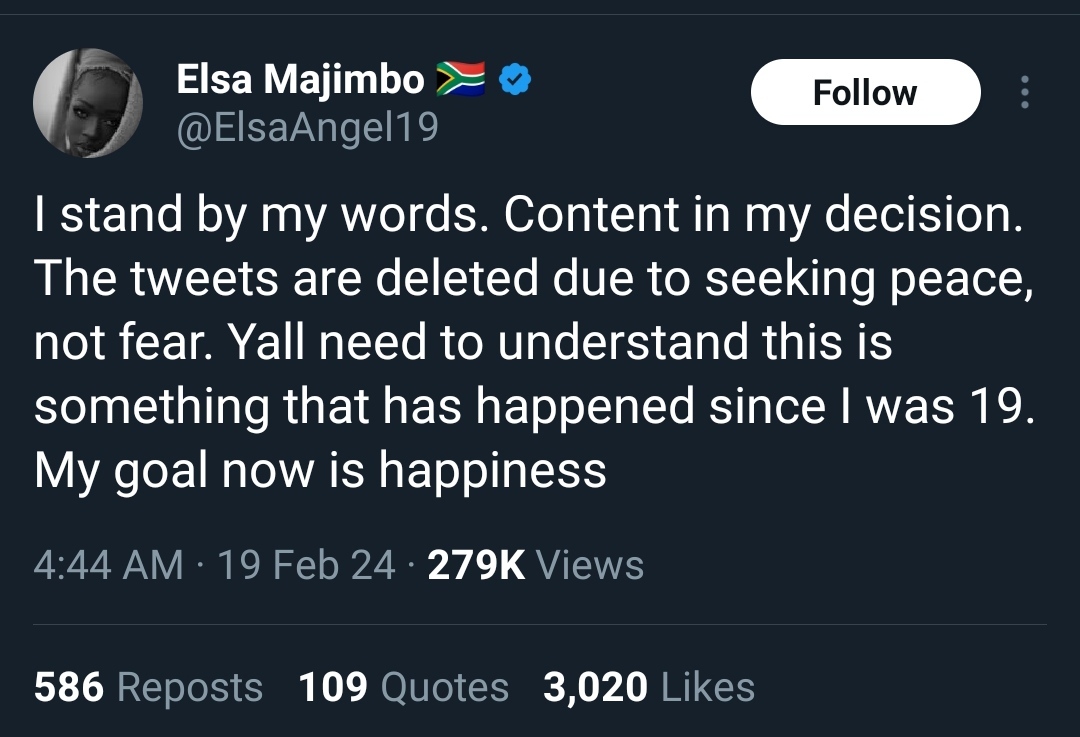
    In the early hours of February 19, 2024, Elsa tweeted that even though she deleted the tweet, she stands by her words but wants to take the peace route.

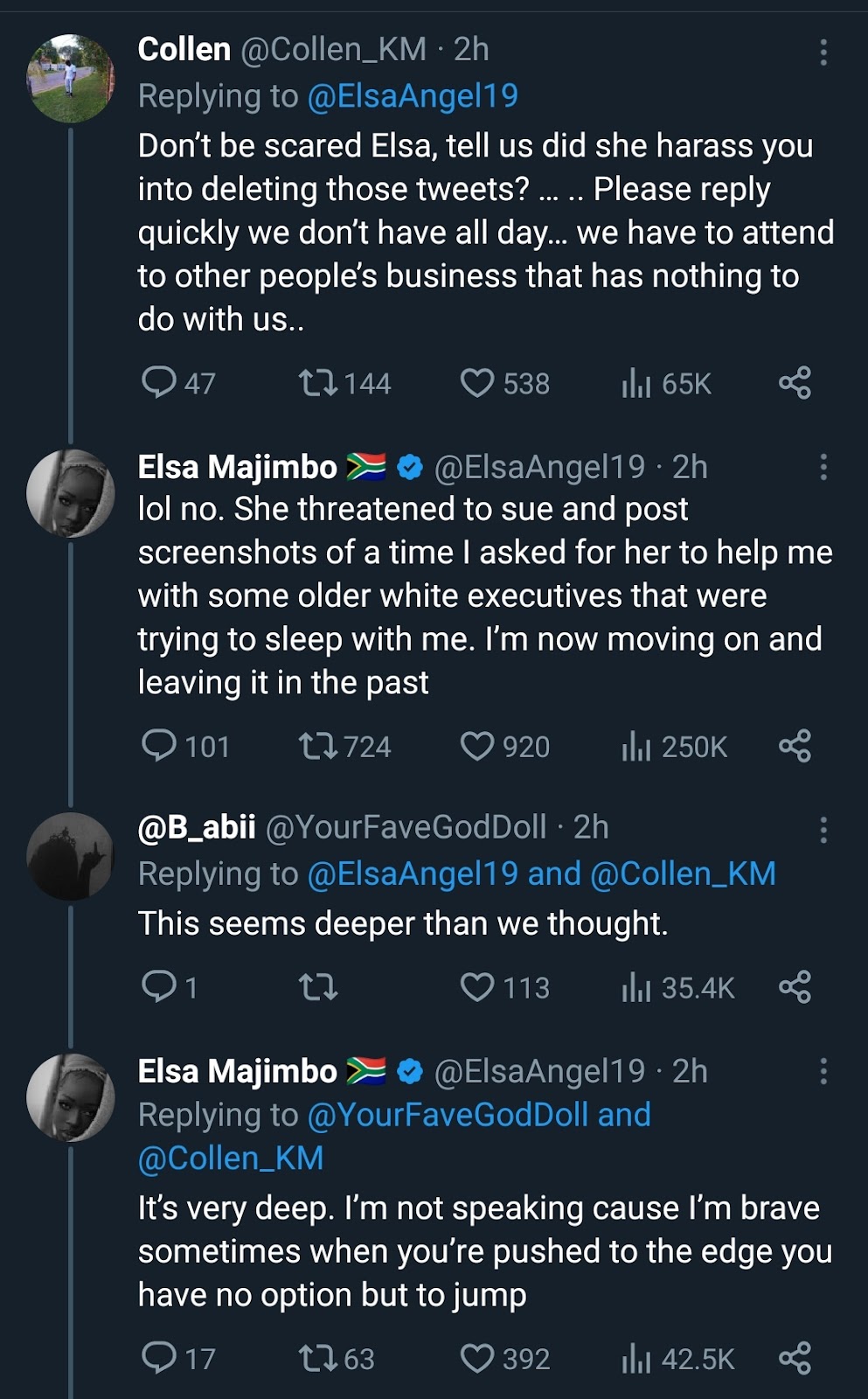
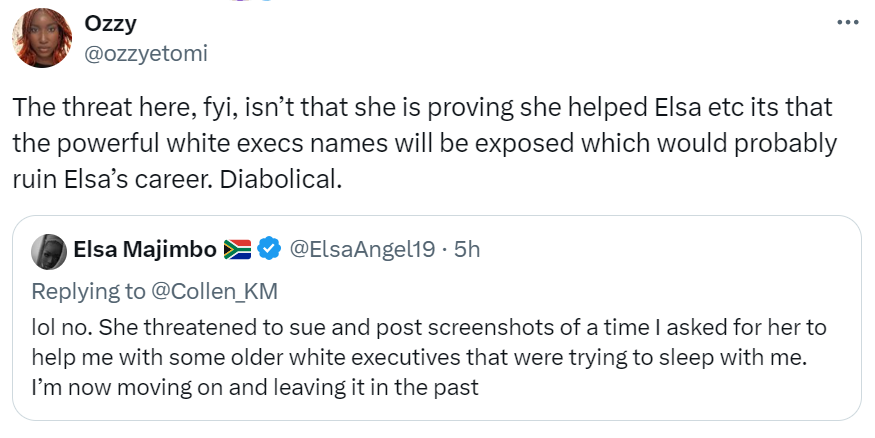
    In her responses to the comments under this new post, Elsa said Naomi threatened to sue her and post a screenshot of a time Elsa asked her for help against some predatory older white executives. One wonders how the second part would incriminate Elsa.

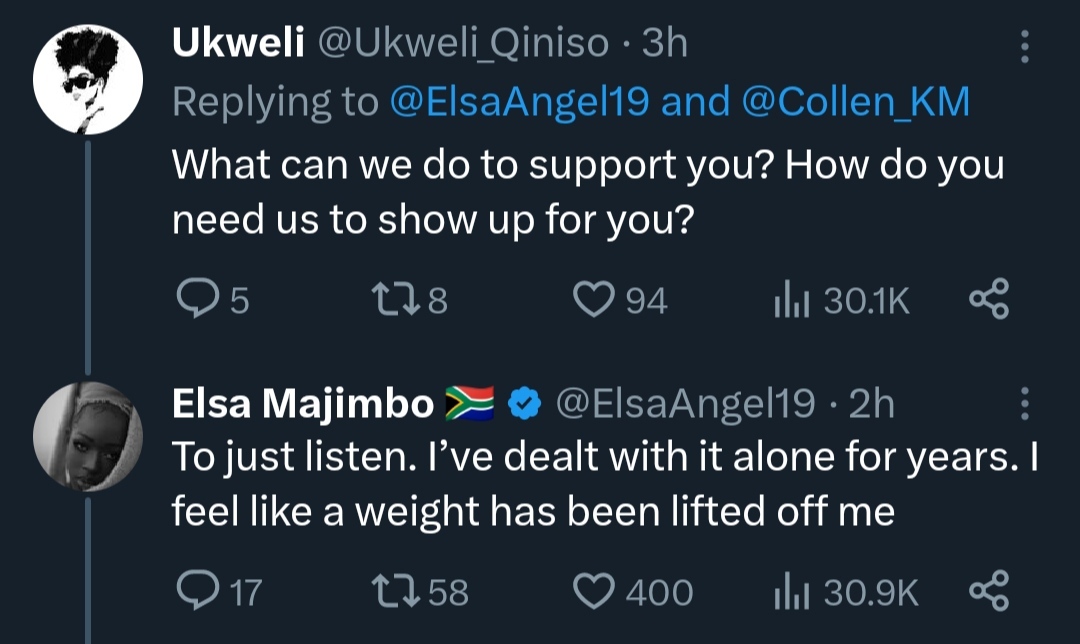
    But all Elsa wants is the public’s listening ears.

    Naomi Campbell hasn’t commented on the viral video and tweets as of the time of publishing.


    Psst! Have you seen our Valentine’s Special yet? We brought back three couples we interviewed in 2019 – one now with kids, one now married and the last, still best friends – to share how their relationships have evolved over the previous five years. Watch the first episode below:

  • For a group of people who aren’t doing their jobs well, Nigerian lawmakers earn a lot. In fact, they’re some of the highest-paid lawmakers anywhere in the world.

    And they earn a lot for debating things like making naira coins great again, how much shinier toilets can become, and how to recreate a military-era policy

    The reward system for Nigerian lawmakers has been the subject of controversy for many years. Even the actual figures of how much they earn are controversial, especially with respect to the allowances they receive separately from their salaries. 

    As Nigeria’s financial position continues to see shege, the pressure to review the reward system for lawmakers and other officials grows more intense. And a recent development several thousand kilometres away in Kenya may be the best blueprint for Nigeria to follow.

    What’s happening in Kenya?

    Kenya’s Salaries and Remuneration Commission (SRC) announced a review of the remuneration package of public officers in a notice issued on July 28th, 2022. The commission removed car grants for state officers and plenary sitting allowances for 416 members of parliament. The cut allows the Kenyan government to save at least Ksh382.2m that can be channelled elsewhere.

    The general review still leaves the parliamentary officials earning more than before in gross salary, but the SRC rejected a proposal to increase their pay to as high as Ksh1.2 million per month. The review clearly outlined the pay package for political office holders including the president, ministers, governors and others. 

    Why can’t Nigeria do a review?

    Nigeria’s version of Kenya’s SRC is the Revenue Mobilisation Allocation and Fiscal Commission (RMAFC). Among other things, this commission determines the remuneration package of political, public and judicial office holders in Nigeria. 

    The RMAFC is made up of a chairperson and 37 other members of “unquestionable integrity” picked from each state and the Federal Capital Territory (FCT).

    Elias Mbam served as the chairman of the RMAFC between 2010 and July 2022 when he resigned to run for governor in Ebonyi State. He complained many times about how difficult it was for Nigeria to review the remuneration package of public officers. 

    In fact, the last time Nigeria reviewed the package was in 2007, a year when inflation was still in single-digits.

    The good old days

    In 2009, the late President Umaru Musa Yar’Adua asked the RMAFC to do a downward review of salaries and allowances of public officers due to Nigeria’s dwindling revenue. In the RMAFC’s proposal, the commission cancelled the 300% severance gratuity allowances for presidents (₦10.5 million) and vice presidents (₦9.1 million) and reduced their hardship allowance of ₦1.8 million and ₦1.5 million, respectively, by 20%. 

    This is how much a Nigerian president earns

    The proposal also reduced the number of cars allocated to the senate president and the speaker of the House of Representatives, and reduced constituency allowances to federal lawmakers by half. The allowances for entertainment, personal assistants and severance gratuity for local government officials also ended up on the chopping block. 

    The RMAFC was cutting everything on sight

    But the National Assembly never passed the draft bill of the proposal and President Yar’Adua was too distracted by illness to see it through before his death in 2010.

    Another attempt to review the remuneration package failed in 2015 under the watch of the outgoing administration of Goodluck Jonathan. The same proposal failed to gain traction with his successor, Muhammadu Buhari, and never even made it to the National Assembly to be ignored a second time.

    This is how much a Nigerian senator earns


    ALSO READ: The 2023 Presidential Campaign Promises We Already Find Laughable


    What can Nigeria do differently?

    It’s clear that Nigeria’s biggest problem with reviewing the remuneration package for political officers is that those affected are also in charge of approving any proposals. 

    The chairman of the RMAFC is appointed by the president and confirmed by the National Assembly. And for a review proposal to pass, it must go through those same channels. It’s no surprise Nigeria cannot get a review done.

    Mbam said in 2019, “Perhaps, the most challenging issue the RMAFC faces is the abuse by stakeholders at both the national, state and local government levels in the implementation of the approved remuneration package for political, public and judicial office holders.”

    Kenya’s SRC isn’t burdened by such problems, as it has an automatic timeline of four years to review the package for Kenyan politicians; this is usually set just before general elections for a new government. 

    Nigeria needs a process that’s just as transparent and independent for any progress to be made here. The country needs a fiscally leaner government based on its revenue weakness, and what better place to start cutting the fat than from the top?

    ALSO READ: After 35 Years of Service, All I Have Is a Monthly Pension of ₦80k

  • Navigating life as a woman in the world today is interesting. From Nigeria to Timbuktu, it’ll amaze you how similar all our experiences are. Every Wednesday, women the world over will share their experiences on everything from sex to politics right here. This is Zikoko’s What She Said.

    Today’s #ZikokoWhatSheSaid subject is Laura, a 23-year-old Kenyan woman. She talks about moving to a new town at 16, her rocky relationship with her sister, respecting her more after their mum dies, struggling with depression and finally accepting that grief is an unending cycle.

    What was it like growing up in Kenya?

    I lived in a city called Kisumu and it felt very communal. People were so close that neighbours ate dinner at each other’s houses. I loved it. When I was 16, we moved to Nairobi, and it was a huge culture shock. 

    In Nairobi, people are a lot more individualistic. Everyone minds their business, and I found it strange at the time. In Kisumu, everyone knew everyone. The downside was having aunties report me to my mum or sisters whenever I did anything mischievous. Still, it felt more like home.

    LOL. The reporting part has Nigerian aunties written all over it.

    LOL. Kenyan aunties win the war there.

    But if you loved Kisumu so much, why’d you leave?

    I lost my mum. I was 16, and there was no one to take care of me while my siblings were away at school or work. I ended up in Nairobi with my older sister. She worked as a banker, so I moved into her one-bedroom flat with my immediate older sister. Without our mum, it was a different kind of experience living together.

    I’m really sorry about your mum. Tell me about your experience with your sisters?

    Thanks. In the first few months, we’d butt heads a lot. Imagine three people living with three sisters in one room. I remember one evening, my sister’s boyfriend came to the house. The house was already tight enough as it was, so I had to sleep on the floor. I was frustrated and didn’t know when I yelled, “I wish my mum were here. I wouldn’t be sleeping here.” 

    Everyone was grieving in their own way. I’d say the loss made us closer though. When we were younger, the disagreements were a lot worse. We never saw eye to eye. They felt my mum overindulged and spoiled me. So we never got along, ever. I grew up knowing my sisters hated me. And it was mutual.

    Oh wow.

    Yeah. Normal sisters stuff. I thought they could’ve been more supportive, especially my eldest sister. But moving in with her made me respect her more. She was 25 and suddenly responsible for two people. Her taking care of us financially made our relationship better. We talked more.

    Without my mum, I started to see some of the toxic traits my sisters pointed out as kids. Like how I changed primary schools five times for no good reason. One time, I moved because I thought the school had cooler kids than I. Or the expensive toys and clothes mum bought for me. I’d either spoil or misplace them in one or two weeks, but she’d replace everything without question. They never understood why she allowed me to get away with everything.

    Did you?

    Sort of. My mum was the last child too. She always said she saw herself in me. Although I never met my dad, he was also the last born. I’d imagine they were two equally troublesome people who came together to have me. So think of me as the problem child. I was the one changing schools, getting toys or getting into arguments with other kids in my neighbourhood. 

    We were really close, but she wasn’t always home. She’d either be at the office or travelling for work. I still tell my sisters I had more memories of our mum’s eldest sister. She was so consistent in my life that people at school thought she was my mum. 

    So you were closer to your aunt?

    I felt like she understood me. Maybe it was how she made sure my siblings didn’t get a chance to beat me when my mum was away. She was the aunty everyone in the family was afraid of. But for some reason, we connected.

    When my mum passed, people at school assumed it was my aunt that died. That’s how close we were.

    How did your mum’s absence make you feel?

    Ignored. Especially now that I think about it as an adult. I didn’t need the toys she bought as much as I needed her. I saw other kids with their dads and mums picking them up from school. I wanted that too. But I didn’t resent her though. When she was around, we bonded. My resentment was towards how she died and how early it happened.

    In 2013, she’d been demoted from work and got really sick. We went from never seeing her catch even a cold to suddenly being in and out of the hospital for the next two years. She got better in 2015 and started a new job. But by October, she started getting sick again and that was it.

    Do you know exactly what was wrong?

    We never got a specific diagnosis. I still don’t think her death had anything to do with an illness. Sometimes, we’d go to the hospital and doctors wouldn’t find anything wrong. I’d say she was depressed and that manifested into some kind of physical pain. After the demotion, she never got back to that rank and stopped making as much money. Things got worse once she began to fall sick.

    To me, that job was a distraction from losing a husband at 34 and raising three kids alone. So when my mum lost it, all that sadness came back till eventually, she gave up on fighting. I’ve never said that out loud before. 

    I loved… love her. I only wish we had more time together. 

    Thank you for opening up to me. How did you cope with the loss?

    I had my sisters. Until I went to uni in 2017, everything seemed fine. At school, the goal was to drown all the emotions about my mum’s death. 

    I made two new friends and focused on hanging out with them. We’d go on tiny dates to ames (tuck shops), walk around the campus together — I was on a vibe. If I wasn’t with them, then I had my boyfriend. I did everything to ignore reality, and hanging out with my friends made me feel better. The distraction worked until we had a class on the five stages of grief. That was the downside of studying psychology. Sometimes, it made me feel understood. Other times, it forced me to confront things I didn’t want to.

    Why did you choose to study psychology then?

    My mum was a psychologist and always wanted one of us to take after her. I started off wanting something more creative, like journalism, but when I took some psychology classes before college, I fell in love with it. I didn’t think I’d be the sister following in our mum’s footsteps, but here I am.  I had always loved understanding people’s thought processes, particularly the way they affected women. 

    As a kid, I wondered why I was stuck in the kitchen during festive seasons, while the men got to mingle outside. I guess that made me curious about the human behaviours that introduced certain beliefs. And psychology gave me some knowledge on that. 

    Becoming a feminist didn’t fully kick in until I joined Twitter in 2019. When I was in high school, I’d seen Kenyan women like Sheaffer Okore on TV talking about our rights, but Twitter gave me a lot more access to African women. I started following Nigerian women like Uloma. I just loved seeing them speak passionately about what they wanted from life. In my head, they were like big sisters. 

    Love it! Did the class on grief help?

    Yeah, it made me more aware. For the most part, I was in denial. Then, the anger and depression phase hit during the lockdown. Being at home for that long gave me too much time to think about my mum. Suddenly, I wasn’t even talking to my friends. 

    I’d listen to emo music and be angry that she left me. But angrier with God that she died in the first place. My sisters were worried. When I bothered to speak to them, I talked about wanting to die young. Actually, I hoped for it.

    Laura…

    I’m okay. It’s scary to admit it. I’m not sure how it happened, but my mum talked about how my dad was depressed before he died, and then, she eventually became depressed with all the responsibility she had taking care of three girls without him. During the lockdown, I accepted that I’d end up the same way. I didn’t want my sisters to keep worrying though. So I put up a front. But the longer I pretended to be happy, the more I hoped I’d actually be happy.

    Did it work?

    There were moments that felt really good. Like waiting for my sister to come home from work because I knew she’d bring gist. This year is the seventh anniversary of my mum’s death. And it’s been two years since the lockdown. Some moments, I’m fine thinking about her, and other times, I’m back to those feelings from the lockdown.

    I think the good part is getting older, and somehow, accepting that I can’t keep blaming my mum for dying. She was unhappy. I’ve seen my eldest sister struggle with money for us sometimes, so I empathize with my mum’s reality. My life has also given me some perspective on how life can be tough. I’m done with university now and getting a job has been difficult. I can’t imagine having to take care of another human being. Still, the grieving never really ends — it’s an unending cycle. I’m too scared to even think of having kids of my own.

    Why?

    I think I’ll end up drinking myself into depression. I don’t want them to go through the same grief. At this point, the only thing that keeps me going is my sisters. They do everything to make sure I’m alright.

    I wish I had sisters too.

    LOL. Sis, I’m fighting with one of them now. So the love is up and down. My sisters, and the moments I spend hanging out with friends and going to parties, remind me that life can be good sometimes. Right now, a big struggle has been with my faith. I’m convinced God doesn’t exist. I grew up in a devoted Catholic family that prayed all the time. So why couldn’t he save my mum? 

    The first time I prayed in a long time was in November 2021. And that was because of a pregnancy scare that turned out to be nothing. Maybe it was some kind of answered prayer, but I’m not convinced. Other than that one random moment, our relationship is non-existent. I don’t think I can forgive him for taking my mum. At least, not now. 

    And Kisumu? Do you miss it?

    Kisumu is a bittersweet memory. It reminds me that my mum really isn’t with me anymore. But then somehow, it reminds me that she’s always with me. I still go back with my sisters to see my aunt though. Kisumu will always be home. 

    Right now, I just want to get a job and make enough money to take care of myself. I want to take off the burden from my sister so she gets to enjoy her life too.

    If you’d like to be my next subject on #WhatSheSaid, click here to tell us why

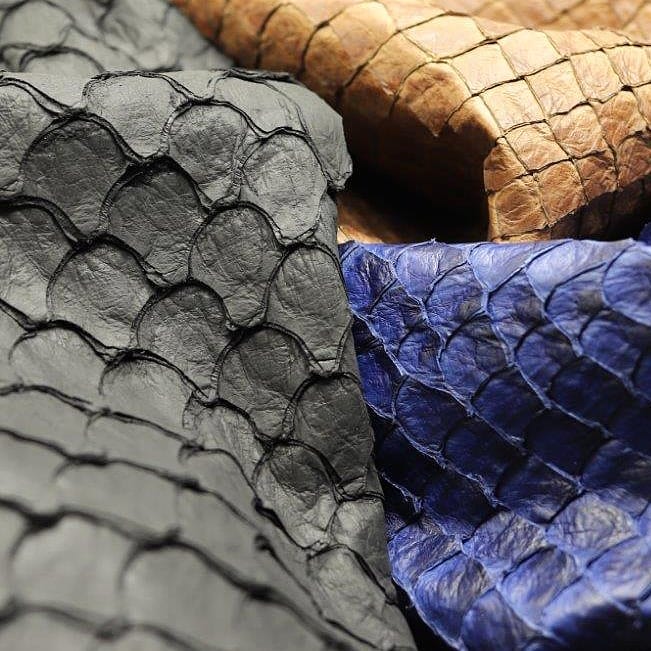
  • Leather, as I have always known it to be, is a flexible material gotten from tanning animal skin. It is used to make most fashion items (shoes, clothes, bags, wristwatches), furniture, book covers and more.

    Cattle hide and reptile skin are the most popular skins used for leather but now there is a new kid on the block– fish leather.

    Yes, it’s a thing.

    Apparently, it is as exotic as snake leather and will soon be in higher demand, according to the manufacturers.

    It is actually possible that you already have an item that was made with fish leather without even realizing it. Kenya is really rocking it.

    Several manufacturers of fish leather seem to actually stumble on this form of leather but are now waxing poetic about how its such an important variant, mostly because the cost of production is so low–since fish scales are regarded as waste–and because; unlike reptile skin and some animal hide, fish leather isn’t hard to import or export.

    What do you think of this though? Will you totally rock fish leather?

  • East African food might be entirely new to the Nigerian palette, but I can assure you that you’re going to love these Kenyan dishes!

    1. Ugali na Sukuma Wiki

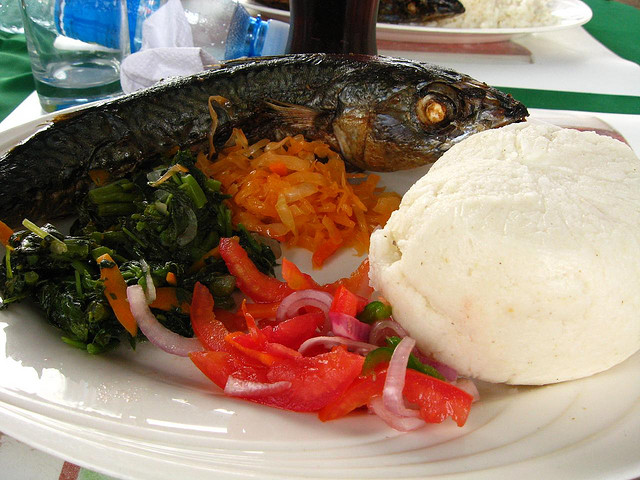
    The most popular Kenyan food, Ugali is a staple. It is made from cornmeal that is added to boiling water and stirred until it forms into a cake. When accompanied with beef, mushroom, fish sauce or sukuma wiki (green vegetable soup), this is one meal you’d like to try again.

    2. Irio

    Irio is a delicious local dish made of potatoes, peas, green vegetables and sometimes corn, that is boiled and then mashed. It is sometimes served with grilled steak called nyama choma. The combination is called Nyama na Irio. Irio can also be served with other Kenyan-style stews.

    3. Githeri

    Githeri is a delicious combination of beans, corn, beef, beef stock, potatoes and vegetables that are cooked in tomato sauce. It is usually served with either white bread or Swahili chapati. Chapati is Kenyans’ favourite bread, made with white flour, salt and oil.

    4. Pilau

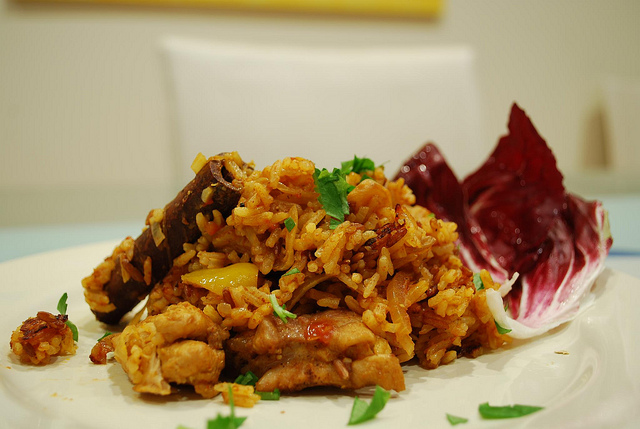
    Pilau is rice flavoured with spices cooked in stock meat, chicken, fish or most especially, goat meat. Kinda like jollof rice. Totally delicious.

    5. Matoke

    Another Kenyan staple, Matoke is a delicious dish of plantain bananas that are cooked with some oil, tomatoes, onions, garlic, chilies, meat and lemon juice. The plantain bananas are cooked until very soft and it begins to form a thick, delicious sauce.

    6. Maharagwe

    Maharagwe is a sweet stew made up of red kidney beans cooked in coconut milk and spices. The coconut milk gives it a thick, buttery consistency and it is just perfect with some Chapati.

    7. Nyama Choma

    Nyama Choma is a delicacy of beef or goat roasted until very tender. Fish and chicken are also used. The meat is usually seasoned with salt and left to cook in its own juices, and it can be served with plain rice.
  • Okay it’s not a competition, but before we begin, keep in mind what actual beard gang looks like

    Or at the very least, this

    1. But someone made a thread of the best bearded faces in Kenya

    2. You might see the beard if you use your inner eye

    3. Do you see a beard here?

    4. Okay, 5/10

    5. This beard is thirsty for shea butter

    6. This beard is more like a shadow

    7. Another 5/10 here

    8. We need microscope to see the beauty

    9. Okay, this is a nice one

    10. Where did they put this one before now?

    11. This is what we’re talking about

    12. Errrrrmmmm, NEXT PLEASE!

    13. I want his number

  • Planning to travel somewhere stress-free? We’ve got you! See Henley and Partners Visa Restrictions Report for detailed information.

    1. Kenya

    You can get a Kenyan visa on arrival for 90 days.

    2. Maldives

    Your visa on arrival for 30 days.

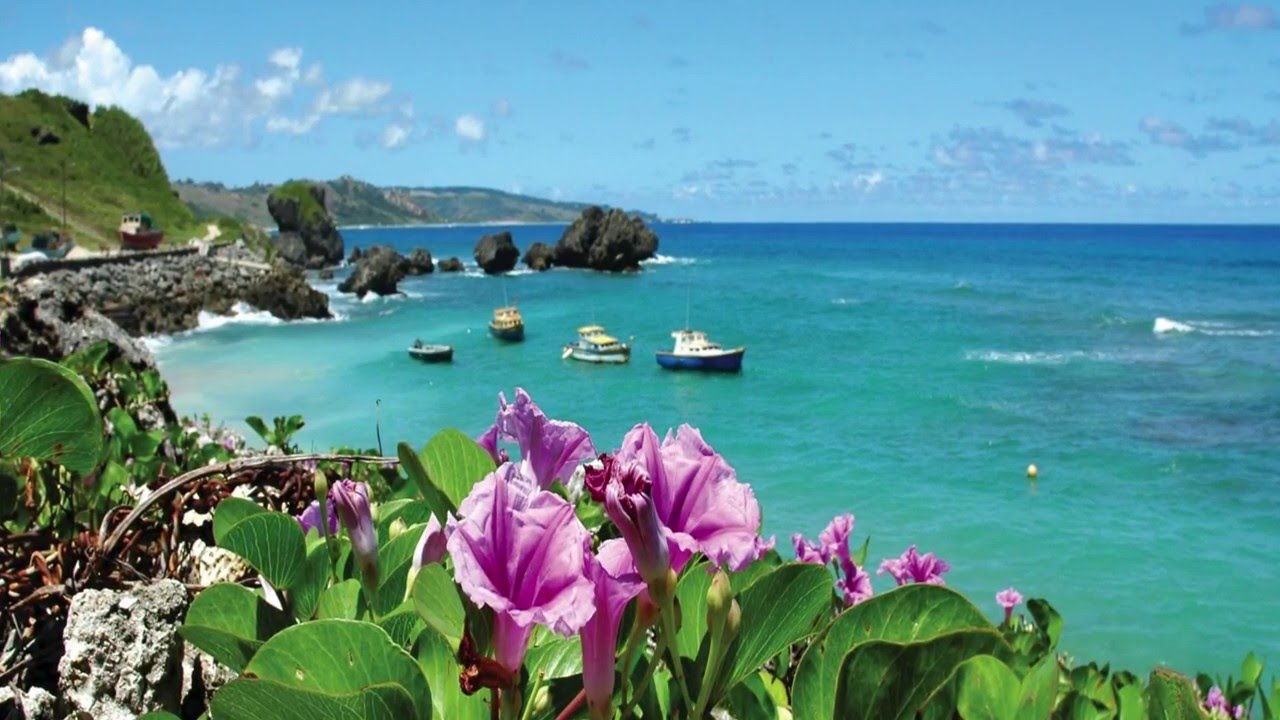
    3. Barbados

    Barbados is visa-free for 6 months.

    4. Seychelles

    You’ll only need a visitor’s permit that lasts for a month.

    5. Tanzania

    Breeze in and get your visa on arrival.

    6. Mali

    Mali is visa free.

    7. Mauritius

    Stay visa-free for 90 days.

    8. Fiji

    You can stay visa-free for up to 4 months.

    9. Dominica

    Stay without a visa in Dominica for 21 days.

    10. Sierra Leone

    No visa needed.

    11. Federated States of Micronesia

    Visa free, but only for 30 days.

    12. Burundi

    You get a 30-day visa on arrival.
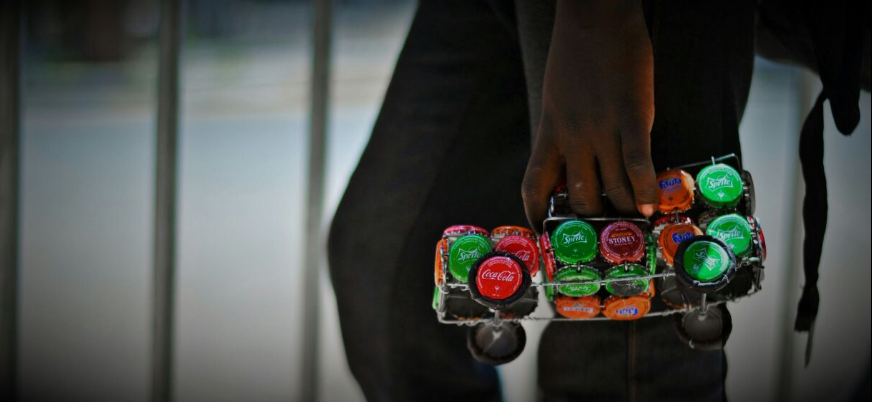
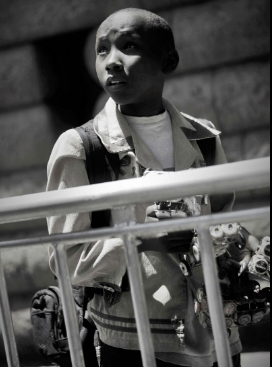
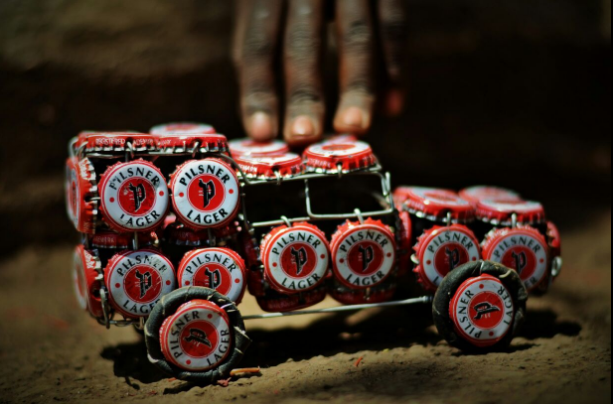
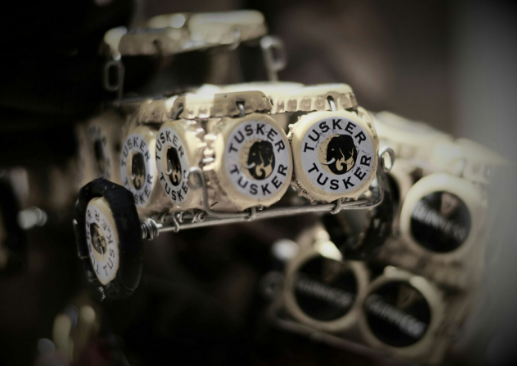
  • We were just on our own on Twitter when we saw the story of one small boy doing wonders with bottle covers.

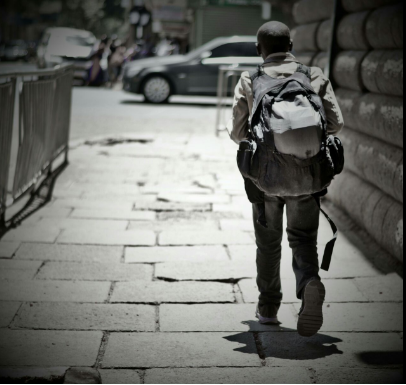
    14 year-old Timothy is one of many young Kenyans struggling to survive a harsh economy.

    But this little guy is not letting his situation stop him from getting an education. He’s building and selling these cute trucks for 150 Schillings to get his school fees.

    Timothy says he dreams of being an engineer when he grows up.

    This young man has 2 heads, and is obviously not our mate.

    If only we had sense like this as kids.

  • The fact that the world needs to collectively put a complete end to rape and other sexual assault crimes, isn’t even up for conversation.

    Apparently, elderly women, in the slums of Kenya, have been targets of rapists because they are thought to be HIV-free and weak.

    However, since 2010, these grandmas have decided to defend themselves and have been taking Karate classes

    This video shows that social media outrage isn’t enough, swift action needs to be taken against rapists and sexual predators.

    Although this may be an example of how unsafe the world continues to get, these Karate grandmas have shown exactly how strong and badass African women are.