• I used to have a stammer as a child. It wasn’t anything debilitating, but whenever I got excited or upset, my words would just refuse to come out. 

    As I grew up, it got better and mostly disappeared as an adult. If you’ve ever heard me speak and thought my words were very deliberate, it’s not me being wise, it was a mechanism I learned as a teenager to speak without stuttering. 

    On the afternoon of Tuesday, 20th October 2020, I scrambled off a couple of voice notes to friends who work in government to prevail on the authorities to not take rash action against protesters. This was because it had become obvious a group of protesters were taking a last stand and not leaving the Lekki Toll Gate even after a curfew had been announced. I sent voice messages because none of them picked my calls. 

    Then I waited. 

    3 pm. 4 pm. 5 pm. 6 pm. 

    No one replied. Then I started sweating. As a Nigerian who had seen all sorts of violence meted out to innocent people at the hands of the state, I feared the worst.

    6:30 pm. 

    Then it began. To write about that evening is to relive it all, to remember watching the live video, closing it, watching again and closing again, crying, making frantic calls, and sending more messages. 

    On Twitter, there were calls for ambulances. That’s when I recall grabbing my keys. I could put my vehicle seats down and create a flatbed to transport people to the hospital. That’s when my wife asked where I was going, and I tried to say where but the words just didn’t come. I was stumbling over them, worse than any time in my life. 

    She said I wasn’t in any condition to go out, and that it was likely to be unsafe. I tried to argue but really could not speak because I was stuttering terribly. 

    In the days that followed, there was a desperation to do something, to sweep the streets after the maddening violence that engulfed the city after the shooting, to speak, to keep a brave face, to find a way forward, while switching through endless gears of emotion. Anger, despair, fear, numbness. That numbness took me to the Lagos Judicial Panel. There was no plan, I just needed to connect with something, hoping to find some sense in the confusion of that post-traumatic existence.

    The first thing I noticed was that the panel was late. That was when I started documenting.

    To understand what a judicial panel is, one must imagine a love child between a courtroom and the lobby of an end-of-life hospice. There is a lot of order and procedure on the courtroom side of the union, but when one enters a hospice, there is an undeniable knowledge of an end in waiting, but no one ever says this out loud. 

    The panel embodies this dual existence to perfection – there is a retired justice flanked by respected lawyers, a retired policeman, civil society people (whatever that phrase means), youth representatives and the odd video game console dressed in a bow tie. 

    The panel had the power to investigate petitions of wrongdoing by SARS, the Lekki Shooting and other sundry issues, but it couldn’t really deliver justice – only recommend actions to the state which the state can choose to ignore. As I said, it’s a room full of power without real power. 

    On the first day of sitting, the panel was the highest-ranking news after the Lekki shooting. Every news organisation was there – international, local and the poor bastards who get a backroom stipend to write whatever the government press office dictates. There were also plainclothes policemen who sat in the room keeping an eye on the people who hoped to bring their service kinfolk to justice.

    And then there were petitioners – you could tell from their faces, sad, drawn, furtive, poor folk who would rather have been anywhere but that room. 

    Mr. Ndukwe

    The petitioners were surrounded on all sides by witnesses, civil society people, and jobless folk who really had no business being in the room but were there anyway – people like me. 

    Having dutifully complained about the lateness of the panel, more than an hour and thirty minutes over time, we all settled down, ready to go. 

    Before the panel – a bit of perspective 

    I think a bit of perspective is needed. At the height of the protests, I was invited to a meeting convened by the governor of Lagos State. There were civil society leaders, ‘youth leaders’, musicians, etc. My immediate feeling was that the government just wanted the protest to end, and for that, they were willing to do anything. One of the outcomes was the march to Alausa, where the governor took photos and received the “5for5” demands.

    My feeling then was that it was a silly thing to do. And I said so. I said if they wanted the protests to end, the government had prosecutorial powers and the AG could prosecute cases of armed robbery by SARS officers, even if they couldn’t interfere with internal police work. 

    The governor also proposed the ₦200m fund for victims, which I also disagreed with. I told him that the issue with the government in Nigeria is that we always think money is the solution. Give justice and you won’t need to pay money. 

    I was not invited to the follow-up meetings. Damn!

    Observation of the petitioners – justice for the poor

    The first two cases called to the panel were of men who had been reportedly robbed and jailed by police officers. One of the men was allegedly tortured so badly, he was now wheelchair-bound and unable to support his aged mother and ailing father in the village. 

    Before their encounters, both men had a decent living. Having lost everything in the course of searching for justice, they couldn’t afford decent legal representation. In fact, the pro-bono lawyer who was at the panel to represent them was so unaware of their cases, an adjournment had to be called. 

    I immediately realised poverty would be the biggest impediment to justice. The police and government had an endless legal budget, represented by senior advocates in designer suits, while these poor folks had none. Donations had been made to support legal aid for petitioners, but how sustainable those donations were was yet to be seen. 

    LCC and the investigation – the need for forensic analysis 

    A few days after the shooting incident at the toll gate, I went out with a few friends to clean up parts of the Lekki township which were affected by the violent aftermath of the 20th of October. However, we were advised to leave the looted and burned Circle Mall in Lekki and surrounding areas as they were. They were crime scenes and insurance teams would need to review those scenes before any cleanup. It made sense. It was surprising, therefore, to note that while we were out cleaning the streets, the Lagos state-owned cleaning agency, LAWMA, was cleaning the Lekki Toll Gate and other locations where arson had occurred. While the privately-owned businesses were waiting to carry out an investigation, the government hurriedly cleaned up the biggest crime scene.

    During a guided visit to the toll facility, many days later, the management of the Lekki Concession Company (LCC) was careful to show the panel the extent of the destruction, with little reference made to the actual killings which happened on that fateful night. In fact, there were no references made. We also found two bullet casings on the floor, which seemed to have survived the cleaning. But I could not help being suspicious – this was a crime scene that had obviously been cleaned a few times and this tampering means the panel would never be able to investigate properly.

    Political Theatre  

    One of the reasons I persisted with the panel is that it was about the only place run by the government where the incidents of 20/10/20 were still being discussed with any seriousness. Outside the sitting, there had been a counter-narrative by the government and their amplifiers on social media, attempting to brand the #EndSARS movement as criminal, with words like terrorism freely used. 

    The bank accounts of young participants were blocked using a dubious court order, although the reality is that these accounts had already been preemptively blocked days before the said court order. 

    A lawyer who was providing free legal aid to arrested protesters also had her passport seized, but was later released without explanation after public pressure. Presidency spokespeople branded protesters as terrorists, while government-affiliated social media accounts and bots went on a disinformation overdrive. 

    These attacks were unsurprising. After all, this is Nigeria, where no occasion is too solemn for political theatre, not even a massacre in which the country’s young people were shot and killed while sitting with flags, singing the national anthem. Whether it is the former state governor playing detective on TV, or the red sash wearing protesters outside of the panel sitting, Nigeria does these things with a complete lack of irony. 

    Seeing this irony in action doesn’t feel any less shocking though. On the first day of the panel, a government-affiliated NGO came to submit a petition to tackle selected protesters for spreading fake news and appeal for the regulation of social media. However, the young leader of the said NGO collapsed under questioning and ran away after being pressed to admit that the government is the biggest purveyor of fake news on the internet. 

    As Nigerians, we have learned to live with the ridiculous politicisation of serious processes. The Lagos State House of Assembly, for example, quickly called for a regulation of social media, spearheaded by Desmond Elliot, a former film actor turned politician. 

    The call for regulating speech has been echoed by various federal government and security agencies, and now seems to be the government’s primary security preoccupation, taking more oxygen than the Book Haram insurgency and the menace of killer “bandits” and kidnappers.

    (Of course, the government finally banned Twitter in Nigeria, but that’s a story for another day)

    Can Nigeria give justice to victims of police brutality?

    Unravelling the Lekki Toll Gate shooting was obviously the primary brief of the panel. But the interests of the various concerned parties couldn’t have been more diverse. The Lagos State Government, implicated by the military, battled to move attention from themselves to the arson that followed the shooting incident. The LCC, managers of the toll gate, wanted to be absolved of accusations of collusion in the shooting, even though their staff turned off lights and managed cameras as the military moved in on protesters. The military denied they were involved. The protesters seemed to stand alone in need of real justice. 

    Aware of these divergent interests, I walked into the panel watching out for small clues of how things would unfold. The first came very early. When the LCC MD walked into the room, he seemed to be getting deferential treatment from the staff of the panel. It was just the beginning. By his second appearance, he was led in testimony by the counsel of the Lagos State Government (LASG), which seemed like a conflict of interest – LCC is owned by LASG.

    I also observed LASG and LCC collaborating, which hinted at a deliberate attempt to escape accountability. After the Lagos State lawyers led LCC through a well-guided testimony, the LCC requested leave to start renovating the toll gate. It became obvious that the state government and LCC were not interested in investigating the shooting, but in recovering the tollgate, so they can go back to normal. It felt unfair to the young people who stood up to say “End SARS”, unfair to the people who died. 

    The government eventually got this predetermined outcome, got the toll gate back, renovated it and is reportedly ready to put it back to work after the October 20 anniversary.

    There was also the matter of the police rampage which happened on the 21st of October. Armed policemen went on a rampage shooting people on the streets. It was never mentioned.

    The panel is not a court – so the question is about “What next?’

    The government has not been very truthful in its handling of the panel. This begs the question; would an attorney general appointed by the government actually prosecute cases that are likely to show the government’s complicity in the matter?

    In the days before the shooting, I had taken to cleaning the protest site every morning. I tried to make friends with the area boys and the private security guards who were looking after the protest area. I always engaged with the boys, bought drinks and always left a little something. This helped us pass the message about non-violence. This is how I noticed the new faces. Two days before the shooting, a new set of area boys showed up, less amiable and more inclined to want to burn things down. I also noticed, as I did the rounds from Lekki Toll Gate to the Toll Gate near VGC, that there were no police anywhere in sight. Not one uniformed officer or vehicle. There was no law enforcement anywhere, which was strange for a state experiencing large protests. I began to suspect something was amiss.

    On the 20th, things took a turn for the worse. There were more ‘new’ area boys, this time, they were not listening to anyone. It appeared their objective was to make as much trouble as possible. I made it past the Lekki gate, but something inside of me was afraid. Something bad was going to happen.

    As the state government announced a curfew, the ramifications of the day’s events began to stir in my mind. The people at the toll gate were refusing to leave and whispers were emerging that there will be an armed confrontation later that night. 

    So I started making calls to my egbons in government. I somehow allowed myself to believe that while the Federal Government was run by crazy people, the state would not want blood on their hands. So I made calls to people within the state government and some from neighbouring states who had influence. When nobody picked up, I started sending voice messages. 

    The messages were desperate. “Please have the governor go to the toll gate and speak to the protesters until they all go home”. It was the only way to protect those young people. Nobody replied.

    Anger 

    In the end, Nigeria has seen many judicial panels come and go, and the most common experience we have had with those panels is how ineffective they have been in ultimately granting justice to the people. So, as I went to the next panel sitting, the real question I had was “Will this one be different?”

    In the last few days, I have watched the videos from that day again – phone videos, a drone shot, bits of the live stream and the CCTV footage supplied by LCC. It is really hard watching them without almost experiencing the full emotions of that fateful night. 

    It is a reminder to press on and ask for better. That is what life is for. The horrors of that night washed up a long-dormant speech impediment for me, but what is a stutter where there is death? 

  • Citizen is a column that explains how the government’s policies fucks citizens and how we can unfuck ourselves.

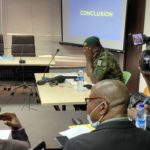
    The Nigerian Army has shared their testimony twice at the Lagos State Judicial Panel of Inquiry and Restitution For Victims of SARS Related Abuses.

    At Zikoko Citizen, we have been following the “Lagos SARS panel” ever since the panel was inaugurated, and we have also been present at the panel hearing on the two occasions that the Nigerian Army has testified.

    In this article, we will explain what exactly the Army’s new testimonies mean, including the impact of these testimonies for those who seek justice for victims of the #LekkiMassacre.

    Read: The Nigerian Military Has A History of Killing Unarmed Civilians

    November 14, 2020 – Day 1

    The first time a representative of the Nigerian Army was called to testify at the Lagos State Panel on Restitution For Victims of SARS Related Abuses was on November 14, 2020.

    On that day, Brigadier-General Ahmed Ibrahim Taiwo, the Director of Information testified on behalf of the Nigerian Army to the proceedings of the night of 20th October, 2020.

    He began by stating that it is unfortunate that the unrest that has happened in Lagos since the #EndSARS protests has been limited to the Lekki events. He added that the Army decided to intervene in the protests because hoodlums had hijacked the protests in many parts of Nigeria, killing policemen and burning police stations, and even resorting to cannibalism.

    He stated that the situation was like the Liberian civil war where different forces were resorting to force were bandits and warring parties where total chaos had descended on the society and warring parties were burning and killing themselves.

    He stated that it is this terrible situation of things that prompted the Lagos State government to call the Armed Forces by 12pm on 20th October 2020 to intervene in the situation in Lagos.

    He continued, saying that the critical situation made the Governor of Lagos State, Babajide Sanwo-Olu to impose a curfew in Lagos, starting by 4pm, so that the streets would be free of hoodlums.

    He stated that when the governor changed the curfew time from 4pm to 9pm, he did not communicate it to the Nigerian Army.

    On the night of 20th October 2020, Brigadier Taiwo stated that the Nigerian Army officers of the 65 battalions joined with the officers of the 85 division garrison to secure Epe, Badore, Sangotedo and Lekki axis.

    He maintained that the Nigerian Army did not use live rounds against peaceful protesters.

    November 21, 2020 – Day 2

    On this day, The panel hearing for the testimony of the Nigerian Army continued.

    The hearing on this day focused on the video footage of the events of the night of 20th October, 2020, as provided by the Lekki Concession Company (LCC).

    The LCC video is played, but the video has no audio. The video showed how the Nigerian Army arrived at the scene of the protests.

    Lawyers to the Lagos State government take turns in cross-examining the Brigadier-General Taiwo of the Nigerian Army, who maintains that the Nigerian Army did not fire live rounds at protesters even after video evidence of people talking about the Army firing bullets at protesters was played to him.

    The panel sitting eventually adjourned with the panel promising to summon other officers of the Nigerian Army if need be.

    We hope you’ve learned a thing or two about how to unfuck yourself when the Nigerian government moves mad. Check back every weekday for more Zikoko Citizen explainers.

  • Citizen is a column that explains how the government’s policies fucks citizens and how we can unfuck ourselves.

    On October 19, 2020, the Lagos State Government set up the Lagos Judicial Panel of Inquiry and Restitution for victims of police brutality in Lagos state. But, judicial panels are not new in Nigeria. In fact, about 20 years ago, we also had a popular Oputa panel.

    Read: #EndSARS: The Lagos Judicial Panel of Inquiry Is Now Sitting

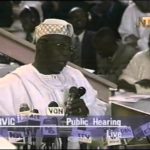
    In 1999, Nigeria’s former President Olusegun Obasanjo set up the Human Rights Violations Investigation Commission of Nigeria, popularly known as the Oputa Panel. Because Nigeria was just getting back to democratic rule, Obasanjo inaugurated a commission to investigate human rights violations during the military era of 1984 to 1999.

    The panel later went ahead to investigate “gross human rights violations” dating back since as far as 1966. But unfortunately, the panel never officially made its report publicly available.

    Inauguration of the panel

    The Nigerian Human Rights Violence Investigations Commission, popularly known as the Oputa Panel was formally inaugurated on June 14, 1999, by the Statutory Instrument No. 8. of June 1999, pursuant to the Section 1 of the Tribunals of Inquiry Act of 1990 which gave the president the powers to constitute a tribunal.

    Statutory Instrument No.13 of October 4, 1999, amended the terms of the commission to 1966, and it also included changes in the membership of the commission.

    At the inauguration of the panel, Obasanjo charged the panel to review past authoritarian regimes and the human rights abuses “for the purpose of enhancing reconciliation, national cohesion, and entrenching the national democracy”.

    The 6-member panel was led by Justice Chukwudifu Oputa, an eminent jurist and a retired Judge of the Supreme Court of Nigeria from 1984 to 1989. It also included well-respected members like Father Matthew Kukah, a former Secretary-General of the Catholic Secretariat of Nigeria and the current bishop of the Roman Catholic Diocese of Sokoto.

    The job of the panel

    The Oputa panel was authorised to investigate gross human rights violations between the 15th of January 1966 when Nigeria had its first military coup until May 28th 1999, the day before Nigeria got back to democracy under Olusegun Obasanjo.

    The panel also had the authority to work towards the reconciliation of many communities that were in conflict with one another during the military regime.

    The panel received over 10,000 petitions which included cases of i) physical and mental torture; ii) unlawful arrest and detention; iii) communal violence; iv) disappearances; v) intimidation and harassment vi) assault and battery; vii) victimisation in the workplace; and viii) murder and assassination.

    More than 200 cases from those petitions were heard at publicly broadcasted hearings across the six geo-political zones of Nigeria, and public hearings lasted for more than a year.

    Some of the most prominent hearings of the panel included the petitions about the death of Dele Giwa, the death of MKO Abiola, the purported coup to overthrow Sani Abacha in 1997, and the burning of Fela Kuti’s Kalakuta Republic on February 18, 1977.

    Report of the panel

    In June 2002, the Oputa panel presented an eight-volume report of 15,000 pages to the president, containing details of human right abuses during Nigeria’s military era. However, the government failed to release the report.

    After six months, Obasanjo’s government further annulled the panel on the grounds that it was unconstitutional. This decision was reportedly based on a Supreme court case of 2003 where two former military leaders, Ibrahim Babangida and Abdusalam Abubakar went to court to challenge the powers of the federal government to set up tribunals of inquiry.

    The Supreme Court later ruled that state governments, not the federal government had the power to set up tribunals of inquiry.

    These former military leaders and top functionaries like Muhammadu Buhari, Ibrahim Babangida, Abdusalam Abubakar, Colonel Halilu Akilu and Colonel A.K Togun also failed to appear and testify before the panel when they were summoned.

    Conclusions of the panel

    The panel concluded that:

    1. The Nigerian military was responsible for gross human rights violations
    2. There was collaboration of powerful and rich civilians in preparation for numerous coups.
    3. That some state counsels in the Ministries of Justice violated fundamental rights of due process in attempts to protect perpetrators in specific, named cases.

    The panel also recommended many things, including that victims of human rights abuses over the years were receive comepensation.

    Though the report of the panel has still not been officially published, the report was leaked online in 2005 by the Nigerian Democratic Movement and the Civil Society Forum, two activist groups.

    Read: SARS Was Created When The Police Ran Away

    We hope you’ve learned a thing or two about how to unfuck yourself when the Nigerian government moves mad. Check back every weekday for more Zikoko Citizen explainers.


    [donation]

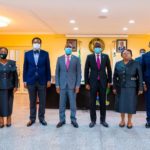
  • The 8-man Lagos Judicial Panel of Inquiry and Restitution to investigate cases of police brutality in Lagos is now sitting.

    The panel is led by Justice Doris Okuwobi, a retired Judge of Lagos State. The youth representatives on the panel are Rinu Oduala and Majekodunmi Temitope.

    The panel was constituted by the Governor of Lagos State, Babjide Sanwo-Olu on October 19th 2020, when he invoked Section 1 of the Tribunals of Inquiry Law of Lagos State which gives the Lagos State governor the power to constitute a tribunal when necessary, to inquire into the affairs of any public officer in Lagos State.

    Section 5 of the Tribunals of Inquiry Law of Lagos State also gives the Tribunal the power to conduct investigations into the proceedings.

    The job of the panel

    The panel will sit for six months, and it will draw conclusions from the statements of victims of police brutality in Lagos State, with the aim of determining and recommending compensation for victims and their dependents.

    The tribunal is also mandated to interrogate SARS officers responsible for the abuse of victims and recommend their prosecution. 

    The Lagos State Government also says it has established a ₦200 million fund for compensation to families and individuals who have been victimised by officers of the Special Anti-Robbery Squad (SARS).

    Oath of secrecy

    Earlier on in the day, there had been some controversy about an “oath of secrecy” that panel members had to swear to.

    However, it seems the air has been cleared as lawyer, Mochievous, stated that the concerns were raised on the issue and the panelists will not be signing the document.


    [donation]