Everybody wants to japa, but not everyone makes it. Almost Abroad shares the near-misses and big wins of Nigerians chasing greener pastures against all odds in 2025.
Tired of the stress of moving money across borders? With Juicyway, you can seamlessly send, receive, and convert fiat or stablecoins like USD, CAD, USDT, and USDC in Nigeria—at great rates. Free multi-currency accounts, instant transfers, and top-tier security? Say no more. Click here to get started!
When did you start considering relocating to another country?
I didn’t consider relocating until January of this year, and it was unplanned. I had just completed my National Youth Service Corps (NYSC) and had been job hunting since October 2024 without results. One day, while I was on a call with my sister, she suggested that I come to the UK for my master’s. It was random, but I took the conversation seriously and did my research; in three days, I had gotten a conditional offer. I applied for the June intake, and everything literally started happening so quickly. In under one week, my parents had paid my tuition fees.
How did you pull that off in this economy?
My parents are financially comfortable, and I have two siblings in the UK. My tuition fee was about £16,500, and I got a £3000 discount for graduating with a second-class upper degree. My parents footed the bill, but having siblings in the UK made the process easier.
How so?
I didn’t need to deal with the stress and extra charges that come with making international payments from Nigeria. The last time I tried to do international transactions from Nigeria, my money got stuck for 37 days, and I had to get account officers involved. Aside from this, some other parts of the immigration process were difficult for my parents.
Like what?
The exchange rate was the biggest one. For example, I was told that the money I needed to present as my proof of funds must remain in my account for about 28 days. At that time, the money I needed in my account was ₦34.6 million, but my parents asked me to round it up to ₦37 million
Looking back now, I’m thankful my parents had foresight because by the end of the 28 days, the exchange rate had increased the original amount for the proof of funds to ₦36.4 million. If it had risen beyond the ₦37 million my parents gave me, I would have needed to start the process again just because of the exchange rate.
We also had the same issue with my school fees and every other fee we had to pay in pounds. At some point, we just decided to start paying in full immediately the expenses come up, because waiting could mean subjecting my parents to spending more money because of the instability of the exchange rate.
Get More Zikoko Goodness in Your Mail
Subscribe to our newsletters and never miss any of the action
What level of financial strain did this process put on your parents?
My parents dislike complaining, but I could tell the expenses shook them. The inflation also made things a lot worse than they should have been, but I’m so grateful they made that decision for me. I’ve gone from being jobless in Nigeria to hopeful about a brighter future in a new country.
Tell me more about your life in Nigeria
I studied Philosophy at the university, which made it a bit harder to get a job afterwards. During my NYSC, I worked with a brand manager in an insurance company. The job involved a lot of conversations with clients, trying to convince them to buy insurance policies to get insured. It was a lot of work, but I found it fascinating. That was when I started thinking, “Maybe marketing isn’t such a bad idea after all.”
While I found marketing interesting, I wasn’t keen on doing it the traditional way,. I was more drawn to digital marketing. I’ve always been active on social media as a user but not as a content creator. Still, I believed I could be good at it. I just wasn’t sure how to navigate that path yet.
I got my sister’s offer to study in the UK, so it made more sense to apply to the digital marketing program. I read up on the modules, did some research, and everything just felt right. I wrote my statement with so much passion, and clearly, they saw something they liked because I got my conditional offer in just three days.
Wait! You get your conditional offer in three days?
Yes! It was shocking. I recently joined a WhatsApp group chat with other Nigerian students applying to study in the same school, and they all heard back from the school after four weeks. I still don’t know how mine took three days. Funny enough, my best friends were already in the UK, so that made the relocation decision easier.
Are you ever going to come back to Nigeria?
Absolutely.
Interesting
Yeah, as shocking as that might sound, I plan to return to Nigeria. To be honest, location has never really been a big factor for me. I’ve never sat down and thought, “Oh, I need to pack my bags and japa to the UK, Canada, or the US.”
My hesitation towards relocation was mainly due to the fact that I live a comfortable life in Nigeria. Not in the flashy Instagram soft life way, but I am genuinely okay. I have a small side business – a clothing brand – that is doing pretty well. I am not balling, but I am comfortable. With the support of my parents, I have a car, an apartment, and a good social life. I have my friends, freedom, and the ability to move around easily. Life in Lagos is really sweet.
I can take road trips, have lunch in one spot and dinner in another. Lagos has its chaos, but it’s a fun city to live in if you have money. So I’ve never been the “let me run away and go suffer in another man’s country just to make money” type of person.
That’s refreshing to hear.
Yes, Nigeria has its problems. The country needs a lot of work, but at the end of the day, Nigeria is still home. My parents and most of my loved ones are here.
I originally planned to do my master’s at the University of Ibadan. I even started the application during my NYSC. I had it all figured out— I’d do a master’s, find a job in Ibadan, and build my life there. I already had a place to stay, my car, friends, and a solid support system. But then my sister told me about studying in the UK, and I was like, “Maybe this Nigerian dream isn’t Nigerianing the way it should,” so I went for the opportunity.
Long-term, I might not even settle in the UK, especially with the way things are going and how they’re treating international students and immigrants. Maybe I’ll end up in Canada or the US. Thank God I still have youth on my side, so I can hustle, save, and build.
I’ll eventually go back home because that’s where my heart is. I love Nigeria; I love the lifestyle, the culture, and the partying. I know what that comfort feels like, and I’d love to return to it someday.
For now, I’ll focus on getting my degree, getting the bag, and see how things go. Plans can change, but my heart is still in Nigeria.
Love that for you. Have a safe flight to the UK!
Thank you!
Want to share your Almost Abroad story? Reach out to me here.
[ad]
With the cost of living rising faster than incomes, many Nigerians are forced to make difficult financial choices. For context, essentials like food, internet, fuel, housing and transport now take up most of their earnings, leaving little room for anything else.
We spoke to six Nigerians about the sacrifices and adjustments they’re making to their daily lives and the strategies they’re using to survive in an increasingly challenging economy.
“I settled for budget perfumes over designer brands” — Samirah, 30, Pharmacist (₦350k/month)
“I love shopping for things that make me happy. It’s one of my favourite ways to unwind. But with skyrocketing prices, I’ve had to cut back. I used to spend at least ₦100k on new bags and shoes twice a year, but I haven’t bought new ones in two years.
Perfumes are the most painful sacrifices; I can no longer afford to smell rich. I used to have a solid perfume stash with at least six different scents, but my holy grail was Versace Bright Crystal. It was non-negotiable. My plug helped me import the original, and I’d been using the product religiously since 2018. Back then, it cost ₦28k, which was a bit pricey but totally worth it. Since I reserved it for special occasions, one bottle could last a year or two.
Over the years, the price increased — ₦28k, ₦40k, until it hit ₦57k in 2022. Still, I stretched my budget to buy it.
Then, in 2023, the price jumped to ₦70k. That was when I knew my smell-rich era was officially over. I checked the price again in January 2025, and it had skyrocketed to ₦128k.
Now, I make do with six Victoria’s Secret body sprays (₦4,500 per bottle) and two budget perfumes that cost ₦6k each. It helps me save money while still smelling good. But if I’m being honest, I still dream about my Bright Crystal now and then.
“I cut back on monthly hair maintenance and now style my natural hair every two weeks” —*Ire, 23, Sales Associate (₦150k/ Month)
In 2024, I spent ₦50k every month on beauty maintenance, no questions asked: ₦25k on hair, ₦20k on lash extensions, and on some months, ₦26k on nails. But when my monthly transport cost shot up to ₦40k towards the end of 2024, I had to rethink my entire budget.
Lash extensions were the first to go. I used to budget ₦20k for lunch at work and often eat at Chicken Republic, but now? Dem no born me well. On some days, I even skip lunch entirely.
I cut back on hair appointments and started styling my natural hair for ₦1k-₦2k every two weeks. Now, instead of monthly beauty maintenance, I space it out every three months. For the second quarter of 2025, I’m looking to spend around ₦60k altogether. I won’t lie; I miss the convenience, but beauty maintenance is now a quarterly luxury.
“If it’s not Titus, I’m not eating fish these days” — *Lola, 25, Office Assistant (₦150k/month)
Before my husband relocated in September 2024, salmon was the only fish we cooked in our stew. I never paid attention to the price because he handled that.
Then, one day in October, I walked into a supermarket and saw one piece priced at ₦21k.
No one needed to tell me twice. I headed straight to an open-air market and bought a kilo of Titus fish for ₦4,500. Six pieces, enough to last the week.
We also used to stock up on at least a dozen cans of sardines monthly. Now, I don’t even bother because one can is ₦1,200.
Between my salary and whatever money my husband sends. I have to make it work.
If it’s not Titus, I’m not eating fish these days.
Get More Zikoko Goodness in Your Mail
Subscribe to our newsletters and never miss any of the action

“I cut fast food by 80% and cook most of my meals” —*Muhammad, 24, Software Engineer (₦450k/Month)
To save money, I started buying data in bulk and cut fast food by 80%. Now, I’m forced to eat healthily.
My approach to spending is simple: I clear all major expenses early in the month so that whatever’s left is purely expendable. I split my budget into two categories: preplanned and unplanned expenses. If I see it coming, I budget for it. If I don’t, well, we move.
Preplanned expenses, such as fuel, foodstuffs, occasional clothing, and self-care, take about ₦110k monthly. Fuel takes up ₦50k/month, which is a large chunk of my income.
Food, internet, and fuel take up the largest chunk of my monthly income. Everything else is a “regular but not frequent” purchase.
I also budget for big purchases ahead of time. For example, I want to buy a ₦150k keyboard next month, so I’m saving towards it without touching my regular budget.
I mostly cook now but with fast food cut out. I eat less.
“I pass on expensive wigs and have stylists turn Weavon into low-budget wigs”— *Funmilayo, Writer, 24 (₦200k/Month)
When my salary comes in, I split it three ways: savings, expenses for the first few weeks, and a buffer for month-end, just in case my salary doesn’t arrive on time. Even with that system, it never quite feels like enough.
I used to braid my hair a lot, never taking a break between styles. But with hair extensions getting ridiculously expensive, I’ve had to find an alternative: low-budget wigs. The super double-drawn human pixie curl wigs and bone-straight bob beauties that cost ₦150K+ are out of reach.
So, I got creative. I bought a ₦7k pack of Weavon and paid a stylist₦5k to turn it into a wig. To my surprise, the quality was great — no tangling stress. I also found a decent bob wig for ₦12k, and I’m glad I found something that holds up.
“I switched from French skincare to Nigerian brands” — *Adetola, Urban Planner, 23 (200k/Month)
I used to take an Uber to work. It was just a 15-minute ride that cost between ₦1k and ₦1,500. These days, it’s keke or trekking all the way. I haven’t taken an Uber in months.
I bought a kilo of Turkey for ₦9k the first week of Ramadan. Since then, it’s been me and boiled eggs.
Skincare has taken a hit, too. I used to swear by the french La Roche-Posay face wash, but now, I use the Nigerian DANG’s Mandelic Acid face wash. Does it work? I have no idea.
But the real heartbreak is maintaining my dreadlocks.
My loctician charged me ₦60k for my last appointment. The thing is, these appointments used to be ₦30K. For a hot second, I considered cutting my hair. Imagine working 40 hours a week and still feeling priced out of maintaining my own freaking hair.
Also, I’ve downsized my perfumes to mini bottles. Although I love perfumes, full-size bottles have become a luxury.
Even at home, we feel it. My mum and I have this running joke: before she turns on the AC, she’ll call me to come and enjoy it with her. No more “Oops, I forgot to turn off the AC” before stepping out. You have to do the naira maths.
Join 1,000+ Nigerians, finance experts and industry leaders at The Naira Life Conference by Zikoko for a day of real, raw conversations about money and financial freedom. Click here to buy a ticket and secure your spot at the money event of the year, where you’ll get the practical tools to 10x your income, network with the biggest players in your industry, and level up in your career and business.
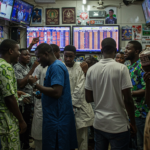
Every gambler knows there’s no shortage of hope in the game. Gambling is deeply entrenched in the psyche of at least 73% of the Nigerian population, and it feeds on the hope that allows humans to show up daily: “Today might be my day.”
But how exactly has the worsening economy impacted their habits?
We spoke to seven Nigerians who either currently gamble or have done so recently. They opened up about their wildest gambling experiences, including their biggest losses and wins and how the recent economic climate has impacted their attitude to gambling.
“I’ve lost ₦1m in four months, but I can’t stop”
— Korede*, 28. Video editor earning ₦150k/month
In 2023, a friend introduced me to sports betting after I complained about my faulty camera. I told him I needed ₦1m, and he jokingly said only an online betting platform would give me that amount in a day.
So, I set up an account, and he taught me how to place bets on football and basketball games. By a stroke of luck, I made ₦18k from a ₦200 stake within two weeks of betting, and that’s how I got hooked.
Since then, I’ve gambled every single day and spent at least ₦60k/month on betting platforms. I also moved to fixed matches in 2024 and made ₦500k with a ₦26k stake —my single biggest win so far. Sometimes, my winning streaks last for a few weeks, and I make plenty of money, but then I lose it all terribly.
My problem is I just don’t know when to stop. I’ve won about ₦1.2m combined over the last four months, but I lost it all within a week. I kept trying to win back the stakes I lost so I could raise ₦3m for my rent and some equipment.
I earn just ₦150k/month, and it’s never enough for anything. Just food and fuel will finish all that money.
Sometimes, I think gambling is worth the risk. The only reason I survive the high cost of living is because of the small small money I make from gambling. Granted, I lose more than I win. But gambling gives me hope that things can get better one day.
“I kept looking for my ‘Aguero’ moment”
— Jacob*, 30. Business analyst earning ₦250k/month
I’ve been placing bets since 2015. It started when I saw friends at university staking on sports games—mostly football—and constantly talking about their wins. It felt like something I could do, too. I knew a lot about sports and reasoned that the extra money wouldn’t hurt.
I bet on everything from soccer to ice hockey, volleyball and Olympic games. But I didn’t make the money I thought I would.
In 2017, my friends and I found a fixed-match supplier who offered ”sure games”, and I lost about ₦200k trying to win big on those matches.
I’d already lost my school and accommodation fees to a previous bad gamble, but I had some money my dad had given me for my siblings’ phones with me. So, I bought three games at about ₦20k each. My friend also joined in.
The wager was to predict the exact scoreline for the three games to win. By 6 p.m. that day, two of the games had been played, and my outcomes for both games were correct. I was so excited that I took my friends to a pepper soup joint to celebrate.
After we’d eaten our fill of catfish pepper soup and beer, I logged into the platform to check out the score. Major heartbreak. Instead of the predicted scoreline of 1:2, the final score was 2:1. You’d think I learnt my lesson after that incident, but I bought three more games from the guy and lost everything.
I gambled consistently until 2024 and lost more money than I won. My biggest win was ₦40k in 2022, which is a small reward, considering that I spent at least ₦3k weekly on my bets. Sometimes, I spent over ₦20k monthly, and this got worse in 2023 when the effects of inflation started to hit.
My purchasing power kept dwindling, and my income couldn’t keep up. But I stuck with betting hoping that my luck would change — that Aguero moment. The moment never came, so I quit briefly in February 2024.
I picked up gambling again in November 2024; I was looking for free money for Detty December. Plus, I developed FOMO because the big punters on Twitter kept posting their wins. But after losing ₦70k in two months without a single win, I quit for good.
I’m not going back.
“I thought gambling would be a viable source of income”
— Ola, 24. Graphic artist earning ₦350k/month
I was in uni when I placed my first football bet in 2018. The most I staked was ₦200, and the highest money I made was ₦700. I didn’t make serious money; I assumed it was because I was trying to win big with small stakes. Since I was only betting with small amounts of money, the risk of one bet spoiling the ticket was high.
So, I stopped for seven years.
Three months ago, I started gambling again via an online betting platform. Why? I was looking for a way to earn extra income and beat the high cost of things.
Although I earn ₦350k/month, I’m almost always broke: Buka food that used to cost ₦1k is now ₦2500. My rent recently increased from ₦650k to ₦900k, and my transport costs have now tripled.
Betting seemed like the solution to my problems. I just needed to stake high and get more profit.
I’ve spent an average of ₦50k monthly on sports betting, and my biggest win happened in January — I won ₦75k from a ₦3500 stake.
That said, the plan to earn a good side income from betting isn’t going so well.
Football has been incredibly difficult to predict, with many upsets happening on game weekends. I’ve also made the mistake of chasing losses and betting more, and losing more money while trying to recover lost funds. Just last Saturday, I lost ₦35k on bad predictions.
I think I’ll just abandon the idea of betting to make money. But I’ll keep doing it for fun.
“I can no longer afford to let go of a loss”
— Boye*, 25. Freelance writer and filmmaker earning an average ₦1m/month
Gambling started as a hobby during the lockdown in 2020. I bet my usual ₦15k – ₦20k weekly alcohol budget on sports betting platforms with the hopes of doubling it. If I won, I’d go out as planned. If I didn’t, I wouldn’t drink until my next win. It was a win-win situation.
Since then, I’ve evolved to betting more regularly. My average spend is still ₦80k monthly, but there are more game fixtures on certain weeks, so I spend way more. I’m not sure if I have more winning streaks because some weeks are great — I’ve won close to a million a few times. But these rare wins are followed by huge losses. In 2023, I recorded my biggest loss, parting with ₦150k in one day. There have been several other losses here and there.
I used to take these losses in stride and move on, but I can’t do that anymore due to inflation. These days, if I lose, I have to get back in immediately and try to make back what I lost. It’s a vicious continuous cycle and, more often than not, trying to fix the loss leads to more losses.
The only reason I’ve kept going is because I believe there’s a certain amount of money I’d like to make from betting before I can abandon the platforms totally. I don’t know exactly how much that money will be; it’s an abstract idea. I just feel I’ll know when I get it. Then, I can stop betting.
“I don’t have disposable income to gamble with any more”
— Ore, 22. Sales assistant earning ₦60k/month
I’ve been down a gambling rabbit hole since secondary school when I watched a friend draw up charts and calculate football clubs’ statistics.
That was seven years ago.
Now, I’ve gambled on almost every sport on online betting platforms. At first, it was just for the thrill. I didn’t think it was that deep; I could always stop if I wanted.
But my gambling habit peaked between 2021 and 2023. In 2023, two friends and I paid ₦18k each to join a punter’s Telegram channel for “sure VIP games”. It went well in the beginning, and my friends and I made ₦5m combined. But we kept going, and we lost all that money. I lost ₦170k on NBA basketball in one night, and my friend lost ₦400k.
After that incident, I took a hiatus before I returned after a few months. I currently spend at least ₦25k/month gambling. I lose far more than I win, but I’m no longer approaching betting with an ambitious mindset. It’s just a hobby. If I win, I win.
Also, now that I have a job and no longer depend on allowances from family, my betting capital will have to reduce. Things are hard, and prices keep climbing. There’s hardly any disposable income these days. Maybe I’m fine with reducing the rate at which I bet anyway. The thrill and excitement aren’t there anymore.
Compared to other gamblers I know, I’m pretty much a casual gambler. I got into online sports betting in 2020 because the app interface was surprisingly easy to use. I also set a daily, weekly and monthly betting limit so I don’t overshoot. The most I spend betting monthly is between ₦40k to ₦60k.
I do it for the adrenaline rush and the fact that I need all the money I can get. I’m the firstborn and responsible for my family’s upkeep because my parents are retired. So, I need extra money as much as the next person, and the economy isn’t helping matters. The cost of everything has tripled, and I have responsibilities.
That said, betting has generally been favourable to me. The highest amount I’ve lost in a day is ₦30k, but I’ve also made ₦1m from a ₦1k stake. In November 2024, I won ₦928k with a ₦2k stake. Then there are the ₦400k and ₦500k wins here and there.
Even if I didn’t win as much, I’d keep betting. I’d just reduce my stakes. There’s this popular saying among people who bet, “You can’t be unlucky for 365 days. One day, your luck will shine.” So, I’ll keep taking the risk.
“My biggest regret is thinking I could make it from betting”
— Ope, 23. Trainee banker earning a ₦100k/month stipend
My 10-year journey with gambling started when I’d go watch football at a viewing centre/bet shop in SS 1. I knew so much about football, and one day, my friend and I decided to stake ₦100 to try it out. We won ₦1100.
That was the beginning of my problems.
I moved from betting ₦100 or ₦200 to ₦5k, then ₦20k on a single bet slip every day. I’ve used my school fees and sold my Twitter account to raise money to place bets.
I made my first big win —₦560k — in 2021, which fueled me to keep gambling, hoping to make more money. Every Saturday, I’d wake up happy and hopeful because of the many games available. I was often disappointed at the end of the day. I once lost ₦90k in a day on live bets in 2022.
I managed to stop towards the end of 2024 when I got a banking job. I suddenly realised I’d been a fool for thinking I could make it from betting. I wasn’t even betting because I needed money to meet rising prices. I made money during my NYSC year that could’ve been put to better things like investments, but I greedily thought betting was easier and faster. I know better now.
With Nigeria’s minimum wage at ₦70k, you’d expect that people earning at least ₦100k/month would have more wiggle room to spend on small luxuries and afford a decent quality of life. But a steadily increasing month-on-month headline inflation says no.
We asked five Nigerians earning above the ₦100k mark to share the things they can no longer afford due to inflation, and their responses ranged from surprising to just sad.
“I can no longer afford to lose weight healthily”
For most of her adult life, Eri* (27) has battled with controlling her weight. She started and stopped multiple exercise regimens and tried out several unsuccessful diets before she found one that clicked in 2023.
“I lost 15kg in two months due to a combination of intermittent fasting and a healthy eating habit. Once I received my ₦73k salary (₦33k from NYSC and ₦40k from my place of primary assignment), I’d take ₦30k and enter the market to buy plenty of fruits and vegetables and other foodstuff. I bought them in bulk so I could prep and store my meals in the freezer. That helped me control what I ate and manage my weight.”
“₦30k was usually enough to buy at least three weeks’ worth of food in early 2023, and I was able to manage my weight. But now, I have to hold at least ₦70k to buy the same things I used to buy for far less, barely two years ago.
Last I heard, a crate of eggs retails for ₦8k, and a kilo of chicken is ₦6k. Fruits are a no-go area. I can’t keep up with that on a ₦105k salary. Even if I manage to buy them, how do I fuel my generator to keep my freezer running?
I’ve had to try to return to managing my weight using exercise since I can’t afford healthy meals anymore. That hasn’t been successful, though. I can’t keep up because I work from home and hardly have time to move. It also means I often fall into the trap of ordering fast food because I don’t plan my meals ahead and only remember food when I’m hungry.”
“Chicken is now limited to Sundays”
Growing up, chicken in meals was a once-in-blue-moon occurrence for Ope* (38). He didn’t expect that his own children would experience a similar situation.
“I have two kids under 7 years old, and their feeding costs increase every other month. Between 2021 and 2023, I gave my wife ₦7k/week for food, and the soup pot would be filled with chicken. Now, I drop between ₦15k – ₦20k/week for food, and we only eat chicken on Sundays. For the other days of the week, my wife cooks with shawa or panla fish and ponmo.”
“My children are too young to notice, but I still feel bad. I earn up to ₦150k in most months, and I can’t afford to give my children the life I’d have liked. And it seems the economy would only get worse.”
“Electricity is a luxury”
The average Nigerian household gets less than seven hours of electricity per day. For Romoke* (24), these precious hours come at night when they’re no longer helpful to her job as a remote 9-5er.
“I’ve been working remotely since 2022, and I rarely have light during the day. I either wake up in the middle of the night to complete my tasks, run my generator all day or work from a coworking space. Before 2024, I preferred running my generator because it allowed me to simultaenously work comfortably from my house and do other chores. But that’s now a luxury.
Between 2022 and 2023, I spent only ₦10k weekly on fuel. If I want to run my gen daily now, I’ll spend around ₦50k in a week and ₦200k in a month. For context, I only earn ₦320k.
So, I’m quietly managing workspaces and working at midnight. Even for workspace access, I pay the daily ₦3k rate because I don’t always go there. I don’t have ₦60k to pay for a month’s subscription.”
“I’ve had to return to danfo buses”
In 2023, Lara (22) was the victim of a one-chance bus robbery, and since then, she’s suffered anxiety attacks whenever she uses public transportation.
“After that incident, I stuck to e-hailing cabs because they made me feel safer. I have a hybrid work arrangement — two days on-site and the remaining days offsite — so I wasn’t spending too much on transportation. At most, ₦4k/day because I live about 30 minutes away from my workplace.
However, cab prices have become unbearably high due to increased fuel prices. Now, taking a cab to and from work can cost between ₦8k and ₦15k during peak periods. I can’t keep up with that, so I’ve returned to using danfos. They cost me only ₦2k/day, but there’s a greater cost to my mental health.
My heart races, and I’m always on edge on the bus rides. I sweat and shake like a leaf when I alight. My friend suggested going to therapy to work out the one-chance incident, but the therapist I found told me to pay ₦40k/session, and I’d need about three sessions. On top my ₦200k salary?”
“I can’t pay for Netflix anymore”
Netflix increased their subscription prices twice in 2024, with the second increase pushing the price up by a staggering 40%. For users like Kayode (26), it meant making a few changes of his own.
“Streaming movies on my laptop was my favourite way to relieve stress after a long day, but after my subscription went from ₦4400 to ₦5k and then ₦7k, I decided I couldn’t afford it anymore. It seems like a small amount of money, but I have a strict monthly budget I follow, and ₦7k makes a big difference for me.”
“I’ll just stick to watching movies on YouTube or downloading them on Telegram. At least, those don’t cost extra.”
In 2024, rising inflation and the struggling economy pushed 14 million more Nigerians below the international poverty line of $2.15 per day.
More than one-third of the population earns below ₦100k, and even more earn below the government-approved ₦70k/month minimum wage. With food and overall inflation reaching all-time highs, Nigerian low-income earners struggle to afford basic necessities like food.
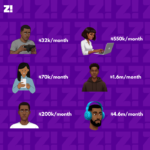
So, what kind of life can the average Nigerian afford? We asked six Nigerians, each with a different income, to tell us what they can (or can’t) do with their income.
Joseph, 24
Income: ₦22k/month + ₦10k from extra lessons
Occupation: Teacher
Location: Abeokuta
What can you afford on your salary? Mostly data and [public] transportation. Then, personal needs like haircuts and toiletries. It costs ₦300 to take a keke from my house to school. If, during the rainy season or for whatever reason, keke becomes scarce and the drivers increase the fare to ₦500 for a week, it’d throw off my entire budget for the month.
Sometimes, I buy lunch in school. But most times, I toughen it out till I return home. Fortunately, I still live with my parents, so I don’t pay for accommodation or feeding. If not, maybe it’s only garri I’d be able to afford on my salary. Still, I often ask my parents to bail me out because I’m broke by the third week. Some of that is my fault, though. I gamble a little because I believe my luck can shine one day, and I’ll blow. ₦200 here, ₦500 there, and before you know it, I’ve spent like ₦5k.
Do you ever worry about money? Almost every day. I worry every time I look at my account balance. I’m nowhere near where I want to be financially, and I fear that I’ll live all my life in Abeokuta.
I console myself with the fact that I’m job hunting and a good job can come soon, but my mood drops when I remember I only have an HND certificate. People with BSc degrees are still earning ₦90k. Is it my own that will be different? I honestly don’t know, but let me just keep hope alive.
What safety nets have you built? Zero. I try to save like ₦5k/month because people say it’s good to have something for emergencies, but I always eat my savings when my account hits zero. It’s someone who has eaten belleful that will have extra to save.
Do you think you’re earning enough for your level and the state of the economy right now? Not at all. A young single person like me should be earning at least ₦100k/month. At least with that, I can afford to handle most of my expenses and occasionally relax with friends. But I don’t know many of my mates who earn up to ₦100k.
Are you in debt? I don’t owe the bank or loan company money, but I owe my parents. I don’t even know how much. But they won’t ask me to pay back.
How much money would you need to live the life you want in Nigeria? Any amount? Maybe ₦2m/month. I’m not too young to buy a car or own a house. Once these two are sorted, I can enjoy my life and party every weekend. And maybe consider investments that will bring me passive income for the rest of my life so I don’t have to work so hard.
At what age would you like to retire? Maybe 50 or 60. But I don’t think retirement really works in Nigeria. Every old person I know either owns a shop or poultry business for extra money. That’s why I need to make big money so I can actually rest when I’m old.
Faith, 22
Income: ₦70k/month
Occupation: Social media manager
Location: Lagos
What can you afford on your salary? My salary covers my feeding expenses — I cook a lot, so usually around ₦35k – 40k, and ₦10k for data. I also save ₦10k/month to meet my ₦120k half of the rent for the apartment I share with a friend. Sometimes I save up to ₦15k/month.
I actually live a pretty comfortable life. I work from home, so I hardly go out or spend on bus fare. To be fair, I’m basically a hermit.
Also, I rarely buy clothes or hair. My boyfriend is my fashion’s saving grace; he randomly buys me clothes and accessories.
Do you ever worry about money? I worry that I’m not taking advantage of available income opportunities. My boyfriend says I always yap about learning a tech skill but never follow through. He’s right.
I worry that I’m too comfortable with my finances and should upskill to earn more, but I never gather the strength to do anything. I hope to be more intentional this year. I just got my NYSC call-up letter a few days ago. I plan to buy some product design courses and give myself the service year to figure my shit out. What safety nets have you built? Besides saving for my rent, absolutely nothing. I hope to keep my job during my service year so I can save my allawee. I’ll probably keep it in a fintech app to earn interest.
Do you think you’re earning enough for your level and the state of the economy right now? For my level, yes. I’m still an entry-level professional. But based on the economy? ₦200k is a fair amount. People should be able to live off their salaries; anything less than defeats the purpose. If I were living alone, I wouldn’t be able to afford to keep a decent roof over my head or feed myself. ₦70k is not a livable income.
Are you in debt? No. I keep my expenses within my income level.
How much money would you need to live the life you want in Nigeria? Right now, ₦400k would be enough for me to live comfortably and build a considerable safety net.
At what age would you like to retire? 30. By then, I hope to be married to a man who handles all the bills, so I focus on being a stay-at-home mum. That sounds like retirement to me.
What can you afford on your salary? I’m married with three kids, so not a lot. I give my wife ₦80k for the month’s feeding and child-related expenses, but she comes back before the month’s end to say the money has finished. It’s either the children’s Capri Sonne has finished, or they need something at school. Realistically, I think I spend ₦120k/month on food and the kids.
Then, there are transportation and utility bills. I don’t have a full picture of how much goes to what, but I’m always broke long before salary enters. My wife supports me with half of our ₦800k/year apartment rent — she has an online store and saves most of her income to help with rent — but the rest of the load is on me. I’m struggling at best.
Do you ever worry about money? All the time. No day goes by that I don’t lament about how the price of an item has doubled. I have health insurance courtesy of my job, but my wife and kids don’t. I’m in soup if they ever fall ill.
What safety nets have you built? My entire safety net is the ₦20k I hid in a savings app. I don’t even know if that can save me from anything. It’s just so I can also say I have savings. My salary barely feeds my family, so I can’t save or invest.
My wife and I have been talking about buying a car for ages, but we can’t even save. How will the car happen? To make things worse, car prices climb up daily. In 2023, you could get a decent Tokunbo car for ₦4m. Now, you need to hold ₦7m for a Nigerian-used or ₦15m for Tokunbo. It’s crazy.
Do you think you’re earning enough for your level and the state of the economy right now? No. I have 10 years of professional experience, and I should be earning at least double my current income. But the economy is bad, and there are no jobs, so I have to hold the one I have very tight.
Are you in debt? Yes. I owe four different loan apps about ₦300k in total. I turn to these apps when it’s time to pay rent, and I have nothing. I also turn to them when my mum asks for money, or I need to buy her medicine. I’m the first child, so I can’t tell her no. My wife often helps me repay these loans. Sometimes, I give my wife the money back. Most times, I don’t.
How much money would you need to live the life you want in Nigeria? Over 95% of my problems would be solved with a job or business that pays me ₦4m/month. I could buy a car with just two months’ salary. I’d also be debt-free and be able to afford health insurance for my entire family. I could even build my own house.
At what age would you like to retire? When I was younger, I thought I’d retire at 50 and enjoy my free time. But now that I’m just a few years shy of 50, I know that’s impossible. I can only hope to earn enough money to be comfortable when I’m 50 and maybe stop working at 70.
Veronica, 28
Income: ₦550k/month
Occupation: Content Marketer
Location: Lagos
What can you afford on your salary? I can afford a certain degree of comfort. For instance, I could spend about ₦2k jumping danfo and a BRT bus from my place in Shomolu to visit my parents in Ikorodu, but I prefer to take a ₦16k cab ride. I don’t want to struggle in BRT queues or jump inside moving buses. I can’t always do that, but I can prioritise my comfort twice or thrice a month.
Do you ever worry about money? Yes, mostly because I might soon be unable to afford the new taste for comfort my salary used to give me. I started earning ₦400k in 2023, and I could afford things that made my life easier, like buying a generator and running it for most of the day, registering at a gym and taking cabs.
Now, I earn more, but I have to cut back. Fuel prices have forced me to run my generator for only two hours at a time. My gym recently increased their rates from ₦35k/month to ₦62k, and I remembered I could exercise at home. I feel like I have to keep earning more just to keep my quality of life and match inflation.
What safety nets have you built? I try to save at least ₦50k every month. Right now, I have ₦600k. It’d have been more if I didn’t have to pay ₦700k for a new apartment in mid-2024 — I have roommates, that’s why it’s so cheap.
I want to try investments this year or next, but I want to grow my savings to ₦1m first so I can have ₦500k locked up in investments and ₦500k in liquid cash for emergencies.
Do you think you’re earning enough for your level and the state of the economy right now? No. ₦550k should be middle-class income, but the cost of basic comfort increases every day. I feel like a low-income earner who has some wiggle room. I believe I have the potential to earn up to ₦1m/month, based on my skill set and expertise. So, I still have a long way to go.
Are you in debt? Yes. I took an ₦800k loan from my bank to buy an iPhone 13 last year, and I’m repaying ₦60k+ every month. I think it was a wise decision because the phone price would have likely gone up if I waited until I had all the money. I have about ₦200k left to pay.
How much money would you need to live the life you want in Nigeria? Maybe ₦2m/month and ₦50m in savings and investments. With that, I can decide not to work for a few months and not worry about going broke.
At what age would you like to retire? I’ve never thought about that. I guess whatever age I am when I amass up to ₦50m in savings and investments is a good time to rest.
Dare, 30
Income: $1k/month. With the current exchange rate, that’s ₦1.6m
Occupation: Software developer
Location: Ibadan
What can you afford on your salary? An apartment in an area with good electricity. I got my current job in 2023, and I thought keeping my ₦200k/year mini flat was a great way to prevent lifestyle creep. But the power supply was terrible and I realised I was spending close to my rent on fuel monthly.
So, I took a spur-of-the-moment decision in 2024 and moved into a new mini flat in a better area. The rent is ₦850k/year, and the total package was a little over ₦1m. I could make a major decision like that because of my salary.
Also, I can afford a savings culture. After spending on necessities like food, data and the occasional hangouts with friends, I save around ₦150k/month.
Do you ever worry about money? I worry that something can happen, and I’d lose my job and be unable to afford my lifestyle. I’ve been laid off once in 2022, and I know how much I suffered. I feel like I should have more money stashed away in case something like that happens again. Right now, if I don’t get a salary for two months straight, I’d be in serious trouble.
Also, I plan to get married in a few months, and I predict my salary won’t be enough to raise a family comfortably. I mean, I spend about ₦300k feeding only myself monthly. That would likely double if I wanted to maintain my standard of living after marriage.
What safety nets have you built? I have ₦500k in naira savings and $1k in dollar savings. I’ve also been toying with the idea of buying land, but that will likely gulp all my savings.
Do you think you’re earning enough for your level and the state of the economy right now? Is there a bigger word than no? Because it’s a big no. Three years ago, I imagined earning ₦1m meant I’d have two cars and a house somewhere. But the reality is, I’d have to save my entire salary for a whole year to buy a used car, not even a new one.
When I think of my monthly expenses, I often wonder if I’m making wise financial decisions. But I take a closer look and realise I’m not even doing too much. I’m spending on things like transportation, caring for my parents, data and going out a few times. Surely, that shouldn’t be too much for someone earning ₦1m. But here we are.
Are you in debt? No. I used to be super against owing money, but I read something about how loans protect you from inflation because you’re repaying a fixed interest that is unaffected by how much the naira falls. So, I might consider taking a loan for a big project like a piece of land or a car soon.
How much money would you need to live the life you want in Nigeria? Hmm, I don’t want to stay in this country much longer. But if I have to, maybe ₦10m/month. I’m sure that the income category has its challenges too, but let me get there first.
At what age would you like to retire? 60 feels like a good age. I don’t know if there’s a specific amount of money I’ll need as my retirement safety net, but I should have houses, at least.
Tunde, 31
Income: $2900/month. With the current exchange rate, that’s about ₦4.6m
Occupation: IT freelancer
Location: Lagos
What can you afford on your salary? I’m a single man with zero dependents, so I can afford a pretty good life. After Lagos takes 19% tax, I save and invest 60%, leaving me with 20% to spend. I comfortably meet all my needs with this 20% and rarely have to touch my savings.
Food is my biggest expense, as I don’t like to skimp in this area. That’s about ₦240k/month. I mostly meal prep, but I treat myself on weekends.
I’m a minimalist, so my rent only comes up to ₦2.5m/year. I live in a serviced self-con in a highbrow area in Lagos — I don’t need a big space.
I also like to save for my subscriptions and service bills (around ₦145k) for the coming month, just so that I am always ahead of bills by one month. Then, I can get my protein powder and use whatever remains of my salary to go out and do whatever I can afford.
Do you ever worry about money? All the time. I have no family members I can depend on financially, and I live in Nigeria where, as a man, nobody is coming to save you. It’s just me. That’s a consciousness I have all the time.
What safety nets have you built? Crypto, the US stock market, and dollar funds are my preferred investment channels. Right now, my net worth is around $17,000.
I’m building this for my future and for possible emergencies. Most importantly, I’m doing this so I never have to ask anybody for financial help. I grew up during the 2008 economic crisis, and let’s just say the effects of that make you see realities of life at a very young age.
Do you think you’re earning enough for your level and the state of the economy right now? I feel like I could be earning a bit more, but that is on me. I should be earning around $50k per annum and above, but I’ve not put in the work, so I can’t really make that demand.
Are you in debt? I’m so glad you asked this. This time last year, I was living paycheck to paycheck due to some poor choices. I also owed three different banks about ₦2m and was stuck in a loan cycle. Basically, I was spreading myself too thin for family members and a woman. I kept saying yes to unreasonable requests and couldn’t keep up even though I earned the same amount of money I earn now.
Thankfully, I cut these people off, and I’ve been debt-free since June 2024. That’s when I started actively building my savings and investment portfolio.
How much money would you need to live the life you want in Nigeria? Right now, I comfortably meet all my needs, and I can say I’m living the life I want.
However, if I were in a relationship, I wouldn’t mind an extra $300 a month. My ideal family setup is one wife and one child. I should be making around $4500/month for that to happen.
At what age would you like to retire? Late 50s. I don’t want to work past the age of 60. I strongly believe if I maintain living way below my means and get favourable returns from making dollar investments in the long term, I’ll be able to reach my retirement goals.
Inflation has generally made it more difficult to live comfortably in Nigeria, but for Faridah*, it’s robbing her of her mother’s legacy.
She talks about enjoying the fruits of her mother’s generosity to others, deciding to follow in her mother’s footsteps, and how the high cost of living might be changing her values.
As told to Boluwatife
Everyone says their mother is their hero, but I actually mean it when I say the same. My mum passed away when I was 7 years old, but her life still inspires and teaches me so much. I’ve always wanted to be like her.
I don’t have many real-life memories of my mum, but I’ve heard so many stories about her that it feels like I actually knew her. While my dad came from a wealthy family and had always known how it felt to have money, my mum didn’t come from the same privilege.
My maternal grandparents were farmers who barely made enough to feed their children and send them to school. My mum and her siblings often had to hawk plantain and corn to support the family. That experience growing up made my mum more in tune with people who also had little to live on.
So, as soon as she started making money, she began helping people around her. I’ve heard about how my mum used her nursing profession to provide free healthcare for people in the community. Sick people would come to our family house, and my mum would use her own money to buy the injections she needed to treat them.
I’ve met at least three people who said my mum helped birth them and didn’t charge their parents. If she wasn’t assisting people with free medication, she was giving them food and money. My dad constantly shares stories about how he’d give my mum money to buy a bag of rice and come home to see that my mum had shared half of the bag’s contents with our neighbours.
Or when she’d use the money meant for our foreign Christmas clothes to buy slightly cheaper ones so she could buy Christmas clothes for the neighbours’ children, too.
You only had to tell my mum you liked the necklace she had on, and she was ready to take it off and give it to you. That was the kind of woman my mother was. She died in a car accident in 2005, and I wish I had spent more time with her. My only consolation is how much her good deeds have opened doors for me all my life.
My dad told me the story of how he didn’t pay my school fees for my first three years in secondary school simply because of my mum. He lost his bank job in 2008, just as I was rounding up primary school. According to my dad, he had already started the process of getting me into a public school since he could no longer afford the private school my siblings had attended.
Then, the private school’s principal — who had been friendly with my mum — called my dad to ask why she hadn’t seen me come to resume school. My dad explained the situation, and she said, “Why will Mummy Sara’s* daughter attend a public secondary school when I’m alive?”
The principal made sure my dad enrolled me in her school and refused to collect school fees. She said my mum had done her so much good that it would be a crime not to pay it forward to her children. I’d have probably gone the whole six years not paying anything if my dad hadn’t gotten a job in another state when I finished JSS 3 and moved us away.
When I first got into uni and was trying to do my registration, one of the school staff saw my surname and asked if I was related to my mum. I confirmed, and the man practically ignored others and started attending to me. He never told me how he knew my mum, and I didn’t bother to ask.
I’m also lucky to share an uncanny resemblance with my mum. Whenever I return to our state, I already know I’ll get stopped by at least one person and asked if I’m the daughter of Mummy Sara. Prayers and stories of how my mum helped them often follow. Some even squeeze money into my hands. This doesn’t just happen to me; my siblings experience it, too.
These experiences made me decide early on that I wanted to be as generous as my mum. It’s not my first instinct to help people; I think I got that from my dad. But after my registration experience at uni, I decided I wanted to follow in my mum’s legacy. I wanted to have a name that’d open doors for my children.
[ad]
So, I began deliberately offering financial help and assistance. I lived in a school hostel for much of uni and made it a point to share my food always. Of course, sometimes I felt like my roommates took advantage of it, especially when they wouldn’t buy water and wait for me to buy for the entire room. But I refused to get angry.
I started buying food randomly for my class colleagues and recharge cards for the course rep. I was an efiwe, so I also started taking tutorial classes. My dad gave me a ₦30k monthly allowance, which hardly lasted three weeks because I made sure to lend money to anyone who complained. I also made it a tradition to visit orphanages on my birthdays and share food items with the children.
Since graduating from university, generosity has remained a big part of my life. During NYSC year, I took in two people and allowed them to live rent-free in the apartment my dad got me because they had accommodation issues. I also made it a habit to buy random gifts for my friends.
When I started working in 2022, I had to take a more streamlined approach to giving. My dad wasn’t giving me an allowance anymore, and I had to budget to survive on my ₦120k salary. But even with that, I usually budgeted at least ₦20k for random giving and loans monthly. When my salary increased to ₦250k in 2023, I increased my monthly giving budget to ₦50k.
However, I’ve had to cut back on giving since around December 2023. With transportation costs constantly increasing because of fuel prices and the drama of food costs now, I hardly retain any extra cash at the end of the month to do anything, much less be generous.
It’s funny how I comfortably lived on ₦80k – ₦100k in 2022 and still had some money left to save. But I earn more now, and it feels like I spend all my money on food, transportation, and data. Last month alone, I spent ₦90k transporting from my house in Surulere to work in Victoria Island. I spend like ₦80k just to feed myself monthly. Imagine if I wanted to share food with others.
It’s a struggle to save ₦10k monthly. My dad pays my rent, but I still have to handle utility bills and Band-A electricity tariffs, and it feels like I’m constantly struggling.
I can’t afford to buy random gifts for my friends anymore, and I’ve also had to cut down on outings. I constantly feel bad whenever someone asks me for a loan, and I have to explain that I don’t have cash to spare. Everyone understands when I say no because I’m usually generous—some even try to confirm I’m fine and whether I need money too so they can borrow for me. But it still feels like I’m not meeting people’s needs.
The worst thing is, I’m barely 26, and it already feels like I’m struggling to survive. What about when I have family responsibilities? Where will I get extra money to help people then? Maybe it was easier for my mum to extend a helping hand because money actually meant something in those days. It feels impossible to try to reach her standards with how inflation and the economy are moving these days.
I’ll keep trying my best, but it feels like an exercise in futility — no thanks to our rubbish government.
*Names have been changed for the sake of anonymity.
Get more stories like this and the inside gist on all the fun things that happen at Zikoko straight to your inbox when you subscribe to the Zikoko Daily newsletter. Do it now!
Every week, Zikoko seeks to understand how people move the Naira in and out of their lives. Some stories will be struggle-ish, others will be bougie. All the time, it’ll be revealing.
Let’s talk about your earliest memory of money
That has to be in primary school. Whenever my brothers and I asked my dad for snack money, he’d give me ₦500 and give them ₦200 each. That’s when I began to notice my dad always gave me more money.
I was the second child, but I had the “only girl” privilege. I got a younger sister when I was 8, but I still enjoyed proper spoiling.
Safe to say you were a daddy’s girl?
I believe I still am. It helped that there was money growing up.
What did your parents do for money?
My mum’s a doctor and my dad did a bunch of things — mostly hotel businesses. He also ventured into politics and won a political seat around the time I entered secondary school.
I remember not seeing him regularly because he came home after my bedtime. He also became really lax with money. I think it was a side effect of working with the government because he used to be a bit more prudent.
One time, when I was in JSS 2, he gave me ₦20k for my birthday. I didn’t know what to do with ₦20k, but I collected it. When my siblings and I wanted to go to the movie, he’d also give us ₦20k each. This was 2014, and a movie ticket cost ₦1k.
What were you spending all that money on?
My siblings and I frequented a Nike store at a mall close to where we lived. I’d buy Benassi slides for like ₦5,500. We even had a discount card because we bought so much stuff there.
Many of the purchases were during school holidays, though. I didn’t get an allowance in secondary school, but if I wanted something during the holiday, I’d tell my dad, and he’d give me money. My mum was different; she was far more frugal.
How so?
She had — and still does — this thing where she’d make me and my siblings work for money. Once, she created a point-based system to earn rewards for doing chores. If I did my chores on time, I’d get four points. I got one or zero points if I did them late or not at all. The points determined what she bought me during the holiday.
Apart from this, I didn’t do anything else for money until 2017/2018.
Go on, please
I’d just finished my first year at university. I was in my Jumia shopping phase, and choker necklaces were all the rage. I got a pack of 20 chokers for ₦3k and planned to sell them at ₦1k each.
I sold about half of it, but I couldn’t get buyers for the rest because people were picky with the styles. So, I gave up and tried selling makeup to my friends.
Why makeup?
My friends and I were in our makeup phase in uni. We looked for the newest palettes and constantly tried makeup tutorials, so I knew it’d sell better than the chokers.
I got the makeup products during my usual shopping for school. I think I spent ₦10k for some eyeshadow and bronzer palettes. I only sold one to a girl who paid me ₦4k; my friend took most of them and never paid me. I didn’t try to sell anything again.
This is the second time you’ve mentioned “shopping for school”
Well, I was a boarder in secondary school, so that was a given. In uni, my dad gave me money to shop based on the list I’d already written about things I needed at school — the usual amount was ₦120k. Then, he’d send ₦100k to my account when I was leaving for school. I didn’t have a monthly allowance because I could always call for more money if needed, but I rarely did.
I tried to be frugal in uni because my dad’s tenure in the government ended back when I was in SS 2, and the change hadn’t been a great experience for me.
What happened?
My secondary school was full of super-rich kids, and I wasn’t popular. So, I tried using money to buy affection. My dad was in office, and I had more money than I knew what to do with. I bought people earrings, body wash, and perfume and generally tried to blow their minds.
Then, my dad left office, and the family had to make lifestyle changes. We moved away from where he lived, and he got a bigger place, maybe to overcompensate. But there was less money to throw around, and we just became more serious.
This meant I couldn’t get as many gifts and even reduced some of the things I bought at school. For instance, I liked getting things like spray starch in twos to have a backup, but I now had to settle for one. Someone called me stingy because I didn’t give as much as I used to, and it stung. I decided, “You know what? I’m not spending money on anyone again!”
So yeah, I tried to spend more reasonably in uni. Plus, my university didn’t have as many rich students. It was a private uni, but they were considerate. They gave scholarships and allowed people to pay in instalments. It was like coming from a school with money bags to people who were managing but thriving. So, I modelled my spending after them.
Was that difficult?
There wasn’t anything to spend money on in my uni. The most expensive meal was rice and chicken, which cost ₦600. Smoothies cost ₦300. I didn’t need up to ₦1k for a complete meal. So, copying people who lived on a ₦20k monthly allowance was easy. They withdrew ₦5k/week, so I withdrew ₦5k/week.
Each semester was about three months long, and my ₦100k lasted for two months and some weeks. My dad didn’t let me try to be broke in peace, though. He had access to my account. Whenever the money in my account went below ₦30k, he’d send me ₦50k extra.
Trying to be broke… God, abeg
That was pretty much how uni was. I already knew my dad indulged me, but it hit me again when I was about to enter my second year in uni. I asked for ₦250k to shop, and he gave me just like that.
I grew a conscience and thought it wasn’t fair for him to bankroll me as much as he did, so I reduced my demands.
Also, I started doing makeup for people for money in my third year.
How did that go?
Not great. I did a couple of ₦1k, ₦1500 jobs here and there. Remember my friend who didn’t pay for the palettes? She also did makeup for a fee and had more clients, so I tagged along to assist her. She never gave any cut of the money she made, though. Not even when we made ₦50k on a few jobs in final year. To be fair, they booked her. I just assisted.
I graduated from university in 2020 and began ICAN classes in January 2021. My mum also started giving me a ₦35k allowance to support me during classes.
Any reason why it was your mum this time?
My mum often moved locations because of her job. At that time, she was in a small house I called the “fuck up” house. Like I said, my mum is frugal, so she didn’t subscribe to DSTV, the internet, or any other entertainment. It was simply a place to sleep.
I moved in with her for my ICAN exams because the house was closer to the tutorial centre. Since I was living with her, she took up my allowance.
Sometimes, my mum deducted from the money if I offended her by not attending church early or missing it altogether. I think each transgression was ₦2500. I augmented the allowance by adding a little — between ₦20k and ₦50k — to my ICAN classes and exam fees.
Then, I wrote my first exam in May and went for NYSC in July. My PPA was a fintech/real estate firm, and they paid ₦20k/month, which I wasn’t excited about. But then there was also the ₦33k NYSC allowance and my mum’s ₦35k, bringing everything to ₦88k/month.
Was that good money at the time?
It was enough for me to enjoy myself. I lived with my parents and didn’t pay for anything, so I lived large. I ordered food or got a nice treat at least once a week.
I was saving the ₦20k from my PPA because I wanted to change my phone and take another ICAN exam after NYSC, and I didn’t want to have to juggle it with work. The plan was to relax, write the exams, and then look for a job.
Remember I said my PPA was a fintech?
Yeah
They made me open my salary account with them, so they paid my ₦20k there. I didn’t touch it for months. But then they started having issues. I couldn’t transfer or withdraw my money because the account balance was just figures. There was no cash.
Fortunately, it was partly solved in January 2022, and I used the money to buy a phone, adding ₦60k to make up the ₦180k I needed. But just before I finished service in June, they had more issues, and ₦20k mysteriously disappeared from my account. I don’t even have words to describe everything that went wrong with them.
Anyway, I eventually finished NYSC with ₦80k in my savings. I would’ve had more from my allowance and the money I got from increasing my ICAN fees, but I lost ₦120k to scams during my service year: a multi-level marketing scheme and an agri-tech crowdfunding investment.
How did that happen?
The agri-tech platform absconded with my money, and the marketing people only sold dreams.
After service ended in June 2022, I focused on preparing for my last set of ICAN exams and applying for jobs in November. The job search was pretty difficult because I don’t live in Lagos, and most financial institutions are there. The recruiters wanted me to come to Lagos to interview, and I did that a couple of times. But it wasn’t sustainable. I couldn’t keep asking my parents to pay ₦250k for round trips, and I kept missing opportunities.
While I was job hunting, I learned I had failed one of the three exams I sat for. I’d thought I’d get my professional level ICAN certification, but now I had to retake a paper. I felt terrible.
Sorry about that
Thanks. I finally found an accountant role through my church’s group chat in February 2023. During the interview, the recruiter asked about my salary expectations. I said ₦70k because I didn’t want to be too greedy. I really should’ve demanded more because I got the job, and it was the ₦70k they paid.
I was still getting ₦35k/month from my mum, which brought my income to ₦105k. Ordinarily, I should’ve been cruising on that amount. I even drew up a plan to save and change my phone.
But Tinubu entered some months after and removed fuel subsidy. Cab fares went from ₦1200 to a minimum of ₦2k. I couldn’t take cabs to and fro anymore. I also stopped ordering food from Instagram vendors when they increased their prices. My employer added ₦10k to my salary to help with the hardship, but the salary was not doing what it was supposed to do anymore.
I know, right?
As if my ₦80k salary wasn’t small enough, my employers started deducting ₦500/day from the salary for coming minutes late. So my salary was often ₦77k.
Also, my mum could just deduct from my allowance, so everything was somehow. Saving became something I did if there was any money left or if I wanted to buy something.
In January 2024, my salary increased to ₦100k. I wasn’t pleased about it because my employer had promised a salary review for the longest time, and I expected more. There was also one ₦200k allowance he was supposed to pay that never materialised despite the many promises.
I eventually left in February. In March 2024, I resumed my current role, where I’m an audit assistant.
Better pay?
It wasn’t a significant pay bump. My salary is ₦115k/month — ₦108k after tax. My mum also stopped my ₦35k allowance in December last year because she got transferred at work and had some delays with her salary.
Plus, I didn’t have any more ICAN exams — I sorted those in May 2023 — so we haven’t had a conversation about whether she’d continue or not.
I’m surviving on just my salary. Oh, I got a part-time three-month lecturing gig at my former ICAN tutorial centre last month, and they paid ₦22k. I’m not sure if it was a one-time payment or if they’d pay me again at the end of the third month.
Right now, my 9-5 is my main income, and the economy isn’t making it easy to survive on my own. Things get more expensive by the day and it’s crazy.
I can relate. Let’s break down your typical monthly expenses
My transportation cost is low because I now have a car — my dad bought me one after I passed ICAN last year — and he fuels it. I only take Bolt sometimes. I also do once-in-a-while sacrificial giving in church or online. It’s faith-based and can be as low as ₦5k and go up to ₦100k.
How would you describe your relationship with money?
It’s like I’m running after money, but it’s running two steps away from me. Actually, I think my biggest problem is Tinubu. I’m not earning terrible money, but the country is spoiling faster than I earn.
My savings have suffered a lot because I often dip into it for one thing or the other. Last month, my siblings and I contributed money to get my sister a phone, and my share was ₦76k. I have about ₦50k left in my savings now.
I’m curious about how your parents’ very different money management styles shape your thinking about money
I have a centrist-ish approach. My dad was lax and my mum was very frugal, and I’m more like a balance between them. If I want something — flimsy or not — I believe in saving towards it and working to achieve it. I won’t deny myself or just buy it on an impulse.
How do you feel about moving from chilling daddy’s girl to hustling babe?
It’s due to factors beyond my control. Yes, I’m trying to be more independent, but I shouldn’t be struggling like this. I feel like I’d be in a better financial state if I lived in a system where the president wasn’t actively working against me.
I’m living above my means, but I’m not doing anything crazy most of the time. I once did an analysis of my expenses and realised I was spending ₦64k more than my salary, meaning I regularly eat into any savings I have at the time or money gifts I get from friends and family. I’ve tried to cut down recurring expenses like ordering food at work to make it better but it isn’t doing much.
I was thinking about the whole thing a few months ago and became depressed at how my money was disappearing in the twinkle of an eye. You know what I did to feel better? I did a birthday photoshoot, bought cake, went shopping and essentially wiped out the money I was depressed about in the first place.
What do future plans look like right now?
I’m trying to get better job opportunities, but it’s still this Lagos thing, and I feel stuck. Ideally, I’d have wanted to stay at least a year at my current job to build my career, but constantly stressing about money isn’t allowing me to calm down.
I also plan to do a master’s degree abroad soon. The last time I discussed it with my parents, the dollar was $700 to a naira. I don’t know what the amount will be when we revisit the conversation in December after my brothers are done with uni.
You mentioned looking for better job opportunities. Is there an ideal amount you’re looking for?
My ultimate goal is to be as far away from this president as possible because it’s not possible to outgrind a failing country. But right now, I just want to double my salary. Earning at least ₦200k while I live with my parents and not worrying about rent, food or fueling my car will go a long way.
Is there something you want right now but can’t afford?
A gym membership. The fee recently increased from ₦15k/month to ₦20k and it’ll require a lot of calculation for me to fit it to my monthly expenses. One thing would have to suffer, which is really wild. I also want to change my phone to an iPhone 13 pro max and that’ll cost about ₦800k.
How would you rate your financial happiness on a scale of 1 – 10?
4. I don’t have it the worst, but there are things I should be able to do for myself which are still out of my reach. I can’t be financially irresponsible for a month and bounce back because the country is spoiling faster than I earn.
If you’re interested in talking about your Naira Life story, this is a good place to start.
Every week, Zikoko seeks to understand how people move the Naira in and out of their lives. Some stories will be struggle-ish, others will be bougie. All the time, it’ll be revealing.
When did the hustle start for you?
1987. I was 17 and had just run away from home. I squatted with a friend whose mother sold ice water, so I started helping her hawk, too. Although she didn’t pay me, she fed and allowed me to live in the one-room apartment she shared with my friend.
It’s not like I hadn’t hustled before sha. My mother had a restaurant, and I always helped her cook and serve guests. But hawking ice water was the first thing I did on my own to survive.
Why did you run away from home?
I was a young, stubborn woman who wanted to experience life by making her own mistakes. I grew up in Ajegunle — a popular slum community in Lagos — and it was easy to follow the wrong crowd. You know, the type that drank and partied with area boys.
My stepfather always tried to discipline me. To me, it was like the man just didn’t want me to shine or was only trying to prove seniority. This led to us fighting a lot, and my mother was always on his side. So, I left home immediately after finishing class 5 — what you people call SS 3 now.
Did you have a plan, though?
Freedom was the only thing on my mind. I squatted with my friend for a year before her mother brought someone she was seeing to live with us. It was obvious that time had come for me to leave.
I squatted with another friend and got a job at a nearby canteen. My job was to keep the place clean and wash the plates. I can’t remember how much I earned, but it may have been around ₦200/month. ₦200 was enough to buy foodstuff — for me and my friend — to last at least three weeks.
Ah. Why wasn’t I born in the 80s?
Funny enough, we also complained about things getting expensive, but things were so much better then, compared to what our eyes see now. I was living well on that ₦200. I even saved out of it to pay to learn nursing in 1989.
Like nursing school?
Nursing school, ke? It was auxiliary nurse training. I paid a doctor some money, and he trained me in his clinic for two years.
Why did you decide to go into nursing?
I was tired of working at the restaurant, and nursing seemed like a more distinguished job. So, I asked around and found the doctor who trained me. I also worked for him during those years at his clinic. He saw that I was a fast learner and retained me after the training, paying me ₦1k/month.
Was that good money for 1991?
Somewhat. It was a small clinic, and I wasn’t an actual qualified nurse, so I was earning quite well at my level. It was enough to move out of my friend’s house and rent my own apartment.
Also, I mended my relationship with my family around this time. My mother reported me to one of my aunties in the village, and the woman appeared in the clinic one day to talk to me. Since I was now on good terms with my mother, I started sending money home once in a while. I wasn’t making money only from my job, though. I also started selling okrika (thrift clothes) in 1992.
How did that work?
You know I mentioned that I worked in a small clinic? Well, it’s not every time we had patients. The clinic had a verandah at the back that opened up to a major street. People always passed by, and I thought it was a great spot for an okrika business.
I used to buy the clothes I sold from Katangua market and display them on the verandah when work was slow. Thankfully, the doctor didn’t have a problem with it. I made roughly ₦4k in profits monthly from the clothes. That time you could buy up to ten shirts with ₦100.
My salary was ₦3k/month when I left the clinic. I spent five years there. I sold okrika throughout the years I spent at the clinic.
Why did you leave the clinic?
The doctor married a new wife who started complaining about my okrika business. I think the woman just didn’t like me. She helped her husband run the clinic, and one time, she put me on night duty for a month. I got angry and resigned. After I left, the woman started selling okrika at my spot.
What did you do next?
I got married and moved out of the area in 1997. I tried to continue selling okrika, but it was difficult to manage during pregnancy. There was one time I went to the market to buy more clothes to sell during my third trimester, and I fainted at my customer’s shop. She warned me seriously not to show my face until after I’d given birth.
While at home, I found another business idea.
What was that?
Jewellery. I lived close to a local government office and noticed that the staff loved owambes. I used to take my okrika to the offices to sell to them, but most of them either wore corporate clothes or ankara. However, they all wore jewellery. So, I decided I was going to sell that.
I started with watches and costume jewellery sets. I’d load them in my bag and go from office to office. The good thing about the business was that I could sell a ₦800 or ₦1k watch for ₦3k. The more expensive, the better. Office people like to dress well, and these ones thought that “expensive” meant quality.
Most of my customers bought on credit because they were salary earners. They only paid me at the end of the month. But it wasn’t hard to collect my money because the local government paid in cash then. The staff would all line up at the bank on salary day to withdraw money, and me too, I’d wait outside for them. Immediately I saw any of my customers come out, I’d go meet them to collect my money. They couldn’t tell me stories because we were in public.
Hehe. I love it
That was a good period for me, and I made a lot of money. My husband and I bought our first land for ₦100k in 2000. Unfortunately, we lost it years later to a land grabber — I mentioned it so you have an idea of how well the business was going.
In 2001, I bought my first mobile phone and SIM card. I think it was a Nokia 3310, but I know it cost ₦18k. The SIM card was also ₦18k. It’s hard to believe that these telecom companies basically give out SIM cards now.
2001 was also the year I started considering other business opportunities.
Did jewellery stop being profitable?
Something like that. The debt became too much. Some of my regular customers were transferred to other local governments, and I think the government also changed how it paid its staff. Or maybe the bank they used. I can’t recall well now. I just know it became more difficult for me to pursue my debtors and collect my money on time. So, even though I was still making some money, I was close to broke as most of it was tied up in bad debt.
I thought about it for a bit and decided it’d be best to get a shop and expand into shoes, bags and other accessories. That way, I wouldn’t limit my customer base to the local government office.
I found a small kiosk close to the local government office in 2002 and rented it at ₦12k/year. Then, I used all the money I had at the time from my jewellery sales to stock shoes and bags. It was a risk, but I knew I couldn’t start with two bags. No one would enter an empty shop.
Did the risk pay off?
It did. I was already popular in the area, so it wasn’t difficult to get customers. But I still couldn’t avoid credit buyers, so I tried to make up for delayed payments by increasing the cost for people who wanted to pay later. For instance, if I wanted to sell a bag for ₦2k, but the buyer wanted to pay later, I’d sell it for ₦3k. On average, I made ₦20k- ₦50k monthly.
My income went into assisting my husband to provide for the house and our three children. His mum also lived with us from 2000 to 2005, when she passed away. She suffered from a stroke, and a good part of our income went towards her medication too.
In 2006, I moved from the kiosk to a bigger shop where rent was ₦36k/year. I also added ankara and lace to the list of items I sold. Those were the days when people could just buy fabric and sew. I could buy six yards of material at ₦1k and sell it for ₦1800 or ₦2k. I stopped selling these in 2010 and faced my shoes and bags because people were no longer buying.
Do you know why?
It got more expensive — six yards of ankara fabric increased to ₦3k upwards without profit — and more people had more aso-ebi than they knew what to do with. It didn’t make sense to just buy fabric to sew when you’d get a new aso-ebi for someone’s wedding or burial by the next month.
But even though I stopped selling fabrics, I was comfortable. I still sell shoes and bags till now, but I really enjoyed the business during those early years. Some friends offered to help me land a job at the local government, but I laughed it off. Why should I sit in an office for ₦30k/month when I made up to ₦200k in two weeks during the Christmas season in 2015?
Now, I sometimes wonder if I should’ve taken the job because things started changing in 2016.
How so?
Buhari entered, and everything just scattered. I think 2016 was when the dollar first entered ₦300. I buy most of my goods from wholesalers in Lagos Island, who import them. With the rising price of the dollar, everything became more expensive. Fuel prices also increased.
I remember I had this bestseller that my customers really liked: a half-shoe that cost ₦1200 from the market. I always sold it at ₦2k. Then, this shoe moved from ₦1200 to ₦2k in a matter of weeks. People didn’t understand why I was suddenly trying to sell it to them at ₦2500. I was charging even less profit, but my customers still struggled to pay. I went from going to Lagos Island twice a week to restock to once every two weeks.
I began thinking of more ways to make money to cushion the decline and decided to try a business that grew popular in that period.
What business was that?
It was like a mini-provision business. People could no longer afford to buy tins of milo and milk or even full packs of cornflakes, so sellers started selling these provision items and cereals the same way they sell rice — with measurement cups. So, instead of spending ₦2k on a tin of milk, you could ask them to sell ₦500 worth for you, and they’d measure it with those tin cups and tie in a nylon.
I wasn’t too sure about the business — I heard some of the sellers buy these cereals in unmarked bags from factories — but the business was moving, so I decided to try it. I took ₦50k and used it to buy a few 50kg bags of milk, cornflakes, chocolate powder, and sugar. Then, I arranged them in one corner of my shop. This was 2017.
Was it profitable?
Profit is a different matter. It was selling fast because people needed to buy these things in small quantities, but the profit wasn’t much. I could sell a whole bag of milk and only make ₦2k in profit. The profit only made sense when I sold plenty of bags quickly.
But everybody likes good things, and soon enough, almost everybody was selling measurement cereals. It made sales even slower. I didn’t bother at first because I still had my shoes and bags to sell.
However, in 2019, I noticed that I was practically making nothing from it. The cereals got more expensive, and I couldn’t raise my prices too much because of competition. The last straw for me was when the bag of milk I usually bought for ₦16k increased to ₦30k in two days. I decided enough was enough.
So you returned to focusing on shoes and bags
I did. They were still expensive, but at least I didn’t have to sell my whole shop to make ₦1k profit. But business gradually grew worse as inflation grew worse. You don’t expect people looking for what to eat to think about getting a new bag. There were weeks in 2019 when I sold only one bag for the whole week.
Business was far worse in 2020 due to COVID. No one was going anywhere, and for a while, I returned to selling the measurement cereals. I was hardly making anything in terms of profit; I just sold it to have something to do.
In 2021, I decided to start selling ready-to-wear boubou gowns too. They were popular then, and I thought, “At least, if people don’t want shoes, they’ll buy gowns.”
How did that turn out?
It was a saving grace. People loved the gowns. I’d buy them for ₦1500 and sell them at ₦3k or ₦3,500. In addition to the few sales from the shoes and bags, I returned to making at least ₦30k monthly. In good months, I made ₦50k.
But good things hardly last in Nigeria. I began recording a slump in sales in 2023 after the whole fuel subsidy issue. Again, people were looking for how to survive, not how to look good.
As if that wasn’t enough, prices kept skyrocketing. The gowns moved from wholesale prices of ₦1500 – ₦2k to ₦3k, and then ₦4k. Now, wholesalers sell these gowns for ₦6k – ₦8k. By the time I add my profit, it’s around ₦10k. How many people are ready to buy simple boubou gowns for ₦10k? I’m so tired.
I can relate. What’s your income like these days?
My dear, I honestly don’t know. I went to the shop all through last week and didn’t sell a single item. Sometimes, I sell one pair of sandals, make ₦1k profit, and not sell anything again for the week.
It was much easier to make a good profit by selling bags. I could buy a bag for ₦5k and sell it for ₦9500. But when quality bags now cost ₦25k from the market, how much do I sell them for? I can’t even remember the last time I sold a bag.
I’ve been racking my brain about what I can add to my business to make money. I’ve considered a food business, but do I really want to try that with food prices going up every day? I just bought four pieces of shombo pepper for ₦500. Imagine doing that on a large scale.
I’m tired of the whole thing. It’s like I’m always trying to fight inflation, but it keeps beating me back. I’m not sure how long I can continue trying to keep my business afloat. Nigeria doesn’t even look like it’ll get better. My children have advised me to stay at home and rest. But I also don’t know if I’m ready for that. What will I be doing at home? I can’t sit idle.
What takes your money on a monthly basis?
Basically, feeding and transportation. I lost my husband in 2022, so it’s been just me and my last born in the house. My eldest is married, and my other one is in university. I pay school fees for the children still in school, but thankfully, my husband’s family also supports us. I don’t know how I’d have managed otherwise.
God is just good. The economy can be doing its own thing, but I’m not homeless or begging for food.
What’s something you want right now but can’t afford?
I want to send one of my children out of this country. At least, with one abroad, the other siblings can find ways to go too.
How would you rate your financial happiness on a scale of 1-10?
5. Things are tough, but I’m alive with my children. There’s hope.
If you’re interested in talking about your Naira Life story, this is a good place to start.
In 2014, Omolola Akintola left the US for Nigeria with a dream. She’d spent the last seven to eight years getting her degrees — a BSc in Economics, an MBA and an MSc in Marketing — and knew she didn’t want a long-term banking or consulting career.
“I wanted to do something different, something that didn’t already exist,” Lola tells me. “I wanted my own startup so I could solve a problem and impact Nigeria.”
She decided on greenhouse farming. Nigeria’s fine dining scene was on the rise and with it, the need for fresh produce. Lola predicted that it’d be difficult to keep up with importing produce like fresh strawberries and herbs, necessitating a need for all-year-round cultivation — the perfect market for a greenhouse farm.
But setting it up isn’t a small investment. The cost of a small 250 square meter-sized greenhouse averages ₦3m now, and Lola had big plans. Bigger than just one greenhouse.
“I knew what I wanted to do would involve a lot of money,” Lola says. “I planned to stay and work in the US for a few more years to raise capital for the farm and then return. But I fell in love with my partner and returned to Nigeria much earlier — let’s hope my dad doesn’t read this. Greenhouse farming was still the plan — specifically, a 10-year plan. I just needed to work for some years in Nigeria before that could happen.”
Soon after returning to Nigeria, Lola found a job at Access Bank, one of the country’s big four banks.
“I enjoyed my time at Access. I worked in the strategy department, and I felt useful. I loved the fast-paced, exciting environment. I was going to stay at the bank for years so I’d have saved enough for my greenhouse farm.”
However, Lola only spent a few months before she resigned to pursue another business idea.
A “breakfast for the skilled middle-class” business opportunity
Working at the Access Bank head office in Victoria Island opened Lola’s eyes to two things.
First, the 9-5 life for young professionals in Lagos is hard. She had to leave her home in VGC before 6 a.m. if she hoped to beat traffic and get to work by 8 a.m. Returning home wasn’t easier as long hours at work meant she often had to leave the office at 10 p.m.
Secondly, her new lifestyle meant she never had time to grab breakfast or prep food. This wasn’t a problem peculiar to her.
“My colleagues had the same problem. The higher-ups could afford to get in-house chefs or maids to bring them food. Married guys didn’t have to worry about food because they had someone else doing that labour for them. But the single men and women — mostly millennials — didn’t have time to cook their own food.”
Lola also noticed something interesting. The skilled middle-class wasn’t willing to rely only on roadside food.
“It was 2015 in Lagos, and people had disposable income. There was always a concert or show happening during the weekend, and people could afford to go. I had 9-5 friends in different industries too, and I knew that the average millennial Lagosian liked going to cafés on the Island to treat themselves to brunch on weekends. What if they didn’t have to wait for the weekend to treat themselves? What if they could have nice, fancy breakfasts delivered to them daily?”
“In business school, we discussed how businesses are gradually going online,” Lola says. “Buildings are disappearing, and people are exploring new ways of doing business. When I got the idea for a breakfast business, I knew I didn’t need to invest resources in a physical restaurant.”
It made economic sense to run her new idea as a subscription-based service, where customers could subscribe to a meal plan, pay and get their food delivered daily. This way, Lola didn’t have to worry about buying ingredients in bulk and hoping that the power supply was regular enough to store them.
She did a trial run with her sister and some friends first. “I’d close from work and prep the meals I wanted to send to them the next day. My menu included local and international (mostly American) cuisine. Most of what I did was self-taught and by reading recipe books. I already had a passion for cooking and wanted to attend culinary school to get professional skills, but that would’ve meant sponsoring myself and an additional two years of study. So, I decided to just start.
I’d wake up really early to cook and send the meals through my sister’s driver to save costs. Interest grew when other colleagues at work noticed my sister and friends having meals like tortilla wraps and quesadillas for breakfast.”
The referrals flew in, and Milk and Honey became a full-fledged business in 2015. Lola offered different meal plans, from the Bronze subscription plan (breakfast-only) at ₦7,500 weekly to the Platinum plan (including lunch) at ₦20k/weekly, with customised recipes designed to replicate the fine dining experience.
She did that for a few weeks before deciding she could no longer juggle it with her 9-5 at the bank.
“But I was wary about leaving because I had senior colleagues who loved me. Fortunately, I had to report to the NYSC orientation camp soon after, and I used the opportunity to resign. I couldn’t bring myself to do it face-to-face.”
Without the distractions from her 9-5, Lola could now give her full attention to building her business. And she did exactly that, but there was a lot to figure out.
“I was new in the country with a lot of theoretical knowledge. But I didn’t know how to get the right people to bring my vision to life. I was building a tech-enabled startup, so I needed to know where to find experienced website developers. Also, I knew the kind of packaging I wanted, but I needed someone who knew how and where to get materials to make it happen. My lawyer-sister helped with filling me in on legal registrations and regulations, but I needed someone who knew how to run a business specific to Nigeria — a partner.”
Olumide Akinsola became that person. Introduced through mutual friends, Olumide was the key to connecting Lola to everything she needed for her new startup.
“Olumide had a guy for everything,” Lola says. “We discussed the brand image, website and operations. It was like a meeting of the minds. He immediately saw the vision and ran with it. We created a system and knew it would work. We were creating the next big thing.”
Slow and steady [and expensive] growth
Naturally, running a business involves spending money. While Lola didn’t have to invest in a physical restaurant, she had to spend on chefs and kitchen assistants, branding, digital marketing and delivery bikes.
“I didn’t get external funding, and my parents’ support only extended to them allowing me to cook out of the home kitchen and using my dad’s car for delivery initially,” Lola explains. “I get it, though. My dad didn’t understand why I left my US degrees to come and cook.”
However, as Milk and Honey’s clientele expanded to over 300 subscribers, running the business out of her parents’ kitchen became impossible, so she had to rent a ₦1.1m/year kitchen space and office.
“I’d saved about $20k over 7-8 years working summer jobs in the US, and most of it went into keeping the business running between 2015 and 2018. It shouldn’t have cost that much, but like Temple Run, Nigeria kept bringing us new hurdles to jump over.”
Inflation and the adverse effects of government policies
In 2017, the Lagos State government announced a ban on commercial motorcycle (okada) and tricycle (keke) movements on major highways, bridges and roads. This wasn’t the first time the state would restrict bike activities — the last ban was in 2012 — but the new ban affected hundreds of routes, including Yaba, Surulere, Ikeja and the entire Lagos Island. These areas were the major hotspots for Milk and Honey’s activities.
Image: Tribune Online
“We initially bought two bikes for delivery,” Lola says. “But when the government impounds one, you have to go and beg, which affects delivery time. At one point, it was like we had to buy proper motorcycles that didn’t look like okada.
We did that, but we still ran into problems. When it became too much, we partnered with Gokada — the government allowed their bikes on the road. That cost us an extra ₦5k/day for each bike.”
With Nigeria’s age-long power supply problem and the need to keep generators running to preserve ingredients, Lola also had fuel price increases and scarcity to worry about. In 2016, fuel prices rose from ₦87 to ₦145 and maintained the same price between 2017 and 2018. However, frequent scarcity increased the price slightly at several points in the same period.
“It was just hard. I had to maintain relationships with several fuel station managers because no one knew when fuel would suddenly become scarce again.”
On top of all that, the naira kept falling against the dollar. By 2017, it had fallen to ₦300/dollar as against ₦197 to the dollar in the previous year. For an importation-heavy country like Nigeria, this led to a steep rise in the cost of packaging material Lola needed to keep her business going.
“We tried multiple things to keep our costs low. We started a recycling drive and encouraged our customers to return their plates for a discount, but it didn’t do much to minimise expenses,” Lola explains. “I also never paid myself a salary — even though I made sure my eight regular staff were never owed, but it was a lot of money. We had no choice but to increase the prices of some of our plans.”
Even as Milk and Honey was fighting for its life, the customers were fighting for theirs, too.
“People could no longer afford to pay ₦7,500 weekly (without delivery) for breakfast. It wasn’t like they were moving to different brands. There were just more important things they had to pay for or prioritise. When I started the business, I argued that people would always eat. Now it became clear that, yes, people would always eat. But what they ate was a different question. Bread and eggs could fill them just as much as a BLT sandwich.
For most of my bronze plan subscribers, the service was initially a small price to pay for luxury. But when the economy took a nosedive, it became a luxury they couldn’t afford. There just wasn’t as much disposable income to work with. We lost 70% of our bronze subscribers in 2017”.
Trying to stay ahead of the curve
In a quest to stay afloat and reinvent the wheel to continue serving her customers, Lola started offering health-based meal plans in 2017.
“I got a dietician, and we started offering nutrition consultations to create meal plans for people with dietary restrictions who wanted to stay healthy.”
Of course, this service was mostly used by the richer middle and upper-class who could afford to care about what they put in their mouths. The problem? This target audience was a tiny portion of Milk and Honey Gourmet’s initial customer base.
“I had to gradually abandon the idea that our service would be for the global millennial. I had to focus on older rich people, and this category isn’t necessarily online. I needed to re-invent Milk and Honey if we wanted to make enough to keep running. That would involve a new form of branding, marketing and the whole works.”
Making the difficult decision to exit the business
By 2018, it became clear that the economy was deteriorating faster than it was trying to improve, and everyone was struggling. Even Lola’s husband, who’d initially refused to leave Nigeria, had decided it was time to leave.
“At the end of the day, I didn’t really leave Milk and Honey. I left Nigeria,” Lola says. “I’d already calculated that the pivot to an older market was what we needed, and we could turn profitable in the next two to three years so I could take a step back and let the business run on its own.
But Nigeria just wasn’t working. Did I want to stay because of all the time and money I invested or because I thought Nigeria would get better? What if the upper class also have to make tough decisions and decide our services are an unnecessary luxury?”
Lola left Nigeria for the UK in December 2018 after giving her customers a month’s notice to shut down operations. She sold the remaining bikes and donated most of her cooking equipment.
“I rarely talk about Milk and Honey because giving it up was so sad. I’d invested everything into it; my finances and my mental and physical health, and for a while after it ended, I lost my confidence. I did everything by the books, and while that always resulted in success, I was suddenly introduced to the possibility of failure. That fear followed me into the other dreams I tried to pursue.”
As our conversation ended, I asked Lola what the experience has taught her about doing business in Nigeria and what other prospective business owners might benefit from knowing.
“Nigeria discards economic principles. I have a degree in marketing and knew all the fun things to do to make a business work, but one plus one was no longer equalling two. The government can announce a new policy, and you may think it’ll have a positive effect. But it doesn’t because they don’t follow through with all the other things that should make the policy work.
For instance, the government can announce it wants to tackle inflation by releasing funding. That should work, right? At the same time, the same government can decide to stop importation and allow only one person to produce an item. Or they sell forex cheaper to that person. It causes chaos. The word for the Nigerian economic market is just chaos. Some businesses are still making it work regardless, but it’s exhausting. All your permutations and projections can mean nothing at the end of the day.”
On what she thinks might help, Lola says, “So many businesses would do much better if the electricity and transportation problems were solved. If someone comes and solves just those two problems, I’d say they did a wonderful job.”
Ten years later, Lola isn’t the same person who stepped into the country with big dreams.
“I don’t think I’ll return to Nigeria. Many people are doing greenhouse farming now too, so no one needs me. I might consider returning for a vision that has to do with the girl child. If I’ll be helping save a million lives, then I can come back. Otherwise, I’m fine where I am.”
I used to take myself to a high-end restaurant immediately salary entered. It started when I got my first job in 2013 with bukas. Then I moved to fast-food spots and proper restaurants as my money grew.
I started living alone in 2018, and increased responsibilities shook this tradition, but I kept at it. My breaking point was when my rent increased from ₦800k/year to ₦1.6m in 2023. No one told me to budget first before anything else. I still spoil myself sometimes, but I do it with sense. High-end restaurants are now once in a blue moon.
Charles, 35
I love taking road trips. Since 2019, my idea of unwinding has been driving four to five hours from Ado-Ekiti to Lokoja to spend the weekend at least twice a month. Sometimes, I spend my time in Lokoja with relatives. Other times, I stay in a hotel and only come out in the evenings.
Since the fuel subsidy removal in 2023, I’ve only been to Lokoja once. A trip that typically cost me ₦15k – ₦20k fuel to and fro now costs ₦25k just to get to Lokoja. It’s not sustainable. I encourage myself by reasoning that the kidnapping situation has worsened, so I shouldn’t do road trips anyway.
Anu, 31
For a long time, my idea of self-care was trying out continental recipes I found online. It’s my way of travelling the world without actually travelling. But I’ve hardly cooked anything new since I started having kids in 2018. My children are picky eaters, and I hardly have time between taking care of them and working to even consider making extra meals. I only get to satisfy myself when they’re away on holiday.
Jen, 28
Food was once my go-to when I was stressed, bored, or sad; it made me feel better. But my metabolism is no longer what it was. At university, people always wondered how I could eat so much but stay skinny. Now, I can’t even breathe near shawarma if I don’t want to add 2kg.
My new form of self-care is exercising. I’ve been a regular gym goer since 2022, but my gym just increased their fee to ₦70k/month from ₦50k, and I’m considering doing my exercises at home instead.
Ima, 24
Ekpang Nkukwo is my favourite meal, and my mum made it almost every week when I was growing up. She’d also make it when she noticed I was unhappy, and I associated the meal with feeling better. Anytime I was on holiday from school, I’d call her on my way home and ask her to prepare it.
I started living alone in a different town because of work in 2023, and I thought I’d make the meal every weekend to congratulate myself for surviving the week. I’ve only made it once since then. The preparation stress no be here. Sleep is now my way of making up for a stressful week.
Jesse, 33
Since I started earning reasonably well in 2020, I’ve taken one full month’s salary a year to splurge on something I really want — mostly electronic gadgets. But I couldn’t do that in 2023 because of wedding preparations and my MBA studies. It doesn’t look like it’ll be possible this year too because I now have a family to consider. I’ll probably have to settle for splurging a small percentage rather than the full salary.
Ella, 26
Sleeping in during the weekends was my way of spoiling myself until I had a child in 2023. I make up for it by bingeing old movies to de-stress. And I try to squeeze in power naps as often as possible. Hopefully, I can resume sleeping in when my child gets older. Sleep is life.
The biggest women-only festival in Lagos is BACK. Get your tickets here for a day of fun, networking and partayyyyy