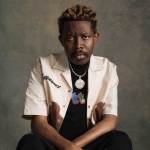
• It started with a tweet:  

    Over the course of a single weekend, TG Omori’s tweet sparked a wave of reactions online. What some people have brushed off as “just a personal opinion” ended up inspiring others to repeat harmful language about queer people. When someone with a large platform, such as 2.3 million followers on X, shares a view, even casually, it can influence how others behave. The entire debacle reveals a bigger issue in the Nigerian entertainment space, where homophobic comments often turn into moments of clout, engagement, and culture-shaping conversations.


    Subscribe to Zikoko Pop newsletter, The Feed, for the most important pop culture news


    Behind the barrage of replies and quote tweets, there was something more insidious than moralising hate: a product promotion. As the public uproar grew, TG Omori was simultaneously promoting a new line of glasses.

    In the attention economy, outrage often equals profit. For celebrities, controversy can drive engagement, and engagement can be converted into sales.

    This isn’t an isolated event. Whether it’s subtle hints in lyrics or outright harmful comments in interviews, TG Omori’s tweet falls into a long pattern of homophobic messaging from some Nigerian entertainers. When queerness is described as “evil,” it sends a signal that discrimination is acceptable, making it easier for people to use hate as content and as a way to stay relevant. 

    TG Omori’s dangerous provocation

    TG Omori calling same-gender sex “evil” isn’t just a careless insult. Framing it as a moral opinion gives his words a kind of false legitimacy, making the harm easier to excuse. As a public figure, TG’s influence amplifies his statement. As a creative and entrepreneur, the resulting outrage fuels his brand. And all the while, queer Nigerians are left exposed to the ensuing blowback, both online and in real life.


    READ NEXT: The Nigerian Government is Enabling the Murder of Queer People 


    A pattern: Homophobia in Nigerian Pop music

    TG’s tweet may have brought the issue into the spotlight, but he’s far from the first person in Nigerian entertainment to weaponise anti-queer sentiment.

    The weekend’s viral moment also highlights the double standard embedded in Nigerian pop culture. Nigerian pop culture borrows heavily from queer aesthetics, with androgynous styling, flamboyant fashion, and gender-bending choreography frequently appearing in music videos, performances, and album visuals. Yet it cannot exist safely in the bodies of the people who are actually queer. When it comes to queer people living in Nigeria, the same artists often condemn, dehumanise or ridicule them.

    These incidents underscore a troubling pattern of mainstream artists profiting from queer people’s talents to further their careers but distancing themselves from them when it comes to moral or social acceptance. This trend reflects a broader cultural hypocrisy.

    TG’s tweet is a stark example of this duality: someone who has helped shape a visually expressive creative culture weaponising homophobia when it serves his interests. TG Omori’s weekend provocation illustrates a culture where exploitation, stigmatisation and condemnation coexist.


    Get More Zikoko Goodness in Your Mail

    Subscribe to our newsletters and never miss any of the action


    This is common in Nigeria, where moral grandstanding carries enormous weight in social and political life. But it’s also a dangerous one. Many queer Nigerians are themselves religious, and using faith as a weapon erases their identities while giving societal sanction to their discrimination. When a powerful creator with a voice uses his platform to spew hate, it’s not just stirring conversation. He’s creating permission for hatred.

    Each public condemnation of queerness from an influencer or musician sends a signal that it’s socially acceptable to dehumanise queer people. That signal enables real-life harassment, violence and stigma.

    In a country where same-sex relationships are criminalised under the Same-Sex Marriage Prohibition Act, words are not harmless. They have real-world consequences. By cloaking commercial ambition in moral outrage, TG Omori’s weekend provocation did more than offend; it put a target on the backs of queer Nigerians and tossed them into a sick marketing cycle.

    Queer people in Nigeria are left navigating an ecosystem where visibility can equal vulnerability, and artistic influence can be deployed as a tool of harm. The fact that a marketing ploy about glasses became a vehicle for moral condemnation and public shaming illustrates the stakes.

    This TG Omori episode is another cautionary tale about the discrimination and power dynamics embedded in Nigeria’s entertainment and creative industry. When homophobic statements are spewed loosely, the people paying the price aren’t really the influencers or artists, but the marginalised communities whose lives, safety, and dignity are reduced to collateral damage.

    Words are not innocent. Especially when wielded by the famous. They amplify prejudice, inspire harassment, and leave lasting scars.

    Editor’s Note: This article was updated on November 18, 2025, to provide a more balanced and objective framing of the events described. Edits were made for clarity, additional context, and fairness to all parties involved.


    ALSO READ: 9 Nigerians Talk About Being Queer And Religious


    [ad][/ad]

  • On Friday, October 24, 2025, Jide Macaulay, founder of the House of Rainbow, took to his Instagram account to announce the devastating death of a queer Nigerian man identified as Hilary. But this wasn’t just another random incident. Macaulay said it was a deliberate and carefully planned act of targeted murder.

    For many queer Nigerians, silence is survival. Beneath the genuine desire to love and be loved lies the fear of becoming the next tragic headline, punished simply for existing. Of all those fears, the possibility of being kitoed (which the BBC describes as when people, usually gangs, use online dating apps to entrap gay people – and then blackmail them) is the most incessant. 

    What happened to Hilary? 

    Macualey describes the events leading up to Hilary’s death as “a brutal homophobic attack in Port Harcourt.” According to the heartbreaking announcement released by the House of Rainbow founder, Hilary was deceived, lured into a meeting under false pretences, and subjected to targeted violence. The attackers reportedly beat him and threw him off a two-storey building. Despite fighting for his life, Hilary eventually died from severe spinal cord injuries caused by the attack.

    He also added that Hilary represents another queer life taken far too soon, mourning it as the second reported kito-related death in just two weeks. 

    He ended with a call to unity: for the queer community to hold one another close, to mourn and rage together, and to keep speaking truth to power until safety and dignity are no longer privileges but rights. “Hilary’s light will not be forgotten,” he wrote. “May his memory strengthen our resolve for justice and peace.”

    As the call for justice continues to gain momentum, the hate and systemic failure against queer Nigerians remain persistent. In the comment section of Macaulay’s post, several social media users were seen mocking the grief and dismissing the violence as something almost deserved.

    Unfortunately, even the Nigerian Police Force has refused to treat this alleged murder with the urgency it deserves, which in itself is deeply problematic. 

    Who’s behind Hilary’s death?

    The details surrounding this homophobic attack are still unfolding; however, some social media users have identified one Kenneth Iseoluwa Olonta as the alleged mastermind behind the attack. Though they allege that this is likely not his first attempt at attacking a queer Nigerian, it is important to note that we cannot confirm the authenticity of these allegations until the Nigerian Police Force releases an official statement to this effect. 

    What are Nigerian security authorities doing about Hilary’s death?

    Since news of Hilary’s attack spread across social media, human rights groups, including Amnesty International, have joined thousands of Nigerians in calling for justice. They’re urging the Nigerian government to open a public investigation into the brutal attack and ensure those responsible are held accountable.

    Minority Watch, an organisation that offers legal and paralegal services to Nigerian minority groups, and Obodo Centre for Advocacy and Equal Rights have also jointly written a petition addressed to the Nigerian police, demanding an investigation, arrest, and prosecution of all those involved in the incident.

    However, as of the time of publication, there’s been no public response or indication that the police have begun investigating the case.

    What does the Constitution say about attacks like this? 

    Even though the Same-Sex Marriage (Prohibition) Act (SSMPA) of 2014 prohibits same-sex marriage, civil unions, and public displays of affection, Section 33 of the 1999 Constitution guarantees every Nigerian citizen the right to life.

    The law specifically states that “Every person has a right to life, and no one shall be deprived intentionally of his life, save in the execution of the sentence of a court in respect of a criminal offence of which he has been found guilty.”

    This law, it appears, holds true for every Nigerian except the queer ones. Ironically, victims of kito who entrusted the police with their safety and quest for justice have reportedly been dismissed and exposed to more danger in the past. Human Rights Watch believes that the 2014 Same-Sex marriage law has been used to justify widespread discrimination and violence against LGBTQ+ people in Nigeria, adding that the police have often been complicit in these abuses. The mass detention of over 160 queer Nigerians without proper investigation in 2023 (justified with this law) also corroborates this claim. 

    The government’s silence enables these murders

    The Nigerian government’s consistent refusal to address violence against queer Nigerians makes it hard to believe that every human life is truly valued in the country. In so doing, it encourages the cold-blooded murder of innocent Nigerians merely for leading an alternate lifestyle.

    In 2024, a Nigerian cross-dresser known as the “Abuja Area Mama” was found lying lifeless on the roadside with a visible gunshot wound. Even though the Nigerian police launched a probe into Area Mama’s killing, we cannot confirm that the murderers are currently behind bars.  

    Following his death, Minority Watch, in collaboration with two other NGOs, submitted a formal petition to the Commissioner of Police in the Federal Capital Territory (FCT) on the very day of the incident, and another on February 12, 2025. Both petitions called for a full investigation into the circumstances surrounding the death. But despite these efforts, the organisation’s effort has only been met with a silence that mirrors the lack of justice in Hilary’s case.

    There’s an uncomfortable pattern here that’s difficult to ignore. When murder cases spark public outrage on social media, the Nigerian Police Force often jumps into action and releases statements to allay public fears, outrage, and confirm the investigation into such cases. But when the victims are queer Nigerians, the silence is deafening. No press releases. No public condemnation. No assurance that justice will be served.

    That silence is not ignorance; it comes off as an endorsement. By refusing to speak or act, the police send a dangerous message that targeting queer Nigerians comes without consequence. And in that way, they actively enable these killings. 

    We condemn these acts of injustice and affirm that the Constitution stands above personal bias, prejudice, or hatred toward the LGBTQ+ community. If the Constitution declares that all Nigerian lives matter, then all Nigerian lives without exception must truly matter. 

    How can you get justice for Hilary?

    • Demand justice by joining the #JusticeforHilary social movement.
    • Support organisations like Minority Watch, who are already following up on the legalities of this case by sharing their updates and driving more visibility to their work. 
    • Spread messages of love and support to the queer community as they navigate this loss.

    [ad]

  • Sunken Ships is a Zikoko series that explores the how and why of the end of all relationships — familial, romantic or just good old friendships.

    The subject of this week’s Sunken Ships is Arike* (26), who tells us how her mum was her best friend until she came out to her as bisexual. 

    Tell me about your mum

    Arike: When I was three years old, my dad died. It was just my mum, my two older brothers and I from the moment he passed. And they were hit harder than I was. I barely knew the man and was too young to understand the loss. 

    My mum tried so hard to compensate for my dad’s death. She worked so hard to put the three of us through school, and she still put in the effort to be there for us emotionally. She came for every PTA meeting, open day, visiting day, Christmas carol, etc. She always found a way to just be there for us. 

    The older we got, the fewer responsibilities she had to bear alone. She relaxed a bit when my brothers grew older and started caring for themselves and me. 

    Whenever people told my mum to remarry, she would say it wasn’t something she was interested in. She told them we had a system and adding someone to our lives meant we’d disrupt this system we spent so much time perfecting. 

    What was the system like?  

    Arike: If anything was wrong with the home’s generator, fridge, television or any other electrical appliance, my oldest brother handled it. He had a knack for separating things and trying to put them together again. 

    My second brother handled the cleanup. He’s very tidy and obsessed over which cleaning products to use for which part of the house. He took great pride in having the place spotless. 

    My mum and I handled feeding. She’d started teaching us all how to cook by the time we turned eight, but my two brothers were disasters in the kitchen. That’s how my mum and I became very close. We’d spend time cooking and just talking. About each other’s day, school and life. 

    Our bond grew with each meal we made, and when it was time for me to go to secondary school at 11, I didn’t want to leave her. After my first year, I begged her to remove me from the boarding house and make me a day student. The thought of her spending so much time alone because all her children were in school? I didn’t like it. I think she didn’t like it too because she agreed without fighting. 

    Was it only cooking you bonded over? 

    Arike: No. When  I was the only child at home, we did everything together. I basically moved into her room because I thought actively living in two different rooms gave me more places to clean. 

    We’d run errands, watch movies and go to the spa. All my mum’s friends called me her handbag because she never went anywhere without me. We’d even go on international trips together. She was my best friend, and I was grateful to have her in my life. She was there for all my significant milestones, from my first period to my first heartbreak. There was nothing about myself I couldn’t tell my mum, but all that changed. 

    Why did it change? 

    Arike: Valentine’s Day of 2011. I was 14 and was waiting around school with a friend who was a day student as well. School had closed, but we stayed back in class to finish some assignments. 

    After a while, we gave up on the assignments and started talking. That’s when she gave me a note for Valentine’s Day. I always knew I treated her differently than I did a lot of people, but I thought it was because we were very close friends. 

    After I read the note, we hugged. Then she kissed me. I was shocked, and my initial reaction was to pull away, but then, I relaxed a bit and actually liked it. From then on, something changed in how I spoke to my mum. I started keeping secrets from her. 

    RELATED: Sunken Ships: There’s Not Much I Need My Father for Now

    Why secrets? 

    Arike: After that kiss, I kissed many more girls, either at parties or in empty classrooms. I liked it a lot. I knew I’d always want to do it, but I wasn’t sure how to define myself. I still liked men, but I wasn’t sure how my realised attraction to women fit in. 

    I liked to read, so I Googled a lot of questions like, “Is it possible to like men and women?” That’s when I figured out bisexuality. 

    I couldn’t tell anyone. As much as I liked kissing girls, I also realised it wasn’t something society encouraged. I remember church services in which they’d preach against homosexuality and my mum’s comments about queer Western couples we saw in the media. I’d heard stories of how being queer had scattered families, and I didn’t want to lose my mum’s love and friendship. 

    But you eventually told her?

    Arike: Yeah, I did somewhat recently. My brothers had found out about it. They followed me on social media and saw some of my comments and posts, so they asked me one day if I was gay. I told them I’m bisexual and they took it pretty well. They asked if I would tell our mother, but I said I was looking for the right time. 

    That time came when I visited my mum for a couple of days. I had moved out when I was 23 and occasionally came to spend time with her when I could tell she was missing me. 

    The night before I left on that particular visit, I stayed in her room like I used to and told her I had something to say. I told her about my first kiss with a woman, liking women and how I’ve even dated some in the past. 

    She listened to me without saying a word, and although it made me scared to talk about it, I had to. I knew it’d significantly reduce my anxiety, so I powered through. When I was done, she said she was going to bed. I went back to my room and slept too. 

    The following day, she didn’t leave her room. I don’t know what she was doing inside, but I knew she wouldn’t come out until after I left. I won’t lie; it hurt — a lot.

    I considered my mum my closest confidant, but she couldn’t even look at me when I told her I was bisexual. It took a month before we spoke again. She told me being bisexual meant men were still an option and I should choose it. That’s when it dawned on me that she wouldn’t get it. I couldn’t decide who I would fall in love with, and if she couldn’t accept that, then we’d have problems. 

    What was the worst part of not being able to talk to her? 

    Arike: The fact that I couldn’t tell her anything anymore. I couldn’t tell her about my girlfriend or all the new queer friends I’d made. I couldn’t tell her about funny relationship drama or when I got my heart broken. I couldn’t go to her house and have her make me amala and ewedu while we gist in the kitchen.

    However, I still tried to keep her up to date with my life. I’d send her gifts like I usually do, texts about what’s going on in my life and why. She hardly ever replied, and if she did, it was with an emoji or “ok”. My mum has always been chatty, so it wasn’t because she didn’t know what to say.

    Did she ever come around? 

    Arike: Yes, she did. My brothers were talking to her. They asked if she would choose homophobia over speaking to her only daughter again. I think that made her realise if she continued ignoring me because of my sexuality, I’d stop making an effort too. I was already reducing my texts and gifts. Slowly, I was removing myself from her life. 

    Now, she’s making baby steps. She still occasionally prays for me to find a good husband, but when my girlfriend and I broke up, I told her about it. She listened and sent me some cookies she baked to cheer me up. 

    I know she’s trying her best, but our old relationship is gone, and I don’t think it’ll ever come back.

    RELATED: Sunken Ships: She Chose Jesus Over Me