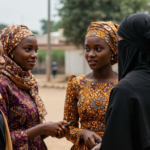
• Another day, another X/Twitter space recap, and today we’re talking money and making it big before we reach the third floor. On this episode of our HER conversation, we had Rita Bandele, Founder of Style Lagos, Fatima Garba, host of the Never Fully Understood Podcast and Dr. Temilola Adeyemi, an Investment Strategist, speak on what we need to do to secure the bag.

    Here’s a wrap-up of everything you need to know to avoid financial ruin.

    1.       Drop the ‘If I Perish, I Perish’ Mindset.

    The girls who have money don’t just grow it in their pockets (except the trust fund kids); they work hard and keep their pockets fat and buoyant. They remained true to themselves, dropping impractical mindsets that drove them to spend  pennies for the sake of living. These days, we’re quick to label every day a rainy day, allowing us to justify our bad spending habits and lack of discipline. But even if it rains 24/7, the downpour won’t always be heavy. Maybe we ought to let ourselves perish on some days to have better days.

    2.       Say No to Follow-Follow

    Our speakers were quite passionate about this one; they might as well have dragged our ears in class.

    The only reason some of us live above our means is because of the kind of people we’ve chosen to live life with. As much as we might want to be the same as our closest friends and worst enemies, all fingers are not equal.  We’re not saying don’t hang out with your friends or  follow people who have money. What we’re saying is, know when to say yes or no and let your financial capacity inform your decision. Life is for living, but how much of that can we do in the long run if we’re running our pockets dry at any given opportunity? Sometimes, the problem isn’t even that we follow people with money and live above our means. Sometimes the issue is our own acquired long throat and friends whose eyes are just as big as ours.

    3.       Protect Yourself, Or At Least Your Values

    Establish boundaries on financial transparency and generosity in relationships. No exceptions. One of our speakers thinks it’s unnecessary to be transparent with finances in romantic relationships, while another disagrees because life comes at you fast. Whatever their reasoning, all three agreed on the need to establish clear boundaries on our financial capacity with the people we care about, including family. Money will always be an issue, and there will always be solutions. You don’t always have to say yes just because you think you can. No is not a wrong answer, it’s just not what people always want to hear, and that’s okay. Everybody’s problem cannot be your problem.

    4.       Keep Yourself Accountable

    Budgeting was another famous girl in this conversation, and our speakers took her seriously. First of all, you need to get on the 50:30:20 rule with your funds. 50% of your total earnings should be targeted at sorting out necessities such as rent, transport and feeding. 30% is for you to get your life together or bring it apart, which really means things that aren’t necessities. 20% should be locked safe and out of reach. Apparently, we need to get serious about budgeting if we want to reach financial freedom. Even we were shocked by that. Our speakers also recommended looking at our accounts to see what we’re spending our money on. Chances are, you’d either be proud of yourself or utterly disappointed. Tell us which, let’s see if we match.

    5.       Start With Anything

    Another thing our speakers agreed on is a core factor or metric used to define financial freedom: not constantly relying on monthly pay checks. If we’re always waiting for the 24th or last week of every month to get our lives together, there isn’t much we’re getting together. So, what do we need to do? Invest, and start with whatever you can. This is why budgeting with a workable formula is important, because an identified portion of whatever we have is dedicated to keeping our lives on track. Our favourite thing about this tip was realising that investment doesn’t always mean setting money aside for the future. Sometimes, it’s what we decide to do for ourselves to increase our earning capacity. As long as it’s bringing more money (legally, please), it’s a yes from them.

    So much was said about what we need to do to level up in our 20s, and the best part is that there’s no age limit on what we need to do to get it right. The work just gets harder, but the earlier we start, the better it is for everyone.

    Listen to the X/Twitter space conversation to see what else you need to do to get your finances in order. Hurry, please, before it’s too late.


    Today Tuesday June 17, 2025, we’re discussing salary negotiations- why we need them and how to go about it on our X/Twitter space at Zikoko_Mag, 7:00pm WAT. Join us for tips on how make your pay reflect your worth.


    Read Next: Creating Your Own Career Path: Tips from Women Who’ve Walked the Walk


    [ad]

  • When Rahanatu decided to turn her unconventional hobby into a business, she had no idea she’d become internet famous while running a multi-state business venture. But seven years later, this is exactly what has happened.

    “I didn’t start my business out of passion. I’d been job hunting for five years and couldn’t secure one with my masters degree,” she said of her decision to start the business.

    When deciding on what to name her business, she decided that she might as well call it what it is.

    “I love burning incense, and I’ve been using it all my life. One day I said to myself, ‘Why not try selling incense?’. Incense means Turarenwuta in Hausa. My business name simply means incense by Ray.”

    She Had No Money or Training

    When Rahanatu started her business, she had an idea, a love for incense, but zero capital. It was a risky decision, as incense blends are handmade and require specialised knowledge. 

    “I didn’t start making it myself because I didn’t know how to. I started by taking goods on credit from my supplier, then repackaging and reselling. I would sell, pay her back and then keep the profit.”

    As an excellent marketer, it didn’t take long for her to make enough profit to start her own business. She used the money she made to get training and started buying raw materials.

    “I’ve never had investors, taken a loan or used money the business didn’t make. Anything my business has become today is as a result of discipline and learning.”

    Then, she started paying herself a salary and reinvested the remaining profit into the business. In seven years, she’s grown a social media following of 180k people and opened branches across six states in northern Nigeria.

    Wife, Mother and Incense-maker

    Rahanatu started her business seven years into her marriage, running a home and a small business in a society that prioritises family.

    “It has been incredibly difficult running a business and running a home with four children. I can’t imagine how much harder this would be without my husband’s support. I would have done it anyway, but it would have been more difficult.”
    Her husband’s support means the world to her.

    “Almost a year into my business, I applied for the NBC trade fair in Lagos. That was my second time in Lagos. Everyone thought I was crazy for taking myself to such a big platform barely a year into my business, and with something as unpopular as incense. Lagos is primarily populated by Yorubas who aren’t incense burners. They thought I had come to sell juju. Still, I was determined to go.’

    Her husband, along with her eight-month-old baby, took the trip with her to Lagos. He did all the heavy lifting and ran her stall with her. 

    “We made it to the spotlight because I was the first northerner to attend the trade fair then.”

     Juggling Marriage and Business

    Being an entrepreneur himself, her husband understands what it takes to run a business.

    “I would say I’m a very lucky woman to have my husband’s support. Spousal support of this nature where I’m from is rare.”

    According to Rahanatu, the belief that northern Nigerian families are very conservative and prefer women to remain domestic is not far-fetched. 

    “In Islam, a typical woman is meant to be taken care of by her father or brother and then her husband. Whether or not you work, you are meant to be taken care of.”

    Now, the narrative is changing, and more families are beginning to open up to the idea of financial independence for women.

    “Nowadays, men don’t do the needful. Divorce rates are high, and even if he doesn’t divorce you, what happens when he only provides the basics, like food and a few pieces of clothing in a year? What happens to a woman’s other needs?”

    Even though her husband supported her for the first six years of their marriage, he’s very invested in her growth as an entrepreneur.

    “If he tells me to stop at this level, I don’t think I will but I’m sure that he won’t ask that of me.”

    Still, she is cautious not to feed into the narrative that financial independence means neglecting her home. To her, family comes first. 

    “My business has never created friction in the household. I didn’t let my success take away his rights over me as a husband.”

     What Fame Means for Her

    Being a married, successful business owner means Rahmat is treated with a lot more respect by everyone else.

    “Yes, money stops nonsense, but I also respect myself on social media and my customers.”

    She doesn’t let her status change affect how she relates to family and friends. She’s still, in many ways, the same person. Her favourite part of running her business is her relationship with her clients, mostly women.

    “They have full access to me and they treat me like an extended family member.”

    But Rahanatu is only getting started. Her goal is to make Turarenwuta by Ray a household name.

     The Future

    Rahanatu is passionate about entrepreneurship, and her business coaching platform – Ray’s Business Lab. In a short time, it’s become the go-to platform for women-run small enterprises in northern Nigeria.

    While she recognises that it is incredibly difficult to build a business, Rahanatu tells married young women that there’s always a way.

    “Think of sabotaging husbands the same way you would think of a business challenge. You find a way to mitigate the sabotage and ensure it doesn’t happen again.”

    Rahantu’s story is evidence that no woman has to choose between success and a family when she can have both. 


    NEXT READ: How This 25-Year-Old Nigerian Makes $1,300/Month Braiding Hair on Weekends

    [ad]

  • When Maama* was 11 years old she, ran away from her relatives in pursuit of education. She didn’t think she would need to have her father arrested to reach her goal.

    This is Maama’s Story as told to Queensie

    Growing up, I was caught between two completely different worlds. On one hand, I had the Hausa traditions my parents held dear, and on the other, I was surrounded by a Yoruba community of school lovers. As a child, I dreamt about becoming educated, independent and having a voice.

    Although my father was from Kebbi, I grew up in Ojoku, Kwara state. I was surrounded by Yoruba friends, children like me, who had education as a part of their normal lives. The passion was contagious, and it overtook me as well. I was a bright student and topped the class. I was even on a scholarship, so no one had to pay a dime for my school fees.

    As a Hausa girl, though, I had certain expectations I didn’t fully understand. My parents were steeped in tradition and fervently believed that Hausa girls didn’t need an education or a voice. Marriage was the top priority, I didn’t realise how real that was until I turned 11. My family decided to marry me to my cousin, an 11-year-old boy I had never met.


    ALSO READ: Creating Your Own Career Path: Tips from Women Who’ve Walked the Walk


    It was a normal day until my dad announced that I was moving to Niger state. He said it was time for me to get used to the Hausa culture.

    I was initially excited, bubbling with joy and hope for a new adventure. I expected that I would keep going to school while connecting with my Hausa roots. My Uncle picked me up at the park and I spent a month in Niger, patiently waiting for something to happen.

    My uncle dropped a bombshell instead. He said “Maama, you’re getting married in a month”. My heart sank, and I kept reassuring myself that it was a prank, a nightmare that had somehow gained sentience. My dreams of school, growing into someone important, had been destroyed in moments.

    Subsequently, I was taken to a remote village with no roads, schools, or clean water. I was encouraged to start practising my obligations as a soon-to-be wife. I would fetch water from the river and wash my cousin’s clothes. They told me it was my duty to make money for my own wedding, so I hawked Tuwo Shinkafa and Masa. My mother-in-law-to-be made the food, and I sold it to strangers as my future was being planned without me.

    Deep down, I was devastated and miserable, trapped in a life I didn’t choose. One day, a stranger changed everything.

    While I was hawking, a man I couldn’t recognise called my name and mentioned my school, asking me what I was doing there. “You’re supposed to be in school”, he said, and these words were like a lifeline to me. For the first time in that period, someone looked at me and didn’t see a bride-to-be but a girl with potential.

    He told me that I didn’t belong in that village and urged me to find my way out. His encouragement lit a quiet fire, and I knew I had to do something. I convinced my cousin to take me back to my uncle’s town, and from there, I planned an escape.

    On a Monday morning, I ran away to the park, travelling alone, returning to Kwara state. I was only a naïve 11-year-old. The journey was terrifying, there were rape attempts and kidnapping scares, but I made it back to Ojoku in one piece.

    I immediately went straight to my secondary school because that was the only place I felt safe. My principal welcomed me, but it was not that simple. My family wasn’t done with me. I sought help from the Hausa chief in Ojoku, hoping he could convince my father to let me return to school, but he refused. He deferred to my father’s wishes, even though his own daughters were in school. Tradition had won again, but I was desperate and couldn’t give up.

    I turned to the Oba of Ojoku, who was kind and called a meeting with my dad and involved welfare officials. My father agreed to let me stay in school. But the very next day, he stormed into my school, embarrassed my principal and insulted the Oba in front of guests. The Oba gave us two days to leave the town.

    Again, I sought the help of a neighbour in my compound, a woman who saw my ambition and referred me to a man who involved the police. Eventually, my dad was investigated and arrested.

    My case was referred to the Ministry of Women Affairs, and I was placed in an orphanage in Kwara. It was tough living like an orphan when my parents were alive, but I was safe. What more could I possibly ask? I resumed at JSS 2, and one day, a politician who visited the orphanage noticed me and offered me a full scholarship through secondary school and university. I am currently in my final year of university and have been married for six months.

    I’m still amazed by how far I’ve come, but what makes me proud is being invited to events to speak to other girls. I’m even prouder when they tell me they want to be like me. It’s a reminder that I didn’t just fight for myself; I fought for them too.

    I want to tell every woman reading this, know what you want. Be sure and don’t let anything or anyone stand against that. Stand your ground.

    My dream now is to become a voice for the voiceless and an advocate for the less privileged. I went from being a survivor of early marriage schemes to a university student with a supportive husband and a platform to inspire others. I’m proof that you can rewrite your story no matter the odds.

    [ad]


    NEXT READ: The Hospital Told Me to Wait Until I Had Another Baby Before They’d Give Me Birth Control

  • Over the past three weeks, we’ve released three episodes of the HER docu-series, spotlighting three women who are making things happen. In other words, we’ve been giving them their flowers, and we’re not ready to forget about them. 

    So, here’s everything we love about the women we’ve put in front of you, the process of creating the series and what we’re doing to #ShiftTheStory. 

    1. These Women Said No to Convention 

    Each of the women we’ve spotlighted said no to doing things the conventional way. Whether it’s IBK choosing to start a business with her friends over a comfortable  9-5, Tara’s passion about a sport women rarely follow or Nneka making a life for herself in a completely different world,   these women decided to do something different and continue to stick by their decisions. Maybe that’s something we need to do as women. Maybe we ought to say no to convention more often. 

    1. Community Was Prominent in Their Lives 

    Whether it was IBK’s community, Tara’s customers and friends or Nneka’s classmates and fellow K-Drama lovers, these women held community close. For them, it’s more than just having people in your life. It’s about having your people share and believe in your vision. Having them push for it just as much as you do. Their communities included friends, family and even mentors who’ve watched and helped them build things from scratch.

    1. They Had Men Who Supported and Encouraged Them 

    Emphasising the importance of community also brings us to another point, which is possibly one of our favourite things about the series . IBK, Tara and Nneka all had men who believed in and supported them. IBK’s father and brother spoke about her like they knew her beyond being family. Tara’s biggest supporters as a young footballer were her male teachers, and Nneka started watching K-Dramas with a group of men and had a cousin with whom she shared her money-making ideas. We can all agree on the importance of choosing the right kind of men to have in our lives and sharing our ideas with. 


    Also Read: Tara Gave Up Football, Learnt Henna, & Took Back Her Life


    1. Our Women Are Money-Making Women 

    Let’s be serious. Our girls were not just learning languages, or new skills and studying numbers just to sit at home and watch TV. Even if they were, that’s definitely not where it ended. At some point in their lives, money became an important thing, and they leveraged what they had to get it. Whether it was skill, knowledge or networks, they utilised these things to the best of their ability. Survival for them was key, and they realised the importance of money in ensuring that. 

    1. It’s Important to Tell Our Stories As Women 

    These women’s stories have surprised and inspired us. Having the behind-the-scenes context of everything they did to get to where they are, and the things they’re still doing has shown us how important it is to do the work. How hard it can be to balance life and career, but also how necessary and important it is to do it.. Shoutout to our women for sharing their stories with us, and shoutout to the women who do it everyday. 

    1. We’re Learning New Ways to #ShiftTheStory 

    Here’s another thing we’ve loved about the docu-series and the #ShifttheStory campaign, we’re seeing the nuances and similarities in the lives of women and learning from them. Despite their differences, you’d be surprised just how similar each woman’s story is. It’s helped us identify niche stories of women who need amplification. If someone has gone through this, then there’s the possibility that something similar or completely different exists! And just like that, we’re filling holes, closing gaps, letting women know that they’re not alone and that we recognise their differences. 

    But then again, that’s the whole idea of the campaign. Learning, relearning and unlearning. Understanding that there’s much that’s the same about us, despite our differences. We have so much more in store for you, and we can’t wait for you to see it. Things are about to get really interesting. Stay tuned! 


    Next Read: What We Know About Ibukun Akinola, the Money-Moving Woman at PiggyVest


    [ad]

  • On Tuesday, June 3, 2025, Zikoko held an X (FKA Twitter) space, as part of our #ShifttheStory campaign with four beautiful women on the topic “From NYSC to CEO – Creating Your Own Career Path”.  The speakers included Adora Nwodo, a multi-award-winning software engineering manager; Binta Badmus, the founder and creative director of BintaBadmus Lady; Nneka Esther, a self-taught polyglot and the star of episode three of the HER docuseries; and Matilda I. Adegbola as the moderator.

    Our speakers spoke about who they were pre-NYSC and what they’ve done post the national program for their careers and to become the women they are today. For those who missed the session, we’ve curated our favourite tips and quotes to help you begin your career journey and get where you need to be. 

    Our destinations may be different, but the means will always align.

    1. Get Something Going

    One common thing amongst the speakers was how busy they were pre and post-NYSC. These women were working on different goals and projects, but went through similar means to achieve them. Adora knew early that software engineering was what she wanted. Binta was determined to see her fashion business take off, and Nneka was doing everything she could, hoping one of them would stick. Our speakers also ensured they were consistent with what they had going on. Having something in the works also helps paint a clearer picture of what to expect and helps identify milestone moments.

    “I was doing a lot of things at the time. I was learning how to make hair, learning tailoring etc.” – Nneka Esther.

    “I want young women to know that it’s okay not to be sure about what you’re doing. All you need to do is be consistent with it.” – Binta Badmus

    “The thing with me is that I always have a big picture, or a plan. I try to see if what I’m doing at the time will take me one step closer to my goal. If the answer is yes, I just do it.” – Adora Nwodo

    2. Make Yourself Valuable/Scale Up Your Skill

    Everyone wants someone who’s useful, and everyone should want to be useful. At least that is what our speakers think, and this thinking has worked well for them. At some point in their lives, and even presently, each of them took courses and training in areas that would benefit them or be useful to their career. Whether it’s getting an additional degree, joining an online masterclass, taking business courses online, or doing an internship, these women were determined to become resourceful and valuable.

    “I was also taking a course on the fundamentals of digital marketing, which was about monetising and selling the skills you already have online” – Nneka Esther

    “I’m always trying to build skills. Since I was in university, aside from my civil engineering degree, I would take online courses. Data analytics, big data courses. It’s important that we keep working on ourselves as we grow.” – Binta Badmus

    “It’s important to provide value to people. When people see that they can get something meaningful from you, it encourages them to support you.” – Adora Nwodo

    3. Let Your Strong Head be the Right Head

    Sometimes, strong head pays, but let it lead you towards the right path and benefit your career goals. At some point, our speakers had to go against expectations or simply do what they thought was best for them and their careers. But this came at a price. And whether it was fuelled by motivation or fear, these women knew that because they had chosen their various paths, they simply could not fail.

    “I was doing a lot of things at the time, so I think it would have been difficult for anybody to complain.” –Nneka Esther

    “The first set of people who won’t get your vision is your immediate family. They all thought I could do better than starting a fashion business, especially because I was a first-class student.” – Binta Badmus

    “I went against what my parents wanted me to do. So that fear of failure and determination of who I wanted to be, pushed me.” – Adora Nwodo 

    4. Use Money Wisely

    Money talk was real in this space, and the general consensus? Be smart with how you spend your money. Especially when building your career and skill set. Binta started her fashion brand with her ₦15,000 allowance in university, Nneka was on Obasanjo’s internet selling e-books for ₦1000, and Adora bootstrapped her early ideas. Basically, the vibe is to start with what you have but make every Naira count. 

    I took a lot of online courses on how to make money online. One of the teachers in a masterclass I joined suggested I create a language study guide and that was it” – Nneka Esther

    “I started with my allowance from university, which was ₦15k. I also borrowed money from my sisters and made sure I paid them back. Then I leveraged grants a lot. I applied for and won the Tony Elumelu Foundation grant.” – Binta Badmus

    “Most of what I’ve done is related to being employed. So I was using my salaries to fund my ideas.” –Adora Nwodo

    5. Follow Who Know Road

    This one is a classic. To win in your career, you must move with people who have been where you’re going. Binta mentioned being really intentional about reaching out to her sister’s friend, who was killing it with her fashion brand. This mentorship fast-tracked her growth. Connecting with the right people can literally change your life. Forget being shy! Find mentors and network with intentionality.

    “I had someone whom I looked up to, and I think that really helped me. That was my first experience with mentorship, he supported me with reading my university applications and helped with mock interviews.” Adora Nwodo

    “I try to look for people who have done similar things. These people are where you want to be or have been there already, so when they help us, we’re getting tips on how to get to our destinations faster and wiser.” – Binta Badmus 

    “Sharing your story and progress is important because it helps build connections. It’ll also provide opportunities to work with the kind of people you like. Follow people who are doing something, follow those who know road.” – Nneka Esther 

    We would love to hear from you, so tune in to the space recording here, and tell us your favourite tips.


    Join our X/Twitter Space today, Tuesday, June 10, 2025, at 7:00 p.m. on Zikoko_Mag, as we discuss ‘Bag Secured: Level up in your 20s’. See more details on who our speakers are below!


    Next Read: My POS Business Makes Me ₦150k/Month, 3x My Old Salary


    [ad]

  • Comfort (24) left her job as a secretary at a construction company to start a POS business, which helped triple her income. Here’s how she did it.

    This is Comfort’s story, As Told To Elohozino

    I worked for a construction company as the secretary, and my monthly salary was ₦50,000, which wasn’t enough. I was barely saving, and most of my money went towards transport. Transport took half my salary, and my rent was ₦200,000. So, I had to get to work, save for rent and feed with my ₦50,000.

    Before I left, I raised this issue with my manager and asked for a ₦20,000 increase, but she refused. What she actually said was that I was lucky to be getting ₦50,000 because the lady she worked with before me was earning ₦40,000. Apparently, my advantage was having a National Education Certificate. After she refused to increase my pay, I had to quit and spoke to a friend about what ventures I could go into, and she suggested starting a POS business. She introduced me to an agent who sold a POS machine for ₦23,000, and that was how I started.

    I started my POS business in February 2024. It wasn’t an easy journey, to be honest. When I started the business, it was difficult to rally customers. I got scammed and accidentally did a duplicate transaction of ₦50,000 in my first week. Scamming POS agents is a lot more common than people realise, and they have many ways of doing it. Sometimes, young boys come in multiples and try to intimidate or distract you while one of them holds the POS machine and runs a fake transaction. They expect that you’ll leave the machine with them and trust them. If you don’t, they try to joke about it or scare you in some way.

    Sometimes, people who drive big cars show up with cards that don’t work. They ask to hold the POS machine while you’re counting the money, and they pretend the transaction went through. Some do fake transfers and show you fake receipts. They ask for a regular bank account because they know they can rely on those banks to delay the alerts.

    When all these things happened initially, I took it as a sign to stop, and maybe God was telling me that the business wasn’t my calling, especially after losing ₦100,000 in that first week. But my friend encouraged me, and I just kept going back to my kiosk. Before the end of the next week, I had made the money back. I’m more confident in dealing with them as well. Once a customer is being difficult I tell them to go to another stall to withdraw. 

    Now I make about ₦150,000 a month, sometimes more, sometimes less. On average, I make between ₦4,000 and ₦5,000 a day. Fridays are my best days because people always withdraw large amounts. But I’m making enough money now. When I worked at the construction company, I’d trek to work sometimes to save money.  The place I used to stay was a one-bedroom apartment I shared with my friends.

    Also Read: How This 25-Year-Old Nigerian Makes $1,300/Month Braiding Hair on Weekends

    Since I started my business, I save ₦10,000 a week, sometimes more, excluding my monthly income of ₦150,000. I also have a clear budget now: ₦3,500 for electricity, ₦35,000 for my mum and sisters, and ₦25,000 for food. I’ve also moved out of the shared room and have my own space, and rent is ₦250,000. I even go out with my friends more. We sometimes go to Magic Land or a lounge to eat fish.

    For my next plans, I think I want to expand the business. Maybe open two or three more stalls and have people manage them. I know it might be difficult because I’ll have to pay them, and it may not be a lot, which was also the issue I had at my old job. It’ll also be hard to find people I can trust with money, but I definitely want to do it. I won’t really say my decision to expand is to provide jobs. It’s more about creating multiple streams of income. I’ve seen that this business works for me, and it’s very straightforward.

    As for my education, I don’t have any plans to go further right now. Maybe that’ll change in the future. Growing up, everyone  in my family did business, so it feels like I’m on the right track. My mum and older sister both sell produce from their farms, so each of us has something we’re doing. The profit isn’t always great, which is why I try to support them whenever I can. My dad was also a farmer before he passed. If there’s anyone who’s done anything different from what my family does, it’s me. 

    Next Read: Esther Nneka Turned Her Love of K-Dramas into a Career


    [ad]

  • Your hair has been dropping hints, now it’s time to find out exactly what type of baddie you’re working with. This quiz will help you figure out your hair type based on texture, curl pattern, length.

    Take this test:

    [ad]

  • Esther Nneka Nnanna is the star of Episode 3 of the Zikoko HER docu-series, and her story emphasises dreaming, believing, and living. For many young girls with hobbies often considered silly or frivolous, Esther’s story is for you. It’s the story of how she turned her love for K-dramas and a crush on one of South Korea’s biggest stars into a life-sustaining path. This is HER story: the beginning, now, and the future.

    Nneka’s dream started with knowing what she didn’t want for herself — early marriage and being financially dependent on a husband chosen for her. In her hometown, girls often got married in their teenage years, and when she came of age, Nneka wasn’t exempt from that  expectation. It was a fate common among her siblings and peers. But from a young age, Nneka internalised her father’s love for education and her mother’s ambition and tenacity. Life, for her, was beyond childbirth in a small, lively town in Ebonyi State. She was driven by fairytales on pages and made-up women who lived lives larger than the ones she saw around her. That was the beginning of her dream.

    But like most women, Nneka had to fight the convention, even when it came from the same people who had nurtured her big dreams. After several spiritual sessions meant to redirect, Nneka stayed the course. She began to believe that maybe the dreams she held were more heavenly than unholy. That belief, in what her mind could imagine, even when reality offered little, became her anchor.

    That was how it started with Korean dramas. The journey was small and maybe a bit large. A simple Google translation search and a stubborn crush on Lee Min Ho made Nneka want to learn Korean in preparation for a future that may have seemed unlikely to many of us. Once  her understanding of the language reached an acceptable level, Nneka took on her father’s academic nature and her mother’s entrepreneurial spirit. She started making money and building a community for herself.

    In a way, Nneka was ahead of the game. She fell in love with and adopted a culture that is now globally recognised and highly sought after. If you’ve been around long enough, you’re familiar with Korean skincare, K-pop, and cooking staples  like Gochujang (red pepper paste), Samyang noodles, and Ganjang (soy sauce). The culture has become a global movement, and Nneka is one of the few faces leading the charge in Nigeria. These days, Nneka works with  a Korean Government Agency, driving business partnerships and diplomacy between the two countries. She hasn’t just created a life for herself from this hobby, she’s  merged two worlds and is thriving in both. She is, quite literally, eating her cake and having it.

    In Episode 3 of HER, this girl-next-door shows what it means to have a dream and live in it, even if it’s in another language. 

    Watch the video below to see more of Nneka’s journey and how you can do the same. 


    Next Read: Tara Gave Up Football, Learnt Henna, & Took Back Her Life


    [ad]

  • Halima*(25) didn’t take her hair braiding business seriously until after university in Hungary, when she became financially independent. Today, she earns about $1,300 a month braiding hair on weekends, and she’s weaving in lifelong friendships along the way.

    This is Halima’s story, as told to Elohozino. 

    When I first moved to Hungary as a student, my dad was supporting me financially, so braiding hair wasn’t even on my radar. I actually started by accident. 

    One day, a friend randomly asked me to do her cornrows, and I realised I was pretty good at it. Then my cousin asked, and I did hers too. People kept asking who did their hair, and just like that, my customer base began to grow. It wasn’t like I was perfect at the time either. Most of my braiding experience was from playing with mannequins and dolls I owned when I was younger. But even with refining my skills and having more people to service, I still didn’t take it seriously until after graduation, when I moved to Budapest and became completely responsible for myself.

    Honestly, the journey has been quite smooth and rewarding, but I probably feel like this because it’s not something I do full-time. The biggest challenge was finding clients after I moved to Budapest. 

    I put in the work to push my brand. If I see a Black woman on the road, I’ll stop to tell her I braid hair, and show her my Instagram. Within a year, I was fully booked and basically became the number one braider in the city. Demand got so intense, I started hiring assistants because I couldn’t handle it myself. But it’s been difficult finding someone to come on board full-time — once people see how time-consuming braiding hair is, they are often not as committed.

    In a month, I get about 15-20 clients, and that’s based on my capacity. I try to take 4-6 clients every weekend, and I charge about $55-$110 per hairstyle. With that, I get at least $1,300 monthly (that’s about ₦2 million, with the FX rate today).

    My full-time job pays me about $1,800 a month. If you do the math, I could be earning even more if I did braiding full-time. But I haven’t committed to it yet because I genuinely can’t do it alone. 

    That being said, the extra income covers a lot of things that make my life more comfortable. For example, I don’t wash or do my own hair. I also struggle with financial discipline, so if something feels even slightly stressful, I just pay to get it done. Living in Europe, I also travel a lot — and I never check my account while on a trip. As for black tax, I don’t really support my nuclear family, but when extended family ask for help, I give what I can when I have it.

    Get More Zikoko Goodness in Your Mail

    Subscribe to our newsletters and never miss any of the action

    My favourite thing about braiding is the time I spend getting to know my clients. Most of them are Black women, so while I’m doing their hair, we talk, gist, eat, and share stories. It really helps us bond and strengthens our connection. That’s something I truly enjoy. It’s also deepened my relationship with many of them. A lot of the friendships I have in Budapest actually started with braiding. Sometimes, I’ll ask a client if they’d like to go out for brunch or dinner, and we bond even more over that. Funny enough, one of my clients got married in 2023, and I was on her bridal train. I’ve also seen many of them grow, get married, and become mothers. It’s been a beautiful experience.

    Right now, I’m working on expanding my business. I actually took a short break from braiding after realising I’d hit a plateau; the business wasn’t growing beyond a certain point because of my full-time job. So now, I’m focused on building a proper strategy and plan because I want to get back into it, but with more intention. I’m also looking for someone to join me and help grow the business. I’m open to teaching anyone who’s willing to learn. I’ve had interns before, and I’ve taught a few people in the past. One of them, who’s also a friend, did my hair recently. She also works full-time, so she can’t commit fully, but the work she did was really impressive.

    I always recommend hair braiding to anyone who’s interested. A lot of people don’t believe it can sustain them, but that’s not true. Black women are everywhere, so you’ll always be in demand. And beyond the joy of making and spending your own money, it’s a great way to meet people.


    *Names have been changed for anonymity.


    NEXT READ: “I Hit $80k, Crashed Below Zero, Then Built My Way Back” — An Artist’s Wild Ride Through Digital Art, NFTs and Sculpture

    Join 1,000+ Nigerians, finance experts and industry leaders at The Naira Life Conference by Zikoko for a day of real, raw conversations about money and financial freedom. Click here to buy a ticket and secure your spot at the money event of the year, where you’ll get the practical tools to 10x your income, network with the biggest players in your industry, and level up in your career and business.

    [ad]

  • This week, we’re spotlighting Tara and drawing lessons from her resilience and tenacity. This self-employed henna artist is catering for herself and living life on her terms by ensuring she learns a new skill every year.

    Zikoko has a documentary series, and it’s called “HER“. The series shares its name with our women-focused vertical, HER, under which we have told all kinds of stories about women over the years. The second episode of the HER docu-series is out, and if you haven’t already seen it, this is a good place to start.

    Tara Gave Up Football, Learnt Henna, & Took Back Her Life

    Now, let’s introduce you to Omotara Nafisat Oluwatomisin, who kicked off her career on the football pitch. She’s drawing her future in henna as one of Nigeria’s top celebrity artists.

    1.      Tara Knew What She Wanted

    From a young age, Tara pursued everything she felt passionate about, starting with football. As early as 2009, Omotara knew what was expected of her as the eldest daughter in a family of five, and she was right on track in meeting those expectations. She was also very intentional about what she wanted for herself, in this case, football. Tara was influenced by Cristiano Ronaldo and his field movements, and she sought to achieve similar things for herself, whether or not she gained international recognition. She played with and amongst boys in her neighbourhood from as early as 2009, and went on to play professionally in 2014.

    When she hit a dead end with the profession and realised that chasing the ball wasn’t giving her the kind of freedom she desired, Tara decided to explore other ways to chase the bag. Her mind was set on one thing, and one thing only, her freedom.

    2.      She Learnt a New Skill as Often as She Could

    After Tara saw that football wasn’t going to give her the financial and personal freedom she wanted, she pivoted and stuck to perfecting her henna skills. Her customers describe her craft as bespoke, and her execution with words like intentional, meticulous, and impeccable, all of which make her special and almost irreplaceable to her clients.

    In her bid to obtain freedom, Tara tries to learn a new skill every year. Whether it’s acquiring a practical skill like sugar waxing or a life skill like managing her finances, she’s always eager to learn new ways to better herself. Being self-employed helps her achieve these goals more easily. Tara wants to be the boss so she can manage her time and learn a new skill whenever she feels like it. That, to her, is freedom.

    3.      She Pushed Herself 

    At the end of the episode, Tara gets emotional as she reflects on  how much she pushed herself, how far she’s come, how driven she was, and how the journey has been anything but straightforward.

    Tara juggled football while going to salons to scout for henna customers. She prioritised getting a degree in the process and learned soft skills along the way. She took every opportunity that came her way, convinced unwilling parents to support her, and maximised it until there was nothing left to give.

    In the end, Tara is still pushing herself, setting new goals and achieving them. She’s happy with the choices she made, the independence she’s gained, and the freedom she continues to fight for. 

    Find out more about Tara’s journey and what next she’s up to in Episode 2 of HER.

    Also Read: What We Know About Ibukun Akinola, the Money-Moving Woman at PiggyVest