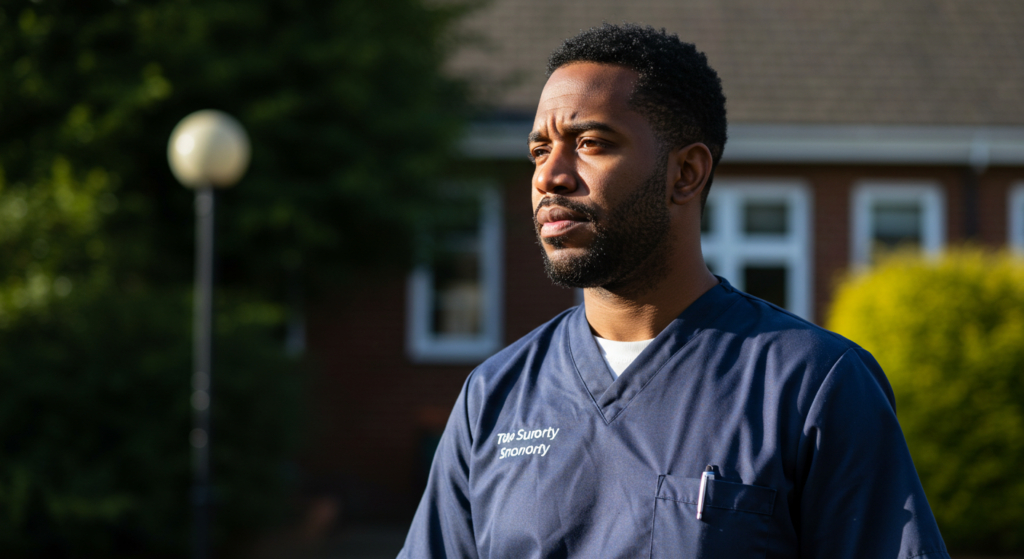
• When Nigerians dream of moving to the UK for better opportunities, they rarely picture sleepless nights, high-risk patients, and barely scraping by. Yet, for thousands of Nigerians who have made the move, care and support work is the stepping stone to a better life — or at least survival. 

    We spoke to four Nigerians to understand what it means to build a life in the UK’s care sector and how their income compares to what they left behind in Nigeria.

    “The hardest part is when they shout at me, but I’ve developed a thick skin.” —Ehi, 32, £2,000/ Month.
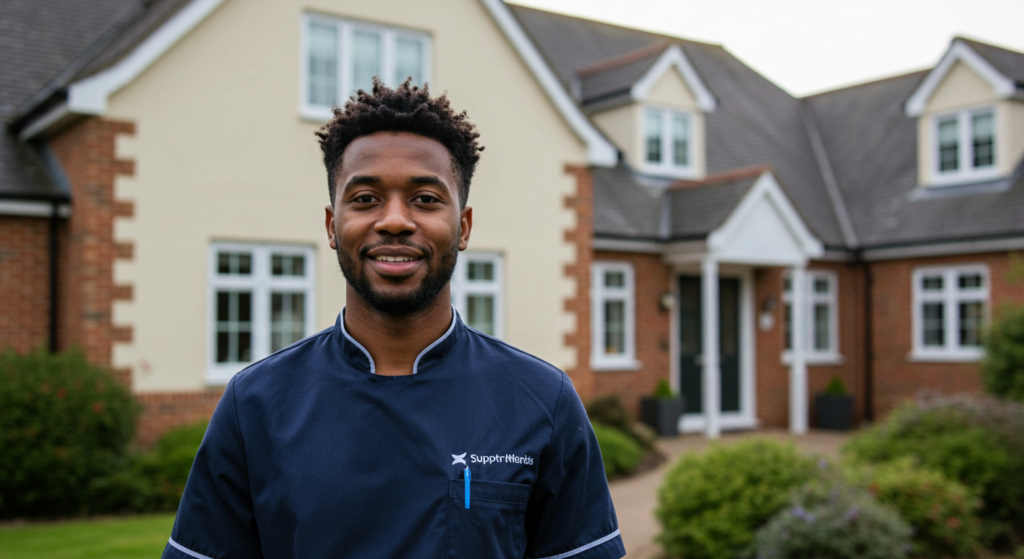
    When I moved to the UK in 2023, I left behind a stable life as a dentist in Lagos. Back home, my white coat and years of training earned me respect. Now, as a support worker in Nottingham, I spend my days assisting people with disabilities and mental health challenges. While it’s meaningful, it doesn’t demand the same level of critical thinking or problem-solving I once thrived on, and I miss that.

    I had to find a way to survive financially while pursuing my long-term goal: passing the UK dentist licensing exams, which cost thousands of pounds. Support work was the obvious short-term choice.

    It wasn’t always easy. When I first arrived as a student, strict work-hour limits meant I barely scraped by. At the time, I even worked in a warehouse, pushing through shifts that paid £500 monthly — a striking contrast to my ₦278k base salary (plus ₦300k–₦500k in commissions) as a Lagos dentist.

    But now that I’ve completed my master’s in public health, I work full-time in support, earning £2,000 per month. My wife, who came as my dependent, also works in a care home, bringing in £1,500 monthly. Together, we manage rent, bills, and savings, painfully aware that every penny counts toward my next career move.

    My ultimate goal is to secure sponsorship, pass my licensing exams, and return to practising dentistry, where salaries range from £50k—£100k per year. With sponsorship, I’d get a three-year work permit, which can be renewed. After working for five years in total, I can apply for Indefinite Leave to Remain (ILR), essentially permanent residency. If we have a child along the way, that could also open a pathway to staying. Still, British citizenship isn’t automatic—the child would be considered British property, meaning the government allows parents to stay to care for them. 

    For now, I’m relying on support work as my backup plan to secure sponsorship, remain in the UK legally, and eventually transition into my profession.

    In the meantime, I put in 45-hour weeks, mostly night shifts, balancing exhaustion with hoping for something better. Support work isn’t physically draining, but dealing with patients struggling with addiction, mental health issues, or aggressive behaviour takes a mental toll.

    The hardest part is when they shout at me, but I’ve developed thick skin. We use deescalation techniques — calm talking, removing dangerous objects, keeping a safe distance. Most times, they calm down and even apologise.

    But despite everything, the UK is still an adjustment.

    I miss the hustle and bustle of Lagos. The UK is boring. Everyone just minds their business.

    For now, though, minding my business means securing my future. This support work is my backup plan. I’m laying low, putting in the hours, and waiting for the moment I can transition back to dentistry.

    “An elderly man with dementia mistook me for his wife at a care home.” — Ikram, 25, £2,000/ Month.

    I moved from Nigeria in September 2022 to pursue a master’s degree in digital marketing.  Like many Nigerian students who needed a job to support themselves, care work seemed like the most viable option.

    I worked for an agency that placed me in various care homes and support settings. The work was often mentally challenging. I encountered residents with a range of mental health conditions, some of whom could become aggressive or self-harm. We were trained in de-escalation techniques and restraint, but it was still tough.

    There were days I had to cycle through pouring rain at 6 a.m., racing against time to make it to a support work shift because I couldn’t afford the £7 train fare while waiting for the previous week’s pay.

    Then there were the lighter moments — like the elderly man with dementia who mistook me for his wife at a care home. He locked his hands in mine, brought them to his lips, kissed them, and spoke to me as if I were her. Then he said, “They have me locked up here, but as long as you’re with me, Caroline, I’ll be good.”

    As a support worker, I earned £11.50 per hour, raking in around £500/ week. However, the shifts weren’t always constant, and I sometimes had to rely on my mum in Nigeria for financial support. I left care work after a dispute over my timesheet with a resident’s family member.

    I got my first proper job in the UK as a marketing executive in November 2023, but my role was made redundant in January. Subsequently, I did freelance work for friends while searching for a permanent position. I finally landed a job as a digital marketing manager at the University of Wolverhampton in June 2024, which pays me £28,000 a year.

    “It took five years to secure a UK Support Work Visa.” — Akinyemi, 27, £2,500/ Month.

    I loved caring for my patients at my job as a healthcare assistant in a Nigerian private hospital. But the pay was barely enough to survive. I earned ₦150k per month, which covered my basic needs but left no room for savings or a future. I wanted more — better career growth, stability, and financial security. 

    In 2023, I moved to the UK  on a work visa as a support worker after years of searching.

    I studied Public Health in Nigeria, so working in healthcare felt like a natural fit. Now, I earn between £2,000–£2,500 per month, depending on my shifts. That said, I primarily work 30-40 hours a week. 

    While my financial situation has improved, it’s not an overwhelming surplus, mainly because the UK’s cost of living is much higher than when I lived in Nigeria. But for me, it’s more about financial stability and growth opportunities rather than just getting by. I can now save, support my family back home, and plan for the future, making a significant difference for me.

    But the job itself is tough. I assist residents in care homes with personal care, meals, and daily activities. Some have severe mental health conditions or physical disabilities, and the work can be physically and emotionally draining. But there are rewarding moments — like knowing I’ve made someone’s day a little easier.

    Adjusting to life in the UK wasn’t easy. Beyond the job, I had to get used to direct communication, strict workplace protocols, and even small cultural shocks — like how seriously the British take queues. But over time, I’ve learned to navigate the system and balance my work with my personal life.

    I started looking for sponsorship jobs in 2018 and finally secured one in 2023. Many people rush the process and pay agents ridiculous sums, only to arrive and find no job waiting for them. But I handled everything myself — just Google, apply directly on company websites, and be patient. It took years, but in the end, it was worth it.

    I have better financial stability, career prospects, and exposure to a well-structured healthcare system.

    In the long term, I plan to advance in healthcare, possibly through further training or specialisation. Whether I continue progressing in the UK or explore opportunities elsewhere, my goal remains to build a fulfilling and sustainable career in healthcare.

    “I lost my first support work because they snitched on me.” — Ayodele, 25, £1400/ Month.

    I lost my first support work because a white woman snitched on me. She said I was sleeping on the job — which, to be fair, I was. But I got another one with the same pay, so I moved on.

    Now, I work as a support worker in the UK, putting in 30–32 hours a week. It’s not physically demanding, so I manage to fit in other things — my art, partying, and hanging out with friends. But financially? It’s a constant battle. After taxes, I take home around £1,400. From that, £500 goes straight to debt settlement; some money I loaned to help me settle in the UK still needs to be paid off, leaving me with £900. Then rent takes £650, which leaves just £250 for everything else: food, transport, basic survival. 

    Before I finished my master’s in September 2024, I was earning £1,800. Then the tax season hit, and the tax management department for the UK government, HMRC (Her Majesty’s Revenue and Customs), started taking out £400+. I have to pay income tax for every hour I spend working, and my employer deducts it directly from my paycheck. The more you work, the more they tax you, so even picking up extra shifts doesn’t always help.

    In Nigeria, I was raking in around ₦200,000/month between drawing, painting, and making portraits. However, after university, I struggled to find a good job with my biochemistry degree, so I took the next step: a one-year master’s in Public Health at the University of Birmingham. With family support and small loans, I crowdfunded my first instalment — £3,000 of the £14,000 tuition — then paid the rest throughout the year with my job as a support worker.

    Now, I support five residents with different disabilities. One has dyslexia and struggles with learning, so I help him review his engineering coursework, even though my degree is in biology. Another has Down syndrome, diabetes, and other mental, psychological and health conditions, so I handle their medication and meal prep. I keep my smiling face on even when I’m having a bad day, give them their medication, and prepare their food. It was tasking at first, learning how they like their meals, but now I can whip up food that makes them happy.

    The biggest adjustment for me has been learning how to provide emotional support for my residents. Back home, I never really had to consider people’s feelings. Here, I’ve had to learn patience, empathy, and how to put others first. However, I also don’t let myself get too emotionally involved; I keep my shifts strictly about work so I can focus on my personal life.

    I don’t have a long-term plan yet. I just want to settle down with a partner, get my indefinite leave to remain and start a business at some point. Whatever it is, I’m staying put in the UK and grinding through the routine until I find something better. 

    Bottom Line

    For these Nigerians, care work is more than a job. It’s a balancing act between survival and ambition. Some see it as a stepping stone, others as a struggle to stay afloat, but all of them are navigating a system that demands resilience.



    Also Read: What It Really Costs to Move Out as a Young Person in Nigeria

    [ad]

  • If you’re chronically online, you most likely already know that the Economic and Financial Crimes Commission (EFCC) has just achieved its biggest asset seizure yet—a massive housing estate with over 753 duplexes on the outskirts of Abuja allegedly built with public funds.

    For extra context,  this isn’t one of those modest estates with a few okay-looking flats scattered here and there. This is a prime estate carefully built across 150,000 square meters of luxury.  

    For years, the luxurious buildings have left people in Abuja questioning who’s behind such a display of wealth. We’re still not sure what the answer to that question is because the EFCC is keeping that information to itself, revealing only that it belongs to a former high-ranking government official who allegedly funded this lifestyle with public money.

    We won’t be talking about the government official everybody and their mom is pointing fingers at, but you can take at least 300 guesses in a country like Nigeria.

    A property expert who spoke to the British Broadcasting Corporation (BBC) valued the estate at tens of millions of dollars which sounds about right for 750 luxury houses built with public funds. That left us with a very important question – what existing problems could the money spent on the seized 753 properties have been poured into solving?

    Put an end to ASUU  strikes

    Academic strikes have become normalised in Nigeria and it’s majorly because the government just can’t seem to cough up enough money to pay lecturers’ salaries or fund universities. 

    In 2013, the Academic Staff Union of Universities (ASUU) demanded  ₦1.3 trillion to fix everything that’s wrong with tertiary education in Nigeria, but the Goodluck Jonathan administration agreed to give the union  ₦200 billion yearly because the country couldn’t afford to disburse ₦1.3 trillion at once. According to ASUU chairman, Professor Emmanuel Osodeke, that  ₦200 billion was only paid once, and it’s been crickets since then.

    The least amount of money the estate is estimated to be is $1 million, and that’s enough to stop the frequent ASUU strikes.

    Better salaries for doctors in rural areas

    The doctor-to-patient ratio in Nigeria is now 1000% below the World Health Organisation’s recommendation. This is mainly because doctors have been relocating to countries that offer better financial benefits to health workers. In Kano, Nigeria’s most populous state, 1,300 doctors are responsible for the healthcare of 15 million people. Meanwhile, in Adamawa, a single doctor treats 13,000 people. The effect of this japa wave is even worse in rural areas.

    In October 2024, doctors (especially those in rural areas) asked the federal government to review their salaries. Before that, the last time that demand reached FG’s ears was in 2013 when it approved a salary review for medical practitioners under the Harmonised/Consolidated Health and Medical Salary Structures but local reports confirm that it never took effect because Nigeria is allegedly broke.

    The seized estate, worth millions of dollars, could have been used to improve the salaries of Nigerian doctors working in rural areas.

    Job creation for young Nigerians

    70% of Nigeria’s total population is made up of young people. But about 53% of those young people (about 80 million youths) are unemployed. 

    The private sector has been one of the biggest employers of youths for years. But even that sector is starting to suffer from the economic mess Nigeria has drowned deeper into in 2024.  A recent report by Stanbic IBTC Bank Purchasing Managers’ Index (PMI®) shows that the employment rate in Nigeria’s private sector has declined for the first time in seven months. For context, this sector has consistently created jobs for the last six months, but it can’t afford to do that anymore because the economy is getting worse, along with the purchasing power of Nigerians.

    With the minimum wage being ₦70,000, even $1 million  is enough to pay the salaries of about 1,900 youths for at least one year. I’m not saying the total value of the seized estate will be enough to solve Nigeria’s unemployment problem, but it can go a long way in reducing the unemployment rate significantly. 

    Fix UNILAG’s accommodation issue

    In an ideal world, students shouldn’t have to hustle for hostel spaces, but that’s the reality of many students at the University of Lagos. Despite having about 40,000 students, the university only has 8,000 accommodation spaces due to the growing population and limited infrastructure. Off-campus housing options range between ₦250,000 to ₦800,000 in extreme cases. You can do the math, but the value of the seized estate is enough to fix UNILAG’s accommodation issue. 

    Reduce the number of out-of-school kids

    10.5 million children in Nigeria barely even recognise what the four walls of a classroom look like. In Borno, Adamawa, and Yobe states alone, two million children have no access to education, and less than 30% of schools are able to meet basic teacher qualification standards, making the kids from these states automatically disadvantaged in life. The Nigerian government currently spends only 6.39% of the 2024 budget on education (because Nigeria is allegedly broke). 

    We can go on and on about the other problems the Nigerian government has consistently put on the back burner with their usual “there’s no money” excuse, but that would be stating the obvious.

    This estate seizure is just another reminder of how much public money has gone into the pockets of a few government officials while the masses suffer.

  • It’s been 11 days since the Nigerian Centre for Disease Control and Prevention (NCDC) confirmed a cholera outbreak in parts of the country, including Lagos State.

    Here’s what we know so far as death and infection toll rises.

    Cholera Outbreak in Nigeria: What’s the Latest Update?

    What’s the current situation?

    On Wednesday, June 19, the Director General of the NCDC, Dr. Jide Idris, said the agency is actively monitoring the situation and might declare an emergency if the outbreak becomes unmanageable.

    Earlier, the agency, in a public health advisory published on Wednesday, June 12, said Nigeria recorded 1,141 suspected cholera cases, 65 confirmed cases, and 14 deaths across 96 local governments in 30 states from January 1 to June 11. Ten states contributed 90% of the total numbers: Abia, Bauchi, Bayelsa, Cross River, Delta, Imo, Katsina, Nasarawa, and Lagos.

    In Lagos, Special Adviser to the governor on health, Dr Kemi Ogunyemi, revealed that the state’s cholera cases increased from 15 to 21, while infections rose from 350 to 401.

    Ogun State Commissioner for Health, Tomi Coker, confirmed the death of a 62-year-old woman, while five victims have been hospitalised. Kunle Ashimi, chairman of the Nigerian Medical Association (Ogun chapter), said the association is on high alert and monitoring the situation in the state.

    The Oyo State government issued a health alert on June 13 following two suspected cases in Ibadan, but there have been no further reported cases. The state’s Commissioner for Health, Oluwaserimi Ajetunmobi, assured residents that there’s no cause for alarm as the ministry and other health agencies are monitoring the situation.

    What’s the current strain?

    The current outbreak is associated with the cholera subtype known as Serovar O1. Lagos State’s Health Commissioner, Akin Abayomi, warned that the identified strain is “highly aggressive and contagious, with potential for widespread dissemination.”

    Support from international bodies

    The World Health Organisation, United Nations Children’s Fund, and the International Organisation for Migration have lent their support to the ongoing cholera outbreak in Nigeria.

    In a post shared on X, Walter Mulombo, WHO country representative, revealed that the international bodies held an emergency meeting on Tuesday, June 18, to discuss joint support for the NCDC.

    FG begins water quality analysis

    The Ministry of Water Resources and Sanitation has kicked off a round of water quality analysis to control the cholera outbreak.

    Permanent Secretary Aliyu Shinkafi said on Thursday, June 20, that teams from the National Water Quality Reference Laboratories in Lagos, Enugu, and Sokoto have been tasked with collecting water samples to investigate the presence of Vibrio cholera.

    “Additionally, the ministry is coordinating with State Technical Working Groups and Rural Water Supply and Sanitation Agencies (RUWASSAs) through the WASH in Emergency Technical Working Group (WiETWG) to address the outbreak comprehensively.”

    Are tiger nuts and zobo contributing factors?

    Cholera Outbreak in Nigeria: What’s the Latest Update?

    Following the outbreak, there have been speculations on social media that contaminated tiger nut drinks may be responsible for the cholera outbreak.

    However, Biodun Ogunniyi, an epidemiologist with the NCDC, said the agency is about to embark on a case-control study to ascertain the situation and dispel rumours about the drinks.

    Who are those at risk of infection?

    According to the NCDC health advisory, people most at risk include:

    • People of all ages living in places with limited access to clean water
    • People living in areas with poor sanitation and poor hygiene
    • People living in slum areas where basic water or sanitation infrastructure is missing
    • People living in rural areas who depend on surface water or unsafe piped or borehole water sources for drinking
    • People who consume potentially contaminated food or fruits without washing and cooking properly
    • People who do not perform hand hygiene at appropriate times
    • Relatives who care for sick people with cholera at home

    Hotlines

    Report suspected cholera cases in Lagos to the following emergency contacts: 08023169485 and 08137412348.

    You can also dial the NCDC toll-free line 6232.

    Read this next: Nigerians, How Can We Make Our Own Hand Sanitizers?

  • Talk True is a limited Zikoko medical myth-busting series. With each episode, we’ll talk to medical professionals about commonly misunderstood health issues to get actual facts.


    If you paid close attention the first time you heard the term “toilet infection”, there’s a high possibility it was in a danfo. It probably involved someone standing in one corner of the bus selling pills they swore were the solution to all your life’s problems. 

    Sigh

    If it wasn’t a danfo, it was one of those loud voices that repeatedly thundered from hidden speakers in the market urging you to buy “Dr Iguedo’s Goko Cleanser” to clear the million toilet infections in your system. If you asked the danfo entrepreneur or the cleanser marketers about what the symptoms of toilet infections are, their responses would range from “itching in the vaginal area” to “watery smelly discharge” and even “infertility”.

    But are toilet infections really a thing? What state must your toilet be in to “infect” you? Itohan, a general medicine practitioner, speaks on this. 

    What’s a toilet infection?

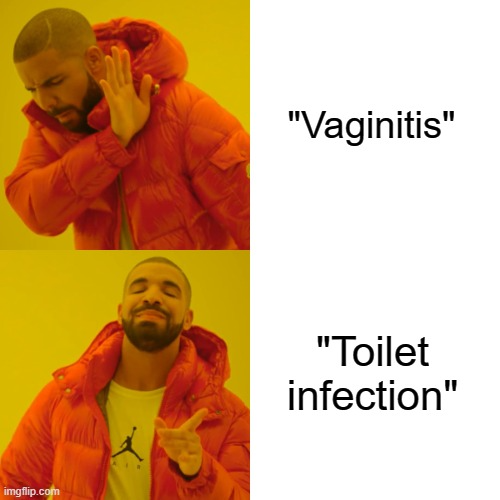
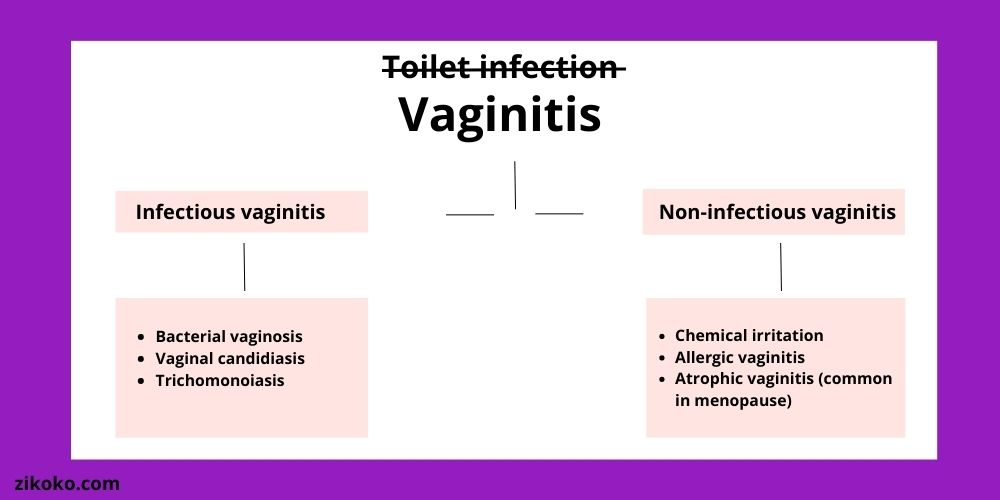
    “Toilet infection is a layman — and often misleading — term for vaginitis,” Itohan says. 

    Google-trained doctors be like…

    Vaginitis (or vaginal infection) is an inflammation of the vagina that may result in itching, unusual discharge and pain. It is usually caused by either one/or a combination of a bacterial or fungal infection, a change in the normal balance of vaginal bacteria, a sexually transmitted infection (like Trichomoniasis) or even menopause. And it’s actually a common medical condition.

    “About one-third of women — especially those in the reproductive age — will have vaginitis at one point or another.”

    But is it gotten from toilets?

    The list of probable causes above doesn’t mention toilets, but I ask Itohan to be sure.

    “No. It’s definitely not. A dirty toilet doesn’t lead to a vaginal infection. To know what might be causing inflammation, it’s important to look at the symptoms and more likely causes.

    When due to a fungal infection, vaginal inflammation is caused by an overgrowth of yeast (a fungus called Candida). This type of vaginitis is called a yeast infection or vaginal candidiasis and is characterised by intense itching around the vulva, a burning sensation after sex or urination, thick white cottage-cheese-like discharge and general soreness.

    Another type of vaginitis is bacterial vaginosis, and it’s typically a result of an imbalance in the normal vaginal bacteria due to factors like douching or unprotected sex with a new partner. The difference here is, this type usually comes with an abnormal offensive odour. Some people don’t even experience itching or any symptoms with bacterial vaginosis.”

    While Itohan insists dirty-toilets-causing-infections are a myth, she admits irritants can upset the vaginal environment and cause vaginitis.

    “We call this type non-infectious vaginitis, and it’s often caused by an irritation or allergic reaction. Some people will start to itch when they come in contact with chemicals from perfumed soaps, detergents or tissues. This is why your doctor will always advise you to clean the vulva with water and mild soap. Vulva, not vagina, please. That’s another recipe for bacterial imbalance.”

    And definitely don’t do this:

    Generalising can be dangerous

    As someone who’s seen several cases of vaginitis, Itohan understands the dangers of blanketing every symptom as a “toilet infection”.

    “Most people attribute every itch or discomfort they feel to yeast or some toilet infection and just use boric acid to relieve the itching. But you need to know the actual cause if you want long-term relief. 

    Imagine treating vaginitis caused by trichomoniasis, a sexually transmitted infection, with boric acid (which treats yeast infections). You’d get temporary relief but left untreated, trichomoniasis can last years and cause complications like premature delivery in pregnant women and poses an increased risk for cervical cancer.”


    ALSO READ: After Surviving Cervical Cancer, I Just Want Peace


    Should you be worried?

    Even though vaginitis may be concerning, it’s not something to be too worried about.

    “Whatever the cause of vaginitis is, it’s usually treatable. It’s nothing to be ashamed of. Don’t be scared to visit your doctor. It’s ten times better than relying on what Aunty A from Instagram said she used to treat hers.”

    Know your body, babes

    The first step to properly detecting and managing vaginitis is knowing your body well enough to observe when something’s off.

    “Every woman has some form of vaginal discharge and smell. The discharge tends to change in consistency and quantity throughout the menstrual cycle. When you’re in tune with your vaginal health, you’d know when there’s a different odour.

    For example, yeast infections are probably the most common type of vaginitis (after bacterial vaginosis), and it tends to reoccur in most ladies. A babe who’s had it before and is self-aware knows to watch out for factors that increase the risk, such as using antibiotics and birth control pills which may disrupt normal vagina flora, hormonal changes due to the menstrual cycle or pregnancy, or any condition that causes a weakened immune system. Again, most types of vaginitis are highly treatable.”

    On treatment

    Itohan emphasises that treatment is relatively simple and accessible, but the right diagnosis is key.

    “Once a diagnosis is made by your doctor or healthcare provider, treatment will typically involve over-the-counter pills, creams or suppositories. A yeast infection requires antifungal medications, while antibiotics are the go-to for bacterial vaginosis. See why proper diagnosis is important?”

    Preventing vaginitis is also very possible, and mainly requires some lifestyle changes.

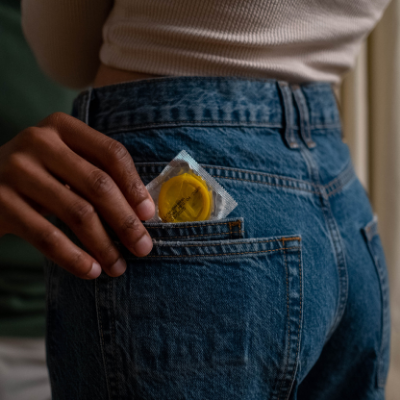
    “Avoid douching like a plague. Please don’t steam your vagina to make it ‘tight’. It may destroy naturally occurring bacteria in the vagina and lead to an infection. Avoid scented tampons or soaps. Change out of wet clothing as soon as you can. Clean your sex toys after every use. Use water-based lubricants, and of course, use protection with new sexual partners.”

    If you have recurring vaginitis, please visit a doctor or healthcare provider.


    NEXT READ: Why Women’s Nipples Hurt, According to Marion

  • It seems every union in Nigeria is fighting the Federal Government; from the Academic Staff Union of Universities (ASUU) to even petrol tanker drivers (Petroleum Tanker Drivers Branch of National Union of Petroleum and Natural Gas Workers (PTD-NUPENG).

    The latest to join the queue are doctors, with the Nigerian Association of Residents Doctors (NARD) threatening to strike if their demands are not met before the National Executive Council (NEC) meeting on January 24. 

    But what are these demands and how would their absence affect Nigerians if the strike happens?

    A list of piled-up debts and demands

    This isn’t the first time the doctors will threaten to go on strike. In August 2021, they did live up to their threats and went on a two-month strike that ended in October 2021.

    This was after the Federal Government had refused to pay entitlements such as salary and COVID-19 allowance, as well as an increase on the low hazard allowance, (a fee paid to workers who do dangerous jobs), which was only N5,000 per doctor.

    Two years later, even though the Federal Government has paid off some salaries and the COVID-19 treatment allowance, there are a lot of outstanding demands.

    These include the payment of salaries from 2014 to 2016, an adjustment in the Consolidated Medical Salary Structure (CONMESS), and overdue payment of the Medical Residency Training Fund (MRTF), amongst others. Even the hazard allowance, which was increased to N34,000, has not been paid since its approval in December 2021.

    Now that we understand why they want to strike, how will their latest tussle with the government affect us?

    Expect more deaths

    Nigeria has a double-digit mortality rate, as you can be sure of approximately 12 deaths among 1,000 people. The statistics are worse for pregnant women, as a 2022 United Nations Children’s Fund (UNICEF) report states that 576 pregnant women have died in the course of 100,000 live births. The cause? Lack of access to healthcare, according to Minister of Health, Osagie Ehanire.

    If we have such bad statistics now, imagine how it would be when there are no doctors available.

    It will affect business

    A lack of doctors will ultimately lead to a lack of patients, which will affect the income of business owners around the hospital premises. Think of grocery store owners that need people to buy consolation gifts for patients, transport workers, and so on. 

    Patients will not receive top-tier healthcare

    Patients who are under hospital admission for an extended period of time would feel the brunt of the strike the most, as the strike would mean fewer doctors to give them the medical attention they deserve, especially in times of emergencies.

    This is already happening with the rise of the doctor brain drain. Nigeria only has approximately 24,000 doctors in the country as opposed to the mandated 363,000.

    The Solution

    This is a wake-up call to the Minister of Health, Osagie Ehanire, to answer the demands of the NARD before we have another strike. If you want to take up the challenge for these doctors, you can get started here.

    We write the news and track election coverage of 2023 for citizens, by citizens in our weekly newsletter, Game of Votes. Make the subscription of a lifetime here.

  • 2022 hasn’t been a great year for healthcare centres in Lagos State. The state government served many of them breakfast with 157 closure notices and 42 permanent shutdowns.

    The Health Facilities Monitoring and Accreditation Agency (HEFAMAA) shut down the centers because they didn’t follow the standards. Some other centers were closed for being unregistered, lacking qualified medical personnel, or conducting the illegal training of assistant nurses. 

    What’s going on with healthcare in Lagos?

    Healthcare centers in Lagos have a history of bad maintenance and non-compliance with standards. In April 2022, the government shut down Medville Global Health Centre over the controversial death of a 28-year-old pregnant woman. The hospital had no blood bank and no ambulance for emergencies. In March 2022, the Lagos State University Teaching Hospital (LASUTH) suffered a water scarcity crisis that forced patients to use sachet water. 

    The government also shut down Vedic Lifecare Hospital in November 2021 for hiring unlicensed foreigners as doctors. And in July 2019, a toddler died in Ikorodu General Hospital because there were no doctors on duty. The list of terrible practices goes on and on and it’s sad to realize how much Nigerian hospitals don’t rate us.


    Why’s primary healthcare so poor in Nigeria?

    According to a survey by the Nigeria Health Watch and NOI Polls, there’s currently a shortage of doctors in Nigeria. It’s not a secret most of them are running off to first-world countries like the United States, the United Kingdom, and Canada. But even the ones staying have to deal with challenges bigger than their power, especially with equipment and their own welfare.

    In May 2022, a former medical officer at Federal Medical Centre Kebbi, Chukwuka Okereke, also lamented the uneven distribution of the standard of care in Nigeria. In Lagos, most healthcare centres either don’t have enough personnel or equipment. 

    As citizens, it’s important to be vigilant about the healthcare centres where we seek medical care. Don’t go to a hospital unless you are sure it’s accredited by HEFAMAA. You can check out their website here

    And for healthcare operators running inadequate centres, breakfast is coming for you.

    ALSO READ: Nigeria’s Doctor Shortage Crisis Is Worse Than You Think

  • Life as they know it has changed for millions of Nigerians affected by the 2022 flooding crisis. Over 600 people are dead and more than 1.4 million people are currently displaced all over the country. The floods have caused untold hardship for many victims who are now dealing with poverty, and lack of shelter, amongst many others.

    But now, things are taking a turn for the worse as their medical well-being is also at stake. On October 21, the United Nations Children’s Fund (UNICEF) issued a warning that 2.5 million people in Nigeria are at high risk of waterborne illnesses, drowning, and hunger. 

    [Image Source: Todayfmlive]
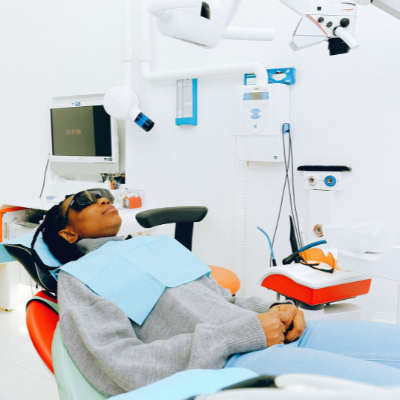
    To have a deeper understanding of how serious the situation is, we spoke with a 66-year-old farmer, Ngozi Igwe, who was displaced by the floods in Omoku, Rivers State. She’s suffering from three illnesses — scabies, malaria, and typhoid — but is receiving little to no medical treatment. She told Citizen her story.

    What was life like for you before the flood?

    I was very happy about the rainy season because my crops — yam and cassava — weren’t doing so well for some time, and I thought the rain would help them grow faster. I didn’t know that floods would be the result of that kind of rain. Even though I didn’t have a lot of money, at least, life was better.

    ALSO READ: From Homeowner to Homeless — Nigerians Speak On Flood Crisis

    What’s it like living in an Internally Displaced Persons (IDP) camp?

    It’s not been a joke at all. I’m not living well here. There’s no mosquito net and no mattress for me to sleep on. There’s no night that mosquitoes don’t bite me — they’ve finished my skin completely. I can’t sleep and my body is always hot. The sickness is too much. 

    And it’s not only me. I made a friend here, Peace, who’s suffering from severe typhoid, with constant body pains for five days. Even the little treatment she’s receiving here is not working.

    How long have you been feeling ill?

    I’ve been here since the beginning of September, so maybe six weeks.

    Have you received any type of medical treatment?

    We have o, but it’s not enough. It’s not even doctors treating us here, it’s pharmacists. Imagine o, one person has scabies, malaria, and typhoid, but no doctors are here to treat me. 

    The queues to receive the drugs are always long and you can stand for hours. They’re trying o but I wish I could see a proper doctor that can treat me better and give me drugs that can work fast. I have grandchildren that I would like to see grow up a bit before I die.

    Who’s helping victims of the flood?

    A resident of Rivers State and entrepreneur, Gloria Adie, popularly known as @MrsZanga on Twitter, has been spreading awareness about the flood crisis in parts of Rivers State. She told Citizen there were hardly any doctors in the Omoku region before the floods. Most of the available doctors work in government-run IDP camps and are hardly found in privately-run camps like the one Igwe stays in. 

    Adie also claimed that most of the hospitals in the area aren’t useful as the floods have submerged them and damaged medical equipment.

    Zikoko Citizen tried to reach out to the pharmacist in charge of the camp, Peter Ologu, but he wasn’t available for comments.

    Where’s the government?

    The Federal Government has distributed relief materials to 21 states across Nigeria, but Rivers State is one of the 15 states still waiting for delivery. The state government has supported victims with a ₦1 billion donation to provide relief materials but enough hasn’t gone around for them.

    There has been no official mention of hospitals affected by the state government, but the Nigerian Navy has provided medical personnel to victims in Ahoada, Omoku, and Port Harcourt.

    Like Igwe, Nigerians displaced by the flood are battling diseases, hunger, and severe displacement. The government needs to be more efficient in providing relief for them.

    ALSO READ: How Is Nigeria Responding to Its Worst Flooding Crisis

  • The japa wave out of Nigeria is making doctors become as scarce as uninterrupted power supply. Many doctors have seen the benefits of working overseas and refuse to stay and fight sapa in Nigeria

    Even though we can’t blame anyone for wanting to earn their daily $2k, the japa wave of doctors is really causing a serious problem for Nigerians.

    How bad is Nigeria’s doctor problem?

    Let’s break it down in numbers. 

    An estimated 217 million people live in Nigeria and they’re all likely to need medical attention at some point. According to the President of the Nigerian Medical Association (NMA), Uche Rowland, Nigeria currently has 24,000 doctors available. This means there’s one doctor available to treat 9,083 patients. 

    But according to the World Health Organization, a country should have a ratio of one doctor to 600 people for their medical needs. Going by this recommendation, Nigeria needs at least 363,000 additional doctors in the country.

    Excluding witch doctors

    According to Rowland, there are some states in the southern region where there’s only one doctor available to treat 30,000 patients. The situation is even worse in some northern states where there’s only one doctor available to 45,000 patients.

    He said, “In some rural areas, patients have to travel more than 30 kilometres from their abodes to get medical attention where available thus making access to healthcare a rarity.”

    Nigerian doctors are rushing for the door

    Even though Nigeria needs more doctors practicing in the country, the ones we already have are looking for work everywhere else. A 2017 survey by NOI Polls revealed that about 88% of medical doctors in Nigeria were seeking work opportunities abroad at the time. 

    In January 2022, the Medical and Dental Consultants Association of Nigeria (MDCAN) said more than 100 of its members left Nigeria within 24 months. A 2022 UK immigration report also showed that 13,609 Nigerian healthcare workers got working visas in the past year, making the country second only to India with 42,966 healthcare workers.

    Who will make it stop?

    Nigeria faces an existential crisis with the japa wave of doctors. As the country grows in population, more healthcare professionals are needed. The government needs to act fast with favourable policies that’ll make practicing in the country attractive to doctors. 

    We know our leaders can jump on a plane and run abroad for their medical needs but regular Nigerians deserve access to care too.

  • Whether it’s asking you when you’re going to marry or tugging at your pandemic belly, Yoruba aunties can wreak havoc, but who’s going to plan the epic Owambe parties we love if they’re gone too soon? So to keep the necessary evil alive, these are the nine health care tips 50+ Yoruba aunties should know. Share this with them to keep the party rice coming.

    1. Tell her to exercise

    Exercise will keep her heart pumping and agile enough to frustrate any 25+ woman renouncing marriage. Tell her to get out of bed every morning for some light exercise — remember all the punishments she gave you? Tell her to do it for a long life. Jump up and down (not too high o), swing your arms, or go up and down the stairs. The goal is to keep her body moving and active so she can keep being the gorgeous girl she is and too tired to stress you. 

    2. Give her nuts 

    Chill. I’m talking about almonds, walnuts and peanuts. Her body needs the nutrients — protein, fat, fiber, vitamins, and minerals. Tell her how convenient it is to throw in that big bag she’s always carrying or throw anybody stressing an elderly woman. 

    3. Get her to take healthy supplements

    Agbo is a Yoruba aunty’s cure for everything. Please introduce her to health supplements like vitamins. Last last, help her blend a Vitamin C tablet in her concoction — doctors say it’s good for their immune system.  Some women talk about taking the Reload Multivitamin, but please, call that doctor she wants you to marry and confirm.

    Healthcare tips

    4. Introduce her to healthy foods

    Amala and gbegiri with soft kpomo and shaki is the holy grail of every Yoruba aunty, but please help her cut carrots and cucumbers by the side. Then grab her ears if you see her drinking anything that is not water or ginger tea. She might slap you, but you’re the reason she’ll be alive to host another banging owambe for us.

    Healthcare tips

    5. Book a massage for her

    No shade, but her bones are not what they used to be. A bi-weekly or monthly massage at the hospital or spa will do wonders for your back and knees. Again, we’re doing this for the party jollof.

    Healthcare tips

    6. Get her to have more sex

    Now it’s time to talk about the other nut. They say sex after 50 can be the best sex of your life. Try it and come tell us about it for Zikoko Sex Life.

    7. Fix her doctor’s appoinments

    Beg her to stop going to the hospital to look at fine doctors for you to marry, please. She needs to take preventative checks and screenings like mammograms and pap smears as seriously as the pepper in her food. Get her to talk about menopause, the painful cramps, night sweats, vaginal dryness and everything in between. 

    8. Teach her to focus on her mental health

    This one might be hard, but tell her to stop choosing violence — no more hiding souvenirs in her extra bag at weddings or haunting you for more grandchildren. Tell her to find what gives her peace to avoid anything that raises her blood pressure. Introduce her to a self care routine tips: buy her a candle, buy a pet to distract her or just buy her a plane ticket to another country for your own peace. 

    9. Find more friends for her

    Remove her from the family group chat — she needs real friends at this point. Get her to connect with old school friends (the real Nollywood babes) or a community for women. Either way, she needs to get out of the house and meet more people that relate to being a 50+ woman. 

  • Forget what they say about your 20s being the best time of your life. Every year can be the best part of your life if that’s what you want so congratulations on making it to 30. We’ve compiled a list of healthcare tips that will help you make it to 40 looking unscratched. 

    1. Build an exercise habit into your routine 

    Find something that works for you. It could be early morning walks or late night yoga. The point is to be active because exercise keeps your heart healthy, lowers your risk of getting Type 2 diabetes and improves mental health. 

    2. Don’t skip sunscreen 

    Black don’t crack, black don’t crack, but they won’t tell you about their thorough skincare routine. As you grow older, your skin loses its elasticity and general vim. This is a normal part of ageing — no need to freak out. You can slow down the process by taking good care of your skin. One way to do this is to include a good sunscreen with an SPF of at least 30 in your skincare routine. Sunscreens help prevent skin cancer by protecting you from the sun’s UV rays that are harmful to your skin. It also helps to reduce the appearance of sunspots and premature wrinkles.

    3. Routine hospital visits are your thing now 

    Preventative checks and screenings are a big part of growing up. Do your routine pap smear, dental check, eye check, mammograms, etc. Life is easier when you know what’s happening in your body. 

    4. Practice safe sex 

    Your 30s are a great time to experiment with your sex life but you must remember to practice safe sex. Getting older means your immune system has to work harder to protect you from diseases. Save your body the stress of overworking and be proactive with your sex life. Never skip on condoms and get regular STI checks. Better safe than sorry.

    5. Drink more water 

    The benefits of drinking water are endless, including maintaining your blood pressure, lubricating your joints, regulating your body temperature, and promoting overall cell health. If you haven’t upped your water intake yet, this is your cue to do so. 

    6. Find a relaxation practice 

    In your 30s, you should also prioritise leisure. You probably spent your 20s trying to figure out what you wanted to do with your life and career. The 30s are a time for relishing in a sense of certainty, as well as repose. Yoga, meditation, or frequent massage sessions are all examples of relaxation techniques. You can find one that works for you, that you can devote both time and money to. 

    7. Learn your family’s health history 

    This is super important because it tells you the health issues to watch out for. It’s a proactive step in taking care of your health. That way you are not blindsided by possible issues that may come up in the future. 

    8. Sleep more 

    Gorgeous girls sleep. Sleep helps restore energy spent throughout the day and improves concentration and memory formation. Sleep helps you stop being the subject of 30+ jokes. If you have difficulty sleeping, you can invest in aromatherapy, try yoga before bed or see a doctor if it’s really serious. 

    Cheers to 40 in a few of years. 

    Subscribe to our HER newsletter for more stories about African women and how they navigate life.