• When Chinasa* (24) lost her older sister, Lilian*, in a sudden, tragic accident, her world cracked open. In the years since, she’s been quietly trying to piece herself back together—navigating grief, guilt, and the impossible task of stepping into shoes that were never hers to fill. 

    As her family mourns the daughter they lost, Chinasa battles the unspoken pressure to become just like her — cheerful, accomplished, perfect — even when it costs her the chance to be herself.

    This is Chinasa’s story, as told to Betty.

    When my older sister, Lilian*, died in a freak bike accident, my entire life flipped inside out. She was everything — golden girl, the first daughter, the family star, you name it. She was already in her final year studying accounting, with her ICAN certification. On top of that, she was a budding actress and model, and carried herself with an effortless kind of beauty. Lilian was popular. People knew and loved her everywhere she went. Even at home, she shone and the rest of us just existed in her glow. She was, by all accounts, the perfect firstborn daughter.

    Get More Zikoko Goodness in Your Mail

    Subscribe to our newsletters and never miss any of the action

    I never minded living in her shadow, though. In fact, I enjoyed it. It meant I could coast as the middle child. Nobody expected much from me, not with Lilian taking on all the pressure and carrying the first daughter burden. I got to do my own thing without pressure. No one placed me on any pedestal since my sister was already there. But the moment she left us, all the attention shifted to me. Worse, everyone started acting like I now had to live up to the version of her they still held on to.

    I didn’t want any of it.

    At her burial, everyone poured their grief on me. They kept talking about how wonderful she was and how painful it felt to lose her. I didn’t know how to tell them that I was already aware in a way that no one else could possibly understand. She was my only sister. Even after her death, my brothers still had a sister. Me? I had no one. 

    I felt so bad for our mum. We’d already lost our dad many years before. Losing Lilian felt like salt in a wound that had only begun healing. Her death broke my mum. Once, in her grief, she told me she wished I had died instead. It didn’t even hurt it at the time. I wished the same thing, too. But that comment still sits in my chest like a stone, even though I now have a better understanding of how heartbroken she was.

    After Lilian died, I was “promoted” to first daughter and that’s when everything started feeling heavier. Suddenly, everyone expected me to hold the house together, to be cheerful, outgoing, sociable — everything Lilian had been. But I’m not her. I’ve never been her. Yes, I’m bubbly and charming, but in my own way. I don’t want to be the centre of attention. And it’s exhausting pretending I even want to try.

    Family gatherings are the worst. Someone always finds a way to bring up Lilian — , how proactive and energetic she was. I visited an aunt once who said she missed having Lilian over because unlike me, she was jovial and had so much energy. Some of my extended family members act like I’ve had enough time to move on from grief. But how do I get better when I still feel so raw? Now, I avoid them when I can. I’d rather keep my distance than sit there and get reminded again and again that I’m not my late sister.

    My relationship with my mum is complicated. I know she’s trying. She reaches out and tries to be closer, but there’s a subtle friction between us. We weren’t so close before my sister passed. Between the normal teenage frustration, the chores I didn’t want to learn, and my years in boarding school, we never really got the chance to bond. Sometimes, I think she sees me as the one who survived when the ‘better daughter’ didn’t. How do you build a bond from that starting point?

    Still, I don’t blame her. She’s a good woman, a wonderful mother. And she’s been through more pain than any parent should ever know. That comment — the one about wishing I had died — I don’t think she meant it. Or maybe she did, in that moment. I don’t know. I just know it changed things between us.

    The only person I ever opened up to about all this was my friend, Diana*. She’d also lost someone, so we cried together. Not just about what we’d lost, but about how much heavier everything becomes after. There was something comforting in that. Just sitting with someone who gets it. No advice, no comparisons. Just presence.

    [ad][/ad]

    Losing someone like Lilian doesn’t get easier. It’s not a phase or a season. I carry it every day, and I try to live in a way that honours her.  I know she loved me exactly as I was. She never asked me to become someone else.

    Each time I remember her, the pain comes back like it never left. I hate that she left me behind. I hate that people expect me to fill shoes that were never my size in the first place. I take each day as it comes, and I hope that eventually, it’ll get better.

    See what people are saying about this article on Instagram.


    READ ALSO: I Spent Years Looking For My Dead Fiancée In Other Women


  • Francis* (30) spent nearly a decade in a relationship that felt like a forever kind of love until a tragic accident changed everything. In this story, he talks about losing his fiancée, trying and failing to move on, and finally realising the need to manage his grief.

    What’s your current relationship status?

    I’m single. I’ve mostly been on my own since I lost Jane*, my fiancée, in 2021 . We were together for nine years, and her death changed me. I couldn’t move on for a very long time. And when I tried to, I sabotaged every relationship I got into.

    Tell me about Jane. What was it like being with her?

    Jane was my first, I’d never been in a relationship before we started dating. I was that devout Catholic boy who considered becoming a priest. But just before university, I left Jos for Ibadan in 2012 to take remedial courses, and that’s when I met Jane. We were in the same programme and naturally spent lots of time around each other. I fell hard.

    I’m an only child and grew up in a deeply religious household where romantic feelings especially as a teenager were considered sinful distractions. But with Jane, all the feelings I’d suppressed about girls came rushing out. We started dating in 2012, the same year we both got into the University of Ibadan. She studied History, while I studied English.

    The endless ASUU strikes kept us in school for nearly six years. But it didn’t matter. Through it all, I had my first love and first everything in Jane. In our final year, we moved in together off-campus without telling our families. We just couldn’t imagine being apart.

    After we graduated in 2018, we served in Ibadan and tried to settle here. I landed a job with a government agency, and she started teaching. Among our friends, everyone admired us. We did everything together.

    Jane’s mum eventually found out we were living together and didn’t take it lightly. That’s when I realised maybe it was time to start planning for the future. I proposed in June 2021, and she was over the moon. I had no idea things would change so drastically a few months later.

    Get More Zikoko Goodness in Your Mail

    Subscribe to our newsletters and never miss any of the action

    What happened?

    Her school went on break that August. So, she travelled home to Benin to spend time with her family and tell them about our engagement. I dropped her off at the park that morning and hugged her goodbye.

    Later that day, I couldn’t reach her, and messages also stopped delivering. I called her family, and when we contacted the park the next day, they said the bus never got to town. At first, we feared kidnapping. But we later heard there had been a ghastly accident just outside town. None of the passengers survived.

    Her sister called to break the news of her demise. The world just spun around me. I’ll never forget that moment.

    That must’ve been incredibly hard. I’m sorry.

    It became the darkest period of my life. The worst part was not having closure. We buried her casket without a body because they’d been burned to shreds in the car. I couldn’t function for over three months. Thankfully, my co-workers covered for me while I went home.

    My parents tried to be there, but their support didn’t help.  My dad wanted me to “be strong” because I was a man, while my mum made hurtful comments about how Jane wasn’t the best person for me. We fought constantly. I  eventually returned to Ibadan sooner than planned just to escape it all.

    Fair enough. Did you try to date again?

    Not for almost two years. Everyone wanted me to move on, and I succumbed because I’d also gotten tired of feeling stuck in my grief. So, I tried Tinder in 2023.  Most people there just wanted to hook up, which I didn’t want. Then I met Dolapo* on the app. She had great vibes and a similar build to Jane’s. I genuinely liked her.

    But sex with her triggered a sense of guilt like I was cheating on Jane. It felt like Jane’s spirit was always in the room with us, which made me become distant over time. Dolapo noticed, because after a few weeks, she blocked me everywhere. I couldn’t even be mad. I knew I didn’t try hard enough to keep her.

    What happened after that?

    Not long after, a friend introduced me to Ijeoma*. I was drawn to her instantly, partly because her first name was Jane’s middle name. I told myself this time I’d do things differently. I made things official very early. I didn’t want the same thing with Dolapo to happen, so I told her upfront that I preferred celibacy. I also decided to stay celibate this time.  

    But deep down, I knew we couldn’t work because every time she asked about our future, I didn’t have a concrete answer.

    She also hated that I kept a diary where I wrote to Jane anytime something big happened, and didn’t like the framed picture of Jane in my house. She said I was idolising Jane, even though I’d told her everything from the start.

    Ijeoma eventually gave me an ultimatum to get rid of Jane’s things or risk losing her. For me, it was simple. Jane meant more to me. That relationship ended last year,  after a year and two months.


    Read Also: “Find My iPhone Exposed My Babe” — 6 Nigerians on How They Caught Their Partner Cheating


    Did you feel any regret?

    My feelings were more of anger. I felt like she didn’t want to understand me or what I was going through. To me, she was just being selfish. But a mutual friend later helped me see it from her perspective.

    Jane and I dated for almost a decade — of course, moving on is hard. But maybe I didn’t even try enough. Both Dolapo and Ijeoma reminded me of Jane. I kept looking for her in other people, and that wasn’t fair.

    Right. Did you ever consider therapy?

    I tried but it didn’t help because I couldn’t open up, so I stopped after a few sessions.  But I recently joined some grief support groups, and they’ve helped more than I expected.

    Sometimes, I imagine if the roles were reversed. I know I wouldn’t want Jane to live like this. This thought reminds me that healing isn’t just for me; it’s also something she would’ve wanted. I’m still not ready to date, but I’m working on myself every day.

    Is there still hope for dating in the future?

    Eventually, yes. I just turned 30, and there’s pressure from my family to move on and settle down. But first, I want to get to a place where Jane is just a memory I cherish and one that  doesn’t influence how I live my life.

    Curious. Has your time alone changed what you want from love or partnership?

    It’s made me realise I don’t want someone to fill a void. I don’t need a partner to replace Jane; I want to grow a different kind of love.

    Before, I clung to the past and projected it onto other people. Now, I’d like to live in the present. I hope to find someone patient enough to help me through this phase.

    So, how would you say the streets are treating you? Rate it on a scale of 1-10

    A 4 if I’m being honest, or maybe a 5. I’m learning how to be okay on my own. The loneliness sucks sometimes, but it’s better than being with the wrong person for the wrong reasons.


    If you’d like to share your own story, fill out this form.


    Click here to see what others are saying about this article on Instagram

    [ad]

  • Do you really ‘get over’ the death of someone you love? Grief goes beyond weeping at a funeral.  Sometimes, it’s in texting a number that will never reply, avoiding your own birthday, or wondering if you’re even allowed to mourn someone you barely knew.

    In a society where you’re expected to ‘be strong’ and ‘move on quickly,’ many Nigerians carry grief quietly. We spoke to six Nigerians who’ve lost someone they deeply loved. They open up about the different ways grief continues to shape their lives. 

    “Eating, sleeping, and even breathing is difficult” — *Adam, 29

    *Adam was planning to propose to his girlfriend when she died of leukaemia. Months later, grief has changed everything from his work life to his family.

    “She died in December 2024. We knew she was sick, but the news still felt like a slap. I wasn’t even there. I had taken a job in Port Harcourt, and she was in Ibadan. If I could turn back time, I wouldn’t have taken that job. I’d give anything to have been by her side.

    I remember the exact feeling when her sister called —the buzzing in my ears, and how everything froze. I was going to propose on my next visit and had started looking at rings. Now, I feel guilty doing anything. Eating, sleeping, and even breathing is difficult. Life feels colourless.

    I couldn’t concentrate at work and had to take leave. When I told my parents I was taking time off, my dad said, ‘Are you the first person to lose a girlfriend?’ I was so mad. We had a huge fight and haven’t spoken since. It feels like a part of me died with her, and it’s not coming back.”

    “I don’t have the right to grieve him” — *Farida, 25

    *Farida’s father battled a mental illness for over a decade. She expected to feel relief after his death.  Instead, the guilt hit harder than she expected.

    “My dad’s illness was mostly mental. From when I was 14, he was just a physical presence. It felt like parts of him — his mind and personality – had died years ago.

    My mum had to be both wife and caregiver while raising us. She didn’t hire help because she feared society would judge her. She did it all by herself. I sometimes wished for my dad’s passing just so my mum could catch a break. When he did, I thought I’d feel free, but I didn’t.

    I was overwhelmed with guilt. It felt like I killed him with my thoughts. 

    Sometimes, I feel like I’ve lost the right to grieve him, but I cry regardless. I don’t think that grief will ever stop.”

    Get More Zikoko Goodness in Your Mail

    Subscribe to our newsletters and never miss any of the action

    “I fear I’ll forget her face one day” — *Zoe, 24

    *Zoe lost her mother at a young age. Years later, the pain still feels raw. She’s just learned to live with it quietly.

    “Everyone says time heals, but I don’t think that’s true. I’ve just learned to nurture the wound so it doesn’t ache every day. 

    My mum died when I was young, and to this day, I still imagine her walking into the room and saying it was all a prank.

    The hardest part of losing her is the loneliness. I never got to talk to anyone about things girls are meant to share with their mums — my period, crushes, or even just how I was feeling. I was expected to just keep going, and I did. Most people don’t even know I’ve lost a parent. I feel like our society doesn’t really support grieving people, and I don’t want to burden anyone.

    I still cry myself to sleep sometimes. I’m scared I’ll forget her face. I wouldn’t say I’ve healed, but I keep myself going by living a life she’d be proud of.”

    “I miss the future I’ll never have with him” — *Dan, 28

    People say time heals, but for *Dan, grief has only grown more complicated with age.

    “I lost my dad when I was 11. My mum did her best, but there were things I missed, especially as a boy. There were conversations only a father could have with his son, and I didn’t get those.

    I miss him, and I miss what our future together could have looked like. I also grieve the past. Sometimes, I pass by where he used to work and feel this wave of longing I can’t explain. 

    People expected me to ‘step up’ after he died. They didn’t say it outright, but it was implied. That pressure made me grow up too fast. Even now, I still compare my friends’ dads to him. Sometimes, I  catch myself wishing they were my dad, or that they’d met him. My dad and I shared a birthday, but since his demise, I find it hard to celebrate., That day just reminds me of a hole in my chest that’ll never be filled.”

    “I still reach for my phone to call her” — *Ifeoma, 45

    *Ifeoma reconnected with her mother as an adult, only to lose her again a few years later.

    “I didn’t grow up with my mum. We reconnected 25 years  later, after university, and she quickly became my everything— my confidant and gist partner. 

    After I got married, she would visit and notice things I missed, like the house help stealing from me. Her presence made a big difference.

    When she died, it felt like fate stole her from me a second time. We only spent eleven years together. At first, I didn’t feel the absence because we lived in different cities. But months later, I realised she was the one person who could be honest with me. Sometimes, I forget and reach for my phone to call her. Bad things would happen to me and I’d think, ‘If only my mum were here’. 

    After her death, a lot of people came to visit and pray with me. I was grateful, but the comfort was temporary. Once they left, the emptiness returned. I look at my children and miss her even more.”

    “I cry in the bathroom when no one’s watching” — *Sylvie, 23

    Like most mother-daughter relationships, *Sylvie’s relationship with her mum was rocky. Still, nothing prepared her for how the loss would change her. 

    “My mum and I had this love-hate kind of relationship. But losing her left a void I didn’t expect, and it shows up more often than I’d like to admit.

    I became hyper-independent and overly emotional. I cry often — in the bathroom, during prayer, even over minor inconveniences. Her death also made me socially withdrawn. I left social media and got triggered by the simplest things —hymns,  TikTok videos, or a line from a sermon. I still talk about her all the time, sometimes without even realising. I have accepted that my grief won’t end. I’m no longer shattered, but I’m still not whole.”

    How to Live With Grief Without Losing Yourself

    We asked Oghenetega Esiekpe, a counselling psychologist, to explain how to live through grief, one day at a time.

    1. Feel everything without shame

    “Grief is not a defect or weakness. It is the unresolved love you carry with you,” Esiekpe says.

    Sadness, guilt, anger, or numbness, they’re all valid reactions, and you should let yourself feel them. Don’t try to ‘snap out of it’ or pretend you’re fine. Feeling pain or hurt is a natural reaction to loss, and it serves as evidence of love and acceptance.

    Esiekpe says guilt is one of the most misunderstood parts of grief. “It shows up when you think you didn’t do enough, or feel relief after someone’s suffering ends. But that relief only means you’re human.” There is no one way to grieve, and you don’t need perfect memories to feel loss. 

    2. Create small, daily rituals that help you stay grounded

    Healing or accepting the loss of a loved one does not happen overnight; it takes small and intentional steps to help one move along.

    “Have a routine check-in with yourself, probably at the end of each day. Ask yourself how you feel today. Write down one thing you miss, one thing you remember, or one thing you’re still angry about,” she suggests.

    Daily rituals like having a phone call or even gardening can help you reconnect to life in a way that gradually heals you.

    3. Don’t ghost your relationships. Be honest

    Grief makes your other relationships feel exhausting, even though they are a big part of healing. That doesn’t mean you need to perform happiness. Esiekpe advises, “Let people know you still value their presence. When a friend checks in, consider saying, ‘I don’t have the words to express how I feel right now, but I appreciate you checking on me.’. “

    If talking is hard, she suggests other alternatives: watch a movie with friends and family, revisit memories with someone who knows the dearly departed, or simply sit in silence with someone who cares. These are healthy ways to maintain bonds without the pressure to shut down or put on an act.

    4. Set boundaries, especially with people who mean well, but hurt you

    Like *Adam’s father, People will say the wildest things when you’re grieving. Esiekpe says it’s okay to block that out.

    “Consider saying, ‘I appreciate your concern, but I’m not ready for this conversation,’ or ‘I’d prefer to be alone right now.’ Boundaries are a way for you to protect your peace while you heal.”

    5. Grief doesn’t disappear

    If it’s been months or years and the pain still feels raw, you’re not broken. You’re just grieving honestly.

    “Some losses reshape us forever,” Esiekpe says. “The goal isn’t to move on from them, but to move forward while carrying the memory.”

    It helps to remember that your loved one would want you to be happy. Living fully can be your way of honouring and celebrating them.

    6. Grieve privately, protect publicly

    In Nigeria, where we fervently uphold the principle of ‘life must go on’, people expect you to be ‘strong’. It’s okay to mourn for a short while, but you shouldn’t dwell on the loss.. Esiekpe encourages a different approach: “Grieve privately, protect publicly.”

    That means finding small moments to cry, feel, or process. It could be in the car, at lunch, or before you go to bed. Don’t let others rush your healing. You have to heal the way your heart needs.

    Bottom line

    Remember, how you grieve is an indicator that you loved and were loved. It’s not just a ‘phase’ in life, but a lifelong companion that reshapes how you see the world. Let it change you gently and guide you back to living fully again.


    Read Next: “Happy Moments Are Not Just Happy Anymore” -13 Nigerians on Navigating the Loss of a Parent

    [ad]

  • Grief comes to us all in different ways.

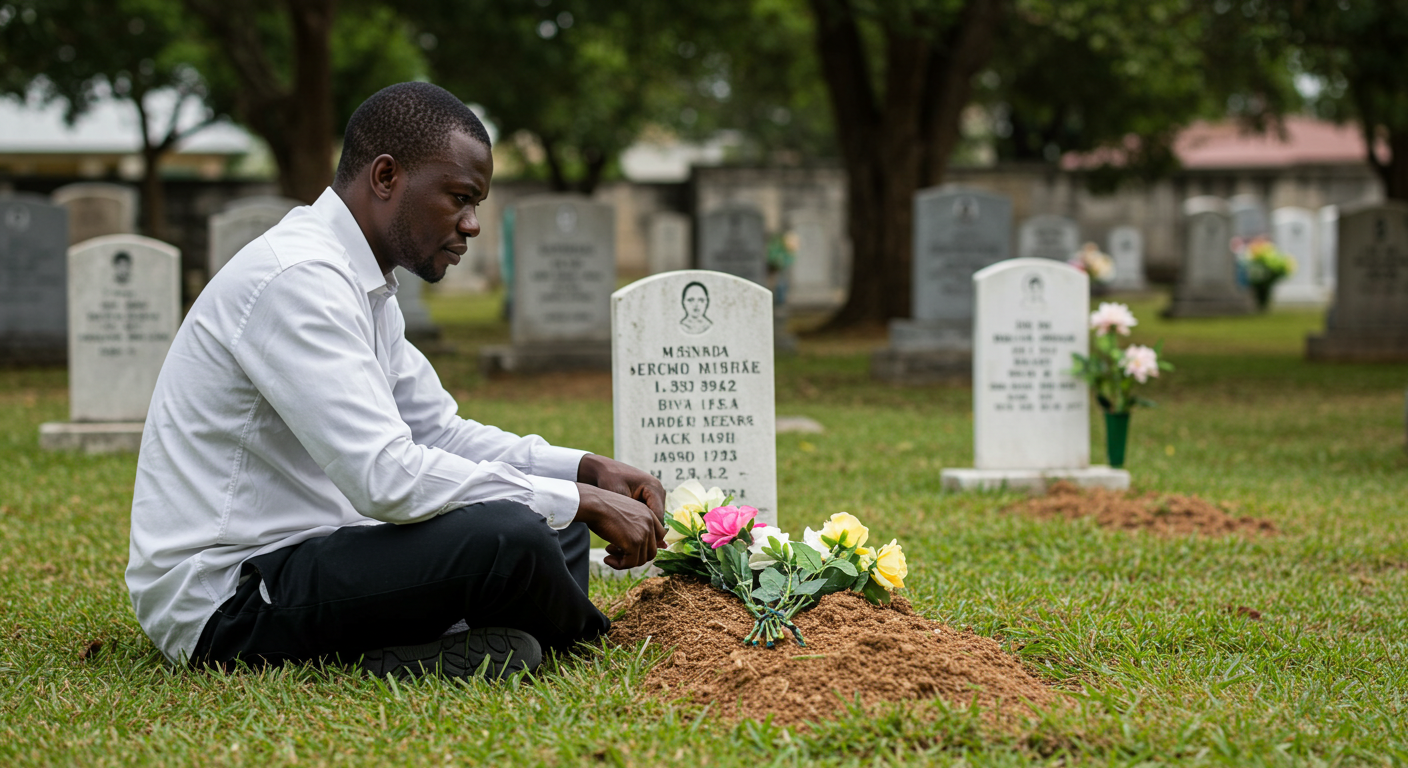
    For Damola*, his grief has deepened into an overwhelming feeling of guilt after visiting the cemetery one year after his mum’s death and being unable to locate her grave.

    As Told To Adeyinka

    In July 2022, I lost my mum a few weeks after her 55th birthday.

    The entire experience still feels like a script from a Nollywood movie. She fell sick on a Monday, complaining of a fever and cold feet.

    At first, we thought it was nothing serious—just the regular cold that’d require over-the-counter medication and some hot liquid. But by midnight that Monday, what started as a cold had also affected her breathing.

    We went to a private hospital very early the next morning, and the doctor thought it was probably a severe case of cold. She got stronger doses of cold and catarrh medication, but she didn’t feel any better. 

    By evening, her younger sibling joined us in the hospital and insisted we take her to a specialist hospital in Ebute Metta. By then, her breathing had gotten really bad. At the specialist hospital, the doctors confirmed it wasn’t a cold, but pulmonary embolism.

    My mum died in the early hours of Wednesday morning before the doctors could prep her for surgery.

    The burial ceremony was a blur. I didn’t have the presence of mind to take note of my surroundings—not who was there with us or what the place looked like. I just knew we were at Atan cemetery in Yaba.

    Reality only set in the next morning. I got a call from my aunty asking me to return to the cemetery and make plans to properly secure my mum’s gravesite.

    The first question I blurted out was, “Where is her grave?” 

    The question threw my aunty off, and she went on a gentle rant about how she’d shown me markers the previous day. I wanted to argue, but I didn’t know if she’d understand if I told her I had little to no memory of everything that transpired at the cemetery.

    After the call, I found my way to the cemetery in Yaba. Luckily, some guys remembered me from the previous day and offered to help me locate my mum’s grave. I thought it was kind of them until they started pitching their services, and I realised it was a business.

    They suggested marble tiles, a gated fence, headstones, and other options to beautify the grave. We eventually went for a simple marble and headstone design.

    I remember taking several pictures of my mum’s gravesite after the workers finished. I also recorded the surrounding graves and trees — everything I considered a landmark to help me remember.

    After leaving the cemetery, I made a pact with myself to visit the grave as frequently as possible. I couldn’t shake the feeling that my mum was all alone in the ground, in the vast ocean of graves, and she’d need a companion, or at least an offspring, who remembered her every once in a while.

    For reasons beyond me, I couldn’t keep that pact.

    To start with, I was posted to Osogbo for NYSC three months after my mum died. There wasn’t enough time to visit the cemetery the few times I was in Lagos. Besides, after her death, I’d listened to Islamic lectures where I learnt it was wrong to idolise the grave of a loved one. Nothing else really counts as long as you remember to pray and seek forgiveness on their behalf.

    So, every time I didn’t visit the grave, I took solace in the fact that I prayed for my mother. Yet, this hasn’t stopped me from feeling guilty.

    I returned to Lagos earlier this year. Soon after, I started to have more frequent dreams about my mum. The dreams weren’t strange — they’d always happened — but the increased frequency this time worried me. So, one day, I called my spiritual guardian and told him what I’d been experiencing.

    He asked when last I prayed or gave alms on my mum’s behalf, and I said I always prayed for her. He then suggested a bigger prayer session with family members on her behalf and said I should visit her grave.

    I hadn’t been to the grave since early 2023, but I was convinced the pictures and videos on my phone would be helpful. I was so wrong.

    [ad]

    The day I went to the cemetery, I didn’t see any familiar faces. The workers at the security post seemed completely different, and when they asked what I was there for, I told them I was visiting my mum’s grave. They asked if I knew where it was, and I said yes.

    To be honest, I wasn’t quite sure that I did.

    A lot seemed to have changed in the cemetery—the place had been overrun by grass and weeds. But I wasn’t willing to admit to strangers that I was unsure of where my mother’s grave was. The mere thought of that admission made me ashamed.

    So, with the pictures on my phone, I tasked myself with finding the grave. At least 80 per cent of the landmarks were still in place; the real problem was finding the particular line where her grave was. I couldn’t find any graves I’d photographed on my phone. Most of the headstones read 2024, and it didn’t seem like there was any grave of anyone who died within the last three years in sight.

    I went on and on with the search, tiptoeing around graves and being careful not to step on those that had weakened with time. Being alone in that ocean of graves snapped something within me; I stopped searching and broke down in tears.

    When it became clear that I didn’t know where the grave was, I called my aunt and asked when she last visited. She said she visited the grave two weeks back when she accompanied a friend to bury her mum. She also seemed surprised that I was there and asked why I didn’t mention I was coming since we were both at the prayer session the day before. I ignored the question and said we could come together the next time she planned to visit.

    I didn’t tell her I had no idea where the grave was. She’d have made a drama of it.

    Now, I’m counting down to the day we’d go together. But I can’t help feeling bad. This feeling is worse because I haven’t dreamt of my mum in a while. I feel like she’s mad at me.

    Read this next: I Lived Beside a Cemetery for 20 Years

  • The loss of a parent is a life-changing, earth-shattering event. These Nigerians talk about how losing a parent has shaped them and the life they now live.

    Salem, 50

    I was the original daddy’s girl. My father and I were close; he was my friend, my confidant, and my defender. He died at 78, and I know people think that’s old enough, but it isn’t. My father was agile, and he didn’t look his age. All his life, I never saw him ill.  His first illness took his life.

    When he died, It felt like my life was over. I had never been without him in my entire life, and I didn’t want to be here without him. I’ve felt alone since. I still dial his number when I’m upset so I can vent. I’d go through an emotional event and want my daddy, only to realise that he isn’t here anymore. 

    My life has changed, and I’m not the same person I was before he died. I have tried finding that person, but it seems she’s lost forever. I am a new person, and I am still getting used to her.

    Ona, 24

    I was 14 when my dad died, and I spiraled because of it. I was depressed and did things I’m not proud of; I avoided people for two years. I’ve learned to cope better with it now. Sometimes, it hits extra hard, and I cry, but I’m doing better now. 

    I still miss him though. I don’t know if I’d be the person I am right now if he was here, but I’d still rather have him here. 

    Ani, 20

    My dad and I didn’t have a strong relationship, so when he died, I found it hard to grieve or miss him. There was no emotional connection there, and it was easy to move on from his death. The only time he comes to mind is when we celebrate his remembrance, and people praise the man he was. That’s it.

    Laura, 25

    My dad passed away when I was 2, so I don’t remember much about him. My mum died when I was 16; this one I remember. It was four days to my 17th birthday, and I don’t think I’ve been able to move from that age. I feel like life has been passing me by. 

    It’s been very depressing since she died. When she was here, talking to her fixed everything that was wrong with the world, but now everything’s just shit. My depression has gotten worse, and I still feel like such a sad person, no matter what I do to spark joy. Happy moments are not just happy anymore — they feel bittersweet because she isn’t there to witness any of it: my graduation, getting into my first relationship. I’m second-guessing getting married because she won’t be at the wedding, and I’m scared it’ll be a very underwhelming day.

    Leo*, 28

    My dad died when I was 18. Before he died, I strongly believed that death could never be me or my family’s portion. I never thought it would happen to my parents, but it did, and I cried a lot. I used to live my life with no care in the world. Daddy was there, and everything was going to be fine. His death was the reality check I didn’t think I needed. I’ve had to be more responsible and be accountable for my actions.

    It took a while, but I’m laughing and joking more now. I’ve already seen the worst that life has to offer, so I might as well appreciate every day  and live to the fullest.

     Adekunle, 24

    I lost my mother three years ago. She was the best thing to ever happen to me. I’m her last child, and we were close because we spent a lot of time together. Since she passed, life has been scary. I’ve felt alone and, quite frankly, cheated. She was there to guide my older siblings and help them navigate life after school while I got nothing. 

    Deep down, I know it’s for the best that she left when she did —she was sick and in so much pain, but it’s just hard to reconcile both feelings. 

    Pae, 20

    My dad passed from cancer when I was 13. We were really alike and did a lot of things together. I could sit in complete silence with him and not be discouraged for not going outside to play with my cousins. He understood and loved me just the way I was. 

    I barely remember his funeral or anything from that time. All I remember is seeing him in his coffin before he was lowered to the ground. 

    I don’t think I’ll ever heal from losing him. I feel like I don’t have anyone in my corner anymore. I miss him every day.

    Jerry, 25

    Losing my mum was devastating. She had this habit of going into everyone’s room to pray for them in the middle of the night, and sometimes, she would sleep off. That night, she slept off in my room, and I woke up to my dad crying over her body. 

    I remember being tough on the outside. I didn’t,cry in front of anybody but I cried myself to sleep every night. I didn’t have my mum to shield me from the shitty world outside, and I became depressed and suicidal.

    It’s been 13 years since she passed. I’ve finished primary, secondary, and tertiary education and will maybe go further. I’ve gotten a job, lost a job, and am currently in another. I’ve gotten my heart broken, healed, and built good relationships. I’ve travelled out of the country. I’ve found love. Having her around for all those experiences and life phases would be nice, but it is what it is. I’m in a good place, and it can only get better.

    Abigail, 19

    My dad passed away when I was 12. He was easy to talk to, forgave people, and always provided. I lacked for nothing when he was around because he provided everything for me. His death changed my life. When he was around, there was money and suddenly, there was no money. I switched schools and houses. It all happened so fast and no one wanted to grieve with me because I was a small child. 

    I had to grieve alone and I’m still grieving to this day, not just for my father but for the life I could’ve had if he had been alive.

    [ad]

    Lucky, 28

    I lost my mum when I was 14. When she died I became a shell of myself, numb and disconnected from everything. I couldn’t eat, sleep or read for the first three years. My anchor had gone, and my world had stopped spinning. It was horrible. I was drowning in the loss and I tried desperately to detach from it, but now I’ve accepted that it happened, and there’s nothing I can do about it.

    Alma, 21

    My dad died when I was 17, and Iit left me mostly in shock. The regret began to seep in when I realised I would never get to spend time with him anymore. He worked away from home, and losing him made me realise there was so much about him I would never experience in real-time.

    Losing my dad shaped certain decisions about my life. It motivated me to work for a first class, which I eventually did make. It also strengthened my relationship with my mum. It still hurts knowing that he won’t be there for the important milestones in my life.

    Tunde, 33

    My mum died during my service year. I was 25 and I cried in the car from Zamfara to Lagos. She was my world, and I feel like death took her away too soon. Her death made me realise I had to become independent. I wasn’t a mama’s boy, but I knew I could always count on her for anything, so I never really put my all into making my way. 

    Kay, 27

    I was 11 when my mum passed, and for the longest time after her death, I believed everyone who got sick was going to die. I got seriously ill a year after her death, and I didn’t even bother getting treated. I just accepted that it was my time.

    Since she died, I’ve been closed off. I don’t see the point of letting people in because what if they die too?

  • I was looking to speak with people who ran away from home to pursue their dreams when I found Josephine* (25).

    She talks about her stormy relationship with her mother and running away from home at 16 after almost getting raped by her stepfather.

    TW: Attempted rape.

    As told to Boluwatife

    Image designed by Freepik

    My life changed forever on the night of March 11, 2012. That was the night my dad died while trying to cross the road, unaware that he was walking directly into the path of an okada with no headlights. My housemistress told me the news the next day at school. I was 13, and I was shattered.

    I was a proper daddy’s girl. Of my parents’ two girls, I was the one who looked most like him. I was also the only child for the first ten years of my life. There are stories of how, as a toddler, I’d follow my dad everywhere, even to the toilet. I rarely let my mum pick me up. It was always “my daddy”.

    I think my mum started to resent how close I was to him. As I grew older, I began to call my dad “my love” because that’s what he called me too. My mum would make offhand remarks about how I was ganging up with her husband against her or how I came to steal her husband, and my dad would laugh over it. 

    Most times, the remarks had a tense undertone. Especially when she tried to flog me whenever I was naughty, and I’d run to my dad for help. He preferred to punish by taking away my toys and talking things over. To my mum, he was just spoiling me, and they clashed over it regularly. 

    Maybe he did spoil me, but I preferred hanging out with him. I even used to run away from the sitting room once I heard my mum returning home from her shop because she always seemed angry. When she gave birth to my sister, it was like they divided the children among themselves. I was daddy’s girl, and my sister was mummy’s girl. So, it all worked out.

    Then my dad died, and it felt like my person had left. I didn’t really have a relationship with my mother, so I couldn’t process my grief with her. I’m not even sure how she processed hers. She just cried for a few days and kept to herself. When the relatives and mourners finally left our house after the burial, all that was left was empty silence. My sister was three years old and didn’t really understand what was happening.

    Thankfully, I didn’t have to navigate the silence for long because I returned to boarding school. But whenever I was home, the silence was there. When we weren’t silent, she was scolding me for one thing or the other. I either didn’t sweep well enough or didn’t mop the way she would have. 

    I finished secondary school in 2014 and returned home to pursue a university admission. 2014 was also the year my mum remarried. Two months before the wedding, she called me and my little sister to the sitting room and told us we’d have a new daddy soon. I’m not sure I felt anything about it. 

    We met the man that week, and he seemed nice enough. The only thing on my mind was gaining admission and leaving them to it.

    But admission didn’t come easy. I failed JAMB and had to wait an extra year at home. While I waited, I attended tutorial classes from morning to evening, and by the time I returned home at 6 p.m., it was usually just me and my mum’s husband. That was when he’d return from work, too, while my mum stayed at her shop till around 9 p.m. My sister’s school bus would drop her at the shop, so they always came home together.

    The arrangement worked at first. I’d return home, cook dinner and serve her husband before going to my room for the rest of the night. But he started dropping comments like, “Why are you running to your room? Come and spend time with me.” Other times, he’d encourage me to greet him with hugs since “I’m like your dad.” I found the whole thing weird and just kept my distance.


    [ad][/ad]


    I finally gained admission in 2015. A week before I had to resume at the university, this man tried to rape me. That day, when he returned home from work, he tried to get me to hug him as usual, but I politely laughed it off and returned to my room. 

    A few minutes later, he called out to me to pick something from his room. I actually thought he was outside, but I entered the room, and he suddenly appeared from behind the door. It’s still a bit triggering to think about how he tried to pin me down and cover my screams with his lips and whispers of “Don’t be a baby, now.”

    I’m not sure how I managed to escape. I must’ve kicked him because, one minute, he was on top of me, and the next, he was on the ground. I ran out of the house to our street junction to wait for my mum.

    When I eventually saw her, I ran to her and narrated the whole thing. She was visibly shocked and even started crying. She led me back home and confronted her husband. The man denied the whole thing and claimed I ran out of the house because he caught me with a boy. He swore up and down that he’d never try such and I was just making things up.

    My mum believed him. There was nothing she didn’t say to me that night. How I didn’t want her to enjoy her home. How I’d never been in support of her marriage. How I’d grown to be a liar and prostitute.

    To this day, I don’t know if she truly believed I was capable of such a lie, or was simply choosing to make herself believe what she desperately wanted to be true.

    I decided to avoid her husband as best as I could while I counted the days before I could leave for uni. The plan was to stay out all evening till my mum returned at night. But the first day I did that, he reported me to my mum, saying I didn’t cook his dinner. She warned me to never let that repeat itself, and that’s when I knew I had to find a way out. 

    Behold our Valentine Special.
    We brought back three couples we interviewed in 2019 to share how their relationships have evolved in the last five years.
    This is the first episode.

    The next day, after they’d gone out, I took some clothes, my school documents and the ₦68k my mum hid somewhere and travelled to the state my university was located. It was about three days to resumption, and I didn’t have a plan or anywhere to stay. 

    But I got to the university in the evening and met some fellowship people on campus who were trying to mobilise fresh students. I told them I didn’t have anywhere to stay. They let me sleep in the fellowship hall for two days before their other members resumed, and I went to stay with one of them at their hostel.

    My mum called me the day I left, screaming and calling me a thief. That went on for about two minutes before I ended the call. She didn’t even bother to ask where I was, and she never called back. Maybe she thinks I followed my imaginary boyfriend. 

    I haven’t seen or spoken to her since 2015. I survived the years at school with the fellowship’s help and the little money I made from making people’s hair, a skill I learnt in boarding school.

    I found my sister by chance on Facebook in 2023, and reached out. Our first call was so awkward because we had almost nothing to say. I wasn’t surprised to hear that my mum had fed her with stories of how I stole her money and ran away to destroy my life. We chat occasionally. 

    At least, I know my mum is still alive and married to that man. But she’s dead to me. I’m not sure if we’ll ever unpack everything that went wrong between us or if I’ll ever be willing to do so. 

    I don’t even know how to ask my sister if he ever tried to abuse her too. I feel like I abandoned her, but I also know there wasn’t much I could do but save myself. I consciously try to push the whole experience to the back of my mind. I’m not sure I’ll ever be ready to work through it.

    *Subject’s name has been changed for anonymity.


    NEXT READ: I Had a “Spoilt” Upbringing, by Nigerian Standards

  • Healthy babies born after a miscarriage, stillbirth or neonatal death are commonly called “rainbow babies” — a sign of hope after a terrible loss.

    But what’s parenting really like after losing a baby? Nasara* (30) talks about losing her first baby due to medical negligence, experiencing anxiety throughout her second pregnancy and why she considered abortion.

    This is Nasara’s story, as told to Boluwatife

    Image designed by Freepik

    Nothing prepares you for losing a baby. From the moment you see the second line on the pregnancy test strip, you likely begin to imagine what your baby would look like. You never think you might bury them soon.

    Of course, that usually only applies when you want the baby. And I did want the baby.

    I’d gotten married to my husband six months before I saw my first double line on a pregnancy test strip. We didn’t actively try to have a baby, but we didn’t do anything to prevent it either. Plus, we’re a Nigerian couple living in Nigeria where the prayer you’d hear at your wedding is, “In nine months time, you’ll hear the sound of a baby.” So, we were happy. Our little family was increasing.

    It was a fairly normal pregnancy, complete with weird cravings. I had never tasted Nzu (edible chalk) before, but suddenly, I was consuming it by the bucket. I had some morning (read as all day) sickness in my first trimester, but I glowed throughout the following two semesters. My husband and I even placed a bet to see who the baby would look like. 

    Then labour came, and it was the worst day of my life.

    My husband took me to the hospital that evening when I started feeling the contractions. The midwife checked me and said, “You’re about 2 cm dilated. Go back home and return when the pain becomes too much.” Go back home, how? I thought, surely, she must be joking. She wasn’t, so my husband and I decided to wait in the car. 

    About an hour later, the space between contractions seemed closer and more intense, so we went back. She said I’d only progressed to 4 cm and suggested we just go home and return the next morning.

    My husband and I looked at each other and silently agreed we were going nowhere. He dropped the hospital bag we’d packed in a hurry and, raising his voice, insisted I get admitted to a bed.

    After some shouting, they finally agreed, and I was moved to a bed. What followed was a six-hour wait. The contractions weren’t progressing, and the midwife hardly came to check on me. We got nervous.

    When it hit the 12-hour mark, and I was still just 6 cm dilated, I started to panic from the pain and worry. The midwife put me on a drip, which I later found out was to induce the labour. The pain tripled, like something was ripping me from the inside. I entered active labour soon enough, but that’s when things became obviously wrong.

    I laboured for almost a day, but the baby refused to come out. My husband suggested a caesarean section, but they brushed him off. 

    When I eventually had the baby, it was in distress over the prolonged labour. It also needed oxygen, which the hospital didn’t have. My baby died in the ambulance on transfer to a general hospital for oxygen. I never even set eyes on it, but a part of me died that day.


    ALSO READ: “It’s a Personal Hell” — 7 Nigerian Women on Trying and Failing to Conceive


    It was after my baby died that we found out they brushed off the caesarean section request because the doctor wasn’t “on seat” or responding to calls. Our family suggested suing the hospital for medical negligence, but my husband and I just wanted to go home and try not to drown in the sorrow.

    The sorrow engulfed us for the next two years. 

    One bright Sunday morning, I took a home pregnancy test out of curiousity. I’d been ill for a while and wasn’t sure when my period was due. I had spare test strips at home, so I thought to just rule out pregnancy. The double lines on the strip stared back at me in confirmation. But instead of joy, all I felt was fear.

    What if I lost this baby too? Was I ready to go through nine months of hope only to have my heart shattered all over again?

    When I told my husband, he was over the moon… until I told him I wanted an abortion. Some part of me was convinced I’d lose this baby too, and wanted to do it before I got too emotionally attached. My husband was horrified, but no matter how much he tried to convince me, I was adamant. It took my family’s intervention to get me to abandon all abortion talk.

    I was still scared out of my mind. I dreamt about losing my baby throughout the pregnancy. I slept on pregnancy and baby websites, reading up on things to do and what to avoid. I lost my first baby due to medical negligence, but I didn’t want to take any chances on my own end.

    I was also wary of registering for antenatal care with just any hospital. I googled different facilities and was even considering moving states to stay with a friend just so I could be close to a hospital I’d seen online with glowing reviews. I eventually settled for a general hospital because there was a greater possibility they’d have more than one doctor on call. They couldn’t all be unavailable at the same time.

    By the start of the third trimester, I’d slipped into depression. Despite my husband’s and family’s best efforts, I was convinced something bad was going to happen. I put myself on compulsory bed rest and refused to do any other thing. Luckily, I run my own online business, so I could take a break.

    Then delivery day came. We chose an elective caesarean section, but I was still prepared for the worst.

    Ironically, the whole experience was a breeze. I was given a spinal block, so while I couldn’t feel the pain, I was awake when my baby was brought out into the world. I still remember that moment — holding my baby and telling myself this was real life, not a dream. I had my rainbow baby. All the pain from my previous loss would disappear.

    It didn’t quite happen like that. 

    I’m not sure why, but I went into postnatal depression. Healing from a major surgery and dealing with a newborn affected me mentally. I struggled to connect with my baby, and I couldn’t be happy because then I’d feel like I was forgetting the baby I lost.

    I’m grateful my husband noticed and encouraged me to see a therapist. 

    It’s been a year since I had my rainbow baby, and I’m in a better head space now. I now understand that having this baby will never erase the thoughts of my angel baby, and I’m at peace with that. My angel baby has a permanent space in my heart, and my earth baby is the one I get to pour all my love on. 

    After the first three months of therapy, I felt like someone turned on the “motherhood” tap in me. Every day, I gush in amazement when I look at my child or when they do something funny. When they grow older, I’ll tell them about their angel sibling. 

    I’m still navigating motherhood, but I’m content to take it a day at a time.


    *Name has been changed for anonymity.


    We’re bringing you the biggest meat festival on November 11, and it’ll be THE food experience of a lifetime. Come enjoy the juiciest suya, grills, and bask in the Nigerian meat culture at Burning Ram. Get tickets here.


    NEXT READ: 5 Nigerian Mothers Share What Pregnancy Did Not Prepare Them For

    [ad][/ad]

  • Navigating life as a woman in the world today is interesting. From Nigeria to Timbuktu, it’ll amaze you how similar all our experiences are. Every Wednesday, women the world over will share their experiences on everything from sex to politics right here. This is Zikoko’s What She Said.

    Today’s #ZikokoWhatSheSaid subject is Laura, a 23-year-old Kenyan woman. She talks about moving to a new town at 16, her rocky relationship with her sister, respecting her more after their mum dies, struggling with depression and finally accepting that grief is an unending cycle.

    What was it like growing up in Kenya?

    I lived in a city called Kisumu and it felt very communal. People were so close that neighbours ate dinner at each other’s houses. I loved it. When I was 16, we moved to Nairobi, and it was a huge culture shock. 

    In Nairobi, people are a lot more individualistic. Everyone minds their business, and I found it strange at the time. In Kisumu, everyone knew everyone. The downside was having aunties report me to my mum or sisters whenever I did anything mischievous. Still, it felt more like home.

    LOL. The reporting part has Nigerian aunties written all over it.

    LOL. Kenyan aunties win the war there.

    But if you loved Kisumu so much, why’d you leave?

    I lost my mum. I was 16, and there was no one to take care of me while my siblings were away at school or work. I ended up in Nairobi with my older sister. She worked as a banker, so I moved into her one-bedroom flat with my immediate older sister. Without our mum, it was a different kind of experience living together.

    I’m really sorry about your mum. Tell me about your experience with your sisters?

    Thanks. In the first few months, we’d butt heads a lot. Imagine three people living with three sisters in one room. I remember one evening, my sister’s boyfriend came to the house. The house was already tight enough as it was, so I had to sleep on the floor. I was frustrated and didn’t know when I yelled, “I wish my mum were here. I wouldn’t be sleeping here.” 

    Everyone was grieving in their own way. I’d say the loss made us closer though. When we were younger, the disagreements were a lot worse. We never saw eye to eye. They felt my mum overindulged and spoiled me. So we never got along, ever. I grew up knowing my sisters hated me. And it was mutual.

    Oh wow.

    Yeah. Normal sisters stuff. I thought they could’ve been more supportive, especially my eldest sister. But moving in with her made me respect her more. She was 25 and suddenly responsible for two people. Her taking care of us financially made our relationship better. We talked more.

    Without my mum, I started to see some of the toxic traits my sisters pointed out as kids. Like how I changed primary schools five times for no good reason. One time, I moved because I thought the school had cooler kids than I. Or the expensive toys and clothes mum bought for me. I’d either spoil or misplace them in one or two weeks, but she’d replace everything without question. They never understood why she allowed me to get away with everything.

    Did you?

    Sort of. My mum was the last child too. She always said she saw herself in me. Although I never met my dad, he was also the last born. I’d imagine they were two equally troublesome people who came together to have me. So think of me as the problem child. I was the one changing schools, getting toys or getting into arguments with other kids in my neighbourhood. 

    We were really close, but she wasn’t always home. She’d either be at the office or travelling for work. I still tell my sisters I had more memories of our mum’s eldest sister. She was so consistent in my life that people at school thought she was my mum. 

    So you were closer to your aunt?

    I felt like she understood me. Maybe it was how she made sure my siblings didn’t get a chance to beat me when my mum was away. She was the aunty everyone in the family was afraid of. But for some reason, we connected.

    When my mum passed, people at school assumed it was my aunt that died. That’s how close we were.

    How did your mum’s absence make you feel?

    Ignored. Especially now that I think about it as an adult. I didn’t need the toys she bought as much as I needed her. I saw other kids with their dads and mums picking them up from school. I wanted that too. But I didn’t resent her though. When she was around, we bonded. My resentment was towards how she died and how early it happened.

    In 2013, she’d been demoted from work and got really sick. We went from never seeing her catch even a cold to suddenly being in and out of the hospital for the next two years. She got better in 2015 and started a new job. But by October, she started getting sick again and that was it.

    Do you know exactly what was wrong?

    We never got a specific diagnosis. I still don’t think her death had anything to do with an illness. Sometimes, we’d go to the hospital and doctors wouldn’t find anything wrong. I’d say she was depressed and that manifested into some kind of physical pain. After the demotion, she never got back to that rank and stopped making as much money. Things got worse once she began to fall sick.

    To me, that job was a distraction from losing a husband at 34 and raising three kids alone. So when my mum lost it, all that sadness came back till eventually, she gave up on fighting. I’ve never said that out loud before. 

    I loved… love her. I only wish we had more time together. 

    Thank you for opening up to me. How did you cope with the loss?

    I had my sisters. Until I went to uni in 2017, everything seemed fine. At school, the goal was to drown all the emotions about my mum’s death. 

    I made two new friends and focused on hanging out with them. We’d go on tiny dates to ames (tuck shops), walk around the campus together — I was on a vibe. If I wasn’t with them, then I had my boyfriend. I did everything to ignore reality, and hanging out with my friends made me feel better. The distraction worked until we had a class on the five stages of grief. That was the downside of studying psychology. Sometimes, it made me feel understood. Other times, it forced me to confront things I didn’t want to.

    Why did you choose to study psychology then?

    My mum was a psychologist and always wanted one of us to take after her. I started off wanting something more creative, like journalism, but when I took some psychology classes before college, I fell in love with it. I didn’t think I’d be the sister following in our mum’s footsteps, but here I am.  I had always loved understanding people’s thought processes, particularly the way they affected women. 

    As a kid, I wondered why I was stuck in the kitchen during festive seasons, while the men got to mingle outside. I guess that made me curious about the human behaviours that introduced certain beliefs. And psychology gave me some knowledge on that. 

    Becoming a feminist didn’t fully kick in until I joined Twitter in 2019. When I was in high school, I’d seen Kenyan women like Sheaffer Okore on TV talking about our rights, but Twitter gave me a lot more access to African women. I started following Nigerian women like Uloma. I just loved seeing them speak passionately about what they wanted from life. In my head, they were like big sisters. 

    Love it! Did the class on grief help?

    Yeah, it made me more aware. For the most part, I was in denial. Then, the anger and depression phase hit during the lockdown. Being at home for that long gave me too much time to think about my mum. Suddenly, I wasn’t even talking to my friends. 

    I’d listen to emo music and be angry that she left me. But angrier with God that she died in the first place. My sisters were worried. When I bothered to speak to them, I talked about wanting to die young. Actually, I hoped for it.

    Laura…

    I’m okay. It’s scary to admit it. I’m not sure how it happened, but my mum talked about how my dad was depressed before he died, and then, she eventually became depressed with all the responsibility she had taking care of three girls without him. During the lockdown, I accepted that I’d end up the same way. I didn’t want my sisters to keep worrying though. So I put up a front. But the longer I pretended to be happy, the more I hoped I’d actually be happy.

    Did it work?

    There were moments that felt really good. Like waiting for my sister to come home from work because I knew she’d bring gist. This year is the seventh anniversary of my mum’s death. And it’s been two years since the lockdown. Some moments, I’m fine thinking about her, and other times, I’m back to those feelings from the lockdown.

    I think the good part is getting older, and somehow, accepting that I can’t keep blaming my mum for dying. She was unhappy. I’ve seen my eldest sister struggle with money for us sometimes, so I empathize with my mum’s reality. My life has also given me some perspective on how life can be tough. I’m done with university now and getting a job has been difficult. I can’t imagine having to take care of another human being. Still, the grieving never really ends — it’s an unending cycle. I’m too scared to even think of having kids of my own.

    Why?

    I think I’ll end up drinking myself into depression. I don’t want them to go through the same grief. At this point, the only thing that keeps me going is my sisters. They do everything to make sure I’m alright.

    I wish I had sisters too.

    LOL. Sis, I’m fighting with one of them now. So the love is up and down. My sisters, and the moments I spend hanging out with friends and going to parties, remind me that life can be good sometimes. Right now, a big struggle has been with my faith. I’m convinced God doesn’t exist. I grew up in a devoted Catholic family that prayed all the time. So why couldn’t he save my mum? 

    The first time I prayed in a long time was in November 2021. And that was because of a pregnancy scare that turned out to be nothing. Maybe it was some kind of answered prayer, but I’m not convinced. Other than that one random moment, our relationship is non-existent. I don’t think I can forgive him for taking my mum. At least, not now. 

    And Kisumu? Do you miss it?

    Kisumu is a bittersweet memory. It reminds me that my mum really isn’t with me anymore. But then somehow, it reminds me that she’s always with me. I still go back with my sisters to see my aunt though. Kisumu will always be home. 

    Right now, I just want to get a job and make enough money to take care of myself. I want to take off the burden from my sister so she gets to enjoy her life too.

    If you’d like to be my next subject on #WhatSheSaid, click here to tell us why

  • When a friend loses a loved one, we are sometimes confused about how best to be there for them. Condolence messages are great, but what does a step further look like? Here’s a list of things you can do for a grieving friend, aside from saying sorry. 

    1. Do: Ask them what they need 

    Our needs as humans differ from person to person. It’s important to ask your friend what they need and how you can help them. Otherwise, you would be imposing on them at a time when they need ease. 

    Don’t: Assume their needs

    Don’t think that because something worked for you or someone else, it would work for them. The last thing you want to do to your friend during this time is stressing them. Be considerate. 

    2. Do: Their laundry 

    Grief is a harrowing experience and can leave you feeling drained. You can visit your friend and help them do their laundry as a way of saying you care. 

    Don’t: Be overbearing 

    Know when to leave. It’s easy for your friend to feel overwhelmed during this time so be careful how you interact with them not to cause more distress.

    3. Do: Cook for them 

    Your friend may not have been eating well because they are too tired to get food. This is where you come in. You can either cook for them or buy them their favourite meal. Food is always a nice way to tell someone you love them. 

    Don’t: Force them to eat 

    Don’t force them to eat. If they don’t want to eat, allow them. They will get around to doing what they want eventually. Your job is to witness and be there for them. 

    4. Do: Send them money 

    Money is necessary during this time for little things like ordering ice cream to make them feel a bit better or big things like buying a casket for the burial. Ask them if it’s okay to send them money and show up for them how you can. 

    Don’t: Assume that’s all you need to do 

    It’s easy to rely on money to play your part as a friend. Money is one thing, presence is another thing. Let your friend know that you are there for them and if you weren’t sending them money for them, you’d be doing something else. 

    5. Do: Visit them 

    Sometimes, your friend might need good company to deal with the loss. You can show up with drinks, food and games if they are open to that. Remember to know when to leave. 

    Don’t: Go without asking

    Sometimes your friend just wants to be alone to deal with their feelings. Don’t be that guy that shows up unannounced.

    6. Do: Give them space 

    Your friend might be someone who needs space to process things. Don’t be a pain in their ass by hanging around when they have made it clear they want to be alone. Respect their wishes. 

    Don’t: Try to tell them what you think they need 

    Don’t force your ideals on them. Listen to what they want and support them however you can. If you can’t do that, at the very least, leave them alone. 

    7. Do: Listen to them 

    Sometimes all you can do is listen to them talk about their feelings and give the occasional, “Hmm”. When they are done, you can ask what they need and how you can help them. 

    Don’t: Say things like “God knows best” or “Be strong”.

    If you can’t think of anything soothing, hold their hands or offer to hug them. 

    8. Pay for therapy sessions 

    Therapy is helpful for people who are grieving. Be sure to consider your friend’s preferences and lifestyle before hooking them up with a therapist. Therapist-client fit is a real thing. If they get the right fit, the therapist could help them navigate the grieving process better. 

    Don’t force them

    It’s important for them to choose what to give their energy to and if they decide they are not ready for therapy, your job is to support them in other ways they might need it. 

    Subscribe to our HER newsletter for more stories about African women and how they navigate life.

  • Finding your person in today’s world is really hard but there are very few things worse than finding your partner and then losing them to illness, accidents or any thing. To understand this pain, we spoke to four Nigerians on what it is like losing a partner.

    Daniel, 25.
    I met him inside a bus. I was coming home and having snacks and he kept teasing me about having some of my snacks. I thought he was joking so I offered him some and he took it. He seemed like he won’t rest if I didn’t give him my number, so I did. There was no WhatsApp then so he kept texting me all the time and calling me. He was persistent and I liked it and found it very cute. He was an Igbo man so you know that they go all the way out. The day I visited him, it was like Christmas for him. We talked, hooked up, I was getting to like him. Then I moved to school and we kept in touch during the holidays only. Then I tried to reach him one time and he didn’t reply. We hadn’t spoken for a while. It was weird because he always jumped at my calls or texts. Then, I logged in on Facebook and saw he has died like two months before.

    George, 35.
    My partner and I met on a dating app hilarious enough. A few months into the relationship, he had some health issues and went to the doctor and that was how he realized he had a serious heart disease that meant he wouldn’t live long. He immediately became depressed and sad which is very valid but we had to work through it because even the doctor didn’t know how long he had. He lived for a few more years after that but the most important thing I think for me is that he had what seemed to be a blissful last few months alive. He wasn’t depressed, he was happy and content with what he had made out of himself. That makes me happy at least. That said, I don’t see myself ever being with anyone else.

    Chika, 22.
    I met my late boyfriend on Twitter. It was a very straight forward ‘I am shooting my shot’ kind of thing and at first, I wasn’t too keen but he was good looking and very very witty so I was like this could be fun. And it was. We went on dates for like a month before we even discussed being in a proper relationship, we agreed to be in a proper relationship just before I went back to university. We would text, facetime etc several times a day. Then one day, he just didn’t reply to my text. The texts were delivering so at first I thought he was ghosting me. I tried calling and no one picked till it just went blank. I was sad and depressed wondering what had happened then one day when I called someone picked and asked who I was. I explained who I was and they told me he was dead, he had been shot. I don’t think you ever truly recover from things like that, there’s always a part of your soul that’s just marked with that grief.

    Manuel, 32.
    My late wife knew about each other for a decent while before we started talking, you know when you know someone is a friend with a friend of yours but you and that person don’t actually have a friendship, that was it. Then one day, I was at a bank frustrated as hell because they refused to refund money from a failed transaction for me. I was angry and shouting then she came and started diffusing the situation. It’s funny because she was just a customer there but it worked, I got my refund that day. I apologized for my behaviour and tried to make it up for her. She didn’t exactly take me up on that but she gave me her number. It took almost two months from that first meeting for us to go on a date. We ended up getting married a year and eight months after our first date. She died one year later. A car hit her one evening, she just went to buy something at a store down the street and at a sharp turn, a car hit her straight. We went to the hospital but by the time they could even get the blood transfusion set up, the love of my life was dead. I don’t know if ‘pain’ is accurate enough for what I felt. Confusion was the chief emotion, I didn’t understand it. She was alive an hour ago, she was with me an hour ago and now she’s gone forever. I don’t remember much but I had a panic attack at the hospital then I was home. I think my whole life has been blank since the day she died, I don’t know what is happening or why.

    • Names have been changed for the sake of anonymity.