• Someone you know has left or is planning to leave. 1,000 Ways To Japa will speak to real people and explore the infinite number of reasons and paths they use to get to Japa.


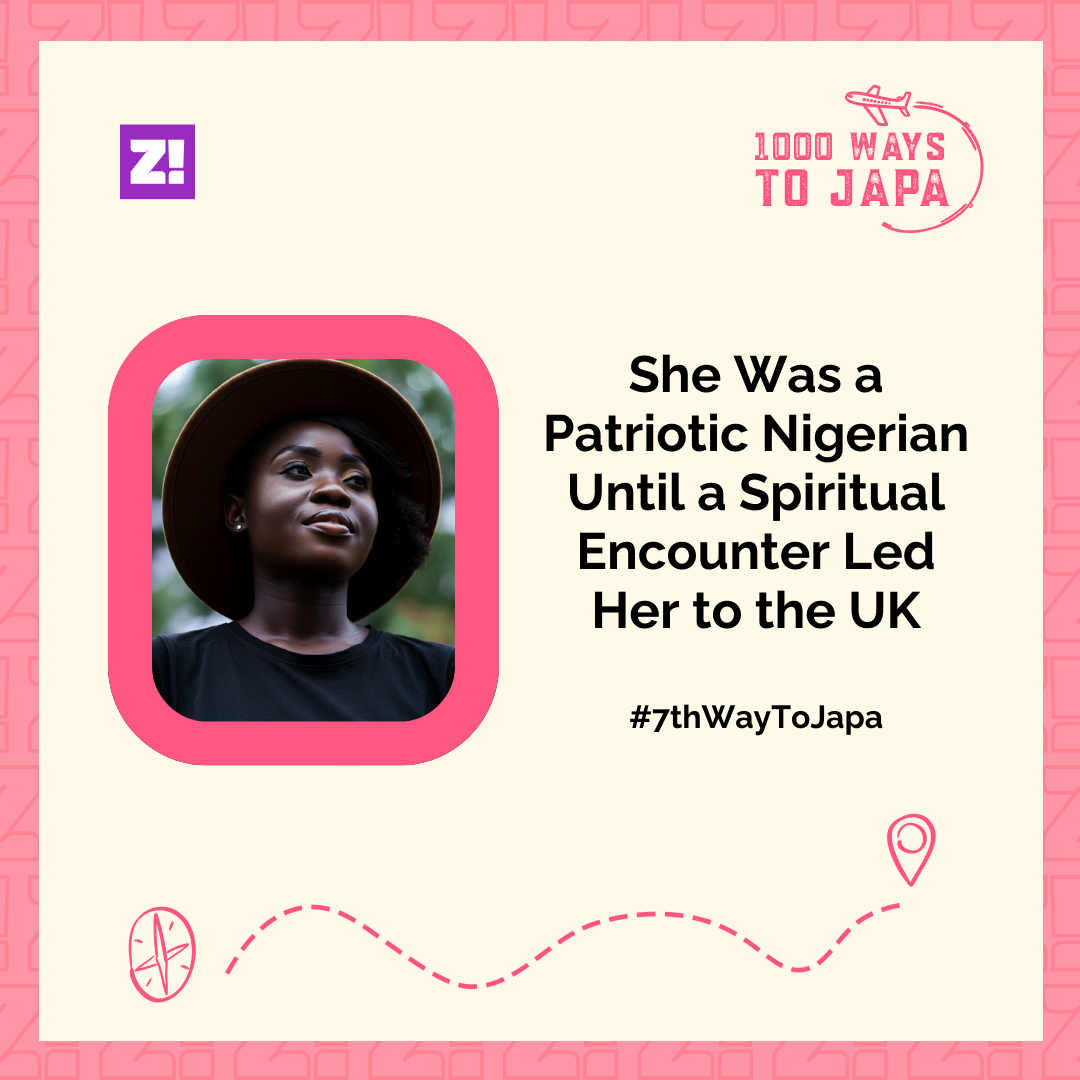
    Ruth (26) woke up one morning with no plans to relocate and ended the day with a spiritual revelation that made it clear that she had to move to the UK. She talks about getting a university admission in just ten days, receiving double the funding she was initially offered and how others can do the same. 
    When did you relocate and where do you live now?

     I live in Bristol, United Kingdom. I left Nigeria in 2022.

    How did that happen?

    I never knew I would leave Nigeria until I had a spiritual encounter. If you ask my friends, they always describe me as a patriotic person who wanted to stay back.

    I was a teacher in Nigeria focused on advocating for inclusive education, but in March 2022, I was praying for a new job, and I  had a revelation that made me know I had to leave the country. I heard God tell me that faith without work is dead. At that moment, I felt a force spring me from the bed, and instead of applying for jobs, I knew in my spirit that I had to start checking for schools that offer scholarships abroad. 

    What happened after your revelation?

    Everything happened so quickly. After that revelation, I started my research, and the two schools that popped up on my Google page were the University of Bristol and the University of East Anglia. I was more interested in the University of Bristol because it offered the course I wanted. I immediately opened an account with the two schools and looked through the application process.

    I’ve always had my transcripts and every other important document with me, so I uploaded them the same day. After uploading those documents, I contacted two people who could write my reference letters. Those two people agreed to be my referees, so I was able to submit their email addresses that night, too. Then I started writing my statement of purpose. The funniest part is that I had no idea I would make such life-changing decisions when I woke up that morning. 

    Wait, did you do all these in one day?

    Everything happened the same day. I only applied to those two schools, and they both gave me unconditional offers. The only thing I couldn’t do that day was send in my reference letter, but I started my personal statement, which is the most important part of the application. One of the schools required a 500-word count, and the other school wanted 300 words.

    But don’t get me wrong. I didn’t submit my application that day; it took about ten more days. And the craziest part? The unconditional offer at the University of Bristol came ten days later. 

    How did that happen?

    I was shocked when the offer came in. The University of Bristol had a webinar for prospective students, and people kept asking the moderator when they could expect to hear back from the school. The moderator said admission takes six to eight weeks, and mine came in ten days.

    That’s very interesting. What do you think you did differently?

    I wouldn’t say  I did anything differently. I don’t want to take credit, because God wrote the whole story.

    But one thing I am grateful for is my experience in community advocacy. I mentioned that I was involved in advocacy activities before I left Nigeria and  I poured my heart into it so that’s what my essay was mostly about– I started with the problem I was trying to solve, focused on how Nigerian children don’t have access to quality education,  even though we have regulations and policies that are supposed to give children access to quality education, then tied the problem back to why I was interested in studying my chosen course and the skills I had picked up from advocating for inclusive education. I also talked about what I’ve done in the advocacy scene in Nigeria and what I plan on doing in the future.

    I’d love to hear more about that, but I’m curious to know how your family and friends received the news

    Everybody was excited. I think this is the part where I should add that I started my education at the University of Bristol with a partial scholarship called the Think Big scholarship (applications are open until April 2025). I think we were all so excited that we missed the part where it was clearly written that I was supposed to pay £2000 for my deposit.

    The scholarship application differed from the school application; I was supposed to secure my space with £2000. In my head, I was like, “Where is this coming from?” I was even crying because I wouldn’t have applied if I had known there was a compulsory deposit payment, but God came through. I paid my deposit and got the scholarship in July 2022.

    It’s not going to be the case for everybody else because there’s a part of the application process where you’re asked if you want a full or partial scholarship. I only chose a partial scholarship because I assumed other people must have filled the full scholarship space since my application came in late. I didn’t have enough faith then, but now, I know better. 

    I’m just grateful I chose this path because it has strengthened my walk with God. It would have been good if I had the full scholarship, but then I wouldn’t have known God in the capacity I know him now. 

    I’m glad you’ve made peace with that decision. How would you advise people to apply for this scholarship?

    My approach to my scholarship application differed from that of a normal school application. So, for my application, I attached links to the work that I had already done. 

    I had to write three essays. The first one was about why I was interested in the scholarship the second was about the work I had done in my community, and the third was about what I would do as a Bristol ambassador.

    My selling point was question number one – What have you done? I didn’t bother talking too much. I just said I’ve had the opportunity to do ABC, here are links to show the work I have done– I put about 10 links in that second question, and that helped me start off strong. 

    So, my advice to anybody would be to make sure they have solid experience, even if it’s volunteer experience. These applications are usually not about your academic qualifications. I’ve seen people who have third-class degrees get fully funded scholarships. You want to show what you bring to the table, so your application has to say, “I am your best candidate, and you can’t afford to miss me”. 

    Don’t be cocky but be confident about what sets you apart. If you have a digital track record of doing those things that make you the ideal applicant, insert your links. Sell yourself because the person on the other side of the screen does not know you, so they would judge whatever version of yourself you present to them.

    Ensure you answer the school’s questions without trying to force your personal experience into it. For example, if they ask why you want to be in their school, don’t dwell much on the work you have done. I also always advise people to find a link between the first and last questions. You don’t want to talk about something like climate change in question one and talk about the mortality rate in question two. Let there be a connection,  even if you are a multi-talented person.

    Thank you. How has life been since you moved to the UK?

    I’m grateful to God because He’s been showing up for me. At first, the school offered me a £5000 scholarship, but then I went to God in prayer and told him that I needed more than that amount. Two days after the first offer, I received another email informing me that the school had gotten extra funding and was looking for someone to give. That’s how I got an extra £5000, which makes it £10,000 in total. 

    But life here has been tough because my family is in Nigeria. Plus if you’re self-funding or studying with a partial scholarship, you’ll always have bills to pay. 

    Is there anything about the UK that caught you off guard? 

    I’ve never seen so many pets in my life.  Anytime I’m walking home, there’s a high chance that I’ll see someone walking their dog. I’m scared of dogs so that’s one thing I’m still getting used to.

    Sorry. How happy are you with your life post-japa? 

    I would say 10 because I’m where I’m supposed to be. Things are still coming together, but it’s looking good.


     Want to to share your japa story? Please reach out to me here

    [ad]

  • We’ve asked the God of Temilade when he’s coming for you. This year, next year or never? This quiz will reveal it to you.

  • Sex Life is an anonymous Zikoko weekly series that explores the pleasures, frustrations and excitement of sex in the lives of Nigerians.

    The subject of today’s Sex Life is a 24-year-old bisexual man who didn’t have sex because of his religious beliefs. He talks about the shame he attached to his sexual desires, masturbating in secret, and suppressing his high sex drive because it was against his faith. 

    Tell me about your first sexual experience. 

    When I was 13, I discovered masturbation. My best friend confided in me about some ungodly act she was into, which was masturbation. Later that week, I was going through the internet when I saw some pictures that got me excited. 

    I noticed the tip of my dick was super sensitive, and I touched it. Touching it felt so good, but rubbing it felt even better. I went to the bathroom and kept rubbing it till I had the very first orgasm of my life. The orgasm was filled with self-hate, pleasure and guilt. 

    Why did an orgasm make you feel all of those things? 

    Well, my faith at the time had a considerable role to play. I believed that the Bible must be taken at face value. I couldn’t combine loving God with enjoying sex. That’s why I felt very icky after masturbating in the bathroom. I hated myself intensely. 

    Does that mean it never happened again? 

    LMAO, not at all. As much as I had all these negative feelings associated with masturbating, I didn’t stop. It was the thorn in my side. 

    I was horny and walked around with an erection everywhere I went. So, I was masturbating every chance I got. I just felt very terrible after. At the time, I tried to convince myself that the Bible never explicitly said anything about masturbating, but it didn’t stop me from feeling the way I did. It didn’t help that I had an extremely high sex drive. 

    It was getting harder to talk to girls when all I wanted to do was have sex. Yet, I also couldn’t have sex because of my religion. 

    When I was 14, the guilt got worse. That’s when I realised that not only did I want to have as much sex as possible with all the girls I saw, I wanted to have as much sex with the men as well. 

    Did you ever act on that? 

    I couldn’t masturbate without fear, was it having sex with men I could do? I stayed in my closet and endured a never-ending cycle of reading my Bible, watching porn, masturbating, and hating myself. 

    RELATED: Sex Felt Like an Exam I Had to Pass

    Were you able to combine the two? Faith and sex. 

    Unfortunately, no. The older I got, the more questions I asked. There was a lot of cognitive bias I saw in the two major Abrahamic religions in Nigeria. That’s when I gave myself two options. Either I continue to live in this bubble of cognitive bias, or I walk away and do away with a faith that has kept me sane and helped me guide my life up until then. I chose to walk away. 

    What did walking away look like?

    Well, when I was 20, I had a conversation with my parents. I told them I was no longer going to church, and I had stopped reading my Bible. 

    There was a constant back and forth for about two years, but they’re finally making peace with it. 

    And what about sex? 

    I finally had sex for the first time when I was 22, with a woman from a GC I was in. I had done a lot of research in the years I battled my faith. I had asked for help from some people I know who had walked similar paths as me. This was very helpful in unlearning all my previous biases I had associated with women in regards to sex. I’d like to believe I went into it well prepared, and I gave her a good time. 

    As for me, it felt so good. She was such a beautiful woman, and there’s something about knowing a conventionally attractive woman wants you. It makes you feel very good about yourself. 

    Surprisingly, I didn’t feel as guilty as I thought I would. I just enjoyed the moment. 

    Why’d you think you didn’t feel guilty?  

    I think I was finally ready to enjoy myself. I had spent almost a decade hating myself and my body because I felt being sexual was a sin. 

    Since I no longer held any religious inclination, I didn’t feel like I was committing any sin. It was a thoroughly enjoyable experience. 

    RELATED: I Was No Longer Scared of Being Sexual in God’s Presence

    Does that mean masturbating got easier? 

    No, it didn’t get easier. I think because, unlike sex that had never happened, masturbation did. It was the one sexual act I committed for years; the one thing I felt was going to drag me to hell because I had acted on the urges I felt. 

    It wasn’t until I was 23 that I was able to actually masturbate without guilt. I had to teach myself to make it a form of self care. There was no way to have great sex without being able to be erotic with my own self. 

    And the sex drive? Still high? 

    Yes, very much so. For the past two years, it’s like I’ve been playing catch-up. I’m exploring the various things that caught and still catches my interest. 

    I’ve been getting heavily involved in BDSM, and it means unlearning all the biases I had towards it. I’m also building a stash of sex toys because self pleasure is something I’m investing in.

    I’ve even been able to start having sex with men. The first man I ever had sex with was so silent, I thought he wasn’t that into me. I think what excited him was the fact that there was someone watching us. 

    However, the other men I’ve been having sex with are pretty good at it. So, I know it’s something I like and enjoy. 

    Tell me something you’ve learnt on this journey. 

    The most interesting thing to me is the fact that there’s been a lot of religious people who I’ve had sex with. For some time, I judged them because I couldn’t reconcile the two, but now? Not so much. Religion is a necessity for a lot of people. Life is very bleak, and not believing in something can wreck you. 

    That’s why I don’t make comments when they decide to meet up after they finish church service or have sex with me after Ramadan. I understand the role I play in their life and the role religion plays as well. 

    All I want to do now is have the sex I want with the people I want, whether they’re men or women. 

    Any regrets? 

    My only regret is not starting sooner in my teens.

    How then will you rate your sex life on a scale of 1-10? 

    5, because it can be better. I want more partners, and I need to figure out my taste in men because I’ve not had as much experience there as I’d like. I’m still young, so there is still much to learn and experience, and I’d like a chance to really explore myself. 

    RELATED: My BDSM Journey Started Extreme


    Zikoko is launching a new series where we explore those friendships, familial and romantic relationships that are no longer sailing.

  • This week’s What She Said is Koromone Koroye, a 30-year-old Nigerian woman. She talks about attending Pentecostal churches when growing up because of her radical, religious father; her experiences with Nigerian Christian communities and her relationship with God.

    You have the floor.

    In my first phase of spirituality, my relationship with church was connected to my parents. My mum was a Christian, but my dad wasn’t interested. Then later, he became a Christian, and we moved from Household of God to Mountain of Fire and Miracle Ministries (MFM) — both pentecostal churches. When you are a Nigerian child and your parents are Christians, you go to church until you’re at the age where they can’t control you anymore.

    Why did your dad become a Christian?

    He had a radical experience. I was still a baby, but my mum told me the story. He was sick, hospitalised and not getting better. At that time he worked at Citibank, and two of his colleagues who were pastors prayed for him. Then my dad had a vision where he saw someone dressed in white robes performing surgery on him. When he woke up from the vision, he got better. 

    Any idea why they moved to MFM?

    I think, after his healing experience, my dad was like, “Oh my goodness. I need a church that can match my level of radicalness.” Whatever he saw at MFM spoke to this want. 

    He also told the pastors who prayed for him about his experience. And I think people who heard the testimony told him he had to take God seriously so he wouldn’t fall into the Devil’s trap again.

    There wasn’t anything wrong with that, but it went a bit far. My siblings and I thought there was something off about the church. Once we grew older, we had questions about some practices. Like, why were there so many church programmes and fasting programmes?

    Were there particular ways these practices affected you?

    One time, we had to fast. We would start fasting at 6 a.m. and break at 6 p.m. — we were kids going to school. On the last day of the fast, which was Friday, we had to do a dry fast from the day before to break Friday afternoon at church.

    Before they let us break our fast, we did this crazy prayer. They passed around black nylon bags and were like, “We’re going to pray now. You’re going to start coughing everything out.”

    Coughing what?

    I don’t know. All around me, kids were just coughing. My siblings and I held our nylon bags, confused. We were the only ones not coughing, and we didn’t want them to think we were possessed. So we joined them.

    We also had a lot of routines. Every first Saturday of the month, we’d go to Prayer City of Ibadan expressway to pray for three, four hours while fasting. Imagine being a child growing up in this environment where every first Saturday, you had to do this awful trip to go pray prayers you don’t even connect with. And if you didn’t pray, they’d ask you what was wrong with you.

    What changed?

    Just before I went to college, at 15, my older brother rebelled. He decided he wasn’t going to our parents’ church anymore. He discovered “This Present House”, a church at the end of Freedom Way in Lekki, and took us there. A lot of us were young. We would sit in a circle and the young pastor would talk to us about real stuff and ask us questions. I loved it, but I still came home to super religious parents, so stuff he said about God was not connecting. I thought, “Where is the fire prayer?”

    This disconnect continued until I got into college in the US. There, I stopped going to church. I believed in God, but not that Jesus was the Lord and Saviour. Sometimes I’d find myself talking to God about stupid things I did.

    When I was done with school and started working, I moved to an area that was a black community, and I was introduced to the Baptist church. In Baptist churches, there’s a lot of clapping and dancing — it was so pentecostal but in a different way. There, I realised there is something called the Holy Spirit. These guys would know things about you and pray over you concerning those things and I’d be like, whoa, what’s this?

    My experience there led me to do some research. As I read the Bible, my relationship with God grew. Nobody “led” me to Christ. I just found myself being like, “This makes sense and I think I learnt it wrong for a long time.”

    What She Said

    Did this change when you moved back to Nigeria?

    When I moved back to Nigeria, I decided to visit This Present House. This time, they now had a church for millennials and Gen Zs called The Waterbrook Church (TWB). My first Sunday there, I was like, “Oh my God, this is where I belong.” It was like a grown-up version of what we had before. I fell in love with the church, the people, and I threw myself in. I would attend services and prayer meetings. At some point, even my parents noticed.

    TWB introduced me to Christian communities and how good they could be when done right. Unfortunately, they didn’t train us well enough. They made people pastors before they were ready, and as a result, things got corrupt — ego and competition to be better than other churches got in the way. It stopped being about fellowship and became about how many people can come. So I slowly began to detach.

    I’d space out during meetings. I lost that love I had. A lot of things happened afterwards, inappropriate relationships, drama… It was crazy.

    That sounds messy.

    It was. And then my dad passed.

    Then I realised that the whole “community” they talked about wasn’t real because out of about 20 to 30 people I used to pray with, only one person regularly checked up on me.

    That’s awful.

    I’d never forget: my dad passed on a Sunday morning at 1 a.m. I sent a text to three of my pastors. I went to church, people sent in condolences, and after that day, I didn’t see them again. So many hurtful things happened after my dad died and I was looking to my church community to hold me up and they did not. Between 2017 and 2019, I lost my love for life. 

    I’m sorry.

    It was really crazy. Because my first contact with Jesus Christ was through people, I disconnected when they failed me.

    And then what changed?

    In 2020, I saw this sponsored post on Instagram about an 8-week intensive discipleship course on operating with the gift of the spirit. I was interested. When I saw eight weeks, I was like, “Yes, I love a challenge.”

    When I signed up, I told God, “If this doesn’t work, I am not interested in church again.” I would be fine with just reading my Bible and praying. On the first day, the teacher said “I’m not here to pastor or baby you. Take this course as you would a school course.” He asked why we signed up, and I told them I was there because I was bored with the routine. I thought there was more to God and Nigerian Christians were not going about it the right way. I told them I was reading the Bible and not seeing the actions being replicated by Christians. And if the class didn’t work, I would tell them bye-bye. They laughed.

    Subscribe to our HER newsletter for more stories about African women and how they navigate life.

    The first week, we read three books, answered questions and did a treasure hunt. A treasure hunt meant we prayed to receive clues of words of knowledge, which are pieces of information that you know about someone that you would not have known if they didn’t tell you. I was like, not bad.

    By the third week, I was like, “Yo, things are happening.” I was seeing, hearing things. People were calling me saying, “Oh my goodness, you’re so prophetic. You said this thing and it was true.” The course was so intense. We were reading these referred books, practising what we read, having meetings during the week and praying a lot.

    In this phase of my spirituality, I saw God as God the Father, the Son and the Holy Spirit. This was before the pandemic, so we would go out, pray and lay hands on people, do assignments, then meet on Saturdays for four, five hours, crazy. The best part was I was surrounded by people who were as radical as I was — but not MFM kind of radical — it was pure love for God; we did not like church. But this changed for me.

    The course ended in March 2020, and a month after, the dean reached out to me about a fellowship he was part of. He asked if I wanted to join and I did. Slowly, I got invested. They had this prayer call at 3 a.m., and the day I joined, the call lasted four hours. Halfway through May, they introduced a prayer watch that included meeting four times a day. Because I’m a writer, I was assigned as a scribe. My job was pretty much taking down minutes as prayer points, prayer requests, etc.

    Because I volunteered to do this, people started paying attention to me — they would even ask for my opinion of stuff. Before I knew it, I was part of the community. In the beginning, I was like, “I don’t trust you guys. I don’t know yall o.” But they were relentless.

    Now, I’m in this place where I’m a part of a community. I still don’t go to church, but my relationship with God is special. I guard it jealously; I do not allow people taint my understanding of God.

    Sweet. I’m curious about how your parents’ relationship with Christianity metamorphosed alongside yours.

    Something interesting happened with my dad. Three years before he passed, we noticed he became lax with church services. Some Sundays, I’d be off to church and he just be in the living room. It was so weird, but we ignored it.

    At some point, he stopped completely. No more prayers; not even at home. I found out later he had given a lot of money to the parish for some building to be done. Since he worked in banking, they also needed his financial advice and he supplied this. But when he needed help with some prayers, they turned him down rudely. He was very hurt by that because he had given his time and finance to the church.

    My mum kept going, but after my dad died, she went back to Household of God. Her reason was that the following year when we wanted to do an anniversary service of his death at the church — which my father also helped build — they said no. They refused because we didn’t “remember them” after the funeral. That was the last straw for my mum; she was tired of religious protocol and probably wanted her freedom to worship God without rules and rigid doctrine.

    For more stories like this, check out our #WhatSheSaid and for more women like content, click here

  • If you could play the role of God for one day, what would you do? Especially as a Nigerian citizen. What are some of the things you’d change?

    Not to be obvious, but I’ll immediately ban Ikokore.

    First point of duty. I’m sorry, Grandma.

    Then revive all the dead Nigerian politicians and jail them.

    Alongside the living ones.

    I’ll also give my people Canadian prosperity with Nigerian enjoyment.

    We no longer have to go to -10 degrees weather to escape bad governance.

    Then I’ll abolish 9-5’s.

    Oyar, everybody back into the garden. Osiso!

    Maybe also print a shirt that says “look at God.”

    Heh.

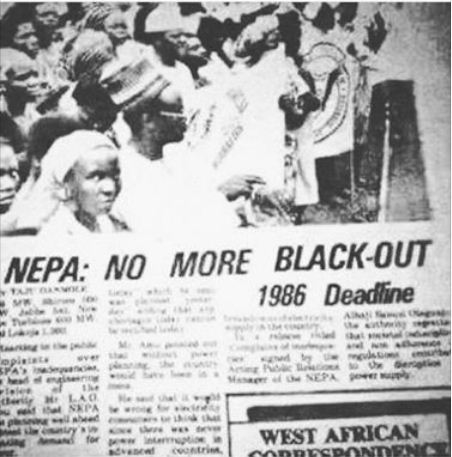
    After that, I’ll fix the Nepa situation so I can iron my ‘look at God’ shirt.

    Almost 60 years ffs.

    Don’t cry, don’t beg, but Lagos has to go.

    My children shouldn’t have to suffer like this.

    I’ll smite everyone who sends Whatsapp Bc’s or has ever sent one.

    Especially the Coronavirus conspiracy theorists.

    I’ll make a quick trip to 1914.

    ‘Lugard my child, that’s a bad idea.’

    For the grand finale, I’ll delete posts like this one from the internet.

    I yield my time!