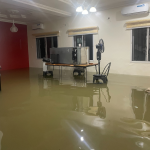
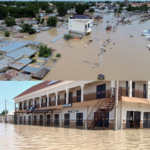
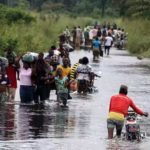
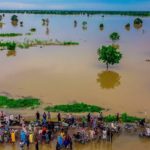
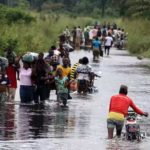
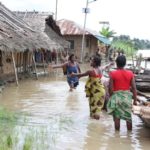
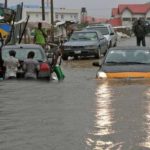
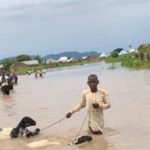
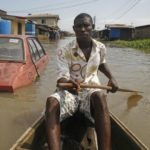
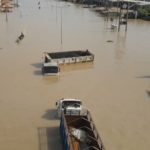
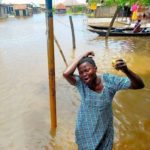
• The United States Agency for International Development (USAID) is donating $1 million to Nigeria due to a flooding crisis that has affected over 2.5 million people

    [Image Source: The Guardian]

    The U.S. Ambassador to Nigeria, Mary Beth Leonard, announced on October 20, 2022 the donation would help local partners to provide emergency shelter assistance, relief commodities, and hygiene kits. The goal of the relief effort is to promote safe and healthy practices and cash assistance for people impacted by the devastating floods. 

    The U.S. is afraid that the crisis is making Nigeria’s already critical humanitarian situation worse. The ambassador expressed worry that stagnant floodwaters will increase the risk of cholera outbreaks in affected areas.

    [Image source: Relief Web]

    Ambassador Leonard promised Nigerians, “USAID disaster experts will continue monitoring the situation in close coordination with humanitarian partners and the Government of Nigeria to assess needs and determine if additional assistance is required.”

    The U.S. has maintained a history of providing humanitarian assistance to Nigeria. The USAID has provided more than $356 million in humanitarian assistance to Nigeria in 2022 alone. This life-saving assistance is in addition to USAID’s annual $539 million development budget for Nigeria.

    What does this mean for Nigerians?

    The money coming in would be of great help to Nigerian victims of floods who have complained of government neglect. The monetary compensation will help to sustain them while they count their losses. The aid would also help with the clearing of major drainage systems within the affected states as well as the provision of better camps, relief items, and facilities for Internally Displaced People (IDP).

  • As a flooding disaster sweeps through many states in Nigeria, millions of Nigerians are experiencing hardship. Since the start of 2022, over 600 lives have been lost and over a million people have become homeless.

    [Image source: Leadership Newspapers]

    The recent wave of disasters has hit communities in Kogi, Adamawa, Anambra, Benue, Yobe, and many others. But similar ugly scenes may be about to play out in Lagos State.

    A warning for Lagosians

    The Lagos State Commissioner for the Environment and Water Resources, Tunji Bello, announced early in October that communities near the banks of the Ogun River are at risk of flooding. Other communities are also at risk due to the release of water from the overflowing Oyan Dam in Ogun State.

    Which Lagos communities are at risk?

    The Lagos State government said the following areas could be flooded at any moment:

    1. Ketu
    2. Alapere
    3. Agric
    4. Owode Onirin
    5. Ajegunle
    6. Alagbole
    7. Kara
    8. Isheri Olowora
    9. Araromi Otun Orisha community
    10. Agiliti
    11. Maidan
    12. Mile 12
    13. Odo Ogun
    14. Owode Elede
    15. Agboyi 1
    16. Agboyi II
    17. Agboyi III

    What does this mean for affected Lagosians?

    The most important move for residents of the affected areas is to relocate to safer, higher ground. But it’s unclear whether the government is providing temporary shelters for them.

    For those that are unable to move ahead of time, it’s important to stay vigilant for any drastic change in the environment to ensure they’re not stranded. They should also always stay informed to get ahead of any potential disaster.

  • More than 2.5 million Nigerians have been directly affected by the flooding crisis ravaging hundreds of communities in 2022. But the worst of it isn’t even over as authorities expect more heavy rainfalls to cause problems till the end of November.

    For those already affected and those at risk of flooding in the future, here’s a list of things the World Health Organisation (WHO) recommends to keep yourself healthy in a flooding crisis.

    Know your community’s strategy

    Flood is ravaging Nigeria

    Many of Nigeria’s flooded communities are in riverine areas prone to flooding when local rivers overflow. As a member of such a community, it’s critical to be knowledgeable about warning signals and evacuation protocols outlined by the government before your neighbourhood is overtaken by flooding. The knowledge helps to prevent surprises. Part of the Nigerian government’s strategies is warning these kinds of communities ahead of time to move to safer, higher grounds.

    Chlorinate or boil water 

    Floods naturally cause environmental damage, including the contamination of clean water bodies. This is why it’s important to chlorinate or boil water for drinking and cooking. It’s important that the government provides safe drinking water for those affected to reduce the risk of outbreaks of water-borne diseases.

    Promote good hygienic practices

    Flood is ravaging Nigeria

    [Image source: Pumps Africa]

    Floods don’t foster the most hygienic situations so it’s important as a survivor to be extra-vigilant with hygiene. WHO recommends washing your hands with soap and water after contact with floodwater. And it goes without saying that you shouldn’t use floodwater to wash dishes, brush your teeth or cook.

    Don’t walk or drive through flooded areas

    Flooded areas present life-threatening challenges like an electrical shock from fallen electrical lines or even the abnormal migration of dangerous aquatic animals like sea snakes or crocodiles. Floods can also easily sweep people and vehicles away. WHO recommends that people stay away from flooded areas as much as they can.

    Throw away food contaminated by floodwater

    Flood is ravaging Nigeria

    The five-second rule doesn’t apply to food in floodwater. WHO recommends that you throw away food if it accidentally touches floodwater. Just have it at the back of your mind that floodwater is trying to kill you; don’t give it a helping hand.

    Don’t do things like this unless it’s absolutely necessary:

    Clean your home 

    When the water recedes after the floodwater has visited your home, it’s important to throw out items that you can’t wash or clean up. WHO recommends that you clean the walls of your house, floors and other surfaces with soap and water and bleach.

    Protect yourself against mosquitoes

    Floods create stagnant water — a breeding environment for mosquitoes. It’s important to protect yourself with clothes that cover your body during the day and use mosquito repellants during the night. Get them before they get you. 

    It’s critical that the government keeps infectious disease control programmes active and efficient to help citizens in need.

  • Millions of Nigerians are going through it, as a flooding crisis washes through most of the country. More than 600 people have died and over a million people displaced since the beginning of 2022.

    Flood in Nigeria

    [Image source: BBC]

    The coverage of the flood has focused on the immediate impacts including the unfortunate loss of lives and the destruction of property. According to the Federal Government, the floods have fully or partially destroyed over 200,000 houses. But more than the immediate impacts of loss and displacement, floods have social, economic and environmental consequences that outlast them. So, here’s a look at the long-term worries that come as a package deal with these floods.

    Food scarcity and inflation

    Nigeria’s 2022 flooding crisis has caused the partial or total destruction of 440,719 hectares of farmland across the country. The disaster has visited key agricultural production areas like Benue State. The effect of flooding in these areas will almost certainly impact food production and lead to a shortage. When that happens, inflation is never far behind. Unfortunately, Nigerians already suffer enough from food inflation.

    Gas issues

    Flood in Nigeria

    [Image source: NLNG]

    Nigeria’s flooding crisis is also going to have a long-term effect on the supply and prices of gas. The floods have forced the shutdown of gas production in affected areas. 

    The Nigeria Liquefied and Natural Gas (NLNG), the company responsible for Nigeria’s gas exports has already declared a force majeure which is contractual jargon for, “This thing don pass us. Anything you see, take it like that.”

    Nigeria was already facing a gas supply crisis due to oil theft, and now the disruption caused by the floods will make it even more difficult to earn our daily $2k in the global market‎.

    The spread of diseases

    Floods create the perfect environment for water-borne diseases like cholera, diarrhoea and typhoid to spread. This is another post-crisis issue that can trouble Nigeria’s already fragile health sector.

    Humanitarian crises

    Flood in Nigeria

    [Image source: IOM]

    The 2022 floods have already displaced over 1.3 million people from their homes. These people are currently homeless and are now at the mercy of loved ones, kind strangers or the people who hide palliatives

    Many Nigerians who are residents of internally displaced persons (IDP) camps are already complaining of neglect. Depending on the level of the devastation suffered, it’ll take a long time for many of these Nigerians to get back on their feet.

    Unemployment

    More than losing homes, some Nigerians are losing their businesses to the floods. Some of these businesses will take a minute to resume operations after the water recedes, while some may never even reopen. It’s not the best situation for a country already dealing with record levels of unemployment.

    Environmental damage

    Flood in Nigeria

    [Image source: BBC]

    Flooding can contaminate clean water bodies, and damage roads and other critical infrastructures like electricity poles and transformers that’ll take the Nigerian government ages — and inflated contracts — to repair.

    Disruption of education

    Education is one of Nigeria’s important sectors that critically needs a boost. But flooding further complicates the sector’s progress. Many state governments in Nigeria regularly use schools as temporary shelters in emergencies like floods, which further disrupts students’ education. 

    Trauma

    Flood in Nigeria

    Flooding is a traumatic event. Some of the millions of Nigerians affected by the floods are bound to feel the weight of the devastating losses suffered in the blink of an eye. It’s important that the government provides social support to victims of floods.

    ALSO READ: From Homeowner to Homeless — Nigerians Speak On Flood Crisis

  • Nigeria is currently suffering its worst flooding crisis since 2012. For months, these floods have forced thousands of people out of their homes

    [Image Source: NEMA via AP]

    According to the Federal Government, the disaster has directly affected more than 2.5 million Nigerians with over 600 dead. The floods have caused untold hardship in 31 states, damaged more than 80,000 houses, and destroyed farmlands.

    Zikoko Citizen interviewed three people affected by the floods in Rivers, Kogi, and Delta. 

    Gloria, 28 (Rivers State)

    For Gloria, living with floods isn’t a strange thing. Nigeria hosts seasonal floods annually and she’s witnessed enough of those in her hometown of Omoku, Rivers State, for as long as she can remember. But, she’s never seen floods like the one that has now left her homeless.

    She told Citizen, “I’ve moved from my house to three different locations just this month alone because of the floods. My business has been completely submerged by the floods and I’m living on the little money I managed to save before all of this.”

    Gloria was very passionate about helping her fellow Omoku residents who have been left in worse conditions. And the situation makes her furious.

    She said, “Do you know people are stuck in remote villages, and can’t come out to Omoku because of this flood? Some schools, despite the floods, are still on. Children go to school with the water at waist level in their uniforms and come back the same way. What if they lose their lives? Many people, responsible people, used to have homes but now they’re sleeping on the streets. We’re suffering bitterly!”

    Gloria also has mixed feelings about the government’s response to the crisis. She told Citizen, “Well, I know that our governor (Nyesom Wike) has released ₦1 billion to help certain local government areas (including mine) with the crisis. But I can’t say for certain that the help is useful. At the Internally Displaced Persons (IDP) camp, there’s no light and no mosquito net. I’ve seen the state of those camps and people are falling sick every day. They claimed to have given each camp 30 mattresses but in reality, it’s only three pieces they delivered. Many people at the camp sleep on the bare floors.”

    Image Source: Madu Dab Madueke

    Theophilus, 32 (Kogi State)

    If anyone had told Theophilus that he would lose his family house to floods four years after it was built, he wouldn’t believe it. But that’s exactly what happened. 

    Theophilus received the shock of his life on September 21, when he arrived home from work to find his house completely submerged.

    “I have tried so hard to comprehend with God what I’ve done wrong. I had been saving money for several years, with loans, to build this house. I completed it in 2018, and now all that is gone. My wife and kids have gone from living in a beautiful bungalow in Lokoja to being refugees in an IDP camp. The relief materials can hardly go round . My youngest child has even started developing skin rashes in reaction to the flood water. I can only say that God knows best.”

    Image Source: Ibrahim Obansa/Guardian

    Demola, 23 (Delta State)

    Choosing to serve in Delta State for his National Youth Service Corps (NYSC) program was the worst mistake in young Demola’s life. Since September, the floods have messed up his commute to and from his primary place of assignment (PPA) in Ughelli South.

    “I thought coming all the way from Lagos to Delta was going to give me the freedom I wanted from my parents but, omo, I was so wrong. Wearing semi-wet clothes is now the default. I have to trek parts of the journey in water and use a public canoe to reach the school where I serve. I can’t even complain because all the other corpers, teachers, and students are coming in and out in that fashion, so who am I?”

    When asked if NYSC would allow him to go back home for safety reasons, he was unsure. “Knowing our government, they hardly ever do anything, but I’m hoping they tell corpers to go home. We don’t deserve to be put under this inhuman treatment in the name of serving this country.”

  • Nigeria is suffering its worst flooding crisis since 2012. For months, these floods have forced thousands of people out of their homes.

    What caused the flooding crisis?

    Heavy rainfalls and the release of excess water from Cameroon’s Lagdo Dam and other dams in Nigeria are largely responsible for the floods. The Nigerian government’s failure to build infrastructure to control floods allowed them to easily submerge hundreds of communities.

    What’s the damage of the floods?

    According to the Federal Government, the floods have affected 31 states and resulted in:

    • 500 people dead
    • 790,254 people displaced
    • 1.4 million people directly affected
    • 1,546 people injured
    • 44,099 houses partially damaged
    • 45,249 houses totally damaged
    • 76,168 hectares of farmland partially damaged 
    • 70,566 hectares of farmland are completely destroyed

    How’s the government responding?

    Even though many Nigerians are calling the flooding disaster a national crisis, the government doesn’t have a centrally-coordinated response. The structure of disaster response currently starts at the local government and state government levels. 

    As first responders, these levels of government are responsible for providing relief for victims of floods. This means responding to floods can be different from state to state. 

    Many state governments have provided temporary shelters for flood victims displaced from their homes. But the Kogi State governor, Yahaya Bello, has complained about inadequate palliatives for the victims and called on the Federal Government to step in.

    Since the flooding crisis worsened over the past two months, the National Emergency Management Agency (NEMA) and Ministry of Humanitarian Affairs, Disaster Management and Social Development have coordinated the Federal Government’s response

    The ministry announced the approval of the National Emergency Flood Preparedness and Response Plan on October 11th, 2022. The plan contains immediate, short term and long-term measures to control the impact of flooding in Nigeria. However, the details of this plan are currently unknown.

    NEMA claims to have distributed relief materials to over 315,000 displaced people nationwide. The agency has also collaborated with the Disaster Response Unit (DRU) of the Nigerian military to conduct search and rescue operations for trapped victims.

    Despite this, the government needs to be doing better as NEMA expects more heavy rainfalls in the coming weeks.

    What are citizens doing?

    Non-profit organisations and individuals are raising funds to support victims. Nigerians who want to help can reach out to them to donate money and materials for the victims.

    https://twitter.com/gechife/status/1579889714144096265?s=20&t=xqktFlJ9sCspcGBy4XSVeQ

    What should the government be doing?

    The government’s disorganised response to the ongoing flooding crisis makes it difficult for victims to get all the help they need at such a delicate time. 

    Flooding is one of the most frequent natural disasters in Nigeria and we’ve had enough years to learn valuable lessons to coordinate a better response.

  • In 2012, Nigeria lost 431 people to flooding incidents that also displaced 1.2 million people across 30 states. The flooding disaster affected over seven million people with losses estimated at ₦2.6 trillion. The 2012 floods were the worst Nigeria had seen in 40 years and no other year has touched the hem of its garment since then, until 2022.

    Flood in Nigeria 2022

    [Image source: Reuters/Afolabi Sotunde]

    For months, many communities in Nigeria have received August visitors in the form of destructive floods. These floods have forced thousands of people out of their homes.

    Flood in Nigeria 2022

    No Noah’s ark. Only Governor Yahaya Bello of Kogi State in a canoe with his film crew

    Who’s affected?

    The National Emergency Management Agency (NEMA) reported that 33 Nigerian states recorded flood incidents between January and August 2022. These incidents affected 508,000 people, including 372 that died. NEMA also reported at least 277 people were injured during these floods. The devastation destroyed 37,633 homes and caused the loss of livestock. But the figures NEMA reported aren’t even close to the devastation state officials have reported.

    Flood in Nigeria 2022

    [Image source: AP Photo]

    Since that September report, major flooding incidents occurred in nine local government areas in Kogi State, displacing over 50,000 people in one local government area alone.

    Anambra State also reported the displacement of 651,053 people after floods submerged houses, farmlands, schools, health centres, police stations and other critical infrastructure. 

    The floods also affected over 31,000 people over the course of six months and displaced 6,592 residents across 255 communities in Yobe State. The incidents resulted in the death of 75 people and the destruction of houses and livestock worth millions of naira.

    At least seven people were reported dead when flash floods affected many communities in Lagos State in July. In August, more than 50 people lost their lives in floods triggered by heavy rainfalls in dozens of communities in Jigawa State. In the same month, at least 10 people died and thousands were displaced in flood incidents in Adamawa State. More than 3,000 people were displaced in Jabilamba community alone.

    Flood in Nigeria 2022

    [Image source: Twitter/@AlejiOjay]

    The Bayelsa State government recently announced what it called “a flood break” for schools to shut down while water levels recede. This break will last for six weeks between October and November. The goal of the break is to safeguard the lives of teachers and students living in the predominantly riverine areas of the state.

    Tragic flood incidents have also been recorded in Borno, Ebonyi, Rivers, Niger, Nasarawa, Kebbi, Bauchi, Taraba, Delta, Kano, Gombe, Benue, Cross River and the Federal Capital Territory (FCT). Everywhere floods have shown up across Nigeria, there’s chaos.

    What’s causing the flooding?

    Nigeria’s struggle with flooding this year isn’t much of a surprise to authorities as it was covered in the 2022 Seasonal Rainfall Prediction report released in February by the Nigerian Meteorological Agency (NIMET).

    [Source: Twitter/@aliyusadiq_gky]

    Many of the affected states have been hit by flash floods caused by heavy rainfall, especially in communities close to water bodies. But the most recent flooding incidents have worsened with the September 13 release of excess water from Lagdo Dam in Cameroon. The excess water travels through the River Benue and its tributaries to wreak havoc on riverine communities in Nigeria. Nigerian officials expect the effect of the release from the dam to last till the end of October.

    The release of excess water from Kiri Dam in Adamawa is having the same effect on the crisis. The Nigeria Hydrological Services Agency (NIHSA) has also warned that the overflowing of the inland reservoirs in Nigeria including Kainji, Jebba, and Shiroro dams will worsen the severity of the floods until the end of October.

    What’s the government doing? 

    Flood in Nigeria 2022

    [Image source: NEMA]

    The government’s strategy in engaging with the flooding crisis includes

    1. Enlightenment of people in at-risk communities.

    2. Proper channeling of water bodies.

    3. Providing temporary shelters for displaced people.

    4. Providing relief items for the victims.

    [Image source: NEMA]

    How citizens can help to reduce flooding

    Outside of what the government should do to prevent future flood disasters, citizens can ease the flooding crisis by

    1. Not blocking waterways with garbage.

    2. Always clearing drainages.

    3. Not constructing buildings on waterways.

    4. Vacating to safer, higher grounds, for those living along river banks.

    [Source: Tribune]

    The floods haven’t only claimed lives and displaced tens of thousands of Nigerians, but also devastated communities and socioeconomic activities. When the invasive floods eventually recede, Nigerians should demand answers from all levels of government on why they didn’t do more to prevent a foretold crisis.

  • This is Zikoko Citizen’s Game of Votes weekly dispatch that helps you dig into all the good, bad, and extremely bizarre stuff happening in Nigeria and why they’re important to you.

    Subscribe now to get the newsletter in your email inbox at 8 am every Friday instead of three days later. Don’t be LASTMA.

    Nigeria has a very short list of frequent natural disasters: Ponzi schemes, politicians and destructive annual floods.

    Over the past week, thousands of people living in Kogi State became homeless after invasive floods visited them and decided to feel at home. Many of these victims have raised alarm about their fate, but this isn’t just a story about Kogi.

    Flood in Nigeria

    Source: Twitter/@AlejiOjay

    This year, more than half a million Nigerians have suffered the same watery fate witnessed in Kogi this week. Between January and August alone, flood incidents in 33 states killed 372 people, according to statistics from the National Emergency Management Agency (NEMA). And the sad thing is there’s nothing special about what’s happening because it repeats itself every year.

    Heavy rainfalls cause much of these flood incidents but there’s a man-made aspect to it too. Every year, Cameroonian officials release excess water from Lagdo Dam. The excess water knows no boundaries and travels, without a visa, through the River Niger and Benue to wreak havoc in Nigeria. This happens every year, yet the government hardly ever prepares for it other than to raise alarm.

    Flood in Nigeria

    In fact, Kogi’s Commissioner for Environment, Victor Omofaiye, was upset that the victims ignored NEMA’s warnings to move to higher ground, even though there’s little evidence the government provided them with alternatives. The state government is now scrambling to provide relief for those affected by appealing to the Federal Government and non-governmental organisations (NGOs).

    Until that help comes, at least the affected residents can console themselves with these shamelessly-branded boats the Kogi State first lady, Rashida Yahaya Bello, donated before this week’s severe floods.

    Flood in Nigeria

    Source: Blueprint

    What Else Happened This Week?

    The Battle for Who’ll Inherit Buhari’s Mess Is Live!

    Presidential candidates have been heavily flirting with Nigerians for the past couple of months but that’s just pre-marital sex in election campaign terms. It wasn’t until September 28, 2022 that the Independent National Electoral Commission (INEC) blew the whistle for the official start of campaigns. 

    This leaves the floor open for candidates to commence the battle for the unique honour of becoming the man or woman who inherits Buhari-shaped trials and tribulations from May 29, 2023.

    The candidate of the Peoples Democratic Party (PDP), Atiku Abubakar, flagged off his campaign with the launch of a range of books that are about him. He also released a 15-minute video address promising to be Nigeria’s great unifier, never mind that he’s been struggling to unite his own party.

    The candidate of the Labour Party (LP), Peter Obi, flagged off his campaign at a solidarity rally with his supporters in Jos, Plateau State. It was an auspicious day for him too because Bloomberg News released the result of a poll that showed him as the clear favourite to win next year’s election. It’s the third major poll he’s won in weeks, but February is still a long time away.

    The candidate of the All Progressives Congress (APC), Bola Tinubu, launched his own campaign with a press statement after he flew to London and cancelled his scheduled campaign event. There has to be something about London that seduces Nigerian presidents and presidential hopefuls and we’d like to know so we can use it to keep them here.

    Flood in Nigeria

    On February 25, 2023, more than 90 million Nigerians will have the opportunity to pick the country’s next president from a pool of 17 men and one woman. The time to pay attention and choose your fighter starts now.

    Have You Seen This Video?

    Ehen, one more thing…

    Nigeria’s national grid collapsed for the seventh time in 2022 this week and sent Nigerians back into familiar darkness. At what point are we taking it to Shiloh for deliverance?

  • So many things happen when it rains in Lagos; traffic becomes a lot madder, NEPA, or whatever they call themselves now take light, you are forced to cancel the meticulous plans you’d made, but these are nothing compared to watching the water level in your house rise into a raging sea, making you wonder if there is an ark somewhere you should get yourself to before God wipes the world a second time. This is prevalent in one side of the city, but with the amount of rainfall in recent weeks, coupled with bad drainage system and overall poor planning, anybody on either side of that bridge could be dealing with this.
    This is for you if you’d dealt with this or dealing with this. You should know that you’re in our thoughts.

    The earliest signs of rain plunge into despair

    First, you don’t understand why it’s still raining – it’s October already, isn’t it? You can’t possibly stop it, so you pray for light rainfall. At the same time, you start looking for the highest ground level in your house– a sanctuary to keep most of your important stuff.

    You become quite handy with cleaning kits

    You are not so big on cleaning, but your circumstances have forced you to learn the best ways to use mops, parkers, buckets, and brooms to keep the water out. Of course, they are only effective when the rain and the ensuing flood don’t hit so much. It’s a whole different level when the volume of the water gushing in and claiming your space is a lot more than you or anything can handle.

    You consider a new choice of footwear

    One of the nastiest things you could ever do as a grown-up is to wade knee-deep inside a stagnant pool of water to get around. Surprise – surprise; that is now what you gotta do if you are serious about getting around. The flood of water can’t stop your hustle; you roll your trousers all the way up and ‘swim’. This will be easier if you get a pair of rubber boots or canoe, but you end up buying neither. This is a phase, and it will pass.

    You could be reduced to a squatter for a while


    This happens, especially if you live in one of the worst-hit areas. There is nothing you can do to claim your space as fast as you want. And no, you can’t float on water. With tears in your soul, you pack the few things you need and find shelter at a friend’s. It’s not the best arrangement, but what do you do when man and nature are against you?

    You didn’t think you could love the sun so much


    Nothing makes you really happy than when you notice the sun peeking through the shadows. At this point, you don’t mind any form of heat – you just need to reclaim the land you paid for.

    You begin house-hunting (again)


    Finding a comfortable and affordable house in Lagos is a wild thing. You thought yourself lucky to find your current crib, but you didn’t know there was a plan to morph you into an aquatic creature. You lick your wounds and brace for the heartache you are about to subject yourself to. You need to move fast too, the best time to find a house in Lagos is during the rainy season.
    Most people usually dump the idea after the rain has subsided, and the floods are gone, but if you’ve had enough and really want to move, we wish you all the best in finding an ideal house. May your search be smooth and be free of greedy agents and ridiculous fees.

  • “How you dey?”

    As with most languages and their ‘how are yous’, this is the base line of Pidgin English.

    Nigeria has more languages than most of the world; only Papua New Guinea and India rank higher. But at over 500 languages, if there’s anyone that brings us together, it is Pidgin English.

    A woman in Delta State was ranting about how a flood destroyed her home and business.

    But while people pitied her condition, it was her pidgin that got the most attention. Her pidgin, as you’d expect, is Delta pidgin.

    E don tey, no be today

    After crude oil, pidgin is the second biggest export from the Niger Delta. This fact, of course, is based on logistics. But Pidgin didn’t start yesterday, you’d have to travel back to the 15th century when White People first touched down in what is now the Niger Delta.

    First in line were the Portuguese, and as they left with slaves, they also left behind some of their language. That hybrid of local languages and Portuguese was the beginning of Pidgin English.

    You sabi pidgin?

    ‘Sabi’ is pidgin for ‘to know’. It’s from the Portuguese ‘saber’ of the same meaning. And ‘pikin’? That’s from the Portuguese ‘pequeno’, which means ‘small’.

    After the Portuguese came the Dutch, and the English, and with each coloniser, more words were adopted into the local pidgin English.

    And so, Naijá as a word was born from Niger.

    This doesn’t mean pidgin is based off these languages alone. From the French, we learned ‘boku’, from the word ‘beaucoup’ which means ‘very much.’

    Back to our Pidgin Bae.

    Her name as we’ve now learned is Kate Dekpe, a businesswoman in Delta State.

    She opened an account, and now, just like most people who have already, you can now donate to help her build her life back. It will go a long way. The Delta State government has set up an IDP camp to cater for people affected by the flooding.