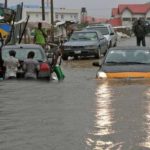
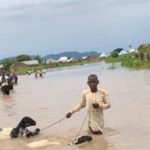
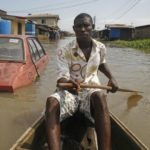
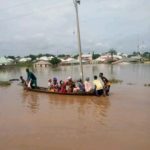
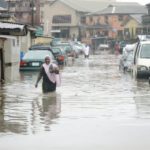
• The rainy season in Nigeria runs from April to October. But for people living in Lagos, a low-lying coastal city surrounded by water, it often means flooding. Poor drainage and decades of neglected infrastructure have turned places like Lekki and other high-end island areas into flood zones.

    Despite the high cost of housing, basic systems still fail. For residents like Cynthia (26) who live in these flood-prone areas, one night of heavy rain can mean losing their homes, belongings, and the uneasy hope that next time, the water won’t find its way back in.

    In this story, she recounts what it was like to live through one of Lagos’s most severe floods in 2025.

    As told to Aisha Bello

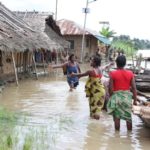
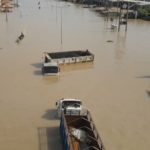
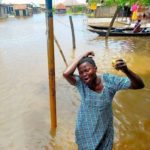
    It had been raining since Sunday night; a slow, endless downpour that blurred day into night. By Tuesday, the whole estate was submerged. The road outside had turned to a river, but that was normal for Lekki. Flooding belongs out there, but not inside our homes.

    That morning, I stayed upstairs, curled up in my duvet, half-asleep to the sound of rain drumming steadily on the roof. I didn’t realise it was the sound of the estate drowning.

    The cold was comforting, the kind that wraps around you and lulls you into deeper sleep. Around noon, I finally decided to go downstairs.

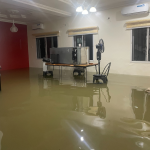
    The moment my foot touched the last step, I froze. The living room was already covered in murky brown water, spreading quickly across the floor.

    I’d only been asleep a few hours. How could my home have turned into a floodplain in that time?

    Moving In and Early Warnings

    I live in an estate in Lekki. It’s supposed to be one of those places where you can breathe a little easier — less chaos, some sense of order. The terrain is marshy, but it’s never a problem until it rains and the water starts to rise.

    I moved in on May 10, and it hasn’t even been six months yet. My housemate and I live in a four-bedroom two-storey home. We turned one of the rooms into our studio and kept another as a guest room.

    We’re both artists. I make rugs: tufting and mat-making with wool and yarn. My housemate also works in the creative space. The plan was to build a “craft house,” a kind of open studio where people could come, create, and connect. We chose this place because of the location. Lekki is central, secure, and easy for people to reach. It felt like the right foundation for what we were trying to build.

    But almost from the start, the rain became our biggest obstacle. Since we moved in, the estate has flooded so frequently that it has disrupted practically every aspect of our lives. There’s the flooding outside the estate, the one right at the entrance, and then the one that creeps into the estate itself. It’s like three layers of water closing in, each one worse than the last.

    Because of this, we’ve had to pause many of our plans. I host rug tufting classes from home, and we’ve had to reschedule at least three times because of the weather. Even simple things, like hosting dinner for our community, get cancelled once the rain starts.

    The estate flooding happens almost every time it rains heavily. The water just sits there, stagnant, for days. Then there’s the house flooding — the one that keeps me anxious. Before the big flood in September, we’d had one where water seeped in gently, rising through the pipes and trickling past the front door. It wasn’t bad then, just a thin film on the floor in the guest room and kitchen. But it was enough to scare us.

    We didn’t know that was just a warning of what was to come.

    The Worst Flood: September 23

    That Tuesday afternoon, I was still trying to make sense of the water when I heard movement near the kitchen. Our guest, my housemate’s friend, was frantically lifting things.

    “What’s going on?” I asked, still half in shock.

    “There’s water everywhere!” he said, splashing past me.

    We didn’t have time to think. We carried everything we could upstairs: electronics, furniture, kitchen appliances, even the fridge. The guest room bed went up too; the water had already submerged the bed frame. 

    By the time we finished, the water had risen to my knees, and at 5’2, that felt like a lot.

    At one point, I almost panicked, but our guest said, “This isn’t the time.” He left shortly after, but I stayed. I couldn’t leave my cat.

    By evening, I was wading through water trying to feed him. The flooded roads delayed my cat’s food delivery, so I had to pay extra for the dispatcher to slog through the estate. The water was at his chest when he reached my gate.

    By the next day, exhaustion had set in. I was anxious and a little depressed. I didn’t want to move. My friends eventually came to drag me out, literally. They waited at my estate’s junction and hired someone to carry me across the water because walking through it myself wasn’t safe.

    I’d tried to walk out on my own, but halfway down the street, I stopped. The water had risen so high that I knew it would reach my neck if I took one more step. It wasn’t worth the risk or the possible infection. So I swallowed my pride and climbed onto a stranger’s back.

    When I returned days later, the water had drained, but the house reeked of rot. The stench clung to the air: thick, sour and unbearable. 

    A thick line on the walls marked how high the flood had climbed. Maggots wriggled in the fridge. We’d only just stocked up that week. Everything, from meat to fruit, stew, and leftovers, was rotten. We threw it all away.

    We’d saved the electronics but not the peace of mind. I had to completely reshuffle my budget — including food, repairs, and unexpected expenses that weren’t part of the original plan for the month.

    The Aftermath: Cleaning, Living with Anxiety, and Adjusting

    It’s been two weeks since the flood, and everything is still in disarray. Time, space, and even safety have been thrown off balance. When we first got back, the house reeked of rot and dampness. 

    In a moment of disbelief, I shared the flood aftermath on social media. That’s when a Lagos-based cleaning company, Shaaré, reached out to offer a deep clean, free of charge.

    It was such a kind gesture, and honestly, we desperately needed it to get past the overwhelm.

    They came in, scrubbed, and disinfected every corner. They practically brought the house back to life. Even then, my housemate couldn’t bring herself to stay. The anxiety was too much. So, for almost a week, I was the only one sleeping here, moving through the silence and trying to adjust to how different everything felt. Everyone finally returned a few days ago, but the house still doesn’t feel the same.

    I’m still anxious; I can’t shake the feeling that a terrible downpour might happen again.

    Most of our things are still out of place. We only just put the fridge back downstairs, and even that felt like a risk. The kitchen items are still upstairs, just in case. None of us can bring ourselves to fully unpack. The fear of another flood lingers.

    Every rainfall now feels like a warning. When it rained again earlier this week, I woke up panicking, half-expecting to find water rising at the door. Thankfully, it wasn’t that bad this time. Our houseguest had already moved things out of harm’s way before I even got out of bed.

    Still, the anxiety hovers. We’ve started planning for floods the way other people plan their routines. It’s unsettling how normal it’s become: keeping valuables upstairs, checking the weather, moving through the house like we’re waiting for something to collapse.

    Decision to Leave — and What Flooding Says About the Lagos System

    What angers me the most is that it happened at all. Before moving here, I lived in Ajah for almost two years and never once saw water enter my house. So, to be paying nearly three times my old rent and still find myself trapped in knee-deep water feels insane. It shouldn’t be happening. Not here. Not anywhere.

    Flooding in Lagos highlights the inadequacies of our systems and infrastructures. The drainage is blocked, the city is overbuilt, and no one seems to care. The solutions are basic: proper drainage, stricter building laws, and some actual enforcement. But instead, people build over drainage paths, government officials look away, and we all make jokes about “Lagos flooding season” like it’s harmattan. 

    It’s not funny. It’s loud, deliberate neglect, and somehow, everyone has accepted it as “normal.” Because that’s what happens here: nothing changes for so long that people stop expecting it to. 

    We have already decided to leave when our rent expires. There’s no point staying in a house you can’t trust to stand when it rains. But even when I move, I’ll still remember the smell of rot in my kitchen, the sight of a delivery man chest-deep in water, the anxiety that lingered and the quiet understanding that Lagos will always test how much discomfort you can normalise, until you finally reach your limit.


    Read Next: Here’s How You Can Save Your Area From Flooding This Year


    Get More Zikoko Goodness in Your Mail

    Subscribe to our newsletters and never miss any of the action

    [ad]

  • Following the flooding that has displaced over 70% of Borno State this week, President Bola Ahmed Tinubu expressed concerns and directed his Vice and Borno’s former governor, Kashim Shettima, to visit the affected state. The President also ordered the National Emergency Management Agency (NEMA) to assist and evacuate the flood victims. Tinubu promised to take care of their well-being.

    Vice President Shettima pledged, while on his emergency visit to Borno, that the federal government will face the flooding challenge with a new solution strategy. He also promised that the government would support them with fifty trucks of rice, although the public has reacted with outrage.

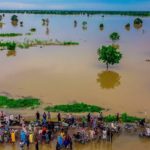
    The flood began last weekend and has lasted over four days, worsened by heavy rainfall, after the Alau Dam overflowed. It was reported that the dam suffered a spillway collapse, causing a heavy surge of water that led to widespread flooding in some parts of the state.

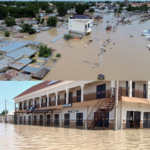
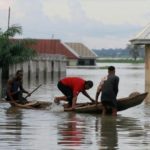
    The flooding has displaced Maiduguri and its surrounding communities, including Chibok, Biu, Konduga, Bama, Dikwa, and Jere, which are reportedly underwater. Strategic areas such as the University of Maiduguri Teaching Hospital, the Shehu of Borno Palace and Monday Market, and the Maiduguri Central Market have also been affected. Although the state has not identified the number of casualties, it has declared public and private schools closed for two weeks.

    Also, an alarm has been raised about more than 200 inmates who escaped from the Maiduguri Correctional Facility after a part of its fence was brought down by the flood. The spokesperson for the Nigerian Correctional Service Borno Command, Bala Adamu, confirmed the jailbreak and stated that they’re “still assessing the number of inmates who escaped.” He also noted that they’ve recaptured only three escapees so far. 

    The state’s zoo isn’t left out. The flood has left about 80% of the animals in Sanda Kyari Zoo lifeless. Residents have reported that the flood has washed up wild animals like crocodiles and snakes in residential areas. In a general statement, the zoo’s general manager, Ali Abatcha, warned residents to take necessary precautions to avoid the wild animals.

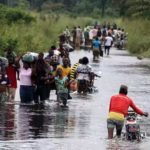
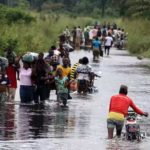
    Despite providing an evacuation route for affected residents to follow for safe passage, hundreds of displaced people and families fill the streets of Borno State. The livelihoods of affected residents and business owners have taken a hit. They’re left without businesses to open and cater to. In response to this terrible flood disaster, three Internally Displaced People Camps (IDP Camps) have been opened in the state to take in victims.

    This is a developing story.

  • In 2022, Nigeria experienced its worst flooding crisis in a decade. More than 30 states were affected, with states like Kogi and Bayelsa, bearing the worst brunt.

    The federal government was criticised for its late and lacklustre response, which led to substantial physical and economic losses. 

    The jury’s still out on whether lessons have been learned going forward. Meanwhile,  the Nigeria Meteorological Agency (NiMet), which is responsible for tracking rainfall, on January 24, 2023, released its 2023 Seasonal Rainfall Prediction (SRP) with serious warnings on unusual rainfall and floods.

    What did the report say?

    The report warned Nigerians to prepare for an earlier-than-expected onset of rainfall in most parts of Nigeria. Starting on or around March 2, the coastal areas of the south-south comprising Bayelsa, Rivers, and Akwa-Ibom will see heavy rainfall. Southern inland cities should see precipitation in April, while central states will see rain in May.

    An extended rainfall season is predicted to occur in Gombe, Kaduna, Kwara, Enugu, Anambra, western Ogun, and Lagos states.

    The northern states of Sokoto, Kebbi, Zamfara, Kano, Katsina, Jigawa, Yobe and Borno will have an onset of rain between June and July. Peak rainfall would be between July and September.

    NIMET’s Director-General, Prof. Mansur Matazu, said there’d be flash floods in cities, while people living in flood-prone areas would experience worse situations.

    [A flooded Nigerian community. Source EPA/GEORGE ESIRI]

    What else should you know?

    NiMet is working in partnership with the National Emergency Management Agency (NEMA), which provides expert analysis on disaster risk implications and produces disaster early warnings. NEMA has said it’s taking proactive measures like capacity development to manage future emergencies better.

    Despite this, it’s in your interest to look out for yourself, mainly if you live close to areas at risk of flooding. Especially with the elections taking priority over other matters.

    [Image source: NEMA]

    How can you protect yourself?

    As much as the government may promise to protect you from imminent flooding, you should still take practical steps to avoid being a victim. The government can do more by way of improving drainage systems. It can also partner with local authorities to create barriers to stem flooding in communities that are at risk. Structures that obstruct the flow of water should be demolished.

    However, the devastating effects of climate change mean that riparian areas will suffer heavily when the rainy season commences. 

    If you live around these flood-prone areas, it’s time to start considering relocation far away from there. You can also try moving further inland.

    Based on NiMet’s forecast, you have a head start of about a month.

    For those who are resigned to staying put, we already did an explainer on how to protect your health in the event of a flooding emergency. We’ll keep you updated with any other information needed to keep you and your loved ones safe.


    We write the news and track the 2023 elections for citizens by citizens in our weekly newsletter, Game of Votes. Make the subscription of a lifetime here.

  • The Socio-Economic Rights and Accountability Project (SERAP) has a track record of suing Buhari every three market days. The organisation has dragged the president to court over the embezzlement of ₦1.4 trillion meant for oil refineries, and for his failure to publish the repatriation details of Abacha’s $23 million loot, amongst others. The list of lawsuits is endless and SERAP isn’t planning on slowing down anytime soon.

    The latest lawsuit from SERAP concerns Buhari’s failure to investigate the missing trillions of naira in ecological funds from all levels of government from 2001 to date. The organisation is also demanding punishment for the suspected perpetrators of corruption and mismanagement of the funds.

    But what’s so important about this ecological fund and how could the missing trillions have helped us? Let’s go to school for a bit.

    What’s the ecological fund?

    The ecological fund is an emergency or intervention fund set up by the Federal Government in 1981 to address ecological problems in the country. Just think of it as a piggy bank for whenever Nigeria has some serious environmental issues. 

    Beneficiaries of the fund are the National Emergency Management Agency (NEMA), Office of the Secretary to the Government of the Federation (OSGF), or any other projects on the approval of Mr President.

    The third option should give a clue as to where the money went to.

    How much did we have in the fund? 

    According to reports from the Federation Account Allocation Committee (FAAC), Nigeria set aside a total of ₦548 billion for the 36 states between 2012 and 2021. However, only ₦277 billion showed up in the fund while ₦74 billion was sent to state governments for their climate needs.

    So what happened to the remaining ₦197 billion?


    How could the funds have helped Nigeria?

    Nigeria’s most pressing ecological problem is floods. In 2022, the country experienced its worst flooding crisis in ten years. These floods claimed over 600 lives and displaced 1.3 million people. Victims in the Internally Displaced Persons (IDP) camps suffered from respiratory diseases, as well as cholera and diarrhea.

    These funds could have been useful if well utilised for proper healthcare, faster drainage of the floodwaters, and even better grounds for IDP camp facilities.

    One thing is sure — if there’s a lack of accountability with public funds, more climate disasters will definitely happen. That’s what SERAP is trying to prevent.

  • We know a lot of things are happening right now but let’s not forget that millions of Nigerians are still suffering the effects of flooding. Although coverage of the issue has reduced, it’s important that we keep in mind that a large part of over 30 Nigerian states are under water. 

    This is not just a case of rains spoiling your plans in October and November because over 612 people have died and millions have lost their homes, means of livelihood and members of their families. 

    The crisis is far from over.    

    [Image Source: Daily Post Nigeria]

    Apart from the direct impact on people, the Nigerian economy has been hit too by the floods, with rice farmlands in Nigeria’s food-basket states being affected, leading to the loss of $20 million. 

    It also affected Nigeria’s daily earnings in global markets, as the Nigeria Liquefied and Natural Gas company (NLNG) called a ‘force Majeure on October 17, 2022, which halted profits that could have come from gas exports.

    Have people gotten help? 

    Although responses were slow in the beginning, some help has started getting to the victims. 

    Here are some of the heavy donors so far: 

    The United States

    The United States provided $ 1 million to flood victims through the US Agency for International Development (USAID). The funds were provided to help local partners and agencies with emergency shelters, relief commodities, and hygiene kits to promote safe and healthy practices, especially with the cholera outbreak that has been widespread across Internally Displaced Persons (IDP) camps. 

    The Red Cross

    The International Federation of the Red Cross/Red Crescent issued a Floods Emergency Appeal of $13 million. This was to provide clean water, emergency shelter, and cash assistance to half a million people in several states. The beneficiaries included severely affected states such as Adamawa, Anambra, Bayelsa, Kebbi, Kaduna, Yobe, and Zamfara. 

    Jordan

    The King of Jordan, Abdullah II bin Al-Hussein Al Hashimi donated useful relief items. These included food packages, clothing, blankets, and sanitary items for flood victims.

    Meghan Markle and Prince Harry 

    The royal couple donated funds for the flood victims in order to provide relief materials. The amount was unspecified. The donation was made to both UNICEF and Save the Children in Nigeria.

    Switzerland

    In response to an emergency appeal by the International Federation of Red Cross and Red Crescent Societies, IFRC, Switzerland donated $756,000. This was to aid the IFRC and Nigerian Red Cross to provide relief support for victims.

    The Knights of St. John

    A Nigerian Catholic group, the Knights of St John International, donated a sum of N8 million to various Catholic dioceses. These were located in Idah, Markurdi, Lokoja, Auchi, Bomadi, and Warri, as well as the archdioceses in Onitsha, and Owerri. 

    The donation is also expected to support the repair of the Catholic Bishops Conference of Nigeria (CBCN) institutions affected by floods.

    Donations from political candidates 

    The All Progressives Congress (APC) presidential candidate, Bola Ahmed Tinubu donated a sum of N100 million to Kano flood victims. This happened during a party held in his honour in October 2022. 50 million naira was also donated to Bayelsa State flood victims by the presidential candidate of the People’s Democratic Party (PDP), Atiku Abubakar. 

    Lastly, Labour Party (LP) presidential candidate, Peter Obi, gave the sum of N5 million to flood victims in Benue. He also gave relief materials which included bread and noodles to Anambra state flood victims.

  • In a little over 100 days from today, Nigerians will head to the polls to decide who their new president would be. And while it is campaign season now, it is easy to forget that Nigeria is caught in one of its worst flooding crises ever. 

    As at October 24, 2022, 612 lives had been lost, 3.2 million people directly affected, 123,807 houses totally damaged and over 392 thousand hectares of farmland destroyed. 

    The government’s response has sadly been largely inadequate. We hate to add to the piling list of things the flood has affected but can we talk about the pending impacts on the 2023 elections for a minute? 

    You should be worried about these things ahead of the elections: 

    20 INEC offices damaged by the flood

    The Independent National Electoral Commission (INEC), led by its chairman, Mahmood Yakubu, appeared recently before the House of Representatives. He disclosed that the floods had already destroyed at least 20 of its offices across the country.

    INEC office in Edo State [Image source: Eagle Online]

    He said, “We have office rent and residential rent. So many of our offices were attacked and some actually flooded after the recent floods. We have 20 offices in that situation. 

    “For others, we just have to look for a facility to rent. From Jigawa, there was a request for us to look for three offices, following the damage caused by flooding of the offices that we occupied.”

    Inaccessible road networks

    Last month, the Minister of Works and Housing, Babatunde Fashola, lamented that the full extent of the flood’s damage on road infrastructure cannot yet be known. He said it would have to recede before they could make any meaningful assessment.

    Flooding in Lokoja [Image source: NAN]

    Still, it’s not difficult to imagine how severe the damage is, with the floods having affected 34 out of 36 states. It is also unlikely that any large-scale repairs can take place between now and the 2023 elections. This could mean that some major road networks might remain in a bad state even when the flood abates. 

    This might discourage voters from traveling long distances to vote ahead of election day.

    Disconnected communities and difficulty in transporting election materials

    Flooded community in Nigeria [Image source: Abraham Achirga/UNICEF]

    Beyond major roads, the road networks in many remote communities in Nigeria may pose challenges. The INEC chairman has already voiced this concern. 

    At an event hosted by the Centre for Democracy and Development (CDD), he said one of the greatest problems it faces in the conduct of elections is poor transportation systems. This can hamper the distribution of election materials, create delays and affect the integrity of the elections.

    Displacement and disenfranchisement of voters

    While INEC promised in early September that three million Internally Displaced Persons (IDP) will be able to vote, the flooding emergency may make it difficult to live up to that promise. 

    Voters at an IDP camp in Borno [Image source NAN]

    Many more people have been displaced, with their polling units no longer accessible. Also, INEC has closed all registration for the 2023 election meaning that the newly displaced may unfortunately get disenfranchised.

    What can be done?

    For the electoral body, they’re in a tough position. Despite their best intentions, many people will find it difficult to vote. Unless a fast-tracked bill is passed by the national assembly making special allowance for newly displaced voters. 

    Also, the government needs to commit more to ensuring that more roads are fixed before 2023 to encourage higher voter turnouts than in 2019. And on the individual end, just try to stay alive. Only the living can vote.

    ALSO READ: 2.5 Million Nigerians Are Affected by 2022 Flooding Crisis

  • The 2023 general elections campaigns are centre-stage in Nigeria right now. However, Nigerians are still suffering from the country’s worst flooding crisis

    On November 3, 2022, the Save the Children International (SCI), a nonprofit organisation, made an announcement. It revealed that over 38 million people have been affected by flooding in Nigeria, Pakistan, India, Chad and South Sudan. Of that number, 2.5 million are from Nigeria and 1.25 million of them are children. The SCI also noted that 250 schools have been destroyed by the floods, negatively impacting their education.

    What’s the government’s latest response?

    The Nigerian government has come under heavy criticism for not declaring a national state of emergency. Despite the hundreds of lives lost and the millions displaced, the Minister of Water Resources, Suleiman Adamu, had some interesting things to say in October.

    “It’s certainly an emergency situation but it all depends on what you mean by declaring state of emergency. We haven’t reached a situation in my view where the relevant emergency management authorities haven’t been able to deal with this situation. I’m not aware that has happened.”

    In an earlier story, we reported that the federal government announced the approval of the National Emergency Flood Preparedness and Response Plan. However, the details of this plan remain unknown. The National Emergency Management Agency (NEMA) and the Ministry of Humanitarian Affairs, Disaster Management and Social Development are working together to coordinate a line of action in response to the crisis.

    On November 3, 2022, the federal government inaugurated a “Presidential Committee for Development of a Comprehensive Plan of Action for the Prevention of Flood Disasters in Nigeria”. The committee is expected to develop an action plan for the president in 90 days. The timeline of this plan was ridiculed online for its ineffectiveness in addressing a pressing concern.

    We aren’t holding our breath on whatever plan the government comes up with. Still, it’s at least better late than never. In the meantime, read our guide on how to protect your health during this flooding crisis.

    ALSO READ: How Is Nigeria Responding to Its Worst Flooding Crisis?

  • Life as they know it has changed for millions of Nigerians affected by the 2022 flooding crisis. Over 600 people are dead and more than 1.4 million people are currently displaced all over the country. The floods have caused untold hardship for many victims who are now dealing with poverty, and lack of shelter, amongst many others.

    But now, things are taking a turn for the worse as their medical well-being is also at stake. On October 21, the United Nations Children’s Fund (UNICEF) issued a warning that 2.5 million people in Nigeria are at high risk of waterborne illnesses, drowning, and hunger. 

    [Image Source: Todayfmlive]

    To have a deeper understanding of how serious the situation is, we spoke with a 66-year-old farmer, Ngozi Igwe, who was displaced by the floods in Omoku, Rivers State. She’s suffering from three illnesses — scabies, malaria, and typhoid — but is receiving little to no medical treatment. She told Citizen her story.

    What was life like for you before the flood?

    I was very happy about the rainy season because my crops — yam and cassava — weren’t doing so well for some time, and I thought the rain would help them grow faster. I didn’t know that floods would be the result of that kind of rain. Even though I didn’t have a lot of money, at least, life was better.

    ALSO READ: From Homeowner to Homeless — Nigerians Speak On Flood Crisis

    What’s it like living in an Internally Displaced Persons (IDP) camp?

    It’s not been a joke at all. I’m not living well here. There’s no mosquito net and no mattress for me to sleep on. There’s no night that mosquitoes don’t bite me — they’ve finished my skin completely. I can’t sleep and my body is always hot. The sickness is too much. 

    And it’s not only me. I made a friend here, Peace, who’s suffering from severe typhoid, with constant body pains for five days. Even the little treatment she’s receiving here is not working.

    How long have you been feeling ill?

    I’ve been here since the beginning of September, so maybe six weeks.

    Have you received any type of medical treatment?

    We have o, but it’s not enough. It’s not even doctors treating us here, it’s pharmacists. Imagine o, one person has scabies, malaria, and typhoid, but no doctors are here to treat me. 

    The queues to receive the drugs are always long and you can stand for hours. They’re trying o but I wish I could see a proper doctor that can treat me better and give me drugs that can work fast. I have grandchildren that I would like to see grow up a bit before I die.

    Who’s helping victims of the flood?

    A resident of Rivers State and entrepreneur, Gloria Adie, popularly known as @MrsZanga on Twitter, has been spreading awareness about the flood crisis in parts of Rivers State. She told Citizen there were hardly any doctors in the Omoku region before the floods. Most of the available doctors work in government-run IDP camps and are hardly found in privately-run camps like the one Igwe stays in. 

    Adie also claimed that most of the hospitals in the area aren’t useful as the floods have submerged them and damaged medical equipment.

    Zikoko Citizen tried to reach out to the pharmacist in charge of the camp, Peter Ologu, but he wasn’t available for comments.

    Where’s the government?

    The Federal Government has distributed relief materials to 21 states across Nigeria, but Rivers State is one of the 15 states still waiting for delivery. The state government has supported victims with a ₦1 billion donation to provide relief materials but enough hasn’t gone around for them.

    There has been no official mention of hospitals affected by the state government, but the Nigerian Navy has provided medical personnel to victims in Ahoada, Omoku, and Port Harcourt.

    Like Igwe, Nigerians displaced by the flood are battling diseases, hunger, and severe displacement. The government needs to be more efficient in providing relief for them.

    ALSO READ: How Is Nigeria Responding to Its Worst Flooding Crisis

  • A few weeks after the Lagos State government warned residents of some areas about floods, new areas are also now at risk.

    [Image source: PM News Nigeria]

    Which areas are affected?

    The Lagos State government has placed residents of these areas on notice:

    • Victoria Island
    • Lekki
    • Ikoyi
    • Epe
    • Badagry

    ALSO READ: These Areas in Lagos Are at the Risk of Flooding

    What’s the government saying?

    The Commissioner for the Environment and Water Resources, Tunji Bello, said the areas may be affected because of the Lagos lagoon. Water in the lagoon has reached its highest level and is now threatening to spill over into these areas. The government expects the floods to cause a mess in the streets and major roads of the affected areas.

    What’s the government doing?

    According to Bello, the government is currently draining water channels across the state and constructing new ones. There’s also a quick response Emergency Flood Abatement Gang set up to free up manholes that may cause blockage.

    What should affected Lagosians do?

    [Image source: Punch Newspapers]

    The commissioner advised Lagosians in the affected areas to do these three things:


    1. Monitor incidental rains regularly

    2. Desist from dumping refuse in the drains 

    3. Clean their tertiary drains regularly.

    ALSO READ: How to Protect Your Health in a Flooding Crisis, According to WHO

  • Sometimes, it’s easy to forget Nigeria still has a president running things in Abuja. You’d be forgiven for thinking the country is on autopilot because the number one citizen is often missing in the face of major issues that affect Nigerians.

    Sure, you’ll find Buhari where they’re giving national awards to undeserving public officials or amnesty to thieving former governors or vacationing in London. 

    Buhari Should Include These Things in His 90-Day Flood Plan

    But you’d never catch the president taking as much interest in critical issues like fuel scarcity or the flooding crisis that has claimed over 600 lives in Nigeria in 2022.

    On October 24, 2022, the president finally decided to take a more active interest in the flooding crisis when he ordered a committee to develop a comprehensive plan of action for preventing flood disasters in Nigeria. We’re assuming he tried to ban the floods first but moved on to the next ridiculous solution when that didn’t work.

    Buhari Should Include These Things in His 90-Day Flood Plan

    Predictably, Buhari’s 90-day timeline for a plan has caused a stir online because it’s not addressing the present crisis. Do you know what can happen in 90 days? The United Kingdom can have three prime ministers, Asake can release seven studio albums, and you can find your soulmate in America if you’re a contestant on 90 Day Fiancé.

    Buhari Should Include These Things in His 90-Day Flood Plan

    A match co-produced by sapa and japa

    Since we can’t do anything to make Buhari’s timeline shorter, we have some suggestions for what the committee should include in the 90-day plan.

    How to be an empathetic leader

    You’re more likely to find Buhari at a political event than at the scene of a disaster where the president can show empathy for the affected citizens. 

    Buhari Should Include These Things in His 90-Day Flood Plan

    “Can’t I just send a tweet instead?”

    Like many other disasters that have happened under his administration, Buhari has kept from visiting displaced flood victims because it’d ruin his manicure or put the hem of his garment in danger of touching the water.

    When the committee presents the 90-day plan to him in 2023, there must be an entire section dedicated to “How to be a leader that cares” just for Buhari. They can make it a cartoon if that helps him understand better.

    Buhari Should Include These Things in His 90-Day Flood Plan

    ALSO READ: How Nigeria’s Flooding Crisis Can Go from Bad to Worse

    How to make governors useful

    The federal government has caught the most flak for the ongoing flood crisis, but there should be some whipping reserved for state governors too. 

    Buhari Should Include These Things in His 90-Day Flood Plan

    Nigeria actually has what’s called a “triple response structure” for disasters like flooding. The response starts from the local government to the state before it lands on the federal government when it becomes a national-level emergency. All three levels of government are allocated funds every month for ecology and disaster management.

    This means local and state governments should’ve responded better to the disaster before it became as bad as it has in the past couple of months. Instead, governors are carrying their begging bowls to the federal government and private citizens to do their jobs for them. State governors need to be more useful and that should be put on record in Buhari’s plan.

    We don’t want them reacting like this:

    How to manage a disaster without saying nonsense in public

    While millions of Nigerians were reeling from the devastation the floods have caused in their lives, the Minister of Water Resources, Suleiman Adamu, was on television trying to explain what caused the crisis. In his losing battle to absolve the government of blame for not preparing well enough, he said the floods were caused by “water that we’re blessed with from the sky”. 

    It’s hard to imagine millions of Nigerians currently consider it a blessing, so maybe he should’ve just called it “rain” like every other person not turned on by public embarrassment.

    The plan should include a section on government officials learning to speak like human beings in times like this. But we’re not holding our breath here because the same minister is coordinating this plan Buhari wants to use to fix flooding in Nigeria forever.

    How to take medicine before death

    The mathematics is simple — over 600 Nigerians wouldn’t be dead, and over 2.5 million wouldn’t be displaced if all levels of the Nigerian government did their jobs. Their failure to be more proactive in disaster management is the reason millions of Nigerians are suffering.

    It’d be nice if the committee can find a section in their plan to note that the government sucks and should be doing better.

    But while they put this plan together, the more pressing issue the government should address is how to help the victims right now and not in 90 days.

    Buhari Should Include These Things in His 90-Day Flood Plan

    ALSO READ: How to Protect Your Health in a Flooding Crisis, According to WHO