• On the Streets is a Zikoko weekly series about the chaos of modern dating: from situationships and endless talking stages,  to heartbreak and everything it means to be single in today’s world.


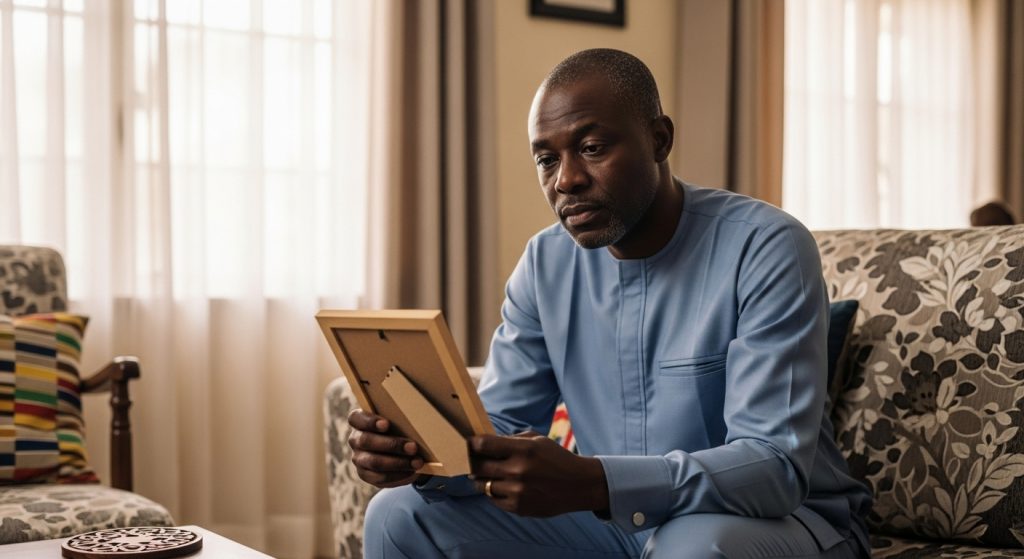
    At 44, Malik* has loved deeply, lost painfully, and learned to live with the weight of regret. From a teenage romance that defined his youth to a forced relationship that left him raising a child alone, finding love has been difficult. 

    In this story, he opens up about his dating history and why he’s made peace with walking through life alone.
    What’s your current relationship status, and how do you feel about it?

    I’m single and mostly resigned to my fate that I’ll always be. I believe the woman I was destined to be with died, and it’s all my fault.

    That sounds tough. How did you arrive at that conclusion? Walk me through your dating life.

    My first relationship was with Faiza*. In 1996, when I was about to enter SS1, we met at Arabic school and became close friends. We lived in the same community, so it didn’t take long before we started dating. Our parents even knew each other. Everyone knew us as the Romeo and Juliet of our area.

    Things were great until after secondary school in 2000. I got admission into a polytechnic, but Faiza decided she didn’t want to continue schooling. She got a paid job at a computer firm. That was when her attitude began to change.

    In what ways?

    She started hanging out with different men from work. Whenever I asked, she’d say they were just friends. I couldn’t do much, so I ignored it, but our relationship slowly faded. She stopped visiting as often, and I kept noticing new expensive things on her. When I asked about them, she got defensive. Deep down, I knew something wasn’t right.

    She also started insulting me, calling me unmanly because I wasn’t hairy. I became so insecure that I started buying beard oil and trying to change myself for her. Meanwhile, there was a guy from her office who had everything she said I lacked. Before long, people around started saying they were sleeping together.

    Oh. Did you confront her?

    I did. She denied everything because I didn’t have solid proof. I eventually dropped it, but the trust was gone. About a month later, she told me she wanted to end the relationship. She said she was tired of waiting on me for marriage. I begged her to reconsider since I had only a year left in school, but she didn’t care.

    I refused to accept it at first. I kept visiting her family, hoping she’d change her mind. She told me to stop coming, but I said even if we weren’t together, I still had a relationship with her family. Not long after, they started acting strange, too. One of her sisters even told me outright to stop coming.

    That was when it truly hit me that we were done. I was heartbroken. I could barely focus on school. It was a miracle I didn’t fail my final exams. 

    How did you cope with the breakup?

    For a long time, I shut down emotionally. I later heard she was dating another guy from our area, and that hurt even more because she’d been the only girl I ever really loved.

    After my NYSC, I got a job that took me to the East. That distance helped me heal. I visited Lagos occasionally but avoided her. On one of those visits back home in 2005, I met Hafsat*. She worked at a nearby chemist as an attendant. I was lonely, and she was very friendly. We started hooking up, and it stayed casual until she got pregnant.

    It was so hard to accept what happened. I was barely 25 and not ready to be a father. I even tried to talk her out of keeping the pregnancy, but she told my mum, who sided with her. I had no choice but to support her. 

    The pregnancy forced us into a relationship neither of us was ready for.

    Get More Zikoko Goodness in Your Mail

    Subscribe to our newsletters and never miss any of the action

    And how did the relationship go?

    It wasn’t the smoothest ride. I was mostly away for work in another state while she stayed in Lagos. Sometimes she slept over at my mum’s place, but soon, money, shoes and bags went missing whenever she was around. My mum complained, but I defended her. I didn’t want to accuse the mother of my unborn child without proof, but it caused tension between them.

    She gave birth to our son in July 2006, and that changed everything. I started to feel hopeful again, like we could make it work. I took on side gigs to earn more money and told her I wanted to start saving for our future.

     She even encouraged me to join her daily contribution group. I trusted her with the money because I thought we were building something together. But four months later, everything collapsed.

    What happened?

    My mum called one day to say Hafsat had dropped our 10-month-old baby off with her and disappeared. I tried reaching her but couldn’t. Even her brother — the only family I knew — said he didn’t know where she was. I feared she’d been kidnapped and almost went to the police.

    Then, a month later, she called. She said she’d left because she was tired of the relationship and motherhood. She told me to let my mum raise our son. When I asked about the money, she avoided the question. It was about ₦300k in total. I was devastated. 

    That must’ve been really painful. How did you recover from that?

    I focused on my work and my son, but it wasn’t enough to mask the anger and loneliness that consumed me.  In 2008, I moved back to Lagos for a new job. That was when Faiza came back into my life.

    Wait. How did that happen?

    She’d been in a terrible accident that left her hospitalised for months and cost her one eye. I heard about it and decided to visit. Seeing her again brought back old feelings. She apologised for the past, and I forgave her.

    We started talking again and got back together at the end of 2009. It felt like fate had given us a second chance. She was kinder, more mature, and treated my son well. But I also didn’t trust her completely.

    Why not?

    I couldn’t shake the fear that she might hurt me again. I also wanted to be sure I wasn’t just a rebound. The man she’d been dating left her after the accident, and she felt vulnerable. Then she started pressuring me to marry her. I wasn’t ready.

    She reminded me of the promise I made years ago when I’d begged her to wait for me. I tried to explain that I wasn’t the same person anymore; I had responsibilities and a child to raise. But she didn’t want to hear it. She gave me an ultimatum and broke up in 2011 when I refused to marry her.

    I tried to win her back, but she stood her ground. Her mum even insulted me, calling me a coward. I eventually let her go. Then, less than a year later, she got married to a much older widower.

    Right. How did that make you feel?

    It crushed me. She cut me off completely after she got married, and it felt like losing her all over again. I tried distracting myself with casual flings, but nothing worked. 

    Three years later, I heard she had died.

    What? How?

    They said it was a brief illness. I went to her burial and cried like a child. I couldn’t shake off the guilt. A part of me believed I was somehow responsible for her death. Her husband didn’t even seem to mourn her. He remarried soon after. Sometimes, I think if I’d just married her, maybe she’d still be alive. Since her death, I’ve found it difficult to form serious romantic relationships. 

    I’m sorry. How have these experiences shaped your idea of love and relationships?

    I’ve grown detached from the whole idea of love. The two times I tried only brought me pain, and I still haven’t forgiven myself for how things turned out. Sometimes I wish I’d been less cautious and taken the risk of being with the person I loved before I lost her.

    Finally, how are the streets treating you these days? Rate it on a scale of 1 to 10.

    I’m content with the peace I have now. My focus is on my son and the life we’re building together. I don’t think there’s anything left for me in relationships.


    Help Shape Nigeria’s Biggest Love Report! We’re asking Nigerians about relationships, marriage, sex, money, and everything in between. Your anonymous answers will become a landmark report on modern Nigerian love.

    Click here to take the survey. It’s 100% anonymous.

    Read Next: My Ex Used Me for Money, Now I’m Using Someone Else

    [ad]
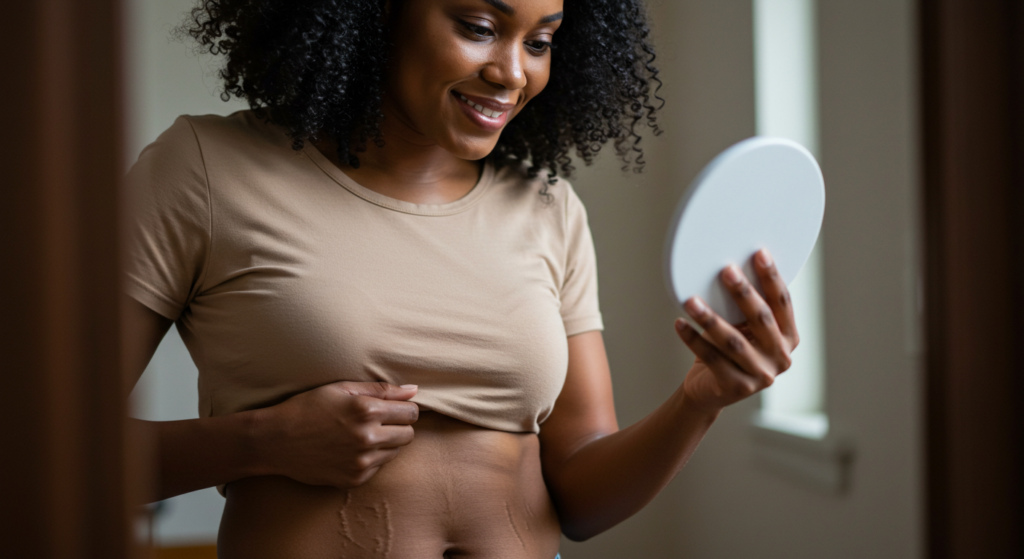
  • I don’t remember the exact moment I started feeling uncomfortable with my stretch marks, just when they became visible enough for me to spot and squirm because of them. I was somewhere between 13 and 16. I’d taken ballet from age 3 to maybe 8, then stopped until I was 13. Going back meant stretching parts of my body I hadn’t stretched in years, and almost excessively. As a result, I had the most stretch marks on the back of my knees.

    At first, it was fine, but when people started pointing them out and I got flooded with what women should look like in the media, I became more and more self-conscious about it. I’d rush into pools or walk to the pool steps with my towel and hand it over to a sibling, right before I jumped in. I hated wearing shorts and really short dresses. I was so, so uncomfortable with my cellulite and natural thighs. It all came together to make me feel unsettled in my own skin. I literally would have done anything to switch bodies.

    As I got older and fell more in love with myself and what the true reality of being a woman is, stretch marks, cellulite, and a little pouch in my belly started to mean less and less. One, there were many more important and bigger things to worry about, and secondly, I genuinely started to see them as beautiful on other women. And the more I accepted the skin I was born in, the more I accepted its unique markings that society had taught me to hate.

    This is the reality a lot of women experience: shame born from outside noise, then slow and steady acceptance. Sometimes, it’s sparked by a kind word. Other times, by a mirror, a memory, or a moment that shifts something inside you. I asked six women to tell me about the first time they loved their stretch marks. Here’s what they said.

    1. Can you remember the exact moment you saw your stretch marks differently? Like, actually loved or accepted them?

    Khadijat 27: I was in my uni room, scrolling through Instagram. Body positivity content was becoming a thing, and I was doom-scrolling through videos of women whose bodies I thought looked fantastic. Then I found out they were the same size as me, and they had stretch marks. But theirs looked beautiful. 

    They were showing them off, and people were commenting about how much they loved it. There was so much encouragement. That day, I wore a sleeveless dress I’d bought but never felt confident enough to wear because it showed the stretch marks on my arms. I dressed up, looked at myself in the mirror, and I felt pretty. I felt like the women I saw on Instagram, and it felt so good.

    Diepreye* 33: The exact moment I saw my stretch marks differently? I was standing naked in front of my mirror. It was a Saturday, and I was getting ready to go out with the girls. I looked at myself in a way I hadn’t before. I knew I was beautiful. All the marks and prints reminded me of how much I was a person, and that was totally okay. I truly felt beautiful in a way I never had before.

    Nico* 22: I wouldn’t say I suddenly saw my stretch marks differently; I’ve always had them, so I just thought it was normal. But there was this conversation with classmates about how stretch marks were unattractive, and how no one really liked them. It didn’t change how I felt, though. I was in school, wearing my uniform, and I still didn’t feel like they were a bad thing.

    Ruth* 26: The moment of acceptance for me happened in my second year of uni. It was a rainy night, and I had candles lit. I was drinking red wine and just sitting in front of my mirror. This is something I used to do a lot. Looking at myself, I thought, “I am so beautiful.” I accepted every part of me. I may not have loved all of it yet, but I accepted it because this is me. This is the only me I’m going to get. 

    I just got to a point where I didn’t care what anyone else thought anymore. Over time, I came to actually love them. I don’t remember exactly when that happened, but now, my stretch marks feel like an essential part of me. If I looked in the mirror and didn’t see them, I’d be concerned. They tell my story.

    Daisy* 39: It was one morning, maybe a year after my second child. I was in the bathroom rubbing shea butter on my stomach like I’d done for years. But this time, my daughter walked in. She was five. She pointed at my belly and asked, “Mummy, what’s that?” My stomach tightened. I expected her to laugh or look confused. Instead, she said, “It looks like lightning.” And she smiled. Lightning. That’s what she saw. Not shame. Not ruin. Just beauty. That moment broke something open in me. I looked at my reflection and for the first time in years, I didn’t look away.

    Zee 24: I was 18 or 19 when I met up with this guy that I’d known since I was in secondary school. He used to date my friend, but she and I hadn’t been friends for years. He reached out to me, one thing led to another, and I found myself on his bed. We didn’t have sex, but we weren’t exactly clothed either. I was embarrassed about my stretch marks and tried using his blanket to cover up my legs.

    He noticed that I kept doing that and asked me why. I told him it was because I didn’t like the look of my stretch marks. I can’t remember exactly what he said now, but I remember that he traced kisses down them, and whatever it was he said rewired my self-concept. He made me love my stretch marks in just one day after years of insecurity.

    Brianna* 30: I have stretch marks on my back from one waist to the other. It’s just a couple of lines, but I thought it was unusual to have them at that spot, so I didn’t really like that from the get-go. However, I remember properly looking in the mirror once when I was naked. I took a good look at the whole package staring back at me, and I just realised how badass every stroke is, how everything looking back at me was perfect (some parts I’m still struggling with ), but I saw them saw them, the lines, the placement and I thought oooouuu unique gel see ass your back set.

    Get More Zikoko Goodness in Your Mail

    Subscribe to our newsletters and never miss any of the action

    You’ll Also Love: 5 Queer Women on Their First Time With a Woman


    2. Before that, what was your relationship with them like?

    Khadijat 27: Before that, I was a big fan of jackets and sweatshirts. I would always bathe early or really late because I didn’t want the girls in my hostel (we shared bathrooms), to see me naked. In my early teens, I had stretch marks around my breasts and arms because I was chubby. I used to attend RCCG, and during camp, we’d bathe in pairs or groups. 

    I vividly remember one girl pointing at my body and shouting, “What is that?” Then she told everyone else. They laughed, and one girl even said it looked like cancer. That stuck with me for a long time. I avoided shared bathrooms or dressing in front of anyone. I tried everything: Ytacan, Skineal, ori (shea butter), coconut oil, but nothing worked. So I stuck to sweatshirts and long sleeves, in every season. I only dressed freely at home with my family.

    Diepreye* 33: Before that moment, it was a bittersweet relationship. Some days, I loved them. Some days, it was a struggle, especially when I wanted to wear clothes that showed my body. I believed they weren’t beautiful, that they were too much. So I took every opportunity to hide them.

    Nico* 22: Like I said, I never hated them. It’s just something I’ve always had, so I didn’t think much of it. If anyone asked, I talked about them. I didn’t hide them, even when I went swimming or anything like that.

    Ruth* 26: I first noticed my stretch marks in SS2 at school. At the time, in the senior classes, boys would laugh at girls who had stretch marks. It was a whole thing, and it scared me. I was a loner; I didn’t want to give anyone a reason to pick on me. I had stretch marks behind my knees, and they were very visible. That was terrifying. I wouldn’t say I particularly cared about them myself, but I was really worried about how other people would treat me because of them. 

    I was also scared they’d bully me extra because I was slim. I’ve always been slim, and I guess I have stretch marks because I moved or exercised a lot; I used to walk a lot. I also had stretch marks on my bum and hips, but no one could see those. Still, I used to worry a lot about being judged for being slim and having stretch marks. I didn’t dislike them from my own heart; I disliked them because society did.

    Daisy* 39: I hated them. After I had my first child, I would shower in the dark so I wouldn’t have to see my body. I wore wrappers around the house, avoided mirrors, and even avoided my husband for a while. It wasn’t just the stretch marks; it was how I felt like my body had betrayed me. Nobody tells you how loud the silence around postpartum shame is. 

    And the pressure? Every auntie, neighbour, and random woman in church had something to say. “Ah, this your tummy never go back?” “You better start gym before your husband starts looking outside.” I started scrubbing my belly raw with exfoliants and rubbing anything anyone recommended, from toothpaste to lemon juice, and that black soap with potash. Nothing worked. Eventually, I just stopped trying.

    Zee 24: Before this happened, I always felt so insecure about them. My sister used to have a lot of them, and I remember my mum used to buy creams that made stretch marks “disappear.” So, of course, my home life wasn’t a breeding ground for self-confidence. When my stretch marks started appearing, seeing the way my mum used to treat my older sister’s stretch marks like a defect, it made me also believe that I needed to get rid of mine.

    Brianna* 30: Like I said, from the go, I didn’t really fuck with it, but I never really saw them. Except I turned around to look at it. It was actually a friend who first pointed it out, and I think her tone is what made me feel some way about it at first, buttttt when I got to look at it properly for myself, I just know say I set die.

    Do you want to share your story? Tell us here!

    3. And since that moment, what’s changed in your body, your self-image, or how you move through the world? 

    Khadijat 27: After seeing women with my body type, and even bigger, embrace their bodies, and seeing slim women with stretch marks that didn’t look ugly to me, I started becoming more comfortable. I wore what I wanted. I wasn’t the sweaty girl anymore, wearing full clothes under the hot sun. My style grew. I stopped looking in the mirror, checking for a new stretch mark every time.

    Diepreye* 33: A lot has changed since that moment, especially in how I see myself. I see myself as beautiful. A work of art. My body is different, and there’s nothing wrong with that. Everyone is different. Love and self-acceptance have really evolved for me. I wear whatever I want, look however I want, and still feel beautiful doing it.

    Nico* 22: Not really. I guess I’m just around more people who like their stretch marks than people who don’t. So it’s not really a big deal. As for acceptance, I’ve always accepted mine.

    Ruth* 26: Since then, I’ve come to love them. Now, I see them as part of my body and part of my story. They don’t bother me anymore. There were times in uni when I’d worry that the ones near my bum would show under my clothes, especially at parties where I wore shorts, but I didn’t really go out of my way to hide them. Today, if I look in the mirror and don’t see my stretch marks, it would feel strange. I see them all the time; they belong on me.

    Daisy* 39: I started wearing crop tops. Not all the time, but sometimes. Even started walking around the house naked again. I let my husband touch my stomach now without flinching. I still have stretch marks; they’re deep, long, and loud, but I no longer see them as a flaw. They’re a reminder. Of everything my body has carried, survived, and held. My daughter still calls them “mummy’s lightning” sometimes. And honestly? That alone makes me feel like a masterpiece.

    Zee 24: After I started embracing them, I stopped trying to hide them. This dude from when I was 19 made me recognise that my stretchmarks were something to be proud of. My ex also used to call them tiger stripes. He’d say they were one of my best features. It’s funny how the thing that used to bring me so much insecurity became one of my proudest features.

    Even now, when I look at them, I see wonders. I’m grateful to have been around people that made me feel a little more secure in myself. Now, I show them off when I can. And I encourage others to do so too. My stretch marks are sexy as fuck.

    Brianna* 30: For one, I know I’m a 10, so everything adds up and makes me a 100, and that’s how I see and want to carry myself.

    Click this to see what other people are saying about this article on social media.


    Don’t miss the first-ever Naira Life Conference happening on August 8. Click here to save your seat and be part of the money conversation.

    [ad]

  • Navigating life as a woman in the world today is interesting. From Nigeria to Timbuktu, it’ll amaze you how similar all our experiences are. Every Wednesday, women the world over will share their experiences on everything from sex to politics right here. This is Zikoko’s What She Said.

    Today’s #ZikokoWhatSheSaid subject is Joy Ashiedu, a 36-year-old Nigerian woman. She talks about her big-city dreams after moving from Owerri to Lagos, why she married her persistent lover from Facebook and the challenge of living with her in-laws before finding happiness.

    What age did you enjoy the most?

    Right now. When I was 28, I assumed marrying my first love would somehow make me happy, but after the first year and a half together, the bliss ended. I spent a lot of years fighting to fix things. Everything was about not ending up in a marriage like my parents. I eventually realised that was unresolved baggage I was carrying with me. I was fighting with myself.

    What do you mean by “fighting with yourself?”

    I had expectations of the way my life would turn out by 25. I’d never really anticipated marriage, but I’d hoped for something better than what I experienced growing up in Asaba (in my village, Issele-Mkpitime) with my parents. I’m the last of five children, and my older siblings had moved out of the house before I was even nine. So it was just my parents and I until I was 12. I went to secondary school in a completely different town in Delta.

    My parents tried to give me the best with everything they had. My father was a farmer while my mum was a trader. The issue with growing up with them was seeing the problems they had in their marriage. They weren’t friends. Half the time, they weren’t even around because of their work, and when they were home, they barely spoke to each other. If they did speak, it was an argument or a physical fight. I saw my dad beat up my mum several times.

    At the time, I didn’t realise how much it weighed on me to see my parents living like enemies. I also didn’t know how much their fights would affect my own marriage. I was only focused on getting out of the village and making something more for myself. But that didn’t happen for a long time. 

    What did you want?

    I always wanted my own business. I loved being on the farm with my parents and siblings as a kid, but I wanted more than the isolating lifestyle of being in our village. I always wanted to end up in Lagos. My eldest brother lived there, so I lived with him for two years while I tried to get into university. 

    Before 2004, I’d only lived in the south. I moved back and forth between my village and Agbor, Delta for secondary school. In Lagos, there was so much going on, and everyone had some kind of hustle going on. 

    In 2007, I ended up going to school in Owerri because it was the only place I got admission. I took all the Lagos hustle and wanted to start a business there.

    What kind of business exactly?

    For someone who didn’t have a lot of money, I went back to the south trying to set up an organisation that taught people on campus to market their skills. On some occasions, I’d take my school fees to buy things they needed and get a commission when I connected them with clients. I really had a passion for personal development. 

    At some point, I was part of the radio outlet on campus. I’d go in to give talks about personal development and entrepreneurship. I was talking a lot more than I’d done in years. When you’re young, you have many dreams. 

    I was hoping to be somewhat like Fela Durotoye. I’d seen him give talks and wanted to somehow replicate that. I was on track. I went to school debates, won, and even started an NGO. But when I went for my IT in Lagos, I met my husband, Steve. It was 2012, and we ended up getting married immediately after my NYSC in 2014.

    Why?

    He was a persistent man. I’d never dated anyone before him because most of the men I met on Facebook didn’t last more than one or two chats. On my way to work, a random message came in from Steve, and we got talking. Before the end of the day, he asked for my number, but I wasn’t interested.

    Two days later, a security man showed up in my office to tell me a man named Steve was outside looking for me. I’d updated my internship location on my profile months before, so it wasn’t hard to find me. That caught my attention. I couldn’t say no to that level of interest. I gave him my number.

    Beyond the persistence he showed, I was convinced we were meant to be together.

    LOL. Because?

    Before I went back to Owerri to wrap up school and serve, I broke things off. When I went to work the next day, the bus driver dropped me off at the wrong bus stop. I didn’t know how I’d missed my junction. I stood confused on the roadside, trying to figure out my next move. And you won’t believe who I saw in a taxi that was slowing down in front of me. It was Steve. Of course, he told me to get in, and we got into the groove of talking again.

    I was convinced that coincidence meant something. It wasn’t anything spiritual, but I just knew I would give the relationship a try again. The incident gave more room for friendship between us. 

    By the time I was done with school and preparing for service in Lagos, he proposed. It felt natural. A year later, we got married. I was 28, marrying my best friend and hopeful for my career.

    What changed?

    Steve got a job in Bayelsa, so we had to move to Asaba for proximity. He’d travel to Bayelsa every two weeks and go back and forth.

    He went from being a banker to joining Shell as a contract staff. He was making way more money than I was, so it only made sense to move. Before we moved to Asaba, I tried setting up my youth empowerment program, but life as a graduate in Lagos was different. I was a married woman, so of course, I wasn’t getting any money from my parents. I also wasn’t getting enough from my husband. Eventually, I needed to get a real job. 

    I applied to several companies but never got any positive feedback. Then I got pregnant in 2015, and I knew owning a business would be easier. I wanted to be home with the kids. My husband didn’t like the idea. He expected me to work a corporate job like when we met. I didn’t know that was important to him, and he obviously didn’t know building a business was always something I wanted to do. It was one of the things we began to argue about down the line. 

    Our marriage just gradually fell apart. His mother and sister’s daughter moved in, and that’s when things really got worse. It’s not that my husband cheated or I hated my in-laws, but I wasn’t prepared for everything that came with them living with us. And for so long.

    What were the expectations you had at first?

    I expected that my marriage would be better than my parent’s marriage. I expected my husband to keep being my friend. 

    And what did you get instead?

    Dealing with external people made it difficult to connect. It was only me, and I suddenly had three people on one side. I’d bicker about his sister, and he’d tell me I was being heady and stubborn rather than take my side.

    His mother was ill, and I went from learning to take care of a baby to fully caring for her because he was away at work. At some point, he associated my complaints with me being jobless and idle at home. I felt horrible. By 2017, the whole marriage was practically gone. We’d had our second baby, and his family was still living with us in Asaba. I was exhausted from dealing with so many people.

    But you seemed quite social in uni, you were running a whole NGO. What was the issue with handling people?

    In uni, I was working towards a career. Now, I was just being choked up. I never knew how to handle those kinds of family issues. I didn’t have that kind of people skills, and that’s not something I learnt growing up with parents who argue all the time. 

    My breaking point was when I had a disagreement with his sister, and he kept taking her side. She forgot to pack my baby’s cloth from the line when it got windy, and I hated seeing them on the ground when I got back from the market. Of course, I shouted at her. He kept going on about how irrelevant it was, and it could wait to be addressed the following day. The next morning came, and he went on with the “you’re overreacting” line. That did it for me.

    It may seem insignificant, but I was mad. That’s when I packed my things and took the kids to my parent’s house. I was done.

    What happened next?

    My father was late by then. My mother asked me to go back because she’d stayed in her marriage despite everything. There was no valid reason to pack out of my husband’s house, so I went back. 

    The bickering continued. I didn’t have a job, and the business I’d been trying to grow wasn’t working. Nothing was working. I felt lost. 

    So how did you get to your current point of happiness?

    This is the part that’s hard to explain sometimes. In 2019, we had a fight about letting the kids do what they wanted. I always had to be the strict parent, and I went off on him for that.

    I walked into the bathroom furious. I needed a shower, and I stood there thinking through how the years had gone by since I moved to Lagos in 2014. It seemed so far away then. 

    In the middle of all the thoughts, I heard a voice asking, “what if you are the problem”. Call it the Holy Spirit, the universe, my mind or a hallucination. Whatever you consider that type of moment, it happened. 

    Did you actually feel like the problem?

    I never did. And that’s why I took it as a moment of epiphany. I’d always thought my parents’ marriage didn’t affect me, but it did, more than I cared to admit to myself. Maybe I should have taken more time to rethink my first love, but that didn’t matter.

    I came into the marriage with expectations based on my parents. That was my baggage, and I blamed my husband for anything that didn’t fit the ideal standard of love I wanted. But loving myself first was more important.

    What exactly have you changed about yourself now?

    I’ve stopped expecting love from people, without first giving it. And it’s saved me so much stress. I had to pull back from the consistent fights with everyone.

    I’d diverted from everything I wanted after uni to building and fixing a marriage.  And that’s why it was falling apart. It’s not that my in-laws moved out, or my husband suddenly changed, my happiness is more about where my mindset is at right now. 

    Which is?

    Conditioning my mind to take responsibility. I had a part to play in my marriage falling apart. A lot of people would be happier in life if they’d just accept they’re the issue. I started a blog to share my experience, and I’ve slowly rediscovered the driven entrepreneur I once was. 

    I’m finally earning my own money again. It’s not a lot, but I’ve gotten writing gigs on the side. It took me eight years to get here. I’m happier thinking that I have something to offer again, and that’s what I’m going to hold on to.

    Is there anything besides the money that’s made you happier?

    Keeping my marriage together. Steve’s mother still lives with us, but I’m a lot less bothered by that. She’s older and needs the company of her son and grandkids, I understand that now. Even when we have our disagreements, I focus on not getting as upset over those issues. When it comes to my husband, I just take away the things he loves. 

    He knows if he wants something from me when he’s back from work, he won’t get it until he apologises. I’ve just found better ways to get what I want. It’s entirely in the way I respond to the challenges and people around me that’s changed.

    I know my happiness isn’t in the hands of someone else. 

    If you’d like to be my next subject on #WhatSheSaid, click here to tell us why