|
-
-
Many Nigerian politicians are in the race to enter public office in 2023. One candidate will be sitting around in his prison cell. Senator Bassey Albert, a governorship candidate of the Young Progressives Party (YPP), is on Father Christmas’ naughty list. He certainly won’t be getting any presents this Christmas. Justice Agatha Okeke of the federal high court in Akwa-Ibom handed the senator a 42-year prison sentence on December 1, 2022, for fraud-related offenses.
What did he do?
The story began in 2019 . The Economic and Financial Crimes Commission (EFCC) arraigned Albert on a six-count charge for allegedly taking possession of six vehicles worth ₦204 million when he was a finance commissioner in the state.
The vehicles were allegedly received from one Jide Omokore. His name might not ring many bells until you recall he’s an associate of former petroleum minister, Diezani Alison Madueke. The EFCC in 2018 had a dossier on Omokore over the alleged laundering of $1.6 billion from oil proceeds.
Albert was found guilty of money laundering and for receiving a vehicle worth ₦204 million as a bribe. A bribe he took from Omokore in exchange for offering him a contract worth ₦3 billion.
The judge sentenced the senator to seven years imprisonment on each of the six counts. The separate sentences will run concurrently which means the governor will be out of prison in seven years.
Who’s Bassey Albert?
Senator Albert started his political career as Akwa-Ibom State’s commissioner for finance in 2007. He remained commissioner until 2014 and won his first election to the Nigerian Senate in 2015. Albert won again in 2019 and was a member of the People’s Democratic Party (PDP) until July 2022 when he defected to the YPP to contest for governor.
Albert has had a series of allegations against him, including being charged by the federal government in 2018 over false declaration of assets.
So what next?
No one wants to spend Christmas in prison, so there’s a good chance Senator Albert will fight the judgement all the way to the Supreme Court. While we can’t predict how that’ll turn out, we do know for sure that his governorship aspirations are not happening anytime soon. All the best, Albert.
-
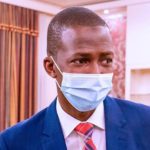
The Chairman of the Economic and Financial Crimes Commission (EFCC), Abdulrasheed Bawa, has been sentenced to serve time in the most ‘secure’ prison in Nigeria, Kuje Correctional Prison.
One can only wonder how Bawa is going to survive, as the prison could contain some very angry fraudsters he has arrested.
Bawa is going to serve time until he returns N40 million and a Range Rover to Air Vice Marshal (AVM) Rufus Adeniyi Ojuawo. Keep in mind that these items have not been returned to Ojuawo since the court demanded him to in 2018.
What happened with Ojuawo and Bawa?
To help you understand this, let’s break down the case into three main points:
- The Crime: Ojuawo was accused of taking N40 million and a Range Rover. The items are valued at N29.25 million from Hima Aboubakar of Societe D’Equipment Internationalaux Nigeria Limited in 2016.
- The Court Case: Ojuawo was arraigned in 2016 on a two-count charge for both items in a Federal Capital Territory (FCT) high court. The case was filed by the EFCC.
- The Verdict: The judge rejected the EFCC case in 2018 and acquitted Ojuawo on the grounds that the commission was unable to show that he accepted the gifts. The EFCC was ordered to return the seized property, which Mr. Bawa clearly didn’t follow up on, hence his sentencing
However, he is not ready to claim the sentence peacefully, as he informed journalists at a press conference that he had appealed the case and would allow “the law” to take its natural course. His ‘buddies’ at the EFCC have backed him up too, as they officially confirmed that the organization would appeal in the chairman’s case. Talk about a friend in need.
It may be kind of shocking and sad to hear this news as the EFCC under Bawa’s tenure has recorded significant achievements so far. These range from the recovery of N6 trillion from fraudsters and 978 convictions in August 2021 to arresting 87 forex dealers in November 2022.
But how righteous is Bawa?
Surprisingly, the EFCC chair has not always lived under a cloak of righteousness. He was involved in an alleged ‘cashing out’ from over 244 oil tankers from between N20-N30 million. This happened while he was head of the zonal EFCC office at Port Harcourt in 2019.
EFCC officials have also claimed that his actions deprived Nigeria of receiving at least N4.88 billion in loot recovery. That is money that could pay off some of Nigeria’s debts. To put the cherry on the cake, Bawa was called in to lead the Lagos Zonal Office a year later. This was despite his investigation being far from over.
He then became the National Chairman in February 2021.
Why should you care about Bawa or the EFCC?
For starters, the actions of these two have serious impacts on your ‘soft life’ and your daily N2K.
A report by PricewaterhouseCoopers (PWC) was written on the impact of corruption on the Nigerian economy. It states that corruption from the government level can lead to a lack of funds. This could lead to poor infrastructure of hospitals, schools, roads, etc.
It can also affect your business, as public funds that are meant to be used as capital for your business are now being used for jaiye jaiye by people who are meant to stop corruption.
How can you fight corruption?
You don’t need to be powerless as a citizen in the fight against corruption. Here are some things you can do:
- Report issues of corruption to the necessary authorities. You can start with your local police.
- Post it on social media. Your phone is not only for Instagram photos and Snapchat.
- Don’t partake in corruption yourself. How can you fight corruption if you’re also corrupt?
-
Ever since the Central Bank of Nigeria (CBN) announced the redesign of the naira banknotes, the financial economy of Nigeria has been going haywire. The naira continues to tumble, the scarcity of dollars is making waves and even the Minister of Finance has washed her hands from the mess.

To add to all the commotion, some governors are trying to play smart and use civil servants to launder the money. We’re not making up stories and this is coming directly from the chairman of the Economic and Financial Crimes Commission (EFCC), Abdulrasheed Bawa.
What we know about this plot is that instead of paying into their workers’ bank accounts, as usual, the governors plan to pay them cash so it would be easier to dispose of stashed old notes. The gang of Money Heist would be so proud.
Who are the governors?
So far, Bawa is only giving us half gist and has refused to mention the names of these governors. But he mentioned that two of them are from the northern region and the third is from the southern region. Considering the fact EFCC can’t prosecute serving governors, we’ll probably never hear the names from him. But we know whose collar to hold whenever they announce they want to pay workers in cash.
But how do the actions of these governors affect citizens?
The exchange rate will get werser
With the rapid and uncontrolled influx of money by these unknown governors, consumption rates are increasing. But the unstable demand will negatively affect bank rates. So if you see ₦1000 to a dollar as the exchange rate before 2022 is over, you know who to blame.
Nigeria will start losing its daily ₦2k from foreign investors
The price instability caused by black money in the financial system will affect the economy’s credibility in the global community. Rational entrepreneurs will find it inconvenient to invest in the country because they’ll also consider the country’s risk before investing.
And if Nigeria isn’t making money, it’s very unlikely that you’d make money as well. You may as well fix your appointment for a salsa date with sapa.
Mechanics may never become ballers
With the high rate of inflation, there’ll certainly be a divide between the rich and poor. It’d be harder for those making money in naira to purchase goods as prices would steadily increase while those earning in dollars will keep getting richer. No hope for mechanics.
In the end, what these three governors and others like them should know is that EFCC is watching, and so are Nigerians.

-
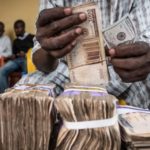
On November 1, 2022, the Economic and Financial Crimes Commission (EFCC) raided offices of bureau de change (BDC) operators in Abuja. Videos have surfaced online showing EFCC officers arresting dealers, and many Nigerians have the same question: why?
BDCs are the latest scapegoats
According to Vanguard, the reason for the raid stems from fears that BDC operators are behind the current dollar scarcity and the naira’s continuous fall. But the highhandedness of the raid isn’t new, and is only the latest in a long list of bizarre attempts to stop the naira’s decline.
For example, in September 2021, the Central Bank of Nigeria (CBN) banned AbokiFX from publishing parallel market rates, aka black market rates. The bank accused the organisation of undermining the economy and the CBN governor, Godwin “Meffy” Emefiele, even publicly offered to fight the owner of AbokiFX.
Before the AbokiFX ban, the naira was ₦520 to the dollar at the black market. It’s now down to ₦816 to the dollar.
The Abuja raid is also not the first time the government has directly targeted BDC operators. In 2015, when the CBN was desperate to defend the weakening naira, it came up with a brilliant idea — cut down trees in Abuja. As the logic went, the BDC operators would no longer be able to use the trees as shade from the sun while conducting their business.
What’s the real reason for the scarcity?
According to a report by Guardian, the dollar scarcity is fuelled by a number of factors. One of those factors is that domiciliary account holders are now restricted to one-way transactions. That is, they can deposit money into their dollar accounts but can’t withdraw. Wary customers who no longer have faith in banks are seeking alternatives and leaving banks dollar-strapped.
Another factor is rationing as banks are only getting a stipulated amount of dollars from the CBN which is clearly not enough to serve their customers.
Ultimately, the big elephant in the room for the dollar scarcity is the rapidly declining naira. The value of transactions conducted in the local currency fluctuates quickly from day to day, so most people would rather save or transact in dollars.
So what next?
For starters, the solution to the naira’s decline can’t be the harassment of BDC operators. They’re simply a consequence of an untenable economic situation. Confidence in our currency is at an all-time low and this has made people resort to more stable currencies.
The CBN is adopting other measures to address the problem, including the recent plan to redesign the naira. Yet, even that move has been met with doubt by the Ministry of Finance. The low dollar remittances from the global oil boom also hasn’t helped our cause either.
Meffy has to step in and resolve this crisis or we may be heading for ₦1,000 to the dollar by the end of the year. By then, not even cutting all the trees in the world would save the naira.
ALSO READ: Why Meffy and CBN Decided to Do Make-Up for Your Banknotes
-
On July 7th, 2022, the Economic and Financial Crimes Commission (EFCC) arrested two men identified as Wale Adifala and Alfa Abiodun Ibrahim. Why?
The EFCC identified them as self-acclaimed spiritualists who defrauded a politician whose name was kept anonymous. We imagine they’re hiding the politician’s name because he’s not proud of how poorly this reflects on him.
The politician was chasing his party’s ticket to contest in the 2023 House of Representatives election. And to give himself a leg up over his opponents, he reached out to the suspects to help him intercede with the gods.
It’s practically spiritual vote-buying but let’s roll with it. The politician paid the spiritualists ₦24 million for their troubles. And Adifala told the EFCC he used the money to buy black, brown and white cows, rams, lavender perfume and rings, to carry out multiple sacrifices for his unnamed client.
We imagine it was this dramatic
The only problem was the politician didn’t win the ticket. And because he got salty like his mates who paid delegates and still lost elections, he wrote a petition to the EFCC.
ALSO READ: EFCC Wants More Nigerians to Snitch on Corrupt People
The suspects protested their innocence, arguing that this was just a case of the gods not picking their calls. Ibrahim said, “Our own is just to pray, do the necessary sacrifices — which we did — and leave the rest to God.”
We’d hate to speak for the gods, but they probably hate vote-buying, or they think they deserve more than ₦24 million to rig an election. The really important question is: Was this fraud? Or are the gods just really expensive?
Good luck to the judge who has to rule on it.
ALSO READ: How to Get Away with $9.8 Million — the Andrew Yakubu Story
-
The Economic and Financial Crimes Commission (EFCC) has a very straightforward job — catch and prosecute people that commit economic and financial crimes. It’s in the name. Sometimes, EFCC agents do succeed in doing their job of arresting real criminals.
Other times? They break into hotels and harass innocent people or threaten non-suspects for not doing their jobs for them.
But the EFCC cannot do its job alone. It’s kind of hard to be everywhere at once to stamp out corruption in a country of over 200 million people. So the Buhari administration launched the whistleblowing programme in 2016.
What’s this whistleblowing about?
It’s about whistles, sort of.
The Holy Book says, “Love your neighbour as yourself,” but the Nigerian government says, “Snitch on your neighbour and we’ll give you a cut.”
The whistleblowing policy encourages Nigerians to provide information to the government whenever they notice a violation of financial regulations. These violations include mismanagement of public funds and assets, bribery, fraud and theft.
Whistleblowers are encouraged to report as much as they know to help authorities investigate and build cases against suspects. To sweeten the deal, a whistleblower is entitled to between 2.5% and 5% of the amount recovered from the person they snitch on. This means a whistleblower that provides significant information that leads to the recovery of, say, ₦100 million can potentially walk away with a ₦5 million reward.
The whole point of the whistleblower programme is to expose financial crimes and recover public funds. And it generated some buzz when it first launched. This led to the discovery of $9.8 million from Andrew Yakubu, a former managing director of the Nigerian National Petroleum Corporation (NNPC), and $11 million from an apartment in Ikoyi, Lagos.
ALSO READ: How to Get Away with $9.8 Million — the Andrew Yakubu Story
EFCC wants more whistleblowers
EFCC chairman, Abdulrasheed Bawa, complained at a town hall meeting on Thursday, June 30th, 2022 that whistles have stopped going off. He said the flow of critical intelligence to Nigerian law enforcement agencies has taken a drastic fall and needs to be re-energised. Informants have stopped informing because of challenges that have plagued the whistleblower programme.
Why have Nigerians stopped snitching?
Bawa provided a few reasons why he believes the whistleblower programme has suffered over the years since its launch. One of the most pressing is that ordinary Nigerians lack adequate understanding of the legal and administrative process of the programme. Snitches want their rewards, but the process to get the bag isn’t always as smooth as they imagine.
Whistleblowers have publicly fought the government many times over the non-payment of their reward and Bawa thinks this is a factor. Who wants to snitch on their neighbour and not at least get paid for it?
Bawa also fears that the EFCC’s decision to drag some fake whistleblowers to court for lying may have discouraged more genuine ones from coming forward. The eagerness to get some reward may have possibly encouraged false snitching that wasted the EFCC’s time.
How to snitch for the government
The Federal Government’s whistleblowing programme is an attempt to partner with citizens to expose corrupt acts. If you know public officers stealing public wealth or receiving bribes, or companies evading taxes or committing other kinds of fraud, then you’re a potential whistleblower. All you need to do is gather as much evidence as you can that can help the authorities.
As long as whistleblowers raise concerns in good faith, they can be of great help to rid the country of corruption. Even better, whistleblowers can make their reports on an online portal and remain anonymous. A whistleblower can expect to be paid only after their tip-off leads to the successful recovery of funds tied to corruption.
See something, say something, bag something.
ALSO READ: A Whistleblower Rejected ₦50 Million and We’re Struggling to Relate
-
Nigerian politicians are good at two things: making promises they cannot keep and helping themselves to slices of the national cake that don’t belong to them.
The latest star attraction for corruption is the Accountant-General of the Federation, Ahmed Idris, who’s accused of fraud to the tune of ₦80 billion.
That’s a lot of zeros.
Corruption has been going on for far too long in Nigeria, and not enough offenders even end up in prison. Without the fear of consequences, stealing from the country’s treasury will never stop. So, maybe the problem is that we’re not getting creative enough with the punishments for offenders.
We have some nice alternatives to consider.
Walk of Shame boards
We know Nigerian politicians are shameless but a child who won’t let his mother sleep will also have no sleep. Convicted thieves should be made to walk around with placards around their necks. This way, everyone they meet can immediately know to hide their valuables.
Listen to songs by Nollywood actors on loop forever
Whoever violates Nigeria’s treasury should be made to face the music. When you lock up one or two offenders in a room and make them listen to Tonto Dike’s catalogue of
torture pornsongs, for example, we expect others to learn.Mop the Lagos lagoon
Mopping the lagoon is an impossible and even illogical task, we know. That’s the whole point of making thieves try to do it with a mop and bucket. So they can see how much of a failure they’re turning the country to.
ALSO READ: Why Everyone Is Angry Buhari Pardoned Two Thieves for Easter
Sweaty exercises
Since grown-up Nigerian leaders can’t seem to learn that stealing is bad behaviour, they deserve to be treated like we treat children that don’t listen. We’re not making thieves sweat enough, and this is why corruption is feeling too at home.
Walk of Shame
Yes, another shaming proposal because we clearly don’t have enough of it. Hollywood has its prestigious Walk of Fame for the best of the best in the business of filmmaking. The best of the best thieves in Nigeria should get their very own shiny Walk of Shame plaques to immortalise their bad behaviour. Maybe then, it’d be harder for thieves to rebrand.
Watch Chief Daddy 2 on repeat forever
We bet even the most unrepentant thief doesn’t want to watch Chief Daddy 2 more than once.
This guy’s suggestion
ALSO READ: How to Get Away with $9.8 Million — the Andrew Yakubu Story
-
2017 was one of those really interesting years for Nigeria — the monkeypox virus did a terrifying nationwide tour, Lai Mohammed blamed the weather for a fuel scarcity that ruined Christmas, and our travel blogger president spent 103 days in London treating what we still don’t know till today. What could possibly top any of these?
Andrew Yakubu said, “Hold my beer.“
This guy.
There’s a select list of positions in Nigeria many people would die to occupy, and the Group Managing Director (GMD) of the Nigerian National Petroleum Corporation (NNPC) ranks high. Andrew Yakubu had that job between 2012 and 2014. And since you can’t reach that kind of position without attracting the attention of village people and haters, one of them gave the Economic and Financial Crimes Commission (EFCC) a tip-off in 2017, three years after Yakubu had been removed from his NNPC position.
When the EFCC acted on that tip and raided a building tied to Yakubu in Kaduna State on February 3rd 2017, they found over $9.8 million in cash stashed in a huge fireproof safe.
The NNPC has retained a reputation for being one of the biggest enablers of corruption in Nigeria, so the discovery of millions of dollars in Yakubu’s building raised some eyebrows.
This was a slam dunk case of corruption, right? The court quickly threw this person in jail, right?
You’d think.
Two fighting
On March 16th 2017, the EFCC arraigned Andrew Yakubu in court for money laundering, non-disclosure of assets and fraud. The agency accused him of stealing the seized cash while he was NNPC GMD. He’d allegedly moved the money in bits and pieces from Abuja to Kaduna between 2012 and 2014.
We’re only halfway into this story and this already feels like it should be a film on the big screen.
Yakubu didn’t deny the cash, but his version of events on how he happened to stockpile $9.8 million was very different from what the EFCC was working with. Hold on to your hats.
ALSO READ: Buhari’s Weirdest Decisions We Thought Were April Fool’s Day Jokes But Weren’t
$5k gift here, $10k gift there
When he testified before the court in July 2020, Yakubu provided a simple explanation for his stash — 98% of the seized $9.8 million was received as gifts from friends. These friends dashed him money left, right and centre on birthdays, thanksgiving services, his daughters’ weddings and other celebrations he hosted after leaving office in 2014. These gifts also never passed $10,000 at a time — just enough not to violate any money laundering laws.
We only have two questions at this point: Where does one find friends like these? And how many celebrations can we cram into one week without looking suspicious?
To the question of where the other 2% of the stash came from, Yakubu told the court that he’d been saving a lot from the travel allowances he got as a government official for over 25 years.
He was simply stashing the money and waiting for when his business idea was ready to launch before the EFCC swooped in with allegations.
And the winner is…
After five years of twists and turns, the Federal High Court in Abuja cleared all the charges against Yakubu on March 31st 2022. Justice Ahmed Mohamed ruled that the EFCC didn’t establish a strong case to prove that the former NNPC GMD stole the $9.8 million.
Remember how we asked two good questions a moment ago about friends that are generous gifters? Well, the court ruled that the EFCC should have been just as inquisitive and asked Yakubu for his list of generous gifters to question them. The EFCC didn’t do that. This proves one thing — we’re better at investigations than the EFCC.
Us every two minutes.
Since the court determined that Yakubu’s case was more credible than the one presented by the EFCC, the agency has been asked to return his cash to him in full.
So, how do you get away with $9.8 million?
1. Pray for EFCC investigators that cannot do 2 + 2 investigations.
2. Have generous friends.
3. Cultivate a saving culture.