Anthony Azekwoh was one of the standout names during the NFT art boom in 2021. He was a young Nigerian artist whose mythic, Afrofuturist figures captured global attention and raked in hundreds of thousands of dollars in sales. But when the market crashed, so did his momentum. What followed was a brutal lesson in business, ego, and sustainability in the creative economy.
This is the story of how he scaled fast, lost even faster, and then rebuilt from the ground up. At 25, he’s no longer just making digital art. He’s building a creative ecosystem, one that’s grounded in vision, resilience, and something far bigger than the algorithm: legacy.
This is Anthony Azekwoh’s story, as told to Aisha Bello.
The Rise
In November 2021, I thought I had cracked it.
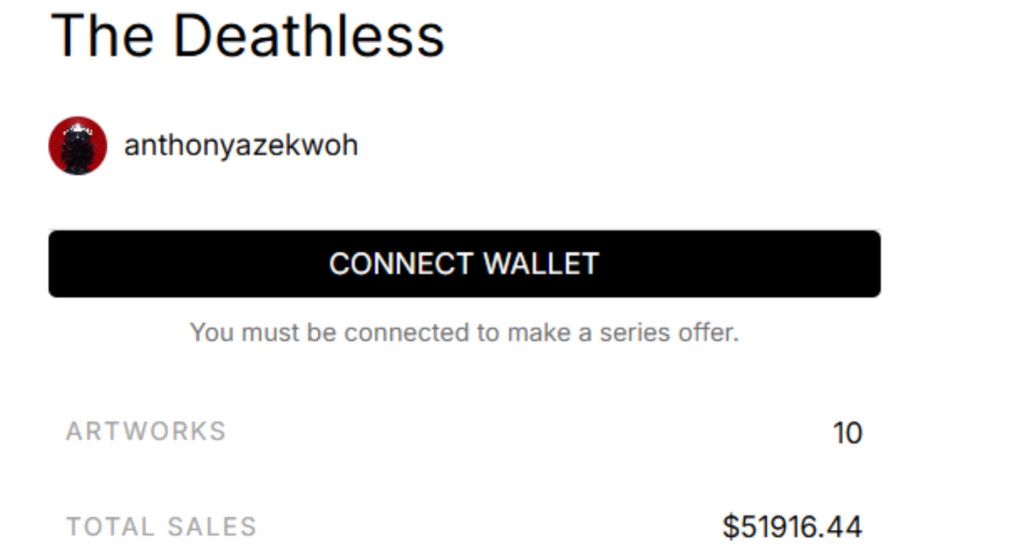
I had just dropped The Deathless series on SuperRare. My digital art, “Red Man,” sold for $25,000 in the auction, and the whole series did over $50,000. My art was finally connecting with people around the world through NFTs. I was telling African stories the way I saw them in my head: bold, spiritual, surreal. It wasn’t the first time people connected deeply with my work, but with NFTs, something shifted. I wasn’t just being seen, I was being valued globally.
But that was just one layer of the story.
Before NFTs and international sales, I was just a 16-year-old kid trying to write and post poetry on Twitter. Then, one day, my laptop crashed, and with no device and terrible handwriting, I started doodling on paper instead. I realised I could draw.
I began posting those sketches online. The algorithms kept feeding me more art, and one medium that stood out was digital art. I thought, “I can do that too.”
So, I took my sister’s laptop, downloaded Photoshop, and taught myself to draw with a mouse. Turns out, I was good.
I kept posting my work on Twitter. Then, one day, an American musician saw my work and paid me $50 to do his cover art. With that money, I bought my first graphics tablet and stylus pen. That was the first lick.
I kept painting on Photoshop for years. Then, in June 2020, I painted “The Red Man,” and everything changed.
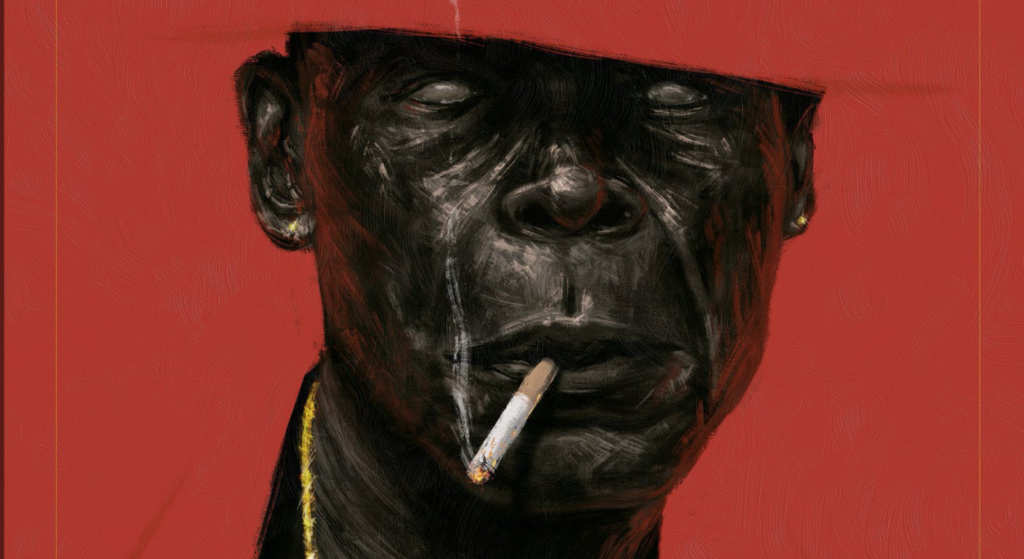
Before that, I’d been trying to paint like the artists I admired, following their styles and rules. But with this one, I wanted to do my own thing, so I painted something that felt fully mine: bold, raw, and different. That’s how The Red Man was born, and it blew up.
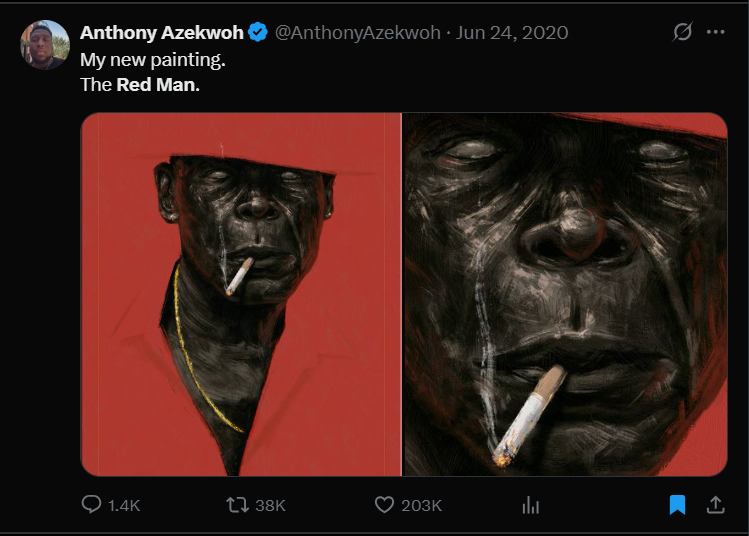
People all over the world suddenly started demanding physical prints through Twitter. That first week of print sales made me my first million naira, about $3,000 at the time; my account froze from the inflow.
Suddenly, art wasn’t just expression; it was income.
I shipped nearly 700 prints altogether, but it wasn’t all sweet. I wasn’t structurally ready for the flood of orders. I had no website, system or shipping process.
I had to learn everything on the fly: production, packaging, logistics, and customer service. Crumpled paper prints in customers’ mailboxes forced a pivot to canvas prints. Refunds taught me logistics. And out of that chaos, Anthony Azekwoh Studios was formed. It was overwhelming, but it was also the beginning of real independence.
After The Red Man, I fell into a slump.
I thought I had it all figured out. One painting made me a million naira, so I started doing the math: One piece a month meant twelve million a year.
I thought the next lick would come easily. It didn’t. I couldn’t reach that high again for a while. I tried the same thing repeatedly, but it didn’t hit quite the same.
Then one day, I let go. I stopped trying to game the system. I returned to the version of myself that made The Red Man in the first place, the guy who painted what he wanted to see.
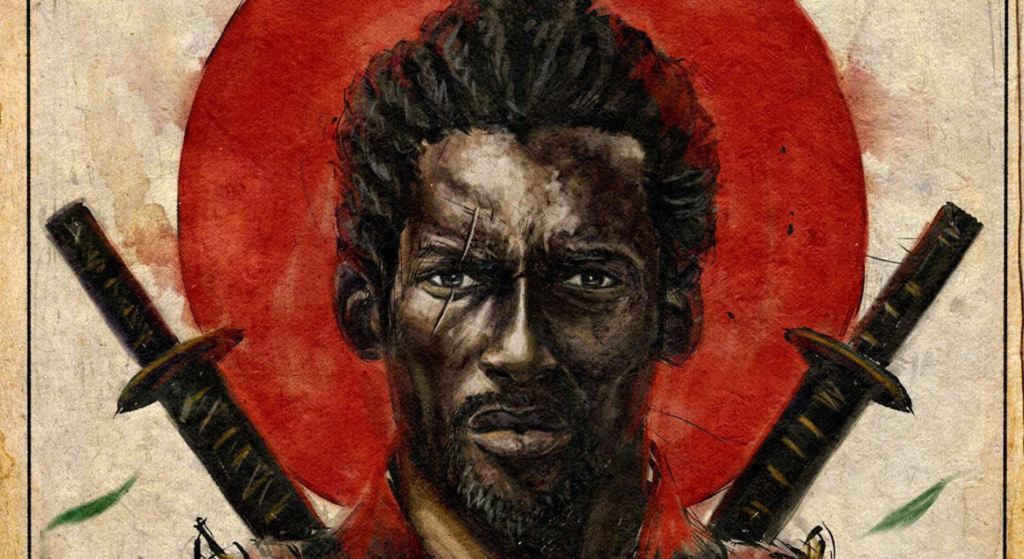
I’d heard this story about Yasuke, the African samurai. It stayed in my head for weeks. So I painted Yasuke in September 2020. No pressure. No overthinking. No expectations.
I posted it, and it blew up again.
The prints sold like wildfire.
That’s when it hit me: The secret isn’t trying to replicate the last win. It’s staying true to what made it possible in the first place: Making what I like, and want to see.
Towards the end of 2020, someone on Twitter nudged me about selling my art as NFTs (non-fungible tokens) on blockchain platforms. I didn’t fully understand how it worked —how digital art could be owned, sold, or collected — but the idea was exciting. So I signed up anyway, curious to see where it might lead.
My work was still gaining traction on Twitter, and the NFT space was booming. It felt like a natural fit.
In November 2021, I dove headfirst into NFTs with the Deathless series, and the “Red Man” portrait alone sold for 5.5 ETH ($25,000), the highest bid in the collection of ten.
My work felt rare, raw, and unapologetically African. It was a bold depiction of Blackness that people hadn’t really seen in the digital art space before. It was surreal. I had cracked something.
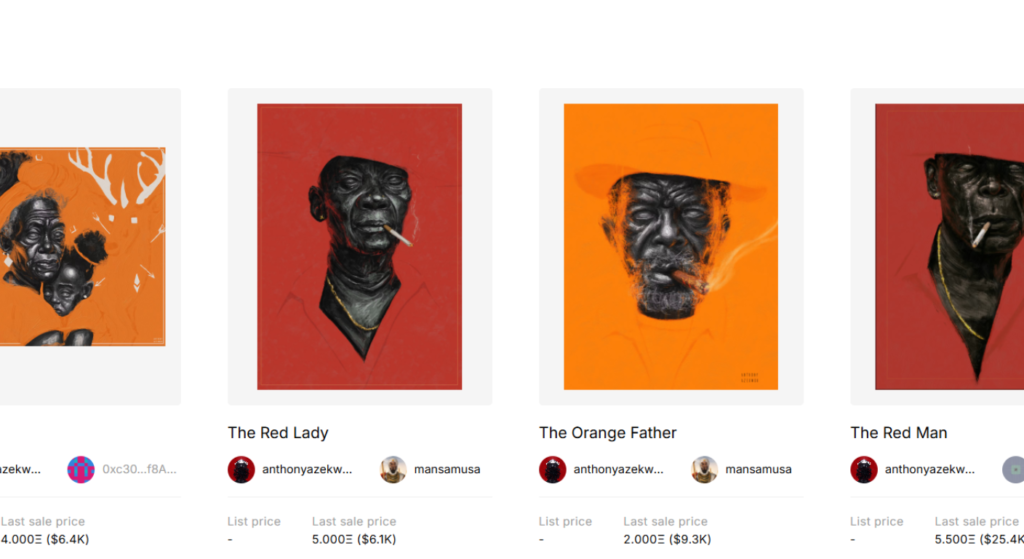
NFTs let people own and collect digital art the same way they’d own a physical painting, but without the hassle of shipping or printing. Everything lived on the blockchain, collectors could buy with cryptocurrency, and verify ownership with a click.
Between 2021 and 2022, I locked in over $80,000 in NFT sales. I worked nonstop and had built a small team that helped with administrative work. For a while, everything worked smoothly.
But I started to feel like I wasn’t living up to my full potential in a space that moved so fast, and I was getting bored. If I were bored with my work, everyone else would, too. It’s only a matter of time.
So, I turned things around and scaled.
I’d always wanted to sculpt, and now I finally had the money to try. I started by teaching myself 3D sculpting in ZBrush, rendering in Keyshot and experimenting with different materials.
Eventually, I landed on marble, and in June 2022, I publicly shared my work for the first time.
I was nervous. I’d poured everything into it: time, money, energy, with no clue if anyone would care or even fuck with it. I’d never sold a sculpture before, and honestly, I had no idea how to sell this one. But I took the chance anyway.
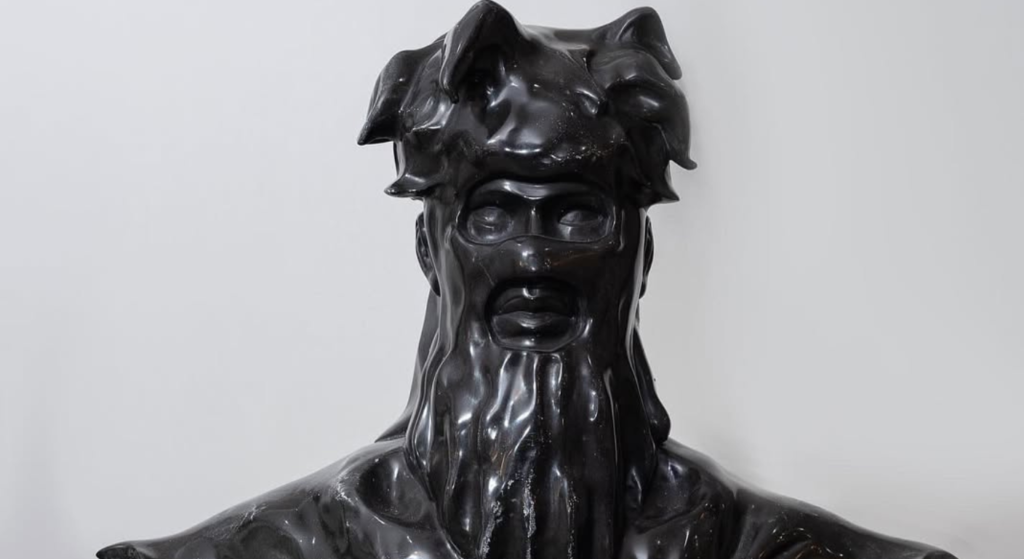
By November, music producer Jae5, who had seen photos of the process, was captivated and bought the entire four-piece “Ówàmbẹ̀” collection, hand-carved from Jingxin black marble, for £20,000.
I felt unstoppable.
The Fall
That same November 2022, everything began to fall apart. The broader crypto market had crashed, and with it, the NFT space.
For context, most NFTs were traded using Ethereum, a type of cryptocurrency. And when Ethereum’s value started to free-fall, so did the art world built on it.
The same collectors who once spent thousands on digital art were vanishing overnight.
For artists like me who had built our entire income around NFTs, the ground had shifted beneath our feet: The hype, money, and momentum were gone in a whiff.
Luckily, I’d already started pivoting and was exploring sculpture, pouring my energy and funds into something physical that could outlive the hype.
I moved into obsidian marble: rare, expensive, beautiful. People were interested; commissions were coming in. So I doubled down, bought tools, and the work kept me grounded.
I threw all my funds into the work.
Throughout 2023, I kept experimenting, sculpting and carving in real time. Every piece came from an honest place. Making work that only I could make kept me going.
But sculpture is a different beast. Materials cost more. Shipping was brutal, especially with marble: one mishap, one delay, and the system cracks. Then it happened: a shipment disaster; some marbles broke, and no delivery meant no sales. I had to refund clients.
My finances got depleted, and my account hit zero.
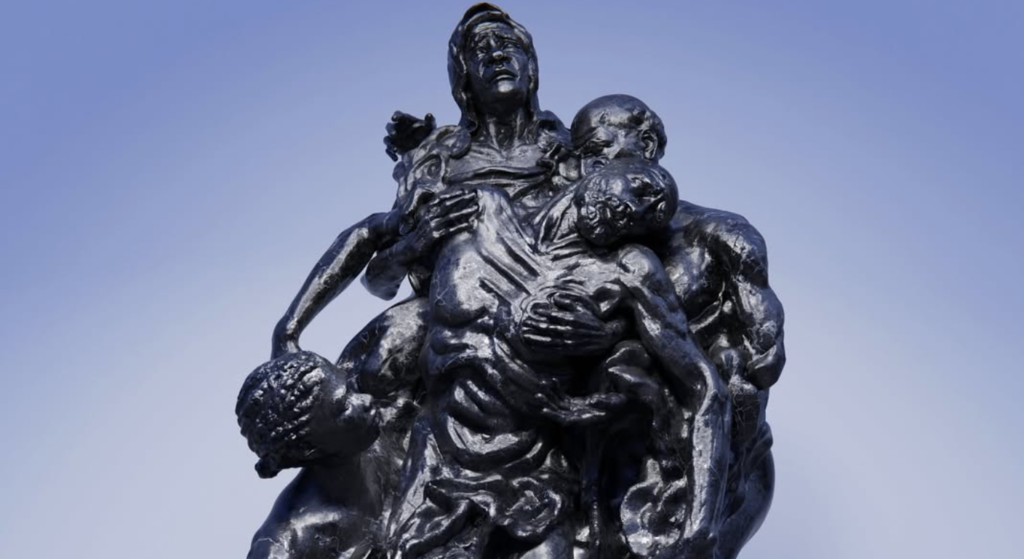
Zero was humbling, but then I went lower.
Customs fees piled up, and shipping costs exploded. I was overleveraged and underprepared, bleeding cash to keep the studio running. I love experimenting, but this time, it nearly broke me.
By the start of 2024, I was $20,000 in the red.
The risk was calculated. But I’m bad at math.
And this time, it wasn’t just about me. I had people depending on me: contractors, collaborators, a team that believed in the vision. And for a while, it meant I couldn’t pay them. I had to sit in that reality and own it.
There were days I prayed just to get back to zero. Because zero is okay. Minus? Minus tests your spirit.
I was $20k down, depressed, and angry. Not because I lost money, but because I let the weight of it all fall on the people around me. That was the hardest part.
The Turning Point
For the first time in years, everything felt like it was crumbling. I slipped into a slump, hard.
But I wasn’t alone. My team and I were knee-deep in the trenches, figuring it out. These people knew how to build a structure around creativity, and that’s what we did. Slowly, the chaos became a system.
I had to face the truth: I didn’t fail because the work wasn’t good. I failed because the business wasn’t built to hold it. There were no systems, financial oversight or buffer for risk.
So we rebuilt.
Through it all, the one thing I never lost was the ability or the drive to create. I couldn’t afford to stop, too much was on the line, and too many people were counting on me.
The Rebuild
I started forging deeper client relationships and finally keyed into the business side. I learned how to manage money, budget, plan, and work with my business manager to keep things afloat. It was a make-or-break moment.
I hit the ground running: I sold prints and NFTs; the market rebounded, directed visuals, and ran painting and sculpture exhibitions.
I tapped every income stream possible for an artist. I focused on creating while my team handled the administration.
Kiitan, my business manager and legal counsel, ensured the solidity of contracts, cash flow, and streamlined operations. Fego, our product lead, aligned our many moving projects: logistics and customer fulfilment. My sister, now my Executive Assistant, brought order to the chaos, aligning schedules, communication and execution.
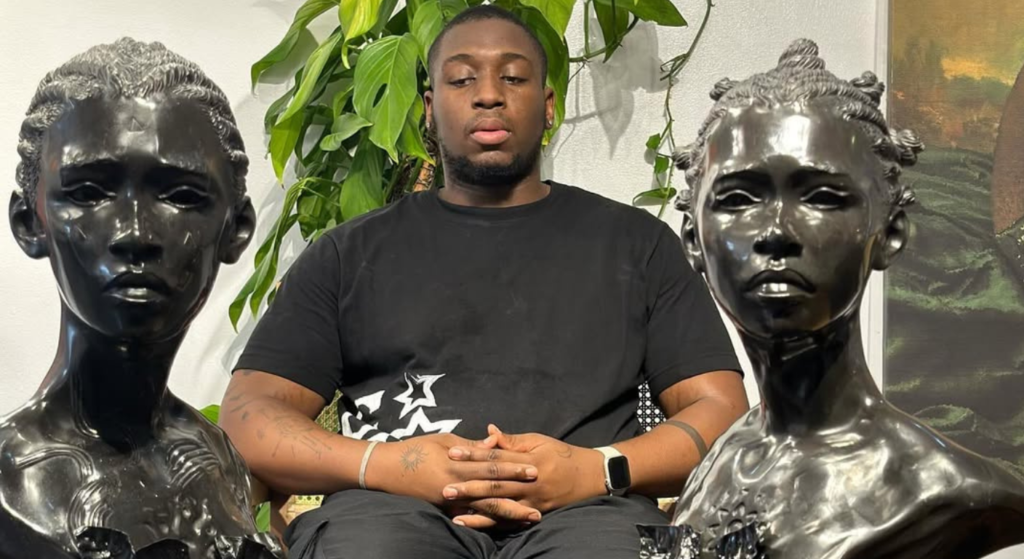
We locked in over $10k in brand licensing deals alone, and my sculpture exhibition in May 2024 pulled in nearly $30k, pushing our recovery past the $50k mark. The bounce back was real.
We cleared the $20,000 repayment within five months, going from deep red to healthy green. We turned the studio into a well-oiled machine.
Now, I do what I do best: create, and I have a team that does the same. We’ve built something lean, efficient and sustainable.
Through it all, I painfully learned that growth doesn’t just come from winning. It comes from surviving, owning your fuck-ups, and trying again anyway.
Seasons come and go, each with hard lessons. One truth that stayed with me is that even when business runs smoothly and money flows, you must always keep costs as low as possible.
Every breakthrough came with a challenge that levelled me up. After each evolution, I’d reinvest in my tools and business, and push even harder. But through it all, there were always people who saw the work, understood it, and truly connected, and that’s what kept me going.
The Return
Earlier this year, I crossed a major milestone: over 100 Ethereum in total NFT sales since 2021, roughly $250,000. It earned me a spot in the prestigious 100ETH Club. But beyond the numbers, it was a quiet reminder that through all the chaos, I kept showing up.
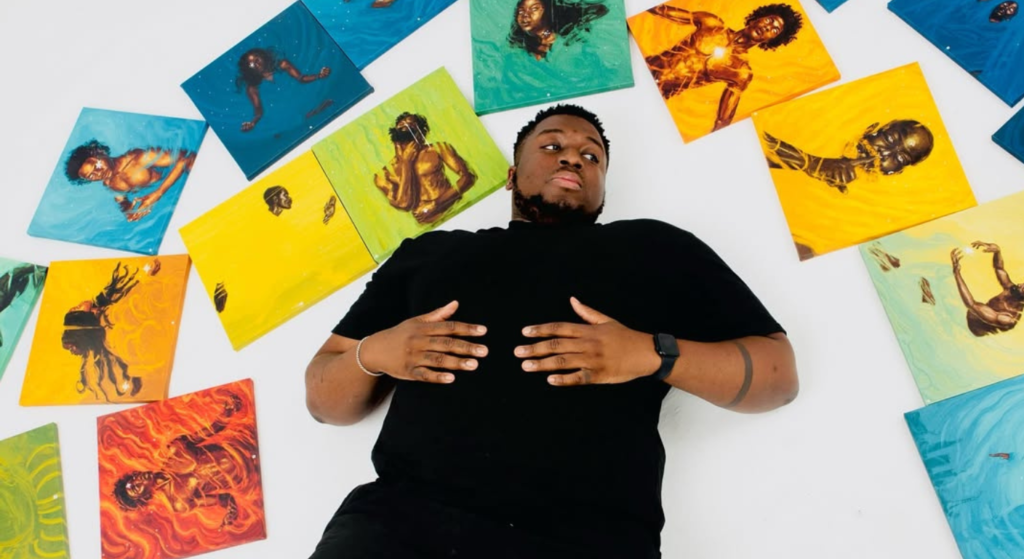
I turned 25 this May. To mark it, we’re planning a major exhibition: The Stars I followed, to showcase my new series, Children of the Sun, a 25-piece digital art collection that works cohesively as one. It drops on May 25th, 2025, priced at $25 each.
I still sculpt and paint. We license work, land commissions, and make direct sales, and it all runs smoothly because we built the backend right.
I’ve learned that thriving in the creative economy isn’t just about making great art. It’s about building the architecture around the art: the systems, the team, the consistency.
We keep the machine running daily. I’m always creating, but also constantly activating. Whether lining up deals, talking to clients, or refining systems, the work never stops.
I’ve learned that even when the creative flow is strong, you have to stay active. The machine is like a car; if you stop driving, the engine wears down, and things dry up. So we keep it moving to avoid setbacks.
No day goes by without me engaging with my work on some level. I’m up early, focused, and ready to get things done. It’s fun and creative, but it’s also intentional. I work harder and longer than the typical nine-to-five because building this takes relentless commitment.
I’ve seen the top and the bottom. Now I’m building with balance, and we’re just getting started.
Also Read: Meme Coin Madness: 4 Nigerian Traders on the Wild Profits and Devastating Losses
Join 1,000+ Nigerians, finance experts and industry leaders at The Naira Life Conference by Zikoko for a day of real, raw conversations about money and financial freedom. Click here to buy a ticket and secure your spot at the money event of the year, where you’ll get the practical tools to 10x your income, network with the biggest players in your industry, and level up in your career and business.
[ad]