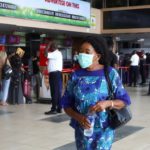
• There’s some good news for you if you use Nigerian airports a lot. The Nigerian Civil Aviation Authority (NCAA) has reviewed the COVID-19 health guidelines for the aviation industry and lifted restrictions on face masks and mandatory testing for travellers.

    What’s the full gist?

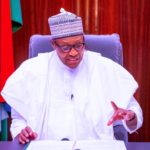
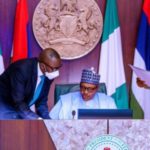
    On December 12, 2022, the Presidential Steering Committee on COVID-19 made an announcement. President Muhammadu Buhari had approved the immediate relaxation of COVID-19 safety measures and travel advisory.

    In September, the World Health Organisation (WHO) had announced a global decline in COVID-19 infections. Between February and September, the number of weekly reported deaths dropped by more than 80%.

    The Nigerian government’s announcement means all aviation service providers for domestic and international operations must cancel the COVID-19 Polymerase Chain Reaction (PCR) test for all categories of passengers, regardless of whether they’re vaccinated or not.

    Face masks are no longer mandatory at airports, although the NCAA still advised that people aged 60 years and above, those whose immune systems are compromised and those with comorbidities should stick to safety measures, including avoiding large gatherings.

    What does this mean for travellers?

    No more do you have to go to the airport looking like a masked avenger. Most importantly, you can pocket the thousands of naira spent on compulsory COVID-19 tests and save it for Detty December

    It’s also good news for the aviation industry which hopes to rebound from the last couple of years in which restrictions seriously affected profit margins. It’s wins all round for those who want to japa, the IJGBs, and the airline operators. All in all, it’s a good note to close the year on.

  • What does it mean to be a man? Surely, it’s not one thing. It’s a series of little moments that add up. Man Like is a weekly Zikoko series documenting these moments to see how it adds up. It’s a series for men by men, talking about men’s issues. We try to understand what it means to “be a man” from the perspective of the subect of the week.

    The subject of this week’s Man Like is Demola Fashola, a former lawyer and tech bro who followed his passion to create the viral Anfàní fashion brand. He talks about how COVID pushed him to finally follow his dream, how growing up surrounded by women influenced his view on masculinity and why he doesn’t want to be a “strong” man. 

    When did you get your “I’m a man now” moment?

    I don’t think I’ve had just one moment. But even the different ones I’ve had were more about realising some things are just expected of me as a person. I don’t equate them to “coming into my own” as a man. 

    The COVID period of 2020 was one of those moments when I felt I needed to step up and ensure everyone around me was doing okay emotionally. I have a calming energy, so my version of being a man is stepping in to remind my family and friends to calm down when life gets chaotic. The lockdown was also a period for me to walk back and rediscover myself after years of listening to the noise around me. 

    Interesting. What was this rediscovery about? 

    I finally got to take charge of my life and trust myself with where I wanted to go with my career. I’ve always been a creative, and my earliest memories are of me sitting in front of a TV, watching commercials on a loop. But when it was time for me to go to university, I studied law just like my dad because it would’ve been hard as a 17-year-old to convince my parents to pay for film or photography school. 

    I was miserable studying law, but I’m a nerd who likes intellectual challenges, so I was good at it. I graduated from the UK, and the conversation quickly turned to “Just go to law school”, and I did that for a year. The same happened with NYSC, which ended with me eventually getting my first job at a law firm. Even though I wasn’t into any of these things, because I always got the job done, a lot of people around me kept telling me things like, “Just stay for another year.” 

    I had a lot of anxiety and fear around starting a career that didn’t have the structure of a 9 to 5, but COVID helped me confront it. I’d been toying with the idea of starting my clothing line, Anfàní, for five years before I eventually made the move in 2020. 

    Not you leaving, “Objection, my lord” for fashunz

    Honestly, university or work wasn’t the worst part for me. It was law school. I loved university; 10/10 would recommend it. But my experience in law school was harrowing; that place has been problematic and tyrannous for years. It has to be one of the top five most degrading postgraduate programmes in the world. The lecturers there were teaching us about human rights, but when it came to their class rooms or how they treated students, these rights didn’t apply.   

    The whole law thing was like looking out the window and seeing people playing while I was in class studying maths. I should’ve been out in the world, figuring my life out, not doing something I had absolutely no interest in. 

    So how did this transition from law to fashion happen? 

    I’d already pivoted once in 2018 when I left my law firm for a tech company. I stayed there for another two years before quitting the 9-to-5 life altogether. When COVID happened, I was still at this tech job, but I had to reassess whether it gave me the same level of fulfilment it did when I first got it. I didn’t even tell my parents I wanted to leave until the exit paperwork was signed, and I was officially out. 

    It was easier to start my creative journey in 2020 because I wasn’t dependent on my parents for financial support. I told them I’d left my job, and they accepted my decision. 

    But weren’t you scared? 

    I’m not going to lie, I have a significant amount of privilege, so I wasn’t that scared of the financial implications of my decision. Even if I didn’t have savings or my parents, I had a lot of extended family and friends who would’ve been happy to help in any way. But luckily for me, I did have some savings and investments. 

    Leaving a secure job can be a very big and unwise move to make for a lot of people, but I was also lucky that mine happened during the lockdown, so I didn’t have to go anywhere or spend that much money. The world slowing down helped me focus on building my business and stretching out the money I saved. 

    Tell me about this brand that keeps getting sold out every time I try to buy something

    LOL. Anfàní is an idea my co-founder, Temitayo, and I had way back in law school. We just wanted affordable quality t-shirts we could order on Wednesday and wear on Friday for drinks. Over time, it has evolved into a way for us to push this cultural shift of telling stories through the clothes we make and show, not just how we view the world creatively, but also, how young Nigerians like us see the world.  

    “Anfàní” is Yoruba for “value” or “privilege”, and we chose it because we believe clothes shouldn’t be something that’s restricted to just a group of people, it should be accessible for everyone. 

    Nice. What did the experience of finally starting your business teach you about yourself? 

    That I’m exactly who the fuck I think I am. 

    I know that’s right!

    It has also taught me that I’ve built wonderful relationships with people in my 20s, to the point that I have people who’d follow me off a cliff. I’ve also learnt I can handle shit… I don’t like to call myself strong, but I genuinely think I have a strong will to live and enjoy this life no matter what. 

    But most men like the word ‘Strong’, so what gives? 

    I don’t think strength is something that should be tested. It’s exhausting to prove time and time again that I can rebound. A lot of people who say they’re “strong” smile through the pain. I like to sit with my pain and figure out why my body or mind is acting the way it is at the time. 

    I’d rather figure out why I’m not okay and deal with my issues than pretend everything is fine just to look strong. 

    That’s valid 

    By the way, even though I sort of knew it, starting my business forced me to admit how much of a perfectionist I am. I don’t believe in participation medals. What the fuck is the point of doing something if it’s not excellent? 

    It comes from how I was raised. My parents were very supportive, but they were also honest with me regarding how I approached life. They told me when I didn’t apply myself like I should. 

    Are you more or less of a perfectionist now?

    Business isn’t about perfection; it’s just about being good enough. I’m getting a bit more relaxed, but letting go completely feels like recklessness, and I might have an anxiety attack if I do. I’m learning to accept that mistakes happen though. 

    Random question, but does anything scare you? 

    Horror movies are at the top of my list. I watched a lot of scary shit as a kid, and now, I can’t watch them anymore. Then random stuff like needles on TV and moths. But on a deeper level, I’m afraid of succumbing to what Nigerians think masculinity is. 

    Ooop

    For us as Nigerian men, masculinity is all toughness and inaccessibility. But you’re a person, not a tyre. Another thing I’ve noticed is that in the process of unlearning toxic narratives from the past, a lot of us are looking back, without actively asking what the future should look like. It’s almost like we’re focused on what wasn’t as opposed to what should be.

    So how do you view masculinity? 

    I’m not interested in defining masculinity. I feel like a man is simply a man because of the thing between his legs. Everything else is noise. There are so many words and descriptions of masculinity that it can be a lot to understand or aspire to. 

    This is why I fully fuck with the feminist movement, because it gives men space to breathe and be. We don’t have to live up to specific standards, traits and behaviour patterns defined as “masculinity”, that force us to regress instead of evolve as a society. 

    What’s something you’ve had to unlearn about masculinity? 

    Honestly, I’ve always questioned gender structures since when I was little. I grew up surrounded by many formidable women like my grandma, mum and aunties. These women were running businesses, doing really crazy shit and handled just as much, if not more, money than the men. 

    Imagine growing up around women like that, and some man starts saying women are inferior to men. That’s cap! Growing up, we all cooked, cleaned and did all the chores together. No one was pushed toward one activity because of their sex. 

    Because of the environment I was raised in, society’s idea that men are superior to women never settled in my head. It sounded like bullshit. I even stopped playing football because I felt most of the boys were unnecessarily aggressive and mean. I’ve always removed myself from ideas or situations that didn’t make sense in my head. 

    I’m curious about how you’re able to navigate male relationships, especially when they don’t share your views on masculinity

    Male friendships were hard for me growing up. Always hearing guys say stupid things made me gravitate towards women. But that didn’t mean I had a smooth relationship with them either. For my female friends, it was a trust thing where I had to constantly prove I wasn’t like other men. 

    It was a double-edged sword because I couldn’t get on with the guys because I didn’t agree with them, and the girls didn’t really trust me enough to be their friend, so I couldn’t fit in anywhere. 

    Damn. Has this ‘fitting in’ situation changed with time? 

    It’s much different now. I’m having a better time with guys because most of them have also been working to unlearn a lot of the stuff society has told them about masculinity. So it’s easier to make friends. 

    Also, a lot of guys share my views, and I tend to stick with those guys. I’m not responsible for another adult’s education anymore. Everyone has to learn and unlearn themselves, so I’ve chosen to limit unproductive conversations with men who don’t share my views.  

    Interesting. Who are your role models for what it means to be a man? 

    My dad inspires me to be hardworking and generate goodwill. I have a lot of uncles, so I can’t name one and not name the others. LOL. They all taught me a sense of responsibility to myself, my family and friends. 

    Before you go, what are your ingredients for living a happy life? 

    Drink water, mind your business, go outside and touch grass once in a while, go to therapy if you can afford it, love without asking for love in return, acknowledge your feelings, be kind and patient with yourself, and take a deep breath. Scratch that, take 10. 

    Oh, good food and good sex. 

    I’m jotting everything down. Thank you, Demola!

  • To some people, Nigeria is a land with milk and honey flowing into the pockets of politicians. But to others, Nigeria is a country living a fake life just to stunt on Instagram.

    Why Buhari Isn't Making Enough Dough for Nigeria

    In reality, Nigeria’s a country neck-deep in debt with its borrowed milk and honey still flowing into the pockets of politicians.

    As a business, Nigeria is a company in distress. We recently found out that the country isn’t making enough money to even service the debt it owes. Where did all the money go?

    In a recent meeting at Aso Rock Villa, senior civil servants reminded President Buhari that the civil service needs a general salary review because sapa is in town and taking hostages. Buhari offered some excuses explanations on why the salary review is unlikely to happen. 

    Why? His government isn’t making enough dough for Nigeria.

    Why Buhari Isn't Making Enough Dough for Nigeria

    And what were the reasons Buhari highlighted for why Nigeria’s not making enough?

    Thieves

    Nigeria is one of the biggest producers of oil in the world. And oil is the country’s biggest source of revenue. But thieves in high places are stealing the country’s oil and pocketing trillions of naira that belong in the treasury. This culture of theft has always existed but got so much worse under the Buhari administration. 

    Why Buhari Isn't Making Enough Dough for Nigeria

    Nigeria was producing 2.13 million barrels of oil per day in 2015, but that has dropped to 1.25 million barrels per day as of May 2022.

    So it’s convenient that Buhari will use theft as an excuse even though he’s not doing enough to curb it. His administration recently promised to expose the “big men” responsible for all the stealing, but we’re still waiting for him to expose the ones funding terrorism, so don’t hold your breath.


    ALSO READ: Who Are the Biggest Onigbese Governors in Nigeria?


    Vladimir Putin, sort of

    Why Buhari Isn't Making Enough Dough for Nigeria

    In February 2022, President Vladimir Putin ordered Russian troops to invade Ukraine because he didn’t like his neighbours making powerful new friends. The ongoing war has disrupted the global economy and given many world leaders a convenient excuse for their domestic struggles. Of course, Buhari isn’t the type to let a good excuse go to waste so he’s blaming the war for Nigeria’s revenue issues.

    COVID-19

    COVID-19 came for everything when it ripped through the world in 2020. Nigeria even slipped into a recession after months of socio-economic lockdown across the country. So it’s only natural that Buhari would blame the virus for Nigeria’s long-lasting struggles with generating revenue. 

    Security investment

    Buhari told the civil servants his administration has poured so much into fixing security that other sectors which could boost the economy have suffered. 

    It’s the kind of excuse that made him shrink Nigeria’s Excess Crude Account (ECA) from $2.5 billion in 2015 to $376,655 in July 2022. 

    He justified the security spending by saying it’s finally being rewarded, but are Nigerians safer now than they were seven years ago?

    Why Buhari Isn't Making Enough Dough for Nigeria

    ALSO READ: How Buhari Negotiated With Terrorists and Lost

  • Nigeria is currently experiencing a wave of illnesses. While some Nigerians are concerned about a fourth COVID-19 wave, many others are chalking the symptoms to malaria and a change of weather. Meanwhile, the Nigerian Centre for Disease Control (NCDC) has recorded a significant surge in the number of confirmed COVID-19 cases over the past two weeks attributed to newer variants of the virus — the Delta and Omicron variants.

    Here’s everything you need to know about the newest Omicron variant and how to stay safe this Detty December period.

    1. What is Omicron?

    When a virus spreads rapidly enough, it is more likely to change. The process of a virus changing is called a mutation. In the case of COVID-19, the virus has undergone several mutations forming the variants: Alpha, Beta, Gamma, Delta; the newest variant is called Omicron. 

    The Omicron variant has been detected in many countries, including Nigeria

    2. How quickly does it spread?

    In November 2021, 111 people attended a party in Oslo, Norway. Out of the 111 attendees, 80 of them caught COVID-19. Sixty other people who later dined at the same venue also caught the virus. When a virus spreads so quickly at large gatherings, such an event is called a superspreading event. A study from the University of Hong Kong suggests that the Omicron variant infects and multiplies in the body 70 times faster than other variants of COVID-19. This information is crucial in Nigeria, as we are in the season of potential superspreading events — owambe parties, music concerts and Detty December celebrations.

    3. Does the Omicron variant cause different symptoms?  

    Right now, all the symptoms of Omicron seem to be consistent with other variants — cold-like symptoms which include:

    • Runny nose
    • Headache
    • Fatigue (either mild or severe),
    • Sneezing
    • Sore throat.

    Early results suggest that Omicron may not be as severe as the Delta variant, but it is too early to conclude. The World Health Organization (WHO) insists that more data is needed and warns that Omicron should not be dismissed as “mild”.

    4. Do COVID-19 tests detect Omicron? 

    Yes. PCR and antigen-based rapid diagnostic tests detect COVID-19 infection, including the Omicron variant.

    5. How can we protect ourselves?

    While Omicron spreads rapidly, we can reduce the risk of exposure. To protect yourself and your loved ones from the virus, make sure to: 

    • Wear a mask properly — make sure it covers your nose and mouth. Also, be sure your hands are clean when you wear or remove your mask.
    • Practice social distancing — keep a physical distance of at least 1 metre from others. 
    • Avoid crowded spaces or poorly ventilated rooms.
    • Wash your hands regularly and avoid touching your face. When you cannot wash your hands, use a hand sanitiser with at least 60% alcohol.
    • Get vaccinated. WHO-approved COVID-19 vaccines are safe and effective. 

    This is a developing story. Check back for updates and follow Zikoko on Twitter.

  • You can’t deny the fact that leaving Nigeria a.k.a to japa, is definitely on your to-do list. But there are some crucial things you must do before you travel if you want peace of mind.

    Here are six of them.

    1. Ensure you are fit to travel

    COVID-19 is not a respecter of persons. Before you shake your ass to board a plane, know your health status to determine if you are fit to travel. Thankfully, you can ditch queues and get tested from the comfort of your home with OneHealth. Book here now. You can also get self test Covid Kits with zero stress here.

    2. Eat like a thief

    You always complain eating the same thing day in day out in Nigeria. But once you japa, you’re going to miss the tatse of homemade Nigerian food. So eat all you can now.

    3. Keep quiet about it

    You don’t want to jinx your chances of finally escaping to the abroad. So don’t tell a single soul till you alright from the plane.

    4. Cut ties with your village people

    Get rid of whatever links them to you ASAP and keep the yourself free from the interference of village people your life.

    5. Tattoo “Nigeria” on your back

    If for whatever reason you need to remember where you are from, this will remind you.

    6. Wash your head

    This may be the last on the list, but it’s definitely not the least. Make sure you use a good soap to waah off all the suffer you suffered for nineteen years from your head.

    We know you can’t wait to travel out and pepper your enemies. Just make sure you have a Covid self-test kit from OneHealth for when you expose yourself to all the enjoyment.

  • The University authorities released a statement addressing the rise of Covid-19 cases in UNILAG on Tuesday after this tweet was made.

    Huh ??? Covid outbreak in Unilag  ??? https://t.co/LbH5Xv3nM7

    – Jahmal (@JahmalUsen) July 12. 2021

    The statement reads,

    Read more here.

    School activities were going on as normal, even after several Covid-19 positive students were found in hostels like Kofo, Moremi and Honours Hall. Students have reacted in various ways to this news. Here a few reactions: 

    There’s covid in Unilag

    Moremi

    Kofo

    Honors

    Stay safe guys

    — Komedi Queen (@_tohluh_)  July 12. 2021

    The students who tested positive were asked to move out of the hostels to curb the spread of the virus. 

    The roommate of my classmate tested positive for covid-19 and Unilag sent them home. That’s all, go home and come back after two weeks.

    — Nonso this Nonso that. (@Chukwunonsoffor) July 13. 2021

    But some Unilag students had different thoughts on the matter.

    Lets finish this semester before they send us home abeg. Last semester was bad enough. 

    We are all aware we’re in a pandemic.  Get the vaccine, protect yourselves properly and let’s get this semester done with abeg.

    — Omojo? (@allwell_) July 13. 2021

    Is like Covid19 just came back again afresh 😭😭😭 and Unilag is just having its fair share of it.

    It actually didn’t leave Nigeria 💀.

    I don’t want to go home or have to deal with e-learning and at the same time, I don’t want to get infected 😭.

    — Girlie O! (@saabi_girl) July 13. 2021

    There was also speculation on the silence due to the indemnity form students signed upon admission into the university.

    Others have decided to take a lighter tone on the subject:

    if you like wear 20 nose masks, so far you are staying in unilag 🗿you don already catch am

    — maryam (@maryamamasa) July 13. 2021

    unilag students “we outside we outside” now there’s covid everywhere

    –chupaco (@hardtolu) July 13. 2021

    The vice-chancellor of the University of Lagos, Professor Oluwatoyin. T. Ogundipe had an emergency meeting yesterday at 2 pm to discuss the vacation of halls of residence by students after a Covid outbreak in the university.  

    The outcome of the meeting was an immediate closure of hostels to curb the spread of covid-19 on campus. These messages were sent out to the student body; 

    “To check the spread of Covid-19 on campus, the University Senate has directed that all students vacate the halls of residence latest by 12.00 noon on Thursday 15 July 2021. No access will be granted to any student after 12.00 noon on 15 July. The hostels will be locked indefinitely therefore students are advised to move all their personal effects at once. Lectures for the rest of the semester will be delivered virtually with effect from 26th July 2021. DSA”

    Students can be seen all over campus trying to get home. 

    Because of how impromptu the announcement was, and the tedious stress of moving, the university sent out another message earlier today that read; 

    “ IMPORTANT NOTICE. EXTENSION OF THE DEADLINE TO EVACUATE THE HOSTELS TO 12.00 NOON ON FRIDAY 16 JULY 2021. To ease the burden of transportation the deadline to evacuate the hostels is hereby extended to noon on Friday 16 July 2021. DSA.”

    For preventive measures on how to deal with Covid-19, click here

    CTA: If you’re a UNILAG student affected by this we’d like to hear from you. Reach out to us by sending a dm on social media or Malakai Bassey

  • Yes, we’re still in a pandemic, and COVID-19 is lurking out there. Worse still, you CAN catch it. Wait fess, before you shout “God forbid!” take this quiz to find out just how safe you are.

    Do you know about #ProjectSafeUp — an initiative developed by My World of Bags, in partnership with Mastercard Foundation? The project produces and distributes free personal protective equipment (PPE) to the general public and health workers in Oyo, Lagos, Osun, Ondo and Ekiti. You can follow them on Twitter, Instagram or visit www.myworldofbags.com for access to PPE.

  • Since August 2020, Nigeria’s Government Enterprise and Empowerment Program (GEEP) and 60 decibels with the support of the Rockefeller Foundation have been administering a survey to GEEP clients to understand how COVID-10 impacted their personal and economic situation. An interim report has been published, and it shows that the Nigerian informal sector was adversely affected by the outbreak. 9 out of 10 GEEP clients recorded drops in their income levels, businesses struggled to stay afloat due to government-imposed closures, low footfalls and constrained supply chains. To survive, GEEP clients had to rely on their savings, borrowed heavily and reduced percentages set aside for household and business savings or stopped outrightly. The data also showed that 35% of GEEP respondents had to close down their businesses, 66% recorded fewer customers and 84% have been using their savings to cope with current hardships. We decided to examine how everyday Nigerians, particularly small business owners were affected by the pandemic. One story every week for the next six weeks. 

    The subject of this week’s Coping In A Pandemic is a widow with three children. She talks about starting her businesses, how Covid-19 has affected her income and her current struggles with paying her rent. 

    Do you remember when you started this business?

    15 years ago. I started as a salesgirl for someone at the mammy market in a barrack. My pay was ₦4k per month. The good thing about the job was that it was a good way to learn the business, and I almost always made more than my salary per month. 

    How?

    My boss had his price, and I had my price. I could add a little to the price of cartons of frozen foods I was given to sell. And we sold hundreds of cartons every month, so it was easy to make my own money. I think I got up to ₦1k on every carton I sold. 

    So, you were making up to ₦100k per month?

    On a good month, yes. I’ve always been good at saving, so I was always putting money away. The job was good, and I was learning and understanding how the business worked. We brought the goods in from Seme and sold them here. I was with him for six or seven years. By the time I was leaving, I’d saved enough to buy a shop in the same market and a car I could use for business — a Golf 3.

    Wow. How much did you buy the shop and the car?

    I bought the shop for ₦200k, and the car was about ₦700k. Now that I had everything to go out on my own, I left the job and started going to buy the frozen goods, mostly chicken and fish. 

    That’s great.

    My husband and I would drive to Seme for the products, and because I had a shop, sales were good. I also supplied people. Life was really good. At least, I could conveniently pay my kids’ school fees and house rent. No wahala at all.

    Then I went to Seme one time, and they seized my car and goods. 

    Ah, why?

    Customs oh. After some back and forth, they released my car, but they held onto my over ₦200k worth of goods. I had used all the money I had for business on that trip. 

    Ah.

    As if that wasn’t enough, my husband decided that we had to sell the car.

    Why?

    He said he wanted to travel to the US. I think he sold it for ₦450k. I don’t even know how he got the rest of the money. I guess he travelled to the village and sold a few plots of lands. Do you want to know what happened after?

    Tell me. 

    He came back home after some time. It didn’t even take long. He said one paper was not correct, so he had to come back. And he came back empty-handed. All that money went down the drain. 

    I’m so sorry about that.

    It didn’t end there oh. He started talking about how disrespectful I was to him. He packed and left. I heard he went to Abuja first, then went to the village. He left me with three kids. My last daughter was one year and three months at the time. I couldn’t reach him — his number was always switched off.

    He didn’t come back till he died about six years ago. It’s been me and my kids since that time.

    Wow, I’m so sorry. 

    Life became harder for me. I was not doing any business, and I had no money to do it. Since my husband died, his family has never checked up on me or offered to give me ₦5. They made it clear that my girls and I don’t matter to them, and we would have to figure our lives without them. 

    I didn’t have money to go back to the business until 2016. 

    How did you pick it up again?

    I joined Mamamoni, and they gave me a ₦100k interest-free loan to start my business again. I went back to my shop and picked up where I left off. Whatever I made from it, I put it back in the business. And I was there until I had to sell the shop in 2018. 

    What happened?

    I was going through another rough patch and couldn’t make rent. The pressure the landlady put on me was a lot, and I couldn’t let her kick us out. I had to put my children first. Rent was ₦200k, so I sold my shop to get the money. With the shop gone, I moved my freezer home and continued my business from there.

    How much did you get for the shop?

    ₦300k. What remained after I paid rent went to their school fees. Two of them were in secondary school already at the time, and their tuition was ₦37k each. 

    I’m curious, how much did you make in sales every month at the time?

    At least ₦50k. It never went below that. 

    Did you have enough to save after meeting your basic needs?

    I’ve always been very particular about saving. You know what I used to do? Ajo. I put ₦500 in every day and ₦100 for each of my kids. I don’t touch that until the end of the year, and that’s what I used to settle rent. But it didn’t work out in 2018. That’s why I had to sell my shop. 

    What about loans? Did you have access to those?

    Ah, I fear loans a lot. The mere mention of loans with interest gives me a panic attack. I’d rather borrow money from people and agree to a payment plan. Those kinds of loans where you will pay excess money in interest put people in trouble. I can’t touch it.

    Anyway, I didn’t need to take those kinds of loans. I was managing just fine with my savings until Covid came. 

    2020. 

    Covid did a lot. Sales declined rapidly during the lockdown. I couldn’t go out to supply and the light wasn’t good, so most of the goods I had in my freezer spoiled. Thank God for Mamamoni; they took care of food and supplied foodstuff for me and my girls. They also gave me another ₦50k interest-free loan to start another business. This was lifesaving. I travelled to Ogun state to buy cassava, and I also bought a gas cooker. That’s how I started selling fufu. And I’m still doing it now.

    How much has this been bringing in?

    I have small small customers I supply to, but It depends on the market and the number of people I can supply in a month. But on average, I’ve been making about ₦20k per month since I started last year. 

    That’s different from what you used to make every month. How has this affected things?

    I couldn’t continue my Ajo last year. What this means now is that I may not meet this year’s rent. And the landlady has increased it to ₦250k. I told her that I cannot afford that, and she was like, “If you cannot pay, move out.” I don’t know how it will work out because I have only ₦50k. I’ve asked her for more time to do what I can do to find the ₦200k. I believe in miracles. One of my daughters is writing an exam this year, and I had to pay school fees — about ₦50k. When finding the money to pay for school fees was becoming a problem, God sent someone to give me ₦70k. I don’t know the lady. Someone just told her about me, and she decided to help.

    That must have been a huge relief. Do you ever want to go back to selling frozen food items?

    Yes, I was making more money from that. Also, the stress of selling fufu is too much. It takes a lot of strength to turn the cassava, and the pain that comes with it is too much. I got sick one time, but I couldn’t stop because I needed all the money I could get.

    How much do you think you need to go back to it?

    Everything is expensive now. A carton of chicken used to be as low as ₦8k, but it’s almost ₦18k now. A carton of fish is even more expensive. And also, I can’t go on that Seme road again because of Customs. They treat you like you’re carrying cocaine and seize your goods. I can’t deal with that stress. Although things are cheaper there, I’d have to buy locally. I also need a generator — Nepa has shown me a lot. I’d need at least ₦200k to return to the business. 

    As it is now, won’t a bank or microfinance bank loan be helpful for you?

    As I said earlier, these loans that come with interest are not for me. Some people will add interest so high that the thought of paying it back will give you high blood pressure. I don’t want to be one of those people who take a microfinance bank loan and start hiding when the collectors come. I cannot do it. It will kill me.

    It’s not like I don’t have the power to collect a loan, I just don’t want to. If I had a shop now, I might consider it. I’ll just concentrate on this fufu thing I do for now and hope things open up soon. I know how to do business very well and make the best use of money, so my children and I will be fine.

    What aspect of your finances do you think you could be better at?

    Savings, maybe. I couldn’t save last year, and that’s affecting a lot of things now. If I can save more, that can help prepare me for something like Covid. That being said, It’s hard raising a family alone. I don’t know how I’m taking care of these responsibilities. But God has been helping me through a lot of people.

    With everything that has happened in the past year, would you say you’re happy?

    Why wouldn’t I be? There’s life, and there’s always hope. Also, I’m watching my kids grow, and that means everything to me. My house rent is the only problem now. When I settle that, I’ll be happier.

    You should read this story next:

    Coping In A Pandemic: The Petty Trader Who Can’t Sell Everything She Wants


  • One year on, the COVID-19 pandemic continues to ravage countries globally. While Nigeria seemed to have gotten away with a mild first wave, the country’s decrepit healthcare system is overwhelmed by a devastating second wave. I spoke to six Nigerians who had recovered from the disease.

    Seyi, 20

    I think I know the exact date and place I caught COVID. March 17th. Club DNA. A lot of IJGBs and people who were at the AMVCA were there. It was quite horrible. I had all the symptoms; fatigue, costochondritis (it literally feels like a heart attack), shortness of breath, gastrointestinal issues (ended up getting a bezoar that partly blocked my stomach), horrible reflux, dizziness, tinnitus and a host of other symptoms, losing 18kg in the process. I was so sure I was going to die. 

    I’m one of the unlucky people who get long COVID. This means that ten months later, I’m still suffering and there’s no end in sight. I feel sorry for the new set of COVID long-haulers. I’ve met two others, and it’s a really shitty condition.

    Yemi, 27

    It started suddenly with pain all through my body. Because I had been exposed to mosquitoes before then, I treated malaria. I felt better for a few days, then the incessant headaches started. I treated malaria again because I was convinced I had used a fake anti-malarial at first and I had a persistent bitter taste in my mouth. I went to a high-end pharmacy and bought the most expensive anti-malarial and imported panadol. My symptoms didn’t stop, instead, I just got progressively sicker.

    I started having difficulties breathing, couldn’t stand for extended periods without feeling exhausted and felt like something was lodged in my throat, no matter how much water I drank. That’s when I started suspecting COVID. I didn’t think it was the virus before because I live like a hermit, seldom going out. I cook and order everything and go weeks without leaving my apartment. When I do, I was masked up and armed with a sanitiser. I was tested last Tuesday and before I received the result, I started experiencing a tingling sensation in my lower limbs, like someone was poking me with a sharp object.

    I’m currently managing it at home with a drug regimen, which my HMO provided alongside a BP machine, blood sugar machine and oximeter. I still wake up feeling tired and my breathing hasn’t normalised. Sometimes, I have to use a nebuliser to help me breath better.

    Joe, 29

    I’m a doctor, so it wasn’t too surprising that I caught it in June 2020. Started with the usual fever, body pain and headache. I tested positive for malaria parasite and started treating it with drugs and injections, but the symptoms didn’t stop. After finishing the last dose of drugs, I could smell nothing, not even perfumes. Cough and catarrh started and I realised it was COVID. Despite this, I tested negative for COVID but tested positive for antibodies.

    I couldn’t smell anything for 12 days until I smelt bird poo that had dropped on my hand. I had never been so happy to smell shit in my life. Now, I practically have malaria every three weeks. I guess COVID makes you vulnerable, even after you’ve conquered it.

    Kamsi, 28

    I caught COVID in December, two weeks before my wedding. Then I infected my brother, niece and sister. We suspect it was my older sister that infected me, and by extension, us. It started with a terrible stomach ache in the middle of the night. I was rushed to the hospital and they gave me some pain relief intravenously. They ran some tests and they said it was malaria. When I finished the malaria meds, I had a constant headache, cold and fever. I even lost 6kg in two weeks.

    I went back to the hospital for more tests and they said I had an upper respiratory infection. I believed because I usually have rhinitis. The drugs didn’t help still. I couldn’t walk or do anything, except being in bed. Then one day, I wanted to shower and I couldn’t smell my soap. I said hmmm. While I was eating, my sister asked if the food was nice and I couldn’t tell. That’s how I realised it was COVID. Went for a test but started medication and it eventually left. Nobody tells you the part that the tiredness doesn’t go away or how you could lose your sense of balance.

    Ugo, 28

    I never went out except for groceries and occasionally to restaurants that were COVID regulations compliant. I tried to do everything right.  My roommate got infected and she didn’t tell me about it. I was even taking her to hospitals but didn’t suspect COVID until it was too late. I lost my sense of taste and smell and the test result said I was positive. I had only one symptom and I started medication and communion immediately (LOL I’m a Christian like that). My symptoms stopped after 5 days and now, I’m just waiting for two weeks to do another test. I feel guilty because she’d still in the hospital and all I had to do was isolate at home. 

    Beyonce, 26

    It started off with fatigue, irritation and lack of appetite on the 31st of December but I thought it was a hangover. By the 2nd, I had a sore throat. On the 3rd, cough. I assumed these were because I got sand in my lungs during a desert safari I had done in Dubai. By the 4th, I was so down that I had to do a test on the 5th and I wasn’t surprised when it came back positive. At this point, I couldn’t lie on my back because I would suddenly have a coughing fit.

    I had to pay for mandatory isolation in Dubai, but luckily, the medical travel insurance I bought before I travelled covers COVID so I’m getting a full refund. I’ll advise anyone travelling to buy medical insurance that covers COVID. I tested negative and was released on the 15th. Still, I didn’t go scot-free. I can’t climb stairs or lift heavy objects without holding my chest. I still have phlegm in my throat.

    [donation]

  • Being an Airbnb host means having to interact with different kinds of people, some great, others unsavoury. I spoke to four Airbnb hosts about their experiences and how they coped during the pandemic.

    Arike

    Being an Airbnb host in Nigeria is quite an interesting experience. Many times, we have great guests who aren’t a bother. They don’t send you any messages until they want to hand over the keys. And then we have the ones who send you messages in the middle of the night. Or the ones who expect a porter to carry their suitcases for them. One time, we had a guest who trashed the house terribly; used condoms, weed and dirty plates were littered all over the home. We had to block out an entire day just to get it back in order. Of course, they never got their security deposit back. We also place them on our banned list, to make sure we never let them back.

    2020 was quite an interesting year. Despite COVID, we still managed to be fully booked. While Airbnb is our main marketing tool, it’s best to be on multiple platforms, work with local agents and advertise aggressively on Instagram. We had guests who were stuck there, others who were renovating their homes. In all, 2020 wasn’t a bad year.

    Shalewa

    I decided to stop hosting in January 2020. I found the experience to be financially rewarding but STRESSFUL. My guests were mostly people visiting from the UK or US, staying three weeks to one month. Occasionally, I’d have “Ikeja boys”, I assume they were just people looking for a place to have sex LMAO.

    The worst part about hosting was that I couldn’t do much if/when guests misbehaved. Guests from Nigeria usually booked with virtual cards, unlike foreign guests who booked credit/debit cards, so if they wanted to spoil things, there were no financial consequences. The first guest I had, a white girl and Nigerian boyfriend smoked in the apartment, despite a strict no-smoking policy. They even left burn marks in my sheets! I ended up having to give the next guest a discount because the place reeked of smoke. 

    Another knuckleheaded guest tried to break the padlock to the wardrobe where I kept my personal stuff. They probably thought I stored valuables there instead of tampons and underwear. I reported to Airbnb, nothing happened. I finally ended my tenancy and moved back fully to the US in January 2020. I considered keeping it because the money wasn’t bad but I’m glad I didn’t because 2020 happened. I would have just cried.

    Ade

    In my experience, guests can be very annoying. To be a host, you have t be ready to listen and tolerate different attitudes. The rules for our apartment are simple and clear: no smoking inside the apartment and no parties or hangouts, but many times we’ve had to remove guests who broke the rules. We even had one guest who brought a DJ to a full party.

    2020 was quite rough for us. Our apartment was empty throughout the lockdown, so we were running at a complete loss. Things didn’t start picking up again until November, December.

    Ejiro

    Generally, I’ve had good experiences with guests. Some are difficult, some are easy. Some of the guests damage stuff and leave without informing the host. We’ve also had a few needy guests. And some guests can be absolutely pigs. Unimaginable levels of filth, using bedside tables as ashtrays and staining it beyond recognition. Some have left heaps of trash and unwashed plates. One guest even wrecked the TV and Venetian blinds, leaving cigarette odour lingering in the room, despite the no-smoking rule. It was a complete mess.

    2020 wasn’t a bad year at all. In fact, it was good. During the pandemic, the bookings from Airbnb reduced but we had a lot of booking on other platforms. During the original lockdown, a guest stayed for three months. 

    Read: 6 Young Nigerians Talk About Mental Health Medication

    [donation]