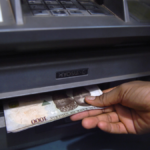
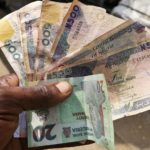
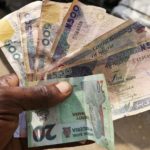
• If you’re a Nigerian reading this, chances are you’ve been frustrated and stranded so many times because the Automated Teller Machines (ATMs) attached to banks and other designated spots around you do not have the cash to dispense, so you had no choice but to opt for Point Of Sales (POS) merchants who in turn, charge an arm and a leg before they give you the cash.

    If this is you (it’s you for sure), you’re in luck because the Central Bank of Nigeria (CBN) has decided it’s seen enough of this mess and has come up with a solution to relieve your stress. On November 29, the CBN outlined recommended steps for customers to use in reporting banks that cannot provide them with cash through Over-The-Counter withdrawals or ATMs.

    In a circular titled ‘Cash Availability Over The Counter in Deposit Money Banks (DMBs) and Automated Teller Machines (ATMs),’ the CBN instructed banks to ensure that cash is always available to customers or face the repercussions that will come with it from now on.

    “DMBs are directed to ensure efficient cash disbursement to customers Over-the-Counter (OTC) and through ATMs as the CBN will intensify its oversight roles to enforce this directive and ensure compliance,” the circular read in part.

    Continuing, the CBN provided steps that it wants customers affected by cash scarcity to take in reporting banks so that they (CBN) can get rid of issues “hindering the availability of cash” and help improve cash circulation. We list the steps below.

    How to report a bank for cash scarcity

    CBN branches in Nigerian States with their respective phone numbers and email addresses. Photo credit: Punch newspaper
    1. Call the designated phone numbers of the CBN branch in the state where the defaulting bank falls under and provide them with your account name, name of the defaulting bank, the amount that you want to withdraw (but could not), time, and date when the incident occurred.
    CBN branches in Nigerian States with their respective phone numbers and email addresses. Photo credit: Punch newspaper
    1. Send an email to the designated email address of the CBN branch in the state where the defaulting bank falls under and provide them with your account name, name of the defaulting bank, the amount that you want to withdraw (but could not), time, and date when the incident occurred.

    How will this help?

    CBN branches in Nigerian States with their respective phone numbers and email addresses. Photo credit: Punch newspaper

    Over the past months, Nigerians have suffered on and off cash shortages from bank counters and ATMs that have led them to frequently patronise POS merchants or find other alternatives.

    Most recently in November, people were so frustrated with this shortage that they took to X to call for an end to POS businesses as they believed they were the major cause of the cash scarcity across the country.

    But POS operators have said they’re not the problem. According to the National Secretary of the Association of Point Of Sale (POS) users in Nigeria, Isa Zakari, the shortage of cash has majorly been caused by bankers (who own many POS outlets) removing chunks of money meant to be in circulation for regular customers and putting them at their outlets who then charge outrageous amounts for the cash.

    He added that the cash scarcity can also be traced to greedy bank managers and bankers who have been known to sell cash to some POS operators as well as people from the Niger Republic that now increasingly use the Naira as an alternative to the shortage of theirs.

    In November, Daily Post Newspaper also spoke to bankers who denied the claims of the POS operators and bounced back the blame on them instead.

    With this new directive, Nigerians will no longer have to play a guessing game to figure out who the guilty party is because banks will now be required to ensure that cash is available to customers both over the counters and at ATMs or face strong consequences from CBN.

    Will it work? Nigerians might have to find out by calling and emailing the CBN with their complaints.

  • The Central Bank of Nigeria (CBN) has been hard at work trying to fix Nigeria’s economic struggles, and they’ve been rolling out policies like their rent’s due—from stabilising the naira, to fighting inflation and bringing in more foreign currency. Even though their moves aren’t making the waves, think of the CBN like the folks patching up holes in a leaky boat, quietly doing what they can to keep the ship afloat and avoid a “things fall apart” situation. So, what do these economic moves mean for you as a Nigerian, and why should you care? We’ve got answers; come closer.

    Going gung ho on FX market reforms

    The gap between official and black market exchange rates has been a major headache. Dr Cardoso has made one of the CBN’s biggest moves by narrowing the gap. By introducing forex market reforms, including liberalising foreign exchange trading, the CBN reduced the premium between official and parallel market rates to just 1.7%. It’s also made the FX market more transparent by removing restrictions on 43 previously barred items.

    What’s in this for you? It is now a smoother process to buy dollars for essential use without crazy gaps between banks and street exchange rates.

    Attracting foreign investors

    The CBN has been optimising for reforms that attract more foreign direct investment (FDI) and capital importation. In fact, capital importation increased by 234.4% year-on-year, reaching $5.92 billion in the first half of 2024. With more capital flowing into the country, Nigeria’s economic prospect is definitely looking good.

    Why is this your cup of tea? From new tech startups to big infrastructure projects, the knock-on effect of foreign cash flow can improve services like transport, electricity, and even healthcare. In short, the economy grows, and so does your access to better jobs and services.

    Teaming up with the Ministry of Finance

    It’s safe to say the CBN and the Ministry of Finance have become besties, working hand in hand to make sure Nigeria’s government isn’t borrowing itself into a hole. Think of them as the tag team fighting inflation and growing the economy at the same time.

    What does this mean for you? Hopefully, fewer hikes in the prices of basic goods and a more stable economy.  A more stable economy also means more businesses can not just survive but thrive.

    [ad]

    A “no gree for anybody” approach to inflation

    After months of rising costs, inflation dropped to 33.4% in July 2024, thanks to CBN’s tight monetary policies. Inflation eats into the value of your money, but with CBN’s efforts, that’s starting to slow down.

    Why is this good news? While inflation isn’t gone yet, the worst might be behind us. Your money might actually start lasting longer, and prices might not skyrocket as much as they have in the past year.

    Making the dollars rain

    No one likes it when the naira takes an L, so the CBN is bringing in more foreign inflow. So far, they’ve managed to boost our foreign exchange reserves by 35.5%, with inflows reaching $47.9 billion in the first half of 2024.

    What does this mean? Without this move hmmmm… Our naira to dollar exchange rate might have been double by now. More dollars in circulation mean a stronger naira and reduced pressure on exchange rates. Plus, the cost of imported goods like phones, laptops, and even some food items could come down.

    Stacking up remittances from Nigerians abroad

    If you don’t like the idea of japa, take comfort in the knowledge that those diaspora remittances actually mean something hooge for the economy. In the first half of 2024, remittances grew by 23.48%, bringing in $2.34 billion. The CBN is working to improve the efficiency of remittance channels, so more money flows in from Nigerians abroad. Every dollar sent home helps shore up the economy and boosts our foreign exchange reserves.

    How does this make life better for you? If you have family sending money from abroad, you can expect faster transactions with fewer delays. This extra flow of dollars into Nigeria helps strengthen the economy overall and can directly support households, especially when the local economy is tough.

    Read this next: How Much Money Have You Made This Year?

  • In the most recent episode of “Renewed Shege”, Nigerians have woken up to yet another thing to worry about. This time, it’s a new cybersecurity levy that’ll have citizens paying 0.5% on every electronic money transfer as “cybersecurity tax”. Meaning, you’ll need to pay ₦50 to send ₦10,000, separate from the normal stamp duty and other bank charges.

    That’s a whole lot, so we had to figure out ways to avoid this billing. 

    Babalawo spiritual transfers

    That’s a terrible name, but hear me out. If babalawos can make money appear out of thin air during money rituals, what’s stopping them from taking it a step further by helping a client “spiritually transfer” money to someone else?

    Bring back bus transfers

    Are you even a Nigerian student if your parents didn’t send money to you through an interstate driver? Of course, they hid the money inside garri so it wouldn’t grow wings. If you deep it, you’re killing two birds with one stone. Sending an item to someone and transferring money free of charge.

    And bank deposits

    According to CBN, the levy doesn’t apply to transfers done over the counter at physical banks. We shouldn’t need to make bank deposits in 2024, but it is what is. 

    Send the money as data

    So they can sell it to get cash. And just like that, you’ve opened a business for them too. We rise by lifting others.

    Or as fuel

    Fuel scarcity happens every market day in Nigeria, so they can even make a profit. How will it get to them, you ask? We’ll cross that bridge when we get there.

    POS agents

    At this point, there’s no difference between doing it yourself and paying someone else to do it — you’ll pay extra for both. At least, with POS agents, there are fewer cases of your bank app disgracing you.

    Stop transferring money altogether 

    Where did you even see the money you want to give out? It only means you have enough to spare and the federal government is right to tax you more.


    NEXT READ: How To Pick Money From The Floor Without Turning To Yam

    [ad]

  • Let’s say you’re President Bola Tinubu. You inherit a central bank that has lost its way under the leadership of its governor, Godwin Emefiele, who made life hard for the average Nigerian. For instance, his mismanagement of the Ways and Means advance, where he printed and recklessly advanced money to the government, contributed to inflation. As the new guy, you’ve had enough of him and decided to suspend him. 

    So far—DSS detainment of Emefiele aside—everything seems textbook. Until you decide to appoint someone to probe everything the CBN has done. The appointee is a man with a controversial history—a man whose name is Jim Osayande Obazee.

    Who is Jim Obazee?

    Obazee was born on March 28, 1965. He’s from Edo state. He is an accounting graduate from the University of Benin and holds a master’s degree in the same course from the University of Lagos. Obazee is also a member of the Nigeria Institute of Management and the American Accounting Association. He holds a certificate in strategic financial analysis for business evaluation from Harvard University.

    Obazee was the Chief Executive Officer (CEO) of the Financial Reporting Council of Nigeria (FRC) between 2010 and 2017. The FRC was formerly the Nigerian Accounting Standards Board (NASB). It sets the accounting standards used in Nigeria. In January 2017, he was sacked by President Buhari. It’s here that things get very interesting.

    What controversy has Obazee found himself in?

    In 2017, The Cable reported on Obazee, describing him as the “man of controversies.” Going back to 2013, he was accused of sexual harassment by his then-personal assistant. The complainant wrote a letter to the FRC describing how Obazee professed his love for her even though she was married. She claimed he transferred and eventually sacked her when she refused his advances. He defended her sack by claiming the complainant had a “history of poor performance at work.”

    Obazee has also sparred with influential people. These include the former CBN governor, Lamido Sanusi, whom he recommended for the sack due to financial recklessness. Based on the recommendation, former President Jonathan sacked Sanusi in 2014.

    Obazee also took on the founder of Stanbic IBTC bank, Atedo Peterside. In 2015, the FRC suspended Peterside’s FRC number and those belonging to senior bank officials over financial infractions. The FRC also imposed a ₦‎1 billion fine on the bank.

    In 2016, Obazee squared off against Pastor Enoch Adeboye of the Redeemed Christian Church of God (RCCG). The faceoff had to do with a directive that demanded heads of not-for-profit organisations step down after twenty years in office. This led Adeboye to step down while naming Joshua Obayemi as head of the RCCG in Nigeria while he remained General Overseer worldwide. Buhari fired Obazee and reconstituted the FRC board in 2017 due to the controversy this issue caused.

    What does Tinubu want from Obazee?

    According to Sahara Reporters, Obazee received his appointment letter dated July 28. The immediately effective appointment will see Obazee report directly to the president. Part of the letter reads, “You are to investigate the CBN and related entities using a suitably experienced, competent, and capable team and work with relevant security and anti-corruption agencies to deliver on this assignment. I shall expect a weekly briefing on the progress being made.”

    What have reactions to his appointment been like?

    There have been mixed reactions to his appointment. Some have asked whether a thorough vetting process was conducted before the appointment.

    Others say the appointment was the right call.

    In any case, the next few weeks will be interesting to watch. The President and Emefiele will—for different reasons—be looking forward to learning what Obazee uncovers.

    Download the Citizen Election Report: Navigating Nigeria’s Political Journey

  • On June 14, 2023, the Central Bank of Nigeria (CBN) issued a press release announcing new operational changes to the foreign exchange (forex) market. These changes, in summary, mean the CBN wants a unified exchange rate policy. 

    Most of the press release is filled with jargon that might be difficult to understand. We went through it to explain the parts that matter to you. We’ve also looked at the winners and losers of this new policy.

    What are the highlights of this new policy?

    The CBN is abolishing segmentation. As financial commentator Shuyi Olutimi explains, we operated in multiple market segments, including the interbank market, where commercial banks trade forex. The CBN, being the regulator of the banks, fixed the price daily. 

    There’s also the Bureau De Change (BDC) which comprises institutions recognised by the CBN to trade currency. These guys typically profit by selling on the parallel market, commonly known as the black market. Then we have the Investors & Exporters (I&E) window, a market established by the CBN in 2017 that allows more liquidity (cash) in the forex market to settle more significant transactions quickly.

    The CBN is collapsing all these markets into the I&E window under a model called “willing buyer, willing seller.” This means the CBN no longer sets an official rate—everyone trades freely on an open market. Business Travel Allowance or Personal Travel Allowance (BTA/PTA) applicants will no longer get special subsidies on the dollar, the same as foreign students. Oil marketers will also have to get their FX via this window.

    One significant implication is that arbitrage—taking advantage of price differences in currencies to make fast money—will no longer be attractive. Financial institutions are not allowed to have a spread, or profit, of more than ₦‎1 in this market. 

    At the I&E window, the naira ended at ₦664.04 per dollar yesterday, according to the FMDQ Securities Exchange. This marks a significant 29% depreciation compared to Tuesday’s rate of ₦471.67 per dollar.

    Who are the losers?

    Not everyone is excited by this news. Beyond some mentioned earlier, here are a few people who would feel the pinch.

    Aliko Dangote

    Africa’s and Nigeria’s richest man, Aliko Dangote, is by far the runaway loser here. The announcement of the exchange rate unification caused the naira to lose value and Dangote’s wealth to tank considerably. Nairametric reports that the billionaire’s wealth fell by $3.12 billion to $17.8 billion in one day. You see? The rich also cry.

    The FG and, ultimately, you

    Remember how we all wailed that Buhari and his cohorts threw Nigeria into debt? Well, that debt just got even bigger. Before the reunification, the public debt stood at around ₦73 trillion. The CBN’s announcement and subsequent naira devaluation have shot the debt up to ₦82 trillion. And you know what happens when debt goes up? The government passes the cost down to you in various ways, including, you know, taxes. 

    Fuel price and you, again

    Don’t kill the messenger; I’m just doing my job. According to Taiwo Oyedele, the Fiscal Policy Partner and Africa Tax Leader at PwC, the unification would lead to a “possible impact on the pump price of petrol which could inch closer to the current pump price of diesel.” I know you think petrol is expensive, but have you seen the diesel price? Hmm.

    Who are the winners?

    The CBN’s announcement is excellent news for some people. Let’s run through a few of them.

    Foreign investors

    Following the campaign mantra of President Tinubu, foreign investors will have renewed hope in Nigeria. Knowing there’s a uniform exchange rate means investors don’t have to worry about repatriating their funds at a loss due to the disparity in exchange rates. Credit rating agencies may review our ratings positively. Foreign portfolio investment in Nigeria’s capital market will also rise.

    The FG

    Financial experts project that revenues to the federal government from government-owned enterprises will shoot up significantly with this news, rising by as high as 39%.

    You—in the long run

    The most crucial signal this policy sends out is stability. The average Nigerian will bear hardship in the short term, but in the long term, the Nigerian economy should become robust. That is, provided the FG follows through with implementing secondary policies that ease the burden passed on to ordinary Nigerians, such as unbanning the list of items prohibited for FX and an upward review of the minimum wage.

    What else should you know?

    The CBN set up the Naira4Dollar scheme in 2021. It was an incentive that gave ₦5 for every dollar you received to increase dollar inflow into the Nigerian economy. The CBN now says the “Father Xmas” promo will end on June 30. Do with that information whatever you will.

    Want to know Nigeria’s political history since 1999? Sign up here.

  • On June 1, 2023, Daily Trust newspaper exclusively reported with the headline “CBN Devalues Naira To 630/$1”. On its Twitter page, the news has received over 426k views at the time of writing. It has also been retweeted 493 times.

    On Wait First, we divide claims into three categories. A valid claim is a fresh banana. A false claim is a burnt dodo. And a misleading claim is cold zobo.

    So, how valid is this claim?

    Background

    According to the news report by Daily Trust, the Central Bank of Nigeria (CBN) devalued the naira from ₦461.6 to ₦6‎31 to the dollar. It then sold at the new rate in the “Importers and Exporters (I&E)” window on May 31. 

    Nigeria currently runs a multiple exchange rate system. The CBN provides its rates, and the parallel market, commonly known as the black market, provides another. The gulf between the two creates arbitrage. This is a situation where people trade in currencies by taking advantage of differing prices for the same currency. 

    As of May 31, the CBN’s rate was ₦461.26 to the dollar. 

    The black market rate for the same day was ₦750 to the dollar.

    Verification

    Not long after the news report was released, the CBN released a screenshot describing it as “fake news”.

    The CBN then followed up with a statement signed by its acting director of corporate communications, Isa AbdulMumin. It read:

    “The attention of the Central Bank of Nigeria (CBN) has been drawn to a news report by Daily Trust Newspaper of June 1, 2023, titled ‘CBN Devalues Naira To 630/$1’.

    We wish to state categorically that this news report, which in the imagination of the newspaper is exclusive, is replete with outright FALSEHOODS and destabilising innuendos, reflecting potentially willful ignorance of the said medium as to the workings of the Nigerian Foreign Exchange Market.

    For the avoidance of doubt, the exchange rate at the Investors’ and Exporters’ (I&E) window traded this morning (June 1, 2023) at ₦465/$ and has been stable around this rate for a while.

    The public is hereby advised to ignore this news report by Daily Trust in its entirety, as it is speculative and calculated at causing panic in the market.

    Media practitioners are advised to verify their facts from the Central Bank of Nigeria before publishing in order not to misinform the public.”

    Verdict

    The CBN has come out to state that the claim by Daily Trust is emphatically false. Therefore this news is nothing but burnt dodo.

    Hi friend! For the past few months, we’ve helped you say on top of Nigerian politics, policies and governance or have we? In less than 2 mins, tell us what you think about Zikoko Citizen here, and we owe you an interesting story next week.

  • Ever since CBN governor, Godwin Emefiele, introduced the naira redesign policy in November 2022, it has brought nothing but chaos. 

    From a naira scarcity that impoverished millions of Nigerians to protests that led to the loss of lives and property. 

    The latest failure in the policy to rear its head is an inflation rate of 21.91%, which is the highest rate Nigeria has experienced in 18 years. 

    This comes off as strange however because there hasn’t been any money in circulation in the last two months. Isn’t there supposed to be a reduction in inflation when there’s hardly any cash in circulation?

    RECOMMENDED: Why Are The New Naira Banknotes So Scarce? 

    How bad was the inflation and what is the government’s response to this? Let’s dig in:

    The Inflation 

    In February, inflation was mostly caused by a rise in the prices of food, as it rose to 24.35 per cent year-on-year. 

    Food was more expensive in Kwara as food inflation hit 29.51 per cent, Imo (27.47 per cent), and Lagos (27.42 per cent). 

    It was lowest in Sokoto (18.54 per cent), Jigawa (19.67 per cent), and Yobe (21.89 per cent).

    It was also disclosed that increase in the price of bread, cereal, rent, potatoes, yam, tubers, vegetables, and meat drove inflation up in February.

    What was the CBN’s response?

    It was one of defence. Emefiele claimed that the recent monetary policy decisions are working. According to him, “We have started to see inflation trending downwards and exchange rates relatively stable.”

    Of course, the National Bureau of Statistics has proven that to be false. 

    But let’s hear from the Research analyst at Atlas Portfolios Limited, Olaide Baanu to tell us about this.

    What does the expert say?

    According to Baanu “The increase recorded can be attributed to the ongoing cash crunch, as some vendors now require extra charges for payments.” 

    The food inflation expanded by three base points to 24.35 per cent year-on-year following the cash crunch policy and dry-season effect as Nigerians search for cash to purchase scarce staple foods (like meat, tubers, vegetables, etc.) from farmers.”

    What happens next?

    Right now, CBN has granted citizens permission to make use of the old naira notes as legal tender, but would this reduce inflation? Would it be higher than before? 

    Let’s wait and see. 

    Be sure to get the latest coverage on the 2023 gubernatorial elections right here on Citizen! If you want to be part of the conversation, you can join our community here

  • To the joy of many Nigerians, on March 3, 2023, the Supreme Court ruled that the old Naira notes should remain Nigeria’s legal tender till December 31, 2023. 

    Nigerians to Meffy

    Despite the court ruling, it wasn’t until March 13, 2023, that the Central Bank of Nigeria (CBN) released a statement directing commercial banks to the court. The statement also reaffirmed that the old Naira notes will remain the legal tender till December 31, 2023. 

    This hopefully marks the end of Nigeria’s long-drawn war with Naira scarcity. But, how did this problem start in the first place?

    October 2022

    On October 26, 2022, the CBN governor, Godwin “Meffy” Emefiele, announced plans to redesign the ₦200, ₦500 and ₦1000 notes. He also said they would begin circulating from December 15, 2022, and become the legal tender on January 31, 2023.

    His reason for the Naira redesign was to implement a cashless economy, boost our economy and combat hoarding, terrorists and kidnappers. 

    November 2022

    On November 23, 2023, President Buhari unveiled the new Naira notes at a state house meeting in Abuja. However, to the disappointment of many, it seemed like a waste of public funds as the new notes looked like they were simply passed through a Snapchat filter.

    January 2023

    January showed that although it was a new year, Nigeria had the same old problems. Because despite the announcement of the new notes being in circulation from December 15, many people were still yet to see them. Banks still gave out the old Naira over the counter, and it was like ATMs had no idea new banknotes existed.

    The CBN launched a cash swap programme on January 23, 2023, across all local governments to allow for the easy exchange of old banknotes for new ones. Still, as the deadline inched closer, it became more and more evident that an extension would be needed. And Meffy finally decided to extend the deadline by ten days to February 10, 2023.

    February 2023

    Following this extension, Nigerians began to feel the full effect of the Naira scarcity; crowds at banks and queues at ATMs became the order of the day. People started sleeping at ATM galleries, and POS agents began to charge arms and legs as withdrawal charges. 

    As expected, tensions began to rise, and it wasn’t long before protests and pockets of violence started happening around the country. Banks were burnt, and the staff wasn’t spared; some had to jump fences to escape.  

    On February 3, 2023, three states, Kaduna, Kogi and Zamfara, sued the federal government at the Supreme Court over implementing the new naira policy. On February 8, 2023, the Supreme Court adjourned the case to February 15, 2023, and banned the CBN from implementing the February 10 deadline.

    Many Nigerians were hopeful that on February 15, 2023, the court would finally give a ruling that would stop the madness created by the Naira scarcity, but unfortunately, the court was adjourned again to February 22, 2023. 

    And on February 16, 2023, in what seemed like blatant disobedience to the Supreme Court’s order, President Buhari approved the continued use of just the old ₦200 notes till April 10, 2023. But this had little to no effect on the Naira scarcity problem as the old ₦200 banknotes comprised only 9.19 per cent of Nigeria’s currency volume. 

    When the D-Day finally came on February 22, 2023, much to many Nigerians’ chagrin, the court again adjourned the case for judgment on March 3, 2023. 

    Also read: What Has the Naira Scarcity Cost Nigerians?

    March 2023

    At this point, many Nigerians had resigned to never seeing the Naira banknotes again. However, it surprisingly ended in praise when on March 3, the Supreme Court legalised the old banknotes till December 31, 2023.

    Meffy’s Naira redesign has been a bad dream for many Nigerians that we hopefully never see a repeat of. 

  • On March 3, 2023, the Supreme Court ruled on the Central Bank of Nigeria’s (CBN) naira redesign policy. It noted how the president flouted its February 8 order asking the  Central bank of Nigeria (CBN) not to end the recognition of old naira notes as legal tender and described it as a hallmark of a dictatorship. 

    Here are the words of Justice Emmanuel Agim, who read the lead judgement: 

    “The rule of law upon which our democratic governance is founded becomes illusory if the President of the country or any authority or person refuses to obey the orders of courts. The disobedience of orders of courts by the President in a constitutional democracy as ours is a sign of the constitution’s failure and that democratic governance has become a mere pretension and is now replaced by autocracy or dictatorship.”

    [CBN governor Godwin Emefiele / Channels]

    The Supreme Court ordered that the old ₦200, ₦500 and ₦1,000 notes should remain in circulation until December 31, 2023. This was a week ago. While some banks have started issuing the old notes, it’s unclear whether compliance is universal because cash is still scarce. 

    A CBN spokesperson recently said the old notes are now legal tender. Still, the CBN hasn’t issued an official statement, and the federal government has maintained an unusual silence.

    Citizen spoke to some Nigerians to hear their thoughts on this issue. Here’s what they had to say. 

    Elizabeth

    “I see the step taken by the CBN to reduce the naira in circulation to conform people to digital money as a welcome development. This is because many transactions and businesses have been bypassing taxes for years. This will help to audit most of their records properly.

    “Also, I see it as a means to reduce corruption and undocumented payment. As a citizen and civil servant, it has helped me curb avoidable and unnecessary expenses. It has saved me from billing — the usual ‘drop something’ when you go to offices and other departments. 

    “I mainly use naira notes for transportation purposes (when I am not driving). It also helped me to review my expenses, especially when I go on market errands. 

    “Regarding the charges, I use non-traditional bank apps and cards to pay, so instead of paying charges, I earn interest for using their cards to make purchases.

    “The CBN governor hasn’t said a thing about it because he is trying to salvage the policy, maybe looking for means and ways to make it work. The Supreme Court has given an order. Based on the verdict, I think the Supreme Court told the FG to return the old notes than telling the CBN. The president’s silence is obviously because he still supports the policy. As far as I’m concerned, I’m 70% ok with the naira scarcity.”

    Subscribe to our WhatsApp

    Layi

    “Malls are packed because it seems it’s the way people can buy things via e-channels. You’ll find 30-minute queues at Spar and Shoprite. Cards are failing, so you have to transfer and wait. It’s been very time-consuming, which is ironic.

    “Regarding the Supreme Court ruling, I’m not a lawyer, but I don’t think the ruling is useful per se. If it’s legal tender, people should accept it. No one will have confidence in the notes if the CBN says nothing. 

    “Also, the ruling makes it look like the court is in charge of the money supply — which is wrong. As you can see, the CBN can still frustrate the whole ruling by not circulating old notes, not printing more notes etc.

    “It’s a cashless policy — that was clear from the start, and it’s another attempt to get Nigerians to dump cash. It wasn’t Buhari’s place to intervene in the matter in the first place but the CBN’s. Perhaps, the faulty implementation made him speak, but it didn’t concern him. If all went well, no one would need his input. 

    “You don’t call Buhari when banks hold your money, and you rarely call the CBN except you need a firmer hand to put your bank in check. So Buhari doesn’t have to say anything, and the CBN ideally still has control of the legal tender, so what do we do with the ruling? At best, banks accept the notes again, which can solve the problem. I can accept the notes if I know banks would accept them from me.”

    ALSO READ: The CBN Is Launching Debit Cards. See Other Odd Stuff It’s Done

    Ope

    “The ruling has changed my purchasing experience. I now use Justrite Store more than I ever had. I only use cash for transport. The CBN won’t say anything till after the elections. They don’t need to since you can only spend the money if they release it. The policy has destroyed volumes of fast-moving consumer goods (FMCG). We are bleeding volumes massively.

    “On Buhari, he can’t openly disobey the Supreme Court order, so I expect him to be mute.”

    Bolaji

    “For me, pardon my language; it’s pure BS. To even collect old notes from the banks is hard. To enter the bank, problem. I have failed POS transactions that they haven’t refunded. When I try to purchase stuff, sellers ask me to put ₦50 or ₦100 as an extra charge. What if what I want to buy is ₦400, and there’s ₦420 in my account? How do I wing it? I have to reduce whatever I want to purchase. It makes no sense.”

    Victor

    “The primary way this policy has affected me is to reduce my purchasing power. If I want to buy things like Suya or table water which the informal sector of the economy thrives on, I have to think twice because I don’t have an abundance of cash and transfers aren’t reliable. Who wants to wait for a Suya seller to confirm whether a ₦500 transaction has gone through?

    “Everyone knows Godwin Emefiele is a yes man. At this point, the CBN doesn’t even have an opinion and is waiting on Buhari. Buhari himself appears confused. I think that’s why the CBN hasn’t said anything yet.

    “Do I expect Buhari to speak on this issue? Yes, but not anytime soon because he has a lot on his plate with the controversies surrounding the conduct of the elections. He’s dealing with the transition as he’s tired of the office. The CBN is supposed to say something about it. When? I don’t know, maybe next week. That guy operates on vibes.”