• This is Zikoko Citizen’s Game of Votes weekly dispatch that helps you dig into all the good, bad, and extremely bizarre stuff happening in Nigeria and why they’re important to you.

    Subscribe now to get the newsletter in your email inbox at 8 am every Friday instead of three days later. Don’t be LASTMA

    Doyin Okupe Resignation Sanwo-olu Meffy

    Roses are red, violets are blue, It’s 2023 and Buhari’s still making promises. On January 2, 2023, the Burundian government sent their good wishes to Nigeria regarding our upcoming general elections. 

    They also requested that we help them with energy supplies, particularly fuel. President Buhari, like a knight in shining armour, promised to get the Nigerian National Petroleum Company (NNPC) to look into their request, which is mind-boggling, seeing as the Nigeria has been facing fuel scarcity for a while now. 

    Buhari Burundi Benue teachers

    Fuel shortage has become almost normal in Nigeria, and 2022 was no different. For a good part of the year, queues persisted in filling stations despite the many promises from the government to find a lasting solution. Instead, the situation has worsened, and many Nigerians are now forced to buy fuel at the rate of ₦250 to ₦270. 

    Buhari Burundi Benue teachers

    Despite the prayers held across the country on December 31, 2022, the problem of fuel scarcity crossed over into the new year with us. 

    This makes Buhari’s promise to Burundi almost laughable but again, lies are nothing new, especially to Nigerians, and Burundi might soon experience this too. 

    What else happened this week?

    Benue Government Shies Away From Paying Teachers’ Salaries

    Buhari Burundi Benue teachers

    A new year is upon us, and while some people are still complaining about not being paid a 13th-month salary, primary school teachers in Benue state haven’t received salaries for 13 months. 

    Some of these teachers have been owed as far back as 2017. 

    Buhari Burundi Benue teachers

    This hardship has pushed many of them into after-school farming or petty trading. According to the National Union of Teachers (NUT), no strike action has been called, but the union recently told teachers to stay home for a while as some of them couldn’t afford transport to the schools.

    While presenting its bill of ₦179 billion to the House of Assembly, the Benue state government promised to pay the salaries of workers, including retirees. But hopes aren’t particularly high because, at this point, the government is beginning to sound worse than a broken tune.

    Video of the week

    Question of the week 

    With less than three weeks left to collect your Permanent Voters’ Card (PVC), have you decided on the candidate worthy of your vote?

    Ehen one more thing…

    Former president Olusegun Obasanjo ruffled many feathers with his endorsement of the Labour Party (LP) presidential candidate, Peter Obi. Here are the major points from his letter.

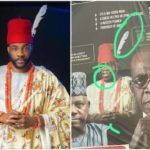
  • On 6 January 2023, the All-Progressives Congress (APC) presidential candidate, Bola Ahmed Tinubu, caused quite a stir on social media timelines with a photoshopped picture of him appearing on a campaign billboard. 

    The victim of the act was Ebuka Obi-Uchendu, host of the popular reality TV show, Big Brother Naija (BBN). In the photo, both Tinubu and Ebuka seem to be sharing the same pose, clothes, and even his wedding ring.

    [Photo Credit: Mufasatundeednut on Instagram]

    Many Nigerians have criticized the photo, with former senator Dino Melaye even going as far as saying that there is nothing original about the “emi l’okan” man

    Sadly, this isn’t the first time politicians have been accused of the photoshop act. Here are some other cases:

    Atiku receiving a handshake from Trump

    During Atiku’s 2019 presidential campaign, a picture of him with a former American president, Donald Trump, was circulated. This was to clear rumours about his ban in the U.S. 

    However, Africa Fact Check revealed that President Muhammadu Buhari was the original person in the photo in April 2018.

    Peter Obi with “Tinubu’s Insignia” Cap

    Shortly before the Labour Party (LP) presidential candidate joined the party in May 2022, a post by Facebook user Taiwo Olaore was circulated. In the photo, Obi was wearing Tinubu’s insignia cap at an event. This drove the narrative that Obi was a supporter of Tinubu’s campaign or “BATified”.

    However, further checks by The Cable revealed that the cap was digitally imposed on his head, as he wore no cap in the original photo.

    The Buhari and ‘Jubril from Sudan’ Rumors

    In 2017, rumours started to circulate that Buhari was dead after three months of ill health in the United Kingdom. Pictures from a lookalike named “Jubril” was now the new president.

    However, this was thoroughly disputed by Buhari himself. He came out to assure the public that he has not been replaced by a double.

    Tinubu with Joe Biden

    Shortly before his Chatham House visit in 2022, a photo of Tinubu speaking with the current president of America, Joe Biden, was circulated.

    However, the APC campaign media director, Bayo Onanuga, cleared the air that the photo had been doctored and there the presidential candidate’s last location then was at Abuja.

  • On January 3, 2023, the presidency announced that the 2023 budget has been signed into law, along with the Supplementary Appropriation Act. Ordinarily, news of this should prompt excitement. And it has indeed — but for all the wrong reasons. 

    So what’s in this budget that has Nigerians in panic mode?

    A very high budget deficit

    Unless you have a passion for all things finance, budgets are often very boring documents to read and when you’re compiling a budget meant to serve 200 million people, it can turn into a snoozefest. 

    This one’s different though. The first thing that stands out is that it has a very high budget deficit.

    The budget which is themed “Budget of Fiscal Sustainability and Transition” is in fact, a joke. A budget with a deficit of ₦12 trillion cannot, by any understanding of the word, be defined as sustainable.

    In its initial executive proposal, total expenditure was set at ₦20.51 trillion. The ratified one which was signed into law by Muhammadu Buhari has an increase of ₦1.32 trillion. This brings total expenditure to ₦21.83 trillion while revenue remains at ₦9.73 trillion.

    The government has defended this increase, saying it is in response to the havoc caused by the floods that affected infrastructure and agriculture sectors. Others are sceptical, saying that the budget is being padded.

    Huge debt servicing

    A sizable chunk of Nigeria’s revenue in recent years has gone towards the servicing of debt. According to Bloomberg, Nigeria spent 80 per cent of its revenue to pay debt in the first 11 months of 2022. The trend looks set to continue. 

    More than 90 per cent of the deficit will be financed by local borrowing. Borrowing means more debt, more debt means more debt servicing which is the interest the government pays when it borrows money. ₦6.55 trillion out of the ₦21.83 trillion total expenditure has been set aside for debt servicing in 2023

    We hear you screaming omo and we are too. 

    In the third quarter of 2022, the Debt Management Office (DMO) put Nigeria’s debt at ₦44.06 trillion. On January 4, 2023, the Director General of the DMO, Patience Oniha, breaking down the 2023 Appropriation Act said:

    “Once it is passed by the national assembly, it means we will be seeing that figure (ways and means financing) included in the public debt. You will see a significant increase in public debt to ₦77 trillion.”

    ALSO READ: Nigeria May Be Moonwalking Into a Debt Trap

    Scary fiscal parameters

    If you go through the fiscal parameters — that is, assumptions made about the budget such as what the price of crude oil will trade at, inflation rate and so on, — a couple of things stand out that should set the alarm bells of Nigerians ringing.

    Based on the initial budget proposal sent to the national assembly last year, the audit firm KPMG, broke down some of the assumptions. The graphic you’re about to see makes a comparison between the 2022 and 2023 fiscal years. Check out the percentage change for each item to give you a sense of the wahala that is brewing.

    [Budget Assumption: KPMG]

    No one knows for sure how the 2023 election will play out as that could also affect how the budget is implemented. One thing’s  certain though — whoever’s coming in has work to do, and it’s not pretty.

  • One game the Nigerian government loves playing is the blame game. And we’ve seen that play out many times with the current Buhari administration, from blaming the state of our country on so-called lazy youths to blaming the weather for fuel scarcity. It’s 2022, and fingers are still being pointed. 

    Early in December 2022, the Minister of State for Budget and National Planning, Clement Agba, blamed the state governments for the level of poverty in the country. Barely 24 hours later, President Muhammadu Buhari voiced the same accusation, saying the state governors were looting local government funds. 

    Politicians Buhari Poverty Nigerians Governors

    The Minister of Finance, Zainab Ahmed, disclosed that the Buhari administration has supported states with over ₦5 trillion since 2015, but millions of Nigerians are still extremely poor.

    We’re approaching the final six months of the Buhari administration with another administration  on the way, but the problems plaguing us as a nation have barely changed. 

    If the government’s allegations are true, how and on what projects were these funds spent? Well, we have a few guesses.

    Exotic rides

    Nigerian politicians know how to live soft lives on our national cake. Nobody does it better than them. We’ve also seen that they can be very cheerful givers. In April, the governor of Zamfara State, Bello Matawalle, distributed 260 brand new Cadillac 2019 model cars to traditional rulers to thank them for sustaining peace. This was a week after he distributed 15 brand new Hilux cars to leaders of “repentant” bandit groups.

    Politicians Buhari Poverty Nigerians Governors

    You’d think a governor whose state has one of the highest population of out-of-school children would focus scarce resources on addressing that rather than rewarding criminals. But no, this is Nigeria, and logic doesn’t live here.

    Exploring overseas

    Our politicians were probably explorers and adventurers in their previous lives because they enjoy being anywhere but home. And if we look more closely, they started the japa trend because they mostly have their families abroad, and their children hardly ever have to pass through the ASUU strike rite of passage. Even our First Lady, Aisha Buhari, decided the country was too stressful and spent six months in Dubai and can you blame her?

    Politicians Buhari Poverty Nigerians Governors

    Medical tourism

    In July 2022, the vice-president, Yemi Osinbajo, received praise for undergoing surgery in Nigeria, and that showed how low the bar is for our politicians. Millions are spent by government officials seeking foreign healthcare. And unfortunately, the ambassador of this sad trend is our president himself, who, despite his promise to end medical tourism, has spent a total of 237 days abroad for health reasons. 

    Politicians Buhari Poverty Nigerians Governors

    Even 2023 presidential candidates aren’t ready to commit fully to staying in Nigeria for their medical care if they win next year’s election.

    Election campaigns

    As we already know, elections in Nigeria are expensive. The 2023 presidential nomination form for one of the political parties cost ₦100 million. This is one of the reasons why politics today is ruled by godfatherism. This system ensures successful candidates use state resources to repay favours owed once they get into office. 

    Politicians Buhari Poverty Nigerians Governors
    Getting into office as a Nigerian politician is an opportunity to ball with your guys

    While Nigerian politicians keep pointing at non-existent excuses for their failures, Nigerians are suffering from neglect. Hopefully, the next administration we elect in 2023 will spend Nigeria’s money on Nigerians..

  • 2022 will be a memorable one for many Nigerians even if they’re trying to forget. We saw the price of items double, our naira had a makeover, our national grid died and resurrected more than a few times, schoolchildren will now be taught in their native languages, and Meffy rolled out new cash withdrawal restrictions as a Christmas gift. 

    But to end the year with a bang, the federal government is proposing adding a 20% tax on non-alcoholic beverages.

    Buhari soft drinks policy

    What does this mean for Nigerians? 

    Because soft drinks make up the bulk of non-alcoholic beverages, if the 20% tax is implemented, there’d most likely be an increase in the prices of these drinks soon. However, this isn’t the first time the government is taxing the soft drinks industry.

    What happened before? 

    Earlier this year, there was an increase in the prices of some drinks — a bottle of Coke sold formerly for ₦200 became ₦250. Unknown to many of us, this increase was because of the ₦10 per litre tax the federal government placed on Sugar-Sweetened Beverages (SSB).

    Buhari soft drinks

    What’s their reason?

    Statistics show that nearly 40 million litres of soft drinks are sold annually in Nigeria, the fourth highest in the world. This puts many consumers at risk of diseases like stroke, heart disease and type 2 diabetes. So, the government imposed the ₦10 per litre tax to reduce our consumption of these beverages. The extra revenue from the tax is channelled towards treating sugar-related diseases

    What happens now? 

    Beyond the price hike, if the 20% tax is implemented, there are other possible side effects.

    People will lose their jobs

    Since the ₦10 per litre tax has been added, many beverage companies have found it challenging to make a profit. A study showed that there had been an 8% decrease in revenue between July and August this year, and this decline is expected to reach 25% by December. 

    Buhari Wants You to Pay More for Your Soft Drinks

    If the 20% tax is further implemented, revenue figures could be further affected  and would eventually lead to the loss of jobs. 

    We’ll scare off foreign investors

    During a stakeholders’ meeting discussing the effects of the proposed government tax on December 6, 2022, it was noted that the tax discouraged one of the bottling companies from proceeding with its £300 million investment plan. And if the tax is finally implemented, we can expect more stories like this.

    The government’s plan to help reduce the consumption of carbonated soft drinks isn’t bad. Still, they must try to strike a balance instead of frustrating manufacturers and increasing our already high cost of living.

  • President Buhari went into Aso Rock Villa in 2015 with a promise to change everything bad about the country. Nigerians, at this point, were tired of the rising level of insecurity, corruption and the dwindling state of the economy. Also, the combination of an ex-military general with a Senior Advocate of Nigeria (SAN) seemed like the perfect answer to tackle all our problems. 

    However, it’s been seven and a half years, and the headaches we suffered before have become migraines under the current administration.

    What Buhari Promised Us Versus What We Got

    With only six months left for Buhari to leave Aso Rock Villa, many Nigerians are starting to wonder if they got what they ordered. 

    Unemployment

    Unemployment was one of Nigeria’s biggest problems in 2015, and Buhari promised to tackle it by creating three million jobs every year. When he became president, the unemployment rate was  8.19%, but has now climbed to a record 33% under him. No wonder insecurity is getting worse and the people who can afford to japa are running out of the country.

    Insecurity

    This is one of the significant issues that hit the nail in the coffin of the Peoples’ Democratic Party (PDP) government. With the deadly attacks on public places becoming more frequent, Nigerians wanted nothing more than to kiss Jonathan goodbye. Buhari capitalised on this and promised to crush the preparators completely. But it’s been seven and a half years and the situation isn’t any better.

    Instead, we’ve seen kidnappings become rampant, roads even more unsafe, and terrorists are forgiven and rewarded with gifts

    What Buhari Promised Us Versus What We Got

    Economy

    In Jonathan’s era, one dollar was equivalent to ₦196, and many of us, including Buhari, cried about the country’s economic state. Buhari promised to return the naira to its glory days, and Nigerians believed him. Unfortunately, the naira has been going in the opposite direction of its glory days and lost even more value under Buhari. 

    The president’s administration has also left millions of Nigerians poorer. According to the National Bureau of Statistics (NBS), over 133 million Nigerians currently live in poverty which is a sharp contrast to seven years ago when Nigeria was described as the largest and fastest growing economy in Africa. We were sold dreams of a revitalised economy, but  the only thing we’ve gotten is debt and high inflation rates.

    What Buhari Promised Us Versus What We Got

    Corruption

    President Buhari is the kind of man whose reputation precedes him, and for those of us who weren’t born in the military era, we heard many tales of his fight against corruption. But have you seen the level of corruption by public officials under his administration? 

    One would expect these officials would at least face severe penalties when caught but, more often than not, their crimes are swept under the rug and forgotten. So maybe Buhari’s hate for corruption was nothing but an old wives’ tale?

    What Buhari Promised Us Versus What We Got

    Medical tourism

    Before he won, Buhari promised to upgrade the health sector to stop Nigerian leaders from taking wasteful medical trips abroad. However, since he came into power, he’s become a tourist, flying overseas to treat cases such as ear infections despite having over 200 Ear, Nose and Throat (ENT) specialists in Nigeria. 

    Clearly, despite his promises, President Buhari found it challenging to fulfil many campaign promises. Perhaps, he got there and realised the job was harder than he thought it would be, or maybe he just wasn’t the guy for the job.

  • The Socio-Economic Rights and Accountability Project (SERAP) has a track record of suing Buhari every three market days. The organisation has dragged the president to court over the embezzlement of ₦1.4 trillion meant for oil refineries, and for his failure to publish the repatriation details of Abacha’s $23 million loot, amongst others. The list of lawsuits is endless and SERAP isn’t planning on slowing down anytime soon.

    The latest lawsuit from SERAP concerns Buhari’s failure to investigate the missing trillions of naira in ecological funds from all levels of government from 2001 to date. The organisation is also demanding punishment for the suspected perpetrators of corruption and mismanagement of the funds.

    But what’s so important about this ecological fund and how could the missing trillions have helped us? Let’s go to school for a bit.

    What’s the ecological fund?

    The ecological fund is an emergency or intervention fund set up by the Federal Government in 1981 to address ecological problems in the country. Just think of it as a piggy bank for whenever Nigeria has some serious environmental issues. 

    Beneficiaries of the fund are the National Emergency Management Agency (NEMA), Office of the Secretary to the Government of the Federation (OSGF), or any other projects on the approval of Mr President.

    The third option should give a clue as to where the money went to.

    How much did we have in the fund? 

    According to reports from the Federation Account Allocation Committee (FAAC), Nigeria set aside a total of ₦548 billion for the 36 states between 2012 and 2021. However, only ₦277 billion showed up in the fund while ₦74 billion was sent to state governments for their climate needs.

    So what happened to the remaining ₦197 billion?


    How could the funds have helped Nigeria?

    Nigeria’s most pressing ecological problem is floods. In 2022, the country experienced its worst flooding crisis in ten years. These floods claimed over 600 lives and displaced 1.3 million people. Victims in the Internally Displaced Persons (IDP) camps suffered from respiratory diseases, as well as cholera and diarrhea.

    These funds could have been useful if well utilised for proper healthcare, faster drainage of the floodwaters, and even better grounds for IDP camp facilities.

    One thing is sure — if there’s a lack of accountability with public funds, more climate disasters will definitely happen. That’s what SERAP is trying to prevent.

  • No one can convince us Nigerian politicians don’t have secret theatre degrees. They’ve mastered the art of putting on great shows, from dancing to leading live bands to even producing tears on cue. 

    Unfortunately for them, we’ve become used to their theatrics and can now tell when they’re trying to take us for fools. 

    Still, it’s interesting to laugh at these performances when Nigerian politicians have tried to exploit us with their tears.

    Chidi Lloyd

    The launch of the new naira notes dominated news headlines on, November 23, 2022, but it wasn’t even the most dramatic thing that happened on that day. During the commissioning of the Akpabu-Omudioga-Egbeda project in Rivers State, yet another politician went, ‘Lights, camera, action”. 

    A former Rivers State House of Assembly member, Chidi Lloyd, broke down in tears, and apologised for his behaviour towards Nyesom Wike who’s the state’s current governor. For those who don’t remember Lloyd, he stood against Wike’s administration and broke the head of his colleague, Micheal Chinda, with the House mace during a commotion inside the State Assembly complex. 

    What moved Lloyd to tears was that Wike approved the project in his hometown despite their beef, and that should just make you shake your head for Nigerian politicians. Wike now has Lloyd’s undying devotion, and tears, for doing his job.

    Ben Ayade

    Governor Ben Ayade of Cross River State has cried in public so many times that some people call him the “Cry Cry Baby Governor”. His first public display of tears was in August 2016, when he saw the living conditions of Bakassi returnees whom he donated ₦3 million.

    Ayade cried again on January 17, 2017 and May 21, 2020, when he abolished the taxation of low income earners. Does he know he’s supposed to be the governor and not the town crier?

    Saka Audu

    Remember this man?

    The 2020 lockdown period showed many Nigerians the government’s true colours when officials hoarded COVID-19 palliatives in different warehouses. The people, in return, responded to this wickedness by looting the warehouses. 

    Saka Audu was the Kogi State Commissioner for Health at the time and he put his theatre degree to great use during a press conference. He repeatedly shed tears and made the government out as the victim of the situation.  

    Clearly, the only lesson to learn here is a teary-eyed Nigerian politician should never be trusted.

    Muhammadu Buhari

    Two days before the 2011 presidential election, Buhari organised an event to mark the end of his presidential campaign. In case he’d not done enough to convince voters during the campaign, the former military general put in an Oscar-worthy performance and wept about the state of the country.

    He eventually won the presidential elections in 2015 and 2019, so maybe tears work sometimes. 

    Atiku Abubakar

    In 2019, support groups bought Atiku the presidential nomination form of the People’s Democratic Party (PDP). And perhaps to take a leaf from Buhari’s page, Atiku got emotional and cried over the love and support he got. 

    He went a step further to promise us salvation from our terrible state. The tears didn’t work this time and he lost, so maybe for the 2023 elections, he can try to add wailing to the performance. 

  • In January 2022, Muhammadu Buhari said during an NTA interview he was tired of being Nigeria’s president

    He said “I see my colleagues, they’re now resting, and I assure you I look forward to the next 17 months when I too will be less busy. The age is telling on me — working now for six, seven to eight hours per day in the office is no joke.”

    Buhari may be complaining about all the hard work he has to do as president, but he can’t deny he’s looking forward to the benefits waiting for him after May 29, 2023.

    If you have no idea what we’re talking about, allow us explain.

    What law guides the perks ex-presidents enjoy?

    That would be the Remuneration of Former Presidents and Heads Of State (and Other Ancillary Matters) Act of 2004. The Revenue Mobilization Allocation and Fiscal Commission (RMAFC) determines the benefits package for former presidents and former vice-presidents.

    What are these benefits?

    We know that’s what you’re really after, so here’s a list of the major perks former presidents and vice-presidents receive:

    1. ₦‎350,000 monthly allowance for ex-presidents and ₦‎250,000 monthly for ex-VPs. 
    1. The families of deceased former heads of state are entitled to ₦1 million per annum, paid ₦250,000 per quarter. The families of deceased ex-VPs get ₦750,000 per annum, paid ₦187,500 per quarter.
    1. Upkeep of the spouses and education of the children of deceased ex-presidents and deceased ex-VPs up to the university level.
    1. Three to four armed policemen for security.
    1. One State Security Service (SSS) officer not below grade level 10 as an aide-de-camp to be attached for life.
    1. Three vehicles for ex-presidents and two vehicles for ex-VPs, replaceable every four years. 
    1. Drivers.
    1. An officer not below the rank of a chief administrative officer and a personal secretary not below grade level 12.
    1. Diplomatic passport for life.
    1. Free medical treatment for ex-presidents and ex-VPs and their immediate family within Nigeria.
    1.  Treatment abroad for ex-presidents and ex-VPs and their immediate family where necessary.
    1.  30 days annual vacation in Nigeria or abroad.
    1.  A well-furnished and equipped office in any location of choice within Nigeria.
    1.  A well-furnished five-bedroom house in any location within Nigeria. An ex-VP gets a three-bedroom house.

    Look at that list again and ask yourself why you aren’t running for president.

    Oh, one other thing: the spouses of deceased leaders stop receiving their benefits if they remarry so it’s beyond till death do us part. 

    When did ex-presidents start receiving a pension?

    Former leaders enjoying these perks today have one man to thank: General Sani Abacha. It was during his administration Nigeria started thinking about providing pensions for living presidents and their families. Bad belle people would say Abacha was looking out for himself and the irony is he wasn’t around to enjoy it.

    Is this practice normal?

    Former leaders around the world like in the United States and the United Kingdom receive allowances and extra benefits after leaving office. But trust Nigeria to push things to the extreme.

    In 2016, the secretary to the government of the federation (SGF), Babachir Lawal, lamented that the government couldn’t pay the salaries of past presidents due to lack of funds. Between 2018 and 2021 alone, the perks that ex-presidents and ex-VPs received cost Nigerian taxpayers ₦9.2 billion. In October 2022, findings revealed ex-presidents, ex-VPs and other appointees would receive ₦63 billion in pension in 2023.

    Clearly, the benefits package for former leaders needs to be revisited as the cost is becoming too unbearable for a country already burdened by debt. But knowing Nigerian leaders, don’t hold your breath on things changing anytime soon.

  • It’s not a secret that Nigeria is a telenovela series, with twists, mysteries and turns at almost every point. Unfortunately, these plot twists never bring Nigerians the happy endings we want and at this point we’re tired of our character development arc.

    On October 26, 2022, the Central Bank of Nigeria (CBN) announced its plans to redesign the naira to combat counterfeiting and manage inflation. Nigerians weren’t too pleased by the news and even the Minister of Finance, Zainab Ahmed, didn’t like it. But at least we had hopes that maybe the makeover would be impressive. 

    Okay, what happened next?

    When President Buhari unveiled the new notes on November 23, 2022, let’s just say the designs looked… interesting.

    Is it just us or do they look like someone’s tie and dye project?

    What did Nigerians say?

    Nigerians were more disappointed than outraged, as these new notes looked like someone ran them through Snapchat filters. 

    During an interview on Channels Television, the presidential candidate of the African Action Congress (AAC), Omoyele Sowore, claimed the CBN spent about ₦218 billion on the new designs.

    While we can’t say how accurate Sowore’s figures are, we know producing these new banknotes must be expensive. But could this money have been spent better? Let’s look at some alternatives.

    ASUU

    There’s a saying amongst federal university students that, “Every generation experiences an ASUU strike.” It’s funny until you wake up one day and realise you’ve been in 100 level for two years. Just this year alone, federal universities were on strike for eight months. If some of the redesign fund was injected into the education sector, we’d have a better system.

    Flood victims

    Climate change is ruining the environment, and Nigeria is already feeling the brunt of it. This year, we faced one of the worst flooding disasters in our history, with  over 600 deaths and 1.3 million people displaced. Unfortunately, the federal government’s response to this has been underwhelming. The victims would have appreciated some of the money the government used to redesign the banknotes.

    Fix bad roads

    “I’m going to repair bad roads,” has become a mantra for politicians. But once they get into power, they wash their hands off their campaign promises and pick them up four years later for another campaign. 

    We can’t say we’re shocked at the government’s decisions so far. We can only hope that with the coming 2023 elections, we’ll vote for people who can address the challenges Nigerians really care about.