• Foyin (23) hoped to graduate from the University of Ibadan (UI) in 2022. Instead, she was trapped for two extra years by the two longest strikes in Nigeria’s civilian era under President Buhari. Foyin watched as friends at private universities finished their degrees and launched careers, while she waited for Nigeria’s broken academic system to remember she existed.

    Now, in the wake of Buhari’s death, she reflects on how his administration’s handling of education unravelled her plans, stunted her dreams and reshaped her aspirations.

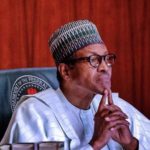
    This image is AI-generated and affiliated with the subject of the story

    This is Foyin’s story as told to Franklyn

    Some people discover their passion later in life, but I have always wanted to be a broadcaster for as long as I can remember: I was in the press club in primary school, and when I discovered one of the secondary schools I attended didn’t have a press society, I was among its pioneers. My parents were supportive and enrolled me in a broadcasting training program with Fresh FM, a popular radio station in Ibadan.

    I wanted to study Mass Communication and would have preferred the University of Lagos, but my parents were set on the University of Ibadan. The school didn’t offer a Mass Communication program, so I chose English Language and Literature instead.

    I stayed focused on my dream and decided to use school as a training ground, joining my faculty press organisation and the Union of Campus Journalists. I had it all planned out: start university at 16, graduate at 20, complete the mandatory National Youth Service Corps (NYSC)  at 21, and in the end, become this dazzling broadcaster.

    Get More Zikoko Goodness in Your Mail

    Subscribe to our newsletters and never miss any of the action

    Then came the nine-month strike of 2021. That strike was very demoralising, but that wasn’t even the start of my demoralisation. The problems began right at admission. The university calendar had already been delayed by a three-month strike that started in 2018.

    That strike ended in February 2019, but we didn’t resume until June. Throughout the session, there were strike scares but no stoppages. I wrote my last exams in March 2020 and went home expecting to resume after the holiday, but then came the COVID lockdown. During the lockdown, private universities were already holding online classes, but it was crickets from public schools — including UI — because of the strike.

    The whole situation felt so tiring, but I stayed hopeful in a depressing sort of way. Every day, I was glued to the news, waiting to hear they’d called off the strike. That was the year I turned 18, and I felt sad because I measured my achievements by age.

    That delay made no sense. I’d had a smooth primary and secondary education and finished secondary at 16, like the typical Nigerian child. But here I was, 18, and I couldn’t say I was in 200 level — I was still stuck in 100 level after almost two years. It’s crazy when I think about it: I paid my acceptance fee in December 2018 and looked forward to starting 100 level. I spent all of 2019 there, and at the beginning of 2020, I was still in 100 level. I finished my 100-level exams in March 2020, but since the new semester hadn’t started, I couldn’t say I was in 200 level when people asked. So I’d been in 100 level for two years. I felt awful.

    The strike ended in December 2020, but UI didn’t resume until two or three months into 2021. It felt strange returning after such a long break—I was a fish out of water. Settling in was tough because first-semester lectures were mostly virtual, and students and lecturers were learning together how to navigate that. Our Zoom classes were constantly interrupted by network problems.

    Throughout 2021, we had more strike scares, but it felt like our prayers were working because ASUU didn’t actually strike. I finished my 200-level exams and had just resumed 300-level when they announced the 2022 strike. I was devastated. I had paid my school fees a few days before the announcement, and I was so pumped for the new session.

    I tried to stay hopeful, thinking the strike would only last a few weeks, but we ended up waiting eight months. It was one of the heaviest burdens of my life, especially since I’d just turned 20 and had friends graduating that same year. A friend at a university in Ghana was writing his final exams that April, and I felt stuck all over again. Watching everyone move forward while I stayed in place was demoralising. Education was very important to me, and I had always been a brilliant student. So, seeing it toyed with by ASUU and the federal government was heartbreaking.

    I started exploring other options and even discussed leaving UI with my parents. I was terrified of what the future held. If it took from 2018 to 2022 to complete just two sessions, would it take another four years to finish my degree? Would transferring to a private university be better? But the thought of starting over held me back.

    I had so much on my mind, but I generally felt exhausted. I just wanted to resume, graduate, and move on. I wasn’t even so interested in academics anymore. But they kept dangling the possibility of resumption in front of us. It was a lot to handle. Starting over isn’t easy. There’s the fear, and then there’s the financial cost. I felt stuck and helpless. But it was the same helplessness that both made me consider leaving and made me stay. I wasn’t emotionally or financially ready to start all over by moving to a private university or studying abroad. It got to the point where I thought, “Let’s see what’s going to happen.” I’d stick around, but if the strike lasted a year, I’d have to brace up and take my future into my own hands. Fortunately, they called off the strike in October, and we resumed.


    ALSO READ: Buhari’s Naira Redesign Caused a Cash Scarcity. It Ruined My Relocation Plans and Left Me in Debt


    I had written a few pieces here and there, but I really got into professional writing in 2022. I had always written from a very young age, but when I got into university, the majority of my classmates were writers, which spurred me to explore different forms: fiction, non-fiction, poetry, and then journalism. By that same year, I was writing for international publications. But I always felt my education gave me leverage, so I never believed that school was any less important because I was making money. What I noticed, though, was that inflation kept rising as Buhari became president, and living conditions worsened. By the time we finally resumed, many students were already working, and extracurricular activities suffered.

    Before the 2022 strike, organisations like the Union of Campus Journalists were vital to students. Everyone belonged to something. By the time we resumed, people were too busy juggling school and jobs. As Editor-in-Chief of my faculty press organisation in my final year, I witnessed firsthand the dwindling commitment among members. I, too, was split between lectures and work. I can’t deny that working felt crucial because I was earning and building my career.

    I remember crying a number of times in 2022 when I saw my friends graduate. And for you to cry like that, there’s something to unpack there. I won’t say it affected my self-esteem, but it broke me. Emotionally, it broke me. I blamed Buhari and the federal government. Ten years ago, back in 2015, I was just 13, but I remember people saying Buhari would fix everything. They said if he’d won all those previous elections he lost, things would already be better. We were promised good roads, stable electricity, a flourishing economy—and no more ASUU strikes. So yes, I blamed him. I blamed him a lot. By that point, I had stopped expecting anything meaningful from his administration.

    When I heard the strike had been called off in 2022, I didn’t believe it at first—there had been so many false alarms. But once it was confirmed, I was worried about two things. First, how was I going to navigate my academics again after eight months away, especially since 300-level was notoriously tough. It had the highest number of courses. Second, I was anxious about how long it would be before another strike, because it didn’t seem like the core issues had been resolved.

    In my department, we read a lot of literary texts. We took more literature courses that session, which meant reading more texts than we did during previous sessions. When we returned from the strike, the calendar was rushed, and it was nearly impossible to cover everything. It was hell. And I still had to work. So yeah, that period was just terrible.

    I graduated in 2024, but  I didn’t feel excited. It felt like how people say Buhari is dead, but gone too late. I kept thinking, “I should’ve done this two years ago.” By the time I graduated, a friend of mine had already started their master’s. That was the life I wanted for myself. So yeah, I couldn’t feel excited. I was exhausted. I was just like, “You know what? Thanks a lot, UI. I’m done. I’m bowing out now.” That was it.

    I can’t call it regret. It’s more a kind of unhappiness that comes from knowing I should’ve hit this milestone much earlier—and if I had, I’d probably be in a different place by now. I feel it every day. I lost interest in my original dream of being a broadcaster, and I’ve been writing ever since. I don’t feel anything about Buhari’s death. I’m indifferent. It just makes me wonder: what’s the point? It’s been two years since he left office, so are we really winning? I’m indifferent, but also a bit angry. He lived to a ripe old age before dying.

    There were so many promises tied to his campaign for the presidency. Many people really got into campaigning for Buhari, thinking he’d be Nigeria’s Messiah. They talked about his military rule and the Kick Against Indiscipline policy from his stint as Head of State. There was a lot of talk of corruption under Jonathan, and people felt like Buhari would come in and be a fixer. But it was just a total disappointment. It felt like the presidency was his perfect retirement plan, and he left no impact besides terrible policies.

    Speaking of terrible things that happened under Buhari, I broke down several times during the EndSARS protests. The deaths made me lose hope in Nigeria, in the Nigerian dream. That night was turbulent for my family and me. We had people outside who weren’t even protesting, but we were scared for their safety when we heard that people were being shot. Then came the cash scarcity, which hit people I knew hard. People died; some collapsed in bank queues. I remember missing classes a number of times while waiting to get money at banks.

    Personally, I feel like Buhari becoming Nigeria’s president stole so much joy from me. I’m angry at how terribly disappointing his tenure was. Nigerians were really hopeful. I didn’t vote for him (I was too young both times, and I never really liked him anyway), but Nigerians pinned their hopes on him, and he dashed them.

    I’ve stuck with what I started in 2022—writing. I’ve written for prestigious international publications and have gotten some great writing contracts. In 2024, I won The Republic’s award for Best Business and Economic Writer.

    Looking back, I’m glad I dove into writing when I did; it’s been a deeply fulfilling path. I might circle back to broadcasting someday, but right now I just want to keep moving forward as a writer and journalist.

    I haven’t done my NYSC yet. Like so many things in Nigeria, it feels like another program built on unnecessary suffering, and I don’t see myself willingly signing up for that. For now, I’m focused on this writing career, especially on stories that preserve cultural memory. I want to keep exploring, to keep growing, and to see where this path takes me.


    ALSO READ: I Knew It Was Time to Leave Nigeria After a Hospital’s Neglect Led To My Father’s Death

    [ad]

  • On Sunday, July 13, former Nigerian president Muhammadu Buhari died at age 82 in a London clinic and was laid to rest in his hometown of Daura, Katsina State, on Tuesday, July 15. The former President had long struggled with ill health before his passing, but according to some sensational rumours, the body that Vice President Kashim Shettima escorted home was a clone, and the “real” Buhari had died as far back as 2017.

    If you are confused, rest assured—that is the proper reaction. There is a saying in Nigeria: “If they explain Nigeria to you and you understand, they did not explain it well.” The sentiment is particularly apt here. Still, we will soldier on to unpack the Buhari-clone saga and see if it makes sense.

    It is not every day that a president must declare, “It is really me, I assure you,” while denying a sci-fi–style body swap. Yet that is exactly what Buhari did at the United Nations (UN) Climate Conference in December 2018, as rumours of his death swirled and gained unexpected traction.

    So, how did Nigerians find themselves living the plot of a science-fiction soap opera? It was a perfect storm of factors.

    The constant fluctuation of Buhari’s health

    From the moment he assumed the presidency in 2015, Buhari’s fitness became a national preoccupation. Frequent, lengthy medical trips to London disrupted governance and fuelled endless speculation. A 104-day medical excursion to London in 2017 was particularly controversial. In total, he spent over 200 days of his presidency receiving treatment in London.

    Prolonged presidential medical absences are prime fuel for rumours and conspiracy theories. Transparent, timely updates could have doused the fire, but the Buhari administration had a different approach.

    [newsletter type=-z-daily]

    Media secrecy

    The presidency was frustratingly tight-lipped about Buhari’s condition, offering as little information as possible. As recently as a matter of days before his passing, the talk around his health was still wrought with denial and opacity from those closest to him. When official sources are silent, wild stories rush in to fill the void—and often take on a life of their own.

    Nigerians had seen this movie before

    Vital context lies in the sense of déjà vu that Nigerians felt regarding Buhari’s health. His predecessor, Goodluck Jonathan, had become president after Umaru Musa Yar’Adua died just short of his third year in office. Yar’Adua’s tenure was marked by prolonged absences for medical treatment and a similar reluctance to share health updates with the public. When Buhari’s administration repeated that pattern of secrecy, Nigerians understandably felt they were reliving recent history—and the rumours gained an air of plausibility that kept them alive in the national consciousness.

    Nnamdi Kanu’s conspiracies

    While it is not unbelievable to claim that a sick president might have died during long absences, the rumour truly took flight when Nnamdi Kanu, leader of the Indigenous People of Biafra (IPOB), alleged that a Sudanese look-alike named Jubril was masquerading as Nigeria’s president. The claims spread widely on social media, and viral videos of an ailing or supposedly dead “Buhari” in a London ward, coupled with obsessive ear-comparison analyses, became one of the most surreal chapters of his eventful presidency.

    Buhari’s administration was an unpopular one

    By 2017, many Nigerians were already disillusioned with the Buhari administration. The government had made little headway against Boko Haram and was already courting conflict with a new adversary in the south-east: IPOB. Anti-corruption efforts were accused of partisanship, targeting only political rivals of the APC-led government, and the economy was faltering. On the international stage, Buhari was being labelled a foreign policy failure.

    In that climate of frustration, a tale of a dead (and cloned) president offered a dark form of wish fulfilment. Wishful thinking fuelled the rumours and allowed them to gain traction. When Buhari’s death finally occurred in 2025, the mocking reaction in some quarters revealed just how deeply many had long wished him gone. 

    Buhari is not alone in inspiring premature death rumours. He is in the company of several of Africa’s aged leaders. African nations often resemble kids who peak in high school and spend their adulthood trying to relive those early glory days. We keep replaying the classics, whether they were truly hits or not.

    Like Buhari, former president Olusegun Obasanjo, a former military head of state, has also been the victim of false death reports. He claims he has been falsely reported dead at least seven times since he was democratically elected in 1999.

    Recently, in May 2025, a university student in Kenya was arrested for falsely reporting that embattled President William Ruto had died in 2024.

    Rwanda’s Paul Kagame, who has led the country since 2000 and faces criticism over human-rights abuses, has frequently been the subject of death hoaxes. Uganda’s Yoweri Museveni, in power since 1986, has also seen false reports of his demise.

    When Cameroon’s Paul Biya returned from an extended trip abroad in 2004, he dispelled rumours about his death with the words: “People are interested in my funeral; I will see them in twenty years.” Two decades later, at age 92, he has ruled for forty-three years and seeks an eighth term in office. Persistent rumours about his death prompted his government to ban reports related to his health.

    These reports arise from a sense of collective helplessness. Many Africans feel powerless to remove ageing leaders who cling to power, so they fantasise about their deaths—the only apparent escape. Often, these fantasies manifest as premature rumours. When these leaders finally die, it is not surprising that the frustrated youth they governed may feel compelled to dance on their graves.

    Nnamdi Kanu may have started the outlandish Buhari-clone rumour as a propaganda tool for his sectarian struggle, but it endured thanks to a regrettable combination of factors. Buhari’s prolonged medical trips to London, the presidency’s tight-lipped approach to his health, and the haunting echo of Yar’Adua’s own secrecy and eventual death all conspired to give the rumours life. Ultimately, the frustrations of a citizenry fed up with harsh policies truly gave those rumours wings to fly.

    [ad]
  • In April 2018, Nigeria’s former President, the late Muhammadu Buhari made a comment which has continued to live in infamy: “More than 60 per cent of the population is below 30, a lot of them haven’t been to school and they are claiming that Nigeria is an oil producing country, therefore, they should sit and do nothing, and get housing, healthcare, education free,” Buhari said, during a panel session with world leaders at the commonwealth Business Forum in London.

    Feeling slighted, young Nigerians immediately criticised the ex-President on social media, using the hashtag #LazyNigerianYouths. 

    Although he was only three years into his eight-year presidency, that statement and the reactions that followed it would symbolise how young Nigerians viewed the man who had ruled over their parents and was now ruling over them.

    On Sunday, July 13, the former President breathed his last at a London clinic after weeks of illness. Mixed reactions have trailed the news of his death as Nigerians across demographics recount what he was to them. These reactions have raised questions and inspired commentaries about Buhari’s legacy. From reflections about his achievements (or a lack of them) in security, to his policies, and politics, a lot has been said since news of his passing broke.

    As a publication that caters to young audiences, we examined his administration’s relationship with young people and how they view him.

    Buhari, the headmaster figure who became President

    Although he was Nigeria’s military head of state from 1983 to 1985, many young people are more familiar with him as a democratic leader.

    Sure, there might have been tales from older Nigerians about Buhari’s time in office, perhaps how he and his Deputy, Major General Babatunde Idiagbon, launched War Against Indiscipline (WAI). The five-phases program saw Nigerians “queue up to board a bus, even to enjoy basic amenities and government services,”  the paramilitary set up to enforce WAI, or about the regime’s numerous decrees. All of these tales may have cemented him merely as a former headmaster figure to younger Nigerians. However, a year into his first tenure, the former President began exhibiting the headmaster traits everyone thought he’d left in his past.

     [newsletter type=Z-daily]
    

    In  2016, during a Q&A interview with a UK newspaper, The Telegraph, Buhari placed so much emphasis on the attitudinal problems of Nigerians that the paper likened his disposition to his WAI military days.

    However, his statement, which suggested that asylum claims from his country were frivolous, mostly hurt young Nigerians. 

    “Some Nigerians’ claim that life is too difficult back home, but they have also made it difficult for Europeans and Americans to accept them because of the number of Nigerians in prisons all over the world, accused of drug trafficking or human trafficking,” Buhari told The Telegraph.

    “I don’t think Nigerians have anybody to blame. They can remain at home, where their services are required to rebuild the country,” he continued.

    As expected, young Nigerians took to social media to call him out on his scathing statement. This time, the hashtag was #IAmANigerianNotACriminal

    The anti-protest President 

    Nigerian youths hold several grudges against the former President and remember him for many reasons, but none of those grudges and memories outweigh his #EndSARS legacy.

    In October 2020, young Nigerians took to the streets to protest against years of police brutality by the now-defunct Special Anti-Robbery Squad (SARS) of the Nigerian Police. 

    Matching every day for nearly two weeks, Nigerian youths showed unity and courage in their struggle, until the night of October 2020, when the Nigerian government deployed the army to the location, who in turn,  opened fire at unarmed peaceful protesters gathered at the Lekki tollgate.

    For many, there was no coming back from the trauma they had witnessed. This event inspired a new wave of travel outside the country. Every October since then, young Nigerians have remembered this event; however, following Buhari’s recent passing, they have resumed their mourning and reawakened their grudge against the former President.

    The not-so-democratic democrat

    While he campaigned for office, Buhari acknowledged his military past, assuring Nigerians it was all behind him.

    “I want to give you my full assurances that in this democratic dispensation, I will ensure that the Nigerian constitution is upheld. This includes respect for the media, respect for the right to free expression and freedom of speech,” he said, emphasising he was a ”former military ruler and now a converted democrat.”

    Buhari’s words sounded noble, but they were untrue. His administration did not respect media freedom or freedom of speech. A major marker of this legacy remains the mysterious abduction of a social media critic of the government, Abubakar Idris, popularly known as Dadiyata, at his home in Kaduna State.

    Another indication of Buhari’s anti-democratic legacy is the Twitter ban. In 2021, just as young Nigerians tried to recover from the traumatic Lekki tollgate shootings during the #ENDSARS protests, the President took away the platform where they freely expressed themselves. 

    The announcement of the Twitter ban made no sense, and young Nigerians, in their bold pattern, called it out — the platform had taken down the president’s hurtful and divisive tweet, and there was no reason to plunge an entire nation into dark times. Yet, the Buhari administration not only went ahead to effect the ban but maintained it for nearly a year before it was finally lifted in January 2022.

    This ban affected the lives and businesses of many Nigerians, an offence which young Nigerians have refused to forgive the ex-President.

    Before the 2021 Twitter ban, Buhari had also banned cryptocurrency. Without warning, the Central Bank of Nigeria (CBN) released a circular ordering banks to immediately stop conducting cryptocurrency exchanges in the country and shut down the accounts of individuals or organisations actively involved in them.

    The big bank said it was instituting the ban because cryptocurrencies were being used for money laundering and terrorism. Like the reason for the Twitter ban, this, too, made no sense to young Nigerians.

    The CBN sent a similar message regarding cryptocurrencies in 2017, except that one warned banks about the possible dangers of conducting crypto transactions as they weren’t recognised forms of legal tender, while the 2021 regulation directly prohibited them from doing so.

    Some stakeholders speculated that the decision to move from a disclaimer to an outright ban might be related to the EndSARS protests, which saw young people move about $32.5 million worth of cryptocurrency (in donation funds) after the CBN ordered banks to freeze protesters’ accounts.

    The ban could not stop young Nigerians from crypto transactions; instead, it drove them to use peer-to-peer (P2P) networks, which doubled the already existing risks associated with crypto transactions. Though the ban was lifted in 2024 by the Tinubu administration, young Nigerians have yet to let go of their anger with Buhari.

    The unfriendly president

    The Buhari administration was already unpopular among young Nigerians. Still, one policy towards the end of his administration played a role in cementing the status already created by the EndSARS killings — the Naira redesign.

    In October 2022, the former CBN governor, Godwin Emefie, announced that the apex bank would be redesigning the  ₦‎100, ₦‎200, ₦‎500, and ₦‎1,000 notes.

    This would not have been an issue, except that the banks imposed an impossible deadline (January 31, 2023) for ending the use of the old notes. To make matters worse, the CBN issued a directive in January limiting the amount of cash people were allowed to withdraw— individuals were allowed  ₦‎20,000 cash daily while corporations were allowed  ₦‎500,000 per week.

    Both moves, expressly approved by former President Buhari, were supposedly meant to protect the currency’s integrity, improve the country’s monetary policy, limit readily available cash for ransom payments and vote buying in the 2023 elections (still ahead at the time).

    What followed these CBN directives were frustrated customers overflowing banking halls, markets filled with tired people, and an overall defeated populace, a crime for which young people have refused to forgive the former President and ex-CBN governor.

    The record-breaking President

    Under the former president, the Academic Staff Union of Universities (ASUU) experienced its longest strike since Nigeria transitioned to democratic rule in 1999.

    Though the ASUU strike was rooted in the lack of implementation of a Federal Government agreement signed in 2009 before Buhari’s time, many felt that he did not do enough to pacify ASUU, as the union went on strike five times, which amounted to over 635 days.

    Since news of the former President’s death broke on July 13, young people in Nigeria have taken to different social media platforms to express themselves in a way that some older Nigerians have termed distasteful.

    However, young Nigerians within and outside the country have insisted that their relationship with the late Buhari was not cordial enough to accord the two-time leader the customary respect accorded to the dead.

     [ad]
    

  • Nigeria’s former President, Muhammadu Buhari has died today, Sunday, July 13, in London, at the age of 82.

    News of the former President’s death was broken by his spokesperson, Garba Shehu, in a post made on X, formerly known as Twitter.

    “The family of the former president has announced the passing of the former president, Muhammadu Buhari, GCFR, this afternoon in a clinic in London. May Allah accept him in Aljannatul Firdaus, Amin,” Shehu said.

    Before his death, the former President had battled with illness for some weeks in London, where he received treatment.

    Muhammadu Buhari was a significant and persistent figure in Nigeria’s history. Born in 1942 in Daura, Katsina State, he joined the army at the age of 19 and rose through the ranks, ultimately emerging as Nigeria’s Head of State following the December 1983 coup.

    Get More Zikoko Goodness in Your Mail

    Subscribe to our newsletters and never miss any of the action

    After his regime was ended by a coup in August 1985, Buhari settled into the background, emerging years after Nigeria’s transition to democracy, to launch a long campaign to be its President.

    He first ran under the All Nigeria Peoples Party (ANPP) in 2003 and 2007, and then under the Congress for Progressive Change (CPC) in 2011. However, in 2013, Buhari’s luck changed; after five parties— the Action Congress of Nigeria (ACN), Congress for Progressive Change (CPC), the All Nigeria People’s Party (ANPP), and the All Progressive Grand Alliance (APGA)— merged to form the All Progressives Congress (APC),  he contested the 2015 election as its candidate and went on to win, unseating former President Goodluck Jonathan and the People’s Democratic Party, which had been in power for 16 years prior.

    Though he campaigned on the “change” slogan, Buhari’s two-term presidency was hardly any different from the PDP’s 16 years.

    [ad]

    Marred by insecurity, particularly in the country’s North, human rights violations, and economic hardship, Buhari’s rule came to a slow end in 2023 when he handed over to fellow party member Bola Ahmed Tinubu.

    Dead in London, where he frequently received medical care during his time as President, Buhari’s remains will be flown back to Nigeria, where he will be given a customary state funeral.

    This is a developing story.

  • As the curtain closes on President Buhari’s eight years in power, Nigerians are left to reflect upon a legacy marked by regrettably missed opportunities. Ebenezer Obadare, a political expert, describes Buhari’s time in office this way:

    “That Buhari managed to turn such wild enthusiasm about his candidacy into grave disappointment, going from a regime of which many, rightly or not, had high hopes, to one that most can’t wait to see the back of, ranks among the most remarkable instances of reputational collapse in the whole of Nigerian political history. 

    It was clear within the first few months—the initial struggle to put together a cabinet being particularly telling—that Buhari, for all his desperation to take power, had not done his homework and was ill-prepared for the demands of the office.”

    Riding on the “Sai Baba, Sai Buhari” mantra and backed by a political figure like Bola Ahmed Tinubu, there were high expectations that Buhari would put Nigeria on the right trajectory. However, Buhari failed to live up to expectations of his promises.

    A summary of Buhari’s eight years

    His ardent supporters will say he built more infrastructure than any other leader before him. They’ll point to the construction of the Second Niger Bridge, multiple railroad projects, and roads across the country. 

    [Loko-Oweto Bridge / Bashir Ahmed / Twitter]

    They’ll also say he assented to many bills the coming administration can hopefully build upon. Some will also applaud Nigeria’s response to the COVID-19 pandemic under his watch, which the WHO ranked as the fourth-most successful globally. While Buhari can claim these achievements, the tradeoff has come at a steep cost.

    His anticorruption stance initially earned him the “Mai Gaskiya” title, meaning “the honest one.” Time has, however, eroded that perception. Nothing captures this better than when he granted pardons to two ex-governors, Joshua Dariye and Jolly Nyame, who were indicted for corruption. The Economic and Financial Crimes Commission (EFCC) said they were demoralised by that action, having spent eleven years and hundreds of millions of naira prosecuting those cases.

    No other president has plunged Nigeria into as much debt as he has. In his eight years in office, Buhari raised Nigeria’s debt from $7.3 billion, inherited from former President Goodluck Jonathan, to $41.8 billion—a 400% increase. 

    His economic policies left many scratching their heads. Take your pick from anyone between the controversial Anchor Borrowers’ Programme, TraderMoni, the naira redesign, and the shutdown of our borders. All told, 133 million Nigerians now live in multidimensional poverty. The World Bank projects that by 2025, 13 million more Nigerians will join them. Unemployment will rise to 41% this year.

    Electoral reform, which Nigerians initially had high hopes about—us included—was another facade. The events of the 2023 general elections made that apparent.

    Buhari has a mixed record on human capital development. Some people might say it’s terrible. Although there were capital interventions in the health and education sectors, the unending ASUU strikes and the brain drain of doctors tell you all you need to know about how that went. This follows a recurring theme in Buhari’s administration. Money is thrown at projects that either become misappropriated or poorly executed.

    Due to his military credentials, many Nigerians expected him to bolster security. This turned out to be a massive letdown. While it’s true that Boko Haram has recently piped down, it’s unclear if that is entirely due to Buhari’s efforts or the internecine struggles of Islamist terrorist groups in northern Nigeria. In the South-East, the proscribed Indigenous People of Biafra, IPOB, has been a constant scourge with its enforced sit-at-home orders. The rise in banditry and kidnapping for ransom across Nigeria is alarming. A former minister described it as a “burgeoning industry”.

    The Vanguard reports that since he assumed office in May 2015, 63,111 Nigerians have been killed under his administration. And young Nigerians will not forget the events of EndSARS, culminating in the military officers’ shooting of unarmed protesters on October 20, 2020. Till today, Buhari hasn’t told us who gave the kill order. 

    We could point to his nepotism as evident in his lopsided appointments, disregard for the rule of law, clampdown on the media, frequent junketing and medical tourism, and inability to unite Nigerians. Losses in several areas quickly overshadowed any gains he made in one area. Based on these, his eight years as president are best described as a net negative. This is Buhari’s legacy.

    Buhari’s famous last words

    Buhari was camera-shy in his early days in office and rarely addressed the media. This came with several conspiracy theories about his health, such as possessing a body double. Nigerians on Twitter will also recall that he locked his comment section for a while. 

    However, the latter end of his regime has seen him speak out more, surprisingly off the cuff. Buhari asked Nigerians for forgiveness in April, saying he’d accept all criticism. This represents a marked departure from the nonchalant and aloof demeanour that has become a representation of his political career. Despite his hard-guy stance, Buhari cares what we think of him and wants history to be kind to him.

    But perhaps the most revealing utterance Buhari has made to date comes from his speech on May 23 at the launch of the new headquarters of the Nigerian Customs Service in Abuja. A viral portion of that speech has made it online. In the speech, he explained his reason for the controversial closure of Nigeria’s land borders.

    Buhari said it was deliberate and designed to force Nigerians to grow what they eat. He genuinely thinks it was a good policy, which Nigerians “appreciated” him for eventually. He added, “I said these few things about my personal belief because I have only six more days to go. And I plan to be as far away from Abuja as possible.

    Thank goodness, I come from an area far away from Abuja. I said if anybody forces me, I have a good relationship with my neighbours, Niger people will defend me.”

    Nigerians are reeling in utter shock at their Commander-in-Chief.

    Buhari has earned wide condemnation for his comments on various sociocultural forums. These include the MiddleBelt Forum, the Afenifere, the Pan Niger Delta Forum PANDEF, and the Northern Elders Forum. 

    And yet, for all the uproar, Buhari has consistently said that he’s all about himself for the last eight years. In his inaugural speech on May 29, 2015, Buhari said: “I belong to everybody, and I belong to nobody.” If only we knew and were ready.

    On May 29, 2023, the president-elect, Bola Ahmed Tinubu, will give his inaugural speech. Despite misgivings about the elections, Tinubu’s speech might give insights into what to expect from his administration. Ultimately, if Buhari’s time in office has taught us anything, we should set our expectations lower.

    Can you handle the hotness of Zikoko’s Hertitude? Click here to buy your ticket and find out.

  • On March 17, 2023, President Muhammadu Buhari signed the Copyright Act of 2022 into law. Reactions to it have been largely positive, with Buhari assenting to a flurry of bills in the twilight of his presidential career. This contrasts sharply with his early days in office, where he seemed to drag his feet, earning the nickname “Baba Go Slow.”

    The 68-page Copyright Act was gazetted on March 27. That’s a fancy way of saying the Act was officially made public. We looked into it and highlighted some of the interesting points.

    The 2022 Copyright Act is an improvement on an older one

    This means the Act wasn’t created from scratch. There already existed a Copyright Act from 2004, which was inadequate to address some of the modern changes that deal with intellectual property rights. So they repealed the old one and enacted a new one after the National Assembly ratified it. Buhari signed it into law.  

    The Copyright Act covers a wide range of work

    The following are eligible for copyright protection:

    (a) literary works;

    (b) musical works;

    (c) artistic works;

    (d) audiovisual works;

    (e) sound recordings; and

    (f ) broadcasts.

    But there are some caveats. Literary, musical or artistic work isn’t eligible for copyright unless you put effort into creating it to give it originality. Also, the work being done needs to be fixed in a way that can be seen, copied, or communicated using any technology that currently exists or might be invented in the future.

    Not every work is eligible for copyright protection

    Not all work is covered by the Copyright Act 2022. These include:

    (a) ideas, procedures, processes, formats, systems, methods of operation, concepts, principles, discoveries, or mere data;

    (b) official texts of a legislative or administrative nature as well as any official translations, except their compilations; and

    (c) official state symbols and insignia, including flags, coat-of-arms, anthems, and banknote designs.

    The Copyright Act confers moral rights on authors

    Section 14 of the Act covers the moral rights of authors. It explains the rights of someone who creates works like books, songs, or paintings. They have the right to say that they made it and to have their name on it whenever it’s used. An exception is when the work is incidentally or accidentally included in a broadcast when reporting current events.

    If someone tries to change their creation to make the creator look bad, they can sue. Also, if someone tries to take credit for something they didn’t make, the actual creator can object and say it’s not true. These rights can’t be given or sold to anyone else while the author is still alive. 

    However, after the author dies, rights can be given to someone else through a will or laws that decide who gets the rights. The rights last for as long as the copyright lasts. This means no one else can use or copy the work without the copyright holder’s permission.

    Copyright duration

    For literary, artistic and musical works that aren’t photographs, the copyright lasts for 70 years after the person who created them dies. For work derived from Section 7 of the Act, which deals with online content, the copyright duration is 50 years after the end of the year in which the work was first made available to the public.

    If the work has not been made public within that time, it will be 50 years after it was created. The same applies to audiovisual works, photographs and sound recordings.

    If someone creates a work under a pseudonym or anonymously, the copyright lasts for 70 years from when the work was first made public or 70 years from when it was created if it wasn’t made public. But if the actual author becomes known, the copyright lasts 70 years after the author’s death, like with other works.

    If two or more people worked together to create something, the copyright lasts until the last surviving author dies, and then it’s protected for 50 or 70 years, depending on the type of work.

    Copyright exceptions exist for the blind and visually impaired

    While copyright laws state that you must seek permission from authors before reproducing work, there are exceptions to this in the case of people who are visually impaired or blind. For this class of people, it’s permissible to reproduce work without permission in a way accessible to them, as long as the distribution is limited to only affected individuals. 

    The National Copyright Commission (NCC) recently hailed this provision, calling it “blind-friendly and sufficiently balanced in so many other areas to meet the demands of rights owners and the needs of users.”


    You can download the full version here if you’d like to learn more about the Copyright Act.

  • On April 29 1998, the federal government of Nigeria awarded an Oil Prospecting Licence (OPL) 245 to Malabu Oil & Gas Ltd. for $20 million. The license covers a defined deep-water offshore area over 1,000 m below sea level and approximately 150 km off the Niger Delta.

    As awards go, however, this has turned out to be a poisoned chalice. It’s been a constant source of litigation for successive governments due to allegations surrounding fraud and corruption in awarding the licence. The FG may have finally thrown in the towel based on the latest reports. 

    The Cable has reported that Abubakar Malami, the attorney-general of the federation (AGF) and minister of justice, has written a memo to President Muhammadu Buhari asking the federal government to end all cases relating to OPL-245 because it has little chance of winning.

    Timeline of events

    Here’s a timeline of key events over the last 25 years.

    April 1998

    The FG awards OPL 245 for $20 million to Malabu Oil and Gas. The company belonged to Dan Etete, an associate of the former head of state, Sani Abacha and a former petroleum minister who served between 1995 and 1998. Etete awarded the license to himself using false identities.

    [Dan Etete (right)  /  picture-alliance/dpa/G. Barbara]

    May 1999

    Nigeria is in its Fourth Republic under the administration of Olusegun Obasanjo. On behalf of Malabu, Etete pays $2.04 million for the OPL 245 licence out of the $20 million the company had agreed to pay.

    March 2001 

    Shell signs an agreement to acquire a 40 per cent stake in OPL 245 from Malabu. The agreement was on the condition that Shell would pay the outstanding $18 million to the FG.

    July 2001

    The FG revokes Malabu’s OPL 245 licence. This sets off a series of litigations over its ownership.

    May 2002

    Shell informs Malabu that its contracts have been frustrated by the revocation of the licence. Shell is officially awarded 40 per cent of OPL 245. It starts exploration and appraisal work and later signed a production-sharing deal with the Nigerian National Petroleum Corporation (NNPC). Under the deal, Shell Nigeria Ultra Deep (SNUD) agrees to pay a $209 million signature bonus, placed in an escrow account until the Malabu dispute is resolved.

    August 2002

    Shell goes to the International Court of Arbitration (ICC) to file a case against Malabu based on terms of the March 2001 agreement.

    May 2003

    The House of Representatives (HOR) orders Shell to pay Malabu $550m for damages resulting from the revocation of the OPL 245 license. It also asks the FG to return the licence to Malabu. The FG refuses to comply.

    November 2004

    The ICC rules in favour of Shell.

    November 2006

    Malabu settles with the FG. It agrees to pay $218 million to the FG in return for the licence being fully reinstated to Malabu. Malabu, however, fails to pay.

    April 2007

    Shell (SNUD) commences Bilateral Investment Treaty arbitration against the FG for wrongful expropriation.

    August 2007

    The FGN promises Shell a new prospecting licence in other blocks, worth 50 per cent of OPL 245. Shell declines.

    2008 

    The FG seeks a resolution, and negotiations commence.

    December 2010

    Mohammed Abacha, son of the former head of state, enters the ring. He launches a legal challenge arguing that Etete pushed him out of his partial ownership of Malabu.

    2010

    Eni proposes to Malabu and Shell to buy a stake in OPL 245. Malabu refuses. 

    April 29, 2011

    Malabu, Shell, Eni, and the FG reach a resolution. Malabu agrees to hand OPL 245 back to the government for $1.092 billion. Shell and Eni agree to pay the FG $1.092 billion and a signature bonus of $208 million, bringing the total payment for OPL 245 to $1.3 billion.

    [An oil rig / The Cable]

    May 20, 2011

    The $1.092 billion is placed in an escrow account opened by the FG with JP Morgan Bank. $875 million is transferred to Malabu bank accounts.

    2011

    A former Russian diplomat Ednan Agaev, claims Malabu owed him millions of dollars for arranging meetings with Shell and Eni.

    2014

    The HOR votes to cancel the OPL 245 deal.

    December 2017

    FG sues JP Morgan in London for its role in transferring the $875 million to Etete’s Malabu, alleging negligence.

    May 2018

    The main trial in Milan starts. 

    April 2019 

    A Nigerian judge issues arrest warrants for Dan Etete.

    November 2020

    A London judge rules that the Nigerian lawsuit against JP Morgan can go to a six-week trial.

    March 17, 2021 

    A Milan court acquits all the defendants in the Italian trial.

    What did Malami tell Buhari?

    In the AGF’s memo to Buhari dated February 6, he listed a lengthy series of losses that the FG has faced over the OPL-245 matter. They included defeats in the UK, US and Italy, where the courts ruled in favour of Eni and dismissed any fraud cases against Eni and JP Morgan.

    Malami asked Buhari to settle all civil and commercial cases between the FG and Eni and to convert the OPL to an Oil Mining License (OML), which, in Malami’s words, would help Nigeria take “advantage of the fast-disappearing opportunities in the oil exploration industry.”

    What else should I know?

    [Mohammed Abacha / Channels]

    The case involving Mohammed Abacha hasn’t been resolved. The EFCC is recommending that Eni pays $500m to the Abacha family. A former AGF, Mohammed Adoke, in 2017 said that even if Abacha had a claim to the oil field, he had to forfeit them to the FG.

    His words: “By Decree No 53, the (Abacha) family had forfeited all identified assets to the federal government. All undeclared assets were also forfeited.

    “People should ask if, in a decent country, the children of Abacha could come out openly to say ‘we own OPL 245’ when their father awarded the oil block. Should they have been so confident to lay that kind of a claim?

    “Why has the EFCC not gone after them to ask how they acquired an interest in OPL 245? If not that the political environment is conducive for them, they wouldn’t raise their head to be making such claims.”

    It remains to be seen if Buhari will approve this $500m payment to Abacha or whether he’ll pass the ball to the new administration. Whatever the case, it’s a relief that Nigeria can have some closure over the controversial OPL-245.

  • “Thank God it’s Friday” is a phrase you might hear from working-class Nigerians happy to come to the end of a work-heavy week. For those in the champagne industry, however, this phrase holds a different meaning as that’s when they can expect to cash out from Nigerians looking to unwind at a bar by popping a bottle or two of their favourite champagne.

    BusinessDay reports that champagne shipments to Nigeria from France have hit an eight-year high. Nigeria’s champagne import volume increased from 559,088 bottles in 2021 to 644,452 bottles in 2022, a 15.3% increase. The value of sales also rose by 17.8% to £25.3 million last year, according to data compiled by Comité Champagne.

    You all like to say there’s “no money”, but bottles keep popping. So what’s going on?

    A steady rise in demand post COVID

    In 2014, before Buhari came into office, Nigeria’s champagne import was 768,131 bottles. Under Buhari, champagne consumption was at its lowest, particularly in 2020. Then, we only imported 304,199 bottles. It takes no genius to see the correlation between the COVID-19 pandemic and a sharp fall in demand.

    However, things have been picking up ever since. Across the world, 326 million bottles of champagne were shipped in 2022, a 1.6% rise over the previous year. The top three biggest champagne markets are the USA (33.7 million), the UK (28.1 million) and Japan (16.6 million).

    Nigeria also experienced a rise, moving up four places to 28 on the list of biggest champagne markets out of 192 countries. In Africa, we’re second only to South Africa, which registered 1.3 million bottles of champagne imported. 

    According to BusinessDay, “The return of consumer confidence post-COVID, plus stability in some sectors like financial services, oil and gas, and the consumer goods sector, may be responsible for the increase in champagne volumes.” But that’s not all there is to it.

    Increase in political activities

    Nigerian politics doesn’t always have to be war. Our drinking patterns suggest that the increased consumption of champagne may also have come from high-profile political events where dignitaries come around to not only discuss politics but to be merry, inflation and cash scarcity be damned.

    However, the spike in demand is segmented. That is, not all Nigerians can afford the big-boy lifestyle. But the champagne orders don’t stop among the wealthy and the political class for whom every day is a Friday.

    Social gatherings

    Banky W sang, “there’s no party like a Lagos party”, and the data seems to support this. Another reason for the increase in champagne consumption is that more people are attending parties than during the lockdown, where there were curfews and movement restrictions. 

    Popular brands of champagne like Moet Moet Rose, Vurve Cliquote and Don Perignon cost between ₦50,000 and ₦200,000. However, not many people can afford luxurious champagne, so they opt for cheaper substitutes like wine.

    According to Euromonitor, Nigeria’s wine consumption rose to 33.1 million in 2021, the highest since 2015, from 32.0 million in 2020. 

    Nigerians are effectively saying that no matter how tough things get, nothing will get in their way of having a good time. For better or worse, you’ve got to admire our spirit—no pun intended.

  • With President Muhammadu Buhari counting down to his Aso Rock exit, he’s been ticking off last-minute items on his bucket list. The latest was granting assent to 16 constitution amendment bills on March 17.

    Buhari received 35 bills from the national assembly but only assented to 16. So what are these bills, and how do they concern you?

    Bill No. 1

    If you’re from Ebonyi state, you want to pay attention to this bill. This bill, titled “Fifth Alteration (No.1)”, is to alter the Constitution of the Federal Republic of Nigeria, 1999, to change the names of Afikpo North and Afikpo South Local government areas (LGA). They’re now known as Afikpo and Edda, respectively.

    Bill No. 2

    This bill concerns people from Kano and is titled the “Fifth Alteration (No.2)”. It’s to amend the Constitution to change the name of Kunchi LGA. It’s now known as Ghari LGA.

    Bill No. 3

    Gather here if you’re from Ogun state. The “Fifth Alteration (No.3)” is a bill to change the names of Egbado North and Egbado South LGAs. They’re now known as Yewa North and Yewa South, respectively. 

    Bill No. 4

    The Fifth Alteration (No.4) is to correct the name of Atigbo LGA; and for related matters. The LGA is in Oyo state. Its correct spelling is Atisbo.

    Bill No. 5

    The Fifth Alteration (No.5) is to correct the name of Abia/Akpor LGA to Obio/Akpor; and for related matters. If you followed the elections closely in Rivers state, this LGA might ring a bell.

    Bill No. 6

    Fifth Alteration (No.6) is a Bill that seeks to alter the Constitution of the Federal Republic of Nigeria, 1999, to provide for the financial independence of State Houses of Assembly (HOA) and State Judiciary and related matters. This means that state HOAs and state judiciary now have financial autonomy. That’s a good thing.

    Bill No. 8

    The Fifth Alteration (No.8) regulates the first session and inauguration of members-elect of the National and State HOA. This bill provides a procedure for how assembly sessions should go.

    Bill No. 9

    The Fifth Alteration (No.9) is to delete the reference to the provisions of the Criminal Code, Penal Code, Criminal Procedure Act, Criminal Procedure Code or Evidence Act from the Constitution. This makes the constitution less voluminous since these Acts are codified separately into law.

    Bill No. 10

    The Fifth Alteration (No.10) amends the Constitution to exclude the period of intervening events in the computation of time for determining pre-election petitions, election petitions and appeals, and related matters.

    Essentially, periods in filing election petitions are sacrosanct, and no extenuating circumstances are considered. However, with this bill, pre-election petitions can now be excluded from the period if a party raises a preliminary objection or interlocutory issue (i.e. judgement given provisionally).

    ALSO READ: What Are the Rights of a Nigerian Citizen?

    Bill No. 12

    The Fifth Alteration (No.12) is to alter the Constitution to provide for the post-call qualification of the Secretary of the National Judicial Council; and for related matters.

    Bill No. 15

    The Fifth Alteration (No.15) Bill amends the Constitution to delete the item “prisons” in the Exclusive Legislative List and redesignate it as “Correctional Services” in the Concurrent Legislative List; and for related matters. While it may appear trivial, the name change is significant as it’s symbolic of what reform is, which is to correct behaviour and not necessarily punish for the sake of it. This bill also means states can now build correctional facilities instead of just the FG.

    Bill No. 16

    The Fifth Alteration (No.16) Bill is to move the item “railways” from the Exclusive Legislative List to the Concurrent Legislative List; and for related matters. As in the previous entry, states can now create railways—and earn revenue from them—just like the FG. 

    Bill No. 17

    I like to call this the “Up NEPA Bill”. The Fifth Alteration (No.17) Bill alters the Constitution to allow states to generate, transmit and distribute electricity in areas covered by the national grid; and for related matters. Fingers crossed, many states will take advantage of this.

    Bill No. 23

    In Fifth Alteration (No.23), the Bill seeks to alter the Constitution to require the President and governors to submit the names of persons nominated as Ministers or Commissioners within sixty days of taking the oath of office for confirmation by the Senate or State House of Assembly. 

    The days of “Baba Go Slow”, when Buhari had to wait till September 2015—after being sworn in on May 2015—to submit a ministerial list, are gone. Publicly elected officials need to hit the ground running. However, it remains unclear what the penalty is if they default.

    Bill No. 32

    The Fifth Alteration (No.32), the Bill amends the Constitution to correct the error in the definition of the boundary of the Federal Capital Territory, Abuja, and related matters.

    Bill No. 34

     The Fifth Alteration (No.34) alters the Constitution to require the government to direct its policy towards ensuring Nigerians’ right to food and food security. More rights for us? Amen to that!

  • Much like Chinua Achebe’s most acclaimed novel, the state of Nigeria has truly begun to fall apart. This is due to the seemingly unending cash scarcity created by the CBN naira redesign policy.

    Protests have erupted in various parts of the country. POS operators are now the new ballers in Nigeria, placing transaction charges as high as ₦4k on cash withdrawals. And even the lives of individuals have been cut short due to the inability to find cash for their daily needs.

    Protesters burning an ATM fence in Benin, Edo State [Guardian Newspapers]

    Here is how the government responded to this crisis so far:

    The Federal High Court order

    After the back and forth on a deadline for the expiration of ₦200, ₦500 and ₦1,000 notes, the CBN finally gave an extension. This was from January 31 to February 10. 

    But despite more time, the redesigned notes were still not available for  use, as the February 10 deadline drew nearer. This made Nigerians question if the CBN would give a new deadline extension, or stand their ground.

    Four days before the deadline, the answer came in the form of a restraining order from the Federal High Court to the CBN. The restraining order banned CBN and the Federal Government from trying to extend the February 10 deadline any further.

    But just when Nigerians were getting used to this verdict, another ‘gbas gbos’ struck from the highest court in Nigeria — the Supreme Court.

    The Supreme Court’s controversial judgement 

    On February 3, three frustrated governors from Kaduna, Kogi and Zamfara states, decided to drag the Federal Government before the Supreme Court. Their request? An injunction barring the CBN’s February 10 deadline on old naira notes as legal tender.

    We imagine their faces look a lot like this

    The Supreme Court gave a temporary order for CBN to halt the expiration of the old naira notes until the final judgement on February 15. This caused a lot of confusion as to whose order should be obeyed — the Federal High Court or Supreme Court.

    However, when the day came, they adjourned the judgement instead to February 22. And even the temporary ruling did not ease the burden of naira scarcity in any way.

    The Buhari plot twist

    But less than 24 hours after the adjournment, President Muhammadu Buhari announced in a nationwide broadcast that the old ₦200 notes should be in circulation beyond February 10, while old N500 and N1000 notes should not be considered as legal tender. This completely disobeys the Supreme Court’s ruling of halting old naira note expiration.

    After all, the president is meant to be the boss

    But, is this legal? Does the President’s declaration supersede the highest court in the land? Citizen brought back constitutional lawyer, Festus Ogun, to give us context.

    “Buhari is exhibiting executive rascality.”

    For Festus, Buhari is on the wrong side of the law in regard to his declaration. According to Festus:

    “I don’t understand why the President would disobey the highest court in the land. There is a reason why separation of powers exists, and there is nowhere in the constitution where a President’s order supersedes that of the Supreme Court.

    He may decide to say that the Supreme Court case is between the Federal Government and the governors, but the Attorney-General of the Federation was called to represent the Federal Government. The Federal Government includes the Presidency, the CBN and all other authorities underneath it. As far as I’m concerned, he too is part of the Supreme Court trial. He has showcased the highest disrespect for the rule of law and exhibited executive rascality.”

    But despite the February 16 declaration by Buhari, the naira scarcity continues to get werser with even more protests setting in. Would we hear from the Supreme Court on February 22? Would bringing back the old N200 note improve access to cash in Nigeria?

    Only time can tell.