• African authors have been in their bags with a lot of books that have been written and published in recent years. In fact, many of these books are great enough to be adapted into films, and I need the top guys to get to work before I open my eyes and count to three.

    These are some books that’d make for perfect TV adaptations.

    1. The Girl With The Louding Voice – Abi Dare

    Adunni wants an education and a life totally different from the one she has, but her father isn’t having it. In fact, he thinks education is evil. She leaves her home, makes her way to the city, and lives in terrible conditions, until one day,  her life changes in the most unexpected way. Please, the people need a film. 

    The Girl with the Louding Voice - Wikipedia

    2. His Only Wife – Peace Adzo Medie

    A cheating man isn’t a rarity in the world, but in Elikem Ganyo’s case, he’s only cheating because his mother is making him. He’s already married to the woman he loves, but his mother doesn’t like her because she wanted to have the power to control his wife. His mother picked out a wife for him, married her in the village and sent her to Accra to live with him. Now he’s torn between two very beautiful women who love him. Yes, we know it’s giving Telemundo, which is why it needs to be made into a film or TV series. 

    His Only Wife by Peace Adzo Medie

    3. The Secret Lives Of Baba Segi’s Wives – Lola Shoneyin

    Baba Segi’s household quickly becomes a spin-off of Fuji House Of Commotion when he marries Bolanle.  He really thought he could marry a new, educated wife and his three other wives won’t show her pepper? Anyway, Bolanle’s arrival makes Baba Segi realise he’s been shooting blanks. None of the children in his household are biologically his. Also, Mama Segi is probably queer, she just never explored her sexuality. 

    Amazon.com: The Secret Lives of Baba Segi's Wives: A Novel: 9780061946370:  Shoneyin, Lola: Books

    4. My Sister The Serial Killer – Oyinkan Braithwaite

    Nneka the pretty serpent has nothing on the babe in this book, and besides, Nneka needs some competition for the best killer. I support women’s rights and women’s wrongs, which is why I want to see this book made into a movie. Ayoola likes to kill her boyfriends because they’re annoying. One thing she’ll always have is her little sisters, Korede’s support. One time for female villains. 

    My Sister, the Serial Killer by Oyinkan Braithwaite

    5. Stay With Me – Ayobami Adebayo

    One moment, you’re living with your husband of four years, the next, someone has brought a new wife for him because you’re yet to have any kids. How far is Yejide willing to go to get pregnant and fight for her rightful spot in her husband’s house? 

    Stay With Me – Ouida Books

    6. Nearly All The Men In Lagos Are Mad – Damilare Kuku 

    If someone said, “All the people in Lagos are kind of mad”, it won’t be a far fetched statement. Anyway, nearly all the men in Lagos are actually mad, because why would anyone keep getting married to different women in a bid to use them to make his life better. He even used one of the women to secure American citizenship.  Sounds like a smart person to me, but he’s still mad. 

    Nearly All The Men In Lagos Are Mad – Masobe

    7. A Broken People’s Playlist – Chimeka Garricks

    Getting killed by a homophobic police officer for a crime you didn’t commit, only for the police officer to also be a closeted queer person sounds crazy right? It’s heavy and extremely unfair and touches on the violence queer people face in Nigeria. This book also explores love and loss. Please, we’re begging for a limited series. 

    A Broken People's Playlist – Masobe

    HBO and co, we’ve already given you the material, it’s time for you to get to work. 

  • Adapting a book and transferring it to the screen is no easy task. While Hollywood is known for churning out like 80 adaptations a year, Nigerian novels rarely get adapted, and even when they do, some of them make us wish the source material had been left alone. Following the success of Kunle Afolayan’s Swallow (and its many wigs) and HBO’s current adaptation of Chimamanda Adichie’s Americannah starring Lupita Nyong’o, we decided to list out some of the other adaptations we’re excited to see in the coming years. 

    1. The Secret Lives of Baba Segi’s Wives – Lola Soneyin

    While Lola Soneyin’s debut novel has already been adapted into a critically acclaimed play starring Bimbo Akintola and Uzor Asimkpa, in 2020, EbonyLife Studio’s Mo Abudu announced that she was adapting the award-winning book in a collaboration with Netflix. 

    The book, which can be described as Fuji House of Commotion on steroids follows a polygamist, Baba Segi, and the chaos that unfolds when he decides to bring in a younger, more exposed woman into the family as his fourth wife. Although we don’t have a date yet, let’s just say we are super excited to see this one when it hits the screen. 

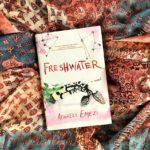
    Freshwater – Akwaeke Emezi

    A controversial story and a pretty interesting read, Akwaeke Emezi’s Freshwater is the autobiography of an Ogbanje. Yes, you read that right. Its lead character Ada begins to manifest different alter egos and down the line, shit blows up fast (read it for the full gist). An adaptation was announced back in 2019 by FX, the American channel known for another creepy show, American Horror Story. We’re still waiting to see it, so fingers crossed. 

    Children of Blood and Bone – Tomi Adeyemi 

    There was a time when almost everybody had a copy of this book either in their hands or somewhere in their house like a piece of decoration. While the author has been known to get into a little bit of drama here and there, we’re still gassed to see the adaptation of this award-winning book. The book follows its protagonist, Zellie as she fights to restore magic to the Orisha Kingdom. Currently in development at LucasFilms—the brains behind Star Wars, this is one book that seems to be in long development hell. Anyway, we’re willing to wait. 

    Who Fears Death – Nnedi Okoroafor 

    For a country that understands the intricacies of juju, it’s funny that we don’t have a lot of books that focus on magic. Chronicling the magical journey of its protagonist, Onyesonwu, Who Fears Death is one of Nnedi Okoroafor’s best works. The science fantasy novel is set to be adapted by HBO into a television series. Why are we itching to see this? Bruh, HBO gave us Game of Thrones, so we already know this adaptation is going to be fire. 

    Death and the King’s Horseman – Wole Soyinka

    Although Chimamanda Adichie’s Half of a Yellow Sun gave us a fictional glimpse into Nigeria’s political history, not a lot of Nigerian adaptations have touched on this. Based on a true story about the horseman of a Yoruba King who is prevented from committing ritual suicide by colonial authorities, this play has all the makings of a quality drama. Currently being shot by EbonyLife in collaboration with Netflix, this is one project we’re looking forward to, most especially because it’s one of the few being adapted by Nigerians.

  • You might have read these popular Nigerian novels but can you unscramble their names? Take the quiz:

    By Chimamanda Adichie

    By Kola Onadipe

    By Chinua Achebe

    Another one by Chimamanda Adichie

    By Buchi Emecheta

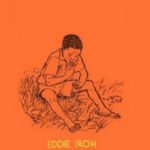
    By Eddie Iroh

    Another one by Chinua Achebe

    By Elnathan John

    By Wole Soyinka

    By Agbo Areo

    By Sefi Atta

    By Cyprian Ekwensi

    By Flora Nwapa

  • You have no right to call yourself a bookworm if you haven’t read up to 10 of these Nigerian books. Have you?

    Select all the books you’ve read:

  • As any Nigerian who grew in the Nigerian school system knows, there were certain novels we were made to read in literature class. Some of them were clearly written for kids while others were adult books we had to read anyway. I always assumed these books were picked just because they had lessons to teach or whatever, but I recently realized that it was much more than that.

    The authors of these books seemingly aimed to teach lessons in the most horrifying ways possible. Some of them went so ham that the messages got lost in the horror. Here are a couple of offenders:

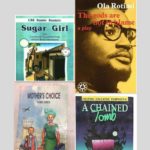
    1) Ralia the Sugar Girl

    Ralia is a happy-go-lucky village girl who everyone loves because she’s so…happy-go-lucky. At some point, she wanders into a forest and gets lost. While there, she runs into so much weird and scary shit. The worst of the weird shit is an evil topless witch with sausage boobs who threatens to dig out Ralia’s eyes and suck her blood, just because she trespassed on the witch’s property.

    Ralia eventually finds her way home and the book ends. But I’ve always thought of writing a sequel, set three years after the events of the first book, where Ralia is in an asylum because she had a mental breakdown and murdered her entire family. The epilogue would see Ralia get a visit from a mysterious woman offering to get her out in exchange for her joining a secret organization.

    The mysterious woman is Alice.

    Alice from Wonderland.

    2) A Mother’s Choice

    Mother’s Choice is about a boy named Ade. Ade has just graduated from primary school and his mother insists (despite her husband’s concerns) that Ade go to secondary school in the UK. As a weird form of foreshadowing, Ade’s father tells his wife that whatever happens to their son during his time overseas will be her fault. She agrees and lives to regret it because Ade goes to England, becomes an alcoholic, gets hooked on drugs, engages in orgies with prostitutes, gets arrested, and ends up in a psychiatric hospital. So much shit happens that by the end, you’re left wondering what lesson you were supposed to learn.

    3) A Chained Tomb

    The narrative of A Chained Tomb spans a couple of decades in the lives of a couple of people (most of them relatives) living separate lives in the same town. The main character is a boy named Uze, and he is the absolute worst kind of offspring. He joins a gang, steals, beats his mother to death in a violent rage, etc.

    By the end, Uze in prison for murder.. A friend of his named Jade comes to visit him. The warden informs Jade that Uze died two days prior. After asking to see where Uze’s grave, the warden takes her to a patch of land behind the building that serves as a burial ground for deceased prisoners with no family on the outside. Uze’s grave has an unmarked tombstone with a chain around it. Seeing the confusion on her face, the warden lets Jade know that chains are put around the tombstones of prisoners who died without finishing their sentences, to KEEP THEIR SOULS BOUND UNTIL THE END OF THEIR SENTENCE.

    And that’s how the book ends.

    TF?!

    4) The Gods Are Not To Blame

    You know what? I don’t think 12-year-olds need to be reading the Yoruba version of Oedipus Rex. I mean, the story’s themes of how free will is a myth, and fate is inescapable are awesome. But this story also contains patricide, incest, suicide, and self-mutilation.

    Your kids don’t need this.

    Damn.

    RECOMMENDED READING: 5 Nigerian Novels That Deserve Movie Adaptations

  • If you went to school in Nigeria, chances are that you used one of these books. Can you recognize them without their titles?

    Can you recognize them based on just their images?

    Here’s an example:

    Are you ready to give it a try?


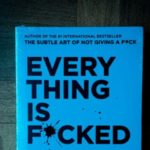
  • 1) Author: Mark Manson.

    No lies detected.

    Mark Manson book, Zikoko Okada ban

    2) Author: Chinua Achebe.

    “Things fall apart, the danfo cannot hold.”

    Chinua Achebe Zikoko Okada ban

    3) Author: Fyodor Dostoevsky.

    Crime: Being a Lagosian.

    Punishment: Being a Lagosian.

    Fyodor Dostoevsky Zikoko Okada ban

    4) Author: John Green.

    “Being stoic means preparing for the worst but in Nigeria (read as Lagos), the worst always happens.”

    5) Author: Agatha Christie.

    There were none oh this morning. No bike, no keke, only suffering.

    Agatha Christie Zikoko Okada ban

    6) Author: Hilary Smith.

    Welcome to the jungle ghetto.

    7) Author: John Kennedy Toole.

    Government: We are going to ban keke and okada

    Us:

    8) Author: Karl Wiggins.

    Government: The ban is to help reduce holdup.

    Us:

  • Let’s face it, reading can be tedious. With a crippling work schedule, long commute time, and so many adult things to catch up on, books are not just it. Especially self-development books that can sometimes be difficult to grasp. You want to relax after a long day at work and not read anything unexciting. To save you that stress, I read some of what is generally considered as the best self-development books.

    Below are key lessons from the books (something light):

    1) “The Power Of Habit” – Charles Duhigg.

    Books

    Summary: You can learn and unlearn any habit.

    Habits are neurological patterns formed in the brain and there are three parts to the formation of any habit – the trigger, the routine, enjoyment. Understanding this helps on the journey to either forming or dropping any habit. The best part? – one good habit can help in the formation of other good habits and vice versa.

    2) “How To Win Friends And Influence People” – Dale Carnegie.

    books Zikoko

    Summary: Smile, don’t be an asshole.

    Genuinely care about people and their interests. You can never go wrong with kindness, being genuinely concerned, a smile, and a sprinkle of emotional intelligence.

    3) “The Course Of Love” – Alain De Botton.

    development

    Summary: “Love is a skill rather than an enthusiasm.”

    When all the excitement and hormones of infatuation fade away? Will you still choose your partner down the line?

    Maybe they don’t wash plates or they fight danfo drivers, will you still love them? or, they like cold indomie? What will you do? Learning to love someone is a skill that must be acquired like riding a bicycle. It’s not by gra gra. It takes patience, humility, and time.

    4) “Shoe Dog” – Phil Knight (Founder of Nike).

    development

    Summary: Find the price for success, pay it, and hope you are lucky. Like really lucky.

    Life comes with opportunity costs. The price of building a worldwide business comes with the risk of failure, losing valuable time with your kids, fighting with your best friends. It can also mean making your innermost dreams come to life and the development of one of the best sports brands ever. Life is a series of tradeoffs and always know the charges that come with any option before embarking on it.

    5) Soldiers of fortune – Max Siollun.

    development

    Summary: Hands from Nigeria’s past still have a far-reaching effect on today’s reality.

    Every young Nigerian should understand Nigeria’s history. This book explains how the period from 1984 to 1993 shaped Nigeria’s current reality across political, economic, and sometimes religious landscapes. It addition, it helps to understand how good intentions can quickly go bad. “You either die a hero or you live long enough to become a military dictator.”

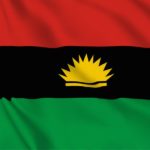
  • If you grew up in Nigeria and aren’t Igbo, chances are that you probably heard about the Nigerian civil war in detail at a later part of your life. This is because shockingly, an important part of our history is left out of the school curriculum. Seeing as we are entering the decade of intense adulting – marriage, and other serious responsibilities are going to spring up. It is important that we don’t let down the next generation as we have been let down. Therefore, it is necessary we all know what happened so that we may tell the people coming after us. To better understand what transpired and to make sure it never repeats itself, here are some books to guide you on that journey.

    1) The Making of an African Legend – The Biafra Story.

    This an excerpt from the book:

    ” This book is not a detached account; it seeks to explain what Biafra is, why its people decided to separate themselves from Nigeria, how they have reacted to what has been inflicted on them. I may be accused of presenting the Biafran case; this would not be without justification. It is the Biafra story, and it is told from the Biafran standpoint. Nevertheless, wherever possible I have sought to find corroborative evidence from other sources, notably those foreigners (largely British) who were in Biafra at the start of the war.”

    This book paints the transition from independence to the coup that led to the war. It also paints a total picture from where the country started, where it was headed, and how it veered off track. It is told from the perspective of a seasoned war journalist.

    2) Oil, Politics, and Violence – Max Siollun.

    A gripping excerpt:

    “Underestimating the win-at-all-costs mentality of the Nigerian National Alliance (NNA), the UPGA unwisely decided to boycott the elections on the ground that the NNA was planning to rig it… Due to the widespread electoral malpractices, President Azikiwe refused to call Balewa to form a new government following the elections. For several days, Nigeria teetered on the edge of an abyss as the President and the Prime Minister tried to scheme each other out of power”.


    3) Why We Struck – Adewale Ademoyega.


    Told from the perspective of one of the main coup plotters of 1966, this is an excerpt to show you how gripping the writing style is:

    “It was the dramatic end of the regime of deceit, bad faith, ambivalence, misdirection, and misrulership. Ironsi’s regime was a colossal failure”

    4) The Nigerian Revolution and The Biafran War – Alexander Madiebo.

    The book starts with this excerpt:

    “This book is not intended to serve as political propaganda material for the benefit of any section or group of individuals. It is rather a genuine attempt to render a dispassionate account of the Nigerian revolution and the civil war which took place from January 1966 to January 1970.”

    5) The Tragedy Of Victory – Godwin Alabi-Isama.

    Excerpt:

    “My attraction to the army was rather unusual because there was nothing military about it. It was not borne out of the usual big talk of love for the fatherland to fight to save the country in the face of external aggression, or against centrifugal forces aiming at getting the country disintegrated. I was 19 years old in 1959 when I first saw the army march past at Oke Bola in front of Ibadan Boys’ High School (IBHS). I neither knew nor even suspected any potential threat to our country’s socio-political stability. But with the benefit of hindsight today, I can say that some important people might have known that real challenges confronted the nation and so did some senior military officers at that time.”

    The best part of this book is the use of pictures to tell stories and the way the author takes you in the transition from peace to war using his life to map timelines. You also go from boyhood to manhood and from peace to war.

    6) Surviving Biafra: A Nigerwife’s Story by Elizabeth Bird and Rosina Umelo.

    The book draws you in with this introduction:

    “One cold morning in 1950s London, Rosina (‘Rose’) Martin struck up a conversation with a young Nigerian on a station platform—Royal Oak, she recalls. The two were worlds apart; John Umelo, born in Eastern Nigeria, had come to London in the waning days of colonialism, ‘thinking the streets were paved with gold’. Rose was born and raised in Frodsham, Cheshire, a small market town of barely 5,000, about sixteen miles south of Liverpool. Over the next days and weeks, their relationship grew; defying social norms, they first lived together, had a son, and then married in 1961.”

    This book is important because it tells the story from a civilian point of view and it is therefore apolitical, unlike many stories that are told by participants of the war. It is also from the perspective of one of the few women who have written about the war. It narrates what it feels like to be caught up in the war as an ordinary person.

    Did we miss any book that paints an objective view? Let us know in the comments section.

  • Yeah, we’ve heard that Nigerians–Africans in general–don’t read. While awfully stereotypical that narrative is, it is also untrue.

    Just like in any other place, there are individuals who love to read and some that can’t stand the sight of books. However, for those bibliophiles looking for where to buy used books, here are five places you can get them:

    Ikeja-Along Bus Stop:

    Beside the railway line, right under the pedestrian bridge. There are different genres to be found here, including sci-fi, dystopian, suspense, horror, romance and more. Book prices range from N100 to N1000. Yes, we know, that’s quite a steal!

    Ojuelegba Bus Stop:

    You’d find different kinds of used books here, but the book sellers mostly favor self-help books, old editions of fashion magazines, and newspapers. You can also get rare finds, books like Latin history, encyclopedias, Guinness book of record and more here.

    Obalende Bus Stop:

    Also a major bus-stop in Lagos like the other two, Obalende boasts of used book sellers although with fewer sellers and books. Here you’d mostly see African literature, children’s books and a few motivational books. Hardcore literature or classics are a rare find in Obalende

    Egbeda Bus Stop:

    There’s a used book seller by the bus stop, beside a shopping complex, who mostly sells genres such as romance, chick-lit, suspense and crime and the occasional classic. All at low cost, usually from N100.

    Ikeja Bus Stop:

    Yes, Ikeja again! Ikeja bus sop is filled with several used book sellers, some with kiosks, some with just tables and others displaying their wares on the floor. These sellers can be found in the midst of the hustle and bustle of Computer Village.

    Used books that can be bought here include; self-help books, religious books, DIY, motivational, textbooks, fiction, nonfiction, memoirs,autobiographies and more. Prices start from N500.

    You’re welcome!