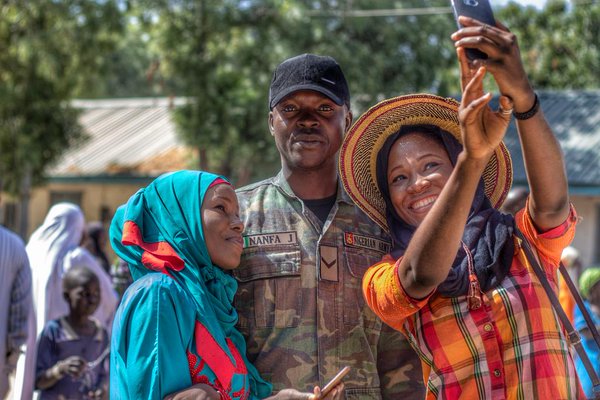
In case you missed it, Nigerians are now required to walk around with a valid means of identification to avoid being apprehended by the Nigerian military as suspects of kidnapping, banditry, armed robbery, ethnic militia, or any other criminal activity in the country.
Apparently, this “Operation Positive Identification (OPI)” by the Nigerian military has been happening in the North-East for awhile now and it will be implemented nationwide from November 1 to December 23.
So if you’ve been living la vida loca in Nigeria without a documentation to show you exist, you now have about a week’s notice to go get a valid ID card.
Because, yes, Nigeria is like that.
Possible Effect On Citizens?
This military operation was supposed to have commenced on October 7th but it was rescheduled, in order to give the military ample time to prepare. Yet, I’m pretty sure many people are not ready to be accosted by military personnel at anytime.
We all know the force needs no excuse to harass citizens but they’ve been given a perfect one with this development.
Considering SARS remains a constant pain in the neck, one that even the Vice President’s interference couldn’t get rid of, is it any wonder that we should be wary about this?
How Effective Will It Be?
According to a report by Premium Times, only 19% of Nigerians have national identity cards; we mustn’t forget that many people who register have to wait for YEARS to actually get the permanent ID. There are even more people without a voters card, drivers license, international passports or any other ID. Does this mean people who don’t have ID cards are engaging in criminal activities?
Isn’t it proper for thorough investigations to be carried out instead of arresting someone on a whim with no evidence in sight because they have no ID’s?
Can we take a second to realise that the actual (suspected) criminals will actually have proper means of identification? Think of Evans and Hamisu Wadume and then you have your answer.
Also, isn’t this operation a tad bit inconsiderate to Nigerians? Yes, we know its said to be in the interest of everyone, to rid society of terrorists. But, isn’t there a better way to do this, without infringing on citizens right to freedom of movement?
Every week, Zikoko seeks to understand how people move the Naira in and out of their lives. Some stories will be struggle-ish, others will be bougie. All the time, it’ll be revealing.
The guy in this story has literally been trained all his life for one purpose; to fight and defend the sovereignty of his country. Doesn’t mean he doesn’t think about money or worry about it sometimes.
When did you first earn a salary?
My first salary was ₦2500 per month.
Huh?
Oh, it was 2000 when I entered JSS 1. I was 11 years old. Every boy soldier received a salary – there was the extra ₦5,500 transport allowance. It increased as we climbed classes, but somehow I can’t remember how much it was increasing by.
What school was this?
N.M.S. – Nigerian Military School.
I think NMS ingrains this spirit of independence in you, because the moment I entered NMS, I never really depended on my parents for money again. Also, it’s like they started grooming us for manhood at such a young age.
At that time, even though I was still tiny, people said I behaved like a 20-year-old.
Right after NMS, I gained admission to a regular University. But that’s not where I wanted to be.
Where did you want to be?
The NDA – Nigerian Defence Academy. I got admitted in 2009 eventually. I remember my first salary – they gathered our money for a few months and paid us ₦120k. When you resume at the NDA in October, you don’t get paid till December.
What happened next?
Moving forward, they paid us ₦28k, then they did a compulsory savings of ₦14k per month for us. When you’re passing out, they give you all the money they saved for you. While passing out, past administrations used to give fresh officers a Peugeot 206. But they were no longer giving that when I graduated.
Anyway, by the time I was graduating, I was given close to a million naira.
Mad. Freshly minted Soldier. One million bucks in the bank. What did you do with it?
Omo, I no know o. I have no idea exactly what I used that money for. I was just buying and buying and buying. I later regretted it sha. I felt I could have used that money productively.
How?
Maybe invest in property? Even if it’s to buy land in one village or something. Then maybe it would have grown in value. I was just buying wristwatches, perfumes and rubbish-rubbish things. But if it happened now, ah man done sharp.
If you no get sense for Nigeria, you no fit get sense for this life.
When did you graduate from the NDA?
2014. I remember looking at my decorated shoulder like, oh boy na me be this? Best day of my life. There’s this sense of joy I feel by just being an officer and the prestige that comes with it. There’s some access you get that even people with money don’t get.
They gave us a two-week break, and the next thing, we were at the frontlines. I was 25.
Ehn?
Yes. In the Northeast, fighting Boko Haram. I’ve spent my entire time as a soldier there. I can’t remember the last time I spent a celebration or festive season with my family. In fact, there was one festive season we were out on an operation. The town we went to was one of those towns that was once captured by Boko Haram before we recaptured it. I’ll tell you what we did: We got a goat, killed it, made barbeque, then danced, and sang. We had a really good time.
To be honest, I think not being dependent has made being away for long periods easy – it’s a mindset.
That’s interesting – the independent part. Especially since the military forces you to conform to a routine.
One thing about the military is that you have to love it. You need to train yourself to love it, irrespective of the outcomes. There will be good days, and there’ll be bitter days.
Talking about bitter, I’m curious, what’s your most bitter experience?
Ah, there’s this superior I respect a lot. We eat together and gist together. He’s also one of the soldiers who trained me – we were really close.
One time, we went on an operation. I can’t give you the full details, but there was Boko Haram, and there was heavy gunfire.
This senior officer got hit 5 times. Like, 5 actual bullets to the torso and thigh. I was watching him bleed out, and was willing to donate, but our blood groups didn’t match. In the end, he got airlifted and made a recovery. Those moments, knowing he could have been dead any moment, were really heavy for me.
Another officer I knew; they went out, and their truck got blown away by an IED. Just like that.
Personally, there’s something about constantly hearing or expecting someone to say “them dey come, them dey come” – Boko Haram that is. It stresses your mind.
In a scenario where he’d died – grateful he didn’t – what would that have meant for his family?
Someone would have made a call to his wife to tell her; the person would tell her how he fought well and died.
Then arrangements would begin for all his benefits.
What are the benefits?
When someone dies, there are different allowances they pay:
Group life insurance
Death benefits
Burial expenses, can’t remember the rest.
Also, there are educational benefits – I can’t remember all the details – for his first three children up to tertiary level. The Nigerian Army pays.
In the end, about five different allowances are accrued to your next of kin. Even if a person gets injured in battle and they have to be dismissed on medical grounds, they still get insurance benefits
You know, I think I know these things because I have a good sense of how the army works, including a lot of the administrative work that many people don’t care for.
So when I hear people say the Army doesn’t take care of the families of the deceased, I know it’s mostly lies and ignorance.
I’ve helped a friend’s family process their benefits after he died in battle.
Okay, back to you about money, what was the first salary the Nigerian Army paid you?
₦165k net. Everything else is deducted – tax, pension and health insurance. I also get an operation allowance of ₦45k every month. It’s an allowance for serving in the Northeast.
There are also other allowances – for example, if you go for a language course, that’s an additional ₦20k. I’m going to learn Spanish.
Spanish? Does this have anything to do with Barca?
Hahaha. No, I just like the language. I’m not really a football fan like that.
How could you be a football fan when you’re constantly out fighting or preparing to fight?
Ah, forget o. Some people go dey frontlines, still dey watch match, dey argue who play pass. Some people even have cable dishes hanging out of their tents when they’re camping out for long periods. You’ll see people finding all sorts of ways to hang their dishes, still watching, still buying subscriptions.
You have to make yourself happy somehow. It’s yours to defend.
Completely random, but what’s your body count?
Seriously, I dunno. I’m in the artillery, and we fire from long distances. So the orders come like, they are in so and so place, drop two there, drop one there, drop three there. My own job is to calculate the ranges and fire and make sure we hit our targets.
There was this time when Boko Haram was advancing towards a town. There was going to be a lot of fighting; we had to evacuate civilians from the place first. In trucks. It had to be quick. We told them to get on the trucks we brought before a particular time. Missing that truck was as good as missing out on life.
Because when the fighting started, artillery first, anyone who was still there after the evacuation: boom, boom, boom. Na one chance.
Wait, I need to take a call. It’s my babe…
…Okay, where did we stop?
Let’s start with her, how does she feel about you being a soldier?
I made her understand that this is my life. This has been the only life I’ve known. And she seems to be fine with it.
Okay, back to money; how has your salary increased every year?
It’s +8k every year, all things being equal.
So you already know what you’ll collect in 10 years time?
Yes. But then this minimum wage conversation might change that. So allowances are where income becomes slightly different.
Let’s talk about your current net?
Currently, my salary is ₦205k, add my operation allowance and that brings it to a total of ₦250k.
Here’s the fun part: How do you spend the money?
The first thing is, the more time you spend on the frontlines, the less money you spend. So now, the expenses tend to be the recurring things: Subscriptions, phone calls, family, and just baby boy stuff. For my savings, my babe was telling me about one of these savings apps, but for now, I use a separate account.
So money doesn’t come in from anywhere else?
Oh, I farm. Let me tell you how it started. A few years ago, I was like, what else can I do besides this my usual salary? So I started a fish pond at my base. But the problem was that, even though I made a profit on my investment, I couldn’t give it the time it needed. My time is not my own.
So I switched to crops and went to get land. I invested 200k in the whole thing: labour, seedlings, fertiliser – minus land, the Local Government gives you land if you want to farm.
I got 3 acres, and in less than 6 months, I harvested 90 bags of corn. Sold it at 8k per bag. Calculate it.
I didn’t even maximise the farm to the max, again because of time.
To be honest, my own was even small. Someone I know – a superior – harvested 150 bags of rice and 200 bags of corn a few years ago. I know a hunter who was sleeping in his farm during planting season. When he came back, he’d harvested 800 bags of beans (35k). Over 4000 bags of corn.
Eventually, I’m going to just buy more land and pay more attention to it. The Bank of Agric has made these things way easier than they were a few years ago.
There’s just so much money that can be made from Agriculture. Take for example, I bought three really big rams before Sallah season – one died – but how much did I buy them each? 10k. I’m going to put them on a trailer to Lagos. Do you know how much each of them will sell for during Sallah? Up to 60k. Remember that I’m not spending a dime on food. They’re just roaming around, eating grass.
Farming looks difficult to start, but when you get a hang of it and put things in place to minimise risk, you go blow.
What’s the last thing you bought that required serious planning?
I did Ajo for 10 months with a few people and bought a car for ₦1.5 million. I generally don’t have big expenses, well until I started planning for marriage.
Ah, Bae and Baello, how’s that going?
It’s really expensive. It’s a constant struggle because one family member makes a decision, and that decision will cost you extra money.
For example, the hall we might be using will cost ₦450k. The photographer is going to cost ₦250k. I’m trying to budget and the money just keeps increasing and increasing, meeting after meeting.
For example, when we did Introduction, her family wanted to do big things like getting an outdoor space, and calling crowd. But we resisted and all that. Do you know how much it cost? ₦500k.
₦500k for ‘Hello?’
Oh boy, it’s not easy. The lifesaver is that my babe is taking care of most of her own expenses, like bag, shoes, makeup and all that. And I’m just grateful because she’s paying for all of these from her own hustle. She told me she wanted to start selling stuff, so I gave her some money to start.
Interesting. How much did you give her to start?
₦50k. And now, na she dey reign. Whenever I need money now, she’s the one that bails me out. It’s funny how it all started. She was in school when she said she dreamt that she was selling stuff. I told her to do her research, and when she was sure she wanted to do it, I was like, I have this ₦50k I’m not using. Oya take. And that’s how it all started.
You know, I’d love to talk to your wife sometime.
Whenever you’re ready. One of the reasons I like her is that for every money she spends, she’s constantly thinking of how she can earn it back. Whenever I’m getting reckless financially, she just says Oga, you done dey do pass yourself.
It doesn’t mean she doesn’t like enjoyment, her discipline is just on point.
If you had to rate your financial happiness now, over 10.
Oh boy, 8 over 10. I can buy anything I want to buy at any time. I pay all my bills. I can afford all my needs. To be honest, the only thing that I really want that I can’t afford is a house.
When do you think you’ll retire?
I’m doing this day by day, I don’t think about it too much. That’s all.
Nobody wants worst-case scenarios, but what happens to your family if disaster strikes on the frontlines?
I think it just feels good to know that my family will be fine.
I hope you don’t have any more questions. I have to leave now. It’s a long night ahead.
What’s happening?
Work.
That’s all. Thank you man, for everything.
This week’s story was made possible by ARM LIFE INSURANCE. Find out how to get started here!
Check back every Monday at 9 am (WAT) for a peek into the Naira Life of everyday people. This story has been edited for clarity. But, if you want to get the next story before everyone else, with extra sauce and ‘deleted scenes’, subscribe below. It only takes a minute.
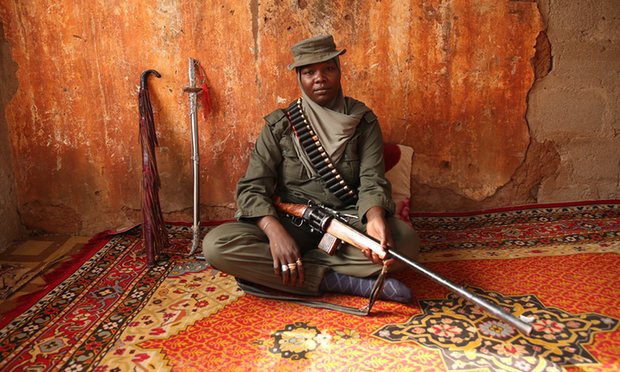
Meet Aisha Bakari Gombi, one of the few female volunteer recruits that’s helping the Nigerian Army fight Boko Haram.
Thousands of hunters are helping to win the war against Boko Haram in Borno State, but there are only a handful of women involved.
The 38-year-old was born and brought up in an area close to Sambisa forest, where the Boko Haram insurgents now operate from.
Even though the Army, with the help of the Volunteers, have sacked Sambisa Forest, the insurgents are now regrouping.
Aisha used to hunt antelopes with her grandfather, but now she leads a team of 15-20 male volunteers.
The hunters under Commander Aisha’s team have been able to rescue a good number of Boko Haram captives and neutralise the insurgents.
She is one fierce woman!
Boko Haram know me and fear meAisha Bakari Gombi
Although she has limited training, Aisha is quite happy with her job. Her only hope is that the Army provides the hunters with more sophisticated weaponry.
The volunteers are forced to use barrel guns against the insurgents who are more heavily armed.
The lack of arms is not a big surprise, considering the ‘copy and paste’ of public funds some top officials do.
Former National Security Adviser, Col.Sambo Dasuki is currently facing a 47 count charge in court for allegedly diverting state funds. People are also calling for the probe of Army Chief, General Tukur Burutai for using public funds to buy property in Dubai.
People like these make Aisha’s job much more harder, but women are resilient AF!
Bad ass women everywhere.
As if the damage caused by Boko Haram to the Internally Displaced People of Borno isn’t enough trauma, the Nigerian Airforce claimed to have ‘accidentally’ bombed an IDP camp in Rann, Borno state on January 17.
This unfortunate news stirred an understandable amount of rage from Nigerians on Twitter:
Whenever the name ‘Shekau’ is mentioned, the picture of the loud-mouthed leader of despicable terrorist group, Boko Haram, only comes to mind.
The most interesting fact, however, is how Shekau has come back to life after the Nigerian Army has reported his death more than 3 times since the onslaught against Boko Haram started in 2011.
To be fair, in 2016, the Nigerian Army has made commendable efforts to bring an end to insurgency in North Eastern Nigeria. In fact, some of the people who fled the war are returning to Borno and a few schools have been re-opened.
Although they reported his death or serious injury in August, he recently released a video claiming he was well and alive.
Na wa o! Is he Lazarus?
How many lives exactly does he have abeg?
Please, men and women of the Nigerian Armed Forces, wyd?
He needs to make up his mind if he’s going to die or not because this his resurrection game has become really boring.
North Eastern Nigeria has faced 2 years of brutal fighting between the Boko Haram sect and the Nigerian Army. Borno has the highest number of IDPs – over a million, and while everyday activities were almost at zero the past few years, life is finally coming back to the state, thanks to the Nigerian Army.
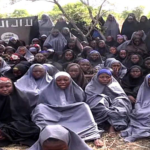
Public schools were closed during the 2 year conflict, and after the horrific capture of over 200 girls from a school in Chibok town.
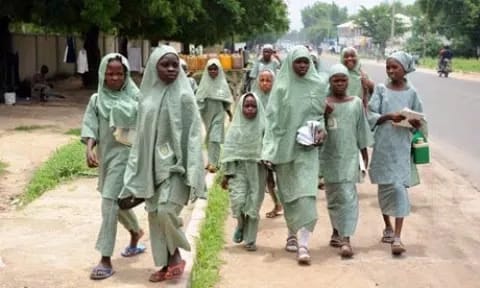
This Twitter user shared pictures of students attending classes in Gubio LGA.
The Borno Stare Government announced recently that all public schools have been renovated and will now be open for students to continue their education.
We are really just thrilled that these kids can finally go back to living a normal life, in a safe environment.
In April 2014, 276 schoolgirls in Chibok, Borno state, were kidnapped by Boko Haram terrorists and till date, many of them remain in captivity. Although some of the girls managed to escape, including those rescued by Nigerian soldiers over time, the current plight of the other girls yet to be rescued remains a cause for concern.
Knowing the relevance of telling Nigerian stories as a way of spreading awareness, Nigerian filmmaker, Uche Aguh, wrote and directed ‘Sambisa’.
‘Sambisa’, a short film based on the short play titled, ‘Into The Sambisa’, narrates the story of the unfortunate kidnapping in 2014.
This short film will premiere across Nigeria later during the year.
In the mean time, you can watch the trailer below:
On July 5, Emmanuel Nnamdi and his wife Chinyere were walking through Ferno, in northern Italy, when an Italian man, Amedeo Mancini, called her an African monkey and tried to grab her.
As expected, Emmanuel came to her defence but lost his life from the resulting fight that broke out.
People who witnessed this horrific event stated how Mancini attacked first and continued to beat Emmanuel with a street sign until he lost consciousness.
Mancini, who was described as an extremist football fan with links to a far-right political party, claimed he only insulted them because he thought they were stealing a car.
What makes Emmanuel’s death more unfortunate is, he and Chinyere left Nigeria in 2015 after Boko Haram terrorists set their church on fire, killing both their parents and relatives.
After embarking on a dangerous journey to Italy through Libya, the couple were housed by a Catholic organisation that joined them in marriage in January 2016.
Italian interior minister, Angelino Alfano, condemned Emmanuel’s death with a promise to grant Chinyere refugee status .
Although Emmanuel’s wake was attended by many sympathizers, the political leader of an anti-immigrant party still blamed his death on immigration.
This goes to show how racism affects every person of colour in all parts of the world. Nigerians are entitled to live in a safe country and shouldn’t have to look for security outside the country.
When Borno state is mentioned, images of war, blood and towns ravaged by terrorists come to mind as a result of the Boko Haram insurgency.
However, Fati Abubakar, a photographer from Borno wants to change the war narrative and show the world the real people who have survived the crisis.
With the ongoing military onslaught against the Boko Haram terrorists, Borno has slowly started coming to life.
Fati wants to show how the people of Borno are starting over, healing and ultimately building their communities from scratch.
Some of her shots include children and adults, including these little girls at a mini fashion shoot.
And little Maryam, who was excited about her new dress and toy.
Schoolchildren aren’t left out too.
Acording to her, the people of Borno still find it difficult to get clean running water.
However, this problem is gradually being solved with the construction of a number of UNICEF boreholes.
Some of the internally displaced people even produce hand-stitched caps for sale.
And the Kanuri people just know how to get down.
Even after losing so much to war, their spirits remain unbroken and they will continue to rebuild their community one piece at a time.
It has been two years since the Chibok schoolgirls kidnapping of April 2014 which sparked campaigns worldwide.
On May 17, one of the schoolgirls , Amina Ali Nkeki, was found by a local vigilante task force in Sambisa Forest and then handed over to the Nigerian troops. The 19 year old was found with her child and a suspected Boko Haram member, Mohammed Hayatu, who claimed to be her “husband”.
It brings a bit of relief to know that some of these girls are alive, and faith in the Nigerian Army has been restored to an extent.
What makes her being an under-aged mother more outrageous is the fact that media publications are referring to him as her husband despite the fact that she was kidnapped and “married off” against her own will.
This “cozy” picture of her and Mohammed Hayyatu was taken while they were going through medical checks at the Air Force medical facility.
It begs the question of why this picture went public in the first place. Even if Mohammed Hayatu isn’t a Boko Haram member but a husband as he claims to be, did he suddenly become best friends with the terrorists that they just let him marry one of their captives?
Amina’s rescue, without doubt, has to be the most talked about topic considering the fact that she’s one of the Chibok girls.
She and her child met with President Buhari which is an impressive show of concern from the president.
The most uncomfortable part of Amina’s rescue is the disregard for her privacy. Her meeting with the President turned out to be a press conference and her HIV test results have been plastered all over the internet, thank God it came out negative.
While Amina’s privacy hasn’t been respected, not much is known about Mohammed Hayatu. How did he become a Boko Haram ‘captive’? And if they were both prisoners of Boko Haram, how were they allowed to get married and have a child in captivity?
Mohammed Hayatu’s story just isn’t adding up. And the circumstances around their rescue is suspicious at best. Understandably, Amina has been unable to confirm or deny the numerous speculations being thrown about by various media outlets. Which is why the media circus around her since she was rescued should not have occurred in the first place.
For someone who has been in captivity for two years when other girls her age probably made it into university, one would think she would be undergoing psych evaluation and rehabilitation.
Mohammed Hayatu is currently in the custody of the Nigerian Army but proper investigation and prosecution ought to be carried out immediately. Although there are some other unanswered questions from this story, we hope the other girls return home safely and justice gets served.