• On October 3, 2025, US Senator Ted Cruz made a post on X (formerly Twitter), claiming that Nigerian officials are helping with the “mass murder of Christians by Islamist jihadists.”

    Since then, people have been arguing about whether there is actually a religious genocide happening in Nigeria.

    To be fair, Nigeria has been dealing with terrorism in the North for decades. Thousands of lives have been lost, and millions of people have been displaced. Then there is the farmer-herder conflict, especially in the North Central (Middle Belt) region, which keeps tearing communities apart.

    But what is really behind these conflicts? And do they actually prove that Christians are being specifically targeted?

    A history of violence

    The religious terrorism of terror groups in Nigeria’s North is a complicated issue with deep historical roots. Analysts trace it back to unresolved resentments from the carving up of territory and the work of British missionaries during the colonial era.

    Since then, different groups have popped up preaching an extreme form of Islam that rejects all Western influence. These groups are usually started and led by charismatic men with deeply conservative religious views.

    There was Muhammad Marwa’s Maitatsine in the 1970s, then Mohammed Yusuf’s Boko Haram, which has evolved, splintered and had different leaders over time.

    These leaders might genuinely believe in their doctrine, and many of their followers do too. But to really understand the nature of the violence in Nigeria, you have to look at how these groups recruit.

    Get More Zikoko Goodness in Your Mail

    Subscribe to our newsletters and never miss any of the action

    The root of all evil

    In the 1970s, Marwa recruited most of his followers from poor members of the Kano population, especially the Almajirai. He drew them in by calling out the hypocrisy and flashy lifestyles of rich Northerners, who he said had been corrupted by Western influence. He tapped into a very real resentment that comes from wealth disparity.

    Almajiranci is a system of Islamic education in which children, usually from poor families, leave their families to study with an Islamic teacher. They survive on alms earned through begging.

    Years after Marwa led his followers in the Kano Riot of 1980, which killed over 4,000 people, including himself, Mohammed Yusuf showed up with a similar tactic.

    Yusuf opened a school in his hometown in Yobe state, where poor families enrolled their children. This became a recruiting ground for Boko Haram members from the impoverished and alienated Northern population. He established micro-financing programs to loan small amounts of money to individuals, which created a large following of loyal youths for him.

    It is the same pattern we are seeing now with the terror group known as Lukarawas, which burst onto the scene in early 2025, offering ₦1 million to new recruits as part of their recruitment drive.

    This trend has played out in other parts of the country. The South has seen violence from armed groups in the Niger Delta, and the East from secessionists. Both are driven by feelings of economic and political dissatisfaction. People feel the government is not looking out for them, so they lash out.

    Nigeria is a very poor country with a shocking wealth disparity. The poor are facing actual starvation, while the rich are loud and proud with their wealth. That is always a recipe for unrest.

    Drought and a rain of bullets

    Truthfully, the violence has been creeping further south for a while now. And as it moves from the majority-Muslim populations of the North to the majority-Christian populations in the South, it is getting a lot more coverage, with some communities alleging ethnic targeting. But the violence has more to do with climate change than religion or ethnicity.

    The nomadic herdsmen of the Fulani ethnic group are being pushed further south by changing climate conditions. This has led to more clashes with the farming communities in those regions. The easy access to weapons—thanks to the terrorist conflict in the North and Nigeria’s loose borders—makes these clashes deadlier.

    Niger, Benue, Plateau, and recently Edo state have been major flashpoints. But farmer-herder clashes have also been reported as far south as Enugu, Delta and Bayelsa.

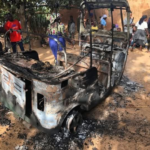
    Sadly, the cycle of violence has gone on for so long that it has taken on a more bigoted tone. An “us versus them” mindset. You can see this in the recent burning of a group of Hausa travellers by youths in Edo State.

    But we must not lose sight of the real reasons behind these conflicts: scarce land resources made even scarcer by rapid climate change.

    Cho cho cho! Ted, show working

    After his initial post on October 3, Senator Ted Cruz made another post on October 7, claiming that 50,000 Christians had been killed since 2009. He did not provide any source for these numbers.

    The numbers of casualties from the violence vary with sources with different sources claiming vastly different numbers. Also, there is an unfortunate trend in media coverage, especially in the west, is the underreporting of Muslim victimisation.

    A 2020 Oxford Journal of Communication study which analysed Western media coverage of Boko Haram attacks in Nigeria found that Muslim victims received significantly less coverage than Christian victims.

    Still, a 2014 African Studies Centre report estimated that two out of every three Nigerians who died in the conflict with Boko Haram were Muslim.

    In 2021, the United Nations Development Programme (UNDP) reported that 35,000 people had been directly killed by terrorist activity in the North East (specifically Borno, Adamawa and Yobe), all Muslim dominated areas.

    The report estimated there were around 315,000 more deaths due to indirect factors such as lack of food and other resources caused by the conflict. So, a total count of around 350,000 deaths due to the conflict between 2009 and 2020.

    The report also projected that by 2025, the death toll would have risen to around 48,000 direct deaths and 674,000 indirect deaths.

    We are all targets

    An important point about the Boko Haram insurgency that is often left out of media reporting is the deliberate targeting of Muslims. So let us talk about the concept of takfir.

    Takfir is the excommunication or declaring of a Muslim as an apostate, which is punishable by death.

    The concept is used by Islamic terrorist groups as justification not just to discount the deaths of Muslims due to their actions, but also as justification for specifically targeting them. Boko Haram is a takfiri jihadist movement.

    Abubakar Shekau, the leader of the group from 2009 until his death in 2021, was quoted as saying, “Even if a woman is praying and fasting, once she engages in democracy, I can capture her in a battle.”

    Any Muslim who is not an active member of the group is considered an “apostate”, and for members of the group, it is not just acceptable to kill them, it is a duty.

    No matter your religion, to fanatic terrorists, we are all targets.

    Why now?

    They say not to look a gift horse in the mouth, but we are not sure that saying makes sense here. In this situation, it is very important to ask, “Why now?” Why the sudden interest from the US government at this particular time? And why is it coming from the right wing of American politics?

    Senator Ted Cruz’s first post on the issue came on October 3, 2025, just a little over a week after Vice President Kashim Shettima told the UN General Assembly that Nigeria supports a two-state solution in the Israel-Palestine conflict.

    It is easy to see how pro-Israel voices might try to stoke Islamophobic sentiments in Nigeria to distract us from rightly empathising with the majority muslim population of Palestine. 

    Senator Ted Cruz is a fierce supporter of Israel’s interests. He receives campaign funding from the American Israel Public Affairs Committee (AIPAC), a pro-Israel political lobby organisation.

    It looks like this particular gift horse has Israel lobby money in its mouth.

    All I want to say is…

    The reason we are so tempted to quote the King of Pop himself is because the attitudes towards insecurity in Nigeria give us very little hope that this new concern is coming from a good place.

    In 2014, the US refused to help Nigeria fight Boko Haram, citing human rights violations by the Nigerian military. Then, on October 26, 2020, a US citizen was kidnapped at the border with Niger and held in Sokoto State. Five days later, US special forces rescued him with zero casualties.

    So we have to ask: why has a country with the ability to carry out such a successful mission on Nigerian soil not offered more help earlier in the conflict?

    In an X post, Cruz claimed to know the masterminds of the so-called Christian genocide. He wrote, “The United States knows who those people are, and I intend to hold them accountable.”

    Again, we ask, “Why now?” How long has the US known the masterminds behind Nigeria’s violence? And why is it only after Nigeria has spoken against US and Israeli interests that Senator Cruz has decided to act?

    In the words of Michael Jackson: “They do not really care about us.”

    Following Ted Cruz’s lead, United States House of Congress member Riley Moore has called on the US government to sanction Nigeria over what he called “systematic persecution and slaughter of Christians.”

    He asked for Nigeria to be declared a Country of Particular Concern (CPC) so the US can stop all sales of weapons and technical support to Nigeria. The irony of criticising the Nigerian government’s inability to protect its citizens by taking away even more of that ability.

    The Nigerian military is not doing enough, but surely, when we take away their guns, they will finally defeat the militants.

    We are not pawns

    Nigerians must not allow themselves to be used as pawns in the US propaganda war. To these US politicians—who are far removed from the conflicts they stir up, whether in Gaza or Maiduguri—it might all feel like a game. But it is not a game to us, the people who live through the violence and its effects.

    The stakes are too high for us to be dragged into a simplistic and bigoted version of a very complex issue. The genocide of Christians that Ted Cruz and his people talk about simply does not exist. The numbers do not support it. Saying otherwise ignores the countless Muslim lives that have also been lost.

    What is true is that Nigerians, Muslims and Christians included, are being killed and displaced in huge numbers. And that is a problem that deserves our full attention until it is solved. But it can only be solved by working together, not by tearing ourselves apart along religious or ethnic lines.

    How do we fix it?

    A United States Institute of Peace report from 2014, “Why Do Youth Join Boko Haram?” listed the causes of the insurgency as “poverty, unemployment, illiteracy, and weak family structures.”

    To weaken these armed groups, it recommended that the Nigerian government “strengthen education, job training, and job creation programmes; design robust programmes to aid destitute children; promote peace education; and embark on an anti-corruption campaign.”

    The report concluded that fixing these issues would greatly reduce the strength of the insurgency or even wipe it out completely.

    As a people, we need to come together and choose leaders who understand these problems and know how to solve them. That means getting involved in politics and using our democratic tools. Get your PVCs and vote!

    What you can do right now is not let yourself be used to spread harmful propaganda. Do not share or repost those narratives on any platform. Instead, post messages that unite us, and share well-researched data, facts and figures that expose the lies.

    Most importantly, we need to realise that our solutions are here, at home. The US is not coming to rescue us. We have to save ourselves.


    Talk to us hereIf you have had any experience when Nigeria’s systems made life harder or unexpectedly easier, we want to hear about it.


    Click here to see what other people are saying about this article on Instagram

    [ad]

  • Photo image of a tricycle burnt during an attack on a Plateau community. Photo: Amnesty International

    If you said Nigeria is in hot soup now, you’d be absolutely correct. From Boko Haram’s not-so-subtle comeback in Borno, the disturbing attacks in Plateau State, and the recent attacks in Benue, it’s been a hell of a month for Nigerians. If you didn’t already know what was going on, this article is your opportunity to catch up.

    Unexplained bloodshed in Plateau

    If you were anywhere near X (formerly known as Twitter)  at the start of April, you’d agree that the month sort of started well for Plateau State— its capital city, Jos, was getting lots of love and organic PR on the TL and it had people bookmarking a shit ton of tweets and adding visits to Jos on their bucketlist.

    The renewed excitement for the city’s beauty didn’t last long, though, because almost immediately these posts made rounds on X, news of bloodshed trickled in and took over. The thing is, we started hearing about them a little longer after they happened.

    The attacks first resurfaced on March 28, as the month closed out. If we were counting for the current month, we’d begin with April 2, when armed men brutally attacked communities in the Bokkos Local Government Area (LGA) of Plateau State and reportedly killed about 52 people, injuring many others. On that same date, there was also an attack on the Dundu community in Bassa LGA, which left three farmers dead.

    Photo image of Plateau residents fleeing their community after an attack in 2023. Photo:AFP

    After that first attack of the month, it pretty much went downhill from there. On April 7, Hurra village in Kimapka District was thrown into mourning after an attack left three farmers dead.

    The attackers, whether they were the same group or not, were not taking any breaks because on April 8, they struck again, three separate times on communities in Kwall District and Miango District, both in Bassa LGA, leaving two farmers dead. 

    April 9 saw a herder killed, many cows poisoned, and others stolen in Keweke, Zoronvic,  and Ariri communities, both in Bassa LGA.

    April 12 came with the news of an attack on Zogu village (in Bassa LGA), which left two farmers, both father and son, dead.

    One of many damages caused by the April x attack on the Zike community. Photo: Premium Times

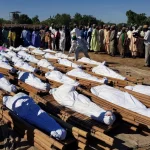
    At midnight, on April 14, gunmen unleashed violence on the  Zike community in the Kwall district of Bassa LGA, killing over 51 people, leaving many injured, and properties destroyed.

    “It’s ethnic cleansing”-Plateau Governor

    Plateau State Governor, Caleb Muftwang, speaks during an event. Photo: DailyPost Nigeria

    Since the attacks on Plateau State resurfaced, Nigerians have asked to know the attackers and their motive; the governor of the State, Caleb Muftwang, on the one hand, has told anyone who cares to listen that they’re not ordinary, but are measured and carried out by “known groups” to eliminate indegenous ethnic communities.

    “As I am talking to you, there are not less than 64 communities that have been taken over by bandits on the Plateau between Bokkos, Barkin Ladi, and Riyom local governments,” Muftwang said to Channels TV during a recent interview. “They have been taken over, renamed, and people are living there conveniently on lands they pushed people away to occupy.”

    The former governor of the state, Jonah Jang, made a not-so-different comment. In a statement released on Tuesday, April 15, he said that describing President Tinubu’s use of ‘communal conflict’ in describing the attacks as inaccurate.

    “The attacks in Plateau State are not merely communal disputes; they are perpetrated by a known group with a specific agenda,” he said.

    While Muftwang and Jang suggest the attacks are ethnically motivated and carried out by known groups, they have not mentioned the people responsible.

    President Tinubu, on his own end, has, as usual, promised an end to these killings, but Amnesty International has called BS.

    “Issuing bland statements condemning these horrific attacks is not enough,” Amnesty International said in a statement released on April 15.

    Boko Haram’s come back to the Northeast 

    While unknown armed men wreaked havoc in Plateau State, Boko Haram also staged a not-so-subtle comeback in Northeast Nigeria.

    For some time now, it seemed as though the region which was ravaged by terrorism was catching a bit of a break, but they might be coming back again. The alarm was first raised on April 8 by the governor of Borno State, Babagana Zulum.

    So far, the attacks recorded by the media this month include an April 12 landmine attack along the Damboa-Maiguguri highway, which left eight people dead and over 17 injured.

    Photo image of the destroyed Mandafuma bridge. Photo: Daily Post Nigeria

    On Tuesday, April 15, terrorists suspected to be members of the Islamic State West Africa Province (ISWAP) destroyed the Mandafuma bridge in Maiduguri after they detonated an Improvised Explosive Device (IED) on it. 

    Barely two days later, on Thursday, April 17, the terrorists used an IED to destroy another bridge. This time around, it was a bridge in Yobe (another Northeastern state) linking Ngirbuwa and Gonori communities in Gujba LGA. These attacks, according to experts, are attempts to prevent military reinforcement and logistics supply to some areas.

    On April 18, suspected Boko Haram terrorists attacked Yamtakke, a resettled community in Gwoza LGA of the state. The attack led to the death of two soldiers and some civilians.

    The day after, they attacked a community in Hong LGA of Adamawa State (also in the Northeast), burning houses and properties, and then hoisting their flag to signify they’ve conquered the place. Meanwhile, three days earlier, terrorists destroyed a Police patrol van from Garaha with a bomb.

    [newsletter type=z-daily]

    All of these attacks on Borno, Adamawa, and Yobe (also known as the BAY states) are resurrecting fears of a return to Boko Haram and ISWAP’s reign of violence in the Northeast region, especially because some of the recently attacked areas like Hong (in Adamawa) and Gwoza (in Borno) were areas which severally suffered lots of attacks in the thick of the insurgency.

    Benue under attack

    It’s not just raining violence in Northern Nigeria, it’s pouring. While Nigerians still tried to grapple with the attacks simultaneously going on in Plateau and parts of the Northeast, violence broke out in Benue too.

    On April 17, the Ugondo community (located in Logo LGA) and Tyuluv and Gbagir communities in Ukum LGA were attacked by suspected herders. The governor of the state, Hyacinth Alia, says he violence took over 56 lives, while the Police said the death toll was at 17.

    The cause of the brutality is not clear yet, but Alia suggests it was specifically carried out at the start of the planting season to prevent the communities from farming.

    Bandits attack in Kwara as Police deny

    The chaos in one part of Kwara State may have been drowned out by the violence in other parts of Nigeria but they too have been going through it.

    Locals in Baruten LGA told Channels TV they were attacked by bandits during Easter weekend. They said the bandits who attacked them came from Northwest and Northeast Nigeria, where they were chased away.

    The situation in Baruten is quite strange because even though residents of the LGA continue to complain and back up their claims with photos and video evidence, the  Police in the state have continued to deny that the attacks happened. In fact, a local told Channels TV that the Northern part of the LGA has been occupied by bandits after they chased residents away.

    It’s time to call out the government

    One thing the Tinubu administration has done pretty well is to claim it is on the path to solving Nigeria’s insecurity issues. The President said it during his Independent day speech in 2024, most recently in February, and a couple of other times.

    If these claims were believable before, the recent attacks, which have claimed over 100 lives in the 22 days of April, are saying otherwise in the loudest way possible.

    This is even more concerning because the government dedicated a whopping ₦6.11 trillion (88 per cent increase from the previous year) of the 2025 budget to tackling insecurity. How is the money being disbursed towards improving security? How long before the violent attacks which is brewing in Northern Nigeria spread to the rest of the country? Now is the best time to demand answers.

    [ad]
  • Photo credit: Financial Times

    If you’ve mistaken the decline in headlines about Boko Haram for their disappearance, you’d hate to know that it has started featuring more in the news for all the wrong reasons. 

    What has Boko Haram been up to?

    In less than one week, Boko Haram has been linked with two major attacks against the Nigerian armed forces. On Saturday, November 17, Boko Haram fighters launched an unexpected attack on a Nigerian Army camp in Kareto, Borno State. According to military sources, the attackers stormed the camp armed with weapons, including a car bomb used for a suicide attack. 

    While the sources claim that about 20 soldiers lost their lives as a result of this invasion, the Defence Headquarters (DHQ) later put the death toll at five. Some properties, including one military truck,14 other vehicles, and the camp itself, were also destroyed during the attack.

    On Monday, November 18, another attack in Kaduna state was linked to men who are believed to be Boko Haram terrorists. These suspected terrorists attacked a team from the Nigeria Security and Civil Defence Corps (NSCDC) in Farin-Kasa, Kaduna State. The team was checking the National Grid in Shiroro, Niger State, after power lines were damaged, causing blackouts in the North.

    During their patrol, they saw some stranded foreigners near a village and let them join their convoy for safety. But unknown to them, over 200 Boko Haram fighters were hiding on a nearby hill, waiting to attack. The fighters opened fire, and the NSCDC officers fought back, killing over 50 of the attackers.

    Unfortunately, seven officers are missing, and a search is ongoing to find them. Some officers were also injured and are being treated in the hospital. 

    Why should we be concerned? 

    If there were ever a time when the Nigerian armed forces needed to tighten all loopholes and be extra vigilant, it would be in 2024. This is mainly because there’s a new terrorist group called Lakurawa that has started operating in Nigeria’s Northwest region. This group entered Nigeria through weak border security, catching the Nigerian armed forces off guard. It has been up to no good since then. Its members recently killed about 20 people in Kebbi state and destroyed livestock worth millions. 

    While the operations of Boko Haram and Lakurawa are not interconnected, both terrorist groups seem to be bringing the fight to the Nigerian armed forces in November. 

    What is Nigeria doing about this?

    Before the Boko Haram attacks, Maj.-Gen. Edward Buba, the Director of Defence Media Operations, mentioned that the Nigerian military has increased intelligence and surveillance efforts to track down the Lakurawa terrorists. However, the armed forces being ambushed by a group of terrorists twice in one week is enough reason to question how strong their overall anti-terrorism efforts are.

    The Nigerian government has also been investing heavily in the fight against insecurity.  From January to June 2024, the Tinubu administration invested a total of ₦1.03 trillion in reducing terrorism. 

    What does this mean for Nigerians?

    The recent attacks are not the only audacious move that Boko Haram has made recently. In October 2024, the terror group beheaded four people in Gwoza, Borno State. It released a video of the gruesome killing, calling it payback for its members who were killed by the Nigerian military.

    “This is in response to the relentless onslaught and killings of our people by the Nigerian military,” one of the terrorists in the video said.

    In the same month, Boko Haram killed 40 Chadian soldiers after it carried out a similar surprise attack on a military base near the Chad-Nigeria border.

    Even though the Multinational Joint Task Force (MNJTf) formed by Nigeria, Chad, Niger, and Cameroon have mostly weakened the terrorists, they seem to be making renewed attempts at violence with these daring attacks.

    Comrade Bulama Abiso, the Executive Director of the Network of Civil Society in Borno State, believes that Boko Haram’s resurgence shows that “security agencies are relaxing” and that this should not be so. 

    “When Boko Haram is not completely overrun, security agencies need not relax,” Abiso said.

    According to analysed data from the Armed Conflict Location & Event Data Project (ACLED), an organisation that collects data on violence and protests, at least 2,336 Nigerians died as a result of insecurity in the first three months of 2024 alone. 

    We might notice a more disturbing trend if terrorists continue to carry out more attacks like this.

    [ad]

  • Do you remember this interview? 

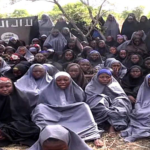
    That was former First Lady, Dame Patience Jonathan, commiserating with parents shortly after April 14, 2014, when Boko Haram terrorists abducted 276 girls from the Government Secondary School in Chibok, Borno state. 

    Over the past nine years, these schoolgirls have been assaulted and forced into “marriages” with their abductors; the Christians were also forced to convert to Islam by the terrorists. While over 100 of them have been released and some placed on scholarship, the whereabouts of others are still unknown.

    How everything started

    The attacks on Northern Nigeria by the Boko Haram terror group reached a head in 2014, with about 7000 deaths recorded between July 2013 and June 2014. Schools were not exempt from these attacks as this terrorist group believes Western education is forbidden. As a result, many schools in the region were shut down. 

    However, Chibok hadn’t been attacked before and was therefore believed to be safe, so the West African Senior School Certificate Examinations (WASSCE) were going to be held as planned. But, in a sad turn of events, on April 14, 2014, the town was attacked late at night; the school’s dormitories were raided, and 276 girls were kidnapped and loaded into lorries. 

    57 of these girls managed to escape by jumping off the lorries and running into bushes, but 219 were taken away. 

    What has the government done so far?

    The incident sparked local and international outrage from world leaders, human rights activists and advocates. A series of protests were held under the hashtag “#BringBackOurGirls”, and the Safe Schools initiative was launched in Abuja to provide and promote safe zones for education.

    It wasn’t until nearly two years later, in October 2016,  that we saw the first mass release of just 21 girls following negotiations between the terrorist group and the federal government. Between October 2016 and January 2017, three more girls obtained freedom from their captives; in May 2017, another 82 girls were freed. And on June 22, 2022, the military recovered two more girls.

    While we await the return of these girls, to mark the nine-year anniversary of this tragedy, a short film titled “Boy Meets Girl” premiered on April 13, 2023. This film, written by Kaelo Iyizo and co-produced by Conrad Omodiagbe and Adnan Ali, showed how Boko Haram uses the abducted schoolgirls as suicide bombers. 

    What has happened to the girls who have been freed?

    According to a report by HumAngle Media, about 106 of the released girls received a scholarship from the federal government to study at the American University of Nigeria, (AUN), and about ten girls are also studying in the United States. 

    At the AUN, the government covered the cost of tuition, accommodation and feeding with a monthly allowance of ₦25,000 (formerly ₦8,000). However, given Nigeria’s inflation, the allowance was hardly enough. Other essential needs like books and levies placed by student associations weren’t covered. Also, they struggled to participate in class and keep up with assignments as they had no access to good phones or computers. 

    Even more, the girls struggled with cultural barriers and had to face segregation from students and lecturers. 

    These issues made it difficult for most of them to continue their education and pursue their dreams, and so, about 28 of these girls dropped out. 

    Tragically, this incident wasn’t a one-off. Since then, other students have also fallen victim to mass kidnappings, for instance, the Dapchi girls in Yobe state, 2018 and more recently, the 80 children abducted on April 7, 2023, in Tsafe Local Government, Zamfara state.

    The safe return of the girls still in Boko Haram custody should be prioritised. The federal government should double its efforts to ensure children in the North can safely exercise their rights to education, as this is one way to safeguard that region’s future.

  • This is Zikoko Citizen’s Game of Votes weekly dispatch that helps you dig into all the good, bad, and extremely bizarre stuff happening in Nigeria and why they’re important to you.

    Subscribe now to get the newsletter in your email inbox at 8 am every Friday instead of three days later. Don’t be LASTMA.

    Game of Votes

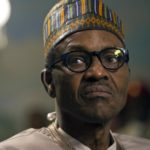
    Finally, some good news for Nigerians: Buhari’s special Christmas gift is to end terrorism completely by the end of the year.

    Game of Votes

    President Buhari’s ascent to the number one seat in the country rested on his promise to end insecurity in Nigeria. Voters believed him easily because he’s a retired military general and that should mean he can crush terrorism with just his side eye if he stares really hard.

    Game of Votes

    But the president must have only been squinting at terrorists as insecurity escalated over the past seven years. He definitely tightened the noose on Boko Haram, but a different kind of terrorism with no religious buzz rose in other regions of the country. Those terrorists have attacked Nigerians in their homes, on the road, on train tracks and even at the airport.

    The president is sick of that now and has ordered the country’s security agencies to do their jobs and secure the country. The Minister of Interior, Rauf Aregbesola, who’s known more for announcing public holidays than his spectacular failure to manage internal security, announced the government’s new resolve at a joint security press conference this week.

    The minister said the day is coming when Nigerians can sleep with their two eyes closed again because their security is guaranteed. And by December 2022, peace is scheduled to be restored to every inch of Nigeria. Buhari has ordered it and so shall it be.

    The government’s latest promise would be the kind of news to toast cheap bottles of wine to, except we’ve been here before many times under Buhari. We’ll believe it when we see it.

    What Else Happened This Week?

    Unpaid Police Officers Are Losing Their Wives to Okada Riders

    Game of Votes

    Even by Nigerian standards, police officers taking to the streets to protest against unpaid wages is a terrifying nightmare. Yet, that’s what police special constabularies in Osogbo, Osun State did on September 7th, 2022.

    For context, these officers are part of the Community Policing Constabulary Scheme. They assist the main police force with grassroots tasks like intelligence gathering and reporting cases. So, they’re like the errand boys of the Nigeria Police Force (NPF).

    The constables complained that the government failed to pay their salaries for 18 months, and you can imagine what that means with the state of this economy. Inflation is skyrocketing and the cost of living isn’t anybody’s mate right now. But even worse than that, the protesters were unhappy that the sapa choking them was making them lose their wives to okada riders. It was enough of a significant problem that one of them wrote, “Okada riders are sleeping with our wives” on a placard at the protest.

    Game of Votes

    The NPF didn’t roll out tanks, water canons and tear gas against the protesters like they do to civilians. But the Osun State Commissioner of Police, Adewale Olokode, did have strong words for them. He called them an embarrassment and expected them to communicate their grievances more privately according to protocol.

    Every worker deserves his fair wages, and it’s abundantly clear why the government should never neglect to pay the allowances of police officers. A failure to do so is the kind of thing that leads them to extort innocent Nigerians, and extortion is just the gateway drug for crooked cops to get worse. The government should pay them so they can get their wives back.

    Have You Seen This Video?

    Question of the Week

    What are the names of the two top politicians who recently turned skit makers? (Hint: One is a former minister and the other is a former senator.)

    Click here to tweet your answer to @ZikokoCitizen on Twitter.

    Ehen, one more thing…

    We may not be in the days of Noah, but deadly floods have wrecked thousands of lives in 33 states and the Federal Capital Territory (FCT) since the beginning of the year. Buhari says he’s on top of things, but who believes anything that guy says these days?

  • A prison break is only fun when it happens in a movie. It’s actually a horror show when prison inmates break out into the streets in real life.

    Ever since a mob attacked two prisons in Edo State to liberate nearly 2,000 inmates in October 2020, there have been similar prison attacks in Imo, Oyo, Plateau and Kogi

    The Boko Haram attack on Kuje prison in Abuja joined this infamous list on July 5th, 2022,  freeing hundreds of inmates, including convicted terrorists, from custody. 

    The trend of prison attacks has left more than 4,000 escapees loose on the streets of Nigeria.

    ALSO READ: What Just Happened in Kuje Prison?

    Prison management is the responsibility of the Minister of Interior, Rauf Aregbesola, who’s rightfully worried about the unrelenting attacks. While speaking at a retreat in June 2022, the minister said the government is working on new strategies to complement the old ones in ensuring every escapee is returned to custody.

    How’s the Nigerian government planning to recapture thousands of escaped prison inmates?

    Releasing their pictures to the public

    The most obvious way to make hiding difficult for escaped inmates is to make their faces public enough so they can’t move around freely. The success of this strategy is heavily reliant on the cooperation of members of the public who the government expect to report sightings of escapees. This is how many inmates, including some from Kuje, have been recaptured

    Coordinating with Interpol

    Everyone in Nigeria wants to japa — even prison inmates. This is where Interpol comes in, to catch prison escapees trying to flee the country to live happily ever after. 

    Aregbesola also promised that Nigeria will continue to strengthen its coordination with Interpol to block the japa wave of fugitives.

    Tracking their digital footprints

    Another one of Nigeria’s strategies for recapturing escaped prison inmates is by tracking their digital footprints as they move around. This involves a collaboration between the government and financial institutions (e.g. banks). The government uses agencies like the Nigerian Financial Intelligence Unit (NFIU) for this purpose.

    Keeping efficient DNA bank

    This is one of the government’s newer strategies to have greater control and ease the process of recapturing escaped inmates. Aregbesola said the government will make the DNA database of inmates more efficient. This will make their tracking and identification easier when they escape. The minister has been vague on how this will work.

    Begging them to return

    When all else fails, the Nigerian government isn’t too ashamed to beg escaped inmates to make their job easier for them by just surrendering. Such public pleas are usually served with a side threat that basically says, “Surrender before I have to find you!” 

    These pleas are also sometimes accompanied by promises to never prosecute them for escaping prison which is a crime on its own.

    ALSO READ: Why Nigeria Is Accepting Deported Criminals to Keep UK Safe

  • On the night of Tuesday, July 5th, 2022, a large group of gunmen attacked the Medium Security Custodial Centre, Kuje in the Federal Capital Territory (FCT). The Kuje prison is less than 50 kilometres away from the Aso Rock Presidential Villa where President Buhari sleeps.

    Kuje Prison distance to Aso Rock

    Kuje prison is renowned for playing host to high-profile politicians and dangerous criminals like Boko Haram members. Former governors, Jolly Nyame and Joshua Dariye, are the current infamous occupants of the facility. The disgraced deputy commissioner of police, Abba Kyari, was also one of the prominent guests of the facility when the attack took place.

    Kuje Prison inmate

    Abba Kyari, remember him?

    What happened?

    Eyewitnesses have reported that the attackers used three bombs to gain control of the facility’s entry and exit points. The operation lasted for nearly three hours and sent many residents of Kuje into panic mode. Some of the residents posted recorded videos of themselves hiding while sporadic gunshots could be heard in the background.

    Kuje prison attack in numbers

    By the time Tuesday night’s attack was over, 879 inmates had escaped from Kuje prison. Security agencies have already recaptured dozens of them, but there are 443 escapees still at large.

    The Nigerian Correctional Service (NCS) said in a statement on Wednesday, July 6th, 2022 that one security officer and four inmates died during the attack. 16 inmates and three security officers also sustained injuries.

    Kyari, Nyame, Dariye and other high-profile inmates at the facility didn’t escape and are in custody.

    None of the attackers was captured or killed.

    Who’s responsible for the attack?

    Investigations have commenced into the perpetrators of the attack, but authorities suspect they’re Boko Haram terrorists. The terror group is already known to be operating in Niger State which shares borders with Abuja. Previously, the terrorists killed over 40 soldiers and civilians in Shiroro, Niger State on June 29th, 2022. 

    It’s not been fully established yet that the jihadist group is responsible for Tuesday night’s attack, but the Minister of Defence, Bashir Magashi, confirmed that all Boko Haram inmates in custody have escaped.

    A trend of prison breaks

    In November 2021, the Minister of Interior, Rauf Aregbesola, announced that 3,906 inmates who escaped from prison over the course of one year were still roaming free. Attacks on prisons in Nigeria increased after nearly 2,000 inmates were forcefully released from two Medium Security Correctional Centres in Edo State in October 2020. Similar attacks have happened in Imo, Oyo, Plateau and Kogi with hundreds of inmates breaking out and staying out of reach.

    Authorities have failed to draw a clear pattern that links the attacks across many regions in the country.

    What’s the government doing about this?

    During a retreat in Sokoto State on June 26th, 2022, Aregbesola blamed the series of prison breaks on how the facilities were set up. He said the system was designed to protect the facilities from the inside and not from the outside. The idea was that no one would be foolish enough to attack facilities that are typically built near security outfits. But times have changed.

    Kuje Prison break

    At the retreat, Aregbesola went ahead to brag that the security oversight had been fixed. He said, “I am happy that we came out to be on top of our game.” But the daring attack on Kuje prison proves the government still needs to do a lot more to prevent these attacks.

    ALSO READ: Even Buhari’s Convoy Isn’t Safe from Terrorists

  • Since 2009, when Boko Haram started an insurgency in the northeast region, more than 35,000 people have been directly killed by the terrorist group. The United Nations Development Programme (UNDP) even said in a report in 2021 that the death toll is more than 350,000 people when indirect deaths are factored in.

    Boko Haram’s activities have been mostly felt in Adamawa, Borno and Yobe, with some past large scale attacks in Bauchi and Gombe. Taraba State used to be the one state in the northeast region largely untouched by the terror group’s activities. But that changed last week.

    First attack

    On April 19th 2022, a bomb exploded at a bar in the Iware community of Ardo Kola Local Government Area in Taraba. An eyewitness, Sunday Pantuvo, reported that the suspected bomber came to the bar with a polythene bag containing explosives.

    The bomb reportedly exploded a few minutes after the suspected bomber left on the pretext that he was going to search for a friend. The explosion injured more than a dozen people, and killed six people, according to the police.

    Boko Haram faction, the Islamic State West Africa Province (ISWAP), claimed responsibility for the attack one day later. The group also claimed the explosion killed or injured 30 people, and described it as an attack on “a gathering of infidel Christians”.

    Who’s ISWAP?

    Boko Haram rarely attacks in Taraba

    Boko Haram’s former leader, Abubakar Shekau, pledged allegiance to the Islamic State of Iraq and Syria (ISIS) in 2015. He soon fell out of favour with ISIS one year later for targeting Muslim civilians in his attacks. This led to the breakout of a faction known as ISWAP.

    Boko Haram and ISWAP carried out terror attacks with different operational philosophies for years, but also started battling for territories at some point.

    The power struggle between both groups led to the death of Shekau in 2021 when they clashed in Borno State. ISWAP is estimated to have around 5,000 fighters.

    ALSO READ: Zamfara Is Using Fancy Cars to Fight Insecurity

    Second attack

    Another bomb explosion rocked Taraba on April 22nd, 2022. A bar in the Nukkai area of Jalingo, the state capital, was hit. The bar was closed at the time, so no human casualties were recorded. But around a dozen people were reported to have been injured.

    ISWAP has claimed responsibility for the second attack too.

    What’s the government doing?

    Taraba State governor, Darius Ishaku, has reacted to the attacks.

    Taraba State governor, Darius Ishaku, has described the attacks as “ungodly, inhuman and barbaric”. He said the terrorists are only trying to destabilise the peace in the state.

    To prevent more attacks, he asked security agencies to start stop-and-search operations across the state. This allows security operatives to frisk people and search their vehicles for possession of incriminating materials. The governor also directed officials to ensure that hawkers and traders who have established mini-markets at unapproved places in Jalingo are removed.

    The governor also asked Taraba residents to avoid public places such as recreational centres and other crowded areas which are possible soft targets for the terrorists to attack.

    How significant are these attacks?

    President Buhari has for years repeated claims that his government has rendered Boko Haram useless in Nigeria. The explosions in Taraba prove that the group is spreading its wings instead, in contradiction to the president’s words.

    The president hasn’t said anything about the latest attacks.

    ALSO READ: How Buhari Has Freed 1,629 “Repentant” Boko Haram Members

  • The final ceremony that turns a “repentant” Boko Haram terrorist into a responsible member of the Nigerian society is surprisingly glossy. Hundreds of men, dressed in uniform green and white attire, place their hands on the Holy Quran and promise to stop being bad boys. A bunch of people dressed in fancy clothes clap for them. Everybody goes home happy. 

    This ceremony is the final component of Operation Safe Corridor (OSC).

    Buhari started Operation Safe Corridor

    Safe corridor for who?

    In President Buhari’s wisdom, he set up a rehabilitation programme for Boko Haram in 2016. You may remember them as the terrorists that killed over 30,000 people in northern Nigeria from 2009 to 2021. 

    The goal of Operation Safe Corridor is simple — provide incentives for terrorists to encourage them to stop killing people. The icing on that reward system is forgiveness for their past sins and freedom to return to the communities they used to terrorise.

    Buhari started Operation Safe Corridor

    How does it work?

    As a terrorist tired of the bloodlust, all you have to do is surrender to the military. Then you’re screened and enrolled into the OSC programme that promises “de-radicalisation, rehabilitation, and reintegration” (DRR). You then undergo a series of medical screenings, psychological counselling, drug abuse counselling and vocational training, because an idle hand is the devil’s workshop.

    Also, the military pumps you full of the western education juice that Boko Haram hates and fights against.

    Buhari started Operation Safe Corridor

    The repentant terrorists are also called “clients” for some reason. 

    ALSO READ: How Does “Operation Safe Corridor” Work?

    What’s the latest?

    The Nigerian military rolled out a new batch of graduates of Operation Safe Corridor on March 13th, 2022. 559 clients took the oath to never do terrorist stuff ever again and were dispatched to communities where they’ll be reintegrated. The latest batch increases the number of OSC graduates to 1,629 since the programme launched. 

    The pipeline of clients is expected to swell over the coming years, as over 5,000 terrorists reportedly surrendered to the military between May 2021 and January 2022 alone.

    The government has been loud about the fact that only “low-risk” fighters are admitted into the programme. These low-risk fighters are those that were captured and forced to bear arms for Boko Haram. The government has also denied many claims that the former terrorists are recruited into the Nigerian military.

    Who’s not happy with Operation Safe Corridor?

    There’s a lot of public hostility towards Operation Safe Corridor. It’d take all day to list the many types of people that are not on board with the programme, but the most important group is the communities expected to accept the repentant terrorists (for obvious reasons). Many of them don’t believe that OSC graduates have changed just because of a few nice words. 

    What’s worse is, some of these communities are still terrorised by the activities of Boko Haram. Many displaced victims have also not been resettled. These communities don’t understand why they are expected to live happily ever after with their tormentors when the war is still active.

    Is Operation Safe Corridor working?

    The effectiveness of OSC has been called into question many times. The government points to the volume of people that have surrendered as a success story. But critics don’t think that’s enough.

    Thousands of fighters surrendered in 2021 only after the death of longtime Boko Haram leader, Abubakar Shekau. His death left his group weak against the Islamic State West African Province (ISWAP) that has been fighting Boko Haram for territorial control. So, it’s plausible that these men and their families surrendered for survival and not because they’re truly repentant.

    It’s difficult to determine how repentant these terrorists are, but the government is not slowing down in graduating them.

    ALSO READ: 82 People Killed in 3 Days: Everything We Know About Kebbi Massacres

  • Citizen is a column that explains how the government’s policies fucks citizens and how we can unfuck ourselves.

    On Sunday, November 30th, 2020, many Nigerians woke up to the sad news that over 43 rice farmers in communities near Borno State, Nigeria, had been killed by Boko Haram insurgents.

    While the government has claimed that Boko Haram has been “technically defeated”, the group continues to carry out terrorist attacks, especially in the northeastern parts of Nigeria.

    But, as the Nigerian armed forces continue to fight the insurgent group, it is important to look at some of the policies that the government has employed in the fight against Boko Haram, including the Nigerian military’s “Operation Safe Corridor (OSC)”.

    Operation Safe Corridor

    In October 2015, the Federal Government of Nigeria, through the Defence Headquarters, announced the implementation of “Operation Safe Corridor” (OSC).

    The goal of the programme was to rehabilitate Boko Haram militants and reintegrate them back into the society as law-abiding and productive citizens.

    The programme employs the tools disarmament, demobilisation and reintegration (DDR) in incorporating Boko Haram militants back into the society.

    What Is DDR?

    Disarmament, demobilisation and reintegration (DDR) activities are part of the United Nations’ approach to peace building, disaster management and reconstruction.

    According to the UN, the DDR is a formal peace building plan for countries emerging from armed conflict, and it is implemented so that different fighting sides can build confidence and security, which is important before recovery activities can begin.

    In the case of Boko Haram, DDR was employed so as to ensure peace between the Nigerian military and the Boko Haram insurgents. 

    How Does “Operation Safe Corridor” Work?

    “Operation Safe Corridor” was created similarly to the Niger Delta Amnesty programme launched by the Nigerian government in 2009, and it involved the setting up of a special facility where repentant terrorists who surrender their arms can get rehabilitated. 

    The programme promised to offer numerous opportunities and participants were scheduled for vocational training to ease their reintegration into the society.  

    Ultimately, Operation Safe Corridor promised de-radicalization, rehabilitation, and reintegration of repentant insurgents. 

    In March 2020, it was reported that over 606 Boko Haram members were ongoing rehabilitation through the “Operation Safe Corridor” programme. In January 2018, 95 Boko Haram terrorists were also reported to have been rehabilitated and reintegrated into the society.

    In 2019, over 150 Boko Haram terrorists were also reported to be re-integrated into society and we’re being taught vocational skills.

    The Effectiveness of “Operation Safe Corridor”

    Under the Niger Delta Amnesty Programme, militants were given 60 days to lay down their arms, after which they would receive employment, monthly stipends, vocational training, and they would be re-integrated into the society.

    Over 30,000 militants and agitators gave up their weapons and were reintegrated back into the society through this program.

    But “Operation Safe Corridor” seems not to have recorded the same level of success that the Niger Delta Presidential Amnesty Programme recorded in restoring peace to the community.

    How Can “Operation Safe Corridor” Be Implemented?

    Many stakeholders have given their opinions on how the government can implement  “Operation Safe Corridor”. Some of these include:

    • The roadmap for integrating defecting Boko Haram members must include all stakeholders like the government, NGOs, religious and traditional institutions and the the military.
    • An effective communication system must be put in place between the communities, the government and the security agencies.
    • Other perpetrators of violence and Boko Haram insurgents must be brought to justice. The program must not overshadow the fight against Boko Haram.
    • The programme must emphasise community building, and the traditional institutions in the affected communities must be strengthened.

    At the end of it all, it remains to be seen how effective “Operation Safe Corridor” will be in the fight against Boko Haram, given that terrorist attacks continue to happen in Nigeria.

    We hope you’ve learned a thing or two about how to unfuck yourself when the Nigerian government moves mad. Check back every weekday for more Zikoko Citizen explainers.


    [donation]