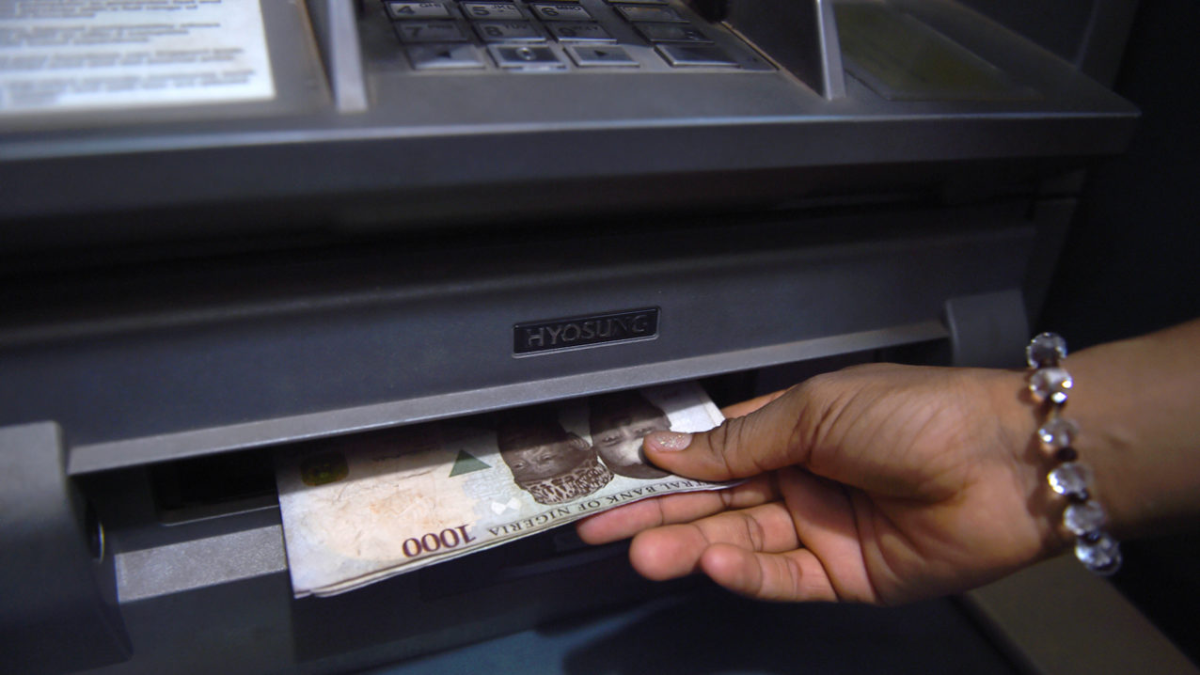
• If you’re a Nigerian reading this, chances are you’ve been frustrated and stranded so many times because the Automated Teller Machines (ATMs) attached to banks and other designated spots around you do not have the cash to dispense, so you had no choice but to opt for Point Of Sales (POS) merchants who in turn, charge an arm and a leg before they give you the cash.

    If this is you (it’s you for sure), you’re in luck because the Central Bank of Nigeria (CBN) has decided it’s seen enough of this mess and has come up with a solution to relieve your stress. On November 29, the CBN outlined recommended steps for customers to use in reporting banks that cannot provide them with cash through Over-The-Counter withdrawals or ATMs.

    In a circular titled ‘Cash Availability Over The Counter in Deposit Money Banks (DMBs) and Automated Teller Machines (ATMs),’ the CBN instructed banks to ensure that cash is always available to customers or face the repercussions that will come with it from now on.

    “DMBs are directed to ensure efficient cash disbursement to customers Over-the-Counter (OTC) and through ATMs as the CBN will intensify its oversight roles to enforce this directive and ensure compliance,” the circular read in part.

    Continuing, the CBN provided steps that it wants customers affected by cash scarcity to take in reporting banks so that they (CBN) can get rid of issues “hindering the availability of cash” and help improve cash circulation. We list the steps below.

    How to report a bank for cash scarcity
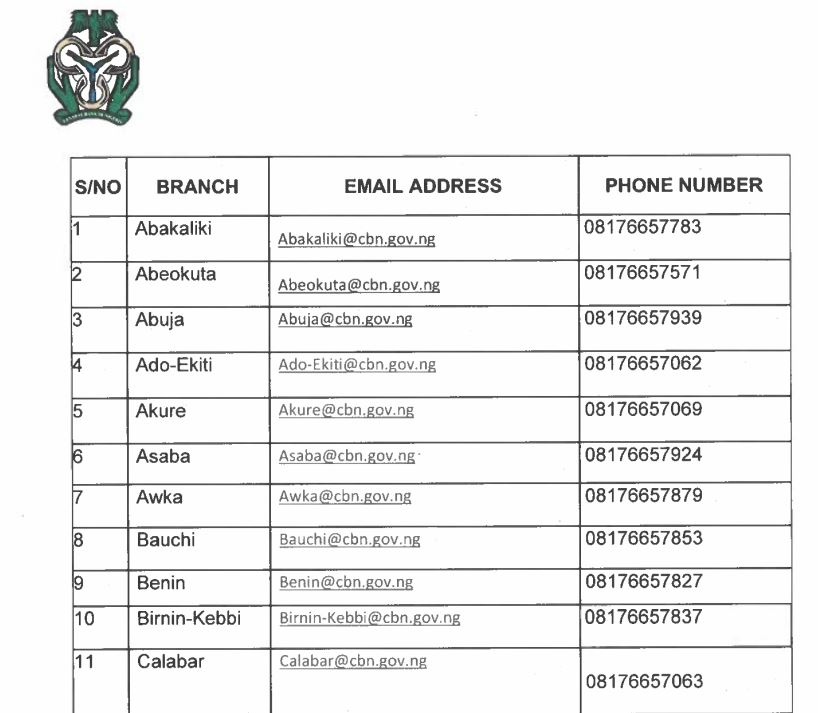
    CBN branches in Nigerian States with their respective phone numbers and email addresses. Photo credit: Punch newspaper
    1. Call the designated phone numbers of the CBN branch in the state where the defaulting bank falls under and provide them with your account name, name of the defaulting bank, the amount that you want to withdraw (but could not), time, and date when the incident occurred.
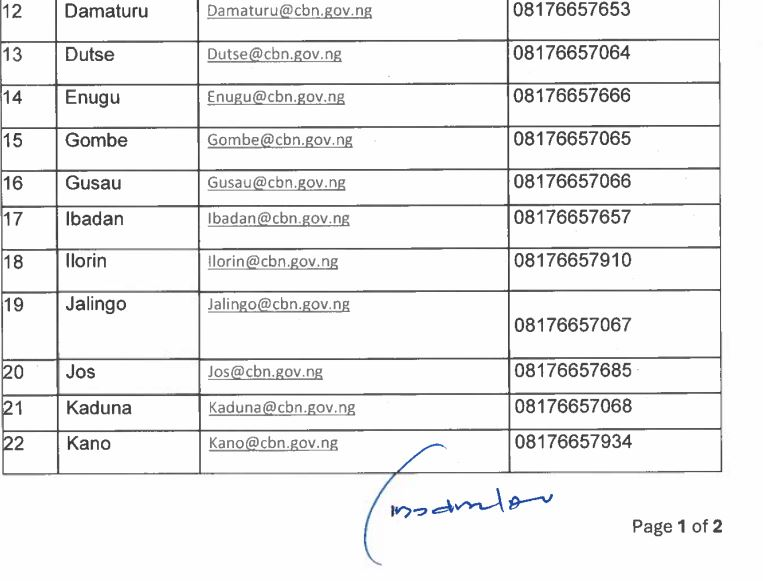
    CBN branches in Nigerian States with their respective phone numbers and email addresses. Photo credit: Punch newspaper
    1. Send an email to the designated email address of the CBN branch in the state where the defaulting bank falls under and provide them with your account name, name of the defaulting bank, the amount that you want to withdraw (but could not), time, and date when the incident occurred.

    How will this help?
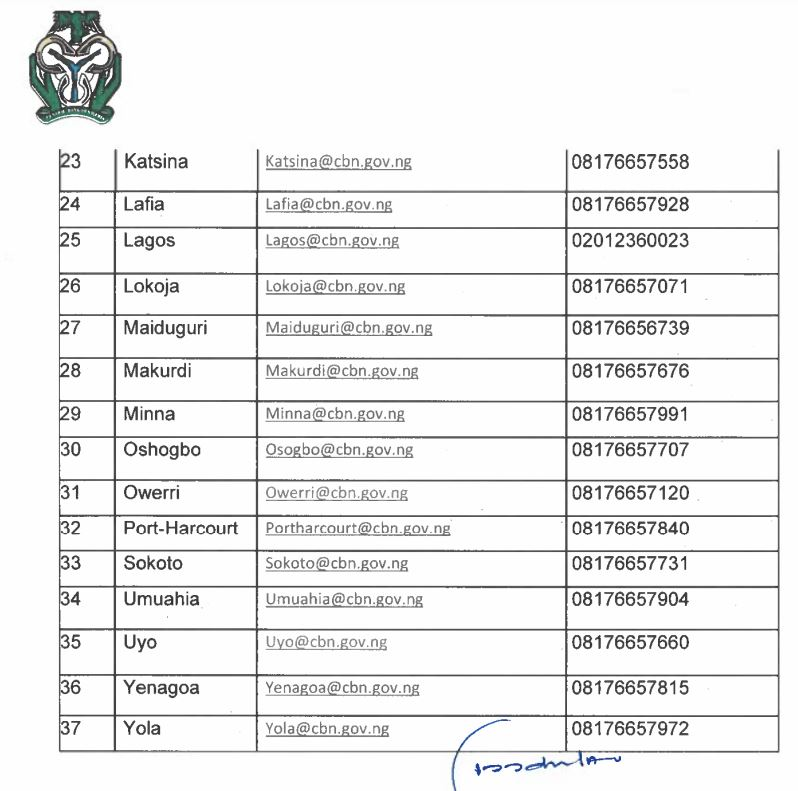
    CBN branches in Nigerian States with their respective phone numbers and email addresses. Photo credit: Punch newspaper

    Over the past months, Nigerians have suffered on and off cash shortages from bank counters and ATMs that have led them to frequently patronise POS merchants or find other alternatives.

    Most recently in November, people were so frustrated with this shortage that they took to X to call for an end to POS businesses as they believed they were the major cause of the cash scarcity across the country.

    But POS operators have said they’re not the problem. According to the National Secretary of the Association of Point Of Sale (POS) users in Nigeria, Isa Zakari, the shortage of cash has majorly been caused by bankers (who own many POS outlets) removing chunks of money meant to be in circulation for regular customers and putting them at their outlets who then charge outrageous amounts for the cash.

    He added that the cash scarcity can also be traced to greedy bank managers and bankers who have been known to sell cash to some POS operators as well as people from the Niger Republic that now increasingly use the Naira as an alternative to the shortage of theirs.

    In November, Daily Post Newspaper also spoke to bankers who denied the claims of the POS operators and bounced back the blame on them instead.

    With this new directive, Nigerians will no longer have to play a guessing game to figure out who the guilty party is because banks will now be required to ensure that cash is available to customers both over the counters and at ATMs or face strong consequences from CBN.

    Will it work? Nigerians might have to find out by calling and emailing the CBN with their complaints.

  • One of the few habits Nigerians picked up during the cash scarcity caused by Meffy’s Naira redesign is a dependence on cashless transactions. However, on April 11, 2023, many Nigerians were frustrated and stranded due to a glitch in the Nigerian Inter-Bank Settlement System (NIBSS). 

    This glitch was due to a network failure which affected many banks and fintech apps. As a result, many people were inconvenienced as they couldn’t carry out their daily transactions, particularly interbank transfers. 

    But what’s NIBSS, and why is it essential to the banking system? 

    The NIBSS is owned by the Central Bank of Nigeria (CBN) and all licensed Deposit Money Banks (DMBs) in Nigeria. It handles electronic funds transfer, automated direct credits and debits, QR code payment standards and account verification. 

    So, to put it simply, if there’s a fault with NIBSS, the whole country goes to a standstill like we witnessed yesterday.

    NIBSS bank transactions

    ZikokoCitizen spoke to some people who experienced the downtime yesterday, and here’s what they had to say:

    Anna*

    “I had no idea there was a general issue with banks. In fact, up until yesterday, I didn’t know what the NIBSS was. I was trying to buy food online and noticed it wasn’t going through. I used another card, but again, the transaction failed. 

    I decided to give up on lunch and focus on my work, but I had run out of data. I sent money to another bank account to buy data, but the transfer didn’t go through, so the afternoon ended with me being hungry and unproductive.”

    Zainab*

    “On my way back from work yesterday, I sent money from a Fintech savings app to my bank account, but it didn’t reflect, and I had to pay a cab driver. Fortunately, my roommate was around and had enough cash to help me out”. 

    Joshua*

    “I initiated a transaction yesterday with my bank to another Fintech app. I’ve been debited by the bank, but the money still hasn’t been reflected. I’ve also found it difficult to open the app”.

    It might be time for the CBN to look into creating an alternative system for online transactions if Nigeria’s truly serious about translating to a cashless society. 

  • Politicians, policemen, and lecturers should say “God forbid” at least three times daily because every now and then, they’re the target of curses from many Nigerians. And looking at what has happened in the last couple of days, it seems bank staff should also be part of this list. 

    Ever since the federal government signed Nigerians up for shege pro-max with the Naira redesign policy, the flaws in our banking system have been exposed for all to see. Many people have had to struggle with bad networks from their banks amidst the naira scarcity, which makes the implementation of the cashless policy seem even more impractical. 

    However, the bank that seems to be bearing the brunt of Nigerians’ frustrations the most is Zenith. On February 7, 2023, an angry crowd of customers threatened to burn down their Sango-Ota branch in Southwest Nigeria because they felt ignored. Luckily, a man called MC Tush was able to appease the mob. Unfortunately, their other branches didn’t have the same luck as they have been attacked by customers unable to withdraw the new notes from their accounts. 

    There have been clips on social media of their staff jumping fences to escape mob attacks.

    Well, Zenith bank finally decided that enough’s enough. And on February 7, 2023, it shut down some of its branches in Abuja and other states around the country. This has frustrated Nigerians, but you can’t complain if there’s no one there to listen to you. 

    It’d be interesting to see how Zenith bank tries to bounce back when everything’s over. 

    Get More Zikoko Goodness in Your Mail

    Subscribe to our newsletters and never miss any of the action

    What else happened this week?

    A 9-Year-Old Nigerian Graduated from an American High School

    For the japa enthusiasts, this might give you another reason to leave Nigeria. A nine-year-old boy, David Balogun, who lives in Pennsylvania, America, has become one of the youngest students in the world to graduate from high school. After attending classes remotely, he received his high school diploma from Reach Cyber Charter School. And some employers still foam at the mouth when you mention remote work. 

    He plans to be an astrophysicist and has completed his first semester at Bucks County Community college. This boy would never have to worry about ASUU strike, and if Nigeria had a system that worked, we’d see that we’re blessed with children who are geniuses like David Balogun. 

    Video of the week

    Question of the week

    The Supreme Court has temporarily suspended the February 10, 2023, deadline for swapping the Naira notes. Will this aid politicians in vote buying at the forthcoming polls?

    Ehen one more thing…

    The pressure on INEC is getting “worser”. There are talks of INEC working with MC Oluomo to distribute election items. Here’s the full gist.

  • Do you move mad like Nigerian banks or have terrible mood swings like network providers?

  • A Nigerian’s brain is filled with many concerns fighting for attention. Thoughts like, “Where do I find the shortest queue for fuel today?” or “Which network provider won’t disgrace me today?”

    But the one you’re guaranteed to find close to the top is, “Where can I keep my money so bank charges, exchange rate, rats and snakes don’t send me back to my village?”

    Where do Nigerians keep their money? We’ve ranked all eight spots.

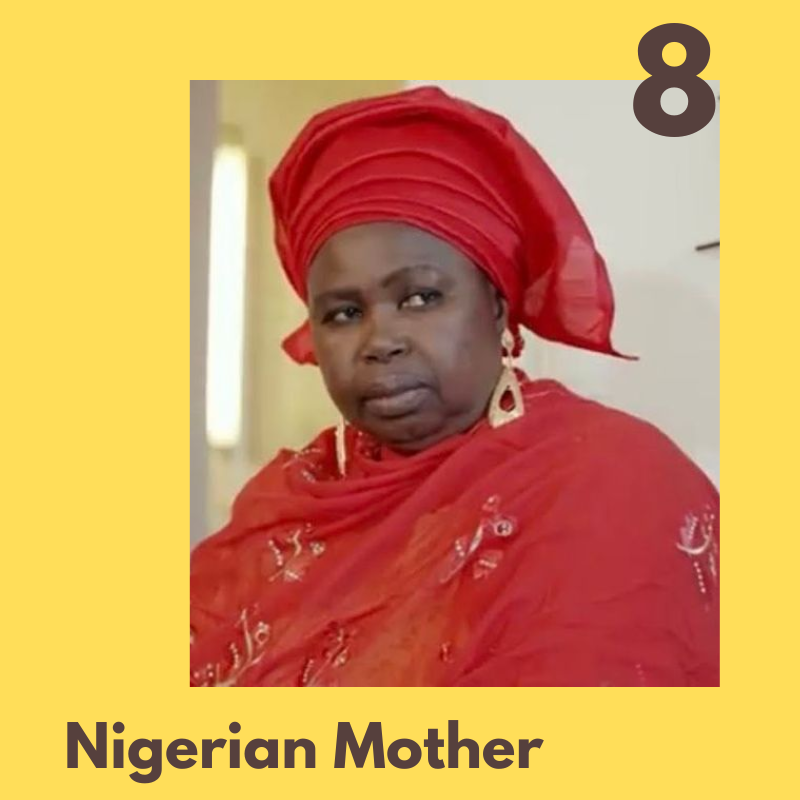
    8. Nigerian mother

    If you’re still keeping money with your Nigerian mother, after all she used your eyes to see when you were younger, you’re very brave. Sure, mothers are great at saving things — remember the nylon bag filled with other nylon bags? — and we’re not saying you won’t get your money back, but if she “borrows” it, how do you ask for it back? Are you ready for a how “she carried you for nine months” reminder?

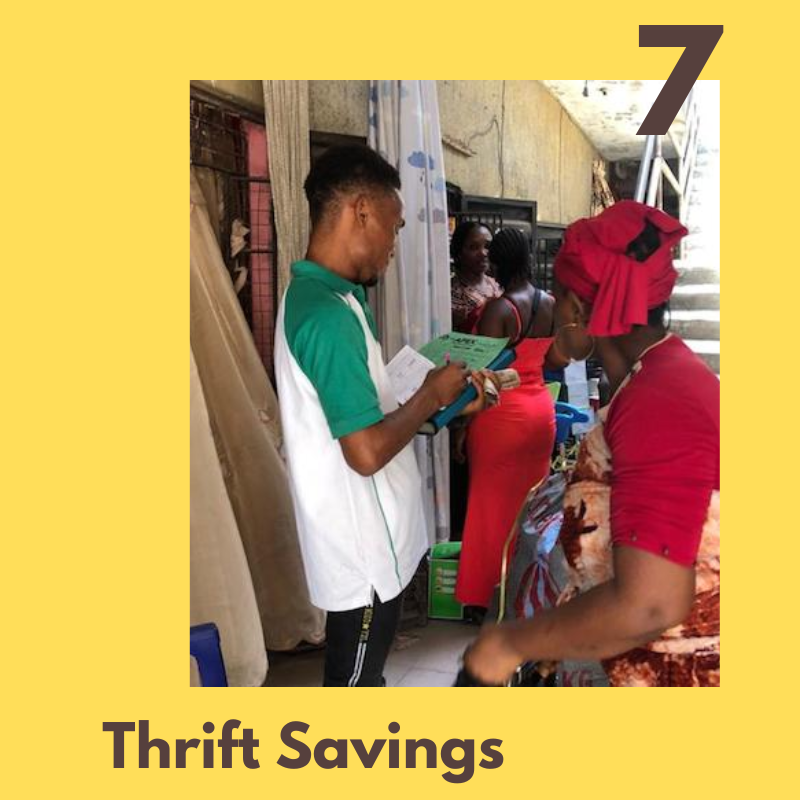
    7. Thrift savings, AKA Ajo or Esusu

    I get the idea behind ajo, and it’s not bad. You agree with a group of people to put your money together, and then each person “collects” everyone’s money when it’s their turn. It makes sense if you don’t trust yourself not to finish all your money on shawarma, but what if one person decides to pack everyone’s money and run away before paying their share? If it can happen to these people, it can happen to you. Issa no for me.

    6. Under your bed or pillow

    There’s nothing better than sleeping on money, literally; at least you know where your money is. But have you met some rats? In case you don’t know, there are demon rats who’d leave your kitchen and prefer to eat certificates and cash. Just ask our politicians.

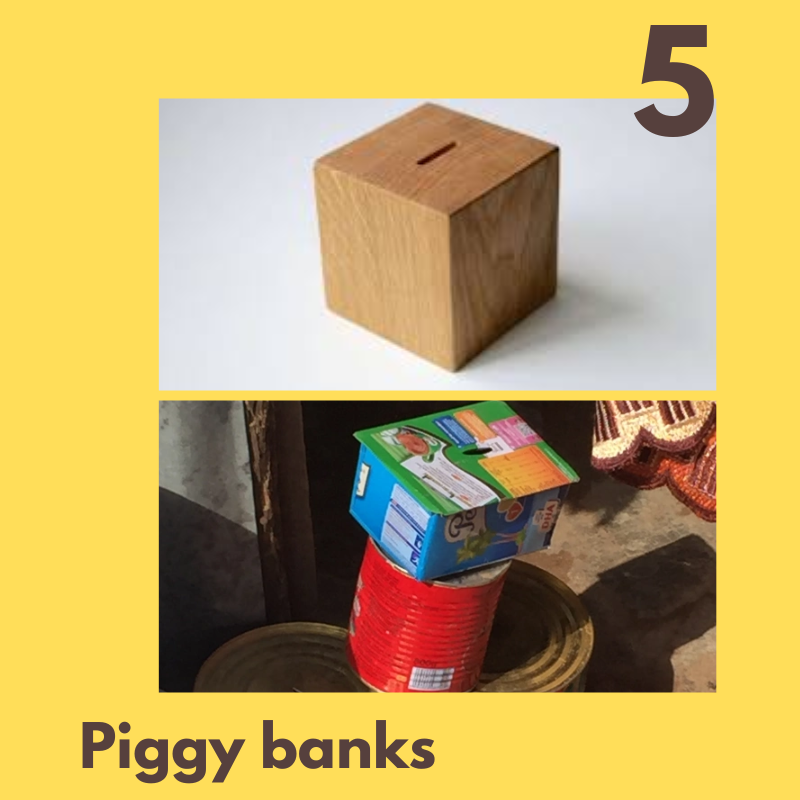
    5. Piggy banks, AKA kolo

    Kolos only work when you’re highly self-disciplined, or you’d just find yourself using broom to remove the ₦1k you dropped there the night before. 

    4. Regular banks

    You’ll understand why I’m differentiating the banks later on in this list, but here, I’m referring to the traditional commercial banks where you’ll open a “savings” account with ₦10k and come back to a balance of ₦9,650 in a matter of minutes. The ones that’ll charge “ATM maintenance” fees but will still ask you to wait 24 working days to reverse an ATM dispense error. The good thing is, you don’t have to keep your money in cash, and people can easily send you urgent ₦2k.

    3. The stock market

    You can make a sizeable profit when you keep your money in stocks, but you can also wake up tomorrow and see that all your life savings has vanished. It’s not your village people. The stock market is just volatile. Put some of your money there, not all biko.

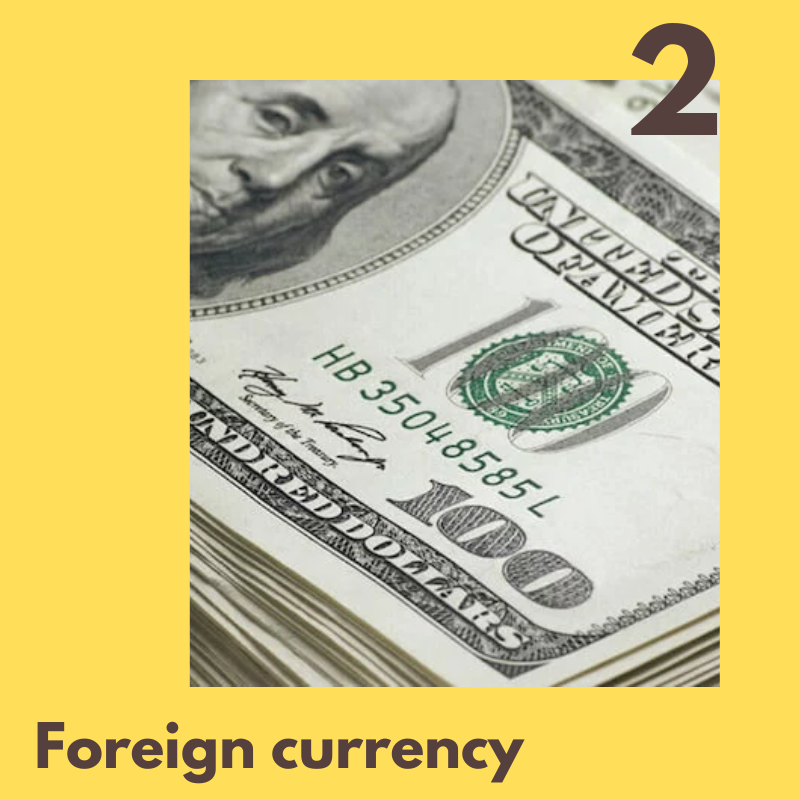
    2. Foreign currency

    With the naira’s epileptic state, it only makes sense to want to keep your money in other currencies like the dollar. This would have been number one, but how many people even have access to dollar investments?

    1. Digital banks

    Digital banks are like mobile banks, but without the plenty charges. At least with these ones, what you put inside is what you’ll meet, plus jara.

    ALAT by Wema, Nigeria’s leading digital bank, offers multiple savings features which customers can choose from and grow their finances by earning up to 10% interest on money saved. 

    Even if you want to spend your money — because problem no dey finish — their Spend and Save feature allows you to automatically save a percentage of the transaction amount on ALAT and earn interest on your savings. You can also save in dollars with the Dollar Savings feature. Even if it’s ajo you want to do, the Rotating Savings feature offers a transparent collective savings process for you and up to 12 friends.

    Make savings and investment a lifestyle with ALAT. Check out their website for more information on the available savings features, and get started today.

  • Are you the one that screams down the entire place or just takes the fight to social media when your bank moves mad?

    Take this quiz and we’ll guess.

  • Ahead of the festive season, Stanbic IBTC Pension Managers, Nigeria’s largest Pension Fund Administrator (PFA), has unveiled the Stanbic IBTC Pension Managers Loyalty Program tagged Umatter. It is a reward scheme targeted at the customers of the PFA, to reward them for their loyalty and patronage through exclusive discounts as they shop with their e-loyalty card.

    The loyalty program is available at the PFA’s partner merchants’ locations and stores across the nation. It is aimed at providing Stanbic IBTC Pension Managers’ customers with exciting shopping discounts to help them spend less and save more when they shop.Some of the participating merchant outlets are Maybrands, Café Royale, Hubmart Stores, Chocolate Royal, La Campagne Tropicana, Physio Centers of Africa, Medplus, iStore, Oriki, Launderland and Active Leisure. The discounts range from 5 to 12 percent on products and services purchased.

    Stanbic IBTC Pension Managers’ partnerships with these major outlets will enable customers to seamlessly enjoy instant discounts on their purchases during this festive period, thereby making life even more easy and affordable for customers who use the Stanbic IBTC Pension Managers e-loyalty card. Stanbic IBTC Pension Managers will continue to initiate valuable programs like this that encourage people to continue saving for their retirement and building their financial future.New and existing customers can be a part of this exciting loyalty program by visiting www.stanbicibtcpension.com or calling 01 271 6000.

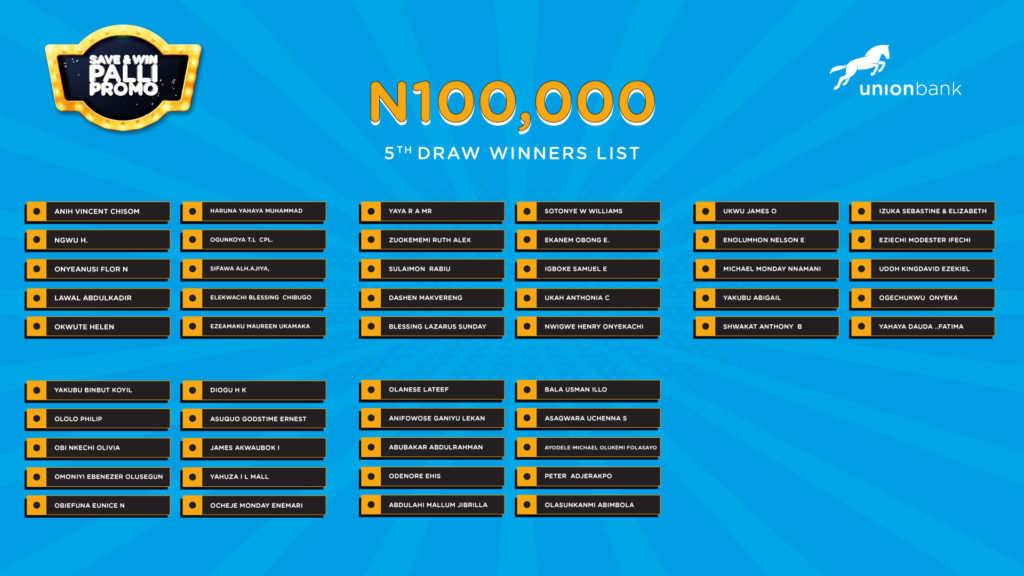
  • More winners have emerged from Union Bank’s ongoing “Save & Win Palli Promo”. 50 lucky customers nationwide each won N100,000 in the recently concluded monthly draw. The winners were selected through a transparent live draw event monitored by relevant regulatory bodies and stakeholders. This marks the final set of monthly winners in the ongoing promo.

    The Save & Win Palli Promo is a nationwide campaign by the Bank to give away a whopping N55 Million to both new and existing customers, as a way of offering Nigerians some relief (a.k.a ‘palliative’) from the economic hardships brought on by the ongoing COVID-19 pandemic.

    The Promo is now in its final run and will be coming to an exciting close at the end of December 2021. The final draw will see one lucky saver rewarded with the grand prize of 5 million naira!

    With only a few weeks left to the finale, there is still an opportunity to join in and win. To participate, existing Union Bank customers can save a minimum of N10,000 this month. Prospective customers can download the UnionMobile app on their mobile phones to open an account or walk into any Union Bank branch nationwide. Returning customers can reactivate existing accounts by calling the 24-hour Contact Centre on 07007007000 or also visit anyUnion Bank branchs across the country.

    For more updates on the Save and Win Palli promo, follow Union Bank on Facebook, and Instagram .

  • Many Nigerians are in a complicated relationship with their banks. This wouldn’t be the case if they’d just do some things we secretly wish for. But they’re not ready for this conversation.

    Maybe in the afterlife.

    1. Put beds at ATM stands

    Yes. To recover from those never-moving queues and reduce all the “I’m behind” you wahala.

    2. Share food when we
    open new accounts

    It’s not only in church that they should be doing first timer nau. Is it not when you eat well, you can work to save money? Biko, a plate of Jollof isn’t too much to ask for.

    3. Send funds

    See ehn, this one will slap. Especially in those times when your account is already glowing red and your enemies are waiting to laugh at you.

    4. Send us gifts on our birthdays

    Instead of SMSes, we could really do with some customer appreciation gift. If delivery is too much of a bother, we can do pick-up, no problem.

    5. Giveaways

    Christmas, giveaway. New Year, giveaway. Valentine’s Day nko? Giveaway to profess their love. This is how to make sure you ride with them for life.

    6. Deduct SMS charges only once a year

    On top of all the debit alerts you have to deal with, at the end of the month you’ll still see SMS charges. E choke oh. Once a year will do, or eliminate it, pata-pata. T for tenks.

    7. Come to our houses

    The motto is simple: If the customer won’t come to the bank, let the bank go to the customer. Why should you allow sun to play dangerous games with your forehead, when you can simply be attended to from the comfort of your house?

    8. Automate more processes

    In this time and Age, we shouldn’t be queuing physically at the bank to get basic things like changing phone numbers or opening a new account done. *Screams silently at the absurdity.*