• On Sunday, November 9, 2025, the Independent National Electoral Commission (INEC) announced that the incumbent governor of Anambra, Chukwuma Soludo, had won the governorship elections held the day before.

    According to INEC, Soludo received 422,664 votes, while his closest rival, Prince Nicholas Ukachukwu of the All Progressives Congress (APC), got 99,445. On paper, it looked like a landslide. But truthfully, it had less to do with popularity and more to do with who had the deepest pockets.

    How much does a vote cost these days?

    Election observers said the process was surprisingly smooth. INEC officials actually showed up on time, and the Bimodal Voter Accreditation System (BVAS) worked without the usual drama. And there were hardly any reports of violence.

    Basically, it was as good as elections get in Nigeria, except for one thing: vote buying.

    Civic participation non-profit, Yiaga Africa, confirmed that the final results reflected the actual votes cast. So no rigging in that sense. But they and other observers couldn’t ignore the shameless vote buying that went down.

    Reports say parties handed out anything from ₦1,000 to ₦30,000 to voters.

    Reacting to the news, former Anambra governor and presidential hopeful Peter Obi said, “Someone who is not employed will collect ₦30,000 for his vote. That means you’ve sold your school, your hospital, your job opportunities, and your future. And that’s what’s very worrying about our democracy.”

    Vote buying is nothing new in Nigeria. It’s one of the oldest tricks in the book. Campaigns often feature sharing items ranging from spaghetti, loaves of bread, bags of rice and cold, hard cash. Sadly, it’s part of the political culture.

    But this new level of shamelessness, where party reps hang around polling units and openly buy votes in front of INEC officials and police, is a growing trend. And it’s very disturbing.

    The 2023 general election is mostly remembered for violence and alleged rigging. But there were also reports of people handing out cash or making transfers at polling units to voters who backed their party. 

    The National Bureau of Statistics (NBS) reported that there was a significant jump in the amount of vote-buying in 2023 compared to previous years. Agents of the Economic and Financial Crime Commission (EFCC) were even attacked at a polling unit in Bwari, Abuja, while trying to arrest a vote buyer.

    In September 2024, during the Edo governorship election, Yiaga Africa reported that voters were paid between ₦5,000 and ₦10,000. And all the major parties were involved in the act.

    Kimpact Development Initiative (KDI), another civil society group, estimated that over ₦2 billion was spent on vote buying during the Edo and Ondo governorship elections in 2024.

    With the 2027 general elections around the corner, we won’t be surprised if vote buying gets even bolder.

    Get More Zikoko Goodness in Your Mail

    Subscribe to our newsletters and never miss any of the action

    Na who don chop dey vote

    At the heart of this sad vote buying culture is poverty.

    Nigeria is poor. Like, really poor. The NBS says 63 per cent of the population (over 130 million people) are multidimensionally poor. So it’s not shocking that people are trading their votes for literal daily bread.

    The choices we make at the ballot box affect our lives for at least four years, most likely longer. Like Peter Obi said, selling your vote is selling your future.

    But how do you convince someone to vote for a better tomorrow when they’re hungry today?

    It’s clear that Nigeria’s political class has mastered the art of weaponising poverty to grab and hold onto power. As long as Nigerians stay poor, their votes will stay cheap.

    But in Nigeria, vote buying isn’t just about poverty.

    Why are you here? I thought you were financially stable

    During the People’s Democratic Party (PDP) presidential primaries in 2023, candidates reportedly paid delegates between $10,000 and $20,000 for their votes.

    One delegate, Tanko Sabo from Kaduna, spent ₦12 million of his earnings from the primaries on his community. Amongst other donations to the less privileged, he paid WAEC and NECO fees for students who couldn’t afford them.

    He said he’d promised his people he’d use the money for them if they made him a delegate. After giving the money away, he said, “I’ve satisfied my conscience and all my people are happy.”

    In August 2025, Ibrahim Auyo, a House of Representatives member from Jigawa, claimed that lawmakers pay between ₦1 million and ₦3 million to present bills in the National Assembly.

    At the risk of understating things, we can safely say that Nigerian lawmakers are well-fed. They get all sorts of allowances and perks, paid for by taxpayers. They’re not starving like the everyday Nigerians selling votes just to eat for one day.

    Still, whether it’s ₦20,000 on the streets of Anambra, $20,000 at a party convention in Abuja, or ₦3 million in the National Assembly, votes in Nigeria are always for sale. The only thing that changes is the price tag.

    Nigeria’s political class doesn’t know any other way to do politics.

    Nigerian voter, how market?

    One big reason vote buying works so well for Nigerian politicians is simple: it’s cheap. And it’s cheap because Nigerians don’t vote.

    INEC registered almost 2.8 million voters ahead of the Anambra election. But only about 598,000 showed up on election day. That’s a 21.4 per cent voter turnout.

    Here’s the thing: when people show up en masse to vote, it makes all kinds of electoral malpractice (violence, vote buying, ballot snatching, rigging, etc) less effective.

    Vote buying especially becomes too expensive to be practical. In Anambra, if every registered voter had shown up, buying votes would’ve cost politicians five times more.

    Also, Nigerians who are above the poverty line, who can afford not to sell their votes, need to actually show up and vote.

    Fixing this country requires collective action, and voting is a key part of doing your bit.

    Having money problems

    Like we said earlier, Nigeria has a poverty problem. And that poverty creates the perfect environment for vote buying.

    We need a serious approach to poverty reduction. And while that’s in progress (hopefully), safety nets must be put in place to protect the most vulnerable members of society.

    The International Monetary Fund (IMF) and Ngozi Okonjo-Iweala, director-general of the World Trade Organization (WTO), have repeatedly urged President Tinubu to provide safety nets. But so far, we’ve seen little to no action from his administration.

    Nigerians need to be able to afford the dignity of not selling their votes.

    But here’s the tragic loop: we’re asking vote buyers to fix the very poverty that allows them to buy votes. Personally, I’m not holding my breath.

    The political class has weaponised poverty to gain and keep power. As long as things stay the same, they have zero incentive to fix a system that rewards them for doing the barest minimum.

    And as we’ve already pointed out, even the political elite, regardless of how rich they are, still sell their votes for the right price. So this isn’t just about poverty or lack of choice. It’s a culture.

    We need to redefine how Nigerians see politics and governance. Right now, we’re too selfish, too cynical, too pessimistic, and way too short-sighted. If we can’t see past our noses, we won’t walk far. If we can’t look beyond the credit alert we’ll get today, we’ll never get more than that.

    Not in my job description

    If you’ve been reading and wondering where INEC is in all this mess, you’re not alone. We’ve been wondering too.

    Turns out, they’ve been right there, watching it all happen. And according to them, there’s not much they can do.

    In 2024, after getting criticised for the vote buying seen during the Edo governorship election, INEC said it shouldn’t be blamed.

    Rotimi Oyekanmi, Chief Press Secretary to the INEC Chairman, said INEC couldn’t be held responsible for what political parties do. He added that “other stakeholders should also play their part and stop undermining the electoral process.”

    Basically, every time politicians act out of line, INEC says its hands are tied. For example, ahead of the 2027 elections, candidates have already started campaigning way before the legal 150-day window. But INEC says it can’t do anything because it can’t prove it.

    Victoria Etta-Messi, the INEC Director of Voter Education and Publicity, said that since the politicians are using proxies to put up their campaign posters, there’s nothing INEC can do to punish them.

    Similarly, in Anambra, the Resident Electoral Commissioner (REC) for Anambra State, Queen Agwu, said they had no proof of vote buying, so they would not be taking any action against the parties or candidates.

    Technically, there really isn’t a lot INEC can do about vote buying except reporting it to law enforcement agencies. It is the job of the police, EFCC, and the Independent Corrupt Practices Commission (ICPC) to prosecute vote buyers. 

    In fact, INEC has asked for assistance to prevent vote buying, including calling on the National Assembly in February 2025 to pass laws prohibiting the possession of large sums of cash near polling booths.

    INEC’s Director of Litigation and Prosecution, Tanimu Muhammed, also said it is important for an Electoral Offenses Commission to be established because INEC lacks the ability to prosecute offenders.

    According to Muhammed, INEC is doing its best currently, but a dedicated institution with the legal authority and resources to investigate and prosecute electoral crimes is needed urgently.

    Who is responsible?

    After the Anambra election, the Socio-Economic Rights and Accountability Project (SERAP) has urged INEC to report vote-buyers to these organisations responsible for actual enforcement.

    But the Anambra INEC Resident Electoral Commissioner, claiming INEC did not witness any vote buying, is honestly quite disappointing. Especially when so many election observers noted the prevalence of vote buying during the election.

    It feels very much like selective blindness on the part of INEC. Even if it can’t prosecute them, INEC officials on the ground are the first witnesses of electoral malpractices and should be ready to report offenders to the organisations that can prosecute. Currently, they aren’t even doing that much.

    There are also reports of police officers at polling booths watching vote buying happen and doing absolutely nothing. And while the EFCC does make a few arrests, it’s clearly not enough. The EFCC said it arrested three people for trying to buy votes in Anambra, but observers still say the election was heavily influenced by vote buying.

    INEC, EFCC, the police—all the institutions meant to protect the integrity of our elections—need to step up and do their jobs. Politicians can’t keep breaking laws so publicly, so shamelessly, without consequences.

    But institutions are made up of individuals. And as individuals, Nigerians need to realise: we can’t keep selling our votes (futures).

    What can you do?

    • We need more electoral reforms, including possibly establishing a dedicated body for prosecuting electoral offenders. Call your representative in the National Assembly (NASS) to demand this. You can find their contact details here.
    • Get your PVC and vote. Vote buying is possible thanks to low voter turnout. Do your part and show up on election day.
    • We think this one is obvious, but we’ll still spell it out: Don’t sell your vote!
    • Educate those around you on the importance of political participation. You can do that by sharing articles like this.
    • Help enlighten others on the true cost of vote selling.

    Before you go, help us understand how you and other young people feel about the 2027 general elections by taking this 10-minute survey.


    [ad]

  • On April 19, 2023, a Twitter user with the handle @cbngov_akin1 claimed that the poverty rate increased while Peter Obi was governor of Anambra state. The tweet has garnered over 91,000 views as of the time of filing this report.

    On Wait First, we divide claims into three categories. A valid claim is fresh banana. A misleading claim is cold zobo, while an outrightly false claim is burnt dodo.

    So, how valid is this claim?

    Some background

    [Peter Obi / Africa Report]

    Peter Obi, the Labour Party’s (LP) presidential candidate, had a staggered time in office as governor of Anambra state. In 2003, he contested for governor under the All Progressives Grand Alliance (APGA). Chris Ngige was declared the winner, but in a lengthy court battle, the victory was overturned at the Supreme Court. Obi was reinstated as the election winner and assumed office in March 2006. 

    Obi was impeached in November 2006 and reclaimed his mandate following another court ruling. He returned to office in February 2007. He was removed again after the 2007 election but was reinstated by the Supreme Court. Obi won reelection and served as a two-term governor from March 2006 to March 2014.

    Obi’s performance as governor has come under intense scrutiny since he declared his intention to run for president, particularly as his campaign promises hinged on combatting poverty. The Independent National Electoral Commission (INEC) announced him third in the presidential election with 6,101,533 votes. 

    Poverty is more than just a number. It’s a complex issue that affects many aspects of a person’s life. OECD data shows that poverty rates are measured by income levels falling below the poverty line. But poverty is not a one-dimensional problem that can be summed up with a single indicator. The National Bureau of Statistics (NBS) is the go-to agency in Nigeria for collecting, analysing, and disseminating crucial statistical information that helps understand the socioeconomic realities of the country’s citizens.

    Verification

    Our partners FactCheck Elections, looked into this claim. Here’s what they found.

    “Findings by FactCheckElections revealed the (NBS) National Poverty Rates For Nigeria: 2003-04 (Revised) and 2009-10 (Abridged Report). The report showed that Anambra had 41.4% state-level headcount per capita poverty measure in 2003-04 and 53.7% in 2009-10. 

    “The National Poverty Rates For Nigeria: 2003-04 (Revised) And 2009-10 (Abridged Report) capture poverty rates across Nigeria with the Absolute Poverty Approach (using a per capita approach of assigning 3000 calories requirement for an adult).

    [Source: NBS]

    “FactcheckElection can find no official data report on the poverty rate between 2011 – 2018. Aside from forecasts and predictions, there’s no absolute poverty study in those years. According to a reply tweet by Dr Yemi Kale (former statistician general of Nigeria), ‘NBS has not conducted any absolute poverty study since 2009’.

    “However,  there is a 2019 Poverty & Inequality in Nigeria report published by the NBS. The report showed Anambra had a poverty rate of 14.78%.”

    Verdict

    So what’s the status of the claim? Based on data from the (NBS), Anambra’s state-level headcount per capita poverty increased from 41.4% in 2003-04 to 53.7% in 2009-10. Peter Obi was governor between 2006 and 2014. So the claim is partly true, and we give it a banana rating. However, no official data shows the poverty rate when he left office in 2014.

  • Wait First is a flagship founded on a simple premise — everybody lies. Humans are lied to between 10-200 times a day while we tell one to two within the same period. And it’s so, so easy to do. All that’s needed is some burnt dodo stepped down with cold zobo, and breakfast is served.

    While a lie’s a lie, all lies are not of equal standing. I mean, who hasn’t told a lie to get out of an awkward situation? Let’s see your hands. No hands? Figured.

    On a larger scale, particularly during an election season like we’re in now, many people make claims which turn out false. Sometimes it’s unintentional. Sometimes they are deliberate. Unfortunately, social media is an amplifier, and fake news travels halfway around the world before facts wake up. 

    If it wasn’t already obvious, fake news is bad because it can spread wide-scale panic, which can cause harm and undermine the democratic process.

    Fake news comes in various formats like fabrication, manipulation, advertising and propaganda. The European Parliamentary Research Service, classifies fake news into three categories.

    Mal-information: Information that’s based on reality, used to inflict harm on a person, organisation or country.

    Dis-information: Information that’s false and deliberately created to harm a person, social group, organisation or country.

    Mis-information: Information that’s false but not created to cause harm. 

    For today’s launch of Wait First, we’ll look at recent claims that have made the rounds to check just how true, false or misleading they are. 

    A true claim is fresh banana, an outrightly false claim is burnt dodo while a misleading one is cold zobo.

    Are Votes in Anambra the Size of an LG in Kaduna?

    On January 2, 2023, the governor of Kaduna state, Nasir El-Rufai made an interesting claim in a TV interview. He was speaking on the chances of Peter Obi, the presidential candidate of the Labour Party. El-Rufai said Obi was polling poorly and couldn’t win. 

    He claimed, “The number of votes in Anambra is the size of one local government in Kaduna state. So all states are not equal.”

    The good people at the Centre for Democracy and Development West Africa (CDD) fact-checked this claim. Here’s what they found.

    “The evidence does not support El-Rufai’s position. As of February 6, 2023, INEC had not released the breakdown of registered voters per local government area.

    However, the total number of registered voters in Anambra state is more than the total number of registered voters in the most populous local governments in Kaduna.

    “By Kaduna’s own data, published by the Kaduna State Independent Electoral Commissioner (KADSIEC) in 2019, the local government with the highest number of registered voters is Kaduna South, which had 361,357 registered voters.

    “The number of registered voters in Anambra state is more than that of the most populous LGAs in Kaduna. According to the National Population Commission (NPC), the most populous LGAs in Kaduna are Igabi, Kaduna South, and Zaria.

    “These highly-populated LGAs in Kaduna have less than 700,000 people each, less than the 2,656,437 eligible voters in Anambra.”

    Verdict: El-Rufai’s claim is false and therefore burnt dodo.

    Did the Supreme Court give a unanimous judgment in the Lawan vs Machina case?

    On February 6, 2023, Channels TV political correspondent Seun Okinbaloye broke the news that the Supreme Court ruled unanimously in favour of Senate President Ahmed Lawan. The long-drawn legal battle between Lawan and Bashir Machina was over who the rightful senatorial candidate representing Yobe north is.

    Okinbaloye tweeted,” Senate President Ahmed Lawan is back on the ballot after (an) intense legal battle with Mr Bashir Machina. Machina lost to Lawan at the Supreme Court in a unanimous judgment in the contest for the ticket of the party as Yobe North Senatorial Candidate.”

    So what’s the verdict on this claim?

    While it’s true the Supreme Court ruled in favour of Lawan, the verdict was not unanimous. The Supreme Court had five justices rule on the matter and came to a split decision. They ruled 3-2 in favour of Lawan. This claim by Uncle Seun is, therefore, cold zobo.

    Join the Citizen Situation Room and Helpline on WhatsApp today, to get real-time gist and drama on the 2023 elections.

    You should also sign up for our Game of Votes newsletter. We help you make sense of news jargon and keep you up-to-date, especially with election news. Make the subscription of a lifetime here.

  • Nigeria is suffering its worst flooding crisis since 2012. For months, these floods have forced thousands of people out of their homes.

    What caused the flooding crisis?

    Heavy rainfalls and the release of excess water from Cameroon’s Lagdo Dam and other dams in Nigeria are largely responsible for the floods. The Nigerian government’s failure to build infrastructure to control floods allowed them to easily submerge hundreds of communities.

    What’s the damage of the floods?

    According to the Federal Government, the floods have affected 31 states and resulted in:

    • 500 people dead
    • 790,254 people displaced
    • 1.4 million people directly affected
    • 1,546 people injured
    • 44,099 houses partially damaged
    • 45,249 houses totally damaged
    • 76,168 hectares of farmland partially damaged 
    • 70,566 hectares of farmland are completely destroyed

    How’s the government responding?

    Even though many Nigerians are calling the flooding disaster a national crisis, the government doesn’t have a centrally-coordinated response. The structure of disaster response currently starts at the local government and state government levels. 

    As first responders, these levels of government are responsible for providing relief for victims of floods. This means responding to floods can be different from state to state. 

    Many state governments have provided temporary shelters for flood victims displaced from their homes. But the Kogi State governor, Yahaya Bello, has complained about inadequate palliatives for the victims and called on the Federal Government to step in.

    Since the flooding crisis worsened over the past two months, the National Emergency Management Agency (NEMA) and Ministry of Humanitarian Affairs, Disaster Management and Social Development have coordinated the Federal Government’s response

    The ministry announced the approval of the National Emergency Flood Preparedness and Response Plan on October 11th, 2022. The plan contains immediate, short term and long-term measures to control the impact of flooding in Nigeria. However, the details of this plan are currently unknown.

    NEMA claims to have distributed relief materials to over 315,000 displaced people nationwide. The agency has also collaborated with the Disaster Response Unit (DRU) of the Nigerian military to conduct search and rescue operations for trapped victims.

    Despite this, the government needs to be doing better as NEMA expects more heavy rainfalls in the coming weeks.

    What are citizens doing?

    Non-profit organisations and individuals are raising funds to support victims. Nigerians who want to help can reach out to them to donate money and materials for the victims.

    https://twitter.com/gechife/status/1579889714144096265?s=20&t=xqktFlJ9sCspcGBy4XSVeQ

    What should the government be doing?

    The government’s disorganised response to the ongoing flooding crisis makes it difficult for victims to get all the help they need at such a delicate time. 

    Flooding is one of the most frequent natural disasters in Nigeria and we’ve had enough years to learn valuable lessons to coordinate a better response.

  • In 2012, Nigeria lost 431 people to flooding incidents that also displaced 1.2 million people across 30 states. The flooding disaster affected over seven million people with losses estimated at ₦2.6 trillion. The 2012 floods were the worst Nigeria had seen in 40 years and no other year has touched the hem of its garment since then, until 2022.

    Flood in Nigeria 2022

    [Image source: Reuters/Afolabi Sotunde]

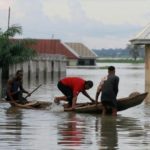
    For months, many communities in Nigeria have received August visitors in the form of destructive floods. These floods have forced thousands of people out of their homes.

    Flood in Nigeria 2022

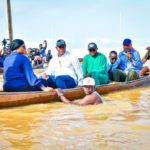
    No Noah’s ark. Only Governor Yahaya Bello of Kogi State in a canoe with his film crew

    Who’s affected?

    The National Emergency Management Agency (NEMA) reported that 33 Nigerian states recorded flood incidents between January and August 2022. These incidents affected 508,000 people, including 372 that died. NEMA also reported at least 277 people were injured during these floods. The devastation destroyed 37,633 homes and caused the loss of livestock. But the figures NEMA reported aren’t even close to the devastation state officials have reported.

    Flood in Nigeria 2022

    [Image source: AP Photo]

    Since that September report, major flooding incidents occurred in nine local government areas in Kogi State, displacing over 50,000 people in one local government area alone.

    Anambra State also reported the displacement of 651,053 people after floods submerged houses, farmlands, schools, health centres, police stations and other critical infrastructure. 

    The floods also affected over 31,000 people over the course of six months and displaced 6,592 residents across 255 communities in Yobe State. The incidents resulted in the death of 75 people and the destruction of houses and livestock worth millions of naira.

    At least seven people were reported dead when flash floods affected many communities in Lagos State in July. In August, more than 50 people lost their lives in floods triggered by heavy rainfalls in dozens of communities in Jigawa State. In the same month, at least 10 people died and thousands were displaced in flood incidents in Adamawa State. More than 3,000 people were displaced in Jabilamba community alone.

    Flood in Nigeria 2022

    [Image source: Twitter/@AlejiOjay]

    The Bayelsa State government recently announced what it called “a flood break” for schools to shut down while water levels recede. This break will last for six weeks between October and November. The goal of the break is to safeguard the lives of teachers and students living in the predominantly riverine areas of the state.

    Tragic flood incidents have also been recorded in Borno, Ebonyi, Rivers, Niger, Nasarawa, Kebbi, Bauchi, Taraba, Delta, Kano, Gombe, Benue, Cross River and the Federal Capital Territory (FCT). Everywhere floods have shown up across Nigeria, there’s chaos.

    What’s causing the flooding?

    Nigeria’s struggle with flooding this year isn’t much of a surprise to authorities as it was covered in the 2022 Seasonal Rainfall Prediction report released in February by the Nigerian Meteorological Agency (NIMET).

    [Source: Twitter/@aliyusadiq_gky]

    Many of the affected states have been hit by flash floods caused by heavy rainfall, especially in communities close to water bodies. But the most recent flooding incidents have worsened with the September 13 release of excess water from Lagdo Dam in Cameroon. The excess water travels through the River Benue and its tributaries to wreak havoc on riverine communities in Nigeria. Nigerian officials expect the effect of the release from the dam to last till the end of October.

    The release of excess water from Kiri Dam in Adamawa is having the same effect on the crisis. The Nigeria Hydrological Services Agency (NIHSA) has also warned that the overflowing of the inland reservoirs in Nigeria including Kainji, Jebba, and Shiroro dams will worsen the severity of the floods until the end of October.

    What’s the government doing? 

    Flood in Nigeria 2022

    [Image source: NEMA]

    The government’s strategy in engaging with the flooding crisis includes

    1. Enlightenment of people in at-risk communities.

    2. Proper channeling of water bodies.

    3. Providing temporary shelters for displaced people.

    4. Providing relief items for the victims.

    [Image source: NEMA]

    How citizens can help to reduce flooding

    Outside of what the government should do to prevent future flood disasters, citizens can ease the flooding crisis by

    1. Not blocking waterways with garbage.

    2. Always clearing drainages.

    3. Not constructing buildings on waterways.

    4. Vacating to safer, higher grounds, for those living along river banks.

    [Source: Tribune]

    The floods haven’t only claimed lives and displaced tens of thousands of Nigerians, but also devastated communities and socioeconomic activities. When the invasive floods eventually recede, Nigerians should demand answers from all levels of government on why they didn’t do more to prevent a foretold crisis.

  • When Nigeria returned to democratic rule in 1999, all 36 state governorship elections happened at the same time, and all governors were sworn in on May 29 of each election year. But eight states won’t participate in the governorship elections in 2023 like everyone else. 

    Why?

    A Nigerian governor’s term runs for four years but disruption can occur if a court overturns the result after they’ve been sworn in. For example, if a court determines that another contestant actually won the election, the previous winner is removed from office, and the four-year term is renewed for the new winner. This is how states get out of sync with the rest of the country’s electoral calendar.

    Here’s a rundown of how these eight states reached that point of no return.

    Anambra

    Anambra was the first state in Nigeria to break off the regular timeline for governorship elections. Chris Ngige won the 2003 governorship election but his opponent, Peter Obi, contested the result in court. 

    Why These Nigerian States Have Off-Cycle Governorship Elections

    An election tribunal agreed with Obi’s petition and annulled Ngige’s victory in August 2005. Ngige fought this at the Court of Appeal where he lost again in a March 2006 ruling, paving the way for Obi to become governor. Since then, Anambra governorship elections have been conducted in 2010, 2014, 2018 and 2022.

    Bayelsa

    Why These Nigerian States Have Off-Cycle Governorship Elections

    When Timipre Sylva was elected the governor of Bayelsa State in 2007, his opponent, Ebitimi Amgbare, wasn’t pleased so he challenged him in court. Amgbare lost at the tribunal, but the Appeal Court agreed with him and ordered a fresh election in 2008. Sylva won the second election and returned to office.

    Edo

    Why These Nigerian States Have Off-Cycle Governorship Elections

    Oserheimen Osunbor left his two-term tenure as a senator to be elected the governor of Edo State in 2007. But his reign was short-lived when a tribunal and the Court of Appeal re-examined the election and handed victory to Adams Oshiomhole in 2008.

    Ekiti

    Why These Nigerian States Have Off-Cycle Governorship Elections

    Segun Oni became the governor of Ekiti State in 2007. His main opponent, Kayode Fayemi, challenged the result and won when the Court of Appeal ordered Oni’s removal in 2010, resetting the governorship election clock for Ekiti.

    ALSO READ: A Reminder That 2023 Is Not Just About Who Becomes President

    Imo

    Why These Nigerian States Have Off-Cycle Governorship Elections

    Imo’s governorship election timeline didn’t get disrupted until after the last general elections in 2019. Emeka Ihedioha was elected the state governor, but the result was contested by Hope Uzodinma who finished fourth with almost less than double Ihedioha’s number of votes. Yet, the Supreme Court awarded the victory of the election to Uzodinma in January 2020, thereby resetting Imo’s future election timeline.

    Kogi

    Kogi’s timeline disruption is the most unique on this list. Ibrahim Idris won his re-election into office as governor in 2007, but the election was cancelled because the Independent National Electoral Commission (INEC) wrongly excluded another candidate, Abubakar Audu, from the ballot. 

    A new election was conducted while the state’s Speaker of the House of Assembly, Clarence Olafemi, filled the position of acting governor. Idris won the election again and returned to office two months later.

    Ondo

    Ondo State’s fractured timeline didn’t happen until after the 2007 governorship election. Olusegun Agagu won that election for his second term in office, but the election tribunal and Court of Appeal overturned it in favour of Olusegun Mimiko in 2009.

    Osun 

    Osun State’s timeline also veered off-track after the 2007 governorship election that was initially won by Olagunsoye Oyinlola. Rauf Aregbesola fought the result for three years before the Court of Appeal recognised him as the real winner in 2010.

    ALSO READ: Zikoko’s Responsible Voter Starter Kit for 2023 Elections

  • What makes Christmas tick? Is it the Christmas spirit, food, family jokes or the quiet day you get because you were forgotten while travel plans were made? Reminisce with nostalgia as seven Nigerians share their favourite Christmas memories with Zikoko; the places and people that shaped their love for the season.

    It’s Highlife or Nothing – A Christmas in Anambra

    Highlife music is the highlight of any Igbo Christmas and it was no different for my family. Whether it was on our road trip to the village, cooking or just unwinding with family, highlife music played in the background. There’s just something that happens inside our blood when Osadebe is on the radio.

    My Christmas holidays were always coloured with mischief with my cousins at the village. It’d start with an eight hour drive from Lagos to my hometown Umuoji in Anambra State. My family woke up at 5 a.m. to get dressed and load up the Sienna outside with our travelling bags. My dad would crank up the radio to play Osadebe as we drove out of the compound. My siblings and I would then fall asleep for most of the journey. 

    A high point of the journey was getting into Asaba. As we approached the head bridge, my brothers woke me up by yelling, “Get your trumpet, we’re almost home. we’re almost home.” With sleepy eyes, I’d blow my imaginary trumpet outside the window in excitement. My dad would then sped up the bridge while my brothers kept screaming, “We’re home, we’re home” to complement the sound of our hooting. The radio automatically switched to the local channels in the South; 96.3 FM in Lagos was completely different in Asaba. We sang along to the Igbo tunes of Osadebe on the radio as we approached Onitsha. I can still picture chewing my mouth and messing up the  lyrics with my siblings.

    Two more turns and we were in Umuoji. We drove up to our grandmother’s house; it was a dainty white duplex surrounded by tall, lush coconut trees. The  welcome chants erupted  from my cousins in the compound. As the car came to a stop, they hugged us and helped us unload our bags. We went in through the backyard to greet our grandmother. She was in the middle of feeding scraps of plantain peels to the goats in the sheds as we walked up to hug her. She turned around, smiling as she hugged each of us. My brothers and I went into the parlour to catch up with my cousins. The night ended with my siblings and I catching up with my cousin in the parlor, as we stuffed our mouths with some piping hot yam and red oil from grandma.

    After dusting the house and sweeping the compound, we snuck into my late grandfather’s house at the back to play. It is where my grandfather received guests as the head of the home.  My cousin sat on the chair in the middle while we sat around him pretending to be village chiefs. He had a paper crown and kola nuts stolen from grandma’s cupboard. We went on singing Umuoji na sa fo, the best place to be was still Umuoji, round the king as we played in papa’s hut that afternoon. We were just lucky mama never caught. 

    The day ended in the kitchen cooking Ofe akwu. The soup is made from pounding palm kernels in a mortar, and squeezing the juice into a pot to boil. My aunty did the pounding, while I ground up spices for the soup. Everyone was seated in the backyard while waiting for the food. There was palm wine going around, with Ndi Afu Owyi Ana by Osadebe on the radio downstairs. 

    The banga was served with local rice, which is perfect for the soup. Elders were served soup in traditional bowls on the table, while the rest of us picked any kind of plate and focused on fighting to get the large pieces of meat left. The rest of the evening was spent gisting out in the backyard with my siblings and cousins. We sat on my grandmother’s wooden bench outside, talking under the moonlight, singing and dancing to the sounds of traditional Igbo tunes coming from across the street. 

    Adulting happened and life came at me fast. This Christmas, I look back on the good old days,  and the memories make me want to get in a car, turn up Osademe on my speakers and drive to Umuoji.

    If you’re bored this holiday season, take some Zikoko quizzes to spice up your day.

  • 1. The delicious Ofe Onugbu

    As with any southern soup, Ofe Onugbu(Bitter leaf soup) is basically heaven sent. You can have it with any swallow but I recommend pounded yam!

    2. Ofe Akwu

    If you love Banga soup, you’ll love Ofe Akwu even more. Igbos typically serve it with yam or boiled plantain.

    3. The all-mighty Nkwobi

    If you don’t try this tastefully prepared cow-leg and sauce combo in Anambra, what are you really doing there?

    4. Let’s not forget the crispy and delicious Abacha

    The first time I tried this, my taste buds literally exploded with delight. Plus it’s so light-as in, African Salad- that you can eat as much as you want.

    5. We can never leave out Ukwa

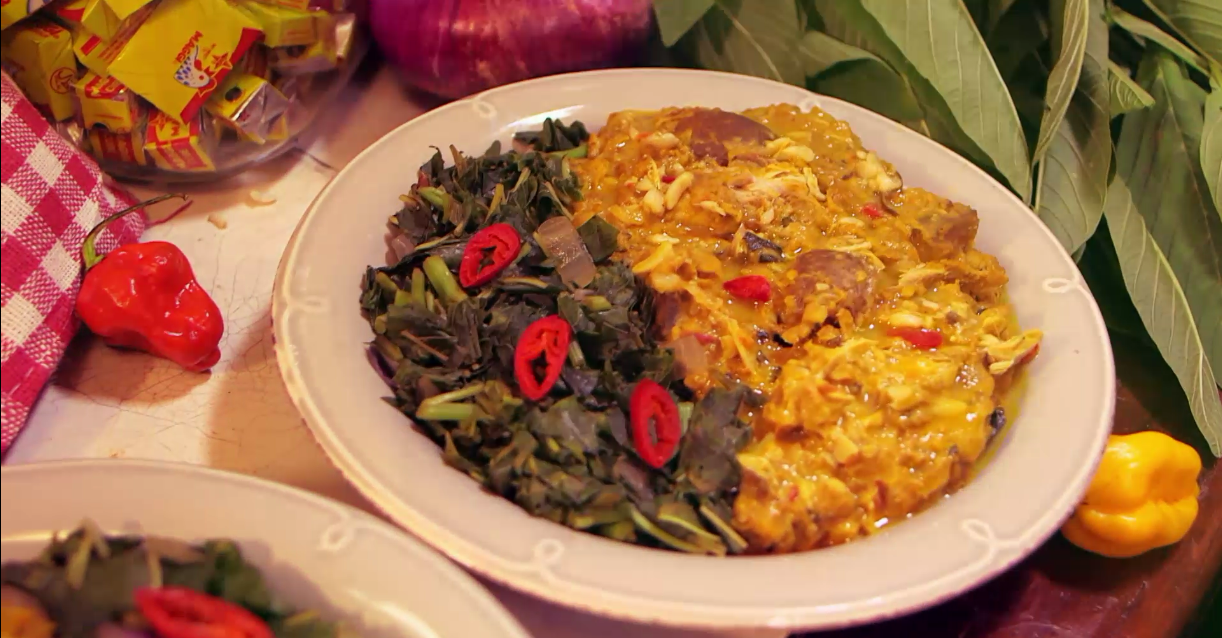
    Made with African Breadfruit, this meal is rich in protein and can be prepared in a plain way or in a jollof way.

    If you love Ukwa, you’ll love Maggi’s #DeliciousNaija Onitsha episode

    Make sure to look out for the ‘Delicious Naija’ show at these times on your TV: 7:30 pm, Friday on Arewa24, 7:30 pm, Saturday on Africa Magic (Family), 5 pm, Sunday on NTA, OR just watch it online right now!