It’s two days until the opening ceremony of the 2024 Olympics, and most participating countries have generated quite the buzz with their opening and closing ceremony kits and uniforms.
While most designers delivered their fire creations, we couldn’t help but imagine what AI’s version of each African country’s Olympic kit would look like. Here’s what Meta’s AI designed after we asked.
Nigeria
The opening ceremony kit exudes a royal vibe that might be a bit too much for the occasion, but I’ll take it.
The closing ceremony kit draws inspiration from the Nigerian national colours, incorporating lots of green.
Senegal
AI suggests a jersey shirt heavily incorporating the Senegalese national colours for the opening ceremony. I’m not going to lie, the face cap is super cool.
The closing ceremony uniform also leans towards a jersey design with a middle slit, replacing the face cap with a more traditional looking cap.
[ad]
Egypt
One look at this opening ceremony kit, and you’ll know it’s heavily influenced by Egyptian royalty. It’s complete with headgear, lots of jewellery, and gold colours.
The closing ceremony kit follows a similar design with less gold.
South Africa
I’m not sure what other nations are bringing to Paris 2024, but we’ll bet South Africans might just win the best-dressed category if they show up to the opening ceremony in this outfit.
The closing ceremony outfit is a basic and almost forgettable tracksuit set.
Morocco
AI suggests the North Africans should show up at the opening ceremony in an outfit that looks better suited for a Sallah party.
But the closing ceremony fit — a hooded kimono with lots of floral embroidery — is a real showstopper.
Sierra Leone
Which Sierra Leonean pissed off AI? Ain’t no way they’re showing up in Paris like this and won’t get trolled.
There’s some redemption in the closing ceremony kit, though.
Uganda
The opening ceremony uniform is a tracksuit set that can easily be mistaken for one from Nigeria.
AI, however, comes through for Uganda with the closing ceremony kit — a white two-piece suit featuring colours from the country’s flag.
Kenya
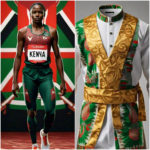
Kenya’s opening ceremony kit consists of a sleeveless spandex top and trousers in deep green, red, and black, the country’s flag colours.
The closing ceremony kit is a tracksuit that comes with a cape in the country’s flag colours.
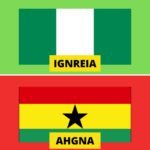
There are 54 African countries, but we’ve scrambled 15 of them for this quiz. Do you think you can unscramble all of them before the timer runs out? Let’s find out.
Tip: If you’re not sure what a country is, move to the next one. Alternatively, you can hit hit ‘Give up’ to reveal the answer.
We’ve already established that Nigerians love proverbs because of how they add flavour to their conversations, but did you know it’s not just a Nigerian thing? This love is also common in other African countries?
If you’ve taken notes on Igbo, Hausa and Yoruba proverbs, it’s time to take out your notepad again and get busy. This time, we virtually traversed Ghana, Kenya, Burundi and more for some African proverbs and their meanings.
Klemeðoa (Kelemeðoa) metsia ñuifi o
Translation: The person who has gone into a patch of giant grass does not complain of skin irritation.
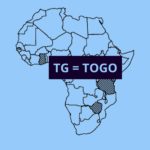
Meaning: This Ewe proverb from Togo means you should be ready to face inconveniences while trying to achieve success in life.
Umanika agatu wicaye mu kukamanura ugahaguruka
Translation: You can hang an item from where you are seated, but when you want to get it down, you have to stand up.
Meaning: This proverb from Burundi means it’s easier to start something than to complete it.
Alagaa gaafa kolfaa fira ofi gaafa rakko
Translation: The stranger is good for laughing; the relative for trouble.
Meaning: This Ethiopian proverb stresses the importance of cherishing your family members because they’re your first option when you’re in trouble.
Mpa-tsehla ha e bolaee
Translation: A full belly doesn’t kill.
Meaning: This South African proverb means it’s important to feed yourself before worrying about other things.
Ono agoorwa nkwibakaare
Translation: The one who is praised comes forth to chant.
Meaning: This Tanzanian proverb means acknowledging success is a great way to get people to do more.
E don tey wey yansh dey for back
Translation: Buttocks have occupied the backspace for a long time.
Meaning: It’s a Nigerian pidgin proverb that means there’s nothing new under the sun.
Umuntu ngumuntu ngabantu
Translation: A person is a person through other persons.
Meaning: This Zulu proverb from South Africa preaches that no man is an island. We’re all connected and will always need each other.
Urya incuti ukinovora intuntu
Translation: When you eat your relatives, you lick agony.
Meaning: Another Burundi proverb that stresses the importance of putting family first and treating them right.
A Hura ja Mmotlana, boroko
Translation: Sleep is the poor man’s luxury.
Meaning: This proverb from Botswana preaches the importance of hardwork. You can’t sleep too much if you plan to be rich.
Ðevi ka akple gã mekaa nya gã o
Translation: A child can swallow a big morsel of food but can’t swallow big matters.
Meaning: This is an Ewe proverb from Ghana. It means young people can never have the life experiences of older folks.
Owuo atwedee ne nsa
Translation: Death has a long hand.
Meaning: This is a Twi proverb from Ghana that means fate can’t be avoided, and everyone will eventually die.
Maitiro enyu anotora nhaka yenyu
Translation: Your deeds determine your heritage.
Meaning: This Zimbabwean proverb means your actions go a long way in shaping your reputation.
Ukufa kukhala bophela
Translation: Death is the last kick of the dying horse.
Meaning: It’s a Xhosa proverb from South Africa that means things get tough when you’re about to have a big win.
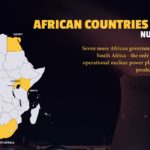
Seven more African governments are looking to join South Africa — the only African nation with an operational nuclear power plant — in commercial production of nuclear power.
By Conrad Onyango, bird story agency
At least seven African countries are at various stages — commissioning, shopping for vendors and mapping appropriate sites – in the roll-out of nuclear power plants, as a majority eye 2030 as a start-date for generating electricity from nuclear energy.
Egypt is currently the only country to have begun construction, following the formal launch of a site in July. The US$25 billion project, being developed by Russian state energy corporation Rosatom, will have total installed capacity of 4.8 gigawatts (GW) made up of four, 1,200 megawatt reactors, when complete.
“Egypt has joined the nuclear club. The plant will be the largest project of the Russian-Egyptian cooperation since the Aswan High Dam. Having its own nuclear energy industry has been a dream for the Egyptian people for more than half-a-century,” said Rosatom Director General Alexey Likhachov, during the launch.
Kenya is also inching closer to the development stage, after identifying two coastal sites — Kilifi and Kwale counties — earlier in the year, to put up the country’s first nuclear power generator.
The country’s Nuclear Power and Energy Agency (NuPEA) has estimated the project would cost about US$50 million, with construction works planned for 2030, a test run four years later and full operations projected for 2036.
“There is a need to complement the existing renewable energy sources in Kenya to meet the projected energy demand while achieving low carbon development, through alternative low carbon source,” said NuPEA Chief Executive Officer, Collins Juma, during the Tenth Review Conference of the Parties to the Treaty on the Non-Proliferation of Nuclear Weapons early August.
Uganda is considering three sites — on the Kyoga, Kagera and Aswa rivers — for the construction of two 1,000 megawatt reactors, by 2031. This follows agreements reached by the country’s Ministry of Energy with Russian and Chinese investors.
Last month, Uganda’s President Yoweri Museveni requested of Russian Foreign Minister Sergei Lavrov that Russia help the country build East Africa’s first nuclear power plant. In May, the International Atomic Energy Agency (IAEA) gave Uganda the green light to start building and production of nuclear power.
After a false start, Nigeria is starting all over again. Nigerian Nuclear Regulatory Agency opened bidding for construction of a 4 gigawatt nuclear plant in March, 2022 — and the country is reportedly betting on the four-reactor power plant with an equivalent of a third of the country’s total installed capacity, to address power outages.
In 2016, the West African nation reportedly sealed a US$80 billion plan for four nuclear stations with Rosatom but this never materialised.
After the discovery of uranium deposits four years ago, Tanzania is looking to help from Rosatom and its subsidy Uranium One, which has a license to mine uranium in the Mkuju River within the Selous Game Reserve, to build a research reactor and subsequently set up a commercial nuclear plant.
In June, Morocco advanced its plans for nuclear energy after the release of a report that gives its legislators recommendations for making a switch to renewable energy sources.
“Morocco has invested in solar and wind energy, and it is now eyeing nuclear energy to ensure its electricity needs in the future… we now need a national decision to start producing electricity from nuclear energy,” Energy Transition and Sustainable Development Minister Leila Benali was quoted as saying, by Moroccan media.
The report follows an almost seven-year feasibility study of for a nuclear reactor and will guide the country’s parliament, which is expected to deliberate on it through the year. Morocco is largely an energy imports-reliant country, importing up to 90 percent of its annual energy requirements.
Rwanda is also making significant strides after signing a deal with Rosatom to build a center of nuclear science and technologies, in October 2019.
In August, 100 Rwandans are expected to graduate in the field of nuclear science and technology and in the next two years, a centre of nuclear science and technology is scheduled to be constructed in the Bugesera Industrial park.
While other countries are chasing after large projects, Rwanda plans to build two Small Modular Reactor (SMR) units, each with a capacity around 100 megawatts.
A 2022 forum report by the Mo Ibrahim foundation shows that small modular reactors can be mobilised more quickly and present more short-term opportunities for nuclear power in Africa.
“Large nuclear power plants are subject to cost overruns and construction delays,” according to the report titled, The Road to COP27; Making Africa’s Case in the Global Climate Debate.
South Africa’s Koeberg nuclear power station — owned and operated by state-run power utility Eskom – is the only nuclear power plant on the continent. It has an installed capacity of 1,940 megawatts.
As more countries push on with the switch to low carbon electricity, South Africa has been eyeing an additional 10,000 megawatt in nuclear power capacity. However, there has been widespread opposition by an anti-nuclear lobby.
Let’s say Nigeria finally sends all of us packing and we all had to move to Ghana and deal with their jollof, would you even know how to pay for it? Or will you be doing “Giant of Africa” up and down? How many African currencies do you really know?
Take this quiz and find out.
Apart from the Congo (whose official name is the Democratic Republic of the Congo), which other African countries start with the letter C?
What African country names start with C?
You named #{score}/#{total} countries
Did you actually pay attention during geography class?
You named #{score}/#{total} countries
You tried sha.
You named #{score}/#{total} countries
Best in geography.
You have two minutes to unscramble all the African countries in this quiz. We’re sure you’ll do well.
Bonus:
You unscrambled #{score}/#{total} African countries
You can do better.
You unscrambled #{score}/#{total} African countries
You did okay.
You unscrambled #{score}/#{total} African countries
You did great. Kudos!
After exploring a bit of Kigali in this week’s #ZikokoWhatSheSaid, it was only right to see other African countries we need to have on our bucket list. We want you to live vicariously through these five Nigerian women as they share some of the African countries they’ve visited.
1. “My first solo trip was to Tanzania”
I spent 2021 saving for my first solo trip to Tanzania. It was my first time on a plane, so of course, I tried to play it cool, but I couldn’t figure out the belt. Luckily, the cute lady beside me showed me how to buckle it in. A few minutes after takeoff, I slept off until we landed in Tanzania. I had paid to spend the week at a resort before heading to Zanzibar the next week. Tanzania was beautiful. There were trees, vast lands of green and hills. The most exhilarating moment was the hike up Kilimanjaro — I almost peed my pants as we got higher up. To be fair, I was slightly drunk on that hike. The next day, I took a ride on a hot air balloon and it’s the most freeing thing to experience. Looking down at the lush greenery and slowly floating into the clouds made me feel like I was finally living life. And oh, the food. Everyone needs to try Urojo soup.
2. “ There’s nothing as elite as a VIP lounge”
In 2014, I went on a school trip with a friend to Ethiopia. It was a conference, and we were expected to deliver a speech on youth empowerment. I had been on international trips before, but it was the first time my destination would be in an African country. The best part was that I didn’t have to travel with a teacher. Well, at least I thought that was the best part until we connected with a minister and his special advisor on the flight. They ok it upon themselves to be responsible for us since we didn’t have a guardian tagging along. There were other complications with our accommodation for the trips, so they paid for our meals and hotel bookings. We arrived in Ethiopia in the middle of the night and it looked so beautiful flying in. We went into the VIP lounge and waited for the car to get us. I felt so elite. There were top guys in politics and we got to mingle for a bit.
Surprisingly, Ethiopia was quite chilly. I didn’t expect that. Other parts of the trip kind of went by quickly. The food looked great, but I was keen on sticking to familiar things like rice and meat — I’m not adventurous with food. I did try a dish called injera and it wasn’t for me. It felt like moist bread with meat. So yeah, not for me. Another thing, the women in Ethiopia are gorgeous. I’d love to go there again.
3. “Waakye and shito is everything”
I was in Ghana for a week in 2019. First off, there are traffic jams in Accra o. Yes, the type you sleep and wake up in. But I loved Jamestown and its colonial buildings and taking a tour at the Kwame Nkrumah Memorial Park. The night scene was amazing as well — drinking, eating waakye and shito. Trust me, when Runtown said, “Hope your love go sweet pass shito,” he knew what he was talking about. Shito bangs with everything. I filled a bag with it when I was leaving.
4. “Drunk nights in Morocco were the best”
In 2018, I was on a trip with my girlfriends to Morocco. One of them was getting married and we wanted one last trip as single pringles together. We were all in our thirties and every night was insane. The beaches are incredible — the water is as blue as what you see on TV. And the coconut cocktails were everything. I’d kill to have those drunk nights on the beach again. Let’s not forget the food. Brocadillos and macaroons were my favourite things to eat. I can’t lie, Morocco is expensive to enjoy, but I need to go there again. I need another drunk night on the beach, dancing in a bikini.
5. “ I loved yovo doko”
I was in SS2 and went on an excursion to Benin republic. I lived in Benin state and the school bus drove the class to Lagos. Our bus driver got lost on the way. I remember eventually getting to Marina and then Badagry. We spent three nights at Whispering Palms in Badagry before continuing our journey to Benin. The first thing I noticed from the border was how clean Benin Republic looked. CFA franc looked really cool, and the spending coins felt like I was spending UK money. I went to Dantokpa market in Cotonou and wanted to get some souvenirs. I felt I could have haggled the seller for a cheaper price — the Benin babe in me is still screaming. The rest of the trip was a lot of food. They were hard to pronounce but I remember trying yovo doko and it tasted like puff puff. Then there was amiwo with the mojo sauce and fried chicken.
There are 7 African countries that start with “M”. Can you name them all in a minute?
Give it a try:
Name the African countries that start with “M”
You got #{score} countries
You didn’t try at all.
You got #{score} countries
Not bad.
You got #{score} countries
You’re too much.
If you paid attention in Geography class and have a lot of General knowledge, this quiz will be a breeze for you. You have 8 clues and 1 minute. The timer will start immediately you type “OK”. Can you guess the African country?
P.S- We really want you to share your results on social media with this one!
You couldn’t guess it right!
Look at you. What were you doing in Geography class? Don’t Google the answer o. Try again!
Best in knowledge!
You’re the best! Are you sure you didn’t cheat? Don’t go and shout the answer on social media o. Let them suffer!