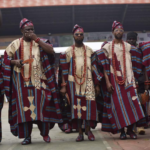
Wizkid: Long Live Lagos, the first film production about Wizkid, signifies more than a documentary. It’s a meditation on place, memory, ambition and what it costs to carry a city and generation with you as you move through the world. Rather than tracing a rise-to-fame arc, the documentary portrays Lagos as both origin and burden, illustrating how the city’s beauty, struggles, condition, and contradictions are reflected in Wizkid’s music, work ethic, and worldview.
From rehearsals to performances, reflections and other moments, the documentary reveals how Lagos continues to shape Wizkid long after global success. It shows community, creative responsibility and hard work behind the scenes.
These are six things I picked from Wizkid: Long Live Lagos.
The doc is about his Tottenham show
This documentary’s storyline attempts to explore Wizkid’s legacy as thoroughly as possible, but the central theme is the show he performed at the Tottenham Stadium in 2024. Wizkid is the first artist to perform at the 60,000-person capacity stadium after Lady Gaga (2022) and Guns N’ Roses (2022).
Wizkid performing there as the first African and Black artist is history, and this is the documentation of it, its significance and what it took to make it happen.
It’s dedicated to his mum
At the time of the concert planning, Wizkid’s mum had to start cancer treatment, meaning that she wouldn’t be able to attend the show.
A few weeks before the concert day, she died, leading many to believe that he’d cancel the show. However, he didn’t, and the show went on.
The documentary title may give a special nod to Lagos, the city that made Wizkid, but it’s dedicated to his mother, whom he also named his latest album, Morayo, after.
Family follows Wizkid to work (almost) every time. Throughout the documentary, we see Jada Pollock — Wizkid’s manager of eight years, partner of six years, and mother of two of his children — and their young child, who’s too young to be left alone, moving in proximity. The doc also shows Jada giving a glimpse into their work process, and how they merge work and family.
The Cavemen. are the show’s musical directors
Nigerian Highlife duo, The Cavemen., handled the show’s musical direction for the rehearsal and live performance.
Get More Zikoko Goodness in Your Mail
Subscribe to our newsletters and never miss any of the action
Starboy travelled out for the first time
Don’t get it mixed up: the Starboy here isn’t Wizkid himself, nor the Canadian singer The Weeknd, who also called himself that one time. The Starboy in discussion here is a big fan of Wizkid, a mechanic, car rider, and drifter, who made his way to the U.K. just to watch his favourite artist perform.
The focus on Starboy, his decision to travel to the UK to witness Wizkid make history, and obtaining his visa just in time for the show, may seem too performative and convenient, given the difficulty of obtaining a visa in Nigeria. But it also shows how much die-hard fans will ride for favourite artists.
The doc spotlights Dencity
Dencity is a women-focused skateboard initiative in Lagos, founded by Blessing Ewona, who’s also the DJ known as WEARECHEMICALS. There’s no particular tie or story about this group in the documentary. Still, it is recognised in its exploration of how young, creative Nigerians are taking agency and shaping their own future.
If your fingers bleed from scrolling the internet or you keep tabs on the latest celebrity gist, this quiz is for you.
If you don’t get 10/13, just delete your social media accounts and go and focus on yourself.
Take this test:
Questions
This is a question
Which of these Nigerian celebs wasn’t at the MET Gala?
One of these artists went viral for marrying an honourable:
Which famous Nigerian author confirmed they had twin boys?
The image below represents a popular slang on X.
Which Nollywood movie made “Achalugo” one of the most used compliments in 2025?
The pastor who flashed a stun gun at a TikToker this year has one of the following names:
Which superstar sent a fan home for sleeping at their concert?
These celebrities’ weddings rocked the year, but only one happened in Iceland:
Were you online when a certain famous person tried to stop a plane? If yes, who?
Which of these artists got mixed reactions from Nigerian Twitter for their Tiny Desk performance?
Body used to be “tea.” Now, it’s _____.
Which of these Nigerians didn’t set a Guinness World record this year?
Which of these Nigerian artists was declared wanted by the police?
You got #{score}/#{total}
Wow. You might just be the internet bank. Impressed with you, my friend.
You got #{score}/#{total}
You have done your best, my friend. You aren’t just up to date as much as you think you’re. Good luck next time.
You got #{score}/#{total}
Smfh. Are you 40+? Or you don’t have a phone or internet connection? Or you’re just clueless? Or all of the above?
[ad][/ad]
As Nigerians navigate the highs and lows of 2025, from the hustle and bustle to quiet, personal moments, one thing remains constant: music is a powerful tool.
I reached out to ten Nigerians to compile a list of songs that’s more than just a list of hits. They’re candid and personal music that are carrying them through their year, giving them melodies, joy and resilience needed to face another day.
“It was my prayer point during the crossover night and in fact for 2025.” — Favour
The first 2025-realised song that I first heard this year is Lawrence Oyor’s “Favour”, back in January. The title was my prayer point during the crossover night and in fact for this year. I just want God’s favour in everything I do and the song fits perfectly. Also, my name is Favour — and so far, my name has been a reflection of my life. My grades are good, my family too. If there’s something that’s ever felt perfectly made for me, it’s this song.
“It clearly expresses many of my feelings to my partner.” — Tunde
I have been in love for the most of this year and FOLA’s “you” clearly expresses many of my feelings to my partner. It’s groovy and Afrobeats; just how my babe loves her music. It’s delivered in languages my babe and I understand; very easy to sing to each other.
“On a deeper level, it’s about how I lost my spark and praying that I will soon find myself.” — Wale
Easy. It’s Tim Lyre’s “Find You.” The entire Spiral album has an introspective theme that makes it emotive, but “Find You” stood out to me because I had different interpretations of the song.
On the surface, I associated it with an ex I was deeply entangled with in the past and still imagine a future with—just because of how perfect we were together and how she brought a brighter aura to light up my life. So maybe, if it’s meant to be, I’ll find her. But on a deeper level, I interact with the song as if it’s a letter to myself, about how I lost my spark and praying that I will soon find myself. It’s a really beautiful song that’s helped me so much this year. Shout out to Tim Lyre for real.
“It helped me survive a hellish commute in the first quarter of this year.” — Thomas
It’s “Egaju” by Tim Godfrey and Emekasongsz. It’s a beautiful Christian song, which is funny because I’m not religious. Like many Christian songs, it doesn’t have a lot of lyrics (most of it is a call and response of the same two lines), but somehow ends up being seven minutes long.
It’s catchy as hell and helped me survive a hellish commute in the first quarter of this year. Tim Godfrey (the main artist) gets bodied by the person he features (Emekasongsz) and I find that so fucking funny.
“There was a particular midnight I had it on repeat and I got a little teary eyed.” — Wisdom
For me, it’s “Memories” by Lojay and Tyla. It’s a heartbreak song sort of and there was a particular midnight I had it on repeat and I got a little teary eyed at some point. I didn’t exactly cry but it made me feel something and reminded me of some past experiences with heartbreak.
“It’s my motto and where I find my optimism right now.” — Folaranmi
When Seyi Vibez first released “Pressure”, I loved it, though not almost as quickly as I loved his previous releases. But a couple months later, around the time I was experiencing a drought: volunteering and looking for freelance gigs but nothing — a line in the song hit me. It says, “Only a diamond can come from all this pressure.” I repeated that line like twice after I heard it and shook my head in agreement.
It’s my motto and where I find my optimism right now. By the time better days come, you’d know that my struggles made me but they wouldn’t matter anymore.
“It makes me feel that love in any form is still worth believing in.” — Mercy
One song that means a lot to me this year is Burna Boy’s “LOVE” from his latest album. It makes me feel that love in any form is still worth believing in. I liked the song immediately when I heard it and every time I’m driving my car, it’s a must-play — once, at least.
Get More Zikoko Goodness in Your Mail
Subscribe to our newsletters and never miss any of the action

“It’s been healing me and activating the spirit of worship in me.” — Chidinma
I found a song titled “Ya Yesu” by CHEE and Kaestrings. Personally, I have been through a new phase in my faith. I have been looking for God’s mercy and this song is part of my journey. It’s been healing me and activating the spirit of worship and reverence for God in me. If I’d found it earlier, it’d be my most played song this year.
“This song was my ‘I know God will not forget me.’” — Honour
For me, it’s Sound Of Salem’s “Promise Keeper.” You know how they say after you cry, you will look for a solution? Well, this song was my “I know God will not forget me, my name is Honour and God will honour me.” When this song comes on, I’ll bop my head because I know the pain I’m facing is nothing compared to the joy that’s coming. So, I celebrate.
“It’s the song I have played the most this year.” — Yomi
I will go with Rema’s “Baby (Is It a Crime).” It’s one of the best produced songs this year. It’s beautifully written too. It’s the song I have played the most this year, whether I’m working,cleaning or want to sleep at night. I expected more of Rema’s 2025 releases to follow that song’s template and I was disappointed tbh. “Baby” is a jam. In fact, it’s the best Afrobeats song of 2025.
Yesterday, the 23rd of November 2025, made it ten years since Olamide released “Don’t Stop”, a dance-ready jam that compels a damsel not to quit dancing and have a good time. A decade later, Baddo (as he’s fondly called), hasn’t slowed down a bit. In the ten years since, he has released nine albums, become a music executive, signed global artists like Fireboy DML and Asake, and received Grammy nominations.
Olamide hasn’t stopped performing either. On the anniversary of “Don’t Stop”, the Afrobeats legend sold out OVO Arena Wembley and filled it up with his fans, passionately singing his lyrics back to him.
From his entrance and reunion with his former artists on stage to a tribute to an older Nigerian music legend, Olamide Baddo delivered an impressive two-hour performance to his audience in the UK.
Olamide’s grand entrance
In a bourgeois style, Olamide appeared on the OVO Arena Wembley stage: styled in a suit and pulled in a vintage car that looks like a 1958 Jaguar XK150. His entire entrance simply implied his “big-boy” arrival in London. And like that old saying goes: When in Rome, act like Romans. Olamide Baddo cosplayed the wealthy corporate-lad Londoner look, while delivering jams straight out of Lagos, Nigeria.
Badoo brought out his former YBNL artists, such as Lil Kesh, Pheelz, and Asake — whom he rocked the stage with, performing songs like “Shoki”, “Amapiano” and “99”. Fireboy DML, who’s still signed to Olamide’s YBNL record label, was present, but didn’t perform.
His performance with Asake extinguished the rumours and flames of bad blood. This is their first reunion on stage since Asake left YBNL. It was a significant moment that showcased Olamide’s admirable leadership and cordiality with his signees, both past and present.
The moment Olamide brought out Asake at his concert at OVO Arena. See how the crowd screamed 🔥 pic.twitter.com/1yajD1PoiY
Olamide’s artists weren’t the only ones present at the event. He had a lineup of established and rising stars, including Lojay, Joeboy, Seyi Vibez, Darkoo, Soundz, Ashidapo, and Daecolm (who featured on Olamide’s “99”).
Asake and Seyi Vibez’s warm interaction at Olamide’s Wembley show puts to rest the gossip that both artists aren’t friendly.
This was one of their rare interactions, coming after two years of comparisons due to their Fuji and Islamic music influences, and street style. At some point, fans of both have accused one of imitating the other, often leading stan wars on social media platforms like X and Instagram.
Hopefully a collaboration soon, good sirs?
Backstage at Olamide’s sold-out OVO Arena concert last night, Asake and Seyi Vibez shared a warm moment, exchanging a hug and a handshake. pic.twitter.com/DBuAIcRWyY
Olamide stopped the music while performing to ask security to check on a fan who wasn’t looking well.
The moment Olamide stopped his show mid performance and call upon security to check up on one of his fans in the crowd that isn't looking good. God bless Baddo. 🥺❤️🐐 pic.twitter.com/JcN3bwUjYv
In the middle of performing “Lambebe”, the jam he made with music producer Major Bangz in 2014, Olamide took a breather, leaving the multitude to sing.
The whole arena sang and echoed the lyrics to the song. It was an infectious head-swell moment that prompted Olamide to say, before he jumped to perform “Stupid Love”, that: “Won de wi pe baba iya won ni fans. Won ni sorire.” His statement is subliminal and a brag to anyone who thinks he has fallen off, to come and see him on a big stage, with thousands of fans in London, singing his old and new jams, word for word.
Olamide paid a heartwarming tribute to Fuji music by performing renditions of some Fuji hit songs. He did a rendition of Pasuma’s “Importer and Exporter” and Wasiu K1 Ayinde’s “Omo Naija.”
When Olamide performed a rendition of Pasuma's "Importer & Exporter" record and K1 De Ultimate's "Omo Naija" record. Omo! This performance too sweet. 🔥 pic.twitter.com/3IXPd8l3wA
He also performed Obesere’s “Osha Mo Condition Ti Mo Wa” from the Fuji legend’s Life In Europe album. These moments exemplify the impact and current resurgence of Fuji in contemporary Nigerian music.
This is one of my favourite Olamide's moment at his concert in OVO Arena where he sang Obesere's "Osha Mo Condition Ti Mo Wa." 🥺🤭 pic.twitter.com/XuTkZLsO0U
From fans to music critics and industry veterans like Joey Akan, Ayomide Tayo (AOT2) to ID Cabasa, the praise of Olamide is a current conversation.
I know we have a Big 3, but Olamide sits on the same level, or even higher than the hierarchy of Nigerian pop music.
As a creator, he's been a man for all seasons, over a decade of hits and deep cuts, albums that track all the eras of our cultural journey, songs that become…
In case you’ve forgotten, Nollywood is still running hot for free on YouTube.
From family stories to romances and faith-based dramas, YouTube Nollywood has something for everyone. And for November, I’ve done the tedious work of scouring YouTube’s vast library to find the best Nigerian movies currently streaming.
Here are the 10 Best Nollywood movies to watch for free on YouTube this month. Enjoy.
While driving through a serene rural town, Dester (Timini Egbuson) spots a Ifunaya (Sarian Martin) dancing under a tree, and in that moment, he decides he has found the love of his life.
He immediately starts trying to win her heart but first has to fight the resistance from his friends who think he’s gone insane and also untangle himself from his super toxic current relationship.
A CEO named Tope (Chike Daniels) lives a very principled life. But that all changes when Celine, a writer, comes along and throws a little chaos into his controlled life.
Their relationship first starts as a casual interaction before growing into something serious. But just as their connection strengthens, elements from their past return to wreck things. Tope has to choose between retreating to the rivers and lakes he’s used to (his safe world) or go chasing waterfalls (risking it all) with Celine.
Vanessa (Chioma Akpotha) is a lawyer experiencing betrayal due to her husband’s, Ifeanyi’s, infidelity. She stays in the Egyptian river named Denial and refuses to accept that her partner is seeing a woman from his past.
She keeps the situation under wraps to hide her shame, until the truth is exposed, threatening the life and image she’d worked so hard to protect.
Karis (Deza The Great) believes marriage is a scam because women are untrustworthy. Wishing to be a father but not wanting to deal with the stress of a romantic relationship, Karis settles on the less emotional solution of surrogacy. He hires Nuela (Scarlet Gomez), who agrees to the arrangement purely out of financial necessity.
A miscarriage destabilises their arrangement, plunging them both into a messy emotional crisis they didn’t budget for.
Kolade (Greatman Takit) stands at a crossroads between faith and fame. Born into a devout Christian family, his father, Rev. Emmanuel (Mike Bamiloye), envisions him continuing the family’s ministry. But Kolade’s heart beats to the pulse of secular music and the allure of stardom.
His defiance sets off a chain of spiritual turmoil that drags him into a dangerous world of temptation, cult influence, and moral reckoning. This movie shows the tension between divine calling and personal ambition.
Alexia (Prisma James) is a 27-year-old lady navigating the brutal Lagos dating scene. She desires a genuine relationship but is repeatedly thwarted by men pursuing sex. Her frustration reaches a boiling point, but starts to cool when Tobenna (Timini Egbuson) enters.
Their meeting promises something substantial, but the mirage collapses swiftly when she realises she’s just another woman on his hit list. Alexia, no longer wanting to be a victim,initiates a strategic counter-attack to make Tobenna pay for the pain he’s caused her.
For Felix (Joshua Banjo) and Glory (Aanu Kolade), their relationship wasn’t just love. It was a divine assignment, sealed by a prophecy promising a bright future.
As their supposedly predestined relationship materialises, an unforeseen darkness comes into the mix, threatening to violently derail their spiritual itinerary. This results in a series of trials that test not just not their relationship, but their faith.
This movie follows the story of the Greggs and the complexities of their marriage. Frank (William Benson), the husband, has fallen out of love and wants to be with a younger woman called Amanda (Uche Montana).
Queen (Shaffy Bello), the wife, becomes suspicious and tries to befriend her husband’s mistress to know the threat to her marriage. What unfolds is unexpected relationship turbulence, proving that even after twenty-five years, a marriage is only as stable as its weakest link.
Sparks fly when two strangers, Michelle (Osas Ighodaro) and Andrew (Eso Dike), meet and fall in love, both lying about their backgrounds.
However, the foundation of their relationship crumbles when their real identities are revealed. They’re both from powerful families determined to marry off their children to preserve the family legacy. The couple is forced to choose either family and legacy or risk everything for their love.
As the love of Chioma (Olawunmi-Adenibuyan “Bam Bam”) and Obiora (Uzor Arukwe) blossoms into the forever they’ve always dreamed of, they find themselves at the edge of a new chapter. However, their marital journey is challenged when secrets they had buried resurface, putting great strain on their relationship.
They’re forced to confront a question: can the strength of their love truly mend their pasts and write the everlasting love they desire?
While the global spotlight often shines exclusively on Nigerian Afropop hits, 2025 has been quietly rich with exceptional projects that thrive outside the mainstream orbit. This is not the sound of the radio; it’s the sound of alternative genres, intricate lyricism, and experimental production.
This list curates the essential non-Afropop albums and EPs, spanning hip-hop, R&B, alternative, and fusion genres that might have slipped under your radar. Discover 10 of the best, most underrated Nigerian music projects of 2025 that deserved more love than they got from fans.
10. Greatly Exaggerated — Damon Grass
It’s been over a decade since rapper Damon Grass emerged as the winner of Don Jazzy’s Enigma Rap competition. Afterwards, he temporarily hung up the mic to focus on school, a day job and financial stability. Now in 2025, he returns to the game with his official debut album, Greatly Exaggerated.
Damon finds himself rhyming and swinging between smug braggadocio, baller lifestyle, limelight ambitions and street orientations. He announces himself as one of the rising Nigerian rappers to look out for.
A-Q brings his trilogy to a close with God’s Engineering 3 (The Beginning), an album defined by its sharp lyrical precision and unwavering personal conviction. Across eleven focused tracks, GE3 serves as a profound examination of the rapper’s journey.
He delves into his past, paying homage to his roots on Ramlat Timson Street in Surulere, Lagos, while simultaneously launching a pointed critique against the superficiality of today’s rap scene. With this album, A-Q commands absolute attention.
Singers Lasmid and TML Vibez collaborate on a project defined by raw emotions and seamless melodies. Their artistic connection is palpable, and this shines through in their styles and verses.
Sweet Songs 4 You champions emotional honesty and transparent lyricism, paired with minimalist yet soulful production. The project uses space and silence as key elements, allowing them to perfectly underscore the deep sense of longing, ache of hope, and vulnerability poured into every single note.
On her candid latest album, Tiwa Savage exchanges the funfair of pop music and spectacle of fame for clarity. She examines her innermost emotions, unpacking the complications of affection and the inherent power that comes from choosing self.
The production leans closely towards atmospheric R&B sounds, allowing moments of unvarnished strength and brutal honesty. This One Is Personal delivers on its title, giving usTiwa at her most intimate and musically evolved.
Healers Chapel is a well-crafted sonic sanctuary made for a world grappling with pain and uncertainty. Across 14 tracks, Wizard Chan seamlessly weaves his Ijaw cultural roots and heritage, with threads of reggae, hip-hop and Afro-fusion in ways that feel ethereal.
This album is a detailed map of the emotional terrain of faith and hope. It offers reflection as much as quiet solace and commentary on societal issues. It’s a layered, shared and deeply human experience, where finding peace means recognising the power of your community and your past. With Healers Chapel, Chan invites listeners into a journey of healing.
If you’re looking for music that blends R&B, folk and fusions of other soulful sounds, Sewà’s music should be on your radar. Her debut album, Detox, explores introspection, longing, love, heartbreak, patience, ambition, and resilience in a deeply personal way that remains relatable to the general human experience.
Her lyricism employs English, Pidgin English and Yoruba. It’s in this witty command of language and her soulful delivery, that Sewà cements her place as a globally relatable artist who’s rooted in her heritage. Detox is more than a debut album, it’s emotional cleansing.
Braye’s brilliant EP, I Wish I Had More Time, is a statement on the fragile state between intimacy and ambition. He addresses this ubiquitous struggle with compelling honesty and graceful musicality.
This EP offers a deep dive into internal conflict, carefully navigating themes of self-doubt, profound yearning, and the silent tug-of-war between romantic connection and life’s larger purpose.
SPIRAL, Tim Lyre’s double-sided album, mirrors life’s cyclical nature. It’s a 16-track project that moves fluidly from deep introspection to renewal, transitioning smoothly between moments of melancholy and uplift. Lyre dissects core human experiences like personal development, relationships, loss and professional drive.
Whether he’s adrift, examining financial freedom or having thoughtful closure, he makes his album feel simultaneously vast and intensely private. SPIRAL is genre-fluid, emotionally relatable and brilliantly curated to stir the soul.
Subscribe to our newsletters and never miss any of the action
2. Goodgirl — Goodgirl LA
On her bold self-titled EP, singer-songwriter Goodgirl LA flips the script on what it means to be a “good girl.” With sultry vocals and unapologetic lyrics, she invites Nigerian women into a world where desire, power and authenticity reign.
She also embodies sexual liberation with confidence, showcasing her ambition and resilience. This six-track EP isn’t just a statement; it’s a celebration of women who want more, feel more, and claim more. Goodgirl is sexy, fearless, and it’s Goodgirl LA at her most confident and honest.
Paradise Now finds Obongjayar traversing an musical territory marked by nervous energy, immediate necessity, and dense, complex production. It’s a rich canvas for dissecting everything from personal friction to systemic failures.
His singular voice carries the album, guiding listeners through the diverse sections of his boundary-pushing alt-R&B, Afro-dance, punk, disco, and indie rock. From longing to self-assertion, optimism to resistance, Obongjayar makes strong statements that put his album among the year’s best releases.
Nigerian-born artist, Mr Eazi, is back with Maison Rouge, a 7-track EP he recorded while living in a guesthouse of the same name in Cotonou, Benin. And according to him, the music takes him back to the Banku Music that started it all.
In 2015, Mr Eazi made a rallying call that signalled the start of his music movement: “Make we bankulize!” While living and receiving a tertiary education in Ghana, he had been greatly influenced by Ghanaian bounces, highlife and pidgin, as well as Nigerian chord progressions and patterns. So he fused them into a rhythm, resulting in a ballad-like yet groovy sound that captures the warmth and communal essence of West African life and experience.
In his rallying single “Bankulize”, Mr Eazi isn’t just singing about food and romance, he’s singing about daily experiences and feelings. Banku, after all, is a complete meal that’s delicious, pocket-friendly and generally loved across social lines. It’s the kind of dish that satisfies both the student stretching a tight budget and the couple seated for a weekend food date. By invoking Banku, Eazi builds a shared language of simplicity and enjoyment that cuts through borders, regions, class, and status.
Music boosts the cultural and social aspects of a dining experience. However, it must have been a remarkable thought in the 16th century that the fermented and cooked maize meal created along the South-Eastern coast of Ghana would not only be passed down as tradition, but also influence contemporary West African pop music in the 21st century.
Five hundred years after its introduction, Banku — a single-serving dumpling that’s eaten with okro or groundnut soup and now sold on Nigerian streets — has been transformed into music. This transformation didn’t happen in isolation. Cultural exchange and migration carried both the dish and its name across borders.
To “bankulize” is to have a good time without excess and find comfort in what’s familiar yet deeply satisfying. It’s Eazi’s way of turning everyday influences, memories, flavours, and rhythms into a music subgenre and a metaphor for cool, content living.
His approach to this relationship-themed EP is personal, much like writing in a diary. He sings in his unique laid-back delivery style, fitting perfectly into the album’s mood and release statement: “Just me, my thoughts and melodies.”
If you fawned over the clips and photos of his talked-about wedding to Temi Ajibade (nee Otedola), or/had expectations of a wedding-themed music, you’re in for something else. The first track, “Violence”, is Eazi singing about how what was thought to be simple love has become the survival of the fittest. It’s a sombre deduction of the situation he finds himself in, where his relationship is headed. “Wait For Your Love” is about unrequited love. His patience has run out, and he’s moving on.
“Casanova” deeply leans into highlife sound. Under light percussion and minimal vocal backups, Mr Eazi hits each strum of the guitar, extending his good-loving arms to his partner. “Make E No Tey” plays next, and for the time in this EP, a track feels like his personal experience rather than a first-person narrative. Here, he’s an impatient man consumed by love that feels like destiny; all he can think of is when he’ll hold his lover again and finally begin their forever.
Next is “Corny”, a contrasting blend of hope, fierce protection and intense devotion. Though Eazi fears his love interest might turn out corny or unpredictable, he’s ready to tear down mountains for her. “Bus Stop”, the most percussive track on the EP, follows. He confesses his love, one could feel a smile reach his eyes, as he simply states, “Baby, before I dey always run away from love / Wey as I see you, I no wan to ever run away from your love o.”
Maison Rouge ends with “Love Me Now”, a gentle love confession. He sings with the sharp clarity of a man who suddenly understands the void she leaves, declaring he’d take her and their love in the present moment, leaving no space for a later time that felt too far away.
This isn’t the music for the club. It’s drawn from Eazi’s introspective musings, or perhaps others’ shared experiences. The simple songwriting achieves a universal resonance that causes listeners to feel as though they’re hearing their own life story set to music. This EP maintains Eazi’s sit-down, conversational tone, but captures the fading appeal of youth and transitions to maturity.
Since Mr Eazi started making waves in 2016, his music has gone from place to place. As expected of a globe-trotter, his sound is highly influenced by the urban music of areas that have been home to him in his time of creation. His sonic palette expands as he sees more of the world, and her perspective broadens.
His music has gone from his debut Accra to Lagos, gone past his sophomore Lagos to London, and explored South African sounds on his third album, Chop Life Vol. 1: Mzansi Chronicles. By 2023, Eazi was already on a global sound expedition, exploring new ways to provide a refreshing experience for music and art consumers in general. He has completely integrated his creative activities with his entrepreneurial side. He has placed himself as the guy at the edge of curiosity and the front lines of sprawling trends among his peers. A result of this is the fourth album, The Evil Genius, an immersive art exhibition featuring sixteen unique artworks created for each track on the music project.
Get More Zikoko Goodness in Your Mail
Subscribe to our newsletters and never miss any of the action

Maison Rouge, his fifth music project, might not be Mr Eazi’s best work. But it continues to be inspired by personal stories and his local environment. He once chased the fleeting thrill of cool kid parties and the attention of every coveted babe, but not anymore. He’s now content to have traded those pursuits for the occasional, casual night out and a quiet, single connection.
Speaking of connection, Eazi stays committed to the Banku Music sound that brought him to the limelight a decade ago. Industry trends have not dictated the beat of his drums. And his quiet time has been devoted to refining his sound and finding himself again. The influences in his music can be subtle at times, but the fusions deliver an enjoyable listening experience, as heard here, just like a well-made banku dish gets the fondness of excited taste buds.
Even though to “bankulize” no longer feels the same, Mr Eazi brings the groove back.
In 2025, Nigerian music videos are doing more than showcasing convoys on Lagos roads or painting dreamy landscapes in Cape Town. Today’s artists and directors are pushing beyond the familiar aesthetics — bubblegum parties, yacht scenes, and slow-mo club shots — to build visual universes that reflect deeper stories, identities, and cultural pride.
Music videos have evolved from mere promotional tools into powerful storytelling mediums — spaces for experimentation, bold visuals, and intentional world-building. Whether it’s surreal narratives, striking choreography, or cinematography that feels like a moodboard of emotion, these videos are redefining what it means to watch music.
Here are the 10 most Nigerian music videos of 2025 (so far).
Ayra Starr’s “All The Love” video is a dreamy, sun-soaked celebration of self-worth and emotional liberation. It follows her through breezy, everyday settings, driving a vintage car, lounging in open fields, shopping in a local store, and dancing barefoot in the water. In the video, Sabi Girl finds joy in solitude. In one of the most striking sequences, Ayra is in the backseat of a convertible, throwing her hair back and soaking in the sun.
The final shots return to nature: her silhouette against the horizon, arms spread wide. The last moments are less about the setting and more about how she owns the space. There’s no dramatic climax, just quiet affirmation. She’s not waiting for love anymore. She is love.
Joeboy steps into the shoes of a cab driver navigating more than just Lagos traffic; he’s steering through heartbreak and hope. The video starts with Joeboy driving, shaping an intimate space where passengers, including familiar faces like Asher Kine, Taooma and IsBae U, pour out their pains from the backseat.
Set against neon-lit streets and warm, dreamy tones, the video doubles down on those vulnerable, confessional moments, capturing themes of longing, emotional fatigue and the yearning for solace. This video is like you’re sitting in a taxi, riding through someone’s inner world.
If King Solomon were a non-royal, Lagos-based Afrobeats artist with many women lying around his house in 2025, he might as well be singer-producer Young Jonn in this music video. True to the title “Only Fans,” which is about “self-indulgence,” this video, although it tries to be decent, showcases a parade of women of all shapes and sizes having fun in his vicinity.
Even though it feels like larger-than-life, it executes the song’s idea in a relatable Lagos-Island big boy fashion.
In “Update,” Burna Boy invites us to an ultra-stylish world filled with the best-dressed people having the best time ever. We first meet Burna in the VIP section of a high-end 90s New York club. But as the camera pans, we begin to see that just like the lyric (on a normal day/ dem no fit touch my energy), the director UAX has brought us here to show him in all his power.
With crisp cinematography, the video celebrates wealth, influence, and power but never excess, a huge break from the last decade when Afrobeats videos were all about popping bottles and bathing vixens with alcohol.
Get More Zikoko Goodness in Your Mail
Subscribe to our newsletters and never miss any of the action

Odeal wraps viewers in a lush, intimate black-and-white atmosphere that matches the song’s slow-burning sensuality. Against a backdrop of warm lighting and minimalist set design, every frame is deliberate: a lingering glance, a caress, a moment suspended in time.
Here, the focus isn’t on dramatics or sensual storytelling; it’s on the mood, the feels, the presence and emotional depth. As Odeal croons about connection and quiet ecstasy, the music video lets the viewers inhabit that space right beside him. “In the Chair” is a whispered invitation that calls to sit down, stay awhile and savour the moment.
The video for Kai! opens with a nod to The Great Gatsby—a glamorous, high-society world where couples stroll hand-in-hand toward a casino glowing with allure. Inside, Olamide and Wizkid aren’t just musicians—they’re the main attraction, performing for an elite, poker-obsessed crowd.
Bathed in dim, moody lighting, the video oozes class and quiet opulence. Women sway with feathered fans and elbow-length gloves, while the men sport sleek double-breasted suits. Every frame feels like a whispered story about wild nights and shared secrets, perfectly matching the track’s suave rhythm and understated swagger.
This is one of the most popular tracks on Davido’s new album 5IVE, and the artist has wasted no time making a compelling visual for it. This video starts with Omah Lay singing and dancing on a plain background. It slowly descends into a colourful party gathering of choreographers, Davido’s associates like Cubana Chief Priest, vixens like rapper Dero Black and highlife veteran Bright Chimezie, whose 1984-released song “Because of English” inspired “With You.”
The design is grandiose but simple; the energy is warm but carefree. This music video excellently depicts the “outside” lifestyle personality that’s synonymous to the Davido brand.
A Nigerian street-focused reimagination of Mad Max comes to life in this TG Omori-directed music video. Hyperactive, powdered-face boys in red goggles, masquerade-looking riders and dancers and an astronaut-styled Seyi Vibez stomp up dust with speedy Mara dance moves as the sound blasts out like it needs chasing. Instead of a desert wasteland setting of Mad Max, Seyi Vibez and his goons choose the streets of Lagos mainland as their playground.
Although this music video similarly shares the post-apocalyptic colour effect of Mad Max, Seyi Vibez’s high fashion and the sultry woman make it look like a world kept alive by sound and dance. If you’re looking for a dystopian Nigerian music video, press play.
The video begins on a moody theatre set, where dancers rehearse choreography under soft lighting, watched intently by Wizkid. This opening scene nods to performance art and discipline, grounding the video in intentionality. The scene shifts to a rowdy Lagos-style house party. Wizkid glides through the crowd, leading the vibe with confidence as the beat drops.
These scenes capture community spirit and celebration. Towards the end, Wizkid stands in a gallery populated by elegantly dressed Black models posing before bold paintings. This visual asserts sophistication and perhaps gives a special nod to Black beauty. As Wizkid’s self-directed debut, this music video leans into his vision.
This song by Cobham Asuquo, which speaks about the frustration of being stuck in traffic, particularly the Lagos traffic, gets a befitting video treatment from rising director Dika Ofoma. It goes around the clock, capturing early morning congestion, long lines of vehicles tardily moving, and the impatience of 9-to-5ers trying to get to work. The sunlight shines on the traffic, leaving drivers and passengers with a reluctant, long-drawn-out patience that affords them time to have a mini-brunch of gala and a cold soft drink.
It’s Lagos, and the traffic is never-ending. Dika takes us into the evening and nighttime, when people are exhausted and on their way back from work, school, and outings, longing to reach their homes quickly. However, they are doomed to a heavy traffic jam, which they either escape from by taking the rest of the journey by foot or sitting still till the road eases up. The video features Tosin Okupe and actress Uzoamaka Power.
This is Lagos and its chaos brilliantly delivered with Cobham’s masterful piano performance footage inserted in the video at intervals. If you’re looking for a Nigerian music video that does more than selling lifestyle, that is, tells a story, watch this.
So far in 2025, there have been only a few full-length projects released by Nigerian artists, but the year has still managed to offer up a diverse range of albums that showcase the strength, depth, and ambition of the music scene.
From established hitmakers refining their sound to emerging voices carving out their own lanes, these albums stand out not just for their replay value but also for their artistic direction, cultural relevance, and production quality.
This list highlights eight standout Nigerian albums that have defined 2025…so far.
The title I am the Blueprint sets the stage. This is Qing Madi’s roadmap. It’s a chronicle of dreams, growth, heartbreak, and resilience. As she has shared in several interviews, it’s essentially a “compilation” of her teenage years, with songs written between the ages of 14 and 17.
There’s vulnerability in every track — emotional snapshots that speak to ambition on “Bucket List,” love’s highs and lows on “Akanchawa,” self-preservation on “Damn It All,” and the anxieties of young adulthood on “Pressure.”
While there’s chatter about the album’s slower pace, the overarching consensus celebrates it as a bold and cohesive debut with heart and maturity. It’s impressive coming-of-age music.
It gets gritty, braggadocious, dark, introspective, and conscious in SUNZ ON PEGASUS, as rappers Igho Mike and Mxps Rellington come together to deliver an album of the year contender. They utilise soulful sample chops, weaved into boom-bap and lo-fi production, to tell street tales, make social commentary, and emphasise their skills as rap technicians.
With tracks like“RISE”, the intro with crafty spoken word that could soundtrack a bonfire, “ISAGEN”, an homage to a late associate, and the bouncy “GHETTHO SYMPHONY”, this album brings a diverse range of lyricism. If anyone asks where hip-hop is, it’s alive and breathing fire through icy rhymes.
Singer BhadBoi OML originally released Bhad Boi in January 2025 as a six-track EP before expanding it into a fuller 16-track album with ten fresh songs in May. This project shows OML growing from his earlier house-and-trap influences on his 2023 debut into a more cohesive and culturally-rooted Afrobeats artist. This is his transformation from a street-pop act to a versatile pop star.
With a range of themes, from introspection to toxic love to sex to youthful exuberance, OML shows he has something to say. The production quality is high too. From Fuji and juju instrumentation to house music, modern R&B and trap, he gives listeners an Afrobeats-meets-Yoruba roots experience — evident on songs like plamwine-music-influenced “River”, to “Alimajiri” which blends Islamic musical influence; and “Wasiu Ayinde,” which pays tribute to Fuji maestro Wasiu “K1 De Ultimate” Ayinde. If you want to explore the current wave of street-savvy artists redefining Afrobeats through cultural fusion, give this a listen.
With I Dream In Color, Magixx steps fully into his own as a genre-blending storyteller and soulful voice in the new school of Nigerian music. The 13-track debut album is a deeply personal, emotionally layered project that plays like a journal cracked open, filled with dreams, doubts, desires, and decisions. It’s a coming-of-age record that trades hype for heart, ambition for introspection, and formula for vulnerability.
Musically, I Dream In Color is rooted in Afrofusion but freely incorporates R&B, soul, trap, highlife, and soft pop. Over its 36-minute runtime, Magixx explores topics like family legacy on “Consistency”, heartbreak on “With You”, paranoia and betrayal on “Voices” and the toll of chasing success in a chaotic world. This is a well-crafted, ambitious debut with heart and substance.
With 5IVE, Davido orchestrated one of the most polished album rollouts in Afrobeats history. He skipped drama in favour of positive fan engagement across platforms, from Martell letters to PlayStation teams and global media stops. Rooted in the numerology symbolism of the number five, which represents freedom, legacy, life, family, and music for OBO, the album opens with a poem that evokes ancestral praise and sets a triumphant tone.
It’s being praised for standout tracks like “10 Kilo”, “With You” featuring Omah Lay, and “Holy Water” with Victony and Musa Keys. Sonically, 5IVE pulses with fast Afrobeats, amapiano and house music. Its tracks affirm Davido’s resilience, defeating Goliaths, and assert his identity as a modern king. This album is Davido’s confident hymn — a celebratory yet modest step forward. It may not be his magnum opus, but it’s a polished statement of purpose and persistence.
Olamide’s eleventh studio album, Olamidé, is a 17-track smooth Afrobeats project with a star-studded lineup featuring Wizkid, Asake, Seyi Vibez, Dr. Dre, Popcaan, Darkoo and more. Olamide delivers a mature, celebratory reflection on legacy, success, and artistic longevity. From buoyant love songs like “Luvaluvah” and “Duro” to swagger-filled club bangers like “Billionaire’s Club” and “99”, he reinforces his role as both a cultural icon and consistent hitmaker in Nigerian music.
Though this album is still fresh in rotation, it’s confident. It also establishes his longevity and success both as an artist and a music executive with the resources to assemble such an impressive list of features. Olamidé aligns with Baddo’s reputation for consistent quality and cultural relevance.
Joeboy’s third studio album, Viva Lavida, meaning “Long live life”, is his first album under his newly-launched Young Legend imprint via Warner Music Africa. Opening with affection and softness on “Innocent” and sinking into heartbreak on tracks like “SMH,” “Taxi Driver,” and “Streets Are Lonely,” the album explores love and the search for it with heartfelt vulnerability. The album’s second half brings moments of renewal and swagger on “Free of Charge” with Olamide and “Adenuga” featuring Qing Madi.
The album’s production layers folk drums and amapiano bounce with confident pop flair, while the tropical duet “Sunset” with Elana Dara introduces Brazilian warmth. Viva Lavida isn’t just Joeboy delivering hits, it’s him choosing creative freedom, emotional honesty and a global sonic palette. It marks a well-rounded maturation in his artistic journey.
The Feast is Falz revitalised. He’s more bold, engaging and socially aware. The 12-track album kicks off with “Round of Applause,” blending commentary on love, police brutality and a call for political accountability. Tracks like “Old Soja” and “Anything Goes” deliver powerful protest, while songs such as “Famomi,” “Slow Down” featuring Qing Madi, and “Jump” shift into playful, romantic and dance-driven territory.
Sampling Fela on “Wayo,” Falz blends traditional roots with sharp political critique. The album’s closing track, “Story Time,” caps things with a personal recounting of his journey, from law student to viral entertainment star to activist. This album serves up a feast of sound and substance that reminds listeners that Falz is still one of Nigeria’s most compelling and creative voices.
Let’s get one thing straight: Nigerian music is not just Afrobeats, and 2025 has made that clearer than ever. From blistering rap bangers and emotionally rich R&B to street-hop, gospel anthems, and the ever-expanding branches of local sounds, Nigerian artists are making music that refuses to be boxed in. This year alone, we’ve seen unknown voices rise to visibility, and genre lines blur beyond recognition.
Whether you’re a beat junkie, a lyric head or a fiend for melody, 2025 has served something for everyone, and it’s only halfway through. Here’s my list of the 20 Nigerian songs that have shaped the year so far.
Note that these tracks weren’t selected based on popularity alone, but by cultural impact, sonic brilliance and replay value.
This song grounds its narrative in everyday Nigerian life, touching on ambitions, resilience, and divine support. Samad weaves storytelling in Yorùbá with an Afro-Adura ethos. Although the tempo is slow, the rhythm is groovy enough to keep the listeners jamming.
Qing Madi explores jealousy, vulnerability, ego and the hope for reconnection. The verses are reflective, the pre-chorus is pleading and the chorus is confident — it mirrors the emotional fight between fragility and self-awareness.
This song is released as Riot Games’ VALORANT’s Year 5 anthem to tie directly into the game’s storyline. This song marks Qing Madi’s expansion from a breakout artist to an alternative pop star, contributing to Afrobeats’ centrepiece in global gaming culture.
This track is a scorching hip‑hop collaboration and lyrical showdown, released as the lead single from A‑Q’s forthcoming God’s Engineering 3 (GE3) album. A‑Q, a veteran Headies winner from Surulere, demonstrates why he’s a lyrical technician while Blaqbonez assists with punchlines and a catchy hook.
The title itself is a direct jab at the rap community, asking who’s really holding it down rap-wise. Blaqbonez aims at current contenders, and fans speculate OdumoduBlvck might be one of them. This song demands attention, launched new waves of debate, and reinforces that both rappers are still prime movers in Nigerian hip-hop.
“6:35” by Layefa is a soothing, reflective R&B-soul single, part of her debut two-track release, Tobolayefa. It explores themes of love, heartbreak, and introspection, offering a candid glimpse into emotional vulnerability. “6:35” is a strong introduction to her solo artistry.
This song signals Layefa’s evolution as a storyteller, with a voice and style that rediscovers romance and self-love. The lo-fi vibe makes it prime for both introspective moments and background ambience.
Get More Zikoko Goodness in Your Mail
Subscribe to our newsletters and never miss any of the action
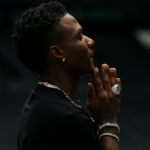
Rapper PayBac iBoro goes completely rogue at the government on this track. He grabs his lyricism as a weapon to corrupt politicians. In his chorus, he charges the youth and those willing to act in protest to “Shoot that man at the top wey no wan make we chop.” He touches on the issues of dirty officials stealing pensions from retirees, those who rig elections and also remembers how the Nigerian Senate bullied Senator Natasha.
The song brings all the frustrations of an average Nigerian into a solid chorus and two captivating verses. This is his middle finger to government officials — his reprise of the corrupt system sitting over the resources meant for the masses.
Niniola brings a pulsating Afro-House banger with cheeky lyrics and a deep message. “Ginger Me” in the Nigerian street lingo translates to “excite or ignite me.” The verses are soaked in bold sexual empowerment.
“Lo alum to ba fe ko tight” refer to vaginal tightening substances, while lines like, “Lo condom, lo condom… Sora fun gonorrhea” advocate for safe sex. As Niniola makes a dance anthem, she keeps it playfully sensual and dense with commentary on female survival mechanisms. Long live the queen of Afro-House.
“O.Y.O” stands for “On your own”, a motto of self-sufficiency, emotional independence and forging one’s path especially through fire. Driven by bold percussion and gritty production, the track reflects the rawness of Lagos street life, stitched together with Prettyboy D-O’s rebellious Alté approach and Mojo AF’s razor-sharp Yorùbá-inflected street-raps.
From unapologetic and motivational lyricism to energetic flows, this street-rap jam should be on your radar.
This song has taken 2025 by storm, especially in Nigeria’s gospel scene. The message is built around the declaration, “Favour surrounds me like a shield” — drawn from Psalm 5:12. In the face of Nigeria’s economic struggles, it’s a timely song that offers listeners hope and assurance.
After its release in January 2025, it became the first most-streamed Nigerian song on Spotify, with over 2.9 million streams. Its virality and short, repeatable lyrics make it easy to sing along — little wonder the gospel song bypassed traditional genre boundaries and embedded itself into the mainstream.
The song title, “Escaladizzy,” is an energetic shout, implying an escalating high or party turn-up. Two youngsters, Mavo and Wave$tar, blend gritty street-hop production with rap, catchy melody, and swagger. Mavo leads with bold raps, and Wave$tar adds melodic hooks, creating a complementary dynamic.
Since its release this June, the song has been making waves. Its fast rise can be credited to grassroots support, catching on local hype before hundreds of thousands of plays on streaming platforms. “Escaladizzy” is a vibe.
11. “Reverse Back” — OluwaMillar feat. Mojo AF & Bayoo
On a dope hip-hop track infused with Afrobeats elements, rappers OluwaMillar and Mojo AF rap confidently about bedroom activities with playful imagery. OluwaMillar is cocky and poetic. Mojo AF is equally confident, comparing himself to Ronaldinho’s flair. He rhymes about his status as a recognised rapper in the game, his grind and soft boy lifestyle. Singer Bayoo delivers a catchy hook that makes the jam party-ready.
This track is positioned as the penultimate track on OluwaMillar’s Agbalagbi EP. At this moment, he steps fully into unapologetic bravado, contrasting the EP’s deeper and introspective cuts like “Olorunsogo” and “Opelope Anointing.”
Although the “Shaolin” motif represents spiritual toughness, discipline, survival instincts and mastery over one’s destiny, Seyi Vibez celebrates success. From money formulae, attraction, nightlife and living fully in the moment, this is both a superb flex and motivational jam.
The song also strengthens Seyi Vibez’s reputation as a bold experimentalist, blending fuji, Afrobeats and techno-inspired street-hop. It’s an applaudable step in his evolution.
Singer-songwriter Aisosa’s emotive storytelling and smooth sonic textures craft a late-night mood on “Hold On.” He sings about patience, resilience, and emotional stability on a tender, mid-tempo alt-pop track with techno-infused production and soothing chords.
Although this song gently uplifts the soul, it fits snugly on romantic playlists and further solidifies Aisosa’s rising status as an indie R&B artist to watch.
“Iradapa” is a Yorùbá word that translates to “Redemption.” Oyedele is reborn, and he now finds himself on a path of renewed purpose, one where he’s completely in charge of his destiny.
This is a story of a disciplined journeyman acquiring solace, wisdom, unfazed by uncertainties and roadblocks, while exuding peak confidence in his artistry.
Falz gives listeners a rare moment of unguarded honesty in a nearly six-minute narrative that offers a direct look into his journey and aspirations. He takes us through the origins and evolution of Falz TheBahdGuy, from childhood dreams of football to a law student in London to the viral “This Is Nigeria” freestyle.
“Story Time” is the closing track on his latest album titled The Feast, and it peels back the curtain. If you’re curious about who Falz really is and what drives him, this track is essential to listen to.
Fola struggles with motives as he suspects that his love interest is more interested in his money than in him, creating tension between real affection and materialism.
The song also leans on heartbreak and confusion as Fola laments feeling “really lost,” grappling with disillusionment and distrust after relationship turmoil. They are also in desperate calls for comfort amid emotional burden. Fola’s street-pop grit meets Kizz Daniel’s smooth and melodic style to craft an intimate and reflective atmosphere.
“I Wish I Had More Time” by Braye isn’t just a single; it’s the title track off his debut four-track EP, which was released in May. It showcases him as a deeply introspective and genre-defying R&B/neo-soul artist.
Braye bares his soul, singing about the urgency of living fully, speaking truth and embracing emotional vulnerability. With rich textures, heartfelt lyricism and a nostalgic whisper of jazz-classic fusion in his track, Nigeria has a promising alt-R&B voice on its hands.
In a warm and soulful storytelling, this heartfelt Afrobeats-R&B fusion captures the emotional aftermath of a lost love and the hopeful search for something equally real. Lojay opens with vivid nostalgia before slowly letting the lyrics wrestle with regret, vulnerability and longing.
Despite the melancholy, there’s a thread of healing and hope. Lojay isn’t bitter — he offers a song that feels both intimately personal and universally relatable. “Somebody Like You” continues his powerful partnership with Sarz, following earlier hits.
3. “Holy Water” — Davido feat. Victony & Musa Keys
This song from Davido’s new album 5IVE features softer log drums and drum rolls that contribute to the rhythm and offer a calmer ambience to Davido’s ever-high energy. Here, he and the featured artists use the phrase “holy water” metaphorically, perhaps to express intense desire for their love interests.
The verses express enough about wanting someone romantically and the hook carries the whole song well, giving it a sing-along effect that enhances its polished, earworm appeal.
The term “Laho” doesn’t have a direct translation in English, but in the context of the Bini tongue and Shallipopi’s song, it translates to “please” or “don’t let me fall.” Although this song feels like a celebration, its lyricism reflects the masses’ everyday struggles and requests for help.
With this song, Shallipopi continues to draw from Benin street language and culture, something he has made a signature of his music since his debut.
This is Rema’s opener of the year, a softer release after his hyper-fast HEIS album. Here, he’s a playboy looking to give love a try. Rema tenders his affection and desires to his love interest, who isn’t completely convinced or reciprocating — hence, the reason he uses a sample of Sadu Adu’s “Is It A Crime” (1985) to ask if loving her is a crime.
This is for all the lovers at heart, wanting someone and wanting them to want them back.