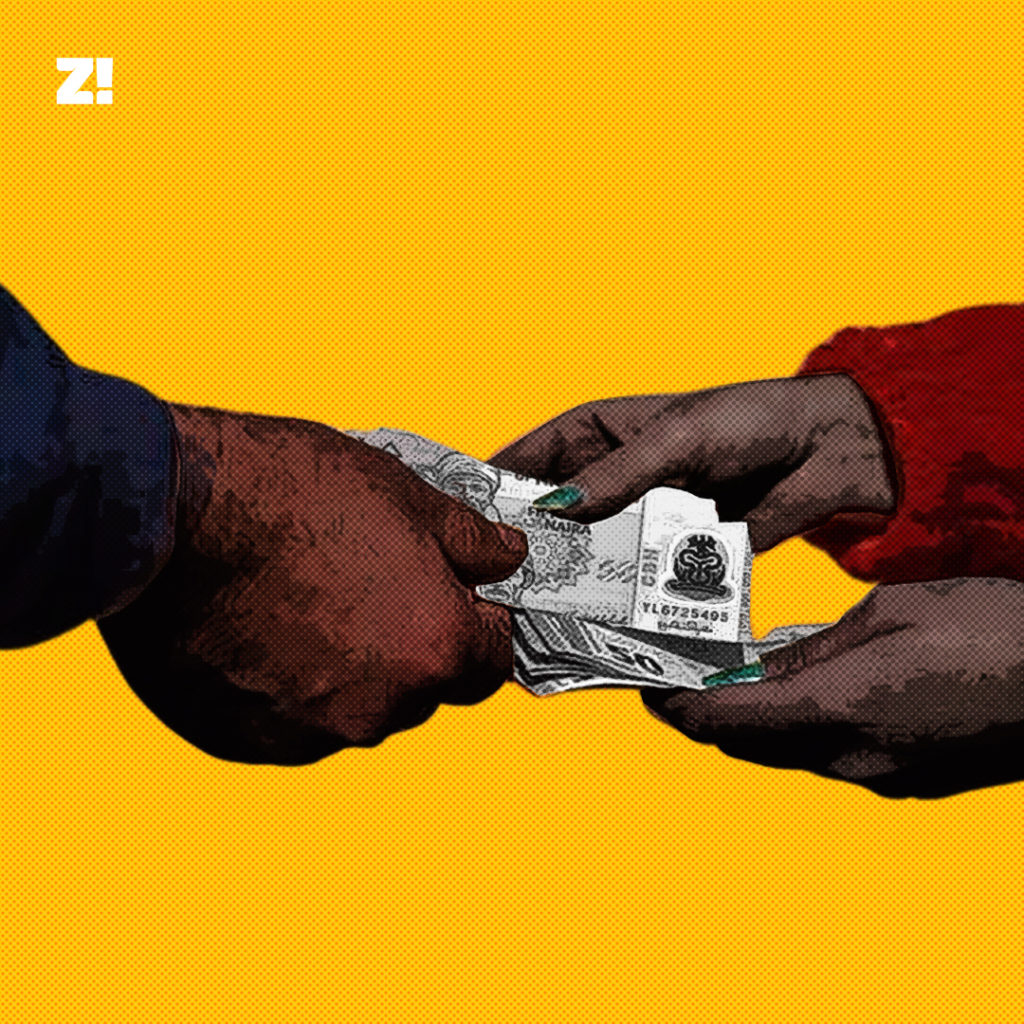
• Graduating from university is a major milestone in a person’s life. A lot of people look forward to it because they’re looking forward to exploring what the world out there is like beyond school. I spoke to four Nigerian graduates who finished uni in 2020, about how life has been treating them since they left the struggle that is Nigerian universities and this is what they had to say.

    “I have two businesses but neither of the businesses is making much money at the moment”

    — *Chidinma, 22

    Studied: English (Literature major), Babcock University 

    I graduated in June 2020, and my life has been a mess since then. I was excited about graduating; I couldn’t wait to be done with school. I didn’t exactly have high expectations for life after school: I wanted to get an internship at a media house, I wanted to go for NYSC and then come back and continue working at a media house. I wanted to earn real money, take care of my family and live the baby girl life. What a joke. 

    A managing director of a popular media house in Nigeria promised me an internship once I graduated, only for him to ghost me. That was one of the first ways that life showed me pepper. After many interviews, I finally got a job in October 2020, but unfortunately, I ended up having the worst boss ever. He’d ask me to do ridiculous tasks that had nothing to do with my job description. I swept office and got sent to buy food. The last straw was when he asked some of my colleagues and me to close the office for the day and come over to his house to clean it. 

    After that, I got a teaching job at a school, but the school owed salaries month after month and they also treated staff terribly, so I left. I decided to go the entrepreneur way. 

    I now have two businesses, but neither of the businesses is making much money at the moment, but I’m pushing through. I’m starting my NYSC with the next batch that’s coming up in July 2022. After my service year, I want to either leave this country or marry a rich man, because a girl is tired. 

    RELATED: 5 Fears a Lot of Nigerian Students Have About Graduating From University


    “Why does all my money go into buying essentials I need to survive?”

    —*Tolu, 22

    Studied: Psychology, Covenant University 

    I was done with school in November 2020, but because of COVID, I officially graduated in May 2021. Schooling during the pandemic wasn’t easy, and I was tired. I couldn’t wait to be done with school. 

    In my third year at university, I had already started thinking about life after graduation. I knew I would have to do NYSC before getting a full-time job, so I planned to take courses related to my field and learn some new skills while serving. I started NYSC in May 2021 in Akwa Ibom, and I got a job in June at a psychiatric home. I was happy when I got the job because I wanted to work in a place that would allow me practise psychology, but honestly, it’s been tough. 

    I knew leaving school, working and adulting wouldn’t be easy and I had mentally prepared myself for it, but the fact that I’m working and most of my money goes into buying essentials I need to survive is the ghetto. I want to use my money for enjoyment. I knew I’d be responsible for myself, but nobody ever tells you that it’d be this difficult. 

    I’m finishing my NYSC this April. I plan to get a virtual assistant job for about six months while I take a course about mental health. Then, at some point, I want to start applying for jobs. I’m looking at jobs in a clinic or HR firm. Hopefully, it works out.

     ALSO READ: 17 Things That Accurately Describe Life Just After Graduating From University

    “Apart from the money, I get the chance to live my life beyond the walls of a single place.”

    —Moses, 26

    Studied: Mechanical Engineering, Lagos State Polytechnic 

     I graduated with one of the highest grades in my class. I was optimistic about life after graduation, but not too optimistic as the degree I hold is a Higher National Diploma (HND). Do you know how hard it is to get a job as an HND holder without NYSC?

    I couldn’t wait to graduate, especially because I was schooling and working a part-time job at the same time. I was excited to leave the stress of school behind and focus solely on working and earning proper money. 

    Thankfully, I didn’t really have to look for a job. A friend that worked in an oil and gas firm in Edo state called me in April 2021 to send my CV, and that’s how I started working in June. I haven’t done NYSC because I never liked the idea of going off for one year and then coming back to begin job hunting. I’ve always planned to get a job first and then serve so that I don’t have to look for work for too long once I’m done.

    So far, I like working and I like the world outside of school. I miss school sometimes, and school had its fun moments, but school gets boring. You see the same old faces, have classes, and it’s all just the same cycle at some point. 

    But in the outside world, you meet different people, and so you have so many different experiences. Apart from the money, you get the chance to live your life beyond the walls of a single place.

    “I think the wildest thing about adulting and work-life for me so far is how cynical and unhappy I’ve become.”

    — *Chibuike, 22

    Studied: Electrical and Electronics Engineering, Covenant University

    I had very high expectations for life after graduation. I expected to get a job immediately after graduation and to be earning ₦500,000 before the end of 2021. I also expected to work remotely. I didn’t want to deal with the ghetto that’s traffic and didn’t want any anxiousness over lateness. Plus, I wanted to be very flexible with work, to do things on my own time. In summary, I expected my work life to be very soft. 

    My work life is anything but soft. I have the flexibility I want, but everything else is stressful and I’m struggling. NYSC is one of the things that’s making my life a living hell. Ever since my relocation from Benue to Lagos didn’t work, I’ve been suffering. 

    I think the wildest thing about adulting and work-life for me so far is how cynical and unhappy I’ve become. I feel like a shell of my former self. I just get through each day after the next. Even things I used to enjoy feel stressful now. I have a Netflix subscription, but I haven’t watched a single show in months because I’m either working or sleeping or fighting for my life in Nigeria.

    I’ll be done with NYSC in a few weeks, and I’ll be moving back into my parents’ house. This should give me some peace of mind. Maybe I’ll be able to plan my life and my time better when I’m not worrying about a thousand things.

     ALSO READ: 10 Things to Do With Your Life Immediately After Uni

  • Students in Nigerian universities have stories to tell, but hardly anyone to tell them to. For our new weekly series, Aluta and Chill, we are putting the spotlight on these students and their various campus experiences.


    Earlier this year, I had a conversation with a student of Covenant University, and he talked about how tedious the school policies are and his run-in with the school management. One take-away from that conversation was that it is almost impossible to avoid getting into some sort of trouble if you study at the school. So, for this episode of Aluta and Chill, I spoke to a couple of current and past students and get them to talk about a time they had a run-in with members of the school management. 

    This was originally published in 2020.

    BeatriceI got in trouble because my friend’s button was undone.

    We had just finished service at the chapel and I was walking to a class with a friend. We ran into the dean, but I didn’t think I had anything to worry about. I was dressed in appropriate clothes and buttoned up to the neck, so I was good with the dress code. But I think one of my friend’s buttons was undone and the Dean doesn’t miss such things. Then I heard his voice fill the air, asking my friend to give him her ID card.

    I didn’t think it was my business, but apparently it was. He called me back as I was walking away and asked for my ID card too. He collected the cards and sent us to class. After our class was over, we went to the Student Affairs office. He gave us an offence form and he instructed us to write “gross insubordination” as our offence. That was very confusing. I faced the SDC afterwards. Luckily, I didn’t get into more trouble because I had no priors. I got off with a letter of warning. 

    AliceI got in trouble for “kissing my boyfriend” even though we were several feet apart.

    This happened in my third year. It was the departure service night — it’s this prayer thing we do at the end of the semester before we go home. The service had ended and I was hanging out with my boyfriend. Then this hall officer appeared out of nowhere and claimed that she saw us kissing. That was absurd because we put a good distance between us. She insisted on her stance — that there was a picture she took of us in the act.

    There was no picture and we knew that. We asked her to show us the picture. Of course, she couldn’t, so she had to let us go. I returned to school the following semester and found out that she was my hall officer. I didn’t think much about it or the situation that happened the previous semester. One day, I was going to church when she called me, and without a word, she gave me an offence form to fill. She charged me with gross insubordination and dress code violation, but I knew what it was all about. Lucky for me, it never got processed.

    Gbenga  Someone on my floor was apparently smoking weed, so they took all of us on the floor for a test.

    It was 1 am, but most of my coursemates were still awake — we were studying for a major test we had in a few hours. Next thing we knew, guys in suits were knocking on doors and calling everyone on our floor to come out of their rooms. 

    Apparently they had gotten a tip that someone on our floor had been smoking weed, so they took all of us to get tested for drugs. We were stuck there for hours and by the time they finally let us go, it was time for class. Most of us failed that test.

    MuyiwaI got in trouble for talking in the chapel.

    It was a Thursday evening and I was at the chapel. Papa came to preach, so the MSS guys — they are the school security people — were so extra that day. I was having a discussion with a couple of friends. One of the hall officers knew me and he singled me out. Two of them took me to the Head of MSS. He asked for my name, and I told him, but for some reason, he thought I was lying.

    I didn’t have my ID card on me and that was all he needed to book me. Later, I got called to face the Student Disciplinary Committee to answer for chapel misconduct. It was just weird because I wasn’t the only one in the chapel on that day. After that incident, I sort of became a target and they would come into my room any time they wanted to check if I had a bible. And that made me very uncomfortable.

    Ann I never got in trouble even though I violated a lot of their rules.

    I never got into trouble in school, never even got to see the popular offence form people had to fill when they got into trouble. And no. I wasn’t a model student, I skipped classes, skipped chapel services, violated dress code rules a couple of times, and I even left school without exeat. But I never got caught doing any of those. 

    However, an event that I’ll never forget during my stay in CU was the departure service in my first year. The matriculation ceremony held earlier and we had spent most of the week doing mid-semester tests. I didn’t think the departure service was going to be serious. It took a lot to fight the urge to stay in bed and sleep instead. I got to the chapel and everyone was basically lazying around.

    In a minute, everything suddenly became chaotic. I saw students running around. Some were even trying to get in through the windows.  The Chancellor took to the stage and gave an angry speech. The part I’ll never forget was when he said: “If anyone makes a sound, the curse of the Lord will be upon them.” I’d never seen a place go grave silent in seconds. The members of the student affairs department took over from there, going round to check if students were compliant with dress codes rules and if people had their bibles and chapel note (Actual hard copy bible and note.) I didn’t think it was possible for a bible to look like a 60 leaves exercise book until that day. 

    It was just really stressful and I was so relieved when the whole thing ended. But it hadn’t really ended. The following day, more than 200 students were suspended. Just like that. 

    *All names have been changed to protect the identities of the subjects.


    Are you currently studying in Nigeria or elsewhere and have a story to share about your life in school? Please take a minute to fill this form and we will reach out to you ASAP.

    Can’t get enough Aluta and Chill? Check back every Thursday at noon for a new episode. Find other stories in the series here.

  • In 2013, Kola* wrote UTME for the first time. The plan was to study Computer Science at the University of Benin, one of Nigeria’s foremost universities. Unfortunately, he didn’t meet the cut-off mark for the course.

    Every year, millions of Nigerian students sit for the exam organised by the Joint Admission and Matriculation Board (JAMB) as a prerequisite for applying to any Nigerian tertiary institution. Kola had two choices: try his luck with another university or wait until the following year to rewrite the exam.

     “I couldn’t stay at home for an entire year,” he says.

    He and his parents eventually found a seemingly perfect alternative. They decided that he would attend Igbinedion University in Okada, a town in Edo State, 51 kilometres from Benin.

    “I didn’t even know the school existed before I wrote UTME, but it was a good alternative.”

    Changing his university of choice from a federal university to a private university wasn’t a decision he took lightly. For starters, there was the tuition to consider. The average fees at University of Benin was ₦42,000 ($108) per session.  At Igbinedion, he would have to pay  ₦800,000 ($2,000). One thing was sure though. He wouldn’t have to worry about the crippling strikes Academic Staff Union of Universities (ASUU) and other staff unions embarked on every session.

    What he didn’t know at the time was that there was something else he would have to worry about.

    He was going back to his hostel after writing an exam in the second semester of his first year when he overheard a group of students talking about sourcing for money to give a lecturer.

     “I was not bothered when I heard this. It wasn’t my problem. But I got to the hostel and more students were talking about it.”  

    His curiosity got the better of him, prompting him to ask someone what the fuss was about. He got his answer: lecturers in his university were demanding money from students before they passed them. 

    They called it “sorting.”

    In several universities across the country, students and lecturers are in a symbiotic relationship of exchanging money for marks. More often than not, it happens at the prodding of the lecturer. While it is common and, maybe, not surprising to see this phenomenon play out at public universities, it is strange to see it happen at private universities like Igbinedion University where lecturers are relatively well-paid, aren’t owed salaries and have higher standards to follow. But if Kola’s story is anything to go by, this happens there too.

    You either pay up or risk failing a course

    Bianca*, a graduate of Ambrose Alli University, a public university at Ekpoma, also in Edo State, was certain that she wouldn’t pay money to any lecturer before she made good grades. She had known about this practice before she started at the school. Her sister had gone to the university and used to talk about it with their dad. At Ambrose Alli University, they called it “blocking.”

    Bianca was so comfortable in her certainty that when a classmate advised her to block a course in her first year, she brushed it off. 

    “I always felt that it was for students who didn’t study and wanted to pass courses by any means necessary.” 

    She got an F in two courses in her first semester at the university. And instinctively, she realised that she had read the situation wrong. She got the message loud and clear.

    “From that moment, anytime I heard that there was an opportunity to block a course, I went for it.”

    Like Bianca, Kola was also indifferent about it until he failed a course he thought he should have passed in his second year. The truth stared at them — they had to play ball if they wanted to graduate with their mates. 

    How does it work?

    Richard*, a postgraduate student at Kogi State university — the same school where he got his undergraduate degree —  told me that the lecturers didn’t outrightly demand money from students. Instead, they relied on other students, whom they had relationships with, to do their dirty jobs for them. 

    This is the same mode of operation in Igbinedion University and Ambrose Alli University according to Kola and Bianca respectively: to maintain plausible deniability, the lecturers don’t handle the transactions directly. 

     “The deals are usually brokered by the class reps. They ask you to meet them if you’re not sure how you would perform in an exam, so you can ‘work’ it,” Bianca says.

    She added that students, especially female students try to steer clear of the lecturers for fear of being propositioned.

    Students who can’t pay in cash are expected to pay in kind. For female students, the lecturer may expect sexual favours in return for grades. Male students, on the other hand,  are tasked with buying gifts or rendering some form of service to the lecturer. 

    After the payment stage, the lecturers gather the students into their offices and give them fresh answer sheets to rewrite the exam. Only that this time, they’re allowed to use their study materials to answer the questions.

    Lecturers at Ambrose Alli University don’t always go through this trouble, especially when they’re dealing with 100 and 200 level students. They simply upgrade their marks. So, a  potential D will change to an A, a B or a C, depending on how much the student paid. 

    “Starting from 300 level, the lecturers can’t stamp grades on scripts indiscriminately anymore because there are external examiners who go through scripts to ensure transparency,” Bianca explains. 

    The deal is usually upheld, but I wondered what would happen if a lecturer collects money from a student but doesn’t hold up to his or her end of the deal. Bianca and Kola don’t think this ever happens. However,  Richard said that any lecturer who attempts this is making himself a target of violent attacks from disgruntled students.

    “If a student pays a lecturer and he reneges on his promise, all bets are off. Chances are that the lecturer will be attacked.”

    Sorting is not cheap

     At Ambrose Alli University, students pay between ₦5,000 and ₦20,000 to sort courses. 

    “For a 2-unit course, you pay ₦10,000 for an A, ₦8,000 for a B and ₦5,000 for a C.” For 4 and unit courses, you could pay as high as ₦20,000,” Bianca breaks it down.

    The minimum wage in Nigeria is currently ₦30,000 (about $77), which doesn’t cut it for a lot of people. Numbers from the National Bureau of Statistics suggest that about 40% (representing 82.9 million Nigerians) live in poverty. Yet, Nigerian lecturers don’t care that most students aren’t working and many of them struggle to get by.

    Things are even more interesting at Igbinedion University. The lecturers rely on their own discretion to set a price tag, although the student’s relationship with them plays a role here. 

    “The average price to sort a course is between ₦15,000 and ₦40,000. But nothing less than ₦15,000. Students pay up to ₦90,000 (300% the minimum wage) to sort courses in a semester,” Kola reveals. 

    The grade a student also gets depends on their relationship with the lecturer. Usually, they settle on a B or a C. A student who sorts his or her course shouldn’t expect an A.

    Students at Kogi State University pay the least amount of money to sort their courses. Richard said that the highest sum of money he ever heard anyone pay a lecturer was ₦4,000. The standard charge rests between ₦1,000 and ₦1,500. 

    “Most of the students at KSU simply cannot afford to pay huge sums of money. Even when I wrote final year projects for some of my classmates, it was a struggle before I got someone who agreed to pay me ₦17,000. I could have gotten up to ₦40,000 at another university.”

    You may wonder how the students afford to pay the lecturers, considering that students register several courses every semester. Bianca’s dad knew about the arrangement and sent money to her every semester. 

    “My dad usually sent me about  ₦60,000 every semester to take care of this thing.”

    Kola had to handle it himself for the most part. 

    “I dipped into my savings to pay lecturers. It wasn’t until I got to 300 level that I told my parents about it. It was hard to convince them that it was just the way things were.”

    Richard didn’t partake in sorting, at least not in the conventional sense. He built relationships with the lecturers and leveraged them to get out of paying money. 

    “I try to get the lecturer’s attention by asking them questions in class. Sometimes, I visit them at their offices and try to see how I can help them. I made sure to never ask them for favours. Basically, I developed mentor-mentee relationships with them.”

    “Everyone knows it happens but no one cares”

    Actions have consequences. The authorities responsible for sanctioning the lecturers for their offences are the university management boards. Kola, Bianca and Richard said that if the management knew about the practice, they did nothing about it. One could argue that the management of these schools are not on top of the situation because the students, who are directly affected, keep quiet about it. But it’s more complicated than it seems. Students are scared of reporting to the authorities for fear of retribution. They cannot know which members of the academic staff to trust.

    “From the vice-chancellor to the porter, everyone seems to be corrupt.  I don’t think that there’s a lecturer that hasn’t tampered with marks. All of them are guilty. Everyone in management used to be lecturers too,” Richard quips. 

    He noted, with sadness, that students have also contributed to the precarious situation. 

    “From my experience, the proportion of students who are willing to pay money to sort their courses are far greater than those who aren’t.”

    This suggests that students also drive the demand and supply model of this practice. Here’s the thing — students want to pass their courses and want to get the highest grade possible. However, not everyone wants to put in the work. Conveniently, there’s another option they could explore: they part with some money and they pass. These kinds of students will not require a lot of convincing before they embrace grade sorting. In fact, they actively seek it out.

    The Aftermath 

    Bianca, Kola and Richard are out of school, but they are still reeling from the experience. 

    “I hated giving those fuckers my money,” Bianca fumes. “Even though my dad sent about ₦500,000 in total throughout my stay at the school, I used about ₦130,000 to sort my courses. 

    Interestingly, Bianca isn’t even sure of the grade she graduated with. 

    “My statement of result states that I graduated with a 2.1. But I found my name under the 2.2 category in the convocation list. At the moment, I’m not sure of what I actually graduated with.”

    While she might not know her final grade yet, she knows how much the whole experience affected her self-confidence and attitude towards learning. 

    “It really fucked with me. At a point, I didn’t see the point of going to classes. But I studied for courses I knew that I didn’t have to block.”

    Kola is also demoralised by the sheer insanity of paying to pass courses, especially in a university where he had to pay about  ₦800,000 as tuition every year to remain a student.

    “My attitude towards learning took a beating the more I paid to pass courses. The enthusiasm totally fizzled out. If you asked me to mention something useful I gained from the university, I would be at a loss for words.”

    Richard is determined to not let the situation haunt him for the rest of his life. He wants to be a part of the system and fight the rot from inside. 

    “I want to be a lecturer. I want to bring my own principles and weird ideas to life. I’m not saying that I will be able to stop grade sorting in its entirety, but my students will know me as the lecturer that doesn’t partake in it.”


    Editor’s note: Names have been changed to protect the identity of the subjects.

  • Students in Nigerian universities have stories to tell, but hardly anyone to tell them to. For our new weekly series, Aluta and Chill, we are putting the spotlight on these students and their various campus experiences.


    This week’s Aluta and Chill is about how unsafe Nigerian campuses can be. From the student who was stuck in an abusive relationship to the student who witnessed female students being drugged at a party, these stories are chilling.

    Boma, Female, University of Port Harcourt 

    I met this guy in my first month at school. He was older than me by 8 years and was in the penultimate year of his medical degree. I didn’t mind the age difference. I thought it was cool, and that it would be good for me.

    It was not. He was an abuser who didn’t waste an opportunity to hurt me. At first, it was only verbal assaults. Then he started to hit me. He promised to stop, and I believed him. However, he physically abused me again and again. 

    I was scared every time I was with him. He was unpredictable and could go off on me anytime. I started praying for the session to end, so he could leave the school and me. 

    It took me 23 months before I found the courage to leave him. I know I should have left earlier, but I thought he needed me. Even after I walked away from the relationship, I was reeling. I suffered from PTSD for some time. The sight of boys triggered me, even if I knew them. I decided to get help and started seeing a psychologist. The sessions helped, and now, I feel like I’m beginning to remember who I was before I met him. 

    Lola, Female, University of Lagos 

    This happened at one of the freshers’ parties when I was in 100 level. The plan was to chill there for a while before I returned to my hostel. I didn’t even mingle with anyone — I stood in a spot and watched everything that was going on.

    I saw some of the older students slipping something into the drinks of female students. It was stealthy done, but I caught it. I wasn’t sure what I saw until the girls were being led away. It didn’t seem like they were in control of themselves.

    I wanted to do something, but I was so scared about what would happen to me if I did. I’d heard stories about girls being drugged at parties, but to see it up-close paralysed me. 

    The scene put me off totally, and I knew I had to leave immediately. It worried me so much, but I tried to sleep it off. If I doubted what I saw, it cleared when I heard a couple of students in my hostel talking about it the following day. 

    Chisom, Female, University of Nigeria 

    Sometime in my second year, I went out to get dinner. The queue at the restaurant was long, and when I returned to my hostel, the gate had been locked. I beckoned to the porter on duty to open the gate, but she ignored me. She thought I was being rude. So there I was, on a street that was almost empty, alone and scared. It didn’t help that there was a noise coming from an area close to where I was. They fought a lot in that place, and I feared that anything could happen in a moment. I became frantic and knocked more loudly, but nobody opened the gate.

    A car pulled up beside me. Initially, I thought it was one of the security officers on patrol and felt some relief. But it was just a male student. I also thought he wanted to help me beg the porter, but he had other ideas. He gave me a speech about how a fight had broken out and how it was headed in my direction. I was borderline anxious now.

    This guy asked me to follow him — he didn’t even say where — so he could keep me safe. I thanked him for the offer and explained that I was safer in front of my hostel. However, he kept coaxing me to come with him. He seemed desperate, and that worried me. He was even gently pulling me in the direction of his car. I was scared that he might force me into the car, but at the same time, I didn’t want him to leave.

    Luckily, one of the people who lived in the hostel saw what was going on and alerted the porter. The lady eventually opened the gate, and when I looked back to thank the guy, he’d disappeared. 

    Timothy, Male, University of Calabar

    It was 2017. Cultism was at an all-time high on campus. A church member from home came to write the university’s post-UTME, and I had to pick him up so he could spend the night with me. On our way to my hostel, we were accosted by another student. I recognised him as one of the dreaded cultists on campus. Let’s call him A.

    The boy I was with wore a cap that had a touch of red, and that was why A stopped us. I tried to calm him down, explaining that the kid wasn’t a student and was only in school to write an examination. I knew we might be in trouble when one of the university security officers passed and he and A hailed each other. The man knew it was a hostage situation and went on his way. Eventually, I managed to calm A down, and he let us go. But I couldn’t stop thinking about the security guy and what he did.

    And oh, by the way, A is late now. He was shot dead in his final year.

    Oliver, University of Benin

    I was returning to school from a trip to Warri, and I got back late to Osasogie — a community close to the school. The Keke operators had closed for the day, so I had to walk to my hostel. Everything was great for a minute until two guys appeared from the darkness and flashed a gun at me. My survival instincts went on an overdrive. I didn’t think much. I kicked the guy closest to me, and I ran. To my horror, they followed. 

    Unfortunately, my glasses fell off, and I crashed into the ground. In no time, they caught up with me again. Everything was a blur from that moment. They stabbed me a couple of times. When they were done, they took everything I had on me. I managed to get myself to my hostel, and I was rushed to the health centre. I spent two days there. 

    Are you currently studying in Nigeria or elsewhere and have a story to share about your life in school? Please take a minute to fill this form and we will reach out to you ASAP.

    Can’t get enough Aluta and Chill? Check back every Thursday at 9 AM for a new episode. Find other stories in the series here.

  • Students in Nigerian universities have stories to tell, but hardly anyone to tell them to. For our new weekly series, Aluta and Chill, we are putting the spotlight on these students and their various campus experiences.


    For students at any of the government-owned universities across the country, ASUU and NASU strikes are a big part of their experiences. The staff unions are always in disagreements with the federal government, leading to strikes that sometimes go on for months. No one feels this avoidable break in academic activities more than the students who are directly affected, so I thought to speak to a couple of university students. They talk about the most memorable strike they’ve experienced and everything that came with it.

    Ewoma, Female, University of Lagos 

    ASUU strike

    It was a Monday in 2018 and I was in 200 Level. Word was that NASU was going on strike, but nobody thought a NASU strike would spell disaster. I had a class at noon, which I went to, but the main entrance to the faculty was locked. I’ll admit that I was excited because it was the middle of the semester and I thought I could use a break from classes. My class held, but it was not the best experience. Even the lecturer decided that he’d seen enough and ended the class before the hour mark.

    When it was 6 PM and they didn’t restore power to the hostels or anywhere else, we realised that we might be in trouble. No power meant no water, and that was usually the start of a big struggle. Also, we couldn’t stay in our rooms — the heat and mosquitoes were a deadly combination. 

    Many people in the hostel were forced to sleep outside. The situation took a turn for the worse the following morning. Water had stopped running in the hostels, so the toilets were unusable. Besides, the pungent smell of spoilt food made the air unbreathable. 

    The strike lasted for a week and it was one sad story or the other. We watched helplessly as our food supply went bad. Pretty much everyone had to spend more money on food. I felt a lot of things during the long week, but the strongest emotion was anger. I understood that NASU had a beef to settle with the federal government, but why did they have to do us dirty to make a point?

    Praises, Female, University of Nigeria

    It started with the rumours. But nobody thought it was going to happen — ASUU was always threatening to go on strike. Even when the rumours gained momentum, everyone I knew didn’t think there was something there. 

    We were wrong. I was in the middle of a lecture one day when three men walked into the class. They said: “We’re sorry to disturb you, but we’re embarking on a nationwide strike.” They were polite but firm. That was the end of the lecture and the beginning of my first experience with ASUU strikes. It was funny because they still managed to surprise us, even though there were tell-tale signs.

    However, there were fears that the lecturers in my school wouldn’t obey the directive to suspend academic activities, so I didn’t go home immediately. I suspected that lecturers would continue classes and those were perfect situations for impromptu tests and whatnot. I spent two long weeks at school. Unfortunately, I was broke and I hardly had any food. I got sucked into a routine of waking up, eating cornflakes and going back to sleep. 

    In the middle of it, I thought a lot about my life choices and other options I could have taken — like why couldn’t I have gone to a school abroad? Why did I use the last ₦1000 I had to renew my data subscription? — you know stuff like that. 

    I was so frustrated about all of it. Not sure what the underlying reasons were, but I couldn’t shake it off. In the end, the coronavirus pandemic hit the country and the federal government directed the closure of schools across the country. There were no concerns about classes anymore, so I packed my stuff and went home.

    Anana, Female, University of Uyo

    School had just resumed and I was about to start my second year at the university when ASUU went on this strike — I don’t even remember what it was about anymore. The last place I wanted to go was my parent’s house. Not like I hated home, but I had lived at the estate since I was 7. Going to school was my first real chance at freedom, and it sucked to have it taken away from me. 

    To make things worse, my siblings were not at home, so it was just me. I picked up sewing to pass the time, but there was only so much it could do for me. My apartment at school had become my safe space and it felt like I had been robbed of it. I realised how tired I was of the entire thing when it got to a point where I would have given anything to be in a room filled with students and lecturers. At the peak, I felt my brain was dying from inactivity. 

    The only decent thing I got out of the experience was that I got closer to one of my sister’s friends. It was nice having someone close to talk to. But that was it. Everything else was a disaster. The strike lasted for about 3 months before they called it off. 

    Tochukuwu, Male, Nnamdi Azikiwe University

    Earlier this year, my school declared a lecture-week free in preparations for the convocation ceremony, and I went home. I was preparing to return to school when I heard that the rift between the Federal Government and ASUU over the IPPIS payment system had gotten to a head. ASUU had kicked against the implementation of the system, but the FG went ahead with it. I guess it was fight-or-flight for ASUU because they went on a 2-week warning strike. It didn’t make sense to return to school, so I stayed back. 

    Before the warning strike ran its course, the pandemic hit, forcing everything to a standstill. It’s been about 6 months now and I’m not sure if ASUU is ready to go back to work even if the FG okays resumption of schools.

    I don’t think I mind, though. I’ve been more productive since I’ve been at home. With school, there was always the urgency to keep up with academic stuff. But that’s not something I have to deal with now, and this has given me quite a bit of time to focus on other things I’m interested in. 

    Ayodele, Male, University of Ibadan 

    Since I started studying at the university, there have been at least two strikes every session. The incessant interruption of the school calendar has always been annoying. For reasons that I can’t control, my stay in school keeps getting longer.

    A couple of months ago, at the end of the second semester of my third year, NASU went on strike in the middle of exams. However, the exams went on. They wanted to make their industrial action more effective, so NASU members crippled the school’s public transport system, forcing the cab drivers to stop working— there were no cabs and everybody in the school community had to walk to wherever they were going. This went on for a month before they called it off. 

    NASU had just called off their strike when ASUU went on theirs. And the strike is still on, even though schools across the country are currently closed. Now, I’m not sure if I’m still in 300 level or final year. This is frustrating as the plan was to finish university in 2020. That’s impossible now, and if this keeps happening, 2021 might be out too. I’ve felt a lot of things, but right now, I feel indifferent. I’m totally over it.

    Are you currently studying in Nigeria or elsewhere and have a story to share about your life in school? Please take a minute to fill this form and we will reach out to you ASAP.

    Can’t get enough Aluta and Chill? Check back every Thursday at 9 AM for a new episode. Find other stories in the series here.

  • Students in Nigerian universities have stories to tell, but hardly anyone to tell them to. For our new weekly series, Aluta and Chill, we are putting the spotlight on these students and their various campus experiences.


    Last weekend, I wasn’t sure what this week’s Aluta and Chill theme would be. I got my “eureka” moment during a casual conversation with one of the subjects when he complained about his school health services. This triggered a painful memory of an event that happened to someone I knew when I was at university. And I figured that I might be onto something. It looks like I was right — from the student who holds her school clinic responsible for the death of a student to the student who doesn’t understand why he was almost refused treatment because of his appearance, it appears that that two major obstacles stand in the way of students and quality healthcare at school: Poorly run facilities and unsympathetic and disrespectful medical personnel.

    Seyi, Ladoke Akintola University — “A student needed an ambulance but it wasn’t available. He died.”

    The clinic at my school is poorly-equipped, so it’s always a struggle every time I’ve gone there. One time, I was attacked by dogs and needed to get an anti-rabies shot — they didn’t have it. The good thing is I survived every time. A student wasn’t so lucky. 

    In my second year, a guy slumped during a football match, and he was rushed to the school clinic. He had trouble breathing and needed to be on oxygen support. However, the oxygen cylinders were empty. The school clinic had a weird habit of referring cases they couldn’t handle to Bowen University Teaching Hospital, even though the school had its own teaching hospital, and it was closer to the school. That wasn’t even the problem this time — the ambulance that would have conveyed him to the hospital wasn’t available. Why? Someone at the clinic had sent the driver out to buy food. Before they could sort out the logistics and get the student the help needed, he died.

    The events that led to his death riled the student population up and led to a protest. Of course, no one took responsibility for the tragedy. The school management only released a statement and expected life to continue. While this wasn’t a personal experience, it hurt deeply.

    Ihenacho, Electrical Engineering, Landmark University — “They said I needed a blood transfusion, but I didn’t”

    I always hated going to the hospital, but I had to go to my school clinic earlier this year. I had passed out at the school cafeteria. The nurses on duty didn’t waste time before they chalked it down to malaria. I suspected that they got the diagnosis wrong, making me uncomfortable. I demanded to see a doctor and requested a blood test. It took hours before I got both, but thank God I did. It wasn’t malaria.

    My blood level was a little low. The doctor said I had to do a blood transfusion and that it had to be done immediately. I was like “what?” I didn’t know much, but I knew that a blood transfusion was usually for severe cases of blood loss. It wasn’t like I was in critical condition. Besides, they hadn’t informed my parents. I refused and notified my parents. After spending a few days at the hospital, I knew I couldn’t trust them anymore. I went home and to another hospital and did more tests. They didn’t suggest a blood transfusion and didn’t even think I needed one. Thinking about that experience still freaks me out. 

    Aziz, Accounting, University of Ilorin — “The nurse wouldn’t treat me because of my… haircut.”

    My friend and I had a bike accident on our way to buy food. We sustained multiple injuries, and we knew we had to play it safe and go to the clinic. But it was very late in the night, and they’d locked the school gate. Luckily, we managed to stop the bleeding that night. 

    We went to the school clinic very early the following morning. It took hours before we saw a doctor. After taking a look at our wounds, he wrote us a prescription and directed us to the nurses. This was where it got real — the nurses said they wouldn’t treat us. They claimed that my hair was too full, and my friend’s nails were too long. After a series of back and forth, they agreed to tend to my wounds only because a barbershop wasn’t in the area. But my friend had to chew his nails right there before they treated him. It was so wild!

    Zainab, Computer Science, University of Lagos — “The nurses went off on me because of a card.”

    I went to the clinic once, and I almost wished that I hadn’t. It was during my first year at school. One minute, I was fine, but I developed a fever in the next. I wanted to go home, but my roommate suggested the clinic. Besides, it was already late. The struggle started from the second I stepped foot at the clinic. First, they wanted to send me back because I didn’t come during their “working hours.” They relaxed their stance when they realised how high my body temperature was.

    After that, they asked to see my clinic card, which I didn’t have. I was confused momentarily, and that was all they needed to go off on me. They didn’t hold back their words, and this went on for about 15 minutes. I was dying, but these people thought it was fun to be vicious and mean. Anyway, they opened a temporary file for me and sent me to the doctor. The doctor wasn’t warm either — she was in quite a mood. 

    My fever got worse during the night. My roommates rushed me back the next morning. The card thing came up again, which was weird because I was just there the previous night, and they opened a file for me. Obviously, it didn’t go into their records. And from where they were standing, that was my fault. I was in bad shape, but that didn’t stop them from going off on me again. I didn’t understand how they found it so easy to be mean. When they eventually got over themselves and attended to me, it turned out there were no vacant beds. I had to stay at the nurses’ station until my sister arrived later that day and took me home. I’m never going back there. 

    Mobola, University of Ilorin — “I needed a tetanus shot, and I almost missed an assignment deadline because of it.”

    I was working on a school project — a one-bedroom apartment model — when I cut myself. I didn’t even think it was a big deal and continued with my life. When I was making a last-minute adjustment to my design, I decided to be cute. I took a picture of the wound and sent it to my mum, hoping she would just say sorry and probably send me money. Nope! She freaked out and demanded that I go to the school clinic for a tetanus shot. She didn’t relent when I told her that I had an assignment to submit in a few hours.

    I got to the clinic, and the line was freakishly long. I would have left, but my mum was calling me every second to make sure I was there. When it got to my turn, I realised that I needed a clinic card. They refused to attend to me without one, even when I explained my deadline situation. 

    I needed a passport photograph to get a card, and I thought I was lucky because I had one with me. However, they rejected it because it had a white background and the acceptable background was red. I mentioned my assignment again, but it didn’t inspire sympathy. Now, I was frustrated and close to tears. I dashed out to get a new passport and rushed back. The entire process was so stressful that I wondered why I even went there at all.

    Finally, I got what I needed. Now, it was me against time. I raced down to my hostel to get my design and ran the rest of the way to class. I got there just seconds before the deadline. Everyone had even submitted their assignment, but I knew the class rep, and that worked in my favour. I learned my lesson though — the clinic is not the best place to go in dire situations. 


    Are you currently studying in Nigeria or elsewhere and have a story to share about your life in school? Please take a minute to fill this form and we will reach out to you ASAP.

    Can’t get enough Aluta and Chill? Check back every Thursday at 9 AM for a new episode. Find other stories in the series here.

  • Students in Nigerian universities have stories to tell, but hardly anyone to tell them to. For our new weekly series, Aluta and Chill, we are putting the spotlight on these students and their various campus experiences.


    The subjects of this week’s Aluta and Chill are 5 students from different Nigerian universities. They talk about managing their finances at school, a memorable time a careless financial decision made them broke, and the lessons they learned from the experience.

    Ekubiatobong, Female, University of Uyo

    My allowance every month was ₦25000, and it was usually enough for me. However, I didn’t think to save at all because I didn’t see a need to. This would come back to bite me.

    There was a month when I spent more than usual on my school and living expenses and finished my allowance. When I realised how dire the situation was, I tried to ration what was left, but it was too late. Things took an unfavourable turn when I was down to ₦100, and my next allowance was a week away. 

    I couldn’t call my dad, so I did the next best thing and called my sister. She told me that she would get back to me, but I knew what that meant. She wasn’t going to bail me out. 

    I managed to go to class the next morning, skipping breakfast because I couldn’t afford it. During the hours I spent in class, I was in low spirits, and everything I saw irritated me. I hadn’t had a meal when I left the campus in the evening. When I got home, an unusual thing happened. A friend came to visit me and brought food. It couldn’t have come at a better time. 

    The night was sorted, but I knew I had no plans for the following day. I was flat-out broke. It turned out that luck was on my side because my sister came through and sent ₦5000 to me. 

    A lot of things have changed since that time. I’m more independent now and more responsible with my finances. Also, I have a partner, and I always feel the need to have something saved up because either of us could need it at any time. 

    Beatrice*, Female, Afe Babalola University

    I started a clothing line business when I got into school and poured everything I could save from the monthly allowance I got from my parents into it, and it picked up nicely. It was something I always fell back on because I hated asking my parents for money all the time. 

    Sometime last year, I ran out of my allowance earlier than usual, but I was convinced that I wasn’t in trouble. I thought the business would hold me until my next allowance came. Unfortunately, I ran into a problem with delivery. Most of the orders I got were from people outside the school. However, it was impossible to get the product to them because of my school security system. 

    I thought I would make some sales at school, but that didn’t happen. All my plans were tied to making money from the business, and when things didn’t go to plan, I became short on money. I remember having ₦2000 left and trying to make it last for a week. That was when it hit me that I was broke. 

    It killed me to do it, but I knew I had to let my parents know what was going on. Even though they weren’t in the country at the time, they sent something to me. But It took three days before I got the money. Those three days were hell for me. It was so bad that I couldn’t afford to buy food anymore — I lived on cereals. 

    By the time I eventually got the money, I had learned an important lesson — I realised that it didn’t make sense to plan around money I hadn’t gotten. Now, I’m at a good point with my finances. I’m saving more and the business is doing better. So, maybe I needed to have that experience.

    Mtchy, Male, University of Calabar

    My dad typically sends me money every week. But one week, he made a mistake and transferred the week’s allowance twice. When he realised what had happened, he instructed me to keep the extra money and use it to sort myself out the following week. The smart thing to do was to save and work with my weekly budget, but the money seemed like a huge amount to me. I couldn’t help myself, and I squandered the bulk of it on food. 

    I sobered up quickly when I came to terms with what I had done, and what it meant for me. However, it was too late. I resorted to walking to school every day for an entire week. In the middle of this, I got a cut on one of my feet. The pain was unbearable, but it was either I sucked it up or skipped classes since I couldn’t afford to take a cab to my lectures.

    Sometimes, a friend helped with food, but that was it. All through the period, I was thinking about the decision making that got me there. Man, I lost a lot of weight before the ordeal was over. I survived it, though. After that, I took my budgets more seriously. I cannot go through that again.

    .

    Yemisi, Female, University of Lagos

    At the end of every session, every hostel at my school organises pageants as part of the Hall Week celebrations. I was in my first year, and I had no plans to participate until my roommate brought it up. She gassed me up so much that I was pretty convinced that I would win. 

    I told mum about it, but she was against the idea. She didn’t think the money I was going to spend was worth it. It should have ended there, but I decided to go ahead, even though I knew that I would have to finance it myself.

    I decided to use my weekly allowance to sponsor my participation. Every week they sent money to me from home, I used most of it to prepare for the pageant. The plan was that I would win the grand prize and recover everything I’d spent. 

    Finally, the pageant’s grand finale took place, but did I win? Nope! All my money went down the drain. I needed to figure out a way to survive the week. There was no way I could call home because my mum told me not to go ahead. I couldn’t ask my friends for help either. For the entire period, I lived off my bunkmate. It wasn’t an ideal situation, but I understood that a couple of bad decisions got me there. I think I needed to learn that lesson.

    Chelsea, Female, University of Nigeria

    In my second year, I bought a couple of things I didn’t need from my pocket money and didn’t leave enough for emergencies. Unluckily for me, I had to spend some more money on faculty and department dues. I knew I was broke when I had only ₦2000 left in my account. To make things worse, my bank debited me for some charge before I could make a withdrawal.

    I didn’t have up to the amount I wanted to withdraw anymore. I didn’t have a lot of options, so I toss my ego aside and asked one of my friends to transfer some money into my account. But that wasn’t the end. 

    I returned to my room and dropped the cash on my bed before I went out for a bit. When I got back, I saw only one ₦1000 note on my bed. I looked everywhere for the other note, but I couldn’t find it. My frustration gave in to resignation, and I had a big “If I perish, I perish” moment.

    I went out to blow the ₦1000 on food. I went to a restaurant and ordered a nice plate of food. But something extraordinary happened before I finished eating, I got an alert of ₦5000. It was a dividend from an investment put some money into. It was enough to keep me together for some time. I realised that the situation happened because I got my priorities wrong. From that moment, I became deliberate about spending money on my needs rather than my wants.


    Can’t get enough Aluta and Chill? Check back every Thursday at 9 AM for a new episode. Find other stories in the series here.

  • Students in Nigerian universities have stories to tell, but hardly anyone to tell them to. For our new weekly series, Aluta and Chill, we are putting the spotlight on these students and their various campus experiences.


    We don’t talk about it enough but affordable accommodation or the lack of it is a problem students face in tertiary institutions across the country. To be fair, a lot of universities have hostels managed by the management, but they are hardly enough to accommodate a reasonable percentage of students studying there.  Some students have to find accommodation outside the university grounds and often more than not, they  pay through their nose for it.

    These are some of the accommodation problems Nigerian students face, but as you’ll  find out from the students I talked to for this story, there’s more they worry about. Why don’t you dive in and read?

    Aramide, Lagos State University — I ran into a group of cultists

    There are no school-run hostels on campus and the few private ones available are way out of budget. A lot of students are forced to find alternatives outside the school campus, even though most of them are not entirely safe – I’m one of such students.

    In my first year, a friend and I went to visit another female friend who lived in PPL, an area known for cheap hostels and its poor security system. She wasn’t home, so we turned back to return to our apartment.

    We were still fresh and didn’t know that it was a sin to greet or hail people we didn’t know. We flouted the rule, loudly greeting people as we went on our way. Before we got out of the area, a group of guys accosted us and demanded to know who we were. They accused us of wearing their colours too— another thing we didn’t know. 

    I immediately made them out as cultists and kept quiet. My friend, on the other hand, was naive and thought we could talk our way out of the situation. His confidence riled the guys up and they pulled a gun on us. I’d never seen one at such close distance, and for a moment, I thought that was it. I’m not sure if I was able to hide my fears because sweat was trickling down my face.

    My friend’s tone changed, and together, we started pleading for our lives. They asked us to bring out our valuables. I left my phone at home, but my friend had his phone and a can of perfume he’d just bought on him. They didn’t take the phone because it was old, but they took the perfume from him. They sprayed some of it on us in mockery. After they’d had their fun, they instructed us to run like our lives depended on it, and boy did we!

    Kalu Deborah, University of Nigeria, Nsukka — I was forced to live with a friend 

    Hostels in my university are allocated on a first-come, first-served basis. The sooner you pay your school fees, the higher your chances of getting a room. You’d think it’s an easy process, but the school has a way of making it extremely difficult. The application portal could crash, they could assign the same corner to different people, or they could assign people to non-existent corners.

    In my 4th year, it didn’t look like I was going to get a space in the hostel. When a friend I had known since I came to write Post-UTME told me that she paid someone to ensure that she got a room, I asked if I could pay half of the money so we could stay  together. She agreed to this and that was supposed to be all. 

    I understood the risk here. There was a possibility that she’d ask me to move out before the session ended and I decided to be proactive. I drew up an agreement on paper and asked her to sign it, but she refused. That was when I knew something was wrong. 

    I was out of school on a weekend when I got a text message from her. She claimed that one of her cousins who was studying nursing had asked to stay with her and she couldn’t refuse. That was obviously a lie because first year nursing students  stay on a different campus. She was clear with her demands, though — she wanted me to move out.

    I was livid, but there was nothing I could do about it. I went back to school and went to her room to remove my stuff. In the middle of doing that, she walked in and started running her mouth about how assertive I was by asking her to sign an agreement. The more she talked, the more my anger grew. To be honest, I was very close to physically assaulting her. Thankfully, another friend allowed me to stay in her room temporarily. Not long after,  ASUU strike happened, which gave me time to find an alternative solution. Another friend took me in and I stayed in her room until the session ended.

    John*,  Madonna University — I wrote an exam under stressful circumstances

    For a private university, the state of student hostels in my school is very poor. There’s always something to deal with, especially power and water issues.

    When I was in 200 level, I had to write a couple of professional exams that would determine if I’d move to the next year. On the second day the exams started, word got to us that the school generator had developed a fault. The boys hostel was totally reliant on generator sets, which ran from 6 PM to 6 AM every day. We had found a way to work with that, but we weren’t going to get any electricity that night. 

    Everyone was confused and at a loss for what to do. We had important exams to write the following day, and there was no way we could study. The frustration everyone felt was palpable.

    There was a church 30 minutes away, and they always had light . Normally, this wasn’t a distance anyone was comfortable walking, but the stakes were high. We moved to the church in droves and turned it into a makeshift study centre —  that was a stressful night.

    I was an emotional wreck when I wrote the exam the following day. Fortunately, it wasn’t a disaster. I did pass the exam, but maybe I would have done better if the living situation was better.

    Precious, University of Ilorin — I went through hell before I found a hostel

    My school admits more students than the hostel facilities can accommodate. They try to give preference to first-year students, but the spaces are simply not enough to accommodate the  population. 

    In my first year, I resumed late to school. The  school hostels were already at full capacity and most of the hostels outside the campus [ in the student-populated areas] were also occupied. For some time, I stayed with a family friend who lived in the town but I didn’t like it there. For starters, it was some distance from the university, so it made sense that I really wanted to leave.

    Every Saturday, I’d leave the house to walk the length of the student areas, hoping to find a house that had a room that wasn’t occupied. This took hours of my time every weekend, yet most of the hostels I saw were crawling with students . It was a dark period.

    I met someone who offered me a good deal, but when I saw the building, I knew that I couldn’t live there. The building was practically uncompleted. Anyway, I continued my search. Finally, I got a hostel but here was the thing — the hostel was one big room with bunk beds. There were about 21 occupants, and everyone shared the same room and one bathroom. I was desperate to find something, so I took it. It wasn’t fun living there at all. I was the youngest of the lot and the guys made me do most of the work. It was like I was living in a secondary school hostel with bullies for seniors. 

    Paul, Abia State University — I have to live with a roommate

    I stayed in the school hostel in my first year at school but it was a struggle to get used to it. I couldn’t choose my roommate. Besides, the sheer number of students allocated to each room didn’t sit well with me. The worst part of this was how unclean the hostel was. The toilets were the worst thing you would find. I couldn’t get used to the unhygienic living conditions.

    When the session ended, I moved out and decided to stay off-campus. However, finding accommodation that had everything I was looking for — water, power, and close proximity to the school — was a little difficult. And when I found one that met all my requirements, I realized  that I didn’t have the budget for it. It was either I figured it out or go back to the  hostel. The alternative was to get a roommate, whom I’d split the rent with, and that’s what I did. 

    For the most part, my quality of life has improved. However, I could do without a roommate. He’s not bad but his presence means that I can’t do a lot of things without considering his convenience, and this is very restrictive for me. There’s a lot of things I would like to do but cannot because of my roommate. It’s been one hell of a ride but I’ve decided to stay alone from the next session. It’s about time.


    Can’t get enough Aluta and Chill? Check back every Thursday at 9 AM for a new episode. Find other stories in the series here.

  • Unbelievable things happen on university campuses. Sometimes, the students are active players in these things. At other times, they can only watch as the situations unfold. This week, I spoke to a couple of students studying at University of Port Harcourt and got them to talk about the wildest thing that has happened to them. From run-ins with lecturers and cultists to extortion by security operatives, these students have some stories to share.

    Angela— I fended off a lecturer’s advances and it became a problem

    University of Port Harcourt

    Sometime in my second year, I was at the faculty to attend a class when a lecturer called me into his office. He asked about my CGPA and offered to help me with whatever I didn’t understand about his course. I thought that was it until he reached for his desk and brought out some sweets, which he tried to feed me. I excused myself, telling him that I had a class to attend. He let me go with clear instructions that I had to return. 

    I didn’t go back and avoided him for the longest time. He asked my course rep to fetch me and dismissed her when we got to his office. Again, I was alone with him. He didn’t waste time this time before trying to kiss me. I was so disgusted that I didn’t know when I yelled at him to stop. He was taken aback and I used the opportunity to flee his office. 

    A few days before exams, he sent my course rep to tell me that “exam has come oh, how far?”

    I knew what that meant. However, I didn’t go to see him. When the results came out, I got an E in his course — I did well in school and I was confident that I was poised for an A. 

    I told my mum what happened. My mum told my dad. And my dad reported the situation to someone in the school senate and the person took it up. It wasn’t fun for me. Suddenly, everybody knew about it and started to spread rumours. In class, the lecturer started to pick up on me. It was really overwhelming for me. At some point, I wasn’t interested in going to class anymore. It blew over eventually, but being in that situation wasn’t a fun thing. It was too much drama.

    AJ — I was almost attacked in my lodge

    University of Port Harcourt

    One of my neighbours threw a party at my lodge. My friends and I hung around for a while before we got tired and went back to my room, thinking the night was over. Around 11 PM, one of my friends barged into the room, sick with worry. The only thing I could make out of what he was saying was that we should turn off the generator.

    We turned the generator off. Then we found out why he was so alarmed. In the silence of the night, we heard the flat side of a machete landing on people’s backs, followed by loud screams. 

    It had to be a robbery. We quickly hid our phones because there was the possibility that they would storm our room too. We also looked for a potential exit point in the ceiling where we could hide if the situation became more than we can handle.  

    Within minutes, someone was knocking on our window, ordering us to let them in. Everyone froze in fright.  We had no choice but to obey. We nominated someone to go out and open the door, expecting the worst. 

    Then this guy walked in with a machete and a gun. However, It was the chief security officer of my community.  And he was there to disrupt the party we were at earlier because nobody bribed him before the party took place. So, he came there to extort people and physically harass them. It was either that or he would call the police on them. He searched the room, looking for weed, but he found nothing and left us alone. My friends and I got out of the situation unharmed, but it was really unsettling. 

    Chinwa — My friend laced my food with weed

    University of Port Harcourt

    I went to see a friend. She cooked noodles and offered it to me. I didn’t know, but she had laced it with weed. She was supposed to make my hair, but the weed took effect quicker on her. She told me she wanted to sleep and I decided to leave. I had barely made it to the car park before I lost all sense of self. Then I realised what she had done. 

    I flagged down a cab and offered to pay for all the seats. During the ride, I found out that I didn’t have enough money on me, but I didn’t care. I just wanted to get home.  Nobody picked my call when I got to the hostel, so I had to climb the flight of stairs to get money to pay the cab. 

    It was the most difficult thing I’d ever done. When I finally settled all that, I returned to my room and flopped down on my bed. Now,  I couldn’t sleep. I was so out of it that I could have sworn that the room was spinning in frantic motion.

    I didn’t know when I finally slept off or for how long I slept. But I woke up with the worst hunger ever. But it was 11 PM and all the shops had closed. I couldn’t get food until the morning. 

    Ekele — I went clubbing with friends and became stranded

    We had just finished writing the semester exam and there was a party at a club near one of the university three campuses — Choba campus. My friends thought we deserved to go out and have fun. I agreed to it after making both of them promise that we would leave early. 

    The plan was to leave the club around 9 PM. When that time came, my friends were nowhere near ready to go. I contemplated leaving them there, but I decided against it. 

    We left the club around 11 PM. However, the roads were empty, save for a few cabs. Our campus was about 30 minutes away but we were stranded. Eventually, we saw a taxi and three other people joined us. Midway into the trip, the driver said he wasn’t going to take us to our actual campus — Delta Campus — so, he dropped us off close to the main gate of Choba campus.

    Now, it was 12 midnight or thereabout. And we were three ladies walking the streets of Port Harcourt. I’d never felt unsafe like that in a long time. We weren’t going to make it to the campus, so my friends decided that they would sleep at one of their friend’s, but I wasn’t up for that. I decided to spend the night inside the school. Luckily, one of my friends was still writing her exams and was studying at the campus that night. I found her and stayed with her till until morning.  Finally, I got back to my apartment, rethinking my decisions from the previous night. I haven’t been to another club since that time.

    Belema — I  squared up with a suspected cultist

    I was watching a football match between my department and a set of guys from another department.  We were trailing behind on goals and tensions were already building up. Close to the end of the match, a player on the opposing team made a bad foul on a player from my team.

    An argument broke out because of this and it didn’t die down, even after minutes had passed. Out of nowhere, a guy came on the field and declared the match over. He acted like he owned the place and this irritated me so much.

    For some reason, everyone just stood there and did everything he said. I approached my coursemates and asked them why they let a “big olodo boy” tell them what to do. 

    A couple of his friends heard this and reported what I said to him. He was mad that I called him an olodo and turned his attention to me. He said a lot of things — about how badly he would deal with me. I don’t know where the strength came from but I stood up to him. 

    In the heat of the moment, I didn’t realise that my coursemates were asking me to keep quiet. Word was that he was a cultist. Things calmed down only because one of my coursemates called his brother, and for some reason, he was able to call him off.

    I wasn’t scared of him at the time, but thinking about it sometimes makes me wonder what I was thinking and where the surge of confidence came from.

  • Students in Nigerian universities have stories to tell, but hardly anyone to tell them to. For our new weekly series, Aluta and Chill, we are putting the spotlight on these students and their various campus experiences.


    A good experience at university and other institutions of higher learning revolves around valuable information. For many people, this process starts before they get their offer of admission. However, there’s only so much anyone can know when they are not in the school community. The moment they become a part of the community, new information often comes to light. 

    This week, I asked students at 5 different universities to talk about the most important information they wish they had about their schools or courses before they got admitted. 

    Favour, Covenant University – I wish I knew I could get in trouble even if I did nothing wrong

    I heard a lot of stories about Covenant University before I got in, and I thought I was ready for whatever the school was going to throw at me. For a moment there, I thought people were reaching when they talked about how regimented life at the school was. They treated us nicely when we first got in, but the moment we had our matriculation ceremony, a lot of things became real. 

    It was interesting to see how they made chapel services more important than classes, but I didn’t stress myself too much about that. However, it was scary to find out that I could get in trouble for doing nothing wrong. 

    During one of the chapel services, I led the praise and worship session. I was so into it that day and there was a lot of energy. After the session ended, one of the hall officers approached me and asked me to give him the name of the drug I took before the service started. I thought it was a joke at first, but it wasn’t. He whipped out an offence form and asked me to fill it. In the end, he promised that he would come back to fetch me and take me for a drug test. 

    The story travelled fast and it got to the Dean of Students. Fortunately, he didn’t think I was guilty of drug use. He looked for me and apologised about the whole situation, promising to take care of it. I guess he did because nothing happened after that.

    Anyway, it would have been great to know that getting admitted to study at this university isn’t a problem but staying till the end of the 4 or 5 years is. There were 209 students in my class when I came in. At the moment, there are only 67 students in the same class. The rest were either expelled or dropped out of school.

    I would still make the choice to come to school here, though. I believe that the advantages of studying here outweigh the disadvantages.

    Tamilore, Olusegun Agagu University of Science and Technology, —  My school community has no power, and nobody told me

    My dad sold the idea of going to university in my hometown to me and I agreed. I wrote UTME, applied to the school, and I got in. 

    That should be where this story ends, but there was a surprise waiting for me. The town of Okitipupa where the school is located has no power supply. The university runs on generators 100% of the time.

    Coming to terms with this was a big struggle. I didn’t have a generator when I was in 100 level, so I used to go to a hotel close to where I lived to charge my devices.  The worst thing that came with this power situation was the heat. There were lots of uncomfortable nights that could have been mitigated if there was power. 

    In my third year, I bought a generator. I have to spend more to fund this lifestyle, but the quality of my life has been better. However, I wish someone had told me about the non-existent power situation before I got in. It wouldn’t have changed much, but it would have been good to know.

    Fisola, University of Ilorin — My life would have been easier if I knew the university wasn’t as liberal as I thought

    My first roommate in university was fun, but she always found a way to get on my last nerve. We were both Yoruba. I am not a fluent speaker. She left me out of most conversations when her friends were in the room. The way they went about it, I couldn’t fit in with them because I couldn’t speak the language as well as they did. 

    When I eventually moved out of the room and the campus to the college of health sciences, I found out something new. I realised that the thinking of some students at the university was deeply rooted in patriarchy. In my second year, I was in a group with these guys for a class project. I thought collaboration mattered here. I tried to bring everyone together to exchange ideas and find out the best way to execute the project. However, the boys in the group didn’t take kindly to this. According to them, that role wasn’t mine to take because of my gender. They were telling me to know my place and stay in it. This was a big culture shock that I didn’t sign up for. 

    I expected the university to be a place where everyone could be the best version of themselves without dealing with any form of subjugation. I got that wrong. My life would have been easier if I knew that before I got in.

    Mojolaoluwa, University of Lagos — I wish I researched my department before I accepted the admission offer 

    I applied to University of Lagos to study Medical Laboratory Science, but I didn’t get it. Instead, I got Human Kinetics and Health Education. The Health Education bit drew me in, and I thought I could do with it. 

    I could not.

    The first class I had at school was at a swimming pool. The scary part was that I had to dive into the pool. I almost drowned in a pool when I was nine years old, which made me develop a phobia for swimming. Now, I had to swim to pass a course. 

    Also, I hated all forms of sports, but the Human Kinetics part of what I’m studying requires me to participate in a lot of sports. There was an exam I practised so hard for. It was a track and field course, and I was supposed to do a triple jump and a long jump. I’d barely started running before I tripped and twisted my ankle. Also, when it was time for the Javelin throw, my stance was so bad that the javelin travelled a short distance before it fell flat. This was an exam, and if there wasn’t a theory part, I probably would have failed the exam. 

    I had no idea that this course would be very physical and I wish I had done more research. I probably would have still accepted the offer, but the reality of it wouldn’t hit heavily as it did.

    Precious,  Michael Okpara University of Agriculture —  It would have been great to know that I wasn’t coming here to solve problems 

    I wrote JAMB three times before I got admitted to study Mechanical Engineering at Michael Okpara University of Agriculture. I was disillusioned with the whole process at this point. When my provisional admission offer arrived in my mail, I had a brief moment when I thought about deleting the mail, but I got over myself, accepted the offer and went off to school. 

    I had many thoughts about how my time at the university would go, but I didn’t know I was coming here to cram scientific formulas to reproduce during exams. All my life, I thought Mechanical Engineering was about creating value and solving problems, but these didn’t happen. 

    There was this school project I had to do in my third year. I was supposed to build a machine, but I had no idea how to get it started. For starters, I couldn’t even weld anything together. Not that I didn’t want to, but there was little room for practicals. Before that time, we had a class on welding and the technician wouldn’t even let us near the tools. According to him, he wanted only people who had welding experience because he didn’t want anyone to damage the machine. Yes, this happened in a supposed place of learning. 

    I think I would have prepared myself better if I had known that I wasn’t coming here to solve any problems. And maybe I would have made different choices too.


    Are you currently studying in Nigeria or elsewhere and have a story to share about your life in school? Please take a minute to fill this form and we will reach out to you ASAP.

    Can’t get enough Aluta and Chill? Check back every Thursday at 9 AM for a new episode. Find other stories in the series here.