Growing up as a Nigerian boy often means learning a long list of rules about what it means to be a man. You’re expected to have your life figured out, provide for others and keep your emotions in check. But who decides what being a man should look like?
Ahead of International Men’s Day, we asked Nigerian men to share what they were taught about manhood, the expectations they’ve struggled with, and the beliefs they’ve had to unlearn along the way. Here’s what they had to say.
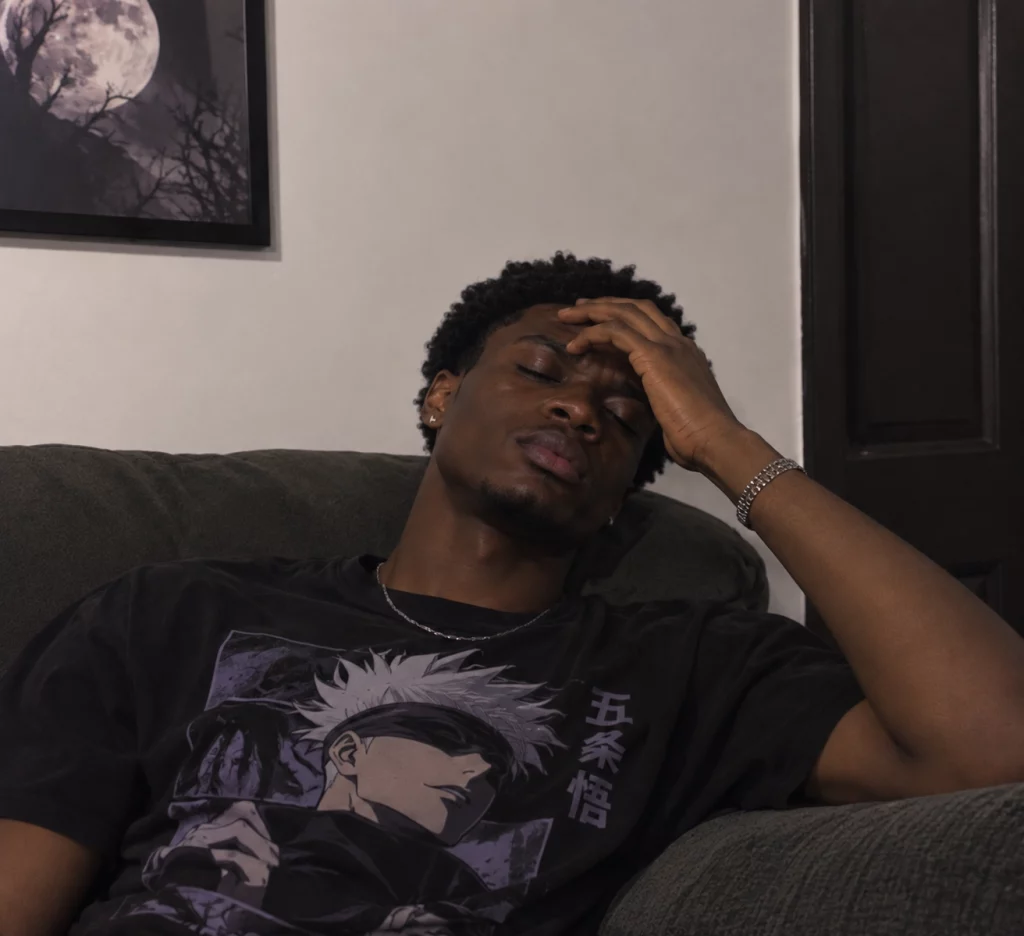
“For the first time, I allowed myself to cry” — Jerry*, 29
Growing up, all I heard was, “Men do not cry.” My father, teachers and friends repeated it so often that I believed it. Even when I felt depressed or overwhelmed, I forced myself to smile. Between 2020 and 2022, so much happened that I barely knew how to express myself.
I remember venting to a new friend when I suddenly paused, fighting back tears. He looked at me and said, “You know it’s okay to cry, right? I’m not judging.” I instinctively said I’d pull through because men don’t cry. But he challenged that mindset and explained how suppressing emotions could cause more harm than good, including contributing to male suicides. For the first time, I stopped fighting my tears. I cried a lot, and felt a weight lift.
I’m glad I unlearned that belief. I now have friends I can lean on, vent to and cry withwhen life gets heavy, and they are there to listen.
“I spent years thinking my sexual assault was something to be proud of” — Tayo, 31
Men are expected to carry a lot in silence, including the trauma of sexual assault. I was assaulted at 10 by our house help, and it left wounds I didn’t know how to name.
When I once tweeted about it, other men called me lucky. Apparently, losing my virginity at 10 was something to celebrate. Many of them also shared their experiences as though they were trophies. I began to question my own pain and eventually deleted the tweet. For years, I carried what happened like some strange badge of honour, even though it haunted me.
Years later, I was hanging out with two of my female friends when one of them mentioned that she’d lost her virginity the previous year. I proudly said I lost mine at 10, but they didn’t laugh with me. They looked at me and told me I was a victim. I tried to challenge that, but they told me I was a minor who couldn’t consent. I eventually broke down. Finally, someone understood what I had spent years trying to dismiss. Therapy has since helped me reclaim my healing.
“I don’t have to laugh at everything to prove I’m a good friend” — Goziem*, 30
There’s this idea among Nigerian men that friendship means being able to joke about anything, no matter how much it hurts. Apparently, that’s how we show love. I used to go along with it. I’d share things that genuinely hurt me, and my friends would turn them into jokes to “uplift” me. I’d laugh along, even when I didn’t find it funny.
Then my dad died in 2024. I told my friends in our group chat, but they responded with jokes about how he’d finally left and how I’d joined the association of fatherless children. My dad was my best friend, and I was barely holding myself together while watching my mum grieve. I told them I didn’t appreciate their jokes, but they dismissed me and continued.
I left the group, blocked them and moved on. Friendship shouldn’t require me to laugh through my own pain. Sometimes, I just want someone to say, “You’re going to be okay.” I don’t need every painful experience turned into a punchline to know I’m loved.
“I want to be a man on my own terms” — Somto*, 25
You don’t know the number of times I’ve heard, “As a man, you are supposed to…” It’s a lot. Today, I’m supposed to be a provider. Tomorrow, I’m daddy, and next year, apparently, I’m God. I must be an alpha, dress a certain way, work until I drop and somehow never fall apart. I’m tired, please. I’m just 25, for Christ’s sake.
When I moved out of my parents’ house to Lagos three years ago, I finally had room to figure out who was I outside everything I’d been told a man should be.
I started by piercing my ears and eyebrows. I take mental breaks when I need them and wear whatever I want. I’m practically Dora the Explorer. I also got dreads and slowly became someone I actually recognised in the mirror.
I refuse to lose myself trying to prove I’m a man. I deserve softness, rest, freedom and the room to be me. Not some textbook version of a man. I cannot keep carrying the weight of the world simply because I’m male. Pass it to the next person, thanks.
“My son taught me a different way to be a father” — Dominion*, 34
I grew up hearing that children are closer to their mothers because fathers have more important responsibilities, like providing and keeping the family afloat. My father was present but absent. He was around, but he rarely showed up for the things that mattered to me. Everything else was supposedly my mother’s responsibility. He was strict, intimidating, and I thought that was simply what having a father meant.
Then I had my son seven years ago, and I began to see fatherhood differently. I attended his school functions, birthday parties and football games. I made time for him, and hearing him say, “My daddy and mummy are here” never got old.
I realised I could be an affectionate, involved father without being less of a man. Providing is important, but showing up matters just as much.
“I was raised to carry my family, but who’s carrying me?” — Frank*, 28
I always felt there was a timeline for becoming a man. By 25, I was supposed to be financially stable, have a thriving career, provide for my family and know exactly where my life was headed. Being the first child made those expectations even harder. Everyone assumed I’d figure things out, take care of my parents and somehow make life easier for the rest of the family.
I was raised to see all of it as my responsibility. Sometimes I feel like I’m slowly losing myself trying to meet those expectations. How can I pour into everyone when I haven’t had the chance to grow into myself?
I’m 28, Nigerian and still figuring out this thing called life. One thing I’m learning is that you don’t owe the world a finished version of yourself by 25. You’re allowed to be uncertain, make mistakes, start over and discover who you are. I’m still learning to give myself that same grace.
“I used to think everybody’s problems were somehow my responsibility” — Kay*, 30
As a child, I somehow got the impression that being a man meant being the chairman of everybody’s problems. If something went wrong at home, I had to fix it. If someone needed money, I was expected to contribute, even when I couldn’t afford it. If my girlfriend was upset, I had to investigate and provide solutions. I was basically running a one-man emergency response agency.
It took me a while to realise that life doesn’t revolve around me. People have their own problems, and not everything requires my intervention. Sometimes, people just want to vent, not receive a lecture on how to fix their lives. I’m learning that I can mind my business and the world will not collapse.
Read Next: 6 Married Nigerians on Secrets They Discovered About Their Partners After Marriage