Since his HIV diagnosis, Adam* (27) has worried about how his status might affect his chances of finding love. Between a relationship that left him questioning his self-worth and an encounter that exposed his status, he’s had to rethink what he deserves from a partner.
In this episode of On the Streets, he opens up about dating with HIV and coping with rejection.
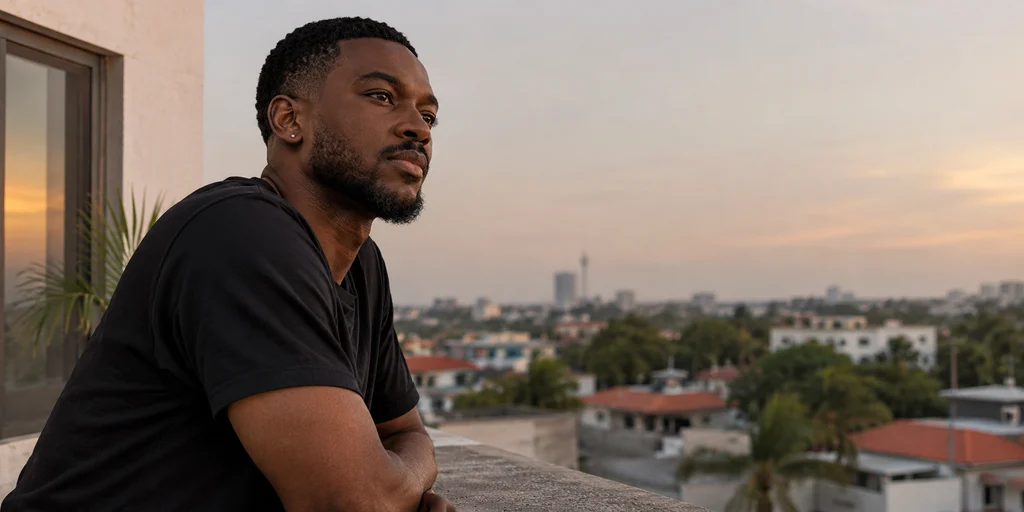
What’s your current relationship status, and how do you feel about it?
I’m single. I was diagnosed with HIV in 2022, and it took a long time to come to terms with it. I’m gradually adjusting to my reality.
What happened? Take me back to the beginning.
Towards the end of my undergraduate studies in 2021, I started experimenting with drugs because my roommates used them and often encouraged me to join in. I realised I enjoyed the feeling and the high. Eventually, I moved on to Tramadol and other opioids because they made me feel more confident. I’d always struggled with anxiety, so I liked how they made me feel. I was also good at hiding my drug use.
My sister was the only person in my family who suspected, and she covered for me. I thought I had everything under control because I wasn’t getting into trouble and was still doing well academically.
I see. Did you continue after you graduated and parted ways with your friends?
Not really. I moved from Ibadan to Lagos for my NYSC and stayed with an older couple. They travelled frequently, so I had more freedom to go out.
I didn’t have many friends in Lagos, but I started attending parties. I was trying to save enough money to get my own place, so sharing drugs with other people helped me spend less. At some of these parties, we’d pass around injections and use them. I believe I contracted HIV at one of those parties.
How did you find out you had HIV?
Around May 2022, I started falling sick repeatedly. I initially assumed it was malaria, so I’d buy medication and feel better for a while. But the sickness kept coming back. For about three months, I was hardly myself. I was constantly tired and nauseous.
Around the same time, I met Fatima*. My place of primary assignment hosted a session with her organisation, and we bonded because we were among the few people around the same age. We stayed in touch afterwards. I liked her, but she lived on the other side of town and our schedules rarely aligned, so finding time to meet was difficult.
Eventually, I told my mum how often I’d been falling sick, and she advised me to go to the hospital. They ran a full blood test, and I assumed it would turn out to be malaria or something similar. But after the tests, the technician referred me to a doctor to discuss my results without explaining why.
I’ll never forget that encounter. The doctor was blunt. He started asking about my sexual history and whether anyone in my family had HIV. I couldn’t understand why he was asking me those questions. Then he told me I was HIV-positive.
I barely remember anything he said afterwards. All I remember is how fast my heart was beating. I knew HIV had treatment, but I couldn’t think beyond the images of visibly emaciated people I’d seen in my social studies textbook from secondary school. I felt like my life was over, and just kept crying.
Thankfully, some of the nurses were kind. They took me aside, spoke to me and helped me calm down.
My first instinct was to call my mum. I couldn’t understand how I’d contracted HIV, especially because I hadn’t been sexually active. She was disappointed and initially struggled to believe the diagnosis. She told me to request a leave from work and come home for another round of tests. But that didn’t change anything. The result was the same
It was only about a week later that I began thinking about the last party where we’d shared injections. I contacted the friend who had invited me, and he linked me up with one of the guys I interacted with. But the guy flat-out denied having HIV. I asked him to reach out to some of the others, but he eventually blocked me.
I felt betrayed. I was also in such a dark place mentally that I cut off almost everyone around me, including Fatima. I stopped replying to her messages and ignored her attempts to reach me on Instagram. It felt like HIV had just dropped out of nowhere, and I couldn’t make sense of what had happened to me.
I’m sorry. Did the diagnosis affect your relationship with drugs?
It changed everything. When I learnt that taking my medication consistently could make me undetectable, I became determined to do whatever it took to get there.
But quitting drugs wasn’t so easy when I returned to Lagos. I continued smoking occasionally for a while before eventually stopping that too. I also grew close to one of my uncles, who became a mentor to me. He prayed with me and supported me as I worked towards getting my life back on track.
The hardest part was accepting my diagnosis mentally. I started feeling physically better after a couple of months, but it took about a year before I could bring myself to interact with people again.
How was your love life at that point?
I shut myself off from dating until November 2023, when I found out I was undetectable. The news made me hopeful that I could finally have a normal relationship.
But I quickly realised dating wouldn’t be as easy as I’d imagined. My first mistake was disclosing my status too early. I’d meet someone, we’d get along, and the moment I told them I was HIV-positive, they’d disappear. After a few uncomfortable experiences, I decided to be more careful about when and how I disclosed my status.
Around that time, Fatima came back into my life.
Oh. How did you two reconnect?
We started talking again in 2024 after I reached out to her. I apologised for disappearing and explained that I’d been going through a difficult time.
She was very understanding. At first, we agreed to just be on good terms, but we gradually started talking more regularly.
Eventually, I developed feelings for her again. I liked how patient she was, and I felt we complemented each other. We eventually arranged to see each other in person, and after almost two years of knowing each other, we finally went on a date.
That’s sweet. But did she know about your HIV status at this point?
I wasn’t sure how to bring it up initially. After our first date, we went back to my place and started making out. But when things seemed like they might go further, I stopped.
She noticed the change and brought it up the next morning. That was when I opened up about my diagnosis.
I was extremely anxious because I thought she might stop speaking to me. Surprisingly, she remained calm, and we had a long conversation about everything. She was upset that I hadn’t told her earlier, but she also said she still liked me and needed time to think about it.
Eventually, she came back and said she was willing to give the relationship a chance. We started dating in June 2024.
Let’s talk about dating Fatima. How did that go?
At first, it felt perfect. Fatima came into my life when I was beginning to worry that my HIV status meant I’d be single forever. I think that fear made me hold on to the relationship more tightly than I should have.
We had challenges from the beginning. Distance was one of them. We lived quite far apart, so seeing each other required planning. I was still working as an intern and couldn’t always afford to take her out or do the nice things I wanted. Sometimes, even saving enough money for us to meet was difficult, and she’d complain about it.
Communication was another issue. Fatima was very outspoken, but she could also be harsh with her words. Sometimes, I felt she believed she could get away with treating me a certain way because of my HIV status.
Why did you feel that way?
About four months into the relationship, I started suspecting Fatima was seeing someone else. I eventually confirmed it when she came over and I asked to use her laptop. Some of her social media accounts were still logged in, and I discovered that she was cheating on me.
When I confronted her, she tried to justify what she’d done. She claimed she wasn’t happy with our somewhat limiting sex life. We’d agreed on certain boundaries in the bedroom because of my status. She also said she often felt tense during sex because she was worried about the risks.
Hmm
Hearing that made me feel terrible, and I started blaming myself. It also hurt that she was accepting money from the other man and going out with him. The whole situation deepened my insecurities, and I gradually withdrew from her. Whenever I tried to explain how I felt, she’d get defensive and ask why I couldn’t let it go since she’d already apologised.
One day, I got so angry that I blocked her for a few hours because I didn’t want to say something hurtful. By the time I unblocked her, she’d blocked me too. I called to apologise, but she wasn’t receptive. She seemed to take my actions even more personally, and that disagreement eventually ended the relationship.
Was it easy to move on?
I was devastated. Shortly after we broke up, my internship ended, and I struggled to find another job. It felt like everything was falling apart at once.
I came close to smoking again, but I was worried it might interfere with my medication. I knew I needed something else to keep my mind occupied, so I enrolled in a master’s programme last year.
Nice. Did going back to school help you get back on your feet?
It was a welcome distraction. I spoke to a few people here and there, but avoided getting emotionally involved with anyone. That changed when I started getting close to one of my coursemates, Blessing*. It turned out to be a big mistake.
Why? What happened with Blessing?
We met early in the programme and there was clearly chemistry between us. However, I kept her at arm’s length because I was sceptical about dating someone in my department. That changed in March this year, when we attended an event together and went partying afterwards. We danced and I followed her to her place. We ended up having sex.
I used protection, but I hadn’t told her about my HIV status beforehand because I never expected things to go that far. In the days that followed, though, I felt I needed to tell her, especially as we were beginning to explore the possibility of a relationship.
And how did she receive the news?
I knew there would be reservations, but I didn’t expect what followed.
She was shocked and upset. She seemed to take it in at first, but later sent me a message asking if I was serious about having HIV. I explained everything again.
Looking back, I think she wanted me to confirm my status in writing. Before I knew it, screenshots of our conversation were circulating around the department. She had shared them in a group chat and warned other women to avoid me because I had HIV. There were also threats that she would report me for having sex with her without disclosing my status beforehand.
Oh my goodness. How did you deal with all of that?
I know I should have told her before we had sex, but she took it too far. I became so ostracised that people stopped inviting me to social gatherings. I was a mess for the first month. Thankfully, I still had friends who stood by me and made me feel normal.
As the months have passed, the hostility has died down. It still hurts, but I’m trying to keep my head down and count the months until I finish my programme. For now, I’m not interested in dating. I’ve had enough drama.
I’m sorry you had to go through that. Have these experiences shaped your idea of love and relationships?
I’ve learnt not to see myself less because of my HIV status. With Fatima, I often overlooked her behaviour because I felt I couldn’t afford to be too demanding.
I know I deserve the same respect and consideration as anyone else.
Finally, how are the streets treating you these days? Rate it on a scale of 1 to 10.
6/10. I’d much rather be in a happy and healthy relationship, but I can’t force that to happen. For now, I’m directing my energy into achieving as much as I can.
If you need an HIV test, treatment, support, or someone to talk to, these organisations can help you find services in Nigeria.
National Agency for the Control of AIDS (NACA) naca.gov.ng
National AIDS and STI Control Programme (NASCP) nascp.gov.ng
AIDS Healthcare Foundation (AHF Nigeria) aidshealthng.org
Institute of Human Virology Nigeria (IHVN) ihvNigeria.org
For Community Support:
Network of People Living with HIV and AIDS in Nigeria (NEPWHAN) nepwhan.org
The Initiative for Equal Rights (TIERs) theinitiativeforequalrights.org
Read Next: My Fiancé Had Been Married Three Times, and He Never Told Me