Goodgirl LA has never been the most consistent of Afrobeats musicians. She burst on the scene in 2018 with her debut song, “Faraway,” but only began to gain traction when she released “Bless Me,” her first viral song, in 2019. Her EP that followed, LA Confidential, released the same year, flopped.
She was featured in songs by lesser-known artists like Sir Dauda and Alpha Ojini, but she only returned to the charts after Vector featured her in his 2021 song, “Early Momo.” For the next two years, she went silent.
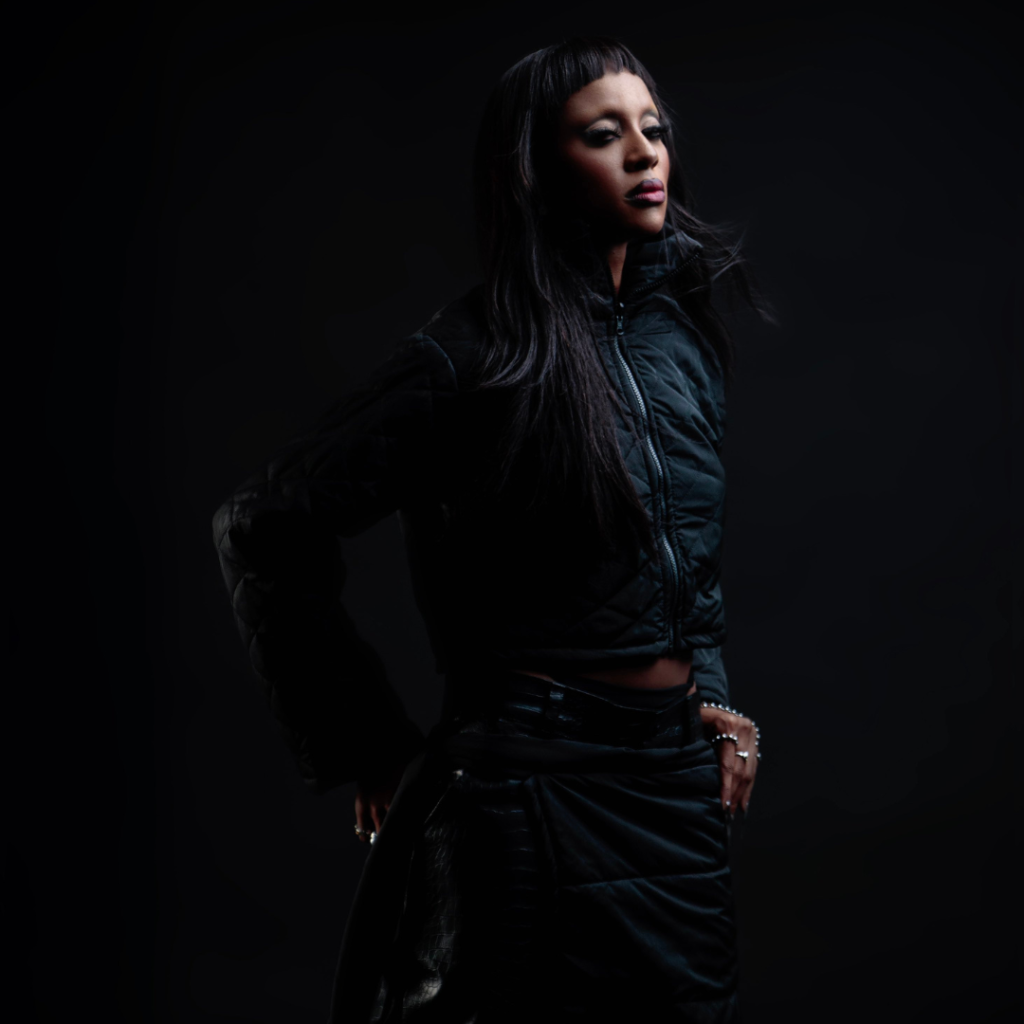
In June, she returned with “Goodgirl,” the first song on her new eponymous six-track EP, Goodgirl, which dropped this month, and has become a rallying cry for women looking to be with other women.
Women, in particular, are not permitted to want any sex, even when they are married. It’s supposed to be too precious and they are supposed to be too chaste to show their desire for it. In many local languages, good girls are not even supposed to know the words for the female genitalia.
But with this EP, Goodgirl LA breaks away from the expectations of her society, ushering herself and all Nigerian women that will come with her, into a world of unbridled female sexual desires.
On “Buss It,” the song where she sings, “shawty gon’ say my name / She never had love like this,” she invites women into her salon for orgasm, coaxing them to love her, and in return, she will quench their desires and give them release.
“It’s a waterfall when I slide through her love / And she can’t even walk when I’m done,” she sings.
That only a woman can truly bring crippling pleasure to another woman is an idea that has existed in feminist circles for years.
In her 2000 essay, “All About Love: New Visions,” the American essayist bell hooks tells us that it is the residue of the patriarchy that brought women to this place where women will always pleasure each other better than any man would. “Women are often more capable of giving and receiving love precisely because they have been socialised to value connection and intimacy,” she writes.
It is also a concept that Nollywood, with its attempt to malign and deny women’s ability to love and pleasure each other, could not erase. In the 2003 classic Emotional Crack, Dakore Egbuson-Akande invites Stephanie Linus for a chat about the struggles of being with men. But the chats take a different turn, and the women have sex, and Linus’ character, for a second, begins to imagine a world where she leaves her husband, played by Ramsey Nouah, for this kind of pleasure.
For feminists, this kind of erotic joy unlocks something so powerful in women that the chains of society fall down. “Recognising the power of the erotic within our lives can give us the energy to pursue genuine change in our world, rather than merely settling for a shift of characters in the same weary drama,” Audre Lorde, reminds women in her 1984 essay, “Uses of the Erotic: The Erotic as Power.”
This is something that Goodgirl LA knows all too well.
“It’s so sad he could never make you cum / I swear, these niggas be dumb,” she sings. But even for women who have come to master giving pleasure to other women, the prowess that comes with it can be intoxicating. As the consummate dickmatiser that she has become, Goodgirl LA declares she is not for anybody. “She don’t wanna be with nobody else / Anytime I leave she go dey cry oh,” she sings. Only women who have come to truly know themselves can reach this place of safety in optimum vulnerability.

This is what leads her to the party-ready track “Gbesoun,” a come-to-mingle call to all “omoges” with “big bumbum.” It matches the sexual liberation expressed in “Buss It.” Without losing her quirkiness, the track flows with the kind of energetic cadence that would have shut down the women-only event HERtitude in April.
In the fuck-all anthem and lead track “Goodgirl,” she announces she has completely abandoned societal expectations in her journey to freedom. “I no be good girl again,” she sings. “My brain don burst, my eyes don tear.”
Perhaps this is also a response to the friends and family who she said in a thread on X, “looked down on me and pretty much just shenked me…and called me a failure.”
But it isn’t only sex that Goodgirl LA has come to sell with this EP. On “Giga,” she boasts of her brilliant artistry, perseverance, razor-sharp intuition, and dreams of taking over the cosmos. “Nobody believe in me / But I believe in me because I bad,” she sings.
In the chorus, her bravado softens and becomes a prayer, a gentle ask for a divine elevation. “Giga ooh…Gbemi de be” (meaning “take me to a higher level.”)
The song segues into the self-motivational “B.O.B.,” which means “Based on belief.” She asserts her focus on riding for herself and validating her own dreams against the backdrop of events that she has not spoken publicly about, but has said derailed her music career.
In this new phase of her career, Goodgirl LA, who has always been an independent artist, is no longer interested in deeping in and out of music. She has signed a record deal with the music producer Andre Vibez’s record label, VMF (Vibez Music Factory), under which she produced this EP.
Now she just needs to stay consistent and become a pop star.